Feeling uncertain about what to expect in your upcoming interview? We’ve got you covered! This blog highlights the most important Proper Tool and Equipment Usage interview questions and provides actionable advice to help you stand out as the ideal candidate. Let’s pave the way for your success.
Questions Asked in Proper Tool and Equipment Usage Interview
Q 1. Describe your experience with preventative maintenance of tools and equipment.
Preventative maintenance is the key to ensuring tools and equipment remain functional and safe. It’s about proactively addressing potential issues before they become major problems, saving time, money, and preventing accidents. My approach involves a multi-step process.
- Regular Cleaning and Inspection: I thoroughly clean tools after each use, removing debris and checking for any visible damage like cracks, bends, or loose parts. For example, after using a chainsaw, I’d meticulously clean the bar and chain, lubricating them to prevent rust and ensure smooth operation.
- Lubrication: Proper lubrication is crucial. I use the correct type and amount of lubricant for each tool, following manufacturer recommendations. This prevents wear and tear and extends the lifespan of moving parts, much like keeping a car’s engine properly oiled.
- Sharpening and Adjustment: Tools like saws, chisels, and drills need regular sharpening and adjustment to maintain optimal performance and prevent damage to materials. I have the skills and tools to perform this myself, or I know when to seek professional help.
- Storage: Proper storage is crucial. Tools should be stored in a dry, secure location, preventing rust and damage from impacts or accidental misuse. I use tool chests, organizers, and protective cases to ensure long-term tool health.
- Scheduled Maintenance: I maintain a log of maintenance performed on each tool, including dates and details. This proactive approach makes tracking easy, allowing me to identify patterns and schedule necessary services efficiently.
Q 2. Explain the importance of regular equipment inspections.
Regular equipment inspections are vital for safety and efficiency. They’re like a health checkup for your tools, identifying potential problems early on before they escalate into costly repairs or accidents. A missed inspection could lead to a malfunction that causes injury or damage.
- Safety Hazards: Inspections identify potential hazards like frayed cords, loose connections, or damaged guards, preventing accidents. Think of a worn-out power cord on a drill; a simple inspection could prevent an electric shock.
- Performance Issues: Early detection of performance issues, like a dull blade or misaligned parts, can save time and resources. For instance, a slightly bent saw blade might not be immediately noticeable but could lead to inaccurate cuts and even injuries if ignored.
- Preventative Maintenance: Inspections trigger preventative maintenance. Addressing small problems early on is much less expensive than dealing with major breakdowns later. A simple tightening of a bolt might prevent a major mechanical failure down the road.
- Compliance: In many industries, regular inspections are required to meet safety regulations and insurance requirements. Thorough documentation of these inspections is critical for legal and operational reasons.
Q 3. How do you identify and address malfunctions in equipment?
Identifying and addressing equipment malfunctions requires a systematic approach. I start with observation, followed by testing and troubleshooting.
- Visual Inspection: I begin with a thorough visual inspection, checking for any obvious signs of damage, wear, or loose components. Listen for unusual sounds, too! A grinding noise from a motor could indicate a serious problem.
- Testing: Depending on the type of equipment, I perform appropriate tests to check functionality. This might involve simple checks, like verifying power supply or measuring voltage. More complex equipment may require specialized testing tools.
- Troubleshooting: If the issue isn’t immediately apparent, I follow a logical troubleshooting process, systematically checking components and connections. This could involve diagrams, manuals, or online resources. Think of it like solving a puzzle, each clue brings you closer to the solution.
- Repair or Replacement: Once the problem is identified, I assess the extent of damage and determine if the equipment can be repaired or needs replacement. I will only attempt repairs within my skillset; if not, I’ll call in a professional to prevent further damage or injury.
Q 4. What safety procedures do you follow when operating power tools?
Safety is paramount when operating power tools. My safety procedures are consistent and unwavering.
- Personal Protective Equipment (PPE): I always wear appropriate PPE, including safety glasses, hearing protection, and work gloves. For specific tasks, I might also use respirators, face shields, or steel-toe boots.
- Proper Tool Use: I only use tools for their intended purpose. I never force a tool beyond its capabilities, and I always ensure the tool is in good working condition before using it.
- Secure Work Area: I maintain a clean and organized workspace, free of obstructions. This minimizes the risk of tripping or accidents.
- Awareness of Surroundings: I remain constantly aware of my surroundings and ensure that no one is in the tool’s operating range. I avoid distractions and maintain focus while operating power tools.
- Lockout/Tagout: When working on power tools that require maintenance or repair, I always follow lockout/tagout procedures to prevent accidental energization.
Q 5. Describe your experience with different types of hand tools.
I’m proficient with a wide range of hand tools, encompassing various types and applications.
- Measuring Tools: I’m experienced using tape measures, rulers, calipers, and levels for accurate measurements and alignments. Knowing how to accurately measure is fundamental to any construction project.
- Striking Tools: I use hammers, mallets, and chisels for demolition, shaping, and driving fasteners. Proper technique is essential to avoid injury and ensure accurate results.
- Turning Tools: Screwdrivers (Phillips, flathead, Torx), wrenches (adjustable, socket), and pliers are used frequently for assembling and disassembling components. Knowing which type of screwdriver or wrench to use for different screw heads and bolts is important.
- Cutting Tools: I’m comfortable using hand saws, utility knives, and wire cutters for various cutting applications. Safety precautions, like using the correct blade for the material and following proper cutting techniques, are always observed.
- Other Hand Tools: This includes but isn’t limited to; punches, files, clamps, and a wide variety of specialized tools depending on the job. I am adept at utilizing these tools to meet specific task requirements.
Q 6. How do you select the appropriate tool for a specific task?
Selecting the right tool for a job is crucial for efficiency and safety. It’s about matching the tool’s capabilities to the task at hand. My approach is based on several factors.
- Material: The material being worked on dictates the appropriate tool. For example, a hardwood would require a different saw than a softwood.
- Task: The type of task determines the appropriate tool. Drilling a hole requires a drill, while cutting a piece of wood requires a saw.
- Tool Capabilities: I consider the tool’s power, precision, and durability. A small drill may not be adequate for a large-diameter hole.
- Safety: I choose tools that are safe to use for the specific task and environment. A hand saw may be safer than a power saw for a delicate task.
- Ergonomics: I consider the comfort and ease of use of the tool. A well-designed tool reduces fatigue and improves efficiency.
Q 7. What are the common causes of equipment failure and how do you prevent them?
Equipment failure can stem from various causes, often preventable through diligent maintenance and proper usage.
- Lack of Maintenance: Neglecting regular cleaning, lubrication, and sharpening leads to premature wear and tear. Regular maintenance is vital to prevent this.
- Improper Use: Using tools for unintended purposes or beyond their capabilities can cause damage. For example, using a screwdriver as a chisel will likely break the tip.
- Overload: Forcing tools to work beyond their rated capacity can lead to damage or failure. Always choose a tool rated appropriately for the task.
- Environmental Factors: Exposure to extreme temperatures, moisture, or corrosive substances can negatively impact tool lifespan. Store tools in a suitable environment and protect them from the elements.
- Operator Error: Failure to follow safety procedures or misuse of equipment can lead to accidents and equipment damage. This often highlights the need for proper training and adherence to safety guidelines.
Preventing these failures involves a combination of preventative maintenance, proper training, selecting the right tools for the job, and adhering to safety protocols.
Q 8. Explain your understanding of torque specifications and their importance.
Torque specifications are crucial in ensuring the proper tightening of fasteners. They represent the amount of rotational force applied to a bolt or nut, measured in Newton-meters (Nm) or foot-pounds (lb-ft). Applying insufficient torque can lead to loose connections, causing failures and potential safety hazards. Conversely, over-tightening can strip threads, damage components, or even cause breakage.
Imagine building a car engine; each bolt needs a specific torque applied to it. Too little, and the engine might fall apart during operation. Too much, and you could strip the threads, rendering the engine unusable. Torque wrenches are essential tools for accurately applying the specified torque. These wrenches are calibrated to click or provide a signal when the correct torque is reached, preventing over-tightening. Manufacturers provide torque specifications in their assembly manuals or service documentation. Always refer to these specifications for every job.
For example, a particular bolt on a bicycle might require 8 Nm of torque. Using a torque wrench set to 8 Nm ensures the wheel is securely fastened without damaging the threads. Ignoring the specification might result in a wheel coming loose while riding, posing a safety risk.
Q 9. How do you ensure the safe storage and handling of tools and equipment?
Safe storage and handling of tools and equipment are paramount for safety and longevity. My approach involves a multi-pronged strategy:
- Organized Storage: Tools are categorized and stored in designated locations, preventing damage and ensuring easy retrieval. This often includes labeled tool chests, racks, and cabinets. Sharp tools, like chisels and screwdrivers, are stored in protective sheaths to prevent accidental cuts and injuries.
- Regular Maintenance: Tools are regularly inspected for damage, wear, and tear. Damaged tools are immediately repaired or replaced, preventing accidents and ensuring accuracy. This also includes lubricating moving parts, like hinges on toolboxes and joints on pliers.
- Proper Handling: Tools are always handled with care, avoiding dropping or throwing them. This includes ensuring proper grip and using appropriate lifting techniques for heavier items. Protective gloves or eyewear are worn where necessary. For example, when working with power tools, it’s critical to hold them firmly and wear safety glasses.
- Environmental Protection: Tools are stored in a clean, dry environment, protected from moisture, extreme temperatures, and corrosive substances. This is crucial for preventing rust and corrosion, preserving tool life.
In essence, maintaining a clean, organized, and respectful work environment is crucial for both safety and efficiency.
Q 10. Describe your experience with troubleshooting electrical equipment.
My experience with troubleshooting electrical equipment involves a systematic approach that prioritizes safety. I always begin by de-energizing the equipment to prevent electrical shock. Then, I perform a visual inspection, looking for signs of damage such as frayed wires, loose connections, or burn marks. A multimeter is then used to test voltage, current, and continuity to identify any issues. I then follow a step-by-step process, using schematics, wiring diagrams, and manufacturer’s documentation to trace potential faults. I regularly use diagnostic software and specialize in identifying faults in PLC (Programmable Logic Controllers) systems.
For instance, if a motor fails to start, I would check for power supply, fuse integrity, and motor windings using the multimeter. If a circuit breaker keeps tripping, I would check for overloads or short circuits. By combining methodical analysis with a comprehensive understanding of electrical principles, I can often pinpoint and resolve the problem efficiently and safely.
Q 11. How do you handle emergency situations involving equipment malfunctions?
In emergency situations involving equipment malfunctions, my priority is safety. I immediately shut down the affected equipment using the appropriate emergency stop procedures, if available. Then, I assess the situation to determine the nature of the malfunction and potential hazards. Depending on the severity, this might include evacuating personnel from the area or securing the immediate vicinity. I always follow established safety protocols and company emergency response procedures. After securing the area, I report the incident to the appropriate personnel, document the event, and cooperate fully with any investigations. Repair work is only undertaken after the situation is deemed safe and with the appropriate authorizations.
For example, if a piece of machinery starts making unusual noises or sparks, my first action would be to immediately shut it down. I would then secure the area, assess the situation, and inform my supervisor. This is about more than just equipment; it’s about the safety of my colleagues and myself.
Q 12. Explain your experience with hydraulic and pneumatic systems.
I have extensive experience working with hydraulic and pneumatic systems. My knowledge encompasses the principles of fluid power, including pressure, flow, and power transmission. I understand the components of these systems, such as pumps, valves, actuators, and cylinders. I am proficient in troubleshooting malfunctions, identifying leaks, and performing routine maintenance such as fluid changes and filter replacements. I’m also experienced in interpreting system schematics and diagrams to understand how components interact and diagnose issues.
For instance, in a hydraulic system with a sluggish actuator, I might check for leaks, air in the lines, or issues with the pump and valves. In a pneumatic system with a pressure leak, I would systematically check all fittings and connections, paying attention to hoses and seals. A sound understanding of the principles of hydraulic and pneumatic systems is critical for their safe and efficient operation.
Q 13. What is your experience with calibration and testing of equipment?
Calibration and testing of equipment are essential to ensure accuracy and reliability. I have experience using various calibration instruments and techniques to verify the performance of measuring and testing equipment. This includes using precision standards and following established calibration procedures. I maintain detailed calibration records, ensuring traceability and compliance with relevant standards. This includes equipment such as multimeters, torque wrenches, pressure gauges, and thermometers.
For example, I would regularly calibrate a pressure gauge using a known accurate pressure source, comparing the gauge reading against the standard. Any deviation exceeding the acceptable tolerance would necessitate adjustment or replacement of the gauge. Accurate calibration helps to ensure that all measurements and tests are reliable and accurate.
Q 14. How do you interpret technical manuals and diagrams for equipment operation?
Interpreting technical manuals and diagrams is a fundamental skill for effective equipment operation and maintenance. I approach this by systematically examining all available documentation. This includes understanding the nomenclature and symbols used, studying the layout of components and their interactions, and following the step-by-step instructions for operation, maintenance, and troubleshooting. My ability to quickly grasp complex information from diagrams is paramount for troubleshooting and repair work.
For example, when working on a complex piece of machinery, I would start by reviewing the overall system diagram to understand the flow of processes. Then, I would consult detailed schematics to trace specific circuits or pathways. Understanding the language and symbols used in these documents is key to interpreting their information correctly and safely.
Q 15. Describe your understanding of lockout/tagout procedures.
Lockout/Tagout (LOTO) procedures are critical safety protocols designed to prevent the accidental release of stored energy during equipment maintenance or repair. Think of it like this: before you work on a machine, you need to ‘lock out’ its power source, ensuring it can’t unexpectedly turn on and injure you. The ‘tagout’ is a visual reminder that the equipment is locked out and shouldn’t be operated.
A typical LOTO procedure involves these steps:
- Preparation: Identify all energy sources (electrical, hydraulic, pneumatic, etc.) connected to the equipment.
- Notification: Inform others in the area that work is about to commence on the equipment.
- Lockout: Use appropriate lockout devices (padlocks, etc.) to physically prevent the energy source from being activated.
- Tagout: Attach clearly visible tags indicating the equipment is locked out, who performed the lockout, and the reason.
- Verification: After lockout, verify that the equipment is de-energized and safe to work on.
- Release: Once work is complete, remove the lockout devices only after verifying the equipment is safe and only the person who installed the lockout device can remove it.
During my time at [Previous Company Name], I was responsible for implementing and training others on a comprehensive LOTO program, which resulted in a significant reduction in near-miss incidents.
Career Expert Tips:
- Ace those interviews! Prepare effectively by reviewing the Top 50 Most Common Interview Questions on ResumeGemini.
- Navigate your job search with confidence! Explore a wide range of Career Tips on ResumeGemini. Learn about common challenges and recommendations to overcome them.
- Craft the perfect resume! Master the Art of Resume Writing with ResumeGemini’s guide. Showcase your unique qualifications and achievements effectively.
- Don’t miss out on holiday savings! Build your dream resume with ResumeGemini’s ATS optimized templates.
Q 16. How do you maintain accurate records of equipment maintenance?
Maintaining accurate equipment maintenance records is crucial for ensuring equipment longevity, safety, and compliance. This involves a systematic approach, often utilizing a Computerized Maintenance Management System (CMMS). A CMMS allows for tracking a variety of data points.
- Equipment Details: A detailed description of each piece of equipment, including model number, serial number, and manufacturer.
- Maintenance Schedules: A clear schedule for routine maintenance tasks (e.g., lubrication, inspections), including frequency and due dates.
- Maintenance History: A record of all past maintenance activities, including the date, the work performed, the person who performed the work, and any parts replaced. Images or video might also be helpful.
- Repair History: Details of any repairs made, similar to maintenance history.
- Calibration Records: For measurement equipment, records of calibration and verification are critical.
At [Previous Company Name], we used a CMMS called [CMMS Name]. This allowed us to generate reports, set alerts for upcoming maintenance, and track the overall health of our equipment. This significantly reduced equipment downtime and increased efficiency.
Q 17. Describe your experience with different types of welding equipment.
My experience encompasses various welding techniques and equipment, including:
- Shielded Metal Arc Welding (SMAW): Commonly known as stick welding, this method uses a consumable electrode to create the weld. I’m proficient in using various electrode types for different materials and applications.
- Gas Metal Arc Welding (GMAW): Also known as MIG welding, this uses a continuous wire electrode fed through a welding gun. I have experience with both solid wire and flux-cored wire processes, and I’m familiar with different shielding gases.
- Gas Tungsten Arc Welding (GTAW): Also known as TIG welding, this precise method uses a non-consumable tungsten electrode and a separate filler metal. I’ve used this technique for high-quality welds on thin materials and stainless steel.
- Resistance Welding: This method uses electrical resistance to create a weld between metal pieces. I’ve worked with spot welders and seam welders.
I am familiar with the safety precautions associated with each welding process, including proper ventilation, eye and respiratory protection, and fire prevention measures.
Q 18. How do you handle hazardous materials safely during equipment maintenance?
Handling hazardous materials safely during equipment maintenance is paramount. My approach focuses on a multi-layered strategy:
- Material Safety Data Sheets (MSDS): Before working with any hazardous material, I always consult the MSDS to understand its properties, potential hazards, and recommended safety precautions.
- Personal Protective Equipment (PPE): I always wear appropriate PPE, including gloves, eye protection, respiratory protection, and any other specified protective clothing.
- Spill Containment: If a spill occurs, I immediately follow the established spill response procedures, which might include using absorbent materials, neutralizing agents, or calling for emergency assistance.
- Proper Disposal: Hazardous materials are disposed of according to all applicable regulations, ensuring environmental protection.
- Ventilation: Adequate ventilation is always ensured during work involving volatile or toxic materials.
For example, when working with solvents during cleaning, I would always work in a well-ventilated area, wear appropriate gloves and eye protection, and ensure proper disposal of waste solvent.
Q 19. What are your experiences with Programmable Logic Controllers (PLCs)?
My experience with Programmable Logic Controllers (PLCs) involves both programming and troubleshooting. PLCs are the brains of many automated systems, controlling various processes through a series of inputs and outputs. I am proficient in using ladder logic programming, a graphical programming language commonly used with PLCs.
I’ve worked with [Specific PLC Brands] PLCs, configuring their inputs and outputs, creating control programs, and troubleshooting malfunctions. For example, I once diagnosed a production line malfunction by carefully analyzing the PLC program and identifying a logic error in the sequence of operations. This involved reviewing the ladder logic, using diagnostic tools to monitor inputs and outputs, and making the necessary code corrections to restore the line’s functionality.
Q 20. Explain your experience with CNC machines and programming.
I have extensive experience with Computer Numerical Control (CNC) machines and their programming. CNC machines are computer-controlled tools capable of precisely machining parts based on programmed instructions. My experience includes operating and programming various CNC machines, such as mills and lathes.
I’m proficient in using CAM software such as [Specific CAM Software Names] to generate CNC programs from CAD models. This involves selecting appropriate cutting tools, determining optimal cutting parameters, and simulating the machining process to ensure that the final product meets the design specifications. I can also perform troubleshooting and maintenance on CNC machines, ensuring their accuracy and reliability.
For instance, I once successfully programmed a CNC mill to create a complex part with tight tolerances, optimizing the machining process to minimize material waste and cycle time. This involved thorough analysis of the CAD model, selection of appropriate cutting tools, and meticulous programming using G-code.
Example G-Code (Simple): G00 X0 Y0; G01 X10 Y10 F100;
Q 21. How do you ensure compliance with OSHA regulations regarding tool usage?
Ensuring compliance with OSHA regulations regarding tool usage is critical for workplace safety. My approach is proactive and multi-faceted:
- Regular Tool Inspections: I regularly inspect all tools for damage, wear, and proper functionality. Damaged or faulty tools are immediately removed from service and replaced.
- Proper Tool Usage: I strictly adhere to the manufacturer’s instructions for each tool, using it only for its intended purpose. This ensures that the tool is used safely and effectively.
- Personal Protective Equipment (PPE): I always use the appropriate PPE when using tools, such as safety glasses, gloves, hearing protection, etc. This safeguards against potential injuries.
- Lockout/Tagout Procedures: As discussed earlier, I diligently follow LOTO procedures when working with power tools to prevent accidental start-ups.
- Training and Awareness: I actively participate in safety training programs and ensure that others understand and follow safety regulations.
For example, I’ve stopped coworkers from using a damaged wrench that could have led to a serious hand injury, and I’ve proactively reported faulty equipment that needed repair to prevent accidents.
Q 22. Describe a time you had to troubleshoot a complex equipment issue.
One time, we experienced a critical failure on a CNC milling machine. The machine abruptly stopped mid-operation, displaying an error code indicating a potential servo motor issue. This was particularly problematic because it was during a critical production run.
My troubleshooting began with a methodical approach. First, I reviewed the machine’s error logs for more details about the failure. Then, I visually inspected the machine for any obvious mechanical issues like loose connections or damaged wiring. I carefully checked the servo motor itself, and its power supply. I found no immediate visual problems. Next, I used a multimeter to test the voltage and current to the servo motor and discovered a significant voltage drop. This suggested a problem either in the motor itself, or in its power supply circuitry.
Tracing the wiring diagrams, I eventually isolated the problem to a faulty power supply capacitor. Replacing this capacitor resolved the issue and the machine resumed operation without further problems. This experience highlighted the importance of systematic troubleshooting, utilizing diagnostic tools effectively, and having access to accurate technical documentation.
Q 23. What software programs are you proficient in for equipment management?
I’m proficient in several software programs for equipment management. These include Computerized Maintenance Management Systems (CMMS) such as IBM Maximo and Fiix. These programs allow for scheduling preventative maintenance, tracking repairs, managing inventory, and generating reports. Additionally, I’m experienced using CAD software like AutoCAD and SolidWorks to review equipment schematics and designs when troubleshooting issues. Finally, I am comfortable using data analysis software such as Microsoft Excel and R for interpreting maintenance data and identifying trends that can help predict and prevent future failures.
Q 24. How do you prioritize maintenance tasks for multiple pieces of equipment?
Prioritizing maintenance tasks across multiple pieces of equipment requires a strategic approach. I use a combination of methods that considers factors beyond simply the equipment’s age. I employ a system that prioritizes tasks based on a combination of factors:
- Criticality: Equipment vital to production or critical safety systems gets top priority. For example, a malfunctioning air compressor in a factory could halt an entire production line.
- Urgency: Equipment showing signs of imminent failure, such as unusual noises or leaks, needs immediate attention. This is prioritized over routine preventative maintenance that may be scheduled several months in advance.
- Cost of Failure: The potential economic impact of failure (downtime, repairs, potential safety hazards) informs the priority. A high-value piece of equipment will require higher attention.
- Preventative Maintenance Schedules: Scheduled maintenance (like oil changes or inspections) is incorporated into the schedule to avoid potential problems and prolong equipment life. I always ensure preventative maintenance is scheduled and performed according to the manufacturer’s recommendations.
Often, I use a CMMS to help manage and visually prioritize these tasks, assigning them to technicians and tracking completion.
Q 25. Explain your understanding of different types of lubricants and their applications.
Lubricants are essential for reducing friction and wear in machinery. There are many types, each with specific applications.
- Mineral Oils: These are derived from petroleum and are widely used due to their affordability and availability. They are suitable for various applications but may not perform as well as synthetic oils under extreme temperatures or pressures.
- Synthetic Oils: These are chemically engineered and often offer superior performance compared to mineral oils. They exhibit better thermal stability, viscosity, and wear resistance. They’re often preferred for high-performance equipment or in extreme operating conditions.
- Grease: This is a thick lubricant that is used in applications where a more viscous material is needed. Greases provide longer-lasting lubrication and can adhere better to moving parts in challenging environments.
- Specialized Lubricants: These include high-temperature greases, extreme-pressure (EP) lubricants, food-grade lubricants etc. Each is specifically formulated for particular equipment or environments.
Selecting the right lubricant is critical. Incorrect lubrication can lead to premature wear, equipment failure, and costly repairs. I always carefully consult equipment manuals and manufacturer specifications before applying any lubricant.
Q 26. Describe your experience with diagnosing and repairing mechanical failures.
Diagnosing and repairing mechanical failures requires a systematic approach. I usually start by observing the symptoms: unusual noises, vibrations, leaks, or reduced performance.
Next, I’ll use my diagnostic tools such as multimeters, pressure gauges, and vibration analyzers to gather data. This data helps to pinpoint the source of the problem.
For instance, a pump failing to deliver the required flow rate could be due to several issues: a clogged filter, a worn impeller, or a problem with the motor. Careful testing can differentiate between these. I then use my knowledge of the equipment’s mechanical systems to determine the most likely cause and proceed with repairs. I always follow safety protocols, ensure correct tool usage, and thoroughly document my work.
After the repair, thorough testing is essential to verify that the problem has been solved and the equipment operates correctly.
Q 27. How do you stay up-to-date with advancements in tool and equipment technology?
Staying up-to-date is crucial in this field. I regularly attend industry conferences and workshops to learn about new technologies and best practices. I also subscribe to industry publications and actively participate in online forums and communities. Manufacturer websites and technical documentation are excellent resources for the latest information on specific equipment. Additionally, I actively seek out training opportunities offered by equipment manufacturers or professional organizations. These continuous learning efforts ensure my skills and knowledge remain current and relevant.
Q 28. Describe your experience working with a team to maintain and repair equipment.
Teamwork is vital in equipment maintenance and repair. In my previous role, we had a team of technicians responsible for maintaining a large fleet of industrial machinery. We used a collaborative approach, leveraging each team member’s expertise. For example, one colleague was exceptionally skilled in electrical diagnostics, while another specialized in hydraulic systems. We would often brainstorm together on complex problems, sharing ideas and troubleshooting strategies. Effective communication was key: daily briefings, regular meetings, and proper documentation of repair procedures ensured efficiency and kept everyone informed about the status of equipment.
Teamwork isn’t only about technical skills; it’s about mutual respect, effective communication, and shared responsibility. We fostered a collaborative environment where everyone felt comfortable contributing, which improved problem-solving capabilities and efficiency.
Key Topics to Learn for Proper Tool and Equipment Usage Interview
- Safety Procedures and Regulations: Understanding and adhering to all relevant safety protocols, including PPE usage, lockout/tagout procedures, and hazard identification.
- Tool Selection and Application: Choosing the right tool for the specific job, understanding its limitations, and using it correctly to maximize efficiency and minimize risk of damage or injury. This includes understanding the difference between various types of tools and their appropriate applications.
- Maintenance and Inspection: Regularly inspecting tools and equipment for damage or wear, performing routine maintenance, and knowing when to replace or repair faulty equipment. Understanding preventative maintenance schedules.
- Troubleshooting and Problem Solving: Identifying and resolving common issues related to tool and equipment malfunction, understanding basic repair procedures, and knowing when to seek expert assistance.
- Ergonomics and Best Practices: Employing techniques to minimize strain and fatigue during tool and equipment usage, promoting workplace safety and efficiency. This includes understanding proper lifting techniques and body mechanics.
- Specific Equipment Knowledge: Demonstrating proficiency with relevant tools and equipment specific to the job role (e.g., hand tools, power tools, specialized machinery – be sure to tailor this to the specific job description).
- Documentation and Record Keeping: Maintaining accurate records of tool and equipment usage, maintenance, and inspections, complying with relevant industry standards.
Next Steps
Mastering proper tool and equipment usage is paramount for career advancement in any technical field. It demonstrates a commitment to safety, efficiency, and professionalism, making you a more valuable and sought-after candidate. To enhance your job prospects, create an ATS-friendly resume that highlights your skills and experience effectively. ResumeGemini is a trusted resource to help you build a professional and impactful resume. We provide examples of resumes tailored to Proper Tool and Equipment Usage to guide you in showcasing your expertise. Use this opportunity to craft a compelling narrative that showcases your capabilities and readiness for success.
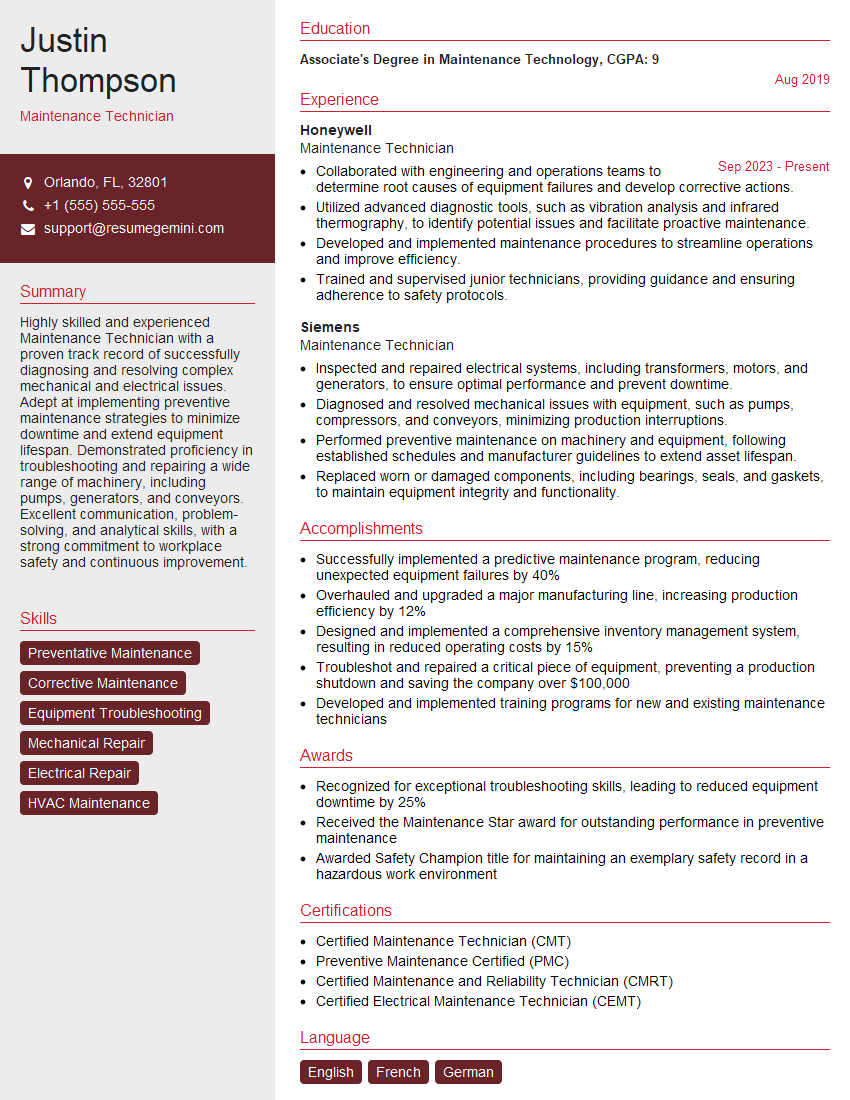
Maintenance Technician Resume Sample
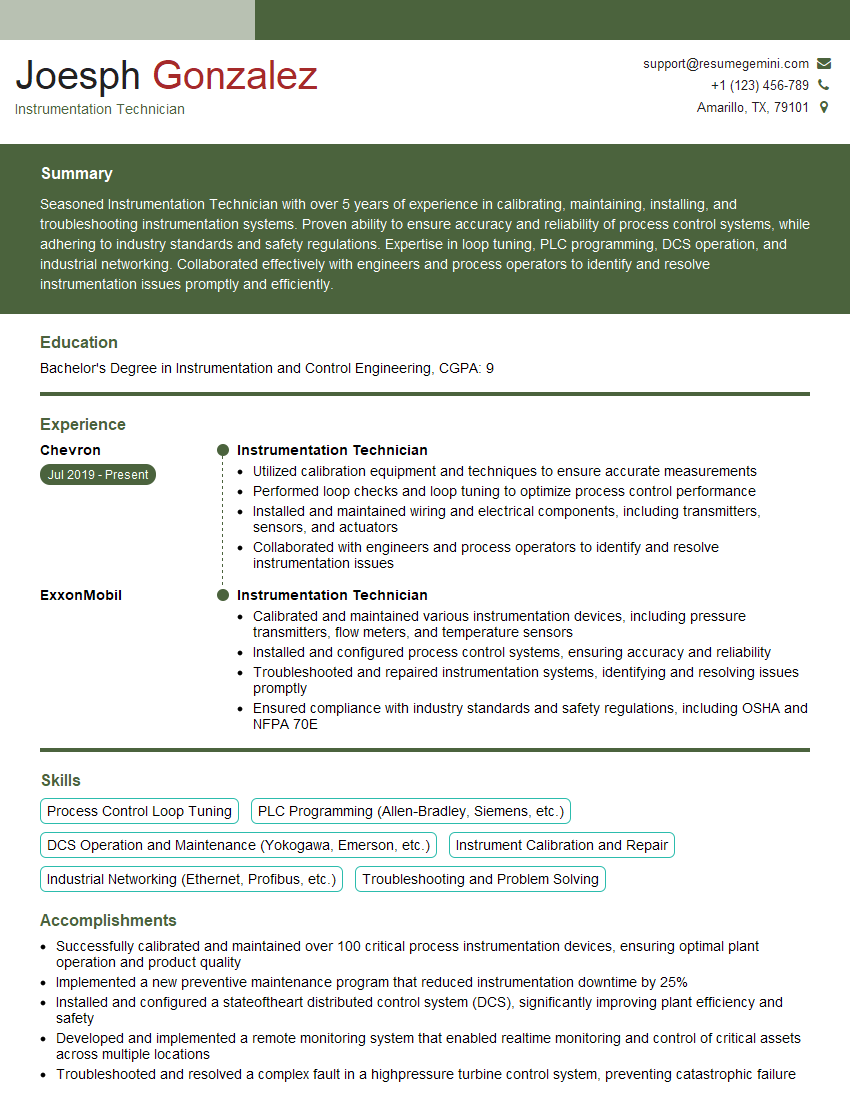
Instrumentation Technician Resume Sample
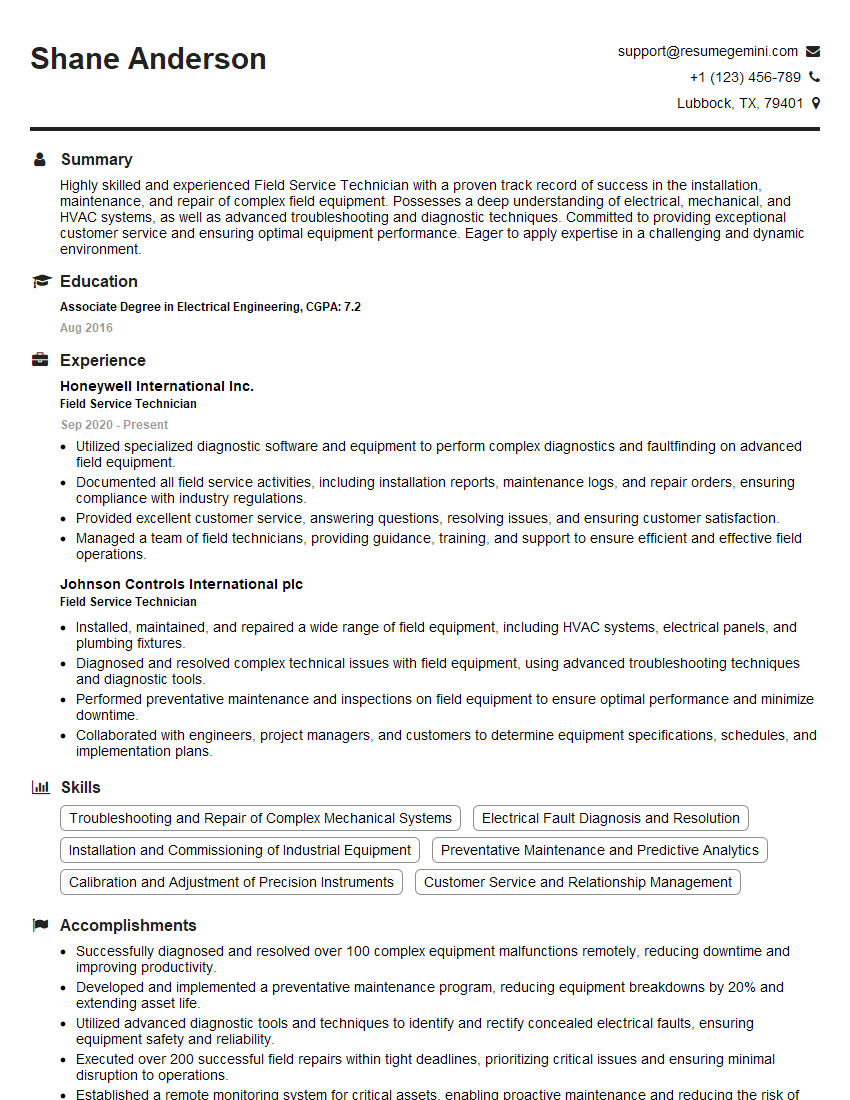
Field Service Technician Resume Sample

Robotics Technician Resume Sample

Machinist Resume Sample
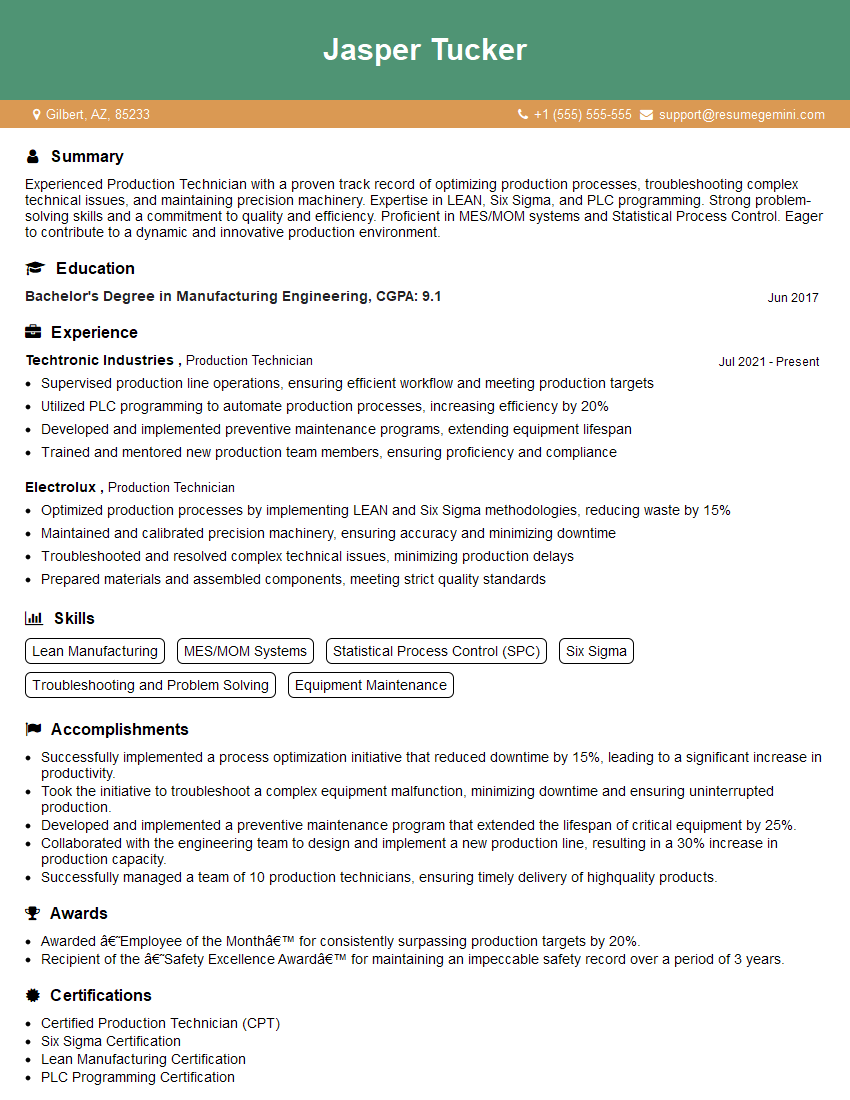
Production Technician Resume Sample
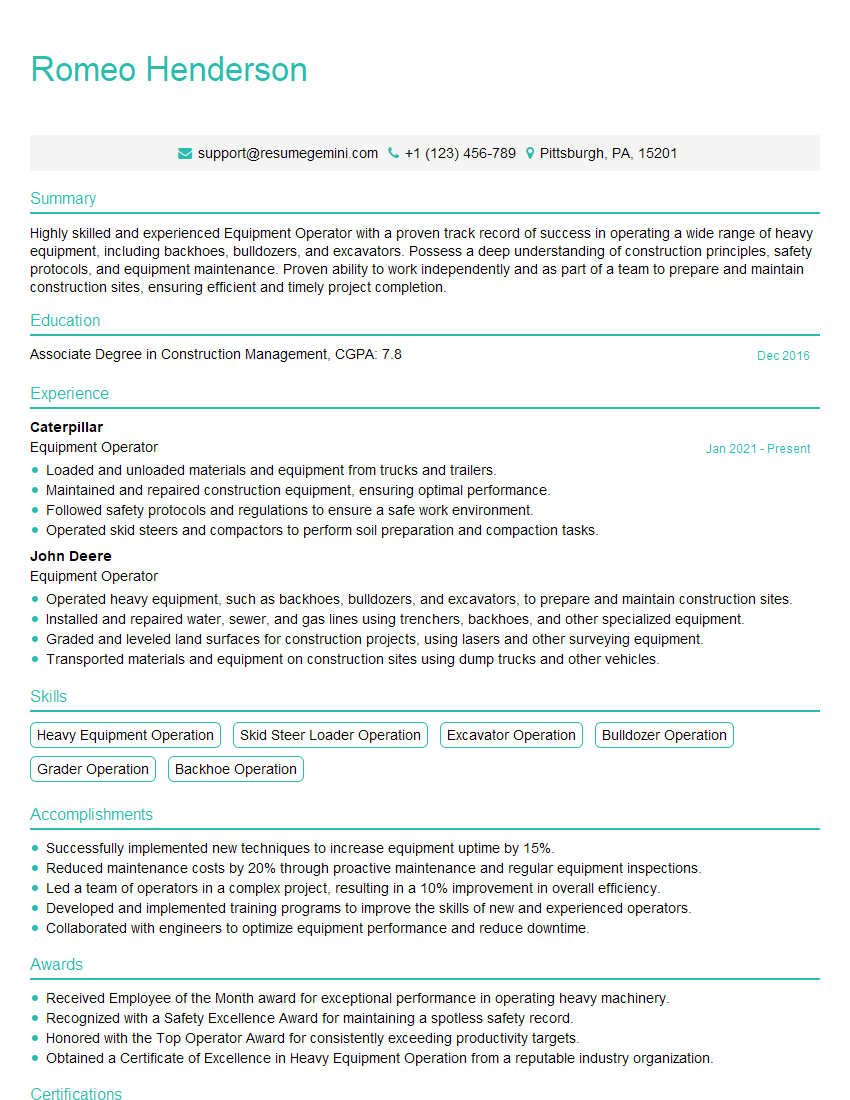
Equipment Operator Resume Sample
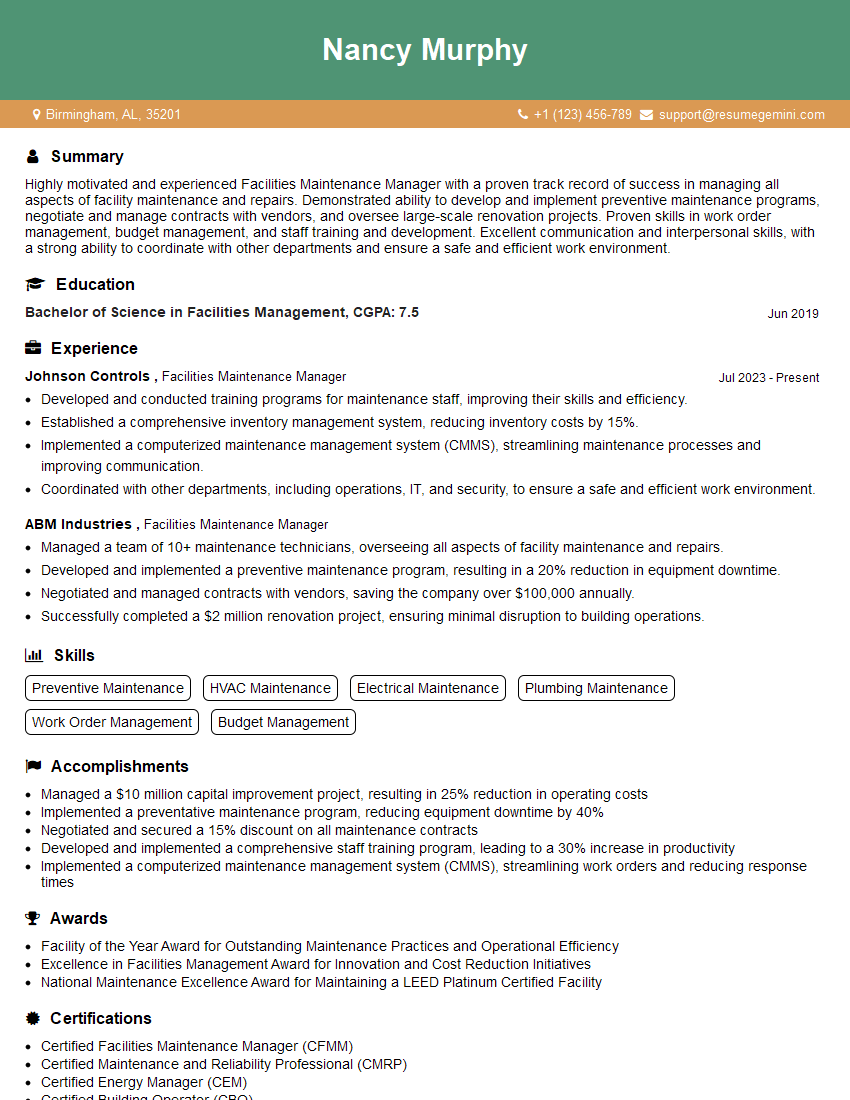
Facilities Maintenance Manager Resume Sample
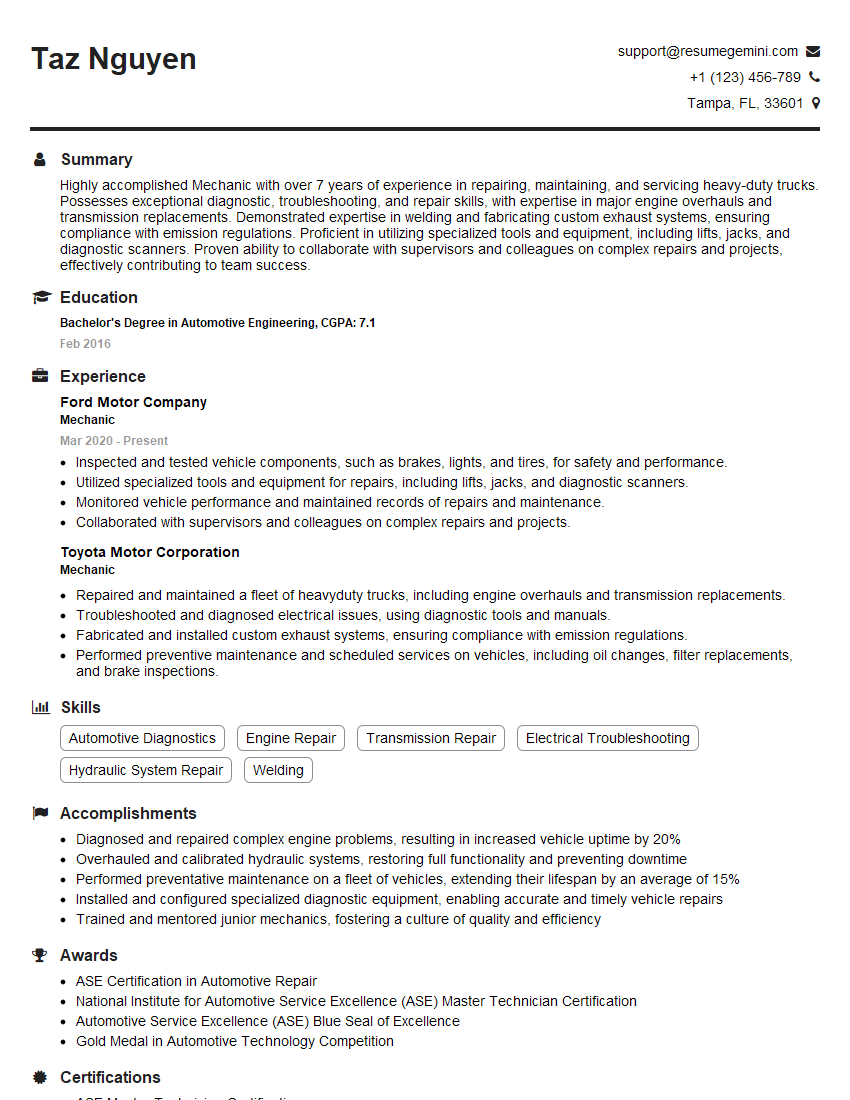
Mechanic Resume Sample
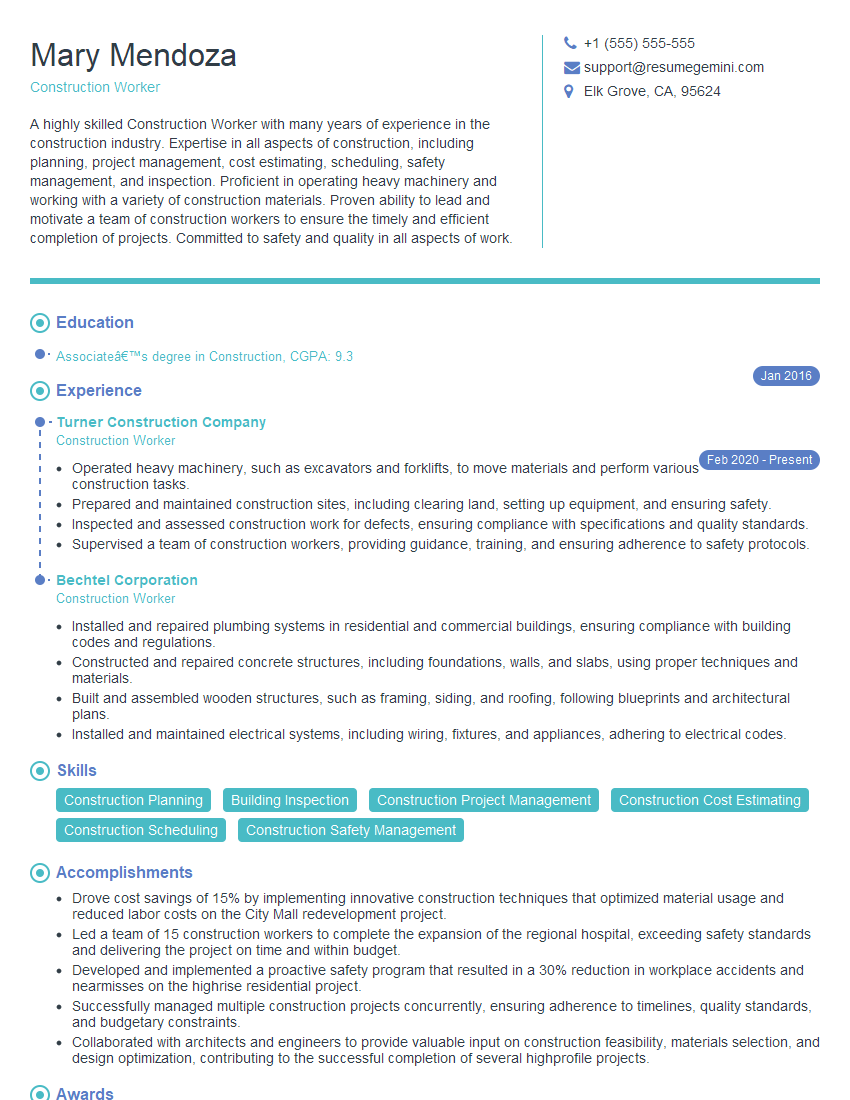
Construction Worker Resume Sample
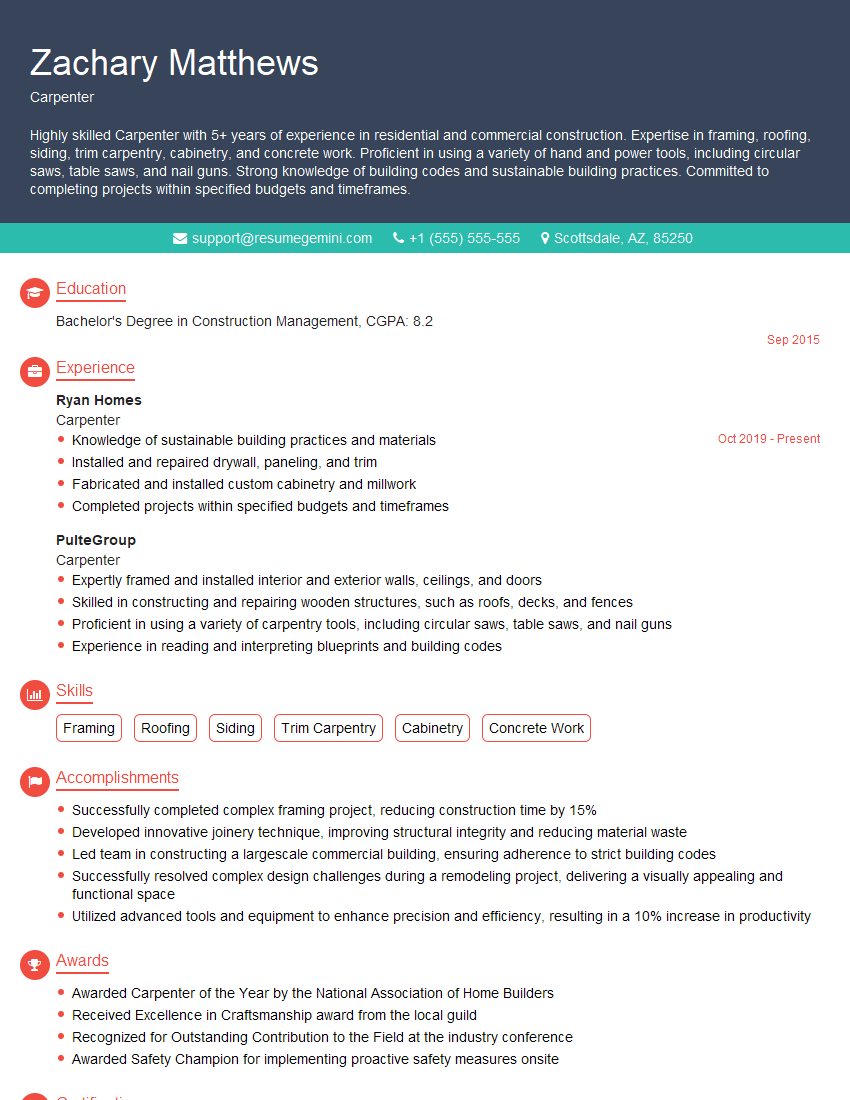
Carpenter Resume Sample
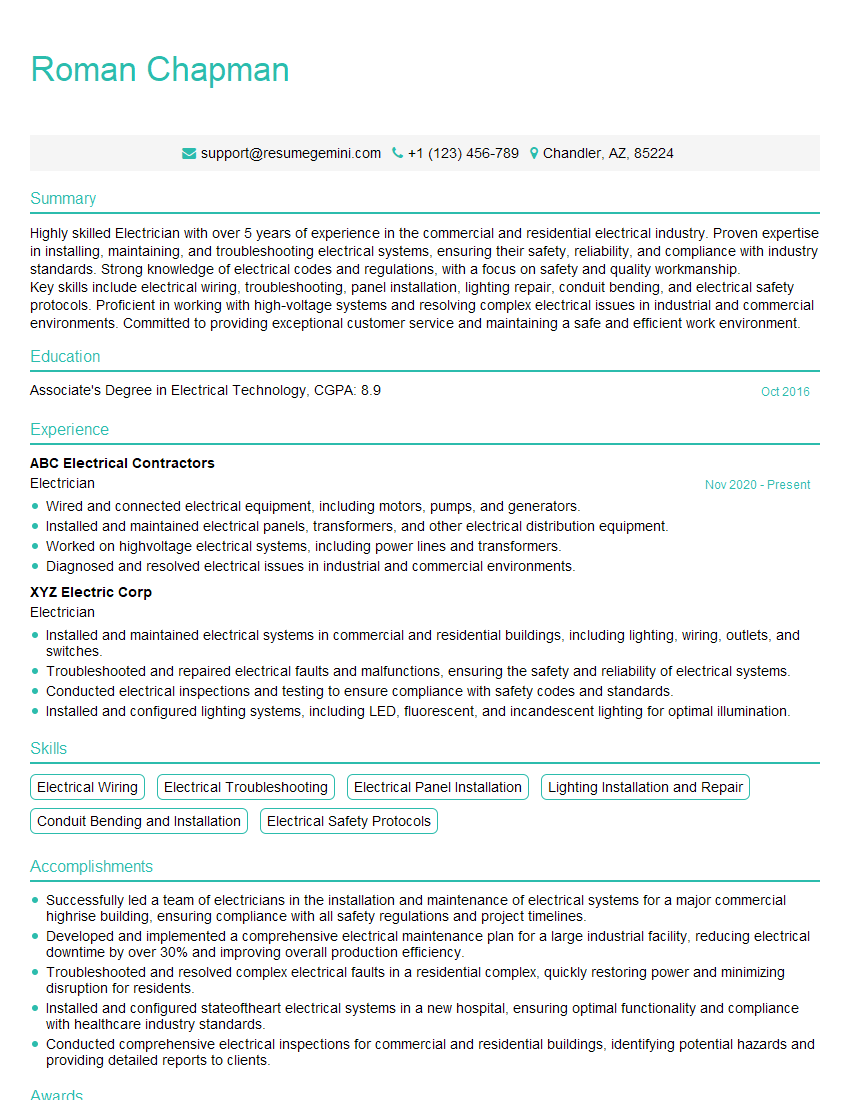
Electrician Resume Sample

Plumber Resume Sample
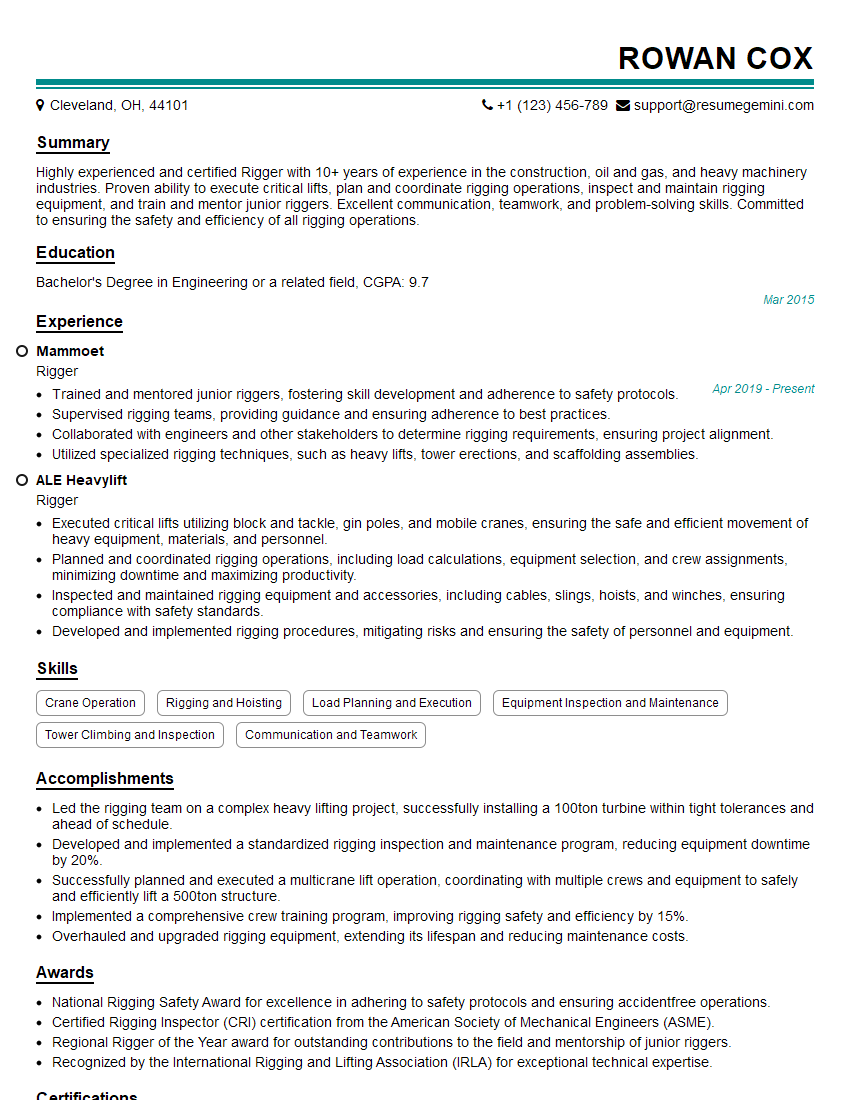
Rigger Resume Sample

Control Systems Technician Resume Sample
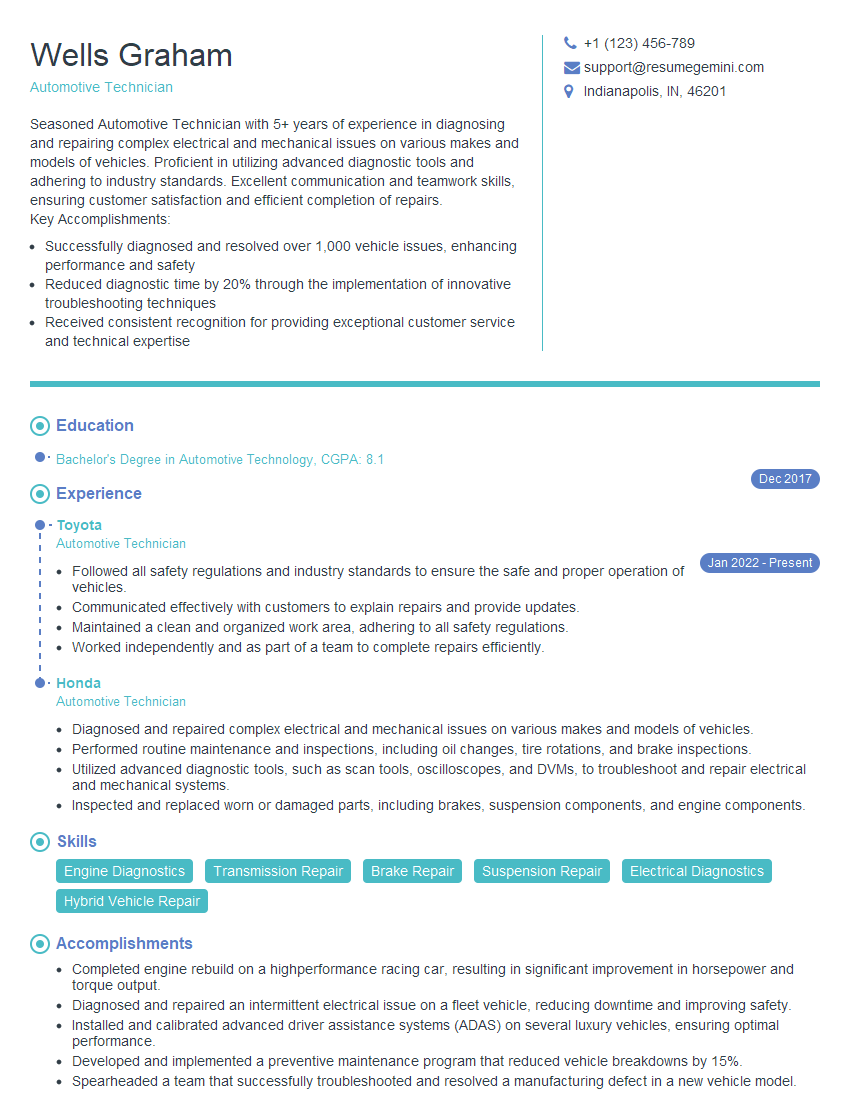
Automotive Technician Resume Sample
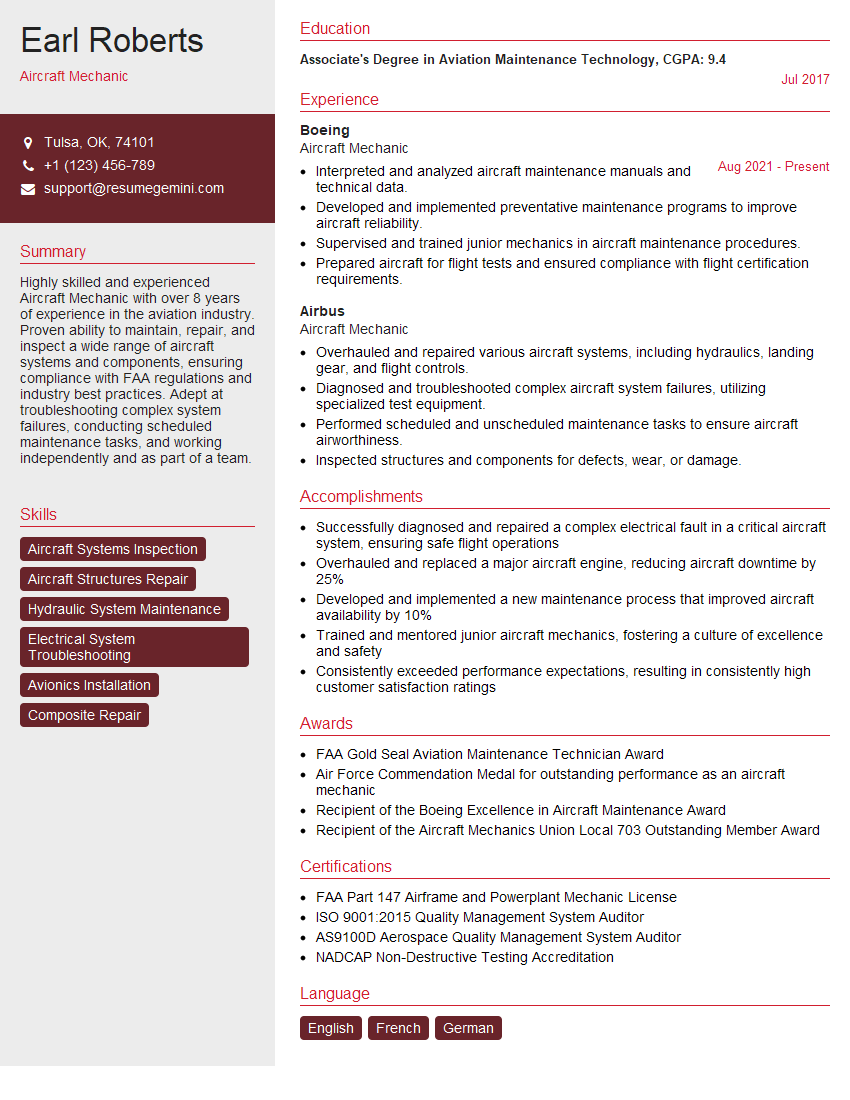
Aircraft Mechanic Resume Sample
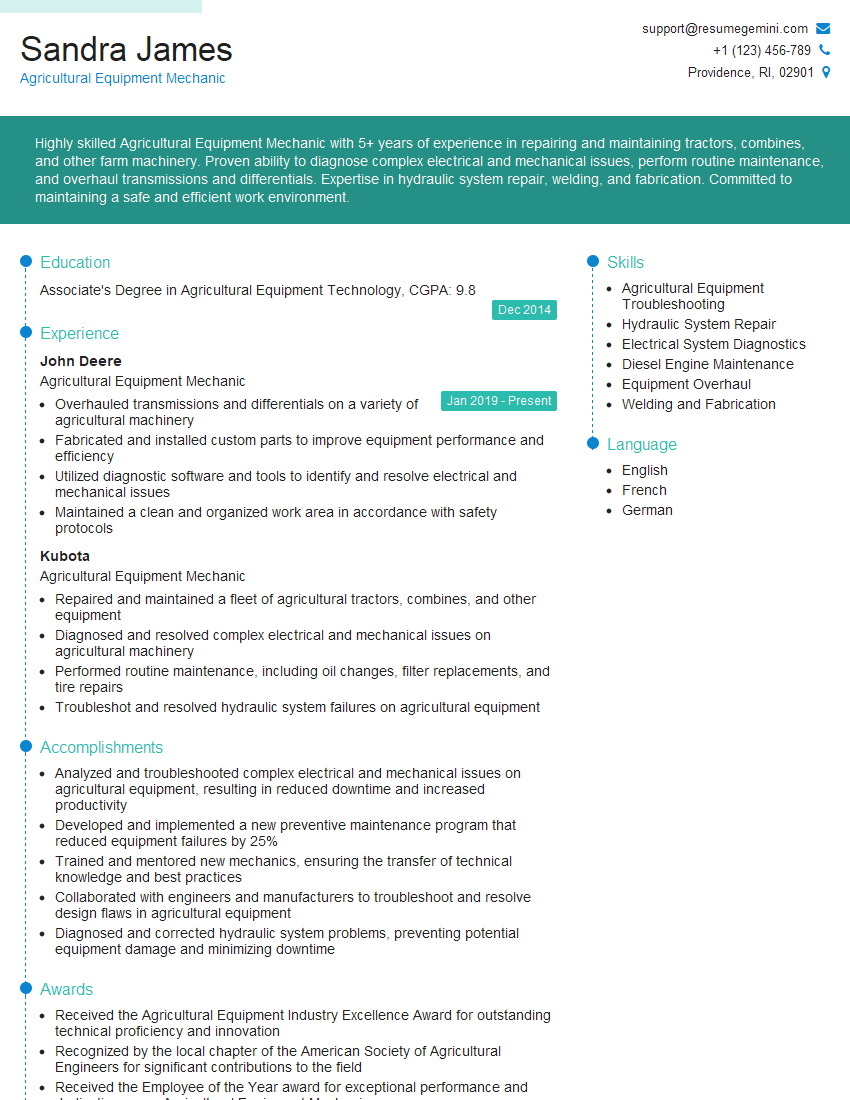
Agricultural Equipment Mechanic Resume Sample
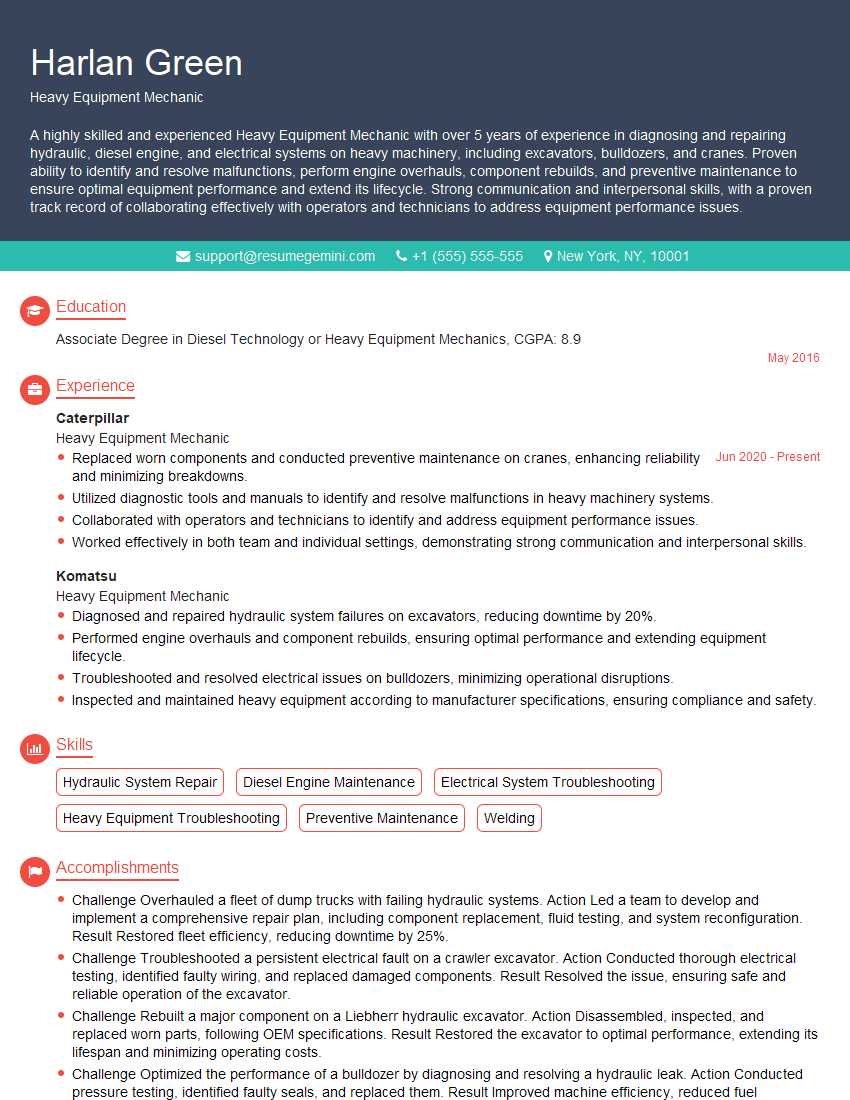
Heavy Equipment Mechanic Resume Sample

Marine Mechanic Resume Sample

Welder Resume Sample
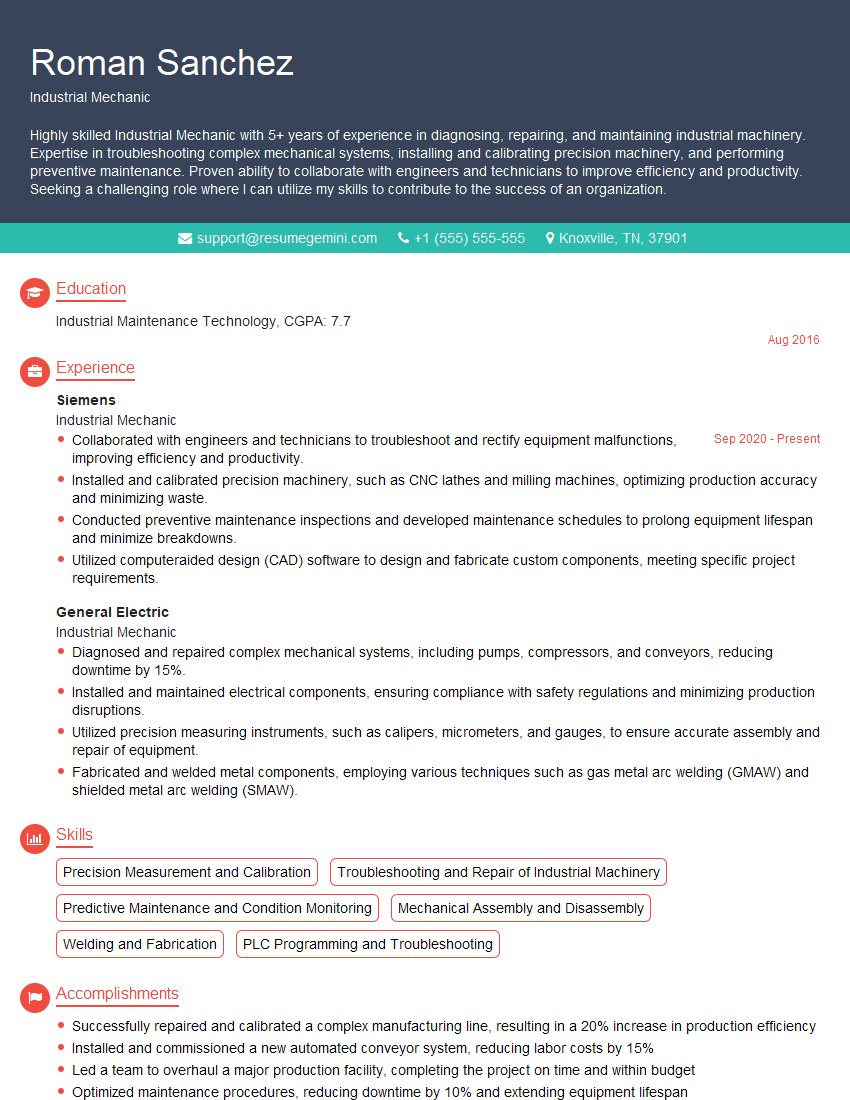
Industrial Mechanic Resume Sample

Millwright Resume Sample
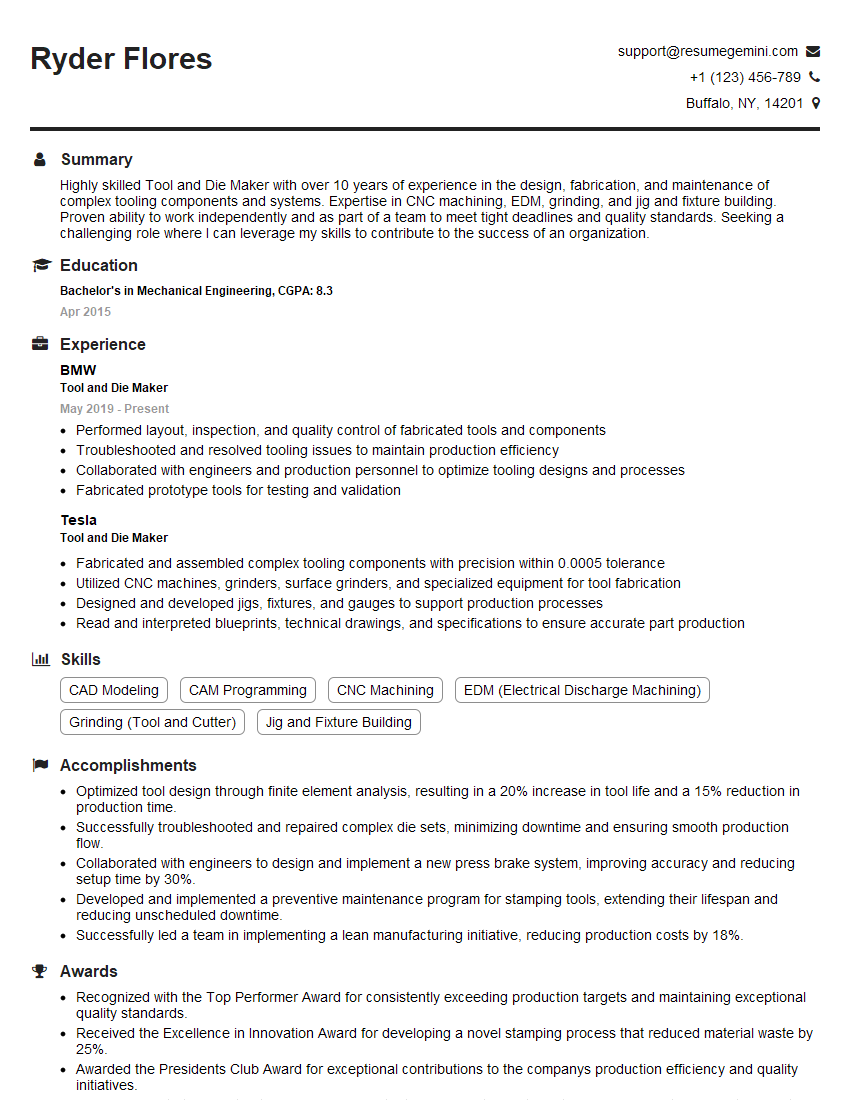
Tool and Die Maker Resume Sample
- Maintenance Technician
- Instrumentation Technician
- Field Service Technician
- Robotics Technician
- Machinist
- Production Technician
- Equipment Operator
- Facilities Maintenance Manager
- Mechanic
- Construction Worker
- Carpenter
- Electrician
- Plumber
- Rigger
- Control Systems Technician
- Automotive Technician
- Aircraft Mechanic
- Agricultural Equipment Mechanic
- Heavy Equipment Mechanic
- Marine Mechanic
- Welder
- Industrial Mechanic
- Millwright
- Tool and Die Maker
Explore more articles
Users Rating of Our Blogs
Share Your Experience
We value your feedback! Please rate our content and share your thoughts (optional).
What Readers Say About Our Blog
Attention music lovers!
Wow, All the best Sax Summer music !!!
Spotify: https://open.spotify.com/artist/6ShcdIT7rPVVaFEpgZQbUk
Apple Music: https://music.apple.com/fr/artist/jimmy-sax-black/1530501936
YouTube: https://music.youtube.com/browse/VLOLAK5uy_noClmC7abM6YpZsnySxRqt3LoalPf88No
Other Platforms and Free Downloads : https://fanlink.tv/jimmysaxblack
on google : https://www.google.com/search?q=22+AND+22+AND+22
on ChatGPT : https://chat.openai.com?q=who20jlJimmy20Black20Sax20Producer
Get back into the groove with Jimmy sax Black
Best regards,
Jimmy sax Black
www.jimmysaxblack.com
Hi I am a troller at The aquatic interview center and I suddenly went so fast in Roblox and it was gone when I reset.
Hi,
Business owners spend hours every week worrying about their website—or avoiding it because it feels overwhelming.
We’d like to take that off your plate:
$69/month. Everything handled.
Our team will:
Design a custom website—or completely overhaul your current one
Take care of hosting as an option
Handle edits and improvements—up to 60 minutes of work included every month
No setup fees, no annual commitments. Just a site that makes a strong first impression.
Find out if it’s right for you:
https://websolutionsgenius.com/awardwinningwebsites
Hello,
we currently offer a complimentary backlink and URL indexing test for search engine optimization professionals.
You can get complimentary indexing credits to test how link discovery works in practice.
No credit card is required and there is no recurring fee.
You can find details here:
https://wikipedia-backlinks.com/indexing/
Regards
NICE RESPONSE TO Q & A
hi
The aim of this message is regarding an unclaimed deposit of a deceased nationale that bears the same name as you. You are not relate to him as there are millions of people answering the names across around the world. But i will use my position to influence the release of the deposit to you for our mutual benefit.
Respond for full details and how to claim the deposit. This is 100% risk free. Send hello to my email id: lukachachibaialuka@gmail.com
Luka Chachibaialuka
Hey interviewgemini.com, just wanted to follow up on my last email.
We just launched Call the Monster, an parenting app that lets you summon friendly ‘monsters’ kids actually listen to.
We’re also running a giveaway for everyone who downloads the app. Since it’s brand new, there aren’t many users yet, which means you’ve got a much better chance of winning some great prizes.
You can check it out here: https://bit.ly/callamonsterapp
Or follow us on Instagram: https://www.instagram.com/callamonsterapp
Thanks,
Ryan
CEO – Call the Monster App
Hey interviewgemini.com, I saw your website and love your approach.
I just want this to look like spam email, but want to share something important to you. We just launched Call the Monster, a parenting app that lets you summon friendly ‘monsters’ kids actually listen to.
Parents are loving it for calming chaos before bedtime. Thought you might want to try it: https://bit.ly/callamonsterapp or just follow our fun monster lore on Instagram: https://www.instagram.com/callamonsterapp
Thanks,
Ryan
CEO – Call A Monster APP
To the interviewgemini.com Owner.
Dear interviewgemini.com Webmaster!
Hi interviewgemini.com Webmaster!
Dear interviewgemini.com Webmaster!
excellent
Hello,
We found issues with your domain’s email setup that may be sending your messages to spam or blocking them completely. InboxShield Mini shows you how to fix it in minutes — no tech skills required.
Scan your domain now for details: https://inboxshield-mini.com/
— Adam @ InboxShield Mini
support@inboxshield-mini.com
Reply STOP to unsubscribe
Hi, are you owner of interviewgemini.com? What if I told you I could help you find extra time in your schedule, reconnect with leads you didn’t even realize you missed, and bring in more “I want to work with you” conversations, without increasing your ad spend or hiring a full-time employee?
All with a flexible, budget-friendly service that could easily pay for itself. Sounds good?
Would it be nice to jump on a quick 10-minute call so I can show you exactly how we make this work?
Best,
Hapei
Marketing Director
Hey, I know you’re the owner of interviewgemini.com. I’ll be quick.
Fundraising for your business is tough and time-consuming. We make it easier by guaranteeing two private investor meetings each month, for six months. No demos, no pitch events – just direct introductions to active investors matched to your startup.
If youR17;re raising, this could help you build real momentum. Want me to send more info?
Hi, I represent an SEO company that specialises in getting you AI citations and higher rankings on Google. I’d like to offer you a 100% free SEO audit for your website. Would you be interested?
Hi, I represent an SEO company that specialises in getting you AI citations and higher rankings on Google. I’d like to offer you a 100% free SEO audit for your website. Would you be interested?