Every successful interview starts with knowing what to expect. In this blog, we’ll take you through the top Animal Feed Production interview questions, breaking them down with expert tips to help you deliver impactful answers. Step into your next interview fully prepared and ready to succeed.
Questions Asked in Animal Feed Production Interview
Q 1. Explain the difference between concentrates and roughages in animal feed.
Concentrates and roughages are two fundamental categories of feed ingredients, distinguished primarily by their fiber content and energy density. Think of it like this: roughages are the ‘filling’ and concentrates are the ‘nutrient-packed goodies’.
Roughages are high in fiber, relatively low in digestible energy, and provide essential structural carbohydrates. Examples include hay (alfalfa, grass), silage (fermented plant material), straw, and pasture. These are crucial for gut health and maintaining normal digestive function in herbivores and omnivores.
Concentrates, conversely, are low in fiber and high in digestible energy and nutrients. They’re like the energy boost in a meal! Examples include grains (corn, barley, wheat), oilseeds (soybean meal, canola meal), and protein supplements (fishmeal, meat and bone meal). Concentrates are essential for providing the energy and nutrients needed for growth, milk production, and other metabolic processes.
The optimal ratio of concentrates to roughages in an animal’s diet depends on several factors, including the animal’s species, age, physiological state (e.g., growth, lactation), and the type of production system.
Q 2. Describe the process of feed formulation, including nutrient requirements and ingredient selection.
Feed formulation is a precise science involving careful consideration of the animal’s nutrient requirements and the characteristics of available feed ingredients. It’s like creating a perfectly balanced recipe for optimal animal health and productivity.
The process typically starts with defining the nutrient requirements of the target animal. This is influenced by factors such as species, age, weight, breed, production level (e.g., milk yield, egg production), and environmental conditions. We use established nutrient requirement tables and prediction equations to estimate the daily energy and nutrient needs (protein, minerals, vitamins).
Next comes ingredient selection. This involves choosing ingredients that meet the nutritional requirements at the lowest cost while ensuring feed palatability and safety. We use ingredient databases containing information on nutrient composition, price, and availability. We also consider the physical characteristics of ingredients, like particle size and processing requirements.
Using sophisticated software, we formulate a feed mixture that meets the specified nutrient requirements while minimizing cost. This involves blending different ingredients in specific ratios to create a balanced feed. For example, formulating a dairy cow ration might involve corn, soybean meal, alfalfa hay, and mineral supplements in specific proportions based on the cow’s milk production goals.
Finally, the formulated diet undergoes testing and adjustments to ensure its quality and effectiveness. Regular monitoring of animal performance is critical in refining the formulation.
Q 3. What are the key quality control parameters for animal feed?
Quality control in animal feed manufacturing is paramount to ensure feed safety, efficacy, and animal health. We monitor numerous parameters throughout the production process.
- Nutrient Composition: Regular analysis of the feed’s nutrient content (crude protein, fat, fiber, minerals, vitamins) to verify that it meets the formulated specifications. This is done using standard laboratory techniques.
- Physical Quality: Assessment of feed characteristics like particle size, density, moisture content, and the absence of foreign materials (e.g., metal, stones). This is crucial for efficient feed processing and intake.
- Microbial Quality: Testing for the presence of harmful bacteria, molds, and mycotoxins, which can significantly impact animal health. We utilize microbiological assays and toxin detection methods.
- Chemical Quality: Analysis for the presence of pesticides, heavy metals, or other undesirable chemicals that may have contaminated the feed ingredients or during processing. This ensures feed safety.
These parameters are regularly monitored through sampling at various stages of the production process, from raw materials to finished feed, ensuring consistent quality.
Q 4. How do you ensure feed safety and prevent contamination?
Ensuring feed safety and preventing contamination requires a multi-faceted approach, starting from the selection of raw materials to the final product storage.
- Sourcing and Storage of Raw Materials: Careful selection of reputable suppliers who adhere to stringent quality control measures. Proper storage of raw materials to prevent spoilage and contamination, utilizing pest control measures as necessary.
- Hygiene and Sanitation: Maintaining impeccable cleanliness and hygiene in all processing facilities and equipment. Regular cleaning and disinfection protocols are crucial to prevent cross-contamination.
- Pest Control: Implementing effective pest control strategies to minimize infestation of insects, rodents, and other pests that can contaminate the feed.
- Mycotoxin Management: Implementing strategies to minimize mycotoxin contamination, including proper storage of raw materials, testing for mycotoxins, and the use of mycotoxin binders in feed formulations.
- Traceability: Implementing a robust traceability system to track the origin and movement of all feed ingredients and the finished product, facilitating quick identification of potential contamination sources.
Regular audits and training of personnel are essential for maintaining a robust feed safety program.
Q 5. What are the common challenges in animal feed manufacturing, and how do you address them?
Animal feed manufacturing faces various challenges, including fluctuating raw material prices, meeting stringent quality standards, and managing feed safety risks. Here’s how we address them:
- Raw Material Price Fluctuations: Employing strategies like hedging, long-term contracts with suppliers, and exploring alternative, cost-effective ingredients. Using feed formulation software to optimize ingredient selection based on price and nutritional value.
- Meeting Quality Standards: Implementing rigorous quality control measures at each stage of the process. Regular employee training on GMP (Good Manufacturing Practices) and HACCP (Hazard Analysis and Critical Control Points) principles.
- Feed Safety Risks: Implementing robust biosecurity measures to prevent contamination from pathogens, mycotoxins, and other hazards. Utilizing appropriate storage and transportation methods.
- Technological Advancements: Embracing technological advancements like automation, data analytics, and improved processing techniques to optimize efficiency and reduce costs.
- Sustainability: Focusing on environmentally sustainable practices, such as reducing waste, using recycled materials, and sourcing ingredients responsibly.
Proactive risk management, continuous improvement, and collaboration across the industry are vital for addressing these challenges.
Q 6. Explain the importance of palatability in animal feed.
Palatability, simply put, refers to how appealing a feed is to an animal. It’s like how humans choose foods they enjoy; animals have preferences too! A feed’s palatability significantly impacts feed intake, which directly affects animal growth, production efficiency, and overall health.
If an animal doesn’t find the feed palatable, it may eat less, leading to nutrient deficiencies and decreased performance. For example, a dairy cow consuming less feed will produce less milk. Similarly, a pig with poor feed intake will show slower growth rates.
Factors affecting palatability include:
- Taste and Odor: Certain ingredients have more appealing tastes and aromas than others. For example, molasses is frequently added to improve palatability.
- Texture and Physical Form: Animals have preferences for feed texture, whether it’s coarse, fine, or pelleted. Pelleting often enhances palatability.
- Nutrient Composition: The balance of nutrients in the feed also impacts palatability. Nutrient deficiencies may make the feed less appealing.
Therefore, optimizing feed palatability through ingredient selection and processing techniques is critical for maximizing feed intake and animal performance.
Q 7. Describe your experience with different feed processing techniques (e.g., pelleting, extrusion).
My experience encompasses various feed processing techniques, each with its advantages and disadvantages. The choice of technique depends on the target animal, feed ingredients, and desired feed characteristics.
Pelleting: This involves compressing finely ground feed ingredients into small cylindrical pellets. Pelleting improves feed handling, reduces dust, increases feed density, and enhances palatability. I’ve worked extensively with pellet mills, optimizing parameters like die temperature, moisture content, and pressure to achieve optimal pellet quality and durability. I’ve also managed troubleshooting pellet mill issues, like die wear and pellet breakage.
Extrusion: This technique uses high temperature and pressure to cook and shape the feed into various forms (e.g., expanded snacks, textured products). Extrusion improves digestibility, can enhance palatability, and extends feed shelf life. My experience includes working with different extruder types and optimizing extrusion parameters to achieve desired product characteristics. For example, I’ve been involved in developing extruded feeds for pets, enhancing protein digestibility and palatability.
Beyond these, I am familiar with other methods such as hammer milling, roller milling, and steam flaking, each tailored to specific needs.
Q 8. How do you interpret and use nutrient analysis reports?
Nutrient analysis reports are crucial for formulating balanced animal feeds. They provide the quantitative breakdown of various nutrients present in a feed ingredient or a complete feed. I interpret these reports by meticulously examining the levels of crude protein, crude fat, fiber (NDF and ADF), minerals (calcium, phosphorus, etc.), vitamins, and energy content. For example, a report showing low crude protein in a soybean meal batch would indicate the need to adjust the formulation or source a different batch to meet the animal’s protein requirements. I use this data to formulate feeds that are nutritionally adequate and cost-effective. This involves comparing the nutrient profile against established requirements for the target animal species (e.g., broiler chickens, dairy cows, pigs) at different growth stages. I also analyze the report for potential antinutritional factors, such as mycotoxins, which can negatively impact animal health and performance. This analysis ensures the feed meets quality standards and optimizes animal health and productivity.
Q 9. What are the common nutritional deficiencies in different animal species?
Nutritional deficiencies vary considerably depending on the animal species, breed, age, and production stage. For example:
- Poultry: Often suffer from deficiencies in calcium (affecting bone development and eggshell quality), phosphorus (essential for bone health and energy metabolism), and certain vitamins like vitamin A (vision and immune function), vitamin D (calcium absorption), and vitamin K (blood clotting).
- Swine: Common deficiencies include iron (anemia), zinc (growth and immune function), and copper (bone development and enzyme function). They’re also prone to issues with amino acid imbalances, particularly methionine and lysine (essential for protein synthesis).
- Ruminants (Cattle, Sheep, Goats): Can experience deficiencies in minerals like selenium (antioxidant defense), magnesium (muscle function and nerve transmission), and cobalt (vitamin B12 synthesis). Deficiencies in trace minerals can significantly impact reproduction and overall health.
- Fish: Specific requirements vary depending on the species, however, deficiencies in essential fatty acids (omega-3 and omega-6), certain vitamins, and minerals like iodine are common. These can lead to poor growth, immune suppression, and reproductive issues.
Identifying these deficiencies requires thorough knowledge of animal physiology and nutritional requirements, careful observation of animal health, and consistent monitoring of feed composition.
Q 10. Explain the role of probiotics and prebiotics in animal feed.
Probiotics and prebiotics play a vital role in enhancing gut health and improving nutrient utilization in animals. Probiotics are live microorganisms that, when administered in adequate amounts, confer a health benefit to the host. They help maintain a balanced gut microbiota, suppressing the growth of harmful bacteria and improving digestion. Examples include Lactobacillus and Bifidobacterium species. Prebiotics, on the other hand, are non-digestible food ingredients that selectively stimulate the growth and/or activity of beneficial bacteria in the gut. These are often fibers like fructooligosaccharides (FOS) and inulin. Think of probiotics as the beneficial bacteria themselves, and prebiotics as their food source. Together, they work synergistically to enhance the gut environment.
In animal feed, the incorporation of probiotics and prebiotics can reduce the need for antibiotics, improve nutrient digestibility, enhance immune function, and ultimately improve animal growth performance and health. For instance, adding probiotics to poultry feed can improve gut health, leading to better feed conversion and improved resistance to pathogens.
Q 11. How do you manage inventory and storage of feed ingredients?
Effective inventory and storage management of feed ingredients are crucial for maintaining feed quality and preventing losses. My strategy involves a combination of the First-In, First-Out (FIFO) method, proper storage facilities, and regular inventory checks. FIFO ensures that the oldest ingredients are used first, minimizing the risk of spoilage. Our storage facilities are designed to maintain optimal temperature and humidity levels for each ingredient, preventing moisture absorption, insect infestations, and microbial growth. We utilize a computerized inventory system that tracks ingredient quantities, expiration dates, and location. Regular physical inventory checks are conducted to verify the accuracy of the system and identify any discrepancies. This ensures we have enough ingredients to meet production demands while minimizing waste and maintaining feed quality.
For example, we store high-moisture ingredients like corn silage in airtight silos to prevent spoilage and maintain nutrient value, and we utilize climate-controlled warehouses for bagged feed ingredients to prevent insect and rodent infestations.
Q 12. What are your strategies for improving feed efficiency?
Improving feed efficiency involves a multifaceted approach. It’s not just about minimizing feed costs, but also maximizing nutrient utilization and animal performance. My strategies include:
- Precise feed formulation: Based on accurate nutrient analysis and the animal’s specific needs, ensuring that the feed provides optimal levels of essential nutrients without excess.
- Improved feed quality: Sourcing high-quality ingredients and storing them properly to minimize nutrient loss and ensure optimal palatability.
- Optimizing feeding strategies: Implementing appropriate feeding schedules, techniques, and management practices to ensure consistent feed intake and minimize feed wastage.
- Monitoring animal health: Detecting and addressing any health problems promptly to prevent reduced feed intake and efficiency.
- Employing feed additives: Including enzymes, probiotics, and prebiotics that improve nutrient digestibility and gut health.
- Regular monitoring and data analysis: Tracking feed intake, animal growth, and feed conversion ratio (FCR) to identify areas for improvement and adjust strategies accordingly.
For instance, by adding phytase to poultry feed, we can improve the availability of phosphorus, reducing the amount of inorganic phosphorus needed in the formulation and lowering feed costs while maintaining optimal bone development.
Q 13. How do you ensure compliance with feed regulations and standards?
Ensuring compliance with feed regulations and standards is paramount. This involves a multi-step process that begins with staying updated on current regulations. We maintain detailed records of ingredient sourcing, processing, formulation, and quality control testing at each stage of feed production. This includes regular analysis of ingredients and finished feed for nutrient content, mycotoxins, and other contaminants. We use certified laboratories for this analysis and maintain documentation of all results. Our facilities adhere to strict hygiene and sanitation protocols to prevent contamination and ensure the safety of the finished product. We also ensure that all labeling and packaging comply with legal requirements, including accurate declaration of ingredients and nutritional information. Internal audits and regular reviews of our processes are conducted to ensure ongoing compliance. Finally, we maintain open communication with regulatory authorities to address any concerns or requests promptly. We understand that failing to adhere to these standards can result in significant penalties, reputational damage, and risks to animal health. This proactive approach ensures that our products are safe, legal, and meet the high standards required by the industry and our customers.
Q 14. Describe your experience with feed cost analysis and budgeting.
Feed cost analysis and budgeting are critical for profitability in animal feed production. My approach involves detailed cost accounting for each ingredient, factoring in purchase price, transportation, handling, and storage costs. We use market analysis tools and forecasting methods to predict price fluctuations and adjust our procurement strategies accordingly. Formulations are designed to balance nutritional requirements with cost-effectiveness, considering alternative ingredients and substitutions when appropriate. Regular budgeting and financial analysis allow us to track actual costs against projected costs and identify any discrepancies. This enables us to make timely adjustments to purchasing, production, and pricing strategies. For example, if the price of soybean meal increases significantly, we might explore using alternative protein sources, such as distillers’ grains, to maintain profitability without compromising nutritional adequacy of the feed. Using advanced software for feed formulation and cost optimization is essential for efficient management of feed costs and improved profitability.
Q 15. How do you troubleshoot problems in the feed manufacturing process?
Troubleshooting in feed manufacturing involves a systematic approach. It starts with identifying the problem – is it a quality issue (e.g., inconsistent pellet size, off-color feed), a production issue (e.g., machine malfunction, low throughput), or a storage issue (e.g., spoilage, infestation)? Once identified, we use a combination of methods. This includes checking the raw materials for quality issues (moisture content, contamination), inspecting the machinery for wear and tear or malfunctions, and reviewing the production logs to pinpoint when the problem started. We might use statistical process control (SPC) charts to track key parameters like pellet hardness and moisture content, helping us identify trends and anomalies. For example, if pellet durability is consistently low, we might investigate the die condition, steam pressure, or the moisture content of the ingredients. If we see an increase in bacterial counts, we might trace it to a specific ingredient batch or a sanitation failure. Often, a root cause analysis helps to identify underlying systemic flaws rather than just treating symptoms.
Let’s say we’re facing inconsistent pellet size. We’d first check the die for wear or damage. Second, we’d verify the correct settings on the pellet mill – roller gap and pressure. Third, we’d analyze the moisture content of the mash going into the mill; inconsistent moisture leads to uneven pellet formation. We’d also examine the ingredient distribution within the mixer to rule out segregation issues. Documenting each step, including findings and corrective actions, is essential for future reference and continuous improvement.
Career Expert Tips:
- Ace those interviews! Prepare effectively by reviewing the Top 50 Most Common Interview Questions on ResumeGemini.
- Navigate your job search with confidence! Explore a wide range of Career Tips on ResumeGemini. Learn about common challenges and recommendations to overcome them.
- Craft the perfect resume! Master the Art of Resume Writing with ResumeGemini’s guide. Showcase your unique qualifications and achievements effectively.
- Don’t miss out on holiday savings! Build your dream resume with ResumeGemini’s ATS optimized templates.
Q 16. Explain your understanding of different feed delivery systems.
Feed delivery systems are crucial for efficient and timely delivery of feed to animals. They vary depending on the type of animal, the scale of the operation, and the feed type. Common systems include:
- Auger systems: These use rotating screws to move feed through pipes or troughs. They are suitable for dry feeds and relatively short distances. Think of them as a long, continuous corkscrew pushing the feed along.
- Belt conveyors: These use a moving belt to transport feed over longer distances and across varying elevations. They’re efficient for large-scale operations and often used in feed mills to move materials between processing stages.
- Pneumatic systems: These use air pressure to convey feed, ideal for transporting finely ground materials or for longer distances. Picture this like blowing feed through tubes, similar to a vacuum cleaner in reverse.
- Automated feed delivery systems: These integrate sensors, controllers, and programmable logic controllers (PLCs) for precise feed allocation and timing, often used in modern farming for optimized animal feeding.
The choice of system depends on factors like budget, distance, feed type, and the desired level of automation. For example, a small poultry farm might use a simple auger system, while a large-scale pig farm could employ a combination of belt conveyors and automated systems to distribute feed to different pens.
Q 17. How do you conduct quality control tests on finished feed products?
Quality control (QC) on finished feed involves several steps to ensure it meets the specified nutritional profile and is free from contaminants. We perform tests on representative samples drawn from various points in the production process, including the finished product in storage. These tests include:
- Physical tests: This checks pellet size, hardness, and density using tools like a pellet hardness tester and sieves. Consistency here is key for proper animal digestion and feed intake.
- Chemical analysis: This determines the nutrient composition (protein, fat, fiber, minerals, vitamins) using techniques like near-infrared spectroscopy (NIR) and wet chemistry methods. This guarantees the feed meets the stated nutritional label.
- Microbiological analysis: This tests for the presence of harmful bacteria, molds, and yeasts to ensure feed safety and prevent spoilage. We might use plate counts to enumerate the microbial populations.
- Toxin analysis: This involves testing for mycotoxins (produced by fungi) and other harmful substances. Such analyses are vital for preventing detrimental health consequences for the animals.
Results are compared against pre-defined specifications. Any deviations trigger investigation and corrective actions to prevent further issues. A well-documented QC program is crucial for traceability, ensuring accountability and preventing problems down the line.
Q 18. Describe your experience with different types of feed mixers.
I have experience with various feed mixers, each with its own advantages and disadvantages. They range from simple horizontal mixers to complex vertical mixers. The choice of mixer depends on the feed ingredients, the desired mixing uniformity, and the production capacity.
- Horizontal drum mixers: These are relatively simple and inexpensive, suitable for smaller-scale operations. They are effective for blending dry ingredients but might not be as efficient for high-moisture ingredients.
- Vertical mixers: These offer more efficient mixing, especially for high-moisture ingredients, as they minimize segregation during the mixing process. They also require less floor space compared to their horizontal counterparts.
- Paddle mixers: These utilize paddles rotating within a trough to achieve mixing. The design of the paddles influences the mixing efficiency.
- Ribbon mixers: These are commonly used for mixing dry ingredients uniformly. The ribbon-shaped mixing element ensures that material from the outer edge of the mixer moves towards the center, preventing segregation.
For example, when dealing with sticky or high-moisture ingredients like molasses, a vertical mixer is preferable to minimize sticking to the walls of the mixer. Proper mixer selection greatly impacts the final feed quality and uniformity.
Q 19. How do you handle ingredient shortages or supply chain disruptions?
Ingredient shortages or supply chain disruptions are a significant challenge in feed production. Our approach involves a multi-pronged strategy. This begins with establishing strong relationships with multiple suppliers to diversify our sourcing and mitigate risks associated with single-supplier dependence. We also carefully monitor market trends and potential disruptions through regular market analysis reports and industry news. Furthermore, we maintain a buffer stock of essential ingredients to absorb short-term fluctuations.
When a shortage occurs, we might explore alternative ingredients that offer similar nutritional value. This necessitates a thorough evaluation to ensure the substitute does not negatively impact the feed’s nutritional profile or animal performance. For example, if soybean meal is scarce, we might use sunflower meal, but only after careful nutritional analysis and formulation adjustments. We might also negotiate contracts with suppliers for guaranteed minimum supply or explore sourcing from alternative regions.
Transparent communication with our customers is vital, keeping them informed of any potential delays or adjustments to the feed formulation. Effective communication prevents misunderstandings and maintains trust during challenging times.
Q 20. What are your methods for evaluating the effectiveness of different feed formulations?
Evaluating feed formulation effectiveness involves a combination of laboratory analysis and real-world animal performance trials. We start with analyzing the feed’s nutritional composition in the lab using methods outlined earlier. This verifies that the formulation meets our target specifications. However, laboratory analysis alone is insufficient for a complete assessment.
We then conduct feeding trials with the target animal species. This typically involves dividing the animals into groups, each receiving a different diet, including the new formulation and a control diet. We monitor various performance indicators over a set period. These indicators might include:
- Growth rate: Weight gain or increase in body mass.
- Feed conversion ratio (FCR): The amount of feed consumed per unit of weight gain. A lower FCR is better.
- Feed intake: The amount of feed consumed daily.
- Health indicators: Mortality rates, incidence of diseases.
Statistical analysis of the data helps us determine if the new formulation leads to statistically significant improvements in animal performance compared to the control diet. This ensures the formulation’s effectiveness in practical settings. The results of such trials are used to refine the formulation further or finalize it for commercial use.
Q 21. How do you address customer complaints related to feed quality or performance?
Addressing customer complaints about feed quality or performance starts with promptly acknowledging the concern and initiating a thorough investigation. We collect detailed information about the complaint, including the type of feed, the batch number, the affected animals, and the specific problem observed (e.g., poor growth, reduced egg production, unusual behavior). We then thoroughly examine the production records for that batch to identify potential issues during processing, storage, or transportation.
We might collect samples from the affected feed batch and conduct laboratory analysis to compare them with the original formulation specifications. In some cases, we might visit the customer’s farm to observe the animals’ condition and feed handling practices firsthand. This direct interaction helps eliminate any potential issues related to handling or storage on the farm’s end. Once we’ve identified the root cause of the complaint, we work towards a resolution, which may include offering a replacement feed, providing a credit, or recommending corrective measures. We maintain transparent communication throughout the process to maintain customer trust and demonstrate our commitment to quality.
A well-documented complaint resolution process and proactive monitoring of feedback from customers helps to improve future production and reduce similar complaints.
Q 22. What is your experience with animal feeding trials and data interpretation?
My experience with animal feeding trials encompasses all stages, from experimental design and data collection to statistical analysis and report writing. I’ve conducted numerous trials across various species, including poultry, swine, and dairy cattle, focusing on optimizing nutrient utilization and improving animal performance. For example, in a recent trial with broiler chickens, I investigated the impact of a novel enzyme supplement on feed conversion ratio. Data interpretation involves using statistical software like SAS and R to analyze the collected data, identifying significant differences between treatment groups and drawing meaningful conclusions. I’m adept at visualizing data using graphs and charts to present findings clearly and concisely to both technical and non-technical audiences. This involves rigorously assessing the validity of results, considering potential confounding factors and sources of error.
Q 23. Explain your understanding of feed digestibility and its impact on animal performance.
Feed digestibility refers to the proportion of nutrients in feed that are absorbed and utilized by the animal. It’s a crucial factor influencing animal performance because poorly digestible feed leads to lower nutrient absorption, resulting in reduced growth rates, milk production, or egg production, depending on the species. For instance, if a feed has low protein digestibility, the animal won’t absorb enough amino acids to build muscle or produce milk efficiently. Factors affecting digestibility include feed ingredients (e.g., grain quality, processing methods), animal species and age, and gut health. We assess digestibility through methods like in-vivo trials (measuring nutrient excretion in feces) or in-vitro techniques (simulating digestion in a laboratory setting). Improving digestibility often involves employing feed processing techniques like pelleting or extrusion, which increase the surface area for enzymatic action, or adding feed enzymes that break down complex carbohydrates or proteins. Analyzing feed digestibility data allows us to formulate cost-effective diets that maximize nutrient utilization and animal productivity.
Q 24. How do you maintain and improve the efficiency of feed mill equipment?
Maintaining and improving feed mill efficiency requires a multi-pronged approach focusing on preventative maintenance, regular inspections, and operator training. Preventative maintenance includes scheduled lubrication, cleaning, and part replacements based on manufacturer recommendations. This minimizes downtime and extends the lifespan of equipment. Regular inspections identify potential problems early on, such as wear and tear on rollers or damage to screens. Proper cleaning protocols are essential to prevent cross-contamination and ensure product quality. Effective operator training is vital; well-trained operators can recognize and address minor issues before they become major problems. Implementing a computerized maintenance management system (CMMS) can streamline the entire process, tracking maintenance schedules, recording repairs, and helping to predict future maintenance needs. For example, we use a CMMS to track the performance of our hammer mills, identifying patterns that might indicate the need for preventative maintenance like replacing worn hammers before they cause significant production disruptions.
Q 25. What safety protocols do you follow in a feed mill environment?
Safety is paramount in a feed mill environment. Our protocols cover personal protective equipment (PPE), machine guarding, lockout/tagout procedures, and emergency response plans. All personnel are required to wear appropriate PPE, including safety glasses, hearing protection, and dust masks, depending on the task. Machine guarding prevents accidental contact with moving parts, while lockout/tagout procedures ensure equipment is safely shut down before maintenance or repair. We conduct regular safety training and drills to ensure everyone is aware of potential hazards and knows how to respond in emergency situations, such as fire or equipment malfunctions. We maintain a clean and organized workspace to minimize trip hazards and maintain clear pathways. Furthermore, we adhere to strict guidelines regarding dust control to minimize respiratory hazards. Proper storage of raw materials and finished products is also critical to avoid accidents and maintain product quality.
Q 26. Describe your experience with implementing and managing feed programs.
My experience in implementing and managing feed programs begins with a thorough understanding of the animal’s nutritional requirements and production goals. This includes assessing the current feed program’s effectiveness and identifying areas for improvement. For example, in a dairy farm, we analyzed milk production data alongside the existing feed formulation to reveal deficiencies in protein and energy. We then developed a new feed program tailored to the specific needs of the cows, adjusting the nutrient levels to optimize milk production and improve overall herd health. Program implementation involves careful monitoring of feed intake, animal performance, and feed costs. Regular adjustments are made based on monitoring data and feedback from farmers or farm managers. Effective management involves utilizing technology like feed management software to track feed inventory, production costs, and animal performance data. This data-driven approach enables us to make informed decisions, optimize efficiency, and achieve the best possible results.
Q 27. How do you stay updated on the latest advancements in animal feed science and technology?
Staying current in animal feed science and technology is critical. I accomplish this through several avenues. I regularly read scientific journals such as the Journal of Animal Science and Poultry Science, attending industry conferences and workshops like those hosted by the American Society of Animal Science. I actively participate in professional organizations such as the American Feed Industry Association (AFIA) to connect with other professionals and learn about the latest advancements. Online resources and industry publications provide additional information on new feed ingredients, processing technologies, and regulatory changes. I also maintain a network of colleagues and researchers in the field with whom I exchange ideas and findings. Continuous learning keeps me abreast of emerging trends and allows me to apply the most up-to-date knowledge in my work.
Q 28. What are your salary expectations for this role?
My salary expectations for this role are in the range of $[Lower Bound] to $[Upper Bound] annually, depending on the specific responsibilities and benefits package offered. This is based on my experience, qualifications, and the current market rate for similar positions.
Key Topics to Learn for Animal Feed Production Interview
- Raw Material Procurement and Quality Control: Understanding sourcing, quality assessment (e.g., nutrient analysis, mycotoxin testing), and storage of raw materials like grains, protein sources, and vitamins/minerals.
- Feed Formulation and Nutrition: Applying knowledge of animal nutritional requirements (depending on species and life stage) to formulate balanced rations using various software and considering cost-effectiveness.
- Feed Manufacturing Processes: Familiarity with different feed manufacturing techniques (e.g., pelleting, extrusion, mashing), equipment operation, and quality assurance procedures throughout the production line.
- Feed Safety and Regulations: Understanding and complying with relevant food safety regulations, GMPs (Good Manufacturing Practices), and biosecurity protocols to minimize contamination and ensure product safety.
- Quality Control and Assurance: Implementing and interpreting quality control measures, analyzing data, and identifying areas for improvement in the production process to maintain consistent product quality.
- Cost Management and Efficiency: Analyzing production costs, optimizing resource utilization, and implementing strategies for waste reduction and improved profitability.
- Sustainability and Environmental Impact: Understanding the environmental footprint of feed production, exploring sustainable practices (e.g., reducing energy consumption, responsible waste management), and adhering to environmental regulations.
- Troubleshooting and Problem-Solving: Diagnosing and resolving issues related to feed quality, equipment malfunctions, and production bottlenecks, using analytical and problem-solving skills.
- Data Analysis and Interpretation: Utilizing data from various sources (e.g., production records, quality control tests) to identify trends, make informed decisions, and continuously improve processes.
Next Steps
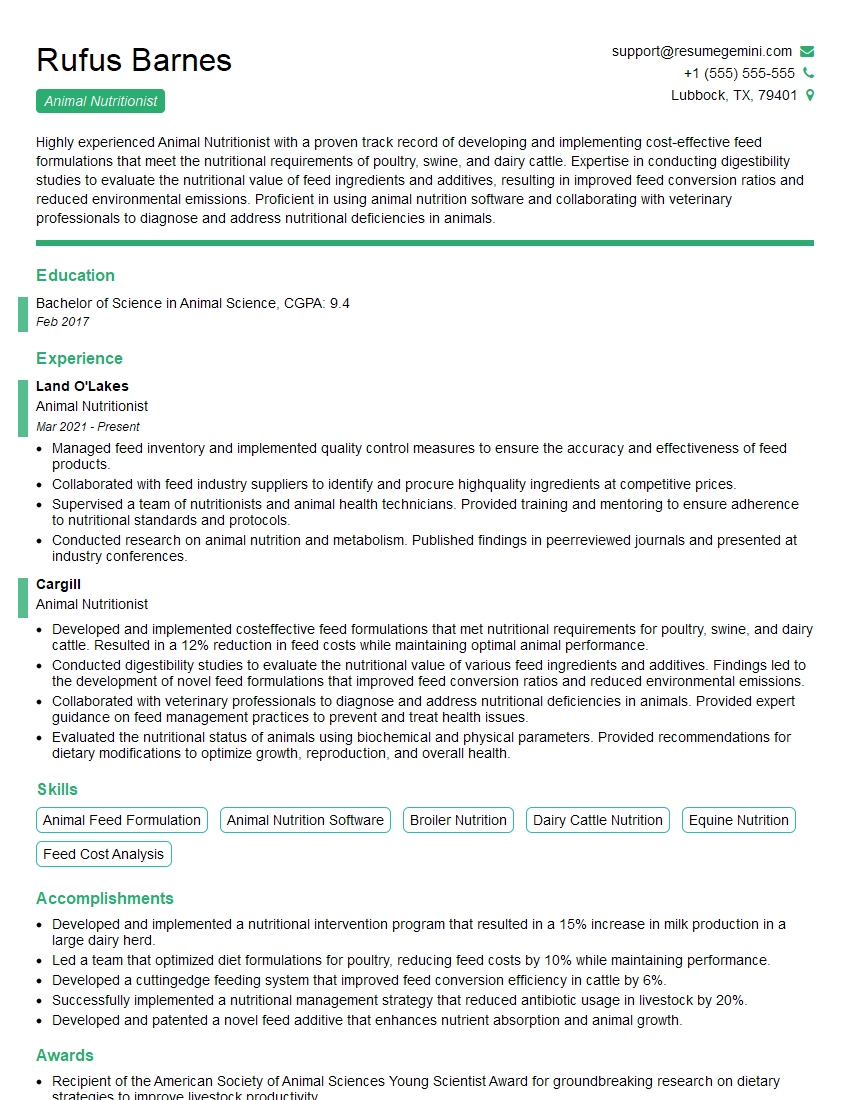
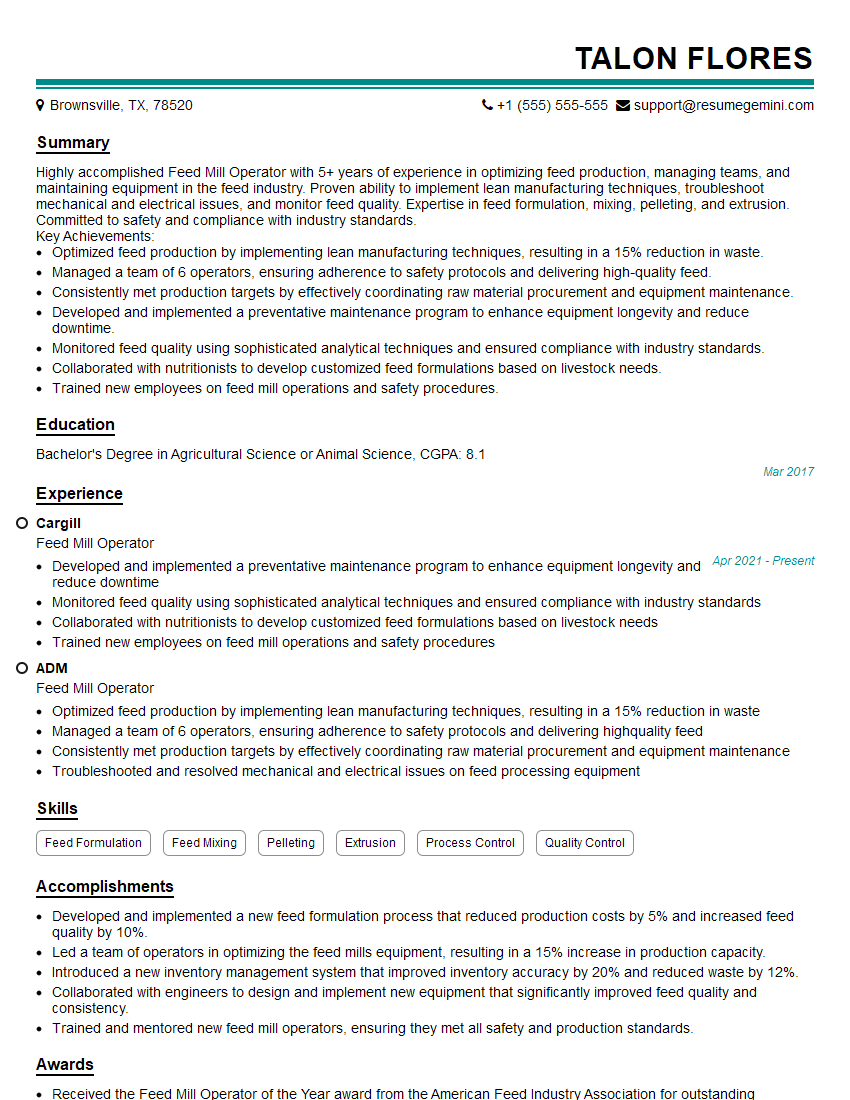
Mastering Animal Feed Production opens doors to a rewarding career with opportunities for growth in a vital industry. A strong understanding of these key areas will significantly boost your interview performance and career prospects. Creating an ATS-friendly resume is crucial for getting your application noticed by recruiters. To enhance your resume and increase your chances of landing your dream job, we strongly recommend using ResumeGemini. ResumeGemini provides a user-friendly platform and offers examples of resumes tailored to the Animal Feed Production industry to help you present your skills and experience effectively.
Explore more articles
Users Rating of Our Blogs
Share Your Experience
We value your feedback! Please rate our content and share your thoughts (optional).
What Readers Say About Our Blog
Very informative content, great job.
good