Preparation is the key to success in any interview. In this post, we’ll explore crucial Chemical Process Engineering interview questions and equip you with strategies to craft impactful answers. Whether you’re a beginner or a pro, these tips will elevate your preparation.
Questions Asked in Chemical Process Engineering Interview
Q 1. Explain the principles of mass and energy balances.
Mass and energy balances are fundamental principles in chemical process engineering, ensuring that matter and energy are conserved within a system. Think of it like a perfectly balanced scale: what goes in must come out, whether it’s mass or energy.
Mass Balance: This principle states that the mass entering a system must equal the mass leaving the system plus any accumulation within the system. Mathematically, it’s represented as:
Input - Output = AccumulationFor example, in a continuous stirred tank reactor (CSTR), the mass flow rate of reactants entering equals the mass flow rate of products and unreacted reactants leaving, assuming steady-state operation (no accumulation).
Energy Balance: Similarly, the energy balance states that the total energy entering a system must equal the total energy leaving the system plus any change in the system’s internal energy. This includes heat transfer, work done, and changes in enthalpy.
Energy In - Energy Out = Change in Internal EnergyImagine heating water in a kettle. The energy input (from the electrical heating element) equals the energy gained by the water (increase in temperature) plus any energy lost to the surroundings (heat loss to the air).
Both mass and energy balances are crucial for designing, optimizing, and troubleshooting chemical processes. They are essential for sizing equipment, predicting product yields, and ensuring safe and efficient operation.
Q 2. Describe different types of chemical reactors and their applications.
Chemical reactors are the heart of many chemical processes. Their selection depends on the specific reaction kinetics and desired product characteristics. Here are some common types:
- Batch Reactor: Reactants are added, the reaction proceeds, and then products are removed. Think of baking a cake – you add ingredients, bake, and then take out the finished product. Simple to operate but inefficient for large-scale production.
- Continuous Stirred Tank Reactor (CSTR): Reactants and products continuously flow in and out, with constant mixing. This provides uniform composition throughout the reactor, ideal for liquid-phase reactions. Imagine a constantly flowing river – the water is always mixing.
- Plug Flow Reactor (PFR): Reactants flow through a long tube with minimal mixing. Concentrations change along the length of the reactor, allowing for optimization based on reaction kinetics. Think of a pipeline carrying oil – the flow is relatively uniform along its length.
- Fluidized Bed Reactor: Solid particles are suspended in a gas stream, providing high surface area for reactions involving gases and solids. This is common in catalytic cracking in refineries.
The choice of reactor depends heavily on factors like reaction kinetics, heat transfer requirements, product specifications, and economic considerations. For instance, a batch reactor is suitable for small-scale, high-value products requiring precise control, whereas a CSTR is preferable for large-scale, continuous production of commodity chemicals.
Q 3. How do you calculate the heat duty for a heat exchanger?
Calculating the heat duty for a heat exchanger involves determining the amount of heat transferred between two fluids. This is often done using the following equation:
Q = m * Cp * ΔTWhere:
Qis the heat duty (energy transferred, usually in kW or BTU/hr)mis the mass flow rate of the fluid (kg/s or lb/hr)Cpis the specific heat capacity of the fluid (kJ/kg·K or BTU/lb·°F)ΔTis the temperature difference between the inlet and outlet of the fluid (K or °F)
However, this simplified equation applies only to situations with constant specific heat and negligible heat losses. For more complex scenarios, we use the logarithmic mean temperature difference (LMTD) method for shell and tube exchangers, or more sophisticated methods for other exchanger types. The LMTD method accounts for the varying temperature differences across the heat exchanger.
In practice, accurate determination of heat duty requires detailed knowledge of fluid properties, flow rates, and inlet/outlet temperatures. It’s often an iterative process, requiring adjustments based on experimental data or process simulation.
Q 4. Explain different types of distillation columns and their operating principles.
Distillation columns are used to separate liquid mixtures based on their boiling points. Different designs cater to varying needs:
- Tray Columns: These use trays with liquid and vapor contacting to enhance separation. Each tray represents a stage of separation. They are robust and well-suited for large-scale applications but can be expensive.
- Packed Columns: These use packing material to increase surface area for vapor-liquid contact, leading to efficient separation with smaller footprint compared to tray columns. They are generally preferred for smaller-scale operations or those requiring high efficiency.
- Reactive Distillation Columns: These integrate reaction and separation steps in a single unit, offering advantages in process intensification and improved conversion. This is particularly useful for equilibrium-limited reactions.
The operating principles are centered around vapor-liquid equilibrium. As a mixture boils, the more volatile component (lower boiling point) preferentially vaporizes and rises through the column, while the less volatile component remains in the liquid phase and flows downwards. The design aims to maximize the contact between vapor and liquid phases to achieve efficient separation. Key parameters include the number of stages, reflux ratio, and operating pressure.
Q 5. What are the key considerations for designing a safe and efficient chemical process?
Designing a safe and efficient chemical process requires careful consideration of various factors:
- Process Safety: This involves hazard identification and risk assessment (HAZOP studies), incorporating safety instrumented systems (SIS) and emergency shutdown systems (ESD). It includes preventing hazards like runaway reactions, fires, and explosions.
- Environmental Considerations: Minimizing waste generation, selecting environmentally friendly solvents, and adhering to emission standards are crucial. This often involves implementing pollution prevention techniques and waste treatment strategies.
- Economic Viability: The design should optimize costs, considering capital investment, operating expenses, and potential revenue. This involves evaluating different process options and making informed decisions about equipment selection and process parameters.
- Operability: The process should be easy to operate and control, with minimal operator intervention. This requires careful consideration of process dynamics, instrumentation, and control systems.
- Maintainability: Easy access to equipment for maintenance and repair is crucial for minimizing downtime and ensuring safety.
A well-designed process integrates safety, environmental protection, and economic considerations to achieve sustainable and profitable operation.
Q 6. How do you handle process upsets and deviations from design conditions?
Handling process upsets and deviations requires a proactive approach involving:
- Real-time Monitoring: Continuous monitoring of key process parameters (temperature, pressure, flow rates, composition) is crucial for early detection of deviations.
- Control Systems: Implementing advanced process control (APC) strategies, including feedback and feedforward control loops, enables automatic correction of minor deviations.
- Alarm Systems: Defining appropriate alarm limits and procedures for responding to alarms is essential for operator awareness and prompt action.
- Emergency Procedures: Having well-defined emergency procedures for handling major upsets, including shutdown protocols, is critical for minimizing damage and preventing accidents.
- Root Cause Analysis: After an upset, performing a thorough root cause analysis to identify the underlying causes and implement corrective actions is essential to prevent recurrence.
For example, if the temperature in a reactor increases unexpectedly, the control system might automatically adjust cooling rates. If this fails, the emergency shutdown system would activate, safely stopping the process. Post-incident investigation would determine whether instrumentation, control strategy, or other factors contributed to the upset.
Q 7. Explain your experience with process simulation software (e.g., Aspen Plus, HYSYS).
I have extensive experience using Aspen Plus and HYSYS for process simulation and design. I’ve used these tools for a variety of applications, including:
- Process Design and Optimization: Simulating different process configurations, optimizing operating parameters, and evaluating the impact of design changes on process performance.
- Equipment Sizing: Determining optimal sizes for reactors, heat exchangers, distillation columns, and other process equipment based on simulation results.
- Steady-State and Dynamic Simulation: Analyzing both steady-state and dynamic behavior of processes to predict responses to disturbances and optimize control strategies.
- Economic Evaluation: Integrating economic models with process simulations to evaluate profitability and sustainability of different process options.
In a recent project, I used Aspen Plus to simulate and optimize the design of a new distillation column for separating a complex mixture of hydrocarbons. By simulating various scenarios, we were able to reduce the number of trays needed while achieving the desired separation, leading to significant cost savings in the capital investment.
My proficiency in these software packages allows me to efficiently design, analyze, and optimize complex chemical processes, ensuring optimal performance and cost-effectiveness.
Q 8. Describe your experience with process instrumentation and control systems.
My experience with process instrumentation and control systems spans several years and diverse projects. I’m proficient in selecting, installing, calibrating, and troubleshooting a wide range of instruments, including pressure transmitters, temperature sensors (like thermocouples and RTDs), flow meters (Coriolis, magnetic, and orifice plate), level sensors, and analyzers (gas chromatographs, mass spectrometers).
I’m also familiar with various control systems, from simple PID controllers to advanced process control (APC) strategies like model predictive control (MPC). In one project, I was instrumental in upgrading an outdated control system for a polymerization reactor. This involved selecting appropriate PLC (Programmable Logic Controller) hardware, developing control algorithms, and commissioning the new system, resulting in a 15% improvement in product quality and a 10% reduction in energy consumption. I have hands-on experience with DCS (Distributed Control System) platforms like Emerson DeltaV and Rockwell Automation PlantPAx, including configuring alarms and safety interlocks.
Furthermore, I’m adept at using process simulation software to model and simulate the dynamic behavior of process systems under various operating conditions. This allows for virtual testing and optimization of control strategies before implementation in the real world. For example, I used Aspen Plus to simulate a distillation column control system, allowing for optimal tuning of PID controllers and preventing potential oscillations.
Q 9. How do you perform process optimization and troubleshooting?
Process optimization and troubleshooting are crucial aspects of chemical process engineering. My approach is systematic and data-driven. I typically start by defining clear objectives, such as maximizing yield, minimizing energy consumption, or improving product quality. This involves carefully analyzing historical process data, identifying key performance indicators (KPIs), and understanding the relationships between process variables.
For troubleshooting, I often employ a structured approach, such as the ‘5 Whys’ technique to drill down to the root cause of a problem. For example, if a reactor’s conversion rate is unexpectedly low, I’d systematically investigate possible causes – insufficient reactant feed, low temperature, catalyst deactivation, etc. – using process data, instrument readings, and operational logs. Statistical process control (SPC) charts are invaluable tools for identifying trends and deviations from expected performance.
Once the root cause is identified, I design and implement corrective actions, carefully documenting all changes and their impact. I also leverage process simulation software to predict the impact of proposed changes before implementing them in the real process. Continuous monitoring and evaluation of KPIs are essential to ensure the effectiveness of optimization efforts. In one instance, by analyzing historical data and implementing a simple change in reactor temperature profile, I increased yield by 8%.
Q 10. Explain your understanding of process safety and hazard analysis (e.g., HAZOP, PHA).
Process safety and hazard analysis are paramount in chemical engineering. I have extensive experience conducting HAZOP (Hazard and Operability) studies and PHA (Process Hazard Analysis) reviews, utilizing established methodologies and best practices.
A HAZOP study involves systematically reviewing process flow diagrams (PFDs) and piping and instrumentation diagrams (P&IDs) to identify potential hazards associated with deviations from normal operating conditions. This involves brainstorming potential causes and consequences of deviations, and implementing suitable safety measures such as alarm systems, interlocks, and emergency shutdown systems (ESD). I’m experienced in leading HAZOP teams, facilitating discussions, and documenting findings and recommendations.
Similarly, PHAs, which can encompass various techniques including fault tree analysis (FTA) and event tree analysis (ETA), help quantify and assess the risks associated with identified hazards. The goal is to prioritize risks and implement appropriate mitigation strategies to minimize potential incidents. The knowledge gained from these analyses directly informs the design, operation, and safety management of chemical processes. I have successfully implemented safety improvements derived from HAZOP and PHA studies in several projects, resulting in significantly reduced risk profiles.
Q 11. Discuss your experience with process scale-up and design.
Process scale-up and design are critical for translating laboratory-scale experiments into commercially viable processes. My experience encompasses the entire lifecycle, from conceptual design to detailed engineering and commissioning. I use scale-up principles based on dimensionless numbers (like Reynolds, Nusselt, and Prandtl numbers) to ensure that the process remains consistent and predictable as the scale changes.
This often involves using process simulation software like Aspen Plus or COMSOL to model the process at different scales, validating design choices, and predicting performance. For example, when scaling up a batch reactor, I would carefully consider heat transfer limitations and residence time distribution. I’d use simulation to determine the optimal reactor size and operating parameters for the larger scale, ensuring consistent product quality and productivity.
I’m also experienced in designing and specifying equipment for larger-scale operations, considering aspects like material selection, corrosion resistance, and safety standards. A recent project involved scaling up a continuous fermentation process from a 5-liter bioreactor to a 5000-liter bioreactor. This required detailed design and engineering calculations, ensuring the integrity and safety of the scaled-up system.
Q 12. How do you ensure compliance with environmental regulations in chemical processes?
Ensuring compliance with environmental regulations is a fundamental responsibility in chemical process engineering. My approach is proactive and involves a deep understanding of relevant environmental laws and regulations, such as the Clean Air Act, Clean Water Act, and Resource Conservation and Recovery Act (RCRA) in the US (or equivalent regulations in other regions).
This includes incorporating pollution prevention strategies throughout the process design, minimizing waste generation, and maximizing resource efficiency. For example, I’ve worked on projects integrating waste heat recovery systems to reduce energy consumption and greenhouse gas emissions. I also design and implement systems for treating and managing wastewater and air emissions, ensuring compliance with discharge limits and emission standards.
I’m experienced in preparing environmental impact assessments (EIAs), permits applications, and compliance reports, working closely with regulatory agencies to ensure full compliance. Data management and record-keeping are crucial for demonstrating compliance, and I ensure that robust systems are in place for monitoring and reporting environmental performance.
Q 13. Explain your understanding of different unit operations in chemical engineering.
My understanding of unit operations is comprehensive and encompasses a broad range of processes crucial to chemical engineering. This includes:
- Fluid mechanics operations: Pumping, piping, mixing, flow measurement, pressure drop calculations, and the design of reactors based on fluid flow principles.
- Heat transfer operations: Heat exchangers (shell and tube, plate, and others), distillation columns, evaporators, and the design of temperature control systems. Understanding concepts like heat transfer coefficients and fouling is crucial.
- Mass transfer operations: Distillation, absorption, extraction, and membrane separations, including the design and optimization of these processes. Knowledge of mass transfer coefficients and equilibrium relationships is essential.
- Reaction engineering: Reactor design (batch, continuous stirred tank reactor (CSTR), plug flow reactor (PFR)), kinetics modeling, and catalyst selection. I understand the importance of reaction mechanisms and their implications for process design.
- Solid handling operations: Crushing, grinding, sieving, and filtration, considering particle size distribution and equipment selection.
- Separation processes: Crystallization, filtration, centrifugation, drying, and other separation techniques.
I’ve applied this knowledge in designing and optimizing processes for diverse chemical industries, from pharmaceuticals to petroleum refining.
Q 14. Describe your experience with data analysis and interpretation in process engineering.
Data analysis and interpretation are cornerstones of effective process engineering. I’m proficient in using statistical software packages like Minitab and JMP, as well as programming languages like Python (with libraries like NumPy, Pandas, and Scikit-learn) to analyze process data.
This includes applying statistical methods like regression analysis, ANOVA, and principal component analysis (PCA) to identify correlations between process variables and product quality. I’m also experienced in developing data-driven models to predict process performance and optimize operating parameters. For example, I used multivariate statistical process control (MSPC) to monitor a complex chemical process, which enabled early detection of process upsets and prevented costly downtime.
I’m adept at visualizing data using various tools, including creating histograms, scatter plots, and control charts to communicate findings effectively. I always emphasize the importance of data quality and integrity, ensuring data is properly collected, cleaned, and validated before analysis. My experience shows that data-driven decision-making leads to significant improvements in process efficiency and product quality.
Q 15. How do you manage projects and deadlines effectively in a chemical process setting?
Effective project management in chemical process engineering hinges on meticulous planning, robust execution, and proactive risk mitigation. I approach projects using a phased approach, starting with a detailed scope definition that clearly outlines deliverables, timelines, and resource allocation. This includes identifying critical path activities, which are the tasks that directly impact the overall project duration. I employ tools like Gantt charts and project management software to visualize progress, track milestones, and identify potential delays early on. Regular team meetings are essential for communication and problem-solving, fostering a collaborative environment where challenges are addressed promptly.
For example, during a recent project involving the optimization of a distillation column, I utilized Agile methodologies, breaking the project into smaller, manageable sprints. This allowed for iterative improvements and facilitated adjustments based on feedback and unforeseen issues. This phased approach, combined with consistent monitoring and reporting, ensured that we met the project deadline and delivered a successful outcome within budget.
Career Expert Tips:
- Ace those interviews! Prepare effectively by reviewing the Top 50 Most Common Interview Questions on ResumeGemini.
- Navigate your job search with confidence! Explore a wide range of Career Tips on ResumeGemini. Learn about common challenges and recommendations to overcome them.
- Craft the perfect resume! Master the Art of Resume Writing with ResumeGemini’s guide. Showcase your unique qualifications and achievements effectively.
- Don’t miss out on holiday savings! Build your dream resume with ResumeGemini’s ATS optimized templates.
Q 16. Explain your experience with process control strategies (e.g., PID control).
Process control is fundamental to ensuring efficient and safe operation of chemical processes. My experience encompasses the design, implementation, and tuning of various control strategies, with a strong emphasis on PID (Proportional-Integral-Derivative) control. PID controllers are widely used due to their simplicity and effectiveness in regulating process variables such as temperature, pressure, and flow rate.
A PID controller uses three terms: Proportional, Integral, and Derivative. The proportional term provides an immediate response to the error (difference between the setpoint and the measured value). The integral term corrects for persistent offset errors, while the derivative term anticipates future errors based on the rate of change. Tuning these parameters is crucial for optimal performance; I frequently use techniques like Ziegler-Nichols method to achieve stable and responsive control. In one instance, I improved the temperature control of a reactor by fine-tuning the PID parameters, resulting in a 15% reduction in energy consumption and improved product quality.
Example PID controller equation: u(t) = Kp * e(t) + Ki * ∫e(t)dt + Kd * de(t)/dtBeyond PID, I also have experience with more advanced control strategies like model predictive control (MPC), which utilizes process models to optimize control actions over a prediction horizon. This is particularly useful for complex processes with multiple interacting variables.
Q 17. Describe your understanding of different types of pumps and compressors.
Pumps and compressors are essential equipment in chemical processes, each suited for different applications. Pumps are used to transport liquids, while compressors handle gases. There’s a wide variety of each.
- Pumps: Centrifugal pumps are commonly used for their high flow rates and relatively low pressure, ideal for moving large volumes of liquids. Positive displacement pumps, such as piston or diaphragm pumps, are preferred for high-pressure applications or when handling viscous fluids. The choice depends on factors like fluid properties, required flow rate, and pressure head.
- Compressors: Reciprocating compressors use pistons to compress gas, providing high pressure but with pulsating flow. Centrifugal compressors offer continuous flow at high volumes but are generally less efficient at very high pressures. Rotary compressors, including screw and scroll compressors, fall between these two extremes offering a balance of flow and pressure capabilities. The selection of a compressor depends on the gas properties, desired pressure, flow rate, and efficiency requirements.
For example, in a refinery, centrifugal pumps are often used for transferring crude oil, while positive displacement pumps might handle viscous refinery streams. In a gas processing plant, centrifugal compressors could be used for pipeline gas compression, while reciprocating compressors might be employed in smaller, higher pressure applications.
Q 18. How do you design for efficient energy consumption in chemical processes?
Designing for energy efficiency is paramount in chemical processes, given the high energy demands involved. Strategies include:
- Process Optimization: Improving process efficiency by optimizing reaction conditions, minimizing energy losses during heat transfer, and recovering waste heat. For instance, using heat exchangers to transfer heat from hot process streams to cold ones can significantly reduce energy consumption.
- Equipment Selection: Choosing energy-efficient equipment such as high-efficiency pumps, compressors, and motors. This often involves evaluating the life-cycle cost, considering both initial investment and operational costs.
- Improved Insulation and Heat Recovery: Minimizing heat losses through effective insulation of pipes and equipment. Incorporating heat recovery systems to reuse waste heat from exothermic reactions or processes can further reduce energy needs. This is common in distillation processes where the energy from the condenser can be used to preheat incoming feed.
- Advanced Control Strategies: Implementing advanced process control systems to optimize energy usage in real time, adapting to changing operating conditions and minimizing energy waste.
For instance, in a recent project, we implemented a heat integration scheme in a chemical plant, recovering waste heat from a reactor to preheat feed streams. This resulted in a 20% reduction in energy consumption and a significant decrease in operational costs.
Q 19. Explain your experience with P&ID diagrams and process flowsheets.
P&ID diagrams (Piping and Instrumentation Diagrams) and process flowsheets are critical tools in chemical process engineering. P&IDs provide a detailed representation of the piping, instrumentation, and equipment in a process, including the flow of materials, control loops, and safety devices. Process flowsheets offer a more simplified overview of the process, focusing on the main process steps and material balances.
I’m proficient in using both these tools throughout the project lifecycle—from initial conceptual design to detailed engineering and commissioning. I’ve used software such as Aspen Plus, HYSYS and AutoCAD P&ID for developing and modifying these diagrams. For example, during a revamp of a chemical plant, I used P&ID diagrams to identify bottlenecks and areas for improvement, leading to modifications in the process flow and control strategy. Understanding these diagrams is crucial for effective troubleshooting, modification, and expansion of existing processes.
Q 20. How do you handle uncertainty and risk in chemical process design?
Uncertainty and risk are inherent in chemical process design. I address these through a combination of techniques:
- Hazard and Operability Studies (HAZOP): Systematic review of process designs to identify potential hazards and operability problems. This involves a team-based approach, considering deviations from normal operating conditions and their potential consequences.
- Failure Modes and Effects Analysis (FMEA): Identifying potential failure modes of equipment and systems and assessing their impact on the overall process. This helps prioritize safety critical components and develop mitigation strategies.
- Process Safety Management (PSM): Implementing a comprehensive management system that addresses all aspects of process safety, including hazard identification, risk assessment, and safety controls.
- Quantitative Risk Assessment (QRA): Using probabilistic methods to quantify the risk associated with potential hazards, enabling informed decisions about risk mitigation measures.
For example, in a project involving the handling of flammable materials, we conducted a HAZOP study to identify potential ignition sources and implemented safety measures such as explosion-proof equipment and emergency shutdown systems. This proactive approach significantly reduced the risk of accidents.
Q 21. Describe your experience with root cause analysis and problem-solving.
Root cause analysis (RCA) is essential for effective problem-solving in chemical process engineering. My approach typically involves using a structured methodology, such as the ‘5 Whys’ technique or Fishbone diagrams (Ishikawa diagrams), to systematically investigate the underlying causes of a problem. This avoids simply treating the symptoms and focuses on addressing the root cause, preventing recurrence.
For example, when faced with repeated fouling of a heat exchanger, I used a combination of data analysis and site observations. The ‘5 Whys’ technique helped us identify that the root cause was inadequate pre-treatment of the feed stream, leading to the accumulation of solids on the heat transfer surfaces. Implementing improved pre-treatment procedures completely resolved the problem. I also have experience using more sophisticated techniques such as Fault Tree Analysis (FTA) to visualize the relationships between events that contribute to system failures.
Q 22. What are the key economic considerations in chemical process design?
Economic considerations are paramount in chemical process design, driving decisions from initial concept to final operation. They encompass capital costs, operating costs, and profitability, all intricately linked.
- Capital Costs: These include the initial investment in equipment (reactors, distillation columns, pumps, etc.), infrastructure (buildings, piping, utilities), and land. Minimizing capital costs often involves selecting simpler, less expensive equipment, though this might compromise efficiency or operational flexibility. For example, choosing a less efficient reactor might reduce upfront costs, but could increase energy consumption and long-term operational expenses.
- Operating Costs: These are ongoing expenses, including raw materials, utilities (electricity, steam, water), labor, maintenance, and waste disposal. Optimizing processes to minimize energy consumption and raw material usage significantly impacts operating costs. Imagine a process where we can reduce energy consumption by 10%; this translates directly to reduced operational expenses and increased profit margins.
- Profitability: This is the ultimate goal, reflecting the difference between revenues and total costs (capital + operating). Profitability analysis employs techniques like Net Present Value (NPV) and Internal Rate of Return (IRR) to assess project viability. A higher NPV indicates a more profitable venture, and IRR helps determine if the project’s return exceeds the minimum acceptable rate of return. For example, a detailed economic analysis would compare the NPV of different process designs to select the most economically viable option.
- Market Analysis: Understanding market demand, pricing of products and raw materials, and competition plays a vital role in ensuring economic success. A process optimized for a niche market might be economically viable, while the same process for a saturated market could be a financial disaster.
Effective economic analysis necessitates considering the entire lifecycle of the process, from design to decommissioning, and incorporating risk assessments to account for unforeseen events and uncertainties.
Q 23. Explain your understanding of different types of valves and their applications.
Valves are essential components in chemical process systems, controlling the flow of fluids. Their selection depends on factors such as the fluid’s properties (temperature, pressure, corrosiveness), flow rate, and required level of control.
- Gate Valves: These are on/off valves, offering minimal pressure drop when fully open. They’re suitable for large-diameter pipelines where precise control isn’t critical. Think of them as a simple on/off switch for a large water pipe.
- Globe Valves: Used for throttling (regulating flow), these offer precise flow control but introduce more pressure drop compared to gate valves. They are widely used in situations where precise flow control is needed, such as controlling the flow of reactants into a reactor.
- Ball Valves: These quarter-turn valves are simple, compact, and provide reliable on/off control. They’re suitable for many applications, from isolating sections of a pipeline to controlling flow in smaller diameter lines.
- Butterfly Valves: These offer similar functionality to ball valves, using a rotating disc to regulate flow. They are often preferred for larger diameter pipes due to their compact design. They are commonly used in large diameter pipelines in water treatment plants.
- Check Valves: These prevent backflow, automatically opening in the direction of flow and closing when the flow reverses. Think of a one-way valve; they are essential for protecting pumps from backpressure.
- Diaphragm Valves: These are suitable for handling slurries and corrosive fluids as the fluid never directly contacts the valve mechanism. Their flexible diaphragm isolates the working parts from the fluid stream. They’re common in wastewater treatment plants handling corrosive chemicals.
Selecting the correct valve is crucial for safety, efficiency, and process reliability. Inappropriate valve selection can lead to leaks, equipment damage, and even safety hazards.
Q 24. How do you ensure quality control and assurance in a chemical production environment?
Quality control (QC) and quality assurance (QA) are intertwined yet distinct aspects of ensuring product quality and process consistency in chemical production.
- Quality Assurance (QA): This is a proactive approach, focusing on preventing defects before they occur. It involves establishing robust procedures, training personnel, using validated equipment, and implementing standardized operating procedures (SOPs). A QA program might include regular equipment calibration checks, training programs for operators on proper procedures, and periodic audits to confirm adherence to quality standards.
- Quality Control (QC): This is a reactive approach, identifying and correcting defects during production. QC involves monitoring process parameters, testing raw materials and finished products, and investigating deviations from established specifications. QC activities might involve regular sampling of the product stream for analysis, checks on raw material quality before processing and immediate action to address any deviation from the prescribed quality parameters.
Both QC and QA are essential for meeting regulatory requirements, maintaining product quality, ensuring consistent product output, reducing waste, and ultimately, safeguarding customer trust. A robust QA/QC system often involves statistical process control (SPC) techniques to monitor process parameters and identify trends or potential problems before they become significant issues.
For example, in pharmaceutical manufacturing, rigorous QA/QC procedures are essential for ensuring product purity and safety, adhering to Good Manufacturing Practices (GMP) guidelines, and gaining regulatory approvals.
Q 25. Describe your experience with process modeling and validation.
Process modeling and validation are crucial for designing, optimizing, and verifying chemical processes.
- Process Modeling: This involves creating mathematical representations of a chemical process using software tools like Aspen Plus or COMSOL. These models predict process behavior under various operating conditions, helping optimize design parameters (e.g., reactor size, operating temperature, pressure) and predict potential bottlenecks. For example, I’ve used Aspen Plus to model a distillation column, optimizing the number of trays and reflux ratio to achieve the desired product purity while minimizing energy consumption.
- Process Validation: This is the process of confirming that the designed process consistently produces a product that meets predetermined specifications. This often involves experimental verification of the model predictions, demonstrating the process’s ability to meet quality and safety requirements under normal and abnormal operating conditions. For example, I’ve conducted validation experiments on a newly designed reactor, confirming that its performance matches the model predictions and that the reactor operates safely within its design limits. This usually involves various tests, including scaling up the process from the lab-scale to pilot-plant level and then to full-scale plant.
Process modeling helps in designing the process efficiently and effectively while process validation confirms the efficacy of the design and helps to meet regulatory compliance. Both techniques work together to reduce risks and uncertainties associated with designing a new chemical process or modifying an existing one.
Q 26. Explain your understanding of different types of chemical separation techniques.
Chemical separation techniques are used to isolate and purify individual components from mixtures. The choice depends on the properties of the components and the desired purity.
- Distillation: This exploits differences in boiling points to separate liquid mixtures. It’s extensively used in petroleum refining and chemical production. For example, crude oil is separated into various fractions (gasoline, kerosene, diesel) through fractional distillation.
- Extraction: This uses a solvent to selectively dissolve one component from a mixture. For example, caffeine extraction from coffee beans using water or organic solvents.
- Absorption: This uses a gas or liquid absorbent to remove a component from a gas stream. For instance, removing pollutants from industrial exhaust gases using activated carbon.
- Adsorption: This uses a solid adsorbent to selectively remove components from a fluid stream. For example, removing impurities from water using activated carbon or zeolites.
- Crystallization: This involves precipitating a solid from a solution, often used to purify solids. For example, the production of highly pure chemicals like pharmaceutical products.
- Filtration: This separates solids from liquids or gases using a porous medium. Used extensively in wastewater treatment and chemical processing. For example, removing solids from a reaction mixture through filter presses.
- Chromatography: This uses a stationary phase and a mobile phase to separate components based on their interactions with both phases. High-performance liquid chromatography (HPLC) is widely used for analytical and preparative separations.
The selection of an appropriate separation technique requires a careful analysis of the physical and chemical properties of the components to be separated, the desired purity of the products, and the economic considerations of different methods.
Q 27. How do you manage and communicate effectively in a team environment?
Effective team communication and management are essential for success in chemical process engineering. I believe in a collaborative, open, and transparent approach.
- Open Communication: I foster a culture of open communication, encouraging team members to share ideas, concerns, and challenges freely. Regular team meetings, both formal and informal, are crucial for updates and problem-solving. I also utilize various communication tools, such as project management software, to track progress and share information efficiently.
- Clear Roles and Responsibilities: Defining clear roles and responsibilities ensures accountability and avoids duplication of effort. Each team member understands their contribution to the overall project goals.
- Active Listening and Feedback: I prioritize active listening to understand each team member’s perspective, and provide constructive feedback regularly. I strive to create a supportive environment where everyone feels comfortable sharing their ideas without fear of judgment.
- Conflict Resolution: Disagreements are inevitable; however, I focus on addressing conflicts constructively, aiming for mutually beneficial solutions. I encourage open discussions to resolve conflicts, emphasizing the importance of collaborative problem-solving.
- Collaboration and Teamwork: I promote a collaborative spirit by actively involving team members in decision-making processes. I believe that valuing diverse perspectives leads to innovative and efficient solutions. I’ve successfully led teams in complex projects, leveraging the diverse skill sets of each member to achieve shared objectives.
In my experience, successful team management hinges on building trust, fostering mutual respect, and providing a supportive environment where individuals feel valued and empowered to contribute their best work. This approach fosters creativity, efficiency, and high-quality outcomes.
Key Topics to Learn for Chemical Process Engineering Interview
- Thermodynamics and Kinetics: Understanding equilibrium, reaction rates, and reactor design is fundamental. Practical applications include optimizing reaction conditions for maximum yield and minimizing waste.
- Fluid Mechanics and Heat Transfer: Mastering principles of fluid flow, pressure drop, and heat exchange is crucial for designing efficient and safe processes. This is applied in designing pipelines, heat exchangers, and distillation columns.
- Mass and Energy Balances: Proficiency in performing material and energy balances is essential for process simulation and optimization. This forms the basis for process design and troubleshooting.
- Process Control and Instrumentation: Understanding process control strategies and instrumentation is vital for maintaining stable and efficient operation. Practical applications include designing control loops and selecting appropriate instrumentation.
- Separation Processes: Knowledge of various separation techniques like distillation, extraction, and membrane separation is key. This is applied in purifying products and recovering valuable components.
- Process Design and Simulation: Ability to design and simulate chemical processes using software like Aspen Plus or similar tools is highly valued. This allows for optimization before physical implementation.
- Process Safety and Environmental Considerations: Understanding safety regulations and environmental impact assessments is crucial for responsible process engineering. This is crucial for sustainable process design and risk mitigation.
- Process Economics: Analyzing the economic viability of a process, including capital and operating costs, is essential for making informed decisions. This ensures cost-effectiveness and profitability.
Next Steps
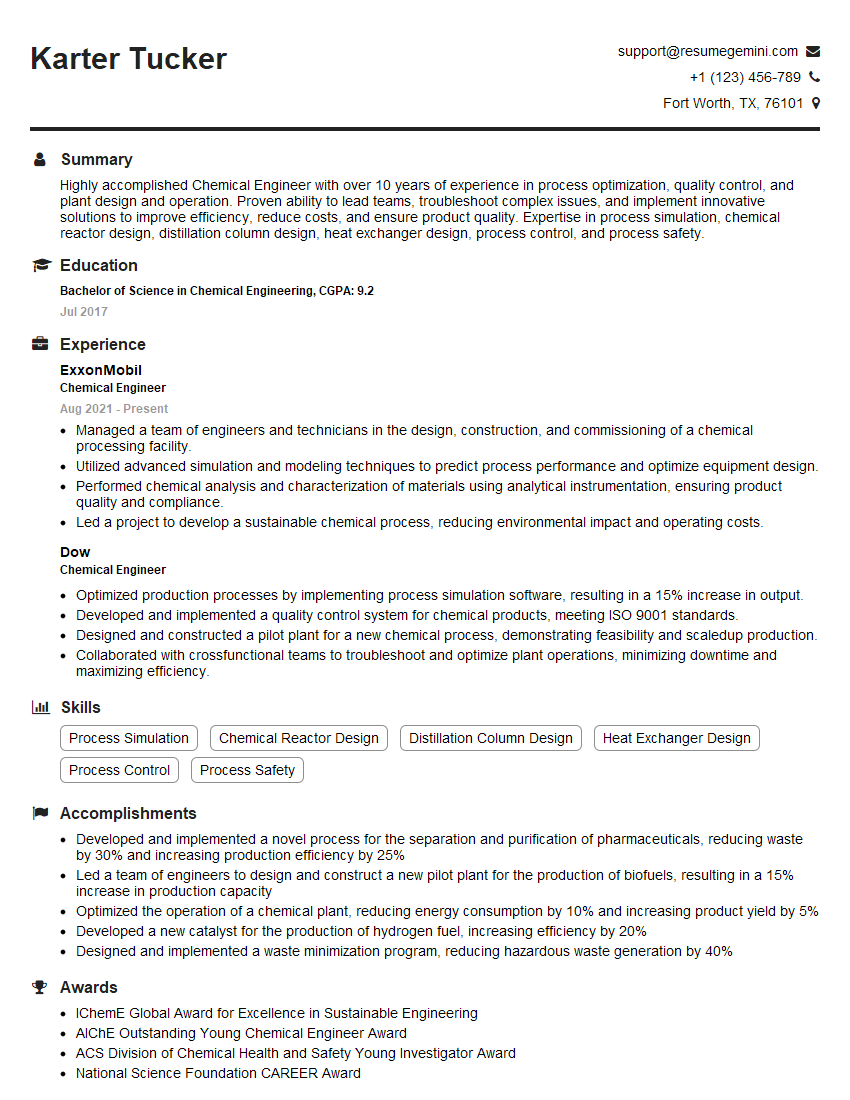
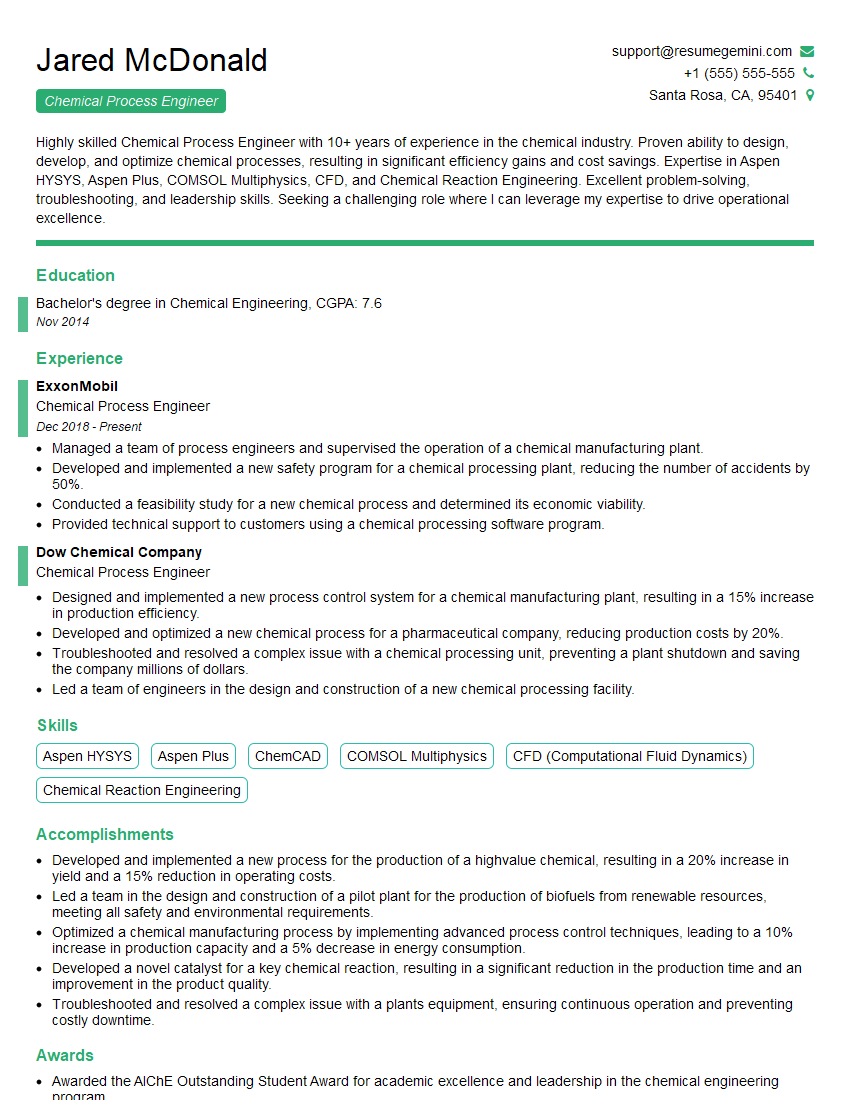
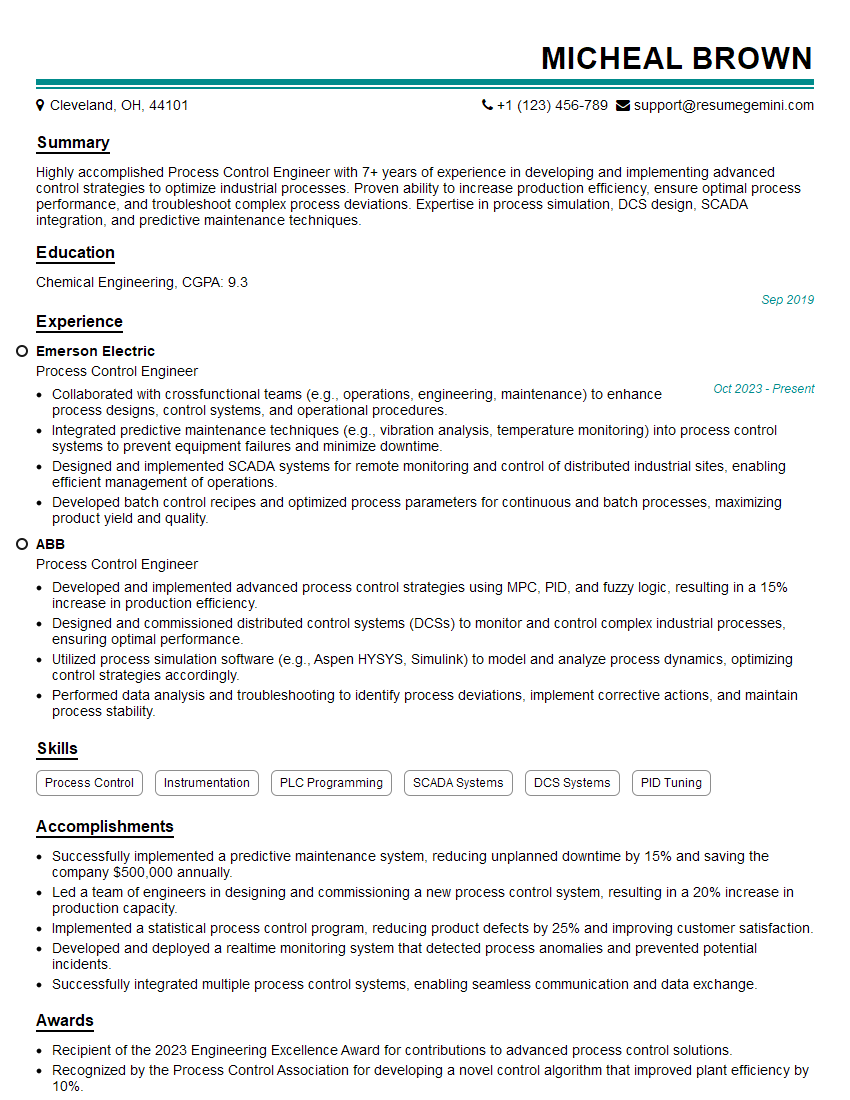
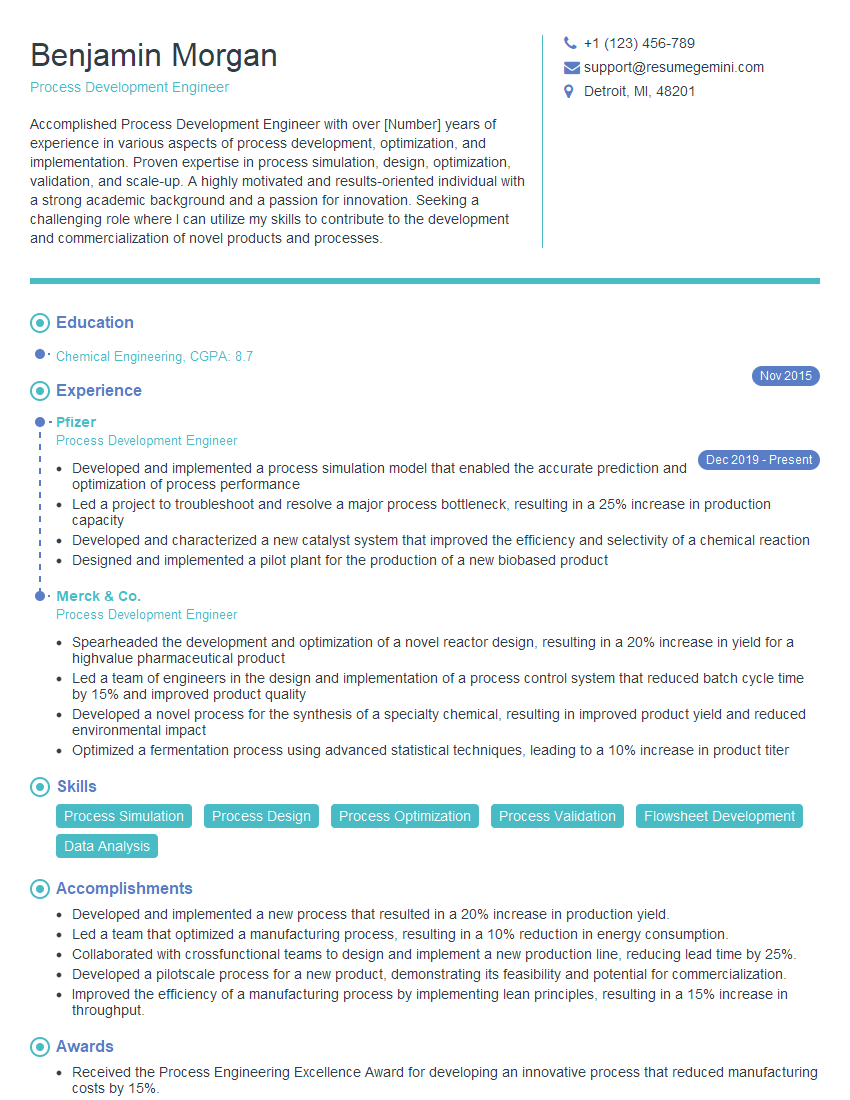
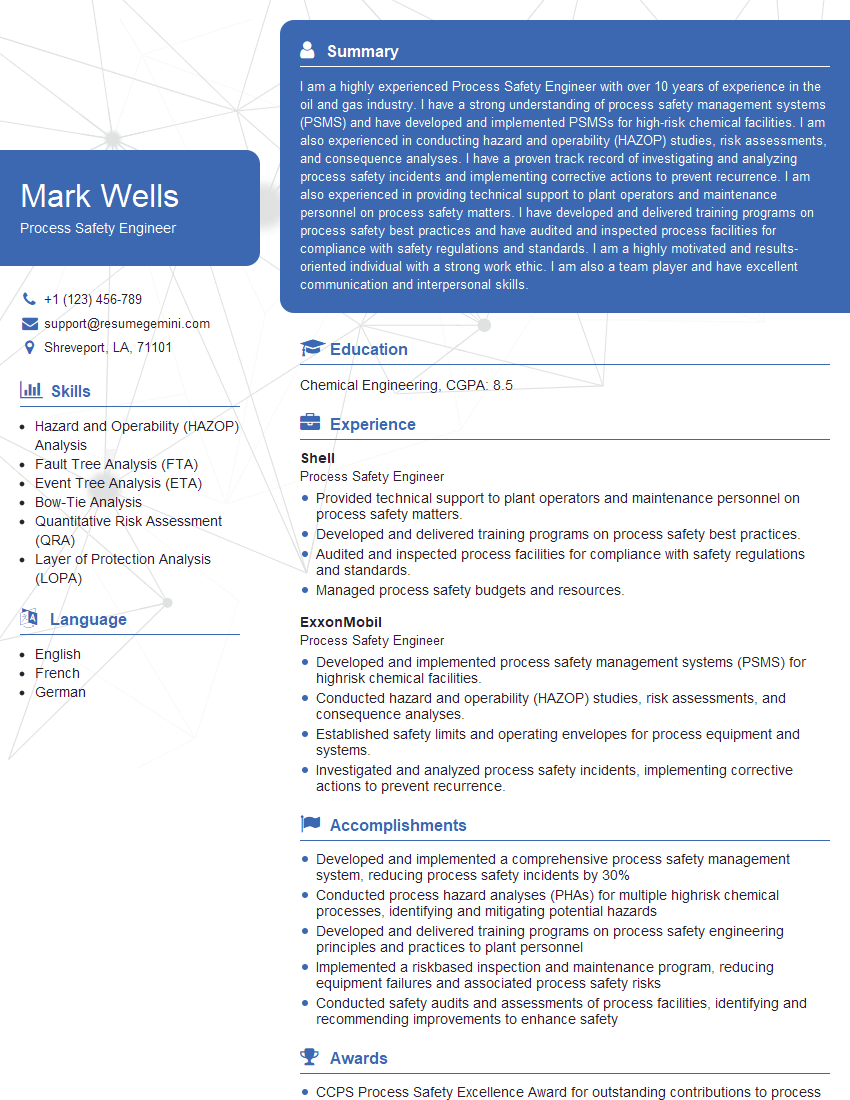
Mastering Chemical Process Engineering opens doors to diverse and rewarding career paths in industries like pharmaceuticals, petrochemicals, and environmental engineering. To maximize your job prospects, a well-crafted, ATS-friendly resume is critical. ResumeGemini is a trusted resource that can help you create a professional and impactful resume designed to catch the eye of recruiters. Examples of resumes tailored specifically to Chemical Process Engineering professionals are available to guide you.
Explore more articles
Users Rating of Our Blogs
Share Your Experience
We value your feedback! Please rate our content and share your thoughts (optional).
What Readers Say About Our Blog
Very informative content, great job.
good