Are you ready to stand out in your next interview? Understanding and preparing for Floral Styles interview questions is a game-changer. In this blog, we’ve compiled key questions and expert advice to help you showcase your skills with confidence and precision. Let’s get started on your journey to acing the interview.
Questions Asked in Floral Styles Interview
Q 1. Describe your experience with different floral design styles (e.g., modern, rustic, romantic).
My experience spans a wide range of floral design styles, each demanding a unique approach. Modern floral design, for instance, emphasizes clean lines, minimalist arrangements, and often incorporates unconventional materials alongside blooms. Think sculptural arrangements with a focus on texture and color palettes that are bold and contrasting. I’ve created several modern arrangements featuring orchids, succulents, and geometric vases, achieving a sophisticated, contemporary look. Rustic floral design, conversely, evokes a sense of warmth and natural beauty. It utilizes natural elements like wood, burlap, and wildflowers, creating a relaxed, often whimsical aesthetic. I recently crafted a rustic bouquet for a barn wedding, using wildflowers, wheat, and berries, paired with a muted color palette of creams and browns. Finally, romantic floral design is all about creating lush, overflowing arrangements brimming with soft colors and flowing lines. Think cascading bouquets filled with roses, peonies, and delicate foliage, often incorporating soft pastel shades or deep jewel tones. I once designed a romantic centerpiece for a gala, using a mix of garden roses, hydrangeas, and eucalyptus, resulting in an opulent and dreamy effect. My expertise lies in understanding and effectively adapting these styles to suit individual client needs and event themes.
Q 2. What floral design software are you proficient in?
I’m proficient in several floral design software programs. My primary software is Floral Design Pro, which allows for detailed 3D modeling of arrangements, enabling clients to visualize the final product before the event. I also utilize Adobe Photoshop for color correction, image enhancement, and creating mood boards for client presentations. Finally, I employ Microsoft Excel for inventory management and tracking orders and costs, ensuring efficiency and accuracy in my business operations.
Q 3. How do you select appropriate flowers and foliage for different occasions?
Selecting appropriate flowers and foliage is crucial to the success of any floral design. The occasion dictates much of the choice. For a wedding, the style (rustic, modern, romantic etc.) heavily influences the selection. A formal black-tie wedding might call for elegant roses and orchids, while a beach wedding might necessitate more informal, hardy blooms like daisies and succulents. Similarly, for a funeral, elegant, simple designs using white lilies or chrysanthemums are typically preferred, reflecting a sense of peace and solemnity. I always consider the color palette of the event, the season (availability and suitability of certain flowers), and the client’s personal preferences to ensure a harmonious and meaningful design. For example, deep reds and burgundies might suit a fall wedding, while pastel pinks and blues are ideal for spring events. Ultimately, the goal is to create a floral arrangement that complements the event and evokes the desired emotion.
Q 4. Explain your process for creating a floral arrangement from concept to completion.
My process begins with a thorough consultation with the client, where we discuss the event’s theme, style, color scheme, and budget. Next, I create a mood board, often using Photoshop, to visually represent the design concept. Then comes the selection of flowers and foliage, sourcing high-quality blooms that meet the aesthetic and budgetary requirements. Following this, I meticulously prepare the materials, including cleaning, conditioning, and trimming each flower and stem. The actual arrangement process is a creative endeavor where I apply my technical skills and artistic vision. Finally, I review and make any last-minute adjustments before delivery or installation, ensuring everything is perfect.
Q 5. How do you manage your time effectively when working on multiple floral arrangements simultaneously?
Managing multiple arrangements simultaneously requires meticulous planning and organization. I utilize project management tools, including detailed spreadsheets and calendars to keep track of deadlines, order flowers in advance, and schedule tasks efficiently. I prioritize tasks based on urgency and complexity, delegating smaller tasks where appropriate. For example, if I have three large wedding arrangements and several smaller ones, I would focus on the largest and most complex first while assigning simpler tasks like boutonnieres to assistants. Efficient time management is crucial to successfully completing multiple arrangements on time and to the highest standard, minimizing stress and maximizing productivity.
Q 6. Describe your experience with various floral preservation techniques.
My experience encompasses various floral preservation techniques, each offering unique advantages and limitations. Air drying is a simple method, ideal for preserving smaller, delicate flowers. However, it can result in some color loss and fragility. Pressing is another common method, suitable for flatter flowers, ideal for creating keepsakes such as pressed flower art. Freezing is a good method for preserving flowers for longer periods without significant color loss but requires specialized equipment. Glycerin preservation, however, allows for long-term preservation while retaining much of the flower’s original color and shape. I choose the appropriate technique based on the type of flower, the desired outcome, and the client’s preferences. I also use silica gel for delicate flowers to prevent shrinkage and maintain vibrant colors. Choosing the right preservation technique ensures the longevity and beauty of preserved flowers.
Q 7. How do you handle difficult or demanding clients?
Handling demanding clients requires patience, empathy, and strong communication skills. I begin by actively listening to their concerns, understanding their expectations, and addressing them professionally. I offer multiple design options, explaining the pros and cons of each, and I’m transparent about pricing and any potential limitations. If conflicts arise, I approach them calmly and rationally, seeking compromise and solutions that meet both the client’s needs and maintain the integrity of my artistic vision. Ultimately, my goal is to exceed expectations through exceptional service, leading to positive client relationships and glowing testimonials.
Q 8. What are your preferred floral wholesalers or suppliers?
Choosing the right floral wholesaler is crucial for the success of any floral design project. My preferred suppliers are selected based on a combination of factors: quality, reliability, variety, and pricing. I typically work with a few key wholesalers, each specializing in different areas. For example, one wholesaler excels in locally-grown, seasonal blooms, ensuring freshness and supporting local businesses. Another specializes in exotic and rare flowers, which is essential for unique event designs. A third is my go-to for reliable, high-volume orders of standard blooms needed for large-scale events. Building strong relationships with these suppliers is critical; it allows for preferential pricing, early access to new varieties, and personalized service. This is especially valuable when planning large events or working with specific color palettes.
Q 9. How do you stay updated on current floral design trends?
Staying current in floral design requires a multifaceted approach. I regularly attend industry trade shows and workshops, both nationally and internationally, to see the latest trends firsthand. These events allow me to network with other designers and suppliers and see innovative techniques in action. I also subscribe to several leading floral design magazines and online publications. These publications feature articles on emerging trends, new flower varieties, and design inspiration. Crucially, I actively browse social media platforms like Instagram and Pinterest, which are excellent resources for discovering new designers, styles, and innovative ideas. I also follow key influencers and floral designers whose work I admire to stay ahead of the curve. By combining these strategies, I ensure my designs remain fresh, relevant, and on the cutting edge.
Q 10. Describe your experience with different types of floral arrangements (e.g., bouquets, centerpieces, wreaths).
My experience encompasses a wide range of floral arrangements. Bouquets, for example, require careful consideration of form, balance, and color harmony. I’ve crafted everything from classic round bouquets to cascading designs, each tailored to the client’s personality and the occasion. Centerpieces, another core element of my work, involve a deeper understanding of spatial dynamics and scale. I’ve created both low, sprawling centerpieces for intimate dinners and tall, dramatic arrangements for large gala events. Wreaths, with their circular form, offer unique design challenges. I enjoy experimenting with various textures and foliage to create wreaths that are both elegant and visually engaging. In all these styles, I prioritize using the best quality materials and focusing on the details, creating designs that are visually stunning and tell a story.
Q 11. What is your experience with floral budgeting and cost management?
Floral budgeting is paramount. I begin by thoroughly understanding the client’s budget and their priorities. We collaboratively create a design concept that aligns with their financial constraints. This includes providing transparent breakdowns of costs, including flower costs, labor, and delivery fees. I utilize various cost-saving strategies, such as incorporating seasonal flowers, utilizing less expensive filler materials judiciously, or suggesting alternative design elements when necessary without compromising the overall aesthetic. I meticulously track all expenses throughout the project and provide regular updates to the client, ensuring financial transparency and accountability. I often use specialized floral design software to assist with cost projections and to maintain precise inventories.
Q 12. How do you maintain the freshness and quality of your flowers?
Maintaining flower freshness is critical. The process begins even before the flowers arrive. I ensure the correct storage conditions are maintained at my studio, including proper temperature and humidity levels. Upon arrival, I immediately hydrate the flowers, using appropriate flower food solutions tailored to the type of bloom. Proper trimming and recutting of stems are also essential to promote water uptake. I regularly remove any wilting leaves or petals to prevent bacterial growth and maintain overall bloom quality. Regular rotation of flower stocks and careful monitoring of water levels are crucial for extended freshness. When preparing arrangements, I use specialized techniques like hydrating floral foam to ensure flowers remain beautiful throughout the event. For long-distance transport, I utilize specialized containers and cooling systems to protect against temperature fluctuations.
Q 13. Explain your knowledge of plant biology and flower care.
A strong understanding of plant biology is fundamental to my work. Knowledge of different flower types, their growth habits, and their specific needs is crucial for successful floral design. This knowledge helps me select the appropriate flowers for specific environments, such as outdoor weddings or indoor events. Understanding the process of photosynthesis and respiration is critical for ensuring the proper hydration and longevity of flowers. I also have a deep knowledge of flower physiology, including the effects of ethylene gas on flower senescence (aging). This understanding allows me to take preventative measures to maintain the freshness of the flowers for a prolonged period. I understand the different types of flower preservatives and when to apply them to best maintain bloom quality.
Q 14. Describe your experience with event planning and logistics related to floral design.
Event planning and logistics are integral to my work. I begin by carefully reviewing the event timeline, including setup and breakdown times. I create a detailed floral plan, which includes specifying the types and quantities of flowers required, outlining setup procedures, and delegating tasks to my team. For large-scale events, I coordinate delivery schedules with floral wholesalers and work closely with event planners to ensure seamless integration with other aspects of the event. I account for potential logistical challenges, such as access limitations, storage space, and transportation requirements. For outdoor events, I plan for weather contingencies, including using appropriate protective measures for the flowers. Thorough pre-planning, effective communication, and a well-organized team are vital for a successful outcome. I’ve managed floral logistics for events ranging from intimate weddings to large-scale corporate events, consistently delivering high-quality results.
Q 15. How do you incorporate sustainability into your floral design practice?
Sustainability is paramount in my floral design practice. It’s not just a trend; it’s a core value. I integrate sustainable practices at every stage, from sourcing to disposal.
- Sourcing Locally and Seasonally: I prioritize local growers and farmers markets to reduce the carbon footprint associated with transportation. Choosing seasonal flowers ensures they are at their peak beauty and requires less energy to cultivate.
- Using Eco-Friendly Materials: I opt for biodegradable or compostable materials like recycled paper, natural twine, and sustainable floral foam alternatives. I avoid using excessive plastic wrapping or non-recyclable containers.
- Reducing Waste: Careful planning minimizes flower waste. I meticulously design arrangements to use every stem effectively, and any remaining flowers are composted to enrich the soil, completing the lifecycle. I also encourage clients to reuse vases or donate arrangements to hospitals or nursing homes.
- Supporting Fair Trade Practices: I am committed to sourcing flowers from suppliers who uphold fair labor practices and environmental responsibility. This ensures ethical treatment of workers and sustainable cultivation methods.
For example, for a recent wedding, I sourced all flowers from a local organic farm, using their beautiful, naturally grown blooms. The bouquets were designed with minimal waste and all leftover materials were composted.
Career Expert Tips:
- Ace those interviews! Prepare effectively by reviewing the Top 50 Most Common Interview Questions on ResumeGemini.
- Navigate your job search with confidence! Explore a wide range of Career Tips on ResumeGemini. Learn about common challenges and recommendations to overcome them.
- Craft the perfect resume! Master the Art of Resume Writing with ResumeGemini’s guide. Showcase your unique qualifications and achievements effectively.
- Don’t miss out on holiday savings! Build your dream resume with ResumeGemini’s ATS optimized templates.
Q 16. What are your strengths and weaknesses as a floral designer?
My strengths lie in my creative vision, meticulous attention to detail, and ability to translate client visions into stunning floral designs. I excel at creating unique and memorable arrangements that reflect individual styles and preferences. I’m also highly organized and efficient, ensuring projects are completed on time and within budget.
However, like any artist, I can sometimes be overly perfectionistic, which can occasionally lead to longer project timelines. I’m actively working on balancing my drive for excellence with efficient time management. I also recognize that my expertise in certain floral styles might not encompass the breadth of all contemporary trends; I actively seek opportunities to learn and expand my skillset.
Q 17. How do you handle pressure and deadlines in a fast-paced environment?
Working in the floral industry often means juggling multiple events and tight deadlines. I handle pressure effectively through meticulous planning and organization. I use project management tools to track deadlines, allocate resources, and prioritize tasks. I also break down large projects into smaller, manageable steps, allowing me to focus on each element without feeling overwhelmed.
For instance, before a large wedding, I create detailed timelines specifying flower orders, delivery schedules, and arrangement assembly. This helps me anticipate potential delays and proactively address them. My calm demeanor and problem-solving skills are crucial in high-pressure situations, allowing me to remain composed and deliver exceptional results, even under time constraints.
Q 18. Describe your experience with working in a team environment.
I thrive in team environments. Collaboration is key in floral design, particularly in large-scale events. My experience working on various projects with florists, event planners, and other vendors has honed my communication and teamwork skills. I believe in open communication, actively listening to team members’ ideas, and contributing constructively to collective goals.
For example, during a recent corporate event, I collaborated closely with the event planner to ensure the floral arrangements perfectly complemented the overall theme and design. I readily shared my expertise in flower selection and arrangement techniques, while also valuing their input on logistical aspects of the event. The collaborative effort resulted in a visually stunning and successful event.
Q 19. What is your approach to problem-solving in floral design?
My approach to problem-solving involves a systematic process: I start by clearly identifying the problem, gathering all relevant information, and brainstorming potential solutions. I then evaluate each solution based on feasibility, cost-effectiveness, and aesthetic impact. Finally, I implement the chosen solution, monitoring the results and making adjustments as needed.
For example, if a crucial flower delivery is delayed, I don’t panic. I immediately contact the supplier, assess the impact on the planned arrangements, and explore alternatives such as substituting with a similar flower or adjusting the design to work with what’s available. This proactive and flexible approach ensures I deliver high-quality results even when unexpected challenges arise.
Q 20. How do you handle unexpected issues or challenges during an event?
Unexpected issues are part and parcel of event work. My strategy is to remain calm and composed, focusing on finding quick and effective solutions. I have contingency plans in place for common problems such as flower shortages or equipment malfunctions. I leverage my resourcefulness and problem-solving skills to improvise and adapt, ensuring the event’s success remains unaffected.
For example, during a wedding, a vase broke just before the ceremony. Instead of panicking, I quickly substituted with a similar vase from my backup supplies and rearranged the flowers. The change went unnoticed by anyone, demonstrating my ability to handle unexpected circumstances with grace and efficiency.
Q 21. Describe your experience with different floral mechanics and techniques.
My experience encompasses a wide range of floral mechanics and techniques, including wiring, taping, hand-tying, and the use of floral foam (both traditional and sustainable alternatives). I’m proficient in various arrangement styles, from classic European designs to modern, asymmetrical arrangements. I’m also familiar with different preservation techniques to extend the lifespan of flowers.
I’ve worked with diverse materials, including various types of foliage, flowers, and decorative elements. My knowledge of floral mechanics extends to creating different types of bouquets (e.g., cascading, posy, hand-tied), corsages, boutonnieres, and centerpieces. I am constantly learning and refining my skills by attending workshops, experimenting with new techniques, and keeping abreast of current trends.
Q 22. What are your salary expectations?
My salary expectations are in line with the industry standard for a floral designer with my experience and skill set. Considering my proven ability to create stunning and unique floral arrangements, manage client relationships effectively, and consistently deliver high-quality work, I am seeking a competitive compensation package that reflects my value to the company. I’m open to discussing specific numbers after learning more about the comprehensive benefits and compensation structure offered.
Q 23. Why are you interested in this specific floral design position?
I’m incredibly interested in this position because of [Company Name]’s reputation for innovative and sustainable floral design practices. I’ve long admired your commitment to [mention a specific company value or project, e.g., sourcing locally grown flowers, supporting fair-trade practices, creating unique event designs]. My design philosophy aligns perfectly with your approach, and I believe my skills and creativity can make a significant contribution to your team. The opportunity to work alongside such talented professionals in a stimulating environment is truly exciting.
Q 24. What are your long-term career goals in the floral industry?
My long-term career goals involve becoming a leading figure in sustainable floral design. I envision myself developing my expertise in both traditional and contemporary floral arrangements while pushing creative boundaries. I aspire to lead workshops and educational programs, sharing my passion and knowledge with aspiring floral designers. Ultimately, I aim to establish a strong reputation within the industry for innovative and environmentally conscious floral artistry.
Q 25. Describe a time you had to adapt your design to unexpected circumstances.
During a large wedding, a crucial delivery of orchids was delayed due to unforeseen traffic. Instead of panicking, I quickly assessed the situation and creatively substituted the orchids with similar, readily available blooms – vibrant lilies that complemented the existing color palette and overall aesthetic. I carefully adjusted the arrangement’s structure to maintain the intended balance and visual appeal. The client was delighted with the result, and I received positive feedback on my ability to solve problems under pressure while preserving the design’s integrity.
Q 26. How do you ensure your floral designs are visually appealing and meet client expectations?
Ensuring visually appealing and client-satisfying floral designs involves a multi-step process. First, I conduct a thorough consultation to understand the client’s vision, preferences, event theme, and budget. I then translate their ideas into detailed sketches and mood boards, incorporating elements of color theory, texture, and form. Throughout the creation process, I maintain open communication with the client, seeking feedback and making necessary adjustments. Finally, I meticulously arrange the flowers, ensuring each piece complements the others, creating a harmonious and visually stunning final product. I always strive to exceed expectations, leaving clients feeling delighted and inspired.
Q 27. What is your experience with using color theory in floral design?
Color theory is fundamental to my floral design approach. I understand the impact of color temperature (warm vs. cool), color harmonies (complementary, analogous, triadic), and the psychological effects of different colors. For example, I might use a vibrant red and green color scheme for a festive event, creating a cheerful and energetic atmosphere. Conversely, for a more serene and elegant setting, I might opt for a palette of soft pastels or muted tones. I also consider the impact of color on the overall mood and message of the arrangement, ensuring it aligns perfectly with the client’s vision and event theme.
Q 28. How do you maintain a clean and organized workspace?
Maintaining a clean and organized workspace is crucial for efficiency and creative flow. My approach involves a system of dedicated storage for supplies, tools, and floral materials. I regularly clean and sanitize work surfaces, discarding wilted flowers and disposing of waste promptly. I use color-coded containers to organize similar items and employ a first-in, first-out system for perishable goods. This consistent effort ensures a safe and productive environment, reducing stress and allowing me to focus on the artistry of floral design.
Key Topics to Learn for Floral Styles Interview
- Floral Design Principles: Understanding balance, proportion, color theory, and line in floral arrangements. Practical application: Analyzing existing arrangements and identifying strengths/weaknesses.
- Flower Anatomy and Physiology: Knowledge of different flower types, their lifecycles, and proper handling techniques. Practical application: Selecting appropriate flowers for specific arrangements and ensuring longevity.
- Floral Design Styles: Familiarity with various styles (e.g., modern, traditional, rustic, etc.) and their characteristic elements. Practical application: Creating arrangements that align with specific client requests and event themes.
- Floral Arrangement Techniques: Mastering various techniques like hand-tying, wiring, taping, and using floral foam. Practical application: Demonstrating proficiency in creating different types of arrangements.
- Sustainability and Sourcing: Understanding ethical sourcing practices, seasonal flowers, and environmentally friendly materials. Practical application: Discussing sustainable choices with clients and incorporating them into designs.
- Client Communication and Consultation: Effectively understanding client needs, offering design suggestions, and managing expectations. Practical application: Describing your approach to working with diverse clients and handling potential conflicts.
- Floral Business Operations: Basic understanding of pricing, inventory management, and marketing. Practical application: Discussing your understanding of the financial aspects of the floral design business.
Next Steps
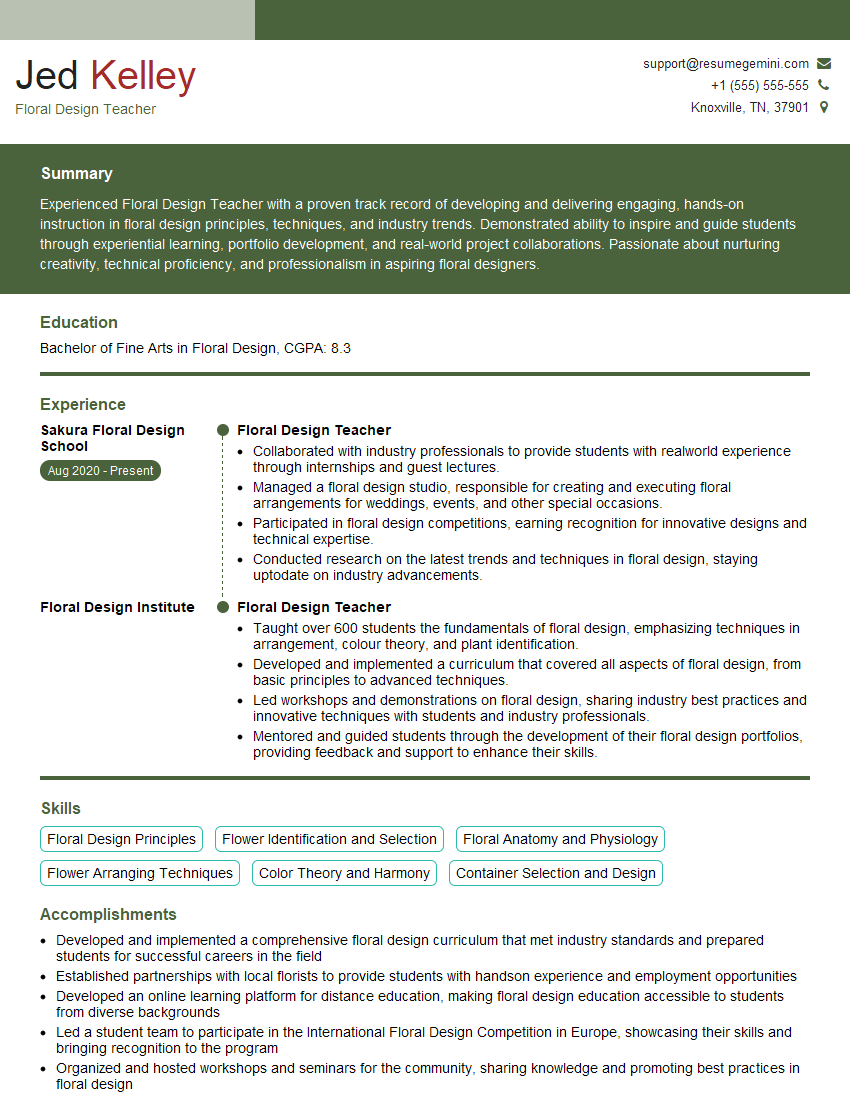
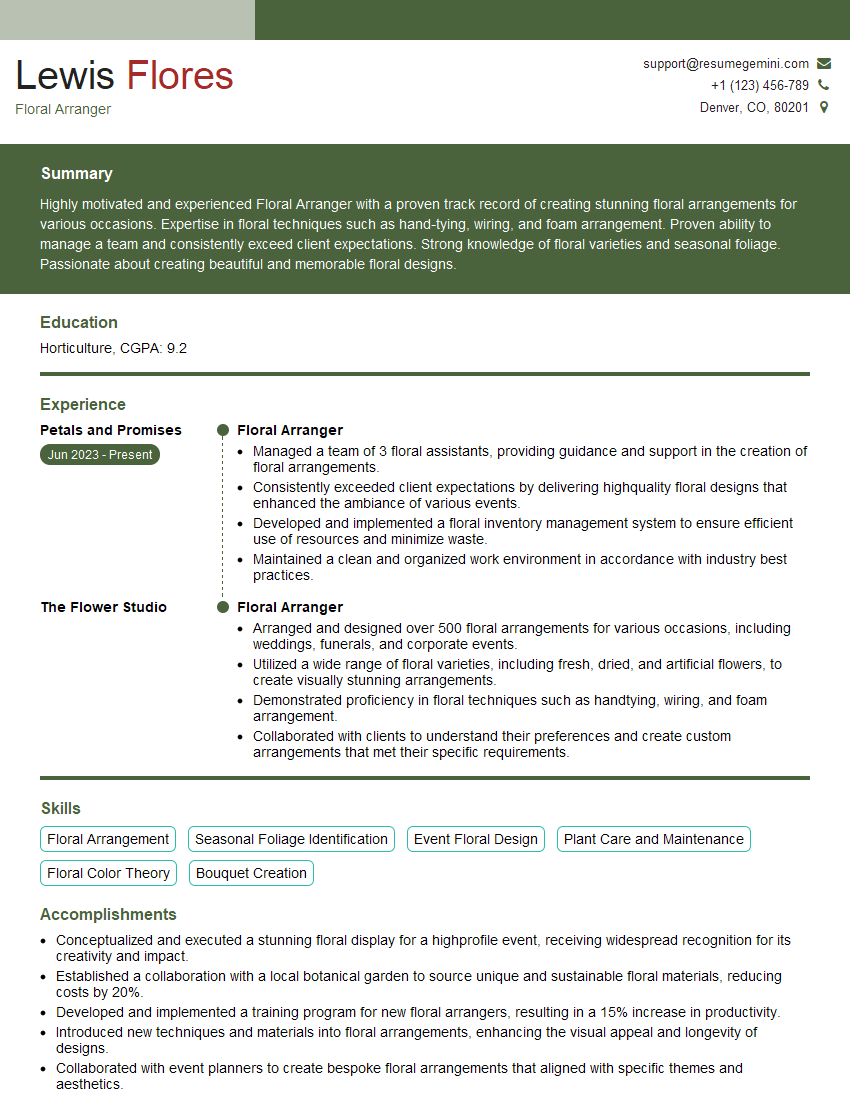
Mastering floral styles is crucial for career advancement in this creative and ever-evolving field. A strong understanding of these principles will significantly enhance your skillset and open doors to exciting opportunities. To increase your job prospects, focus on crafting an ATS-friendly resume that showcases your abilities effectively. ResumeGemini is a trusted resource to help you build a professional and impactful resume. Examples of resumes tailored specifically to the floral styles industry are available to guide you. Take the next step towards your dream career by creating a resume that truly highlights your unique talents and experience.
Explore more articles
Users Rating of Our Blogs
Share Your Experience
We value your feedback! Please rate our content and share your thoughts (optional).
What Readers Say About Our Blog
Very informative content, great job.
good