Cracking a skill-specific interview, like one for Brick Sawing, requires understanding the nuances of the role. In this blog, we present the questions you’re most likely to encounter, along with insights into how to answer them effectively. Let’s ensure you’re ready to make a strong impression.
Questions Asked in Brick Sawing Interview
Q 1. What types of brick saws are you familiar with?
Brick saws come in various types, each suited for different applications and brick types. The most common types I’m familiar with include:
- Wet saws: These use a water-cooled blade to minimize dust and extend blade life. They’re ideal for precision cuts and a wide range of brick materials. Think of them as the workhorses of the industry.
- Dry saws: These saws don’t use water, making them more portable and quicker to set up. However, they generate more dust and may wear blades faster. They are often better suited for less precise cuts or smaller jobs.
- Handheld saws: These are smaller, more maneuverable versions, perfect for on-site adjustments or smaller projects. These typically use abrasive blades and are best for softer bricks.
- Angle grinders with diamond blades: While not exclusively brick saws, angle grinders equipped with the right diamond blade can effectively cut brick. They offer great versatility, but require more skill and care to use safely.
The choice depends on the project’s scale, the type of brick, and the desired level of precision. For example, a large-scale construction project would likely benefit from a powerful wet saw, while a DIY project might be handled perfectly with a handheld saw.
Q 2. Describe the safety procedures you follow when operating a brick saw.
Safety is paramount when operating a brick saw. My safety procedures are consistent and thorough:
- Personal Protective Equipment (PPE): Always wear safety glasses, a dust mask (especially with dry saws), hearing protection, and work gloves. I never compromise on this.
- Secure Work Area: Ensure the saw is on a stable, level surface, away from obstructions and other workers. The area should be well-lit and clear of debris.
- Proper Blade Installation: Always correctly install and secure the blade, ensuring it’s firmly attached and spins freely before operating the saw. A loose blade can lead to catastrophic failure.
- Feeding Technique: Feed the brick slowly and steadily into the blade, avoiding sudden movements or jerky actions that could cause kickback or breakage. Think smooth, controlled movements.
- Emergency Stop: Familiarize myself with the saw’s emergency stop mechanism and know how to quickly and safely shut it off in case of an emergency.
- Regular Maintenance: I regularly inspect the saw and blade for damage or wear, ensuring the saw is in top working condition. A well-maintained saw is a safe saw.
Once, I was working with a dry saw and noticed a slight wobble in the blade. I immediately stopped, inspected it, and found a small crack. This avoided a potentially dangerous situation.
Q 3. How do you select the appropriate blade for different brick types?
Blade selection is critical for efficient and clean cuts. Different bricks require different blades. The key factors are the brick’s hardness and the type of cut desired:
- Hard Bricks: For hard, dense bricks, a diamond blade with a high concentration of diamonds is necessary. These blades are more durable and withstand the stress of cutting harder materials.
- Soft Bricks: Softer bricks can be cut with blades that have a lower diamond concentration. Using a blade that’s too aggressive can lead to chipping and uneven cuts.
- Wet vs. Dry Cutting: The type of saw (wet or dry) also influences blade choice. Wet saw blades are often designed for continuous use and have different cooling requirements compared to dry saw blades.
- Cut Type: The desired cut (straight, angled, etc.) might influence the blade’s profile and size.
For example, a facing brick, which is usually harder, needs a diamond blade with a higher concentration of diamonds than a common clay brick.
Q 4. Explain the process of cutting bricks to precise dimensions.
Achieving precise dimensions requires careful planning and execution:
- Accurate Measurement: Precisely measure the required dimensions using a measuring tape or ruler. Double-checking measurements is crucial to avoid errors.
- Marking the Brick: Clearly mark the cut line on the brick using a pencil or marker. This helps ensure accurate cutting.
- Secure Placement: Securely place the brick on the saw’s bed or guide, ensuring it’s aligned with the cut line. Avoid any movement during the cutting process.
- Steady Cutting: Cut the brick slowly and steadily at a constant speed, allowing the blade to do its work. Avoid forcing the brick through the blade.
- Multiple Passes (If Needed): For thicker bricks or intricate cuts, multiple passes may be necessary. Ensure the brick remains securely placed between each pass.
- Finishing (If Needed): After cutting, you might need to clean up the edges with a grinder or file to obtain perfect precision.
Imagine cutting a brick for a precise arch. You’d need multiple, accurate cuts to ensure a perfect fit and finish.
Q 5. How do you handle damaged or cracked bricks during the cutting process?
Dealing with damaged bricks requires careful assessment and action:
- Assessment: Inspect the damaged brick to determine the extent of the damage. Minor cracks can sometimes be acceptable, depending on the application.
- Separation: If the damage is significant (e.g., large cracks or breakage), discard the brick. Using damaged bricks can compromise the structural integrity of the finished project.
- Workaround (If Possible): For minor cracks, a strategic cut might be possible to salvage a portion of the brick, but only if it doesn’t compromise its structural integrity.
- Replacement: If a significant portion of the brick is unusable, replace it with an undamaged brick. The consistency of the finished product is essential.
Once, I had a batch of bricks with some hairline cracks. I carefully assessed each one and strategically used the undamaged portions for less visible areas of the project, avoiding structural implications.
Q 6. What are the common problems encountered during brick sawing and how do you troubleshoot them?
Common problems encountered during brick sawing include:
- Blade Binding or Jamming: This often occurs due to incorrect blade selection, dull blades, or improper feeding techniques. Troubleshooting involves selecting a suitable blade, ensuring the blade is sharp, and employing a smoother feeding motion.
- Uneven Cuts: This can result from a dull blade, improper blade alignment, or inconsistent feeding. Sharpening or replacing the blade, checking alignment, and practicing consistent feeding usually resolves this.
- Dust Generation (Dry Saw): Excessive dust can be a significant issue with dry saws. Employing a dust collection system, wearing a respirator, and ensuring adequate ventilation are crucial.
- Blade breakage: This can happen due to using the wrong blade, forcing the cut, or a faulty blade. Always select the correct blade for the material and use appropriate technique. Regularly check blades for damage.
One time, a blade jammed. I immediately stopped the saw, checked for any obstructions, and replaced the dull blade with a sharp one. The problem was quickly resolved.
Q 7. What safety equipment is essential when operating a brick saw?
Essential safety equipment when operating a brick saw includes:
- Safety Glasses: Protect eyes from flying debris.
- Dust Mask (Respiratory Protection): Essential for reducing dust inhalation, particularly with dry saws. N95 respirators are often recommended.
- Hearing Protection: Brick saws can be quite noisy. Earplugs or earmuffs are necessary to protect hearing.
- Work Gloves: Protect hands from cuts and abrasions.
- Long-sleeved Shirt and Long Pants: To protect skin from flying debris and potential blade contact.
- Sturdy Closed-Toe Shoes: To protect feet from dropped objects or accidental contact with the saw.
I always make sure to check that all my PPE is in good condition before starting any brick sawing operation.
Q 8. How do you maintain a brick saw to ensure optimal performance and longevity?
Maintaining a brick saw is crucial for its performance and lifespan. Think of it like maintaining a finely tuned machine – regular care prevents costly repairs and ensures precise cuts.
- Blade Care: This is paramount. After each use, clean the blade thoroughly with a wire brush to remove debris. Regularly inspect for wear and tear; chipped or dull blades lead to inaccurate cuts and increased strain on the motor. Consider blade lubrication according to the manufacturer’s instructions, especially for wet saws. Replace blades when necessary, which depends on usage and material type. A dull blade is far more dangerous than a sharp one due to increased vibration and the potential for kickback.
- Water Management (Wet Saws): For wet saws, ensure the water reservoir is always full and the pump is functioning correctly. Clean the water reservoir periodically to prevent sediment buildup, which can clog the pump and damage the blade. Regular inspection of water lines for leaks is vital.
- Motor and Bearings: Keep the motor clean and free of dust and debris. Check the motor’s ventilation to ensure proper cooling. Lubricate bearings as recommended by the manufacturer. Overheating can significantly shorten the life of your saw.
- Regular Inspections: Before each use, visually inspect the saw for any loose parts, cracks, or damage. Pay close attention to the blade alignment and the stability of the base.
- Proper Storage: When not in use, store the saw in a dry, secure location, protecting it from dust and moisture. Cover the blade to prevent accidental damage.
Following this routine will drastically extend the life of your brick saw and ensure consistently accurate cuts. Neglecting maintenance will result in costly repairs, wasted materials, and potentially dangerous situations.
Q 9. Describe your experience with different cutting techniques (e.g., wet cutting, dry cutting).
My experience encompasses both wet and dry cutting techniques, each with its own advantages and drawbacks. Wet cutting, using a water-cooled blade, is significantly preferred for most brick types because it produces less dust, keeps the blade cooler, and results in cleaner, more precise cuts. The water helps to lubricate the blade and wash away debris, preventing clogging and extending blade life. Dry cutting, on the other hand, is generally faster but creates considerably more dust, requires more powerful machines, and has a higher risk of blade damage. It’s more suitable for softer bricks or occasional minor cuts, particularly in situations where water is unavailable.
I’ve found that wet cutting is generally the superior method for professional work due to its superior precision and reduced health risks associated with dust inhalation.
Q 10. How do you ensure accurate and consistent cuts?
Achieving accurate and consistent cuts requires attention to detail and the right tools. This starts with using a properly calibrated saw and ensuring the blade is sharp and appropriately aligned. Clamping or securing the brick firmly in place minimizes movement during the cutting process. For angled cuts, using a miter gauge or adjustable fence guarantees precision.
Using a guide or a straight edge provides a reference point for straight cuts, and pre-marking the bricks minimizes errors. Regularly checking the alignment of the blade is critical. Even a slight misalignment can lead to inaccurate cuts. Additionally, taking my time and focusing on controlled movement is essential, especially when working with intricate designs or thin bricks.
Remember, practice makes perfect. The more experience you have, the better you’ll become at anticipating potential challenges and compensating for imperfections in materials.
Q 11. What is your experience with various brick materials (e.g., clay, concrete)?
My experience includes working with a wide variety of brick materials, each requiring slightly different techniques. Clay bricks, for instance, are generally softer and easier to cut than concrete bricks. Concrete bricks, being denser and harder, demand more powerful saws and potentially diamond blades specifically designed for their toughness. Some clay bricks can be quite porous, leading to more dust and potential blade wear if not using a wet-cutting technique. Understanding the specific properties of the brick material is essential to select the appropriate blade and cutting method to ensure a clean, precise cut and extend the life of the blade. I always assess the material before commencing any cutting.
For example, a softer clay brick might be cut with a less aggressive blade than a dense, high-strength concrete brick.
Q 12. How do you handle different brick sizes and shapes?
Handling different brick sizes and shapes requires adaptability. For larger bricks, I might use a larger saw, ensuring stability and safety. Smaller bricks require more careful handling and precise measurements to avoid breakage. Irregularly shaped bricks might necessitate using a handheld angle grinder with a diamond blade for intricate cuts. In some cases, pre-cutting or scoring might be beneficial to manage challenging shapes effectively. The key is selecting the right tools for the job and adopting a careful, precise approach.
For example, a curved brick would require multiple passes with a handheld grinder to create the desired shape, whereas a standard brick would be easily cut straight using a stationary saw.
Q 13. How do you calculate the required number of bricks for a given project?
Calculating the number of bricks needed involves a few key steps. First, determine the total area to be covered. Then, measure the dimensions of a single brick, including the mortar joints. Divide the total area by the area of a single brick (including mortar) to get a preliminary estimate. Always add a percentage for waste (usually around 5-10%, depending on the complexity of the project and cutting requirements). This accounts for breakage, cutting losses, and potential errors. Finally, double-check your measurements and calculations to avoid shortages or over-ordering.
For example: If the area is 10 square meters and a brick (including mortar) covers 0.1 square meters, you’d need 100 bricks. Adding 10% for waste, you’d order approximately 110 bricks.
Q 14. Describe your experience with different types of cutting blades.
My experience includes using various cutting blades, each designed for specific applications. Diamond blades are the most common for brick cutting due to their durability and ability to cut hard materials efficiently. Different diamond blades are available, with varying segment heights and densities tailored for different materials. For instance, a continuous rim blade is suitable for smoother cuts, while a segmented blade is better for tougher bricks. Abrasive blades are also used, although less frequently for brick due to their shorter lifespan and higher rate of wear. The choice of blade is crucial; selecting the wrong one can lead to poor cuts, increased wear, and safety risks.
It’s important to always match the blade to the brick material to optimize the cutting process and ensure the best results.
Q 15. How do you manage waste materials generated during brick sawing?
Waste management in brick sawing is crucial for both environmental responsibility and workplace safety. We categorize waste into two main types: brick dust and larger offcuts. Brick dust, a fine powder, is typically collected using shop vacuums equipped with HEPA filters to capture fine particles. These filters are regularly changed to maintain efficiency. Larger offcuts are collected in designated bins. For significant projects, we often partner with recycling centers that specialize in construction debris. These centers repurpose the material, reducing landfill waste and promoting sustainability. In smaller jobs, the offcuts might be used in other parts of the project, minimizing waste. For instance, broken pieces could be used for filling gaps or creating unique design elements.
Career Expert Tips:
- Ace those interviews! Prepare effectively by reviewing the Top 50 Most Common Interview Questions on ResumeGemini.
- Navigate your job search with confidence! Explore a wide range of Career Tips on ResumeGemini. Learn about common challenges and recommendations to overcome them.
- Craft the perfect resume! Master the Art of Resume Writing with ResumeGemini’s guide. Showcase your unique qualifications and achievements effectively.
- Don’t miss out on holiday savings! Build your dream resume with ResumeGemini’s ATS optimized templates.
Q 16. What is your understanding of the importance of proper ventilation when using a brick saw?
Proper ventilation is paramount when using a brick saw due to the generation of silica dust. Silica, a component of many bricks, is a known respiratory hazard. Inhaling silica dust can lead to silicosis, a serious and irreversible lung disease. Therefore, we always operate brick saws in well-ventilated areas. This could involve using exhaust fans, ensuring adequate natural airflow, or even working outdoors whenever feasible. In enclosed spaces, we use industrial-grade dust collection systems directly attached to the saw, capturing the dust at its source before it becomes airborne. Think of it like this: your lungs are a delicate filter system; protecting them from silica dust is crucial.
Q 17. How do you ensure the safety of yourself and others during brick sawing?
Safety is our top priority. Before beginning any brick sawing, we always conduct a thorough risk assessment. This includes checking the equipment for damage, ensuring the blade is sharp and correctly installed, and verifying the stability of the work area. We utilize appropriate personal protective equipment (PPE), including safety glasses, hearing protection (brick saws can be noisy!), dust masks with HEPA filters, and sturdy work gloves. Furthermore, we maintain a safe distance from the cutting area to prevent accidental injury. Clear signage and designated walkways also help prevent accidents, and we always follow established safety protocols. For example, before making a cut, I would always double-check the brick’s position, ensuring it won’t shift unexpectedly. Safety is not just a checklist; it’s a mindset.
Q 18. Describe your experience working with various types of brick saws (e.g., hand-held, table-top).
My experience encompasses a wide range of brick saws. I’m proficient with hand-held angle grinders fitted with diamond blades – excellent for on-site cutting of smaller projects or intricate designs. I also regularly use table-top saws, which offer more precision and stability for larger quantities or demanding cuts. These saws are particularly useful for producing consistently sized bricks for paving or decorative projects. Finally, I’ve worked with larger, more industrial saws found in masonry workshops. These machines are designed for high-volume production and allow for cutting bricks with exceptional accuracy. The choice of saw depends entirely on the project’s scale, required precision, and the specific brick type.
Q 19. How do you deal with uneven or curved surfaces when cutting bricks?
Dealing with uneven or curved surfaces requires a methodical approach. For minor imperfections, we can adjust the angle of the cut using a hand-held saw, or use a guide for more consistent cuts on a table saw. For significant curvature, we may need to make multiple cuts, using progressively smaller increments to shape the brick as needed. This might involve using a combination of methods: a coarser cut initially to remove large portions of material, followed by finer cuts with specialized diamond blades for a precise finish. We may also use specialized jigs or guides, customized to the specific shape of the brick, to ensure consistent and safe cuts. It’s akin to sculpting: patience and precision are key.
Q 20. What are the factors that influence the choice of cutting method?
The choice of cutting method depends on several factors: the type of brick (some bricks are harder and require more powerful saws), the quantity of bricks needing cutting, the desired precision of the cut, the availability of tools and equipment, and the overall project budget. For example, a small-scale project might only require a hand-held saw, while a large-scale paving project would necessitate a table-top saw or even more industrial equipment. The desired accuracy also impacts the choice. Intricate cuts require a skilled hand and potentially specialized blades, whereas less precise cuts can be achieved with more readily available equipment.
Q 21. How do you ensure the cleanliness of your work area after brick sawing?
Cleanliness is crucial for safety and efficiency. After brick sawing, we sweep the entire work area to remove brick dust and debris. We then use a shop vacuum with a HEPA filter to remove any remaining dust particles. Larger pieces are disposed of properly in designated containers. Any tools used are cleaned and stored appropriately to prevent rust and damage, and we always check that all equipment is switched off and disconnected. Maintaining a clean and organized workspace is not just about aesthetics; it’s essential for preventing accidents and ensures the safety and health of those working in the area.
Q 22. What are the advantages and disadvantages of wet cutting versus dry cutting bricks?
The choice between wet and dry cutting bricks depends heavily on the project’s specifics and your priorities. Wet cutting, using a water-fed saw, offers several significant advantages. Think of it like this: cutting a cake with a constantly lubricated knife versus a dry one. The water acts as a coolant, reducing friction and preventing the blade from overheating, which extends its lifespan considerably. It also suppresses dust, creating a much cleaner and safer working environment. However, wet cutting requires a water source and creates wastewater which needs to be managed responsibly. This adds complexity and can be a drawback in certain situations.
- Advantages of Wet Cutting: Longer blade life, less dust, cleaner cut, cooler operation, reduced risk of blade damage.
- Disadvantages of Wet Cutting: Requires a water source, generates wastewater, can be slower than dry cutting.
- Advantages of Dry Cutting: Faster, simpler setup, no water management needed.
- Disadvantages of Dry Cutting: Shorter blade life, excessive dust, greater risk of blade damage, potential health hazards due to silica dust inhalation.
For example, on a large-scale construction site, wet cutting is usually preferred despite the extra logistical considerations because of the significant reduction in dust and the longer blade life. For smaller, less demanding jobs, dry cutting might be a more practical option, particularly if water is scarce.
Q 23. Describe your experience with different types of brick mortars.
My experience encompasses a wide range of brick mortars, each with unique properties influencing their suitability for different applications and sawing techniques. I’ve worked extensively with Type N, Type S, and Type M mortars. Type N mortar, a general-purpose mortar, is common for many bricklaying applications. It’s relatively easy to saw through, but its strength can sometimes lead to a slightly harder cut than other types. Type S mortar, a stronger mortar, is used for projects requiring higher compressive strength. Sawing through this mortar requires a bit more attention and potentially a more powerful saw. Type M, the strongest, is often found in applications that demand exceptional load-bearing capacity. Cutting through hardened Type M mortar can require specialized blades and techniques. The age and condition of the mortar are also crucial considerations. Older, fully cured mortar is always significantly more challenging to cut than fresh mortar.
I also consider the presence of additives in the mortar. Some additives can significantly impact the hardness and abrasive nature of the mortar, impacting the saw blade’s performance and lifespan.
Q 24. How do you prevent dust and debris from affecting the quality of your work?
Dust and debris are serious concerns in brick sawing, impacting both the quality of the cut and worker health. To mitigate these, I consistently employ several strategies.
- Wet Cutting: As mentioned, this is my primary method for dust control. The water effectively suppresses most of the dust generated.
- Dust Collection System: I always use a brick saw equipped with a robust dust collection system, often incorporating a vacuum attachment. This captures a significant portion of the airborne particles.
- Respiratory Protection: I always wear a properly fitted respirator, specifically designed for silica dust, when working with brick, regardless of the cutting method. This protects my lungs from the harmful effects of inhaled particles.
- Work Area Containment: I contain the work area as much as possible to prevent the spread of dust. This includes using tarps, plastic sheeting, or other barriers.
- Regular Cleaning: Thorough cleaning after each cutting session prevents dust buildup and ensures a cleaner work environment for the next job.
For example, when working indoors, I might even set up temporary negative air pressure systems to draw dust away from the workers.
Q 25. How do you adjust the blade depth and angle for different cutting requirements?
Adjusting blade depth and angle is crucial for precise and efficient cutting. Think of it like using a woodworking plane – you need the right depth and angle to achieve a clean, smooth cut. The blade depth determines how deep the cut will be. This needs to be adjusted according to the thickness of the brick or material being cut. A shallow cut for scoring and a deeper cut for full-through cuts. The blade angle, on the other hand, controls the direction of the cut and the type of cut being made – a bevel cut will require a different angle than a straight cut.
Most brick saws have adjustable mechanisms for both depth and angle. The specific method of adjustment varies depending on the saw model, but usually involves knobs, levers, or clamps. It’s always crucial to consult the manufacturer’s instructions for your specific saw to ensure safe and proper adjustments. Incorrect adjustments can lead to inaccurate cuts, damage to the saw, or even injuries. A visual inspection of the cut before making adjustments can save many headaches.
For example, when cutting a brick at an angle for a decorative feature, I would first adjust the angle gauge and then fine-tune the depth to ensure a clean and precise cut. A visual check is made to assure accuracy.
Q 26. Describe your experience with troubleshooting common brick saw malfunctions.
Troubleshooting brick saw malfunctions requires a systematic approach. I begin by identifying the specific problem. Is the saw not starting? Is it making unusual noises? Is the blade not spinning at the correct speed? Is it producing uneven cuts? The nature of the problem guides my approach.
- Power Issues: I first check the power supply, ensuring the correct voltage and amperage are being provided. I check cords and plugs for damage.
- Blade Problems: I inspect the blade for damage, wear, or misalignment. A dull or damaged blade is a common source of problems.
- Motor Problems: Unusual noises often indicate motor issues, potentially requiring professional repair or replacement.
- Water Pump Problems (for wet saws): If the water pump fails, the saw can overheat and produce poor cuts. I check for clogs or issues with the water supply.
For instance, if the saw is producing uneven cuts, I might check the blade alignment, ensure the work piece is securely clamped, or adjust the blade tension and depth settings. If the saw won’t start, checking power supply, electrical connections, and the circuit breaker are the first actions.
Sometimes, a simple issue like a clogged water filter or a loose belt can be the cause of a major problem. Regular maintenance significantly minimizes malfunctions.
Q 27. How do you maintain a clean and organized workspace during brick sawing?
Maintaining a clean and organized workspace is essential for safety, efficiency, and the quality of the work. I follow a simple but effective strategy:
- Pre-Cutting Preparation: Before starting, I clear the area of unnecessary items, ensuring a comfortable and safe working space. I lay down drop cloths or protective mats to catch debris and prevent damage to the floor.
- Organized Tool Placement: I keep all tools and materials within easy reach but organized to prevent tripping hazards. This includes the saw itself, blades, measuring tools, safety equipment, and cleaning materials.
- Waste Management: I have designated areas for waste disposal. Dust and debris are collected regularly, and larger pieces are stored appropriately.
- Regular Cleaning: During the cutting process and immediately after completion, I sweep away dust and debris. I also clean the saw itself to ensure it remains free of clogs and build-up.
- Post-Cutting Cleanup: Once the job is complete, I do a thorough cleanup, disposing of waste responsibly and putting away all tools and materials.
A clean and organized workspace not only ensures safety but also helps me work more efficiently and ensures the best possible quality of work.
Q 28. What measures do you take to ensure the longevity of your brick saw blades?
Extending the lifespan of brick saw blades is crucial both economically and for maintaining cutting quality. It’s like caring for a high-quality knife – proper care significantly increases its longevity and performance.
- Proper Blade Selection: Choosing the right blade for the material and application is paramount. Using the wrong blade will quickly lead to wear and tear.
- Correct Cutting Techniques: Using proper cutting techniques, such as avoiding excessive force and maintaining the correct blade speed, minimizes stress on the blade.
- Regular Inspection: Regular inspection of the blade for damage, dullness, and wear is crucial. I check for cracks, chips, or any indication of excessive wear. I often use a magnifying glass to thoroughly examine the blade.
- Blade Cleaning: Regularly cleaning the blade of mortar residue and debris prevents build-up and premature wear. I use a wire brush, and sometimes even a water jet, for thorough cleaning.
- Proper Storage: Storing blades properly, away from moisture and extreme temperatures, protects them from corrosion and damage.
- Sharpening/Replacement: When the blade gets dull, it may be possible to sharpen it if it’s appropriate for that specific type of blade. However, severely damaged blades should always be replaced rather than attempting repair.
Regular maintenance is a cost-effective measure that not only extends the life of the blades but also improves the overall efficiency of my work and safety.
Key Topics to Learn for Your Brick Sawing Interview
- Types of Brick & Sawing Techniques: Understanding different brick types (clay, concrete, etc.) and appropriate sawing methods for each, including wet cutting vs. dry cutting.
- Safety Procedures & Equipment: Mastering safe operating procedures for various brick sawing equipment, including personal protective equipment (PPE) usage and hazard identification.
- Blade Selection & Maintenance: Knowing how to choose the right blade for different brick materials and maintaining blade sharpness for optimal performance and safety.
- Precision Cutting & Accuracy: Developing techniques for precise cuts to meet project specifications, minimizing waste and ensuring consistent quality.
- Troubleshooting Common Issues: Identifying and resolving common problems encountered during brick sawing, such as blade breakage, jamming, and uneven cuts.
- Material Handling & Waste Disposal: Understanding proper techniques for handling bricks and disposing of waste materials responsibly and efficiently.
- Project Planning & Estimation: Ability to estimate the time and materials required for a brick sawing project, including accurate calculations and planning.
Next Steps
Mastering brick sawing opens doors to exciting opportunities in construction and related fields, offering potential for career advancement and higher earning potential. To maximize your job prospects, it’s crucial to present your skills effectively. Creating an ATS-friendly resume is key to getting your application noticed by recruiters and hiring managers. We strongly recommend using ResumeGemini to build a professional and impactful resume that highlights your expertise in brick sawing. ResumeGemini provides examples of resumes tailored specifically to the brick sawing industry to help guide you through the process. Invest time in crafting a compelling resume – it’s your first impression!

Construction Foreman Resume Sample

General Contractor Resume Sample

Building Contractor Resume Sample

Site Supervisor Resume Sample

Bricklayer Resume Sample

Concrete Finisher Resume Sample
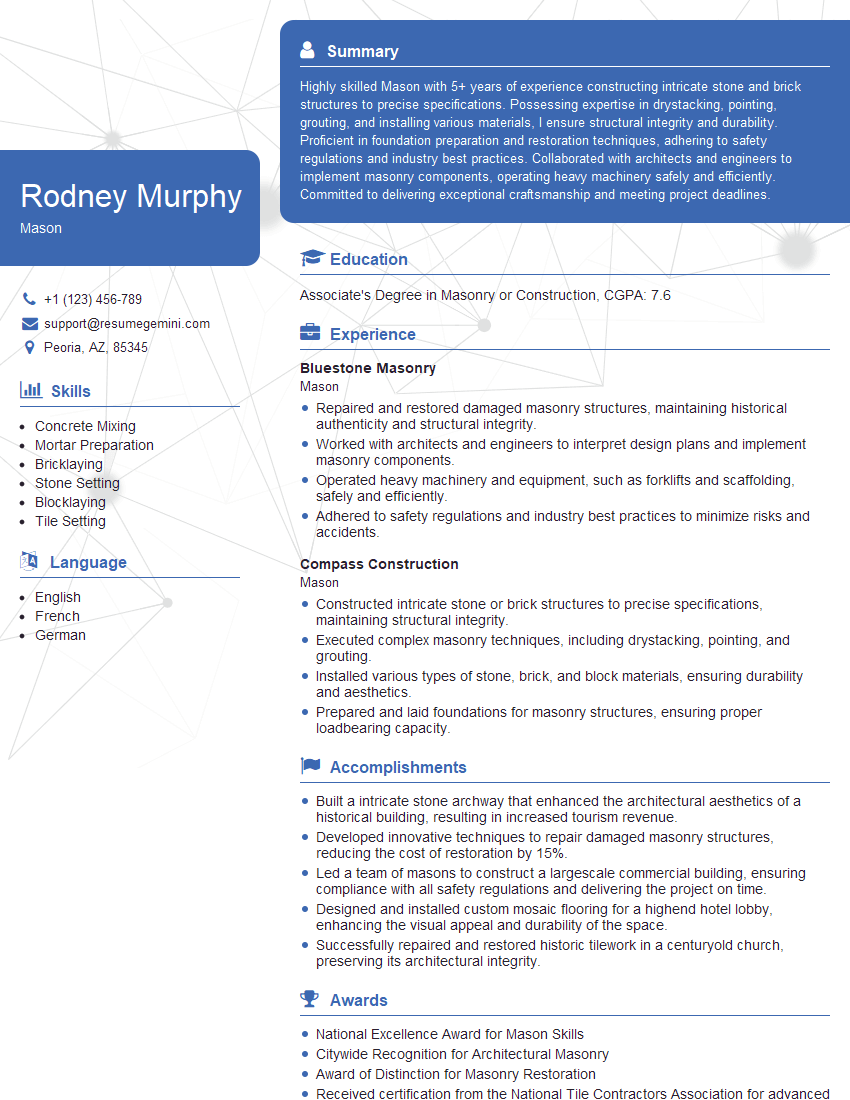
Mason Resume Sample

Stone Mason Resume Sample

Construction Worker Resume Sample

Construction Laborer Resume Sample

Drywall Installer Resume Sample
Explore more articles
Users Rating of Our Blogs
Share Your Experience
We value your feedback! Please rate our content and share your thoughts (optional).
What Readers Say About Our Blog
Very informative content, great job.
good