Interviews are more than just a Q&A session—they’re a chance to prove your worth. This blog dives into essential Knowledge of Corrugated Board Production Process interview questions and expert tips to help you align your answers with what hiring managers are looking for. Start preparing to shine!
Questions Asked in Knowledge of Corrugated Board Production Process Interview
Q 1. Describe the corrugated board manufacturing process from raw materials to finished product.
Corrugated board manufacturing is a fascinating process, transforming simple raw materials into the ubiquitous packaging we see everywhere. It begins with the production of paper from wood pulp, which is then processed into linerboard (the flat outer layers) and fluting medium (the wavy inner layer). The process typically involves these key steps:
- Paper Making: Wood pulp is refined, bleached, and formed into continuous sheets of linerboard and fluting medium, differing in weight and strength.
- Fluting: The fluting medium is passed through a fluting roller, creating the characteristic wavy structure. This creates the ‘flute’ which gives the board its strength and cushioning properties.
- Single-Facer: The fluted medium is glued to one linerboard using a starch-based adhesive. This forms a single-faced corrugated board.
- Double-Facer: The single-faced board is then combined with another linerboard to create the final double-walled corrugated board. This adhesive application is critical for board integrity.
- Cutting & Slitting: The continuous board is then cut and slit to the desired sheet sizes according to the packaging specifications.
- Printing (Optional): Many corrugated boards undergo printing processes (flexography, offset, digital) to add branding, product information, and graphics.
- Converting: This final stage involves cutting, scoring, and folding the printed board into the final packaging configuration (boxes, displays, etc.).
Think of it like building a sandwich – the linerboards are the bread slices, and the fluting is the filling, providing strength and protection to the contents.
Q 2. Explain the different types of corrugated board and their applications.
Corrugated board comes in various types, primarily classified by flute type and board thickness. The flute type dictates the board’s strength, stiffness, and cushioning capabilities:
- A-flute: The most common type, offering a good balance of strength and cushioning. Often used for general-purpose boxes.
- B-flute: Thinner than A-flute, providing less cushioning but greater printing surface area. Ideal for lighter items and where a smaller packaging profile is desired.
- C-flute: A compromise between A and B-flute, providing good strength and moderate cushioning. Frequently used for a range of applications.
- E-flute: The thinnest flute, offering excellent printability and a smooth surface, ideal for high-quality graphics and lighter-weight products.
- F-flute: Even thinner than E-flute, used in specialty applications needing a very flat surface.
Applications vary greatly depending on the flute type and board’s overall thickness: A-flute is perfect for heavy appliances, while B-flute might be best for cereal boxes. Specialty combinations (e.g., AB-flute) offer customized performance for very specific needs.
Q 3. What are the key quality control parameters in corrugated board production?
Quality control in corrugated board manufacturing is paramount to ensure consistent product quality and customer satisfaction. Key parameters include:
- Board Burst Strength: Measures the board’s resistance to internal pressure, crucial for preventing box failure.
- Edge Crush Test (ECT): Determines the board’s resistance to edge compression, directly impacting its stacking strength.
- Flat Crush Test (FCT): Measures the resistance of the corrugated board to compression, when subjected to flat-wise crushing.
- Moisture Content: Maintaining consistent moisture content is crucial as it directly affects board strength and stability. Too much moisture leads to weakening, while too little causes brittleness.
- Caliper (Thickness): Accurate caliper ensures consistent board dimensions and performance across the production run.
- Print Quality: Consistent color reproduction, sharpness, and registration are critical if the board is printed.
- Glue Adhesion: Proper glue adhesion is vital for maintaining the structural integrity of the board.
Regular quality checks using specialized equipment and statistical process control (SPC) techniques ensure that these parameters stay within the defined tolerances.
Q 4. How do you troubleshoot common issues like board bursting, edge crush issues, or wavy board?
Troubleshooting in corrugated board production requires systematic investigation. Here’s a breakdown of common issues and solutions:
- Board Bursting: This usually indicates insufficient board strength or excessive internal pressure. Solutions: Check the linerboard and fluting medium quality, optimize the flute density, adjust the glue application, and reassess the packaging design.
- Edge Crush Issues: Weak edges result in poor stacking strength. Solutions: Review the board’s ECT, examine the cutting and slitting process for damage, optimize the adhesive application at the edges, and consider using edge protectors.
- Wavy Board: This points to problems in the fluting process, uneven glue application, or inconsistencies in the raw materials. Solutions: Inspect the fluting rollers for wear and tear, calibrate the glue application system, check for variations in the moisture content of the raw materials and adjust the production parameters accordingly.
Systematic investigation, starting with visual inspection and followed by testing with relevant equipment, is crucial for efficient troubleshooting.
Q 5. Describe your experience with different types of printing techniques used in corrugated board packaging.
My experience encompasses several printing techniques used on corrugated board:
- Flexography: The most common method, using flexible, engraved printing plates and liquid inks. It’s cost-effective and suitable for high-volume printing. I’ve extensively used this method for various projects, from simple text to complex designs.
- Offset Lithography: Offers superior print quality and finer detail compared to flexography. However, it is less economical for large runs and requires specialized plates.
- Digital Printing: Offers excellent versatility, making it ideal for short runs, personalized packaging, and variable data printing. I’ve used this for limited edition packaging and promotional items.
The choice of printing method depends on factors like print quality requirements, run length, budget, and design complexity. My experience helps me choose the optimal technique for each project.
Q 6. Explain the role of flute type and board thickness in packaging design.
Flute type and board thickness play a critical role in packaging design, influencing its strength, cushioning, printability, and overall cost.
- Flute Type: As mentioned earlier, different flute types offer different levels of strength and cushioning. A-flute is best for heavier products, requiring high stacking strength. B-flute, with its smaller profile, is ideal for items that need a smaller package or excellent printability.
- Board Thickness: This is often expressed as the combined thickness of the linerboards and the fluting medium. Thicker board provides greater strength and cushioning but increases material cost and the package’s overall size. Choosing the right thickness depends on the weight and fragility of the packaged item.
For instance, designing packaging for a fragile electronic device would require a thicker board with possibly a stronger flute type (A-flute) for better cushioning and protection. Conversely, lighter items like cereal would utilize thinner board with B-flute to minimize packaging bulk and maximize printability.
Q 7. How do you ensure efficient use of raw materials and minimize waste in the production process?
Efficient raw material usage and waste minimization are crucial for profitability and environmental responsibility. Strategies include:
- Optimized Die-Cutting: Minimizing waste during die-cutting by carefully designing the packaging layout to maximize sheet utilization. Computer-aided design (CAD) software plays a crucial role here.
- Waste Recycling: Implementing a robust recycling program for corrugated board scraps, potentially selling them to recycling facilities or using them as secondary material in production.
- Material Selection: Choosing appropriate board thickness and flute type to optimize material usage while meeting product protection requirements, avoiding over-engineering.
- Production Planning: Careful planning to minimize production downtime and avoid material spoilage. This involves using predictive maintenance techniques and ensuring sufficient stock levels.
- Precision Manufacturing: Precise manufacturing processes reduce material waste and errors, enhancing overall efficiency.
By implementing these strategies, we can significantly reduce production costs, minimize our environmental footprint, and maximize overall productivity.
Q 8. What are the safety regulations and best practices in a corrugated board manufacturing environment?
Safety in corrugated board manufacturing is paramount. It’s a high-speed, high-powered environment with numerous potential hazards. Our safety protocols are built around a multi-layered approach, encompassing preventative measures, emergency response, and continuous improvement.
- Personal Protective Equipment (PPE): Mandatory use of safety glasses, hearing protection, steel-toed boots, and appropriate gloves is strictly enforced. We regularly inspect and replace worn PPE. For example, we’ve seen a significant reduction in eye injuries since implementing safety glasses with side shields.
- Machine Guarding: All machinery is equipped with safety guards, interlocks, and emergency stop buttons. Regular inspections are performed to ensure functionality. We use lockout/tagout procedures for maintenance to prevent accidental starts.
- Training and Awareness: New employees undergo comprehensive safety training, including hazard identification, safe operating procedures, and emergency response protocols. We also conduct regular refresher training and safety audits to maintain awareness.
- Housekeeping: Maintaining a clean and organized workspace is critical to prevent slips, trips, and falls. We have a strict policy on clearing debris and spills immediately.
- Emergency Response: We have clearly defined emergency procedures, including evacuation plans, first aid protocols, and contact information for emergency services. We conduct regular emergency drills to ensure preparedness. For instance, our recent fire drill highlighted the effectiveness of our communication system.
Beyond these core elements, we actively promote a safety-first culture. Employees are encouraged to report near misses and hazards without fear of reprisal. We use data from safety incidents to proactively address potential problems before they result in injuries.
Q 9. How do you maintain and troubleshoot corrugated board converting machinery?
Maintaining and troubleshooting corrugated board converting machinery requires a blend of preventative maintenance, proactive monitoring, and effective problem-solving skills. It’s like caring for a complex machine – regular check-ups are key to prevent major breakdowns.
- Preventative Maintenance: We adhere to strict preventative maintenance schedules, including regular lubrication, cleaning, and inspection of critical components. This significantly reduces downtime and extends the lifespan of the equipment. For example, scheduled lubrication of bearings on our folder-gluers drastically reduced friction and increased their operating life.
- Proactive Monitoring: We use various sensors and monitoring systems to track machine performance in real-time. This allows us to identify potential problems before they escalate. Anomalies in vibration, temperature, or power consumption trigger alerts, enabling prompt intervention.
- Troubleshooting: When problems occur, we utilize a structured troubleshooting process. We start with visual inspections, followed by checks of electrical systems, pneumatic systems, and mechanical components. Our technicians are trained to use diagnostic tools and consult technical manuals to identify the root cause of the problem and implement a solution quickly. I recall one instance where a seemingly simple sensor malfunction caused a major production bottleneck, but our team quickly identified and resolved it, minimizing downtime.
- Spare Parts Inventory: Maintaining an adequate inventory of common spare parts is crucial to minimize downtime during repairs. We use a just-in-time inventory system to balance cost-effectiveness and availability.
Continuous improvement is integral to our maintenance strategy. We regularly review our maintenance procedures and incorporate lessons learned from past experiences. We also participate in industry workshops to stay abreast of the latest maintenance techniques and technologies.
Q 10. Describe your experience with different types of converting equipment.
My experience encompasses a wide range of corrugated board converting equipment, including but not limited to:
- Flexographic Printing Presses: I’m proficient in operating and maintaining various flexo presses, including those with both water-based and UV inks. I understand the importance of maintaining consistent ink density and register accuracy for high-quality printing.
- Rotary Die Cutters: I have extensive experience with rotary die cutting machines, focusing on die maintenance, efficient setup, and achieving precise cutting accuracy. This includes understanding different die materials and their applications.
- Folder-Gluers: My expertise includes setting up and troubleshooting various types of folder-gluers, from simple to complex configurations. I’m familiar with different gluing techniques and the impact of glue application on box quality.
- Case Makers/Erectors: I have experience with automated case makers and erectors, understanding their setup, operation, and maintenance. The ability to adjust speed and configuration to accommodate different box sizes is crucial here.
- Specialized Equipment: I have also worked with specialized equipment such as lamination machines and embossing machines, understanding their specific requirements for operation and maintenance.
Beyond specific machines, I’m adept at understanding the workflow between different stages of the converting process and the importance of maintaining optimal throughput between equipment.
Q 11. What is your experience with inventory management and production scheduling?
Effective inventory management and production scheduling are essential for efficient corrugated board production. It’s like orchestrating a symphony – each instrument (material) needs to be in the right place at the right time.
- Inventory Management: We use a sophisticated inventory management system to track raw materials, work-in-progress, and finished goods. This system provides real-time visibility into inventory levels, allowing for accurate forecasting and timely replenishment. We employ techniques like ABC analysis to prioritize inventory control efforts.
- Production Scheduling: We utilize advanced scheduling software to optimize production runs, considering factors such as order due dates, machine availability, and material availability. We use techniques like Kanban or MRP (Material Requirements Planning) depending on the complexity of the production demands. For example, we successfully implemented Kanban to streamline our small-run order fulfillment.
- Demand Forecasting: We use historical data and market trends to predict future demand, allowing us to proactively manage inventory and production capacity. This helps us avoid stockouts or overstocking.
- Waste Reduction: We actively work to minimize waste throughout the process, from raw materials to finished goods. This not only reduces costs but also minimizes our environmental impact.
By effectively managing inventory and production schedules, we ensure timely order fulfillment, minimize production costs, and optimize the use of resources.
Q 12. How do you manage production deadlines and meet customer demands?
Meeting production deadlines and customer demands requires a proactive and collaborative approach. It’s all about teamwork and clear communication.
- Prioritization: We prioritize orders based on due dates, customer importance, and production constraints. This ensures that urgent orders are processed first.
- Communication: Open communication with customers is crucial. We provide regular updates on order status and proactively address any potential delays. We have a dedicated customer service team to maintain close contact.
- Flexibility: We maintain a degree of flexibility in our production schedule to accommodate unexpected events or changes in customer demand. This might involve adjusting priorities or working overtime in certain circumstances.
- Continuous Improvement: We continuously monitor our performance and identify areas for improvement in our processes. This allows us to become more efficient and better equipped to handle future challenges.
- Capacity Planning: We regularly review our production capacity and adjust resources as needed to meet projected demand.
By combining proactive planning with effective communication and a willingness to adapt, we consistently deliver high-quality products on time and meet customer expectations.
Q 13. Explain your understanding of Six Sigma or Lean Manufacturing principles in a production setting.
Lean manufacturing and Six Sigma are powerful methodologies for improving efficiency and quality in a production environment. They’re like two sides of the same coin – both focused on eliminating waste and improving processes.
- Lean Manufacturing: Lean focuses on eliminating waste (muda) in all aspects of production. This includes waste from overproduction, waiting, transportation, inventory, motion, over-processing, and defects. We implement lean principles through techniques like value stream mapping, 5S, Kaizen events, and cellular manufacturing. For example, we used value stream mapping to identify bottlenecks in our printing process, leading to significant efficiency gains.
- Six Sigma: Six Sigma is a data-driven methodology that aims to reduce variation and improve quality. It uses statistical tools to analyze processes and identify areas for improvement. We use DMAIC (Define, Measure, Analyze, Improve, Control) to tackle specific quality problems. A recent Six Sigma project reduced the defect rate in our die-cutting process by over 80%.
Both Lean and Six Sigma complement each other. Lean provides the framework for eliminating waste, while Six Sigma provides the tools for rigorously measuring and improving processes. We use a combination of both methodologies to continuously improve our operations.
Q 14. How do you handle production line disruptions or machine breakdowns?
Production line disruptions and machine breakdowns are inevitable, but our response is structured to minimize their impact. It’s like having a well-rehearsed fire-drill team – everyone knows their role.
- Immediate Response: Our first priority is to ensure the safety of personnel and prevent further damage. We immediately shut down the affected machine and follow established lockout/tagout procedures.
- Problem Identification: A skilled technician is dispatched to diagnose the problem. This often involves using diagnostic tools and consulting technical manuals.
- Repair or Replacement: Depending on the nature of the problem, we either repair the machine or replace faulty components. Our well-stocked spare parts inventory helps us minimize downtime. I remember once when a critical motor failed on a Saturday. Thanks to our proactive spare-part management, we had the machine back up and running by Sunday afternoon, minimizing production delays.
- Root Cause Analysis: Once the problem is resolved, we conduct a root cause analysis to understand why it occurred in the first place. This helps prevent similar incidents from happening in the future.
- Production Rescheduling: If the disruption is significant, we may need to reschedule production runs to minimize delays. This involves communicating with customers and adjusting our production schedule accordingly.
Our proactive approach to maintenance and our well-trained team allow us to quickly and effectively respond to production line disruptions, minimizing their impact on our production schedule and customer deliveries.
Q 15. What are your methods for improving production efficiency and reducing costs?
Improving production efficiency and reducing costs in corrugated board production requires a multifaceted approach focusing on optimizing the entire process, from raw materials to finished goods. My strategies center around three key areas:
Waste Reduction: This involves minimizing material waste through precise cutting and die-cutting processes, optimizing the design to reduce material usage, and implementing efficient scrap management systems. For example, I’ve successfully implemented a nesting software that reduced material waste by 15% in a previous role by optimizing the arrangement of box blanks on the sheet. This not only reduces material costs but also minimizes environmental impact.
Process Optimization: Analyzing each stage of production to identify bottlenecks and inefficiencies is crucial. This includes optimizing machine speeds, minimizing downtime through preventative maintenance, and streamlining workflows. For instance, I once implemented a lean manufacturing approach, using techniques like 5S, which resulted in a 10% increase in overall output with the same number of employees.
Automation and Technology: Investing in advanced technologies like automated cutting systems, high-speed printing machines, and sophisticated quality control systems significantly improves productivity and reduces labor costs. The implementation of a computerized corrugated board slitter-scorer in a previous company dramatically improved cutting accuracy, reducing defects and saving time previously spent on manual rework.
Career Expert Tips:
- Ace those interviews! Prepare effectively by reviewing the Top 50 Most Common Interview Questions on ResumeGemini.
- Navigate your job search with confidence! Explore a wide range of Career Tips on ResumeGemini. Learn about common challenges and recommendations to overcome them.
- Craft the perfect resume! Master the Art of Resume Writing with ResumeGemini’s guide. Showcase your unique qualifications and achievements effectively.
- Don’t miss out on holiday savings! Build your dream resume with ResumeGemini’s ATS optimized templates.
Q 16. Describe your experience with quality control and assurance procedures.
Quality control and assurance are paramount in corrugated board production. My approach involves a multi-layered system incorporating:
Incoming Material Inspection: Rigorous checks on the quality of linerboard and fluting paper ensure consistent board properties. This includes measuring grammage, moisture content, and surface quality.
In-process Monitoring: Continuous monitoring of machine parameters such as temperature, pressure, and speed during corrugating, printing, and converting ensures consistent output. Regular checks are made on the glue application and board formation.
Finished Goods Inspection: A comprehensive inspection of the finished products checks for dimensional accuracy, print quality, and structural integrity. This might involve manual checks, automated measuring systems, and even burst and edge crush tests.
Statistical Process Control (SPC): Utilizing SPC charts helps in identifying trends and potential problems early on, preventing major defects from occurring. This allows for proactive adjustments to maintain quality.
For example, in my previous role, I implemented a visual control system using color-coded charts to readily identify quality issues on the production line, reducing defect rates by 12%.
Q 17. How do you ensure compliance with industry standards and regulations?
Compliance with industry standards and regulations is not merely a legal requirement; it’s integral to maintaining reputation and customer trust. My approach focuses on:
Staying Updated: Continuously monitoring and understanding the evolving industry standards (e.g., ISO standards, FDA regulations for food-grade packaging) is crucial. This involves participating in industry events, reviewing updated regulations, and staying connected with regulatory bodies.
Documentation and Audits: Maintaining detailed records of all processes, including material specifications, machine settings, and quality checks is essential for traceability and auditing purposes. Regular internal audits and external certifications (like ISO 9001) demonstrate a commitment to compliance.
Employee Training: Training employees on relevant regulations and safety procedures ensures that everyone understands their role in maintaining compliance. This involves regular training sessions and updates on new regulations.
Supplier Management: Ensuring that suppliers comply with relevant regulations is just as important. This includes regular reviews of supplier quality systems and audits where necessary.
Q 18. Explain your experience with different types of adhesives used in corrugated board production.
Experience with various adhesives is critical in corrugated board production, as the adhesive’s properties directly impact the board’s strength and durability. I have extensive experience with several types, including:
Water-based starch adhesives: These are commonly used due to their cost-effectiveness and relatively low environmental impact. However, their performance can be affected by humidity and temperature.
Modified starch adhesives: These offer improved performance characteristics such as increased bond strength and water resistance compared to standard starch adhesives.
Hot melt adhesives: Suitable for high-speed applications, they offer quick setting times, but require specialized equipment. This provides for faster production cycles.
The choice of adhesive depends on factors such as application speed, required bond strength, type of corrugating machine, and end-use application of the finished product. For example, I’ve successfully switched from a standard starch adhesive to a modified starch adhesive in a high-humidity environment, significantly improving the bond strength and reducing customer complaints about box failures.
Q 19. What is your familiarity with different board scoring and creasing techniques?
Scoring and creasing are crucial for creating accurately folded boxes. My familiarity encompasses various techniques, including:
Single-point scoring: A simple technique creating a shallow groove to facilitate folding. This is suitable for lighter-weight boards.
Multiple-point scoring: Creates a more defined groove, providing better folding accuracy and strength, ideal for heavier-weight boards and complex folds.
Perforated scoring: Creates a line of small perforations for easier tearing along designated lines, often used in packaging requiring tear-open features.
Creasing: Uses higher pressure to produce a sharper fold, enabling clean, crisp folds in the finished product.
Choosing the appropriate scoring and creasing techniques depends on the board’s type and thickness, the complexity of the design, and the required folding characteristics of the finished product. For instance, I’ve optimized the scoring pattern on a particular box design, reducing the incidence of cracking during folding and thereby improving the overall yield.
Q 20. How do you manage and motivate a production team effectively?
Effective team management involves fostering a positive and productive work environment. My approach includes:
Clear Communication: Open and transparent communication ensures everyone is informed about goals, targets, and any changes in production processes.
Delegation and Empowerment: Assigning clear responsibilities and empowering team members to make decisions fosters ownership and accountability.
Training and Development: Providing ongoing training and development opportunities helps enhance employee skills and motivates them to grow professionally.
Recognition and Rewards: Acknowledging and appreciating individual and team achievements boosts morale and encourages continued performance.
Conflict Resolution: Addressing conflicts fairly and promptly is vital for maintaining a positive and collaborative atmosphere.
For example, in a previous role, I implemented a team-based reward system based on achieving monthly production targets, which led to a noticeable improvement in productivity and employee engagement.
Q 21. Describe your experience in implementing and managing process improvements.
Implementing and managing process improvements involves a structured approach:
Identifying Areas for Improvement: Analyzing production data, conducting time studies, and gathering feedback from the team helps identify bottlenecks and inefficiencies.
Developing Solutions: Based on the identified problems, I develop solutions, which might include new equipment, improved workflows, or staff training.
Implementation and Monitoring: The implementation phase includes coordinating resources, training employees, and closely monitoring the results.
Evaluation and Adjustment: Regularly evaluating the implemented changes and making adjustments as needed is crucial for achieving sustained improvements. Key performance indicators (KPIs) are tracked to measure success.
For example, I once led a project to improve the efficiency of the printing process by implementing a new color management system. This resulted in reduced waste, improved print quality, and a significant increase in throughput.
Q 22. How do you maintain a safe and productive work environment?
Maintaining a safe and productive corrugated board production environment requires a multi-faceted approach focusing on both proactive measures and reactive responses. Safety is paramount, so we begin with a robust safety program. This includes regular safety training covering machine operation, hazard identification (like pinch points on machinery or potential chemical exposure), and emergency procedures. We enforce strict adherence to safety protocols, including the mandatory use of PPE (Personal Protective Equipment) such as safety glasses, hearing protection, and steel-toe boots. Regular safety inspections of equipment and the work area are crucial to identify and rectify potential hazards before accidents occur.
Productivity hinges on efficiency and minimizing downtime. This starts with well-maintained equipment. We implement preventative maintenance schedules, carefully tracking machine performance and conducting regular servicing to prevent breakdowns. We also optimize workflows through lean manufacturing principles, identifying and eliminating waste in the process. This might involve streamlining material handling, improving the layout of the production line, or implementing better communication systems to ensure smooth production flow. Finally, a positive work environment fostered through open communication, employee empowerment, and recognition of achievements contributes significantly to both safety and productivity.
Q 23. How familiar are you with different types of corrugated board testing equipment?
My familiarity with corrugated board testing equipment is extensive. I’ve worked extensively with equipment measuring various properties crucial to quality control. These include:
- Burst Strength Testers: These measure the resistance of the board to bursting pressure, a key indicator of its overall strength.
- Edge Crush Testers (ECT): These machines determine the compressive strength of the board’s edges, critical for determining stackability and structural integrity.
- Ring Crush Testers: Measuring the resistance to compression of a ring-shaped sample, useful for evaluating the strength of the board’s flutes.
- Flat Crush Testers: Measuring the compressive strength of a flat sample of the board.
- Moisture Meters: Accurate moisture content is vital for proper board formation and performance. These meters ensure optimal moisture levels are maintained.
- Thickness Gauges: Precise measurement of board thickness ensures consistency and meets customer specifications.
Beyond these basic tests, I’m also experienced with more specialized equipment, such as those assessing stiffness, printability, and surface properties. Proficiency with these tools allows for precise quality control, ensuring the final product meets the highest standards.
Q 24. Explain your understanding of the environmental impact of corrugated board production and how to minimize it.
Corrugated board production, while crucial to numerous industries, does have an environmental footprint. The primary concerns revolve around the use of wood pulp (a renewable resource, but its harvesting and processing still have impacts), energy consumption in the manufacturing process, and waste generation. However, significant strides have been made towards minimizing this impact.
Minimizing environmental impact involves several strategies:
- Sustainable Sourcing: Using wood pulp from sustainably managed forests certified by organizations like the Forest Stewardship Council (FSC) ensures responsible forestry practices.
- Energy Efficiency: Implementing energy-efficient technologies in machinery and processes, utilizing renewable energy sources where possible, and optimizing production to minimize waste all contribute to reducing energy consumption.
- Waste Reduction and Recycling: Implementing robust recycling programs for both corrugated board scrap and other production waste is crucial. Closed-loop systems, where waste is reused within the production process, are particularly effective.
- Water Management: Efficient water usage and responsible wastewater treatment are essential to minimize water pollution.
- Reduced Packaging: Designing packaging that is both protective and minimizes material usage contributes to reducing the overall environmental impact.
By focusing on these areas, the corrugated board industry is actively working towards a more sustainable future, balancing economic viability with environmental responsibility. The industry is actively pursuing innovative solutions and materials, including bio-based alternatives and recycled content integration, to further reduce its footprint.
Q 25. How do you ensure the accuracy of printing and die-cutting processes?
Ensuring the accuracy of printing and die-cutting processes is critical for delivering high-quality products. This involves a multi-step approach that starts even before the process begins.
Pre-press preparation is key: This includes meticulous design and file preparation, ensuring that all artwork is high-resolution and correctly formatted. Color proofing is vital to verify color accuracy before commencing printing. For die-cutting, precise die creation is essential; this involves using high-precision CAD/CAM systems to design and manufacture the dies. We perform rigorous testing on the dies to make sure they work properly and to prevent damage to the press.
During the production process: Regular monitoring of the printing and die-cutting machines is crucial. We utilize sophisticated quality control systems, often incorporating automated inspection systems, to detect and correct any deviations from specifications. Regular calibration of the machines and consistent use of quality materials are also necessary. Statistical process control (SPC) is a valuable tool for ongoing monitoring and identifying trends that could indicate potential problems.
Post-production inspection: A final quality check of the finished products is essential, verifying accuracy in printing and proper die-cutting. This might involve visual inspection, as well as using measuring tools to ensure dimensions are correct.
Q 26. What is your experience with preventative maintenance and predictive maintenance schedules?
Preventative maintenance (PM) and predictive maintenance (PdM) are fundamental to ensuring consistent production and minimizing downtime. Preventative maintenance involves scheduled inspections and servicing of equipment at predetermined intervals, preventing problems before they arise. This could include things like lubricating moving parts, replacing worn components, or cleaning and inspecting machinery. We follow a strict PM schedule customized to the specific equipment and its operational demands. This schedule is regularly reviewed and updated based on equipment performance and any identified issues.
Predictive maintenance goes a step further. It uses data and sensors to monitor the condition of equipment in real-time, identifying potential issues before they lead to failure. We employ various technologies like vibration sensors, thermal imaging, and oil analysis to detect anomalies and predict potential failures. This allows us to schedule maintenance proactively, preventing unexpected breakdowns and maximizing equipment lifespan. The data collected by these sensors is analyzed using sophisticated software to develop predictive models for equipment maintenance needs. This data-driven approach allows for optimized maintenance schedules, maximizing uptime while minimizing costs.
Q 27. Describe your proficiency in using relevant software for production planning and tracking (e.g., ERP systems).
My proficiency in using software for production planning and tracking is excellent. I have extensive experience with various Enterprise Resource Planning (ERP) systems, including SAP and Oracle, along with more specialized corrugated board production management software. These systems are vital for efficient operations.
In an ERP system, I can effectively manage all aspects of production planning from raw material procurement and inventory management to production scheduling, quality control, and delivery tracking. I can utilize the system’s reporting features to generate key performance indicators (KPIs) such as production efficiency, on-time delivery rates, and waste percentages. This allows us to identify areas needing improvement and make data-driven decisions to optimize processes and resource allocation. The system also facilitates accurate forecasting, helping us anticipate future demand and adjust production accordingly. Furthermore, integrating the ERP with other systems, such as those used in sales and marketing, allows for a seamless workflow across different departments.
Q 28. How do you handle customer complaints related to quality or delivery issues?
Handling customer complaints regarding quality or delivery issues is a crucial aspect of maintaining customer satisfaction. My approach is systematic and focuses on prompt resolution and preventing future occurrences.
First, I acknowledge the complaint promptly and empathetically, ensuring the customer feels heard and understood. Next, I gather all relevant information, including details of the specific issue, order number, delivery date, and any related documentation. Then, I conduct a thorough investigation to identify the root cause of the problem, whether it be a manufacturing defect, a logistical issue, or something else. This might involve reviewing production records, inspecting the affected product, or discussing the situation with the relevant team members. Based on the investigation, I develop a solution that addresses the customer’s immediate concerns, such as offering a replacement, a refund, or a credit. Finally, I implement corrective actions to prevent similar issues from occurring in the future. This could involve process improvements, equipment adjustments, or additional training for employees. Throughout the process, I maintain open communication with the customer, keeping them informed of the progress and ensuring a satisfactory resolution. Customer feedback is invaluable, and we use it to continuously improve our processes and ensure we are meeting customer expectations.
Key Topics to Learn for Knowledge of Corrugated Board Production Process Interview
- Raw Material Handling and Preparation: Understanding the properties of different paper grades, their suitability for various applications, and the processes involved in preparing the paper for corrugation (e.g., moisture control, sheet alignment).
- Corrugating Process: Detailed knowledge of the single-facer, double-backer, and converting processes, including the roles of various machines and their operating parameters (e.g., glue application, corrugating rolls, temperature and pressure control).
- Printing and Finishing: Understanding different printing techniques used on corrugated board (e.g., flexographic, offset), and finishing operations like die-cutting, scoring, slotting, and laminating. Be prepared to discuss the impact of these processes on product quality and efficiency.
- Quality Control and Assurance: Understanding the critical quality control points throughout the production process, common defects, root cause analysis, and implementation of corrective actions. Familiarity with industry standards and testing methods is essential.
- Production Planning and Scheduling: Knowledge of optimizing production runs, managing inventory, and scheduling maintenance to maximize efficiency and minimize downtime. Understanding lean manufacturing principles would be advantageous.
- Safety and Environmental Considerations: Demonstrate awareness of safety regulations and environmental impact of the production process, including waste reduction strategies and responsible disposal methods.
- Troubleshooting and Problem Solving: Be prepared to discuss common production challenges and your approach to identifying and resolving them. Examples of practical problem-solving scenarios related to machine malfunctions, material defects, or quality issues are highly beneficial.
Next Steps
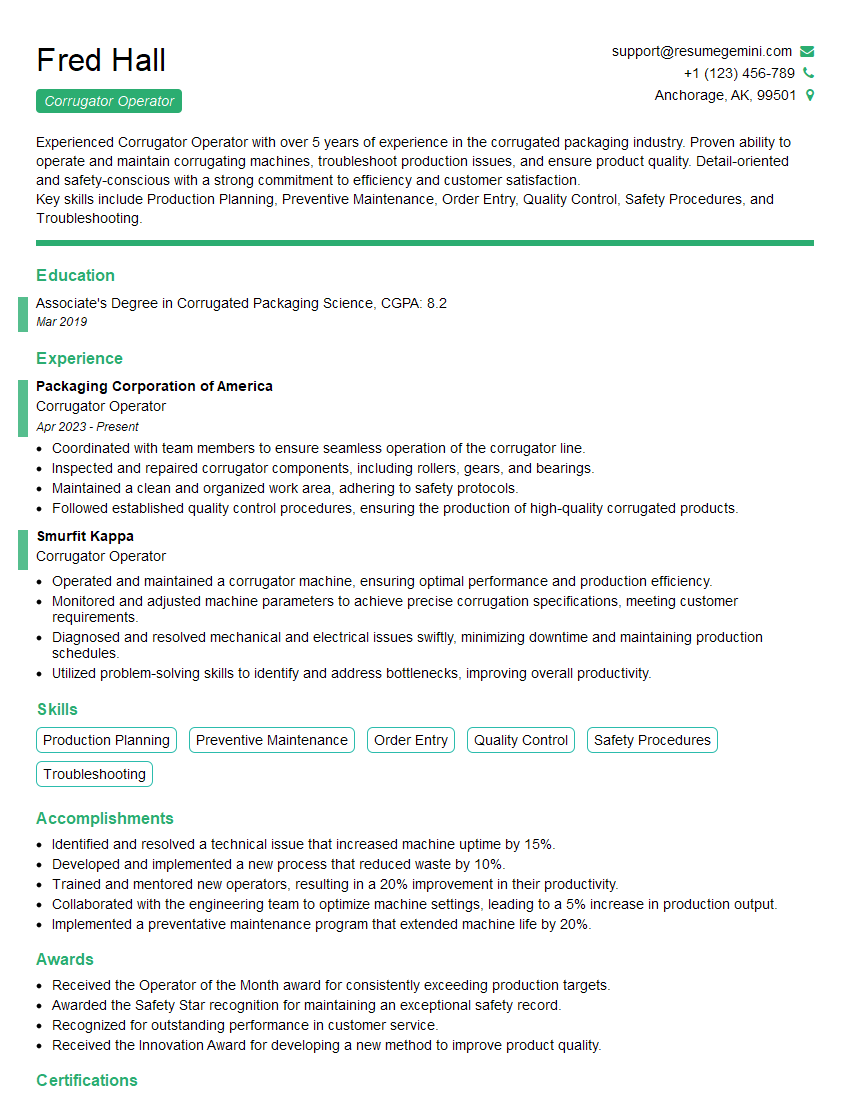
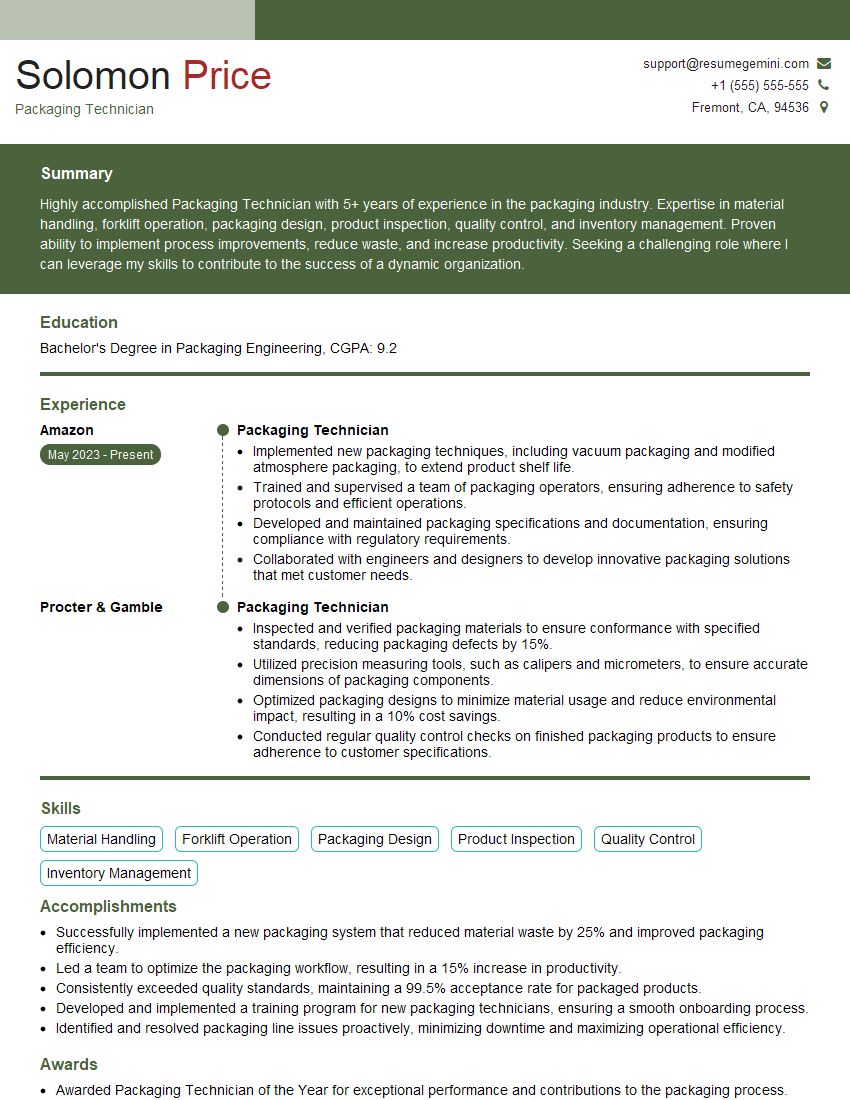
Mastering the corrugated board production process opens doors to rewarding career advancements, offering opportunities for specialization and increased responsibility within the packaging industry. To maximize your job prospects, focus on creating an ATS-friendly resume that effectively highlights your skills and experience. ResumeGemini is a trusted resource to help you build a professional and impactful resume that catches the eye of recruiters. Examples of resumes tailored to showcasing expertise in the Knowledge of Corrugated Board Production Process are available to guide you. Invest the time to craft a compelling resume; it’s your first impression and a key to unlocking your career potential.
Explore more articles
Users Rating of Our Blogs
Share Your Experience
We value your feedback! Please rate our content and share your thoughts (optional).
What Readers Say About Our Blog
Very informative content, great job.
good