Preparation is the key to success in any interview. In this post, we’ll explore crucial Radiation Protection Instrumentation interview questions and equip you with strategies to craft impactful answers. Whether you’re a beginner or a pro, these tips will elevate your preparation.
Questions Asked in Radiation Protection Instrumentation Interview
Q 1. Explain the principles of operation of a Geiger-Müller counter.
A Geiger-Müller (GM) counter is a widely used radiation detection instrument based on the principle of gas ionization. It consists of a cylindrical tube filled with a low-pressure inert gas, like argon, with a thin wire running down its center. A high voltage is applied between the wire (anode) and the tube wall (cathode). When ionizing radiation (alpha, beta, or gamma) enters the tube, it collides with gas atoms, knocking off electrons and creating ion pairs (positive ions and free electrons). These ions and electrons are accelerated towards the oppositely charged electrodes, creating an avalanche of charge. This avalanche produces a measurable electrical pulse, which is then amplified and counted by the device, providing a measure of the radiation’s intensity.
Think of it like a tiny lightning storm inside the tube – each radiation particle triggers a miniature electrical discharge. The number of pulses per unit time is directly proportional to the radiation intensity.
GM counters are relatively simple, inexpensive, and robust, making them ideal for many applications, from radiation monitoring in nuclear power plants to detecting radioactive materials in environmental surveys. However, they cannot distinguish between different types of radiation and provide only a count rate, not the energy of the radiation.
Q 2. Describe the different types of radiation detectors and their applications.
Several types of radiation detectors exist, each with its specific applications:
- Geiger-Müller Counters: As discussed earlier, these are widely used for general radiation detection due to their simplicity and robustness.
- Scintillation Detectors: These detectors use a scintillator material (like sodium iodide) that emits light when struck by radiation. The light is then converted into an electrical signal by a photomultiplier tube. Scintillation detectors offer better energy resolution compared to GM counters, allowing for identification of different radiation types and energy measurement. They are used in medical imaging (PET scans), nuclear spectroscopy, and high-energy physics.
- Ionization Chambers: These detectors directly measure the ionization produced by radiation in a gas-filled chamber. They are typically used for measuring higher radiation levels and offer good linearity over a wide range. They find applications in radiation monitoring and dosimetry.
- Semiconductor Detectors (e.g., HPGe): These detectors utilize semiconductor materials (like high-purity germanium) to detect radiation. The incident radiation creates electron-hole pairs, resulting in a measurable electrical signal. They provide excellent energy resolution and are commonly used in nuclear spectroscopy and environmental monitoring.
- Proportional Counters: These counters produce a signal proportional to the energy of the incident radiation. They offer better energy resolution than GM counters but are less sensitive.
The choice of detector depends on the specific application, including the type and energy of the radiation being measured, the required sensitivity, and energy resolution needs.
Q 3. What are the limitations of each radiation detection method?
Each radiation detection method has its limitations:
- Geiger-Müller Counters: Poor energy resolution; cannot differentiate between radiation types; dead time after each detection event, limiting high-count rate measurements.
- Scintillation Detectors: Can be relatively expensive; sensitivity can be affected by temperature variations.
- Ionization Chambers: Lower sensitivity compared to other detectors; relatively slow response time.
- Semiconductor Detectors: Require cryogenic cooling for high-resolution operation (e.g., HPGe); susceptible to damage from high radiation levels.
- Proportional Counters: Lower sensitivity than GM counters; relatively complex electronics.
Understanding these limitations is crucial for selecting the appropriate detector and interpreting the measured data accurately. For example, using a GM counter to measure a mix of alpha and gamma radiation will only provide a total count without distinguishing between the two.
Q 4. How do you calibrate a radiation survey meter?
Calibrating a radiation survey meter ensures accurate measurements. The procedure typically involves exposing the meter to a known radiation source of a specific type and energy. This source, often a sealed radioactive source with a certified activity, is placed at a specified distance from the detector. The meter’s reading is then compared to the known radiation level from the source. Calibration involves adjusting the meter’s internal settings to match the known value. A traceable calibration certificate is issued, documenting the calibration date, source used, and any adjustments made.
The specific calibration procedure varies depending on the instrument type and regulatory requirements. It’s crucial to follow the manufacturer’s instructions and to use a certified calibration facility to maintain accuracy and compliance. Regular calibration is essential to ensure the continued reliable performance of the survey meter.
Imagine calibrating a kitchen scale using known weights – the process ensures accurate measurements for all future weighings.
Q 5. Explain the importance of radiation shielding and different shielding materials.
Radiation shielding is vital for protecting personnel and the environment from harmful radiation. The effectiveness of shielding depends on the type and energy of the radiation. Different materials offer varying degrees of protection:
- Lead: Highly effective against gamma and X-rays due to its high atomic number. Often used in shielding for medical imaging equipment and nuclear facilities.
- Concrete: Provides good shielding against gamma and neutron radiation, particularly with high density concrete. Commonly used in the construction of nuclear reactors and particle accelerators.
- Water: Effective for neutron shielding due to its hydrogen content. Used in nuclear reactor pools and shielding around particle accelerators.
- Steel: Effective against beta particles and to some extent, gamma rays. Frequently used in conjunction with other shielding materials.
The thickness of the shielding material is also a critical factor; thicker shielding provides greater protection. Shielding design often involves a combination of materials to provide optimal protection for a given radiation type and energy level. For example, a nuclear reactor may utilize a combination of concrete, water, and steel for comprehensive protection.
Q 6. What are the legal requirements for radiation protection in your area?
I cannot provide specific legal requirements for radiation protection as these vary significantly depending on location (country, state/province, etc.). However, generally, legal requirements cover aspects such as:
- Licensing and registration: Organizations handling or using radioactive materials usually need licenses or registrations from the relevant regulatory authority.
- Radiation safety training: Personnel working with radiation sources must receive appropriate training to ensure they understand safety procedures and can minimize exposure.
- Exposure limits: Strict limits exist for the amount of radiation exposure allowed to workers and the public. These limits are based on scientific research and aim to minimize health risks.
- Instrumentation and monitoring: Regular monitoring of radiation levels is mandatory in designated areas using appropriate instrumentation. Records of these measurements must be maintained.
- Emergency preparedness: Procedures for responding to radiation accidents or emergencies must be in place.
- Waste disposal: Safe disposal of radioactive waste is strictly regulated.
It’s essential to consult the relevant national or regional regulatory authority (e.g., the Nuclear Regulatory Commission in the USA, the Office for Nuclear Regulation in the UK, etc.) for the exact legal requirements in your specific area.
Q 7. Describe different types of personal dosimeters and their uses.
Several types of personal dosimeters are used to monitor individual radiation exposure:
- Film Badges: These use photographic film that darkens upon exposure to radiation. The degree of darkening indicates the radiation dose received. They are relatively inexpensive but require processing in a specialized laboratory.
- Thermoluminescent Dosimeters (TLDs): These devices contain a material that stores energy when exposed to radiation. This energy is released as light when heated, allowing the absorbed dose to be determined. TLDs offer better sensitivity and accuracy than film badges.
- Optically Stimulated Luminescence (OSL) Dosimeters: These dosimeters use a material that emits light when stimulated by laser light after exposure to radiation. OSL dosimeters provide excellent sensitivity, a wide dynamic range, and are less susceptible to environmental factors.
- Electronic Personal Dosimeters (EPDs): These devices use electronic sensors to measure radiation dose in real-time. They provide immediate feedback on accumulated dose and are often equipped with alarms to alert the user to high radiation levels. However, they can be more expensive than other types of dosimeters and require regular calibration.
The choice of personal dosimeter depends on factors like the radiation environment, required accuracy, and budget constraints. Healthcare workers in radiation oncology, nuclear power plant personnel, and researchers in nuclear physics are among the groups that use personal dosimeters regularly.
Q 8. How do you interpret a personal dosimeter reading?
Interpreting a personal dosimeter reading involves understanding the unit of measurement (usually millisieverts, mSv) and the time period it covers. The reading indicates the accumulated radiation dose received by the wearer during that period. For example, a reading of 0.5 mSv over a month suggests a low dose, while a reading significantly exceeding the regulatory limits indicates potential overexposure. It’s crucial to check the dosimeter type (e.g., thermoluminescent dosimeter (TLD), optically stimulated luminescence dosimeter (OSL)) as they have different reading procedures and sensitivities. The dosimetry service will provide a detailed report outlining the effective dose and the type of radiation detected. We always compare the reading against regulatory limits and the worker’s assigned dose limits to assess any potential health concerns. Always consider the context: a high reading might be due to a single, controlled exposure during a specific procedure, or it might signify a serious issue with radiation safety protocols.
Q 9. Explain the concept of ALARA (As Low As Reasonably Achievable).
ALARA, or As Low As Reasonably Achievable, is a fundamental principle in radiation protection. It emphasizes minimizing radiation exposure to individuals and the environment, while acknowledging that eliminating all radiation is often impractical or excessively costly. ALARA isn’t about reaching zero exposure; it’s about implementing all reasonable measures to keep exposure as low as possible. This involves a combination of engineering controls (shielding, distance, time optimization), administrative controls (work procedures, training), and personal protective equipment (PPE). Imagine a scenario involving X-ray equipment: instead of just accepting the default settings, we would optimize the exposure parameters to capture the necessary image with the lowest possible radiation dose to the patient. This balance between practical implementation and dose reduction is the essence of ALARA.
Q 10. How do you assess the radiation risks associated with a specific task?
Assessing radiation risks for a specific task requires a multi-faceted approach. First, we identify the radiation sources involved (e.g., X-rays, gamma rays from radioactive isotopes). Then, we determine the potential exposure pathways – how could radiation reach the worker (e.g., direct radiation, scattered radiation, ingestion/inhalation of radioactive material). Next, we quantify the potential dose using calculations, modeling, or prior data from similar tasks. This involves considering the activity of the source, the time of exposure, the distance from the source, and shielding effectiveness. Finally, we compare the estimated dose with regulatory limits and guidelines, incorporating the ALARA principle. Let’s say we are assessing the risk of handling a specific radioactive source for a particular procedure: we’d measure the source’s activity, define the work practices (time constraints, distance maintained), evaluate shielding efficacy and calculate the expected effective dose to determine the appropriate safety measures. This whole process culminates in a risk assessment document that forms the basis for safe work practices.
Q 11. What are the safety protocols for handling radioactive materials?
Safety protocols for handling radioactive materials are stringent and focus on minimizing exposure through three core principles: time, distance, and shielding.
- Time: Minimize the time spent near the source. Quick, efficient procedures are essential.
- Distance: Increase the distance between the worker and the source; radiation intensity decreases rapidly with distance.
- Shielding: Use appropriate shielding materials (e.g., lead, concrete) to absorb radiation.
Q 12. Describe the emergency procedures for a radiation incident.
Emergency procedures for a radiation incident involve immediate actions to minimize exposure and mitigate the consequences. The first step is to evacuate the area and establish a perimeter to prevent further exposure. Emergency responders, wearing appropriate PPE, will assess the situation, identify the source and the extent of contamination. This will involve using radiation detection instruments to measure radiation levels. Injured individuals will receive immediate medical attention and decontamination procedures will be undertaken. Authorities will be notified, and the incident will be thoroughly investigated to determine the cause and implement corrective measures to prevent future occurrences. A well-defined emergency plan, regular training, and drills are essential to ensure swift and coordinated action during a radiation emergency. Effective communication between personnel, medical teams, and regulatory bodies is vital during such an event.
Q 13. What are the different types of radiation hazards?
Radiation hazards can be broadly classified into external and internal hazards.
- External hazards involve exposure to ionizing radiation from external sources, such as X-rays, gamma rays, and neutron radiation. These sources emit energetic particles or waves that can ionize atoms in the body, potentially damaging cells and DNA. The severity depends on the dose, dose rate, and type of radiation.
- Internal hazards involve the intake of radioactive materials into the body through inhalation, ingestion, or absorption through the skin. Once inside, these radioactive substances emit ionizing radiation from within, causing internal damage. The hazard depends on the radioisotope’s physical and chemical properties, its uptake, and its biological half-life.
Q 14. How do you determine the appropriate personal protective equipment (PPE) for radiation work?
Determining the appropriate PPE for radiation work depends on the type and energy of the radiation, the anticipated dose, and the work tasks. For example, lead aprons and gloves are effective against X-rays and gamma rays, while special materials are needed for neutron shielding. The thickness of shielding materials should be sufficient to reduce the radiation dose to an acceptable level. Respiratory protection might be necessary to prevent inhalation of radioactive dust or gases. Protective clothing helps prevent skin contamination. The choice of PPE is dictated by a thorough risk assessment and should comply with relevant regulations and standards. It’s vital to remember that PPE is only one aspect of radiation protection; it complements other control measures such as time, distance, and shielding.
Q 15. Explain the importance of radiation safety training.
Radiation safety training is paramount for anyone working with or near ionizing radiation sources. It’s not just about following rules; it’s about understanding the why behind them. This understanding fosters a safety culture and reduces the likelihood of accidents. Comprehensive training covers the basics of radiation physics, biological effects of radiation, radiation protection principles (ALARA – As Low As Reasonably Achievable), regulatory requirements, and the proper use of radiation monitoring equipment. For example, a medical physicist needs in-depth training on radiation dosimetry and treatment planning, whereas a technician handling radioactive materials in a laboratory needs training on safe handling procedures and spill response. Without proper training, individuals are vulnerable to accidental exposure and potential health consequences.
Training should be tailored to the specific tasks and responsibilities of each individual. Regular refresher courses are essential to maintain competence and adapt to evolving technologies and regulations. Effective training programs use a mix of classroom instruction, hands-on practice, and simulated scenarios to solidify learning and build confidence in applying safety protocols.
Career Expert Tips:
- Ace those interviews! Prepare effectively by reviewing the Top 50 Most Common Interview Questions on ResumeGemini.
- Navigate your job search with confidence! Explore a wide range of Career Tips on ResumeGemini. Learn about common challenges and recommendations to overcome them.
- Craft the perfect resume! Master the Art of Resume Writing with ResumeGemini’s guide. Showcase your unique qualifications and achievements effectively.
- Don’t miss out on holiday savings! Build your dream resume with ResumeGemini’s ATS optimized templates.
Q 16. What are the common causes of radiation accidents?
Radiation accidents stem from a variety of causes, often involving human error or equipment malfunction. Common causes include:
- Improper handling of radioactive materials: This can involve spills, leaks, or mishandling of sealed sources, leading to contamination.
- Equipment failure: Malfunctioning radiation-producing equipment, like X-ray machines or accelerators, can cause unintended exposure.
- Lack of proper safety procedures: Insufficient training, inadequate safety protocols, or failure to follow established procedures are major contributors.
- Inadequate shielding or containment: Insufficient shielding or faulty containment systems can lead to increased radiation levels in the surrounding environment.
- Unforeseen events: Natural disasters or acts of sabotage can compromise radiation safety measures.
For instance, a poorly maintained X-ray machine might produce higher-than-expected radiation levels, or a technician might accidentally break a vial containing radioactive material, leading to a contamination event. Each of these situations underscores the importance of thorough training, preventative maintenance, and robust emergency response plans.
Q 17. How do you investigate a radiation incident?
Investigating a radiation incident requires a systematic approach to identify the cause, extent of exposure, and necessary corrective actions. The process typically involves:
- Immediate response: Securing the area, evacuating personnel, and initiating emergency procedures are the first priorities.
- Assessment: A radiation survey is conducted to determine the levels of radiation and the extent of any contamination.
- Data collection: Gathering information about the incident, including personnel involved, equipment used, and operational procedures followed.
- Analysis: Evaluating collected data to determine the root cause of the incident and the potential for exposure.
- Corrective actions: Implementing corrective actions to prevent future incidents, such as improving safety protocols or repairing equipment.
- Documentation: Meticulous documentation of the entire process, including findings and corrective actions, is essential for regulatory compliance and future reference.
Consider, for example, a spill of radioactive liquid in a laboratory. The investigation would involve identifying the type and quantity of spilled material, measuring contamination levels using survey meters and wipe tests, analyzing the cause of the spill (e.g., broken vial, human error), and implementing corrective actions such as improved storage procedures and personnel retraining.
Q 18. Describe different types of radiation monitoring equipment and their capabilities.
A wide range of radiation monitoring equipment is available, each with specific capabilities. Some common types include:
- Geiger-Müller (GM) counters: These are widely used for detecting beta and gamma radiation. They’re relatively inexpensive and portable, making them suitable for general radiation surveys. They provide a count rate, indicating the intensity of radiation.
- Scintillation detectors: These detectors, often coupled with a photomultiplier tube (PMT), can detect various types of radiation (alpha, beta, gamma) and offer superior energy resolution compared to GM counters. They are more sensitive and suitable for precise measurements.
- Ionization chambers: These measure exposure rates and are frequently used for monitoring environmental radiation levels. They are less sensitive than GM counters but are more robust and less prone to damage.
- Proportional counters: These detectors provide good energy resolution and are often used in specialized applications, such as monitoring for specific isotopes.
- Personal dosimeters: These devices, such as thermoluminescent dosimeters (TLDs) or electronic personal dosimeters (EPDs), measure the cumulative radiation dose received by an individual. They are essential for personnel monitoring in radiation-controlled areas.
The choice of equipment depends on the specific application. For example, a GM counter might be sufficient for routine surveys around a sealed source, while a scintillation detector might be necessary for precise measurements of radiation emitted from a sample in a research lab. Personal dosimeters are crucial for tracking individual exposure over time, ensuring that exposure limits are not exceeded.
Q 19. How do you perform a radiation survey?
Performing a radiation survey involves systematically measuring radiation levels in a specific area. The procedure generally involves these steps:
- Planning: Defining the area to be surveyed, identifying potential radiation sources, and selecting appropriate monitoring equipment.
- Calibration: Ensuring that the monitoring equipment is properly calibrated and functioning correctly.
- Measurements: Systematically measuring radiation levels at various locations within the surveyed area. Measurements should be taken at different heights and distances to account for radiation variability.
- Data recording: Recording all measurements, including location, date, time, and instrument readings. Maps or sketches of the surveyed area are helpful for visualizing radiation levels.
- Assessment: Comparing the measured radiation levels to regulatory limits and identifying any areas of concern.
- Reporting: Preparing a report that summarizes the findings of the survey, including conclusions and recommendations.
Imagine surveying a decommissioned nuclear facility. You would use appropriate equipment, such as GM counters and scintillation detectors, to measure radiation levels in different areas, documenting measurements systematically and creating a radiation map to identify ‘hot spots’. This data informs decision-making on remediation efforts.
Q 20. Explain the concept of background radiation.
Background radiation refers to the ionizing radiation present in the environment from natural sources. This radiation is always present and comes from various sources, including:
- Cosmic rays: High-energy particles from outer space.
- Terrestrial radiation: Naturally occurring radioactive materials in the soil, rocks, and water (e.g., uranium, thorium, radon).
- Internal radiation: Radioactive isotopes naturally present within the human body (e.g., potassium-40).
Background radiation levels vary geographically due to differences in soil composition and altitude. Coastal areas generally have lower background radiation levels than mountainous regions. Understanding background radiation is crucial in radiation protection. All radiation measurements must account for background radiation to accurately determine the radiation levels from specific sources. We subtract the background reading from the measured radiation to isolate the radiation of interest.
Q 21. How do you manage radioactive waste?
Radioactive waste management is a critical aspect of radiation protection. It involves the safe handling, storage, and disposal of materials containing radioactive isotopes. The approach depends on the type and activity of the waste:
- Low-level waste (LLW): This includes materials with low levels of radioactivity. It’s often treated and disposed of in landfills specifically designed for radioactive waste, following strict regulatory guidelines.
- Intermediate-level waste (ILW): This waste has a higher level of radioactivity and requires more secure storage and disposal methods, often involving encapsulation in concrete or other shielding materials.
- High-level waste (HLW): This comprises highly radioactive materials from nuclear reactors or other sources. HLW requires long-term geological disposal, which involves burying the waste in deep geological repositories, ensuring its isolation from the environment for thousands of years.
The management of radioactive waste requires adherence to strict regulatory standards to protect human health and the environment. This includes appropriate packaging, transportation, and storage to prevent leaks or accidental releases. Reprocessing of spent nuclear fuel is also an option to recover valuable materials and reduce the long-term volume of HLW.
Q 22. What are the regulatory agencies responsible for radiation safety?
Radiation safety is governed by a complex interplay of international, national, and sometimes even regional regulatory agencies. The specific agencies involved vary depending on geographic location. For example, in the United States, the primary regulatory body is the Nuclear Regulatory Commission (NRC), responsible for overseeing nuclear power plants and other activities involving significant amounts of radioactive materials. The Environmental Protection Agency (EPA) also plays a crucial role, setting standards for radiation exposure in the environment. Internationally, organizations like the International Atomic Energy Agency (IAEA) set guidelines and standards that many countries adopt or adapt to their own regulations. These agencies establish rules concerning licensing, operational procedures, emergency planning, and waste disposal, all aimed at minimizing radiation exposure to workers and the public.
Each agency has its own specific responsibilities and enforcement mechanisms, but their common goal is to ensure that radiation practices are conducted safely and responsibly. This often involves regular inspections, audits, and the review of safety reports.
Q 23. What are the ethical considerations in radiation protection?
Ethical considerations in radiation protection are paramount. The core principle is the ALARA principle – ‘As Low As Reasonably Achievable’. This means that all radiation exposures should be kept as low as possible, taking into account social and economic factors. This isn’t simply about following regulations; it’s about a commitment to the well-being of individuals and the environment. Transparency and informed consent are critical. Workers must be fully informed about the risks associated with their jobs, and they must give their voluntary consent to participate in activities involving radiation exposure.
Furthermore, ethical considerations extend to the fair distribution of risks and benefits. Communities hosting nuclear facilities, for instance, should benefit from their presence, not just bear the burden of potential risks. Open communication and community engagement are crucial in addressing these concerns. Maintaining professional integrity and competence is another essential element, ensuring that radiation protection measures are implemented correctly and effectively by well-trained professionals. Finally, ethical considerations often extend to the long-term management of radioactive waste, ensuring the safety of future generations.
Q 24. Explain the different units used for measuring radiation.
Radiation is measured using several units, reflecting different aspects of radiation exposure. The most common units include:
- Becquerel (Bq): This is the SI unit of radioactivity, representing one nuclear disintegration per second. It measures the activity of a radioactive source, indicating how many atoms are decaying per second.
- Gray (Gy): This is the SI unit of absorbed dose, representing the amount of energy deposited by radiation in a unit mass of material (1 joule per kilogram). It quantifies the energy absorbed by the body.
- Sievert (Sv): This is the SI unit of equivalent dose, accounting for the different biological effects of various types of radiation. It takes into account the type of radiation and its potential to cause harm (e.g., alpha particles are more damaging than beta particles). It represents the biological effect of the absorbed radiation.
- Curie (Ci): An older unit of radioactivity (3.7 x 10¹⁰ Bq). While less commonly used now, it’s still encountered in some older literature.
- Rad (radiation absorbed dose): An older unit of absorbed dose (0.01 Gy). Similar to Curie, it’s less common now but might be found in older documentation.
- Rem (roentgen equivalent man): An older unit of equivalent dose (0.01 Sv). Again, less commonly used now, but occasionally found in historical data.
Understanding the differences between these units is crucial for accurate assessment and management of radiation risks. For example, while a source might have a high activity (Bq), the actual dose received (Gy) depends on the distance and shielding. The equivalent dose (Sv) then considers the type of radiation and its biological impact.
Q 25. Describe the process of radiation monitoring in a nuclear power plant.
Radiation monitoring in a nuclear power plant is a comprehensive and multi-layered process involving a variety of instruments and techniques, designed to ensure the safety of workers and the environment. It’s a continuous operation, not a one-time event.
The process typically includes:
- Area Monitoring: Fixed radiation detectors strategically positioned throughout the plant continuously monitor radiation levels in various areas. These detectors provide real-time data, alerting personnel to any significant changes.
- Personnel Monitoring: Workers in radiation areas wear dosimeters (e.g., thermoluminescent dosimeters (TLDs), film badges, or electronic personal dosimeters (EPDs)) to track their individual radiation exposure. These devices measure the cumulative dose received over a period.
- Airborne Monitoring: Systems monitor the concentration of airborne radioactive particles, ensuring that ventilation and filtration systems are functioning correctly and preventing the spread of radioactive materials.
- Liquid and Solid Waste Monitoring: Radioactivity levels in liquid and solid waste streams are carefully monitored before discharge to ensure they meet regulatory limits.
- Environmental Monitoring: Radiation levels are monitored in the environment surrounding the plant to ensure that releases are minimal and within acceptable limits. This involves collecting samples (soil, water, air) for analysis.
All this data is collected, analyzed, and reviewed regularly. Any deviations from expected values trigger investigations and corrective actions to ensure the plant’s continued safe operation.
Q 26. What are the advantages and disadvantages of different types of radiation detectors?
Various types of radiation detectors are used in radiation protection, each with its own strengths and weaknesses:
- Geiger-Müller (GM) counters: These are simple, robust, and relatively inexpensive. They are excellent for detecting beta and gamma radiation, providing a quick indication of radiation presence. However, they are not very accurate for precise dose measurements and are easily saturated at high radiation levels.
- Scintillation detectors: These detectors utilize a scintillating material that produces light when radiation interacts with it. The light is then converted to an electrical signal. They offer better energy resolution than GM counters and can distinguish between different types of radiation. They can be more expensive and complex to operate.
- Ionization chambers: These measure the ionization produced by radiation in a gas-filled chamber. They are accurate for measuring high radiation levels, particularly useful in high-dose rate areas like calibration facilities. They are not as sensitive as GM counters for low-level radiation detection.
- Proportional counters: Similar to ionization chambers, these offer higher sensitivity and better energy resolution than ionization chambers, making them suitable for a wider range of applications. They are, however, generally more expensive than GM counters.
- Semiconductor detectors: These utilize semiconductor materials to detect radiation. They offer excellent energy resolution and are commonly used in spectroscopy, identifying the energy levels of different types of radiation. They can be more sensitive and expensive than other detectors.
The choice of detector depends on the specific application. For quick screening, a GM counter might suffice. For precise measurements and radiation identification, a scintillation or semiconductor detector would be preferred.
Q 27. How do you ensure the quality control of radiation instruments?
Ensuring the quality control of radiation instruments is critical for accurate and reliable radiation measurements. This involves a multi-pronged approach:
- Regular Calibration: Instruments must be regularly calibrated against traceable standards to ensure accuracy. Calibration involves comparing the instrument’s readings to known radiation sources, adjusting the instrument if necessary to match the standards. Calibration frequency depends on the type of instrument and its usage.
- Routine Performance Checks: Between calibrations, routine checks are performed to ensure the instruments are functioning correctly. This might involve checks of battery life, response times, and general functionality.
- Preventive Maintenance: Regular maintenance, such as cleaning and repairs, extends the lifespan of the instruments and helps maintain accuracy. This should follow manufacturer guidelines.
- Quality Assurance Programs: Implementing a comprehensive QA program ensures that the entire process, from instrument selection to data analysis, is meticulously controlled. This typically involves documented procedures, training for personnel, and regular audits.
- Traceability: Maintaining detailed records of calibrations, maintenance, and repairs is crucial for demonstrating traceability to national or international standards. This helps ensure confidence in the data generated.
Failing to maintain instrument quality control can lead to inaccurate radiation measurements, potentially affecting worker safety and environmental protection. Rigorous quality control is essential for compliance with regulations and maintaining public trust.
Q 28. Describe your experience with radiation protection software and data management.
My experience with radiation protection software and data management is extensive. I’ve worked with several software packages used for radiation monitoring, dosimetry data management, and regulatory reporting. This includes software used to process data from various detectors, generate reports, and manage personnel dosimetry records.
In past roles, I’ve been involved in the implementation and validation of such software. This involved designing databases to store radiation data efficiently, developing algorithms for data analysis, and ensuring that the software met regulatory requirements for accuracy and data integrity. For instance, I worked on a project involving a software system that integrated data from multiple radiation monitors across a large industrial facility, producing real-time visualizations of radiation levels and generating automatic alerts in case of anomalies. I’m proficient in using software that complies with relevant data security standards, ensuring the confidentiality and integrity of sensitive radiation data. Moreover, I’m familiar with various data formats and standards frequently used in radiation protection. My expertise also includes developing data analysis techniques to identify trends, patterns, and potential radiation protection issues. This includes identifying outliers and anomalies, which may indicate equipment malfunctions or deviations from standard procedures.
Key Topics to Learn for Radiation Protection Instrumentation Interview
- Radiation Detectors: Understand the principles of operation, strengths, and limitations of various radiation detectors (e.g., Geiger-Müller counters, ionization chambers, scintillation detectors, semiconductor detectors). Consider their applications in different radiation environments.
- Dosimetry: Master the concepts of radiation dose, dose rate, and different dosimetry techniques (e.g., thermoluminescent dosimetry (TLD), optically stimulated luminescence (OSL), personal dosimeters). Be prepared to discuss practical applications and limitations of each method.
- Radiation Monitoring Systems: Familiarize yourself with the design, operation, and maintenance of area monitoring systems, including fixed and portable instruments. Understand the importance of calibration and quality control procedures.
- Data Acquisition and Analysis: Learn about the techniques for acquiring, processing, and interpreting data from radiation protection instruments. This includes understanding statistical analysis and error propagation in radiation measurements.
- Health Physics Principles: Demonstrate a strong understanding of fundamental health physics principles, including radiation protection regulations, ALARA principles, and risk assessment methodologies. This forms the basis for appropriate instrumentation selection and use.
- Instrumentation Calibration and QA/QC: Be prepared to discuss the importance of regular calibration and quality assurance/quality control procedures for ensuring the accuracy and reliability of radiation protection instrumentation. Understand traceability to national standards.
- Specific Instrumentation Types: Explore the practical applications and limitations of specific instrumentation types relevant to your target role (e.g., survey meters, contamination monitors, air samplers). Be prepared to discuss their suitability for various scenarios.
- Troubleshooting and Problem Solving: Practice identifying and troubleshooting common issues encountered with radiation protection instruments. This shows practical experience and problem-solving skills.
Next Steps
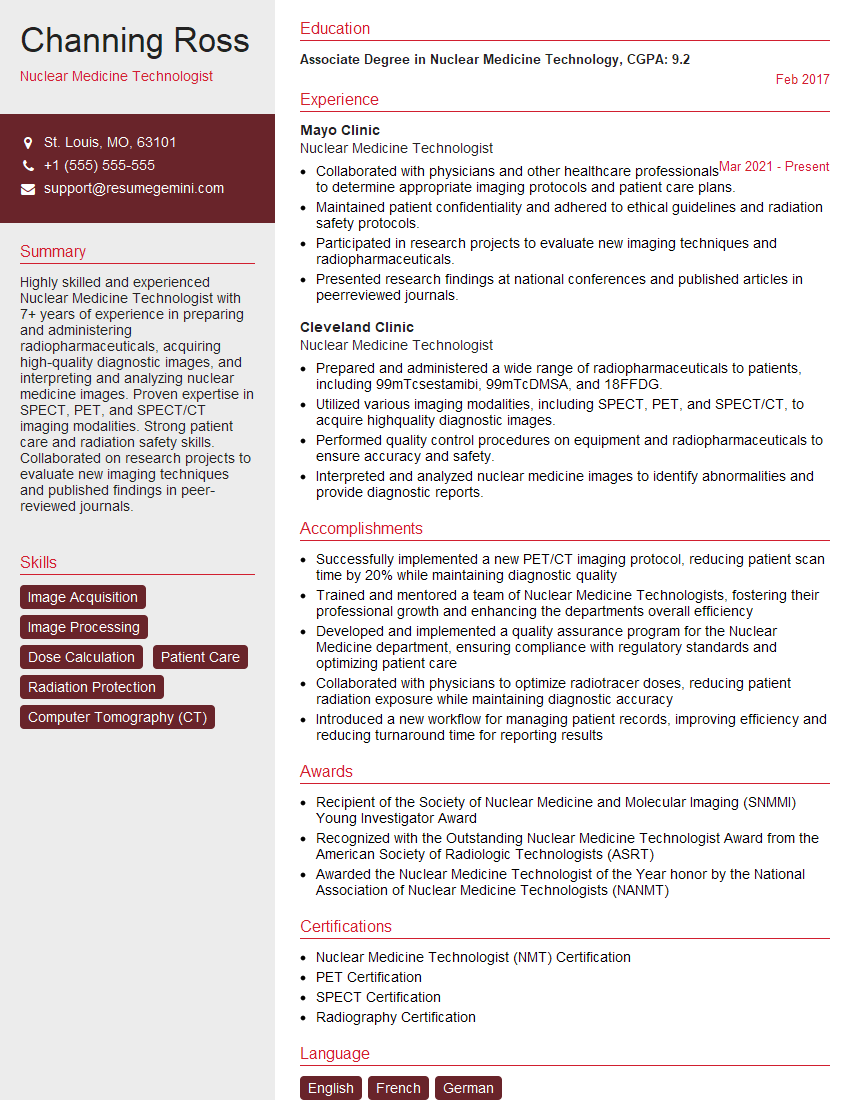
Mastering Radiation Protection Instrumentation is crucial for career advancement in this field, opening doors to specialized roles and increased responsibilities. A well-crafted resume is your key to unlocking these opportunities. Creating an ATS-friendly resume significantly improves your chances of getting your application noticed by recruiters. We strongly recommend using ResumeGemini to build a professional and effective resume. ResumeGemini provides valuable tools and resources, including examples of resumes tailored to Radiation Protection Instrumentation, to help you present your skills and experience in the best possible light. Invest time in building a strong resume – it’s an investment in your future.




Explore more articles
Users Rating of Our Blogs
Share Your Experience
We value your feedback! Please rate our content and share your thoughts (optional).
What Readers Say About Our Blog
Very informative content, great job.
good