Every successful interview starts with knowing what to expect. In this blog, we’ll take you through the top Ability to Use Precision Measuring Tools interview questions, breaking them down with expert tips to help you deliver impactful answers. Step into your next interview fully prepared and ready to succeed.
Questions Asked in Ability to Use Precision Measuring Tools Interview
Q 1. What are the different types of precision measuring tools you are familiar with?
Precision measuring tools are essential for tasks demanding high accuracy. I’m familiar with a wide range, including:
- Micrometers: Used for extremely precise measurements of small objects, typically to 0.001mm or 0.0001 inches.
- Vernier calipers: Offer a slightly less precise measurement than micrometers, usually to 0.01mm or 0.001 inches, but with a wider range of measurement.
- Dial calipers: Similar to vernier calipers, but use a rotating dial for easier reading of measurements.
- Optical comparators: Used for precise measurement and inspection of complex shapes by projecting a magnified image onto a screen.
- Height gauges: Measure vertical distances with high accuracy, often used in conjunction with surface plates.
- Gauge blocks (Jo Blocks): Precisely manufactured blocks used for calibration and setting up other measuring instruments.
- Leveling instruments: Essential for ensuring surfaces are perfectly horizontal or vertical, crucial in many manufacturing and construction processes.
The choice of tool depends heavily on the application and the required precision level. For instance, while a vernier caliper might suffice for woodworking, a micrometer is crucial for precision engineering.
Q 2. Explain the principle of operation for a micrometer.
A micrometer operates on the principle of precise screw thread mechanics. It consists of a precisely machined screw (the spindle) that moves within a fixed nut (the anvil). The screw has a very fine pitch, typically 0.5 mm or 0.025 inches per revolution. A rotating thimble is attached to the spindle, and its rotation precisely advances or retracts the spindle.
Measurement is determined by reading the scale on the sleeve (stationary part) and the thimble. The sleeve shows the millimeter (or inch) value, while the thimble’s graduated scale indicates the fractional part of a millimeter (or inch) with fine increments. The combined reading gives the total measurement.
Think of it like a very accurate screw-based ruler. Each rotation advances the spindle a precise amount, and the thimble’s scale allows us to measure incredibly small increments beyond what a standard ruler would permit.
Q 3. How do you ensure the accuracy of a measuring tool?
Ensuring the accuracy of a measuring tool is paramount. This involves several steps:
- Regular Calibration: Comparing the tool’s readings against known standards (like gauge blocks) to detect and correct any deviations. The frequency depends on usage and the tool’s sensitivity.
- Proper Handling and Storage: Avoiding impacts, drops, and exposure to extreme temperatures or humidity. Clean the tool after each use to prevent debris from affecting measurements.
- Verification of Zero Setting: Always check that the tool reads zero when the jaws are closed or the measuring surfaces touch. Adjusting for zero error is essential.
- Careful Measurement Technique: Applying consistent force while taking readings; using appropriate techniques for the specific tool and measured object (avoiding parallax errors).
- Operator Training: Thorough training ensures the user understands the tool’s operation, limitations, and potential error sources.
Neglecting these steps can lead to significant errors in measurements and potentially compromise the quality of the work.
Q 4. Describe the process of calibrating a vernier caliper.
Calibrating a vernier caliper involves comparing its readings against known standards, usually gauge blocks. The process generally follows these steps:
- Gather Materials: You’ll need the vernier caliper, a set of gauge blocks of known dimensions, and a suitable surface plate (a precisely flat and smooth surface).
- Check Zero Error: Close the jaws of the caliper and ensure the reading is zero. If not, record the zero error to correct future measurements.
- Measure Gauge Blocks: Measure several gauge blocks of different thicknesses. Compare the caliper’s reading with the known dimensions of the gauge blocks.
- Record Deviations: If any deviations are detected (the difference between the known value and the caliper’s reading), note the magnitude and sign (positive or negative).
- Adjust or Record Corrections (if applicable): Some vernier calipers allow for minor adjustments. If so, carefully adjust based on the recorded deviations. If adjustments aren’t possible, note the deviations for future corrections of measurements.
- Repeat: Repeat the measurements for multiple gauge blocks to confirm consistency and the overall accuracy of the calibration.
Accurate calibration is critical to ensure the reliability of measurements taken with the vernier caliper.
Q 5. What are the common sources of error when using precision measuring tools?
Several common sources of error can affect precision measurement:
- Parallax Error: Reading the measurement from an angle instead of directly perpendicular to the scale. This leads to inaccurate readings, particularly with analog instruments.
- Zero Error: The tool not reading zero when the measuring surfaces are closed. This needs to be accounted for in all measurements.
- Wear and Tear: Over time, the measuring surfaces of tools can wear down, leading to inconsistent measurements.
- Improper Handling: Dropping or mishandling a tool can damage it and introduce errors.
- Temperature Variations: Significant temperature changes can cause thermal expansion or contraction of the measuring tool and the object being measured, leading to errors.
- Improper Technique: Incorrect use of the tool, such as applying inconsistent force, can result in inaccurate readings.
Being aware of these potential sources of error and taking appropriate precautions is essential for obtaining accurate measurements.
Q 6. How do you handle measurement uncertainties?
Measurement uncertainties are inherent in any measurement process. Handling them effectively involves:
- Understanding the Tool’s Resolution: Knowing the smallest increment the tool can measure (e.g., 0.01 mm for a vernier caliper) helps define the uncertainty range.
- Repeating Measurements: Taking multiple readings and calculating the average value reduces random errors and improves the overall accuracy.
- Statistical Analysis: Using statistical methods (e.g., standard deviation) to quantify the uncertainty associated with a set of measurements provides a measure of data dispersion.
- Properly Reporting Uncertainties: Clearly stating the uncertainty associated with the final measurement; this is typically expressed as a ± value (e.g., 10.00 ± 0.02 mm).
- Error Propagation: When measurements are combined in calculations, uncertainty propagates. Using appropriate formulas for error propagation is vital to determine the uncertainty of the final result.
Transparent reporting of measurement uncertainties demonstrates professional rigor and enhances the reliability of the findings.
Q 7. Explain the difference between accuracy and precision.
Accuracy and precision are often confused, but they are distinct concepts:
- Accuracy: Refers to how close a measurement is to the true or accepted value. A highly accurate measurement is very close to the actual value.
- Precision: Refers to how close repeated measurements are to each other. High precision indicates that measurements are consistent, even if they aren’t necessarily close to the true value.
Analogy: Imagine shooting arrows at a target. High accuracy means the arrows are clustered near the bullseye. High precision means the arrows are clustered together, regardless of where they are on the target. Ideally, you want both high accuracy and high precision.
Q 8. How would you measure the diameter of a small cylindrical part?
Measuring the diameter of a small cylindrical part depends on its size and the required accuracy. For parts larger than a few millimeters, a digital caliper is ideal. Its jaws can accurately grip the cylinder, and the digital display provides a precise reading. For smaller parts, an optical comparator might be necessary, allowing for magnified viewing and precise measurement using a calibrated screen. Alternatively, a micrometer, particularly a vernier micrometer, offers extremely high precision for smaller diameters.
Example: Let’s say we need to measure a small shaft. First, I’d carefully clean the shaft and the caliper jaws to avoid any measurement errors due to debris. Then, I’d gently close the caliper jaws around the shaft, ensuring a snug fit without applying excessive pressure. The digital display will immediately show the diameter. If the part is exceptionally small, I might use a micrometer, carefully placing the shaft between the anvil and spindle and turning the thimble until a precise reading is obtained.
Q 9. How would you measure the depth of a narrow groove?
Measuring the depth of a narrow groove requires a tool designed for reaching tight spaces and providing accurate depth readings. A depth micrometer is excellent for this. Its long, slender spindle allows it to reach into narrow grooves, while its precision screw allows for precise depth measurement. For very fine grooves or irregularly shaped ones, a probe-type depth gauge combined with a digital display might be more suitable. These often allow for more flexible probing of hard-to-reach areas.
Example: When measuring the depth of a groove in a precisely engineered part, I’d first select the appropriate depth micrometer based on the expected groove depth. I’d carefully lower the spindle into the groove, ensuring it rests on the groove’s bottom, and then take a reading from the micrometer. If the groove is oddly shaped, a probe-style depth gauge can be gently manipulated to find the deepest point, and that value recorded.
Q 10. How do you select the appropriate measuring tool for a given task?
Selecting the right measuring tool involves considering several factors: the size of the object, the required accuracy, the shape of the object, and the material’s properties. For larger objects, a ruler or tape measure might suffice. For smaller, precise measurements, a caliper or micrometer is necessary. For irregular shapes, dial indicators or optical comparators offer greater versatility. The material’s hardness will also influence the choice; a harder material might require a more robust measuring tool that won’t be damaged.
Example: Measuring the length of a table would call for a tape measure; measuring the thickness of a sheet of metal would call for a caliper; measuring the diameter of a tiny ball bearing might require a micrometer. The choice is always determined by the task’s specific demands and the accuracy desired.
Q 11. What safety precautions should be taken when using precision measuring tools?
Safety when using precision measuring tools is paramount. Always inspect tools for damage before use; broken or damaged tools can lead to inaccurate measurements or injury. Handle the tools carefully to avoid dropping them, which can damage both the tool and the workpiece. Never use excessive force, as this can damage both the tool and the item being measured. Wear appropriate safety glasses to protect your eyes from flying debris, particularly when working with materials that might chip or break. Ensure a clean, organized workspace to minimize trip hazards.
Example: Before using a micrometer, I always visually inspect it for damage or defects. I ensure the anvil and spindle are clean and free from burrs. I maintain a firm but gentle grip on the tool to avoid accidental drops. If working with sharp or brittle materials, I always wear safety glasses.
Q 12. Describe your experience with using digital measuring tools.
I have extensive experience with digital measuring tools such as digital calipers, micrometers, and height gauges. Their digital displays offer significantly improved accuracy and readability compared to their analog counterparts. The ability to zero-out the tool to a specific point on the workpiece improves the accuracy of comparative measurements. Many modern digital tools offer data logging capabilities, allowing you to record multiple measurements for later analysis and review. Data output options can be incredibly helpful for documenting quality control and inspection procedures.
Example: In a recent project, I used a digital caliper to measure the dimensions of hundreds of components. The digital display made the process faster and more reliable than manual recording of measurements from an analog caliper would have been. Data logging capabilities allowed me to easily generate a report on the measurements for quality assurance documentation.
Q 13. How do you interpret measurement readings from different types of tools?
Interpreting measurements requires understanding the tool’s resolution and any potential sources of error. Digital tools provide direct readings, but it’s crucial to understand the tool’s precision (e.g., a caliper might have a resolution of 0.01 mm). Analog tools like vernier calipers require careful reading of both the main scale and vernier scale to obtain the precise measurement. Always ensure proper zeroing of the tool before each measurement and account for any parallax error (errors due to viewing angle) when using analog tools.
Example: A digital caliper shows a reading of 12.35 mm. This is a direct and unambiguous reading. A vernier caliper might show 12 mm on the main scale and 0.35 mm on the vernier scale, meaning a total of 12.35 mm. It’s crucial to avoid any parallax error by viewing the measurements squarely to prevent misreading.
Q 14. What are the limitations of each measuring tool?
Each measuring tool has limitations. Rulers are prone to parallax errors and lack precision for smaller measurements. Calipers, while more precise, still have limitations in measuring irregular shapes or very small objects. Micrometers, though highly precise, require careful handling and are prone to wear and tear over time. Digital tools may have battery life limitations and can be susceptible to damage from impact or moisture. Optical comparators may have depth limitations, and their readings can be affected by the lighting conditions.
Example: Trying to measure the inside diameter of a narrow tube with a caliper would be difficult and prone to inaccuracy. A micrometer might be more suited to this task. But even a micrometer has a limited range of measurements that it can handle.
Q 15. Explain the concept of least count in relation to measuring instruments.
The least count of a measuring instrument refers to the smallest division or increment that can be reliably measured using that specific tool. Think of it as the instrument’s resolution. For example, a ruler with millimeter markings has a least count of 1 millimeter; it can’t measure anything smaller than that with accuracy. A more precise instrument like a micrometer might have a least count of 0.01 millimeters, allowing for far finer measurements. Understanding the least count is crucial because it directly impacts the accuracy and precision of your measurements. If you attempt to measure something smaller than the least count, your measurement will inevitably be subject to greater uncertainty and error.
Career Expert Tips:
- Ace those interviews! Prepare effectively by reviewing the Top 50 Most Common Interview Questions on ResumeGemini.
- Navigate your job search with confidence! Explore a wide range of Career Tips on ResumeGemini. Learn about common challenges and recommendations to overcome them.
- Craft the perfect resume! Master the Art of Resume Writing with ResumeGemini’s guide. Showcase your unique qualifications and achievements effectively.
- Don’t miss out on holiday savings! Build your dream resume with ResumeGemini’s ATS optimized templates.
Q 16. How do you document your measurements?
Documenting measurements meticulously is paramount. My standard practice involves using a standardized format, typically a laboratory notebook or a digital spreadsheet, depending on the project’s requirements. The documentation always includes:
- Date and time of measurement: Ensures traceability and allows for analysis of potential temporal variations.
- Instrument used: Including the instrument’s identification number or serial number, for calibration tracking and traceability.
- Measurement values: Recorded with the appropriate number of significant figures, reflecting the instrument’s precision and the measurement uncertainty.
- Units of measurement: Clearly stated to avoid any ambiguity (e.g., mm, inches, kg, etc.).
- Environmental conditions: Relevant factors such as temperature, humidity, or atmospheric pressure, if they could impact the measurements (especially in sensitive metrology).
- Operator’s initials or identification: For accountability and to allow for quality control assessment.
- Any observations or notes: Relevant to the measurement process itself, including anomalies or potential sources of error.
Using this method ensures that the data is complete, reliable, and readily auditable.
Q 17. How do you deal with discrepancies in measurements?
Discrepancies in measurements are inevitable, and how we handle them is vital for maintaining data integrity. My approach involves a systematic process:
- Repeat the measurement: Several times, using the same instrument and procedure. This helps to identify random errors and check for operator inconsistencies.
- Check the instrument’s calibration: Ensure the instrument is properly calibrated and within its specified tolerances. A miscalibrated tool is a primary source of measurement errors.
- Examine the measurement procedure: Review the steps for any potential procedural errors or sources of systematic bias. This includes things like parallax error (incorrect angle when reading a scale).
- Analyze the data statistically: Calculate the mean, standard deviation, and range of the measurements. Outliers might require further investigation or exclusion (with justification).
- Identify and address potential sources of error: These could range from environmental factors to instrument limitations or operator mistakes. This involves documenting all findings thoroughly.
- If discrepancies persist: Consider using a different, more precise instrument to validate the measurements.
The key is to document all steps taken in troubleshooting and resolving the discrepancies transparently.
Q 18. Describe a time you had to troubleshoot a problem with a measuring tool.
During a precision machining project, we were experiencing inconsistencies in the dimensions of a crucial component. The digital caliper we were using seemed to be giving erratic readings. My troubleshooting involved:
- Visual inspection: I examined the caliper for any physical damage, dirt, or debris that might be hindering its operation.
- Calibration check: I used a calibrated gauge block to verify the caliper’s accuracy. The caliper was consistently off by a small, yet significant amount.
- Battery check (if applicable): For electronic calipers, I checked the battery levels, as low power can lead to inaccurate readings.
- Alternative instrument: I used a different, independently calibrated digital caliper to measure the components. The second caliper produced consistent and accurate results, confirming the problem was with the original instrument.
- Documentation: I recorded all steps and findings, including the results from both calipers and the discrepancy. The faulty caliper was sent for recalibration or replacement.
This systematic approach ensured we quickly pinpointed the problem and maintained the quality of the project.
Q 19. How do you maintain and care for precision measuring tools?
Maintaining precision measuring tools is crucial for their accuracy and longevity. My approach includes:
- Proper storage: Tools should be stored in a clean, dry environment, away from extreme temperatures and humidity, ideally in a designated case or container.
- Regular cleaning: After each use, the tool should be carefully cleaned with a soft cloth and appropriate cleaning solution (never harsh chemicals), to remove any debris or residue.
- Calibration: Periodic calibration is essential to ensure the accuracy of the instrument. The frequency of calibration depends on the tool, its usage, and the required accuracy level; it’s often specified by the manufacturer.
- Careful handling: Avoid dropping or mishandling the tools. Precision instruments are delicate and prone to damage.
- Proper lubrication: Some tools, like vernier calipers, might require periodic lubrication of moving parts, following the manufacturer’s instructions.
- Inspection: Regular visual inspection for wear and tear, damage, or loose parts.
Following these guidelines guarantees the tools retain their accuracy and provides a longer lifespan, minimizing the risk of inaccurate measurements and costly recalibration or replacement.
Q 20. What are some common units of measurement used in your field?
The units of measurement used commonly in my field (precision engineering and metrology) are highly varied depending on the application. However, some of the most frequently encountered units include:
- Millimeters (mm): A standard metric unit for linear dimensions.
- Micrometers (µm): For extremely precise measurements.
- Inches (in): Still commonly used in certain industries, often alongside metric units.
- Degrees (°): For angles and rotational measurements.
- Radians (rad): Another unit for angles, particularly in engineering calculations.
- Kilograms (kg): For mass measurements.
- Grams (g): For smaller mass measurements.
Choosing the appropriate unit is crucial to ensure clarity and avoid misinterpretations.
Q 21. How do you ensure traceability in your measurements?
Traceability in measurements is essential for ensuring the reliability and validity of data. It establishes a chain of custody, linking your measurements back to national or international standards. I achieve this through:
- Calibrated instruments: All measuring instruments must be calibrated regularly by a certified laboratory, using traceable standards. The calibration certificate provides the link in the chain.
- Documented procedures: The methods and procedures used in making measurements must be well-documented and follow established standards to minimize uncertainty and variability.
- Record-keeping: Maintaining detailed records of all calibrations, measurements, and any adjustments made to the instruments. This ensures that the data can be traced back to its origin and validated.
- Using certified reference materials: Where appropriate, using certified reference materials (CRMs) to verify the accuracy and reliability of the measurements.
- Accreditation: In many fields, obtaining accreditation for the laboratory or measurement process further strengthens traceability and demonstrates compliance with recognized standards.
By following these methods, we ensure that our measurements are reliable, verifiable, and consistently accurate, fulfilling the requirements of regulatory compliance and quality control.
Q 22. Explain the importance of proper tool handling techniques.
Proper tool handling techniques are paramount for accurate measurements and the longevity of the equipment. Think of it like this: a skilled surgeon wouldn’t use a scalpel carelessly; similarly, precision measuring tools demand respect and careful handling.
Improper handling can lead to damage, inaccurate readings, and even injury. Key aspects include:
- Cleanliness: Always keep tools clean and free from debris. A speck of dust can throw off a micrometer reading.
- Proper Grip: Use the correct grip to avoid slipping and applying undue force. For instance, a vernier caliper should be held firmly but gently, avoiding excessive pressure on the jaws.
- Storage: Store tools in their cases or designated areas to prevent damage and maintain calibration. Exposure to extreme temperatures or humidity can affect accuracy.
- Calibration: Regular calibration is crucial to ensure accuracy. This involves checking the tool against a known standard and adjusting it if necessary.
- Safety: Always follow safety procedures, such as wearing appropriate safety glasses when using sharp tools.
For example, if you’re measuring a delicate component with a dial indicator, a forceful application could distort the part, resulting in an incorrect reading. Mastering these techniques ensures reliable and repeatable measurements.
Q 23. What are the different types of calipers and their applications?
Calipers are versatile measuring instruments used for precise dimensions. Several types exist, each suited to specific applications:
- Vernier Calipers: These are widely used for measuring external, internal, and depth dimensions. They offer high accuracy (typically to 0.01 mm or 0.001 inches) and are relatively inexpensive. I’ve used them extensively in mechanical workshops and quality control checks.
- Dial Calipers: Similar to vernier calipers, but instead of a vernier scale, they use a dial to display the measurement. The dial provides an easier and quicker readout, particularly beneficial when measuring many parts. I find them particularly efficient in production line environments.
- Digital Calipers: These employ electronic sensors to display measurements digitally. They offer high accuracy, easy reading, and data logging capabilities, making them ideal for situations demanding quick, precise measurements and data recording. They are a staple in modern manufacturing and inspection.
- Inside/Outside Micrometers: Micrometers provide even higher accuracy than calipers, typically measuring to 0.001 mm or 0.0001 inches. Inside micrometers measure internal diameters, and outside micrometers measure external diameters. They are used for critical measurements demanding extremely high precision, such as those found in aerospace or precision machining.
The choice of caliper depends on the required accuracy, the type of measurement needed, and the budget. For instance, I might use vernier calipers for quick quality checks in a smaller workshop, but opt for digital calipers with data logging for larger production runs requiring detailed records.
Q 24. How familiar are you with statistical process control (SPC) related to measurements?
Statistical Process Control (SPC) is fundamental in ensuring consistent measurement accuracy. It involves using statistical methods to monitor and control a process to maintain quality and reduce variation. In the context of measurements, SPC helps us understand if our measurement process is stable and capable of producing accurate and precise results.
My familiarity with SPC includes:
- Control Charts: I am proficient in constructing and interpreting various control charts like X-bar and R charts, which are crucial for monitoring the variation in measurements over time. Identifying trends or patterns helps pinpoint the causes of measurement errors.
- Capability Analysis: I’m experienced in performing capability analysis (Cpk, Ppk) to determine if a measurement process is capable of meeting the required specifications. This analysis helps optimize the measurement process and prevent defects.
- Gauge R&R Studies: I understand the importance of gauge repeatability and reproducibility (R&R) studies to assess the accuracy and precision of the measuring instrument itself. This ensures the instrument is not contributing significantly to the overall measurement variation.
For example, if a control chart shows a consistent trend in measurements drifting upwards, this suggests a potential bias or drift in the equipment that needs investigation and correction. SPC is crucial for maintaining consistent, reliable data in any precision measurement environment.
Q 25. Describe your experience with using CMM (Coordinate Measuring Machine).
I have extensive experience operating Coordinate Measuring Machines (CMMs). CMMs are high-precision instruments used to measure the physical geometrical characteristics of an object. My experience encompasses various CMM types, including bridge-type and gantry-type CMMs, as well as different probing techniques.
My skills include:
- Programming CMMs: I can create and modify CMM programs using various software packages (e.g., PC-DMIS, Calypso), including writing programs for complex geometries and features.
- Data Acquisition and Analysis: I am proficient in acquiring and analyzing CMM data, including generating reports that conform to customer specifications.
- Troubleshooting and Maintenance: I’m capable of identifying and resolving common CMM issues, such as probe calibration, alignment problems, and software glitches. Regular maintenance is essential for accurate measurement and instrument longevity.
- Different probing techniques: I am familiar with various probing techniques including touch probing, scanning probing, and laser scanning, choosing the appropriate method based on the part’s geometry and material. Scanning allows me to capture much more information and detect subtle variations compared to touch probing alone.
In a recent project, I used a CMM to inspect the complex geometry of an automotive engine component, identifying subtle deviations that might have caused assembly issues. The detailed data provided by the CMM ensured that the component met the stringent tolerances required.
Q 26. How do you interpret tolerance specifications on engineering drawings?
Tolerance specifications on engineering drawings define the permissible variation in dimensions and other parameters. Understanding these specifications is crucial for ensuring that manufactured parts meet the design requirements. These are typically expressed using various notations, including:
- Bilateral Tolerances: These specify an upper and lower limit for a dimension. For example,
10 ± 0.1means the acceptable range is between 9.9 and 10.1. - Unilateral Tolerances: These specify a tolerance in one direction only, either above or below the nominal value. For example,
10 +0.1/-0.0means the acceptable range is between 10.0 and 10.1. - Geometric Dimensioning and Tolerancing (GD&T): GD&T uses symbols to specify tolerances on geometric characteristics such as form, orientation, location, and runout. Understanding GD&T is critical for interpreting complex tolerance specifications commonly found in precision engineering.
Interpreting tolerances involves carefully examining the drawing and understanding the implications of exceeding the specified limits. I have extensive experience interpreting drawings with complex tolerances, ensuring manufactured parts conform to the design requirements and function as intended. Failure to correctly interpret these tolerances could lead to parts being out of spec and potentially resulting in assembly or functional problems.
Q 27. What software or systems are you familiar with for data acquisition and analysis from precision measuring tools?
Data acquisition and analysis from precision measuring tools often involve specialized software and systems. My experience encompasses several solutions:
- PC-DMIS: A widely used CMM software package for programming, data acquisition, and analysis. It’s capable of handling complex geometries and generating detailed reports. I regularly use it for CMM programming and data analysis.
- Calypso: Another popular CMM software package with similar capabilities to PC-DMIS; often preferred for its user-friendly interface in some settings.
- Dedicated software for digital calipers and micrometers: Many digital calipers and micrometers interface with computers or other data acquisition systems to automatically record and store measurement data. This capability is beneficial for large-scale measurement tasks and statistical analysis.
- Spreadsheet software (Excel): While not dedicated measurement software, spreadsheets are often used for basic data entry, organization, and initial analysis of measurement data from various sources.
- Statistical software packages (e.g., Minitab): These advanced packages are used for more sophisticated statistical analysis of measurement data, including SPC analysis and capability studies.
The choice of software depends on the specific application and the complexity of the measurement task. For instance, I’d use PC-DMIS for complex CMM measurements, while a simple spreadsheet might suffice for basic caliper measurements.
Q 28. Explain your understanding of the ISO 9000 standards as they relate to measurement accuracy.
ISO 9000 standards are a set of internationally recognized quality management systems (QMS) standards. They provide a framework for organizations to demonstrate their ability to consistently provide products and services that meet customer and regulatory requirements.
In the context of measurement accuracy, ISO 9000 standards are crucial because they emphasize the importance of:
- Calibration: ISO 9000 mandates regular calibration of measuring equipment to ensure accuracy and traceability to national or international standards. This ensures that all measurements are consistent and reliable.
- Traceability: The standards stress the importance of maintaining traceability of measurement results to national or international standards. This ensures the accuracy and reliability of the measurements can be independently verified.
- Documented Procedures: Proper documentation of measurement procedures, including calibration records and instrument maintenance logs, is crucial. This is essential for demonstrating compliance with the standards and for auditing purposes.
- Personnel Competence: ISO 9000 emphasizes the need for trained and competent personnel who are capable of using the measuring equipment correctly and interpreting the results accurately. This ensures that measurements are performed consistently and reliably.
Non-compliance with ISO 9000 standards regarding measurement accuracy can lead to inconsistent products, customer dissatisfaction, and potential legal issues. Adherence to these standards is vital for maintaining a high level of quality and trustworthiness within any organization involved in manufacturing or precision engineering.
Key Topics to Learn for Ability to Use Precision Measuring Tools Interview
- Understanding Measurement Units and Systems: Mastering metric (SI) and imperial systems, including conversions between them. This includes a deep understanding of millimeters, inches, centimeters, feet, etc. and their practical applications.
- Calibration and Accuracy: Learn about the importance of calibrating precision measuring tools (calipers, micrometers, etc.) and understanding the concept of measurement error and tolerance. Know how to identify and address potential sources of inaccuracy.
- Using Specific Tools: Gain hands-on experience with various precision measuring tools, including vernier calipers, micrometers, dial indicators, and height gauges. Understand their functionalities, limitations, and appropriate applications.
- Reading and Interpreting Measurements: Practice reading and recording measurements accurately from different types of precision instruments. Understand how to interpret the smallest divisions and estimate values between markings.
- Practical Applications in Different Fields: Explore the role of precision measurement in various industries (manufacturing, engineering, construction, etc.). Be ready to discuss specific examples of how these tools are used in real-world scenarios.
- Troubleshooting and Problem-Solving: Develop your ability to identify and solve problems related to inaccurate measurements. This includes understanding the causes of errors and implementing corrective actions.
- Safety Procedures: Understand and be able to articulate safe handling and storage procedures for precision measuring tools.
Next Steps
Mastering the ability to use precision measuring tools is crucial for career advancement in numerous technical fields. A strong understanding of these tools demonstrates attention to detail, precision, and problem-solving skills – highly valued attributes in today’s competitive job market. To maximize your job prospects, creating a well-structured, ATS-friendly resume is essential. ResumeGemini can help you build a professional and impactful resume that highlights your skills and experience effectively. Examples of resumes tailored to showcasing expertise in Ability to Use Precision Measuring Tools are available – allowing you to craft a compelling application that truly reflects your capabilities.

Quality Assurance Manager Resume Sample

Production Supervisor Resume Sample
Process Engineer Resume Sample
Surveyor Resume Sample

Engineering Technician Resume Sample
Manufacturing Engineer Resume Sample

Metrologist Resume Sample

Drafter Resume Sample
Calibration Technician Resume Sample

Electronics Technician Resume Sample

Construction Inspector Resume Sample
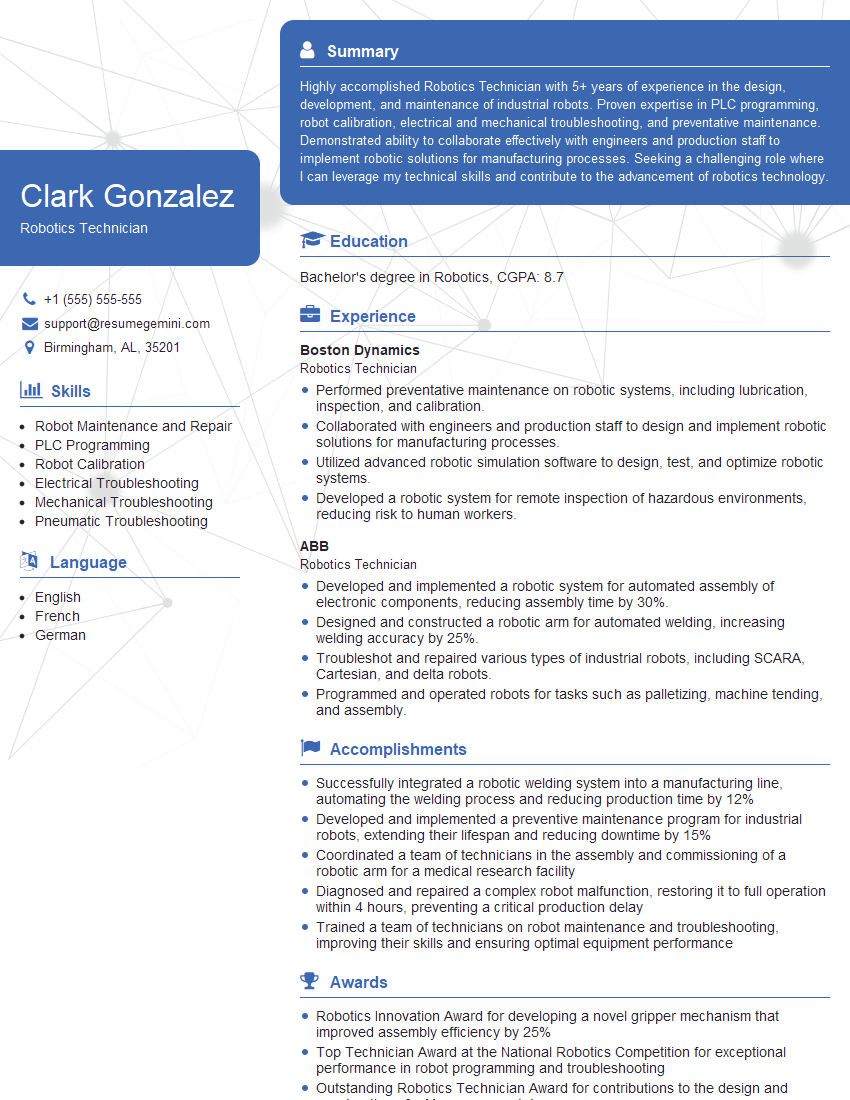
Robotics Technician Resume Sample
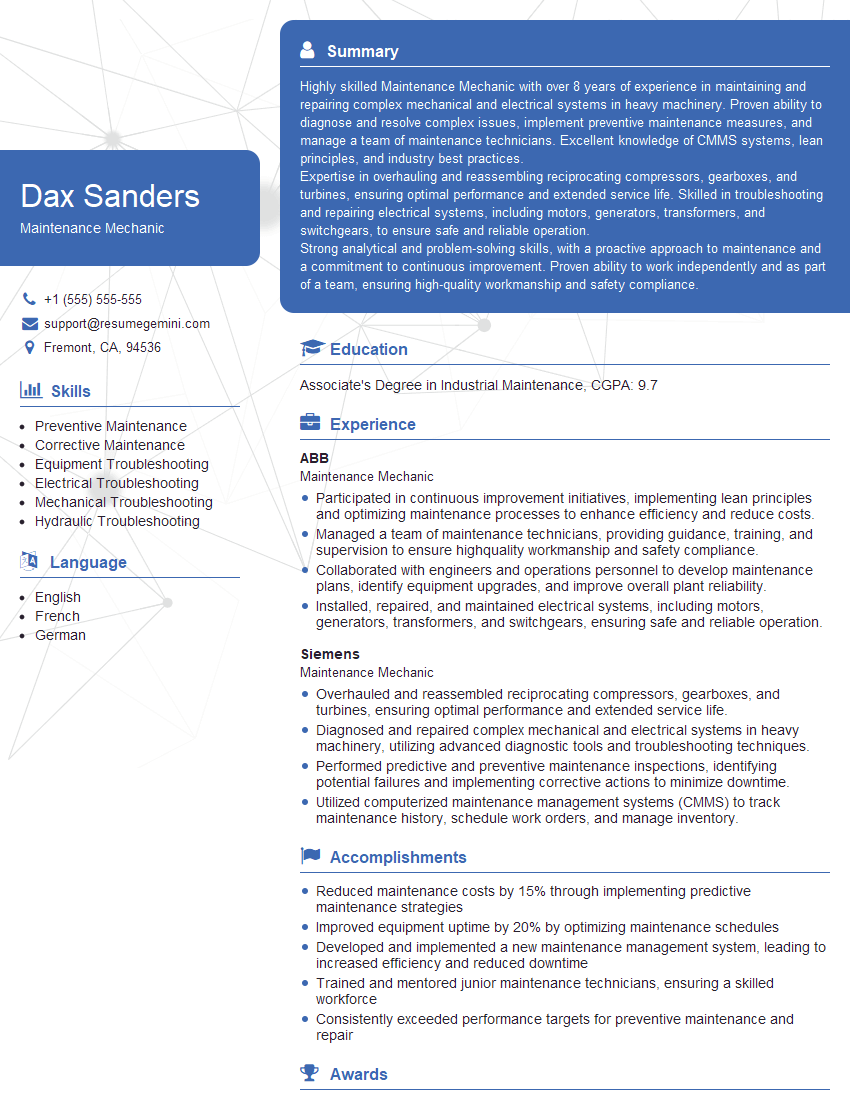
Maintenance Mechanic Resume Sample
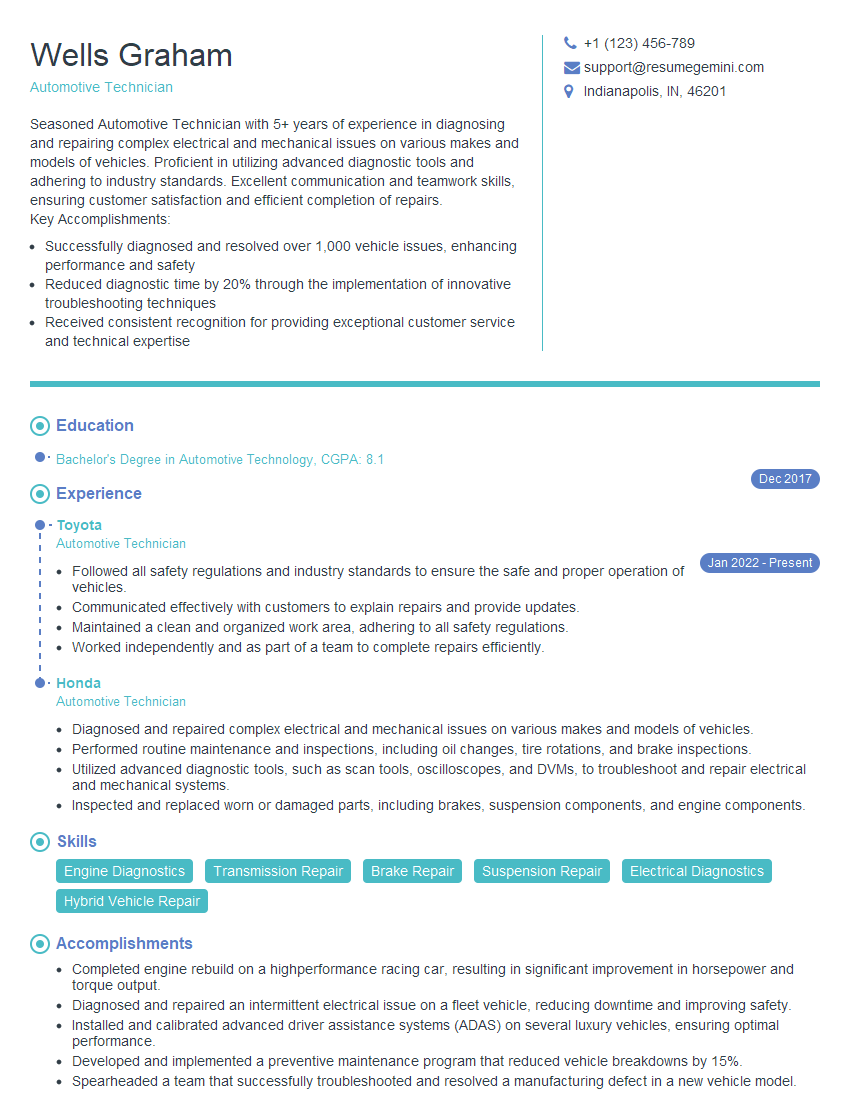
Automotive Technician Resume Sample

Aircraft Mechanic Resume Sample
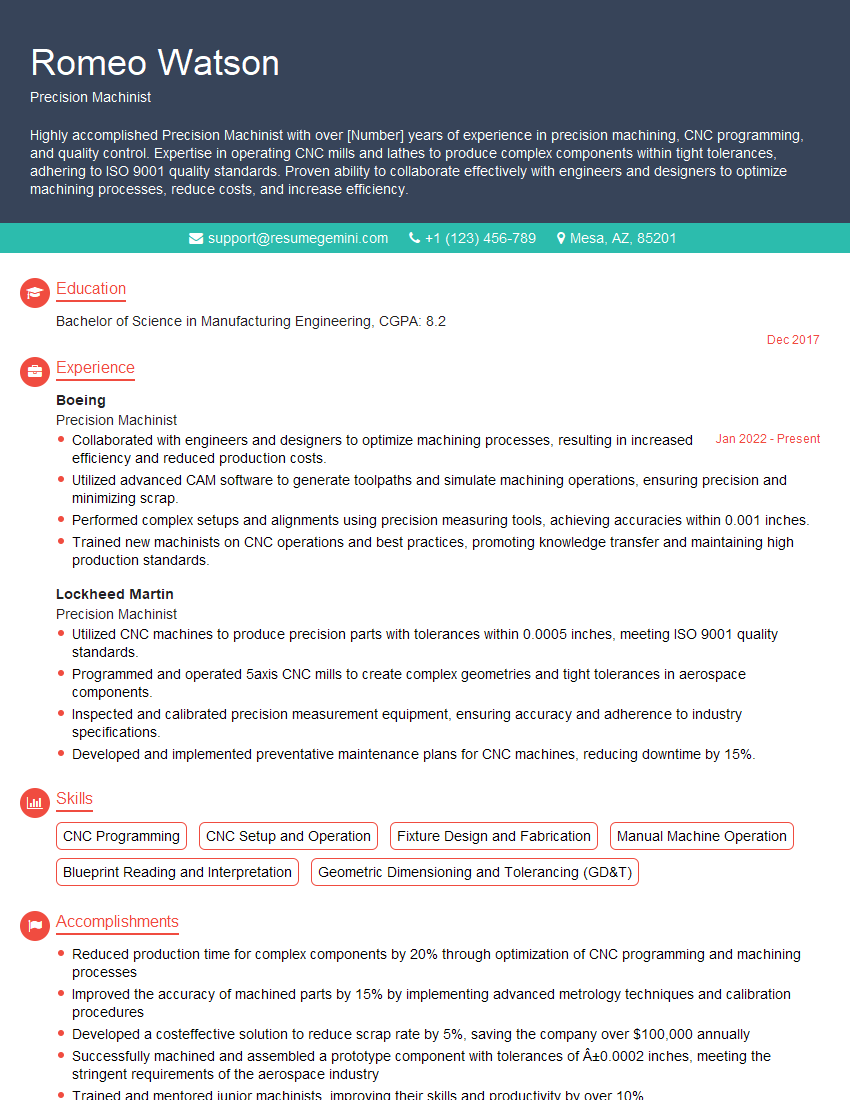
Precision Machinist Resume Sample

Toolmaker Resume Sample
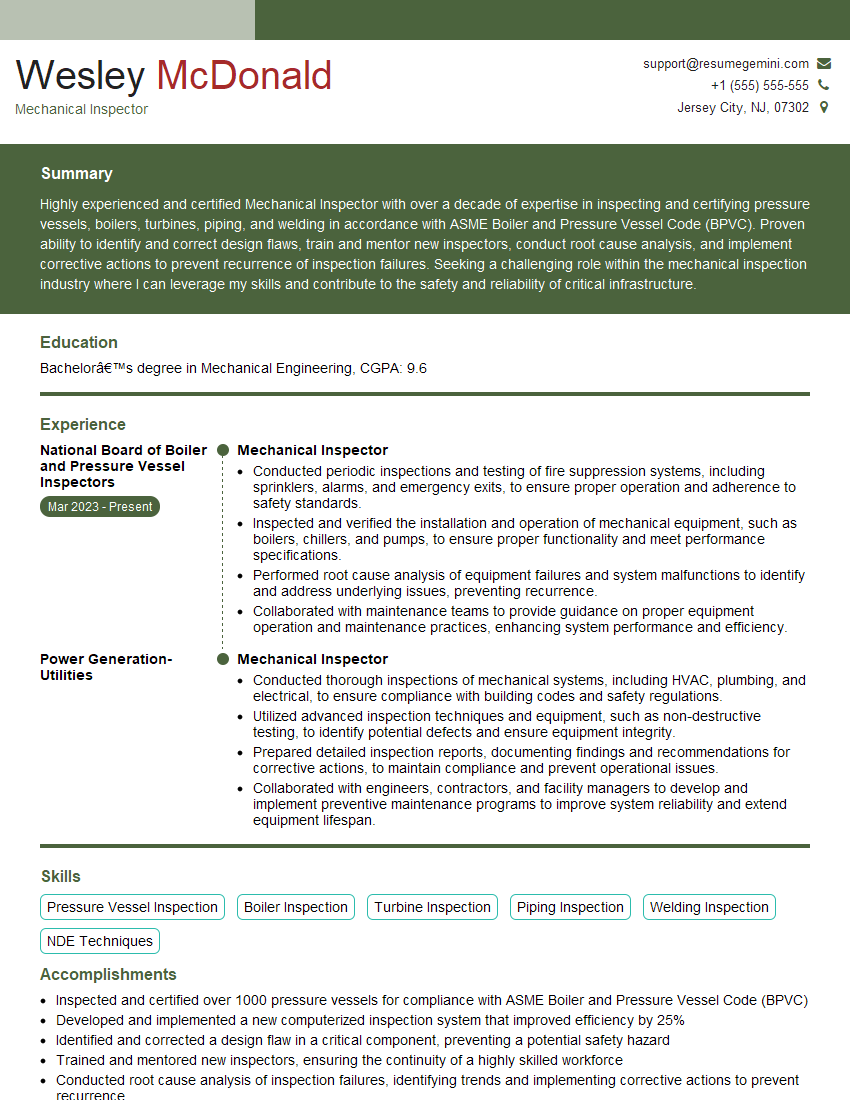
Mechanical Inspector Resume Sample

Quality Control Inspector Resume Sample

Jeweler Resume Sample
- Quality Assurance Manager
- Production Supervisor
- Process Engineer
- Surveyor
- Engineering Technician
- Manufacturing Engineer
- Metrologist
- Drafter
- Calibration Technician
- Electronics Technician
- Construction Inspector
- Robotics Technician
- Maintenance Mechanic
- Automotive Technician
- Aircraft Mechanic
- Precision Machinist
- Toolmaker
- Mechanical Inspector
- Quality Control Inspector
- Jeweler
Explore more articles
Users Rating of Our Blogs
Share Your Experience
We value your feedback! Please rate our content and share your thoughts (optional).
What Readers Say About Our Blog
Very informative content, great job.
good