The thought of an interview can be nerve-wracking, but the right preparation can make all the difference. Explore this comprehensive guide to Waste Management Decision Making interview questions and gain the confidence you need to showcase your abilities and secure the role.
Questions Asked in Waste Management Decision Making Interview
Q 1. Describe your experience in developing and implementing waste reduction strategies.
Developing and implementing waste reduction strategies requires a multi-faceted approach, starting with a thorough waste audit to understand the sources and types of waste generated. This audit provides a baseline for targeted interventions. For example, in one project with a large manufacturing facility, we discovered that over 50% of their waste was packaging material.
Following the audit, we implement a hierarchy of waste management: reduce, reuse, recycle, and then, as a last resort, dispose. We focus on source reduction first, exploring options like redesigning packaging, implementing lean manufacturing principles to minimize material waste, and educating employees on proper waste segregation techniques. For instance, we introduced a comprehensive training program for employees, using visual aids and interactive workshops, resulting in a 20% reduction in packaging waste within six months.
Reuse initiatives involve repurposing materials whenever possible. Recycling programs require careful selection of materials and establishing partnerships with appropriate recycling facilities. We always monitor and measure the impact of each strategy, using key performance indicators (KPIs) like waste diversion rates to track progress and adjust our strategies as needed. Regular review and adjustment are crucial for continuous improvement.
Q 2. How do you prioritize waste management projects with competing resource constraints?
Prioritizing waste management projects with limited resources demands a structured approach. I typically use a multi-criteria decision analysis (MCDA) framework. This involves identifying all competing projects and defining clear criteria for evaluation, such as environmental impact (measured by greenhouse gas emission reductions), cost-effectiveness, feasibility, and compliance requirements.
Each criterion is weighted according to its importance, reflecting the organization’s priorities. For instance, a company focused on sustainability might give higher weight to environmental impact, while a cost-conscious company may prioritize cost-effectiveness. We then score each project against each criterion, and the weighted scores are aggregated to determine the overall ranking. This allows for a transparent and objective prioritization process. A simple example would be comparing the implementation of a composting program versus upgrading recycling equipment; the MCDA would help determine which project yields the highest return on investment and environmental benefit with the given budget.
Q 3. Explain your approach to evaluating the cost-effectiveness of different waste management technologies.
Evaluating the cost-effectiveness of waste management technologies involves a lifecycle cost analysis (LCCA). This method considers all costs associated with a technology throughout its lifespan, from initial investment and operation to maintenance, repair, and eventual disposal.
We conduct detailed cost estimations for each technology, factoring in energy consumption, labor costs, transportation costs, and any potential environmental penalties or incentives. The results are often expressed as a cost per unit of waste processed or as a return on investment (ROI). For example, when comparing anaerobic digestion to landfilling, the LCCA would incorporate the capital costs of the digester, operational costs (energy, labor), revenue from biogas production, and the costs of landfill disposal. The comparison would determine which option is more cost-effective over the long term, considering both economic and environmental aspects. Sensitivity analysis is frequently used to evaluate the impact of uncertainties in cost estimates.
Q 4. What are the key regulations and compliance requirements related to waste management in your region?
Waste management regulations vary significantly by region. In my region, key regulations cover hazardous waste management (including proper storage, transportation, and disposal), municipal solid waste disposal (including landfill regulations and recycling targets), and industrial waste management (covering specific discharge limits and reporting requirements).
Compliance necessitates meticulous record-keeping, proper waste characterization and segregation, and adherence to permits and licenses. We conduct regular internal audits to ensure compliance and proactively address any potential non-compliance issues. Staying updated on legislative changes and engaging with regulatory agencies is crucial for maintaining compliance.
Failure to comply can result in significant penalties, including fines, legal action, and damage to the company’s reputation. A strong environmental management system (EMS) helps ensure ongoing compliance.
Q 5. How do you ensure accurate tracking and reporting of waste generation and disposal data?
Accurate tracking and reporting of waste data are paramount for effective waste management. We use a combination of manual and automated methods. Manual methods include visual inspections and weighings of waste streams. Automated methods involve installing smart bins with sensors to monitor waste levels and using waste management software to collect, analyze, and report data.
The data collected includes the type and quantity of waste generated, its source, and its final disposal method. This data is used to track progress toward waste reduction goals, identify problem areas, and make data-driven decisions. Regular audits and data validation procedures are essential to maintain data accuracy. We use barcodes or RFID tags on waste containers to automate the tracking process and minimize human error. Transparency and accountability are key in this process, ensuring data integrity and reliable reporting to stakeholders.
Q 6. Describe your experience with lifecycle assessments of waste management options.
Lifecycle assessments (LCAs) provide a comprehensive evaluation of the environmental impacts associated with different waste management options, from raw material extraction to final disposal. We utilize standardized LCA methodologies such as ISO 14040/44.
An LCA considers various environmental impacts, including greenhouse gas emissions, water and energy consumption, and resource depletion. For example, comparing incineration with landfilling, an LCA would assess the emissions from combustion, the energy recovered from incineration, and the greenhouse gas emissions from landfill decomposition. The results provide a holistic picture of the environmental performance of different waste management technologies, assisting in informed decision-making. Software tools are frequently employed to streamline the LCA process and ensure data accuracy.
Q 7. How do you identify and mitigate risks associated with waste management operations?
Identifying and mitigating risks in waste management operations is critical for protecting human health and the environment. A robust risk assessment process is essential. This process involves identifying potential hazards (e.g., spills, fires, emissions, worker injuries), analyzing their likelihood and potential consequences, and implementing appropriate control measures.
Risk mitigation strategies include implementing safety protocols, providing proper training to employees, using appropriate personal protective equipment (PPE), regular equipment maintenance, and emergency preparedness planning. We conduct regular safety inspections and drills to enhance preparedness and response capabilities. For instance, we developed a detailed emergency response plan for hazardous waste spills, including procedures for containment, cleanup, and notification of relevant authorities. Continuously reviewing and updating our risk assessment and mitigation strategies is essential to adapt to changing circumstances and technological advancements.
Q 8. What is your experience with public outreach and stakeholder engagement in waste management initiatives?
Public outreach and stakeholder engagement are critical for successful waste management. It’s not just about implementing a plan; it’s about building community buy-in and ensuring everyone understands and supports the initiatives. My experience involves a multi-pronged approach. For example, in a recent project focused on increasing curbside recycling rates, we implemented a comprehensive strategy. This included:
- Public forums and town hall meetings: These facilitated direct dialogue, addressed concerns, and built trust. We actively listened to residents’ suggestions and concerns.
- Educational campaigns: We developed clear and concise materials – brochures, videos, social media posts – explaining what materials could be recycled, how to properly sort waste, and the benefits of participating. We also partnered with local schools to educate children, who are powerful influencers in their households.
- Community partnerships: Collaborating with local businesses, community organizations, and environmental groups helped expand our reach and leverage their established networks. A key partnership was with the local library system, who helped distribute information and offered recycling bins.
- Targeted outreach to specific demographics: We realized that certain communities had lower recycling participation rates, so we tailored messaging and engagement strategies to address their specific needs and concerns, often relying on community leaders and trusted voices within those communities.
These strategies resulted in a significant increase in recycling participation and a reduction in landfill waste. Measuring the success involved tracking participation rates, analyzing feedback from surveys and social media, and monitoring landfill waste volumes.
Q 9. Describe your experience with developing and implementing a recycling program.
Developing and implementing a successful recycling program requires a systematic approach. My experience includes overseeing the design and launch of a curbside recycling program for a medium-sized municipality. The process involved several key stages:
- Needs assessment: We conducted a thorough waste audit to determine the composition of municipal waste and identify opportunities for diversion. This audit showed a high percentage of recyclable materials currently ending up in landfills.
- Program design: We defined the types of materials accepted for recycling, chose collection methods (weekly curbside pickup), and designed appropriate signage and educational materials. We opted for a two-bin system (one for recyclables, one for trash) based on best practices and community feedback.
- Infrastructure development: This included procuring recycling bins, establishing collection routes, and contracting with a waste hauler capable of handling the separated materials. We also identified and secured a processing facility for the collected recyclables.
- Public education and outreach: As mentioned before, effective communication is key. We used various channels including mailers, websites, social media and presentations at community events to make residents aware of the program details.
- Monitoring and evaluation: We continuously monitored recycling rates, the quality of recycled materials, and costs. This allowed for adjustments to the program based on real-world data. We held regular meetings with the waste hauler to address issues and refine the system.
The program was considered a success, achieving a significant increase in recycling rates within the first year, exceeding our initial projections. Key to this success was continuous monitoring and adaptation. For example, an initial issue with contamination led us to revise the educational materials to clarify which materials were acceptable.
Q 10. How do you assess the environmental impact of various waste management alternatives?
Assessing the environmental impact of waste management alternatives requires a Life Cycle Assessment (LCA). This is a comprehensive methodology evaluating the environmental burdens associated with a product or process throughout its entire life cycle, from raw material extraction to final disposal. When comparing waste management options like landfilling, incineration, and composting, we consider factors such as:
- Greenhouse gas emissions: Landfilling produces methane, a potent greenhouse gas. Incineration also releases greenhouse gases, but often less than landfilling, depending on the technology and waste composition. Composting generally has the lowest emissions.
- Air and water pollution: Incineration can release air pollutants if not properly managed, while landfilling can leach pollutants into groundwater. Composting generates minimal pollution.
- Resource depletion: Landfilling consumes land resources and often requires significant energy for transportation. Incineration requires energy, while composting can utilize organic waste as a resource.
- Energy recovery: Some incineration plants generate energy from the waste, offsetting energy consumption. Composting can produce biogas which can be used for energy.
We use specialized software and databases containing emission factors and energy consumption data to quantify these impacts. The LCA results are then used to compare the different alternatives and identify the most environmentally preferable option. Often, the ‘best’ option is context-dependent, considering local environmental conditions, availability of technologies and economic factors.
Q 11. Explain your understanding of different waste treatment technologies (e.g., incineration, anaerobic digestion).
Waste treatment technologies vary significantly in their processes and environmental impacts. Here’s a breakdown of two common methods:
- Incineration: This involves burning waste at high temperatures to reduce its volume and generate energy. Modern incineration plants have sophisticated air pollution control systems to minimize emissions. However, concerns remain regarding air pollution (dioxins, furans), ash disposal, and energy efficiency. The environmental impact is heavily dependent on the technology used and the efficiency of emission control.
- Anaerobic Digestion: This is a biological process where microorganisms break down organic waste in the absence of oxygen. This process produces biogas (primarily methane), which can be used for energy generation or upgraded to biomethane for use as vehicle fuel. The remaining digestate can be used as a soil amendment. Anaerobic digestion is generally considered more environmentally friendly than incineration, reducing greenhouse gas emissions and producing valuable byproducts. However, it’s less suitable for all types of waste and requires specialized infrastructure.
Other technologies include mechanical biological treatment (MBT), which separates recyclables and reduces waste volume before landfilling or incineration, and composting, which uses aerobic microorganisms to break down organic waste.
Q 12. How would you address a sudden increase in waste volume due to an unforeseen event?
A sudden increase in waste volume, such as after a natural disaster, requires a rapid and adaptable response. My approach would involve the following steps:
- Assess the situation: Determine the magnitude and nature of the waste increase. Is it primarily household waste, construction debris, or hazardous materials? This assessment will inform the subsequent actions.
- Emergency waste collection and storage: Immediately increase waste collection frequency and deploy additional resources, including temporary storage sites for overflow. Safety protocols, including appropriate personal protective equipment, must be strictly enforced.
- Waste characterization and sorting: Conduct an emergency waste audit to determine the composition of the increased waste stream. This is critical for efficient and safe processing.
- Engage additional contractors: If in-house capacity is insufficient, secure contracts with additional waste haulers and processing facilities. This may require negotiating expedited contracts to address the emergency.
- Public communication: Inform residents of the temporary measures and any necessary changes in waste management procedures. Clear communication avoids confusion and enhances community cooperation.
- Long-term solutions: Once the immediate crisis has passed, analyze the situation to identify the root causes of the increase and implement strategies to prevent future occurrences. This might include reviewing existing infrastructure, adjusting service levels, or improving waste reduction strategies.
Effective communication and collaboration with various stakeholders, including residents, emergency response teams, and waste management contractors, are crucial throughout the process.
Q 13. Describe your experience with waste audits and their role in improving efficiency.
Waste audits are a fundamental tool for improving waste management efficiency. They provide a snapshot of the composition of the waste stream, allowing for informed decision-making and targeted interventions. My experience includes conducting numerous waste audits, using both manual and automated sorting techniques. The process typically involves:
- Sampling: Collecting representative samples of waste from various sources (e.g., residential, commercial, industrial) using statistically sound methods to ensure accuracy.
- Sorting and weighing: Manually or mechanically sorting the waste stream into various categories (e.g., recyclables, organics, hazardous materials, etc.) and weighing each category to determine its proportion in the total waste stream.
- Data analysis: Analyzing the data to identify the major components of the waste stream, assess the potential for recycling and diversion, and evaluate the effectiveness of existing waste management programs.
- Report generation: Producing a detailed report summarizing the findings, including recommendations for improving waste management practices.
For example, in one audit, we discovered a high percentage of recyclable materials in the landfill stream. This led to revisions in the public education campaign, resulting in significant improvement of recycling rates.
Q 14. What is your experience with negotiating contracts with waste disposal companies?
Negotiating contracts with waste disposal companies requires a thorough understanding of the market, the company’s capabilities, and your organization’s needs. My experience includes successfully negotiating numerous contracts, which involved the following key aspects:
- Needs assessment: Clearly defining your waste management needs, including waste volumes, types of waste, desired services (e.g., collection, transportation, processing), and desired environmental performance indicators.
- Market research: Identifying potential vendors, comparing their services and pricing, and understanding market rates. A competitive bidding process is generally employed.
- Contract development: Collaborating with legal counsel to develop a detailed contract that outlines all aspects of the agreement, including service levels, payment terms, penalties for non-compliance, and provisions for contract renewal or termination. Emphasis is placed on clear and measurable performance indicators.
- Negotiation: Negotiating with vendors to achieve the best possible terms, balancing cost considerations with the need for reliable and environmentally responsible service.
- Contract management: Monitoring the vendor’s performance and addressing any issues that arise during the contract term. Regular reporting and meetings are crucial to maintain a productive relationship.
In a recent negotiation, we were able to secure a contract with a more environmentally focused company at a comparable cost by highlighting our commitment to sustainability and leveraging competitive bidding.
Q 15. How do you ensure compliance with environmental regulations related to hazardous waste?
Ensuring compliance with hazardous waste regulations requires a multi-faceted approach. It begins with a thorough understanding of all applicable local, regional, and national laws and regulations. This involves regularly reviewing updates and amendments to these regulations, which can be complex and vary geographically. We must then develop and implement comprehensive internal programs that adhere to these regulations. This includes proper waste segregation, labeling, and manifest tracking from generation to final disposal or treatment. Crucially, we use a robust system of record-keeping to document all aspects of hazardous waste handling, providing complete traceability. We conduct regular internal audits to verify compliance, and actively participate in external audits and inspections to proactively identify and address any potential non-compliances. For example, I once worked on a project where we identified a gap in our manifest system, leading to a swift implementation of an updated software solution, avoiding potential penalties and environmental damage. Furthermore, we provide comprehensive training to all staff involved in handling hazardous waste to ensure consistent adherence to protocols.
Career Expert Tips:
- Ace those interviews! Prepare effectively by reviewing the Top 50 Most Common Interview Questions on ResumeGemini.
- Navigate your job search with confidence! Explore a wide range of Career Tips on ResumeGemini. Learn about common challenges and recommendations to overcome them.
- Craft the perfect resume! Master the Art of Resume Writing with ResumeGemini’s guide. Showcase your unique qualifications and achievements effectively.
- Don’t miss out on holiday savings! Build your dream resume with ResumeGemini’s ATS optimized templates.
Q 16. How do you manage conflicts between different stakeholders with regards to waste management?
Managing conflicts between stakeholders in waste management necessitates a collaborative and transparent approach. Different groups – residents, businesses, environmental groups, and regulatory bodies – often have varying priorities and concerns. I begin by fostering open communication and creating a platform where all stakeholders can express their viewpoints. Active listening is crucial to understanding the root causes of the conflict. Then, we utilize collaborative problem-solving techniques to find mutually acceptable solutions. This involves identifying shared goals and compromising where necessary. For example, in a recent project involving the siting of a new recycling facility, we used community forums and surveys to address residents’ concerns about noise and traffic. These forums provided a space to clarify misconceptions, address anxieties, and propose mitigation strategies, ultimately leading to community buy-in. Mediation or facilitation by an impartial third party can be invaluable in resolving more complex or deeply entrenched conflicts. Documentation of agreements and clear communication plans are essential to ensuring lasting resolutions.
Q 17. Describe your approach to budgeting and resource allocation for waste management projects.
Budgeting and resource allocation for waste management projects require a strategic and data-driven approach. We begin with a comprehensive needs assessment, identifying project goals and quantifying the resources needed to achieve them. This includes forecasting operational costs, equipment needs, personnel, and potential contingencies. We then develop a detailed budget that clearly outlines revenue streams (e.g., tipping fees, government grants, recycling revenues) and expenditures. We utilize cost-benefit analysis to evaluate different project options, comparing their effectiveness against their costs. Furthermore, we employ various resource allocation techniques, prioritizing projects based on their environmental impact, cost-effectiveness, and alignment with strategic objectives. For instance, we might use a weighted scoring system to rank projects considering criteria such as environmental benefits, cost, and community impact. Regular monitoring and evaluation of the budget and resources are crucial to ensure projects stay on track and within budget. We employ project management software to help with tracking costs and allocating resources effectively.
Q 18. What is your experience with using data analytics to improve waste management practices?
Data analytics plays a vital role in enhancing waste management practices. By collecting and analyzing data on waste generation, composition, and diversion rates, we can identify areas for improvement and optimize our processes. For example, using smart bins with sensors, we can monitor fill levels in real-time, optimizing collection routes and reducing fuel consumption. Analyzing waste composition data helps to identify opportunities for increased recycling and composting, reducing landfill waste. We use statistical modeling and predictive analytics to forecast future waste generation patterns and plan for infrastructure needs. Furthermore, we leverage data visualization techniques to communicate insights effectively to stakeholders, demonstrating the impact of our initiatives and securing support for further improvements. For example, we can create dashboards showing key performance indicators like recycling rates and landfill diversion over time. This data-driven approach allows for continuous improvement and informed decision-making in waste management.
Q 19. How do you evaluate the success of a waste management initiative?
Evaluating the success of a waste management initiative requires a multi-pronged approach, combining quantitative and qualitative measures. Quantitative metrics might include: tonnage of waste diverted from landfills, recycling rates, reduction in greenhouse gas emissions, and cost savings achieved. We compare these metrics against baseline data to measure progress towards established goals. Qualitative assessments involve gathering feedback from stakeholders through surveys, interviews, and focus groups to understand their perceptions of the initiative’s impact. This includes measuring community satisfaction and identifying areas where further improvements are needed. For example, a successful composting program would be judged by its increased composting rate, reduced landfill waste, positive community feedback, and overall cost-effectiveness. A holistic approach encompassing both quantitative data and qualitative feedback provides a complete and nuanced understanding of the initiative’s success.
Q 20. Explain your experience with implementing a zero-waste program or strategy.
Implementing a zero-waste program requires a comprehensive and systematic approach. It starts with a thorough assessment of waste generation and composition, identifying opportunities for reduction, reuse, recycling, and composting. This often involves a shift from a purely disposal-focused mindset to a more proactive approach of waste prevention. We develop a detailed plan outlining strategies to reduce waste at the source (e.g., purchasing in bulk, reducing packaging), improve resource efficiency (e.g., implementing a robust recycling program, using reusable containers), and exploring innovative waste management technologies (e.g., anaerobic digestion, advanced recycling processes). Staff training and engagement are essential, fostering a culture of responsibility and accountability throughout the organization. Regular monitoring and evaluation are key to identifying gaps and refining strategies over time. In one particular project, we implemented a zero-waste plan in an office building, reducing waste by 60% within a year through a combination of employee education, composting programs, and improved recycling infrastructure.
Q 21. How do you stay current with the latest advancements and best practices in waste management?
Staying current with advancements and best practices in waste management involves continuous learning and engagement with the field. I regularly attend industry conferences, workshops, and webinars to learn about cutting-edge technologies, innovative strategies, and emerging policy trends. I subscribe to relevant journals and publications and actively participate in professional organizations, engaging with experts and peers to share knowledge and best practices. Networking with colleagues and attending conferences allows me to stay abreast of current challenges and successful case studies in diverse contexts. Moreover, I actively seek out information from government agencies and environmental organizations, ensuring our practices align with the most up-to-date regulatory requirements and sustainability guidelines. This continuous learning cycle ensures that our waste management strategies are aligned with the most effective and environmentally sound approaches.
Q 22. How do you handle unexpected equipment failures that disrupt waste collection or processing?
Unexpected equipment failures are a significant challenge in waste management, potentially leading to service disruptions and environmental risks. My approach involves a multi-layered strategy focusing on prevention, mitigation, and recovery.
Preventive Maintenance: A robust preventative maintenance schedule is paramount. This includes regular inspections, lubrication, and part replacements according to manufacturer recommendations. For example, I’ve implemented a computerized maintenance management system (CMMS) in previous roles, which tracks maintenance activities, predicts potential failures, and alerts us to upcoming needs. This proactive approach minimizes unexpected downtime.
Redundancy and Backup Systems: Where feasible, implementing backup systems is crucial. This could involve having spare trucks or compactors readily available or establishing mutually beneficial agreements with other waste management companies for emergency support. In one instance, we secured a contract with a neighboring municipality to provide backup collection services during major repairs.
Rapid Response Team: A dedicated team trained in quick diagnostics and repairs is essential. This team should be equipped with the necessary tools and parts to address common failures swiftly. We’ve successfully trained our teams using a blended approach of classroom learning and hands-on practical training on equipment, resulting in significantly reduced repair times.
Contingency Planning: Developing detailed contingency plans for various equipment failure scenarios is critical. These plans should outline alternative collection routes, temporary disposal solutions, and communication strategies to keep stakeholders informed. For instance, I’ve developed a detailed flowchart outlining steps to be taken in the event of a major compactor breakdown, including notifying residents, rerouting trucks, and securing temporary storage.
Q 23. Describe your experience with designing and optimizing waste collection routes.
Designing and optimizing waste collection routes is a complex logistical problem, crucial for efficiency and cost-effectiveness. My approach combines geographical information systems (GIS) technology with operational expertise.
Data Analysis: I start by analyzing data on waste generation, location of collection points, traffic patterns, and geographical constraints. This includes analyzing historical data to identify peak demand periods and potential bottlenecks.
Route Optimization Software: I leverage route optimization software to generate efficient routes, minimizing travel time and fuel consumption. These tools consider factors like distance, traffic, and time windows for collection. For example, I’ve successfully used software like ‘Route4Me’ to create optimized routes, resulting in a 15% reduction in fuel costs and collection time.
Real-time Monitoring and Adjustment: Once routes are implemented, continuous monitoring using GPS tracking systems allows for real-time adjustments based on unforeseen circumstances, such as traffic congestion or unexpected high waste generation in certain areas. This dynamic approach ensures optimal performance.
Vehicle Capacity and Allocation: Careful consideration of vehicle capacity and allocation to routes is essential. Matching vehicle size to the volume of waste collected in each area prevents overflowing trucks and multiple trips, leading to increased efficiency.
Q 24. How do you balance environmental sustainability with economic considerations in waste management decisions?
Balancing environmental sustainability with economic considerations is a core challenge in waste management. It requires a holistic approach that considers the lifecycle costs of various waste management strategies.
Life Cycle Assessment (LCA): Conducting LCAs for different waste management options allows us to assess the environmental impacts (e.g., greenhouse gas emissions, resource depletion) throughout the entire lifecycle, from collection to disposal or recycling. This provides a robust basis for comparison.
Cost-Benefit Analysis: A thorough cost-benefit analysis considers the economic implications of each option, including capital investments, operational costs, and potential revenue streams from recycling or energy recovery. This allows for a rational comparison of options.
Incentivizing Sustainability: Implementing policies and programs that incentivize sustainable practices, such as pay-as-you-throw schemes or subsidies for recycling, can promote environmentally friendly behavior while managing costs effectively.
Technological Innovations: Investing in technologies that improve resource recovery and reduce environmental impact can often have long-term economic benefits. For instance, adopting advanced sorting technologies can increase recycling rates and reduce landfill costs.
In practice, this often involves finding innovative solutions like anaerobic digestion to produce biogas from organic waste, thus reducing landfill volume and generating renewable energy – a win-win for the environment and the budget.
Q 25. Explain your understanding of the circular economy concept and its application to waste management.
The circular economy is a transformative model that aims to decouple economic activity from the consumption of finite resources. In waste management, it emphasizes minimizing waste generation, maximizing resource recovery, and creating closed-loop systems where waste materials become valuable resources.
Waste Reduction and Prevention: Implementing strategies to minimize waste at the source, such as promoting reusable products and reducing packaging, is the first step. This can involve working with businesses to design products for durability and recyclability.
Resource Recovery: Focusing on effective waste separation and sorting to maximize recycling, composting, and energy recovery from waste. This requires investing in advanced sorting technologies and developing effective public education programs.
Closed-loop Systems: Establishing closed-loop systems where waste materials from one process become the raw material for another. For example, using recycled plastic to produce new products or using composted organic waste as fertilizer.
Innovation and Design: Encouraging innovation in product design to prioritize durability, repairability, and recyclability. This collaborative approach involves engaging manufacturers and consumers.
Applying the circular economy model reduces reliance on landfills, conserves resources, and creates economic opportunities in the recycling and reuse sectors.
Q 26. How would you communicate complex technical information about waste management to a non-technical audience?
Communicating complex technical information about waste management to a non-technical audience requires careful planning and clear, concise messaging.
Analogies and Real-World Examples: Use simple analogies and real-world examples to illustrate technical concepts. For instance, explaining the concept of anaerobic digestion by comparing it to the process of composting in a home garden.
Visual Aids: Utilize visual aids such as charts, graphs, and infographics to make data easily digestible. A visually appealing presentation can significantly improve understanding.
Storytelling: Weaving technical information into a narrative can make it more engaging and memorable. Sharing success stories or case studies can be highly effective.
Plain Language: Avoid technical jargon or define any terms used. Use clear and concise language, tailoring the level of detail to the audience’s understanding.
Interactive Sessions: Encourage questions and discussion to facilitate understanding and address any concerns. Interactive sessions can help gauge the audience’s understanding.
For example, when explaining landfill gas capture to the public, I’d use a relatable analogy, like comparing it to capturing methane from a cow’s digestive system to generate energy, thus demonstrating the environmental and economic benefits.
Q 27. How do you ensure the safety of workers involved in waste management operations?
Ensuring worker safety is paramount in waste management. It requires a comprehensive approach involving proactive measures, training, and strict adherence to regulations.
Risk Assessment and Mitigation: Regular risk assessments identify potential hazards such as sharps injuries, exposure to hazardous materials, and vehicle accidents. Appropriate mitigation measures, such as providing protective equipment (PPE), implementing safe operating procedures, and conducting regular safety inspections, must be implemented.
Training and Education: Workers must receive thorough training on safe work practices, including proper handling of materials, use of PPE, and emergency procedures. This training should be tailored to the specific tasks and hazards involved.
Regular Monitoring and Audits: Regular monitoring and audits of safety protocols and practices ensure continued compliance and identify any areas for improvement. This might include safety inspections, accident investigations, and regular review of safety data.
Emergency Response Planning: A well-defined emergency response plan outlining procedures for handling accidents, injuries, or spills is crucial. Regular drills and training on the plan are also essential. This should include first aid training for staff members.
Employee Involvement: Encouraging employees to participate in safety initiatives and report any concerns without fear of retaliation fosters a culture of safety. This open communication helps identify risks and prevent accidents.
Q 28. Describe your experience in developing and implementing a comprehensive waste management plan.
Developing and implementing a comprehensive waste management plan requires a systematic approach involving several key stages.
Assessment and Planning: This initial phase involves assessing current waste generation patterns, identifying stakeholders, and setting clear goals and objectives for the plan. This includes identifying potential risks and constraints.
Waste Characterization: Detailed characterization of the waste stream is crucial to determine the appropriate management strategies. This involves analyzing the composition of the waste, identifying hazardous materials, and quantifying waste generation rates.
Strategy Development: Based on the assessment and characterization, a waste management strategy is developed, outlining the methods to be used for collection, transportation, processing, and disposal. This should include cost-benefit analyses.
Implementation and Monitoring: The plan is implemented, with regular monitoring and evaluation of its effectiveness. This might include tracking key performance indicators (KPIs) such as diversion rates, landfill use, and cost efficiency.
Public Engagement: Engaging the public through education and communication programs to promote waste reduction, recycling, and proper waste disposal practices is vital for the success of the plan. This might involve community outreach programs and educational campaigns.
Technology Integration: The plan should consider the use of appropriate technologies to improve efficiency and reduce environmental impact. This might involve upgrading collection vehicles, waste sorting technology, and utilizing data-driven decision-making.
For example, in one project, I led the development and implementation of a plan that significantly increased recycling rates by implementing a new curbside collection program and educating the community on proper recycling techniques, resulting in considerable cost savings and a reduced environmental footprint.
Key Topics to Learn for Waste Management Decision Making Interview
- Waste Stream Analysis & Characterization: Understanding the composition and volume of different waste streams (residential, commercial, industrial) and their implications for management strategies. Practical application: Analyzing data to identify opportunities for waste reduction and diversion.
- Waste Reduction & Recycling Strategies: Exploring various methods to minimize waste generation, improve recycling rates, and promote resource recovery. Practical application: Evaluating the feasibility and cost-effectiveness of different recycling technologies and programs.
- Waste Collection & Transportation Optimization: Analyzing routing, logistics, and fleet management to enhance efficiency and minimize environmental impact. Practical application: Developing optimized collection routes using GIS software and considering factors like traffic, distance, and fuel consumption.
- Waste Treatment & Disposal Technologies: Gaining knowledge about different technologies used for treating and disposing of waste (landfills, incineration, composting, anaerobic digestion). Practical application: Evaluating the environmental and economic impacts of different waste treatment options.
- Life Cycle Assessment (LCA) of Waste Management Systems: Assessing the environmental impacts associated with different waste management systems throughout their entire life cycle. Practical application: Conducting an LCA to compare the environmental performance of different waste management scenarios.
- Regulatory Compliance & Permitting: Understanding environmental regulations and permit requirements related to waste management. Practical application: Ensuring compliance with local, regional, and national regulations.
- Economic & Financial Aspects of Waste Management: Analyzing costs, revenues, and financial modeling related to waste management operations. Practical application: Developing a business plan for a new waste management facility or program.
- Stakeholder Engagement & Communication: Effectively communicating with various stakeholders (residents, businesses, government agencies) regarding waste management issues. Practical application: Developing a public outreach campaign to promote waste reduction and recycling.
Next Steps
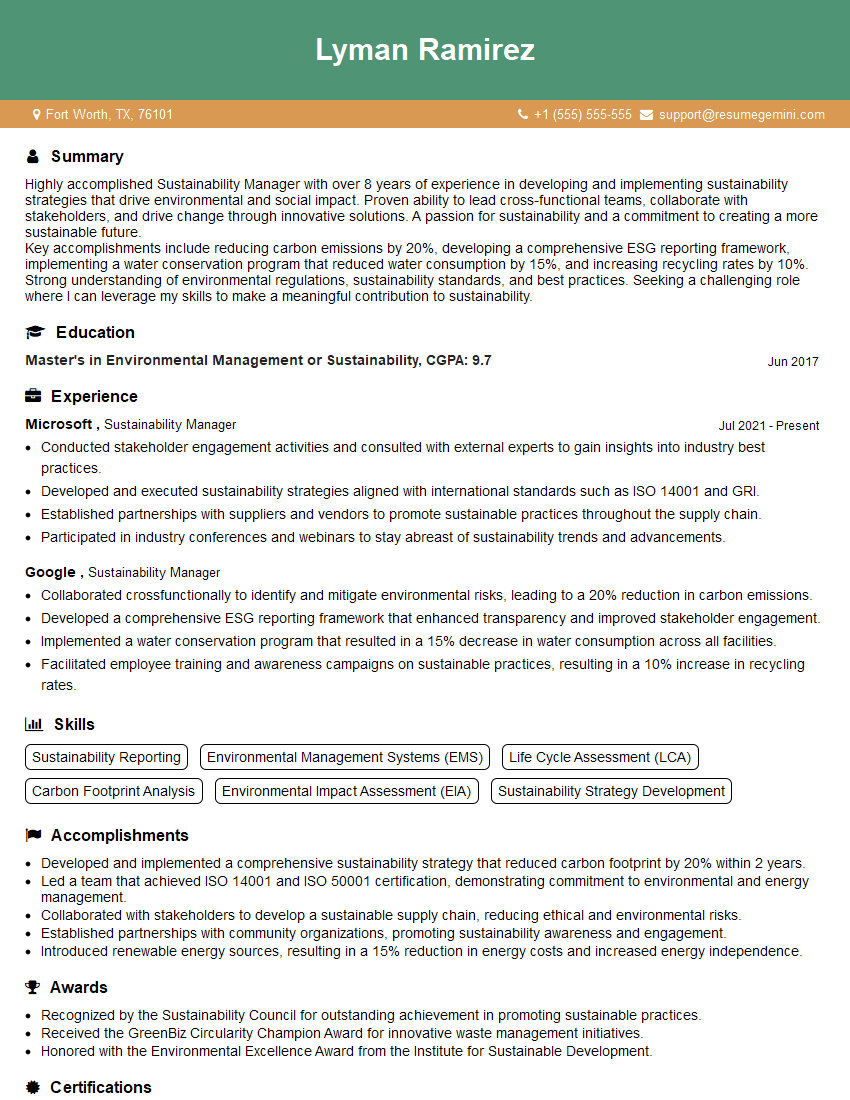
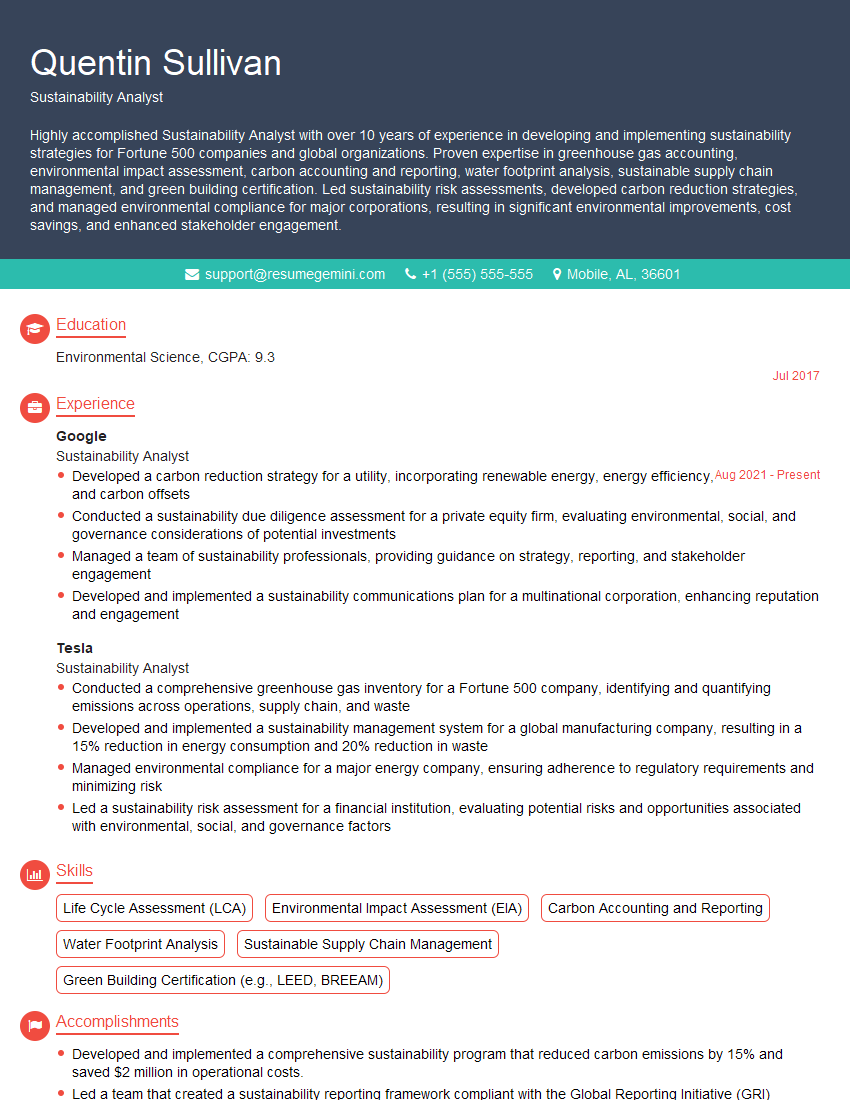
Mastering Waste Management Decision Making is crucial for career advancement in this rapidly evolving field. Demonstrating a strong understanding of these concepts will significantly enhance your interview performance and job prospects. To further strengthen your application, focus on creating an ATS-friendly resume that highlights your relevant skills and experience. ResumeGemini is a trusted resource that can help you build a professional and impactful resume. Examples of resumes tailored to Waste Management Decision Making are available to provide you with additional guidance.
Explore more articles
Users Rating of Our Blogs
Share Your Experience
We value your feedback! Please rate our content and share your thoughts (optional).
What Readers Say About Our Blog
Attention music lovers!
Wow, All the best Sax Summer music !!!
Spotify: https://open.spotify.com/artist/6ShcdIT7rPVVaFEpgZQbUk
Apple Music: https://music.apple.com/fr/artist/jimmy-sax-black/1530501936
YouTube: https://music.youtube.com/browse/VLOLAK5uy_noClmC7abM6YpZsnySxRqt3LoalPf88No
Other Platforms and Free Downloads : https://fanlink.tv/jimmysaxblack
on google : https://www.google.com/search?q=22+AND+22+AND+22
on ChatGPT : https://chat.openai.com?q=who20jlJimmy20Black20Sax20Producer
Get back into the groove with Jimmy sax Black
Best regards,
Jimmy sax Black
www.jimmysaxblack.com
Hi I am a troller at The aquatic interview center and I suddenly went so fast in Roblox and it was gone when I reset.
Hi,
Business owners spend hours every week worrying about their website—or avoiding it because it feels overwhelming.
We’d like to take that off your plate:
$69/month. Everything handled.
Our team will:
Design a custom website—or completely overhaul your current one
Take care of hosting as an option
Handle edits and improvements—up to 60 minutes of work included every month
No setup fees, no annual commitments. Just a site that makes a strong first impression.
Find out if it’s right for you:
https://websolutionsgenius.com/awardwinningwebsites
Hello,
we currently offer a complimentary backlink and URL indexing test for search engine optimization professionals.
You can get complimentary indexing credits to test how link discovery works in practice.
No credit card is required and there is no recurring fee.
You can find details here:
https://wikipedia-backlinks.com/indexing/
Regards
NICE RESPONSE TO Q & A
hi
The aim of this message is regarding an unclaimed deposit of a deceased nationale that bears the same name as you. You are not relate to him as there are millions of people answering the names across around the world. But i will use my position to influence the release of the deposit to you for our mutual benefit.
Respond for full details and how to claim the deposit. This is 100% risk free. Send hello to my email id: lukachachibaialuka@gmail.com
Luka Chachibaialuka
Hey interviewgemini.com, just wanted to follow up on my last email.
We just launched Call the Monster, an parenting app that lets you summon friendly ‘monsters’ kids actually listen to.
We’re also running a giveaway for everyone who downloads the app. Since it’s brand new, there aren’t many users yet, which means you’ve got a much better chance of winning some great prizes.
You can check it out here: https://bit.ly/callamonsterapp
Or follow us on Instagram: https://www.instagram.com/callamonsterapp
Thanks,
Ryan
CEO – Call the Monster App
Hey interviewgemini.com, I saw your website and love your approach.
I just want this to look like spam email, but want to share something important to you. We just launched Call the Monster, a parenting app that lets you summon friendly ‘monsters’ kids actually listen to.
Parents are loving it for calming chaos before bedtime. Thought you might want to try it: https://bit.ly/callamonsterapp or just follow our fun monster lore on Instagram: https://www.instagram.com/callamonsterapp
Thanks,
Ryan
CEO – Call A Monster APP
To the interviewgemini.com Owner.
Dear interviewgemini.com Webmaster!
Hi interviewgemini.com Webmaster!
Dear interviewgemini.com Webmaster!
excellent
Hello,
We found issues with your domain’s email setup that may be sending your messages to spam or blocking them completely. InboxShield Mini shows you how to fix it in minutes — no tech skills required.
Scan your domain now for details: https://inboxshield-mini.com/
— Adam @ InboxShield Mini
support@inboxshield-mini.com
Reply STOP to unsubscribe
Hi, are you owner of interviewgemini.com? What if I told you I could help you find extra time in your schedule, reconnect with leads you didn’t even realize you missed, and bring in more “I want to work with you” conversations, without increasing your ad spend or hiring a full-time employee?
All with a flexible, budget-friendly service that could easily pay for itself. Sounds good?
Would it be nice to jump on a quick 10-minute call so I can show you exactly how we make this work?
Best,
Hapei
Marketing Director
Hey, I know you’re the owner of interviewgemini.com. I’ll be quick.
Fundraising for your business is tough and time-consuming. We make it easier by guaranteeing two private investor meetings each month, for six months. No demos, no pitch events – just direct introductions to active investors matched to your startup.
If youR17;re raising, this could help you build real momentum. Want me to send more info?
Hi, I represent an SEO company that specialises in getting you AI citations and higher rankings on Google. I’d like to offer you a 100% free SEO audit for your website. Would you be interested?
Hi, I represent an SEO company that specialises in getting you AI citations and higher rankings on Google. I’d like to offer you a 100% free SEO audit for your website. Would you be interested?