The right preparation can turn an interview into an opportunity to showcase your expertise. This guide to Electrical Component Handling interview questions is your ultimate resource, providing key insights and tips to help you ace your responses and stand out as a top candidate.
Questions Asked in Electrical Component Handling Interview
Q 1. Describe your experience with different types of soldering techniques.
Soldering is a fundamental skill in electronics, joining components to a printed circuit board (PCB) or other components. I’m proficient in several techniques, each suited to different applications.
- Through-Hole Soldering: This traditional method involves inserting the component’s leads through holes in the PCB and soldering them on the underside. It’s robust but can be time-consuming. I’ve extensively used this technique for larger components and high-power applications where mechanical stability is crucial. For example, I’ve soldered large power resistors and connectors using this method, paying close attention to heat dissipation to prevent damage.
- Surface Mount Technology (SMT) Soldering: SMT involves placing components directly onto the surface of the PCB. I’m experienced in both manual soldering using fine-tipped irons and rework stations for smaller components, and in automated reflow soldering processes. Reflow soldering, where the entire board is heated to melt solder paste, is faster and more efficient for mass production. My experience includes troubleshooting reflow profiles to optimize solder joint quality and minimize defects.
- Wave Soldering: Used in high-volume manufacturing, wave soldering submerges the PCB in a wave of molten solder, joining components with leads. It’s highly efficient but requires careful control of temperature and solder wave height to avoid bridging or short circuits. I’ve worked with wave soldering equipment, ensuring proper setup and troubleshooting any soldering defects arising from issues like poor solder flux or incorrect PCB alignment.
My experience spans various solder types (lead-free, leaded), and I’m meticulous about ensuring clean, strong, and consistent solder joints to guarantee reliability.
Q 2. Explain the importance of ESD (Electrostatic Discharge) protection in handling electronic components.
Electrostatic Discharge (ESD) protection is paramount in handling electronic components because even a small static charge can cause catastrophic damage. Sensitive components like integrated circuits (ICs) are particularly vulnerable. ESD events can lead to latent defects that manifest later, resulting in costly repairs or product failures.
My ESD precautions include:
- Using ESD mats and wrist straps: These ground me and prevent static buildup. I always ensure proper grounding before working on sensitive components.
- Working in an ESD-protected area: This often includes ESD-safe workbenches, flooring, and clothing. I’ve also worked in dedicated ESD-controlled environments that maintain a consistent low humidity.
- Using ESD-safe tools and containers: Tools and containers are designed to prevent static buildup and discharge. I always select the correct tools and containers depending on the sensitivity of components.
- Proper handling techniques: I avoid touching the leads or pins of sensitive components unnecessarily and handle them with anti-static tweezers or gloves.
Imagine a tiny spark—invisible to the naked eye—permanently damaging an expensive microcontroller. That’s why meticulously following ESD precautions is not just a good practice; it’s crucial for ensuring product quality and reducing failure rates.
Q 3. How do you identify and handle damaged or defective components?
Identifying damaged components requires careful visual inspection and sometimes specialized testing equipment. Damage can be easily missed, leading to board failures, so a methodical approach is crucial.
Visual Inspection: I check for physical damage like cracks, bent pins, burn marks, or discoloration. I also examine the packaging for any signs of mishandling. For surface-mount components, I look for signs of improper soldering, such as cold solder joints (poorly adhered solder) or solder bridges (unintentional solder connections).
Testing: For suspected component failure, I might use a multimeter to check for continuity, resistance, or capacitance, depending on the component type. For more sophisticated components like ICs, I would use an in-circuit tester or functional testing equipment to verify functionality. Sometimes, specialized equipment like a microscope might be necessary for thorough inspection of minute details.
Handling Damaged Components: Once identified as defective, I carefully remove the damaged component, following safe practices to avoid further damage to the PCB or adjacent components. This often requires specialized tools and techniques, such as hot air rework stations for surface-mount components or desoldering braid for through-hole components. Afterwards, I carefully dispose of or quarantine the damaged component according to company procedures.
Q 4. What are the common causes of component failure and how can they be prevented?
Component failure can stem from various factors, and prevention involves a multi-pronged approach focusing on both design and handling.
- Overheating: Excessive heat during operation or soldering can damage components. Prevention includes proper heat sinking, adequate airflow in the system, and careful soldering techniques.
- Overvoltage/Overcurrent: Exceeding the component’s rated voltage or current can lead to immediate failure or gradual degradation. Proper circuit design, including the use of protection devices like fuses and surge suppressors, is essential.
- Mechanical stress: Physical stress like bending or vibration can damage leads or internal structures. Secure mounting and vibration isolation measures can mitigate this.
- ESD: As mentioned earlier, electrostatic discharge can cause latent damage that appears later. Proper ESD precautions are crucial.
- Manufacturing defects: Poor quality control during manufacturing can lead to faulty components. Relying on reputable suppliers and careful inspection are key.
- Environmental factors: Exposure to extreme temperatures, humidity, or corrosive substances can degrade component performance and lifetime. Proper encapsulation and environmental protection are crucial in such cases.
Preventing component failure is an integral part of designing reliable electronics. Proactive measures across the design, manufacturing, and handling phases are essential for robust products.
Q 5. Explain the process of component placement and alignment on a PCB.
Component placement and alignment on a PCB is critical for functionality and reliability. The process involves several steps and requires precision.
- Component preparation: This involves verifying the component’s identification and checking for any damage. For surface mount devices, I ensure the leads are correctly oriented.
- PCB preparation: The PCB needs to be clean and free of any debris that could interfere with placement or soldering. Stencil application (for solder paste) is done at this stage for SMT.
- Placement: For manual placement, I use tweezers or vacuum pens to place the component precisely on the PCB, aligning it with the designated pads. For automated placement, the machine is programmed with the component’s location and orientation information, ensuring accurate placement.
- Alignment verification: Before soldering, I carefully verify the component’s alignment using a magnifying glass or microscope, ensuring correct placement to avoid shorts or opens.
- Soldering: After alignment verification, the components are soldered using appropriate techniques such as through-hole soldering, reflow soldering, or wave soldering, based on component and PCB types.
- Inspection: After soldering, I perform a visual inspection to check for any soldering defects, such as shorts, bridges, or cold solder joints. Automated optical inspection (AOI) is common in high-volume manufacturing.
Precise component placement is essential; even a small misalignment can lead to malfunctions and failures. Accuracy and attention to detail are key to efficient and reliable assembly.
Q 6. What are your experiences with different types of electronic components (resistors, capacitors, ICs, etc.)?
My experience encompasses a wide range of electronic components, each requiring specific handling and understanding:
- Resistors: I’m familiar with various types, including through-hole and surface-mount, fixed and variable, and different power ratings. I understand the importance of considering tolerance and power dissipation when selecting and handling them.
- Capacitors: My expertise extends to different capacitor types—ceramic, film, electrolytic, tantalum—each with unique characteristics and handling requirements. I’m mindful of polarity and voltage ratings for electrolytic capacitors.
- Integrated Circuits (ICs): These are highly sensitive components requiring careful ESD protection. I’m proficient in handling various package types (DIP, SOIC, QFP, BGA) and understand the importance of lead spacing and alignment.
- Inductors: I understand the importance of handling inductors carefully to avoid damaging their delicate windings, and I’m familiar with different types (e.g., ferrite cores, air-core).
- Connectors: I’ve worked with a variety of connectors, from simple headers to complex high-speed interfaces. Proper mating and securing are crucial to prevent damage and ensure electrical contact.
- Crystals/Resonators: These sensitive frequency-determining components require cautious handling to avoid damaging their delicate structures.
Understanding the unique properties of each component is vital for reliable circuit assembly. This knowledge informs my choice of tools and handling procedures.
Q 7. Describe your proficiency with automated component placement equipment.
I have extensive experience operating and maintaining automated component placement equipment, including pick-and-place machines. My experience includes:
- Programming and setup: I’m skilled in using specialized software to program pick-and-place machines to accurately place components onto PCBs based on the PCB design. This includes defining component footprints, pick-and-place sequences, and optimizing machine parameters to maximize throughput and minimize errors.
- Component feeding and handling: I’m familiar with different component feeding systems, including tape and reel feeders, tray feeders, and bulk feeders. I understand the importance of proper component orientation and handling to prevent damage and ensure accurate placement.
- Machine maintenance and troubleshooting: I’m capable of performing routine maintenance tasks, such as cleaning the machine heads, replacing nozzles, and calibrating the machine. I can troubleshoot common malfunctions, identify and resolve issues related to component feeding, placement accuracy, and overall machine performance. For instance, I’ve successfully resolved issues caused by faulty feeder mechanisms, incorrect component settings, or head alignment problems.
- Quality control: I’m adept at implementing quality control procedures to ensure the accuracy and reliability of the automated component placement process. This includes using automated optical inspection (AOI) systems to detect defects in component placement and soldering.
Automated component placement significantly boosts efficiency and accuracy in high-volume manufacturing environments. My expertise enables me to effectively utilize this equipment, ensuring reliable and high-quality results.
Q 8. How do you ensure the accuracy and efficiency of component handling processes?
Ensuring accuracy and efficiency in component handling is paramount to preventing costly errors and delays in manufacturing. It’s a multifaceted process relying on standardized procedures, automation where possible, and meticulous attention to detail.
- Standardized Work Instructions: We implement clear, concise, and visually supported work instructions for every step of the handling process. This ensures consistency across different operators and minimizes human error. For example, specific procedures for ESD (Electrostatic Discharge) protection are vital when handling sensitive components.
- Visual Management: Using visual cues like color-coded bins, labels with clear component identification, and kanban systems makes it easy for anyone to understand the location and quantity of components. This drastically reduces search times and errors.
- Automation: Automating tasks like component picking and placement using automated guided vehicles (AGVs) or robotic arms improves speed, accuracy, and traceability, especially in high-volume environments.
- Regular Audits and Training: We conduct regular audits of our handling processes to identify bottlenecks or areas for improvement. Comprehensive training programs for all personnel involved emphasize best practices and safety procedures.
For instance, in a previous role, we implemented a visual management system using color-coded trays for different resistor values. This simple change reduced picking errors by 15% within the first month.
Q 9. What quality control measures do you employ during component handling?
Quality control during component handling is crucial to maintaining product quality and reliability. Our measures include:
- Incoming Inspection: Every component batch undergoes a thorough inspection to verify that it meets the specified quality standards. This often involves visual inspection, automated optical inspection (AOI), and testing for electrical parameters. We meticulously document all inspection results.
- Statistical Process Control (SPC): We utilize SPC methods to monitor component handling processes and identify potential issues before they become significant problems. This involves tracking key metrics such as error rates, handling times, and damage rates.
- Calibration and Maintenance: All equipment used in component handling, including test instruments and automated systems, is regularly calibrated and maintained to ensure accuracy and reliability. This prevents equipment-induced errors.
- FIFO (First-In, First-Out) System: Implementing FIFO inventory management helps to minimize the risk of using outdated or expired components.
- Traceability: Each component is tracked throughout its lifecycle, enabling us to pinpoint the source of any defects or discrepancies. This often involves lot number tracking and detailed documentation.
For example, one instance involved a batch of capacitors failing our incoming inspection due to inconsistencies in capacitance. Our detailed traceability system enabled us to quickly identify the supplier and issue a return authorization, preventing a major production delay.
Q 10. How do you manage inventory and track component usage?
We manage inventory and track component usage using a combination of manual and automated systems:
- ERP (Enterprise Resource Planning) System: Our ERP system serves as the central repository for all inventory data, providing real-time visibility into component quantities, locations, and usage trends.
- Barcode/RFID Tracking: We utilize barcode or RFID technology to track components throughout the entire handling process, from receiving to placement on the assembly line. This automated tracking system minimizes manual data entry and enhances accuracy.
- Kanban Systems: Kanban systems, often combined with visual management, optimize component replenishment, ensuring just-in-time availability while preventing overstocking.
- Regular Cycle Counts: We perform regular cycle counts of our inventory to reconcile physical counts with the ERP system and identify discrepancies promptly.
- Material Requirements Planning (MRP): MRP helps us to predict component demand based on production schedules, facilitating proactive purchasing and minimizing stockouts.
In one project, implementing RFID tracking reduced inventory discrepancies by over 20% and improved our ability to respond to unexpected component shortages.
Q 11. What are your experiences with different types of component packaging?
My experience encompasses a broad range of component packaging types, each with its own handling considerations:
- Tape and Reel Packaging: This is a common packaging for surface-mount components, and efficient handling requires specialized equipment like automated pick-and-place machines. Attention to the tape’s integrity and proper reel handling is crucial to prevent damage.
- Tray Packaging: Components are often packaged in trays for manual handling or automated picking. Proper organization and identification within the tray are essential.
- Bulk Packaging: Components may arrive in bulk, requiring careful sorting, counting, and packaging before use. This often involves manual handling, demanding meticulous attention to detail and potentially electrostatic discharge (ESD) precautions.
- Cut Tape Packaging: Smaller quantities of components may come in cut tape packaging, which requires different handling techniques to avoid damaging the components or the tape.
Understanding the specific requirements of each packaging type is vital for efficient and safe handling. In one project involving delicate MEMS sensors in tray packaging, we developed a custom jig to prevent damage during placement onto the PCB.
Q 12. Describe your experience with component identification and traceability systems.
Component identification and traceability are critical aspects of efficient and reliable component handling. We employ several systems to achieve this:
- Barcode/RFID Systems: As mentioned earlier, these systems provide automated identification and tracking capabilities, enabling seamless tracking of components throughout the process.
- Database Management Systems: These systems store and manage component information, including part numbers, specifications, suppliers, and lot numbers. They facilitate efficient searching and retrieval of component data.
- Data Matrix Codes: More sophisticated systems often use Data Matrix codes for enhanced data storage and traceability.
- Lot Number Tracking: Every component batch is assigned a unique lot number, enabling easy identification of the source and history of each component.
- Automated Optical Inspection (AOI): AOI systems can automatically verify component identification and detect defects during the handling process.
In one scenario, a faulty batch of resistors was traced back to its specific lot number using our database and traceability system. This rapid identification prevented the faulty components from being used in further assembly.
Q 13. How do you handle discrepancies in component quantities or specifications?
Discrepancies in component quantities or specifications are addressed through a structured investigation process:
- Immediate Investigation: Upon discovering a discrepancy, we immediately halt the affected process and initiate a thorough investigation to determine the root cause.
- Verification of Records: We carefully review all relevant records, including purchase orders, receiving reports, inventory data, and handling logs.
- Physical Inventory Check: A physical count of the components is performed to verify the actual quantity.
- Supplier Contact: We contact the supplier to investigate potential issues with the shipped components.
- Corrective Actions: Once the root cause is identified, appropriate corrective and preventive actions (CAPA) are implemented to prevent future occurrences.
- Documentation: The entire investigation and corrective action process is meticulously documented.
One case involved a significant discrepancy in the number of received integrated circuits. Our investigation revealed a packaging error at the supplier’s end. We worked with them to resolve the issue and establish preventive measures to avoid similar situations.
Q 14. Explain your experience with using specialized tools for handling sensitive components.
Handling sensitive components often requires specialized tools and techniques to prevent damage and maintain their integrity. My experience includes the use of:
- Anti-Static Equipment: ESD mats, wrist straps, and ionizers are essential to protect sensitive components from electrostatic discharge. Proper grounding and equipment maintenance are crucial.
- Vacuum Tweezers: These tools are used to handle very small or delicate components without applying excessive force.
- Specialized Pick-and-Place Machines: Automated pick-and-place machines are vital for high-speed and high-precision handling of surface-mount components. Their capabilities are tailored to different component sizes and sensitivities.
- Microscopic Inspection Equipment: High-magnification microscopes are necessary for inspecting very small components or detecting minute defects.
- Conductive Containers and Trays: These containers prevent electrostatic buildup during storage and transportation of sensitive components.
I recall working with a project involving highly sensitive optical components. Using vacuum tweezers and conductive containers was essential in minimizing the risk of damage, preserving the components’ functionality.
Q 15. What safety precautions do you take when handling electronic components?
Safety is paramount when handling electronic components. Static electricity is a major concern, as even a small discharge can damage sensitive components. Therefore, I always use an anti-static wrist strap connected to a grounded surface to prevent electrostatic discharge (ESD). This is the first and most crucial step.
Beyond ESD, I also adhere to these practices:
- Working on a clean, anti-static mat: This provides an additional layer of protection against ESD.
- Using appropriate tools: Using properly insulated tools prevents short circuits and accidental damage.
- Handling components carefully: Avoiding excessive force when inserting or removing components.
- Proper disposal of components: Damaged or discarded components are disposed of responsibly, often in anti-static bags to prevent accidental damage to other components.
- Eye protection: When working with soldering irons, I always wear safety glasses to protect my eyes from sparks and splatter.
For example, I once had to replace a surface-mount chip on a high-end audio amplifier board. A single ESD event could have permanently damaged the chip, causing significant repair costs. Using my anti-static wrist strap and mat prevented this scenario, ensuring a successful repair.
Career Expert Tips:
- Ace those interviews! Prepare effectively by reviewing the Top 50 Most Common Interview Questions on ResumeGemini.
- Navigate your job search with confidence! Explore a wide range of Career Tips on ResumeGemini. Learn about common challenges and recommendations to overcome them.
- Craft the perfect resume! Master the Art of Resume Writing with ResumeGemini’s guide. Showcase your unique qualifications and achievements effectively.
- Don’t miss out on holiday savings! Build your dream resume with ResumeGemini’s ATS optimized templates.
Q 16. Describe your experience with different types of soldering irons and equipment.
My experience encompasses various soldering irons, from basic pencil-type irons to more advanced temperature-controlled stations. I’m proficient with both through-hole and surface-mount technology (SMT) soldering. Pencil irons are suitable for simpler through-hole components, while SMT soldering often necessitates a more precise temperature-controlled station with interchangeable tips.
I have experience with various soldering iron brands, including Weller, Hakko, and Metcal. Each offers unique features; for instance, Metcal irons offer superior temperature control and quick heating/cooling times, essential for delicate SMT components. Hakko stations provide excellent value for their reliability and versatile tip selection. The choice of equipment always depends on the specific task and component type. I also have experience with hot air rework stations, essential for removing and replacing surface mount components without damage.
In a recent project, I needed to remove and replace a BGA (Ball Grid Array) chip on a motherboard. This task required a hot air rework station with precise temperature and airflow control to prevent damage to the surrounding components. The process involved careful profiling of the temperature and airflow to achieve optimal results. Using an unsuitable tool would have resulted in either damage to the component or the surrounding circuitry, causing extensive repairs.
Q 17. How do you troubleshoot common issues related to component handling?
Troubleshooting component-handling issues usually involves a systematic approach. It begins with visual inspection, checking for obvious physical damage like bent pins, cracks, or burn marks. If a component isn’t functioning correctly, the first step is always verifying the solder joints – are they cold, dry, or insufficient?
Next, I check the component’s datasheet to ensure proper placement, orientation, and voltage ratings. If everything appears physically correct, I’d then use a multimeter to check for continuity, voltage, and resistance, isolating the potential problem area. Sometimes the issue isn’t with the component itself but with a faulty connection, or even a problem with other components that affect this component’s performance.
For example, I once encountered a circuit that wasn’t functioning due to a faulty capacitor. Initial visual inspection didn’t reveal any defects. After using a multimeter, I discovered the capacitor was out of spec, showing incorrect capacitance readings. Replacing the capacitor resolved the problem.
Q 18. How familiar are you with IPC standards for electronics assembly?
I am very familiar with IPC standards for electronics assembly, specifically IPC-A-610 (Acceptability of Electronic Assemblies) and IPC-7711/7721 (Soldering). These standards provide crucial guidelines for ensuring high-quality and reliable electronic assemblies. IPC-A-610 outlines the acceptable criteria for workmanship, including solder joint quality, component placement, and overall cleanliness. IPC-7711/7721 sets forth the standards for soldering processes, covering various techniques and materials.
Understanding these standards is essential for ensuring consistent quality in any electronics assembly process. They serve as a benchmark for assessing the quality of work and identifying potential issues before they escalate into major problems. Adherence to these standards is crucial for meeting customer specifications and regulatory requirements. In my previous role, we adhered strictly to IPC standards, and our regular internal audits ensured that we were always compliant, leading to higher product reliability and fewer field failures.
Q 19. Describe your experience with visual inspection techniques for component quality.
Visual inspection is a critical first step in assessing component quality. It involves careful examination of components using magnification as needed to identify defects. I use a combination of techniques:
- Checking for physical damage: Bent leads, cracks, discoloration, or any signs of physical stress.
- Inspecting markings: Verifying part numbers, manufacturer codes, and date codes against the bill of materials.
- Assessing the leads (for through-hole components): Ensuring leads are straight, not damaged, and properly tinned for soldering.
- Examining packages (for SMT components): Looking for imperfections like missing solder balls, cracks in the package, or damage to the pads.
The effectiveness of visual inspection significantly improves with magnification aids like microscopes or lighted magnifying glasses. For example, a seemingly insignificant crack in a surface-mount component might not be visible to the naked eye, but it can cause the component to fail under stress. Careful visual inspection with magnification allows me to identify and reject such components, preventing future failures.
Q 20. What are your experiences with using different types of adhesives and fluxes?
My experience with adhesives and fluxes covers a wide range of materials tailored to specific applications. For instance, epoxy adhesives are commonly used for bonding components or providing mechanical support. Cyanoacrylate (super glue) is sometimes used for quick fixes, but it’s usually avoided in electronics due to its high viscosity and potential for damage.
Fluxes are crucial for soldering, helping to remove oxides and contaminants from the surfaces to be soldered. I’ve used various types, including rosin-based fluxes (generally preferred for their relatively mild cleaning requirements) and water-soluble fluxes (easier to clean but might require more care during handling). The choice depends on the specific application and the cleanliness requirements of the final assembly.
In one instance, we had to bond a delicate sensor to a circuit board. A strong yet flexible epoxy adhesive was chosen, ensuring a secure bond without damaging the sensor. The adhesive’s properties were carefully considered to ensure both durability and ease of repair if needed.
Q 21. How do you maintain and clean your tools and equipment?
Maintaining and cleaning tools and equipment is vital for their longevity and the quality of work. My routine includes:
- Regular cleaning of soldering iron tips: Using a tip cleaner or wet sponge to remove excess solder and residue after each use.
- Cleaning soldering iron stations: Regularly cleaning the station’s surfaces to prevent build-up of solder and flux.
- Cleaning tweezers and other tools: Using appropriate solvents and cleaning materials to remove debris and residue.
- Inspecting tools for wear and tear: Replacing worn-out or damaged tools to prevent accidents and ensure consistent performance.
- Proper storage: Storing tools and equipment in designated areas, protecting them from dust and damage.
For example, a dirty or corroded soldering iron tip can lead to poor solder joints, resulting in unreliable connections. Regular tip cleaning ensures the tip remains in optimal condition and produces high-quality solder joints.
Q 22. Explain the importance of proper documentation in component handling.
Proper documentation in component handling is crucial for maintaining traceability, ensuring quality, and facilitating efficient operations. Think of it as the backbone of your entire process – without it, you’re working blind.
Traceability: Detailed records allow you to track components from their point of origin through the entire supply chain, including storage, assembly, and testing. This is vital for identifying the source of any defects or issues and for conducting effective recalls if necessary. For example, imagine a batch of faulty capacitors causing system failures. Comprehensive documentation allows you to quickly pinpoint the affected batch and its origin.
Quality Control: Documentation helps maintain consistent quality by recording inspections, test results, and any deviations from standards. This ensures that only components meeting specified requirements are used in the final product. A clear record of inspection results, including dates and inspectors’ names, provides a verifiable audit trail.
Inventory Management: Accurate documentation aids in effective inventory management by providing real-time visibility of stock levels. This helps prevent shortages and minimizes waste due to obsolescence. A well-maintained inventory database allows for timely procurement and prevents production delays.
Compliance: In many industries, adherence to regulatory standards and internal procedures is mandatory. Documentation serves as proof of compliance, protecting your company from potential legal issues or penalties.
Q 23. What strategies do you use to improve efficiency in component handling processes?
Improving efficiency in component handling involves a multi-pronged approach, focusing on optimizing processes, technology, and workforce.
Lean Manufacturing Principles: Implementing lean methodologies like 5S (Sort, Set in Order, Shine, Standardize, Sustain) significantly reduces waste and improves workflow. This includes streamlining storage, optimizing picking routes, and reducing unnecessary movement of components. In one project, implementing 5S reduced our component handling time by 15%.
Automation: Automated storage and retrieval systems (AS/RS), automated guided vehicles (AGVs), and pick-and-place robots can automate repetitive tasks, minimizing errors and increasing throughput. These systems ensure consistent and fast handling of components, especially crucial for high-volume production.
Improved Storage and Organization: Implementing a well-organized storage system with clear labeling, binning, and FIFO (First-In, First-Out) methods prevents confusion and speeds up retrieval. Using barcode or RFID tagging for components ensures accurate tracking and prevents errors during picking.
Employee Training: Properly trained personnel are essential for efficient operations. Regular training on best practices, safety protocols, and the use of handling equipment ensures smooth and error-free procedures.
Q 24. How do you manage and resolve conflicts related to component shortages or delays?
Component shortages or delays require a proactive and collaborative approach. My strategy involves immediate communication, problem-solving, and contingency planning.
Identify the Root Cause: The first step is to determine the cause of the shortage – is it a supply chain disruption, an internal error, or something else? Thorough investigation using available data and communication with suppliers is vital.
Communicate Proactively: Inform all relevant stakeholders (engineering, production, procurement) immediately. Transparency is key to mitigating the impact of the shortage.
Explore Alternatives: Depending on the criticality of the component, consider alternatives such as sourcing from different suppliers, using substitute components (if technically feasible), or redesigning the product to eliminate the problematic component. This often requires close collaboration with engineering.
Implement Contingency Plans: Have backup plans in place for potential delays. This might involve prioritizing critical assemblies or adjusting production schedules.
Monitor and Evaluate: After resolving the issue, review the process to identify areas for improvement and prevent similar occurrences in the future. This might include strengthening supplier relationships or improving forecasting accuracy.
Q 25. Describe your experience working in a team environment on electronic assembly projects.
I’ve consistently thrived in team environments, particularly on electronic assembly projects. My experience highlights the importance of clear communication, collaborative problem-solving, and a shared commitment to quality.
Communication: I actively participate in team meetings, contribute effectively to discussions, and ensure that my work aligns with the overall project goals. I use tools like project management software to keep everyone informed about progress and potential roadblocks.
Collaboration: I readily collaborate with engineers, technicians, and procurement specialists to address challenges, share knowledge, and find optimal solutions. For example, on a recent project, I worked closely with the engineering team to identify a more readily available substitute for a component that experienced a significant delay.
Problem-Solving: I am adept at identifying and resolving conflicts proactively, employing a calm and collaborative approach. If disagreements arise, I facilitate constructive discussions to find mutually agreeable solutions that maintain project timelines and quality.
Shared Commitment: I believe in fostering a team environment where everyone feels valued and shares a commitment to delivering high-quality results. This includes mutual respect, open communication, and a willingness to assist colleagues when needed.
Q 26. How do you stay up-to-date on the latest technologies and best practices in electronic component handling?
Staying current in the dynamic field of electronic component handling requires a multifaceted approach.
Industry Publications and Journals: I regularly read trade publications and journals focusing on electronics manufacturing, supply chain management, and component technology. This keeps me abreast of new technologies and best practices.
Conferences and Workshops: Attending industry conferences and workshops allows me to network with peers and learn about the latest innovations from leading experts in the field. These events often showcase cutting-edge technologies and emerging trends.
Online Courses and Webinars: Numerous online platforms offer courses and webinars on component handling techniques, automation, and supply chain optimization. This provides a flexible and convenient way to expand my knowledge.
Professional Networks: Engaging with professional organizations and online forums allows me to exchange information and insights with other professionals, benefiting from their experiences and perspectives.
Manufacturer Websites and Datasheets: Staying updated on component specifications and availability directly from manufacturers is essential for effective decision-making. I regularly review datasheets and manufacturer websites for the latest information.
Q 27. How would you handle a situation where a critical component is missing from an assembly?
Discovering a missing critical component during assembly is a serious issue requiring immediate and decisive action. My approach is based on a structured process.
Verify the Missing Component: Double-check the bill of materials (BOM), inventory records, and the physical location to confirm the component is indeed missing. A simple oversight might be the cause.
Assess the Impact: Determine the severity of the issue. How critical is this component to the assembly’s functionality? Will the delay impact project deadlines?
Locate the Component: If the component isn’t found locally, investigate the supply chain: check with the supplier for immediate availability or explore expedited shipping options. If a substitute is possible, the engineering team must evaluate its feasibility.
Implement a Solution: Depending on the assessment, several actions are possible: expedite the order, use a suitable substitute component, adjust the assembly schedule, or potentially redesign the assembly to eliminate the missing part (though this is usually the last resort).
Document and Prevent Recurrence: Once the issue is resolved, a thorough investigation should be carried out to understand the root cause of the missing component. This might involve reviewing inventory processes, supply chain management, or procurement procedures. Corrective actions should be implemented to prevent similar situations in the future.
Q 28. Describe your experience with lean manufacturing principles in relation to component handling.
Lean manufacturing principles have profoundly impacted my approach to component handling, significantly improving efficiency and reducing waste.
Value Stream Mapping: I’ve utilized value stream mapping to analyze and optimize the flow of components from receiving to assembly. This helps identify bottlenecks and areas for improvement, leading to a more efficient process. For instance, identifying and eliminating unnecessary steps in component storage and retrieval reduced handling time by 10%.
5S Methodology: Implementing 5S in our component storage areas dramatically improved organization and accessibility. This reduced search times, minimized errors, and created a safer working environment. The clear labeling and organization also improved overall efficiency.
Kanban System: Utilizing a Kanban system for component replenishment ensured just-in-time delivery, minimizing excess inventory and storage costs. This system dramatically reduced the risk of obsolete components and improved overall inventory management.
Kaizen Events: Participating in Kaizen events (continuous improvement workshops) helped identify and address inefficiencies in component handling processes. These events often lead to creative solutions implemented by the team to improve workflow.
Key Topics to Learn for Electrical Component Handling Interview
- ESD (Electrostatic Discharge) Protection: Understanding ESD principles, preventative measures, and the impact of ESD on component damage. Practical application: Describing your experience with ESD-safe work practices and equipment.
- Component Identification and Verification: Mastering techniques for identifying components (e.g., through markings, datasheets), verifying their authenticity, and detecting counterfeits. Practical application: Explaining your process for verifying component specifications before use.
- Soldering and Desoldering Techniques: Understanding different soldering methods (e.g., surface mount, through-hole) and their applications. Practical application: Describing your proficiency in various soldering techniques and troubleshooting soldering defects.
- Storage and Handling Procedures: Knowledge of proper storage conditions (temperature, humidity, etc.) to maintain component integrity and prevent degradation. Practical application: Explaining how you’d manage a large inventory of sensitive electrical components.
- Inventory Management Systems: Familiarity with inventory tracking methods, including FIFO (First-In, First-Out), and the importance of accurate record-keeping. Practical application: Describing experience using inventory management software or systems.
- Quality Control and Inspection: Understanding the role of quality control in ensuring component reliability and conformity to specifications. Practical application: Describing your experience with visual inspection, automated testing, or other quality control procedures.
- Safety Regulations and Compliance: Knowledge of relevant safety regulations and standards pertaining to handling electrical components. Practical application: Explaining your understanding of workplace safety protocols and hazard mitigation.
Next Steps
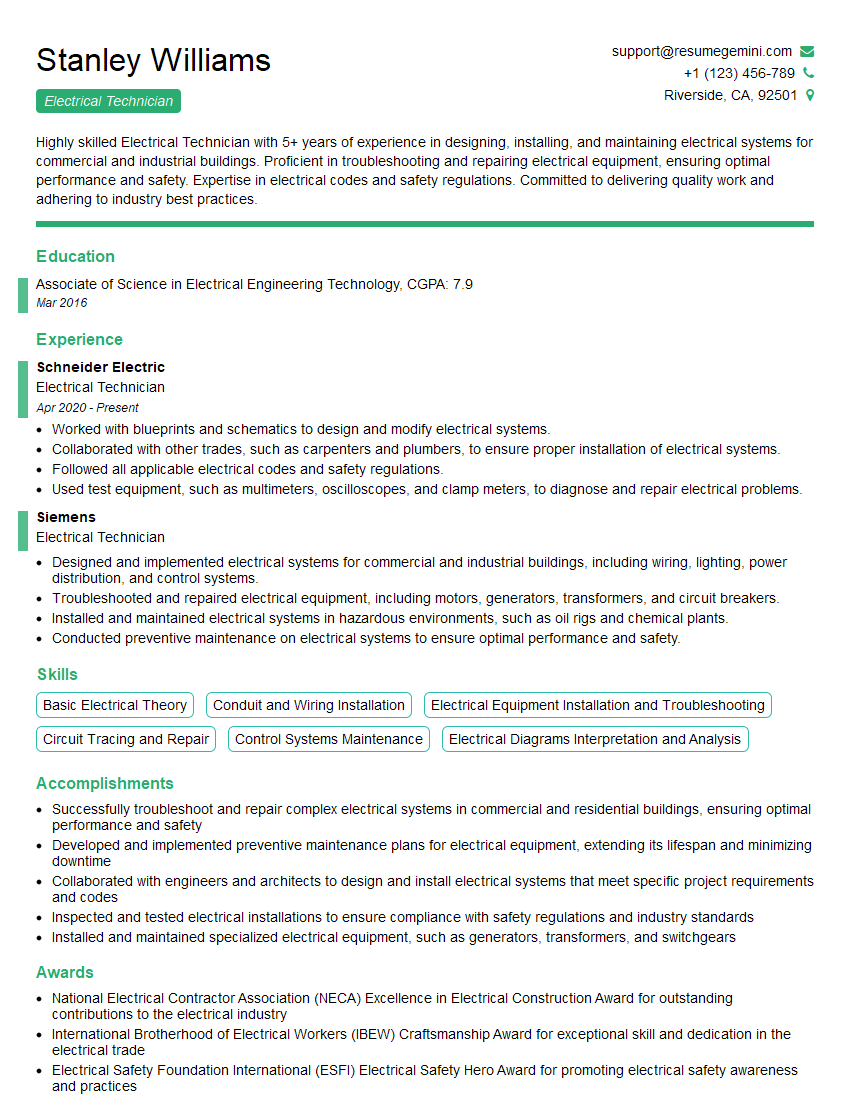
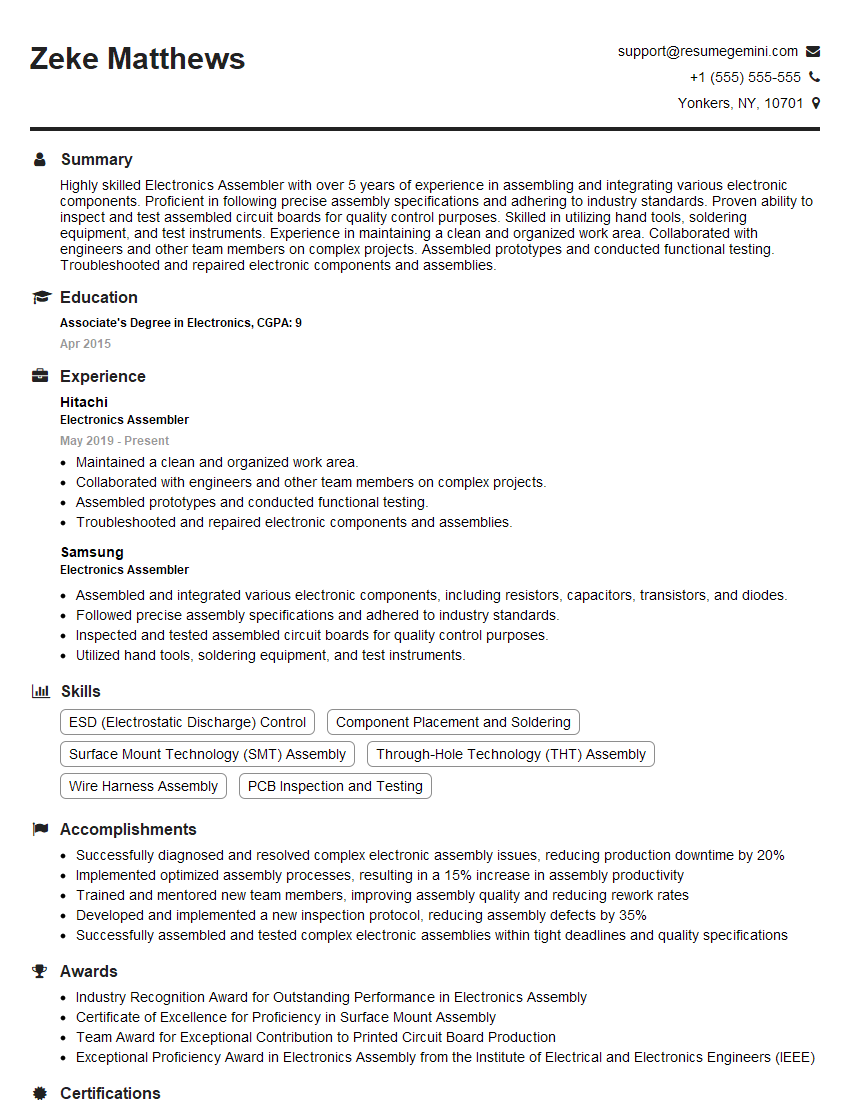
Mastering electrical component handling is crucial for a successful career in electronics, offering diverse opportunities for growth and advancement. A strong understanding of these principles demonstrates meticulous attention to detail, a commitment to quality, and a proactive approach to safety – all highly valued attributes in this field. To significantly boost your job prospects, create an ATS-friendly resume that effectively showcases your skills and experience. We strongly encourage you to utilize ResumeGemini, a trusted resource for building professional resumes. ResumeGemini provides examples of resumes tailored to Electrical Component Handling, helping you present your qualifications in the best possible light.
Explore more articles
Users Rating of Our Blogs
Share Your Experience
We value your feedback! Please rate our content and share your thoughts (optional).
What Readers Say About Our Blog
Attention music lovers!
Wow, All the best Sax Summer music !!!
Spotify: https://open.spotify.com/artist/6ShcdIT7rPVVaFEpgZQbUk
Apple Music: https://music.apple.com/fr/artist/jimmy-sax-black/1530501936
YouTube: https://music.youtube.com/browse/VLOLAK5uy_noClmC7abM6YpZsnySxRqt3LoalPf88No
Other Platforms and Free Downloads : https://fanlink.tv/jimmysaxblack
on google : https://www.google.com/search?q=22+AND+22+AND+22
on ChatGPT : https://chat.openai.com?q=who20jlJimmy20Black20Sax20Producer
Get back into the groove with Jimmy sax Black
Best regards,
Jimmy sax Black
www.jimmysaxblack.com
Hi I am a troller at The aquatic interview center and I suddenly went so fast in Roblox and it was gone when I reset.
Hi,
Business owners spend hours every week worrying about their website—or avoiding it because it feels overwhelming.
We’d like to take that off your plate:
$69/month. Everything handled.
Our team will:
Design a custom website—or completely overhaul your current one
Take care of hosting as an option
Handle edits and improvements—up to 60 minutes of work included every month
No setup fees, no annual commitments. Just a site that makes a strong first impression.
Find out if it’s right for you:
https://websolutionsgenius.com/awardwinningwebsites
Hello,
we currently offer a complimentary backlink and URL indexing test for search engine optimization professionals.
You can get complimentary indexing credits to test how link discovery works in practice.
No credit card is required and there is no recurring fee.
You can find details here:
https://wikipedia-backlinks.com/indexing/
Regards
NICE RESPONSE TO Q & A
hi
The aim of this message is regarding an unclaimed deposit of a deceased nationale that bears the same name as you. You are not relate to him as there are millions of people answering the names across around the world. But i will use my position to influence the release of the deposit to you for our mutual benefit.
Respond for full details and how to claim the deposit. This is 100% risk free. Send hello to my email id: lukachachibaialuka@gmail.com
Luka Chachibaialuka
Hey interviewgemini.com, just wanted to follow up on my last email.
We just launched Call the Monster, an parenting app that lets you summon friendly ‘monsters’ kids actually listen to.
We’re also running a giveaway for everyone who downloads the app. Since it’s brand new, there aren’t many users yet, which means you’ve got a much better chance of winning some great prizes.
You can check it out here: https://bit.ly/callamonsterapp
Or follow us on Instagram: https://www.instagram.com/callamonsterapp
Thanks,
Ryan
CEO – Call the Monster App
Hey interviewgemini.com, I saw your website and love your approach.
I just want this to look like spam email, but want to share something important to you. We just launched Call the Monster, a parenting app that lets you summon friendly ‘monsters’ kids actually listen to.
Parents are loving it for calming chaos before bedtime. Thought you might want to try it: https://bit.ly/callamonsterapp or just follow our fun monster lore on Instagram: https://www.instagram.com/callamonsterapp
Thanks,
Ryan
CEO – Call A Monster APP
To the interviewgemini.com Owner.
Dear interviewgemini.com Webmaster!
Hi interviewgemini.com Webmaster!
Dear interviewgemini.com Webmaster!
excellent
Hello,
We found issues with your domain’s email setup that may be sending your messages to spam or blocking them completely. InboxShield Mini shows you how to fix it in minutes — no tech skills required.
Scan your domain now for details: https://inboxshield-mini.com/
— Adam @ InboxShield Mini
support@inboxshield-mini.com
Reply STOP to unsubscribe
Hi, are you owner of interviewgemini.com? What if I told you I could help you find extra time in your schedule, reconnect with leads you didn’t even realize you missed, and bring in more “I want to work with you” conversations, without increasing your ad spend or hiring a full-time employee?
All with a flexible, budget-friendly service that could easily pay for itself. Sounds good?
Would it be nice to jump on a quick 10-minute call so I can show you exactly how we make this work?
Best,
Hapei
Marketing Director
Hey, I know you’re the owner of interviewgemini.com. I’ll be quick.
Fundraising for your business is tough and time-consuming. We make it easier by guaranteeing two private investor meetings each month, for six months. No demos, no pitch events – just direct introductions to active investors matched to your startup.
If youR17;re raising, this could help you build real momentum. Want me to send more info?
Hi, I represent an SEO company that specialises in getting you AI citations and higher rankings on Google. I’d like to offer you a 100% free SEO audit for your website. Would you be interested?
Hi, I represent an SEO company that specialises in getting you AI citations and higher rankings on Google. I’d like to offer you a 100% free SEO audit for your website. Would you be interested?