Interviews are opportunities to demonstrate your expertise, and this guide is here to help you shine. Explore the essential Electrical Schematics and Wiring Diagrams Interpretation interview questions that employers frequently ask, paired with strategies for crafting responses that set you apart from the competition.
Questions Asked in Electrical Schematics and Wiring Diagrams Interpretation Interview
Q 1. Explain the difference between a schematic diagram and a wiring diagram.
The key difference between a schematic diagram and a wiring diagram lies in their purpose and level of detail. Think of a schematic as a high-level blueprint of a circuit, focusing on the functional relationships between components. It shows how the circuit works conceptually, using symbols to represent components and lines to represent connections. A wiring diagram, on the other hand, is a more detailed, physical representation of how the circuit is actually wired. It shows the exact physical layout of the wires, their routing, and connections, often with specific wire colors and lengths specified. It’s like the difference between an architect’s floor plan (schematic) and a detailed construction plan (wiring diagram).
For example, a schematic might show a resistor connected to a capacitor, simply using their respective symbols. A wiring diagram would show the physical wires connecting those components, perhaps specifying the gauge, color, and exact termination points on a circuit board or terminal block. Schematics are useful for understanding circuit operation and troubleshooting, while wiring diagrams are essential for physical construction and maintenance.
Q 2. How do you identify components on an electrical schematic?
Identifying components on a schematic relies on understanding standard electronic symbols. Each component has a unique symbol, often intuitively designed to represent its function. For instance, a resistor is typically represented by a zig-zag line, a capacitor by two parallel lines, and a transistor by a triangle with leads. Many schematics include a legend or parts list that explicitly defines each symbol used. It’s similar to using a map’s legend to identify landmarks – you need the key to understand the symbols. You’ll find that with practice, you’ll quickly recognize common symbols and their corresponding components. Moreover, component values (e.g., resistance, capacitance) are usually indicated near the symbol itself, allowing for easy identification and reference.
Consider an example: If you see a symbol resembling a zig-zag line labeled ‘R1 = 1kΩ’, you know it’s a 1-kilohm resistor named R1. This naming convention helps in tracing signals and understanding the circuit’s functionality.
Q 3. Describe the process of tracing a signal path on a schematic.
Tracing a signal path on a schematic involves systematically following the flow of current or signal from its source to its destination. You start at the input (source) of the circuit and follow the lines connecting the components. This process requires careful attention to detail, as a small oversight can lead to an incorrect interpretation. Each connection point is critical. Think of it like following a river from its source to the sea; you must follow each bend and tributary to reach the final destination.
For instance, if you’re tracing an audio signal path in an amplifier, you’d start at the input jack and follow the signal through the various stages, including preamplifiers, filters, and power amplifiers, to the output speaker. Along the way, you would carefully note any signal processing elements – like amplification, filtering, or switching – that the signal encounters, understanding how these components modify the signal. This methodical approach allows for clear understanding of signal flow and troubleshooting potential problems.
Q 4. How do you interpret different symbols used in electrical schematics?
Electrical schematics use standardized symbols, defined by organizations like ANSI/IEEE. While some symbols are universal, minor variations might exist across different standards. The best way to interpret these is through familiarity. Mastering common symbols is crucial. Many resources, like textbooks and online databases, provide comprehensive symbol libraries. Learning these symbols is like learning a language – the symbols are the words, and understanding their combinations is the sentence.
For example, a ground symbol (typically a triangle) always represents the reference point of the circuit. A diode’s symbol (a triangle with a line) clearly shows its unidirectional current flow property. Recognizing these symbols allows for quick comprehension of the circuit’s function and components.
Q 5. What are the common standards for electrical schematics (e.g., ANSI/IEEE)?
Several standards govern the creation of electrical schematics. ANSI/IEEE (American National Standards Institute/Institute of Electrical and Electronics Engineers) standards are widely adopted in the United States, providing guidelines for symbol representation, documentation, and presentation. IEC (International Electrotechnical Commission) standards are internationally recognized and often mirror or complement ANSI/IEEE standards. These standards ensure consistency and clarity, making schematics universally understandable, regardless of their origin. Adhering to these standards is essential for professional documentation and collaboration.
Using a standard like ANSI/IEEE 315 helps ensure that engineers across different companies and countries can easily understand each other’s schematics. It allows for easier collaboration and avoids costly misunderstandings during design, manufacturing, or maintenance.
Q 6. How do you identify potential hazards or safety concerns from a wiring diagram?
Identifying safety hazards in wiring diagrams requires careful observation. Look for potential short circuits, where wires might be too close, improperly insulated, or touching metallic surfaces. Note any improper grounding, which can lead to electric shocks. Check for high-voltage lines or components with inadequate protection. Overloaded circuits, indicated by excessive wire gauge or inappropriate fusing, are also significant risks. Furthermore, a wiring diagram will indicate where high voltage components are located, requiring special attention during maintenance. It’s like a safety inspection; you’re looking for potential problems before they cause harm.
For instance, an overloaded circuit, where many devices are connected to a single circuit breaker rated for less current, is a serious fire hazard. A wiring diagram can reveal such situations, allowing for preventive measures.
Q 7. How do you troubleshoot a circuit using a schematic and a multimeter?
Troubleshooting a circuit using a schematic and a multimeter is a systematic process. First, you consult the schematic to understand the circuit’s intended operation and identify potential problem areas. Then, using the multimeter, you measure voltages and currents at different points in the circuit, comparing these readings to the expected values based on the schematic. Discrepancies indicate potential faults. This is a logical process of elimination.
For example, if a device isn’t receiving power, you’d first use the schematic to trace the power path, checking voltages at each point along the way with the multimeter. A low or zero voltage at any point indicates a break in the path, which can be further investigated until the faulty component is located. The schematic guides your testing, making it efficient and focused.
Q 8. Explain the concept of grounding and its importance in electrical schematics.
Grounding, in electrical schematics, is the connection of a circuit to the earth. Think of it as a safety net. It provides a low-resistance path for fault currents to flow to the earth, preventing dangerous voltage buildup on exposed metal parts and protecting people from electric shock. It’s crucial for safety and proper circuit operation.
Importance:
- Safety: Grounding provides a path for fault currents, preventing hazardous voltages on equipment casings. If a live wire touches the casing, the fault current flows to ground, tripping the circuit breaker or blowing a fuse, thus preventing electrocution.
- Noise Reduction: Grounding helps minimize electrical noise and interference, ensuring the proper functioning of sensitive electronics.
- Surge Protection: It provides a path for lightning strikes or other voltage surges to dissipate harmlessly to the earth, protecting sensitive equipment.
- Stable Voltage Reference: Grounding provides a stable voltage reference point for the circuit, enabling accurate operation.
Example: Imagine a washing machine. Its metal casing is grounded. If a fault occurs and a live wire touches the casing, the ground wire provides a low-resistance path for the current to flow to the earth, preventing a shock. This is why proper grounding is essential for all electrical appliances and systems.
Q 9. Describe different types of electrical diagrams (e.g., single-line, ladder).
Electrical diagrams come in various forms, each serving a specific purpose. Here are a few common types:
- Single-Line Diagrams: These are simplified representations, primarily used for power system layouts. They show the main components like transformers, generators, and buses using simple lines and symbols. They’re great for understanding the overall system architecture but lack detailed component information.
- Ladder Diagrams: These are widely used in industrial control systems, showing the logic of programmable logic controllers (PLCs). They use a ladder-like structure with vertical rails representing power supply and horizontal rungs representing control logic. Each rung uses contacts (switches, sensors) and coils (relays, actuators) to define the circuit’s behavior. They are easy to understand and troubleshoot.
- Schematic Diagrams: These provide a detailed representation of the circuit’s components and their interconnections. They show the exact arrangement of components, including their values, and the path of signal flow. Schematics are essential for design, construction, and maintenance.
- Wiring Diagrams: These show the physical layout of the wires and their connections within an equipment or system. They are primarily used by technicians during installation and troubleshooting, indicating the wire routing and termination points. They are often more complex than schematics, particularly for large systems.
Choosing the right type of diagram depends on the specific application and the level of detail required.
Q 10. How do you interpret relay logic from a schematic?
Interpreting relay logic from a schematic involves understanding the sequence of events triggered by various inputs. Relay logic diagrams often use ladder diagrams or schematics with relay symbols. Let’s break it down:
- Identify Inputs: Locate the symbols representing sensors, switches, or other inputs that trigger the relay logic.
- Trace the Logic: Follow the path of the signal from the input through the relay contacts and coils. Normally open (NO) contacts close when energized, and normally closed (NC) contacts open when energized. This is what creates the logic paths.
- Determine the Outputs: Identify the output devices (e.g., solenoids, lights, motors) controlled by the relays.
- Construct the Truth Table (Optional): For complex logic, creating a truth table (a table that shows all possible input combinations and their corresponding outputs) can help visualize the system’s behavior.
Example: A simple example would be a motor controlled by a pressure switch. When the pressure is low (input), the normally open contacts on the pressure switch close, energizing the relay coil, which closes the relay’s normally open output contacts, thus powering the motor (output).
Understanding Boolean algebra is also very helpful for complex relay logic circuits.
Q 11. How do you determine wire sizes based on current and voltage requirements?
Determining wire size is crucial for safety and proper circuit operation. Too small a wire will overheat and potentially cause a fire; too large a wire is wasteful and adds unnecessary cost. This is done using wire tables, often found in electrical handbooks or online resources.
Steps:
- Determine the Current (I): Calculate or measure the maximum current that will flow through the wire.
- Determine the Voltage (V): Find the voltage drop across the wire length.
- Consider Ambient Temperature: The ambient temperature affects the wire’s capacity to carry current. Higher temperatures reduce the capacity.
- Consult Wire Tables: Using the current, voltage, and ambient temperature, find the appropriate wire gauge (AWG) in a wire table. These tables list the current-carrying capacity for each wire gauge under different conditions.
- Consider Voltage Drop: Ensure that the voltage drop across the wire is within acceptable limits (usually less than 5%). Excessive voltage drop can lead to poor performance.
Example: If a circuit needs to carry 15 Amps at 120V, consulting a wire table will provide the appropriate wire gauge to handle that current safely with an acceptable voltage drop considering the distance and the ambient temperature. You would need to account for safety factors and insulation type as well.
Q 12. Explain the use of different wire colors in a wiring diagram.
Wire colors are used in wiring diagrams to quickly identify the purpose of a wire and to avoid mistakes during installation or troubleshooting. The color codes are standardized, but minor variations can occur depending on region and application.
Common Color Codes and their Meanings:
- Black/Brown: Usually represents a ‘hot’ or ‘live’ wire carrying the main power.
- White/Gray: Typically indicates a neutral wire that completes the circuit and carries current back to the source.
- Green/Green with Yellow Stripe: This is universally designated for grounding wires, which provide a safety path to the earth.
- Other Colors: Other colors like blue, red, yellow, etc., might be used for specific control circuits or other purposes. The specific use is explained in the wiring diagram itself or a legend.
Importance of consistent color coding: Imagine a large industrial machine. Using standard color codes prevents the technician from accidentally connecting the neutral wire to a hot wire, which would create a hazardous situation. Without proper color codes, technicians would have to rely solely on circuit tracing and testing which would be very time-consuming.
Q 13. What is the significance of component values and tolerances in a schematic?
Component values and tolerances in a schematic are critical for ensuring proper circuit function. They provide essential information for circuit construction, simulation, and troubleshooting.
Component Values: These represent the nominal value of a component like a resistor (e.g., 100 ohms), capacitor (e.g., 10 µF), or inductor (e.g., 1 mH). These values determine the behavior of the circuit.
Tolerances: These express the acceptable range of variation from the nominal value. They are usually expressed as a percentage (e.g., ±5%, ±1%) or a specific range (e.g., 95-105 ohms). Tolerances indicate the possible manufacturing variations, affecting the circuit’s performance.
Significance:
- Circuit Performance: Accurate component values are crucial for achieving the intended circuit operation. Inaccurate values can lead to malfunction.
- Circuit Simulation: Tolerances enable more accurate circuit simulations. Simulators can analyze the impact of component variations on the overall circuit performance.
- Troubleshooting: Understanding tolerances is essential during troubleshooting. A component that falls outside the tolerance range might be faulty.
Example: A resistor labeled as 1kΩ ±5% indicates that the actual resistance of the resistor can vary between 950Ω and 1050Ω. This is important to keep in mind when designing circuits where precise values are required.
Q 14. How do you interpret a schematic with multiple power supplies?
Schematics with multiple power supplies are common, especially in complex systems. Interpreting them requires careful attention to the different voltage levels and their respective connections.
How to Interpret:
- Identify Power Supply Rails: Start by identifying each power supply and its voltage and current specifications.
- Trace Connections: Follow the connections from each power supply to the different components. Some components might be powered by multiple supplies (e.g., a mixed-signal integrated circuit).
- Grounding: Pay special attention to how the grounds are connected. In most cases, all supplies should share a common ground.
- Isolation (If Applicable): Note if any isolation mechanisms are present (e.g., optocouplers, transformers) to prevent voltage interference between different power domains.
- Voltage Levels: Be mindful of potential voltage differences between supply rails and ensure that components are rated to handle the voltages applied.
Example: A system may have a 5V supply for digital logic and a separate ±15V supply for analog circuits. Each component will connect to the correct voltage rail according to its requirements. The grounds of both supplies should connect to a common ground point for proper operation and safety.
Understanding the different ground points and any isolation techniques is key in interpreting and working with schematics containing multiple power supplies safely and efficiently.
Q 15. How do you use a schematic to determine the proper fuse rating?
Determining the proper fuse rating from a schematic involves identifying the maximum current that will flow through a specific circuit branch. Think of a fuse as a safety valve – it protects the circuit from overcurrent, preventing damage to components or even fire. You won’t find the fuse rating directly labeled on every component; instead, you need to calculate it.
- Identify the load: Locate all components (motors, lights, resistors, etc.) on the schematic connected to the circuit protected by the fuse. Each component will have a power rating (e.g., watts) or current draw (amps).
- Calculate total current: For components with power ratings, use the formula I = P/V (Current = Power / Voltage) to find their individual current draw. Then, sum the current draw of all components in the circuit branch. For example, if you have two lamps each drawing 0.5A and a motor drawing 2A, the total current is 3A.
- Select a fuse rating: Choose a fuse rating slightly higher than the calculated total current. This provides a safety margin. A common practice is to select a fuse with a rating 125% of the calculated current. In our example, a 3.75A fuse (125% of 3A) would be appropriate. Always refer to the fuse’s specifications to ensure compatibility with the voltage and application.
Example: Let’s say a schematic shows a 12V circuit with two 6W LED lights and a 24W motor. Each light draws 0.5A (6W/12V), and the motor draws 2A (24W/12V). The total current is 3A. A 3.75A fuse would be suitable.
Career Expert Tips:
- Ace those interviews! Prepare effectively by reviewing the Top 50 Most Common Interview Questions on ResumeGemini.
- Navigate your job search with confidence! Explore a wide range of Career Tips on ResumeGemini. Learn about common challenges and recommendations to overcome them.
- Craft the perfect resume! Master the Art of Resume Writing with ResumeGemini’s guide. Showcase your unique qualifications and achievements effectively.
- Don’t miss out on holiday savings! Build your dream resume with ResumeGemini’s ATS optimized templates.
Q 16. Explain the process of creating a wiring diagram from an electrical schematic.
Creating a wiring diagram from an electrical schematic involves translating the symbolic representation of the schematic into a physical layout showing the actual wiring paths and connections. The schematic is the blueprint; the wiring diagram is the construction plan.
- Component Identification: Start by meticulously identifying each component on the schematic. Note its designation (e.g., R1, M1, SW1) and its type.
- Tracing Connections: Follow the lines connecting the components on the schematic. Each line represents a wire. Note the connections at each junction point.
- Physical Layout: Choose a physical arrangement for the components that is practical and organized. This often involves considerations like space constraints, cable routing, and accessibility.
- Wire Numbering: Assign unique numbers to each wire to maintain traceability. This is crucial for troubleshooting and maintenance.
- Connector Types: Include the appropriate connector types shown or implied in the schematic (e.g., terminals, plugs, connectors).
- Wire Gauge: Determine the appropriate wire gauge based on the current carrying capacity required by each circuit. This information might be implied in the schematic (e.g., through power ratings) or obtained from component specifications.
Think of it like building a house. The schematic is the architect’s drawing, showing the relationships between rooms, while the wiring diagram is the electrician’s plan, showing how to physically run the wires through the walls and connect them to the outlets and switches.
Q 17. How do you identify parallel and series circuits in a schematic?
Identifying series and parallel circuits in a schematic is fundamental to understanding how electricity flows and how components interact. This affects calculations of total resistance, current, and voltage.
- Series Circuit: In a series circuit, components are connected end-to-end, forming a single path for current flow. If one component fails, the entire circuit is broken. Think of it as a single line of cars – if one car stops, the whole line is blocked. On a schematic, you’ll see components connected consecutively along a single wire path.
- Parallel Circuit: In a parallel circuit, components are connected across each other, providing multiple paths for current flow. If one component fails, the others will continue to function. Imagine multiple lanes of traffic – if one lane is blocked, the others can still flow. On a schematic, you’ll see components connected between two common points (nodes).
Example: A schematic showing two resistors connected end-to-end is a series circuit. A schematic showing two resistors connected between the same two points on a circuit is a parallel circuit. More complex circuits may contain both series and parallel combinations.
Q 18. How do you use a schematic to identify potential short circuits or open circuits?
Identifying potential short circuits or open circuits in a schematic requires careful examination of the circuit’s pathways and component integrity.
- Short Circuit: A short circuit occurs when there’s an unintended low-resistance path between two points of different potential, causing excessive current flow. On a schematic, this might be represented by an accidental connection between two wires that should be separate or a component failure that creates an unintended pathway.
- Open Circuit: An open circuit is a break in the conductive path, preventing current flow. On a schematic, this would appear as a broken or missing connection between components.
Identification Techniques:
- Visual Inspection: Carefully examine the schematic for any unintended connections (short circuits) or breaks in the conductive paths (open circuits).
- Component Review: Check for components that are known to be prone to failure (e.g., capacitors, resistors) and consider whether their potential failure could lead to a short or open circuit.
Example: A schematic with a wire directly bridging across a resistor is a short circuit. A schematic with a gap in a wire path is an open circuit.
Q 19. What are the potential consequences of incorrectly interpreting a wiring diagram?
Incorrectly interpreting a wiring diagram can have serious consequences, ranging from minor inconveniences to potentially dangerous situations.
- Malfunction of Equipment: Incorrect wiring can lead to equipment malfunction or failure. Imagine connecting the positive and negative leads of a motor incorrectly – it might not even turn on, or it could be damaged.
- Safety Hazards: Incorrect wiring can create electrical hazards, such as short circuits, overloads, and electric shocks. This can cause fire, damage to equipment, or even injuries to personnel.
- System Instability: Errors in wiring diagrams can lead to instability in the entire electrical system, potentially triggering cascading failures.
- Troubleshooting Difficulties: Incorrect information in a wiring diagram makes troubleshooting and repair considerably more complex and time-consuming.
It’s crucial to always double-check your work and follow safety protocols. In professional settings, a second pair of eyes reviewing a wiring diagram before implementation is a standard procedure.
Q 20. How would you verify the accuracy of a wiring diagram against a physical installation?
Verifying the accuracy of a wiring diagram against a physical installation involves a systematic comparison process. This is essential for ensuring safety and correct operation.
- Visual Inspection: Carefully examine each wire connection in the physical installation and compare it to the wiring diagram. Note the wire colors, terminal points, and any connector types.
- Continuity Testing: Use a multimeter to check the continuity of each wire path. This confirms that there are no breaks or unexpected disconnections.
- Voltage Measurement: With the system powered down, carefully measure the voltage at key points in the circuit using a multimeter and compare the measurements against the expected voltage levels indicated in the wiring diagram.
- Current Measurement: With the system powered on (under appropriate safety precautions!), measure the current draw of key components. Compare these measurements with the values in the wiring diagram or calculations based on the schematic.
- Documentation: Document any discrepancies identified between the wiring diagram and the physical installation. Update the diagram as necessary to reflect the actual installation.
Thorough verification ensures the safety and reliability of the installation.
Q 21. Explain the use of different connector types shown in a wiring diagram.
Wiring diagrams utilize various connector types to represent the physical connections between wires and components. The choice of connector depends on factors like the number of wires, current capacity, environmental conditions, and ease of connection.
- Screw Terminals: These connectors use screws to secure wires to a terminal block, providing a robust and reliable connection, often used in high-current applications.
- Crimp Connectors: These connectors use a crimping tool to create a secure connection between wires and terminals. They are commonly used for joining wires or attaching wires to connectors.
- Plugs and Sockets: These are standardized connectors that offer easy connection and disconnection, widely used for various applications.
- Solder Joints: These involve soldering wires together, providing a very secure connection suitable for situations requiring high reliability and low resistance.
- Connectors for Specific Components: There are connectors designed specifically for certain types of equipment, such as motor connectors or sensor connectors, that might be represented with symbols unique to the diagram.
Understanding the symbols representing these connector types in the wiring diagram is key to interpreting the physical connections accurately.
Q 22. How do you interpret a block diagram and its relation to the electrical schematics?
A block diagram provides a high-level overview of a system, showing the major functional blocks and their interconnections. Think of it as a simplified roadmap. It doesn’t detail the internal workings of each block, focusing instead on the overall system architecture and data flow. Electrical schematics, on the other hand, provide a detailed, component-level representation of the circuit, showing every wire, resistor, capacitor, and integrated circuit. The relationship is hierarchical: the block diagram shows what the system *does*, while the schematic shows *how* it does it. For example, a block diagram of a power supply might show blocks for rectification, filtering, and regulation. The corresponding schematics would then detail the specific components and connections within each of these blocks (e.g., diodes for rectification, capacitors for filtering, and a voltage regulator IC).
Imagine designing a car. A block diagram would show the engine, transmission, wheels, and steering system. The schematics would then detail the wiring for the headlights, the circuitry within the engine control unit (ECU), and the intricate connections of the braking system. The block diagram gives the big picture; the schematics give the granular details.
Q 23. How do you handle discrepancies between a schematic and a physical installation?
Discrepancies between a schematic and a physical installation are a serious concern and must be addressed meticulously. My approach involves a systematic investigation. First, I’d verify the schematic’s revision level to ensure I’m working with the most up-to-date version. Then, I’d carefully compare the schematic to the physical installation, noting any differences in component values, wiring connections, or missing components. I’d use a multimeter to verify voltages and continuity at key points in the circuit, comparing my findings to the schematic’s predicted values. Photographs and detailed notes are crucial for documenting the discrepancies.
If the discrepancies are minor, like a slightly different resistor value within tolerance, I’d consider whether the deviation affects performance significantly. If it does, I’d consult the design engineer or project manager. For significant discrepancies, I’d flag them as potential safety hazards or functionality issues. I’d prepare a comprehensive report, including photographic evidence and recommendations for correction, emphasizing the importance of updating the schematic to reflect the actual installation. This process ensures accurate documentation and minimizes potential problems.
Q 24. Explain the difference between AC and DC circuits as represented in schematics.
The key difference between AC and DC circuits lies in the direction of current flow. In a DC (Direct Current) circuit, the current flows in one direction consistently. Schematically, this is often represented with a battery symbol (+) and (-) indicating the positive and negative terminals, respectively. The current flows from the positive to the negative terminal. In contrast, AC (Alternating Current) circuits feature current that periodically reverses direction. In schematics, AC sources are typically represented by a sinusoidal wave symbol (~) or a circle with a sinusoidal wave inside. Components in AC circuits are often selected and sized differently than in DC circuits to handle the changing current direction and voltage.
Consider a simple light bulb. A battery powering the bulb represents a DC circuit; the current consistently flows in one direction. Conversely, household power outlets supply AC; the electrons oscillate back and forth, creating the alternating current.
Q 25. Describe how to interpret timing diagrams related to digital circuits.
Timing diagrams are graphical representations of digital signals over time. They’re essential for understanding the behavior of digital circuits and ensuring proper synchronization between different components. Each signal is represented by a waveform, showing its voltage level (high or low) as a function of time. Vertical lines usually indicate transitions between high and low states. Careful attention should be paid to the timing relationships between different signals—such as setup and hold times for flip-flops and propagation delays through logic gates—to identify potential timing violations.
For example, a timing diagram might show the relationship between a clock signal and data input to a flip-flop. The diagram will clearly illustrate if the data is valid before the clock edge, which is critical for correct operation. Analyzing these timing diagrams helps to debug issues related to glitches, metastability, or other timing-related problems. Familiarity with common timing specifications (like setup, hold, and propagation delays) is crucial for effective interpretation.
Q 26. How do you interpret data sheet information to understand component usage in a schematic?
Datasheets are the bible for electronic components. They provide crucial information, including pinouts, electrical characteristics, operating ranges, and package information. Interpreting this data is essential for understanding how a component functions within a schematic. For example, a resistor’s datasheet will specify its resistance, tolerance, power rating, and temperature coefficient. A transistor’s datasheet will detail its gain, current handling capacity, and voltage ratings. To understand component usage, I’d first identify the component’s designation on the schematic. Then I would cross-reference this designation with the component’s datasheet to verify its parameters and ensure it meets the circuit’s requirements.
Imagine you encounter a mysterious ‘IC1’ in a schematic. The datasheet for that specific IC will tell you its function, pin assignments, and required external components. Without the datasheet, understanding its role and behavior in the circuit is impossible.
Q 27. How do you analyze a circuit for voltage drops and current flows?
Analyzing a circuit for voltage drops and current flows requires a combination of theoretical understanding and practical application. I employ Ohm’s law (V=IR), Kirchhoff’s laws (KVL and KCL), and circuit analysis techniques (like nodal or mesh analysis). For simple circuits, I would apply Ohm’s Law directly to calculate voltage drops across individual components and current flow through them. For more complex circuits, I’d utilize Kirchhoff’s laws and potentially more advanced techniques like superposition or Thevenin/Norton equivalents to systematically solve for voltage drops and currents. Software tools like SPICE simulators can be very useful for complex simulations.
Consider a series circuit with a battery and two resistors. Using Ohm’s law, I can calculate the voltage drop across each resistor and the total current flow. In more complex situations involving multiple branches, Kirchhoff’s laws help in determining the current and voltage at each node. Understanding power dissipation (P=IV) is also critical to identify potential overheating or component failure risks.
Q 28. Describe your experience using electrical CAD software to create or interpret schematics.
I have extensive experience using several Electrical CAD software packages including Eagle, Altium Designer, and KiCad. My proficiency encompasses schematic capture, component placement, routing, and generating fabrication files. In schematic capture, I am comfortable creating and editing schematics, utilizing libraries of components, and ensuring proper connectivity. I understand how to manage design hierarchies and create modular designs for complex systems. During the design process, I utilize the software’s simulation capabilities for verifying circuit functionality before proceeding to physical prototyping. Similarly, I am adept at interpreting schematics created by others, identifying potential design flaws, and suggesting improvements based on my understanding of best practices and electrical engineering principles. I am equally comfortable working with both legacy and modern versions of these tools.
For example, in a recent project, I used Altium Designer to develop the schematics for a high-speed data acquisition system. I leveraged the software’s advanced routing capabilities to minimize signal interference and ensure signal integrity. The experience gave me the opportunity to refine my skills in managing large and complex designs. Furthermore, I routinely utilize these tools for verification and analysis of existing schematics during troubleshooting or design review.
Key Topics to Learn for Electrical Schematics and Wiring Diagrams Interpretation Interview
- Understanding Schematic Symbols: Mastering the language of electrical schematics – recognizing and interpreting standard symbols for components (resistors, capacitors, transistors, etc.), power sources, and connections.
- Tracing Circuits: Developing the skill to follow signal paths and power flows through complex circuits, identifying critical components and their relationships.
- Analyzing Circuit Functionality: Moving beyond simple tracing to understand how different circuit sections interact, predicting behavior and troubleshooting potential issues.
- Interpreting Wiring Diagrams: Differentiating between schematics and wiring diagrams; understanding how physical wiring relates to the schematic representation; interpreting color codes and wire numbering systems.
- Practical Application: Applying your understanding to real-world scenarios, such as identifying potential faults, understanding component placement, and modifying existing circuits based on schematics and wiring diagrams.
- Troubleshooting Techniques: Developing systematic approaches to fault finding using schematics and wiring diagrams, including the use of multimeters and other diagnostic tools (conceptual understanding is sufficient).
- Safety Regulations and Practices: Demonstrating awareness of relevant safety standards and procedures when working with electrical systems based on schematic and diagram interpretation.
- Reading and Interpreting Datasheets: Understanding how to utilize component datasheets in conjunction with schematics to fully understand circuit operation and component specifications.
Next Steps
Mastering the interpretation of electrical schematics and wiring diagrams is crucial for advancement in many electrical engineering roles. It demonstrates a fundamental understanding of circuit design, functionality, and troubleshooting, opening doors to more challenging and rewarding projects. To increase your job prospects, building a strong, ATS-friendly resume is vital. ResumeGemini is a trusted resource that can help you craft a professional and effective resume tailored to highlight your skills in this critical area. Examples of resumes tailored to Electrical Schematics and Wiring Diagrams Interpretation are provided to help you create a compelling application.

Automation Engineer Resume Sample

Telecommunications Engineer Resume Sample

Field Service Engineer Resume Sample

Electronics Engineer Resume Sample

Hardware Engineer Resume Sample
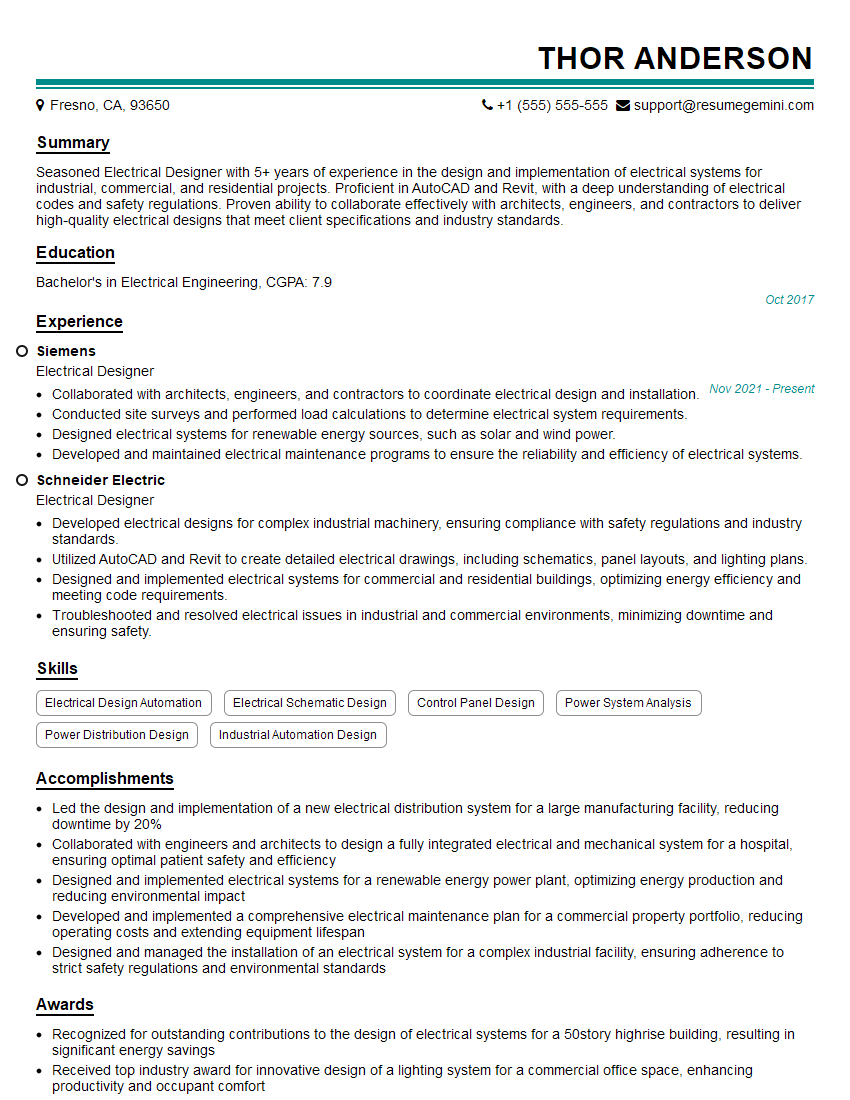
Electrical Designer Resume Sample

Electrical Engineer Resume Sample

Instrumentation Engineer Resume Sample

Power Systems Engineer Resume Sample

Circuit Design Engineer Resume Sample

Control Systems Engineer Resume Sample

Robotics Engineer Resume Sample

Electrical Drafter Resume Sample

Electrical Technician Resume Sample

Maintenance Electrician Resume Sample
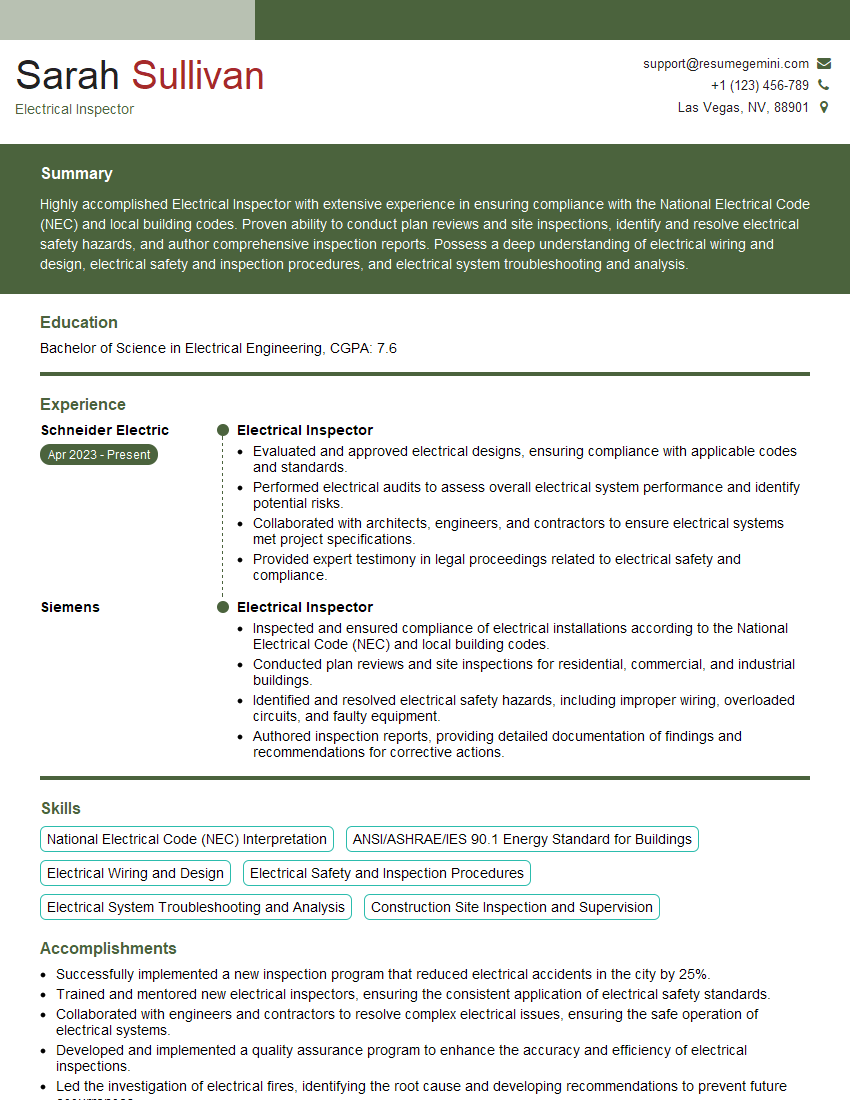
Electrical Inspector Resume Sample
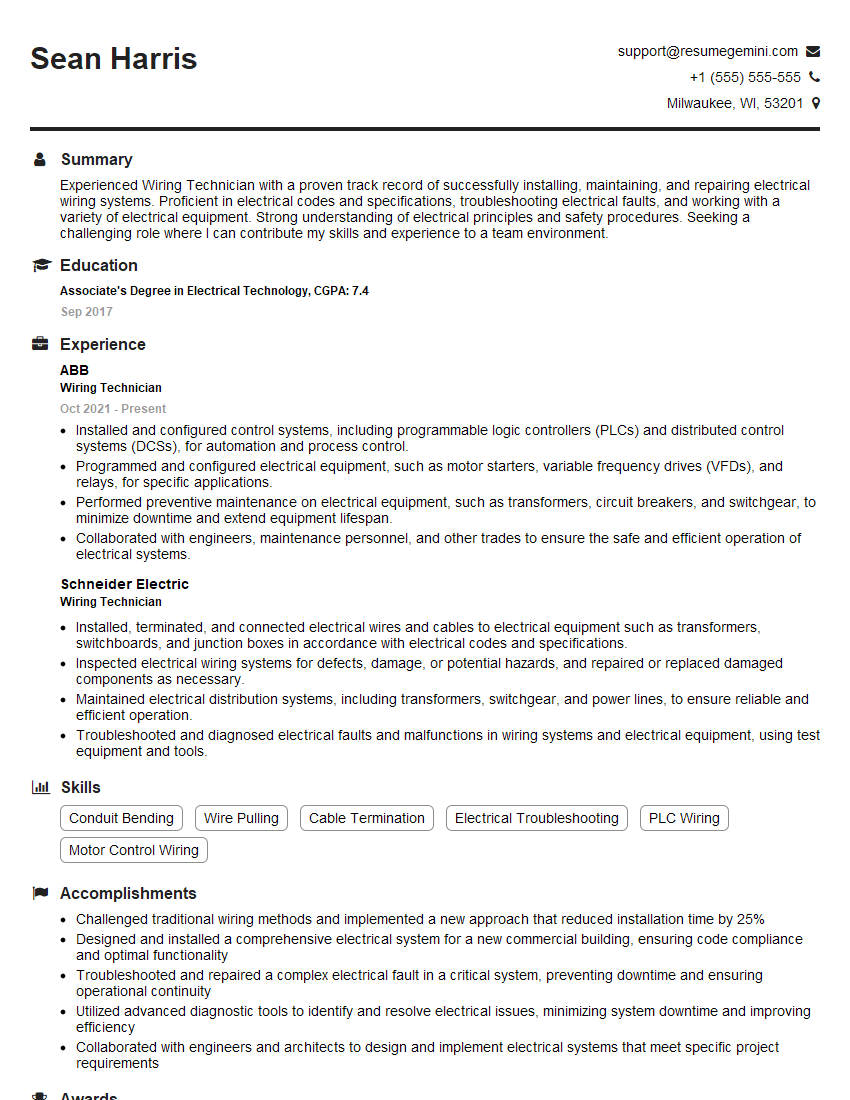
Wiring Technician Resume Sample
- Automation Engineer
- Telecommunications Engineer
- Field Service Engineer
- Electronics Engineer
- Hardware Engineer
- Electrical Designer
- Electrical Engineer
- Instrumentation Engineer
- Power Systems Engineer
- Circuit Design Engineer
- Control Systems Engineer
- Robotics Engineer
- Electrical Drafter
- Electrical Technician
- Maintenance Electrician
- Electrical Inspector
- Wiring Technician
Explore more articles
Users Rating of Our Blogs
Share Your Experience
We value your feedback! Please rate our content and share your thoughts (optional).
What Readers Say About Our Blog
Attention music lovers!
Wow, All the best Sax Summer music !!!
Spotify: https://open.spotify.com/artist/6ShcdIT7rPVVaFEpgZQbUk
Apple Music: https://music.apple.com/fr/artist/jimmy-sax-black/1530501936
YouTube: https://music.youtube.com/browse/VLOLAK5uy_noClmC7abM6YpZsnySxRqt3LoalPf88No
Other Platforms and Free Downloads : https://fanlink.tv/jimmysaxblack
on google : https://www.google.com/search?q=22+AND+22+AND+22
on ChatGPT : https://chat.openai.com?q=who20jlJimmy20Black20Sax20Producer
Get back into the groove with Jimmy sax Black
Best regards,
Jimmy sax Black
www.jimmysaxblack.com
Hi I am a troller at The aquatic interview center and I suddenly went so fast in Roblox and it was gone when I reset.
Hi,
Business owners spend hours every week worrying about their website—or avoiding it because it feels overwhelming.
We’d like to take that off your plate:
$69/month. Everything handled.
Our team will:
Design a custom website—or completely overhaul your current one
Take care of hosting as an option
Handle edits and improvements—up to 60 minutes of work included every month
No setup fees, no annual commitments. Just a site that makes a strong first impression.
Find out if it’s right for you:
https://websolutionsgenius.com/awardwinningwebsites
Hello,
we currently offer a complimentary backlink and URL indexing test for search engine optimization professionals.
You can get complimentary indexing credits to test how link discovery works in practice.
No credit card is required and there is no recurring fee.
You can find details here:
https://wikipedia-backlinks.com/indexing/
Regards
NICE RESPONSE TO Q & A
hi
The aim of this message is regarding an unclaimed deposit of a deceased nationale that bears the same name as you. You are not relate to him as there are millions of people answering the names across around the world. But i will use my position to influence the release of the deposit to you for our mutual benefit.
Respond for full details and how to claim the deposit. This is 100% risk free. Send hello to my email id: lukachachibaialuka@gmail.com
Luka Chachibaialuka
Hey interviewgemini.com, just wanted to follow up on my last email.
We just launched Call the Monster, an parenting app that lets you summon friendly ‘monsters’ kids actually listen to.
We’re also running a giveaway for everyone who downloads the app. Since it’s brand new, there aren’t many users yet, which means you’ve got a much better chance of winning some great prizes.
You can check it out here: https://bit.ly/callamonsterapp
Or follow us on Instagram: https://www.instagram.com/callamonsterapp
Thanks,
Ryan
CEO – Call the Monster App
Hey interviewgemini.com, I saw your website and love your approach.
I just want this to look like spam email, but want to share something important to you. We just launched Call the Monster, a parenting app that lets you summon friendly ‘monsters’ kids actually listen to.
Parents are loving it for calming chaos before bedtime. Thought you might want to try it: https://bit.ly/callamonsterapp or just follow our fun monster lore on Instagram: https://www.instagram.com/callamonsterapp
Thanks,
Ryan
CEO – Call A Monster APP
To the interviewgemini.com Owner.
Dear interviewgemini.com Webmaster!
Hi interviewgemini.com Webmaster!
Dear interviewgemini.com Webmaster!
excellent
Hello,
We found issues with your domain’s email setup that may be sending your messages to spam or blocking them completely. InboxShield Mini shows you how to fix it in minutes — no tech skills required.
Scan your domain now for details: https://inboxshield-mini.com/
— Adam @ InboxShield Mini
support@inboxshield-mini.com
Reply STOP to unsubscribe
Hi, are you owner of interviewgemini.com? What if I told you I could help you find extra time in your schedule, reconnect with leads you didn’t even realize you missed, and bring in more “I want to work with you” conversations, without increasing your ad spend or hiring a full-time employee?
All with a flexible, budget-friendly service that could easily pay for itself. Sounds good?
Would it be nice to jump on a quick 10-minute call so I can show you exactly how we make this work?
Best,
Hapei
Marketing Director
Hey, I know you’re the owner of interviewgemini.com. I’ll be quick.
Fundraising for your business is tough and time-consuming. We make it easier by guaranteeing two private investor meetings each month, for six months. No demos, no pitch events – just direct introductions to active investors matched to your startup.
If youR17;re raising, this could help you build real momentum. Want me to send more info?
Hi, I represent an SEO company that specialises in getting you AI citations and higher rankings on Google. I’d like to offer you a 100% free SEO audit for your website. Would you be interested?
Hi, I represent an SEO company that specialises in getting you AI citations and higher rankings on Google. I’d like to offer you a 100% free SEO audit for your website. Would you be interested?