The thought of an interview can be nerve-wracking, but the right preparation can make all the difference. Explore this comprehensive guide to Wire design interview questions and gain the confidence you need to showcase your abilities and secure the role.
Questions Asked in Wire design Interview
Q 1. Explain the difference between low-fidelity and high-fidelity wireframes.
Low-fidelity and high-fidelity wireframes represent different stages in the design process, distinguished primarily by their level of detail and visual polish. Think of it like sketching versus a finished architectural blueprint.
Low-fidelity wireframes are rough, hand-drawn or quickly created digital sketches. They focus on the basic structure and functionality of a webpage or app, using simple shapes, placeholder text, and minimal visual styling. They’re quick to produce and excellent for brainstorming and initial concept testing. A simple rectangle representing a button with the word ‘Submit’ inside would be a good example. This allows for rapid iteration and exploration of different layouts without getting bogged down in the details.
High-fidelity wireframes, on the other hand, are much more detailed and polished. They closely mimic the look and feel of the final product, including realistic typography, imagery (though often placeholders), and interactive elements. They provide a clearer vision for developers and stakeholders, reducing ambiguity during the development phase. You’d see precise button sizes, detailed navigation menus, and placeholders for images that closely reflect the final design. They require more time and effort but are crucial for ensuring everyone is on the same page before moving into visual design.
Q 2. What are the key principles of effective wireframing?
Effective wireframing hinges on several key principles, all aimed at creating clear, usable, and efficient interfaces:
- Clarity and Simplicity: Avoid clutter and unnecessary complexity. Prioritize essential information and features.
- User-Centered Design: Focus on user needs and workflows. Design should be intuitive and easy to navigate.
- Consistency: Maintain consistency in design elements, such as button styles, typography, and layout grids throughout the wireframes.
- Functionality over Aesthetics: The primary goal is to define functionality, not visual design. Don’t get bogged down in visual details at this stage.
- Iterative Design: Wireframing is an iterative process. Expect to revise and refine your designs based on feedback and testing.
- Accessibility: Consider accessibility guidelines early on to ensure your design is inclusive for all users.
For example, a consistent button style ensures users easily recognize and interact with call-to-actions, boosting user experience.
Q 3. Describe your process for creating wireframes, from initial concept to final product.
My wireframing process is iterative and user-centered. It typically follows these steps:
- Understanding the Project: I begin by thoroughly understanding the project goals, target audience, and user needs through user research, competitor analysis, and stakeholder meetings.
- Information Architecture: I create a sitemap or user flow diagram to outline the structure and navigation of the website or application. This ensures a logical flow for users.
- Low-Fidelity Wireframing: I create quick, low-fidelity wireframes to explore various layout options and functionalities. This is where I test basic usability and structure.
- User Testing and Feedback: I conduct usability testing with users to gather feedback on the low-fidelity wireframes. This iterative testing helps identify usability issues early on.
- High-Fidelity Wireframing: Based on user feedback, I refine the designs and create high-fidelity wireframes, adding more details and visual consistency.
- Finalization and Handoff: I finalize the wireframes and hand them off to developers and other stakeholders. These become the blueprint for the development phase.
Throughout this process, I maintain clear communication with stakeholders, ensuring everyone is informed and aligned.
Q 4. How do you incorporate user feedback into your wireframe design process?
User feedback is crucial for successful wireframing. I integrate it throughout the process using a variety of methods:
- Usability Testing: I conduct usability testing sessions with representative users, observing their interactions with the wireframes and gathering feedback.
- Surveys and Questionnaires: I use surveys and questionnaires to gather broader feedback on design choices and preferences.
- A/B Testing (for specific features): In some instances, especially when deciding between different layout options, I utilize A/B testing to quantitatively compare user preferences.
- Stakeholder Feedback Sessions: I hold regular feedback sessions with stakeholders to ensure alignment and address concerns.
I always analyze feedback systematically, prioritizing issues impacting usability and user satisfaction. For instance, if users struggle to find a key feature, I’ll redesign that section of the wireframe to enhance discoverability.
Q 5. What tools and software are you proficient in for wireframing?
I’m proficient in a range of wireframing tools, each with its own strengths. My favorites include:
- Figma: Excellent for collaboration, prototyping, and creating both low- and high-fidelity wireframes.
- Adobe XD: Strong prototyping capabilities and a user-friendly interface.
- Sketch (macOS): A popular choice for UI/UX designers, known for its vector-based editing and plugin ecosystem.
- Balsamiq: Ideal for creating quick, low-fidelity wireframes with a hand-drawn aesthetic.
My choice of tool often depends on the project’s complexity and collaboration needs. For instance, I’d prefer Figma for large-scale projects needing real-time collaboration, while Balsamiq might be ideal for quick brainstorming sessions.
Q 6. How do you ensure your wireframes are consistent with the overall design system?
Consistency with the overall design system is paramount for creating a cohesive and user-friendly experience. I ensure consistency by:
- Using a Style Guide: Adhering to an established style guide that defines typography, color palettes, spacing, and other design elements. This guide acts as a central reference throughout the process.
- Creating a Component Library: In tools like Figma or Adobe XD, I create reusable components (buttons, text fields, etc.) that maintain consistent styles across all screens.
- Using Grid Systems: Applying consistent grid systems to ensure visual harmony and a predictable layout structure.
- Regular Audits: Periodically reviewing the wireframes to ensure adherence to the design system and identify any inconsistencies.
For example, consistently using the same button style and color across different sections of the wireframe reinforces brand identity and improves user experience.
Q 7. How do you handle conflicting design requirements or stakeholder feedback during the wireframing process?
Conflicting requirements or stakeholder feedback are common challenges in wireframing. I address them through:
- Prioritization and Negotiation: I work with stakeholders to prioritize requirements based on user needs and project goals. This may involve trade-offs or compromises.
- Data-Driven Decision Making: When possible, I use data from user testing or analytics to support design decisions and resolve conflicts.
- Facilitation and Mediation: I act as a facilitator, mediating discussions between stakeholders with conflicting viewpoints to reach a mutually acceptable solution.
- Documentation and Version Control: I maintain clear documentation of design decisions and track changes using version control features within the wireframing tool. This ensures transparency and traceability.
For example, if two stakeholders have conflicting ideas about the placement of a key feature, I might present data from user testing showing which placement leads to better usability, helping guide the decision.
Q 8. How do you test and iterate on your wireframes?
Testing and iterating on wireframes is a crucial part of the design process. It’s not a one-and-done activity; it’s an iterative cycle of refinement. My approach involves a multi-faceted strategy focusing on usability testing, stakeholder feedback, and analytics.
Usability Testing: I conduct usability tests with representative users, observing how they interact with the wireframes. This involves tasks like navigating to specific sections, completing simulated actions, and providing feedback on clarity and intuitiveness. I use eye-tracking software in some cases to gain deeper insights into user behavior. For example, I might ask a user to “find the contact information” and watch how they approach the task.
Stakeholder Feedback: I present wireframes to stakeholders (developers, product managers, clients) and gather feedback. This might involve walk-throughs, presentations, or collaborative annotation tools. This step ensures the wireframes align with business goals and technical constraints.
A/B Testing (for digital wireframes): If feasible, I create variations of a wireframe element (e.g., button placement, navigation structure) and test them with users to see which performs better. I use analytics to measure user engagement with each version.
Iteration: Based on the feedback and testing results, I iterate on the wireframes, refining the design until it meets usability and business objectives. This is an ongoing process; I often go through multiple rounds of testing and refinement.
Q 9. How do you prioritize features and functionality when designing wireframes?
Prioritizing features and functionality in wireframing requires a structured approach. I typically employ a combination of methods:
MoSCoW Method: This prioritization technique categorizes features as Must have, Should have, Could have, and Won’t have. It helps to focus on the core functionalities and defer less critical features for later development iterations. This helps to maintain a manageable scope in the initial wireframe designs.
User Story Mapping: This creates a visual representation of user journeys and allows for prioritization based on user needs and business goals. We identify the most crucial user stories and translate them into core wireframe functionality. For example, in an e-commerce app, we might prioritize the checkout process over advanced search filters in the initial wireframes.
Value vs. Effort Matrix: This matrix plots features based on their business value and the effort required to implement them. High-value, low-effort features are prioritized first.
Data-Driven Decisions: Where possible, I leverage data (e.g., analytics, user research) to inform prioritization. If data suggests a particular feature is underutilized, we might prioritize it lower.
Ultimately, the prioritization process is collaborative and involves discussions with stakeholders to ensure alignment.
Q 10. Describe your experience with different wireframing techniques (e.g., sketching, digital tools).
My experience encompasses both low-fidelity and high-fidelity wireframing techniques.
Sketching: I frequently use sketching for early-stage brainstorming and exploration. The quick and iterative nature of sketching allows for rapid exploration of different design ideas. It’s also excellent for collaborative sessions, where multiple team members can contribute on paper. I find that low-fidelity sketching allows for more free-form thinking and flexibility, helping to overcome initial design blocks.
Digital Tools: For more detailed wireframes, I utilize tools like Figma, Adobe XD, and Balsamiq. Figma, for example, allows for collaborative design, version control, and prototyping. Balsamiq offers a more hand-drawn feel, suitable for presenting wireframes to clients who might appreciate a less polished, more conceptual representation. These tools help to ensure consistency, precision, and ease of sharing among stakeholders.
The choice of technique depends on the project phase and the level of detail needed. Sketching is ideal for initial concepts, while digital tools are essential for creating refined wireframes and prototypes.
Q 11. How do you ensure accessibility in your wireframe designs?
Accessibility is paramount in my wireframe designs. I ensure that my designs are usable by individuals with disabilities by following established accessibility guidelines like WCAG (Web Content Accessibility Guidelines).
Sufficient Color Contrast: I check for adequate color contrast between text and background to ensure readability for users with visual impairments.
Keyboard Navigation: I ensure that all interactive elements (buttons, links) are accessible using the keyboard alone, removing any reliance on a mouse.
Alternative Text for Images: Images should have meaningful alternative text to convey their purpose to users who cannot see them.
Clear and Concise Language: I avoid jargon and use plain language that is easily understood.
Sufficient Spacing and Sizing: I ensure enough space between elements and appropriate font sizes for ease of use.
ARIA attributes (for digital wireframes): Where applicable, I use appropriate ARIA attributes in my digital wireframes to add semantics and enhance accessibility.
Considering accessibility from the beginning of the design process saves time and effort in the long run, ensuring a more inclusive and usable product for all users.
Q 12. How do you balance user experience with technical feasibility during wireframing?
Balancing user experience (UX) with technical feasibility is a delicate act in wireframing. It requires constant communication and collaboration with developers.
Early Collaboration: I involve developers from the initial stages of wireframing. This allows for early identification and mitigation of potential technical challenges. For example, a complex animation might be deemed technically infeasible in the early stages, allowing for a design adjustment before significant effort is invested.
Realistic Expectations: I help manage expectations by explaining technical constraints and trade-offs to stakeholders. This might involve simplifying a design to meet feasibility requirements without compromising the core user experience.
Iterative Refinement: The balance between UX and technical feasibility is often achieved iteratively. Early wireframes might prioritize UX, while subsequent iterations incorporate technical feedback.
Prioritization: Prioritizing features based on technical feasibility is crucial. Features that are difficult or expensive to implement might be deferred to future releases.
The key is open communication and a willingness to compromise to find a solution that satisfies both user needs and technical limitations.
Q 13. Explain your understanding of information architecture and its role in wireframing.
Information architecture (IA) is the structural design of information within a system. It’s the backbone of a user-friendly interface and plays a vital role in wireframing. A well-defined IA ensures that users can easily find the information they need and navigate the system efficiently.
Defining Content: Before wireframing, I carefully define the content that needs to be included in the design. This includes identifying the various types of content, how it’s related, and how it should be organized.
Creating a Sitemap: A sitemap provides a hierarchical structure of the information, showing how different pages and sections relate to one another. This is a crucial step in establishing the information architecture.
Card Sorting (for IA validation): I often use card sorting exercises with users to validate the proposed IA. Users are given cards representing different content items and asked to group them into categories, revealing how users intuitively structure information.
Navigation Design: The IA directly influences the navigation structure of the wireframes. A clear and intuitive navigation system reflects a well-defined IA and improves usability.
By carefully planning the IA, I can create wireframes that are not only aesthetically pleasing but also logically organized and easy for users to navigate.
Q 14. How do you communicate your wireframe designs effectively to stakeholders?
Communicating wireframe designs effectively requires a clear and concise approach tailored to the audience.
Presentations: For stakeholders, I present wireframes using interactive presentations, highlighting key design decisions and explaining the rationale behind them. This facilitates discussions and gathers valuable feedback.
Annotations: I annotate my wireframes with clear and concise descriptions of the purpose of each element, explaining interactions and workflows.
Prototyping: Creating interactive prototypes based on the wireframes allows stakeholders to experience the design firsthand, providing a more concrete understanding of the user experience. This helps in revealing potential usability issues early on.
Collaboration Tools: I use collaboration tools like Figma or InVision to allow stakeholders to provide feedback directly on the wireframes.
User Testing Videos: Recording user testing sessions provides a visual demonstration of how users interact with the wireframes, revealing potential usability issues that might otherwise be missed.
Effective communication ensures that everyone is aligned on the design vision and helps avoid misunderstandings and costly rework later in the development process.
Q 15. Describe a time you had to revise your wireframes significantly due to user feedback or testing results.
One project involved designing a mobile e-commerce app. Initial wireframes focused heavily on showcasing product details, resulting in a cluttered and overwhelming user experience. Usability testing revealed significant navigation problems and users struggling to locate the checkout button. This feedback prompted a complete overhaul. We simplified the information architecture, prioritizing a clean visual hierarchy and clear calls to action. We moved from a multi-layered product detail page to a more concise, visually driven presentation, significantly improving task completion rates and user satisfaction. The revision involved removing unnecessary elements, reorganizing content using a card-based layout, and prominently featuring the checkout button throughout the user journey. The result was a more intuitive and user-friendly experience, demonstrating the importance of iterative design based on user feedback.
Career Expert Tips:
- Ace those interviews! Prepare effectively by reviewing the Top 50 Most Common Interview Questions on ResumeGemini.
- Navigate your job search with confidence! Explore a wide range of Career Tips on ResumeGemini. Learn about common challenges and recommendations to overcome them.
- Craft the perfect resume! Master the Art of Resume Writing with ResumeGemini’s guide. Showcase your unique qualifications and achievements effectively.
- Don’t miss out on holiday savings! Build your dream resume with ResumeGemini’s ATS optimized templates.
Q 16. How do you handle complex user flows when creating wireframes?
Handling complex user flows in wireframing requires a systematic approach. I typically start by creating a user journey map to visualize the entire flow from start to finish. This helps identify key interactions and decision points. Next, I break down the flow into smaller, manageable segments represented by individual screens or modules. I use different symbols and annotations within the wireframes to denote user actions and system responses, such as conditional branching and feedback mechanisms. For example, a complex checkout process might be broken down into: 1. Cart Review, 2. Shipping Address, 3. Payment Information, and 4. Order Confirmation. Each of these stages would have a corresponding wireframe. Using flowcharts or annotated diagrams alongside the wireframes can further clarify complex interactions. This layered approach ensures clarity and prevents overwhelming the user with information during the design process.
Q 17. What are some common pitfalls to avoid when creating wireframes?
Common pitfalls in wireframing include neglecting user research, creating wireframes that are too detailed too early, overlooking accessibility considerations, and a lack of consistency. Jumping into high-fidelity wireframes before validating core concepts with users is a significant mistake. Focusing solely on aesthetics without considering usability is another common error. For instance, neglecting sufficient white space or using inconsistent UI elements can lead to a confusing and frustrating user experience. Finally, ignoring accessibility standards from the outset can result in excluding a large segment of users. Regular reviews, usability testing, and adhering to established design guidelines help mitigate these risks.
Q 18. How do you maintain consistency across multiple screens or pages in a wireframe?
Maintaining consistency across multiple screens is crucial for a cohesive user experience. I establish a style guide early on, outlining key elements such as button styles, typography, spacing, and grid systems. This guide serves as a reference point throughout the wireframing process. Using a consistent grid system helps create visual harmony and balance across all pages. I also employ reusable components or modules wherever possible, such as navigation menus, headers, and footers. This ensures a unified look and feel and speeds up the design process. Regularly reviewing the wireframes against the style guide ensures adherence to the established standards and helps maintain consistency.
Q 19. Explain your approach to creating wireframes for responsive design.
My approach to responsive wireframing involves creating a series of wireframes that cater to different screen sizes and device types. Rather than designing individual wireframes for each device, I begin with a flexible approach using a modular design system. This allows components to adapt seamlessly to varying screen sizes. I use breakpoints to define how the layout changes at certain screen widths. For example, a three-column layout on a desktop might become a single-column layout on a mobile device. I use annotations to indicate how elements will respond to different screen sizes and orientations. This ensures that the core functionality and user experience remain consistent across devices, providing a unified and optimized experience for all users.
Q 20. How do you measure the effectiveness of your wireframes?
Measuring the effectiveness of wireframes involves qualitative and quantitative methods. Qualitative feedback is gathered through usability testing sessions where users interact with the wireframes and provide feedback on their experience. This can highlight pain points and areas for improvement. Quantitative metrics, such as task completion rates and user error rates, can provide objective data on the usability of the design. A/B testing with different wireframe versions can help compare the effectiveness of various design choices. By analyzing both qualitative and quantitative data, a comprehensive understanding of the wireframe’s effectiveness can be achieved, informing further design iterations and improvements.
Q 21. What are some common wireframing conventions and best practices you follow?
I adhere to several common wireframing conventions and best practices. These include using consistent grayscale to focus on structure and functionality rather than aesthetics; employing standard UI elements to represent common interactive components (buttons, text fields, etc.); maintaining a consistent visual hierarchy through appropriate use of size, weight, and spacing; labeling all interactive elements clearly; and annotating wireframes with notes and explanations to clarify functionality and design choices. Following these conventions ensures clarity, consistency, and effective communication with developers and stakeholders.
Q 22. Describe your experience with A/B testing wireframes.
A/B testing wireframes is crucial for validating design choices before investing time and resources in higher-fidelity prototypes or development. It involves creating two or more variations of a wireframe, each incorporating a different design solution to a specific problem or feature. These variations are then tested with users to determine which performs better based on metrics like task completion rate, user satisfaction, and time on task.
For example, I might A/B test two wireframes for an e-commerce checkout page: one with a single-step checkout and another with a multi-step process. By observing user behavior with each version, I can identify which design is more intuitive and efficient.
My process involves creating clear hypotheses for the test, defining success metrics, recruiting a representative sample of users, conducting usability testing sessions, analyzing the results, and iterating on the design based on the findings. Tools like Optimal Workshop or even simple survey platforms can facilitate the data collection and analysis process.
Q 23. How do you incorporate user research findings into your wireframe design?
User research is the cornerstone of effective wireframing. Findings from user interviews, surveys, usability testing, and competitor analysis directly inform design decisions. I actively translate qualitative and quantitative data into actionable design choices. For instance, if user research reveals that users struggle to find a specific feature, I would prioritize its prominence and accessibility in the wireframe through clear visual hierarchy and intuitive placement.
Specifically, I create user personas to represent key user groups, map out user journeys to understand their interactions with the product, and use card sorting or tree testing to define information architecture. These methods directly shape the structure, navigation, and content placement of my wireframes, ensuring they meet the needs and expectations of the target audience.
Q 24. How do you handle changes in requirements or scope during the wireframing process?
Change is inevitable in any project. My approach is to embrace flexibility and utilize iterative design. I employ an agile methodology, incorporating frequent check-ins and stakeholder reviews. Changes are documented, prioritized, and incorporated into the wireframes in a controlled manner. I use version control software (e.g., Figma’s version history) to track changes and revert to earlier versions if necessary.
For major scope changes, I create a revised project plan, update the wireframes accordingly, and communicate the changes transparently to all stakeholders. I also ensure that any changes align with the overall project goals and user needs. Prioritizing critical changes and addressing them incrementally allows for a manageable and effective workflow.
Q 25. What is your process for creating and maintaining a design system for wireframes?
A well-defined design system is essential for maintaining consistency and efficiency. For wireframes, this system includes a component library, style guide, and naming conventions. The component library contains reusable elements like buttons, forms, and navigation menus, ensuring visual consistency across all screens. The style guide specifies spacing, typography, and other visual elements to maintain a consistent look and feel. Finally, clear naming conventions ensure that all elements are easily identifiable and organized.
I use design tools like Figma or Sketch to create and manage this system, leveraging their features for component management and style guides. This ensures easy updates and reuse, significantly reducing design time and improving consistency. Regular reviews and updates of the design system are critical to keep it relevant and aligned with evolving project needs.
Q 26. How do you ensure your wireframes are scalable and maintainable?
Scalability and maintainability are achieved through modularity and consistent design. I avoid creating wireframes as static images; instead, I design them as reusable components within a design system (as described in the previous answer). This allows for easy adaptation and expansion as the product evolves. For instance, if a new feature needs to be added, I can simply reuse existing components or create new ones within the defined system, ensuring consistent design across all screens.
Furthermore, I use clearly labeled and organized files, making it easy for other designers or developers to understand and maintain the wireframes. Regularly reviewing and updating the wireframes based on user feedback and project changes is crucial for long-term maintainability.
Q 27. Describe a time you had to make a difficult design decision related to wireframing. How did you approach it?
On a recent project, I faced a challenge balancing simplicity with functionality on a dashboard displaying complex data. The initial design was cluttered, overwhelming users with information. The difficult decision was whether to simplify the dashboard by removing features or to reorganize it for improved clarity and usability.
My approach involved prioritizing user needs through further usability testing. We conducted A/B testing with two versions: one simplified, and one reorganized. The results clearly indicated that the reorganized version, while retaining more features, was significantly easier to use and understand. This data-driven approach allowed me to justify the more complex but ultimately more effective design decision to stakeholders.
Q 28. How do you stay current with the latest trends and best practices in wireframing?
Staying current requires a multi-faceted approach. I actively participate in online communities like UX Collective and follow leading UX designers and researchers on platforms like Twitter and LinkedIn. I also attend webinars and conferences focused on UX design, wireframing, and usability testing. Reading industry publications and books keeps me informed about the latest research and best practices.
Critically, I constantly reflect on my own work, seeking feedback and experimenting with new tools and techniques to improve my skills and stay ahead of the curve. Continuous learning and adaptation are crucial for staying relevant and effective in the ever-evolving field of UX design.
Key Topics to Learn for Wire Design Interview
- Information Architecture (IA): Understanding how to structure content logically for optimal user experience. Practical application: Designing a navigation system for a complex e-commerce website.
- User Flows & User Journeys: Mapping out the steps a user takes to complete a task. Practical application: Creating user flows for a mobile banking app’s payment process.
- Wireframing Techniques: Mastering low-fidelity and high-fidelity wireframing methods. Practical application: Choosing the appropriate wireframing level based on project needs and stakeholder expectations.
- Prototyping Basics: Creating interactive prototypes to test user flows and gather feedback. Practical application: Using prototyping tools to simulate user interactions with a new software feature.
- Usability Principles: Applying principles like clarity, consistency, and efficiency to wireframe design. Practical application: Iterating on wireframes based on usability testing results.
- Accessibility Considerations: Designing wireframes that are accessible to users with disabilities. Practical application: Ensuring sufficient color contrast and keyboard navigation in your designs.
- Collaboration & Communication: Effectively presenting and discussing wireframes with stakeholders. Practical application: Preparing a presentation to explain your design choices and rationale.
Next Steps
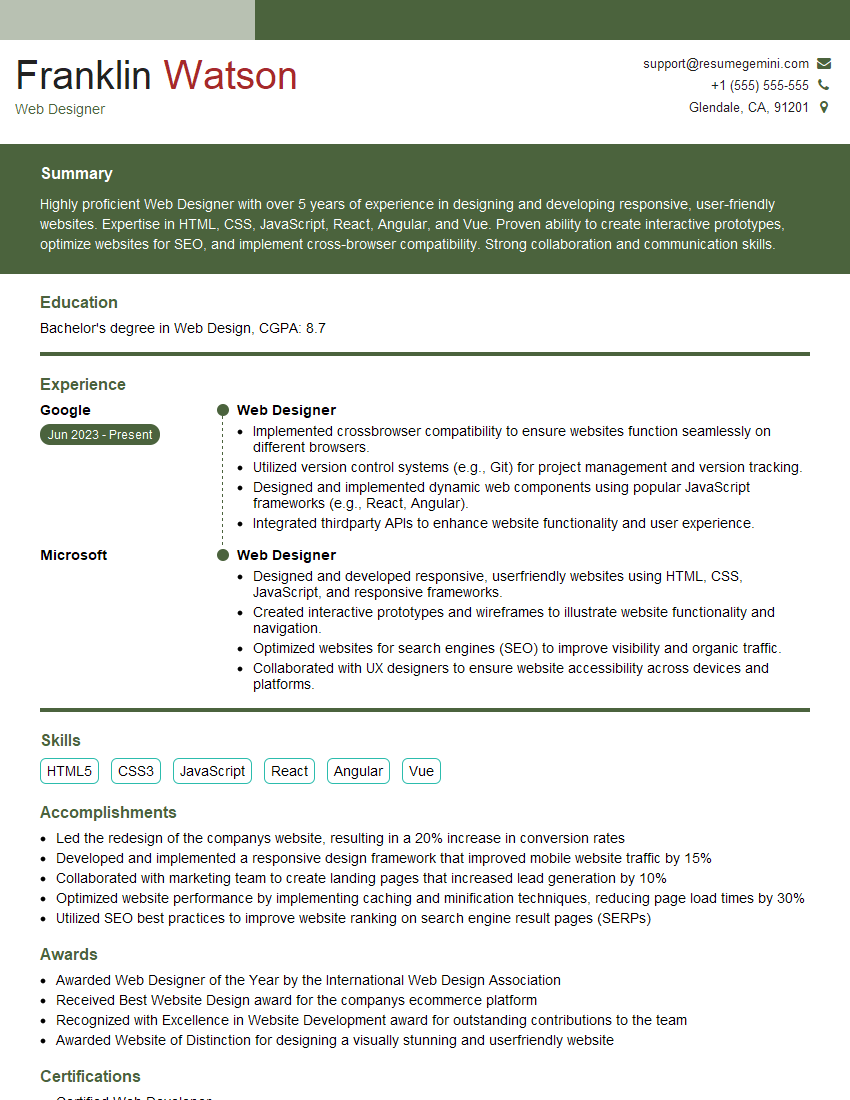
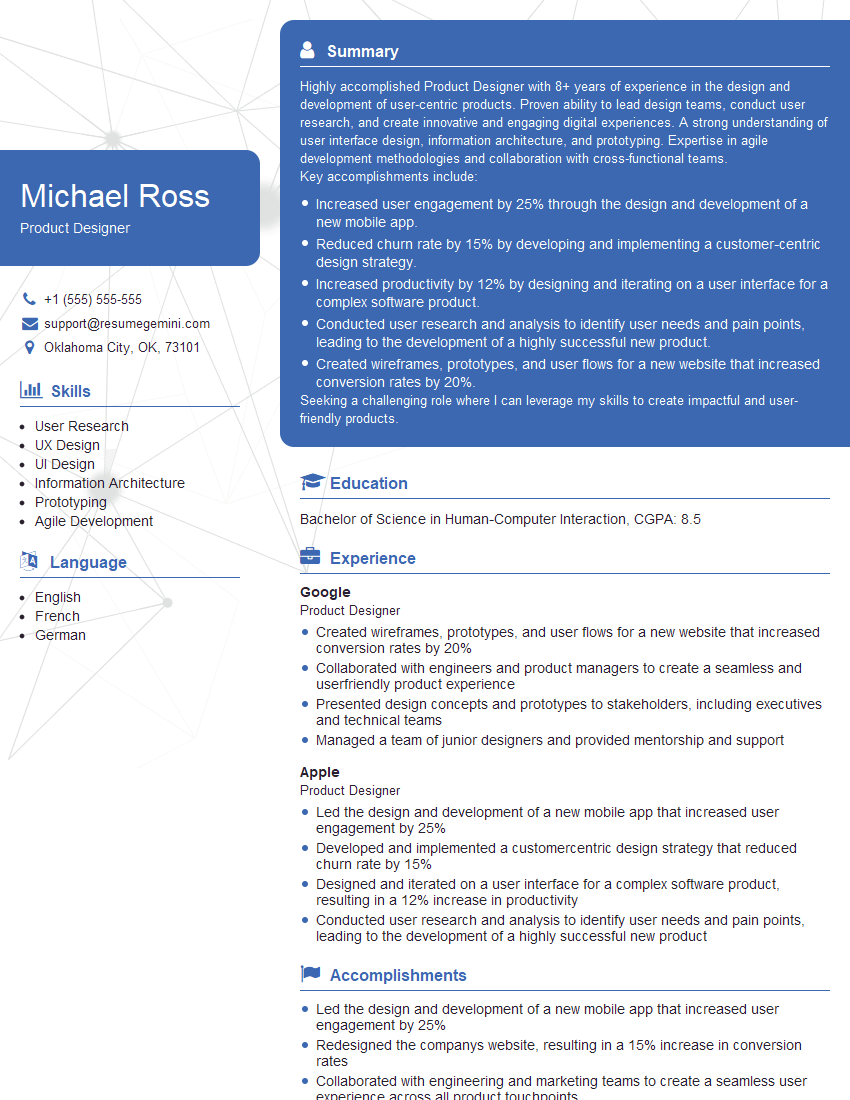
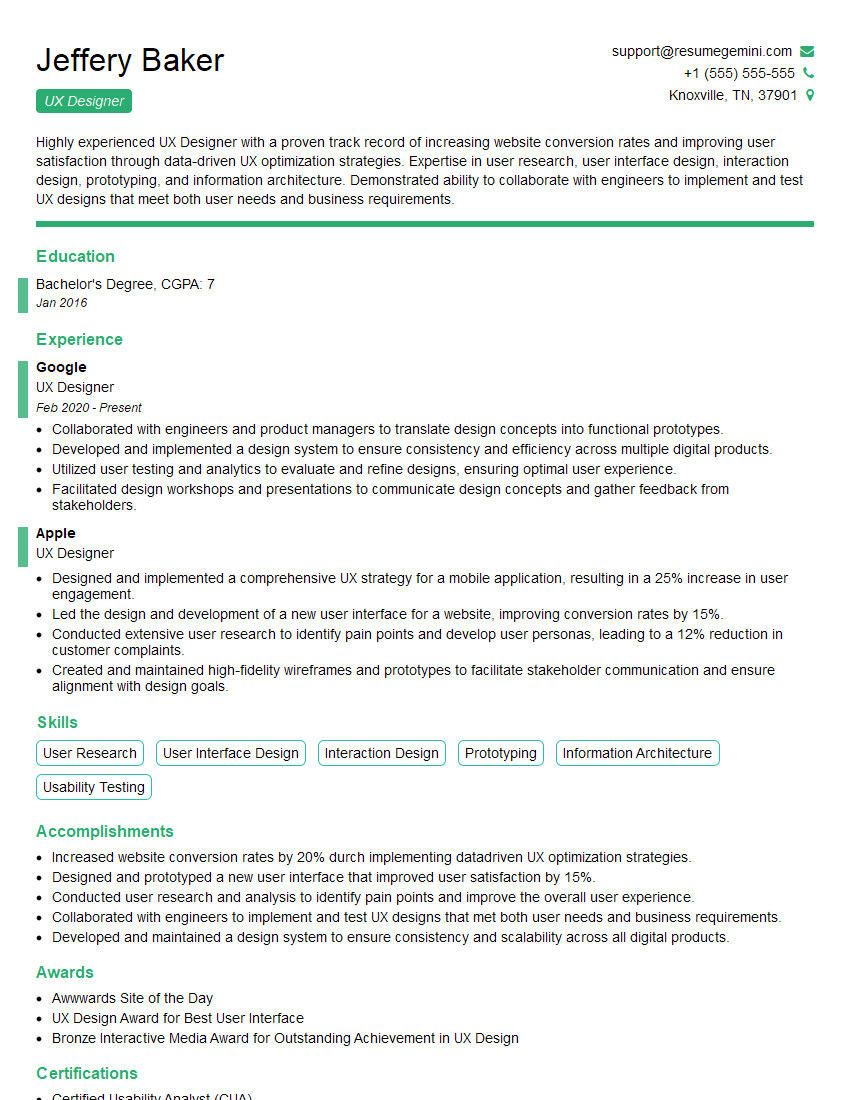
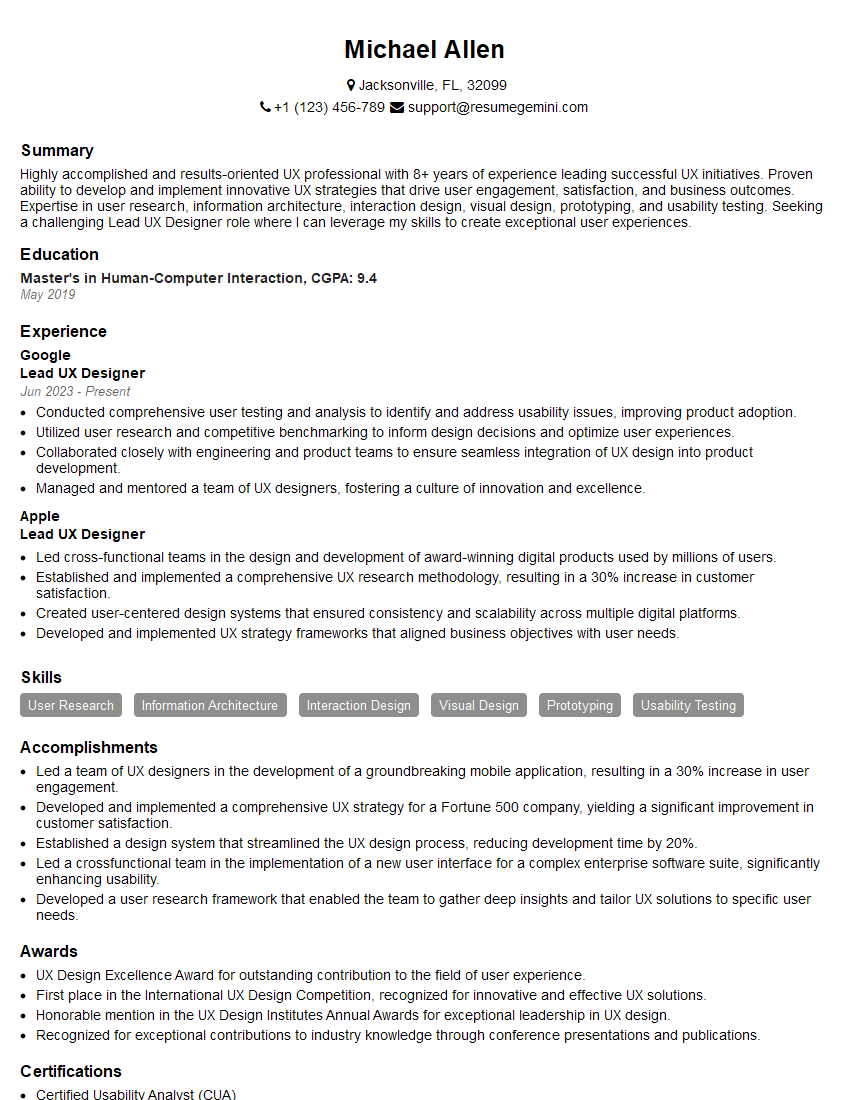
Mastering wire design is crucial for a successful career in UX/UI, opening doors to exciting opportunities in product development and digital design. To maximize your job prospects, create a resume that’s both visually appealing and easily parsed by Applicant Tracking Systems (ATS). ResumeGemini is a trusted resource to help you build a professional, ATS-friendly resume that showcases your skills effectively. We provide examples of resumes tailored to Wire Design roles to help you get started.


Explore more articles
Users Rating of Our Blogs
Share Your Experience
We value your feedback! Please rate our content and share your thoughts (optional).
What Readers Say About Our Blog
Attention music lovers!
Wow, All the best Sax Summer music !!!
Spotify: https://open.spotify.com/artist/6ShcdIT7rPVVaFEpgZQbUk
Apple Music: https://music.apple.com/fr/artist/jimmy-sax-black/1530501936
YouTube: https://music.youtube.com/browse/VLOLAK5uy_noClmC7abM6YpZsnySxRqt3LoalPf88No
Other Platforms and Free Downloads : https://fanlink.tv/jimmysaxblack
on google : https://www.google.com/search?q=22+AND+22+AND+22
on ChatGPT : https://chat.openai.com?q=who20jlJimmy20Black20Sax20Producer
Get back into the groove with Jimmy sax Black
Best regards,
Jimmy sax Black
www.jimmysaxblack.com
Hi I am a troller at The aquatic interview center and I suddenly went so fast in Roblox and it was gone when I reset.
Hi,
Business owners spend hours every week worrying about their website—or avoiding it because it feels overwhelming.
We’d like to take that off your plate:
$69/month. Everything handled.
Our team will:
Design a custom website—or completely overhaul your current one
Take care of hosting as an option
Handle edits and improvements—up to 60 minutes of work included every month
No setup fees, no annual commitments. Just a site that makes a strong first impression.
Find out if it’s right for you:
https://websolutionsgenius.com/awardwinningwebsites
Hello,
we currently offer a complimentary backlink and URL indexing test for search engine optimization professionals.
You can get complimentary indexing credits to test how link discovery works in practice.
No credit card is required and there is no recurring fee.
You can find details here:
https://wikipedia-backlinks.com/indexing/
Regards
NICE RESPONSE TO Q & A
hi
The aim of this message is regarding an unclaimed deposit of a deceased nationale that bears the same name as you. You are not relate to him as there are millions of people answering the names across around the world. But i will use my position to influence the release of the deposit to you for our mutual benefit.
Respond for full details and how to claim the deposit. This is 100% risk free. Send hello to my email id: lukachachibaialuka@gmail.com
Luka Chachibaialuka
Hey interviewgemini.com, just wanted to follow up on my last email.
We just launched Call the Monster, an parenting app that lets you summon friendly ‘monsters’ kids actually listen to.
We’re also running a giveaway for everyone who downloads the app. Since it’s brand new, there aren’t many users yet, which means you’ve got a much better chance of winning some great prizes.
You can check it out here: https://bit.ly/callamonsterapp
Or follow us on Instagram: https://www.instagram.com/callamonsterapp
Thanks,
Ryan
CEO – Call the Monster App
Hey interviewgemini.com, I saw your website and love your approach.
I just want this to look like spam email, but want to share something important to you. We just launched Call the Monster, a parenting app that lets you summon friendly ‘monsters’ kids actually listen to.
Parents are loving it for calming chaos before bedtime. Thought you might want to try it: https://bit.ly/callamonsterapp or just follow our fun monster lore on Instagram: https://www.instagram.com/callamonsterapp
Thanks,
Ryan
CEO – Call A Monster APP
To the interviewgemini.com Owner.
Dear interviewgemini.com Webmaster!
Hi interviewgemini.com Webmaster!
Dear interviewgemini.com Webmaster!
excellent
Hello,
We found issues with your domain’s email setup that may be sending your messages to spam or blocking them completely. InboxShield Mini shows you how to fix it in minutes — no tech skills required.
Scan your domain now for details: https://inboxshield-mini.com/
— Adam @ InboxShield Mini
support@inboxshield-mini.com
Reply STOP to unsubscribe
Hi, are you owner of interviewgemini.com? What if I told you I could help you find extra time in your schedule, reconnect with leads you didn’t even realize you missed, and bring in more “I want to work with you” conversations, without increasing your ad spend or hiring a full-time employee?
All with a flexible, budget-friendly service that could easily pay for itself. Sounds good?
Would it be nice to jump on a quick 10-minute call so I can show you exactly how we make this work?
Best,
Hapei
Marketing Director
Hey, I know you’re the owner of interviewgemini.com. I’ll be quick.
Fundraising for your business is tough and time-consuming. We make it easier by guaranteeing two private investor meetings each month, for six months. No demos, no pitch events – just direct introductions to active investors matched to your startup.
If youR17;re raising, this could help you build real momentum. Want me to send more info?
Hi, I represent an SEO company that specialises in getting you AI citations and higher rankings on Google. I’d like to offer you a 100% free SEO audit for your website. Would you be interested?
Hi, I represent an SEO company that specialises in getting you AI citations and higher rankings on Google. I’d like to offer you a 100% free SEO audit for your website. Would you be interested?