Interviews are more than just a Q&A session—they’re a chance to prove your worth. This blog dives into essential record keeping certification interview questions and expert tips to help you align your answers with what hiring managers are looking for. Start preparing to shine!
Questions Asked in record keeping certification Interview
Q 1. Explain the importance of a comprehensive records retention policy.
A comprehensive records retention policy is the cornerstone of effective record-keeping. It’s essentially a roadmap outlining how long an organization must keep different types of records, and what to do with them once their retention period expires. Think of it as a legal and operational insurance policy. Without it, organizations risk legal liabilities, operational inefficiencies, and significant financial penalties.
A robust policy considers various factors like legal and regulatory requirements (e.g., tax laws, HIPAA), business needs (e.g., operational continuity, audits), and risk mitigation. For example, a healthcare provider might have a much longer retention period for patient records compared to a retail store’s sales receipts due to different legal and ethical considerations. The policy should clearly define record types, retention schedules (with specific dates or events triggering disposal), and procedures for secure disposal or archiving. Failing to maintain a proper policy leaves an organization vulnerable to data breaches, lawsuits, and regulatory fines.
A well-structured policy is usually broken down into sections covering different record categories, specifying retention periods for each, and detailing destruction procedures. It might include a flowchart illustrating the lifecycle of a record, from creation to disposal, ensuring everyone understands the process. Finally, it needs regular review and updates to accommodate changes in legislation, business needs, or technology.
Q 2. Describe your experience with different record-keeping systems (e.g., physical, electronic, cloud-based).
Throughout my career, I’ve worked extensively with various record-keeping systems. Starting with traditional physical archives—think filing cabinets and paper-based systems—I’ve witnessed the evolution to sophisticated electronic and cloud-based solutions. Each system presents unique challenges and advantages.
Physical systems, while seemingly simple, necessitate robust indexing and storage solutions. Managing space, ensuring security (against fire, theft, and natural disasters), and retrieving specific documents can be time-consuming and resource-intensive. I’ve implemented color-coded filing systems and detailed cross-referencing to mitigate these challenges in past roles.
Electronic systems offer better accessibility and search capabilities, but they introduce concerns around data security, format compatibility, and long-term data preservation. I have experience with enterprise content management (ECM) systems, which allow for version control, metadata tagging, and workflow automation. For example, I implemented an ECM system for a law firm, enhancing the retrieval of client case files and ensuring compliance with legal discovery processes.
Cloud-based systems provide scalability and flexibility. They are often integrated with other applications and offer features like disaster recovery and business continuity planning. However, security and data ownership issues are paramount. I’ve assessed and implemented several cloud-based solutions for different clients, carefully evaluating their security measures and data governance frameworks to ensure compliance with relevant regulations.
Q 3. How do you ensure the accuracy and integrity of records?
Ensuring the accuracy and integrity of records is paramount. It involves a multi-faceted approach focusing on data governance, process controls, and technology.
Firstly, establishing clear processes for record creation and maintenance is essential. This involves using standardized templates, data validation checks, and regular quality reviews. For example, I’ve implemented data entry validation rules to prevent incorrect information from being entered into databases. This includes employing data dictionaries to ensure consistency in terminology and using automated checks for common data entry errors.
Secondly, robust data security measures are critical. This involves access controls, encryption, regular backups, and disaster recovery plans. I’ve implemented access control systems, encryption protocols, and data loss prevention (DLP) tools to safeguard sensitive data. For instance, I ensured all confidential files were encrypted both at rest and in transit.
Thirdly, using technology efficiently helps. Version control systems, audit trails, and digital signatures enhance the reliability of records. I’ve employed digital signature solutions to authenticate documents and ensure their integrity. This approach provides an auditable record of every change and helps to detect and prevent tampering.
Finally, regular audits and inspections are vital for verifying the accuracy and integrity of records over time. These help identify areas for improvement and ensure compliance with relevant regulations.
Q 4. What are the key legal and regulatory considerations for record keeping?
Legal and regulatory considerations are central to record-keeping. Non-compliance can lead to hefty fines, reputational damage, and even legal action. The specific regulations vary greatly depending on the industry and geographic location.
For example, healthcare organizations are subject to HIPAA (Health Insurance Portability and Accountability Act) in the US, which mandates strict procedures for handling protected health information (PHI). Financial institutions are governed by regulations like Dodd-Frank and SOX (Sarbanes-Oxley Act), requiring meticulous record-keeping for auditability and transparency. Industries like manufacturing and environmental sectors face stringent regulations regarding product safety, waste management, and environmental protection, all impacting record-keeping requirements.
Understanding these regulations is crucial. I’ve worked with organizations across multiple sectors and tailored their record-keeping policies to meet all relevant legal and regulatory demands. This includes staying updated on any legislative changes and incorporating them into the organization’s retention policies and procedures. This proactive approach allows them to avoid potential legal pitfalls and maintain compliance.
Moreover, legal holds and litigation preparedness are key considerations. Knowing how to identify, preserve, and retrieve electronically stored information (ESI) during legal proceedings is critical, necessitating specialized training and robust eDiscovery protocols.
Q 5. Explain the concept of metadata and its role in record management.
Metadata is data about data. It provides crucial context and information about a record, enhancing its searchability, discoverability, and overall management. Think of it as the descriptive information accompanying a photograph—the date, time, location, and even keywords describing the scene. Without it, the photograph is just an image; with it, it becomes a meaningful piece of information.
In record management, metadata can include various elements such as the author, creation date, file type, keywords, subject matter, and even security classifications. This information is crucial for effective searching, retrieval, and organization of records. It allows users to quickly locate specific records without manually reviewing numerous files. For example, robust metadata tagging enables a researcher to quickly find all documents relating to a specific project or client.
Efficiently implemented metadata schemas are essential. This ensures consistent tagging and simplifies searching. A well-defined schema facilitates the creation of automated workflows, reducing manual effort and improving efficiency. I’ve developed and implemented metadata schemas for several organizations, significantly improving their information retrieval capabilities and facilitating compliance audits.
Q 6. How do you handle confidential and sensitive information?
Handling confidential and sensitive information requires a multi-layered approach focused on security and compliance. This starts with strong access control measures, limiting access to authorized personnel only. Role-based access control (RBAC) is crucial, ensuring that only individuals with a legitimate need to access specific data can do so.
Encryption is critical, both at rest and in transit. This ensures that even if data is compromised, it remains unreadable without the decryption key. I’ve implemented various encryption technologies, including end-to-end encryption and data masking techniques. For example, masking sensitive data like credit card numbers or social security numbers in reports reduces the risk of unauthorized access.
Data loss prevention (DLP) tools help monitor and prevent sensitive data from leaving the organization’s controlled environment. These tools scan outgoing emails, file transfers, and other communication channels, blocking or alerting users to potential data breaches. I’ve implemented DLP solutions that have successfully prevented several potential data leaks.
Regular security awareness training is vital. Educating employees on proper handling of confidential information is critical. I’ve developed and delivered training programs on data security best practices and emphasized the importance of adherence to security policies.
Finally, a robust incident response plan is necessary. This plan details steps to take in case of a data breach, outlining procedures for containment, remediation, and notification. I’ve assisted organizations in developing and testing their incident response plans, ensuring they’re prepared for any potential security incidents.
Q 7. Describe your experience with records audits and inspections.
Records audits and inspections are crucial for verifying compliance, identifying weaknesses, and improving overall record-keeping practices. They provide an objective assessment of the effectiveness of the system.
My experience includes conducting both internal and external audits, utilizing various methodologies such as sampling techniques, document review, and system testing. I’ve employed auditing software to automate the process and improve efficiency. For example, I’ve used audit software to identify records that haven’t been properly classified or are nearing the end of their retention period.
During audits, I focus on several key areas: the accuracy and completeness of records, compliance with retention policies and legal regulations, and the effectiveness of security measures. I document findings, identify areas for improvement, and recommend corrective actions. For instance, I might recommend improvements to the metadata tagging system or implement stricter access controls to sensitive data.
Following an audit, I prepare detailed reports outlining findings, recommendations, and a plan for implementation. These reports help organizations understand their current record-keeping strengths and weaknesses, enabling them to develop a roadmap for future improvement. I’ve worked with organizations to implement these recommendations, improving their record-keeping practices and reducing risks.
Q 8. How do you manage the transition from physical to digital records?
Transitioning from physical to digital records requires a methodical approach, balancing efficiency with accuracy and compliance. Think of it like moving house – you wouldn’t just throw everything into boxes; you’d sort, categorize, and pack strategically.
Firstly, a comprehensive inventory of physical records is crucial. This involves identifying record types, their importance, and their legal retention periods. Next, a robust digitization strategy is needed, considering factors like scanning resolution, metadata tagging (adding descriptive information like date and author), and quality control checks. We need to ensure the digital copies are accurate, legible representations of the originals. For instance, high-resolution scans are vital for detailed documents like blueprints or medical images.
Simultaneously, we need to establish a secure digital repository, choosing a system that meets the organization’s needs in terms of accessibility, security, and scalability. This often involves implementing a robust Records Management System (RMS) with appropriate access controls. Finally, a clear destruction policy for the original physical records must be followed, adhering to all legal and regulatory requirements. This often includes a formal destruction process with proper witnessing and documentation.
For example, in a transition for a medical practice, we’d prioritize digitizing patient medical records, meticulously tagging them with patient identifiers in a HIPAA-compliant manner. Then, the original physical records would be securely stored and destroyed after a defined retention period.
Q 9. What strategies do you use to ensure efficient records retrieval?
Efficient records retrieval relies heavily on effective metadata and a well-structured indexing system. Imagine searching for a specific book in a library – a well-organized catalog is indispensable. Similarly, the use of descriptive metadata (keywords, date ranges, authors, etc.) allows for quick identification and retrieval. We should utilize a strong search functionality within the chosen RMS, and ideally use a combination of keywords, filters, and date ranges to narrow search results.
Regular review and refinement of the metadata schema is critical. This means continuously analyzing search patterns to identify improvements. For example, if searches for ‘customer complaints’ frequently return irrelevant results, we might need to add more specific metadata fields, such as complaint type or product involved.
Furthermore, regular audits of the filing system are needed to ensure accuracy and consistency. This helps to prevent the buildup of duplicate records or inconsistencies in naming conventions. Training users on proper filing practices and utilizing consistent metadata tagging during creation is vital for long-term efficiency.
Q 10. How do you prioritize records based on their importance and sensitivity?
Prioritizing records based on importance and sensitivity often involves a multi-faceted approach, applying legal and business requirements. A helpful framework is to classify records based on their sensitivity level (confidential, restricted, public) and their retention requirements (based on legal obligations, business needs, or historical value).
For instance, highly sensitive records like personnel files containing personal data or financial records are given top priority in terms of security and access control. They typically require stricter access permissions and secure storage solutions with robust encryption.
Retention schedules help determine the importance of each record. Records with shorter retention periods might be subject to earlier review and potential destruction compared to records with extended retention periods, which often necessitate longer-term secure storage solutions. Using a color-coding system or classification tags within the RMS can help visualize these priorities. This color-coded system, for example, could visually separate records slated for immediate destruction from those needing long-term archival.
Q 11. Explain your understanding of various record-keeping formats (e.g., paper, digital, images).
Understanding record-keeping formats is fundamental. Paper records, the traditional format, offer tangible access but are susceptible to damage, require physical storage, and retrieval can be time-consuming. Digital records offer enhanced searchability, storage efficiency, and reduced space needs, but require robust security measures to prevent data loss or unauthorized access.
Images (scanned documents or photographs) present a specific challenge, demanding appropriate compression and resolution to maintain quality. Using appropriate image formats like TIFF or PDF/A ensures long-term accessibility. Metadata is crucial, particularly when handling images as they lack inherent context. For example, a photograph needs descriptive information to be useful. Consider including date, location, and subject matter.
Hybrid approaches are also common, where a combination of physical and digital formats co-exist. For example, original documents might be archived in physical storage, with readily accessible digital copies for everyday use.
Q 12. How do you manage version control for electronic records?
Version control for electronic records is paramount to maintaining accuracy and traceability. It’s like tracking revisions on a document – you want to know who made what changes and when. A version control system should be implemented, either within the RMS or through a dedicated platform. This typically involves assigning unique identifiers to each version of a record and maintaining a comprehensive audit trail, including timestamps and user information.
A robust system allows for easy retrieval of previous versions. Consider a scenario where a contract undergoes several revisions. A version control system ensures that you can readily access any version at any point, clarifying the changes made throughout the negotiation.
Implementing version control also helps to prevent accidental overwriting of crucial information. Different versioning strategies can be used, like keeping only the latest version or archiving every version; the strategy chosen is dictated by legal and business requirements.
Q 13. How do you ensure compliance with data privacy regulations (e.g., GDPR, HIPAA)?
Compliance with data privacy regulations like GDPR and HIPAA is non-negotiable. It requires a holistic approach encompassing technical, procedural, and organizational measures. For GDPR, this includes implementing strong data minimization practices (collecting only necessary data), providing clear and concise privacy notices, and enabling data subject access requests.
HIPAA, on the other hand, focuses on the security and privacy of protected health information (PHI). This requires rigorous access controls, encryption both in transit and at rest, and stringent employee training on data handling procedures.
Regardless of the specific regulation, key elements include data encryption, access controls based on the principle of least privilege (users only have access to the data necessary for their role), regular security audits, and incident response plans to handle data breaches. Maintaining thorough documentation demonstrating compliance is crucial for audits.
Q 14. Describe your experience with records disposition and destruction.
Records disposition and destruction is the final stage of the records lifecycle, involving the safe and secure disposal of records that have reached the end of their retention period. This process is critical for compliance, data security, and space management.
A well-defined disposition schedule is needed, specifying retention periods for different record types based on legal, regulatory, and business needs. This involves reviewing records for their ongoing value and determining whether they need to be archived, destroyed, or transferred. For example, financial records usually have longer retention periods than marketing materials.
Secure destruction methods are crucial. This might involve shredding for paper records, secure deletion for digital records, or specialized methods for specific media. Documentation of the destruction process, including date, method, and witnesses (where applicable), is crucial for audit trails and compliance verification. Failure to follow proper disposition procedures can lead to legal and financial repercussions.
Q 15. What software or tools have you used for records management?
Throughout my career, I’ve utilized a variety of software and tools for records management, adapting my choices to the specific needs of each organization. This includes both physical and digital record-keeping systems. For example, I’ve extensively used enterprise content management (ECM) systems like M-Files and SharePoint for managing large volumes of digital documents, ensuring version control, metadata tagging for efficient searching, and secure access control. For physical records, I’ve implemented and managed systems using barcoding, specialized filing cabinets, and inventory management software like Archiving Manager. Furthermore, I’m proficient in using various document scanning and optical character recognition (OCR) tools to digitize paper-based records, ensuring their long-term accessibility and preservation. My experience also extends to using specialized database software like FileMaker Pro for creating custom databases tailored to specific record-keeping needs.
Career Expert Tips:
- Ace those interviews! Prepare effectively by reviewing the Top 50 Most Common Interview Questions on ResumeGemini.
- Navigate your job search with confidence! Explore a wide range of Career Tips on ResumeGemini. Learn about common challenges and recommendations to overcome them.
- Craft the perfect resume! Master the Art of Resume Writing with ResumeGemini’s guide. Showcase your unique qualifications and achievements effectively.
- Don’t miss out on holiday savings! Build your dream resume with ResumeGemini’s ATS optimized templates.
Q 16. How do you deal with missing or incomplete records?
Missing or incomplete records are a significant challenge in records management, potentially leading to legal issues, compliance failures, and inefficient operations. My approach involves a multi-step process. First, I investigate the reason for the missing information – was it a data entry error, a procedural flaw, or a deliberate omission? Then, I attempt to reconstruct the missing information using available resources, such as cross-referencing other documents, contacting relevant personnel, or reviewing backups. If reconstruction is impossible, I document the gap clearly, specifying what information is missing and the efforts undertaken to recover it. This detailed documentation helps in future auditing and prevents similar issues from recurring. I also analyze the root cause to implement corrective actions, such as updating procedures or providing additional training to prevent future gaps.
For instance, in a previous role, we discovered a gap in patient records at a medical clinic. By cross-referencing appointment logs and payment records, we were able to partially reconstruct the missing patient information. We then implemented a new system of automated data entry to prevent similar occurrences.
Q 17. Explain your approach to developing and implementing a records management policy.
Developing and implementing a records management policy is a strategic process that requires a thorough understanding of the organization’s unique needs and legal obligations. My approach is to follow a structured methodology: First, I conduct a comprehensive records inventory to identify all record types, their formats, and their lifecycle stages (creation, use, storage, and disposal). This helps establish the scope of the policy. Next, I define clear record-keeping procedures, including retention schedules, access control measures, and security protocols, aligning with relevant legal and industry regulations (e.g., HIPAA, GDPR). These procedures are documented in a clear, concise policy that is easily understood by all employees. The policy is then disseminated to staff through training sessions and regular communication. I ensure the policy is regularly reviewed and updated to adapt to changes in organizational needs, technology, and regulations. I also establish a monitoring mechanism to assess the effectiveness of the policy and make necessary adjustments. Think of it as building a well-structured house: the foundation is the inventory, the walls are the procedures, and the roof is regular review and updates.
Q 18. How do you train others on proper record-keeping procedures?
Training is crucial for successful records management. My training programs are tailored to the audience’s roles and responsibilities. I utilize a blended learning approach, combining online modules with hands-on workshops and practical exercises. Online modules provide foundational knowledge, while workshops allow for interactive learning and immediate feedback. For instance, I might use short videos explaining specific procedures, followed by interactive quizzes to assess understanding. Hands-on exercises involve scenarios like filing documents according to the organization’s system, or using the organization’s record management software. I also provide ongoing support through FAQs, cheat sheets, and regular communication, ensuring employees are confident in their record-keeping practices. Effective training isn’t a one-time event but an ongoing process.
Q 19. Describe your experience with disaster recovery planning for records.
Disaster recovery planning for records is paramount for business continuity. My approach involves a multi-layered strategy encompassing prevention, preparedness, response, and recovery. Prevention includes implementing robust security measures like fire suppression systems, access controls, and data encryption. Preparedness involves regular backups (both on-site and off-site, including cloud storage), a documented disaster recovery plan, and employee training on emergency procedures. Response involves establishing clear communication channels and procedures for securing records during an event. Recovery includes having a plan for restoring records and resuming operations efficiently. I use a risk assessment framework to identify potential threats and prioritize mitigation strategies. For example, I might prioritize backing up critical records to a geographically separate data center to protect against regional disasters. Regular testing of the disaster recovery plan is essential to ensure its effectiveness.
Q 20. How do you manage the storage and retrieval of large volumes of records?
Managing large volumes of records efficiently requires a combination of strategies. This includes implementing a robust filing system (either physical or digital) using metadata tagging and indexing for easy retrieval. For physical records, this could involve a well-organized storage facility with clear labeling and inventory management. For digital records, this involves utilizing an ECM system with robust search capabilities. Implementing a retention schedule helps reduce storage needs by disposing of obsolete records according to policy. Regular audits are essential to ensure the system’s effectiveness. If storage space is a constraint, I explore options like off-site storage or cloud storage, ensuring security and accessibility. I also investigate the feasibility of digitizing paper-based records to reduce physical storage requirements while enhancing accessibility and searchability. The key is to balance accessibility and cost-effectiveness.
Q 21. What metrics do you use to measure the effectiveness of your records management program?
Measuring the effectiveness of a records management program requires a balanced approach using both qualitative and quantitative metrics. Quantitative metrics include: the number of records processed, storage costs, retrieval time, and the number of compliance issues. Qualitative metrics include user satisfaction, stakeholder feedback, and compliance audit results. For example, I might track the average time taken to retrieve a specific record, the number of requests fulfilled within a given timeframe, and the number of successful compliance audits. I also regularly collect user feedback through surveys or focus groups to assess their satisfaction with the system’s usability and efficiency. Analyzing these metrics allows for continuous improvement and demonstrates the program’s value to the organization.
Q 22. How do you handle records requests from internal and external stakeholders?
Handling records requests involves a structured approach prioritizing accuracy and compliance. For internal requests, I establish a clear process involving a request form, verification of the requester’s authorization, and a defined timeframe for fulfillment. This ensures only authorized personnel access sensitive information. For example, a marketing team needing sales data would submit a formal request, and I’d verify their access rights before releasing anonymized data relevant to their project. For external requests, the process is more rigorous, adhering strictly to legal and regulatory requirements (like GDPR or HIPAA). This often involves legal review, redaction of sensitive information, and careful documentation of the request and fulfillment. For instance, a subpoena would require a detailed legal review before releasing any documents, ensuring only the specific information requested and allowed by law is provided.
I utilize a robust records management system to track all requests, ensuring auditability and accountability. This allows me to demonstrate compliance with relevant legislation and internal policies.
Q 23. Explain your understanding of different record-keeping methodologies.
My understanding of record-keeping methodologies encompasses various approaches, each with its strengths and weaknesses. Traditional paper-based systems, while simple to understand, are cumbersome, prone to damage, and difficult to search. Hybrid systems combine paper and electronic records, often creating inconsistencies and complexities in management. Fully electronic systems, using dedicated records management software (RMS), provide better organization, searchability, and security. They enable efficient metadata tagging, version control, and automated workflows for retention and disposal. For instance, some RMS even offer optical character recognition (OCR) to make paper-based records searchable within the electronic system.
Beyond the physical format, methodologies also vary by approach. Traditional file management often relies on hierarchical structures, while more modern approaches use metadata tagging and automated workflows for better organization and retrieval. The choice of methodology depends on an organization’s size, resources, regulatory environment, and technological capabilities. I am proficient in implementing and managing all of these approaches based on the specific needs of the organization.
Q 24. How do you stay current with best practices and changes in record-keeping regulations?
Staying current is crucial in the dynamic field of record-keeping. I actively participate in professional organizations like ARMA International, subscribing to their publications and attending webinars and conferences to keep abreast of best practices and emerging trends. I also monitor changes in legislation and regulatory updates, such as those related to data privacy and e-discovery. This includes regularly reviewing governmental websites and legal databases for relevant changes. Furthermore, I actively seek out and participate in continuing education programs and training courses offered by reputable institutions to maintain my professional certifications and enhance my expertise in the ever-evolving field of record management.
Staying updated is not just a matter of compliance; it’s about leveraging the most efficient and effective methods to manage an organization’s valuable information assets. This ensures efficiency, reduces risks, and improves overall organizational performance.
Q 25. Describe your experience with e-discovery and litigation support.
My experience with e-discovery and litigation support is extensive. I understand the legal hold process, ensuring the preservation of electronically stored information (ESI) relevant to potential litigation. This includes identifying custodians of relevant data, implementing legal holds, and collecting and processing ESI using industry-standard tools. I am familiar with various data formats and the challenges in collecting and reviewing large volumes of data. I have hands-on experience with various e-discovery platforms and software, and I’m adept at using search techniques to identify specific information within large datasets. I also understand the importance of chain of custody and ensuring the integrity and authenticity of the data throughout the e-discovery process.
A critical aspect is understanding the various legal and regulatory frameworks concerning the admissibility of electronic evidence in court. I work closely with legal teams to ensure the data produced is compliant, accurate, and relevant to the legal proceedings.
Q 26. How do you balance the need for efficient record-keeping with the need for accessibility?
Balancing efficient record-keeping with accessibility is paramount. Efficient systems minimize storage costs and streamline processes, while accessibility ensures information is readily available to authorized users when needed. The key is finding the right balance using metadata tagging, robust search functionalities within a records management system, and clear retention policies. For example, implementing a robust metadata system allows for quick retrieval of specific documents through keyword searches and filters, without compromising the organization’s efficiency by having to search through large physical or unorganized digital archives.
Accessibility should be built into the system from the beginning. Policies must clearly define who has access to what information, using role-based access controls. Regular audits ensure the system maintains its efficiency and accessibility over time, adjusting strategies based on user needs and evolving regulations.
Q 27. Explain your experience with records management software implementation.
I have extensive experience with records management software implementation. This involves a phased approach beginning with needs assessment and stakeholder consultation to define requirements. Next is the selection of appropriate software, considering factors like scalability, security, and integration with existing systems. The implementation phase involves data migration, user training, and system testing. Post-implementation, ongoing monitoring and maintenance are crucial to ensure optimal performance and address any issues that may arise.
For example, in a previous role, we successfully implemented a new RMS, migrating millions of documents from a disparate collection of file servers and legacy systems. This involved careful planning, data cleansing, and rigorous testing to ensure data integrity and user acceptance. The successful project resulted in significant cost savings and improved access to information, boosting organizational efficiency.
Q 28. Describe a challenging record-keeping situation you faced and how you resolved it.
One challenging situation involved a sudden regulatory change impacting our records retention schedule. We had a significant volume of records nearing the end of their retention period, and the new regulations extended the retention period. The challenge was to quickly adapt our RMS to reflect the changes while maintaining data integrity and security. My solution involved a multi-step approach:
- Immediate assessment: Identified all affected records and their current retention status.
- System update: Updated the RMS with the new retention schedule.
- Communication plan: Informed all stakeholders about the changes and their implications.
- Data integrity check: Verified that all affected records were correctly updated in the system.
This proactive and methodical approach minimized disruption and ensured compliance with the new regulations. This situation underscored the importance of staying updated on regulatory changes and maintaining a flexible and adaptable record-keeping system. It also highlighted the need for clear communication and collaboration with stakeholders to ensure successful adaptation to new requirements.
Key Topics to Learn for Your Record Keeping Certification Interview
Ace your interview by mastering these core areas of record keeping. Remember, understanding the “why” behind the procedures is just as important as the “how.”
- Record Management Principles: Understand the fundamental principles of effective record management, including retention policies, storage methods, and security protocols. Consider the ethical implications of record keeping in various contexts.
- Data Integrity and Accuracy: Explore the practical applications of ensuring data accuracy and integrity throughout the record lifecycle. Think about strategies for preventing errors and addressing inconsistencies.
- Record Classification and Indexing: Learn different systems for classifying and indexing records for efficient retrieval and access. Practice applying these methods to diverse scenarios.
- Technology in Record Keeping: Familiarize yourself with common record-keeping software and technologies, including database management systems and electronic document management systems. Be prepared to discuss their advantages and limitations.
- Compliance and Legal Requirements: Understand relevant laws and regulations concerning record keeping, including data privacy and security. Consider how these requirements impact practical record-keeping procedures.
- Disaster Recovery and Business Continuity: Develop a strong understanding of planning for disaster recovery and business continuity regarding your records. This includes backup and recovery strategies.
- Auditing and Reporting: Understand the process of auditing record-keeping systems and generating reports to demonstrate compliance and efficiency. Think about the metrics used to assess record-keeping performance.
Next Steps: Unlock Your Career Potential
Earning your record keeping certification is a significant achievement that can propel your career forward. It demonstrates your commitment to professional excellence and opens doors to new opportunities. To maximize your job prospects, create a compelling and ATS-friendly resume that highlights your skills and experience.
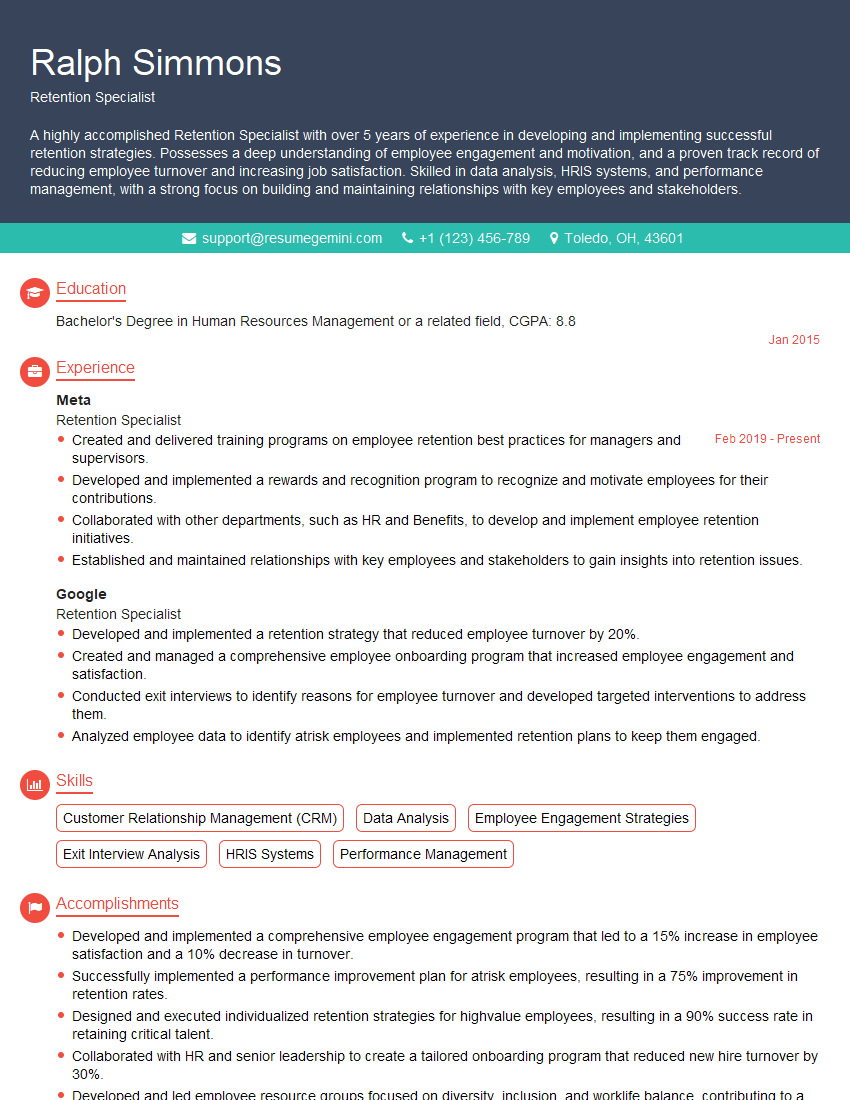
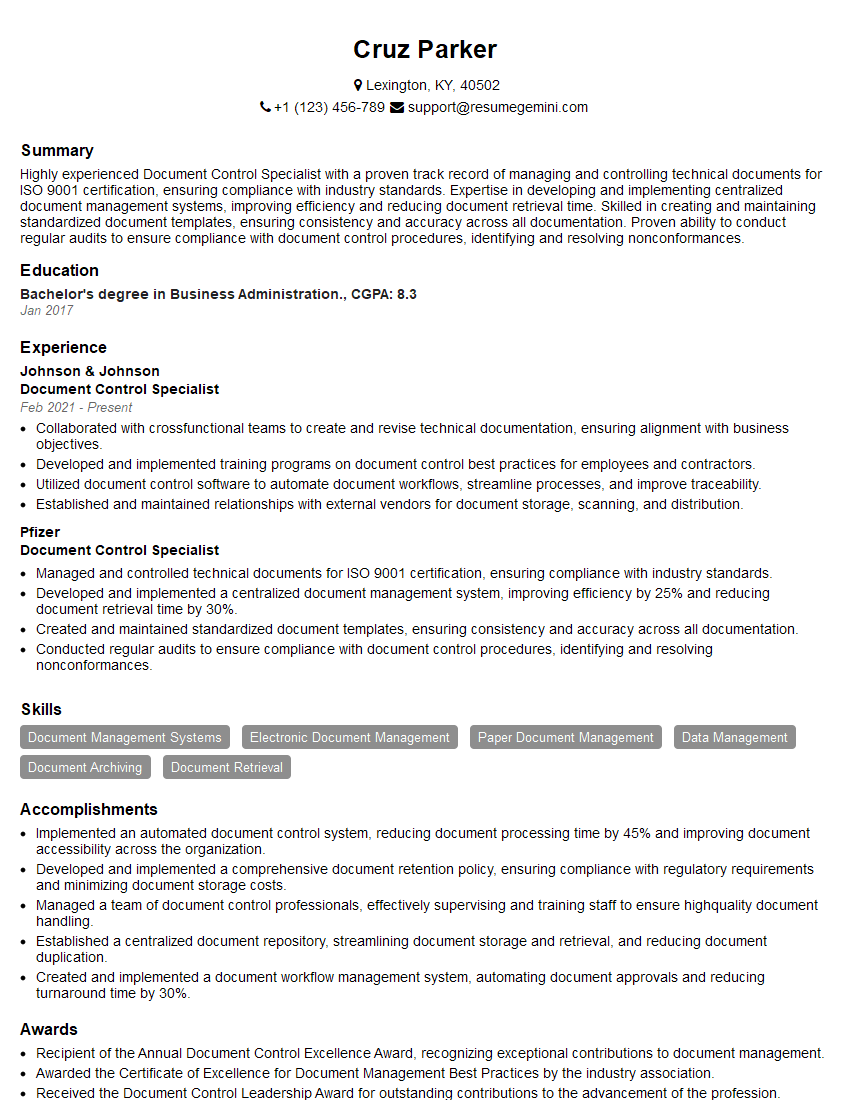
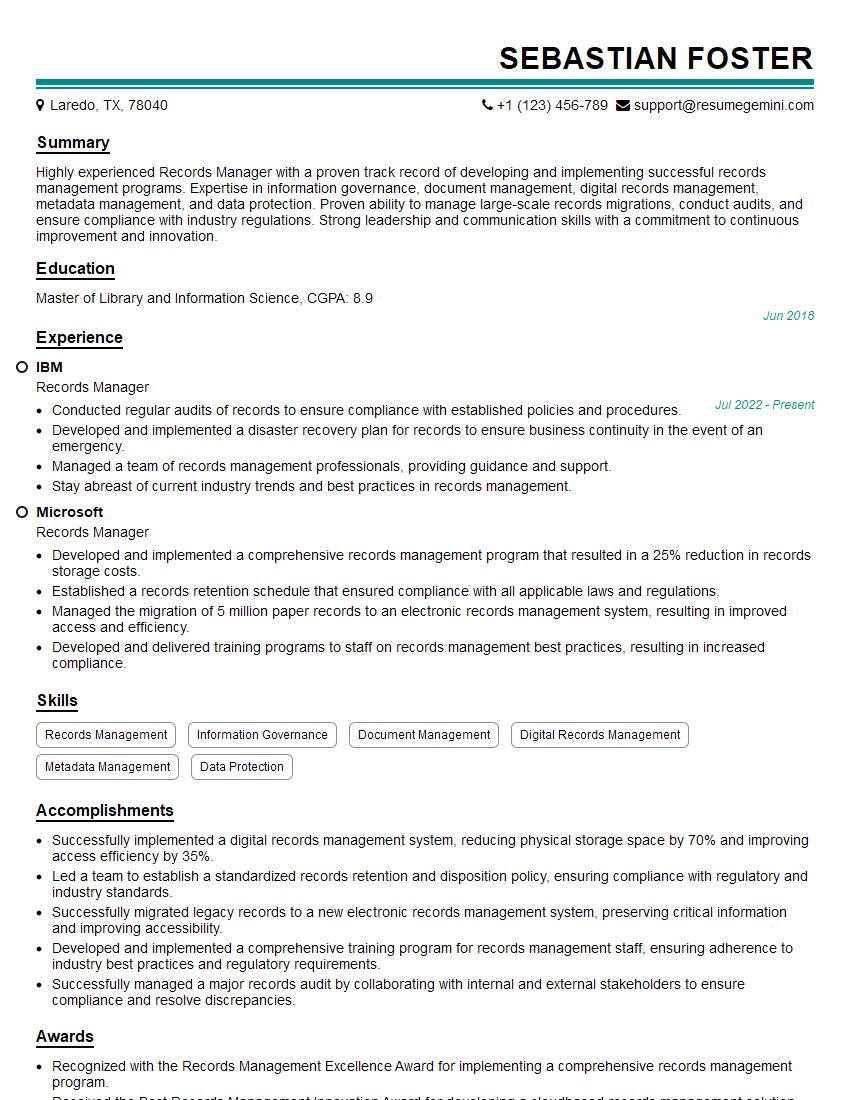
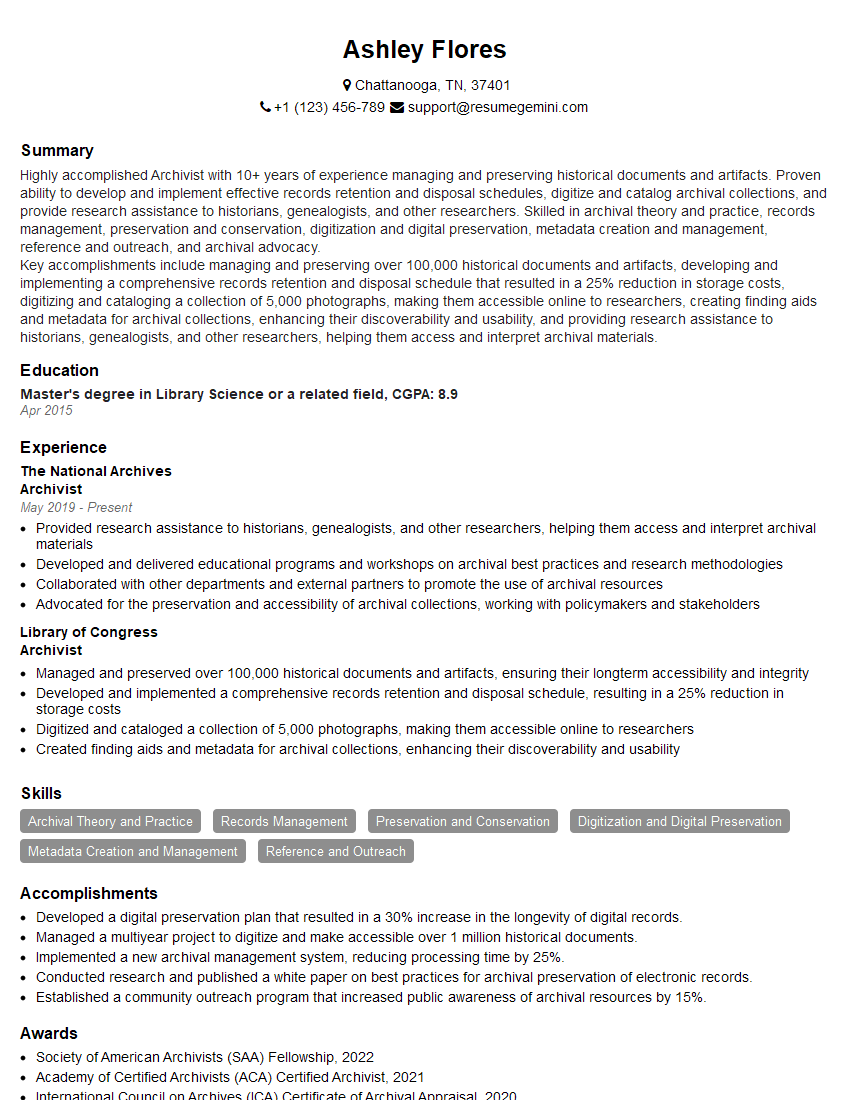
ResumeGemini is a trusted resource that can help you build a professional resume that stands out. They provide examples of resumes tailored specifically to the record keeping certification field, giving you a head start in presenting your qualifications effectively. Take the next step towards your dream career – build your best resume today with ResumeGemini.



Explore more articles
Users Rating of Our Blogs
Share Your Experience
We value your feedback! Please rate our content and share your thoughts (optional).
What Readers Say About Our Blog
Attention music lovers!
Wow, All the best Sax Summer music !!!
Spotify: https://open.spotify.com/artist/6ShcdIT7rPVVaFEpgZQbUk
Apple Music: https://music.apple.com/fr/artist/jimmy-sax-black/1530501936
YouTube: https://music.youtube.com/browse/VLOLAK5uy_noClmC7abM6YpZsnySxRqt3LoalPf88No
Other Platforms and Free Downloads : https://fanlink.tv/jimmysaxblack
on google : https://www.google.com/search?q=22+AND+22+AND+22
on ChatGPT : https://chat.openai.com?q=who20jlJimmy20Black20Sax20Producer
Get back into the groove with Jimmy sax Black
Best regards,
Jimmy sax Black
www.jimmysaxblack.com
Hi I am a troller at The aquatic interview center and I suddenly went so fast in Roblox and it was gone when I reset.
Hi,
Business owners spend hours every week worrying about their website—or avoiding it because it feels overwhelming.
We’d like to take that off your plate:
$69/month. Everything handled.
Our team will:
Design a custom website—or completely overhaul your current one
Take care of hosting as an option
Handle edits and improvements—up to 60 minutes of work included every month
No setup fees, no annual commitments. Just a site that makes a strong first impression.
Find out if it’s right for you:
https://websolutionsgenius.com/awardwinningwebsites
Hello,
we currently offer a complimentary backlink and URL indexing test for search engine optimization professionals.
You can get complimentary indexing credits to test how link discovery works in practice.
No credit card is required and there is no recurring fee.
You can find details here:
https://wikipedia-backlinks.com/indexing/
Regards
NICE RESPONSE TO Q & A
hi
The aim of this message is regarding an unclaimed deposit of a deceased nationale that bears the same name as you. You are not relate to him as there are millions of people answering the names across around the world. But i will use my position to influence the release of the deposit to you for our mutual benefit.
Respond for full details and how to claim the deposit. This is 100% risk free. Send hello to my email id: lukachachibaialuka@gmail.com
Luka Chachibaialuka
Hey interviewgemini.com, just wanted to follow up on my last email.
We just launched Call the Monster, an parenting app that lets you summon friendly ‘monsters’ kids actually listen to.
We’re also running a giveaway for everyone who downloads the app. Since it’s brand new, there aren’t many users yet, which means you’ve got a much better chance of winning some great prizes.
You can check it out here: https://bit.ly/callamonsterapp
Or follow us on Instagram: https://www.instagram.com/callamonsterapp
Thanks,
Ryan
CEO – Call the Monster App
Hey interviewgemini.com, I saw your website and love your approach.
I just want this to look like spam email, but want to share something important to you. We just launched Call the Monster, a parenting app that lets you summon friendly ‘monsters’ kids actually listen to.
Parents are loving it for calming chaos before bedtime. Thought you might want to try it: https://bit.ly/callamonsterapp or just follow our fun monster lore on Instagram: https://www.instagram.com/callamonsterapp
Thanks,
Ryan
CEO – Call A Monster APP
To the interviewgemini.com Owner.
Dear interviewgemini.com Webmaster!
Hi interviewgemini.com Webmaster!
Dear interviewgemini.com Webmaster!
excellent
Hello,
We found issues with your domain’s email setup that may be sending your messages to spam or blocking them completely. InboxShield Mini shows you how to fix it in minutes — no tech skills required.
Scan your domain now for details: https://inboxshield-mini.com/
— Adam @ InboxShield Mini
support@inboxshield-mini.com
Reply STOP to unsubscribe
Hi, are you owner of interviewgemini.com? What if I told you I could help you find extra time in your schedule, reconnect with leads you didn’t even realize you missed, and bring in more “I want to work with you” conversations, without increasing your ad spend or hiring a full-time employee?
All with a flexible, budget-friendly service that could easily pay for itself. Sounds good?
Would it be nice to jump on a quick 10-minute call so I can show you exactly how we make this work?
Best,
Hapei
Marketing Director
Hey, I know you’re the owner of interviewgemini.com. I’ll be quick.
Fundraising for your business is tough and time-consuming. We make it easier by guaranteeing two private investor meetings each month, for six months. No demos, no pitch events – just direct introductions to active investors matched to your startup.
If youR17;re raising, this could help you build real momentum. Want me to send more info?
Hi, I represent an SEO company that specialises in getting you AI citations and higher rankings on Google. I’d like to offer you a 100% free SEO audit for your website. Would you be interested?
Hi, I represent an SEO company that specialises in getting you AI citations and higher rankings on Google. I’d like to offer you a 100% free SEO audit for your website. Would you be interested?