Feeling uncertain about what to expect in your upcoming interview? We’ve got you covered! This blog highlights the most important Green House Management interview questions and provides actionable advice to help you stand out as the ideal candidate. Let’s pave the way for your success.
Questions Asked in Green House Management Interview
Q 1. Describe your experience with different greenhouse structures and their suitability for various crops.
Greenhouse structures significantly impact crop production. My experience encompasses various designs, each with unique strengths and weaknesses. For instance, hoop houses, simple and cost-effective, are ideal for smaller-scale operations and hardy crops like lettuce or tomatoes. Their low cost is balanced by limited climate control. Conversely, glass greenhouses offer superior environmental control, making them suitable for high-value crops like orchids or delicate seedlings needing precise temperature and humidity management. Their durability and insulation are offset by higher initial costs and potential for structural damage from heavy snow or wind. Finally, Gothic arch greenhouses provide good ventilation and strength but may have less surface area for light penetration compared to other designs. The choice depends on the budget, desired crop, and climate.
- Crop example: Lettuce thrives in hoop houses due to its tolerance for temperature fluctuations. Orchids require the stable environment of a glass greenhouse to flourish.
- Structural consideration: In areas with heavy snowfall, a reinforced structure like a Gothic arch is preferable over a hoop house.
Q 2. Explain your understanding of environmental control within a greenhouse environment (temperature, humidity, light).
Environmental control is paramount for successful greenhouse cultivation. It’s about creating an optimal microclimate for plant growth. Temperature is managed using heating systems (boilers, radiant heat) and cooling systems (fans, evaporative coolers, ventilation). Maintaining consistent temperatures is crucial; sudden drops can stunt growth, while excessive heat can lead to stress and wilting. Humidity is regulated through ventilation, misting systems, and humidifiers. High humidity can promote fungal diseases, whereas low humidity can cause wilting. Light is crucial; we use supplemental lighting (LED, HPS) to extend daylight hours and provide necessary light intensity for optimal photosynthesis, particularly in winter months. Monitoring these factors using sensors and automated systems ensures consistent conditions. Think of it like creating a personalized climate for your plants, tailored to their specific needs.
- Example: For a heat-loving crop like peppers, maintaining a consistent temperature above 21°C (70°F) is essential. Regular monitoring and adjustments are needed to adapt to external conditions.
Q 3. How do you monitor and manage plant health and identify common diseases and pests?
Plant health monitoring is an ongoing process. I employ a multi-pronged approach that involves regular visual inspections, noting any changes in leaf color, growth patterns, or overall vigor. This is complemented by pest and disease identification, using resources such as field guides, laboratory testing, and consultation with agricultural experts. Early detection is critical. For example, noticing yellowing leaves could indicate nutrient deficiencies, while brown spots might suggest fungal infections. We use integrated pest management (IPM) strategies, prioritizing preventative measures like sanitation and biological control (introducing beneficial insects) before resorting to chemical treatments. Documentation is crucial, tracking plant health, treatments, and yields to identify trends and improve future practices.
- Example: Powdery mildew, a common fungal disease, can be identified by its characteristic white coating on leaves. Treatment might involve adjusting humidity, improving ventilation, and possibly applying a fungicide as a last resort.
Q 4. What are your methods for optimizing irrigation systems for maximum efficiency and crop yield?
Optimizing irrigation is key to maximizing yield and resource efficiency. I utilize drip irrigation systems, delivering water directly to the plant roots, minimizing water loss through evaporation and runoff. This is more efficient than overhead sprinklers, reducing the risk of fungal diseases. We use sensors to monitor soil moisture, ensuring plants receive the precise amount of water needed, avoiding overwatering or underwatering. Automated scheduling ensures consistent watering, based on real-time data and weather forecasts. Regular system maintenance, checking for leaks and clogged emitters, is crucial for longevity and efficiency. Think of it as providing plants with a customized hydration plan.
- Example: Using soil moisture sensors coupled with an automated system allows for precise water delivery based on actual soil conditions, resulting in less water usage and healthier plants.
Q 5. Detail your experience with various propagation techniques (seed starting, cuttings, tissue culture).
My propagation experience encompasses various techniques. Seed starting involves sowing seeds in a controlled environment, providing optimal temperature, humidity, and light for germination. We use seed trays or cell packs, ensuring sufficient spacing for seedling development. Cuttings, a vegetative propagation method, involves taking stem or leaf cuttings from mother plants and rooting them under humid conditions, often using rooting hormones. This method is efficient for preserving desirable traits in plants. Finally, tissue culture, a sterile in-vitro technique, allows for rapid propagation of plants from small pieces of tissue. It is particularly useful for producing disease-free plants and maintaining genetic uniformity. The choice of method depends on factors like species, scalability, and resource availability.
- Example: Seed starting is suitable for large-scale production of annuals like zinnias. Cuttings are effective for propagating plants like roses or geraniums.
Q 6. How do you manage nutrient solutions and fertilization strategies for optimal plant growth?
Nutrient management is crucial. We employ regular soil testing to assess nutrient levels and tailor fertilizer applications accordingly. For hydroponic systems, we use precisely formulated nutrient solutions, adjusting the concentration to match the plant’s growth stage. We consider the plant’s specific nutritional needs and avoid over-fertilization, which can lead to salt buildup and plant damage. Different fertilizer types, such as organic and synthetic, are selected based on the crop, environmental goals and overall sustainability targets. We strive for balanced nutrition, providing optimal levels of macronutrients (nitrogen, phosphorus, potassium) and micronutrients. This ensures healthy growth and high yields. Regular monitoring and adjustments are necessary to ensure optimal nutrient delivery.
- Example: During the flowering stage of tomatoes, phosphorus is particularly important for fruit development. Adjusting the fertilizer blend to increase phosphorus content at this stage ensures optimal fruit production.
Q 7. Describe your experience with greenhouse automation systems and their benefits.
Greenhouse automation systems significantly enhance efficiency and productivity. I have extensive experience with systems that control environmental parameters (temperature, humidity, light) and irrigation. These systems use sensors to monitor conditions, automatically adjusting parameters to maintain optimal levels. Automated climate control minimizes manual intervention, freeing up time for other tasks while ensuring consistent environmental conditions. Data logging capabilities provide valuable insights into plant growth and environmental conditions, allowing for informed decision-making. Automation also contributes to resource conservation, reducing water and energy usage. It’s like having a dedicated assistant managing your greenhouse’s environmental conditions 24/7.
- Example: An automated system can detect a sudden temperature drop and activate the heating system automatically, preventing damage to the plants.
Q 8. Explain your understanding of greenhouse energy efficiency and methods for reducing energy consumption.
Greenhouse energy efficiency is crucial for both economic and environmental reasons. It’s about minimizing energy consumption while maintaining optimal growing conditions. High energy costs can significantly impact profitability, and greenhouse operations contribute to carbon emissions. Reducing energy consumption involves a multi-pronged approach.
Insulation and Structure: Proper insulation is paramount. This includes using high-performance glazing (e.g., double or triple-layered polycarbonate), sealing air leaks, and employing thermal curtains to reduce heat loss at night. The greenhouse’s design itself plays a vital role – a well-designed structure will minimize heat loss through effective orientation (maximizing solar gain) and minimizing surface area.
Heating Systems: Efficient heating systems are essential. Options include hot water systems (using boilers), air heating systems, and geothermal systems. Careful consideration of the heating system’s efficiency, fuel source, and control systems is critical. Utilizing thermal mass (e.g., water tanks) can help store heat during the day for nighttime use.
Climate Control: Precise control of temperature, humidity, and ventilation is key to minimizing energy waste. Using sensors and automated control systems allows for optimal climate management without over-heating or over-cooling. Employing natural ventilation (opening vents strategically) can significantly reduce reliance on mechanical ventilation.
Lighting: Choosing energy-efficient lighting technologies, such as LED grow lights, is critical. These lights provide higher efficacy (lumens per watt) compared to traditional high-pressure sodium (HPS) lamps, reducing energy consumption while enhancing plant growth. Employing light sensors and timers for automated control further optimizes energy use.
Energy Auditing: Regularly conducting energy audits helps identify areas of energy waste and pinpoint areas for improvement. This involves monitoring energy consumption, identifying inefficiencies, and implementing corrective measures.
For example, in my previous role, we implemented a comprehensive energy efficiency program that included replacing outdated HPS lights with LEDs and improving insulation. This resulted in a 30% reduction in energy costs within a year.
Q 9. How do you plan and manage greenhouse crop rotations to maintain soil health and maximize yields?
Crop rotation is a fundamental practice in greenhouse management, designed to maintain soil health, prevent pest and disease build-up, and maximize yields over time. It involves systematically planting different crops in a specific sequence across multiple growing seasons.
Planning: Careful planning is crucial. Consider factors such as crop nutrient needs, pest and disease susceptibility, and the length of growing cycles. A well-structured rotation plan should include a diverse range of crops with different nutrient requirements.
Soil Health: Rotating crops helps prevent the depletion of specific nutrients. For example, heavy feeders (like tomatoes) should be followed by legumes (like beans) that fix nitrogen in the soil, improving soil fertility. Different root systems also impact soil structure.
Pest and Disease Management: Crop rotation disrupts the life cycles of soilborne pests and diseases, reducing their populations and minimizing the need for chemical controls. For instance, rotating between families of plants (e.g., Solanaceae, Cucurbitaceae) can significantly reduce disease pressure.
Yield Optimization: By ensuring healthy soil and minimizing pest and disease pressure, crop rotation contributes to higher and more consistent yields over the long term. Careful selection of crops that complement each other can enhance overall productivity.
For instance, a common rotation might be: Year 1: Tomatoes; Year 2: Legumes (beans or peas); Year 3: Leafy greens (lettuce or spinach). This strategy addresses diverse nutrient needs, improves soil health, and breaks pest and disease cycles.
Q 10. How do you ensure proper pest and disease control in your greenhouse, while minimizing the use of pesticides?
Ensuring proper pest and disease control while minimizing pesticide use requires a proactive and integrated approach. The goal is to prevent problems before they escalate, using pesticides only as a last resort.
Hygiene and Sanitation: Maintaining a clean and sanitary greenhouse is crucial. Regular cleaning and disinfection of growing areas, tools, and equipment prevent the spread of pests and diseases. Prompt removal of infected plants is also essential.
Biological Control: Introducing beneficial insects or other organisms (e.g., predatory mites, nematodes) that prey on harmful pests is a powerful biological control strategy. This approach is environmentally friendly and avoids the use of chemical pesticides.
Cultural Practices: Cultural practices, such as proper watering, ventilation, and spacing of plants, can create an environment less hospitable to pests and diseases. Strong plants are more resistant to disease.
Monitoring and Early Detection: Regular monitoring for signs of pests and diseases allows for early detection and intervention. Early detection allows for prompt action before infestations become widespread, reducing the need for extensive pesticide applications.
Resistant Varieties: Choosing crop varieties with resistance to common pests and diseases is a preventative measure. This reduces the need for control measures altogether.
For example, in one situation we successfully controlled whiteflies using a combination of introducing predatory mites and adjusting greenhouse humidity. This eliminated the need for chemical intervention, protecting beneficial insects and the environment.
Q 11. What is your experience with integrated pest management (IPM) strategies?
Integrated Pest Management (IPM) is a holistic approach to pest and disease control. It emphasizes prevention, monitoring, and the use of a variety of methods to minimize reliance on pesticides. My experience with IPM strategies spans several years and includes:
Scouting and Monitoring: Regularly scouting for pests and diseases, using traps and visual inspections, to detect problems early.
Thresholds: Implementing economic thresholds to determine when pest populations warrant intervention. This helps avoid unnecessary treatments.
Cultural Controls: Using cultural methods like crop rotation, proper fertilization, and sanitation to create an environment less favorable to pests.
Biological Controls: Introducing beneficial insects or other organisms to control pests biologically.
Chemical Controls: Using pesticides only as a last resort, and choosing the least toxic options available.
In a previous greenhouse operation, we implemented an IPM program that dramatically reduced pesticide use by 75% over two years, while maintaining high-quality yields. This involved rigorous monitoring, careful application of biological controls, and a focus on preventative measures.
Q 12. Explain your approach to managing a greenhouse team effectively.
Managing a greenhouse team effectively requires strong leadership, clear communication, and a focus on collaboration. My approach involves:
Clear Goals and Expectations: Setting clear, measurable, achievable, relevant, and time-bound (SMART) goals for the team. Everyone needs to understand their role and responsibilities.
Training and Development: Providing regular training and development opportunities to enhance skills and knowledge. A skilled workforce is more efficient and productive.
Open Communication: Fostering open and transparent communication channels. This includes regular team meetings, feedback sessions, and opportunities for staff to voice concerns.
Delegation and Empowerment: Delegating tasks appropriately and empowering team members to take ownership of their work. This boosts morale and promotes efficiency.
Motivation and Recognition: Recognizing and rewarding good performance to boost morale and motivate the team. A positive work environment is key to productivity.
I believe in creating a team environment where everyone feels valued and supported, leading to increased productivity and job satisfaction. For instance, I implemented a system of regular feedback sessions, which allowed us to identify and address any issues promptly and improve team collaboration.
Q 13. Describe your experience with yield monitoring and data analysis.
Yield monitoring and data analysis are essential for optimizing greenhouse operations. My experience involves utilizing various methods to track and analyze yield data:
Data Collection: Implementing a robust system for collecting yield data, including plant counts, weight, quality assessments, and other relevant metrics.
Technology Integration: Utilizing technology such as sensors, data loggers, and software platforms to automate data collection and analysis.
Analysis and Interpretation: Analyzing the collected data to identify trends, patterns, and areas for improvement. This includes statistical analysis to determine correlations between factors and yields.
Decision-Making: Using the insights gained from data analysis to make informed decisions about cultivation practices, resource allocation, and other aspects of greenhouse management.
For example, using yield data, we identified a correlation between specific nutrient levels in the soil and tomato yield. This allowed us to adjust fertilization strategies and significantly improve yields in subsequent growing cycles. This data-driven approach leads to continuous improvement in our operations.
Q 14. How do you handle unexpected problems or emergencies in the greenhouse?
Handling unexpected problems or emergencies in a greenhouse requires a proactive and systematic approach. My strategy involves:
Emergency Preparedness Plan: Developing a comprehensive emergency preparedness plan that addresses various potential scenarios (e.g., power outages, equipment malfunctions, pest outbreaks). This plan should include clear protocols and responsibilities for each team member.
Rapid Assessment: Conducting a swift assessment of the situation to determine the extent of the damage and the urgency of the response.
Problem Solving: Implementing effective problem-solving strategies to address the immediate issue and prevent recurrence. This may involve troubleshooting equipment, employing contingency plans, or contacting external experts.
Documentation and Learning: Documenting the incident, including the cause, the response, and lessons learned. This helps to improve preparedness for future events.
For example, during a severe storm that caused a power outage, our pre-planned response involved switching to backup generators and utilizing thermal curtains to minimize heat loss. This prevented significant crop damage and minimized disruption to operations. Post-incident review allowed us to improve our backup power system and emergency procedures.
Q 15. What is your experience with different types of greenhouse substrates?
Greenhouse substrates are the growing media we use instead of soil. Choosing the right one is crucial for plant health and yield. My experience spans a wide range, including:
- Coco coir: A sustainable alternative to peat moss, offering excellent water retention and aeration. I’ve successfully used it for growing tomatoes and peppers, adjusting the coco coir mix with perlite to improve drainage.
- Rockwool: An inert medium ideal for starting seeds and cloning. Its consistent structure ensures uniform moisture and nutrient distribution. I’ve found it particularly effective for hydroponic systems and starting delicate seedlings like lettuce.
- Perlite and Vermiculite: These inorganic materials improve aeration and drainage when mixed with other substrates. I often amend coco coir or peat-based mixes with perlite and vermiculite to optimize the growing environment.
- Peat moss: Though its environmental impact is a concern, it still offers excellent water-holding capacity. In the past, I’ve utilized peat moss blends, but now favor more sustainable alternatives whenever possible.
- Soilless mixes: I have extensive experience formulating custom soilless mixes tailored to specific plant needs. This involves carefully selecting components like peat moss, coco coir, perlite, vermiculite, and compost to achieve the optimal balance of water retention, aeration, and nutrient availability.
Selecting the appropriate substrate involves considering factors like plant type, climate, and available resources. For example, a drought-tolerant plant might require a substrate with less water retention than a moisture-loving plant.
Career Expert Tips:
- Ace those interviews! Prepare effectively by reviewing the Top 50 Most Common Interview Questions on ResumeGemini.
- Navigate your job search with confidence! Explore a wide range of Career Tips on ResumeGemini. Learn about common challenges and recommendations to overcome them.
- Craft the perfect resume! Master the Art of Resume Writing with ResumeGemini’s guide. Showcase your unique qualifications and achievements effectively.
- Don’t miss out on holiday savings! Build your dream resume with ResumeGemini’s ATS optimized templates.
Q 16. How do you manage inventory and supply chain for greenhouse operations?
Efficient inventory and supply chain management are essential for smooth greenhouse operations. My approach is multifaceted:
- Demand Forecasting: I utilize historical data and market trends to predict future demand for various inputs like seeds, fertilizers, and growing media. This enables proactive ordering and minimizes stockouts.
- Inventory Tracking: I employ a robust inventory management system (IMS) – often a software solution – to monitor stock levels in real-time. This system generates alerts when stock is low, triggering timely reordering.
- Supplier Relationships: I maintain strong relationships with reliable suppliers to ensure consistent supply and competitive pricing. This includes negotiating favorable terms and exploring alternative suppliers to mitigate risks.
- Storage and Handling: Proper storage is crucial to prevent spoilage and loss. This includes maintaining optimal temperature and humidity levels for different inputs. We also implement FIFO (First-In, First-Out) inventory management to minimize waste.
- Waste Reduction: I actively seek ways to minimize waste throughout the supply chain. This might involve optimizing packaging, recycling materials, and exploring composting options for organic waste.
For example, during a period of high tomato demand, our IMS alerted us to low levels of fertilizer. This allowed us to place a timely order, ensuring we had enough fertilizer to meet the increased demand and avoid a production bottleneck.
Q 17. Explain your knowledge of different greenhouse climate control technologies.
Greenhouse climate control is critical for optimal plant growth. My experience includes various technologies:
- Heating Systems: I’ve worked with both natural gas and electric heating systems, selecting the most efficient and cost-effective option based on the greenhouse size and location. Proper insulation is always a key consideration to minimize energy loss.
- Cooling Systems: This can involve passive cooling methods like ventilation and shading, or active cooling systems such as evaporative coolers or air conditioners. The choice depends on the climate and the crop’s needs.
- Ventilation Systems: Proper ventilation is vital for maintaining optimal temperature and humidity levels. I’ve worked with various ventilation systems, including natural ventilation using vents and fans, and automated systems controlled by sensors.
- Humidity Control: Maintaining the correct humidity is key to preventing diseases and stress. This is achieved through various methods including fogging systems, humidifiers, and dehumidifiers.
- Automated Control Systems: I have extensive experience with automated climate control systems that use sensors to monitor temperature, humidity, light, and CO2 levels. These systems automatically adjust environmental parameters to maintain optimal growing conditions. For instance, we might use a system that automatically opens and closes vents based on temperature and humidity readings.
Integrating these technologies requires careful planning and consideration of factors such as energy efficiency, cost, and ease of maintenance. For instance, in a hot, arid climate, an evaporative cooler might be a more efficient cooling solution than an air conditioner.
Q 18. Describe your approach to ensuring food safety and quality in a greenhouse environment.
Food safety and quality are paramount. My approach involves a multi-pronged strategy:
- Good Agricultural Practices (GAP): Implementing GAP guidelines ensures that crops are produced safely and minimize the risk of contamination. This involves practices like proper sanitation, pest control, and worker hygiene.
- Pest and Disease Management: Integrated Pest Management (IPM) strategies are crucial. This emphasizes prevention through cultural practices, biological control, and minimal use of pesticides. I prefer using beneficial insects and biopesticides to reduce reliance on harmful chemicals.
- Water Quality: High-quality water is essential for plant health and safety. We regularly test our water supply for contaminants and implement filtration systems when needed.
- Traceability: A robust traceability system is crucial to quickly identify and address any contamination issues. This involves documenting all aspects of production, from seed sourcing to harvesting.
- Harvesting and Handling: Careful harvesting and handling practices minimize damage and contamination. This includes training workers on proper hygiene and handling procedures.
For example, implementing a strict handwashing protocol for workers and regularly sanitizing work surfaces significantly reduced the incidence of plant diseases.
Q 19. What are your strategies for maximizing greenhouse productivity and profitability?
Maximizing greenhouse productivity and profitability requires a holistic approach:
- Optimized Crop Selection: Choosing high-yielding varieties suited to the greenhouse environment and market demand is crucial. Market research plays a vital role in this decision.
- Precision Growing Techniques: Employing techniques like hydroponics or aeroponics can significantly improve yields by providing plants with optimized nutrient delivery and precise environmental control.
- Efficient Resource Utilization: Optimizing water and fertilizer use through techniques like drip irrigation and fertigation minimizes costs and reduces environmental impact. Data-driven approaches help refine resource allocation.
- Disease and Pest Management: Proactive disease and pest management prevents yield losses and reduces the need for costly interventions.
- Yield Monitoring and Data Analysis: Regularly monitoring crop growth and yield using sensors and data analysis tools allows for timely interventions and process improvements. This leads to better resource allocation and higher yields.
- Cost Control: Careful management of energy, labor, and materials costs is crucial for profitability. Regular cost analysis and optimization are needed.
For example, implementing a data-driven irrigation system resulted in a 15% increase in yield while simultaneously reducing water consumption by 10%.
Q 20. How do you utilize technology for improving greenhouse management processes?
Technology is transforming greenhouse management. My experience includes:
- Climate Control Systems: Automated climate control systems equipped with sensors and data loggers provide precise control over temperature, humidity, and light, leading to optimized growth conditions. These systems often integrate with weather forecasting to anticipate changes and adjust settings proactively.
- Inventory Management Software: Software solutions streamline inventory tracking, ordering, and forecasting, minimizing waste and ensuring timely supply of inputs.
- Data Analytics and Reporting: Collecting and analyzing data on growth rates, yield, and resource utilization provides valuable insights for optimizing processes and improving profitability. Software tools can create detailed reports and visualizations.
- Remote Monitoring and Control: Remote access to greenhouse data and control systems enables monitoring and adjustments even when not physically present. This enhances efficiency and allows for immediate responses to potential issues.
- Robotics and Automation: In some operations, robots are used for tasks such as planting, harvesting, and pruning, increasing efficiency and reducing labor costs.
For example, using a sensor network to monitor plant health allowed for early detection of a disease outbreak, enabling timely intervention and preventing significant yield losses.
Q 21. Describe your experience with implementing sustainable practices in a greenhouse.
Sustainability is a core principle in my approach to greenhouse management. I focus on:
- Water Conservation: Implementing drip irrigation, rainwater harvesting, and efficient water management practices minimize water consumption. We regularly monitor water usage and adjust irrigation schedules based on real-time data and weather predictions.
- Renewable Energy: Utilizing solar panels for heating and powering the greenhouse reduces reliance on fossil fuels and lowers energy costs. We’ve successfully integrated solar panels into several greenhouse projects, reducing our carbon footprint considerably.
- Sustainable Substrates: Prioritizing sustainable growing media like coco coir reduces reliance on peat moss, mitigating environmental damage. We are also exploring the use of recycled materials as substrates.
- Waste Management: Composting organic waste from the greenhouse reduces landfill waste and creates valuable compost for future crops. We actively monitor waste generation and implement strategies to minimize it.
- Integrated Pest Management (IPM): Employing IPM strategies reduces reliance on harmful pesticides, protecting the environment and human health. This involves utilizing biological control agents and other environmentally friendly pest control methods.
For example, by implementing rainwater harvesting and efficient irrigation, we reduced our water consumption by 25% while maintaining high crop yields. This demonstrates a tangible positive environmental impact.
Q 22. How do you stay updated on new technologies and best practices in greenhouse management?
Staying ahead in greenhouse management requires a multi-pronged approach to continuous learning. I actively participate in professional organizations like the American Society for Horticultural Science (ASHS) and attend their conferences and webinars to learn about the latest research and technological advancements. These events provide excellent networking opportunities to connect with other professionals and share best practices. I also subscribe to relevant industry publications, both print and online, such as Greenhouse Grower and Produce Grower, which feature articles on cutting-edge techniques, emerging technologies, and success stories from leading greenhouse operations. Furthermore, I regularly explore online resources, including university extension websites and reputable industry blogs, to stay updated on best practices and new technologies in areas such as automation, precision irrigation, and sustainable growing methods. For example, recently I’ve been researching the benefits of using AI-powered sensors to optimize environmental control within the greenhouse, leading to significant improvements in yield and resource efficiency. Finally, I encourage ongoing professional development for my team, fostering a culture of continuous learning and improvement within the organization.
Q 23. What are your strategies for dealing with labor shortages in a greenhouse setting?
Labor shortages are a significant challenge in the greenhouse industry. My strategy focuses on a three-pronged approach: attraction, retention, and efficiency. To attract qualified workers, I leverage competitive wages and benefits packages, emphasizing a positive and supportive work environment. I also participate in local job fairs and partner with vocational schools to connect with potential employees. For retention, I focus on employee development, offering opportunities for training and advancement. Regular feedback, recognition of achievements, and a culture of respect are crucial. To boost efficiency, I implement technology to reduce manual labor. This might include automating tasks like watering, climate control, and harvesting, freeing up staff to focus on higher-value activities such as crop monitoring and quality control. For example, I successfully implemented a robotic harvesting system in my previous role, significantly reducing labor costs and improving efficiency without sacrificing quality. Finally, I foster teamwork and collaboration, creating a sense of community and shared purpose amongst the team.
Q 24. Describe your experience in developing and managing greenhouse budgets.
Developing and managing greenhouse budgets requires a detailed understanding of all operational costs and revenue streams. I begin by creating a comprehensive budget encompassing all expenses, including inputs (seeds, fertilizers, pesticides), labor, utilities (heating, lighting, water), maintenance, and depreciation of equipment. Detailed financial projections are essential, including anticipated yield, market prices, and sales volumes. I use budgeting software to track expenses and revenues, generating regular reports to monitor performance against the budget. Variance analysis is crucial – identifying any deviations from the planned budget and investigating the reasons. This helps in making timely adjustments and preventing financial losses. For example, in a previous role, I identified an unexpected increase in energy costs due to outdated HVAC systems. By implementing energy-efficient upgrades, I managed to reduce costs while maintaining optimum growing conditions and improved overall budget performance. Continuous monitoring and adjustments are key to effective budget management, allowing for proactive decision-making and resource allocation.
Q 25. How do you ensure compliance with relevant health and safety regulations in the greenhouse?
Ensuring compliance with health and safety regulations is paramount. I start by thoroughly understanding all applicable laws and standards relevant to greenhouse operations, including OSHA regulations (in the US) or equivalent in other countries. This involves familiarizing myself with requirements related to personal protective equipment (PPE), chemical handling, machinery safety, emergency procedures, and worker safety training. I implement a comprehensive safety program that includes regular inspections of the greenhouse, equipment maintenance, and training for all staff on safe working practices. Clear signage, emergency response plans, and readily available safety equipment are crucial. Employee participation is encouraged, fostering a culture of safety and responsibility. For instance, I implement a system of regular safety audits and provide ongoing training to my staff, covering topics from safe chemical handling to proper equipment operation. By proactively addressing safety concerns and maintaining thorough documentation, I ensure consistent compliance and minimize the risk of accidents and injuries.
Q 26. Explain your experience with quality control measures in a greenhouse operation.
Quality control is essential for successful greenhouse operations. My approach incorporates a multi-stage process that begins with seed selection and extends to the harvesting and packaging of the final product. This includes implementing strict quality standards at each stage – from monitoring environmental conditions to evaluating plant health and assessing the final product for size, shape, color, and other relevant characteristics. Regular checks are conducted to ensure consistency and identify any issues early on. Data logging and record-keeping are crucial to track plant growth parameters, environmental data, and pest and disease incidence. Statistical process control (SPC) techniques can be incorporated to monitor quality parameters and identify trends. For example, I use visual inspections, alongside data from sensors monitoring temperature, humidity, and light levels to assess plant health and quality. Any deviations from established standards are investigated and addressed promptly. Traceability systems help identify the origin of any quality problems, enabling quick corrective actions. Finally, customer feedback is continuously analyzed to identify and resolve any concerns related to product quality.
Q 27. Describe your approach to training and mentoring greenhouse staff.
Training and mentoring greenhouse staff is crucial for a productive and safe operation. I develop comprehensive training programs tailored to different skill levels and roles within the greenhouse. This may include both on-the-job training and formal classroom instruction covering topics such as plant propagation, pest and disease management, irrigation techniques, and safe equipment operation. Mentorship is equally important, pairing experienced employees with newer staff to facilitate knowledge transfer and skill development. Regular performance evaluations provide feedback and identify areas for improvement. I also encourage continuous learning through workshops, conferences, and online courses. I believe in creating a culture of learning where employees feel empowered to ask questions, share their knowledge, and contribute to continuous improvement. For example, in my previous position, I mentored a junior staff member who eventually became a team leader, demonstrating the success of this approach. Investing in staff development not only improves individual skills but also contributes to overall team performance and productivity.
Q 28. How do you maintain accurate records and reporting for greenhouse operations?
Maintaining accurate records and reporting is vital for effective greenhouse management. I employ a combination of manual and digital record-keeping systems. This includes using spreadsheets and dedicated greenhouse management software to track planting dates, harvest yields, environmental data (temperature, humidity, light levels), nutrient applications, pest and disease treatments, and labor hours. Regular reports are generated to monitor key performance indicators (KPIs) such as yield per square foot, cost per unit, and energy consumption. These reports provide valuable insights into operational efficiency and help in identifying areas for improvement. For example, I use software that integrates with sensors to automatically collect and log environmental data, eliminating manual data entry and reducing the risk of errors. Furthermore, I ensure data accuracy through regular audits and cross-referencing of information. Data-driven decision-making enables proactive management and improved resource allocation, which is crucial for long-term profitability and sustainability.
Key Topics to Learn for Green House Management Interview
- Climate Control & Environmental Monitoring: Understanding the principles of greenhouse climate control, including temperature, humidity, CO2 levels, and light intensity. Practical application: Troubleshooting system malfunctions and optimizing environmental conditions for specific plant types.
- Irrigation & Fertilization: Mastering various irrigation techniques (drip, flood, etc.) and nutrient management strategies for optimal plant growth. Practical application: Calculating fertilizer ratios, diagnosing nutrient deficiencies, and implementing efficient irrigation schedules.
- Pest & Disease Management: Identifying common greenhouse pests and diseases, and implementing effective integrated pest management (IPM) strategies. Practical application: Developing preventative measures, recognizing early symptoms, and selecting appropriate control methods (biological, chemical, cultural).
- Plant Physiology & Growth Stages: Understanding plant growth cycles, nutrient requirements, and environmental factors influencing plant development. Practical application: Adapting cultivation practices to meet the specific needs of different plant species at various growth stages.
- Greenhouse Structure & Design: Understanding different greenhouse types (e.g., hoop houses, gothic arches), materials, and their impact on environmental control and plant growth. Practical application: Evaluating the structural integrity of a greenhouse and suggesting improvements for energy efficiency and optimal plant production.
- Yield Optimization & Crop Management: Strategies for maximizing crop yield while maintaining high quality and minimizing resource waste. Practical application: Implementing techniques like pruning, training, and harvesting optimization for improved efficiency.
- Sustainable Practices & Resource Management: Implementing environmentally friendly practices, such as water conservation, energy efficiency, and waste reduction. Practical application: Calculating water usage, exploring renewable energy sources, and managing waste effectively.
Next Steps
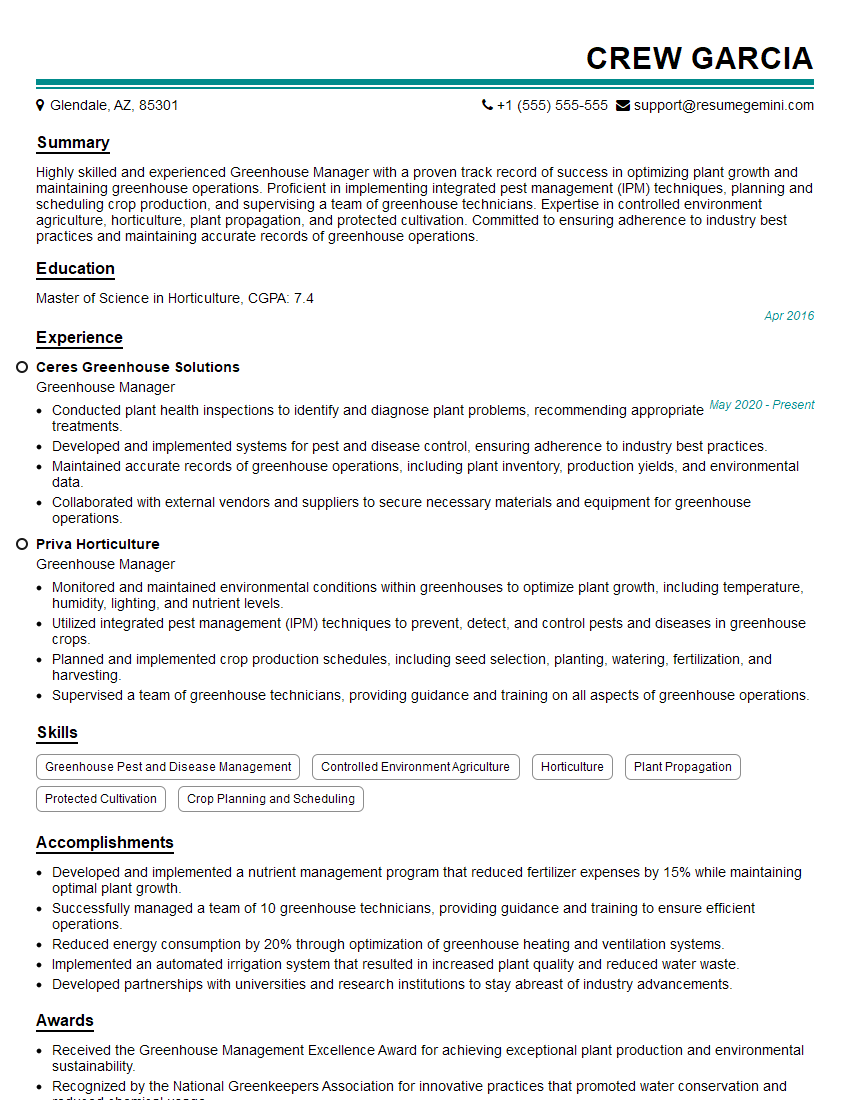
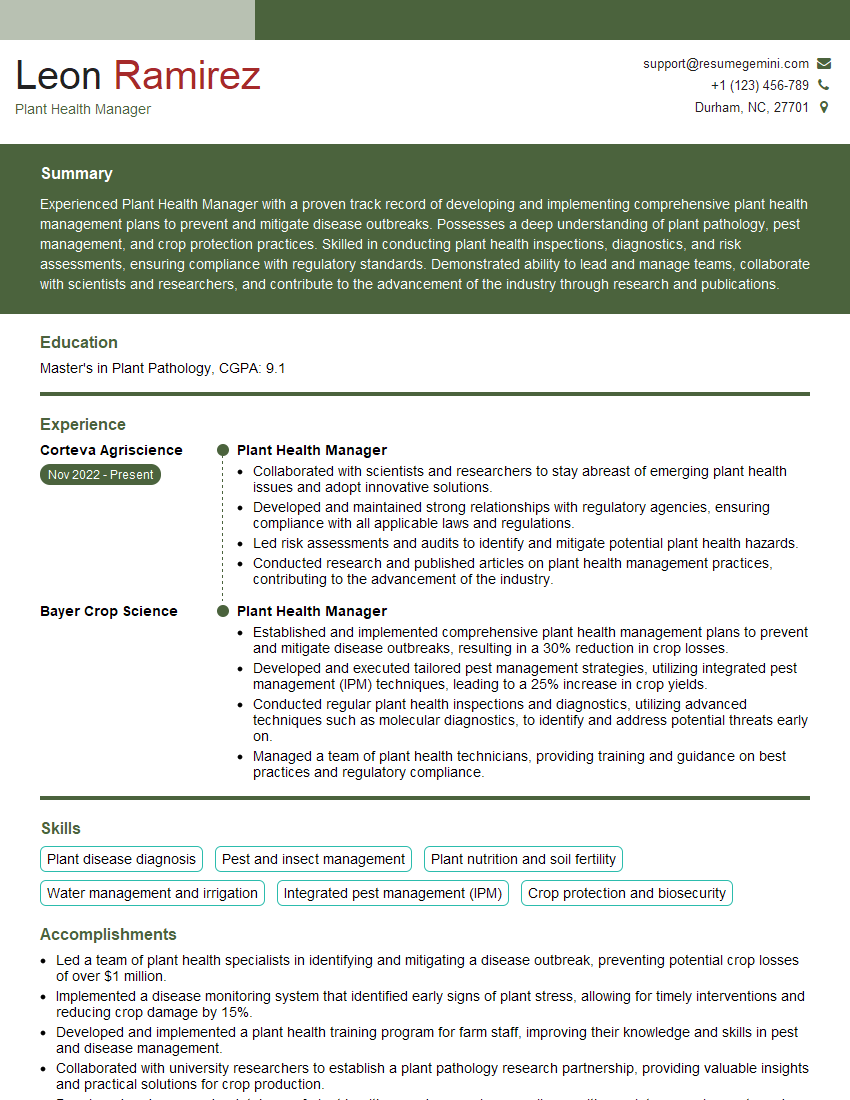
Mastering Green House Management opens doors to exciting career opportunities in agriculture, horticulture, and related fields. To stand out from the competition, a strong, ATS-friendly resume is crucial. ResumeGemini is a trusted resource that can help you craft a professional resume that highlights your skills and experience effectively. Take advantage of their tools to create a compelling narrative of your accomplishments. Examples of resumes tailored to Green House Management are available to help guide you.
Explore more articles
Users Rating of Our Blogs
Share Your Experience
We value your feedback! Please rate our content and share your thoughts (optional).
What Readers Say About Our Blog
Attention music lovers!
Wow, All the best Sax Summer music !!!
Spotify: https://open.spotify.com/artist/6ShcdIT7rPVVaFEpgZQbUk
Apple Music: https://music.apple.com/fr/artist/jimmy-sax-black/1530501936
YouTube: https://music.youtube.com/browse/VLOLAK5uy_noClmC7abM6YpZsnySxRqt3LoalPf88No
Other Platforms and Free Downloads : https://fanlink.tv/jimmysaxblack
on google : https://www.google.com/search?q=22+AND+22+AND+22
on ChatGPT : https://chat.openai.com?q=who20jlJimmy20Black20Sax20Producer
Get back into the groove with Jimmy sax Black
Best regards,
Jimmy sax Black
www.jimmysaxblack.com
Hi I am a troller at The aquatic interview center and I suddenly went so fast in Roblox and it was gone when I reset.
Hi,
Business owners spend hours every week worrying about their website—or avoiding it because it feels overwhelming.
We’d like to take that off your plate:
$69/month. Everything handled.
Our team will:
Design a custom website—or completely overhaul your current one
Take care of hosting as an option
Handle edits and improvements—up to 60 minutes of work included every month
No setup fees, no annual commitments. Just a site that makes a strong first impression.
Find out if it’s right for you:
https://websolutionsgenius.com/awardwinningwebsites
Hello,
we currently offer a complimentary backlink and URL indexing test for search engine optimization professionals.
You can get complimentary indexing credits to test how link discovery works in practice.
No credit card is required and there is no recurring fee.
You can find details here:
https://wikipedia-backlinks.com/indexing/
Regards
NICE RESPONSE TO Q & A
hi
The aim of this message is regarding an unclaimed deposit of a deceased nationale that bears the same name as you. You are not relate to him as there are millions of people answering the names across around the world. But i will use my position to influence the release of the deposit to you for our mutual benefit.
Respond for full details and how to claim the deposit. This is 100% risk free. Send hello to my email id: lukachachibaialuka@gmail.com
Luka Chachibaialuka
Hey interviewgemini.com, just wanted to follow up on my last email.
We just launched Call the Monster, an parenting app that lets you summon friendly ‘monsters’ kids actually listen to.
We’re also running a giveaway for everyone who downloads the app. Since it’s brand new, there aren’t many users yet, which means you’ve got a much better chance of winning some great prizes.
You can check it out here: https://bit.ly/callamonsterapp
Or follow us on Instagram: https://www.instagram.com/callamonsterapp
Thanks,
Ryan
CEO – Call the Monster App
Hey interviewgemini.com, I saw your website and love your approach.
I just want this to look like spam email, but want to share something important to you. We just launched Call the Monster, a parenting app that lets you summon friendly ‘monsters’ kids actually listen to.
Parents are loving it for calming chaos before bedtime. Thought you might want to try it: https://bit.ly/callamonsterapp or just follow our fun monster lore on Instagram: https://www.instagram.com/callamonsterapp
Thanks,
Ryan
CEO – Call A Monster APP
To the interviewgemini.com Owner.
Dear interviewgemini.com Webmaster!
Hi interviewgemini.com Webmaster!
Dear interviewgemini.com Webmaster!
excellent
Hello,
We found issues with your domain’s email setup that may be sending your messages to spam or blocking them completely. InboxShield Mini shows you how to fix it in minutes — no tech skills required.
Scan your domain now for details: https://inboxshield-mini.com/
— Adam @ InboxShield Mini
support@inboxshield-mini.com
Reply STOP to unsubscribe
Hi, are you owner of interviewgemini.com? What if I told you I could help you find extra time in your schedule, reconnect with leads you didn’t even realize you missed, and bring in more “I want to work with you” conversations, without increasing your ad spend or hiring a full-time employee?
All with a flexible, budget-friendly service that could easily pay for itself. Sounds good?
Would it be nice to jump on a quick 10-minute call so I can show you exactly how we make this work?
Best,
Hapei
Marketing Director
Hey, I know you’re the owner of interviewgemini.com. I’ll be quick.
Fundraising for your business is tough and time-consuming. We make it easier by guaranteeing two private investor meetings each month, for six months. No demos, no pitch events – just direct introductions to active investors matched to your startup.
If youR17;re raising, this could help you build real momentum. Want me to send more info?
Hi, I represent an SEO company that specialises in getting you AI citations and higher rankings on Google. I’d like to offer you a 100% free SEO audit for your website. Would you be interested?
Hi, I represent an SEO company that specialises in getting you AI citations and higher rankings on Google. I’d like to offer you a 100% free SEO audit for your website. Would you be interested?