Unlock your full potential by mastering the most common Store Audits interview questions. This blog offers a deep dive into the critical topics, ensuring you’re not only prepared to answer but to excel. With these insights, you’ll approach your interview with clarity and confidence.
Questions Asked in Store Audits Interview
Q 1. Describe your experience conducting store audits.
Throughout my career, I’ve conducted hundreds of store audits across various retail sectors, from large multinational corporations to smaller independent businesses. My experience encompasses a wide range of audit types, including operational efficiency audits, merchandising audits, loss prevention audits, and compliance audits. For instance, I recently completed a series of audits for a national pharmacy chain, focusing on inventory management and medication storage protocols. This involved meticulously verifying stock levels against the system records, checking for expired medication, and ensuring adherence to stringent regulatory standards. In another project for a clothing retailer, my audit focused on visual merchandising, assessing the effectiveness of displays, signage, and overall store presentation to optimize customer experience and sales conversion.
I’m adept at adapting my approach based on the specific needs and objectives of each audit, always ensuring a thorough and systematic approach. This involves careful planning, meticulous data collection, and a detailed analysis of findings, resulting in actionable recommendations to improve store performance.
Q 2. What are the key objectives of a store audit?
The key objectives of a store audit are multifaceted, all ultimately aimed at improving store operations and profitability. These objectives typically include:
- Assessing compliance: Ensuring adherence to company policies, legal regulations, and industry best practices.
- Improving operational efficiency: Identifying areas for improvement in processes such as inventory management, staff scheduling, and customer service.
- Enhancing merchandising: Evaluating the effectiveness of product displays, pricing strategies, and promotional activities.
- Reducing shrinkage: Identifying and mitigating losses due to theft, damage, or spoilage.
- Boosting sales: Analyzing sales data and identifying opportunities to increase revenue.
- Improving customer experience: Assessing the cleanliness, organization, and overall atmosphere of the store to ensure a positive shopping experience.
The specific objectives of an audit will always be tailored to the individual client’s needs and priorities, but these are common threads that run through virtually every audit I undertake.
Q 3. Explain different types of store audits you have conducted.
My experience encompasses a variety of store audit types. Here are a few examples:
- Operational Efficiency Audits: These audits examine the effectiveness of store processes, including inventory management, staff scheduling, and customer service procedures. I recently conducted one for a grocery store chain, focusing on optimizing checkout procedures to reduce wait times and improve customer satisfaction.
- Merchandising Audits: These audits focus on the presentation of products in the store, including displays, signage, and pricing. For a clothing retailer, I reviewed product placement, ensuring high-demand items were prominently displayed and slow-moving items were strategically repositioned.
- Loss Prevention Audits: These audits aim to identify and minimize losses due to theft, damage, or spoilage. A key part of this involved reviewing security camera footage and employee procedures in a jewelry store to identify potential vulnerabilities.
- Compliance Audits: These audits ensure that the store is complying with all relevant laws, regulations, and company policies. For example, I’ve conducted audits focusing on food safety regulations in restaurants and health and safety regulations in various retail environments.
The specific approach and tools utilized will vary significantly depending on the type of audit.
Q 4. How do you ensure the accuracy and reliability of your audit findings?
Accuracy and reliability are paramount in store audits. I ensure these through a multi-pronged approach:
- Standardized Checklists and Procedures: I use meticulously designed checklists to ensure consistent data collection across all audits. Each item is clearly defined, leaving no room for subjective interpretation.
- Random Sampling Techniques: Where auditing the entire inventory isn’t feasible, I employ statistically valid random sampling methods to ensure a representative sample is evaluated. This approach ensures a high degree of confidence in the results, without the need for a complete inventory check.
- Double-Checking and Verification: Critical data points are often double-checked by a second auditor, or through reconciliation with existing system data. For example, physical inventory counts are compared to system records to identify discrepancies.
- Calibration of Tools and Equipment: Where tools such as scales or measurement devices are involved, they are regularly calibrated to ensure accuracy. This ensures any measurements or weighing are consistently precise.
- Training and Certification: I continually update my skills and maintain relevant certifications to ensure the audits I conduct are consistent with best practices in the industry.
This rigorous approach minimizes bias and maximizes the reliability of my findings.
Q 5. What software or tools do you use for store audits?
I utilize a range of software and tools depending on the specific audit requirements. These include:
- Spreadsheet Software (Excel, Google Sheets): Essential for organizing and analyzing data collected during the audit. I often build custom spreadsheets with formulas for calculations and data analysis.
- Inventory Management Systems: Direct integration with a client’s inventory system allows for efficient data comparison and discrepancy identification. This minimizes manual data entry and speeds up the overall process.
- Point-of-Sale (POS) System Data Analysis: Analyzing POS data can provide insights into sales trends, customer behavior, and areas of opportunity. This requires specialized software or reporting features built into the POS system.
- Audit Management Software: Specialized software designed for store audits simplifies the process of scheduling audits, collecting data, analyzing findings, and generating reports.
- Mobile Devices and Apps: Using tablets or smartphones with dedicated audit apps streamlines data collection in the field, providing real-time access to information and reducing reliance on manual data entry.
My proficiency extends beyond simple data entry to harnessing these tools for powerful data analysis and reporting.
Q 6. How do you handle discrepancies or inconsistencies found during audits?
Discrepancies and inconsistencies are common occurrences during store audits. My approach to handling them is systematic and methodical:
- Documenting the Discrepancy: Each inconsistency is carefully documented, including the location, nature, and extent of the discrepancy. Detailed notes are essential for further investigation.
- Identifying the Root Cause: A thorough investigation is conducted to identify the underlying cause of the discrepancy. This might involve interviewing staff, reviewing security footage, or examining relevant documentation.
- Developing Corrective Actions: Based on the identified root cause, specific corrective actions are recommended. These actions are designed to prevent similar discrepancies from occurring in the future.
- Verification of Corrective Actions: Once implemented, the corrective actions are verified to ensure effectiveness. A follow-up audit may be necessary to assess the impact of the corrective actions.
- Reporting and Communication: All findings, including discrepancies and corrective actions, are clearly communicated in the final audit report. The report provides clear recommendations for improvement and includes supporting evidence for all findings.
Addressing discrepancies is not merely about identifying problems; it’s about identifying opportunities for improvement and implementing robust solutions.
Q 7. Describe your approach to documenting audit findings.
My approach to documenting audit findings is designed to be comprehensive, objective, and easily understandable. I use a combination of methods:
- Detailed Checklists: Checklists with clear markings of findings (e.g., check marks, notes, photographs) provide a visual record of the audit process.
- Digital Photography and Videography: Photos and videos provide visual evidence of observed conditions, such as messy displays, damaged goods, or safety hazards. This enhances objectivity and helps to illustrate the severity of issues.
- Comprehensive Reports: Findings are compiled into detailed reports that include an executive summary, a description of the audit methodology, a detailed presentation of findings, and specific recommendations for improvement. This is where all collected evidence is consolidated.
- Data Analysis and Charts: Data collected is analyzed using spreadsheet software, and key findings are presented using charts and graphs for easier comprehension. This helps to visualize trends and identify patterns.
- Follow-up Documentation: After corrective actions are implemented, follow-up documentation confirms the resolution of any issues and verifies the effectiveness of recommendations.
The documentation is structured to be clear, concise, and action-oriented, providing clients with the information they need to make informed decisions and implement improvements.
Q 8. How do you prioritize findings based on their impact?
Prioritizing audit findings by impact is crucial for focusing improvement efforts. I use a risk-based approach, categorizing findings based on their potential financial, operational, or reputational consequences. This often involves a scoring system. For instance, a critical finding like a significant stock discrepancy resulting in substantial financial loss would be prioritized higher than a minor issue such as a slightly misaligned shelf label.
- Financial Impact: This considers the direct monetary impact, like lost revenue due to out-of-stocks or shrinkage.
- Operational Impact: This evaluates the impact on store efficiency, customer experience, or employee safety. A malfunctioning POS system causing long queues is a high-impact operational issue.
- Reputational Impact: This assesses potential damage to brand image. For example, violations of brand standards or safety hazards could significantly affect reputation.
I often use a matrix to visualize this prioritization, plotting severity against likelihood of occurrence. This helps stakeholders understand the urgency and importance of each finding.
Q 9. How do you communicate audit results to stakeholders?
Communicating audit results effectively is key to driving positive change. I tailor my communication to the audience – a concise executive summary for senior management highlighting key findings and recommendations, and a more detailed report for store managers with actionable steps. Visual aids, such as charts and graphs, are essential for presenting complex data clearly.
I typically employ a multi-faceted approach:
- Executive Summary: A brief overview of the audit’s key findings, their impact, and prioritized recommendations.
- Detailed Report: A comprehensive document outlining all findings, supporting evidence, and specific recommendations with assigned responsibilities and deadlines.
- Presentation: A visual presentation summarizing key findings and recommendations, tailored to the audience’s understanding and level of detail required.
- Follow-up Meetings: Dedicated sessions to discuss findings, answer questions, and ensure clear understanding of the action plan.
For example, I might use a dashboard to show key performance indicators (KPIs) like on-shelf availability, pricing accuracy, and planogram compliance, making it easy for stakeholders to grasp the overall store performance at a glance.
Q 10. How do you ensure data privacy and confidentiality during audits?
Data privacy and confidentiality are paramount during store audits. I adhere strictly to all relevant data protection regulations, like GDPR or CCPA, throughout the entire audit process. This starts with obtaining explicit consent for data collection and usage.
My approach includes:
- Data Minimization: Only collecting necessary data relevant to the audit’s scope.
- Data Anonymization: Removing or masking personally identifiable information (PII) wherever possible.
- Secure Data Storage: Using encrypted storage solutions and secure access controls to protect collected data.
- Confidentiality Agreements: Ensuring all audit team members sign confidentiality agreements to protect sensitive information.
- Data Disposal: Securely destroying or deleting data after its purpose is fulfilled, in accordance with regulatory requirements.
For example, when reviewing sales data, I’d only focus on aggregate sales figures, not individual customer transactions. I ensure all data is securely stored on encrypted devices and access is restricted to authorized personnel only.
Q 11. What is your experience with inventory management audits?
Inventory management audits are a significant part of my experience. I’ve conducted numerous audits assessing accuracy, efficiency, and loss prevention. This involves verifying inventory records against physical stock counts, identifying discrepancies, and pinpointing areas for improvement.
My process typically involves:
- Cycle Counting: Regularly verifying a small portion of inventory to maintain ongoing accuracy.
- Full Inventory Counts: Periodically performing complete physical inventory counts to ensure comprehensive accuracy.
- Shrinkage Analysis: Investigating inventory discrepancies to identify causes such as theft, damage, or inaccurate record-keeping.
- Inventory Software Evaluation: Assessing the effectiveness of inventory management systems and recommending improvements.
- Best Practices Review: Reviewing inventory management processes against industry best practices for efficiency and accuracy.
For example, I once identified a significant discrepancy in a particular product category due to an error in the inventory system. My recommendations led to process improvements resulting in a 15% reduction in inventory discrepancies and a substantial cost saving.
Q 12. What is your experience with visual merchandising audits?
Visual merchandising audits evaluate how effectively a store presents its products to maximize sales. I assess aspects such as planogram compliance, signage, product displays, and overall store aesthetics. This helps stores optimize their visual appeal and drive sales.
My experience covers:
- Planogram Adherence: Verifying that products are displayed according to pre-defined planograms to ensure consistency and brand standards.
- Signage and Labeling: Checking for accuracy, clarity, and visibility of price tags, promotional materials, and directional signage.
- Product Presentation: Evaluating the attractiveness and organization of product displays, considering factors like lighting, shelving, and presentation techniques.
- Store Layout and Flow: Assessing the ease of navigation, customer flow, and overall store layout to optimize shopper experience.
- Brand Consistency: Ensuring that the store’s visual presentation aligns with the brand’s overall image and guidelines.
In one audit, I found that inconsistent product placement led to lower sales of a key product line. My recommendations resulted in improved product visibility and a noticeable sales uplift.
Q 13. How do you handle challenging situations during an audit?
Handling challenging situations during an audit requires diplomacy, professionalism, and a solutions-oriented approach. This might involve dealing with uncooperative staff, incomplete data, or unexpected obstacles.
My strategies include:
- Maintaining Professionalism: Remaining calm, respectful, and objective even in difficult situations.
- Active Listening: Understanding the perspectives of all stakeholders involved.
- Creative Problem Solving: Finding alternative ways to obtain the necessary information or overcome obstacles.
- Escalation Procedures: Knowing when and how to escalate issues to appropriate management levels.
- Documentation: Meticulously documenting all challenges encountered and the steps taken to resolve them.
For example, if faced with resistance from staff, I would explain the purpose of the audit and its benefits for the store, emphasizing collaboration as the path to improvement rather than confrontation.
Q 14. How do you stay up-to-date with industry best practices for store audits?
Staying updated on industry best practices is critical for providing relevant and effective audit services. I consistently engage in several activities:
- Professional Organizations: Actively participating in professional organizations related to retail and auditing, attending conferences, and networking with peers.
- Industry Publications: Regularly reading trade journals, magazines, and online resources focused on retail operations and auditing best practices.
- Webinars and Training: Attending webinars and taking online courses to expand my knowledge of new technologies and audit techniques.
- Benchmarking: Regularly reviewing audits conducted in similar settings to identify best practices and areas for improvement in my own methodologies.
- Continuous Learning: Staying abreast of evolving technologies and regulations, including changes in data privacy and security.
By continuously learning and adapting, I ensure my audit methodology remains current and effective, benefiting my clients and delivering high-quality results.
Q 15. What are some common challenges you face in conducting store audits?
Conducting store audits presents several challenges. One major hurdle is inconsistent data. Data may be incomplete, inaccurate, or inconsistently recorded across different stores, making it difficult to draw reliable conclusions. For instance, inventory discrepancies might be due to poor record-keeping rather than actual theft or damage. Another challenge is time constraints. Audits often need to be completed within a short timeframe, requiring efficient planning and execution to avoid disrupting store operations. Finally, staff resistance can be a factor. Store employees might be apprehensive about audits, viewing them as critical evaluations rather than opportunities for improvement. This requires a proactive approach focusing on collaboration and positive feedback.
Example: During an audit of a large retail chain, inconsistent pricing data across different stores made it difficult to determine the true impact of a recent promotional campaign. The discrepancy was partly due to human error in data entry, highlighting the need for improved data management systems and training.
Career Expert Tips:
- Ace those interviews! Prepare effectively by reviewing the Top 50 Most Common Interview Questions on ResumeGemini.
- Navigate your job search with confidence! Explore a wide range of Career Tips on ResumeGemini. Learn about common challenges and recommendations to overcome them.
- Craft the perfect resume! Master the Art of Resume Writing with ResumeGemini’s guide. Showcase your unique qualifications and achievements effectively.
- Don’t miss out on holiday savings! Build your dream resume with ResumeGemini’s ATS optimized templates.
Q 16. How do you develop and maintain effective relationships with store staff?
Building and maintaining strong relationships with store staff is paramount to successful audits. It’s crucial to approach the audit as a collaborative process rather than a judgmental one. I begin by introducing myself clearly and explaining the purpose of the audit, emphasizing its focus on improvement, not blame. I make a point of listening actively to their feedback and concerns.
Strategies: I frequently use the following strategies:
- Proactive Communication: Before the audit, I inform staff about the process and what to expect, answering any questions they might have.
- Respectful Interaction: During the audit, I show respect for their time and expertise, thanking them for their cooperation.
- Positive Reinforcement: I highlight positive aspects of the store’s operations and provide constructive feedback on areas for improvement.
- Follow-up: After the audit, I share the report’s key findings and recommendations, and follow up to address any concerns or questions.
Example: In one instance, I worked with a store manager to address issues identified during an audit. By working collaboratively, we developed a plan to improve the store’s inventory management system, resulting in a significant reduction in discrepancies and improved efficiency. This collaborative approach fostered trust and built a positive working relationship.
Q 17. Describe your experience with creating audit reports.
My experience in creating audit reports involves a structured approach focusing on clarity, accuracy, and actionable insights. I typically use a template to ensure consistency and provide a clear structure. The report begins with an executive summary highlighting key findings and recommendations. The main body then details the audit methodology, specific observations for each area assessed, and supporting data (e.g., photographs, data tables). Crucially, the report should be easy to understand for individuals with varying levels of expertise in store operations.
Components of my audit reports:
- Executive Summary: Concise overview of key findings and recommendations.
- Methodology: Description of the audit process and tools used.
- Findings: Detailed observations and data, categorized by area (e.g., merchandising, pricing, cleanliness).
- Recommendations: Actionable steps for improvement, prioritized by impact and feasibility.
- Appendices (optional): Supporting documents like photos, data tables, or detailed checklists.
Example: In a recent report, I used charts and graphs to visually represent sales data, making it easier for the client to grasp the key trends and identify areas for optimization. I also included photographic evidence to support observations on product placement and store cleanliness.
Q 18. What metrics do you use to assess the success of a store audit?
Assessing the success of a store audit involves looking beyond simply completing the checklist. I use a range of metrics to determine its overall effectiveness. These metrics are tailored to the specific audit objectives and can include:
- Compliance Rate: Percentage of standards met across all areas audited. A higher compliance rate indicates better adherence to company policies and procedures.
- Reduction in Discrepancies: Measuring the decrease in inventory discrepancies, pricing errors, or other inconsistencies after implementing the audit’s recommendations.
- Improvement in Key Performance Indicators (KPIs): Assessing changes in sales, customer satisfaction, or other relevant KPIs following the implementation of recommendations.
- Staff Feedback: Gathering feedback from store staff on the audit process and whether the recommendations were helpful and practical.
- Return on Investment (ROI): Quantifying the financial benefits of implementing the audit’s recommendations, considering costs of implementation against gains in efficiency or sales.
Example: A successful audit might demonstrate a 15% reduction in inventory discrepancies, a 10% increase in sales conversion rates, and positive feedback from store staff, indicating a clear improvement in store operations.
Q 19. How do you ensure the efficiency and effectiveness of your audit process?
Ensuring efficiency and effectiveness in the audit process involves careful planning and execution. My approach incorporates several key strategies:
- Clear Objectives: Defining specific, measurable, achievable, relevant, and time-bound (SMART) objectives before the audit begins. This ensures the audit focuses on the most critical aspects.
- Structured Checklists and Templates: Utilizing standardized checklists and templates to ensure consistency and completeness across audits.
- Prioritization: Focusing on high-impact areas first and using risk-based assessments to prioritize tasks.
- Technology: Utilizing audit management software to streamline data collection, analysis, and reporting.
- Regular Training: Providing ongoing training to auditors to maintain consistent standards and stay abreast of best practices.
Example: I once optimized an audit process by implementing a mobile auditing app, which replaced paper-based checklists. This significantly reduced data entry time, improved accuracy, and enabled real-time data analysis, resulting in a more efficient and effective audit.
Q 20. What is your experience with using audit checklists and templates?
Audit checklists and templates are essential tools for ensuring consistency and thoroughness. I have extensive experience developing and using them, adapting them to suit different contexts. A well-designed checklist ensures all critical areas are covered and allows for standardized data collection across different stores or brands. Templates provide a consistent framework for audit reports, making them easier to read, analyze, and compare.
Example Checklist Item: Check for proper pricing accuracy. Verify price tags against system prices for 10 randomly selected items. Note any discrepancies.
Benefits of using checklists and templates:
- Consistency: Ensures all relevant areas are audited in the same manner across different locations.
- Efficiency: Saves time by providing a structured framework for the audit.
- Accuracy: Reduces the chance of overlooking critical areas or inconsistencies.
- Comparability: Allows for easy comparison of audit results across different stores or time periods.
I regularly review and update my checklists and templates to reflect changes in company policies, industry best practices, and feedback from previous audits.
Q 21. How do you adapt your audit approach to different store formats or brands?
Adapting my audit approach to different store formats or brands is crucial. I recognize that a one-size-fits-all approach is ineffective. My adaptation strategies include:
- Understanding Specific Requirements: I thoroughly research the store format and brand’s specific operational procedures, policies, and key performance indicators (KPIs) before conducting the audit.
- Customizing Checklists: I modify my checklists and templates to reflect the unique characteristics of each store format or brand, focusing on the most relevant areas.
- Tailoring Metrics: I select metrics that are meaningful and relevant to the specific store format or brand. For example, the KPIs for a grocery store will differ significantly from those of a clothing boutique.
- Communicating Effectively: I adapt my communication style to suit the unique culture and environment of each store.
Example: When auditing a high-end boutique, I focus on aspects such as customer service, visual merchandising, and brand consistency, while auditing a large-scale grocery store would prioritize inventory management, pricing accuracy, and freshness of produce. My approach adapts to the specific priorities and challenges unique to each environment.
Q 22. Describe a time you had to resolve a conflict during an audit.
During a recent audit of a large grocery chain, I discovered a significant discrepancy in the inventory count of a high-demand product between the physical stock and the system records. This led to a conflict between the store manager, who insisted their team’s inventory practices were impeccable, and the regional manager who was concerned about potential losses. To resolve this, I first calmly explained the methodology behind my findings, presenting clear photographic evidence and data from the point-of-sale system. Then, I facilitated a collaborative meeting between the store manager and the regional manager, guiding them to a shared understanding of the root cause. We discovered a systematic error in the inventory management software, causing undercounting. This was then reported to the IT department for immediate correction, and we implemented temporary manual checks to mitigate immediate losses. The successful resolution involved active listening, data-driven evidence, and fostering a collaborative problem-solving approach.
Q 23. How do you ensure compliance with relevant regulations and standards?
Ensuring compliance is paramount in store audits. My approach is multi-faceted. First, I thoroughly familiarize myself with all applicable regulations and standards before starting an audit. This includes federal, state, and local laws related to food safety (like FDA guidelines), labor laws (wage and hour compliance), and industry-specific best practices. Secondly, I develop a detailed audit checklist tailored to these specific regulations. During the audit, I meticulously document any non-compliance issues, using photos and detailed notes. Finally, I communicate my findings clearly and concisely in a written report, outlining the specific violations and recommending corrective actions. For example, if I find a store isn’t adhering to proper temperature controls for perishable goods, my report will detail the temperature readings, the relevant FDA guidelines violated, and the potential consequences, recommending immediate corrective actions and follow-up inspections.
Q 24. How do you contribute to the overall improvement of store operations?
My contribution to improving store operations extends beyond simply identifying problems. I aim to be a valuable resource to store management. After an audit, I not only highlight deficiencies but also provide concrete, actionable recommendations. This might involve suggesting improvements to inventory management systems, proposing staff training programs to improve efficiency and compliance, or recommending changes to store layout to optimize customer flow and product placement. For instance, if an audit reveals slow checkout times, I might recommend optimizing staffing levels during peak hours, implementing self-checkout kiosks, or redesigning the checkout area for better flow. The goal is always to translate findings into tangible improvements that benefit both the business and the customer experience.
Q 25. What is your experience with using data analysis techniques in store audits?
Data analysis plays a crucial role in my audits. I’m proficient in using various tools and techniques to analyze quantitative data gathered during the audit. This includes using spreadsheets (Excel, Google Sheets) to calculate key metrics like inventory turnover, sales per square foot, and shrinkage rates. I also utilize data visualization tools to present my findings in a clear and concise manner. For instance, I might create charts and graphs to show trends in sales data, highlighting peak periods or seasonal fluctuations. Furthermore, I leverage statistical analysis to identify anomalies and potential issues. For example, a significant increase in shrinkage in a particular department might indicate a problem with theft or inventory management that warrants further investigation. This data-driven approach allows for more objective and impactful recommendations.
Q 26. How do you identify root causes of issues discovered during audits?
Identifying root causes requires a systematic approach. I often use the ‘5 Whys’ technique, repeatedly asking ‘why’ to drill down to the underlying cause of a problem. Beyond the ‘5 Whys’, I use a combination of techniques including: interviewing staff to understand their processes and perspectives, reviewing documentation and procedures, and analyzing data trends to identify patterns. For example, if I find high levels of product damage, I might ask: Why is there so much damage? (Poor handling). Why is handling poor? (Insufficient training). Why is there insufficient training? (Lack of management oversight). This helps uncover the systemic issues rather than just addressing surface-level symptoms. The goal is not just to identify what went wrong, but why it happened, to prevent recurrence.
Q 27. What are your salary expectations for this role?
Based on my experience and research of similar roles in this market, my salary expectation is between $75,000 and $90,000 annually. This range reflects my skills, experience, and the value I bring to the organization through process improvement and loss mitigation.
Q 28. What are your long-term career goals?
My long-term career goals involve progressing into a leadership role within the retail audit and compliance field. I aim to leverage my expertise in data analysis and process improvement to lead and mentor teams. Ultimately, I aspire to contribute to the development and implementation of innovative strategies that enhance efficiency, profitability, and regulatory compliance across large retail organizations.
Key Topics to Learn for Store Audits Interview
- Understanding Audit Objectives: Defining the purpose and scope of different types of store audits (e.g., inventory, compliance, safety). Knowing how to align audit procedures with specific goals.
- Data Collection Methods: Mastering techniques for gathering accurate and reliable data, including physical inventory checks, observation of store procedures, and data analysis from POS systems. This includes understanding the importance of data integrity and accuracy.
- Audit Methodology & Best Practices: Familiarizing yourself with established audit frameworks and best practices. This includes planning, executing, documenting, and reporting audit findings effectively and efficiently.
- Identifying and Analyzing Discrepancies: Developing skills in recognizing discrepancies between expected and actual results. This includes root cause analysis and proposing solutions to identified issues.
- Reporting and Communication: Clearly and concisely communicating audit findings to stakeholders, including preparing comprehensive reports that are both informative and actionable. This involves using data visualization techniques to effectively present complex information.
- Compliance and Regulations: Understanding relevant industry regulations and compliance standards related to store operations and auditing procedures.
- Technology in Store Audits: Familiarity with relevant software and hardware used in conducting store audits, such as inventory management systems and handheld scanners. Understanding the application of technology to improve audit efficiency and accuracy.
- Problem-Solving & Critical Thinking: Applying critical thinking skills to analyze audit data, identify trends, and propose effective solutions to improve store performance.
Next Steps
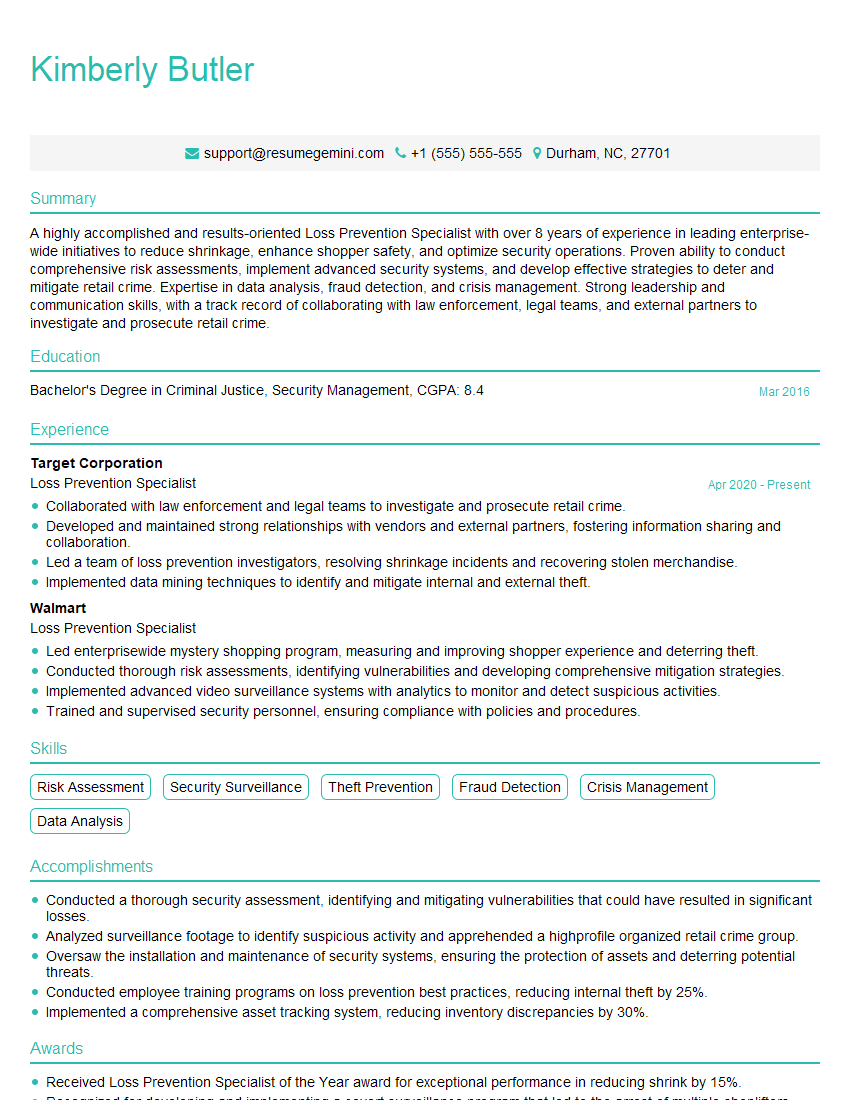
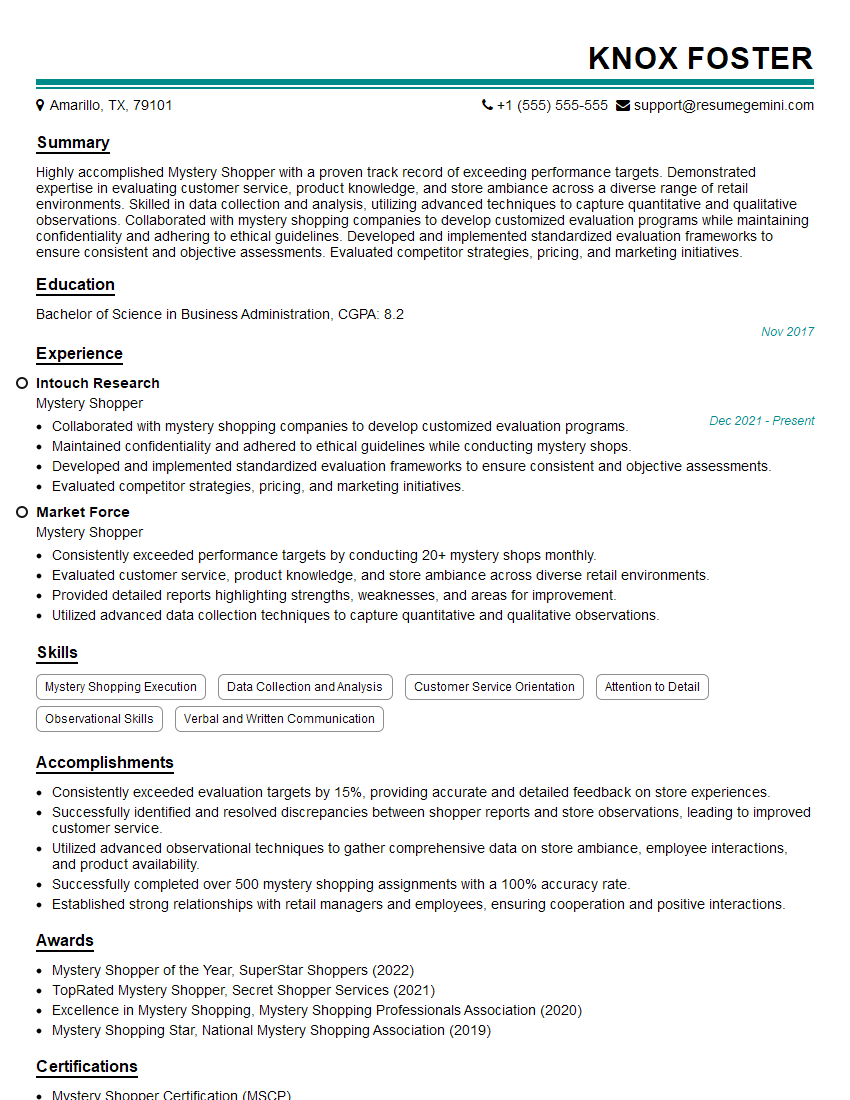
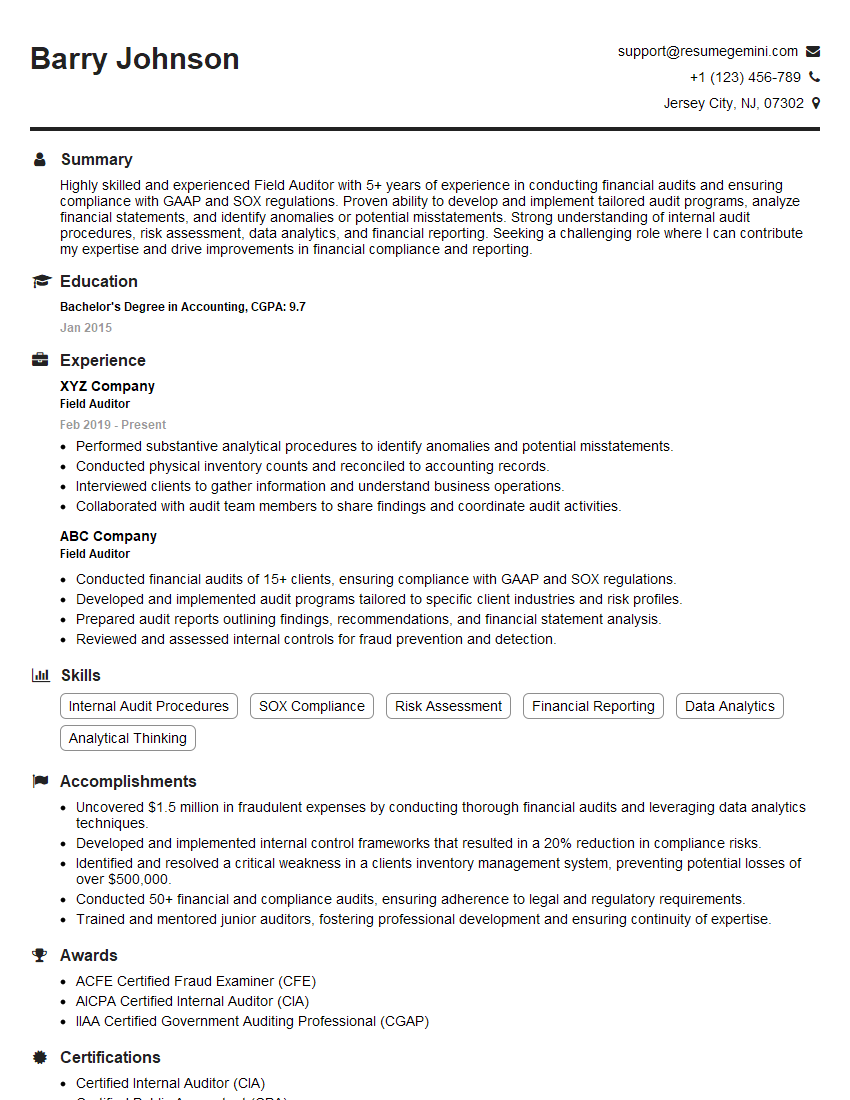
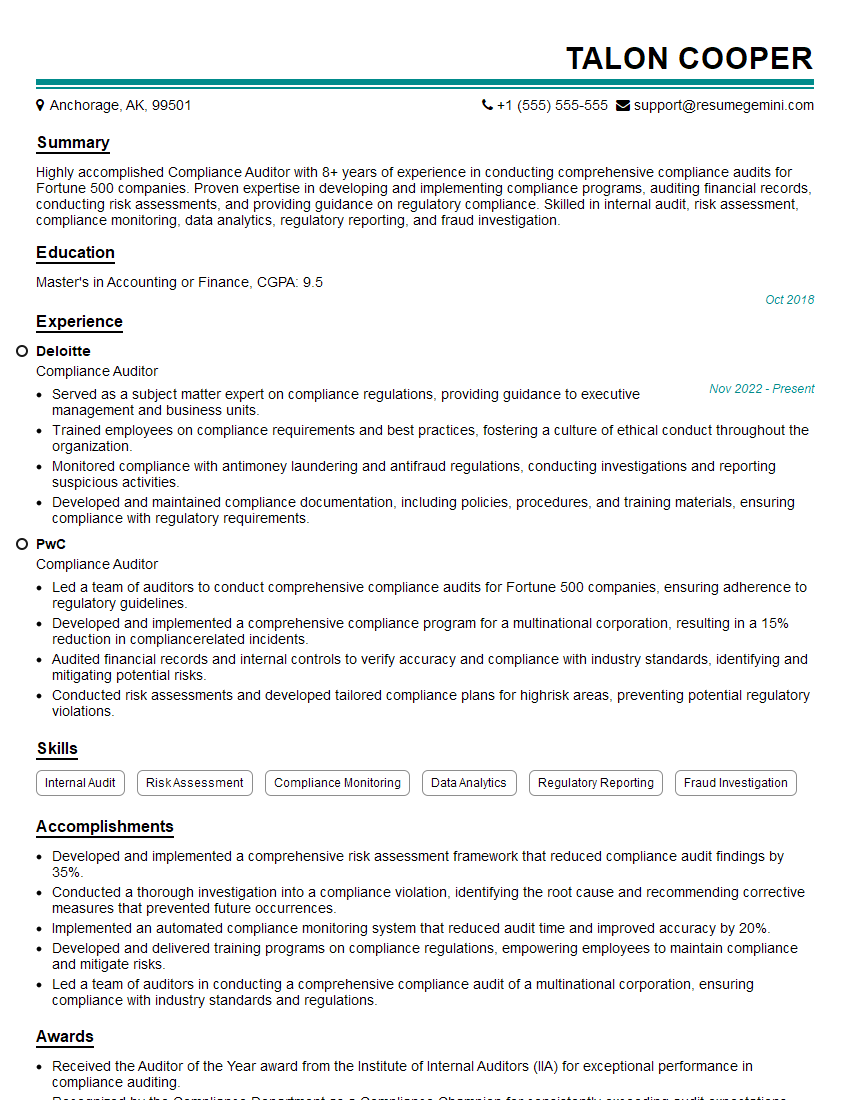
Mastering store audits is crucial for career advancement in retail and related industries, opening doors to leadership roles and increased responsibility. A strong resume is your key to unlocking these opportunities. To ensure your application gets noticed, create an ATS-friendly resume that highlights your relevant skills and experience. ResumeGemini is a trusted resource that can help you build a professional and impactful resume, tailored to the specific requirements of Store Audit roles. Examples of resumes tailored to Store Audits are available to help guide you.
Explore more articles
Users Rating of Our Blogs
Share Your Experience
We value your feedback! Please rate our content and share your thoughts (optional).
What Readers Say About Our Blog
Attention music lovers!
Wow, All the best Sax Summer music !!!
Spotify: https://open.spotify.com/artist/6ShcdIT7rPVVaFEpgZQbUk
Apple Music: https://music.apple.com/fr/artist/jimmy-sax-black/1530501936
YouTube: https://music.youtube.com/browse/VLOLAK5uy_noClmC7abM6YpZsnySxRqt3LoalPf88No
Other Platforms and Free Downloads : https://fanlink.tv/jimmysaxblack
on google : https://www.google.com/search?q=22+AND+22+AND+22
on ChatGPT : https://chat.openai.com?q=who20jlJimmy20Black20Sax20Producer
Get back into the groove with Jimmy sax Black
Best regards,
Jimmy sax Black
www.jimmysaxblack.com
Hi I am a troller at The aquatic interview center and I suddenly went so fast in Roblox and it was gone when I reset.
Hi,
Business owners spend hours every week worrying about their website—or avoiding it because it feels overwhelming.
We’d like to take that off your plate:
$69/month. Everything handled.
Our team will:
Design a custom website—or completely overhaul your current one
Take care of hosting as an option
Handle edits and improvements—up to 60 minutes of work included every month
No setup fees, no annual commitments. Just a site that makes a strong first impression.
Find out if it’s right for you:
https://websolutionsgenius.com/awardwinningwebsites
Hello,
we currently offer a complimentary backlink and URL indexing test for search engine optimization professionals.
You can get complimentary indexing credits to test how link discovery works in practice.
No credit card is required and there is no recurring fee.
You can find details here:
https://wikipedia-backlinks.com/indexing/
Regards
NICE RESPONSE TO Q & A
hi
The aim of this message is regarding an unclaimed deposit of a deceased nationale that bears the same name as you. You are not relate to him as there are millions of people answering the names across around the world. But i will use my position to influence the release of the deposit to you for our mutual benefit.
Respond for full details and how to claim the deposit. This is 100% risk free. Send hello to my email id: lukachachibaialuka@gmail.com
Luka Chachibaialuka
Hey interviewgemini.com, just wanted to follow up on my last email.
We just launched Call the Monster, an parenting app that lets you summon friendly ‘monsters’ kids actually listen to.
We’re also running a giveaway for everyone who downloads the app. Since it’s brand new, there aren’t many users yet, which means you’ve got a much better chance of winning some great prizes.
You can check it out here: https://bit.ly/callamonsterapp
Or follow us on Instagram: https://www.instagram.com/callamonsterapp
Thanks,
Ryan
CEO – Call the Monster App
Hey interviewgemini.com, I saw your website and love your approach.
I just want this to look like spam email, but want to share something important to you. We just launched Call the Monster, a parenting app that lets you summon friendly ‘monsters’ kids actually listen to.
Parents are loving it for calming chaos before bedtime. Thought you might want to try it: https://bit.ly/callamonsterapp or just follow our fun monster lore on Instagram: https://www.instagram.com/callamonsterapp
Thanks,
Ryan
CEO – Call A Monster APP
To the interviewgemini.com Owner.
Dear interviewgemini.com Webmaster!
Hi interviewgemini.com Webmaster!
Dear interviewgemini.com Webmaster!
excellent
Hello,
We found issues with your domain’s email setup that may be sending your messages to spam or blocking them completely. InboxShield Mini shows you how to fix it in minutes — no tech skills required.
Scan your domain now for details: https://inboxshield-mini.com/
— Adam @ InboxShield Mini
support@inboxshield-mini.com
Reply STOP to unsubscribe
Hi, are you owner of interviewgemini.com? What if I told you I could help you find extra time in your schedule, reconnect with leads you didn’t even realize you missed, and bring in more “I want to work with you” conversations, without increasing your ad spend or hiring a full-time employee?
All with a flexible, budget-friendly service that could easily pay for itself. Sounds good?
Would it be nice to jump on a quick 10-minute call so I can show you exactly how we make this work?
Best,
Hapei
Marketing Director
Hey, I know you’re the owner of interviewgemini.com. I’ll be quick.
Fundraising for your business is tough and time-consuming. We make it easier by guaranteeing two private investor meetings each month, for six months. No demos, no pitch events – just direct introductions to active investors matched to your startup.
If youR17;re raising, this could help you build real momentum. Want me to send more info?
Hi, I represent an SEO company that specialises in getting you AI citations and higher rankings on Google. I’d like to offer you a 100% free SEO audit for your website. Would you be interested?
Hi, I represent an SEO company that specialises in getting you AI citations and higher rankings on Google. I’d like to offer you a 100% free SEO audit for your website. Would you be interested?