Are you ready to stand out in your next interview? Understanding and preparing for environmental awareness certification interview questions is a game-changer. In this blog, we’ve compiled key questions and expert advice to help you showcase your skills with confidence and precision. Let’s get started on your journey to acing the interview.
Questions Asked in environmental awareness certification Interview
Q 1. Describe your experience with ISO 14001 environmental management systems.
ISO 14001 is an internationally recognized standard that provides a framework for establishing, implementing, maintaining, and improving an Environmental Management System (EMS). My experience encompasses all phases of ISO 14001 implementation, from initial gap analysis and documentation to certification audits and ongoing system maintenance. I’ve worked with organizations across various sectors, including manufacturing, and have a proven track record of helping them achieve and maintain certification. This involves conducting internal audits, managing non-conformances, and developing corrective actions. For example, I helped a manufacturing plant reduce their waste generation by 25% within a year by implementing a comprehensive waste segregation and recycling program as part of their ISO 14001 EMS.
My role often involves training employees on environmental procedures, ensuring compliance with legal and other requirements, and monitoring key environmental performance indicators (KPIs). I am proficient in using ISO 14001 tools and techniques, such as environmental impact assessments and risk assessments, to identify and manage environmental aspects and impacts. I also have experience with the transition to new ISO 14001 revisions, effectively adapting EMSs to the evolving requirements.
Q 2. Explain the concept of Life Cycle Assessment (LCA).
Life Cycle Assessment (LCA) is a comprehensive method used to evaluate the environmental impacts associated with a product or service throughout its entire life cycle. Think of it as a cradle-to-grave analysis. This includes everything from raw material acquisition and manufacturing to use, end-of-life management (recycling, disposal), and even transportation between stages. An LCA typically involves four stages:
- Goal and Scope Definition: Defining the purpose of the LCA and the system boundaries.
- Inventory Analysis: Quantifying the inputs and outputs of energy and materials.
- Impact Assessment: Evaluating the potential environmental impacts of these inputs and outputs, considering categories like climate change, resource depletion, and ecotoxicity.
- Interpretation: Analyzing the results and drawing conclusions to support decision-making.
For instance, an LCA might compare the environmental footprint of a plastic water bottle versus a reusable aluminum bottle, considering factors like manufacturing energy, water usage, transportation emissions, and the end-of-life disposal or recycling options. The results help inform choices about sustainable product design and consumption patterns.
Q 3. What are the key elements of a successful environmental audit?
A successful environmental audit involves a systematic, documented, objective evaluation of an organization’s environmental performance against defined criteria. Key elements include:
- Planning and Scoping: Clearly defining the audit’s objectives, scope, and criteria (e.g., ISO 14001, specific regulations).
- Audit Team Selection: Choosing qualified and unbiased auditors with relevant expertise.
- Data Collection: Gathering information through interviews, document reviews, observations, and sampling.
- Evaluation and Reporting: Analyzing the gathered data against the criteria, identifying non-conformances and areas for improvement, and preparing a comprehensive audit report.
- Follow-up: Ensuring corrective actions are implemented and verified to address identified non-conformances.
Example: An environmental audit of a chemical plant might involve reviewing permits, inspecting waste treatment facilities, verifying emission monitoring data, and interviewing personnel about emergency response plans. The report would then identify any gaps in compliance or areas where the plant could improve its environmental performance.
Q 4. How do you identify and assess environmental risks?
Identifying and assessing environmental risks involves a systematic process that typically includes:
- Hazard Identification: Identifying potential environmental hazards, such as air and water pollution, waste generation, resource depletion, and climate change impacts.
- Vulnerability Assessment: Determining the sensitivity and susceptibility of the environment (e.g., ecosystems, human populations) to these hazards.
- Risk Assessment: Evaluating the likelihood and potential severity of the identified hazards to determine the overall risk.
- Risk Prioritization: Prioritizing risks based on their likelihood, severity, and potential impacts.
For example, a construction project near a wetland would need to assess the risks of soil erosion, water pollution from runoff, and habitat destruction. This assessment would consider the probability of these events occurring and their potential damage to the environment, leading to mitigation plans.
Q 5. What are your strategies for mitigating environmental impacts?
Strategies for mitigating environmental impacts are diverse and depend on the specific risks identified. Common strategies include:
- Waste Reduction and Recycling: Implementing programs to minimize waste generation and maximize recycling and reuse.
- Pollution Prevention: Implementing measures to prevent pollution at the source (e.g., cleaner production technologies).
- Resource Efficiency: Optimizing the use of energy, water, and other resources.
- Renewable Energy Sources: Transitioning to renewable energy sources like solar and wind power.
- Carbon Offsetting: Investing in projects that reduce greenhouse gas emissions to compensate for unavoidable emissions.
- Environmental Monitoring: Continuously monitoring environmental parameters to identify and address potential problems.
For example, a manufacturing facility might implement a closed-loop water system to reduce water consumption and wastewater discharge, or invest in energy-efficient equipment to decrease energy usage and carbon emissions.
Q 6. Explain your understanding of environmental regulations (e.g., Clean Air Act, Clean Water Act).
My understanding of environmental regulations encompasses a broad range of federal, state, and local laws designed to protect the environment. The Clean Air Act (CAA) regulates air emissions from stationary and mobile sources, aiming to reduce air pollution and improve air quality. The Clean Water Act (CWA) aims to restore and maintain the chemical, physical, and biological integrity of the nation’s waters. These acts are significant as they set emission standards, permit requirements, and enforcement mechanisms. I have extensive experience working with environmental regulations, understanding permit applications, compliance monitoring, and reporting requirements. I can ensure organizations fully comply with all relevant regulations. For example, I’ve assisted organizations in obtaining necessary permits (such as air quality permits and discharge permits) and in developing compliance programs to meet regulatory requirements.
Beyond the CAA and CWA, I’m familiar with numerous other regulations related to hazardous waste management, endangered species protection, and the handling of specific chemicals and pollutants. I understand the importance of staying up-to-date on regulatory changes and ensuring organizations adapt their environmental management systems accordingly.
Q 7. Describe your experience with environmental monitoring and reporting.
Environmental monitoring and reporting is a crucial aspect of effective environmental management. My experience includes developing and implementing comprehensive monitoring programs to track key environmental indicators such as air and water quality, waste generation, energy consumption, and greenhouse gas emissions. I am proficient in using various monitoring techniques and technologies, collecting and analyzing data, and preparing comprehensive reports. This includes data management and using specialized software to interpret findings and track progress against targets and regulatory limits. The reporting process includes generating regular reports for internal management and external stakeholders (e.g., regulatory agencies). For example, I’ve developed automated reporting systems for a manufacturing plant to track their energy usage and greenhouse gas emissions, allowing them to efficiently monitor their performance and identify areas for improvement. A clear, well-structured report allows decision-makers to visualize and understand the facility’s environmental progress, leading to improved environmental management practices.
Q 8. How do you ensure compliance with environmental regulations?
Ensuring compliance with environmental regulations is paramount for any organization. It’s a multifaceted process involving a deep understanding of applicable laws, diligent monitoring, and proactive mitigation. This begins with identifying all relevant legislation – local, regional, national, and even international, depending on the organization’s scope. For example, a manufacturing company might need to comply with Clean Air Act regulations, waste disposal permits, and potentially international treaties related to hazardous materials.
Next, we conduct regular audits and assessments to ensure we’re meeting all required standards. This involves checking emission levels, waste handling procedures, and the proper use of chemicals. We use specialized software to track our progress against regulatory thresholds and to identify potential areas of non-compliance. If we identify a gap, we develop a corrective action plan, documenting the issue, the steps taken to rectify it, and how we’ll prevent its recurrence. This documentation is crucial for demonstrating compliance to regulatory bodies during inspections.
Finally, continuous improvement is key. We stay updated on changes to legislation and best practices, participate in industry forums, and invest in training to maintain our expertise in environmental compliance. Think of it like a doctor performing regular check-ups; preventative measures are far more effective (and less costly) than reactive ones.
Q 9. What are some common environmental management tools and techniques?
Environmental management employs a suite of tools and techniques to minimize environmental impact. Some common ones include:
- Environmental Management Systems (EMS): Frameworks like ISO 14001 provide a structured approach to managing environmental responsibilities. They help organizations set environmental objectives, implement processes, and track performance. Think of it as a comprehensive roadmap for environmental stewardship.
- Life Cycle Assessment (LCA): This technique assesses the environmental impact of a product or service throughout its entire lifecycle, from raw material extraction to disposal. This allows us to identify hotspots where environmental impacts are greatest and prioritize improvements. For instance, we can see whether to focus on reducing packaging waste or switching to a more sustainable material.
- Pollution Prevention (P2): This focuses on reducing pollution at the source rather than treating it after it’s created. Examples include improving process efficiency to reduce waste or using less hazardous materials. This is a cost-effective approach focusing on prevention, reducing both environmental impact and waste disposal costs.
- Environmental Audits: These are systematic, documented evaluations to verify compliance with environmental regulations and identify areas for improvement. These audits can be internal or conducted by external experts, providing an objective assessment of the organization’s environmental performance.
Choosing the right combination of tools depends on an organization’s specific context, industry, and environmental goals.
Q 10. How do you integrate sustainability into business operations?
Integrating sustainability into business operations isn’t just an ethical consideration; it’s a strategic imperative. It starts with embedding sustainability into the core business strategy, ensuring that environmental considerations are woven into decision-making at all levels. This means aligning environmental objectives with overall business goals.
We can achieve this through several key initiatives: Developing sustainable supply chains by sourcing materials from responsible suppliers, reducing energy consumption through energy-efficient technologies, implementing waste reduction and recycling programs, and investing in renewable energy sources. For example, our company partnered with a local supplier committed to sustainable forestry practices, ensuring the wood we use is responsibly sourced. This improves our environmental impact while enhancing our brand reputation.
Furthermore, we incorporate sustainability into product design, focusing on reducing environmental impact throughout the product lifecycle. We encourage eco-friendly practices amongst our employees through training and awareness campaigns, fostering a culture of environmental responsibility. Finally, transparent reporting on our sustainability performance allows us to demonstrate accountability to stakeholders and continuously improve our efforts.
Q 11. Describe your experience with waste management strategies.
My experience with waste management spans various strategies, focusing on the ‘reduce, reuse, recycle’ hierarchy. I’ve been involved in designing and implementing waste reduction programs, focusing on minimizing waste generation at the source. This often involves process optimization and improved material selection. For example, in a previous role, we implemented a lean manufacturing system which cut waste by 15%.
Reuse strategies include repurposing materials or products, extending their lifespan before disposal. Recycling programs are crucial, focusing on sorting and processing waste streams for recovery. This includes establishing partnerships with local recycling facilities and ensuring proper labeling and segregation of waste. In one project, we implemented a comprehensive recycling program which diverted 70% of waste from landfills. Finally, responsible disposal of hazardous waste, through approved and licensed disposal facilities, is crucial for environmental protection. Every step requires meticulous record-keeping, compliance with regulations, and continuous monitoring.
Q 12. Explain your understanding of carbon footprint analysis.
Carbon footprint analysis quantifies the total amount of greenhouse gases (GHGs) produced directly and indirectly by an organization, product, or event. It’s a vital tool for understanding and mitigating climate change. A carbon footprint is typically expressed in tons of carbon dioxide equivalent (tCO2e), considering the global warming potential of various GHGs.
The analysis involves two main scopes: Scope 1 includes direct emissions from sources owned or controlled by the organization (e.g., on-site combustion). Scope 2 covers indirect emissions from purchased energy. Scope 3 encompasses all other indirect emissions throughout the value chain, including supply chains, transportation, and the use of sold products. Scope 3 is often the most challenging but is also crucial for a comprehensive understanding. Analyzing the data helps identify major emission sources and guide mitigation strategies. This might involve investing in renewable energy, improving energy efficiency, adopting more sustainable transportation methods, and engaging suppliers to reduce their emissions.
Q 13. How do you conduct an environmental impact assessment?
Conducting an environmental impact assessment (EIA) is a systematic process to identify, predict, evaluate, and mitigate the potential environmental impacts of a proposed project or activity. It’s a crucial step before commencing any project that could significantly affect the environment.
The process typically involves several stages: scoping and planning, baseline data collection (e.g., air and water quality, biodiversity), impact prediction and assessment using models and expert judgment, mitigation measures identification and evaluation, public consultation, and the final EIA report. The report summarizes the findings, proposed mitigation strategies, and outlines a plan for monitoring the project’s environmental performance. The entire process requires collaboration with various experts, stakeholders, and regulatory authorities, ensuring a robust and comprehensive evaluation of potential environmental consequences. The goal is to prevent or mitigate negative impacts, allowing the project to proceed responsibly and sustainably.
Q 14. What are the key performance indicators (KPIs) for environmental performance?
Key Performance Indicators (KPIs) are crucial for tracking progress towards environmental goals. These metrics provide quantifiable measures of environmental performance, enabling organizations to monitor, evaluate, and improve their environmental management. Examples include:
- Greenhouse gas emissions (tCO2e): Tracks the organization’s contribution to climate change.
- Energy consumption (kWh): Measures energy efficiency improvements.
- Water consumption (m³): Monitors water usage and efficiency.
- Waste generation (kg): Tracks the amount of waste produced and progress towards waste reduction.
- Recycling rate (%): Measures the proportion of waste recycled.
- Compliance rate (%): Tracks adherence to environmental regulations.
- Biodiversity indicators (e.g., number of species): Assesses impact on local ecosystems.
The specific KPIs chosen should be relevant to the organization’s context, industry, and environmental goals. Regular monitoring and reporting on these KPIs are essential for demonstrating environmental performance, identifying areas for improvement, and supporting continuous improvement efforts.
Q 15. Describe your experience with environmental data analysis and interpretation.
My experience with environmental data analysis involves a multi-faceted approach, combining statistical methods with geographic information systems (GIS) and environmental modeling. I’ve worked extensively with datasets including air and water quality monitoring data, greenhouse gas emissions inventories, and biodiversity surveys. For instance, in a recent project, I analyzed water quality data from multiple monitoring stations along a river system to identify pollution sources. This involved using statistical techniques like regression analysis to correlate pollution levels with potential sources, such as industrial discharges or agricultural runoff. The resulting analysis helped inform remediation strategies and regulatory actions.
Furthermore, I utilize GIS to visualize spatial patterns of environmental data. For example, I’ve mapped deforestation rates in a specific region using satellite imagery and overlaid it with demographic and socioeconomic data to understand the drivers of deforestation. This spatial analysis helped in developing targeted conservation interventions. Finally, I employ environmental modeling to predict future environmental impacts, such as climate change projections on water resources or the spread of invasive species. The output from these models informs long-term planning and proactive mitigation strategies.
Career Expert Tips:
- Ace those interviews! Prepare effectively by reviewing the Top 50 Most Common Interview Questions on ResumeGemini.
- Navigate your job search with confidence! Explore a wide range of Career Tips on ResumeGemini. Learn about common challenges and recommendations to overcome them.
- Craft the perfect resume! Master the Art of Resume Writing with ResumeGemini’s guide. Showcase your unique qualifications and achievements effectively.
- Don’t miss out on holiday savings! Build your dream resume with ResumeGemini’s ATS optimized templates.
Q 16. How do you communicate environmental issues to different stakeholders?
Communicating environmental issues effectively requires tailoring the message to the audience. For executives, I focus on the financial implications of environmental risks and opportunities, highlighting cost savings from efficiency improvements or potential liabilities from non-compliance. For example, I would present a cost-benefit analysis of implementing a renewable energy system, demonstrating its long-term financial advantages.
For technical staff, I use detailed data and scientific reports to inform their decision-making. With community stakeholders, I use visual aids, simplified language, and interactive workshops to ensure transparency and encourage participation. For example, I might present community feedback on environmental issues through infographics and stakeholder collaboration.
Regardless of the audience, I always ensure the message is clear, concise, accurate, and supported by credible data. This ensures understanding and buy-in across different groups.
Q 17. What are some common environmental challenges facing businesses today?
Businesses today face a multitude of environmental challenges. One major issue is climate change, necessitating reductions in greenhouse gas emissions and adaptation to changing weather patterns. This involves transitioning to renewable energy, improving energy efficiency, and managing carbon footprints.
- Resource depletion is another significant challenge, driving the need for sustainable sourcing and circular economy principles.
- Water scarcity and pollution require efficient water management practices and wastewater treatment solutions.
- Waste management is crucial, demanding effective recycling and waste reduction strategies.
- Biodiversity loss necessitates responsible land management and conservation efforts.
- Regulatory compliance, is vital for avoiding penalties and reputational damage.
These challenges present both risks and opportunities for businesses. Addressing them proactively can enhance brand reputation, attract investors, and drive innovation.
Q 18. How do you prioritize environmental projects and initiatives?
Prioritizing environmental projects uses a multi-criteria decision analysis (MCDA) approach, balancing urgency, impact, and feasibility. I utilize a framework that incorporates:
- Materiality assessment: Identifying environmental issues most relevant to the business and its stakeholders.
- Risk assessment: Evaluating the potential environmental, social, and financial consequences of inaction.
- Cost-benefit analysis: Assessing the financial viability and return on investment for each project.
- Resource availability: Considering the available budget, personnel, and technology.
- Alignment with business strategy: Ensuring environmental initiatives support overall business goals.
This framework allows for objective prioritization, leading to optimal allocation of resources and achieving the greatest environmental and business impact. For instance, a project with high environmental impact and relatively low cost would be prioritized over one with lower impact and high cost, assuming similar feasibility.
Q 19. Describe your experience with environmental remediation projects.
My experience with environmental remediation projects includes overseeing the cleanup of contaminated soil and groundwater. One project involved the remediation of a site contaminated with industrial solvents. This included detailed site characterization to determine the extent of contamination, followed by the selection and implementation of appropriate remediation technologies, such as soil excavation and bioremediation.
Throughout the project, rigorous monitoring was crucial to ensure the effectiveness of the chosen methods and compliance with regulatory requirements. Detailed documentation and reporting were essential for regulatory compliance and transparency. Successful remediation projects require a strong understanding of environmental regulations, technical expertise in remediation technologies, and robust project management skills.
Q 20. Explain your understanding of circular economy principles.
The circular economy promotes sustainable resource management by minimizing waste and maximizing resource utilization. It contrasts with the traditional linear economy (‘take-make-dispose’) by emphasizing reuse, recycling, and regeneration. Key principles include:
- Design out waste and pollution: Products are designed for durability, repairability, and recyclability from the outset.
- Keep products and materials in use: Strategies like reuse, repair, and refurbishment extend product lifecycles.
- Regenerate natural systems: Waste is viewed as a resource, with processes like composting and anaerobic digestion returning materials to the environment.
Implementing circular economy principles reduces environmental impact, conserves resources, and generates economic opportunities. For example, a company could switch to using recycled materials in its production processes or design products for easy disassembly and component reuse.
Q 21. What is your approach to continuous improvement in environmental management?
Continuous improvement in environmental management involves a systematic approach using the Plan-Do-Check-Act (PDCA) cycle. This iterative process involves:
- Planning: Setting clear environmental goals, identifying key performance indicators (KPIs), and developing action plans.
- Doing: Implementing the action plans and monitoring progress against KPIs.
- Checking: Regularly reviewing performance data, identifying gaps, and analyzing the effectiveness of implemented measures.
- Acting: Making adjustments to the action plans based on the review findings and implementing improvements.
Regular environmental audits, employee training, and benchmarking against industry best practices are essential components of this continuous improvement process. This proactive approach ensures ongoing enhancement of environmental performance and adaptation to evolving environmental challenges.
Q 22. How do you stay up-to-date with environmental regulations and best practices?
Staying current in the dynamic field of environmental regulations and best practices requires a multi-pronged approach. I leverage several key strategies:
- Subscription to professional journals and online databases: I regularly read publications like Environmental Science & Technology, and access databases such as Web of Science and Scopus to keep abreast of the latest research and regulatory updates.
- Active participation in professional organizations: Membership in organizations like the Society of Environmental Toxicology and Chemistry (SETAC) provides access to conferences, webinars, and networking opportunities with leading experts. This allows me to learn about emerging challenges and best practices directly from the source.
- Monitoring government websites and regulatory agencies: I closely follow the Environmental Protection Agency (EPA) website and other relevant government agencies, both nationally and internationally, for updates on new legislation, policy changes, and guidance documents.
- Continuing education: I actively pursue professional development opportunities, including workshops and online courses, to stay informed about new technologies, methodologies, and evolving standards in environmental management.
- Networking and collaboration: Engaging with colleagues and experts in the field through conferences, workshops, and online forums provides valuable insights and diverse perspectives on emerging trends.
This holistic approach ensures that my knowledge base remains comprehensive and relevant, enabling me to effectively contribute to environmental compliance and sustainability initiatives.
Q 23. Describe a time you had to solve a complex environmental problem.
During my time at a manufacturing plant, we faced a significant challenge with wastewater discharge exceeding permitted limits of heavy metals. This wasn’t simply a matter of adjusting a single parameter; it required a comprehensive investigation to pinpoint the source and implement a multifaceted solution.
My approach involved:
- Thorough investigation: We systematically analyzed the entire wastewater production process, collecting samples at multiple points to identify the precise source of the heavy metal contamination. This involved analyzing the chemical composition of raw materials, intermediate products, and final effluents.
- Data analysis: Statistical methods were applied to the data collected to identify correlations between specific production stages and the elevated heavy metal levels. This helped isolate the problematic step in the process.
- Implementing corrective actions: Based on the findings, we implemented several corrective measures: improving the pre-treatment of raw materials, optimizing the cleaning procedures for machinery, and installing a more advanced wastewater treatment system including a specialized filtration process for heavy metal removal.
- Monitoring and evaluation: Following implementation of the corrective actions, regular monitoring of wastewater discharge was carried out to ensure compliance with environmental regulations. This included regular testing and reporting to the relevant regulatory authorities.
The successful resolution of this problem demonstrated my ability to leverage both technical expertise and problem-solving skills to address complex environmental challenges and achieve compliance.
Q 24. How would you handle a conflict between environmental compliance and production goals?
Balancing environmental compliance with production goals often presents a crucial dilemma. My approach focuses on finding a sustainable solution that minimizes environmental impact without significantly hindering production efficiency. This requires a collaborative approach involving multiple stakeholders.
Here’s how I’d handle such a conflict:
- Open Communication: I’d initiate a collaborative dialogue involving production managers, engineering, environmental compliance officers, and potentially external experts. This promotes transparency and shared understanding of the challenges.
- Prioritization and Risk Assessment: We would collaboratively identify the specific compliance issues and assess the potential environmental and business risks associated with non-compliance. This involves evaluating potential fines, reputational damage, and the impact on long-term sustainability.
- Exploring Alternative Solutions: This step explores multiple solutions. For example, could technology upgrades reduce waste? Could process optimization enhance efficiency while reducing environmental impact? Cost-benefit analyses would be crucial here.
- Implementation and Monitoring: The selected solution is implemented, carefully monitored, and regularly assessed for its effectiveness in meeting both environmental and production targets. Adaptive management, meaning adjustments as needed based on monitoring data, is crucial.
- Documentation and Reporting: Thorough documentation of the decision-making process, implemented solutions, and monitoring results is essential for transparency and accountability.
This systematic and collaborative approach helps find a solution that minimizes environmental impact while maintaining acceptable production levels. It prioritizes long-term sustainability and responsible environmental stewardship.
Q 25. What are your strengths and weaknesses regarding environmental awareness?
My strengths lie in my analytical skills, attention to detail, and my proactive approach to environmental compliance. I’m adept at interpreting complex regulations, conducting thorough environmental assessments, and developing effective strategies to minimize environmental impact. I also possess strong communication skills, enabling me to effectively communicate technical information to diverse audiences.
One area where I’m continuously working to improve is my familiarity with the latest advancements in emerging environmental technologies. While I have a solid understanding of current best practices, the rapid evolution of technologies requires constant learning and updating. I actively pursue opportunities to learn about new technologies through professional development programs and collaborations with experts in this field.
Q 26. Explain your understanding of different environmental certifications (e.g., LEED, BREEAM).
LEED (Leadership in Energy and Environmental Design) and BREEAM (Building Research Establishment Environmental Assessment Method) are widely recognized green building certification systems that evaluate the environmental performance of buildings. They assess various aspects of sustainability, including energy efficiency, water conservation, material selection, and indoor environmental quality.
LEED is a US-based system focusing on aspects like energy efficiency, water usage reduction, sustainable site development, and material selection. Different levels of certification exist (Certified, Silver, Gold, Platinum), reflecting increasing levels of sustainability performance. It emphasizes the entire lifecycle of the building from design to construction to operation.
BREEAM, originating in the UK, has a broader scope, encompassing aspects beyond just buildings; it also assesses infrastructure projects. It uses a credit-based system, where points are awarded for meeting specific sustainability criteria. Similar to LEED, higher scores lead to higher certification levels.
While both aim for environmentally friendly buildings, their specific criteria and rating systems differ. Understanding these differences is crucial when selecting appropriate certification programs for a project, based on its location and specific goals.
Q 27. How familiar are you with different environmental management software?
I have experience using several environmental management software packages. My familiarity includes:
- Environmental Information Management Systems (EIMS): I am proficient in using EIMS software to manage environmental data, track compliance, and generate reports for regulatory agencies. These typically include modules for waste management, emissions monitoring, and spill reporting.
- Geographic Information Systems (GIS): I have experience integrating GIS software to map environmental data and assess spatial relationships, critical in analyzing pollution patterns or assessing environmental risks.
- Life Cycle Assessment (LCA) software: I am familiar with using LCA software to evaluate the environmental impacts of products or processes throughout their entire lifecycle, from raw material extraction to disposal or recycling. This is crucial for decision-making in sustainable product development.
My experience isn’t limited to specific software names, but rather encompasses the core functionalities of various environmental management platforms. I readily adapt to new software as needed and am confident in my ability to quickly learn and effectively utilize new tools.
Q 28. What are your salary expectations for this position?
My salary expectations for this position are commensurate with my experience, skills, and the market rate for similar roles in this region. I am open to discussing a competitive compensation package that reflects my value to your organization. I’m more interested in a position that offers professional growth and opportunities to contribute to a company committed to environmental sustainability than in focusing solely on a specific salary number. Let’s discuss this further and find a mutually beneficial arrangement.
Key Topics to Learn for Environmental Awareness Certification Interview
- Environmental Legislation and Policy: Understanding key environmental laws, regulations, and international agreements (e.g., Clean Air Act, Endangered Species Act). Practical application: Analyzing the impact of a specific policy on a project or industry.
- Sustainable Practices and Technologies: Exploring eco-friendly alternatives in various sectors (e.g., renewable energy, waste management, sustainable agriculture). Practical application: Evaluating the environmental footprint of a product or process and proposing improvements.
- Environmental Impact Assessment (EIA): Mastering the principles and methodologies of EIAs, including data collection, analysis, and report writing. Practical application: Conducting a simplified EIA for a hypothetical project, identifying potential environmental risks and mitigation strategies.
- Climate Change and Mitigation: Understanding the science behind climate change, its impacts, and various mitigation and adaptation strategies. Practical application: Developing a plan to reduce carbon emissions within an organization.
- Pollution Control and Remediation: Knowledge of different types of pollution (air, water, soil), their sources, and remediation techniques. Practical application: Proposing solutions for a specific pollution problem in a given scenario.
- Biodiversity and Conservation: Understanding the importance of biodiversity, threats to ecosystems, and conservation strategies. Practical application: Developing a conservation plan for a threatened species or habitat.
- Environmental Management Systems (EMS): Familiarity with ISO 14001 or similar standards for environmental management. Practical application: Describing the implementation and benefits of an EMS within a company.
Next Steps
Mastering environmental awareness certification significantly enhances your career prospects in a growing field dedicated to sustainability. It demonstrates your commitment to environmental responsibility and opens doors to a wider range of opportunities. To maximize your job search success, crafting a strong, ATS-friendly resume is crucial. ResumeGemini is a trusted resource that can help you build a professional and impactful resume, designed to get noticed by potential employers. Examples of resumes tailored to environmental awareness certification are available to guide your process. Invest in yourself and your future – build the resume that reflects your expertise and lands you your dream job.
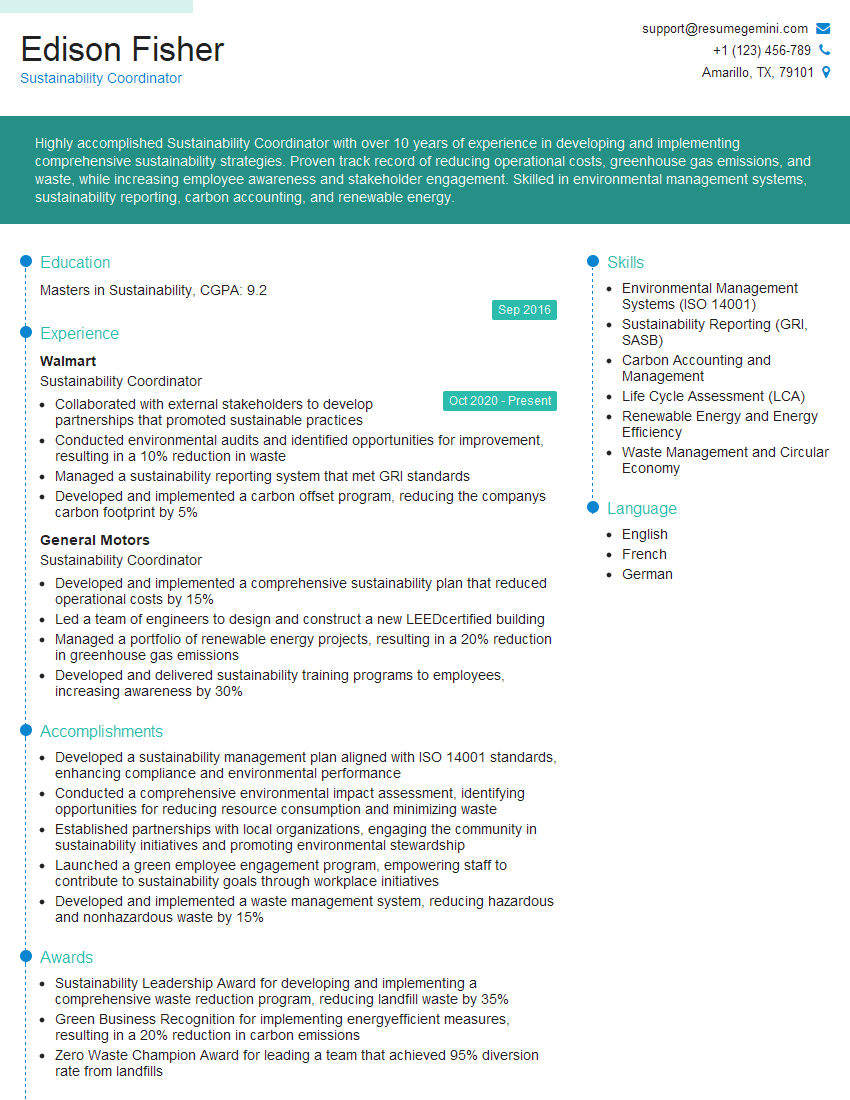
Sustainability Coordinator Resume Sample
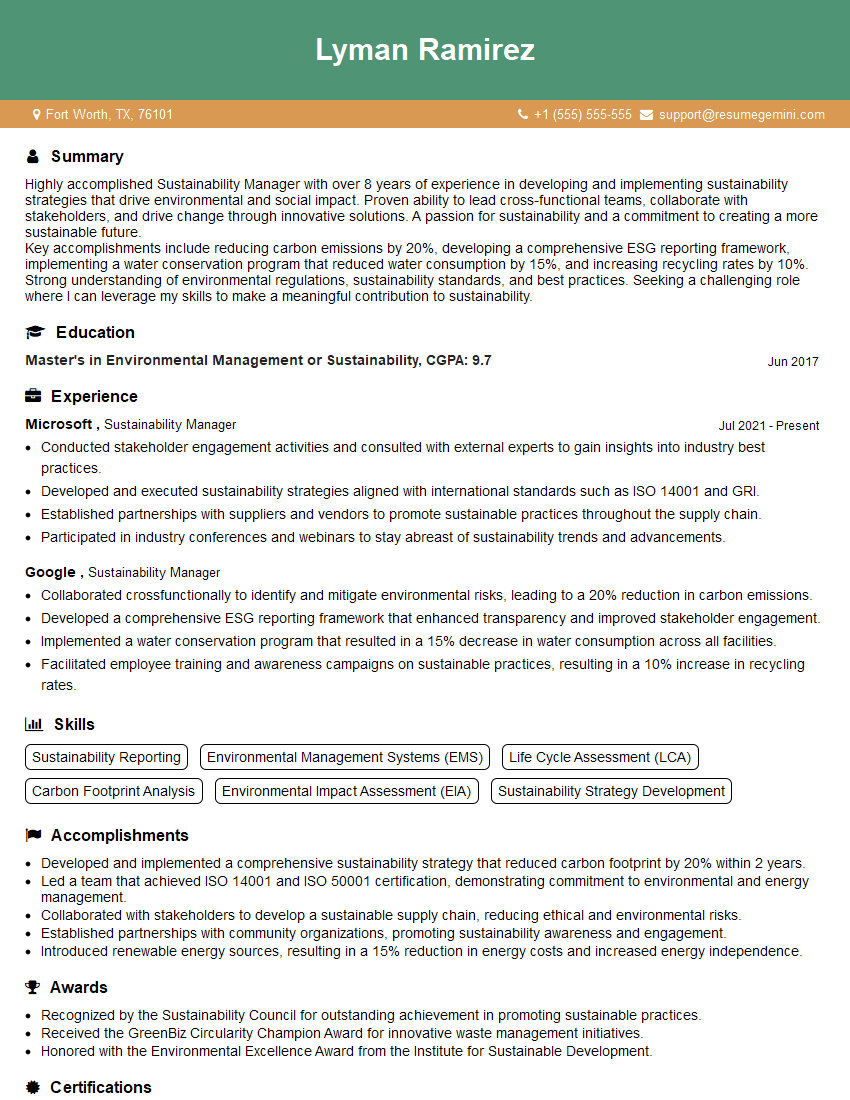
Sustainability Manager Resume Sample
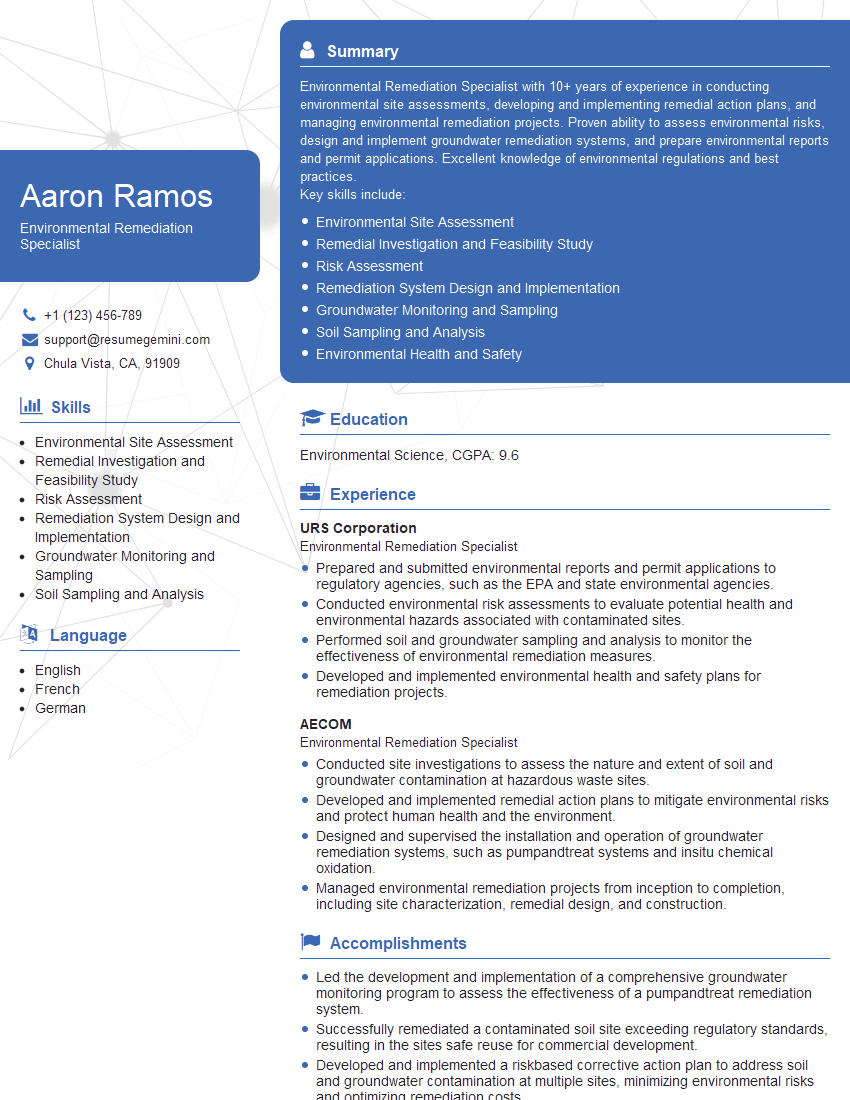
Environmental Remediation Specialist Resume Sample
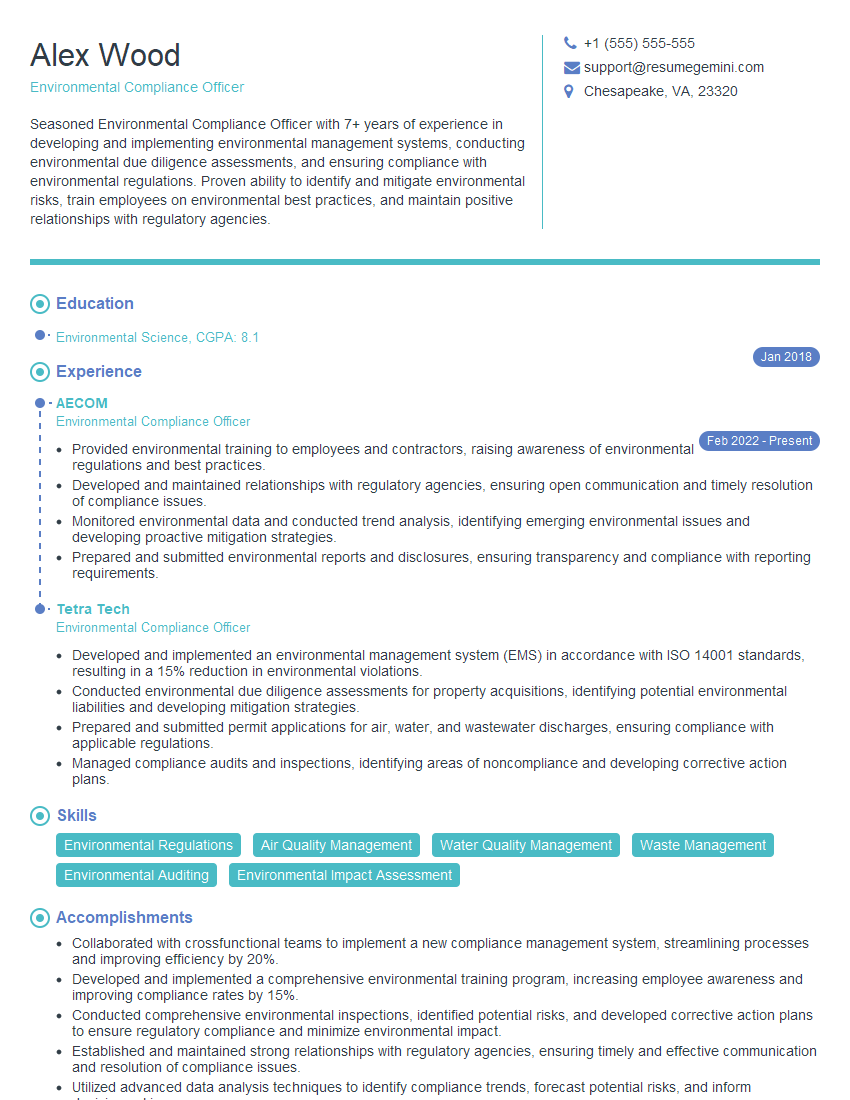
Environmental Compliance Officer Resume Sample
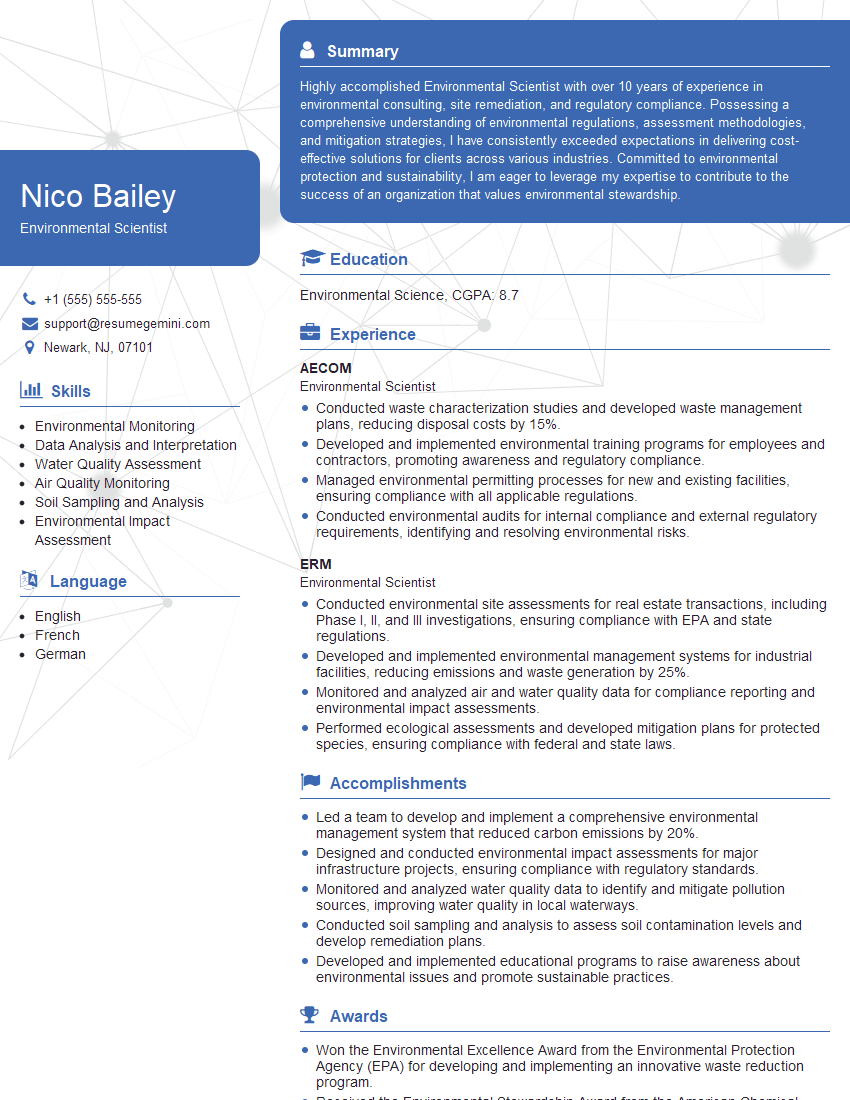
Environmental Scientist Resume Sample
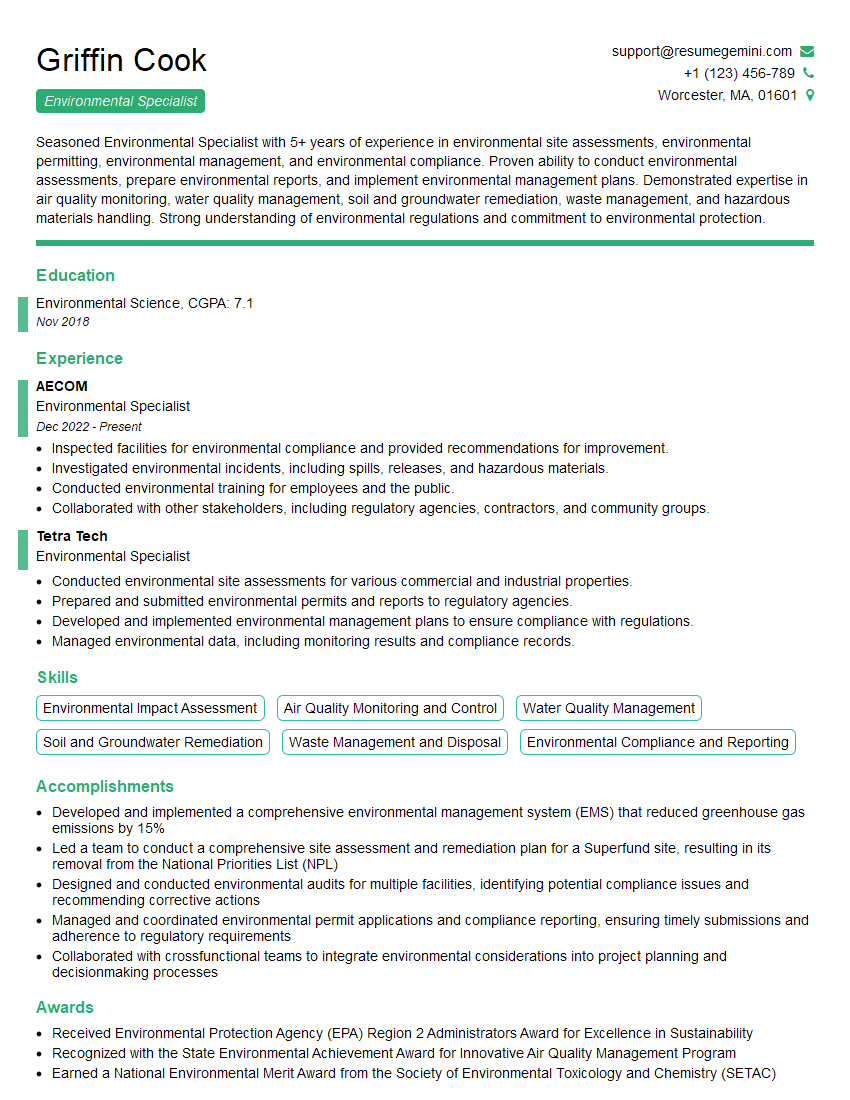
Environmental Specialist Resume Sample
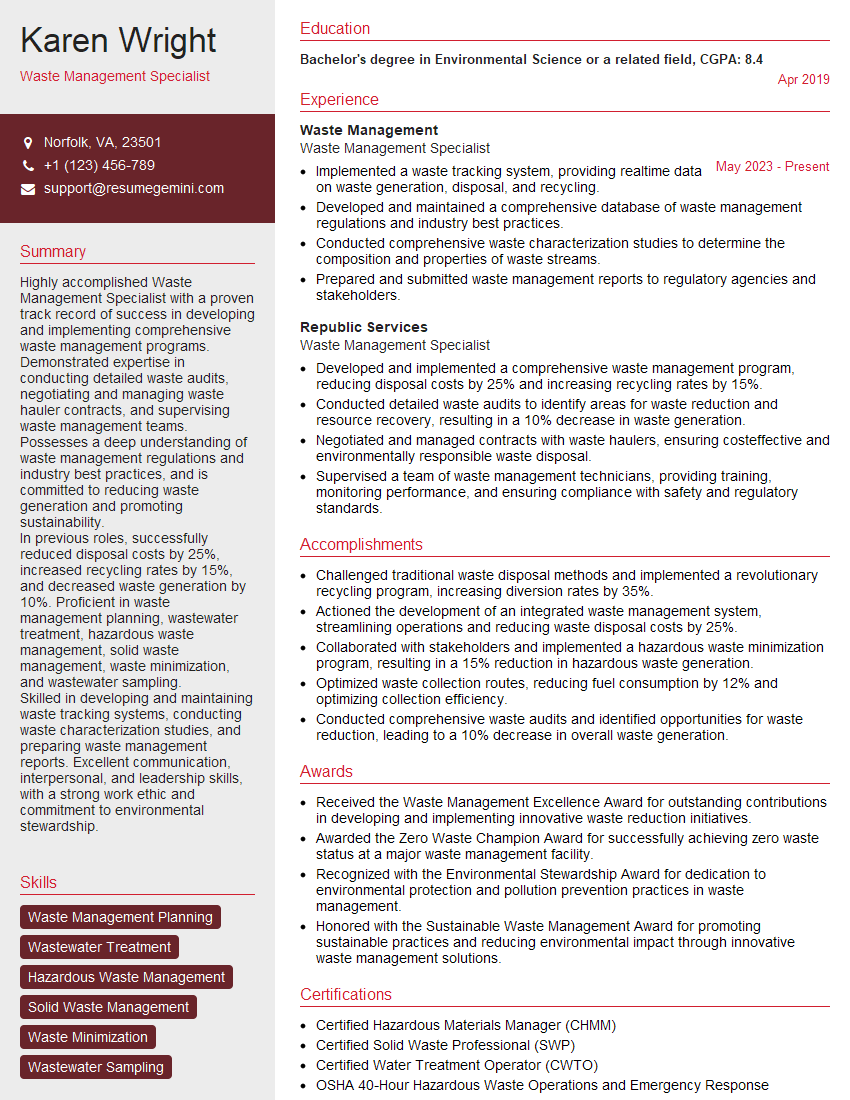
Waste Management Specialist Resume Sample
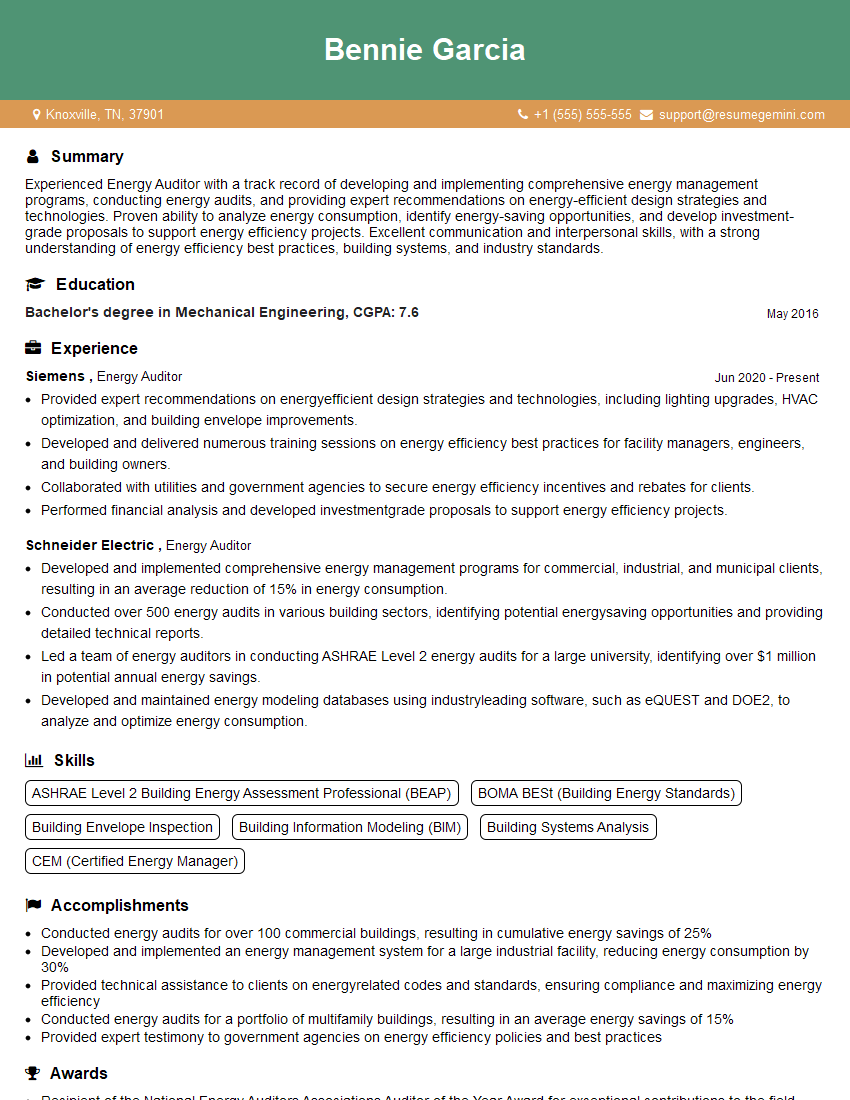
Energy Auditor Resume Sample
Renewable Energy Consultant Resume Sample
Sustainability Analyst Resume Sample

Sustainability Consultant Resume Sample
Environmental Engineer Resume Sample
Environmental Project Manager Resume Sample
- Sustainability Coordinator
- Sustainability Manager
- Environmental Remediation Specialist
- Environmental Compliance Officer
- Environmental Scientist
- Environmental Specialist
- Waste Management Specialist
- Energy Auditor
- Renewable Energy Consultant
- Sustainability Analyst
- Sustainability Consultant
- Environmental Engineer
- Environmental Project Manager
Explore more articles
Users Rating of Our Blogs
Share Your Experience
We value your feedback! Please rate our content and share your thoughts (optional).
What Readers Say About Our Blog
Attention music lovers!
Wow, All the best Sax Summer music !!!
Spotify: https://open.spotify.com/artist/6ShcdIT7rPVVaFEpgZQbUk
Apple Music: https://music.apple.com/fr/artist/jimmy-sax-black/1530501936
YouTube: https://music.youtube.com/browse/VLOLAK5uy_noClmC7abM6YpZsnySxRqt3LoalPf88No
Other Platforms and Free Downloads : https://fanlink.tv/jimmysaxblack
on google : https://www.google.com/search?q=22+AND+22+AND+22
on ChatGPT : https://chat.openai.com?q=who20jlJimmy20Black20Sax20Producer
Get back into the groove with Jimmy sax Black
Best regards,
Jimmy sax Black
www.jimmysaxblack.com
Hi I am a troller at The aquatic interview center and I suddenly went so fast in Roblox and it was gone when I reset.
Hi,
Business owners spend hours every week worrying about their website—or avoiding it because it feels overwhelming.
We’d like to take that off your plate:
$69/month. Everything handled.
Our team will:
Design a custom website—or completely overhaul your current one
Take care of hosting as an option
Handle edits and improvements—up to 60 minutes of work included every month
No setup fees, no annual commitments. Just a site that makes a strong first impression.
Find out if it’s right for you:
https://websolutionsgenius.com/awardwinningwebsites
Hello,
we currently offer a complimentary backlink and URL indexing test for search engine optimization professionals.
You can get complimentary indexing credits to test how link discovery works in practice.
No credit card is required and there is no recurring fee.
You can find details here:
https://wikipedia-backlinks.com/indexing/
Regards
NICE RESPONSE TO Q & A
hi
The aim of this message is regarding an unclaimed deposit of a deceased nationale that bears the same name as you. You are not relate to him as there are millions of people answering the names across around the world. But i will use my position to influence the release of the deposit to you for our mutual benefit.
Respond for full details and how to claim the deposit. This is 100% risk free. Send hello to my email id: lukachachibaialuka@gmail.com
Luka Chachibaialuka
Hey interviewgemini.com, just wanted to follow up on my last email.
We just launched Call the Monster, an parenting app that lets you summon friendly ‘monsters’ kids actually listen to.
We’re also running a giveaway for everyone who downloads the app. Since it’s brand new, there aren’t many users yet, which means you’ve got a much better chance of winning some great prizes.
You can check it out here: https://bit.ly/callamonsterapp
Or follow us on Instagram: https://www.instagram.com/callamonsterapp
Thanks,
Ryan
CEO – Call the Monster App
Hey interviewgemini.com, I saw your website and love your approach.
I just want this to look like spam email, but want to share something important to you. We just launched Call the Monster, a parenting app that lets you summon friendly ‘monsters’ kids actually listen to.
Parents are loving it for calming chaos before bedtime. Thought you might want to try it: https://bit.ly/callamonsterapp or just follow our fun monster lore on Instagram: https://www.instagram.com/callamonsterapp
Thanks,
Ryan
CEO – Call A Monster APP
To the interviewgemini.com Owner.
Dear interviewgemini.com Webmaster!
Hi interviewgemini.com Webmaster!
Dear interviewgemini.com Webmaster!
excellent
Hello,
We found issues with your domain’s email setup that may be sending your messages to spam or blocking them completely. InboxShield Mini shows you how to fix it in minutes — no tech skills required.
Scan your domain now for details: https://inboxshield-mini.com/
— Adam @ InboxShield Mini
support@inboxshield-mini.com
Reply STOP to unsubscribe
Hi, are you owner of interviewgemini.com? What if I told you I could help you find extra time in your schedule, reconnect with leads you didn’t even realize you missed, and bring in more “I want to work with you” conversations, without increasing your ad spend or hiring a full-time employee?
All with a flexible, budget-friendly service that could easily pay for itself. Sounds good?
Would it be nice to jump on a quick 10-minute call so I can show you exactly how we make this work?
Best,
Hapei
Marketing Director
Hey, I know you’re the owner of interviewgemini.com. I’ll be quick.
Fundraising for your business is tough and time-consuming. We make it easier by guaranteeing two private investor meetings each month, for six months. No demos, no pitch events – just direct introductions to active investors matched to your startup.
If youR17;re raising, this could help you build real momentum. Want me to send more info?
Hi, I represent an SEO company that specialises in getting you AI citations and higher rankings on Google. I’d like to offer you a 100% free SEO audit for your website. Would you be interested?
Hi, I represent an SEO company that specialises in getting you AI citations and higher rankings on Google. I’d like to offer you a 100% free SEO audit for your website. Would you be interested?