Preparation is the key to success in any interview. In this post, we’ll explore crucial Feed materials into machines interview questions and equip you with strategies to craft impactful answers. Whether you’re a beginner or a pro, these tips will elevate your preparation.
Questions Asked in Feed materials into machines Interview
Q 1. Explain the different methods for feeding materials into machines.
Feeding materials into machines involves various methods, chosen based on material properties, machine design, and production rate. These methods can be broadly categorized as manual, semi-automatic, and fully automatic.
- Manual Feeding: This involves a human operator directly placing materials into the machine. It’s suitable for low-volume production or when dealing with complex, irregularly shaped parts requiring precise placement. Think of a worker hand-feeding individual pieces of wood into a CNC router.
- Semi-automatic Feeding: This combines manual and automated elements. For example, an operator might load a hopper or conveyor, and the machine then automatically draws materials from the feed system. Vibratory feeders are often used in this context to consistently deliver parts to the machine intake.
- Fully Automatic Feeding: This involves automated systems that completely handle the material feeding process, from storage to delivery to the machine. Robots, conveyor systems, and complex control systems are key components. Imagine a high-speed injection molding machine with an automated robotic arm feeding plastic pellets.
The choice of feeding method significantly impacts production efficiency, safety, and product quality.
Q 2. Describe your experience with various types of material handling equipment.
My experience encompasses a wide range of material handling equipment, including:
- Conveyors: Belt conveyors, roller conveyors, and vibratory conveyors for transporting various materials, from powders to large parts. I’ve worked with systems designed for different capacities and speeds, ensuring smooth and efficient material flow.
- Hoppers and Bins: I have expertise in designing and optimizing hopper geometries to prevent bridging and rat-holing of materials like powders and granules, ensuring consistent discharge.
- Vibratory Feeders: I’ve used and maintained vibratory bowl feeders and linear vibratory feeders for orienting and feeding small parts into assembly or processing machines, improving part alignment and reducing jams.
- Robotic Systems: My experience includes integrating robotic arms and end-effectors to feed materials precisely into machines, particularly in high-speed and high-precision manufacturing environments.
- Pneumatic Systems: I’ve worked with pneumatic conveying systems for transporting powders and granular materials over longer distances, understanding the considerations for pressure drop and material degradation.
Understanding the limitations and capabilities of each equipment type is critical for selecting the right system for a specific application. For example, using a belt conveyor for fragile parts might damage the material, so a roller conveyor would be a better choice.
Q 3. How do you ensure the consistent flow of materials into a machine?
Consistent material flow is vital for efficient and reliable machine operation. Several techniques are used to achieve this:
- Proper Hopper Design: Hoppers need to be designed to prevent bridging (arch of material preventing flow) or rat-holing (material clumping near the outlet). This often involves using angled sides and specialized internal geometries.
- Vibratory Systems: Vibratory feeders are used to break up material clumps and maintain a consistent flow rate. The frequency and amplitude of vibrations can be adjusted to match material properties.
- Auger Feeders: Screw conveyors or auger feeders provide controlled material movement and can handle various material densities and flow characteristics.
- Level Sensors and Controls: Sensors monitor material levels in hoppers and bins, triggering refill mechanisms to maintain a consistent supply. Closed-loop control systems optimize the feed rate to prevent machine starvation or overloading.
- Material Pre-treatment: This may involve processes like sizing, drying, or mixing to improve flowability and reduce clogging.
The selection of the best method depends heavily on the specific material and application. For instance, a sticky material might require heating or the addition of a flow aid, while a very fine powder could benefit from a pneumatic conveying system.
Q 4. What are the safety precautions involved in feeding materials into machines?
Safety is paramount when feeding materials into machines. Precautions include:
- Lockout/Tagout Procedures: Machines must be properly locked out and tagged out before any maintenance or adjustments to the feeding system are performed.
- Emergency Stop Buttons: Easily accessible emergency stop buttons should be provided near the feeding station.
- Guards and Enclosures: Protective guards and enclosures should prevent accidental contact with moving parts of the feeding system and the machine itself.
- Personal Protective Equipment (PPE): Workers should wear appropriate PPE such as safety glasses, gloves, and hearing protection.
- Training and Procedures: Proper training for machine operators and maintenance personnel is essential to ensure safe operating procedures are followed.
- Regular Inspections: Regular inspections of the feeding system and associated safety devices are vital to identify and correct potential hazards.
Neglecting these safety precautions can lead to serious injuries. A simple oversight, like failing to properly guard a conveyor belt, could cause a severe accident.
Q 5. How do you troubleshoot material jams or blockages?
Troubleshooting material jams or blockages requires a systematic approach:
- Safety First: Lockout/tagout the machine before attempting any troubleshooting.
- Identify the Location: Determine the exact location of the blockage – is it in the hopper, the feeder, or within the machine itself?
- Visual Inspection: Carefully examine the feeding system for any obvious obstructions.
- Reverse Operation (If Safe): Some machines have a reverse function that can help dislodge minor blockages. Use this cautiously, only if the machine’s manual allows it.
- Clear the Blockage: Remove the blockage carefully, avoiding damage to the equipment or injury to yourself. Appropriate tools may be required.
- Check for Root Cause: Determine the cause of the blockage. Was it due to material properties, equipment malfunction, or operator error? Addressing the root cause prevents future occurrences.
- Restore Operation: After clearing the blockage and addressing the root cause, restart the machine and monitor its performance.
In some cases, specialized tools or techniques might be needed. For example, using compressed air to dislodge a blockage in a pneumatic conveying system, or employing a specialized cleaning tool to clear a jam in a vibratory feeder.
Q 6. Describe your experience with automated feeding systems.
My experience with automated feeding systems includes designing, implementing, and troubleshooting systems using various technologies:
- PLC-Based Control Systems: I have extensive experience in programming Programmable Logic Controllers (PLCs) to control automated feeding systems, ensuring precise timing and synchronization with the machine.
- SCADA Systems: I’ve utilized Supervisory Control and Data Acquisition (SCADA) systems to monitor and manage automated feeding systems, providing real-time data visualization and control.
- Robotic Integration: I’ve integrated robotic arms and vision systems into automated feeding lines, allowing for flexible and precise material handling in complex manufacturing processes.
- Sensor Integration: I’ve integrated various sensors, like level sensors, flow sensors, and proximity sensors, to monitor material levels, flow rates, and part presence, ensuring accurate and reliable operation.
Automated feeding systems significantly improve productivity, consistency, and safety compared to manual systems. For instance, an automated system can reliably feed parts at a rate of hundreds or thousands per hour, a task impossible to perform consistently by hand.
Q 7. How do you ensure the proper alignment of materials during feeding?
Proper alignment of materials during feeding is crucial for efficient processing and high-quality output. Methods used to ensure this include:
- Part Orientation Devices: Devices like vibratory bowl feeders or other specialized feeders are designed to orient parts before they are presented to the machine, ensuring they enter the machine in the correct orientation.
- Guide Rails and Chutes: These provide directional control, guiding parts along a specific path to ensure proper alignment at the machine’s entry point.
- Robotic Alignment: Robotic systems equipped with vision systems can precisely position parts before feeding, even for complex shapes or orientations.
- Sensors and Feedback Control: Sensors can monitor material alignment and feed position, providing feedback to adjust the feeding mechanism for optimal placement. This might involve adjustments to conveyor speed, vibratory frequency, or robotic arm movements.
- Material Handling Design: The design of the entire material handling system, from storage to feed point, needs careful consideration to minimize misalignment and material damage.
Improper alignment can lead to machine jams, part damage, or defective products. For example, if a metal sheet is fed into a stamping machine at an angle, it can lead to misaligned stamps and potentially damage the machine.
Q 8. What are the different types of sensors used in automated feeding systems?
Automated feeding systems rely on various sensors to ensure a consistent and reliable material flow. The choice of sensor depends heavily on the material properties and the specific application. Common types include:
- Proximity Sensors: These detect the presence or absence of material without physical contact. They’re ideal for detecting the level of material in a hopper or bin, triggering a refill when levels get low. For example, a photoelectric sensor might be used to monitor the level of powder in a hopper.
- Capacitive Sensors: These measure changes in capacitance caused by the proximity of a material. They are useful for detecting different materials with varying dielectric constants, and are often used in applications where contact-based sensors are unsuitable, such as with very fine powders.
- Ultrasonic Sensors: These emit ultrasonic waves and measure the time it takes for the waves to reflect back. This allows for non-contact level measurement, even through certain translucent materials. They’re useful for larger, bulkier materials.
- Load Cells: These measure the weight of material in a hopper or feeder. This provides a direct measurement of the material quantity, ensuring accurate dispensing. Think of the scales at a grocery store – a similar principle applies here.
- Optical Sensors: These use light to detect the presence or absence of material. Color sensors can differentiate between materials, while simple light beams can detect blockages. These are common in belt feeders to ensure consistent material spread.
The selection of appropriate sensors is crucial for optimizing the feeding system’s performance and preventing malfunctions.
Q 9. How do you maintain the cleanliness and efficiency of feeding systems?
Maintaining cleanliness and efficiency in feeding systems is paramount for preventing downtime and ensuring product quality. This involves a multi-pronged approach:
- Regular Cleaning Schedules: Establish a routine cleaning schedule tailored to the specific material and the system’s design. This might involve daily, weekly, or monthly cleaning, depending on the material’s tendency to stick, clump, or corrode.
- Proper Material Handling: Minimize dust and spillage during material transfer. This can include using enclosed chutes, appropriate conveying methods, and properly sized hoppers.
- Automated Cleaning Systems: Incorporate automated cleaning mechanisms, such as compressed air blow-down systems or self-cleaning vibratory feeders, to remove material buildup efficiently.
- Preventative Maintenance: Regular inspections of the entire feeding system are vital. This includes checking for wear and tear on components, ensuring lubrication, and identifying potential blockages early.
- Material Selection: Consider materials for the system itself that are easy to clean and resistant to corrosion or degradation caused by the fed material.
For instance, in a food processing plant, regular cleaning with approved sanitation agents is crucial to meet hygiene standards. Failing to maintain cleanliness can lead to contamination, product recalls, and costly repairs.
Q 10. Describe your experience with different types of material feeders (e.g., vibratory, screw, belt).
My experience encompasses a wide range of material feeders, each suited for different materials and throughput requirements:
- Vibratory Feeders: These use vibrations to move material along a trough. They’re excellent for handling fragile materials or powders that require gentle handling. I’ve worked extensively with vibratory feeders in pharmaceutical applications, where precise control of material flow is crucial.
- Screw Feeders: These use a rotating screw to convey material. They offer precise metering and are suitable for a wide range of materials, including powders, granules, and small parts. I’ve used screw feeders in plastic injection molding, where consistent material delivery is essential for maintaining product quality.
- Belt Feeders: These utilize a moving belt to transport material. They are capable of handling large volumes and are suitable for heavier materials or those with a tendency to clump. I’ve seen belt feeders used in mining and aggregate processing applications where high throughput is needed.
The choice of feeder depends on factors such as material properties (size, shape, density, abrasiveness), required throughput, and desired accuracy of material delivery. Each type has its own strengths and weaknesses.
Q 11. How do you handle different material sizes and shapes during feeding?
Handling variations in material size and shape requires careful consideration of the feeder type and ancillary equipment:
- Screening and Sizing: Pre-screening the material to remove oversized or undersized particles ensures consistent feeding. This prevents blockages and improves the accuracy of the feeding process.
- Material Handling Equipment: Choosing the right feeder is crucial. For example, vibratory feeders are well-suited for handling a range of sizes, while screw feeders may require adjustments for significant size variations.
- Feed Chute Design: The design of the feed chute can significantly influence the flow of different sized materials. Properly designed chutes guide materials smoothly to prevent bridging or blockages.
- Material Orientation: If dealing with elongated or oddly shaped parts, using orientation equipment prior to feeding can be necessary to ensure they feed smoothly into the machine.
For example, in a project involving mixed-size aggregates, we used a combination of screening and a vibratory feeder with a specially designed feed chute to ensure a consistent flow into a crushing machine.
Q 12. Explain the importance of material flow analysis in machine feeding.
Material flow analysis is critical for optimizing machine feeding. It involves a systematic examination of how material moves through the entire system, from storage to the point of processing. This helps identify potential bottlenecks, flow problems, and areas for improvement.
A good flow analysis reveals:
- Flow Rate: Determining the optimal rate for consistent and efficient processing. Too much material can lead to blockages; too little can starve the machine.
- Flow Patterns: Identifying areas of material accumulation, segregation, or channeling. These can cause uneven distribution and process variations.
- Potential Blockages: Pinpointing locations where blockages are likely to occur, allowing for proactive solutions, such as chute modifications or the addition of vibratory assistance.
- Material Degradation: Assessing if the transport system damages the material through excessive friction or impact. This might require adjustments to the equipment or material handling methods.
Without a proper flow analysis, you risk inefficient operation, material damage, and inconsistent product quality. It’s a fundamental step in designing or troubleshooting a feeding system.
Q 13. How do you optimize the feeding process to maximize production efficiency?
Optimizing the feeding process for maximum production efficiency requires a holistic approach:
- Proper Feeder Selection: Choosing the right feeder type for the material and throughput requirements is fundamental.
- Accurate Material Metering: Implementing systems for precise material measurement, ensuring the machine receives the exact amount required, minimizing waste.
- Minimizing Downtime: Proactive maintenance, regular cleaning, and robust sensor monitoring prevent unexpected interruptions.
- Process Monitoring and Control: Using real-time data from sensors and machine monitoring systems to adjust feeding parameters as needed.
- Material Handling Optimization: Streamlining material flow from storage to processing, minimizing delays and congestion.
For instance, by implementing a closed-loop control system that uses load cell data to adjust the vibratory feeder’s amplitude, we were able to reduce material waste by 15% and improve production consistency significantly.
Q 14. What are the common causes of downtime related to material feeding?
Downtime related to material feeding stems from various causes:
- Blockages: Material bridging, arching, or sticking in hoppers, chutes, or feeders is a major source of downtime. This can be caused by poor material flow design, improper material handling, or build-up of material.
- Sensor Malfunctions: Failed sensors can lead to inaccurate material measurement or detection of low levels, resulting in production stoppages or material starvation.
- Mechanical Failures: Wear and tear on feeder components, such as bearings, motors, or belts, can cause downtime. Regular maintenance helps mitigate this.
- Material Properties: Unexpected changes in material properties, like increased moisture content or particle size variation, can affect flow and cause blockages.
- Human Error: Incorrect operation, improper maintenance, or inadequate training can lead to downtime.
A robust preventative maintenance program combined with accurate sensor monitoring and a well-designed material handling system is crucial for minimizing downtime related to feeding systems.
Q 15. Describe your experience with preventative maintenance of feeding systems.
Preventative maintenance of feeding systems is crucial for ensuring consistent, reliable operation and preventing costly downtime. My approach involves a multi-faceted strategy focusing on regular inspections, lubrication, and component replacement before failure.
- Regular Inspections: I meticulously inspect conveyor belts for wear and tear, checking for tears, misalignment, or debris buildup. I also inspect feeder mechanisms for proper function, checking for loose bolts, worn gears, and sensor accuracy. This includes visual checks, vibration analysis, and thermal imaging where appropriate.
- Lubrication Schedules: I adhere to strict lubrication schedules for all moving parts, using the correct type and quantity of lubricant to minimize friction and extend component life. This often involves creating and maintaining a detailed lubrication chart for each system.
- Predictive Maintenance: I utilize data from sensors embedded within the feeding system to predict potential failures. This allows for proactive maintenance, replacing components before they fail, minimizing disruption to production. For example, monitoring motor current can indicate impending motor failure.
- Component Replacement: I establish a system for replacing worn components based on manufacturer recommendations and operational data. This often includes keeping a detailed inventory of spare parts to ensure rapid replacement.
For example, in a previous role, implementing a predictive maintenance program using vibration sensors on a screw conveyor reduced unplanned downtime by 40% within six months.
Career Expert Tips:
- Ace those interviews! Prepare effectively by reviewing the Top 50 Most Common Interview Questions on ResumeGemini.
- Navigate your job search with confidence! Explore a wide range of Career Tips on ResumeGemini. Learn about common challenges and recommendations to overcome them.
- Craft the perfect resume! Master the Art of Resume Writing with ResumeGemini’s guide. Showcase your unique qualifications and achievements effectively.
- Don’t miss out on holiday savings! Build your dream resume with ResumeGemini’s ATS optimized templates.
Q 16. How do you ensure the quality of materials being fed into machines?
Ensuring material quality is paramount to the success of any automated process. My approach involves a combination of pre-feed inspection, in-line quality control, and feedback loops.
- Pre-feed Inspection: Before materials enter the feeding system, I conduct thorough visual inspections and, when necessary, utilize automated systems (e.g., size analyzers, moisture meters) to assess quality. This might involve checking for contaminants, oversized particles, or moisture content depending on the material.
- In-line Quality Control: I integrate sensors and cameras directly into the feeding system to monitor material quality during the feeding process. This allows for real-time detection of issues like clumping, bridging, or variations in material properties.
- Feedback Loops: Data from the in-line quality control systems is used to adjust the feeding process or trigger alerts if quality standards are not met. This may involve adjusting feeder speed, activating cleaning mechanisms, or stopping the entire process to avoid processing defective material.
Imagine feeding plastic pellets into an injection molding machine. If the pellets are contaminated with metal shavings, the machine could be damaged. My system would involve both pre-feed inspection to remove contaminants and in-line sensors to detect any that might slip through, stopping the machine before damage occurs.
Q 17. What are the key performance indicators (KPIs) for material feeding systems?
Key Performance Indicators (KPIs) for material feeding systems are crucial for assessing their effectiveness and identifying areas for improvement. The most important KPIs include:
- Throughput: The rate at which material is fed into the machine, usually measured in tons/hour or units/hour. This indicates the overall efficiency of the system.
- Uptime: The percentage of time the feeding system is operational. High uptime minimizes downtime and maximizes production.
- Material Waste: The amount of material lost due to spillage, jams, or other issues. This metric helps identify areas where improvements can reduce costs.
- Accuracy/Precision: How consistently the feeding system delivers the correct amount of material. Inconsistency can impact product quality.
- Mean Time Between Failures (MTBF): The average time between failures of the feeding system. A high MTBF indicates a reliable system.
- Overall Equipment Effectiveness (OEE): A comprehensive metric that combines uptime, performance, and quality. OEE considers all factors contributing to overall efficiency.
By continuously monitoring these KPIs, we can identify bottlenecks, improve operational efficiency, and reduce costs.
Q 18. How do you integrate material feeding systems with other automated processes?
Integrating material feeding systems with other automated processes requires careful planning and execution. The integration strategy often involves using industrial communication protocols and sophisticated control systems.
- Communication Protocols: Protocols like Ethernet/IP, PROFINET, or Modbus are used to exchange data between the feeding system and other automated equipment (e.g., robots, PLCs, SCADA systems). This allows for seamless coordination and control.
- Control Systems: A Programmable Logic Controller (PLC) acts as the central control unit, managing the interaction between the feeding system and other parts of the process. The PLC receives commands and data from various sources and coordinates the actions of different components.
- Data Acquisition and Monitoring: Data from the feeding system is often integrated into a Supervisory Control and Data Acquisition (SCADA) system. This provides a centralized platform for monitoring the entire process, allowing for real-time adjustments and troubleshooting.
For instance, in a packaging line, the feeding system might be integrated with a robotic arm that picks up and places items after they’ve been fed. The PLC would coordinate the speed of the feeder with the robot’s movements to ensure proper synchronization.
Q 19. Describe your experience with PLC programming related to material handling.
My PLC programming experience in material handling is extensive. I am proficient in using various PLC programming languages (e.g., Ladder Logic, Structured Text) to create robust and efficient control programs.
- Motion Control: I’ve programmed PLCs to control conveyor belts, screw feeders, and vibratory feeders, using precise speed and position control algorithms. This ensures accurate and consistent material flow.
- Sensor Integration: I’ve developed programs to integrate various sensors (e.g., level sensors, flow sensors, proximity sensors) to monitor material levels, flow rates, and machine conditions. These sensors provide feedback to the PLC, allowing for adaptive control.
- Safety Interlocks: I’ve programmed safety interlocks to prevent malfunctions and ensure operator safety. This includes emergency stops, limit switches, and light curtains.
- Data Logging and Reporting: I’ve created programs to log data from the feeding system, providing valuable information for performance analysis and preventative maintenance.
For example, I once developed a PLC program for a high-speed packaging line that used vision systems to detect missing items and automatically adjust the feeding system’s output to prevent jams. The program also monitored several key performance metrics, and automatically generated daily reports.
// Example Ladder Logic snippet (Illustrative only): // Input: Level Sensor (High) // Output: Conveyor Motor (Stop) // ---|---[Level Sensor (High)]---|---( )---|---[Conveyor Motor (Stop)]---|--- Q 20. How do you adapt feeding procedures to different machine types?
Adapting feeding procedures to different machine types requires a deep understanding of both the material being fed and the specific requirements of each machine. My approach involves a systematic analysis of the machine’s needs and the material’s properties.
- Machine Requirements: I carefully review the machine’s specifications, including feed rate, material flow characteristics, and any specific handling requirements. For example, some machines require a gentle, even feed, while others can handle a more aggressive feed rate.
- Material Properties: I consider the material’s physical properties (size, shape, density, flowability) and how those properties might impact the feeding process. Fine powders require different feeding methods than large, chunky materials.
- Feeder Selection: I select the appropriate type of feeder based on the machine and material requirements. This might include gravity feeders, screw feeders, vibratory feeders, or belt conveyors.
- Parameter Adjustment: Once the feeder is selected, I fine-tune parameters such as feed rate, vibration frequency, or conveyor speed to optimize performance. This is often an iterative process, involving testing and adjustment.
For example, feeding a delicate electronic component requires a vastly different approach than feeding abrasive granules. I would select a gentle, precise feeder for the electronic component, potentially using robots for placement, and a robust, high-throughput feeder for the granules.
Q 21. Explain your understanding of different material characteristics and their impact on feeding.
Understanding material characteristics is fundamental to designing and operating effective material feeding systems. Different materials exhibit unique properties that significantly impact their handling and feeding.
- Flowability: This refers to how easily a material flows. Free-flowing materials like grains are easy to handle, while cohesive materials like powders can clump and cause feeding problems. Factors like particle size, shape, and moisture content impact flowability.
- Abrasiveness: Abrasive materials can wear down feeding components, requiring the use of specialized materials and more frequent maintenance. Consider the impact of the material on the feeder’s components, selecting appropriate materials accordingly (e.g., hard chrome plating for screw conveyors handling abrasive materials).
- Density: The density of a material affects its weight and volume, impacting the design and capacity of the feeding system. High-density materials require more robust feeders and supporting structures.
- Moisture Content: Moisture can significantly affect the flowability and stickiness of materials. High moisture content can lead to clumping and bridging, requiring adjustments to the feeding system.
- Temperature Sensitivity: Some materials are sensitive to temperature changes, requiring temperature control during feeding. This might involve heating or cooling the material or the feeder itself.
For instance, feeding fine powder requires preventing bridging and ensuring a consistent flow. This might involve using vibratory feeders, air assist, or specialized augers. In contrast, feeding large, irregularly shaped objects might require a robotic system for precise placement.
Q 22. Describe your experience with robotic material handling systems.
My experience with robotic material handling systems spans over ten years, encompassing design, implementation, and optimization within various manufacturing environments. I’ve worked extensively with both collaborative robots (cobots) and industrial robots, integrating them into diverse applications like palletizing, depalletizing, picking and placing, and automated guided vehicle (AGV) systems. For instance, in a previous role, I led a project to automate the loading of raw materials into injection molding machines using a six-axis robot. This involved meticulous programming of robot trajectories, sensor integration for error detection, and safety protocols to prevent collisions. We achieved a 30% increase in production efficiency and a significant reduction in labor costs. Another project focused on implementing a cobot system for small part assembly, where the robot worked alongside human operators, improving ergonomics and reducing repetitive strain injuries.
I’m proficient in various robotic programming languages (e.g., RAPID, KRL) and robotic simulation software. My expertise extends to integrating robots with vision systems, enabling precise material identification and handling, crucial for applications involving complex geometries or mixed materials.
Q 23. How do you identify and resolve discrepancies in material feed rates?
Discrepancies in material feed rates are investigated using a multi-faceted approach that combines process monitoring, data analysis, and root cause analysis. First, I examine the process control system data—sensor readings (e.g., flow meters, weigh scales), machine performance indicators, and historical data—to pinpoint periods of deviation. Visual inspection of the feeding system, including conveyor belts, feeders, and hoppers, is essential. Then, I thoroughly analyze the data to identify potential causes, such as:
- Mechanical issues: Belt slippage, clogged chutes, faulty sensors, or worn parts.
- Material properties: Changes in material density, moisture content, or particle size distribution can significantly affect feed rates.
- Process parameters: Incorrect settings in the feeding mechanism, including speed, volume, or pressure.
- Software glitches: Errors in the control system software.
Once the root cause is identified, solutions are implemented, ranging from simple adjustments (e.g., cleaning a clogged chute) to complex repairs or software updates. Following implementation, careful monitoring is done to verify the effectiveness of the solution and ensure consistent feed rates.
Q 24. What are the common challenges associated with feeding abrasive materials?
Abrasive materials present unique challenges in material handling due to their potential to cause wear and tear on equipment and safety hazards for personnel. Common challenges include:
- Equipment wear: Abrasive materials rapidly wear down conveyor belts, chutes, and other components, necessitating frequent maintenance and replacements. Specialized wear-resistant materials are often required.
- Clogging: Fine abrasive particles can easily clog chutes, filters, and other parts of the feeding system.
- Dust generation: Abrasive materials often generate significant dust, which can pose respiratory hazards and create cleanliness issues. Dust containment systems are essential.
- Material degradation: The abrasive action can lead to degradation of the material itself, impacting product quality.
- Equipment damage: Abrasion can damage sensitive machinery leading to downtime and increased costs.
Mitigating these challenges requires selecting appropriate materials for equipment components, implementing efficient dust collection systems, optimizing feed rates, and performing regular maintenance to replace worn parts promptly. The choice of conveying system—for example, using enclosed systems to minimize dust—is critical.
Q 25. How do you ensure the safety of workers during material handling operations?
Ensuring worker safety during material handling is paramount. My approach involves a layered safety strategy combining engineering controls, administrative controls, and personal protective equipment (PPE).
- Engineering Controls: This focuses on modifying the work environment to minimize hazards. Examples include installing guardrails around conveyors, using interlocks to prevent access during operation, and incorporating emergency stop buttons easily accessible.
- Administrative Controls: These involve procedures and training. This includes establishing clear safety protocols, providing comprehensive training to workers on safe operating procedures, and conducting regular safety audits to identify and address potential hazards.
- Personal Protective Equipment (PPE): Providing appropriate PPE such as safety glasses, gloves, hearing protection, and respirators, depending on the specific hazards presented by the material being handled is crucial. Regular inspection and maintenance of PPE are also important.
Furthermore, I advocate for a strong safety culture where reporting near misses and incidents is encouraged and investigated thoroughly, leading to continuous improvement in safety practices. Regular safety training and awareness campaigns are crucial to foster a culture that prioritizes the safety of everyone involved in the material handling process.
Q 26. Describe your experience with different types of conveying systems.
My experience with conveying systems is extensive, encompassing various types, including:
- Belt conveyors: Used for transporting bulk materials over long distances. I’ve worked with various belt types (e.g., rubber, fabric, steel) tailored to different materials and applications.
- Screw conveyors: Ideal for handling powdery or granular materials, these are effective for precise metering and gentle handling.
- Vibratory conveyors: Excellent for fragile materials and those prone to bridging. I’ve designed systems utilizing varying frequencies to optimize throughput and minimize damage.
- Bucket elevators: Used for vertical transport of materials over multiple floors. This requires careful consideration of capacity, speed, and maintenance to ensure reliability.
- Pneumatic conveyors: Employ air pressure to transport materials through pipes. These are suited for long distances and delicate materials but require careful control of pressure and air quality.
Selecting the appropriate conveying system depends heavily on material properties (size, shape, weight, abrasiveness), throughput requirements, distance of transport, and environmental factors. My experience includes evaluating various options, conducting feasibility studies, and optimizing the design for efficiency and reliability.
Q 27. How do you manage inventory and supply chain issues related to material feeding?
Managing inventory and supply chain issues related to material feeding requires a proactive and integrated approach. This includes:
- Inventory management systems: Implementing robust inventory tracking systems, such as ERP or MRP systems, to monitor material levels, forecast demand, and trigger timely replenishment orders.
- Supplier relationships: Building strong relationships with reliable suppliers to ensure timely delivery and consistent material quality. This also involves negotiating favorable terms and managing lead times.
- Risk management: Identifying and mitigating potential supply chain disruptions (e.g., natural disasters, supplier failures). This might involve maintaining safety stock or having alternative suppliers.
- Just-in-time (JIT) inventory: Where appropriate, implementing JIT inventory principles to minimize storage costs and reduce waste while ensuring continuous production.
- Demand forecasting: Utilizing historical data and predictive analytics to accurately forecast material demand, allowing for optimized inventory levels and purchasing.
Effective communication and collaboration with procurement, production planning, and logistics teams are key to successfully managing material feeding and minimizing disruptions.
Q 28. What is your experience with lean manufacturing principles in material handling?
My experience with lean manufacturing principles in material handling focuses on eliminating waste and maximizing efficiency. I’ve successfully applied concepts such as:
- 5S methodology: Implementing 5S (Sort, Set in Order, Shine, Standardize, Sustain) to organize the workspace, improve material flow, and reduce waste.
- Value stream mapping: Identifying and eliminating non-value-added activities in the material handling process, streamlining workflows and improving efficiency.
- Kanban systems: Using Kanban to manage material flow, ensuring that materials are supplied only when needed, minimizing inventory and reducing waste.
- Kaizen events: Conducting Kaizen events to identify and implement continuous improvements in the material handling process.
- Pull systems: Implementing pull systems to ensure that materials are only moved when needed, reducing unnecessary movement and storage.
Lean manufacturing principles are integrated into every aspect of the material handling system design and operation, focusing on reducing waste, increasing efficiency, and improving overall quality.
Key Topics to Learn for Feed Materials into Machines Interview
- Material Handling & Conveyance: Understanding different types of feed systems (gravity, screw, belt, pneumatic), their applications, and limitations. Consider factors like material properties (size, shape, flowability) and throughput requirements.
- Material Characterization: Knowing how to assess material properties relevant to machine feeding, such as particle size distribution, moisture content, and bulk density. This includes understanding the impact of these properties on feeding efficiency and process consistency.
- Machine-Specific Feeding Techniques: Familiarize yourself with the specific feeding mechanisms used in the machines you’re targeting (e.g., hopper feeders, vibratory feeders, etc.). Research their operation principles and potential troubleshooting issues.
- Safety Procedures & Regulations: Demonstrate knowledge of safety protocols associated with handling materials and operating feeding equipment. This includes lockout/tagout procedures, personal protective equipment (PPE) requirements, and hazard identification.
- Troubleshooting & Maintenance: Be prepared to discuss common feeding problems (e.g., jams, blockages, uneven feed rates) and how to diagnose and resolve them. Understanding preventative maintenance practices is also crucial.
- Process Optimization: Explore how to optimize the feeding process for maximum efficiency, minimal waste, and consistent product quality. This might involve adjustments to feeder settings, material handling techniques, or machine parameters.
- Automation & Control Systems: Understanding the role of automation and control systems in modern feed material systems is beneficial. Familiarity with sensors, PLCs, and basic control strategies will be advantageous.
Next Steps
Mastering the art of feeding materials into machines is essential for a successful career in many manufacturing and processing industries. A strong understanding of these processes demonstrates your practical skills and problem-solving abilities, making you a valuable asset to any team. To significantly boost your job prospects, create an ATS-friendly resume that highlights your relevant skills and experience. ResumeGemini is a trusted resource that can help you craft a professional and impactful resume. Examples of resumes tailored to the “Feed Materials into Machines” field are available to guide you.

Operations Manager Resume Sample
Plant Manager Resume Sample

Production Supervisor Resume Sample

Supply Chain Manager Resume Sample
Logistics Coordinator Resume Sample

Project Engineer Resume Sample
Reliability Engineer Resume Sample
Process Engineer Resume Sample

Automation Engineer Resume Sample
Maintenance Technician Resume Sample
Process Control Engineer Resume Sample

Safety Engineer Resume Sample
Manufacturing Engineer Resume Sample

Packaging Engineer Resume Sample
Mechanical Engineer Resume Sample

Control Systems Engineer Resume Sample

Mechatronics Engineer Resume Sample
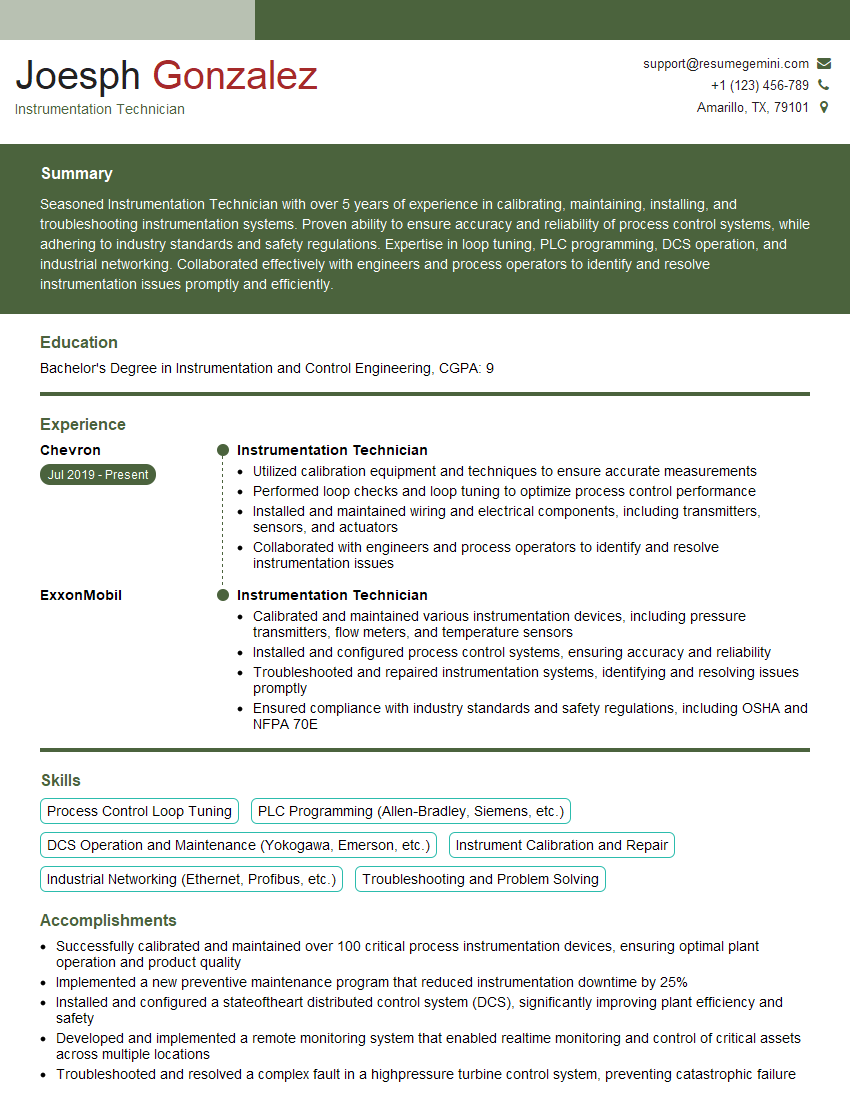
Instrumentation Technician Resume Sample
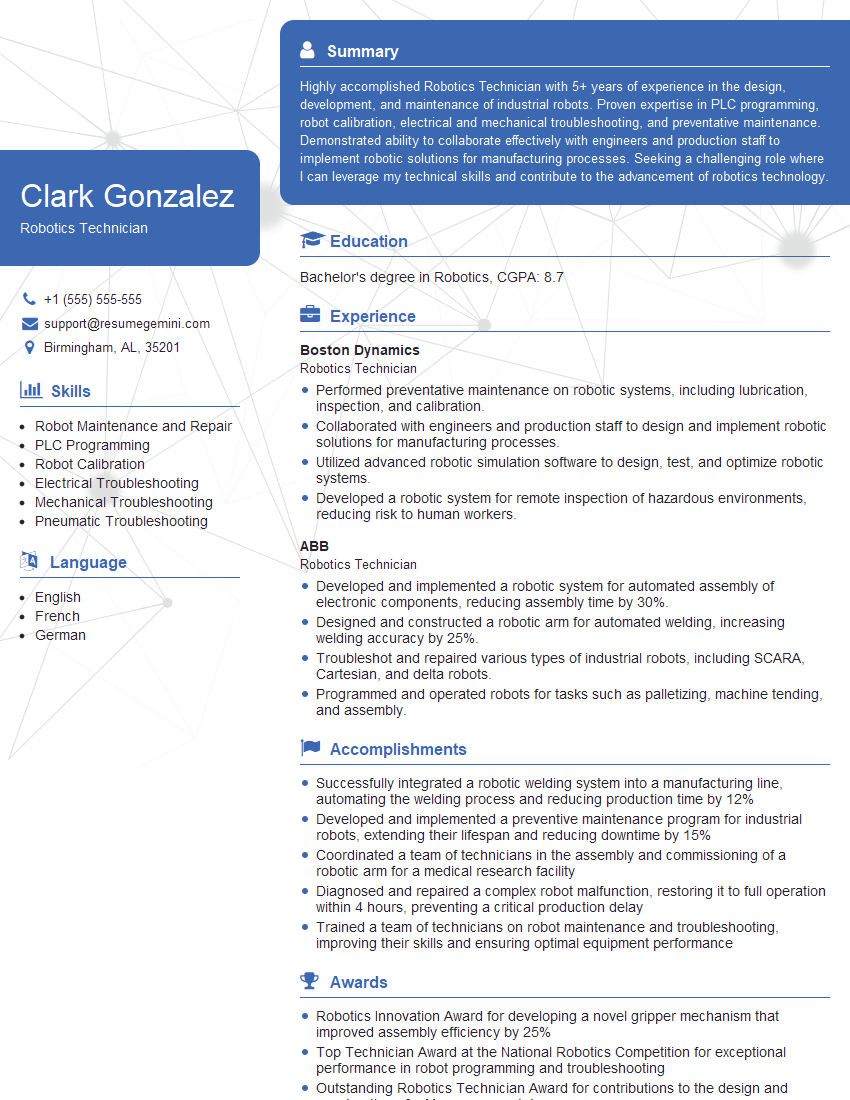
Robotics Technician Resume Sample
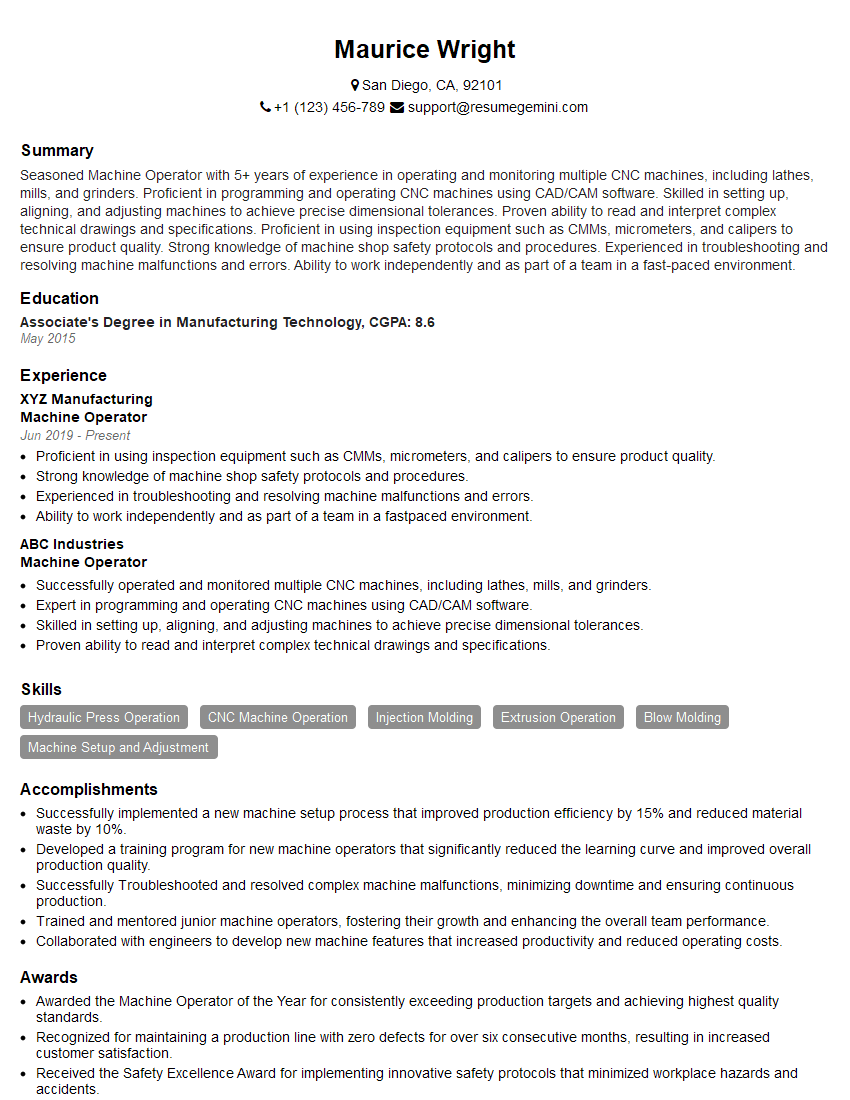
Machine Operator Resume Sample
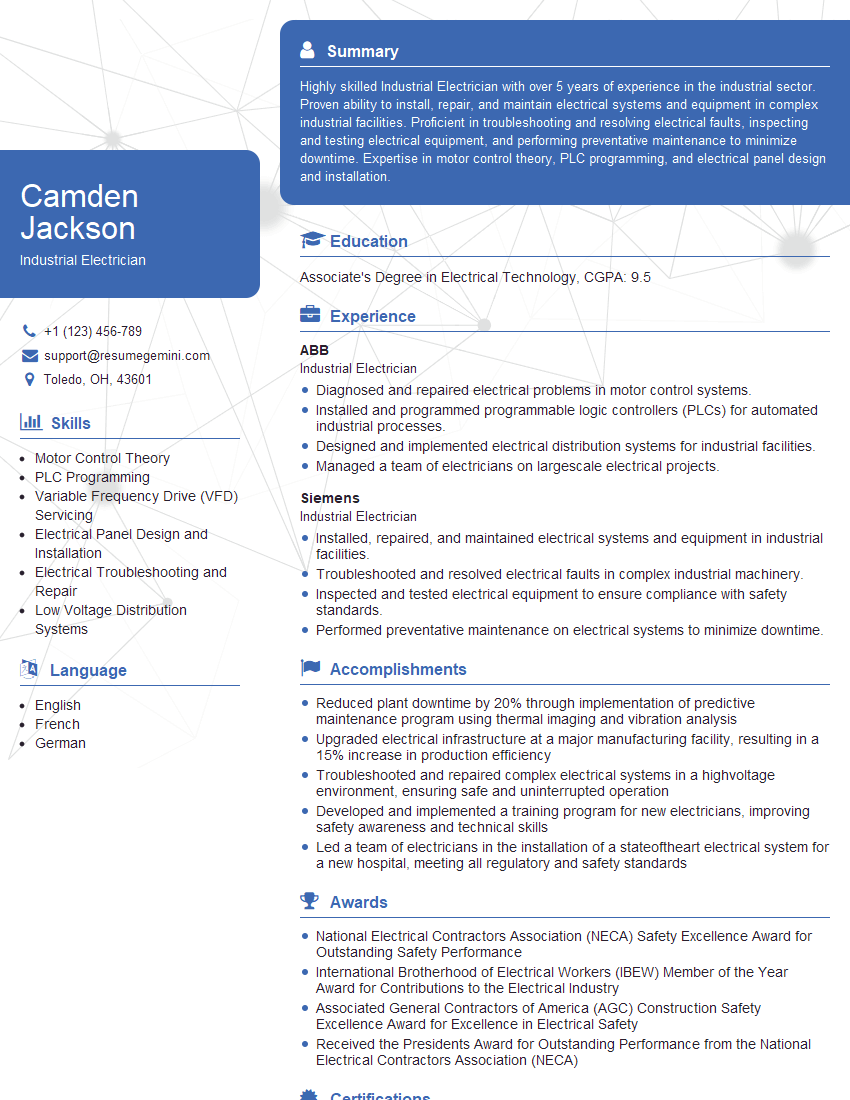
Industrial Electrician Resume Sample
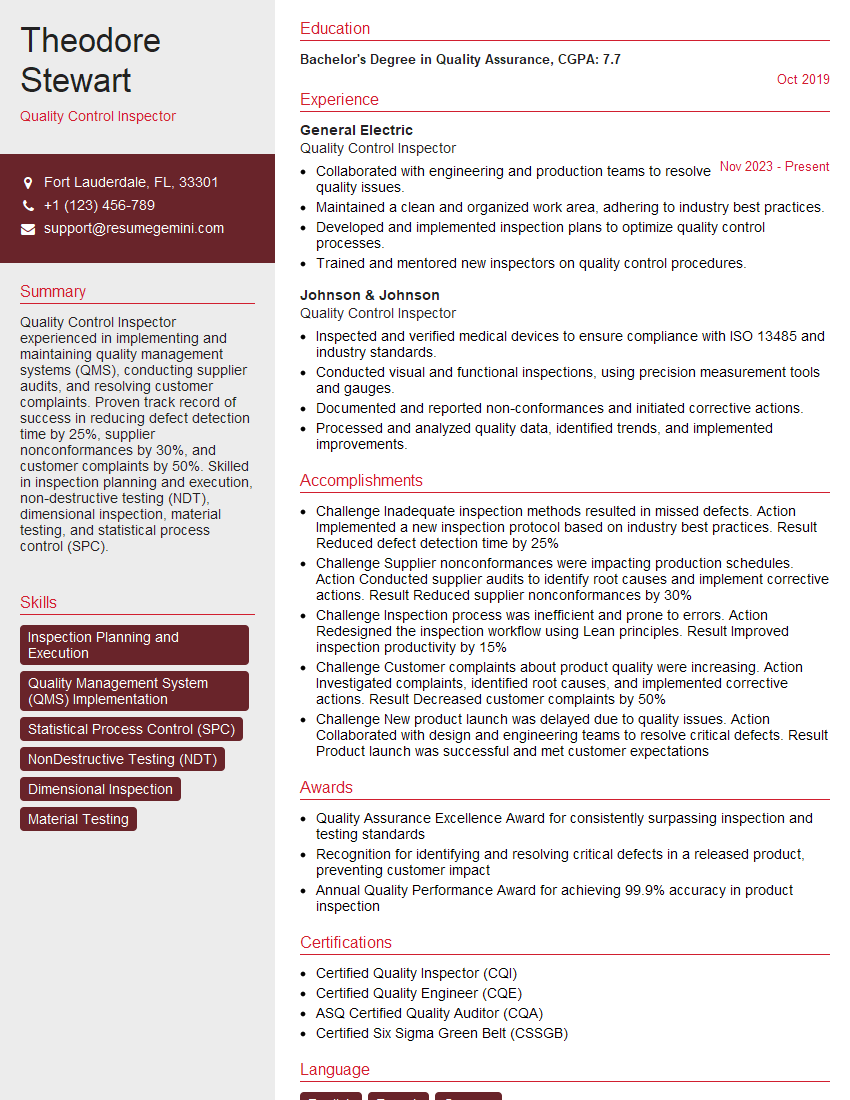
Quality Control Inspector Resume Sample
- Operations Manager
- Plant Manager
- Production Supervisor
- Supply Chain Manager
- Logistics Coordinator
- Project Engineer
- Reliability Engineer
- Process Engineer
- Automation Engineer
- Maintenance Technician
- Process Control Engineer
- Safety Engineer
- Manufacturing Engineer
- Packaging Engineer
- Mechanical Engineer
- Control Systems Engineer
- Mechatronics Engineer
- Instrumentation Technician
- Robotics Technician
- Machine Operator
- Industrial Electrician
- Quality Control Inspector
Explore more articles
Users Rating of Our Blogs
Share Your Experience
We value your feedback! Please rate our content and share your thoughts (optional).
What Readers Say About Our Blog
Attention music lovers!
Wow, All the best Sax Summer music !!!
Spotify: https://open.spotify.com/artist/6ShcdIT7rPVVaFEpgZQbUk
Apple Music: https://music.apple.com/fr/artist/jimmy-sax-black/1530501936
YouTube: https://music.youtube.com/browse/VLOLAK5uy_noClmC7abM6YpZsnySxRqt3LoalPf88No
Other Platforms and Free Downloads : https://fanlink.tv/jimmysaxblack
on google : https://www.google.com/search?q=22+AND+22+AND+22
on ChatGPT : https://chat.openai.com?q=who20jlJimmy20Black20Sax20Producer
Get back into the groove with Jimmy sax Black
Best regards,
Jimmy sax Black
www.jimmysaxblack.com
Hi I am a troller at The aquatic interview center and I suddenly went so fast in Roblox and it was gone when I reset.
Hi,
Business owners spend hours every week worrying about their website—or avoiding it because it feels overwhelming.
We’d like to take that off your plate:
$69/month. Everything handled.
Our team will:
Design a custom website—or completely overhaul your current one
Take care of hosting as an option
Handle edits and improvements—up to 60 minutes of work included every month
No setup fees, no annual commitments. Just a site that makes a strong first impression.
Find out if it’s right for you:
https://websolutionsgenius.com/awardwinningwebsites
Hello,
we currently offer a complimentary backlink and URL indexing test for search engine optimization professionals.
You can get complimentary indexing credits to test how link discovery works in practice.
No credit card is required and there is no recurring fee.
You can find details here:
https://wikipedia-backlinks.com/indexing/
Regards
NICE RESPONSE TO Q & A
hi
The aim of this message is regarding an unclaimed deposit of a deceased nationale that bears the same name as you. You are not relate to him as there are millions of people answering the names across around the world. But i will use my position to influence the release of the deposit to you for our mutual benefit.
Respond for full details and how to claim the deposit. This is 100% risk free. Send hello to my email id: lukachachibaialuka@gmail.com
Luka Chachibaialuka
Hey interviewgemini.com, just wanted to follow up on my last email.
We just launched Call the Monster, an parenting app that lets you summon friendly ‘monsters’ kids actually listen to.
We’re also running a giveaway for everyone who downloads the app. Since it’s brand new, there aren’t many users yet, which means you’ve got a much better chance of winning some great prizes.
You can check it out here: https://bit.ly/callamonsterapp
Or follow us on Instagram: https://www.instagram.com/callamonsterapp
Thanks,
Ryan
CEO – Call the Monster App
Hey interviewgemini.com, I saw your website and love your approach.
I just want this to look like spam email, but want to share something important to you. We just launched Call the Monster, a parenting app that lets you summon friendly ‘monsters’ kids actually listen to.
Parents are loving it for calming chaos before bedtime. Thought you might want to try it: https://bit.ly/callamonsterapp or just follow our fun monster lore on Instagram: https://www.instagram.com/callamonsterapp
Thanks,
Ryan
CEO – Call A Monster APP
To the interviewgemini.com Owner.
Dear interviewgemini.com Webmaster!
Hi interviewgemini.com Webmaster!
Dear interviewgemini.com Webmaster!
excellent
Hello,
We found issues with your domain’s email setup that may be sending your messages to spam or blocking them completely. InboxShield Mini shows you how to fix it in minutes — no tech skills required.
Scan your domain now for details: https://inboxshield-mini.com/
— Adam @ InboxShield Mini
support@inboxshield-mini.com
Reply STOP to unsubscribe
Hi, are you owner of interviewgemini.com? What if I told you I could help you find extra time in your schedule, reconnect with leads you didn’t even realize you missed, and bring in more “I want to work with you” conversations, without increasing your ad spend or hiring a full-time employee?
All with a flexible, budget-friendly service that could easily pay for itself. Sounds good?
Would it be nice to jump on a quick 10-minute call so I can show you exactly how we make this work?
Best,
Hapei
Marketing Director
Hey, I know you’re the owner of interviewgemini.com. I’ll be quick.
Fundraising for your business is tough and time-consuming. We make it easier by guaranteeing two private investor meetings each month, for six months. No demos, no pitch events – just direct introductions to active investors matched to your startup.
If youR17;re raising, this could help you build real momentum. Want me to send more info?
Hi, I represent an SEO company that specialises in getting you AI citations and higher rankings on Google. I’d like to offer you a 100% free SEO audit for your website. Would you be interested?
Hi, I represent an SEO company that specialises in getting you AI citations and higher rankings on Google. I’d like to offer you a 100% free SEO audit for your website. Would you be interested?