Feeling uncertain about what to expect in your upcoming interview? We’ve got you covered! This blog highlights the most important Nursery Business Management interview questions and provides actionable advice to help you stand out as the ideal candidate. Let’s pave the way for your success.
Questions Asked in Nursery Business Management Interview
Q 1. Describe your experience managing budgets in a nursery setting.
Budget management in a nursery is crucial for ensuring financial stability and providing a high-quality learning environment. It’s not just about tracking expenses; it’s about strategic planning to maximize resources. My approach involves a three-pronged strategy: forecasting, monitoring, and adapting.
Forecasting: I begin by creating detailed annual budgets, projecting income from fees and any government funding, and meticulously estimating expenses such as staffing costs, rent, utilities, supplies (diapers, toys, educational materials), and maintenance. I use spreadsheet software to track these figures and project potential surpluses or deficits. For example, I might forecast a higher demand for summer programs and adjust staffing levels accordingly.
Monitoring: Throughout the year, I closely monitor actual income and expenses against the budget. This involves regular reviews of financial reports, identifying any variances, and investigating the reasons behind them. For example, if supply costs exceed projections, I might explore alternative suppliers or negotiate better deals.
Adapting: Based on the monitoring process, I make necessary adjustments to the budget. This could involve cutting back on less essential expenses, seeking additional funding sources, or adjusting fees, all while ensuring the quality of care isn’t compromised. For instance, if unexpected repairs are needed, I might prioritize them by assessing the impact on safety and operational efficiency, potentially delaying less critical improvements.
Q 2. How do you ensure compliance with relevant childcare regulations?
Compliance with childcare regulations is paramount for the safety and well-being of the children in our care. My approach involves a proactive and multi-faceted strategy:
- Thorough Knowledge: I stay updated on all relevant local, state, and national regulations related to health and safety, staff-to-child ratios, licensing requirements, and child protection policies. This includes regularly reviewing updates and attending relevant training sessions.
- Documentation and Record-Keeping: Meticulous record-keeping is key. This includes maintaining accurate attendance records, incident reports, staff training records, and health and safety checks. All documentation is securely stored and readily accessible for audits.
- Regular Inspections and Audits: I actively participate in and facilitate regular internal inspections to ensure our compliance. I also proactively prepare for and cooperate fully with external inspections and audits by licensing bodies. We treat these as opportunities to improve our practices.
- Staff Training: All staff members receive comprehensive training on relevant regulations and best practices. Regular refresher training and ongoing professional development ensure continued compliance and the highest standards of care.
- Emergency Preparedness: We have well-defined emergency procedures in place, regularly tested and updated to ensure our response to any situation meets regulatory requirements and ensures the safety of the children and staff.
Q 3. Explain your approach to staff recruitment and training.
Staff recruitment and training are essential for a thriving nursery. I use a structured approach that emphasizes finding passionate, qualified individuals and providing them with the skills and knowledge they need to excel.
Recruitment: I begin by developing a detailed job description that clearly outlines the responsibilities and qualifications needed. I then utilize various recruitment channels, including online job boards, professional networks, and local partnerships with educational institutions. The selection process includes reviewing applications, conducting interviews, checking references, and conducting background checks. I prioritize candidates who demonstrate a genuine passion for childcare, a strong work ethic, and good communication skills.
Training: Onboarding is comprehensive and includes both theoretical and practical training. This covers areas such as child development, early learning curriculum, health and safety, emergency procedures, and behavior management techniques. We also offer ongoing professional development opportunities, such as workshops, conferences, and mentorship programs to enhance their skills and knowledge. Regular observations and feedback sessions ensure staff consistently meet the high standards we set.
Q 4. How would you handle a conflict between parents and staff?
Handling conflicts between parents and staff requires a calm, professional, and fair approach that prioritizes open communication and finding solutions that benefit everyone. My approach is based on active listening, mediation, and documentation.
- Active Listening: I begin by listening carefully and empathetically to both the parent and the staff member, ensuring each feels heard and understood. I avoid interrupting and encourage them to express their perspectives fully.
- Identifying the Issue: I work to clearly define the core issue causing the conflict, separating facts from emotions. For example, is it a misunderstanding about a child’s behavior or a disagreement about a policy?
- Mediation and Collaboration: I facilitate a discussion between the parent and staff member, guiding them towards a mutually acceptable solution. I act as a neutral mediator, focusing on finding common ground and resolving misunderstandings.
- Documentation: I maintain a detailed record of the conflict, including the steps taken to resolve it. This documentation helps ensure accountability and transparency.
- Follow-up: I follow up with both the parent and the staff member to ensure the resolution is effective and to address any lingering concerns. If the conflict remains unresolved, I escalate it to senior management for further support.
Q 5. What strategies do you use to enhance parent communication?
Effective parent communication is crucial for building strong partnerships and creating a positive learning environment. My strategies encompass multiple channels to ensure consistent and transparent communication:
- Regular Newsletters and Updates: I send regular newsletters containing information about upcoming events, curriculum updates, and important announcements. I also use online platforms to share photos and updates on the children’s daily activities.
- Parent-Teacher Conferences: I schedule regular parent-teacher conferences to discuss individual children’s progress, development, and any concerns. These meetings provide opportunities for personalized feedback and collaborative goal-setting.
- Open Door Policy: I maintain an open-door policy, encouraging parents to contact me or the staff with any questions or concerns at any time. We are always available to address their queries promptly and efficiently.
- Parent Involvement Opportunities: I encourage parent involvement through events such as volunteering in the classroom, attending workshops, or participating in school activities. This fosters a sense of community and shared responsibility.
- Technology Utilization: We use various communication tools, such as apps, email, and online portals, to disseminate information efficiently and keep parents updated in real-time.
Q 6. Describe your experience developing and implementing a nursery curriculum.
Curriculum development is a continuous process that requires careful planning and adaptation to meet the unique needs of the children. My approach is based on a play-based learning philosophy, integrating various learning approaches and closely aligning with the Early Years Foundation Stage (EYFS) framework (or equivalent local frameworks).
Needs Assessment: I begin by assessing the developmental needs and interests of the children in my care. This involves observations, assessments, and consultations with parents. For example, if I notice a strong interest in dinosaurs, I would incorporate dinosaur-themed activities into our learning program.
Theme-Based Learning: The curriculum is organized around thematic units, allowing for integrated learning across different subjects. For example, a unit on ‘Transportation’ might include activities on reading, writing, math, science, art, and dramatic play.
Differentiation: I create differentiated learning activities to cater to the diverse learning styles and developmental stages of each child. This means some activities might challenge advanced learners, while others would be geared towards supporting children who require additional support.
Assessment and Evaluation: I use a variety of methods to assess children’s progress, including observations, assessments, portfolios, and parent feedback. This data informs ongoing curriculum adjustments to ensure the program remains relevant and effective.
Q 7. How do you assess the developmental needs of individual children?
Assessing the developmental needs of individual children is a crucial aspect of providing effective and personalized care. My approach combines observation, assessment tools, and collaboration with parents.
Observation: I regularly observe each child’s behavior, interactions, and play activities in different settings. I note their strengths, challenges, and interests. For example, observing a child’s difficulty sharing toys might indicate a need for social-emotional skill development.
Assessment Tools: I use standardized developmental assessments, such as age-appropriate checklists and screenings, to gain a comprehensive understanding of each child’s developmental progress across various domains (cognitive, social-emotional, physical, and language). These are used as guides, not rigid measurements.
Collaboration with Parents: I maintain open communication with parents, sharing observations and assessment results. Parents’ insights into their child’s behavior and development at home provide valuable additional context. I work collaboratively with parents to develop individualized learning plans that address specific needs.
Regular Review and Adjustment: I regularly review children’s progress and make adjustments to their learning plans as needed. This ongoing assessment process ensures that each child receives appropriate support and opportunities to thrive.
Q 8. How do you manage challenging behavior in young children?
Managing challenging behavior in young children requires a proactive, consistent, and developmentally appropriate approach. It’s crucial to understand the root cause of the behavior, rather than simply reacting to the surface issue. This often involves observing the child’s patterns, identifying triggers, and considering their developmental stage.
- Positive Reinforcement: Rewarding positive behaviors with praise, attention, or small privileges is far more effective than focusing solely on punishment. For example, if a child is sharing toys, immediately praise their kindness and generosity.
- Redirection: When a child exhibits unwanted behavior, gently redirect their attention to a more appropriate activity. If a child is hitting, redirect them to a quiet corner with a preferred toy.
- Clear Expectations and Consistent Rules: Children thrive on predictability. Establishing clear, age-appropriate rules and consistently enforcing them creates a sense of security and reduces confusion. Explain why certain behaviors are unacceptable in a simple and understanding way.
- Time-Outs (Used Carefully): Time-outs can be effective, but should be used sparingly and in a calm, supportive manner. The goal is not punishment, but a brief period of calm reflection.
- Collaboration with Parents: Open communication with parents is vital. Sharing strategies and observations helps maintain consistency between home and nursery environments. We work closely with parents to develop personalized behaviour management plans for children.
For instance, I once worked with a child who was frequently throwing toys. Through observation, we discovered he was doing it for attention. By providing him with more positive attention when he played appropriately, the throwing behavior significantly decreased.
Q 9. What measures do you take to ensure the health and safety of children?
Health and safety are paramount in a nursery setting. We maintain meticulous adherence to all relevant regulations and guidelines. This involves a multi-faceted approach:
- Risk Assessments: Regular risk assessments are conducted to identify and mitigate potential hazards, such as choking hazards or trip hazards. These assessments are reviewed and updated regularly.
- Hygiene Protocols: Stringent hygiene practices are followed, including regular handwashing, thorough cleaning and disinfection of surfaces, and appropriate food handling procedures. Staff receive regular training on hygiene protocols.
- Accident and Incident Reporting: A robust system for reporting and investigating accidents and incidents is in place, allowing us to learn from mistakes and prevent future occurrences. We maintain detailed records of all incidents.
- Emergency Preparedness: We conduct regular fire drills and emergency evacuations, and all staff are trained in first aid and CPR. Emergency contact information for parents is always readily available.
- Secure Environment: The nursery is designed and maintained to be a safe and secure environment, with secure entrances, controlled access, and appropriate safety measures in place for all areas, such as playgrounds.
- Staff Training: Regular training sessions keep staff updated on health, safety, and child protection policies. We also regularly participate in professional development opportunities.
For example, we regularly check all toys for small parts and ensure that the playground equipment is regularly inspected for safety.
Q 10. How do you maintain a positive and supportive work environment for staff?
Creating a positive and supportive work environment for staff is essential for high-quality childcare. This requires investment in both tangible and intangible aspects:
- Team Building Activities: Regular team-building activities promote camaraderie and open communication among staff members. This could involve social events or collaborative planning sessions.
- Professional Development Opportunities: Providing opportunities for professional development, such as training courses or conferences, shows appreciation for staff and improves their skills. This includes funding for relevant certifications.
- Open Communication: Establishing open channels of communication, through regular staff meetings and one-on-one conversations, allows staff to voice concerns and contribute ideas.
- Recognition and Appreciation: Acknowledging and appreciating staff’s hard work through verbal praise, small gifts, or employee recognition programs boosts morale and motivation.
- Work-Life Balance: Supporting a healthy work-life balance by offering flexible scheduling options when possible and providing adequate breaks improves job satisfaction and reduces burnout.
- Fair Compensation and Benefits: Competitive salaries and benefits are vital for attracting and retaining qualified staff. We review our compensation packages regularly to remain competitive in the market.
For instance, we recently implemented a ‘Staff Suggestion Box’ which has led to several valuable improvements in our daily operations, demonstrating our commitment to staff input.
Q 11. Explain your experience with marketing and enrollment strategies for a nursery.
Marketing and enrollment strategies are critical for the success of a nursery. My experience encompasses a range of approaches:
- Online Presence: Developing a user-friendly website and engaging social media presence is essential. This includes high-quality photos and videos showcasing the nursery’s environment and activities. We use targeted advertising on social media platforms.
- Community Engagement: Building relationships with local schools, community centers, and other organizations provides opportunities for outreach and networking. We participate in local events and fairs.
- Open Houses and Tours: Hosting open houses and offering tours allows potential parents to experience the nursery firsthand. We make these tours interactive and engaging.
- Referral Programs: Incentivizing current parents to refer new families through referral bonuses or discounts creates a strong word-of-mouth marketing strategy.
- Targeted Marketing: Utilizing demographic data to target specific marketing materials to relevant audiences, such as new parents or families moving into the area, improves campaign effectiveness.
- Partnerships: Collaborating with local businesses or organizations that serve families can broaden reach and brand awareness.
In a previous role, we implemented a successful referral program that increased enrollment by 20% within six months. We also created a visually appealing website and used targeted social media advertising campaigns to generate leads.
Q 12. How do you manage staff scheduling and workload distribution?
Effective staff scheduling and workload distribution are crucial for maintaining smooth nursery operations. I utilize a combination of strategies:
- Staffing Ratios: Maintaining appropriate staffing ratios based on the number of children and their age groups ensures adequate supervision and individualized attention. This is essential for meeting regulatory requirements.
- Skill-Based Assignments: Assigning tasks based on staff skills and experience optimizes efficiency and ensures tasks are completed effectively. We have a system for tracking staff qualifications and skills.
- Rotation of Tasks: Rotating tasks among staff members prevents monotony and allows staff to develop a wide range of skills. This approach creates a more adaptable and flexible team.
- Technology Integration: Using scheduling software simplifies the process, tracks hours worked, and manages absences. We currently use [Name of Software – Replace with actual software used] for scheduling and time management.
- Open Communication: Regular communication with staff about schedules and workload helps address any concerns or challenges. We hold weekly team meetings to discuss schedules and assignments.
- Flexibility: Building flexibility into the schedule allows for unexpected absences or changes in needs. This involves having some staff on call or having a system to efficiently cover shifts.
For example, we use a color-coded system on our schedule to clearly indicate which staff members are qualified to handle specific age groups or activities.
Q 13. Describe your experience with performance management and staff appraisals.
Performance management and staff appraisals are essential for supporting staff growth and ensuring high-quality childcare. My approach involves:
- Regular Feedback: Providing regular, constructive feedback, both positive and constructive, helps staff understand expectations and improve their performance. This includes informal check-ins and formal performance reviews.
- Formal Appraisals: Conducting formal performance appraisals at least annually provides a structured opportunity to evaluate staff performance against established goals and objectives. We use a standardized performance review form.
- Goal Setting: Collaboratively setting clear, achievable goals with staff members provides direction and motivation. Goals are based on the individual’s role and the nursery’s overall objectives.
- Professional Development Plans: Developing individual professional development plans helps staff identify areas for growth and acquire new skills. These plans are regularly reviewed and updated.
- Documentation: Maintaining thorough documentation of performance reviews and professional development plans ensures accountability and provides a record of progress. We keep electronic records of all performance evaluations and development plans.
- Addressing Performance Issues: Addressing performance issues promptly and fairly using a supportive and constructive approach is essential for maintaining a positive work environment. We have a clear process for handling performance concerns.
For example, I recently helped a staff member develop a professional development plan focusing on improving their communication skills. This resulted in a significant improvement in their interactions with both children and parents.
Q 14. How do you handle parent complaints and concerns effectively?
Handling parent complaints and concerns effectively is crucial for maintaining positive relationships and trust. My approach involves:
- Active Listening: Actively listening to parents’ concerns without interruption demonstrates respect and understanding. We aim to understand their perspective fully.
- Empathy and Validation: Showing empathy and validating parents’ feelings, even if you don’t agree with their perspective, helps de-escalate situations. We acknowledge their concerns and feelings.
- Investigating the Issue: Thoroughly investigating the issue to gather all relevant information before responding ensures a fair and accurate resolution. We gather facts from all parties involved.
- Professional Communication: Responding promptly and professionally, either in person or in writing, demonstrates professionalism and commitment to resolving the issue. We keep accurate records of all communications.
- Collaborative Problem Solving: Collaboratively working with parents to find a mutually acceptable solution ensures a positive outcome. We involve parents in the solution-finding process.
- Follow Up: Following up with parents to ensure the issue is resolved and to check on their satisfaction demonstrates commitment to ongoing communication.
For instance, I once addressed a parent’s concern about a child’s naptime routine. By actively listening, investigating the situation, and working with the parent and staff to adjust the naptime routine, we were able to successfully resolve the concern.
Q 15. What is your approach to managing relationships with external stakeholders?
Managing relationships with external stakeholders in a nursery business requires a proactive and multifaceted approach. It’s about building trust, fostering open communication, and consistently demonstrating the value you bring to the community.
Parents: Regular communication (e.g., newsletters, parent-teacher conferences, online portals) is key. Active listening to parent concerns and promptly addressing issues is crucial. Building a strong parent-teacher association can further enhance this relationship.
Local Authorities/Regulatory Bodies: Maintaining meticulous records, ensuring full compliance with all regulations (health, safety, licensing), and actively participating in any required inspections is paramount. Building a positive and collaborative relationship ensures smooth operations.
Suppliers: Developing strong relationships with reliable suppliers for food, materials, and equipment is vital for operational efficiency and cost control. Negotiating favorable terms and establishing clear communication channels improves efficiency and reduces procurement challenges.
Community: Engaging with the local community through local events, fundraising initiatives, or offering services to local organizations fosters goodwill and strengthens the nursery’s reputation within the community.
Career Expert Tips:
- Ace those interviews! Prepare effectively by reviewing the Top 50 Most Common Interview Questions on ResumeGemini.
- Navigate your job search with confidence! Explore a wide range of Career Tips on ResumeGemini. Learn about common challenges and recommendations to overcome them.
- Craft the perfect resume! Master the Art of Resume Writing with ResumeGemini’s guide. Showcase your unique qualifications and achievements effectively.
- Don’t miss out on holiday savings! Build your dream resume with ResumeGemini’s ATS optimized templates.
Q 16. How do you ensure the financial sustainability of a nursery business?
Financial sustainability in a nursery hinges on a balanced approach encompassing robust financial planning, effective cost management, and strategic revenue generation. It’s like a three-legged stool; if one leg is weak, the whole thing collapses.
Budgeting and Forecasting: Developing a detailed annual budget, regularly monitoring income and expenses, and forecasting future needs are crucial for proactively managing finances and identifying potential shortfalls. This involves accurate cost estimations for staffing, supplies, and utilities.
Pricing Strategy: Competitive yet sustainable pricing is vital. Careful analysis of market rates, competitor pricing, and operational costs is necessary. A well-structured fee schedule should cover all expenses while remaining attractive to parents. This might involve offering tiered pricing based on family size or income.
Efficient Resource Management: Minimizing operational costs through effective resource management is critical. This includes careful inventory management, energy conservation, and negotiating favorable contracts with suppliers. Regular reviews of expenditure help identify areas for optimization.
Fundraising and Grants: Exploring opportunities for fundraising or securing grants can supplement revenue and support specific projects. This could involve applying for local authority grants or organizing community fundraising events.
Q 17. How would you improve staff morale and retention?
Improving staff morale and retention requires creating a positive and supportive work environment where staff feel valued, respected, and appreciated. This involves a combination of strategies focusing on both intrinsic and extrinsic rewards.
Competitive Compensation and Benefits: Offering competitive salaries and benefits packages is crucial. This includes health insurance, paid time off, and opportunities for professional development.
Opportunities for Growth and Development: Providing ongoing professional development opportunities, such as training courses or mentoring programs, demonstrates a commitment to staff growth and enhances job satisfaction. This makes them feel valued.
Open Communication and Feedback: Establishing open communication channels and encouraging regular feedback helps create a transparent and supportive work environment where staff feel comfortable voicing their concerns and opinions. Regular team meetings can foster this communication.
Team Building and Recognition: Organizing team-building activities and recognizing and rewarding outstanding work boosts morale and strengthens team cohesion. A simple ’employee of the month’ program can go a long way.
Work-Life Balance: Promoting a healthy work-life balance through flexible scheduling options or providing support for childcare needs can significantly improve staff morale and reduce burnout. This is especially relevant in a nursery setting.
Q 18. What are your strategies for improving the quality of early childhood education?
Improving the quality of early childhood education involves a holistic approach focused on providing a stimulating and nurturing learning environment that caters to individual needs and promotes holistic development.
High-Quality Curriculum: Implementing a well-structured, age-appropriate curriculum that aligns with recognized early childhood education frameworks (e.g., Early Years Foundation Stage in the UK) ensures that children receive a high-quality education.
Qualified and Experienced Staff: Recruiting and retaining highly qualified and experienced educators is essential. Providing ongoing professional development ensures staff stay up-to-date with best practices.
Developmentally Appropriate Practices: Employing developmentally appropriate practices that are tailored to the individual needs and learning styles of each child ensures that they receive a personalized and effective education.
Assessment and Evaluation: Regular assessment and evaluation of children’s progress helps identify their strengths and areas for improvement, informing individualized learning plans. This enables early intervention and personalized teaching.
Parent Involvement: Encouraging and facilitating parent involvement in their child’s education ensures a consistent and supportive learning environment across home and nursery.
Resource-Rich Environment: Creating a well-resourced learning environment that provides children with access to a wide range of age-appropriate materials and equipment fosters creativity and exploration.
Q 19. Describe your experience with emergency procedures and crisis management.
Emergency procedures and crisis management are critical for the safety and well-being of children and staff. A robust plan should be in place, regularly reviewed, and practiced.
Emergency Plan Development: Developing a comprehensive emergency plan that covers all potential scenarios (fire, medical emergencies, severe weather, security incidents) is the first step. This plan needs to detail evacuation procedures, contact lists, and roles and responsibilities for each staff member.
Regular Drills and Training: Regular drills and training sessions ensure that staff are familiar with the emergency procedures and can respond effectively in a crisis. This includes fire drills, lockdown drills, and first-aid training.
Communication Protocols: Clear communication protocols for contacting emergency services, parents, and other relevant stakeholders must be established and practiced regularly. This may involve using specific communication channels for different types of emergencies.
Risk Assessment: A thorough risk assessment should be conducted regularly to identify potential hazards and develop appropriate mitigation strategies. This includes identifying and addressing any potential safety issues on the premises.
Post-Incident Review: Following any incident, a thorough review should be conducted to identify areas for improvement and refine the emergency plan to better address potential risks. This enables continuous improvement of preparedness.
Q 20. How do you use data to inform decision-making in your role?
Data-driven decision-making is essential for effective nursery management. Utilizing data from various sources allows for informed choices, improved outcomes, and better resource allocation.
Attendance Data: Analyzing attendance data helps identify trends and potential issues, such as absenteeism or illness outbreaks. This information informs staffing decisions and health and safety measures.
Assessment Data: Tracking children’s progress through assessments allows for early identification of learning needs and informs individualized learning plans. This data can also be used to evaluate the effectiveness of educational programs.
Financial Data: Analyzing financial data (income, expenses, budgets) is crucial for making informed financial decisions. This ensures financial sustainability and helps plan for future investments.
Staff Performance Data: Monitoring staff performance through observations and feedback helps identify areas for improvement and ensures a high standard of care and education. This can involve regular performance reviews and feedback sessions.
Parent Feedback: Collecting and analyzing feedback from parents provides insights into their satisfaction levels and areas for improvement. This can be obtained through surveys, questionnaires, or feedback forms.
By using data analytics and visualization tools, patterns and insights can be easily identified, allowing for proactive adjustments and improvements.
Q 21. What is your experience with different child care models (e.g., Montessori, Reggio Emilia)?
My experience encompasses a range of childcare models, each with its own unique philosophy and approach. Understanding these different models is crucial for creating a diverse and enriching learning environment.
Montessori: The Montessori approach emphasizes self-directed activity, hands-on learning, and collaborative play. Children learn at their own pace using specially designed materials. I’ve observed its effectiveness in fostering independence and problem-solving skills.
Reggio Emilia: The Reggio Emilia approach centers around the child as a strong individual with a vast potential. It’s known for its emphasis on creativity, project-based learning, and documenting children’s learning journeys. I’ve witnessed firsthand how it nurtures creativity and critical thinking.
Play-Based Learning: This is a more general approach that utilizes play as the primary method for learning and development. It acknowledges the importance of imaginative play in supporting social, emotional, cognitive, and physical development. I’ve seen how effective unstructured play can be for holistic development.
Understanding these diverse approaches enables me to tailor the learning environment to meet the individual needs of children, fostering a dynamic and enriching educational experience. I am also familiar with incorporating elements from different models to best suit the specific needs of our students.
Q 22. How do you prioritize tasks and manage your time effectively?
Effective time management is crucial in a nursery setting, where multiple tasks demand attention simultaneously. My approach is built on prioritization using a combination of methods. I start with a weekly plan outlining key objectives, broken down into daily tasks. This involves identifying urgent and important tasks using an Eisenhower Matrix (urgent/important, important/not urgent, urgent/not important, neither). For example, preparing lesson plans for the upcoming week is an ‘important/not urgent’ task, while addressing a child’s immediate injury is an ‘urgent/important’ task. I utilize digital tools like task management apps (Trello, Asana) to visually track progress and delegate responsibilities effectively to my team. Regular time blocking ensures dedicated focus periods for specific activities, minimizing distractions. I also schedule short breaks throughout the day to maintain focus and prevent burnout. Finally, reviewing my schedule regularly and adjusting it as needed ensures flexibility to deal with unforeseen events, a common occurrence in childcare.
Q 23. Explain your approach to risk assessment and mitigation in a nursery setting.
Risk assessment in a nursery is paramount. My approach is proactive and systematic. I begin by identifying potential hazards through regular walkthroughs of the premises, checking for things like tripping hazards, unsecured furniture, potential choking risks, and access to dangerous areas. I also consider less obvious risks like allergic reactions or behavioral issues among the children. Next, I analyze the likelihood and severity of each risk. A child running into a sharp corner might be high likelihood, low severity (minor scrape); a child accessing cleaning chemicals might be low likelihood, high severity (severe poisoning). Based on this analysis, I implement control measures. This could involve installing corner protectors, securing chemical storage, having clear allergy protocols, and providing ongoing staff training in child safety and first aid. Regular reviews of the risk assessment and updates to control measures are crucial to ensure ongoing effectiveness and adapt to changes in the environment or children’s needs. We document all risks, assessments, and mitigation strategies thoroughly to meet regulatory requirements.
Q 24. Describe your experience with implementing and managing technology in a childcare center.
Technology plays a significant role in modern nursery management. I have experience implementing several systems to streamline operations and enhance communication. We use a secure online communication platform (like HiMama or Brightwheel) to share daily reports, photos, and updates with parents, increasing transparency and building trust. We also leverage scheduling software to manage staff shifts, ensuring adequate coverage at all times. Digital record-keeping systems are used to track children’s development, attendance, and medical information, replacing paper-based systems for efficiency and better data organization. Additionally, interactive learning apps and educational software can be incorporated into lesson plans to engage children and support their development. It’s vital to choose and implement technology carefully, ensuring that systems are user-friendly, reliable, secure, and compliant with data protection regulations. Regular staff training is also critical to maximize the effectiveness of these technologies and avoid any technical issues.
Q 25. How do you foster a culture of inclusivity and diversity in your nursery?
Creating an inclusive and diverse environment is fundamental to a nurturing and enriching experience for all children. My approach starts with recruiting and training a diverse team of staff members who reflect the cultural richness of the community we serve. We develop curriculum that celebrates diversity, featuring stories, songs, and activities that represent a wide range of cultures and perspectives. We actively seek input from parents about their child’s cultural background and any specific needs to better understand and support individual children. We are proactive in providing resources and support for children with disabilities, working with specialists to ensure appropriate accommodations and individualized learning plans. Open communication with parents and a welcoming environment for all are crucial components of building a truly inclusive nursery. We regularly evaluate our practices to ensure our inclusivity initiatives are effective and adapt them as needed.
Q 26. How would you address a situation where a child’s safety was compromised?
Child safety is my utmost priority. If a child’s safety were compromised, my immediate response would be to ensure the child’s immediate wellbeing. This might involve providing first aid, contacting emergency services if necessary, and comforting the child. Simultaneously, I would secure the scene to prevent further incidents and begin documenting the event meticulously. This would include detailed notes on the time, location, circumstances, and any witnesses. I would inform the child’s parents immediately and truthfully, providing updates on the child’s condition. A full investigation would be conducted internally, following established protocols and regulatory guidelines. Depending on the severity, this could involve reviewing safety procedures, providing additional staff training, and modifying the environment to prevent similar incidents in the future. The incident report would be filed with the appropriate authorities if required.
Q 27. What is your understanding of child development milestones and stages?
A strong understanding of child development milestones and stages is essential for effective childcare. I am familiar with established developmental frameworks, such as Piaget’s stages of cognitive development, Erikson’s stages of psychosocial development, and the developmental milestones outlined by organizations like the CDC. This knowledge allows me to create age-appropriate activities and learning experiences tailored to each child’s developmental level. For example, understanding that toddlers are in the sensorimotor stage helps me design activities that stimulate their senses and motor skills. Likewise, knowing the importance of social-emotional development in preschoolers guides my approach to conflict resolution and fostering positive relationships amongst children. Regular assessment and observation of individual children are essential, allowing me to identify any developmental delays or concerns and provide targeted support, where necessary, involving parents and specialists.
Q 28. How do you adapt your management style to different personalities and work styles?
Adaptability is key in managing a team. My management style is flexible and takes into account individual personalities and work styles. I use a combination of approaches including delegating tasks based on individual strengths and interests, empowering staff to take ownership of their roles. Regular one-on-one meetings provide opportunities to discuss individual progress, address concerns, and provide personalized support. I use a mix of both directive and collaborative leadership styles, tailoring my communication to best suit each individual’s needs and preferences. For example, a highly motivated team member might thrive with more autonomy, while another might benefit from more structured guidance and support. Open communication, mutual respect, and regular feedback loops ensure a positive and productive work environment where everyone feels valued and can contribute effectively. I foster a team environment where staff feels comfortable sharing their ideas and concerns, promoting a collaborative and supportive workplace.
Key Topics to Learn for Nursery Business Management Interview
- Financial Management: Budgeting, forecasting, cost control, pricing strategies, and understanding key financial ratios relevant to the nursery industry. Practical application includes developing a realistic budget for a new nursery or analyzing the profitability of existing programs.
- Operations Management: Staff management, scheduling, inventory control (plants, supplies), facility maintenance, health and safety regulations, and ensuring smooth daily operations. Practical application involves creating efficient staffing schedules or developing a system for tracking plant inventory.
- Marketing and Sales: Understanding target markets (parents, schools), developing effective marketing strategies (online and offline), managing customer relationships, and generating leads. Practical application includes crafting a marketing campaign to attract new clients or improving customer retention strategies.
- Regulatory Compliance: Knowledge of relevant licenses, permits, health and safety standards specific to nursery operations, and understanding child care regulations. Practical application includes ensuring the nursery meets all local and national regulations.
- Curriculum Development & Childcare Pedagogy: Understanding age-appropriate activities, learning objectives, and pedagogical approaches for early childhood development. Practical application involves designing a stimulating and educational program for children.
- Human Resources Management: Recruiting, training, performance management, and staff development within the context of a childcare setting. Practical application involves creating a comprehensive onboarding program for new staff members.
- Risk Management: Identifying and mitigating potential risks (health & safety, financial, legal) within the nursery environment. Practical application includes developing an emergency preparedness plan.
Next Steps
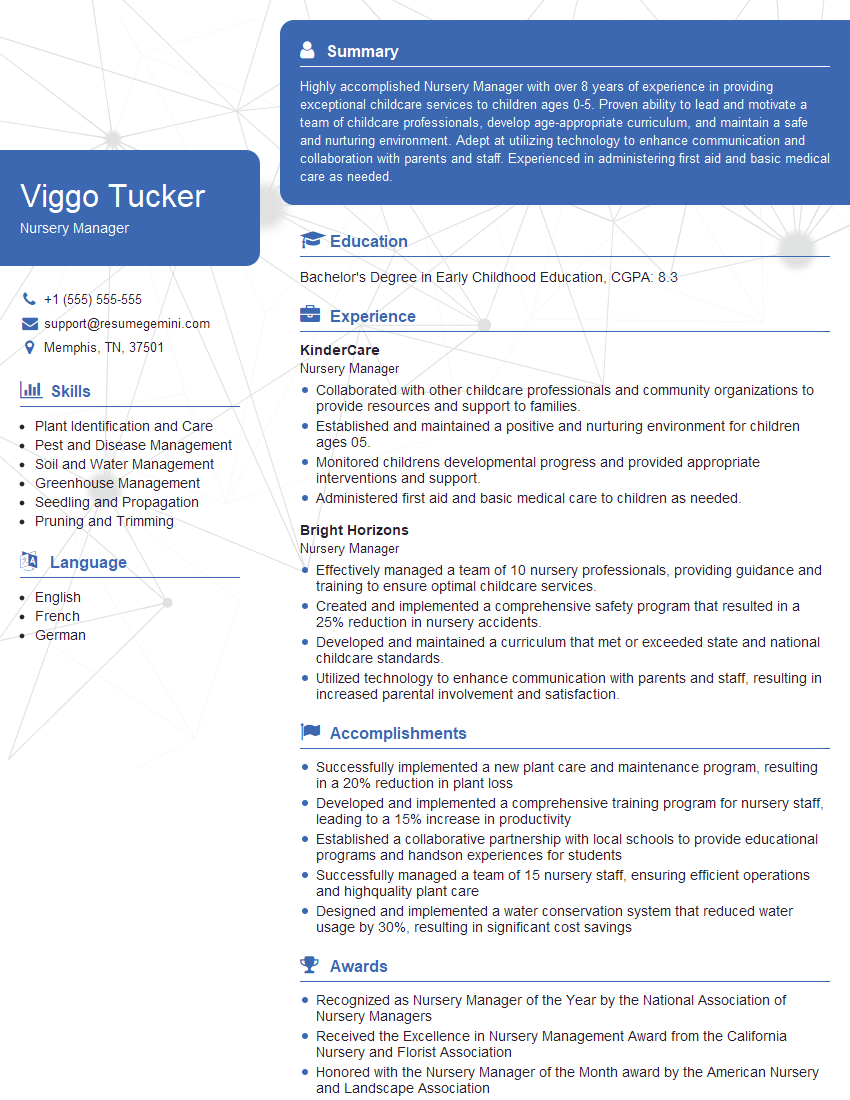
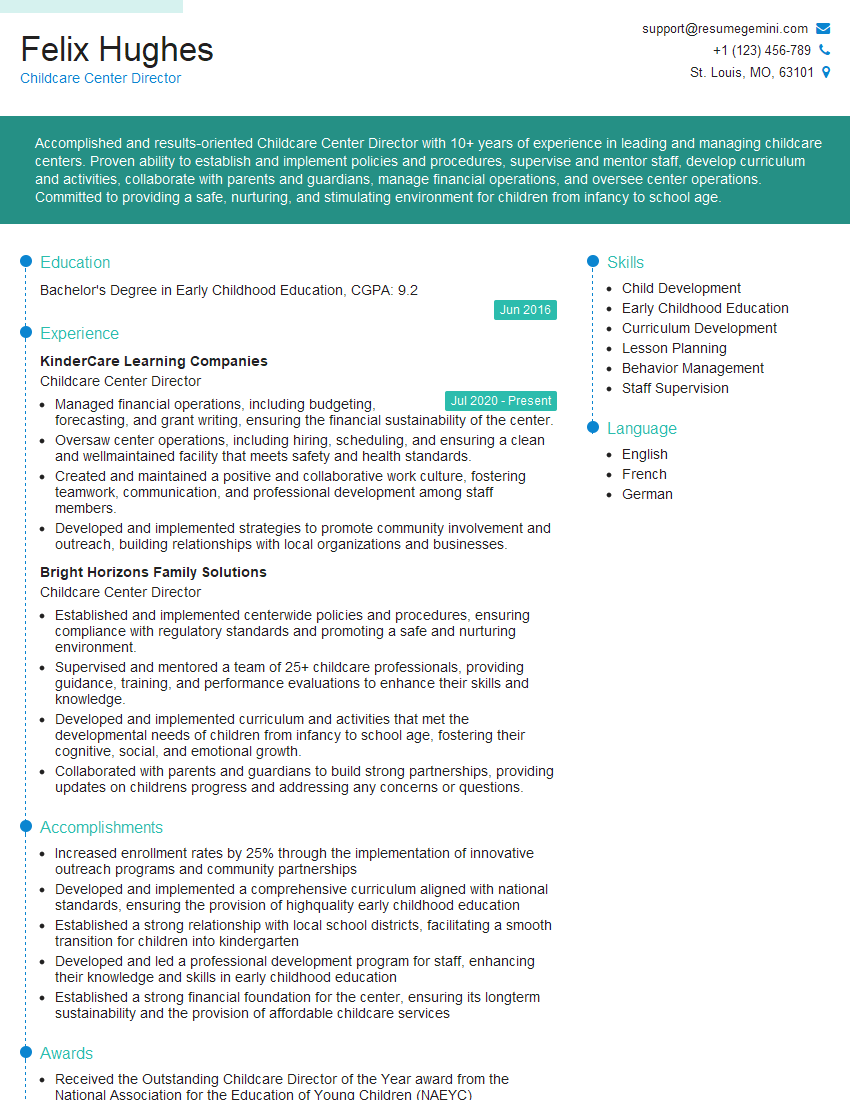
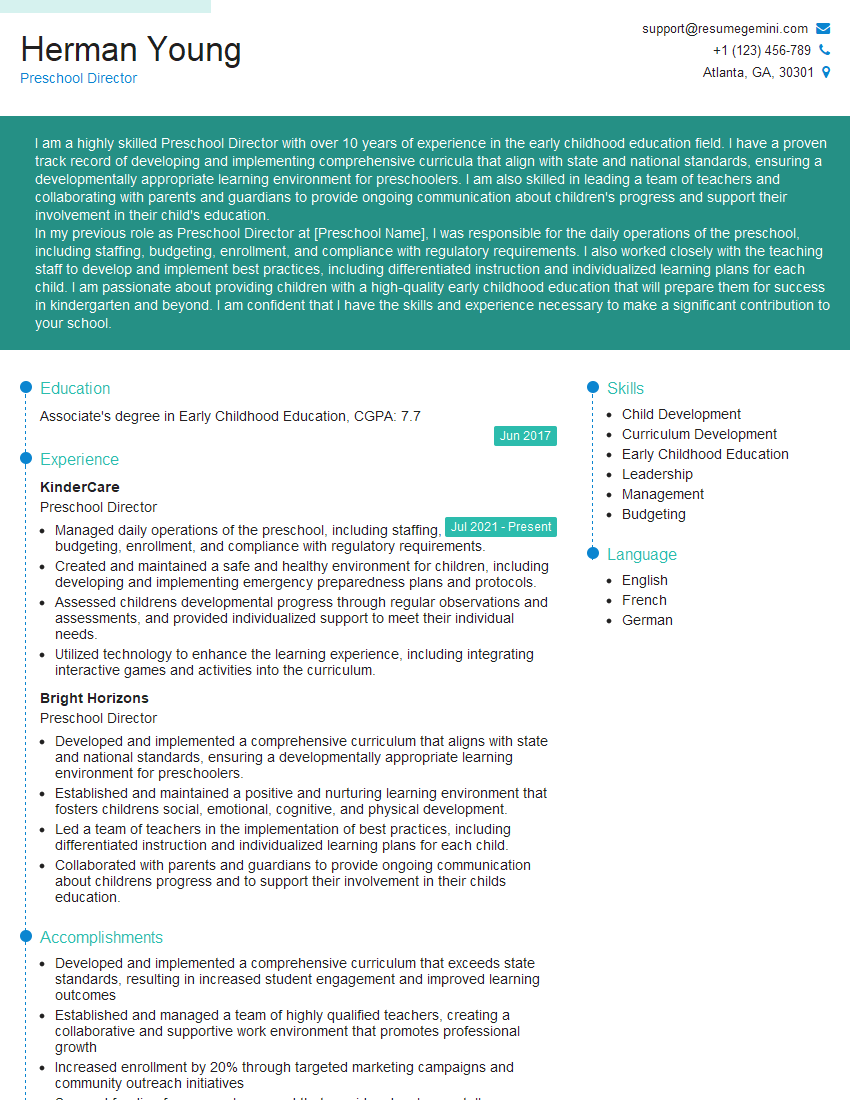
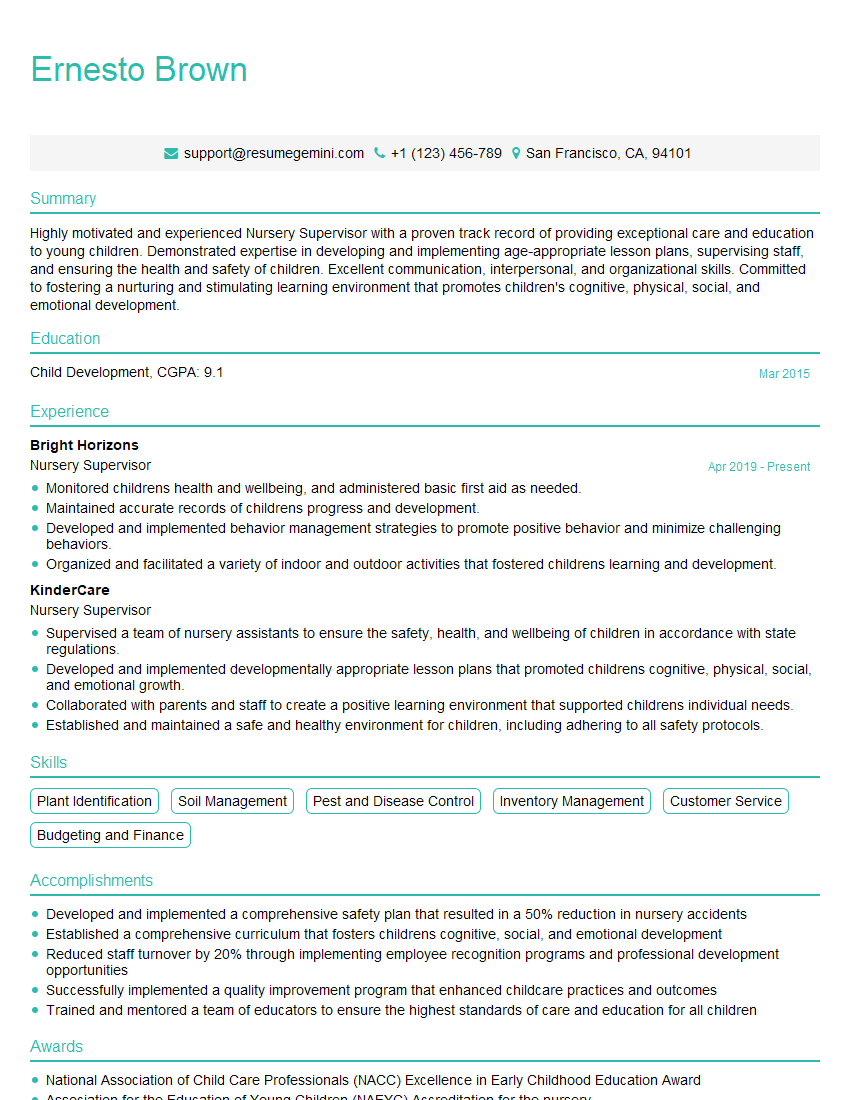
Mastering Nursery Business Management is crucial for career advancement, opening doors to leadership roles and higher earning potential. A strong, ATS-friendly resume is your key to unlocking these opportunities. To create a compelling resume that highlights your skills and experience, we strongly recommend using ResumeGemini. ResumeGemini provides a user-friendly platform to build a professional resume, and we offer examples of resumes tailored specifically to Nursery Business Management to help you get started. Invest time in crafting a resume that showcases your expertise and makes you stand out from the competition. Your future career in nursery management awaits!
Explore more articles
Users Rating of Our Blogs
Share Your Experience
We value your feedback! Please rate our content and share your thoughts (optional).
What Readers Say About Our Blog
Attention music lovers!
Wow, All the best Sax Summer music !!!
Spotify: https://open.spotify.com/artist/6ShcdIT7rPVVaFEpgZQbUk
Apple Music: https://music.apple.com/fr/artist/jimmy-sax-black/1530501936
YouTube: https://music.youtube.com/browse/VLOLAK5uy_noClmC7abM6YpZsnySxRqt3LoalPf88No
Other Platforms and Free Downloads : https://fanlink.tv/jimmysaxblack
on google : https://www.google.com/search?q=22+AND+22+AND+22
on ChatGPT : https://chat.openai.com?q=who20jlJimmy20Black20Sax20Producer
Get back into the groove with Jimmy sax Black
Best regards,
Jimmy sax Black
www.jimmysaxblack.com
Hi I am a troller at The aquatic interview center and I suddenly went so fast in Roblox and it was gone when I reset.
Hi,
Business owners spend hours every week worrying about their website—or avoiding it because it feels overwhelming.
We’d like to take that off your plate:
$69/month. Everything handled.
Our team will:
Design a custom website—or completely overhaul your current one
Take care of hosting as an option
Handle edits and improvements—up to 60 minutes of work included every month
No setup fees, no annual commitments. Just a site that makes a strong first impression.
Find out if it’s right for you:
https://websolutionsgenius.com/awardwinningwebsites
Hello,
we currently offer a complimentary backlink and URL indexing test for search engine optimization professionals.
You can get complimentary indexing credits to test how link discovery works in practice.
No credit card is required and there is no recurring fee.
You can find details here:
https://wikipedia-backlinks.com/indexing/
Regards
NICE RESPONSE TO Q & A
hi
The aim of this message is regarding an unclaimed deposit of a deceased nationale that bears the same name as you. You are not relate to him as there are millions of people answering the names across around the world. But i will use my position to influence the release of the deposit to you for our mutual benefit.
Respond for full details and how to claim the deposit. This is 100% risk free. Send hello to my email id: lukachachibaialuka@gmail.com
Luka Chachibaialuka
Hey interviewgemini.com, just wanted to follow up on my last email.
We just launched Call the Monster, an parenting app that lets you summon friendly ‘monsters’ kids actually listen to.
We’re also running a giveaway for everyone who downloads the app. Since it’s brand new, there aren’t many users yet, which means you’ve got a much better chance of winning some great prizes.
You can check it out here: https://bit.ly/callamonsterapp
Or follow us on Instagram: https://www.instagram.com/callamonsterapp
Thanks,
Ryan
CEO – Call the Monster App
Hey interviewgemini.com, I saw your website and love your approach.
I just want this to look like spam email, but want to share something important to you. We just launched Call the Monster, a parenting app that lets you summon friendly ‘monsters’ kids actually listen to.
Parents are loving it for calming chaos before bedtime. Thought you might want to try it: https://bit.ly/callamonsterapp or just follow our fun monster lore on Instagram: https://www.instagram.com/callamonsterapp
Thanks,
Ryan
CEO – Call A Monster APP
To the interviewgemini.com Owner.
Dear interviewgemini.com Webmaster!
Hi interviewgemini.com Webmaster!
Dear interviewgemini.com Webmaster!
excellent
Hello,
We found issues with your domain’s email setup that may be sending your messages to spam or blocking them completely. InboxShield Mini shows you how to fix it in minutes — no tech skills required.
Scan your domain now for details: https://inboxshield-mini.com/
— Adam @ InboxShield Mini
support@inboxshield-mini.com
Reply STOP to unsubscribe
Hi, are you owner of interviewgemini.com? What if I told you I could help you find extra time in your schedule, reconnect with leads you didn’t even realize you missed, and bring in more “I want to work with you” conversations, without increasing your ad spend or hiring a full-time employee?
All with a flexible, budget-friendly service that could easily pay for itself. Sounds good?
Would it be nice to jump on a quick 10-minute call so I can show you exactly how we make this work?
Best,
Hapei
Marketing Director
Hey, I know you’re the owner of interviewgemini.com. I’ll be quick.
Fundraising for your business is tough and time-consuming. We make it easier by guaranteeing two private investor meetings each month, for six months. No demos, no pitch events – just direct introductions to active investors matched to your startup.
If youR17;re raising, this could help you build real momentum. Want me to send more info?
Hi, I represent an SEO company that specialises in getting you AI citations and higher rankings on Google. I’d like to offer you a 100% free SEO audit for your website. Would you be interested?
Hi, I represent an SEO company that specialises in getting you AI citations and higher rankings on Google. I’d like to offer you a 100% free SEO audit for your website. Would you be interested?