Preparation is the key to success in any interview. In this post, we’ll explore crucial Chemical and Hazardous Materials Management interview questions and equip you with strategies to craft impactful answers. Whether you’re a beginner or a pro, these tips will elevate your preparation.
Questions Asked in Chemical and Hazardous Materials Management Interview
Q 1. Describe your experience with OSHA regulations.
My experience with OSHA regulations is extensive, encompassing over 10 years of hands-on application and continuous professional development. I’ve been directly involved in the implementation and enforcement of numerous OSHA standards, most notably 29 CFR 1910 (General Industry) and 29 CFR 1926 (Construction), focusing on hazardous materials management. This includes conducting regular workplace inspections, developing and updating safety programs, and providing employee training on hazard communication, PPE, and emergency response protocols. For example, I spearheaded a project at my previous company to update our Hazard Communication Program, ensuring full compliance with the Globally Harmonized System of Classification and Labelling of Chemicals (GHS). This involved retraining all employees on the new SDS format and implementing a comprehensive chemical inventory management system. I’m also proficient in interpreting and applying OSHA’s Process Safety Management (PSM) standard, particularly in high-hazard industries involving flammable and reactive chemicals.
Q 2. Explain the different classes of hazardous materials.
Hazardous materials are classified into different classes based on their inherent hazards. The system used in the US primarily follows the UN Globally Harmonized System of Classification and Labelling of Chemicals (GHS), which simplifies hazard communication across international borders. Key classes include:
- Class 1: Explosives: Substances or articles which have a mass explosion hazard or a projection hazard, or both. Examples: Dynamite, fireworks.
- Class 2: Gases: Materials that are in a gaseous state under pressure. Sub-categories include flammable gases (propane), non-flammable non-toxic gases (nitrogen), and toxic gases (chlorine).
- Class 3: Flammable Liquids: Liquids that can easily catch fire. Examples: Gasoline, ethanol.
- Class 4: Flammable Solids: Solids that readily ignite, undergo spontaneous combustion, or emit flammable gases upon contact with water. Examples: Magnesium, phosphorus.
- Class 5: Oxidizers and Organic Peroxides: Substances which readily yield oxygen and may cause or enhance combustion. Examples: Hydrogen peroxide, ammonium nitrate.
- Class 6: Toxic and Infectious Substances: Materials that are poisonous or cause disease. This includes sub-categories for toxic substances (cyanide) and infectious substances (bacteria).
- Class 7: Radioactive Materials: Materials that emit ionizing radiation. Examples: Uranium, Plutonium.
- Class 8: Corrosive Substances: Materials that cause visible destruction or irreversible alterations in living tissue. Examples: Sulfuric acid, sodium hydroxide.
- Class 9: Miscellaneous Hazardous Materials: Materials that present a hazard but do not fit into any of the above classes. Examples: Lithium batteries, asbestos.
Understanding these classes is crucial for proper handling, storage, transportation, and emergency response.
Q 3. How do you conduct a risk assessment for hazardous materials?
A risk assessment for hazardous materials is a systematic process to identify hazards, analyze the risks associated with those hazards, and determine appropriate control measures. It typically follows these steps:
- Hazard Identification: Identify all hazardous materials present in the workplace, including their properties (flammability, toxicity, reactivity, etc.). This involves reviewing Safety Data Sheets (SDS), conducting workplace inspections, and consulting with employees.
- Hazard Characterization: Determine the potential for harm from each identified hazard. Consider factors such as toxicity, flammability, reactivity, and quantity.
- Exposure Assessment: Evaluate the likelihood and extent of exposure to the hazardous materials. This includes considering the routes of exposure (inhalation, ingestion, skin contact), duration of exposure, and number of employees potentially exposed.
- Risk Evaluation: Combine hazard characterization and exposure assessment to determine the overall level of risk. This is often expressed qualitatively (low, medium, high) or quantitatively (e.g., using risk matrices).
- Risk Control: Implement control measures to reduce or eliminate the identified risks. These controls can be hierarchical, starting with elimination or substitution, then engineering controls, administrative controls, and finally, personal protective equipment (PPE).
- Monitoring and Review: Regularly monitor the effectiveness of control measures and review the risk assessment periodically to ensure it remains accurate and relevant.
For example, in a laboratory setting, a risk assessment for a highly toxic chemical might lead to the implementation of a fume hood, specialized training for personnel, and strict protocols for handling and disposal.
Q 4. What are the key elements of a Chemical Hygiene Plan?
A Chemical Hygiene Plan (CHP) is a comprehensive document outlining procedures and policies to ensure the safe handling and use of hazardous chemicals in a laboratory or other workplace. Key elements include:
- Standard Operating Procedures (SOPs): Detailed instructions for handling specific chemicals, including safe practices for storage, use, disposal, and emergency response.
- Chemical Inventory: A complete list of all hazardous chemicals used in the facility, including their location and quantities.
- Hazard Communication Program: A system for communicating hazards associated with chemicals to employees, including training programs, access to Safety Data Sheets (SDS), and proper labeling.
- Personal Protective Equipment (PPE): Selection, use, and maintenance of appropriate PPE, such as gloves, eye protection, respirators, and lab coats.
- Engineering Controls: Design features that minimize exposure to hazardous chemicals, such as fume hoods, ventilation systems, and enclosed processes.
- Medical Surveillance: Provision for medical examinations and monitoring of employees’ health, particularly if exposed to hazardous chemicals.
- Spill Response Plan: Procedures for handling chemical spills and releases, including cleanup and emergency procedures.
- Waste Management: Methods for managing and disposing of chemical waste in compliance with applicable regulations.
A well-designed CHP is crucial for minimizing workplace hazards and protecting employee health.
Q 5. Explain your experience with spill response procedures.
My experience with spill response procedures is extensive, covering a wide range of hazardous materials, from small laboratory spills to larger industrial incidents. I’ve been involved in developing and implementing spill response plans, providing training to personnel, and directly participating in numerous spill cleanup operations. My approach involves a structured, multi-step process:
- Assessment and Isolation: Immediately assess the situation, identify the spilled material, and isolate the area to prevent further spread and exposure. This often involves evacuating personnel and establishing a perimeter.
- Personal Protective Equipment (PPE): Ensure appropriate PPE is worn by response personnel, based on the nature of the spilled material. This may include respirators, gloves, protective clothing, and eye protection.
- Containment and Cleanup: Use appropriate containment measures to prevent the spill from spreading further, such as absorbent materials, booms, or dams. Then proceed with cleanup, following established SOPs and using specialized equipment as needed.
- Waste Disposal: Properly dispose of contaminated materials and cleanup waste according to all applicable regulations. This might involve using designated containers, labeling hazardous waste, and coordinating with a licensed hazardous waste disposal company.
- Documentation: Maintain thorough records of the spill incident, including the date, time, location, material spilled, response actions taken, and any injuries or environmental impacts.
I’ve personally managed several significant spills, including a sulfuric acid spill in a manufacturing plant. Quick action and adherence to the established protocols minimized environmental damage and prevented injuries.
Q 6. How do you ensure compliance with environmental regulations?
Ensuring compliance with environmental regulations is paramount in hazardous materials management. This involves a multi-faceted approach:
- Staying Updated: Continuously monitor and stay abreast of changes in local, state, and federal environmental regulations. This includes following updates from agencies like the EPA, and relevant industry associations.
- Permitting and Reporting: Obtain all necessary permits for storage, handling, and disposal of hazardous materials. Accurately report all releases, spills, and waste generation activities to the appropriate authorities as required.
- Environmental Monitoring: Conduct regular environmental monitoring to assess the potential impacts of hazardous materials on air, water, and soil. This can involve air quality testing, water sampling, and soil analysis.
- Waste Management: Implement a comprehensive waste management program to minimize waste generation and ensure proper treatment, storage, and disposal of hazardous waste. This includes using appropriate containers, labeling, and coordinating with a licensed hazardous waste disposal facility.
- Compliance Audits: Conduct regular internal compliance audits to identify potential gaps in compliance and take corrective actions. Consider engaging third-party auditors for an independent assessment.
- Employee Training: Train employees on environmental regulations and their responsibilities for environmental compliance. This ensures everyone is aware of their roles in protecting the environment.
For example, I’ve helped companies implement robust stormwater management programs to prevent the discharge of hazardous materials into waterways.
Q 7. Describe your experience with hazardous waste management.
My experience with hazardous waste management spans various aspects, from cradle-to-grave responsibility. This includes waste characterization, segregation, packaging, labeling, transportation, treatment, and final disposal. I am well-versed in the regulatory requirements of the Resource Conservation and Recovery Act (RCRA), including hazardous waste identification using the EPA’s guidelines, and the proper use of manifest systems for tracking waste shipments. I have hands-on experience with various waste treatment technologies such as incineration, neutralization, and solidification. For example, at a previous role, I managed a comprehensive hazardous waste program, reducing the company’s overall waste generation through improved processes and implementing a waste minimization plan. This not only reduced environmental impact but significantly decreased disposal costs.
I also have experience working with different types of hazardous waste, such as solvents, heavy metals, and chemical residues, ensuring their safe handling and disposal in compliance with all relevant regulations. This includes working closely with licensed waste haulers and disposal facilities to guarantee the environmentally sound disposal of all hazardous waste generated.
Q 8. What are the different methods for handling hazardous materials?
Handling hazardous materials requires a multifaceted approach, prioritizing safety and regulatory compliance. Methods vary depending on the specific hazard but generally include:
- Engineering Controls: These are physical changes to the workplace to minimize exposure. Examples include ventilation systems to remove airborne contaminants, enclosed process equipment to prevent spills, and containment areas for storage.
- Administrative Controls: These are procedural changes like implementing standard operating procedures (SOPs), establishing restricted access zones, and implementing a robust permitting system for hazardous material use.
- Personal Protective Equipment (PPE): This is the last line of defense and includes items like respirators, gloves, eye protection, and protective clothing, selected based on the specific hazard.
- Waste Management: Proper disposal or recycling of hazardous waste is crucial. This involves segregation, labeling, packaging, and transportation to licensed disposal facilities following all relevant regulations.
- Spill Response: Having a well-defined spill response plan, including trained personnel, appropriate equipment (e.g., spill kits), and communication protocols, is essential for minimizing environmental impact and employee exposure.
For example, in a laboratory setting, handling highly reactive chemicals might involve using a fume hood (engineering control), a detailed SOP (administrative control), and chemical-resistant gloves and goggles (PPE).
Q 9. Explain the importance of Material Safety Data Sheets (MSDS).
Material Safety Data Sheets (MSDS), now often called Safety Data Sheets (SDS), are crucial documents that provide comprehensive information about a hazardous material. They are essentially the instruction manual for safe handling. Their importance lies in:
- Hazard Identification: SDSs clearly identify the hazards associated with a chemical, including physical hazards (flammability, reactivity), health hazards (toxicity, carcinogenicity), and environmental hazards.
- Safe Handling Procedures: They detail safe handling, storage, and use practices, minimizing risks to workers and the environment.
- Emergency Response Information: They provide crucial information on handling spills, leaks, and exposure incidents, including first aid measures and recommended emergency procedures.
- Regulatory Compliance: Maintaining SDSs is often a legal requirement, demonstrating compliance with occupational safety and environmental regulations.
Imagine a scenario where a worker is unsure how to handle a newly delivered chemical. The SDS provides the necessary information to ensure safe handling, preventing potential accidents and injuries. Without it, the risk of exposure or mishaps is significantly increased.
Q 10. How do you train employees on chemical safety procedures?
Training employees on chemical safety procedures is paramount for a safe working environment. My approach involves a multi-tiered strategy:
- Initial Training: This includes comprehensive classroom instruction on hazard identification, risk assessment, safe handling procedures, PPE selection and use, emergency response protocols, and relevant regulations. Interactive sessions, videos, and case studies enhance engagement and knowledge retention.
- Hands-on Training: Practical demonstrations and simulations allow employees to practice handling chemicals, using PPE, and responding to simulated spills or emergencies.
- Regular Refresher Training: Periodic refresher courses reinforce learned knowledge and update employees on changes in regulations, best practices, or new chemicals used in the workplace.
- On-the-Job Training: Experienced personnel mentor new employees, ensuring correct techniques and safe work habits are followed in real-world settings.
- Documentation and Testing: Thorough documentation, including training records and competency assessments, ensures accountability and demonstrates compliance.
For example, I’ve used interactive scenarios to simulate spill response, allowing employees to practice decision-making under pressure. This method proved far more effective than just reading a manual.
Q 11. Describe your experience with personal protective equipment (PPE).
My experience with personal protective equipment (PPE) spans various industrial settings. I’ve been involved in selecting, fitting, training, and maintaining a wide array of PPE, including:
- Respiratory Protection: Selecting appropriate respirators (e.g., half-mask, full-face) based on airborne hazards, fitting testing, and ensuring proper training on donning, doffing, and maintenance.
- Hand Protection: Choosing gloves based on chemical compatibility, dexterity requirements, and task-specific needs. This includes understanding different glove materials and limitations.
- Eye and Face Protection: Selecting appropriate eye protection (e.g., safety glasses, goggles, face shields) based on the potential for splashes, impacts, or exposure to hazardous substances.
- Body Protection: Selecting and implementing appropriate coveralls, aprons, or other protective clothing to prevent skin contact with hazardous materials.
- Hearing Protection: Providing and training employees on the use of hearing protection in noisy environments.
In one instance, I identified a gap in our PPE program leading to improper selection of gloves, resulting in chemical burns. By implementing a comprehensive PPE selection and training program, we eliminated these incidents.
Q 12. How do you manage emergency situations involving hazardous materials?
Managing emergency situations involving hazardous materials requires a structured and well-rehearsed plan. My approach involves:
- Immediate Action: Evacuate personnel from the immediate danger zone. Secure the area to prevent further exposure or spread of the hazard.
- Emergency Response Team Activation: Alert the designated emergency response team and follow established procedures. This includes notifying relevant authorities (e.g., fire department, environmental agencies).
- Containment and Cleanup: Implement containment measures to prevent further spread of the hazardous material. This may involve using absorbent materials, dams, or specialized equipment.
- Decontamination: Decontaminate exposed personnel and equipment following established procedures to prevent further exposure.
- Post-Incident Investigation: Conduct a thorough investigation to determine the root cause of the incident, identify areas for improvement, and implement corrective actions to prevent recurrence.
A real-world example involved a small chemical spill in a laboratory. Following our established procedure, we swiftly contained the spill, decontaminated the affected area, and conducted a post-incident investigation to improve our safety protocols. The rapid response minimized the impact and prevented serious injuries.
Q 13. Explain your experience with transportation of hazardous materials.
My experience with hazardous materials transportation encompasses ensuring compliance with stringent regulations (like DOT and IATA regulations) and safe handling practices throughout the entire process:
- Proper Packaging and Labeling: Ensuring hazardous materials are packaged in accordance with regulations, using appropriate containers and labels that clearly identify the contents and associated hazards.
- Route Planning and Documentation: Planning safe transportation routes, avoiding congested areas or sensitive environments. Maintaining accurate shipping papers and documentation required by regulatory bodies.
- Driver Training and Qualification: Ensuring drivers are properly trained on safe handling procedures, emergency response protocols, and relevant regulations. This includes proper documentation of training and qualifications.
- Emergency Response Planning: Developing and practicing emergency response plans to handle potential incidents during transport, including spills or accidents.
- Vehicle Maintenance: Ensuring transport vehicles are properly maintained and equipped with appropriate safety features (e.g., emergency shut-off valves, spill containment systems).
I’ve managed the transportation of various hazardous materials, from corrosive chemicals to flammable liquids, always prioritizing safety and regulatory compliance. A key aspect is ensuring all documentation is up-to-date and readily available during inspections.
Q 14. What are the common hazards associated with chemical handling?
Chemical handling presents a variety of hazards, categorized as:
- Health Hazards: Toxicity (acute or chronic), carcinogenicity, mutagenicity, reproductive toxicity, respiratory sensitization, skin sensitization, and other health effects. Exposure routes include inhalation, ingestion, and skin/eye contact.
- Physical Hazards: Flammability (fires and explosions), reactivity (explosions, violent reactions), corrosivity (burns), oxidizers (fires and explosions), and instability (unexpected decomposition).
- Environmental Hazards: Chemicals can contaminate soil, water, and air, harming ecosystems and potentially affecting human health through indirect exposure.
For example, working with benzene involves the risk of leukemia (health hazard), flammability (physical hazard), and water contamination (environmental hazard). Understanding these hazards and implementing appropriate controls are crucial for ensuring a safe working environment. Each chemical presents a unique profile of hazards requiring a tailored safety approach.
Q 15. Describe your experience with incident investigation and reporting.
Incident investigation and reporting are crucial for preventing future incidents and improving safety. My approach involves a systematic process, starting with immediate response and securing the scene to prevent further harm. Then, I meticulously gather evidence, including witness statements, photographs, videos, and any relevant documentation. This evidence is used to reconstruct the events leading to the incident, identifying root causes through techniques like fault tree analysis or the ‘5 Whys’. Finally, I prepare a comprehensive report detailing the incident, root causes, contributing factors, and recommendations for corrective and preventive actions. For example, during an investigation into a chemical spill, I’d meticulously chart the spill’s progression, the actions taken to contain it, and any injuries sustained, alongside analyzing the adequacy of existing safety protocols and personal protective equipment. The report would then outline improvements to storage, handling procedures, and emergency response training.
Career Expert Tips:
- Ace those interviews! Prepare effectively by reviewing the Top 50 Most Common Interview Questions on ResumeGemini.
- Navigate your job search with confidence! Explore a wide range of Career Tips on ResumeGemini. Learn about common challenges and recommendations to overcome them.
- Craft the perfect resume! Master the Art of Resume Writing with ResumeGemini’s guide. Showcase your unique qualifications and achievements effectively.
- Don’t miss out on holiday savings! Build your dream resume with ResumeGemini’s ATS optimized templates.
Q 16. How do you conduct a site safety inspection?
Conducting a site safety inspection requires a methodical approach. I begin by reviewing the site’s safety plan and permits, followed by a walk-through observation, checking for hazards such as trip hazards, unguarded machinery, unsafe electrical wiring, and inadequate ventilation. I utilize checklists and utilize observation techniques like looking up, down, and all around to ensure nothing is missed. During the inspection, I assess the adequacy of personal protective equipment (PPE) and its proper use, verify the availability and functionality of emergency equipment (like fire extinguishers and eyewash stations), and assess adherence to company safety regulations and relevant legislation. Any identified hazards are documented with photographs and descriptions, along with recommendations for corrective actions and assigned responsibilities and deadlines. The follow-up involves verifying that corrective actions have been implemented and are effective. For example, identifying a lack of proper lockout/tagout procedures for machinery would result in a detailed report highlighting the issue, suggesting improvements, and demanding immediate implementation to prevent potential injury.
Q 17. Explain the different types of respirators and their applications.
Respirators are essential for protecting workers from airborne hazards. They are broadly categorized by their filtration mechanisms. Air-purifying respirators (APRs) filter the air, which includes dust masks, half-face respirators, and full-face respirators. These are suitable for environments with known contaminants at concentrations below the immediately dangerous to life or health (IDLH) level. APRs use various filters, like HEPA filters for particulate matter or chemical cartridges for specific gases or vapors. Supplied-air respirators (SARs) provide a continuous supply of clean air from an independent source, offering better protection in highly contaminated environments or those where the contaminant concentration is unknown. Self-contained breathing apparatus (SCBA) provides a completely independent and self-contained air supply, ideal for emergency situations or entering IDLH atmospheres. Selecting the right respirator depends on the specific hazards present, the concentration of contaminants, and the duration of exposure. Misuse of respirators can be dangerous. Therefore, proper training, fit testing, and regular maintenance are crucial aspects of respirator use.
Q 18. What are the principles of industrial hygiene?
Industrial hygiene focuses on the anticipation, recognition, evaluation, and control of workplace hazards. It’s based on the principle of minimizing worker exposure to harmful agents. This involves identifying potential hazards through methods such as job hazard analysis and process safety reviews, evaluating worker exposure levels through air monitoring and biological monitoring, and implementing control measures like engineering controls (e.g., ventilation, enclosure), administrative controls (e.g., work practices, rotation schedules), and personal protective equipment (PPE). The overall goal is to create a healthy and safe work environment, preventing work-related illnesses and injuries. A key aspect is to follow a hierarchy of controls: elimination, substitution, engineering controls, administrative controls, and lastly, PPE, which is the least effective and should only be a last resort. For instance, if a process produces harmful dust, first attempt to eliminate the process, if not feasible substitute with a less harmful process. If substitution isn’t viable, then implement engineering controls like local exhaust ventilation, and finally, PPE, such as respirators, if absolutely needed.
Q 19. Describe your experience with air monitoring and sampling.
My experience with air monitoring and sampling encompasses a wide range of techniques and instruments. I’m proficient in using various samplers like personal sampling pumps for assessing worker exposure, area samplers for measuring environmental contamination, and specialized equipment for detecting specific gases or vapors. Sample analysis is performed in accredited laboratories using techniques like gas chromatography, mass spectrometry, or spectrophotometry, depending on the suspected contaminants. I understand the importance of proper sampling protocols and chain of custody to ensure data integrity and legal defensibility. For example, during a project to assess worker exposure to benzene in a refinery, I used personal sampling pumps with charcoal tubes to collect air samples over an 8-hour shift. The samples were then sent to a lab for analysis, and the results were used to compare worker exposure levels against regulatory limits and determine the need for additional control measures.
Q 20. How do you manage waste disposal in compliance with regulations?
Waste disposal management requires strict adherence to regulations. It begins with proper waste segregation, identifying the hazardous components and classifying them according to their properties (flammable, corrosive, toxic, etc.). This is followed by selecting appropriate disposal methods based on the waste characteristics and applicable regulations. This might involve on-site treatment, such as neutralization of acids or bases, or off-site disposal through licensed waste haulers who transport the waste to permitted treatment, storage, and disposal facilities (TSDFs). Proper documentation, including manifests and waste tracking, is critical for maintaining compliance and demonstrating responsible waste management. For instance, handling chemical waste from a laboratory requires careful sorting of materials, including chemical segregation, proper labeling, and documented handling protocols. A manifest is created for shipment to a licensed facility, ensuring traceability throughout the disposal process to maintain compliance with all relevant environmental regulations.
Q 21. Explain your understanding of HAZOP and its applications.
HAZOP (Hazard and Operability Study) is a systematic technique used to identify potential hazards and operability problems in a process. It involves a multidisciplinary team reviewing process flow diagrams and considering deviations from the design intent (e.g., higher pressure, lower temperature, more flow). For each deviation, the team identifies potential consequences, and then suggests safeguards to mitigate the risks. The HAZOP process uses guide words such as ‘no,’ ‘more,’ ‘less,’ ‘part of,’ ‘reverse,’ ‘other than,’ and ‘as well as’ to systematically probe process parameters. This structured approach ensures comprehensive hazard identification, leading to safer and more reliable processes. For example, in a chemical reactor, a HAZOP might identify the risk of overheating due to a failure of the cooling system. This would prompt the team to consider the consequences of an overtemperature event, potentially leading to a runaway reaction. Safeguards such as an independent cooling system, temperature alarms, and emergency shutdown procedures would then be implemented to mitigate the risk.
Q 22. Describe your experience with process safety management.
Process Safety Management (PSM) is a systematic approach to preventing and mitigating chemical accidents. It involves a comprehensive set of elements including hazard identification, risk assessment, safe operating procedures, employee training, emergency response planning, and management oversight. My experience spans over 10 years, encompassing various roles from process engineer to safety manager. I’ve been directly involved in developing and implementing PSM programs for chemical manufacturing plants, focusing on high-hazard processes like reactor operations and solvent handling. This includes conducting hazard and operability studies (HAZOPs), developing layer-of-protection analysis (LOPA) for critical equipment, and ensuring compliance with OSHA’s PSM standard. For instance, in my previous role, I led a team that successfully implemented a new safety instrumented system (SIS) for a high-pressure reactor, significantly reducing the risk of runaway reactions.
In another project, I focused on improving the emergency response plan by conducting regular drills and implementing a robust communication system, ensuring quick and efficient responses to potential incidents. I’m proficient in utilizing various risk assessment methodologies, including fault tree analysis (FTA) and event tree analysis (ETA), to identify vulnerabilities and prioritize risk mitigation strategies. This detailed approach ensures proactive identification and mitigation of potential hazards within the process.
Q 23. How do you handle the disposal of various types of hazardous waste?
Hazardous waste disposal is a complex process that requires strict adherence to regulations. The method employed depends entirely on the type of waste. For example, flammable solvents are typically incinerated under controlled conditions to prevent environmental contamination. Reactive chemicals might necessitate neutralization before disposal. For example, strong acids could be neutralized with a base prior to disposal. Less hazardous materials may be suitable for landfilling only if it complies with the relevant environmental regulations. However, this needs to meet strict criteria and is only permitted if the waste is properly stabilized. In contrast, certain toxic chemicals require specialized treatment, such as chemical reduction or biological treatment, to break them down into less harmful substances before final disposal. My experience includes working with licensed waste disposal contractors to ensure proper handling, transportation, and disposal of hazardous waste in accordance with all applicable local, state, and federal regulations (e.g., RCRA in the US). I’ve been personally responsible for managing the waste manifest system, ensuring all documentation is accurate and compliant.
Proper labelling and segregation of waste are critical to prevent accidents during transportation and disposal. I emphasize meticulous record-keeping to trace the lifecycle of each waste stream, ensuring accountability and transparency throughout the process. Moreover, I stay updated on current regulations and best practices for sustainable waste management.
Q 24. What is your experience with Globally Harmonized System of Classification and Labelling of Chemicals (GHS)?
The Globally Harmonized System of Classification and Labelling of Chemicals (GHS) provides a standardized approach to classifying and communicating the hazards of chemicals globally. My experience with GHS includes implementing the system across multiple facilities, ensuring that safety data sheets (SDS) and labels are consistent with GHS criteria. This includes training employees on understanding GHS pictograms, hazard statements, and precautionary measures. We’ve updated our SDS templates and training materials to align with GHS, resulting in improved communication of chemical hazards to workers. Furthermore, I’ve been involved in evaluating the hazards of new chemicals, classifying them according to the GHS criteria, and generating compliant SDSs and labels. This involved the thorough evaluation of physical, health, and environmental hazards, ensuring that each chemical is classified and labeled according to its potential risks. I’m familiar with the various hazard classes under GHS and the specific requirements for labeling and safety data sheet preparation. For example, I’ve handled substances classified as carcinogens, flammables, and corrosives, ensuring accurate and complete hazard communication.
Q 25. Explain your understanding of the different types of chemical reactions and their safety implications.
Chemical reactions can be broadly categorized as exothermic (releasing heat) or endothermic (absorbing heat). Exothermic reactions, such as combustion, can pose significant safety hazards due to the potential for fire or explosion. The release of large amounts of energy can cause uncontrolled escalation of the reaction. Understanding the thermodynamics of reactions— specifically enthalpy and activation energy —is crucial. A low activation energy increases the likelihood of a rapid, uncontrolled reaction. For example, mixing a strong oxidizer with a flammable substance can cause a spontaneous, highly exothermic reaction leading to an explosion. In contrast, endothermic reactions, while less likely to cause immediate dangers, can create other safety concerns. For instance, some endothermic processes require significant energy input, creating the risk of equipment failure if not properly managed.
Other classifications include oxidation-reduction (redox) reactions, which involve the transfer of electrons. These can produce hazardous byproducts or cause corrosion. Acid-base reactions can also create heat or release toxic gases, depending on the specific chemicals involved. Understanding the stoichiometry and kinetics of reactions enables us to predict the outcome and mitigate potential hazards. My experience involves performing risk assessments based on the potential types of reactions in a specific chemical process, aiming to prevent unintended consequences.
Q 26. Describe your experience with the development and implementation of safety procedures.
Developing and implementing safety procedures requires a systematic approach. I typically begin with a thorough hazard identification and risk assessment. This often involves conducting job safety analyses (JSAs) to identify potential hazards associated with specific tasks. Based on the identified hazards, I then develop clear, concise, and easy-to-understand safety procedures that outline safe work practices. These procedures are then reviewed and approved by relevant stakeholders. Employee training is an integral part of this process. I ensure that employees receive comprehensive training on the procedures, including both theoretical knowledge and hands-on practice. This is done through various methods such as classroom instruction, online modules, and on-the-job training.
Regular audits and inspections help ensure compliance with established procedures. We conduct regular safety inspections to identify any deviations from established procedures and implement corrective actions. We also utilize feedback mechanisms, allowing for continuous improvement and adaptation. A specific example from my experience involved the implementation of a new lockout/tagout (LOTO) procedure for maintenance activities. This improved safety by preventing accidental equipment start-up during maintenance, leading to a noticeable reduction in near-miss incidents.
Q 27. How would you respond to a chemical spill in the workplace?
Responding to a chemical spill requires a rapid and coordinated effort. The first step is to ensure the safety of personnel by evacuating the area and establishing a safety perimeter. This includes activating emergency response plans and alerting emergency services. Next, we need to identify the spilled chemical to determine the appropriate cleanup procedures. This requires referring to the SDS for the specific chemical, understanding its properties and reactivity. Appropriate Personal Protective Equipment (PPE) must be donned before approaching the spill area. Then, based on the nature of the spill, we would employ the relevant containment and cleanup procedures. This could involve using absorbent materials to soak up the spill, neutralizing agents to counteract the chemical’s reactivity, or specialized equipment for larger spills.
Decontamination procedures are critical to ensure the safety of cleanup personnel. This usually involves removing contaminated clothing and thoroughly washing affected skin areas. Proper disposal of the contaminated materials is vital. We’d follow all relevant environmental regulations during the cleanup process, including proper waste disposal protocols. Finally, a post-incident investigation is crucial to determine the root cause of the spill and implement corrective actions to prevent future occurrences. This investigation is documented thoroughly and shared with relevant personnel. Regular training drills and tabletop exercises are essential to ensure a seamless emergency response.
Q 28. What are some common indicators of a chemical exposure incident?
Indicators of a chemical exposure incident can vary depending on the specific chemical and the route of exposure (inhalation, ingestion, or skin contact). Common indicators include: irritation of eyes, nose, throat, or skin; difficulty breathing; coughing; nausea; vomiting; dizziness; headaches; changes in skin color (redness, paleness, or cyanosis); burns; allergic reactions such as rashes or hives; and neurological symptoms like confusion or seizures. The severity of the symptoms varies greatly depending on the chemical’s toxicity, concentration, and duration of exposure. Some chemicals produce immediate and acute effects, while others cause delayed or chronic health problems. For example, exposure to certain solvents may cause immediate dizziness, while chronic exposure to asbestos may lead to lung cancer years later.
Recognizing these symptoms is vital for early intervention. It is important for anyone working with hazardous chemicals to be trained in recognizing the signs and symptoms of chemical exposure and to know how to respond appropriately. This includes understanding the chemical properties of materials they handle and the potential health effects of exposure. Proper training and the ready availability of SDS for all chemicals within a workplace are crucial to effective responses to chemical exposure incidents.
Key Topics to Learn for Chemical and Hazardous Materials Management Interview
- Regulatory Compliance: Understand key regulations like OSHA, EPA, and DOT guidelines. Focus on practical application of these regulations in various workplace scenarios.
- Hazardous Material Identification and Classification: Master the methods for identifying and classifying hazardous materials using SDS (Safety Data Sheets) and other resources. Be prepared to discuss real-world examples of misclassification and its consequences.
- Risk Assessment and Management: Learn how to conduct thorough risk assessments, including hazard identification, vulnerability analysis, and risk mitigation strategies. Practice applying different risk assessment methodologies.
- Emergency Response Planning: Understand the development and implementation of emergency response plans, including spill response procedures, evacuation protocols, and personal protective equipment (PPE) selection. Consider case studies demonstrating effective emergency response.
- Waste Management: Explore the different methods of hazardous waste management, including proper storage, transportation, treatment, and disposal. Be familiar with relevant waste disposal regulations.
- Transportation of Hazardous Materials: Understand the regulations and procedures for the safe transportation of hazardous materials, including packaging, labeling, and documentation requirements. Consider the practical challenges in ensuring compliance.
- Personal Protective Equipment (PPE) Selection and Use: Demonstrate a thorough understanding of selecting and using appropriate PPE for various hazardous materials and situations. Discuss the limitations of different PPE types.
- Incident Investigation and Reporting: Understand the process of investigating incidents involving hazardous materials, including root cause analysis and reporting to regulatory agencies.
- Safety Training and Communication: Discuss the importance of effective safety training programs and communication strategies for maintaining a safe working environment. Consider the different methods of communicating safety information.
Next Steps
Mastering Chemical and Hazardous Materials Management is crucial for a successful and rewarding career in this vital field. It opens doors to diverse roles with increasing responsibility and higher earning potential. To maximize your job prospects, create a compelling and ATS-friendly resume that highlights your skills and experience effectively. ResumeGemini is a trusted resource to help you build a professional resume that stands out. We provide examples of resumes tailored to Chemical and Hazardous Materials Management to give you a head start. Invest time in crafting a strong resume – it’s your first impression and your key to unlocking exciting career opportunities.

Compliance Officer Resume Sample
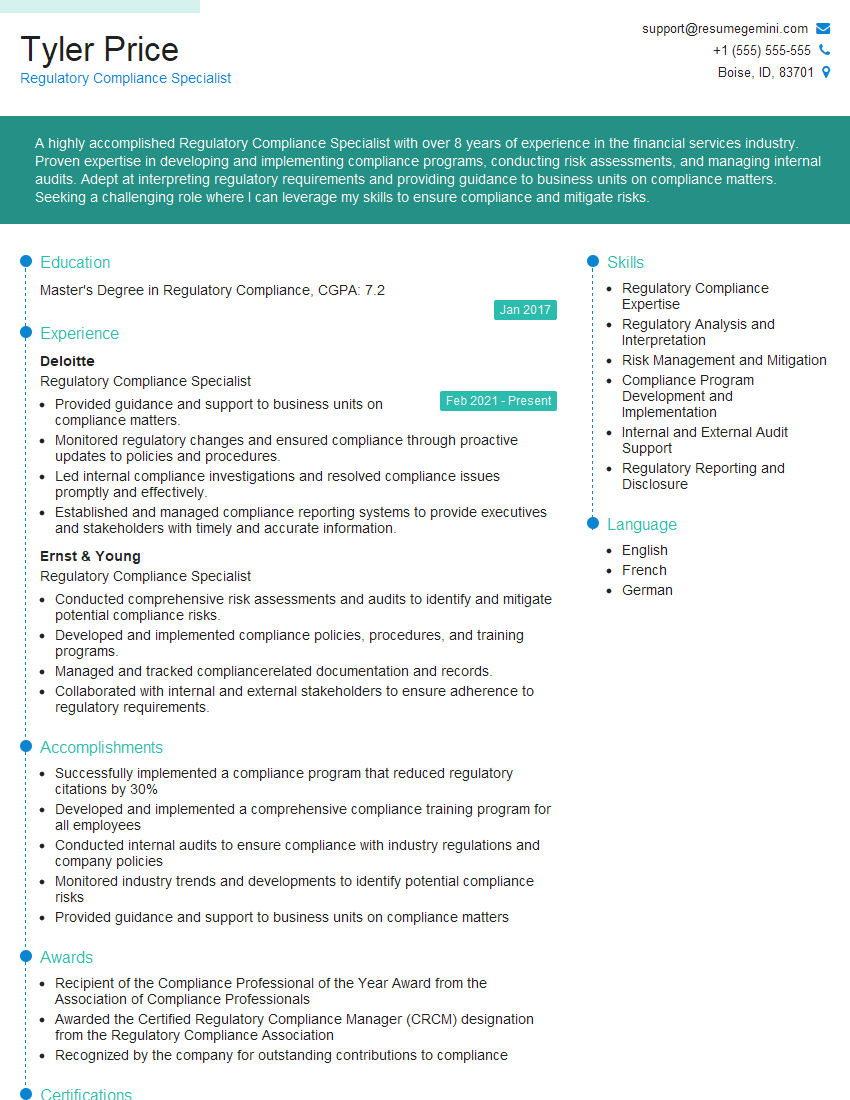
Regulatory Compliance Specialist Resume Sample
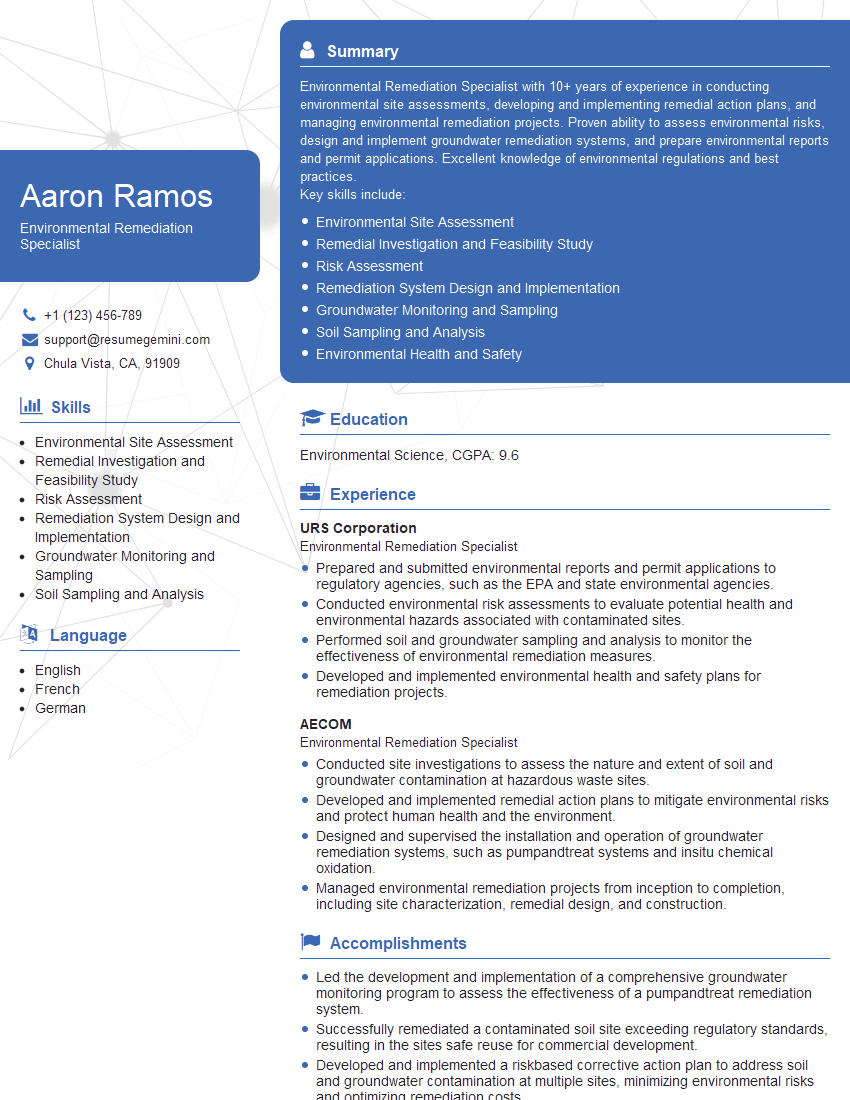
Environmental Remediation Specialist Resume Sample
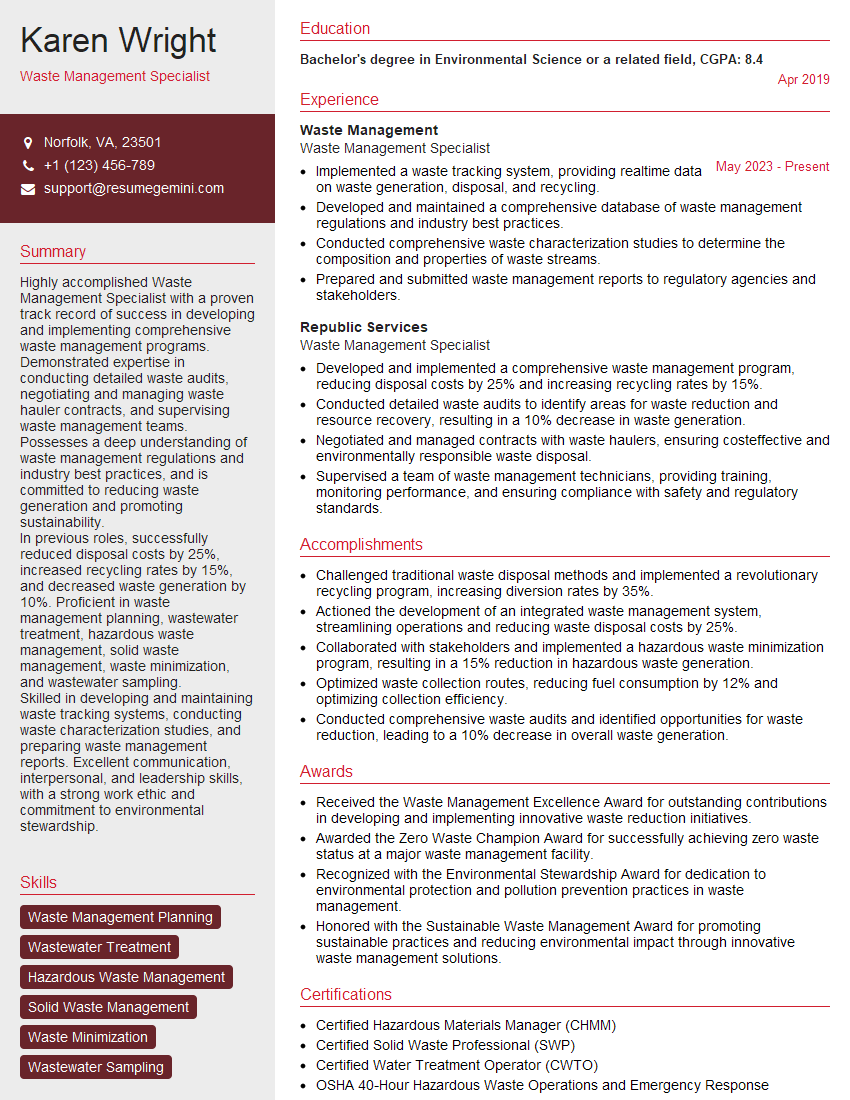
Waste Management Specialist Resume Sample
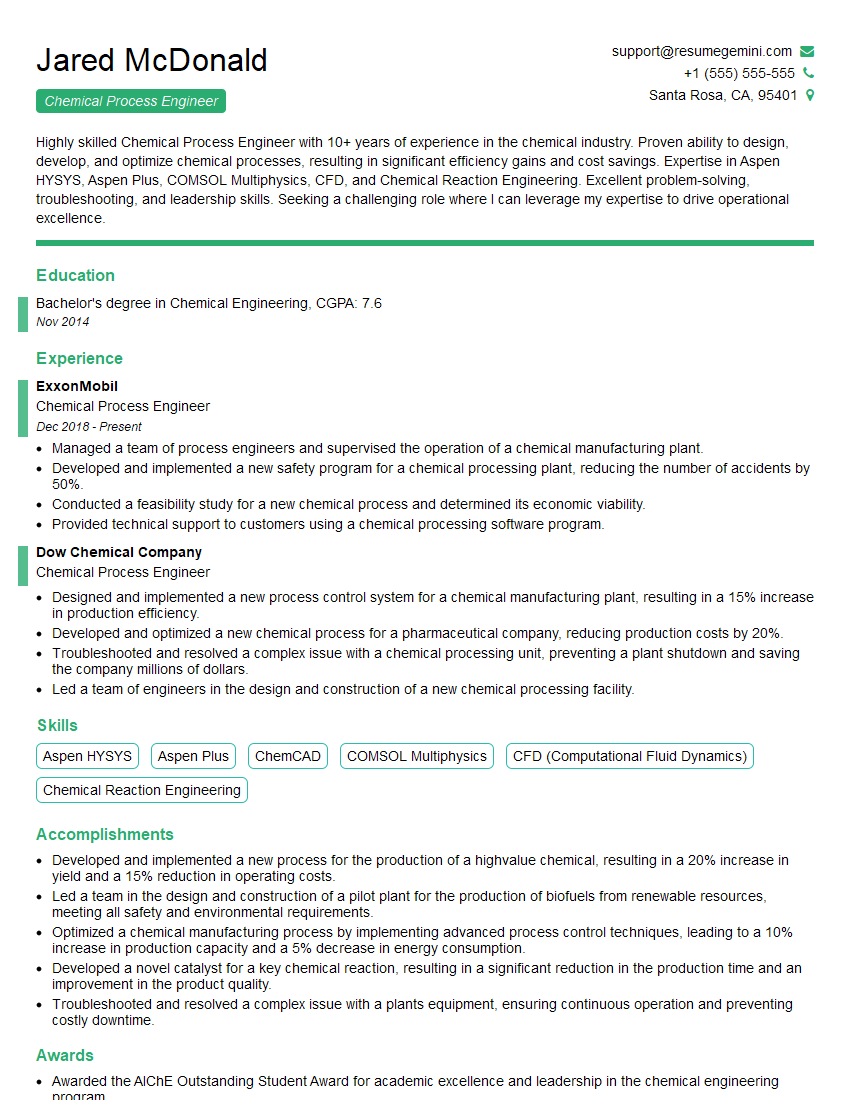
Chemical Process Engineer Resume Sample
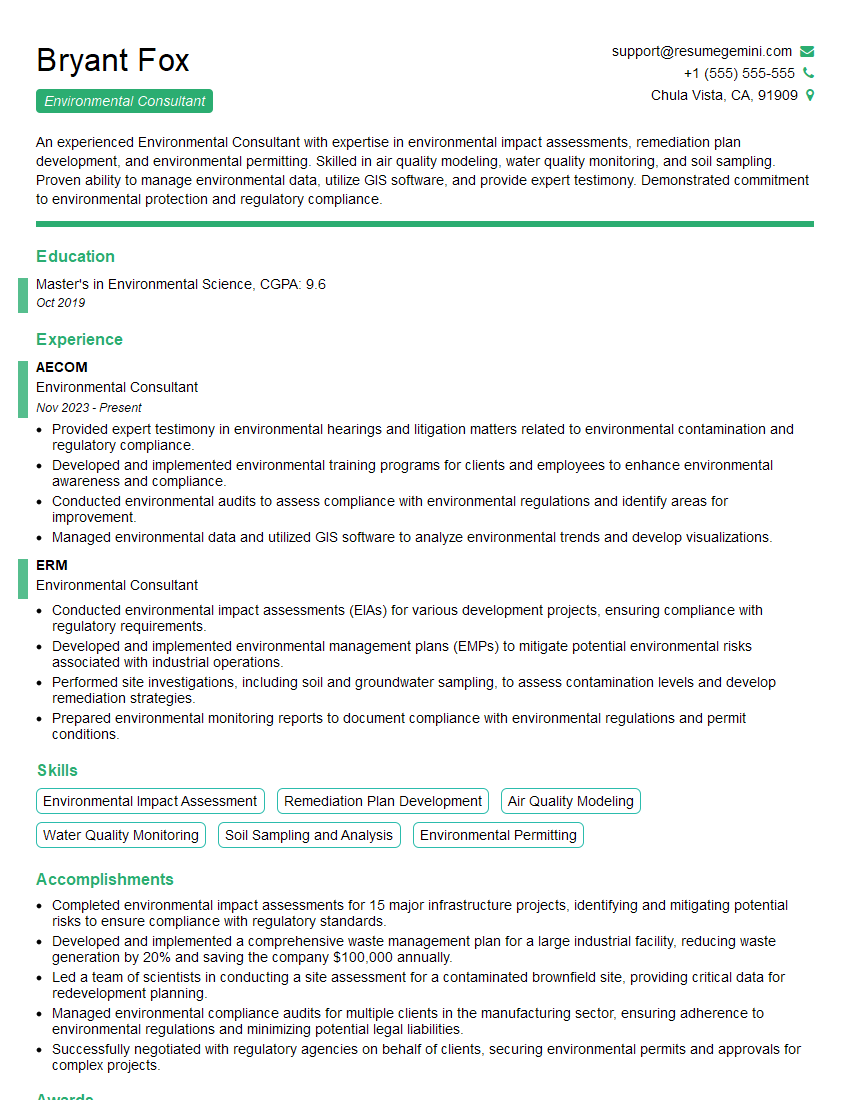
Environmental Consultant Resume Sample
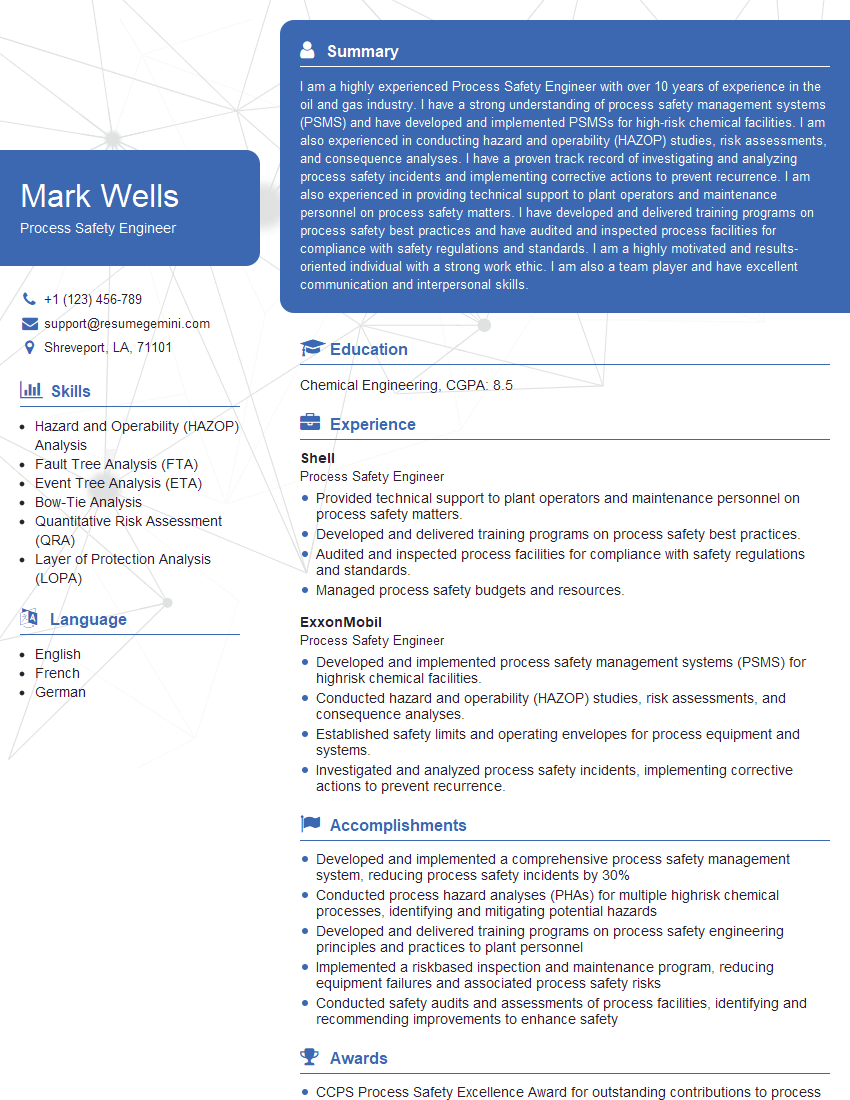
Process Safety Engineer Resume Sample
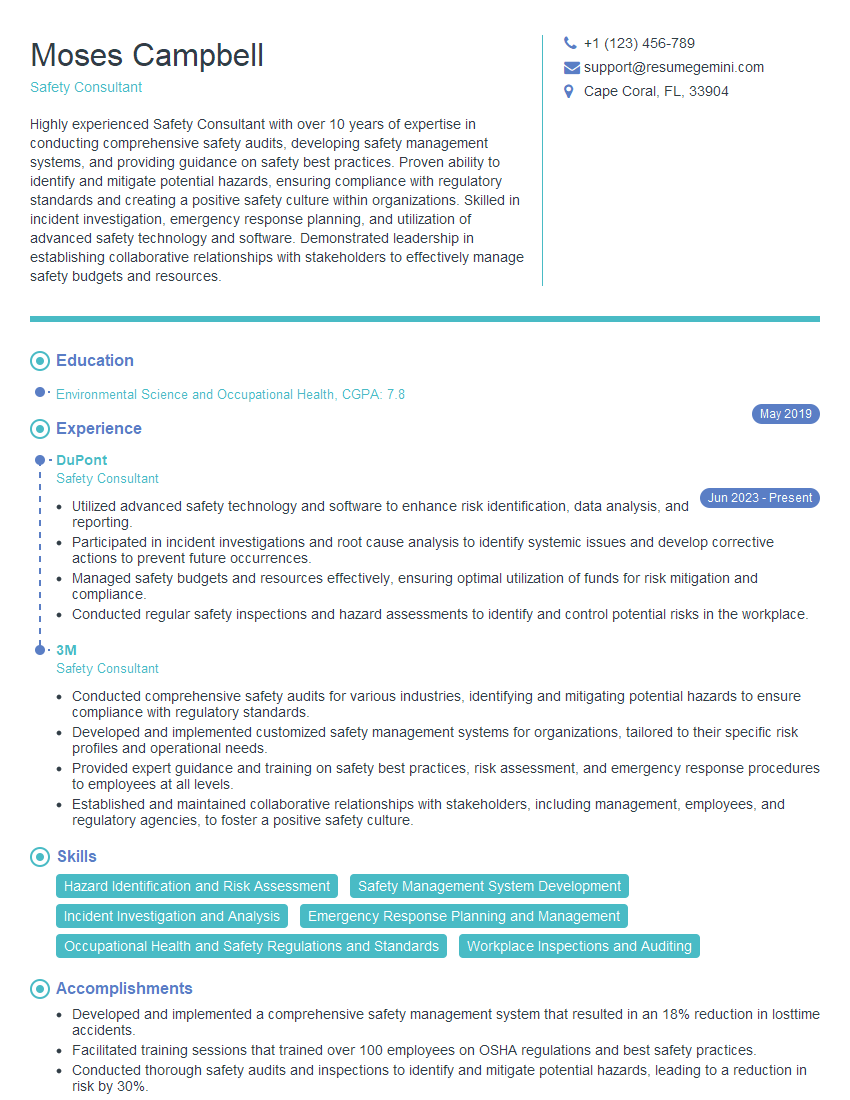
Safety Consultant Resume Sample
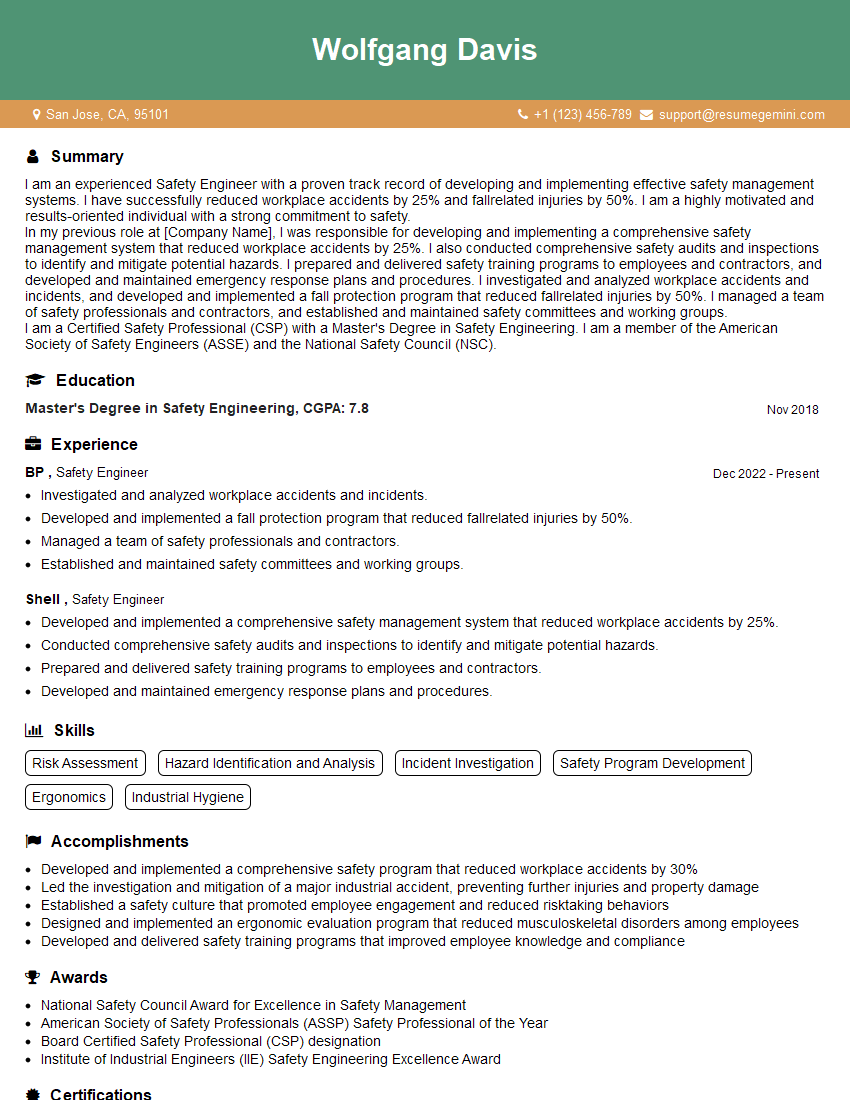
Safety Engineer Resume Sample
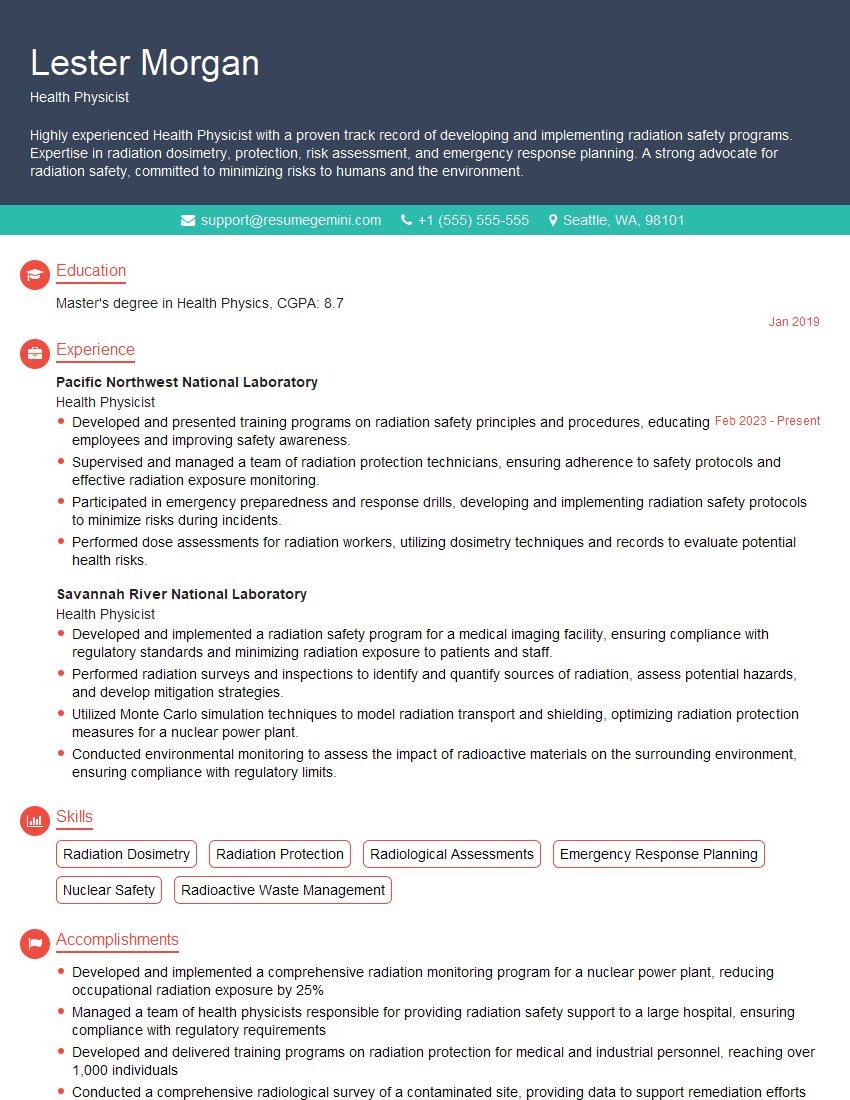
Health Physicist Resume Sample
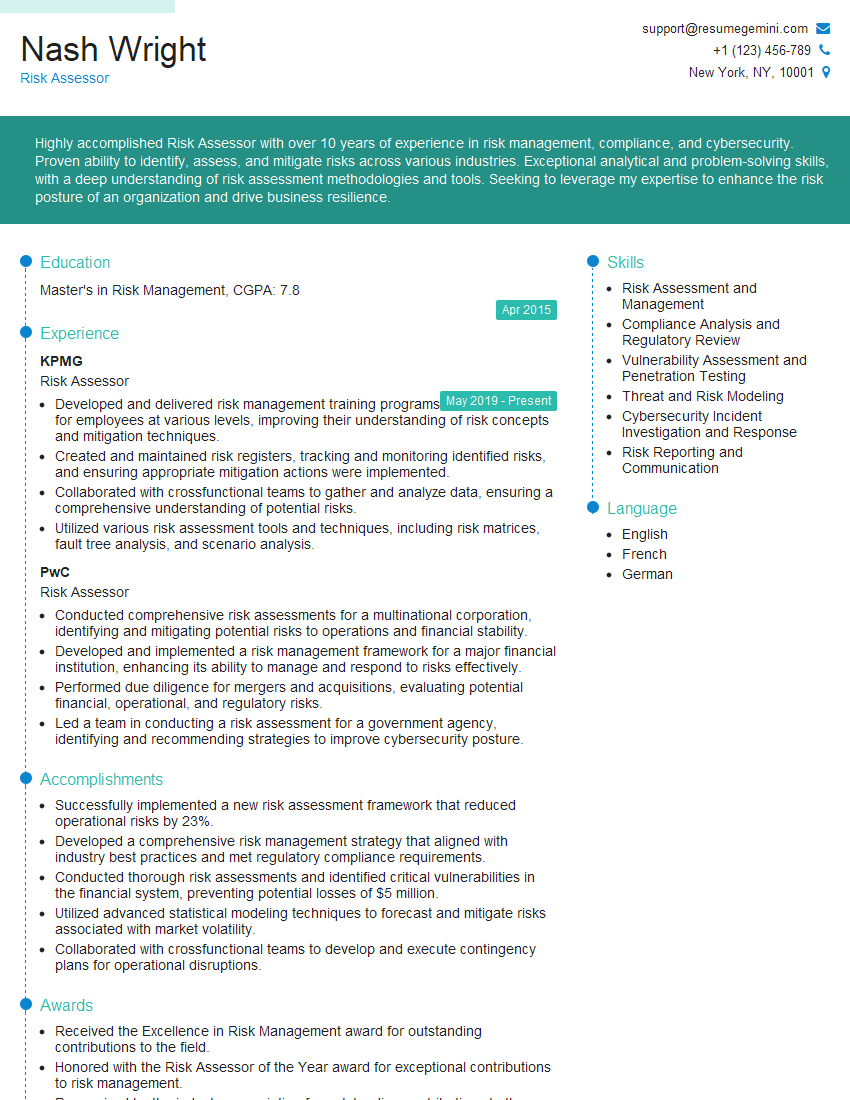
Risk Assessor Resume Sample
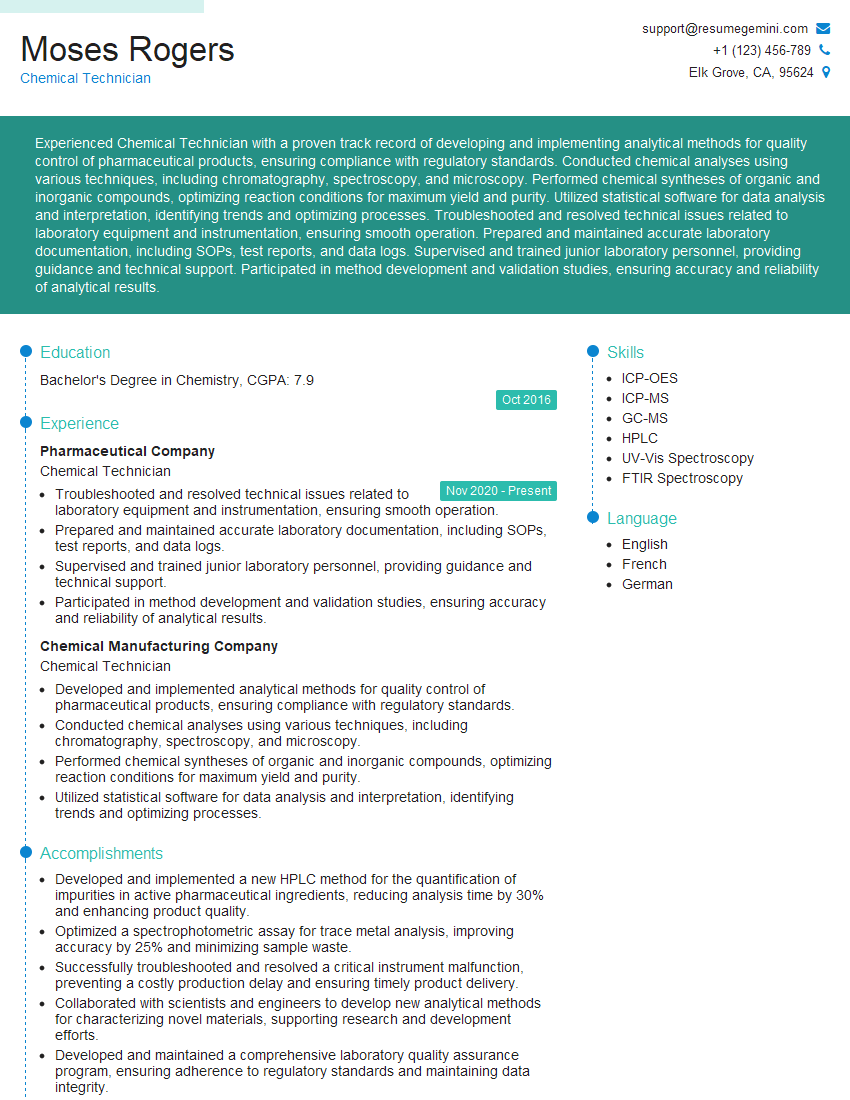
Chemical Technician Resume Sample
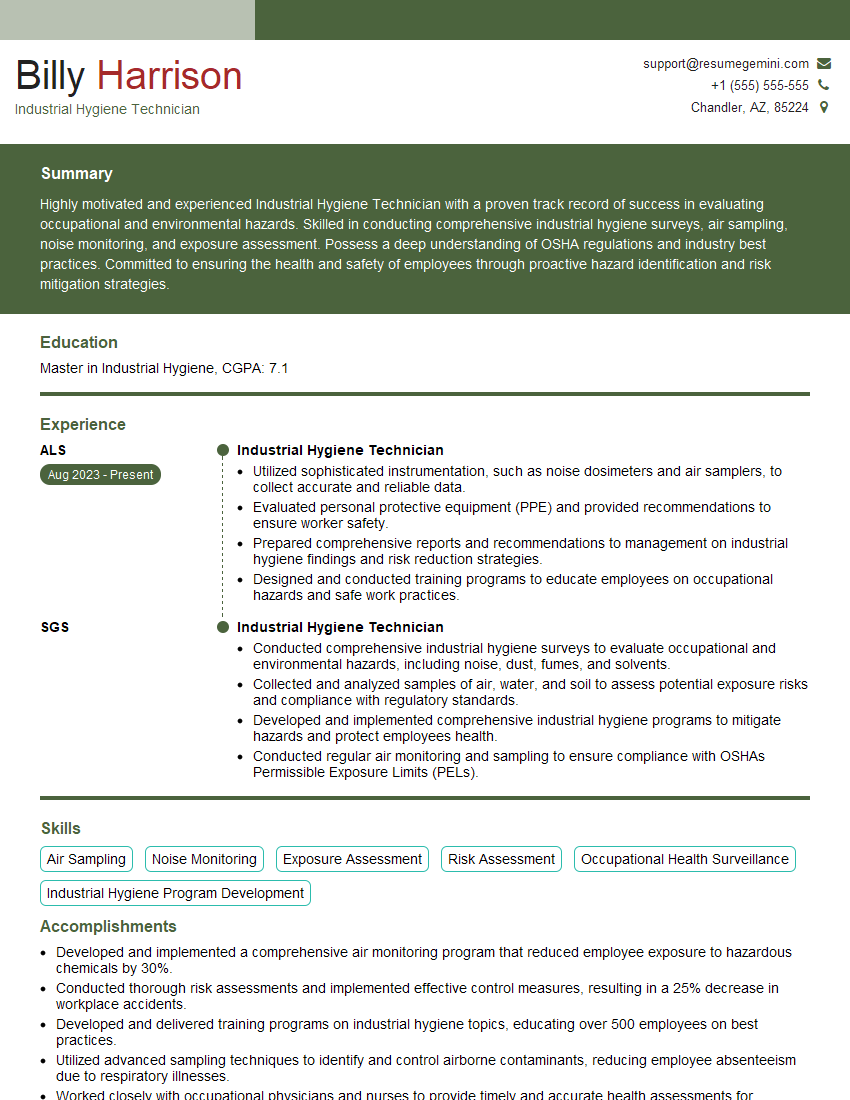
Industrial Hygiene Technician Resume Sample
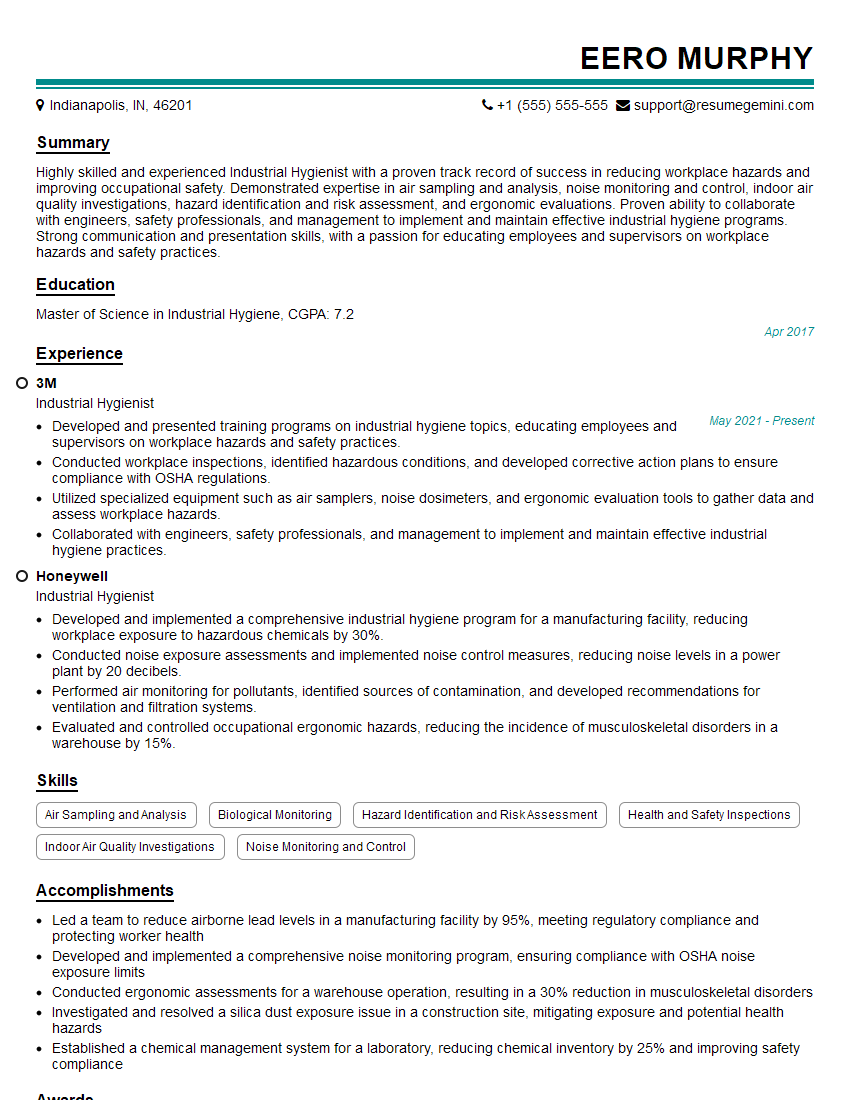
Industrial Hygienist Resume Sample
- Compliance Officer
- Regulatory Compliance Specialist
- Environmental Remediation Specialist
- Waste Management Specialist
- Chemical Process Engineer
- Environmental Consultant
- Process Safety Engineer
- Safety Consultant
- Safety Engineer
- Health Physicist
- Risk Assessor
- Chemical Technician
- Industrial Hygiene Technician
- Industrial Hygienist
Explore more articles
Users Rating of Our Blogs
Share Your Experience
We value your feedback! Please rate our content and share your thoughts (optional).
What Readers Say About Our Blog
Attention music lovers!
Wow, All the best Sax Summer music !!!
Spotify: https://open.spotify.com/artist/6ShcdIT7rPVVaFEpgZQbUk
Apple Music: https://music.apple.com/fr/artist/jimmy-sax-black/1530501936
YouTube: https://music.youtube.com/browse/VLOLAK5uy_noClmC7abM6YpZsnySxRqt3LoalPf88No
Other Platforms and Free Downloads : https://fanlink.tv/jimmysaxblack
on google : https://www.google.com/search?q=22+AND+22+AND+22
on ChatGPT : https://chat.openai.com?q=who20jlJimmy20Black20Sax20Producer
Get back into the groove with Jimmy sax Black
Best regards,
Jimmy sax Black
www.jimmysaxblack.com
Hi I am a troller at The aquatic interview center and I suddenly went so fast in Roblox and it was gone when I reset.
Hi,
Business owners spend hours every week worrying about their website—or avoiding it because it feels overwhelming.
We’d like to take that off your plate:
$69/month. Everything handled.
Our team will:
Design a custom website—or completely overhaul your current one
Take care of hosting as an option
Handle edits and improvements—up to 60 minutes of work included every month
No setup fees, no annual commitments. Just a site that makes a strong first impression.
Find out if it’s right for you:
https://websolutionsgenius.com/awardwinningwebsites
Hello,
we currently offer a complimentary backlink and URL indexing test for search engine optimization professionals.
You can get complimentary indexing credits to test how link discovery works in practice.
No credit card is required and there is no recurring fee.
You can find details here:
https://wikipedia-backlinks.com/indexing/
Regards
NICE RESPONSE TO Q & A
hi
The aim of this message is regarding an unclaimed deposit of a deceased nationale that bears the same name as you. You are not relate to him as there are millions of people answering the names across around the world. But i will use my position to influence the release of the deposit to you for our mutual benefit.
Respond for full details and how to claim the deposit. This is 100% risk free. Send hello to my email id: lukachachibaialuka@gmail.com
Luka Chachibaialuka
Hey interviewgemini.com, just wanted to follow up on my last email.
We just launched Call the Monster, an parenting app that lets you summon friendly ‘monsters’ kids actually listen to.
We’re also running a giveaway for everyone who downloads the app. Since it’s brand new, there aren’t many users yet, which means you’ve got a much better chance of winning some great prizes.
You can check it out here: https://bit.ly/callamonsterapp
Or follow us on Instagram: https://www.instagram.com/callamonsterapp
Thanks,
Ryan
CEO – Call the Monster App
Hey interviewgemini.com, I saw your website and love your approach.
I just want this to look like spam email, but want to share something important to you. We just launched Call the Monster, a parenting app that lets you summon friendly ‘monsters’ kids actually listen to.
Parents are loving it for calming chaos before bedtime. Thought you might want to try it: https://bit.ly/callamonsterapp or just follow our fun monster lore on Instagram: https://www.instagram.com/callamonsterapp
Thanks,
Ryan
CEO – Call A Monster APP
To the interviewgemini.com Owner.
Dear interviewgemini.com Webmaster!
Hi interviewgemini.com Webmaster!
Dear interviewgemini.com Webmaster!
excellent
Hello,
We found issues with your domain’s email setup that may be sending your messages to spam or blocking them completely. InboxShield Mini shows you how to fix it in minutes — no tech skills required.
Scan your domain now for details: https://inboxshield-mini.com/
— Adam @ InboxShield Mini
support@inboxshield-mini.com
Reply STOP to unsubscribe
Hi, are you owner of interviewgemini.com? What if I told you I could help you find extra time in your schedule, reconnect with leads you didn’t even realize you missed, and bring in more “I want to work with you” conversations, without increasing your ad spend or hiring a full-time employee?
All with a flexible, budget-friendly service that could easily pay for itself. Sounds good?
Would it be nice to jump on a quick 10-minute call so I can show you exactly how we make this work?
Best,
Hapei
Marketing Director
Hey, I know you’re the owner of interviewgemini.com. I’ll be quick.
Fundraising for your business is tough and time-consuming. We make it easier by guaranteeing two private investor meetings each month, for six months. No demos, no pitch events – just direct introductions to active investors matched to your startup.
If youR17;re raising, this could help you build real momentum. Want me to send more info?
Hi, I represent an SEO company that specialises in getting you AI citations and higher rankings on Google. I’d like to offer you a 100% free SEO audit for your website. Would you be interested?
Hi, I represent an SEO company that specialises in getting you AI citations and higher rankings on Google. I’d like to offer you a 100% free SEO audit for your website. Would you be interested?