Cracking a skill-specific interview, like one for Ability to lift and handle heavy equipment and materials, requires understanding the nuances of the role. In this blog, we present the questions you’re most likely to encounter, along with insights into how to answer them effectively. Let’s ensure you’re ready to make a strong impression.
Questions Asked in Ability to lift and handle heavy equipment and materials Interview
Q 1. Describe your experience operating a forklift.
I have over seven years of experience operating forklifts, certified on both sit-down and stand-up models. My experience spans various warehouse and manufacturing environments, including working with diverse materials like pallets of finished goods, raw materials, and even large machinery components. I’m proficient in all aspects of forklift operation, from pre-operation checks (ensuring fluid levels, tire pressure, and overall functionality) to safe maneuvering in tight spaces and loading/unloading onto trucks. For example, in my previous role at Acme Manufacturing, I was responsible for the efficient movement of over 500 pallets daily, maintaining a perfect safety record. I’m also experienced in using different attachments, such as clamps and forks, to handle varied materials safely and effectively.
Q 2. What safety measures do you take when lifting heavy objects?
Safety is paramount when lifting heavy objects. My approach involves a multi-step process: First, I always assess the weight and dimensions of the object and ensure I have the appropriate equipment for the task. Second, I conduct a thorough inspection of the lifting equipment itself, checking for any damage or wear and tear. Third, I plan the lift carefully, considering the path, potential obstacles, and the stability of the object being lifted. I always maintain a firm grip, and use lifting aids like straps or dollies whenever possible. Proper lifting techniques, keeping the load close to my body, and avoiding twisting motions are fundamental. Finally, I communicate clearly with my colleagues to ensure everyone is aware of the lift process and potential hazards.
Q 3. How do you ensure the safe handling of materials?
Safe material handling involves a combination of understanding the material properties (weight, fragility, dimensions), using appropriate equipment, and adhering to strict safety procedures. This includes properly securing loads to prevent shifting or falling, using proper lifting techniques, and being aware of the surrounding environment to prevent collisions. For instance, when handling fragile materials, I would use padding and appropriate containers to avoid damage. I also ensure that materials are stored correctly to prevent accidents and ensure efficient access. Regularly inspecting storage areas and identifying potential hazards is a critical part of safe material handling.
Q 4. Explain your experience with different types of lifting equipment.
My experience includes operating various lifting equipment, including forklifts (both sit-down and stand-up), overhead cranes, pallet jacks, and hand trucks. Each type of equipment has unique operating procedures and safety requirements, and I’m well-versed in all of them. For example, I’ve operated overhead cranes in a steel fabrication facility, where precision and careful planning are crucial for moving large steel beams. My experience extends to using specialized lifting equipment like vacuum lifters for handling glass panels and other delicate items, demonstrating my adaptability to a wide range of situations.
Q 5. Have you ever experienced a lifting-related injury? How was it handled?
Yes, early in my career I suffered a minor back strain while manually lifting a heavy box without proper technique. The incident prompted immediate reporting to my supervisor and a visit to the company nurse. I received first aid and was advised to rest for a few days. This experience highlighted the importance of using appropriate lifting equipment and techniques and reinforced the need for consistent safety awareness.
Q 6. Describe your experience with using rigging equipment.
I have significant experience with rigging equipment, including slings, chains, hooks, and shackles. I understand the critical importance of proper inspection, knot tying, and load distribution to ensure a safe lift. For example, when rigging heavy machinery, I meticulously inspect each component for wear or damage, ensuring that all connections are secure and rated for the load. My understanding of different sling types and their applications (e.g., chain slings for heavy, sharp loads; nylon slings for lighter, more delicate loads) enables me to make informed decisions based on specific job requirements. I also follow strict safety protocols related to load angles and securing points to prevent accidental releases.
Q 7. How familiar are you with weight limits and load capacity?
I am extremely familiar with weight limits and load capacity. I always check the weight capacity of lifting equipment before each use and ensure that the load does not exceed the specified limit. I also understand that the load capacity can be affected by factors such as the angle of the lift and the condition of the lifting equipment. I always err on the side of caution; if unsure, I would consult with a supervisor or qualified professional before proceeding with a lift. Understanding these limitations is essential for preventing accidents and ensuring the safe completion of every lift.
Q 8. What is your experience with proper lifting techniques?
Proper lifting techniques are crucial to prevent injuries. They involve engaging your leg muscles rather than your back, maintaining a straight back, and keeping the load close to your body. Think of it like lifting a toddler – you wouldn’t bend at the waist; you’d squat down and lift with your legs.
- Assess the load: Before lifting, always check the weight and size of the object. Is it too heavy for you alone? Do you need assistance?
- Get a good grip: Use your whole hand, not just your fingers, and ensure a secure hold.
- Lift with your legs: Bend your knees, keep your back straight, and lift smoothly, using your leg muscles to power the lift.
- Maintain a stable posture: Keep your back straight throughout the lift and avoid twisting your body.
- Set the load down carefully: Lower the load slowly, using the same leg-powered technique as the lift. Avoid dropping or jarring the object.
I’ve been trained extensively in these techniques, and I routinely practice them in my daily work. I regularly reinforce these techniques with my colleagues to ensure everyone’s safety.
Q 9. How do you assess the weight and stability of an object before lifting?
Assessing the weight and stability of an object before lifting is paramount. It’s a multi-step process. I first visually inspect the object for any obvious damage or instability. For example, is it balanced? Are there any loose parts? If it’s a box, I check for uneven weight distribution. If the weight isn’t obvious, I’ll attempt to gently rock or nudge it to assess stability before committing to a lift.
- Visual Inspection: Look for cracks, damage, uneven weight distribution, or any signs of instability.
- Weight Estimation: Try to gauge the weight using prior experience and comparing it to objects of known weight.
- Stability Test: Gently try to move or rock the object to see how securely it’s balanced.
- Check the Surroundings: Make sure the path is clear and free of obstacles before attempting a lift.
For heavy or unfamiliar objects, I’ll use a lifting aid like a pallet jack or hand truck to safely manage the load.
Q 10. How do you handle unexpected issues during material handling?
Unexpected issues can arise during material handling – a dropped object, an unexpectedly heavy load, or an unstable surface. My response always prioritizes safety. The first step is to immediately stop the lifting process and reassess the situation.
- Assess the Hazard: Identify the specific issue and potential dangers.
- Seek Assistance: If the load is too heavy or the situation too risky, I will immediately call for help from colleagues or supervisors.
- Use Appropriate Equipment: If the situation necessitates it, I’ll utilize appropriate material handling equipment (forklift, crane, etc.) to safely manage the material.
- Report the Incident: Following the resolution of the immediate issue, I would document the incident and report it to management, detailing what happened and any preventative measures that could be implemented.
For example, if a box unexpectedly tears while lifting, I’d immediately set the box down and call for help instead of trying to continue.
Q 11. What is your experience with different types of material handling equipment?
My experience includes a wide range of material handling equipment, encompassing both manual and powered systems.
- Manual Handling Equipment: Hand trucks, pallet jacks, dollies, straps, and lifting slings are all tools I am proficient with.
- Powered Equipment: I am familiar with and certified to operate forklifts, cranes, and overhead hoists. I understand the safety protocols and operational procedures required for each piece of equipment.
My experience isn’t limited just to operating these pieces of equipment; I also understand their limitations and maintenance requirements.
Q 12. Explain your understanding of OSHA regulations regarding material handling.
OSHA regulations regarding material handling are extensive and focus on minimizing workplace injuries. Key areas include:
- Proper Lifting Techniques: OSHA mandates training on safe lifting techniques to reduce back injuries.
- Equipment Maintenance: Regular inspection and maintenance of material handling equipment is essential to prevent malfunctions.
- Personal Protective Equipment (PPE): Using appropriate PPE, such as safety shoes, gloves, and back supports, is mandatory in many handling situations.
- Workplace Ergonomics: Designing workstations to minimize physical strain and repetitive movements is also crucial.
- Load Limits: Never exceeding the load limits of equipment or personnel is paramount.
I am well-versed in all applicable OSHA regulations and prioritize compliance to ensure a safe working environment.
Q 13. How do you prioritize safety while maintaining productivity?
Prioritizing safety while maintaining productivity isn’t a trade-off; it’s a synergy. Safety is the foundation of productivity. By following safety protocols, we avoid injuries and delays. This means using the correct equipment, assessing the environment, and not taking shortcuts.
- Risk Assessment: Evaluating each task for potential hazards is essential. This process determines the necessary safety precautions and equipment.
- Proper Training: Ongoing training on safety procedures and equipment usage keeps everyone informed.
- Communication: Open communication between team members, supervisors and management is key to proactively identifying and addressing potential problems.
- Following Procedures: Adherence to standard operating procedures and safety guidelines is vital.
In short: A safe worker is a productive worker.
Q 14. Describe a time you had to lift a particularly heavy or awkward object. What methods did you use?
I once had to move a large, awkwardly shaped piece of machinery – a roughly 500-pound industrial pump. It was difficult because of its size and uneven weight distribution.
- Assessment: I first assessed the weight, the path, and the potential hazards. This included checking the floor stability.
- Equipment Selection: I chose an appropriate motorized hand truck, ensuring it had sufficient capacity and stability for the weight and shape of the pump.
- Teamwork: I enlisted the help of a colleague. We secured the pump using ratchet straps to prevent it from shifting and secured it to the hand truck.
- Safe Movement: We moved the pump slowly and carefully, communicating frequently to coordinate our efforts and maintain stability.
The successful move was attributed to careful planning, teamwork, and the use of proper equipment. Safety was paramount throughout the process.
Q 15. How do you use machinery to assist with lifting and moving heavy materials?
Utilizing machinery for lifting and moving heavy materials significantly reduces the risk of injury and increases efficiency. The choice of machinery depends heavily on the material’s weight, dimensions, and fragility, as well as the environment.
- Forklifts: These are invaluable for palletized goods and heavy loads. Before operating, I always inspect the forks for damage, check fluid levels, and ensure the load is properly balanced and secured. For example, when moving a pallet of steel sheets, I’d ensure the forks are fully inserted under the pallet and the load is evenly distributed to prevent tipping.
- Cranes: Used for extremely heavy or awkwardly shaped objects, cranes require a thorough pre-operation inspection including load capacity checks and confirmation of the rigging’s integrity. I’ve used cranes extensively to lift large pieces of machinery into place during factory installations, meticulously following the crane operator’s instructions and safety protocols.
- Hoists: These are excellent for vertically lifting materials. Proper attachment and load capacity considerations are crucial. I’ve used hoists to lift heavy equipment for maintenance in a manufacturing plant, ensuring the load is secure and the hoist is properly rated for the weight.
Safety is paramount. I always follow all safety regulations and utilize appropriate personal protective equipment (PPE) such as safety shoes, gloves, and hard hats when operating or working near heavy machinery.
Career Expert Tips:
- Ace those interviews! Prepare effectively by reviewing the Top 50 Most Common Interview Questions on ResumeGemini.
- Navigate your job search with confidence! Explore a wide range of Career Tips on ResumeGemini. Learn about common challenges and recommendations to overcome them.
- Craft the perfect resume! Master the Art of Resume Writing with ResumeGemini’s guide. Showcase your unique qualifications and achievements effectively.
- Don’t miss out on holiday savings! Build your dream resume with ResumeGemini’s ATS optimized templates.
Q 16. Describe your experience with inventory management related to heavy materials.
Inventory management of heavy materials requires meticulous tracking and organization to ensure efficiency and prevent damage or loss. My approach involves a combination of physical and digital methods.
- Physical Inventory: I maintain clear and organized storage areas, using clear labeling and spatial planning to maximize space and accessibility. This includes regularly checking for damage and conducting physical inventory counts to reconcile stock levels with the digital system.
- Digital Inventory: I am proficient in using inventory management software to track materials, including their weight, dimensions, location, and condition. This allows for real-time tracking of stock levels, simplifying order fulfillment and minimizing waste.
- Material Tracking: I implement a system for tracking material movement from arrival to usage, ensuring accountability and identifying potential bottlenecks or inefficiencies. This often involves barcoding or RFID tagging.
For instance, in a previous role, I implemented a new inventory management system that reduced material handling time by 15% and minimized stock discrepancies by over 20%.
Q 17. What is your experience with using hand trucks, pallet jacks, or other manual lifting aids?
Manual lifting aids are essential tools for efficient and safe material handling, especially for smaller or less-accessible loads. My experience includes:
- Hand Trucks: I’m experienced in selecting the appropriate hand truck for various loads and terrain. For example, I’d use a two-wheel hand truck for lighter, more manageable items and a four-wheel hand truck for heavier, bulkier items that need better stability.
- Pallet Jacks: I’m proficient in operating pallet jacks to move palletized goods across warehouse floors, ensuring proper lifting techniques to prevent damage to both the pallet jack and the load.
- Other Aids: I have used various other manual lifting aids such as dollies, lever bars, and come-alongs, tailoring the choice to the specific material and task.
Safety is always my primary concern. I always assess the load’s weight and size before lifting, maintaining proper posture and lifting techniques to prevent back injuries. I also frequently utilize lifting straps or slings to distribute the weight evenly.
Q 18. How do you inspect equipment before and after using it?
Equipment inspection is crucial for safety and preventing damage. Before using any equipment, I perform a thorough visual inspection for:
- Damage: Cracks, dents, worn parts, or any signs of previous damage.
- Fluid Levels: Checking hydraulic fluid, oil, or coolant levels in machinery like forklifts and cranes.
- Operational Functionality: Testing brakes, controls, and other safety features to ensure they work properly.
- Securing Mechanisms: Inspecting chains, slings, and other lifting gear for wear, damage, and proper functionality.
After use, I inspect for any new damage caused during operation and clean the equipment, ensuring proper storage to prevent deterioration. Documentation of these inspections is essential for maintenance records and safety compliance. Failing to inspect could lead to equipment failure and potential injury.
Q 19. What are the signs of damaged equipment or materials and how do you handle them?
Identifying damaged equipment and materials is critical for safety and preventing accidents. Signs include:
- Visible Damage: Cracks, dents, bends, or other structural defects in materials or equipment.
- Functional Issues: Malfunctioning controls, leaks, or unusual noises from machinery.
- Corrosion: Rust or other signs of corrosion in metal components.
- Wear and Tear: Excessive wear on parts, indicating potential failure.
When I identify damaged equipment or materials, I immediately take them out of service. I clearly label them as damaged and report the damage to my supervisor. Damaged materials are segregated to prevent accidental use, and damaged equipment is scheduled for repair or replacement.
Q 20. Describe your understanding of load securing techniques.
Load securing is vital to prevent shifting during transport, protecting both the load and personnel. Techniques vary depending on the type of load and method of transport:
- Strapping: Using straps to secure pallets or other loads onto trucks or trailers, ensuring they’re taut and evenly distributed.
- Chain or Wire Rope: Using chains or wire ropes with appropriate shackles and binders for heavier or more irregularly shaped loads.
- Dunnage: Utilizing materials like wood or foam to fill gaps and prevent shifting. This is crucial for fragile items to prevent damage during transit.
- Blocking and Bracing: Using blocks of wood and other bracing materials to prevent loads from sliding or tipping.
For example, when securing a load of heavy pipes on a flatbed truck, I would use chains or wire ropes to secure them to the truck’s frame, ensuring the chains are properly tensioned and protected from chafing. I would also use dunnage to fill gaps and prevent shifting.
Q 21. How do you manage materials in different environmental conditions (e.g., hot, cold, wet)?
Environmental conditions significantly impact material handling. My approach includes:
- Extreme Temperatures: In hot conditions, I avoid prolonged exposure to direct sunlight and use appropriate gloves to prevent burns. In cold conditions, I ensure proper attire to prevent hypothermia and consider using heated storage areas for sensitive materials. Materials like some plastics are vulnerable to cracking in extreme cold.
- Wet Conditions: I use anti-slip mats to prevent falls and ensure that materials are protected from water damage. Some materials like wood can absorb moisture and become structurally weaker. I would carefully assess their condition before handling in wet environments.
- Other Conditions: I adjust my techniques to account for wind, dust, or other factors that could compromise safety or material integrity. For instance, I might secure a load more tightly during windy conditions.
Safety is always my primary concern. I always assess the conditions and adapt my procedures to ensure the safety of myself and others, as well as the integrity of the materials being handled.
Q 22. Explain your experience working with different types of materials (e.g., pallets, boxes, drums).
My experience encompasses handling a wide variety of materials, from standard pallets and boxes to more challenging items like 55-gallon drums and oversized components. With pallets, I’m proficient in identifying weight distribution to ensure safe stacking and movement using appropriate equipment like pallet jacks or forklifts. Boxes require careful assessment of their contents and structural integrity to prevent damage during transport. Drums, particularly those containing hazardous materials, demand extra caution – I’m trained in the proper handling techniques, including securing them against rolling and spills. For oversized or unusually shaped items, I collaborate with colleagues to develop a safe lifting and moving plan, often involving specialized equipment and multiple personnel.
For example, in a previous role, we received a shipment of unusually large and heavy machinery components. We carefully planned the unloading, using a combination of forklifts, straps, and dollies to maneuver them safely into storage. We also meticulously documented the process and inspected each component for damage. This highlights my ability to adapt my methods to diverse situations and materials.
Q 23. How do you communicate potential hazards related to material handling to your team?
Communicating potential hazards is paramount to team safety. My approach is proactive and multi-faceted. Before any material handling task begins, I conduct a thorough risk assessment, identifying potential hazards such as uneven surfaces, obstructions, unstable stacking, and the specific risks associated with the materials themselves (e.g., sharp edges, hazardous chemicals). I then communicate these findings clearly and concisely to my team, using both verbal and visual aids (e.g., safety briefings, diagrams, checklists). I emphasize the importance of using appropriate PPE and following established safety procedures. I encourage open communication and actively listen to any concerns raised by team members.
For instance, if we were handling chemicals, I’d ensure everyone understands the safety data sheets (SDS), the proper use of respiratory protection, and emergency procedures in case of a spill. This collaborative and transparent approach helps build a safety-conscious work environment.
Q 24. How do you ensure the accuracy of inventory related to materials you handle?
Maintaining inventory accuracy is crucial for efficient operations and preventing losses. My approach involves meticulous record-keeping at each stage of the process. This begins with verifying the quantity and condition of incoming materials against delivery documentation. During storage, I use clear labeling and organized storage systems to easily locate items. When materials are moved or used, I meticulously update inventory records, using either manual logs or digital inventory management systems. Regular cycle counts are conducted to reconcile physical inventory with recorded data, helping to identify and address discrepancies promptly.
In a previous warehousing role, I implemented a barcode scanning system which significantly improved inventory accuracy and reduced the time spent on manual counting. This shows my initiative in seeking and implementing solutions to improve efficiency and accuracy.
Q 25. Describe your experience with using specialized lifting equipment, like overhead cranes.
I have extensive experience operating overhead cranes, including both bridge cranes and gantry cranes. My experience encompasses pre-operation checks, safe load calculations, and the proper rigging and signaling procedures. I understand the limitations of the equipment and always prioritize safety. Before operating the crane, I thoroughly inspect it, checking for any damage, loose parts, or malfunctioning components. I meticulously plan each lift, assessing the weight, center of gravity, and the overall path of the load, to avoid collisions and ensure stability. I also always work with a certified signal person to ensure the crane’s movements are coordinated safely and effectively.
For example, I was instrumental in lifting and positioning large, prefabricated building sections using an overhead crane in a construction project. This involved careful planning, precise maneuvering, and impeccable teamwork, ensuring the safe and efficient completion of the task. The project was completed on time and without any safety incidents.
Q 26. How familiar are you with the use of personal protective equipment (PPE)?
I am very familiar with the use of personal protective equipment (PPE) and its vital role in preventing injuries. My knowledge includes the selection, proper use, and maintenance of various types of PPE, including safety helmets, safety glasses, high-visibility vests, steel-toe boots, gloves, hearing protection, and respiratory protection. I understand that the type of PPE required depends on the specific hazards associated with the task and the materials being handled. I always ensure that PPE is in good condition and properly fitted before starting any work.
For instance, when handling materials with sharp edges, I would use cut-resistant gloves. When working in noisy environments, hearing protection is mandatory, and when handling hazardous materials, appropriate respiratory protection would be crucial. I always emphasize the importance of PPE to my colleagues and ensure everyone is using it correctly. Safety is always my top priority.
Q 27. What are the common causes of back injuries in material handling, and how can they be prevented?
Back injuries are a common occurrence in material handling, often stemming from improper lifting techniques, excessive force, repetitive strain, and poor posture. Preventing these injuries requires a multi-pronged approach focusing on training, proper equipment, and workplace ergonomics.
Common Causes:
- Improper Lifting Techniques: Lifting with a bent back, twisting, or lifting objects that are too heavy.
- Repetitive Strain Injuries: Repeated bending, lifting, or twisting can cause cumulative trauma to the back.
- Poor Posture: Maintaining poor posture while standing or sitting for extended periods can exacerbate back problems.
- Lack of Training: Inadequate training on safe lifting techniques and material handling procedures.
Prevention Strategies:
- Proper Lifting Techniques: Training on the proper lifting techniques, such as keeping the back straight, bending at the knees, and lifting with the legs.
- Mechanical Aids: Using appropriate lifting equipment, such as hand trucks, dollies, and forklifts, to minimize manual lifting.
- Ergonomic Design: Designing workstations and workspaces to minimize strain on the back, including adjustable height workbenches and comfortable seating.
- Regular Breaks: Encouraging workers to take regular breaks to rest and stretch to prevent fatigue.
- Stretching and Exercise: Promoting regular stretching and exercise to maintain back flexibility and strength.
- Safety Training: Providing regular safety training to reinforce proper techniques and highlight the importance of reporting injuries.
By implementing these preventive measures, we can create a safer work environment and minimize the risk of back injuries.
Key Topics to Learn for Ability to lift and handle heavy equipment and materials Interview
- Understanding Weight Limits and Lifting Techniques: Learn proper lifting mechanics to prevent injury, including utilizing legs, maintaining a straight back, and using lifting aids where appropriate. Consider different types of loads and their handling requirements.
- Safe Equipment Operation: Familiarize yourself with the safe operation of relevant machinery, including forklifts, cranes, or hand trucks. This includes pre-operation checks, understanding limitations, and adhering to safety protocols.
- Material Handling Procedures: Understand the importance of following established procedures for storing, transporting, and handling materials to prevent accidents and damage. This includes understanding stacking procedures and appropriate storage locations.
- Workplace Safety Regulations and Procedures: Demonstrate knowledge of relevant OSHA (or equivalent) regulations concerning heavy lifting and equipment operation. Be prepared to discuss company-specific safety policies and procedures.
- Identifying and Addressing Potential Hazards: Practice identifying potential hazards related to lifting and material handling, and be prepared to discuss strategies for mitigating those risks. This includes understanding the importance of reporting unsafe conditions.
- Teamwork and Communication in Material Handling: Highlight your ability to work effectively with others in a team environment to safely handle heavy equipment and materials, emphasizing clear communication and coordination.
- Problem-solving related to material handling challenges: Be ready to discuss how you would approach and solve problems related to unexpected weight, damaged equipment, or difficult-to-handle materials.
Next Steps
Mastering the ability to lift and handle heavy equipment and materials safely and efficiently is crucial for career advancement in many industries. It demonstrates responsibility, attention to detail, and a commitment to workplace safety – qualities highly valued by employers. To significantly boost your job prospects, create a strong, ATS-friendly resume that highlights these skills. ResumeGemini is a trusted resource that can help you build a professional resume showcasing your abilities effectively. Examples of resumes tailored to emphasize your proficiency in handling heavy equipment and materials are available within ResumeGemini to help guide you.

Operations Manager Resume Sample
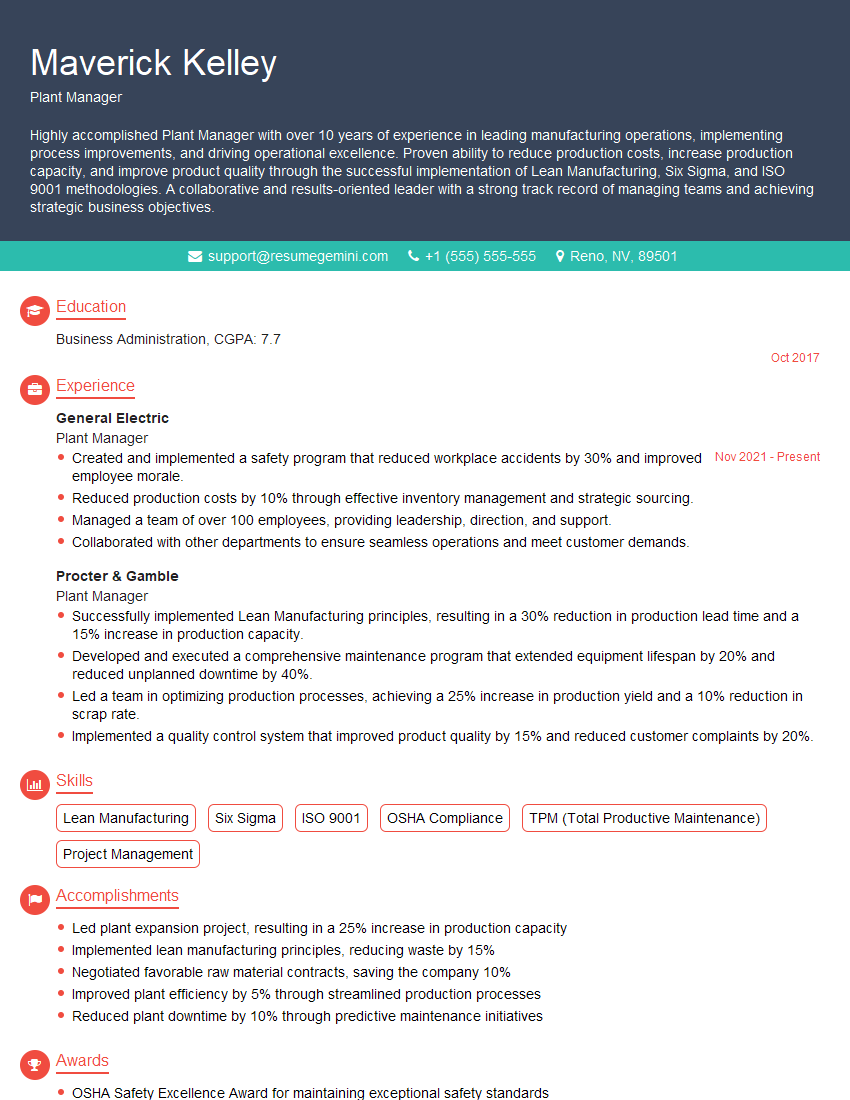
Plant Manager Resume Sample
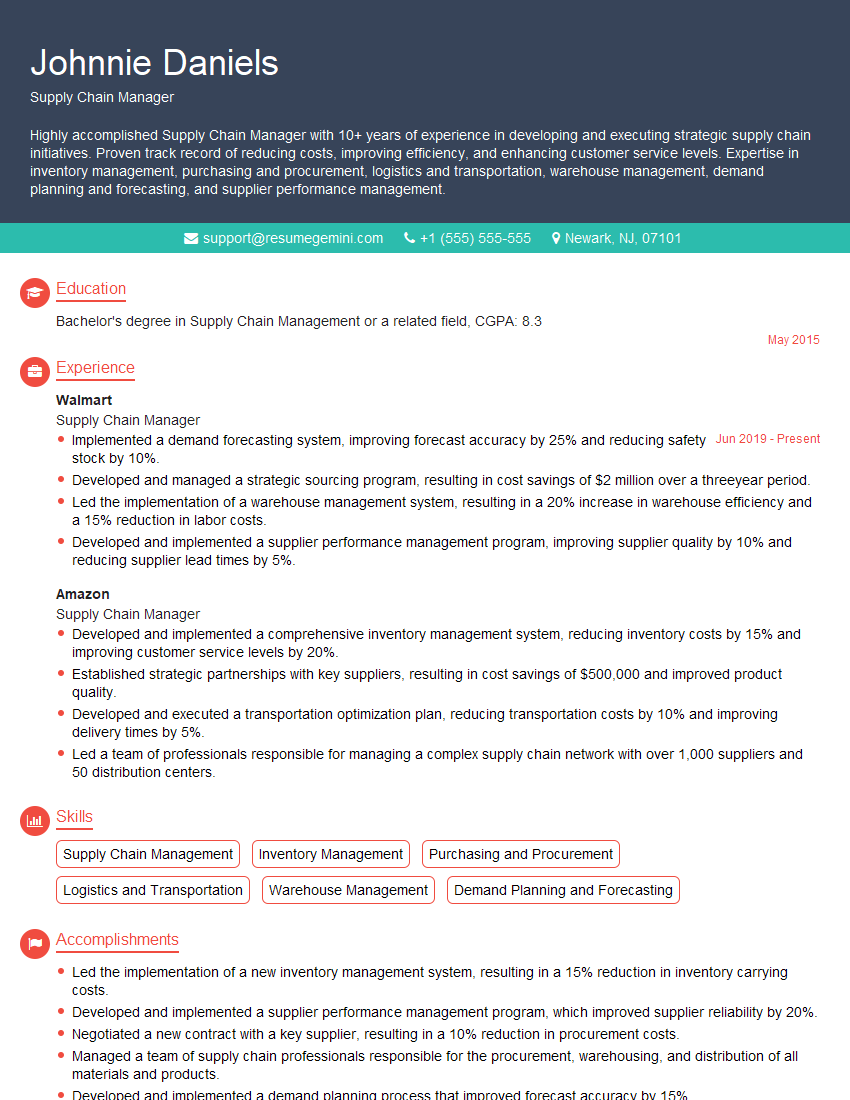
Supply Chain Manager Resume Sample
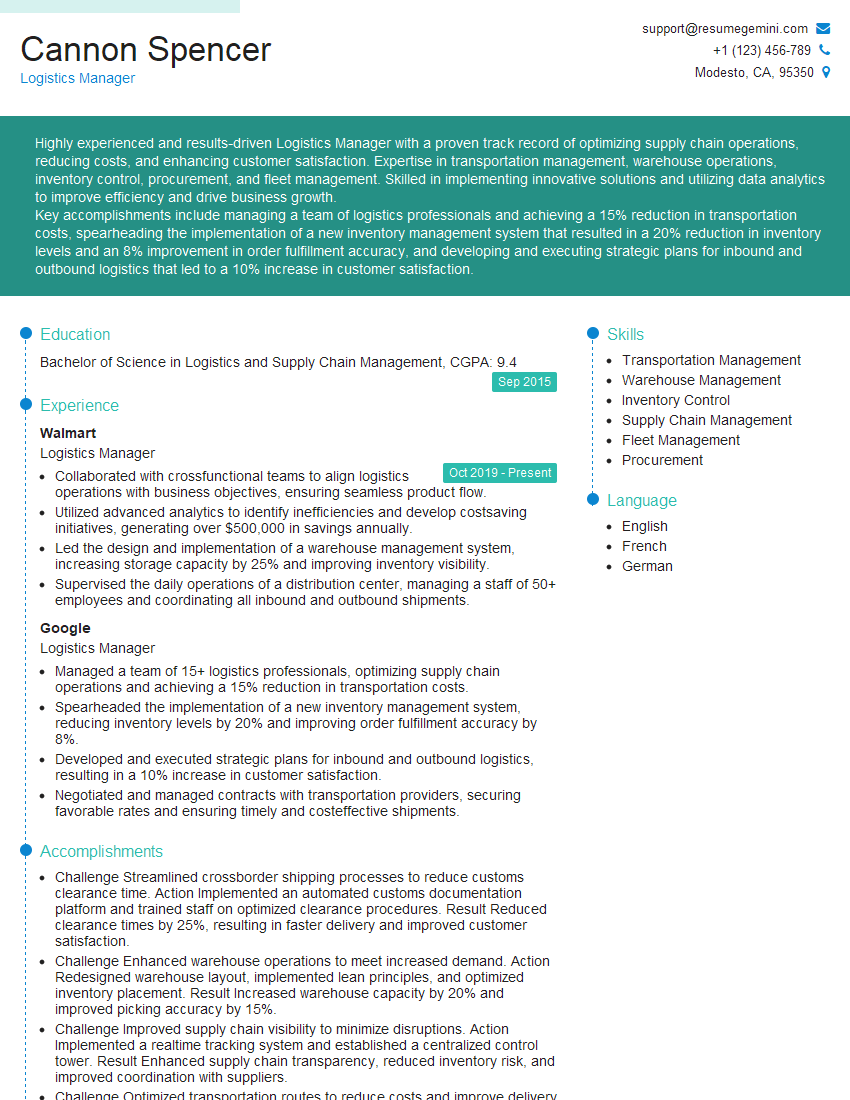
Logistics Manager Resume Sample
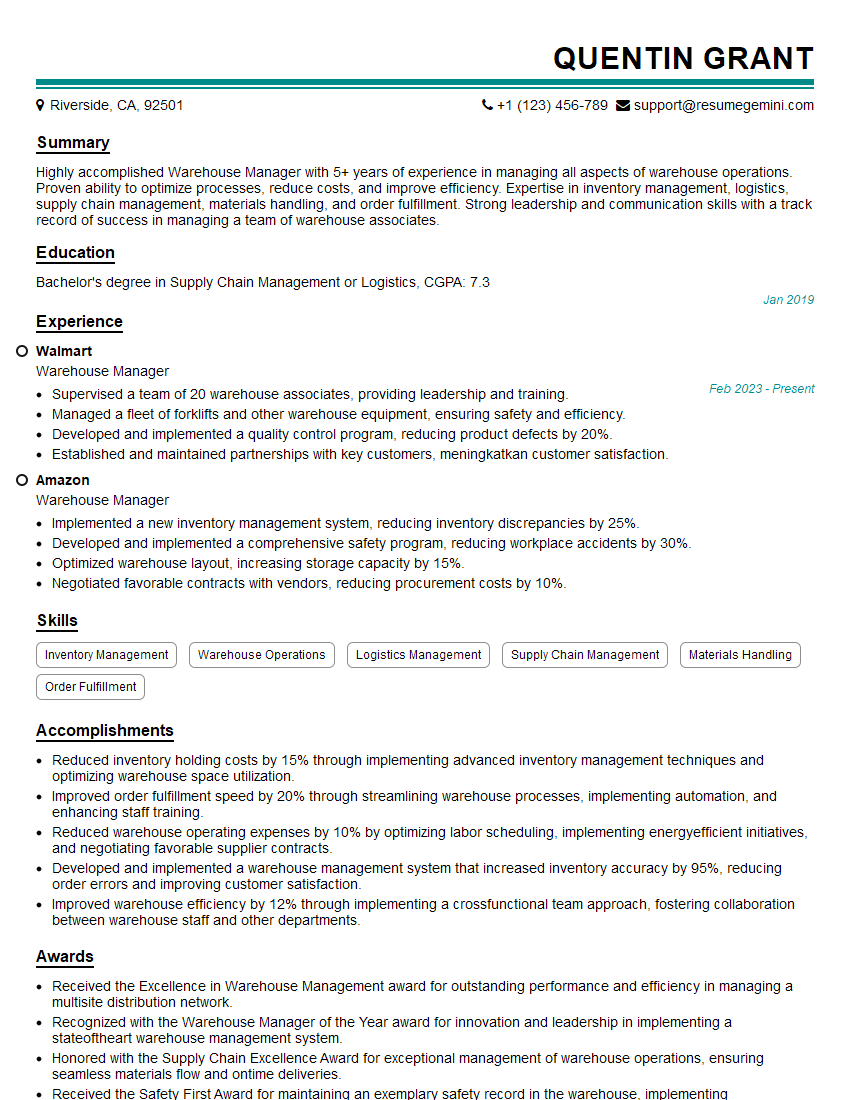
Warehouse Manager Resume Sample
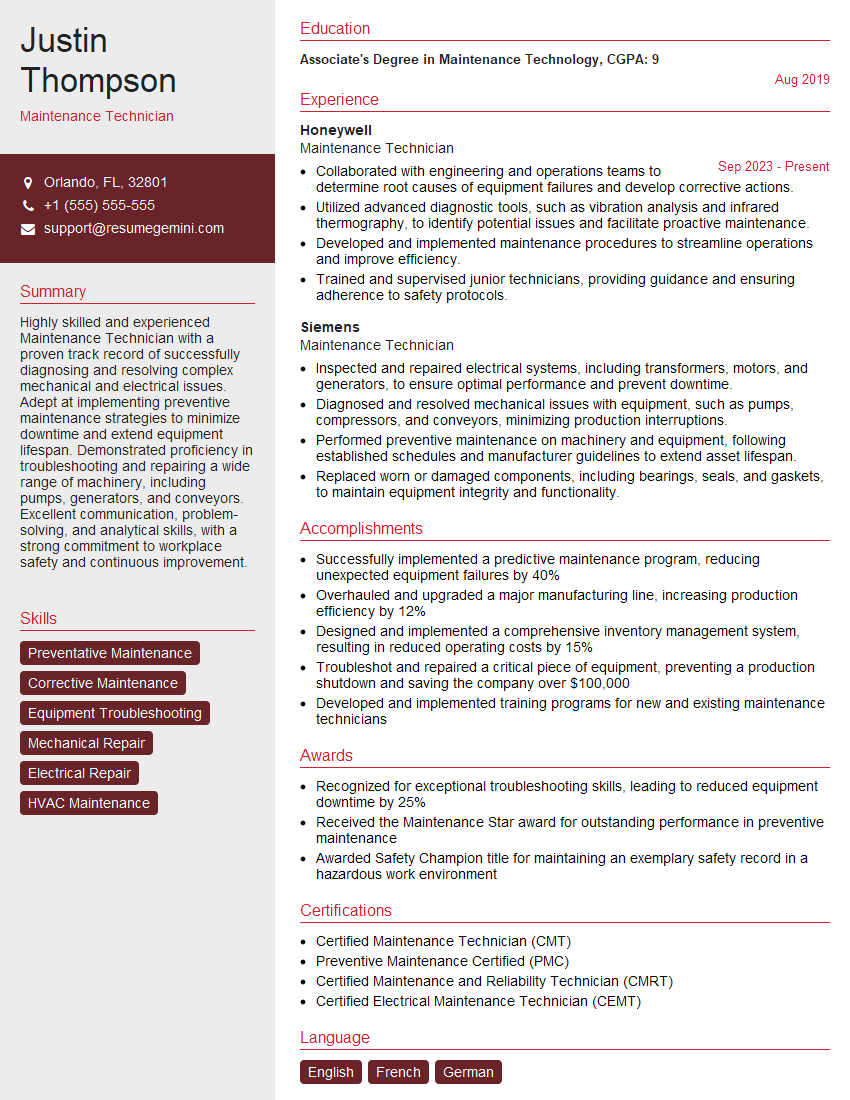
Maintenance Technician Resume Sample
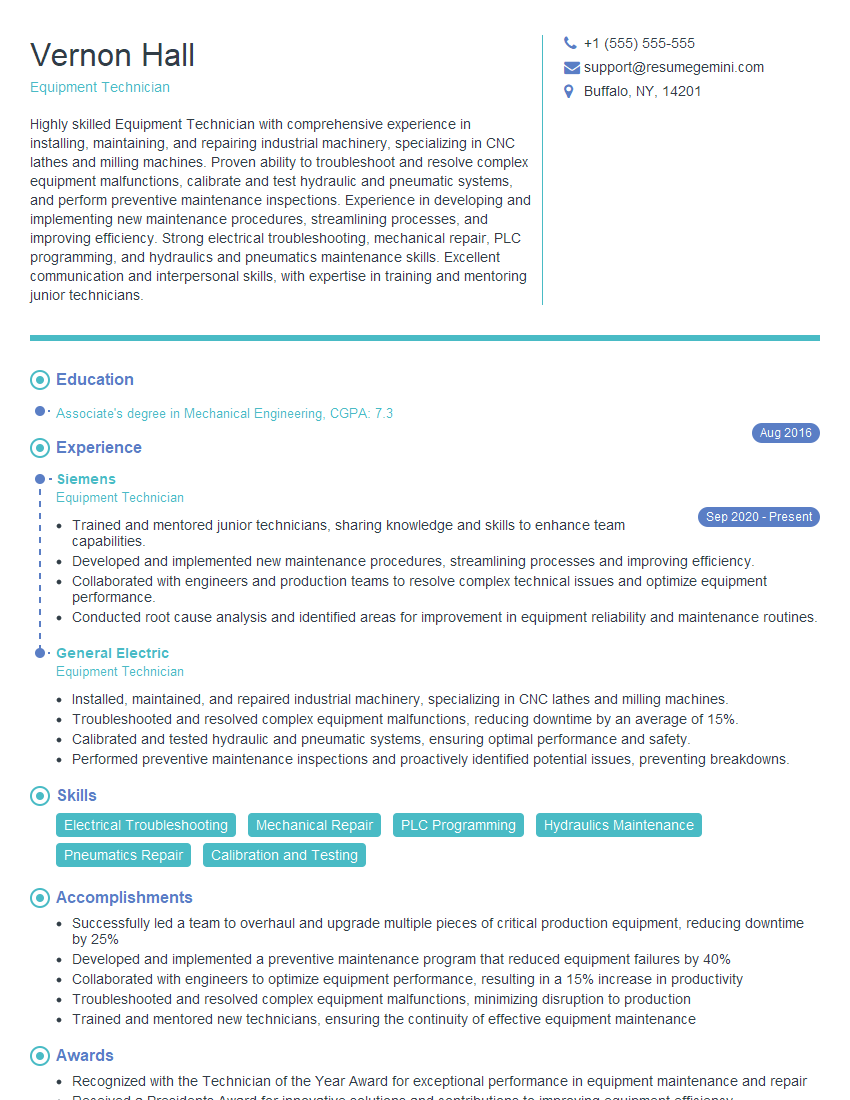
Equipment Technician Resume Sample

Crane Operator Resume Sample
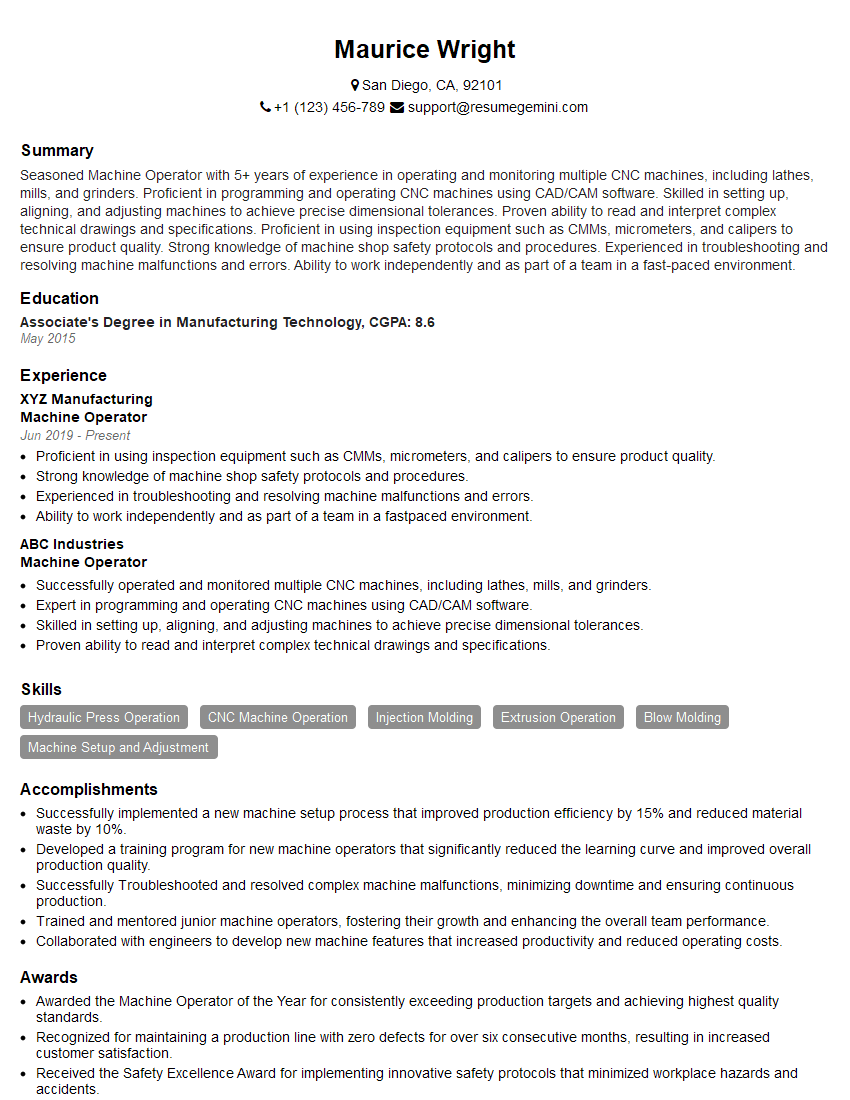
Machine Operator Resume Sample
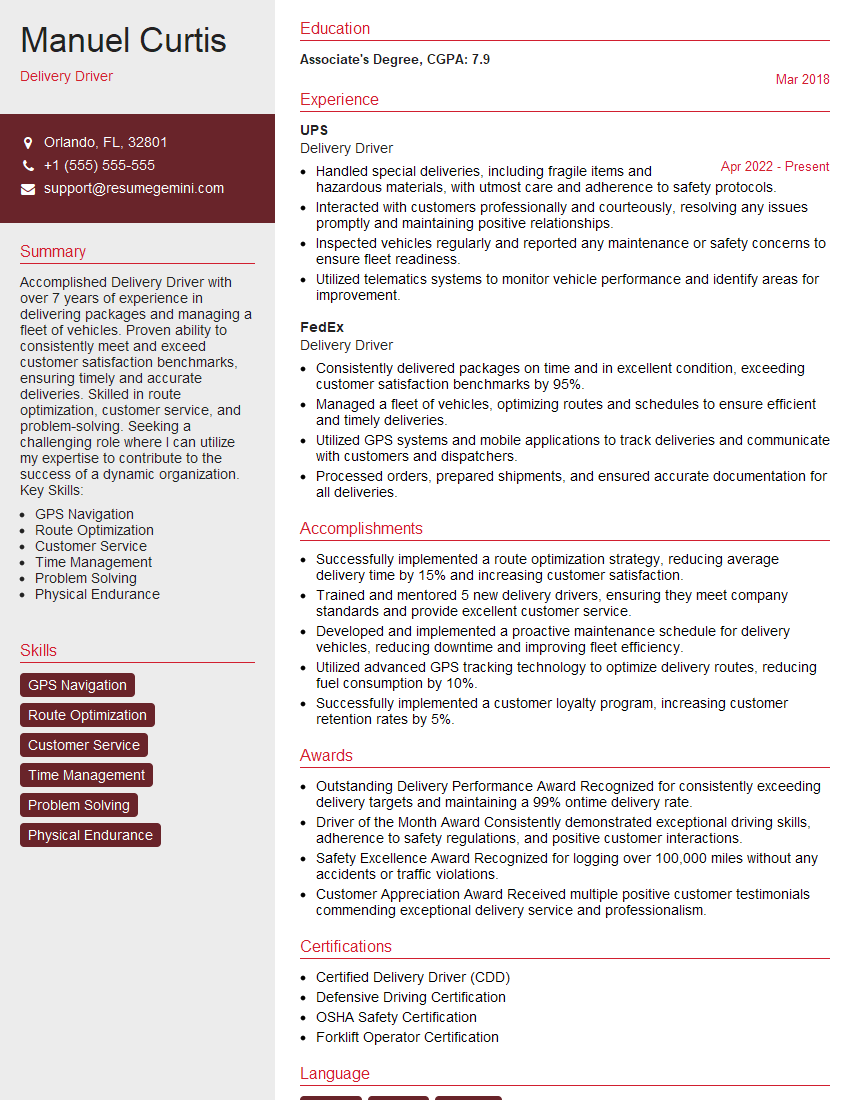
Delivery Driver Resume Sample

Shipping and Receiving Clerk Resume Sample
Logistics Associate Resume Sample
Material Handler Resume Sample
Warehouse Worker Resume Sample
Order Picker Resume Sample
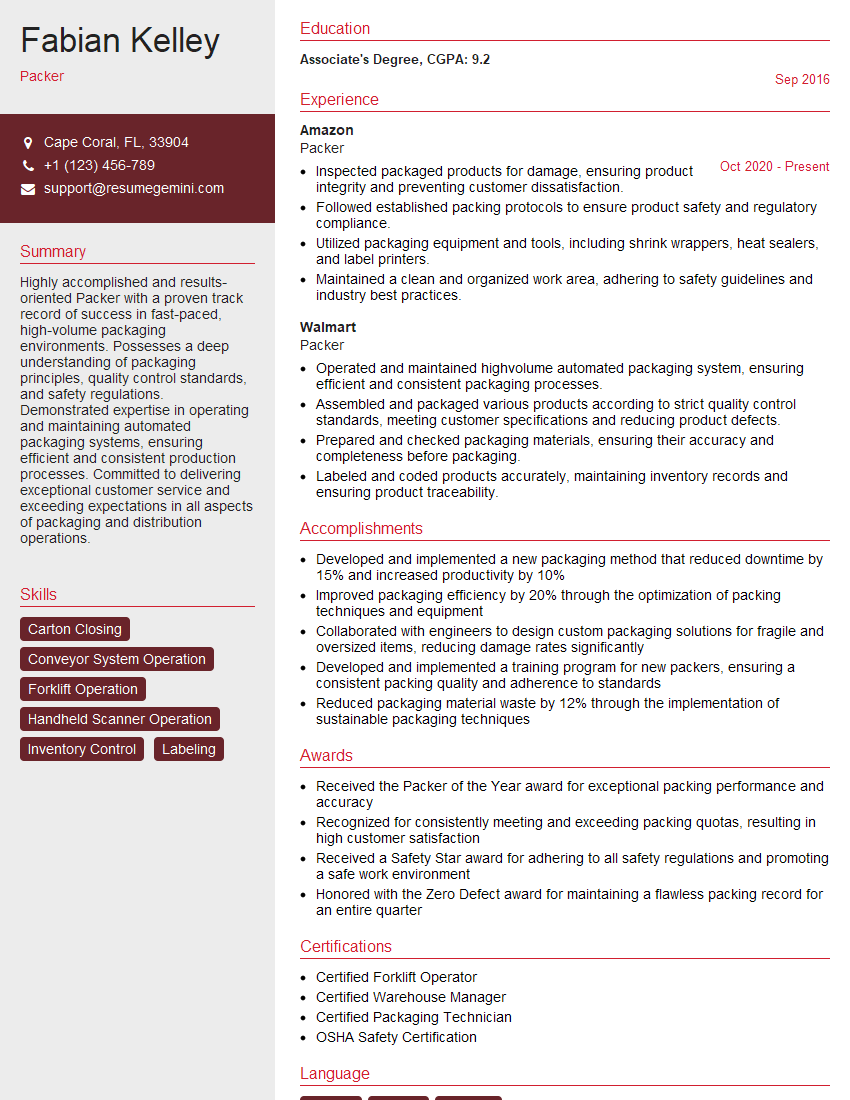
Packer Resume Sample
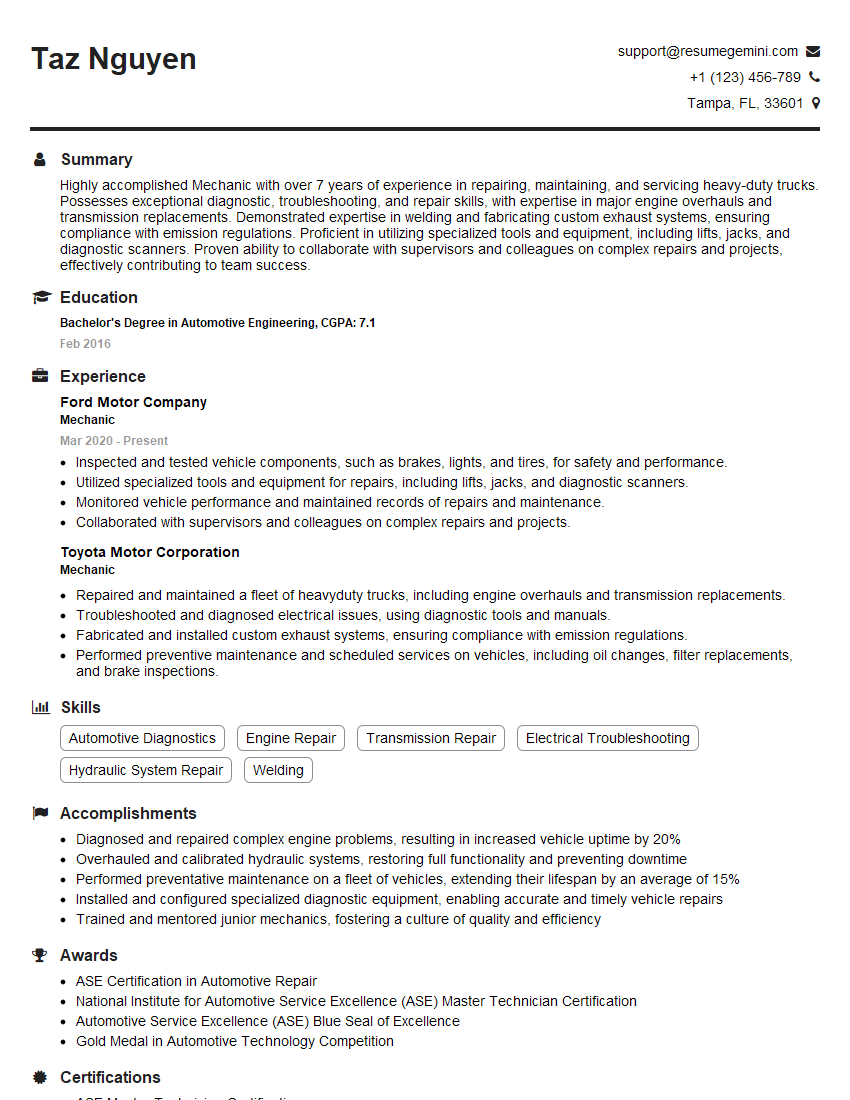
Mechanic Resume Sample
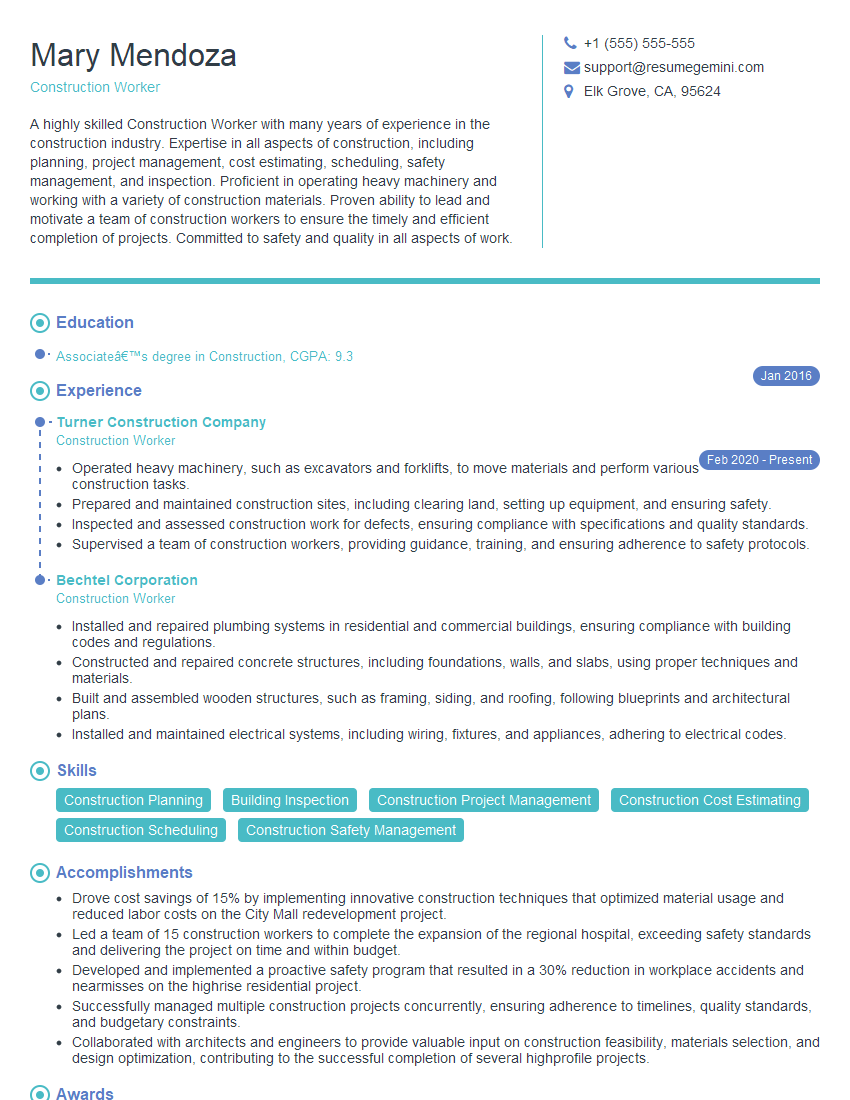
Construction Worker Resume Sample
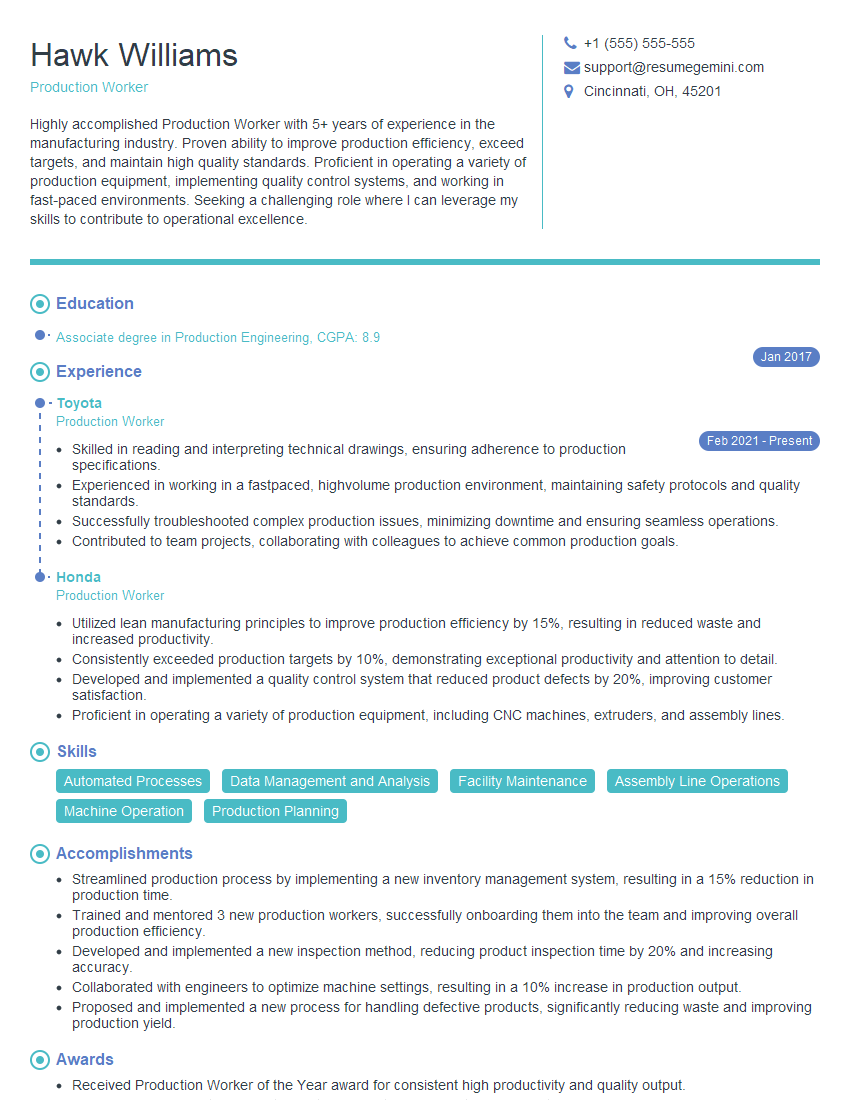
Production Worker Resume Sample
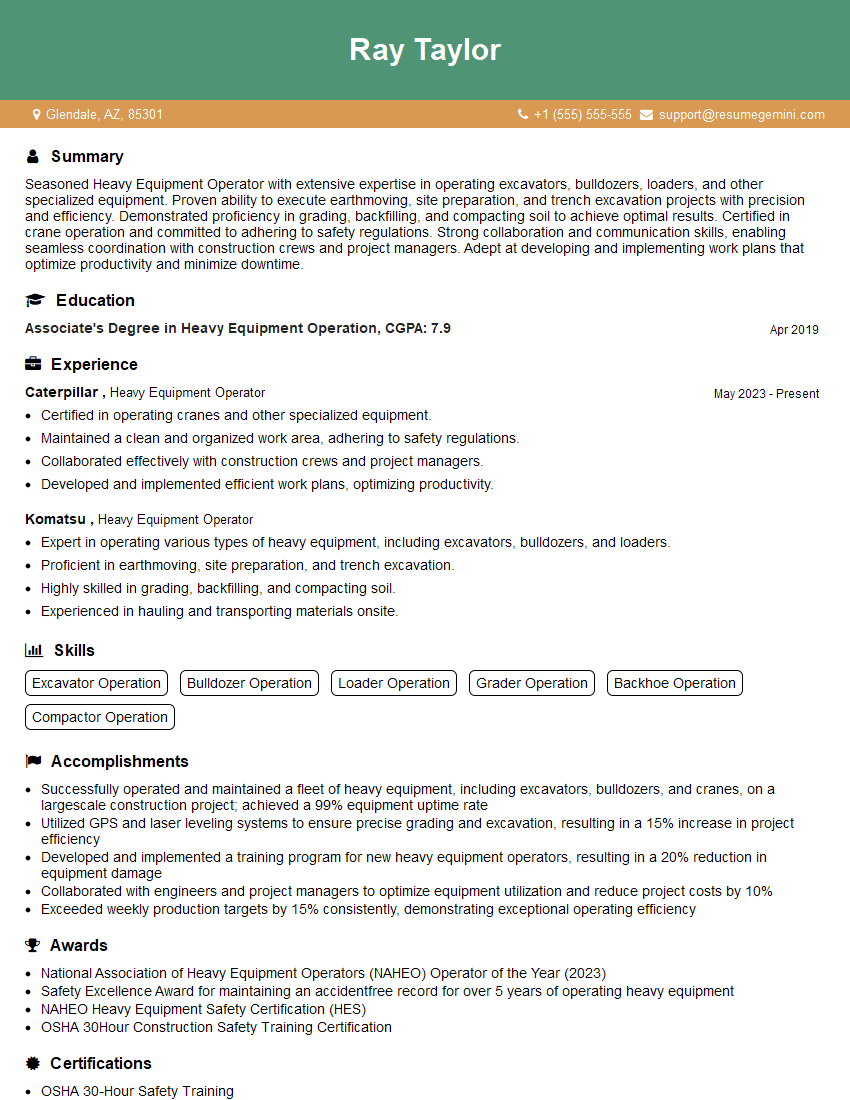
Heavy Equipment Operator Resume Sample
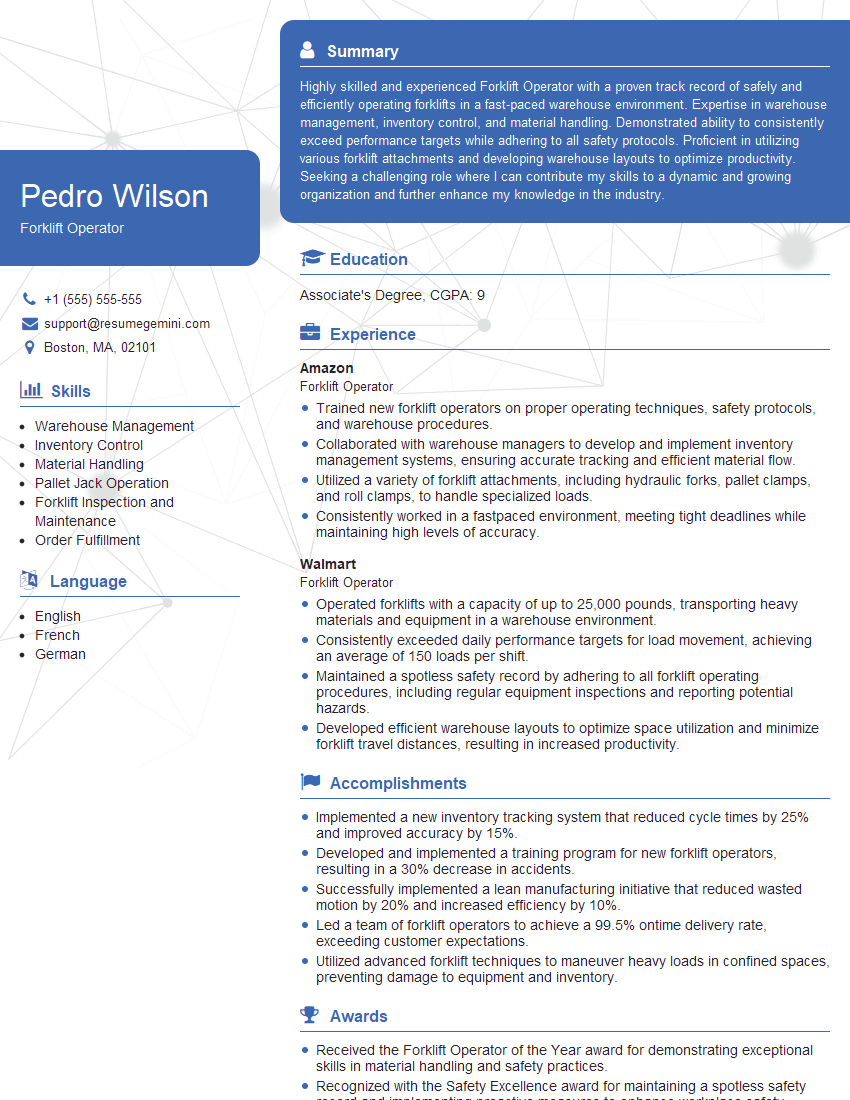
Forklift Operator Resume Sample
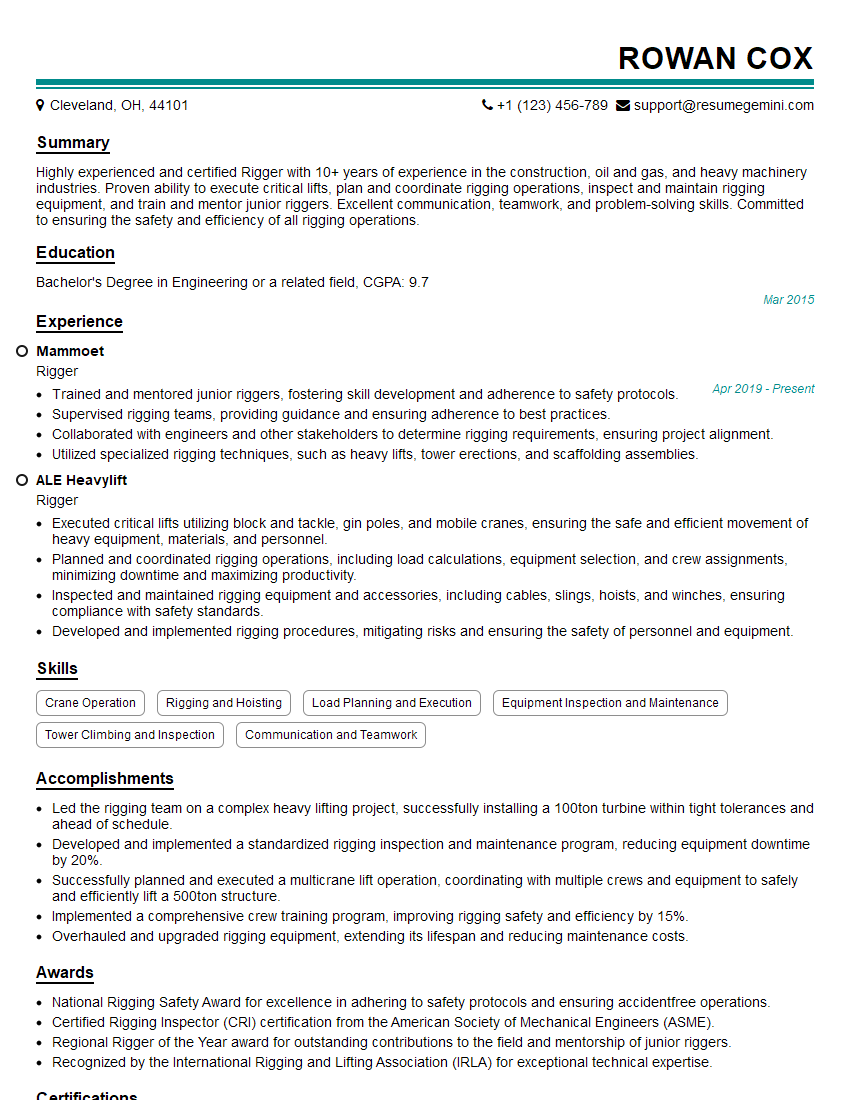
Rigger Resume Sample
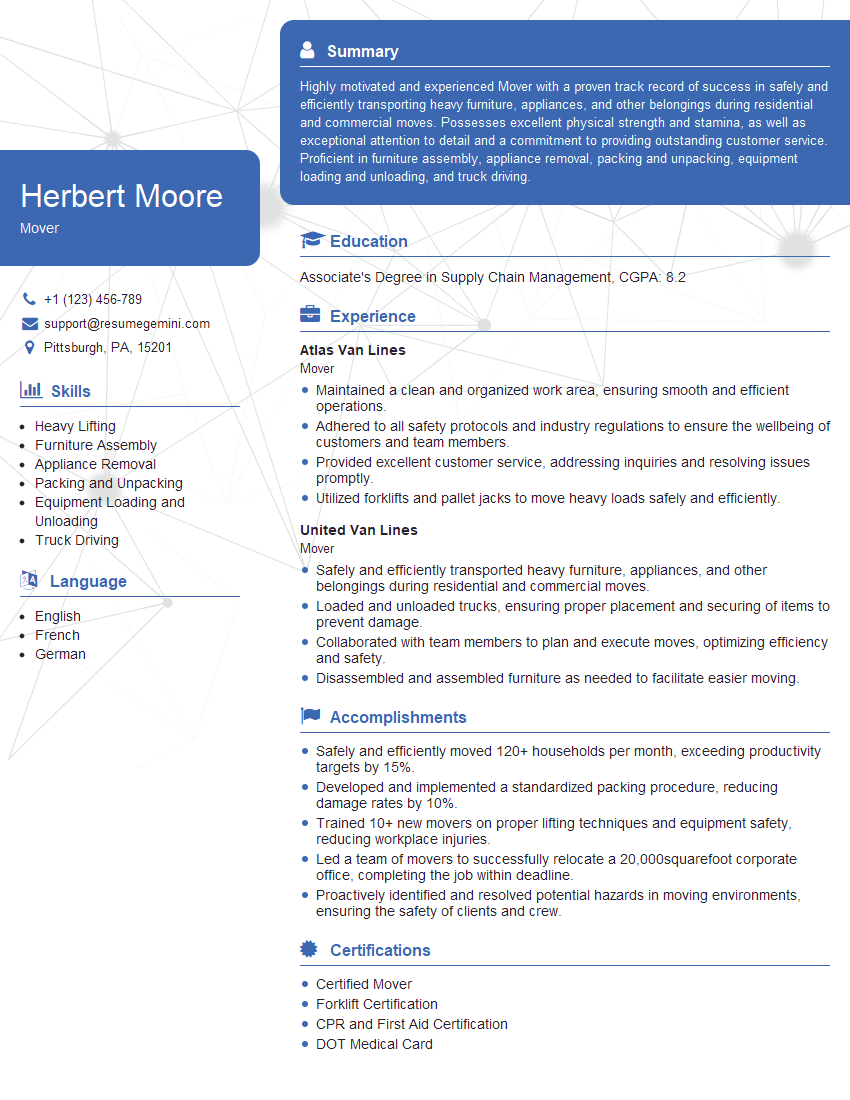
Mover Resume Sample
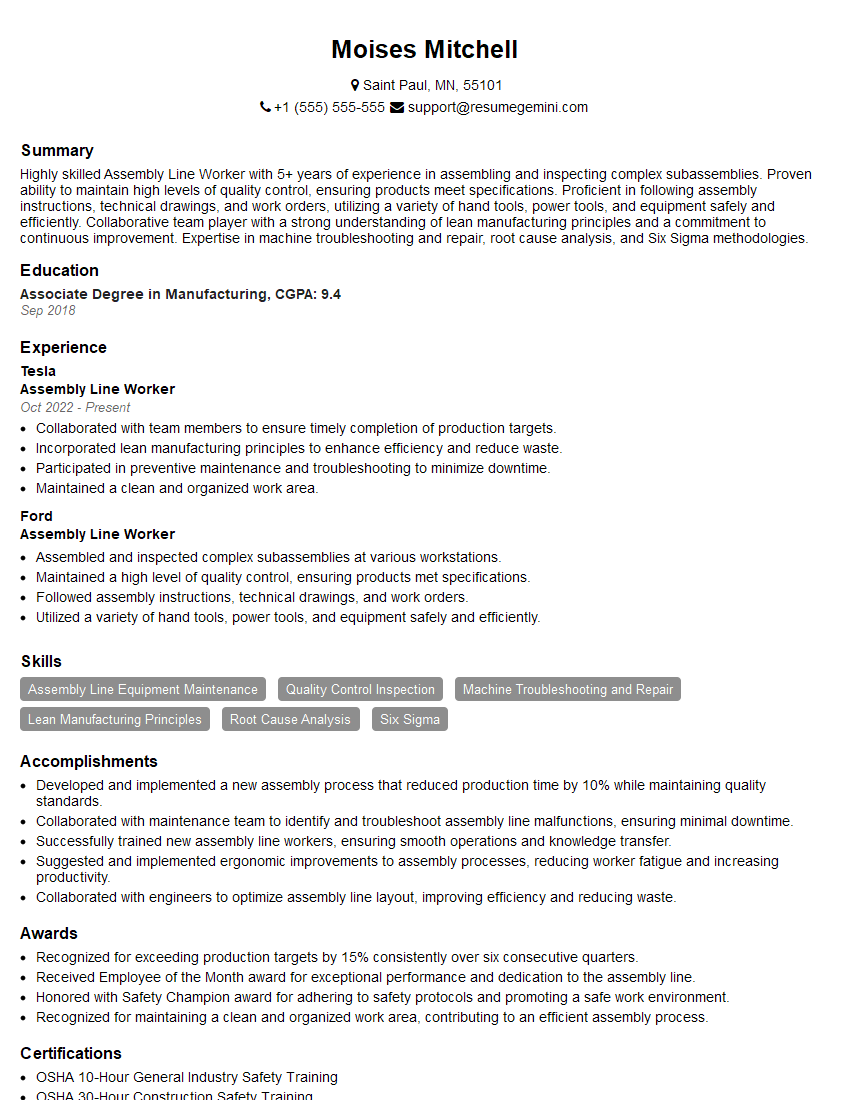
Assembly Line Worker Resume Sample
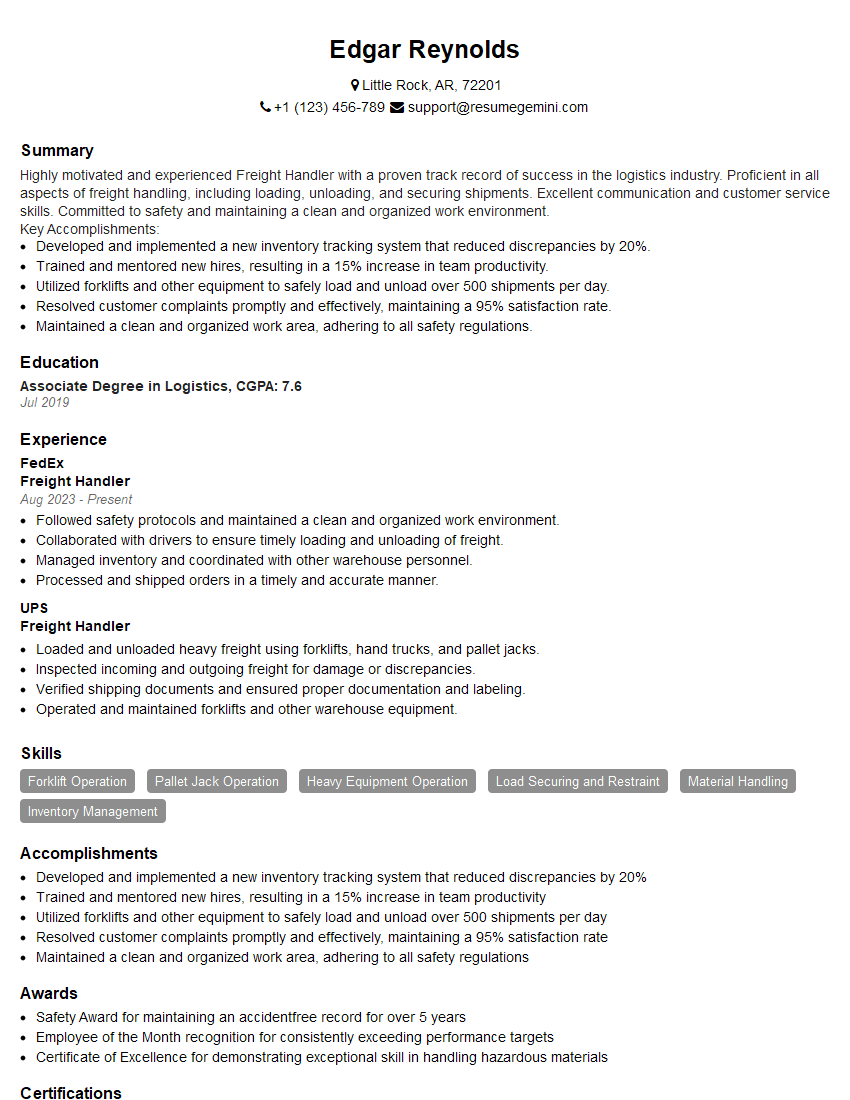
Freight Handler Resume Sample
- Operations Manager
- Plant Manager
- Supply Chain Manager
- Logistics Manager
- Warehouse Manager
- Maintenance Technician
- Equipment Technician
- Crane Operator
- Machine Operator
- Delivery Driver
- Shipping and Receiving Clerk
- Logistics Associate
- Material Handler
- Warehouse Worker
- Order Picker
- Packer
- Mechanic
- Construction Worker
- Production Worker
- Heavy Equipment Operator
- Forklift Operator
- Rigger
- Mover
- Assembly Line Worker
- Freight Handler
Explore more articles
Users Rating of Our Blogs
Share Your Experience
We value your feedback! Please rate our content and share your thoughts (optional).
What Readers Say About Our Blog
Attention music lovers!
Wow, All the best Sax Summer music !!!
Spotify: https://open.spotify.com/artist/6ShcdIT7rPVVaFEpgZQbUk
Apple Music: https://music.apple.com/fr/artist/jimmy-sax-black/1530501936
YouTube: https://music.youtube.com/browse/VLOLAK5uy_noClmC7abM6YpZsnySxRqt3LoalPf88No
Other Platforms and Free Downloads : https://fanlink.tv/jimmysaxblack
on google : https://www.google.com/search?q=22+AND+22+AND+22
on ChatGPT : https://chat.openai.com?q=who20jlJimmy20Black20Sax20Producer
Get back into the groove with Jimmy sax Black
Best regards,
Jimmy sax Black
www.jimmysaxblack.com
Hi I am a troller at The aquatic interview center and I suddenly went so fast in Roblox and it was gone when I reset.
Hi,
Business owners spend hours every week worrying about their website—or avoiding it because it feels overwhelming.
We’d like to take that off your plate:
$69/month. Everything handled.
Our team will:
Design a custom website—or completely overhaul your current one
Take care of hosting as an option
Handle edits and improvements—up to 60 minutes of work included every month
No setup fees, no annual commitments. Just a site that makes a strong first impression.
Find out if it’s right for you:
https://websolutionsgenius.com/awardwinningwebsites
Hello,
we currently offer a complimentary backlink and URL indexing test for search engine optimization professionals.
You can get complimentary indexing credits to test how link discovery works in practice.
No credit card is required and there is no recurring fee.
You can find details here:
https://wikipedia-backlinks.com/indexing/
Regards
NICE RESPONSE TO Q & A
hi
The aim of this message is regarding an unclaimed deposit of a deceased nationale that bears the same name as you. You are not relate to him as there are millions of people answering the names across around the world. But i will use my position to influence the release of the deposit to you for our mutual benefit.
Respond for full details and how to claim the deposit. This is 100% risk free. Send hello to my email id: lukachachibaialuka@gmail.com
Luka Chachibaialuka
Hey interviewgemini.com, just wanted to follow up on my last email.
We just launched Call the Monster, an parenting app that lets you summon friendly ‘monsters’ kids actually listen to.
We’re also running a giveaway for everyone who downloads the app. Since it’s brand new, there aren’t many users yet, which means you’ve got a much better chance of winning some great prizes.
You can check it out here: https://bit.ly/callamonsterapp
Or follow us on Instagram: https://www.instagram.com/callamonsterapp
Thanks,
Ryan
CEO – Call the Monster App
Hey interviewgemini.com, I saw your website and love your approach.
I just want this to look like spam email, but want to share something important to you. We just launched Call the Monster, a parenting app that lets you summon friendly ‘monsters’ kids actually listen to.
Parents are loving it for calming chaos before bedtime. Thought you might want to try it: https://bit.ly/callamonsterapp or just follow our fun monster lore on Instagram: https://www.instagram.com/callamonsterapp
Thanks,
Ryan
CEO – Call A Monster APP
To the interviewgemini.com Owner.
Dear interviewgemini.com Webmaster!
Hi interviewgemini.com Webmaster!
Dear interviewgemini.com Webmaster!
excellent
Hello,
We found issues with your domain’s email setup that may be sending your messages to spam or blocking them completely. InboxShield Mini shows you how to fix it in minutes — no tech skills required.
Scan your domain now for details: https://inboxshield-mini.com/
— Adam @ InboxShield Mini
support@inboxshield-mini.com
Reply STOP to unsubscribe
Hi, are you owner of interviewgemini.com? What if I told you I could help you find extra time in your schedule, reconnect with leads you didn’t even realize you missed, and bring in more “I want to work with you” conversations, without increasing your ad spend or hiring a full-time employee?
All with a flexible, budget-friendly service that could easily pay for itself. Sounds good?
Would it be nice to jump on a quick 10-minute call so I can show you exactly how we make this work?
Best,
Hapei
Marketing Director
Hey, I know you’re the owner of interviewgemini.com. I’ll be quick.
Fundraising for your business is tough and time-consuming. We make it easier by guaranteeing two private investor meetings each month, for six months. No demos, no pitch events – just direct introductions to active investors matched to your startup.
If youR17;re raising, this could help you build real momentum. Want me to send more info?
Hi, I represent an SEO company that specialises in getting you AI citations and higher rankings on Google. I’d like to offer you a 100% free SEO audit for your website. Would you be interested?
Hi, I represent an SEO company that specialises in getting you AI citations and higher rankings on Google. I’d like to offer you a 100% free SEO audit for your website. Would you be interested?