Are you ready to stand out in your next interview? Understanding and preparing for Ergonomics and Workplace Assessments interview questions is a game-changer. In this blog, we’ve compiled key questions and expert advice to help you showcase your skills with confidence and precision. Let’s get started on your journey to acing the interview.
Questions Asked in Ergonomics and Workplace Assessments Interview
Q 1. Define ergonomics and its relevance in the workplace.
Ergonomics is the scientific study of designing the workplace, products, and systems so that they fit the people who use them. Its relevance in the workplace is paramount because it focuses on creating a work environment that promotes worker health, safety, and well-being. By considering the physical capabilities and limitations of human beings, ergonomics helps prevent injuries, improve productivity, and increase job satisfaction. Think of it as making the job fit the person, not the other way around. A poorly designed workplace can lead to musculoskeletal disorders, fatigue, and decreased efficiency, while a well-designed ergonomic environment boosts productivity and reduces healthcare costs for both the employee and the company.
For example, a poorly designed computer workstation can lead to carpal tunnel syndrome, neck pain, and back problems. Ergonomics helps to prevent these issues by ensuring that workstations are designed to support proper posture and reduce strain.
Q 2. Explain the difference between anthropometry and biomechanics in ergonomics.
While both anthropometry and biomechanics are crucial components of ergonomics, they focus on different aspects of the human-machine interface. Anthropometry deals with the measurement of the human body – its dimensions, weights, and proportions. This data is essential for designing tools, equipment, and workstations that fit the majority of the population, minimizing strain and discomfort. Think of designing a car seat: Anthropometric data tells us the average height, weight, and shoulder width of the target user group, guiding the design process to accommodate these dimensions.
Biomechanics, on the other hand, is the study of the structure and function of the human body in motion. It looks at how forces act on the body and how the body responds to those forces. This knowledge is used to analyze work tasks and identify potential risks of injury. For example, a biomechanical analysis of a repetitive assembly line task might reveal excessive forces on the wrist, leading to the design of tools or processes that reduce these forces.
Q 3. Describe the process of conducting a thorough workplace ergonomic assessment.
A thorough workplace ergonomic assessment follows a systematic process:
- Step 1: Identify the task(s) to be assessed. Pinpoint specific jobs or activities that are suspected to pose ergonomic risks.
- Step 2: Observe workers performing the task(s). Direct observation is key to identifying awkward postures, repetitive movements, and forceful exertions. Use checklists and video recordings to capture crucial details.
- Step 3: Interview workers. Gather subjective information about discomfort, pain, and any previous injuries. Workers are often the best source of information about problem areas.
- Step 4: Measure the workplace. Take measurements of workstation dimensions, tool heights, and other relevant factors.
- Step 5: Analyze the data. Identify risk factors using established guidelines and standards, such as the NIOSH Lifting Equation or REBA (Rapid Entire Body Assessment) tool.
- Step 6: Develop recommendations. Suggest specific interventions to mitigate identified hazards. This could involve adjusting workstation setups, modifying work processes, or providing training on proper body mechanics.
- Step 7: Implement and evaluate interventions. Make the recommended changes and monitor their effectiveness. Follow-up assessments are crucial to ensure that interventions are successful and to make further adjustments if necessary.
Q 4. What are the common risk factors associated with musculoskeletal disorders (MSDs)?
Musculoskeletal disorders (MSDs) are injuries or disorders of the muscles, nerves, tendons, joints, cartilage, and spinal discs. Common risk factors include:
- Repetitive movements: Repeatedly performing the same motion, such as typing or assembly line work.
- Awkward postures: Maintaining uncomfortable positions for extended periods, such as reaching overhead or bending at the waist.
- Forceful exertions: Using excessive force to lift, push, or pull objects.
- Vibration: Exposure to hand-arm or whole-body vibration, such as operating power tools.
- Contact stress: Sustained pressure on body parts, such as leaning on elbows for hours.
- Static loading: Maintaining a fixed posture for extended periods.
- Lack of recovery time: Insufficient breaks during prolonged tasks.
These factors often work in combination to increase the risk of MSDs. For instance, a cashier who repeatedly scans items while maintaining an awkward posture and forceful grip is at a significantly high risk of developing wrist pain.
Q 5. How do you identify and assess ergonomic hazards in a workplace?
Identifying and assessing ergonomic hazards involves a multi-faceted approach:
- Workplace walkthroughs: Observe the workplace environment, paying attention to workstation setups, material handling methods, and worker postures.
- Worker interviews: Conduct interviews to understand workers’ experiences, complaints, and any perceived hazards.
- Job task analysis: Systematically analyze the physical demands of different tasks.
- Use of ergonomic assessment tools: Utilize tools such as NIOSH Lifting Equation, RULA (Rapid Upper Limb Assessment), or OWAS (Ovako Working Posture Analysis System) to quantify ergonomic risks.
- Measurement of workstation dimensions: Use measuring tapes and other tools to determine chair height, desk height, monitor placement, and other crucial dimensions.
- Review of incident reports and medical records: Identify patterns of MSDs to pinpoint problem areas within the workplace.
By combining these methods, you can build a comprehensive picture of ergonomic hazards present in the workplace. For example, a high number of reported back injuries among warehouse workers might lead to an investigation into lifting techniques and the weight of materials being handled.
Q 6. What are some common ergonomic interventions for computer workstation setup?
Common ergonomic interventions for computer workstation setups include:
- Adjustable chair: Ensure the chair supports good posture with lumbar support and adjustable height.
- Proper monitor placement: Position the monitor at arm’s length, with the top of the screen at or slightly below eye level.
- Keyboard and mouse placement: Keep the keyboard and mouse close to the body, at a comfortable height that allows for neutral wrist posture.
- Footrest: Use a footrest if the feet don’t comfortably rest on the floor.
- Document holder: Position documents at the same height as the monitor to avoid neck strain.
- Proper lighting: Avoid glare from windows or lights. Use task lighting if necessary.
- Regular breaks and stretching: Encourage workers to take short breaks regularly to stretch and move around.
These interventions aim to reduce strain and promote neutral body postures, preventing MSDs such as carpal tunnel syndrome, neck pain, and back pain.
Q 7. Explain the principles of proper posture and body mechanics.
Proper posture and body mechanics are crucial for preventing MSDs. The principles include:
- Neutral posture: Maintain a posture that avoids excessive strain on joints and muscles. This means keeping the spine naturally curved, avoiding prolonged bending or twisting, and ensuring that limbs are not excessively flexed or extended.
- Proper lifting techniques: Bend at the knees and hips, keep the back straight, and lift with the legs, not the back. Keep the load close to the body.
- Avoid static postures: Change positions frequently to avoid prolonged strain on muscles and joints.
- Use assistive devices: Utilize tools and equipment such as lifting aids, carts, and ergonomic tools to reduce strain.
- Take frequent breaks: Regular breaks allow muscles to recover and prevent fatigue.
- Strength and conditioning exercises: Strengthen core and supporting muscles to enhance postural control and reduce injury risk.
Imagine carrying a heavy box: bending at the waist puts tremendous stress on the lower back. However, bending at the knees and hips, keeping your back straight, and lifting with your legs distributes the weight more evenly, preventing injury. This illustrates the importance of proper body mechanics.
Q 8. Describe different types of ergonomic assessment tools and techniques.
Ergonomic assessments utilize a variety of tools and techniques to identify and evaluate workplace hazards. These can be broadly categorized into observational methods, measurement tools, and questionnaires.
- Observational Methods: This involves a trained ergonomist directly observing workers performing their tasks. They look for postures, movements, and work practices that could lead to musculoskeletal disorders (MSDs). For example, observing a cashier repeatedly reaching overhead for items or a nurse bending and twisting while lifting patients. Checklists and standardized observation forms are often used to ensure consistency and thoroughness.
- Measurement Tools: These tools provide quantitative data about the workplace and the worker. Examples include:
- Anthropometric measurements: Measuring worker body dimensions (height, reach, etc.) to ensure workstation adjustments fit the user.
- Goniometers: Measuring joint angles to assess posture and range of motion.
- Force gauges: Measuring the force exerted during tasks to identify potential strain.
- Motion capture systems: Advanced systems that record detailed movement patterns to analyze biomechanics.
- Questionnaires and Surveys: These tools gather self-reported information from workers about their symptoms, discomfort, and work experiences. Examples include the Nordic Musculoskeletal Questionnaire (NMQ) or the Standardized Nordic Questionnaire (SNQ). These provide valuable subjective data complementing objective observations and measurements.
The choice of tools and techniques depends on the specific task, workplace, and the level of detail required. A comprehensive assessment often combines multiple methods for a holistic understanding.
Q 9. How do you prioritize ergonomic interventions based on risk assessment?
Prioritizing ergonomic interventions involves a risk assessment process. This typically follows a hierarchy of controls, starting with the most effective and feasible options. The risk is assessed based on the likelihood of an injury occurring and the severity of the potential injury. This can be qualitatively (low, medium, high) or quantitatively (using numerical scales).
Here’s a step-by-step approach:
- Identify hazards: Through observation, measurement, and questionnaires, identify tasks, equipment, or workspaces posing ergonomic risks.
- Risk assessment: For each hazard, assess the probability and severity of injury. A higher probability and severity indicates a higher priority.
- Hierarchy of controls: Implement controls in this order:
- Elimination: Removing the hazard altogether (e.g., automating a repetitive task).
- Substitution: Replacing a hazardous tool or material with a safer alternative (e.g., using lightweight tools).
- Engineering controls: Modifying the workplace or equipment (e.g., adjustable workstations, better lighting).
- Administrative controls: Changing work practices or procedures (e.g., job rotation, work breaks).
- Personal protective equipment (PPE): Using equipment like gloves or back supports (least preferred option).
- Implementation and monitoring: Implement the chosen controls and monitor their effectiveness regularly. Adjust or add controls as needed.
For instance, if a worker experiences frequent back pain due to lifting heavy boxes, eliminating the heavy lifting through automation would be the highest priority. If this isn’t feasible, engineering controls like using a lift assist device would be the next best option.
Q 10. Explain the role of administrative controls in ergonomics.
Administrative controls are non-engineering changes to work practices, policies, and procedures to reduce ergonomic risks. They are crucial because they address the ‘how’ of the work, influencing worker behavior and task execution. They are often implemented in conjunction with engineering controls for a more comprehensive approach.
- Job rotation: Allowing workers to perform different tasks to reduce repetitive strain on specific muscle groups. For example, rotating a production line worker between tasks to prevent monotonous movements.
- Work-rest schedules: Incorporating regular breaks to allow for recovery and reduce fatigue. Micro-breaks (short, frequent breaks) are particularly effective for highly repetitive tasks.
- Training and education: Providing workers with training on proper lifting techniques, posture, and workstation setup. This empowers employees to actively participate in risk reduction.
- Work pace management: Ensuring that work demands are reasonable and do not lead to excessive pressure or rushing, which can contribute to poor posture and increased risk of injury.
- Teamwork and assistance: Implementing systems where workers can assist each other with heavy lifting or physically demanding tasks to share the burden and reduce strain on any individual worker.
Administrative controls are cost-effective and relatively easy to implement, but their effectiveness depends on worker compliance and management support. They are most effective when combined with other control measures.
Q 11. How do you evaluate the effectiveness of an ergonomic intervention?
Evaluating the effectiveness of an ergonomic intervention involves measuring changes in several key indicators. A multi-faceted approach combining quantitative and qualitative data provides a comprehensive evaluation.
- Injury rates: Track the number and types of MSDs before and after the intervention. A reduction in injury rates demonstrates effectiveness.
- Lost time and absenteeism: Monitor the number of days workers miss due to MSDs. A decrease shows a positive impact.
- Worker discomfort levels: Use questionnaires (like the NMQ or SNQ) before and after the intervention to assess changes in reported discomfort and pain. Visual Analog Scales (VAS) can also be used to quantify pain levels.
- Posture and movement analysis: Repeat observational assessments and measurements to see if postures and movements have improved. This involves comparing data gathered before and after the intervention.
- Worker feedback: Gather feedback from workers on the effectiveness of the intervention through interviews or focus groups. Their perceptions of improvements can reveal valuable insights.
- Productivity and efficiency: Monitor changes in productivity to see if the intervention affects output. Some interventions might improve efficiency by reducing injury-related downtime.
Ideally, evaluation should occur at multiple points in time, both immediately after implementation and again at intervals afterward to ensure long-term effectiveness.
Q 12. What are the relevant safety standards and regulations related to ergonomics?
Ergonomic safety standards and regulations vary depending on the country and jurisdiction. However, many jurisdictions have adopted guidelines based on international standards. These regulations often focus on preventing work-related musculoskeletal disorders (MSDs).
Examples of relevant standards and regulations include:
- OSHA (Occupational Safety and Health Administration) in the USA: While OSHA doesn’t have specific ergonomic regulations for all industries, it has general duty clauses requiring employers to provide a safe workplace, and offers guidelines for specific industries. They also provide resources and training on ergonomics.
- International Organization for Standardization (ISO): ISO publishes various standards related to ergonomics, such as ISO 11226 (human-centered design), providing frameworks for designing safe and comfortable workplaces.
- National Institute for Occupational Safety and Health (NIOSH) in the USA: NIOSH conducts research and provides recommendations on ergonomic practices. They often create guidelines which can be voluntarily adopted.
- European Union (EU) Directives: The EU has directives focusing on workplace safety, including aspects related to ergonomics. These influence national legislation in member states.
It’s crucial to stay updated on the specific regulations applicable to your region and industry, as these regulations and guidelines are regularly reviewed and updated.
Q 13. Describe your experience using ergonomic software or assessment tools.
In my previous role at [Previous Company Name], I extensively used [Software Name], a comprehensive ergonomic assessment software. This software allowed me to create detailed 3D models of workstations, conduct reach assessments, and analyze various ergonomic risk factors. For example, we used the software to evaluate the workstation design for a call center, identifying issues with monitor placement and keyboard height that could contribute to neck and shoulder pain. The software then generated reports that included recommendations for adjustments and modifications. We also used a posture analysis tool which involved using cameras to record employees during tasks; the data was then used to inform our recommendations.
I’ve also utilized simpler tools like goniometers and anthropometric measurement tapes for on-site assessments to collect primary data on joint angles and body dimensions. The data collected using these various methods were used in conjunction to create holistic assessments, ensuring no aspect was neglected in the recommendations.
Q 14. How do you communicate ergonomic findings and recommendations to management and employees?
Communicating ergonomic findings and recommendations effectively requires a multi-faceted approach that considers both management and employees. Clarity, simplicity, and visual aids are key elements.
For Management:
- Executive Summary: Begin with a concise executive summary highlighting key findings and recommended actions, focusing on potential cost savings and improved productivity.
- Prioritized Recommendations: Present recommendations in order of priority, based on risk assessment. This allows management to focus on the most pressing issues first.
- Cost-Benefit Analysis: Include a cost-benefit analysis whenever possible, demonstrating the return on investment for ergonomic interventions. This can include estimates of reduced injury costs, increased productivity, and improved employee morale.
- Visual Aids: Use charts, graphs, and photos to illustrate findings and recommended changes. This makes the information more accessible and understandable.
For Employees:
- Interactive Training Sessions: Conduct interactive training sessions, demonstrating proper posture, lifting techniques, and workstation setup. Involve workers in discussions about their specific tasks and challenges.
- Simple, Clear Communication: Use straightforward language that is easy to understand. Avoid technical jargon.
- Individual Feedback: Provide individual feedback to workers based on their specific tasks and observed postures. This allows for personalized recommendations.
- Visual Aids and Demonstrations: Use visual aids like posters or videos to reinforce key messages.
- Open Communication Channels: Establish open communication channels to address questions and concerns.
By employing a tailored approach, I aim to ensure buy-in from both management and employees, leading to successful implementation of ergonomic recommendations and improvements in workplace safety and health.
Q 15. Explain the importance of employee participation in ergonomic improvements.
Employee participation is paramount to successful ergonomic improvements. It’s not just about implementing changes; it’s about fostering a culture of safety and well-being where employees feel valued and empowered. Their firsthand experience with the workplace allows them to identify pain points and suggest practical solutions that might be overlooked by external assessors.
- Improved Buy-in: When employees are involved in the decision-making process, they’re more likely to accept and adopt the changes. This leads to better compliance and a more positive work environment.
- More Effective Solutions: Employees often have unique insights into their daily tasks and challenges. Their input can lead to more targeted and effective ergonomic solutions.
- Increased Ownership: When employees feel ownership over the changes, they’re more likely to maintain them and report any new issues.
For example, in a recent assessment of a packing facility, involving the packers in the selection of new chairs and adjusting the conveyor belt height resulted in a significant reduction in reported back pain and improved productivity, because the solutions directly addressed their needs and concerns.
Career Expert Tips:
- Ace those interviews! Prepare effectively by reviewing the Top 50 Most Common Interview Questions on ResumeGemini.
- Navigate your job search with confidence! Explore a wide range of Career Tips on ResumeGemini. Learn about common challenges and recommendations to overcome them.
- Craft the perfect resume! Master the Art of Resume Writing with ResumeGemini’s guide. Showcase your unique qualifications and achievements effectively.
- Don’t miss out on holiday savings! Build your dream resume with ResumeGemini’s ATS optimized templates.
Q 16. How do you handle resistance to ergonomic changes from employees or management?
Resistance to ergonomic changes can stem from various sources, including employee skepticism, fear of change, or management concerns about costs or workflow disruption. Addressing this requires a multi-pronged approach.
- Education and Communication: Clearly communicate the benefits of ergonomic improvements – reduced injury risk, increased productivity, and improved employee well-being. Use visual aids, case studies, and data to support your claims.
- Addressing Concerns: Actively listen to and address any concerns employees or management may have. Find common ground and collaboratively explore solutions to overcome obstacles.
- Pilot Programs: Implement small-scale pilot programs to demonstrate the effectiveness of the proposed changes before widespread implementation. This helps build confidence and address any unforeseen challenges.
- Incentivization and Support: Offer incentives for participation and provide ongoing support and training. This could include offering ergonomic assessments for individual employees and/or providing them with adjustable equipment.
In one case, management initially resisted purchasing new chairs, citing budget constraints. By presenting data showing a significant return on investment through reduced worker’s compensation claims and increased productivity, we were able to secure funding and implement the changes successfully.
Q 17. Describe your experience with different ergonomic design principles.
My experience encompasses a wide range of ergonomic design principles, focusing on the interaction between humans and their work environment. This includes:
- Anthropometry: Using data on human body dimensions to design workstations and tools that accommodate the majority of the population. For instance, designing adjustable desks and chairs that can be customized to accommodate different body sizes and postures.
- Biomechanics: Analyzing human movement and posture to identify potential risk factors for musculoskeletal disorders. This includes assessing repetitive movements, awkward postures, and forceful exertions.
- Workplace Layout: Optimizing the arrangement of workstations and equipment to minimize unnecessary movements and promote efficient workflows. This might involve implementing lean manufacturing principles or optimizing storage and material handling.
- Environmental Factors: Considering factors such as lighting, temperature, noise, and vibration, all of which can impact worker comfort and productivity. This includes ensuring proper lighting to prevent eye strain and providing hearing protection where appropriate.
- Tool Design: Designing tools and equipment that are comfortable, easy to use, and reduce strain on the body. This includes using handles of appropriate size and shape to reduce gripping force.
I have successfully applied these principles in diverse settings, from manufacturing plants to office environments, consistently achieving improvements in worker safety and comfort.
Q 18. Explain the concept of cumulative trauma disorders (CTDs).
Cumulative Trauma Disorders (CTDs) are injuries to the musculoskeletal system that develop gradually over time due to repetitive motions, forceful exertions, awkward postures, or vibration. They’re often insidious, with symptoms worsening over weeks, months, or even years.
- Common CTDs: Carpal tunnel syndrome, tendonitis, tenosynovitis, epicondylitis (golfer’s or tennis elbow), and De Quervain’s tenosynovitis are all examples of CTDs.
- Risk Factors: Repetitive tasks, forceful exertions, prolonged static postures (e.g., holding a tool in one position for a long time), and vibration exposure are all significant risk factors.
- Prevention: Early identification and prevention are crucial. This involves implementing ergonomic controls, job rotation, and regular breaks to reduce repetitive movements and allow recovery time.
For instance, a worker repeatedly assembling small components might develop carpal tunnel syndrome over time due to repetitive wrist movements. Implementing changes such as using ergonomic tools, taking regular micro-breaks, and adjusting workstation setup can significantly reduce this risk.
Q 19. How do you adapt ergonomic interventions for workers with pre-existing conditions?
Adapting ergonomic interventions for workers with pre-existing conditions requires a collaborative approach involving the employee, healthcare professionals, and ergonomics specialists. It’s crucial to perform a thorough individual assessment.
- Individualized Assessments: Consider specific limitations and needs. This involves reviewing medical records and conducting a detailed functional capacity evaluation to determine the worker’s physical capabilities and limitations.
- Adaptive Equipment and Workstations: Provide adjustable equipment and workstations tailored to the individual’s needs. This may include specialized seating, orthotic devices, or alternative work procedures.
- Job Modifications: Modify job tasks to reduce physical demands and accommodate individual limitations. This could involve assigning different tasks or adjusting work schedules.
- Regular Monitoring and Evaluation: Continuously monitor the worker’s progress and make adjustments to the interventions as needed. This iterative approach allows for continuous improvement.
For example, an employee with arthritis might require a specialized chair with enhanced lumbar support and adjustable armrests. We might also modify their job tasks to reduce repetitive movements and prolonged static postures.
Q 20. How do you integrate ergonomic considerations into the design of new workplaces or processes?
Integrating ergonomic considerations into the design of new workplaces or processes is a proactive approach that prevents ergonomic problems from arising in the first place. This involves designing the work environment around the worker, not the other way around.
- Early Involvement: Ergonomics specialists should be involved from the initial design phase to ensure the workplace is designed with human factors in mind.
- Participatory Design: Engage potential users in the design process to obtain their input and ensure the design meets their needs.
- Universal Design Principles: Apply universal design principles to create a workplace that is accessible and usable by individuals with diverse abilities and limitations.
- Task Analysis: Conduct a thorough task analysis to identify potential ergonomic hazards and design solutions to mitigate those hazards.
For instance, when designing a new assembly line, we would analyze the tasks involved, consider the tools and equipment required, and design workstations that allow for proper posture, reduce repetitive movements, and provide sufficient space for comfortable movement.
Q 21. What is your experience with ergonomic training and education programs?
I have extensive experience developing and delivering ergonomic training and education programs for diverse audiences. My approach emphasizes practical application and engagement.
- Needs Assessment: I begin by conducting a needs assessment to identify the specific training needs of the target audience. This helps tailor the program to their specific needs and ensure its effectiveness.
- Interactive Training Methods: I use various interactive training methods, such as interactive workshops, hands-on demonstrations, and case studies, to make the training engaging and relevant.
- Tailored Content: Training content is tailored to the specific workplace and job tasks, making it highly relevant to the participants.
- Follow-up and Evaluation: I include follow-up assessments and evaluations to measure the effectiveness of the training and make adjustments as needed. This ensures the training has a lasting impact.
For instance, I’ve developed and delivered training programs on proper lifting techniques, workstation setup, and the recognition of early signs and symptoms of CTDs. These programs were tailored to the specific needs of manufacturing workers, office workers, and healthcare professionals.
Q 22. Describe a time you had to troubleshoot a complex ergonomic problem.
One particularly challenging ergonomic problem involved a packaging line in a food manufacturing plant. Workers were experiencing high rates of musculoskeletal disorders (MSDs), specifically carpal tunnel syndrome and back pain, due to repetitive reaching, twisting, and lifting of heavy packages. The initial assessment revealed several contributing factors: poorly designed workstations, inadequate tool design, and inefficient workflow processes.
Troubleshooting involved a multi-faceted approach. First, we conducted detailed time-motion studies to quantify the frequency and intensity of the tasks causing the problem. We used video recording and direct observation to analyze worker postures and movements. Then, we collaborated with engineers to redesign the workstation layout, introducing adjustable height tables and implementing a conveyor system to minimize reaching and twisting. We also worked with the operations manager to streamline the workflow, reducing the number of steps involved in packaging. Finally, we introduced job rotation and microbreaks to reduce the impact of repetitive tasks. The result was a significant reduction in reported MSDs within six months, demonstrating the effectiveness of a holistic ergonomic intervention.
Q 23. How do you measure the success of an ergonomic program?
Measuring the success of an ergonomic program is crucial and goes beyond simply reducing reported injuries. We use a multifaceted approach involving both quantitative and qualitative data. Quantitative measures include a reduction in the number of reported MSDs, lost workdays due to injury, and workers’ compensation claims. We also track changes in productivity, which often improves with reduced discomfort and fatigue.
Qualitative data is equally important. We conduct regular surveys to assess employee perceptions of their workstation comfort and job satisfaction. We also conduct follow-up interviews to assess the impact of interventions on worker well-being. Ultimately, a successful ergonomic program should show a demonstrable improvement in worker health, safety, and productivity, supported by both objective and subjective data.
Q 24. What are some common ergonomic challenges in different industries (e.g., manufacturing, office work) ?
Ergonomic challenges vary widely across industries. In manufacturing, repetitive movements, awkward postures (e.g., prolonged bending, twisting), forceful exertions (lifting, carrying heavy loads), and vibration exposure are common issues. Think of assembly line workers or those working in material handling. For example, workers repeatedly lifting heavy boxes can develop back problems.
Office work presents different challenges. Prolonged sitting, poor posture (leading to neck and back pain), repetitive keyboard and mouse use (contributing to carpal tunnel syndrome), and inadequate lighting or monitor placement are all significant factors. For instance, a poorly designed chair can cause back pain and fatigue throughout the day.
Other industries such as healthcare, construction, and agriculture also present unique ergonomic issues. Healthcare professionals can experience repetitive strain injuries from lifting and transferring patients, while construction workers might face risks from heavy lifting and awkward body postures. In agriculture, repetitive bending and reaching can cause musculoskeletal problems. A comprehensive ergonomic assessment should tailor its focus to the specific hazards within each industry.
Q 25. How do you stay updated on the latest advancements in ergonomics and workplace assessment?
Staying updated in ergonomics requires a continuous learning process. I regularly attend professional conferences and workshops organized by organizations like the American Conference of Governmental Industrial Hygienists (ACGIH) and the Human Factors and Ergonomics Society (HFES). These events provide access to the latest research findings and best practices. I also subscribe to relevant journals such as the Applied Ergonomics and the Journal of Occupational and Environmental Hygiene, and actively participate in online communities and forums dedicated to ergonomics.
Furthermore, I maintain memberships in professional organizations to receive newsletters, updates, and access to continuing education opportunities. Staying abreast of new regulations and standards issued by OSHA and other governing bodies is also critical. Continuous learning ensures my practice remains evidence-based and effective in addressing the ever-evolving workplace challenges.
Q 26. What are your strengths and weaknesses in the field of ergonomics?
My strengths lie in my ability to effectively combine theoretical knowledge with practical application. I’m adept at conducting thorough assessments, identifying root causes of ergonomic issues, and developing tailored solutions. I possess strong communication and interpersonal skills, allowing me to collaborate effectively with workers, management, and engineers. My experience in diverse industries allows for a broad perspective and problem-solving approach.
An area for development is expanding my expertise in using advanced biomechanical modeling software. While I have basic proficiency, mastering these sophisticated tools would further enhance my ability to quantify risks and optimize ergonomic designs. I am actively pursuing further training in this area to strengthen this skill.
Q 27. Explain your understanding of the NIOSH lifting equation.
The NIOSH (National Institute for Occupational Safety and Health) lifting equation is a mathematical model used to assess the risk of low back injuries associated with manual lifting tasks. It considers several factors that contribute to the overall lifting stress placed on the body, including the load weight, lifting distance, vertical distance, horizontal distance, frequency of lifts, asymmetry, and coupling.
The equation calculates a recommended weight limit (RWL), which represents the weight that most workers can lift safely under specified conditions. If the actual weight lifted exceeds the RWL, the task is considered high-risk and needs ergonomic intervention. The equation’s formula involves multiplying several factors (e.g., load constant, horizontal multiplier, vertical multiplier, distance multiplier, asymmetry multiplier, frequency multiplier, and coupling multiplier) to arrive at the RWL. This equation serves as a valuable tool for identifying potentially hazardous manual material handling tasks and guiding the design of safer working practices. However, it’s important to remember that it is a model, and its applicability can depend on the specific task and worker population.
Q 28. Describe your experience with ergonomic audits and inspections.
I have extensive experience conducting ergonomic audits and inspections across various settings. My approach begins with a thorough walk-through assessment of the workplace, observing workers performing their tasks and identifying potential hazards. This involves evaluating workstation design, equipment layout, material handling practices, and the overall workflow. I utilize various tools and techniques, including observational checklists, posture analysis, and video recording, to document my findings.
Following the assessment, I prepare a detailed report that outlines the identified ergonomic risks, prioritized by severity. This report includes specific recommendations for improvements, such as workstation modifications, training programs, and administrative controls. I also work closely with management to implement the recommended changes and follow up to evaluate their effectiveness. The goal is not just to identify problems, but to actively participate in their resolution and to foster a proactive approach to workplace safety and ergonomics within the organization.
Key Topics to Learn for Ergonomics and Workplace Assessments Interview
- Musculoskeletal Disorders (MSDs): Understanding the causes, prevention, and treatment of common MSDs like carpal tunnel syndrome and back pain. This includes knowledge of risk factors and ergonomic principles for mitigation.
- Workplace Analysis Techniques: Mastering methods like observation, interviews, questionnaires, and physical assessments to identify ergonomic hazards in various work settings. Practical application involves case studies of workplace analysis and recommendations.
- Ergonomic Design Principles: Applying principles of anthropometry, biomechanics, and workstation design to create safer and more efficient work environments. This includes understanding workstation setup, tool design, and material handling techniques.
- Risk Assessment and Control Measures: Developing and implementing strategies to reduce or eliminate ergonomic risks. This involves prioritizing hazards, selecting appropriate controls (administrative, engineering, and PPE), and documenting the process.
- Legislation and Regulations: Familiarity with relevant health and safety legislation and regulations related to ergonomics and workplace assessments. Understanding compliance requirements is crucial.
- Data Analysis and Reporting: Interpreting data collected during workplace assessments, creating clear and concise reports, and presenting findings to stakeholders. This includes the use of relevant software and statistical analysis techniques where applicable.
- Rehabilitation and Return-to-Work Programs: Understanding the role of ergonomics in rehabilitation and developing strategies to support employees’ safe return to work after injury or illness.
Next Steps
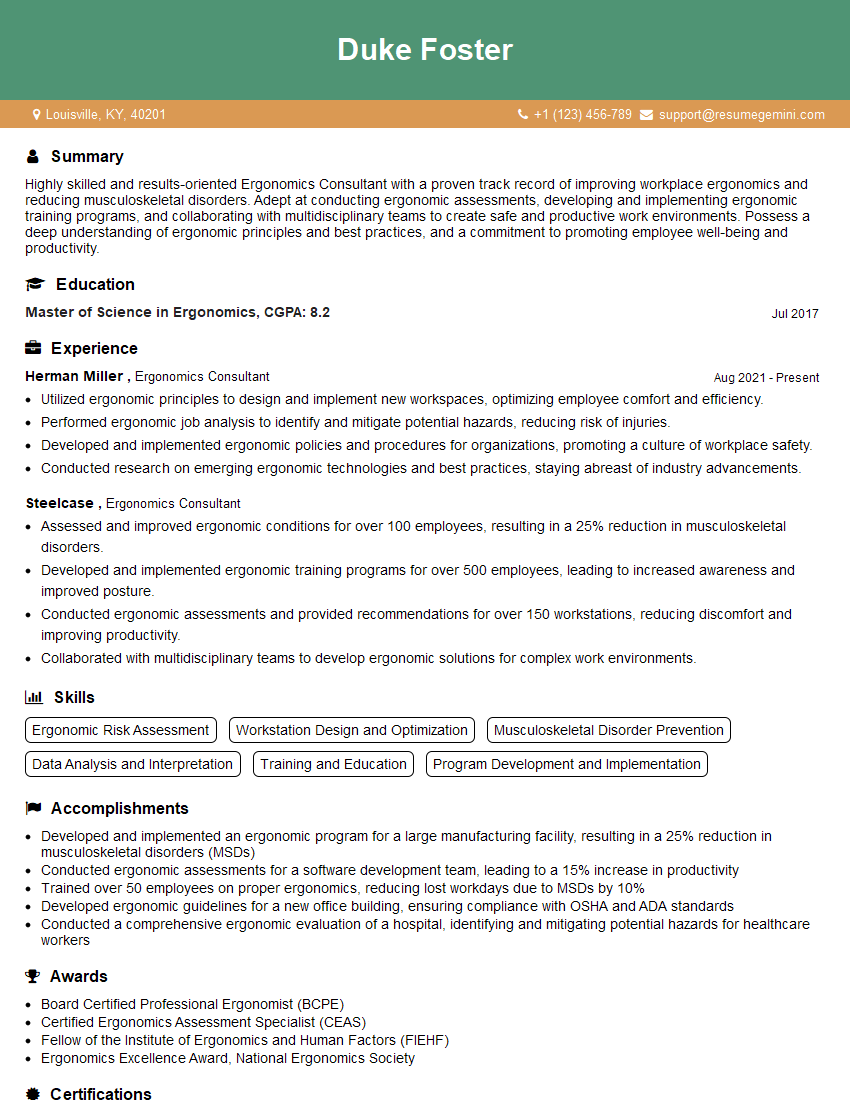
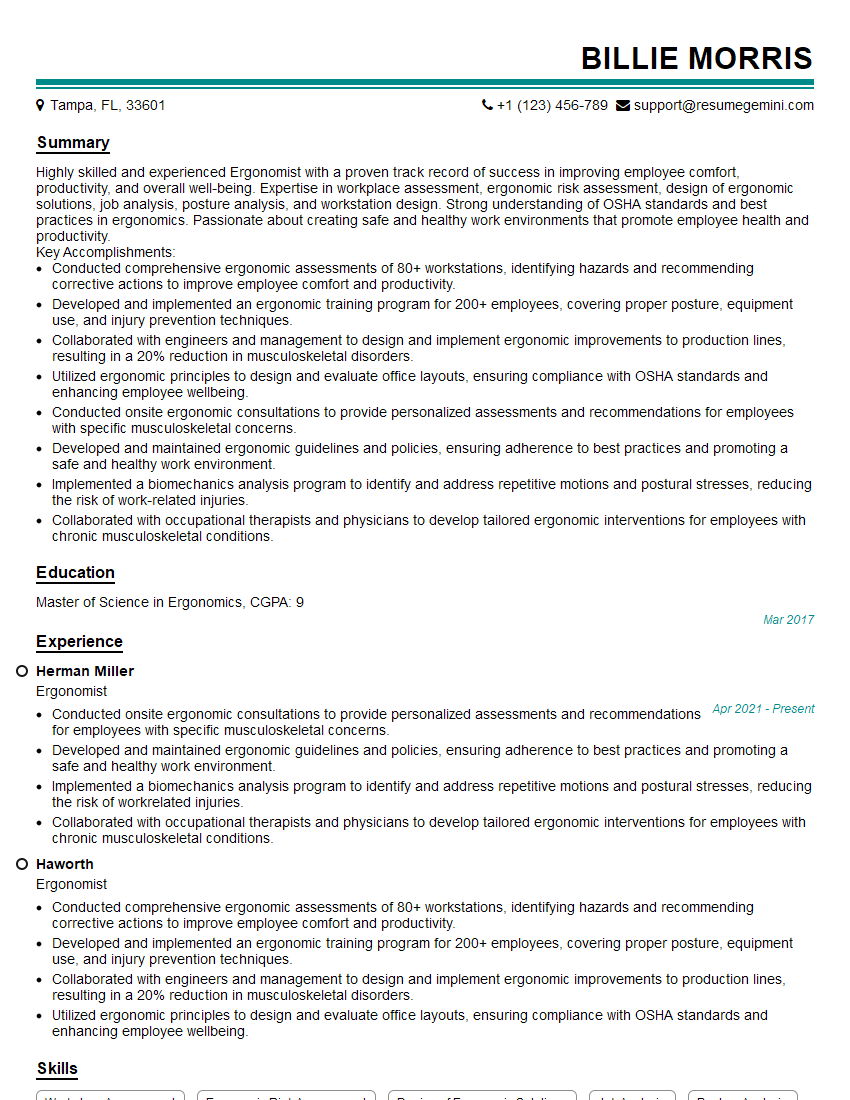
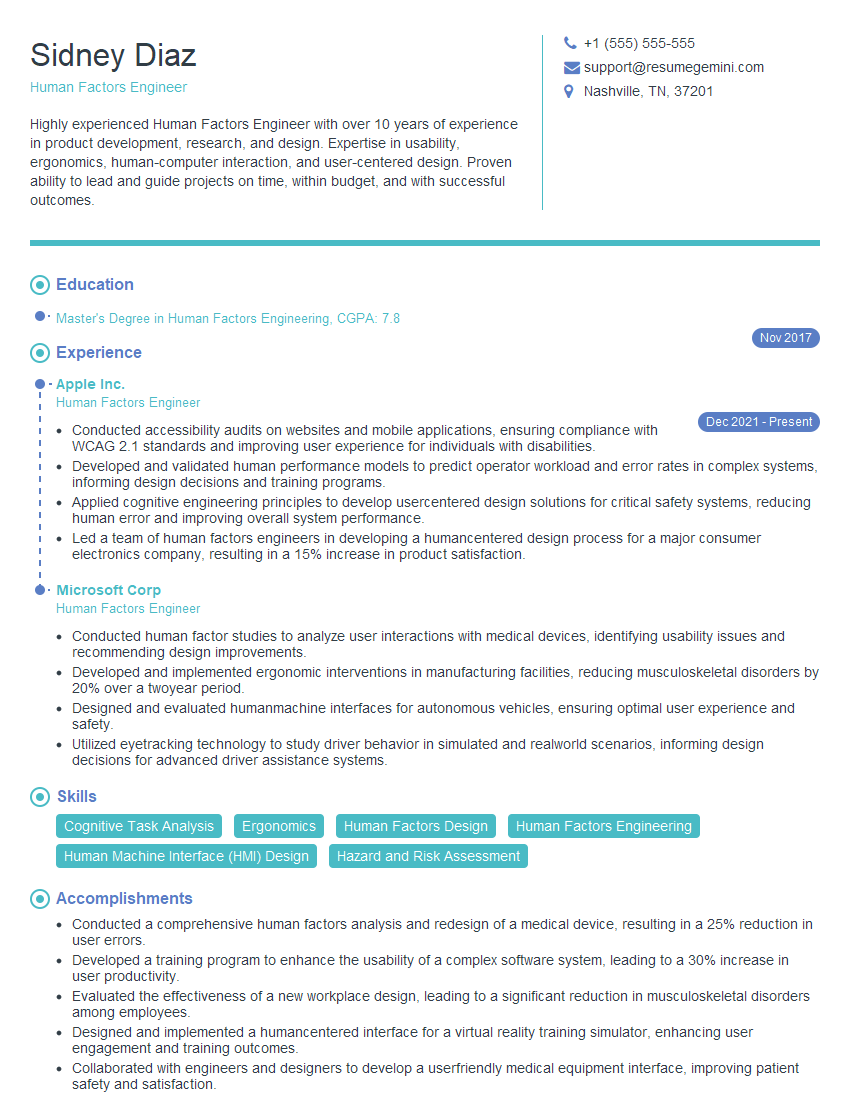
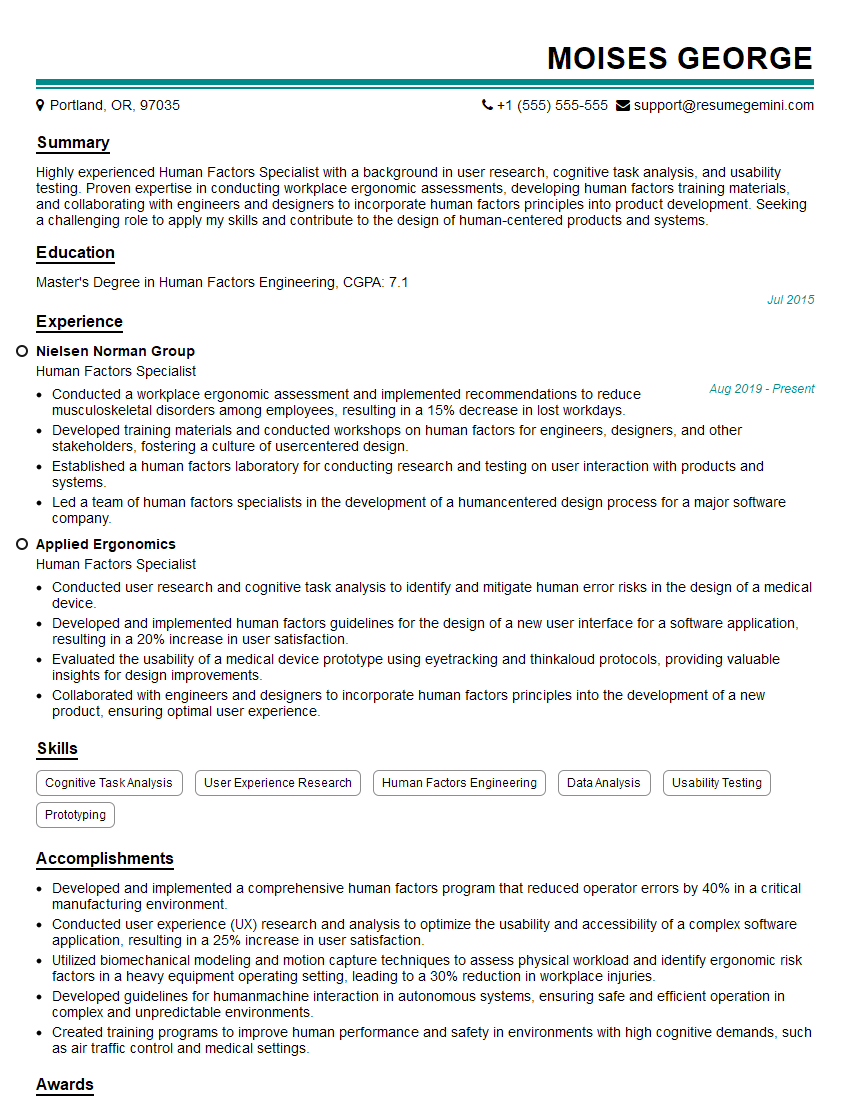
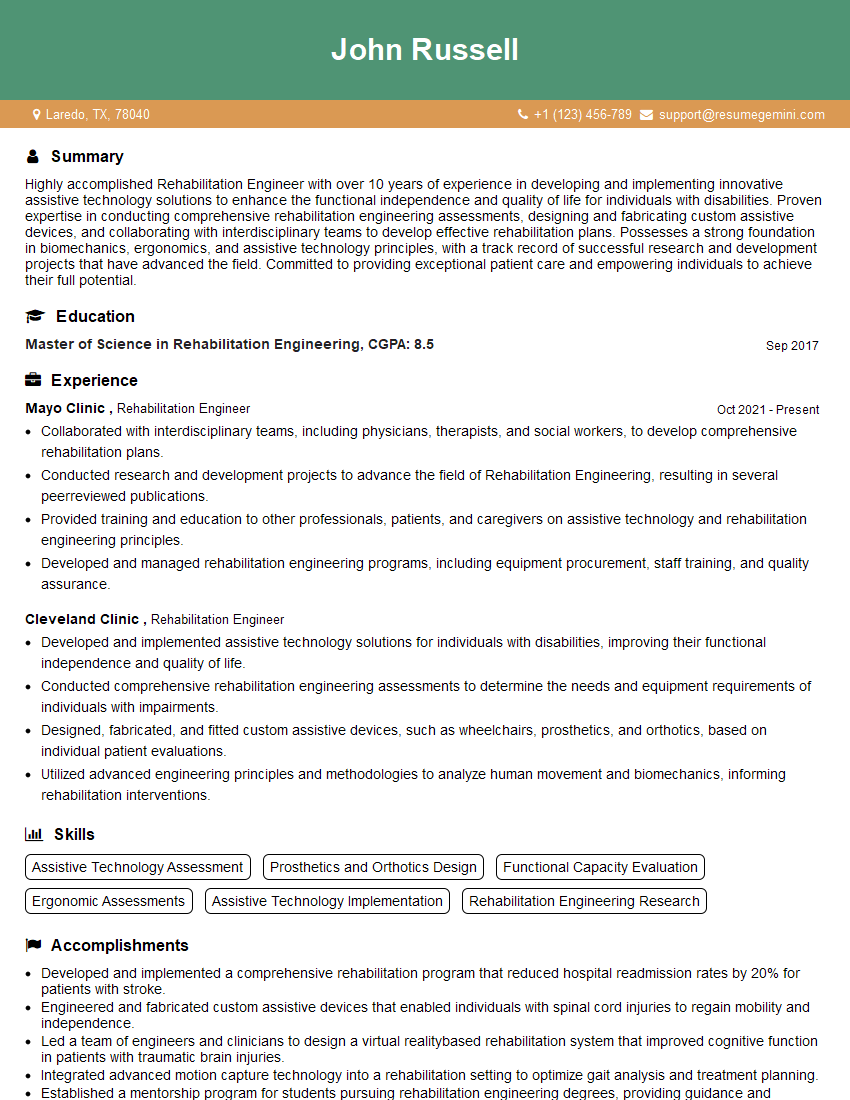
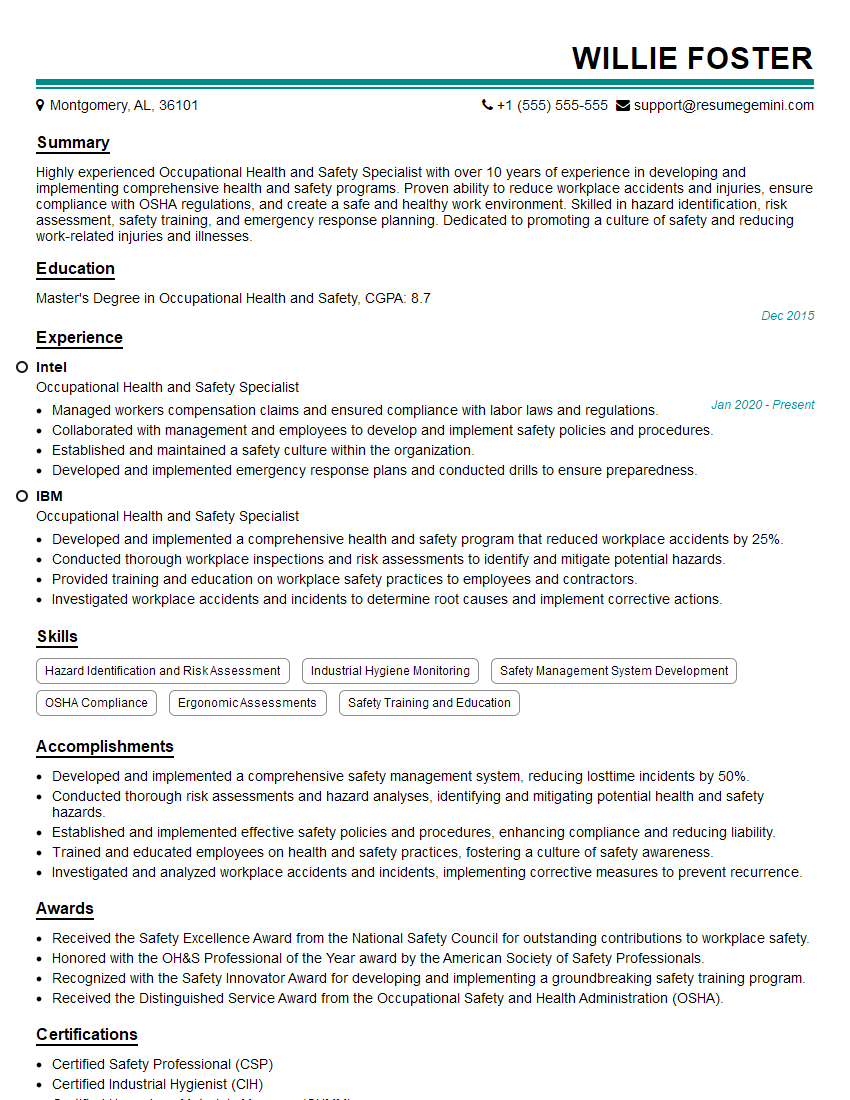
Mastering Ergonomics and Workplace Assessments opens doors to exciting career opportunities in occupational health and safety, industrial engineering, and human factors. A strong understanding of these principles makes you a highly valuable asset to any organization committed to employee well-being and productivity. To maximize your job prospects, crafting an ATS-friendly resume is crucial. ResumeGemini is a trusted resource that can help you build a professional and effective resume, highlighting your skills and experience in this competitive field. Examples of resumes tailored to Ergonomics and Workplace Assessments are available to guide you through the process.
Explore more articles
Users Rating of Our Blogs
Share Your Experience
We value your feedback! Please rate our content and share your thoughts (optional).
What Readers Say About Our Blog
Attention music lovers!
Wow, All the best Sax Summer music !!!
Spotify: https://open.spotify.com/artist/6ShcdIT7rPVVaFEpgZQbUk
Apple Music: https://music.apple.com/fr/artist/jimmy-sax-black/1530501936
YouTube: https://music.youtube.com/browse/VLOLAK5uy_noClmC7abM6YpZsnySxRqt3LoalPf88No
Other Platforms and Free Downloads : https://fanlink.tv/jimmysaxblack
on google : https://www.google.com/search?q=22+AND+22+AND+22
on ChatGPT : https://chat.openai.com?q=who20jlJimmy20Black20Sax20Producer
Get back into the groove with Jimmy sax Black
Best regards,
Jimmy sax Black
www.jimmysaxblack.com
Hi I am a troller at The aquatic interview center and I suddenly went so fast in Roblox and it was gone when I reset.
Hi,
Business owners spend hours every week worrying about their website—or avoiding it because it feels overwhelming.
We’d like to take that off your plate:
$69/month. Everything handled.
Our team will:
Design a custom website—or completely overhaul your current one
Take care of hosting as an option
Handle edits and improvements—up to 60 minutes of work included every month
No setup fees, no annual commitments. Just a site that makes a strong first impression.
Find out if it’s right for you:
https://websolutionsgenius.com/awardwinningwebsites
Hello,
we currently offer a complimentary backlink and URL indexing test for search engine optimization professionals.
You can get complimentary indexing credits to test how link discovery works in practice.
No credit card is required and there is no recurring fee.
You can find details here:
https://wikipedia-backlinks.com/indexing/
Regards
NICE RESPONSE TO Q & A
hi
The aim of this message is regarding an unclaimed deposit of a deceased nationale that bears the same name as you. You are not relate to him as there are millions of people answering the names across around the world. But i will use my position to influence the release of the deposit to you for our mutual benefit.
Respond for full details and how to claim the deposit. This is 100% risk free. Send hello to my email id: lukachachibaialuka@gmail.com
Luka Chachibaialuka
Hey interviewgemini.com, just wanted to follow up on my last email.
We just launched Call the Monster, an parenting app that lets you summon friendly ‘monsters’ kids actually listen to.
We’re also running a giveaway for everyone who downloads the app. Since it’s brand new, there aren’t many users yet, which means you’ve got a much better chance of winning some great prizes.
You can check it out here: https://bit.ly/callamonsterapp
Or follow us on Instagram: https://www.instagram.com/callamonsterapp
Thanks,
Ryan
CEO – Call the Monster App
Hey interviewgemini.com, I saw your website and love your approach.
I just want this to look like spam email, but want to share something important to you. We just launched Call the Monster, a parenting app that lets you summon friendly ‘monsters’ kids actually listen to.
Parents are loving it for calming chaos before bedtime. Thought you might want to try it: https://bit.ly/callamonsterapp or just follow our fun monster lore on Instagram: https://www.instagram.com/callamonsterapp
Thanks,
Ryan
CEO – Call A Monster APP
To the interviewgemini.com Owner.
Dear interviewgemini.com Webmaster!
Hi interviewgemini.com Webmaster!
Dear interviewgemini.com Webmaster!
excellent
Hello,
We found issues with your domain’s email setup that may be sending your messages to spam or blocking them completely. InboxShield Mini shows you how to fix it in minutes — no tech skills required.
Scan your domain now for details: https://inboxshield-mini.com/
— Adam @ InboxShield Mini
support@inboxshield-mini.com
Reply STOP to unsubscribe
Hi, are you owner of interviewgemini.com? What if I told you I could help you find extra time in your schedule, reconnect with leads you didn’t even realize you missed, and bring in more “I want to work with you” conversations, without increasing your ad spend or hiring a full-time employee?
All with a flexible, budget-friendly service that could easily pay for itself. Sounds good?
Would it be nice to jump on a quick 10-minute call so I can show you exactly how we make this work?
Best,
Hapei
Marketing Director
Hey, I know you’re the owner of interviewgemini.com. I’ll be quick.
Fundraising for your business is tough and time-consuming. We make it easier by guaranteeing two private investor meetings each month, for six months. No demos, no pitch events – just direct introductions to active investors matched to your startup.
If youR17;re raising, this could help you build real momentum. Want me to send more info?
Hi, I represent an SEO company that specialises in getting you AI citations and higher rankings on Google. I’d like to offer you a 100% free SEO audit for your website. Would you be interested?
Hi, I represent an SEO company that specialises in getting you AI citations and higher rankings on Google. I’d like to offer you a 100% free SEO audit for your website. Would you be interested?