Are you ready to stand out in your next interview? Understanding and preparing for Packaging Materials Knowledge interview questions is a game-changer. In this blog, we’ve compiled key questions and expert advice to help you showcase your skills with confidence and precision. Let’s get started on your journey to acing the interview.
Questions Asked in Packaging Materials Knowledge Interview
Q 1. What are the key properties of corrugated cardboard, and how do they influence its suitability for different applications?
Corrugated cardboard is a ubiquitous packaging material prized for its unique combination of properties. Its strength, cushioning ability, and cost-effectiveness make it ideal for a wide array of applications. The key properties are:
- Strength: The fluted structure provides excellent compressive strength, protecting contents from crushing during transit and handling. The number of flutes (e.g., single-wall, double-wall, triple-wall) directly impacts this strength. Double-wall board is significantly stronger than single-wall, making it suitable for heavier items.
- Cushioning: The flutes act as shock absorbers, protecting fragile goods from impact damage. This is especially crucial for electronics, glassware, and other sensitive items.
- Lightweight: Compared to other materials with similar strength, corrugated board is remarkably lightweight, reducing shipping costs and environmental impact.
- Recyclability: It’s highly recyclable, making it an environmentally friendly option. Many brands actively promote their use of recycled cardboard.
- Printability: Its surface allows for excellent printing, enabling high-quality branding and product information.
These properties influence suitability as follows: Single-wall cardboard is perfect for lighter products like cereal boxes; double-wall for heavier appliances; triple-wall for exceptionally heavy items or those needing maximum protection. The choice depends on product weight, fragility, and shipping conditions.
Q 2. Explain the difference between flexible and rigid packaging materials and provide examples of each.
The key difference between flexible and rigid packaging lies in their ability to maintain a predetermined shape.
Flexible packaging conforms to the shape of its contents. It’s lightweight, easily sealable, and often cost-effective. Examples include:
- Plastic films: Polyethylene (PE), polypropylene (PP), and polyvinyl chloride (PVC) are commonly used for food wraps, pouches, and bags.
- Foil pouches: Offer excellent barrier properties against moisture and oxygen, ideal for coffee, snacks, and other shelf-stable products.
- Paper bags: Eco-friendly option for various applications, though not as durable as other flexible options.
Rigid packaging maintains its shape independently of the contents. It provides greater product protection and often allows for more sophisticated design elements. Examples include:
- Glass bottles and jars: Excellent barrier properties but heavy and fragile.
- Metal cans: Durable, offering good barrier properties and shelf stability. Widely used for food and beverages.
- Plastic bottles and tubs: Versatile, offering varying degrees of strength and barrier properties. Suitable for a wide range of products.
- Corrugated cardboard boxes: As discussed previously, excellent for cushioning and strength.
The choice between flexible and rigid packaging depends on factors such as product characteristics, shelf life requirements, transportation needs, and cost considerations.
Q 3. Discuss the advantages and disadvantages of using plastic films in packaging.
Plastic films offer many advantages but also come with drawbacks. Let’s examine both sides:
Advantages:
- Excellent barrier properties: Many plastic films effectively protect against moisture, oxygen, and other environmental factors, extending shelf life.
- Lightweight and flexible: Reduces shipping costs and allows for efficient packaging of irregularly shaped items.
- Cost-effective: Generally cheaper than glass or metal packaging for many applications.
- Versatility: Available in a wide range of thicknesses, types, and properties, allowing for customization to meet specific needs.
- Ease of sealing and processing: Suitable for high-speed automated packaging lines.
Disadvantages:
- Environmental concerns: Plastic waste is a significant environmental issue, and many plastic films are not easily recyclable.
- Potential for chemical leaching: Some plastics can leach chemicals into packaged foods, raising health concerns.
- Susceptibility to damage: Certain types of plastic films can be easily punctured or torn.
- Limited barrier properties in some cases: Some films are more permeable to gases or moisture than others.
Sustainable alternatives, such as biodegradable or compostable films, are increasingly being developed to mitigate environmental concerns.
Q 4. Describe different types of closures used in packaging and their suitability for various products.
Closures are crucial for maintaining product integrity and preventing contamination. Many types exist, each suitable for specific products:
- Screw caps: Common for bottles and jars, providing a secure and resealable closure. Variations include child-resistant caps and tamper-evident seals.
- Press-on lids: Simple and economical, suitable for containers that don’t require resealing (e.g., single-serve yogurt cups).
- Flip-top caps: Easy to open and close, often used for bottles of beverages or medicine.
- Crimp seals: Used for cans and other metal containers, providing an airtight seal.
- Spout pouches: Flexible pouches with integrated spouts, convenient for liquids and semi-liquids (e.g., juice boxes).
- Zipper closures: Resealable closures for bags and pouches, often used for snack foods.
The choice of closure depends on factors such as product type, packaging material, shelf life requirements, and ease of use for the consumer. For example, a child-resistant cap is essential for medications, while a tamper-evident seal assures consumers that the product has not been tampered with.
Q 5. How do you assess the barrier properties of packaging materials?
Assessing barrier properties involves determining a material’s resistance to the passage of gases, moisture, and other substances. This is vital for ensuring product quality and shelf life. Several methods are used:
- Gas Permeability Testing: Measures the rate at which gases (like oxygen or carbon dioxide) pass through the packaging. This often involves specialized equipment that creates a pressure differential across the packaging material.
- Water Vapor Transmission Rate (WVTR) Testing: Measures the amount of moisture that passes through the packaging over time. This is especially important for food and pharmaceutical products susceptible to moisture damage.
- Oxygen Transmission Rate (OTR) Testing: Specifically measures oxygen permeability, crucial for products sensitive to oxidation (e.g., oils, fatty foods).
- Sensory Testing: While not as precise, sensory evaluation can help detect issues such as off-odors or changes in texture related to barrier failures. This involves trained panelists evaluating the packaged product over time.
The results of these tests are crucial for selecting the right packaging material. Lower permeability rates indicate better barrier properties and longer shelf life.
Q 6. What are the factors to consider when selecting a packaging material for a food product?
Selecting packaging for food products requires careful consideration of numerous factors:
- Product characteristics: Is the food dry, moist, oily, or acidic? This dictates the necessary barrier properties. Oily foods, for instance, require materials with high grease resistance.
- Shelf life requirements: How long should the food remain safe and palatable? Longer shelf life demands superior barrier properties against oxygen, moisture, and light.
- Regulatory compliance: Packaging must comply with food safety regulations (e.g., FDA in the US). Materials must be food-grade and free of harmful substances.
- Cost: Packaging costs significantly impact product price. Balancing cost and performance is crucial.
- Environmental impact: Sustainable and recyclable packaging is increasingly important to consumers.
- Distribution conditions: Will the product be subjected to extreme temperatures or rough handling during transport? The packaging must offer adequate protection.
- Consumer appeal: The packaging should attract consumers’ attention and communicate product information effectively.
For example, a delicate pastry requires a protective container to prevent damage; a perishable item needs modified atmosphere packaging (MAP) or vacuum sealing to prolong its shelf life.
Q 7. Explain the importance of packaging material compatibility with the packaged product.
Packaging material compatibility with the packaged product is paramount to maintaining product quality and safety. Incompatibility can lead to several negative outcomes:
- Chemical reactions: The packaging material may react with the product, altering its taste, smell, or even making it unsafe for consumption.
- Migration: Components of the packaging material may leach into the product, contaminating it.
- Absorption: The product may absorb undesirable substances from the packaging (e.g., odors from recycled cardboard).
- Product degradation: The packaging may not adequately protect the product from environmental factors, leading to spoilage or degradation.
For example, acidic products should not be packaged in materials that can be degraded by acids. Likewise, fatty foods should not be packaged in materials that can be penetrated by fats. Careful selection of compatible materials is essential to prevent these issues and ensure product integrity.
Q 8. What are the common types of coatings used in packaging materials and their functions?
Coatings play a crucial role in enhancing the performance and functionality of packaging materials. They’re applied as thin layers to impart specific properties. Common types include:
- Lacquer Coatings: These provide a protective barrier against moisture, oxygen, and UV light, extending shelf life and maintaining product quality. Think of the glossy finish on many candy wrappers.
- Varnish Coatings: Similar to lacquer, but often used for aesthetic purposes, improving the print quality and adding shine. Many cereal boxes utilize varnish for vibrant colors.
- Epoxy Coatings: Known for their exceptional durability and chemical resistance, they are ideal for packaging products requiring robust protection. They’re frequently found on metal cans for chemicals or paints.
- UV Coatings: These cure rapidly under UV light, offering a scratch-resistant and high-gloss finish. Many magazine covers utilize UV coatings for a luxurious feel.
- Water-Based Coatings: Environmentally friendly options, offering good barrier properties while being less harmful to the environment during production and disposal.
The choice of coating depends heavily on the product, its sensitivity to environmental factors, and the desired aesthetic appeal.
Q 9. Describe different methods for testing the strength and durability of packaging materials.
Testing the strength and durability of packaging materials is essential to ensure product protection and prevent damage during transport and storage. Several methods are employed:
- Compression Testing: Measures the force required to crush the package. This is crucial for boxes and containers to determine their ability to withstand stacking pressure in warehouses.
- Tensile Testing: Determines the strength of the material when stretched. This is important for films and flexible packaging to assess their resistance to tearing.
- Burst Testing: Evaluates the pressure required to rupture a package, especially relevant for bags and pouches. This simulates the pressure changes during transportation.
- Drop Testing: Simulates the impact forces during shipping. Packages are dropped from various heights to assess damage potential.
- Vibration Testing: Exposes packaging to simulated vibrations during transport to check for product movement and potential damage.
- Climate Chamber Testing: Exposes the packaging to varying temperature and humidity conditions to simulate real-world storage and transport conditions and determine effects on the structure and performance.
The specific tests used depend on the packaging type and the nature of the product being packaged.
Q 10. How do you ensure the sustainability of packaging materials throughout the product lifecycle?
Sustainability is paramount in modern packaging. Ensuring sustainability across the product lifecycle involves several strategies:
- Material Selection: Choosing recyclable, compostable, or biodegradable materials like recycled paperboard, plant-based plastics, or bio-polymers minimizes environmental impact.
- Lightweighting: Reducing the material used in packaging without compromising protection reduces resource consumption and transportation costs. This often involves advanced design and material science.
- Design for Recyclability: Designing packaging that is easily separated and recycled simplifies waste management. For example, using mono-material structures instead of complex multi-layered materials.
- Reducing Packaging Waste: Optimizing designs to minimize excess material and exploring alternatives like reusable packaging reduces waste significantly.
- Post-Consumer Recycled Content (PCR): Utilizing materials made from recycled waste reduces reliance on virgin materials. Using recycled plastics in packaging significantly cuts down on landfill waste.
- Life Cycle Assessment (LCA): Conducting an LCA analyzes the environmental impact of the packaging from raw material extraction to disposal, identifying areas for improvement.
A holistic approach integrating these strategies is crucial for achieving truly sustainable packaging solutions.
Q 11. What are the regulatory requirements for food contact materials in your region?
(This answer will vary by region. The following is a general example, and specific regulations should be researched for your relevant region.) In many regions, regulations for food contact materials are stringent and focus on ensuring safety for consumers. Key aspects often include:
- Material Compliance: Packaging materials must comply with regulations regarding the substances they contain. This usually involves limitations on the migration of chemicals into food.
- Testing and Certification: Manufacturers must often conduct tests to demonstrate compliance with regulatory standards. Third-party certifications, such as FDA approval (in the US), are commonly required.
- Labeling Requirements: Clear and accurate labeling is mandatory, indicating the materials used and any relevant warnings or precautions.
- Good Manufacturing Practices (GMP): Manufacturers are expected to maintain GMP to ensure the safety and quality of food contact materials.
Failure to comply with these regulations can lead to significant penalties and product recalls. It’s crucial to stay updated on the latest regulations in your specific jurisdiction.
Q 12. Explain the concept of ‘shelf life’ and its relationship to packaging materials.
Shelf life refers to the period during which a product maintains its desired quality characteristics, including sensory attributes (taste, smell, appearance) and nutritional value. Packaging materials play a vital role in determining and maintaining shelf life.
Properly designed packaging protects the product from:
- Oxygen: Oxygen exposure can lead to oxidation, rancidity, and spoilage.
- Moisture: Moisture can promote microbial growth and alter product texture and quality.
- Light: Light exposure, especially UV light, can degrade certain components and affect color and nutritional content.
- Contaminants: Packaging helps prevent contamination from dust, microorganisms, and other environmental factors.
Packaging features like barrier properties (e.g., films with low oxygen and moisture permeability), UV blockers, and tamper-evident seals directly influence shelf life. For instance, a vacuum-sealed package extends shelf life significantly by removing oxygen.
Q 13. How do temperature and humidity affect the performance of packaging materials?
Temperature and humidity significantly affect packaging material performance. Extreme temperatures can:
- Cause dimensional changes: Materials can expand or contract, potentially leading to package failure or product damage.
- Affect barrier properties: High temperatures can reduce the effectiveness of barrier layers against moisture and oxygen.
- Degrade material properties: Extreme heat can weaken materials, making them brittle or less resistant to stress.
High humidity can:
- Increase moisture absorption: Leading to weakening of the material, microbial growth, or product spoilage.
- Cause condensation: Condensation can lead to damage of the packaged product.
Low humidity can cause materials to become brittle and prone to cracking. Therefore, selecting packaging materials with appropriate resistance to temperature and humidity fluctuations based on the product and storage conditions is crucial.
Q 14. Describe different types of printing techniques used on packaging materials.
Various printing techniques are used to decorate and inform on packaging materials. Common methods include:
- Flexography: A cost-effective, high-speed process using flexible rubber plates, ideal for large-volume printing on flexible substrates like films and pouches.
- Gravure: Produces high-quality images with excellent detail, particularly useful for detailed designs and metallic effects. Often used for packaging requiring high-quality visual appeal.
- Offset Lithography: A versatile method producing high-resolution images on various substrates, including paperboard, but less suitable for textured surfaces.
- Screen Printing: A technique using stencils to apply ink, capable of printing on irregular surfaces and thick layers of ink, useful for special effects.
- Digital Printing: Allows for short runs, personalized designs, and easy modifications. Ideal for customized or limited-edition packaging.
The selection of printing method depends on factors such as budget, required quality, substrate type, and the volume of packaging needed.
Q 15. What are the key considerations for designing packaging for e-commerce?
E-commerce packaging design requires a multifaceted approach, prioritizing product protection, cost-effectiveness, and a positive customer experience. Key considerations include:
- Protection from damage: The packaging must withstand the rigors of shipping, including impacts, vibrations, and temperature fluctuations. This often necessitates using cushioning materials like bubble wrap, air pillows, or void fill. For fragile items, custom-fit inserts might be necessary.
- Size and weight optimization: Smaller packages reduce shipping costs. Careful design can minimize wasted space, ensuring efficient use of volume. Lightweight materials contribute to lower shipping costs as well.
- Sustainability: Consumers are increasingly environmentally conscious. Using recycled and recyclable materials, reducing packaging volume, and choosing biodegradable options are crucial for building a positive brand image.
- Branding and marketing: The packaging serves as a marketing tool. Attractive design, clear labeling, and high-quality printing enhance the unboxing experience and reinforce brand identity. This can also include the addition of marketing inserts.
- Ease of handling and opening: Intuitive design ensures a smooth unboxing experience for the customer, reducing frustration and improving satisfaction. Easily opened boxes are also less likely to damage the product.
- Security against theft: Tamper-evident features, like security seals or custom packaging, can deter theft and protect valuable goods.
For example, a company selling delicate glassware might opt for custom-fit foam inserts within a double-walled corrugated cardboard box, ensuring maximum protection during transit. Meanwhile, a company selling clothing might use a mailer box made from recycled cardboard, reducing environmental impact and promoting sustainability.
Career Expert Tips:
- Ace those interviews! Prepare effectively by reviewing the Top 50 Most Common Interview Questions on ResumeGemini.
- Navigate your job search with confidence! Explore a wide range of Career Tips on ResumeGemini. Learn about common challenges and recommendations to overcome them.
- Craft the perfect resume! Master the Art of Resume Writing with ResumeGemini’s guide. Showcase your unique qualifications and achievements effectively.
- Don’t miss out on holiday savings! Build your dream resume with ResumeGemini’s ATS optimized templates.
Q 16. Explain the different types of packaging waste and methods for their disposal.
Packaging waste can be broadly categorized into:
- Paper and Cardboard: This is often recyclable and can be composted in some cases. Recycling is the most common and preferred disposal method.
- Plastics: This includes films, bottles, and various other plastic packaging components. Plastic recycling rates vary significantly based on the type of plastic and local recycling infrastructure. Many plastics are not easily biodegradable, leading to environmental concerns.
- Glass: Glass is generally recyclable but requires careful handling to prevent breakage during collection and processing.
- Metals: Aluminum cans and steel packaging are highly recyclable and have a high recycling value.
- Wood: Wooden pallets and crates can often be reused or recycled into woodchips.
- Textiles: Some packaging incorporates textiles, like burlap sacks. Depending on the material these can be reused or recycled.
Disposal methods vary greatly depending on the material and local regulations. Recycling programs, composting facilities, and landfills all play a role. Proper sorting and separation of waste streams are crucial for efficient recycling and waste reduction. Incineration is also sometimes used but usually only as a last resort due to emissions concerns.
Q 17. How do you evaluate the cost-effectiveness of different packaging materials?
Evaluating the cost-effectiveness of packaging materials involves a holistic assessment that goes beyond the initial material price. Factors to consider include:
- Material cost: This is the raw material price per unit, varying significantly based on material type, quantity purchased, and market conditions.
- Manufacturing cost: This encompasses the cost of converting raw materials into finished packaging, including labor, machinery, and energy.
- Shipping cost: Lighter weight materials reduce shipping expenses. Smaller package dimensions also minimize transportation costs.
- Storage cost: Compact packaging reduces storage space requirements, lowering warehousing costs.
- Damage cost: Robust packaging minimizes product damage during transit, avoiding costly replacements or returns.
- Environmental cost: While often not directly reflected in monetary terms, the environmental impact can have indirect costs associated with waste management or potential regulatory penalties.
- Disposal cost: Recycling and waste management costs vary depending on the material and local regulations.
A Life Cycle Assessment (LCA) can be valuable here, quantifying the environmental impact and cost of each packaging option across its entire lifecycle – from raw material extraction to end-of-life disposal. This allows for a comprehensive comparison of alternatives.
Q 18. Discuss the role of packaging in brand building and consumer perception.
Packaging plays a significant role in brand building and shaping consumer perception. It’s often the first interaction a customer has with a product, making a strong visual impression crucial. Aspects that contribute to this include:
- Visual appeal: Attractive colors, fonts, and graphics create a positive brand image and convey product qualities. Think of the iconic Coca-Cola bottle or the minimalist Apple packaging.
- Tactile experience: The feel of the packaging – its texture, weight, and material – influences perception. Luxury brands often use high-quality materials to communicate premium status.
- Information and labeling: Clear and concise information about product features, usage, and ingredients builds trust and transparency. Compelling copy can also elevate the brand’s story.
- Unboxing experience: A well-designed unboxing experience, with elements like custom inserts or thoughtful presentation, enhances the customer’s overall engagement with the brand.
- Sustainability message: Eco-friendly packaging demonstrates commitment to environmental responsibility, positively influencing environmentally conscious customers.
For instance, a company selling organic cosmetics might utilize recyclable paperboard packaging with soy-based ink and minimal plastic components, reinforcing its commitment to sustainability and appealing to eco-conscious consumers.
Q 19. What are the latest trends in packaging materials and technology?
The packaging industry is constantly evolving, driven by sustainability concerns, technological advancements, and consumer demands. Current trends include:
- Sustainable materials: Increased use of recycled content, biodegradable materials (e.g., mushroom packaging, seaweed packaging), and compostable plastics.
- Smart packaging: Incorporating technology for tamper evidence, traceability, and real-time condition monitoring. This includes RFID tags and QR codes.
- Minimalist packaging: Reducing packaging size and materials to minimize waste and shipping costs.
- Flexible packaging: Pouches and flexible films offer lightweight, efficient alternatives to rigid containers, reducing transportation costs and environmental impact.
- Edible and dissolvable films: These are primarily found in the food industry, offering an eco-friendly alternative to traditional plastic films.
- Personalized packaging: Utilizing technologies that allow for customized printing and messaging on individual packages, enhancing brand engagement.
- 3D printed packaging: On-demand packaging production for customization and reduced waste.
For example, many food companies are now experimenting with edible films to completely eliminate plastic packaging for certain products.
Q 20. How do you ensure the integrity and security of packaging during transportation and storage?
Ensuring packaging integrity and security during transport and storage requires a multi-pronged approach:
- Robust design: The packaging must be strong enough to withstand the stresses of handling, stacking, and transportation, including vibrations and impacts.
- Appropriate cushioning: Using void fill, air pillows, or other cushioning materials protects the product from damage caused by movement within the package.
- Proper stacking and handling: Appropriate stacking patterns and handling procedures reduce the risk of damage during transport and storage.
- Tamper-evident seals and features: These deter theft or unauthorized access, providing an extra layer of security.
- Secure closures: Reliable closures prevent the package from opening unintentionally.
- Climate control: For temperature-sensitive products, maintaining appropriate temperature and humidity levels during transport and storage is essential.
- Monitoring and tracking: Using GPS tracking and data loggers helps monitor the condition of shipments throughout the supply chain.
For example, a pharmaceutical company transporting temperature-sensitive medications would use insulated containers with temperature monitoring devices to ensure that the product remains within the required temperature range during transit.
Q 21. Describe your experience with different types of packaging machinery.
My experience encompasses a wide range of packaging machinery, including:
- Case packers: These machines automatically erect, fill, and seal corrugated cases, significantly increasing efficiency and reducing labor costs. I’ve worked with both robotic and traditional case packers, handling various case sizes and product configurations.
- Cartoners: Used to automatically form, fill, and seal cartons, particularly for smaller products. I have experience troubleshooting malfunctions and optimizing settings on high-speed cartoning systems.
- Fillers: These machines precisely dispense products into various containers, including bottles, jars, and pouches. I have experience with both liquid and solid fillers, ensuring accurate filling and minimizing waste.
- Labeling machines: These apply labels to containers, enhancing product presentation and providing crucial information. I’m familiar with various labeling techniques, including pressure-sensitive, wrap-around, and shrink-sleeve labeling.
- Pallet wrappers: These automate the process of wrapping pallets with stretch film, securing the load for transportation and improving storage stability.
- Shrink wrappers: These machines use heat to shrink plastic film around products, creating a tight, secure package.
My experience also includes maintaining, troubleshooting, and optimizing these machines to ensure maximum efficiency and minimize downtime. I understand the importance of following safety protocols and adhering to GMP guidelines when operating this equipment.
Q 22. Explain your understanding of the different layers in multi-layer packaging structures.
Multi-layer packaging structures are designed to combine the benefits of different materials, creating a package that’s superior to any single material alone. Think of it like a layered cake – each layer has a specific function contributing to the overall performance. A common example is a flexible food pouch.
- Outer Layer (Barrier Layer): This is often a polymer film like polyethylene terephthalate (PET) or nylon, providing strength, printability, and a degree of protection from the environment.
- Middle Layer (Barrier Layer): This layer focuses on preventing moisture, oxygen, or aroma transfer. Materials like aluminum foil or specialized barrier polymers (EVOH, for example) are common choices. This layer is crucial for extending shelf life.
- Inner Layer (Contact Layer): This layer is in direct contact with the product and needs to be food-safe and compatible with the product’s properties. Polyethylene (PE) is often used for its flexibility and inertness.
The specific materials and their thicknesses vary greatly depending on the product and its requirements. A juice box, for instance, might have a different layer structure compared to a bag of coffee beans, reflecting the diverse needs in terms of barrier properties, machinability, and cost.
Q 23. How do you approach problem-solving related to packaging material failures?
When a packaging material fails, my approach is systematic and data-driven. I follow a structured problem-solving methodology:
- Identify the Failure Mode: Pinpoint exactly what went wrong – was it seal failure, delamination, puncture, or something else? Detailed observation and documentation are crucial at this stage.
- Gather Data: Collect data related to the failure. This includes details about the material specifications, manufacturing process, storage conditions, and product characteristics. Microscopic examination and material testing are often necessary.
- Root Cause Analysis: Use tools like fishbone diagrams (Ishikawa diagrams) to identify the root cause of the failure. This stage involves scrutinizing all aspects of the process to determine the contributing factors.
- Develop Corrective Actions: Once the root cause is identified, develop and implement corrective actions. This could include changing material specifications, adjusting the manufacturing process, improving storage practices, or redesigning the packaging.
- Verification and Validation: After implementing the corrective actions, conduct thorough testing to validate their effectiveness and ensure the problem is resolved permanently.
For example, if a recurring seal failure is identified, the root cause might be improper sealing temperature, incorrect film tension during the packaging process, or contamination of the sealing surfaces. Addressing the root cause is critical to prevent future issues.
Q 24. What are some common issues encountered in packaging material selection and how do you address them?
Material selection is a critical step in packaging design. Some common issues include:
- Cost vs. Performance: Finding the optimal balance between material cost and its performance characteristics (barrier properties, strength, printability) is always a challenge. A cheaper material might not provide adequate protection, increasing the risk of product damage or spoilage.
- Sustainability Concerns: The environmental impact of packaging materials is a growing concern. Finding recyclable, biodegradable, or compostable alternatives can be complex and require careful consideration.
- Regulatory Compliance: Packaging materials must comply with various regulations related to food safety, chemical migration, and recyclability. Understanding and adhering to these standards is vital.
- Product Compatibility: The chosen material must be compatible with the product it will contain. For example, an acidic product might react with certain polymers.
Addressing these issues requires a thorough understanding of material properties, a life cycle assessment of the packaging, and consultation with regulatory experts. We often use material databases and simulation software to aid in selection and predict performance.
Q 25. Describe your familiarity with various industry standards related to packaging materials.
I am very familiar with a wide range of industry standards related to packaging materials. This includes:
- ISO Standards: Various ISO standards cover aspects like material testing, quality management, and environmental management.
- ASTM International Standards: ASTM provides standards for testing the physical and mechanical properties of packaging materials.
- FDA Regulations (for food contact materials): These regulations dictate the safety of materials used in food packaging.
- Industry-Specific Guidelines: Organizations like the Flexible Packaging Association (FPA) and the Institute of Packaging Professionals (IoPP) publish guidelines and best practices.
Staying abreast of these standards is crucial to ensure legal compliance and maintain high quality. I regularly consult these resources and attend industry conferences to stay up-to-date on the latest developments and changes in regulations.
Q 26. How would you choose a packaging material for a product with specific moisture sensitivity requirements?
Choosing a packaging material for a moisture-sensitive product requires careful consideration of barrier properties. The goal is to minimize moisture vapor transmission rate (MVTR). Here’s my approach:
- Assess Moisture Sensitivity: Determine the product’s critical moisture content and the permissible level of moisture uptake. This often involves detailed testing and analysis.
- Material Selection: Consider materials with low MVTR values. Options include multi-layer films with an aluminum foil or EVOH barrier layer, or specialized moisture-resistant polymers like PVDC.
- Testing and Validation: Perform MVTR testing on selected materials to confirm their performance under anticipated storage conditions. This is essential to verify that the chosen material meets the required specifications.
- Design Optimization: Optimize the packaging design to minimize the exposed surface area of the product to the environment. This could involve using tight-fitting seals, desiccants, or modified atmosphere packaging (MAP).
For example, pharmaceuticals or electronics often require extremely low MVTR. In such cases, we might opt for complex, multi-layer structures incorporating specialized barrier materials and carefully designed seals to ensure product integrity.
Q 27. What methods do you use to improve the efficiency of the packaging process?
Improving packaging process efficiency involves a holistic approach, focusing on optimizing various aspects of the process:
- Automation: Incorporating automation wherever possible, like using automated filling, sealing, and palletizing systems. This reduces labor costs and increases throughput.
- Lean Manufacturing Principles: Applying lean methodologies to eliminate waste, reduce cycle times, and improve overall efficiency. This might involve streamlining the workflow, optimizing material handling, and minimizing downtime.
- Process Optimization: Analyzing and fine-tuning each stage of the packaging process to identify bottlenecks and areas for improvement. Data analysis and simulation tools are helpful here.
- Material Handling Improvements: Optimizing material flow and storage, reducing handling time, and minimizing material waste.
- Continuous Improvement: Regularly reviewing the process and implementing continuous improvements to enhance efficiency and reduce costs. Data-driven decision-making is paramount here.
For example, implementing a new automated sealing machine might significantly reduce sealing time and improve the consistency of seals, ultimately leading to higher productivity and reduced waste.
Q 28. Explain your experience with packaging design software and tools.
I have extensive experience with various packaging design software and tools, including:
- SolidWorks: For 3D modeling and design of packaging structures.
- Autodesk Inventor: Similar to SolidWorks, for creating and analyzing packaging designs.
- CAD software specialized for packaging design: Several specialized software packages are available that provide tools for simulating the packaging process, analyzing material properties, and optimizing designs.
- Simulation software: Software to predict package performance under various conditions (e.g., drop tests, compression tests).
My proficiency in these tools enables me to create detailed and accurate packaging designs, conduct virtual prototyping, and optimize designs for manufacturability and performance. These tools are essential for ensuring the package meets all the required specifications before physical prototypes are produced.
Key Topics to Learn for Packaging Materials Knowledge Interview
- Material Properties: Understand the characteristics of various packaging materials (e.g., plastics, paperboard, metals, glass) including their strength, barrier properties, flexibility, and recyclability. Consider the impact of these properties on product protection and shelf life.
- Packaging Design & Functionality: Explore the principles of effective packaging design, focusing on functionality (e.g., ease of opening, reclosability, dispensing mechanisms) and its relation to material selection and cost-effectiveness.
- Sustainability & Environmental Impact: Learn about eco-friendly packaging options, lifecycle assessments, and the regulations surrounding sustainable packaging practices. Discuss the trade-offs between material performance and environmental responsibility.
- Manufacturing Processes: Familiarize yourself with the common manufacturing processes used for different packaging materials, understanding the advantages and limitations of each method and how they impact material selection and cost.
- Testing & Quality Control: Grasp the importance of quality control and testing procedures in ensuring packaging integrity and product safety. Explore different testing methods used to evaluate packaging performance.
- Cost Analysis & Optimization: Understand the factors that contribute to packaging costs and explore strategies for optimizing packaging materials and design to minimize expenses without compromising quality or functionality.
- Regulations & Compliance: Become familiar with relevant industry regulations and standards related to food safety, labeling, and material safety. Understand how these regulations influence material selection and design.
Next Steps
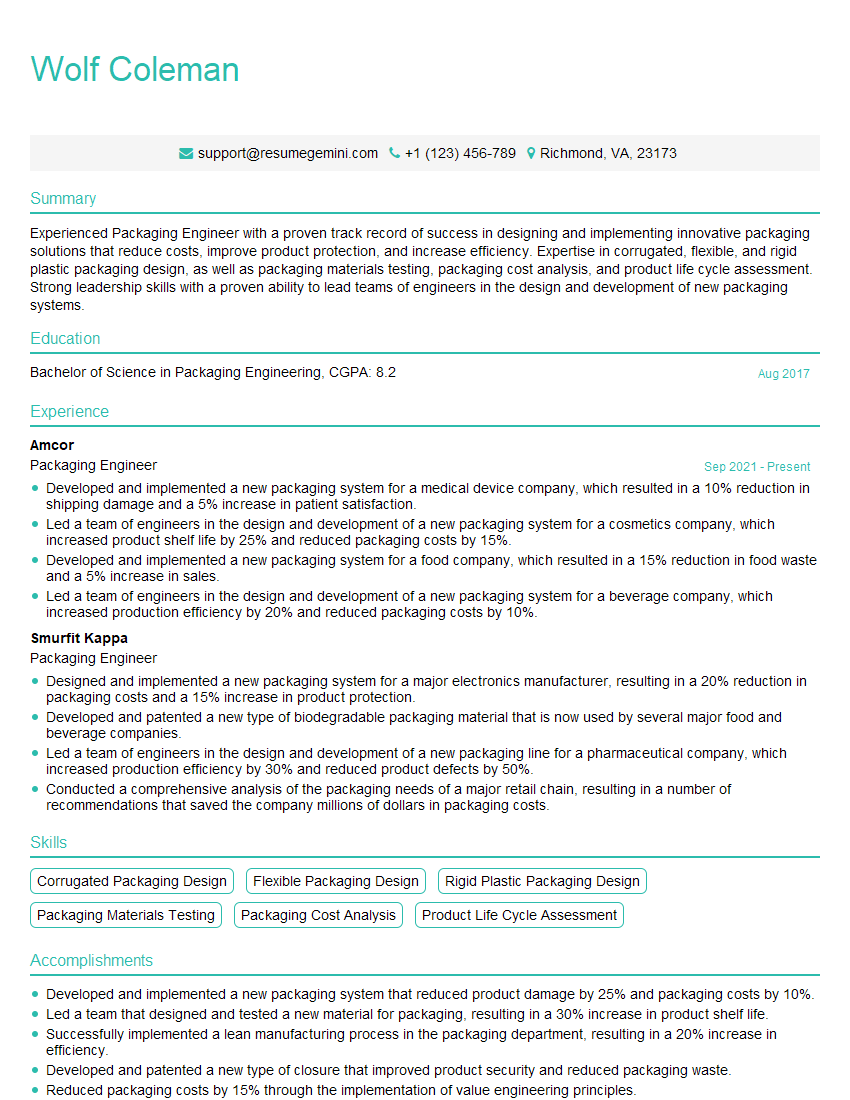
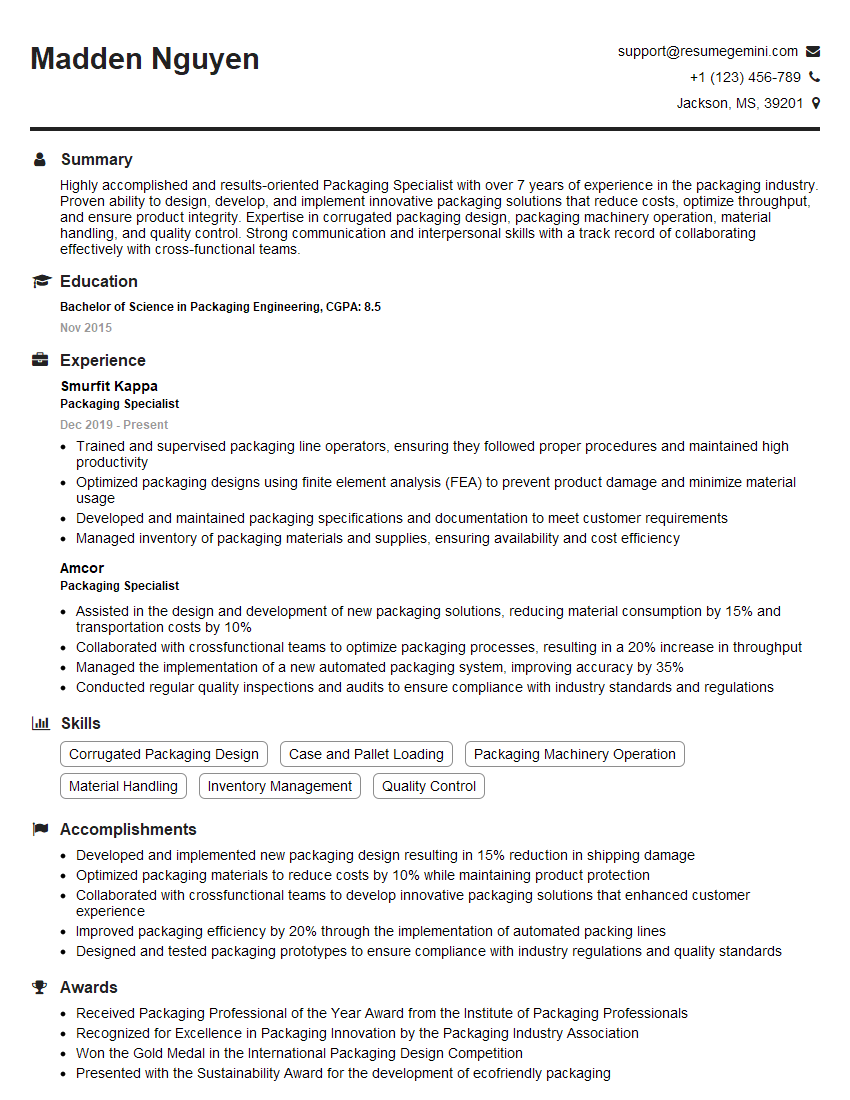
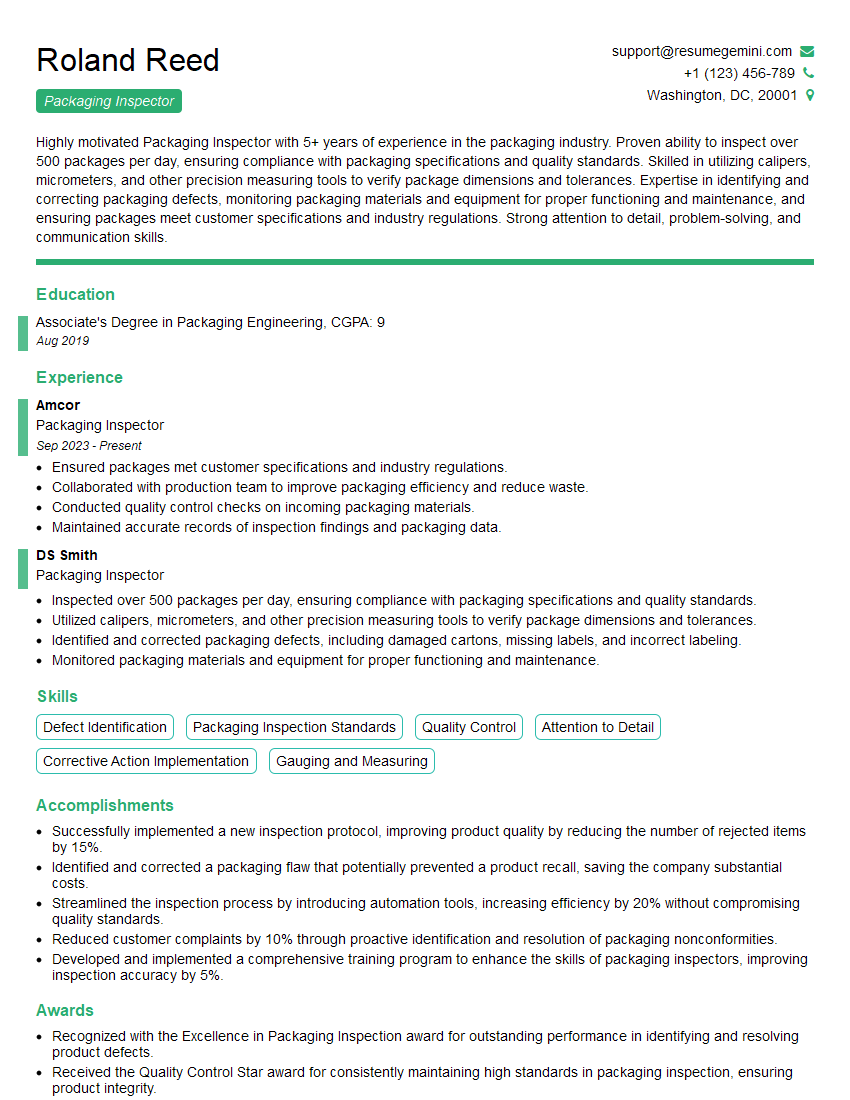
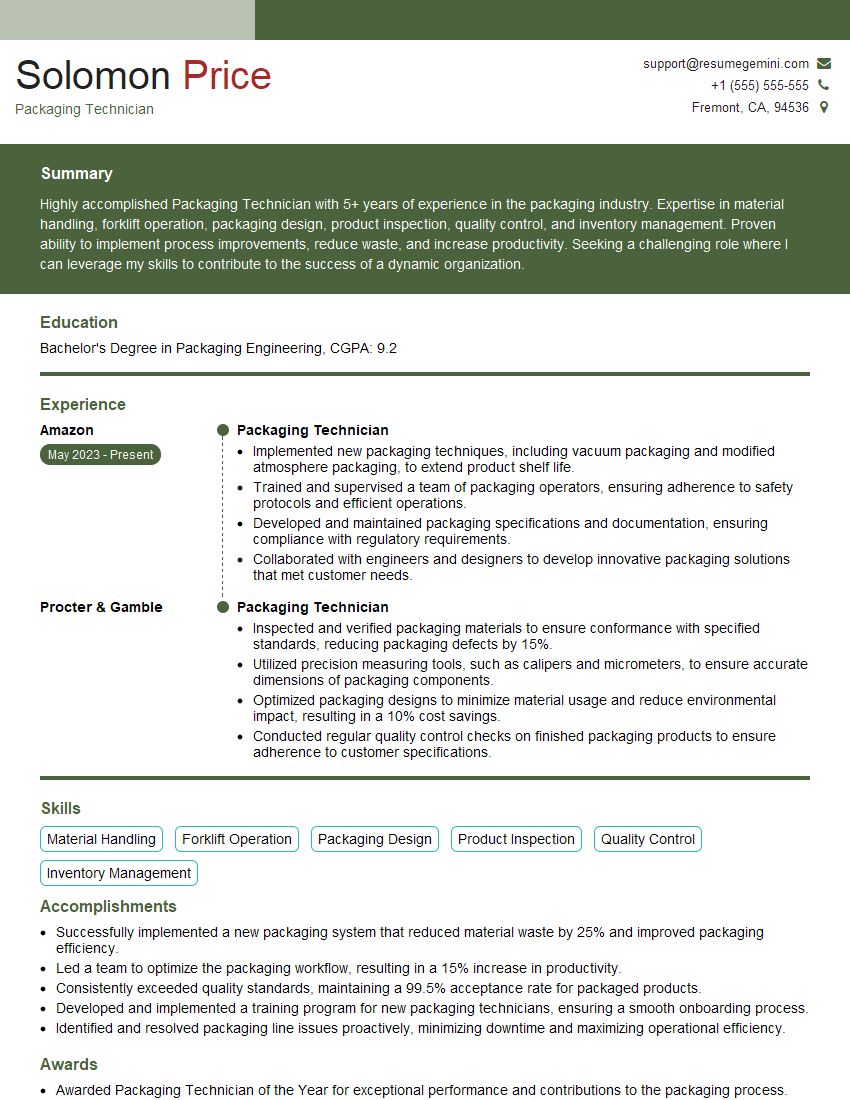
Mastering Packaging Materials Knowledge is crucial for advancing your career in the packaging industry. A strong understanding of these concepts will significantly enhance your interview performance and open doors to exciting opportunities. To maximize your job prospects, creating an ATS-friendly resume is essential. ResumeGemini is a trusted resource that can help you build a compelling and effective resume tailored to highlight your expertise in Packaging Materials Knowledge. Examples of resumes specifically designed for this field are available to help you craft a winning application.
Explore more articles
Users Rating of Our Blogs
Share Your Experience
We value your feedback! Please rate our content and share your thoughts (optional).
What Readers Say About Our Blog
Attention music lovers!
Wow, All the best Sax Summer music !!!
Spotify: https://open.spotify.com/artist/6ShcdIT7rPVVaFEpgZQbUk
Apple Music: https://music.apple.com/fr/artist/jimmy-sax-black/1530501936
YouTube: https://music.youtube.com/browse/VLOLAK5uy_noClmC7abM6YpZsnySxRqt3LoalPf88No
Other Platforms and Free Downloads : https://fanlink.tv/jimmysaxblack
on google : https://www.google.com/search?q=22+AND+22+AND+22
on ChatGPT : https://chat.openai.com?q=who20jlJimmy20Black20Sax20Producer
Get back into the groove with Jimmy sax Black
Best regards,
Jimmy sax Black
www.jimmysaxblack.com
Hi I am a troller at The aquatic interview center and I suddenly went so fast in Roblox and it was gone when I reset.
Hi,
Business owners spend hours every week worrying about their website—or avoiding it because it feels overwhelming.
We’d like to take that off your plate:
$69/month. Everything handled.
Our team will:
Design a custom website—or completely overhaul your current one
Take care of hosting as an option
Handle edits and improvements—up to 60 minutes of work included every month
No setup fees, no annual commitments. Just a site that makes a strong first impression.
Find out if it’s right for you:
https://websolutionsgenius.com/awardwinningwebsites
Hello,
we currently offer a complimentary backlink and URL indexing test for search engine optimization professionals.
You can get complimentary indexing credits to test how link discovery works in practice.
No credit card is required and there is no recurring fee.
You can find details here:
https://wikipedia-backlinks.com/indexing/
Regards
NICE RESPONSE TO Q & A
hi
The aim of this message is regarding an unclaimed deposit of a deceased nationale that bears the same name as you. You are not relate to him as there are millions of people answering the names across around the world. But i will use my position to influence the release of the deposit to you for our mutual benefit.
Respond for full details and how to claim the deposit. This is 100% risk free. Send hello to my email id: lukachachibaialuka@gmail.com
Luka Chachibaialuka
Hey interviewgemini.com, just wanted to follow up on my last email.
We just launched Call the Monster, an parenting app that lets you summon friendly ‘monsters’ kids actually listen to.
We’re also running a giveaway for everyone who downloads the app. Since it’s brand new, there aren’t many users yet, which means you’ve got a much better chance of winning some great prizes.
You can check it out here: https://bit.ly/callamonsterapp
Or follow us on Instagram: https://www.instagram.com/callamonsterapp
Thanks,
Ryan
CEO – Call the Monster App
Hey interviewgemini.com, I saw your website and love your approach.
I just want this to look like spam email, but want to share something important to you. We just launched Call the Monster, a parenting app that lets you summon friendly ‘monsters’ kids actually listen to.
Parents are loving it for calming chaos before bedtime. Thought you might want to try it: https://bit.ly/callamonsterapp or just follow our fun monster lore on Instagram: https://www.instagram.com/callamonsterapp
Thanks,
Ryan
CEO – Call A Monster APP
To the interviewgemini.com Owner.
Dear interviewgemini.com Webmaster!
Hi interviewgemini.com Webmaster!
Dear interviewgemini.com Webmaster!
excellent
Hello,
We found issues with your domain’s email setup that may be sending your messages to spam or blocking them completely. InboxShield Mini shows you how to fix it in minutes — no tech skills required.
Scan your domain now for details: https://inboxshield-mini.com/
— Adam @ InboxShield Mini
support@inboxshield-mini.com
Reply STOP to unsubscribe
Hi, are you owner of interviewgemini.com? What if I told you I could help you find extra time in your schedule, reconnect with leads you didn’t even realize you missed, and bring in more “I want to work with you” conversations, without increasing your ad spend or hiring a full-time employee?
All with a flexible, budget-friendly service that could easily pay for itself. Sounds good?
Would it be nice to jump on a quick 10-minute call so I can show you exactly how we make this work?
Best,
Hapei
Marketing Director
Hey, I know you’re the owner of interviewgemini.com. I’ll be quick.
Fundraising for your business is tough and time-consuming. We make it easier by guaranteeing two private investor meetings each month, for six months. No demos, no pitch events – just direct introductions to active investors matched to your startup.
If youR17;re raising, this could help you build real momentum. Want me to send more info?
Hi, I represent an SEO company that specialises in getting you AI citations and higher rankings on Google. I’d like to offer you a 100% free SEO audit for your website. Would you be interested?
Hi, I represent an SEO company that specialises in getting you AI citations and higher rankings on Google. I’d like to offer you a 100% free SEO audit for your website. Would you be interested?