Interviews are opportunities to demonstrate your expertise, and this guide is here to help you shine. Explore the essential ASNT Certification interview questions that employers frequently ask, paired with strategies for crafting responses that set you apart from the competition.
Questions Asked in ASNT Certification Interview
Q 1. Explain the difference between Level I, II, and III ASNT certifications.
ASNT (American Society for Nondestructive Testing) certification levels represent increasing responsibility and expertise in nondestructive testing (NDT). Think of it like climbing a ladder of proficiency.
Level I: This is the entry-level. Level I technicians perform tests under close supervision, following detailed written instructions. They may record data, but don’t interpret results or make decisions based on findings. Imagine them as skilled assistants, carefully following a recipe.
Level II: Level II technicians perform tests independently, interpreting results and identifying discontinuities. They can set up and calibrate equipment, and they’re responsible for the quality of their work. They’re like the chefs who follow the recipe but can adapt based on experience and observation.
Level III: Level III personnel are the experts. They’re responsible for developing and implementing NDT procedures, interpreting complex results, and approving test reports. They often train and supervise lower-level personnel. They’re the head chefs, designing menus and ensuring everything runs smoothly.
Q 2. Describe the principles of ultrasonic testing.
Ultrasonic testing (UT) uses high-frequency sound waves to detect internal flaws in materials. Imagine sending sound waves into a cake to find hidden air pockets. The principles are based on the reflection, refraction, and scattering of these waves.
Sound Wave Propagation: A transducer sends ultrasonic waves into the material. These waves travel through the material at a specific speed, depending on the material’s properties.
Reflection at Discontinuities: When a wave encounters a flaw (like a crack or void), part of the wave is reflected back to the transducer. The time it takes for the wave to return is directly related to the flaw’s depth.
Signal Processing: The reflected waves are received by the transducer and processed to create an image or display showing the location and size of flaws. This is similar to how an ultrasound machine creates an image of a fetus.
Q 3. What are the limitations of liquid penetrant testing?
Liquid penetrant testing (LPT) is a highly effective method for detecting surface-breaking flaws, but it has limitations. Think of it as using a colored dye to highlight cracks on a surface. The limitations include:
Surface Accessibility: LPT only detects flaws that open to the surface. Internal flaws or cracks completely sealed within the material won’t be detected.
Surface Finish: Rough surfaces can trap penetrant, leading to false indications. A perfectly smooth surface is ideal.
Porous Materials: Highly porous materials can absorb too much penetrant, making it difficult to interpret results.
Material Type: LPT is not suitable for all materials, particularly those with non-porous surfaces that won’t absorb the penetrant effectively.
Q 4. Explain the process of radiographic testing, including film interpretation.
Radiographic testing (RT) uses ionizing radiation, such as X-rays or gamma rays, to create an image of the internal structure of a material. Think of it as a medical X-ray, but for industrial components. The process involves:
Radiation Source: A source of ionizing radiation (X-ray machine or radioactive isotope) is positioned on one side of the material.
Radiation Penetration: The radiation passes through the material. Denser areas absorb more radiation, while less dense areas allow more radiation to pass through.
Film Exposure: A film or digital detector on the opposite side of the material is exposed to the transmitted radiation. Areas where more radiation passes through will appear darker on the film.
Film Interpretation: The developed radiograph shows variations in density, representing variations in material thickness and density, revealing flaws like cracks, porosity, or inclusions. Experienced technicians analyze these variations to identify and characterize the discontinuities.
Q 5. How do you interpret a magnetic particle inspection result?
Magnetic particle inspection (MPI) uses magnetic fields to detect surface and near-surface discontinuities in ferromagnetic materials. Think of it as using iron filings to reveal cracks in a magnetized object. Interpretation involves:
Indication Identification: Magnetic particle indications appear as patterns of the particles along the discontinuity. The shape, size, and location of these indications give clues about the type and severity of the defect.
Indication Characterization: The interpreter must differentiate between relevant indications (actual flaws) and irrelevant indications (e.g., surface irregularities, welding marks). Experience and knowledge of the part’s history are crucial.
Severity Assessment: The size, shape, and location of the indications are used to assess the severity of the defects. This usually follows established acceptance criteria based on standards or codes.
Q 6. Describe the different types of discontinuities detectable by eddy current testing.
Eddy current testing (ECT) uses electromagnetic induction to detect surface and near-surface flaws in conductive materials. Imagine a metal detector but much more sensitive. ECT can detect various discontinuities, including:
Cracks: Surface cracks, fatigue cracks, and subsurface cracks interrupt the flow of eddy currents, resulting in detectable changes in the signal.
Corrosion: Pitting and other forms of corrosion alter the material’s conductivity, creating detectable variations.
Voids and Inclusions: These discontinuities can disrupt the eddy current flow, causing signal changes.
Changes in Material Properties: Variations in heat treatment, plating thickness, or material composition can also affect the eddy current flow.
Q 7. What safety precautions are necessary when performing NDT?
Safety is paramount in NDT. The specific precautions depend on the method used, but general precautions include:
Radiation Safety (RT): Radiation safety officers and radiation safety procedures are required to protect personnel from harmful radiation. Time, distance, and shielding are key principles.
Electrical Safety (ECT, MPI): Appropriate personal protective equipment (PPE), such as insulated gloves and eye protection, must be used to prevent electrical shocks.
Chemical Safety (LPT): Proper handling and disposal of chemicals are necessary to prevent skin irritation or other health hazards.
Mechanical Safety: Use caution when handling heavy equipment and follow procedures to prevent injury.
Hearing Protection (UT): High intensity ultrasound can be harmful, so hearing protection is necessary.
Always consult the relevant safety data sheets (SDS) and follow established safety procedures for each NDT method.
Q 8. Explain the importance of proper calibration and standardization in NDT.
Proper calibration and standardization are the cornerstones of reliable and repeatable NDT results. Think of it like a measuring tape – if it’s not calibrated correctly, your measurements will be inaccurate, leading to flawed conclusions. In NDT, calibration ensures that our equipment is functioning within specified tolerances, providing consistent and accurate readings. Standardization refers to the use of established procedures and reference standards. These standards provide a baseline for comparison, ensuring that the results from different inspectors, using different equipment, are comparable and interpretable.
For example, in ultrasonic testing (UT), a calibration block with known reflectors is used to verify the equipment’s accuracy and sensitivity. This ensures that we can accurately measure the size and location of flaws. Without proper calibration, a small flaw might go undetected, or a harmless indication could be misinterpreted as a critical defect. Similarly, in radiographic testing (RT), standardized radiographic techniques and image quality indicators (IQIs) are crucial for consistent image interpretation and ensuring the quality of the radiograph. These IQIs provide a visual reference to evaluate the film’s density and contrast, ensuring that potential flaws are clearly visible and reliably assessed.
Q 9. How do you select the appropriate NDT method for a given application?
Selecting the right NDT method involves careful consideration of several factors. The first is the type of material being inspected: metals, composites, ceramics, etc., each having different characteristics that influence the best technique. The second is the type of flaw being sought: surface cracks, subsurface porosity, internal inclusions. Some methods are more sensitive to specific types of flaws. Third is the accessibility of the part: can we easily access all areas with the equipment? Finally, factors like cost, speed, and available resources also play a role.
For instance, magnetic particle inspection (MPI) is excellent for detecting surface and near-surface cracks in ferromagnetic materials but is not suitable for non-magnetic materials like aluminum or plastics. Ultrasonic testing (UT) is highly versatile, capable of detecting both surface and internal flaws in various materials, but requires skilled operators and can be slower than other methods. Radiographic testing (RT) is great for visualizing internal flaws, but it requires specialized equipment and safety precautions. A proper NDT plan requires carefully weighing these factors to choose the most effective and efficient method.
Q 10. What are the common causes of false indications in NDT?
False indications in NDT, those that look like flaws but aren’t, can be caused by various factors. These are often misinterpreted as defects and are a common source of error. Some common causes include:
- Geometric effects: Changes in material thickness, curvature, or surface roughness can create reflections or shadows that mimic real defects. This is especially true in ultrasonic testing.
- Material variations: Inclusions, variations in material composition or microstructure can produce signals resembling flaws.
- Equipment limitations: Faulty equipment or improper setup can lead to erroneous indications.
- Operator error: Incorrect technique, poor interpretation, or inadequate training can all result in false calls.
- Environmental factors: Interference from external sources such as electromagnetic fields can affect certain NDT methods, particularly in electromagnetic testing.
Careful technique, thorough understanding of the equipment and limitations, and proper training are crucial to minimizing false indications. Experienced inspectors learn to distinguish between true defects and artifacts through experience and comparison of results.
Q 11. Describe your experience with interpreting NDT codes and standards.
Throughout my career, I’ve extensively used and interpreted various NDT codes and standards such as ASME Section V, ASTM standards, and API standards. My expertise extends to interpreting code requirements related to specific NDT methods, understanding acceptance criteria for different applications, and documenting inspection results according to industry best practices. For example, I’ve utilized ASME Section V to interpret radiographic interpretations for pressure vessels, ensuring compliance with the strict requirements to ensure safe and reliable operation. I’m also proficient in interpreting acceptance criteria based on flaw size, location, and type, allowing me to make sound engineering judgments on the integrity of the component under examination. I am familiar with the nuances of various codes and their application in diverse industries. I am regularly updating my knowledge to keep pace with industry advancements and code revisions.
Q 12. How do you handle discrepancies or disagreements with other inspectors?
Discrepancies with fellow inspectors are handled professionally and constructively. The goal is to arrive at a consensus that ensures the integrity and safety of the inspected component. I begin by reviewing the data and methodology used by each inspector. If the discrepancy remains, a further review is carried out collaboratively. This might involve: re-examining the area of disagreement, using a different inspection technique for verification, or consulting with a senior inspector or a qualified engineer. Open communication, respectful dialogue, and a focus on objective data are crucial for resolving disagreements effectively. Documentation of the discrepancy and the resolution process is important to maintain a clear record and prevent similar issues in the future. The safety and integrity of the structure always remain the top priority.
Q 13. Explain the concept of acceptance criteria in NDT.
Acceptance criteria in NDT define the allowable limits of flaws or defects in a component. These criteria are established based on the component’s intended function, operational environment, and safety requirements. Acceptance criteria are critical in determining whether a part passes or fails inspection. They specify the acceptable size, type, and location of flaws. For instance, a weld in a critical pressure vessel will have much stricter acceptance criteria than a weld in a less critical component. These criteria are often defined in codes and standards like ASME Section VIII or industry-specific specifications. They’re not arbitrary; they’re based on engineering assessments of the risk associated with various flaw types and sizes. Failing to meet acceptance criteria could result in the rejection of the part to prevent potential failures.
Q 14. Describe your experience with different types of NDT equipment.
My experience with NDT equipment spans a wide range of methods. In ultrasonic testing, I’ve worked with phased array systems, conventional UT equipment, and various types of probes to inspect components of different sizes and geometries. In radiographic testing, I’m familiar with various X-ray and gamma ray sources and have experience in interpreting radiographs using both film and digital techniques. I’ve utilized magnetic particle inspection equipment for detecting surface and near-surface cracks in ferromagnetic materials, and have experience using liquid penetrant inspection equipment for detecting surface-breaking flaws in various materials. My experience also includes working with eddy current equipment for detecting subsurface flaws, especially in conductive materials. In each case, I’m well-versed in the calibration, maintenance, and safe operation of all equipment used.
Q 15. How do you ensure data integrity in your NDT reports?
Data integrity in NDT reports is paramount. We ensure this through a multi-layered approach. Firstly, we utilize calibrated and regularly inspected equipment, meticulously documented in our quality control system. This ensures the accuracy of the raw data collected. Secondly, our reporting process involves a detailed chain of custody for all data, from acquisition to final report generation. Each step is documented, including personnel involved, dates, times, and any adjustments made. Thirdly, we employ robust data management systems with built-in validation checks. This includes things like automated checks for data outliers, consistency checks between different measurements, and digital signatures to prevent unauthorized alterations. Finally, a thorough review process is in place, typically involving at least one senior inspector to verify data accuracy and consistency before report finalization. Think of it like a secure financial transaction – every step is tracked and verified to maintain the integrity of the final document.
Career Expert Tips:
- Ace those interviews! Prepare effectively by reviewing the Top 50 Most Common Interview Questions on ResumeGemini.
- Navigate your job search with confidence! Explore a wide range of Career Tips on ResumeGemini. Learn about common challenges and recommendations to overcome them.
- Craft the perfect resume! Master the Art of Resume Writing with ResumeGemini’s guide. Showcase your unique qualifications and achievements effectively.
- Don’t miss out on holiday savings! Build your dream resume with ResumeGemini’s ATS optimized templates.
Q 16. Explain the difference between flaw detection and flaw characterization.
Flaw detection and flaw characterization are distinct but related steps in NDT. Flaw detection is simply the identification of a discontinuity – an imperfection in the material. It’s like spotting a blemish on a piece of furniture; you know something’s there, but you don’t know the details. Flaw characterization, on the other hand, goes further. It involves determining the size, shape, orientation, and type of the flaw. This is analogous to a furniture maker assessing the blemish – is it a small scratch, a deep gouge, or something else? This detailed information is crucial for determining the flaw’s significance and making informed decisions about the part’s fitness for service. In practice, the data from detection (e.g., a signal on an ultrasonic test) is then analyzed to perform characterization (e.g., measuring the flaw’s dimensions from the signal).
Q 17. What is the significance of the ASME Section V code?
ASME Section V is a crucial code in the world of Nondestructive Examination (NDE). It’s a comprehensive standard covering the procedures and acceptance criteria for various NDT methods. Its significance lies in providing a consistent and widely recognized framework for ensuring the quality and integrity of pressure vessels, boilers, and other components crucial for safety. This code specifies the methods that must be used, the qualifications needed by the inspectors, and the criteria for accepting or rejecting components based on the findings of the inspections. Imagine building a skyscraper – you wouldn’t want any shortcuts in the inspection process, and ASME Section V helps prevent such shortcuts by dictating precise procedures and qualifications, ensuring that the final structure is safe and reliable.
Q 18. How do you document your NDT procedures and results?
NDT procedures and results are meticulously documented using a combination of written procedures and digital records. Our written procedures outline the specific NDT method used, the equipment employed, personnel qualifications, acceptance criteria, and step-by-step instructions. This documentation is regularly reviewed and updated to maintain compliance with relevant codes and standards (like ASME Section V). Results are recorded in real-time, either electronically or in bound, indelible ink logs. This includes observations made during the inspection, the specific data collected (e.g., ultrasonic readings, radiographic images), any deviations from the procedure, and the final assessment of the part. All this documentation is stored securely, maintaining a clear audit trail for traceability and future reference. We utilize a computerized maintenance management system (CMMS) to ensure all documentation is properly archived and readily retrievable.
Q 19. Describe a time you had to troubleshoot a problem during an NDT inspection.
During a recent ultrasonic inspection of a pressure vessel weld, I encountered unusually high signal attenuation that was not consistent with the expected material properties. Initially, the readings suggested significant flaws. Instead of immediately concluding a major defect, I systematically investigated potential causes. This involved verifying equipment calibration, checking the couplant for air bubbles, and closely scrutinizing the weld geometry. It turned out that an unexpected layer of weld splatter, not apparent to the naked eye, was absorbing the ultrasonic waves, causing the misleading readings. By using a different transducer frequency and angle, I was able to penetrate the splatter and acquire accurate readings, ultimately confirming the integrity of the weld. This experience highlighted the importance of critical thinking and the need for thorough investigation before making conclusions based on NDT data. I reported my findings carefully and outlined the investigative steps in my report.
Q 20. How do you stay updated on the latest advancements in NDT technologies?
Staying current in the rapidly evolving field of NDT requires a proactive approach. I regularly attend industry conferences and workshops such as those offered by ASNT (American Society for Nondestructive Testing). These events provide valuable insights into cutting-edge technologies and techniques. I’m also an active member of relevant professional organizations, receiving updates through newsletters and publications. Furthermore, I actively pursue continuing education opportunities; both online and in person, focusing on new methods and improvements in data analysis. Finally, I follow industry journals and publications that are peer-reviewed, and I frequently review equipment manuals and industry best practice guides for the techniques I use. This continuous learning approach ensures I remain proficient and knowledgeable about the latest developments in the field.
Q 21. What are your strengths and weaknesses as an NDT inspector?
My strengths include my meticulous attention to detail, my strong problem-solving skills, and my ability to work effectively both independently and as part of a team. I am known for my thoroughness and my commitment to following established procedures and safety protocols. My analytical skills allow me to interpret complex data and draw accurate conclusions. One area I am constantly working to improve is my time management skills, especially when dealing with multiple, concurrent inspection projects. While I strive for perfection, I acknowledge that sometimes prioritizing tasks efficiently is essential for meeting deadlines without compromising quality. I am addressing this by learning and applying project management techniques.
Q 22. Describe your experience working within a team environment.
Throughout my career, I’ve thrived in collaborative team environments. I believe that effective teamwork hinges on open communication, mutual respect, and a shared commitment to achieving common goals. For example, during a recent project involving the inspection of a critical pipeline weld, our team, comprised of inspectors, engineers, and technicians, worked seamlessly together. We established clear roles and responsibilities, regularly shared updates through daily briefings, and effectively addressed any challenges that arose through collaborative problem-solving sessions. My role involved leading the ultrasonic testing (UT) portion, coordinating with the radiographic testing (RT) team to ensure comprehensive coverage and minimize redundant effort. This collaborative approach ensured timely project completion and delivered high-quality results, exceeding client expectations.
I’m comfortable taking initiative, mentoring junior team members, and contributing my expertise to ensure team success. I believe my strong communication skills and ability to actively listen are key factors in fostering a positive and productive team dynamic.
Q 23. How do you prioritize tasks and manage your time effectively?
Prioritization and time management are crucial skills in the field of NDT. I employ a combination of techniques to effectively manage my workload. I begin by using a task management system, often a simple to-do list, where I list all tasks with their deadlines. Then, I prioritize these tasks based on urgency and importance using the Eisenhower Matrix (urgent/important). This helps me focus on high-impact activities first. For instance, if I have both a routine inspection and an emergency repair assessment, the emergency takes precedence. Furthermore, I break down large tasks into smaller, more manageable steps to avoid feeling overwhelmed. Regular time blocking helps ensure dedicated time slots for specific tasks, preventing interruptions and promoting focus. I also factor in buffer time to accommodate unexpected delays or challenges. This proactive approach enables me to meet deadlines consistently and maintain a high level of accuracy in my work. Finally, regular review and adjustment of my schedule allow for adaptation to changing priorities.
Q 24. Explain your problem-solving approach.
My problem-solving approach is systematic and data-driven. I start by clearly defining the problem, gathering all relevant information, and analyzing the available data. This often involves reviewing previous inspection reports, discussing the issue with colleagues, and carefully examining the physical component in question. Next, I brainstorm potential solutions, weighing the pros and cons of each. Critical thinking and a deep understanding of NDT principles guide my decision-making process. For instance, when faced with an inconclusive indication during ultrasonic testing, I might explore alternative methods such as magnetic particle inspection or liquid penetrant inspection to gain a clearer understanding. Once a solution is implemented, I meticulously document the process, the results, and any lessons learned, which helps improve future problem-solving efforts. Continuous learning and staying up-to-date with the latest NDT techniques are integral to my effective problem-solving.
Q 25. How do you ensure the accuracy and reliability of your NDT results?
Accuracy and reliability are paramount in NDT. I ensure this through a multi-faceted approach. First, I rigorously adhere to established procedures and standards, including relevant ASNT Recommended Practices and client-specific specifications. Before each inspection, I thoroughly calibrate my equipment and verify its functionality. Second, I meticulously document all aspects of the inspection process, including equipment settings, procedures followed, and observed results. This documentation provides an auditable trail and allows for traceability. Third, I regularly participate in proficiency testing programs and internal quality control checks to ensure consistent accuracy and to identify any potential biases in my technique. Fourth, I always double-check my findings and critically evaluate the results before reporting them. If any uncertainty exists, I seek a second opinion from a senior colleague or utilize additional NDT methods to confirm the findings. Finally, continuous professional development through training and certification updates are critical to maintaining my competence and ensuring the highest level of accuracy and reliability.
Q 26. Describe your understanding of the ASNT Recommended Practice SNT-TC-1A.
ASNT Recommended Practice SNT-TC-1A is a widely recognized standard for personnel qualification and certification in nondestructive testing. It outlines the requirements for establishing and maintaining a personnel qualification and certification program. My understanding encompasses its key elements, including the establishment of written practice, the various levels of certification (Level I, II, and III), the requirements for training and examination, and the processes for maintaining certification through continuing education and recertification. I’m familiar with the specific requirements for various NDT methods, such as ultrasonic testing, radiographic testing, magnetic particle testing, and liquid penetrant testing, as outlined in SNT-TC-1A. I understand the importance of maintaining a current certification and adhering to all the outlined procedures to ensure consistent quality and reliability in NDT operations. This document serves as a crucial framework for ensuring competent and qualified personnel are performing NDT inspections.
Q 27. What are your salary expectations?
My salary expectations are commensurate with my experience and qualifications, and are in line with industry standards for a qualified NDT Level III specialist with my certifications and years of experience. I am open to discussing a specific range based on the comprehensive compensation package, including benefits and opportunities for professional development.
Q 28. Do you have any questions for me?
Yes, I do have a few questions. First, could you elaborate on the specific NDT methods that are most frequently used within your organization? Second, what are the company’s ongoing professional development opportunities for employees? Third, what are the company’s expectations for reporting and documentation of NDT results?
Key Topics to Learn for ASNT Certification Interview
- Non-Destructive Testing (NDT) Fundamentals: Understand the basic principles of various NDT methods, including their advantages, limitations, and applications.
- Specific NDT Methods (relevant to your certification): Deepen your knowledge of the chosen method (e.g., Ultrasonic Testing, Radiographic Testing, Magnetic Particle Testing, Liquid Penetrant Testing). Practice explaining the underlying physics and procedures.
- Code and Standard Interpretations: Demonstrate your understanding of relevant codes and standards (e.g., ASME, API) and how they apply to NDT practices.
- Calibration and Equipment Operation: Be prepared to discuss the proper calibration procedures and safe operation of NDT equipment. Explain how to identify and address equipment malfunctions.
- Data Interpretation and Reporting: Practice analyzing NDT results, identifying defects, and creating clear, concise reports that meet industry standards. Prepare examples of interpreting complex data sets.
- Safety Procedures and Regulations: Showcase your knowledge of relevant safety regulations and procedures within the NDT field. Explain how to maintain a safe working environment.
- Problem-Solving and Troubleshooting: Prepare examples demonstrating your ability to identify and resolve problems related to NDT techniques, equipment, or interpretation of results. Practice a structured approach to problem-solving.
- Quality Control and Assurance: Understand the role of NDT in ensuring the quality and integrity of materials and components.
Next Steps
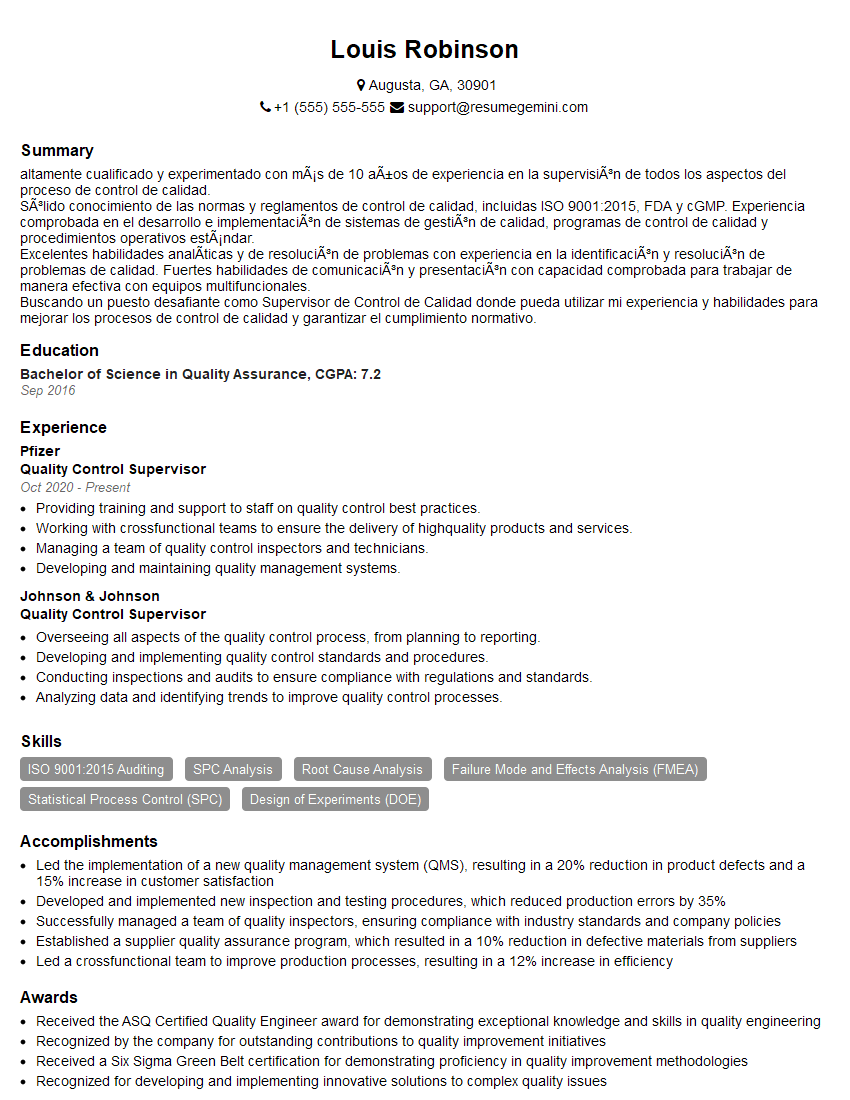
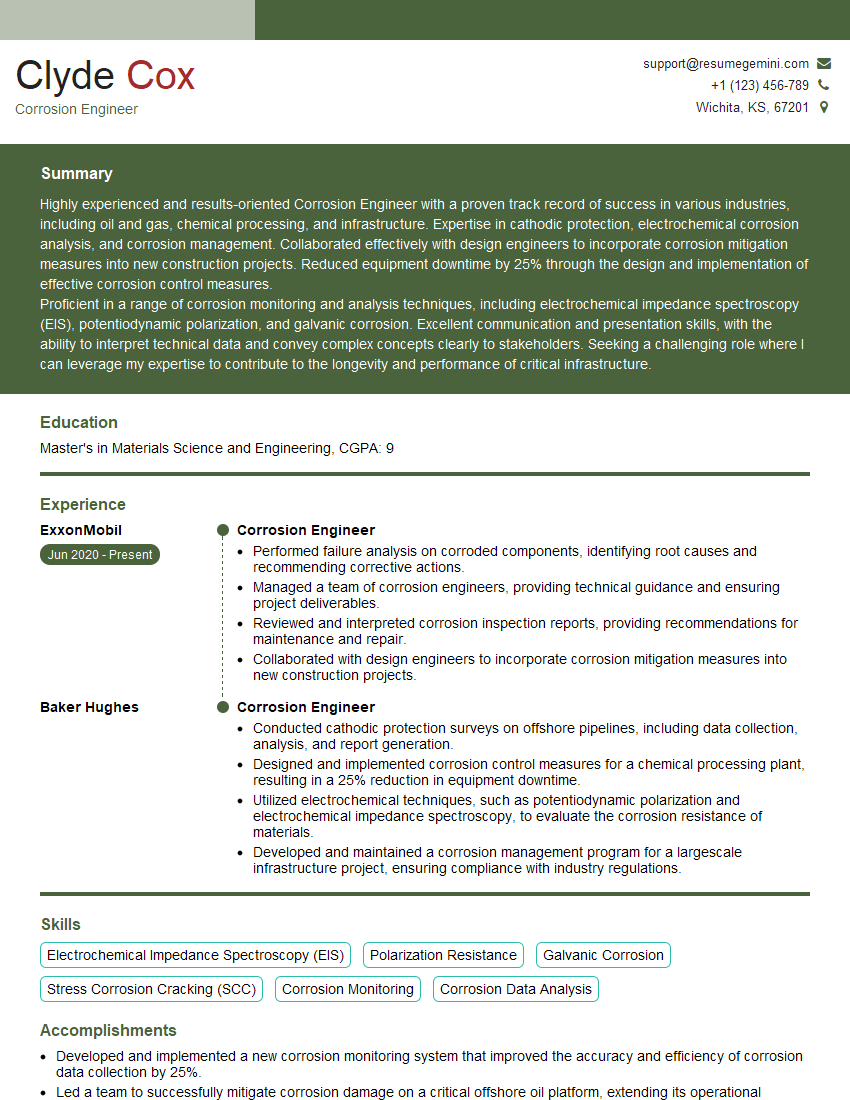
Mastering ASNT certification significantly enhances your career prospects in the NDT field, opening doors to higher-paying roles and increased responsibility. A well-crafted resume is crucial for showcasing your skills and experience to potential employers. To maximize your job search success, create an ATS-friendly resume that highlights your ASNT certification and relevant experience. ResumeGemini is a trusted resource to help you build a professional and impactful resume. We provide examples of resumes tailored to ASNT Certification to guide you through the process.



Explore more articles
Users Rating of Our Blogs
Share Your Experience
We value your feedback! Please rate our content and share your thoughts (optional).
What Readers Say About Our Blog
Very informative content, great job.
good