Are you ready to stand out in your next interview? Understanding and preparing for Printing Knowledge interview questions is a game-changer. In this blog, we’ve compiled key questions and expert advice to help you showcase your skills with confidence and precision. Let’s get started on your journey to acing the interview.
Questions Asked in Printing Knowledge Interview
Q 1. Explain the difference between offset and digital printing.
Offset and digital printing are two distinct methods of mass production, differing significantly in their processes and applications. Offset printing, also known as lithographic printing, is an indirect method. It uses a printing plate to transfer the image onto a rubber blanket, which then transfers the image onto the final substrate (paper, cardstock, etc.). This indirect transfer allows for high-volume, consistent printing with excellent color accuracy and image sharpness, making it ideal for large print runs like magazines, brochures, and books. Digital printing, on the other hand, is a direct process. The image is printed directly onto the substrate using an inkjet or toner-based system. This eliminates the need for plates, enabling quicker turnaround times, personalized prints (variable data printing), and smaller print runs— perfect for customized marketing materials, short-run publications, or personalized stationery.
- Offset: Indirect printing, high volume, excellent quality, requires plates, higher setup costs, longer turnaround time.
- Digital: Direct printing, short to medium volume, faster turnaround, variable data printing capability, lower setup costs, potentially lower per-unit cost for small runs.
Think of it like this: Offset printing is like baking a large batch of cookies using a specialized mold (plate). You have a higher initial investment in the mold but get many consistent cookies. Digital printing is like using a cookie gun – less consistent, but faster and ideal for making a few customized cookies.
Q 2. Describe your experience with color management and profile creation.
Color management and profile creation are crucial aspects of my work. I have extensive experience using color management software like Adobe Color Management Modules (CMM) and X-Rite i1Profiler to create ICC profiles for various printing devices and substrates. This ensures color consistency across different stages of the printing process, from design to final output. My process typically involves profiling the printer, the substrate (paper type and its characteristics), and the specific inks used. This involves creating a target profile based on industry standards (like ISO Coated v2) or a custom profile for a specific job. I meticulously compare the resulting printed colors with the intended colors, making adjustments to the profile until a close match is achieved. For example, I recently worked on a project where the client needed precise Pantone colors for their corporate branding. By creating custom ICC profiles, I ensured perfect color matching across several print runs, preventing costly reprints and maintaining brand consistency.
Troubleshooting involves analyzing color differences using a spectrophotometer, which quantifies color discrepancies. Based on the data, I make adjustments within the profile or even refine the printing parameters on the press to get the correct color reproduction. This requires a thorough understanding of color spaces, color models (CMYK, RGB, Pantone), and the technical limitations of the printing process.
Q 3. What are the common printing defects and how would you troubleshoot them?
Common printing defects can stem from various sources, from prepress issues to problems with the printing press itself. Some common defects include:
- Mottle: Uneven ink distribution, often due to problems with the ink or rollers.
- Streaking: Irregular bands of ink or a lack of ink in certain areas. Can be caused by worn rollers, insufficient ink supply, or improper ink viscosity.
- Set-off: Wet ink transferring from one sheet to another. Occurs when ink is too wet or the paper stock is absorbent.
- Hickeys: Small spots or marks caused by foreign material getting into the ink. Cleaning the press is critical to prevent this.
- Ghosting: A faint impression of the image appears on the back of the sheet. Caused by insufficient drying or ink penetration.
Troubleshooting involves a systematic approach. I start with visual inspection, identifying the type of defect and its location on the printed sheet. This helps pinpoint the potential cause. I then check the ink, rollers, and printing plates for any issues. If the problem originates from prepress, I may revisit the files and correct issues like low-resolution images or incorrect color separations. For example, if I notice streaking, I’d first check the ink fountain solutions and roller condition. If the problem persists, I would adjust the ink viscosity or replace worn rollers.
Q 4. What prepress software are you proficient in (e.g., Adobe Illustrator, InDesign, Photoshop)?
My prepress software proficiency includes extensive experience in Adobe Creative Suite applications such as:
- Adobe Illustrator: I use Illustrator for vector-based artwork creation, ensuring accurate scaling and sharp lines, particularly for logos and detailed illustrations.
- Adobe InDesign: My expertise extends to using InDesign for page layout, typography, and overall document design. I often utilize this for creating multi-page publications like brochures and magazines.
- Adobe Photoshop: I use Photoshop for raster image editing, color correction, and image retouching. This is crucial for achieving the desired visual quality before printing.
I’m also familiar with other industry-standard software, like Acrobat Pro for PDF creation and manipulation, and am adept at handling various file formats (TIFF, EPS, PDF, JPEG) and color modes (CMYK, RGB).
Q 5. Explain the process of setting up a printing press for a specific job.
Setting up a printing press for a specific job is a meticulous process that requires precision and attention to detail. It begins with a thorough review of the job specifications: understanding the substrate, ink requirements, and the number of colors involved. The press is then prepared by changing the plates (in offset) or loading the correct digital print media. I then perform color calibrations to match the proof or the desired color profile. This typically involves adjusting the ink density, using color bars and test prints for fine-tuning. The ink is then prepared, and its viscosity is adjusted to ensure optimal transfer onto the substrate. Following this, the paper is loaded correctly, and the press speed is adjusted, often iteratively testing the first few prints and fine-tuning the settings for optimal results. Throughout the setup, I closely monitor the print quality, making necessary adjustments to maintain consistency throughout the run. For example, when preparing for a four-color process job, I verify the alignment and registration of the different color plates to prevent misregistration issues.
Q 6. How do you ensure color consistency across different print runs?
Maintaining color consistency across different print runs is critical. My strategies include:
- Utilizing ICC Profiles: Creating and using precise ICC profiles for each press, substrate, and ink combination is paramount. This ensures accurate color reproduction regardless of the printing press used or the paper stock.
- Color Standards: Adhering to standardized color systems like Pantone or other industry-standard color references ensures that colors are consistently reproduced across different print jobs.
- Proofing: Employing controlled proofing methods—like digital soft proofing and hard proofing— allows for verification of color accuracy before mass production, minimizing costly errors.
- Press Controls: Regularly checking and calibrating the printing press, paying close attention to factors like ink density, moisture levels, and temperature, helps to maintain color consistency. I often use color bars and test prints throughout the run to verify color accuracy and make any necessary adjustments.
Consistent use of the same ink supplier, same paper stock, and same press setup contributes significantly to color consistency. Maintaining accurate records of print settings also helps to reproduce colors from previous successful print runs.
Q 7. What are your experiences with different types of printing inks?
My experience encompasses a range of printing inks, each with its unique properties and applications:
- Solvent-based inks: Known for their durability and vibrancy, typically used on plastics, vinyls, and other non-porous materials. They require careful handling due to their strong odor and environmental concerns.
- UV-curable inks: These inks cure instantly upon exposure to ultraviolet light, allowing for immediate handling and faster turnaround times. They’re ideal for packaging and applications needing instant drying.
- Water-based inks: Eco-friendly and low-odor, these inks are increasingly popular for their safety and reduced environmental impact. They are suitable for various substrates, but their durability can be less than solvent-based inks.
- Vegetable-based inks: Made from renewable sources, these inks offer a sustainable alternative with good print quality and environmental benefits.
The choice of ink depends on the substrate, the desired print quality, the environmental considerations, and the specific application. For example, solvent-based inks are essential for outdoor signage where long-term durability and weather resistance are paramount, while water-based inks might be preferred for children’s books to reduce health and environmental concerns. I have experience evaluating the properties of different ink types to ensure they are suitable for each specific print job and meet client requirements.
Q 8. Describe your experience with various finishing techniques (binding, cutting, laminating).
Finishing techniques are crucial for transforming printed materials from sheets of paper into professional, marketable products. My experience encompasses a wide range of these techniques, including binding, cutting, and laminating.
Binding: I’m proficient in various binding methods, from simple saddle-stitch binding (stapling) for brochures and booklets to more complex techniques like perfect binding (gluing pages together and adding a cover) for books and magazines. I’ve also worked with wire-o binding for calendars and notebooks, offering a durable and aesthetically pleasing finish. Choosing the right binding method depends heavily on the project’s size, page count, and desired aesthetic.
Cutting: Precise cutting is essential for clean, professional results. I’ve used guillotine cutters for high-volume jobs and smaller, more specialized cutters for intricate shapes or die-cutting. Accurate cutting ensures that all pages are aligned correctly and that the final product has a polished look. Managing the blade sharpness and maintaining the cutting equipment are key to achieving clean cuts every time. For example, dull blades can lead to uneven cuts, affecting the quality of the final product.
Laminating: Laminating adds a protective layer to printed materials, enhancing their durability and longevity. I’m experienced with both gloss and matte laminates, selecting the appropriate finish based on the project requirements. Gloss laminates provide a shiny, vibrant finish, while matte laminates offer a more subdued, elegant look. The choice between the two impacts the final visual presentation significantly.
In one instance, I managed a project requiring a unique die-cut shape for business cards. This needed careful planning, involving creating the die, testing the process, and meticulously monitoring the cutting to prevent waste and maintain consistency. The result was a highly successful and visually impressive end product.
Q 9. How do you manage print projects within deadlines and budgets?
Managing print projects within deadlines and budgets requires meticulous planning and efficient execution. My approach involves a multi-step process:
Detailed Project Scoping: Thorough discussions with clients to understand their vision, gather all necessary information (design files, quantity, paper type, finishing requirements), and obtain clear specifications are paramount. This phase includes identifying potential risks or challenges early on.
Realistic Scheduling: I create a detailed timeline, breaking down the project into smaller, manageable tasks with allocated deadlines for each stage. This includes allowing buffer time for unforeseen delays. I use project management software to track progress and identify any potential bottlenecks.
Budget Control: I develop a detailed budget encompassing all costs, from printing and materials to finishing and delivery. I actively monitor expenses throughout the project, making sure we stay within the allocated budget. This includes negotiating with vendors to achieve the best possible prices without compromising quality.
Communication and Collaboration: Regular communication with clients and the print team is essential for keeping everyone informed and addressing any issues promptly. Transparent communication avoids misunderstandings and ensures the project stays on track.
For example, on a recent large-scale book printing project, we faced an unexpected delay with the paper supplier. By proactively communicating with the client and the team, we adjusted the timeline, found an alternative supplier, and successfully delivered the project on time, within the budget, without compromising quality.
Q 10. What is your experience with quality control procedures in printing?
Quality control is fundamental to successful printing. My experience includes implementing and overseeing various quality control procedures at every stage of the printing process. This typically involves:
Pre-press Checks: This stage focuses on verifying the accuracy of design files, ensuring correct color profiles (CMYK, Pantone), image resolutions, and text clarity. I meticulously check for any errors or inconsistencies before sending files to print.
Proofing: I always insist on creating hard or soft proofs for client approval, allowing them to review the design and identify any discrepancies before the actual printing begins. This prevents costly reprints and ensures client satisfaction.
On-press Monitoring: During the printing process, I regularly monitor the print output, ensuring color consistency, registration (alignment of colors), and overall print quality. This includes checking for any defects like smudging, misfeeds, or color variations.
Post-press Inspection: Following printing, I conduct a thorough inspection of the finished products, verifying that the binding, cutting, and lamination have been executed correctly. I ensure the final product meets the quality standards defined in the project specifications.
For instance, in one project involving a high-end magazine, I identified a minor color shift during the on-press monitoring phase. By promptly addressing it with the press operator, we avoided significant issues and ensured the final product met the client’s stringent color requirements.
Q 11. Explain your understanding of different paper types and their suitability for various printing methods.
Understanding paper types and their suitability for various printing methods is crucial for achieving optimal results. Different papers have unique characteristics, including weight, texture, finish, and opacity, impacting the final printed output.
Coated Papers: These papers have a smooth, glossy or matte coating, ideal for high-quality color printing, particularly for images and graphics. They provide vibrant colors and sharp detail but are generally less absorbent.
Uncoated Papers: These papers have a natural, porous surface, offering a more textured feel. They are suitable for letterpress, embossing, and other specialty printing techniques. They might show less vibrant colors than coated papers but can offer a sophisticated feel.
Specialty Papers: This broad category includes various papers with unique properties, such as recycled paper, textured papers, metallic papers, and more. The choice depends on the desired aesthetic and environmental considerations.
For example, a wedding invitation might require a luxurious, thick uncoated paper for letterpress printing to emphasize its elegance. On the other hand, a product catalog might necessitate a coated paper for sharp images and vibrant colors, ensuring the product is presented in the best light. The selection heavily depends on the project’s specifications and the desired outcome.
Q 12. How do you handle client requests and resolve printing-related issues?
Handling client requests and resolving printing-related issues requires strong communication, problem-solving skills, and a proactive approach.
Active Listening: I begin by attentively listening to the client’s needs and concerns, asking clarifying questions to ensure I fully understand their requirements.
Proposing Solutions: Based on my understanding, I propose solutions, providing options and explaining the trade-offs associated with each. I present these solutions in a clear and understandable manner, focusing on helping the client choose the best option for their project.
Managing Expectations: I set realistic expectations regarding timelines, budgets, and potential challenges. Transparency and proactive communication are crucial in avoiding misunderstandings and maintaining a positive client relationship.
Issue Resolution: If issues arise during the printing process, I address them promptly and efficiently, keeping the client informed every step of the way. I explore all possible solutions, prioritizing quick and effective resolutions.
In a situation where a client was unhappy with the color reproduction, I carefully reviewed the design files, identified the issue as a color profile mismatch, and corrected the problem before the next print run. This quick response saved time and preserved a positive client relationship.
Q 13. What is your experience with large format printing?
My experience with large format printing is substantial. I’m familiar with various large format printing methods, including:
Inkjet Printing: This versatile method is used for a wide range of applications, from posters and banners to vehicle wraps and building signage. Different inkjet printers cater to different substrates and output qualities. Understanding the various inks and their properties (solvent, eco-solvent, dye-sublimation) is crucial for selecting the right method for a given application.
Solvent/Eco-Solvent Printing: These methods are known for their durability and resistance to the elements, making them suitable for outdoor applications. The choice between solvent and eco-solvent depends largely on environmental considerations and regulations.
UV Printing: This method uses UV-curable inks, offering very fast drying times and exceptional durability. It is ideal for applications requiring immediate handling or outdoor exposure.
I’ve managed numerous large-format projects, from creating eye-catching trade show displays to printing high-resolution architectural renderings. One memorable project involved printing a massive mural for a city park. This required meticulous planning, including precise measurements, color calibration to ensure accuracy across multiple print panels, and coordination with installation crews.
Q 14. What is your understanding of color profiles (e.g., CMYK, Pantone)?
Color profiles are crucial for ensuring accurate color reproduction across different devices and printing processes. The two most common color models are CMYK and Pantone.
CMYK: This subtractive color model uses Cyan, Magenta, Yellow, and Key (black) inks to create a wide range of colors. It’s the standard color model used in most printing processes. Understanding how these four inks interact to produce specific colors is essential for accurate color reproduction. The limitations of CMYK (e.g., difficulty in reproducing some vibrant colors accurately) necessitate careful color management.
Pantone: This is a proprietary color matching system using a specific formula for each color. It offers a wider gamut of colors than CMYK and guarantees consistency across different printers and printing processes. Pantone is typically used for spot colors, such as brand logos or specific design elements requiring accurate color reproduction, even if it might mean an increased cost for printing.
For example, a company logo might be printed using a specific Pantone color to ensure brand consistency across all marketing materials. However, the majority of a marketing brochure might utilize the CMYK color model for its overall color scheme to keep costs reasonable. The careful selection of which color model to use where is crucial for a final product that meets the client’s expectations.
Q 15. Explain your experience with print finishing equipment.
My experience with print finishing equipment encompasses a wide range of processes and machinery, from simple operations like cutting and folding to more complex ones like binding, die-cutting, and laminating. I’ve worked extensively with various types of equipment, including:
- Guillotine Cutters: For precise paper cutting, ensuring accurate dimensions and clean edges. I’m adept at handling different paper weights and thicknesses, adjusting blade pressure and settings for optimal results.
- Folding Machines: Proficient in operating various folding styles – half-fold, letter-fold, roll-fold, etc. – and understanding how different paper types and weights impact the folding process. I can troubleshoot jams and misfeeds efficiently.
- Binding Machines: Experience with saddle-stitch, perfect binding, wire-o binding, and case binding. This includes understanding the requirements for different projects and selecting the appropriate binding method for optimal results and durability.
- Laminating Machines: Familiar with both hot and cold lamination, understanding the differences and choosing the right technique based on the substrate and desired finish. I’m experienced in troubleshooting issues like air bubbles and uneven application.
- Die-Cutting Machines: I have experience creating custom shapes and designs using die-cutting, ensuring precise cutting and consistent quality. This includes creating and managing die templates.
In a recent project, we needed to produce a high-volume booklet with a unique die-cut cover. I optimized the die-cutting process, reducing waste and improving production speed by 15% through careful adjustment of machine settings and die alignment.
Career Expert Tips:
- Ace those interviews! Prepare effectively by reviewing the Top 50 Most Common Interview Questions on ResumeGemini.
- Navigate your job search with confidence! Explore a wide range of Career Tips on ResumeGemini. Learn about common challenges and recommendations to overcome them.
- Craft the perfect resume! Master the Art of Resume Writing with ResumeGemini’s guide. Showcase your unique qualifications and achievements effectively.
- Don’t miss out on holiday savings! Build your dream resume with ResumeGemini’s ATS optimized templates.
Q 16. Describe your experience with imposition and platemaking.
Imposition is the process of arranging pages for printing on a press sheet to maximize efficiency and minimize waste. Platemaking is the process of creating the printing plates used in offset printing. My experience in both areas is extensive.
For imposition, I’m proficient in using both manual techniques and software like Adobe Acrobat and specialized imposition software. I understand the importance of considering factors such as page orientation, gutter margins, and the number of pages per sheet to optimize the print run and minimize material costs. I can create imposition schemes for various printing formats, including brochures, booklets, and magazines.
In platemaking, I’ve worked with both conventional and CTP (Computer-to-Plate) systems. I understand the importance of proper image preparation and color management to ensure accurate and consistent color reproduction. I’m familiar with different plate types and their respective properties, selecting the appropriate plate based on the print job’s requirements. For instance, I’ve used thermal plates for high-volume jobs and UV plates for specific color requirements.
In one instance, I identified an imposition error that would have resulted in significant waste and reprinting costs. By correcting the imposition before the plates were made, we saved the company thousands of dollars.
Q 17. How do you ensure the accuracy of printed materials?
Ensuring the accuracy of printed materials involves a multi-stage process starting even before the printing begins. It’s a blend of pre-press quality control and in-press monitoring.
- Pre-press Checks: This includes thorough proofing of the digital files, checking for errors in text, images, and color. I use both soft proofing (on-screen) and hard proofing (physical prints) to catch any inconsistencies. I’m also meticulous in checking for correct bleeds, margins and overall layout.
- Color Management: Precise color management is crucial. I use color profiles and calibration tools to ensure accurate color reproduction across different devices and substrates. This includes working with color standards like Pantone and maintaining color consistency throughout the printing process.
- Proofing and Approval: Client approval of proofs before printing is essential. I guide clients through the proofing process, explaining different proof types and their limitations to obtain a clear agreement before proceeding to full production.
- In-press Monitoring: During the printing process, regular checks are essential to ensure consistency in color, registration, and print quality. I carefully monitor the printed sheets, looking for defects such as misregistration, color variations, or ink density issues. Immediate adjustments are made if necessary.
Imagine printing thousands of business cards. A single error in alignment could render the entire run unusable. My meticulous approach to proofing and in-press monitoring helps avoid such costly mistakes.
Q 18. What is your experience with different printing substrates?
My experience with different printing substrates is extensive, ranging from standard paper stocks to specialized materials. I understand the properties and limitations of each substrate and how they impact the printing process.
- Paper: I’ve worked with various paper weights, finishes (coated, uncoated, textured), and types (bond, cover, card stock). I understand the impact of paper choice on print quality, color reproduction, and overall feel.
- Cardboard and Packaging Materials: Experience with printing on various cardboard grades and packaging materials for boxes, cartons, and other packaging applications. Understanding the structural requirements and appropriate printing methods is key.
- Vinyl and Synthetic Materials: I’ve worked with vinyl banners, stickers, and other synthetic materials, understanding the specific ink types and printing techniques required for optimal adhesion and durability.
- Specialty Substrates: Experience with printing on unusual substrates like canvas, wood, and metal, which require specialized inks and printing techniques.
For example, in a recent project requiring high-quality prints on textured cardstock, I selected a specific paper stock known for its ability to accept ink without feathering or show through. The resulting prints were vibrant and showcased the texture beautifully.
Q 19. How familiar are you with variable data printing?
Variable data printing (VDP) is a powerful technique that allows for personalized printing on a large scale. I’m very familiar with VDP and its applications.
My experience includes working with various VDP software and workflows, integrating databases to personalize print materials. This includes creating personalized mailers, marketing materials, and transactional documents with unique information for each recipient.
I understand the importance of data integration, ensuring the accurate mapping of data fields to the design layout. I’m also adept at troubleshooting data-related issues and ensuring data integrity throughout the printing process. I’ve worked with different data formats, including CSV, XML, and SQL.
For example, I recently managed a large-scale direct mail campaign using VDP, personalizing each piece with the recipient’s name, address, and tailored messaging based on their purchase history. The campaign resulted in a significant increase in response rate compared to previous non-personalized campaigns.
Q 20. Explain your troubleshooting skills related to printing equipment malfunctions.
Troubleshooting printing equipment malfunctions requires a systematic approach combining technical knowledge and problem-solving skills. My approach typically involves these steps:
- Identify the Problem: First, I accurately identify the nature of the malfunction. This often involves examining error messages, observing the equipment’s behavior, and checking for any visible signs of damage or obstruction.
- Gather Information: Collecting relevant information is key. This may include checking the machine’s log files, interviewing operators, and reviewing the job settings.
- Systematic Troubleshooting: I use a methodical approach, starting with the most likely causes and systematically eliminating possibilities. This may involve checking power connections, ink levels, paper jams, sensor issues, or software configurations.
- Consult Documentation: I utilize maintenance manuals, online resources, and vendor support to diagnose complex issues. Understanding the machine’s specifications and operational procedures is vital.
- Safety First: Prioritizing safety is paramount. I always follow safety protocols when troubleshooting electrical or mechanical equipment.
In one instance, a printing press experienced frequent paper jams. By systematically checking the paper path, I discovered a small piece of debris causing the jams. A simple cleaning resolved the issue, avoiding costly downtime.
Q 21. What is your experience with print workflow management software?
I’m experienced with various print workflow management software, including:
- MIS (Management Information Systems): Experience with software like PrintSmith, which helps streamline workflow, track jobs, manage costs, and generate reports.
- Prepress Software: Proficiency in software like Adobe Creative Suite (Photoshop, Illustrator, InDesign), used for design, image preparation, and color management.
- Workflow Automation Software: Experience with software that automates tasks within the print workflow, improving efficiency and reducing manual intervention.
My experience with these systems allows me to effectively manage print jobs from initial design to final delivery, optimizing efficiency, tracking costs, and maintaining consistent quality. I can also use these systems to create automated workflows for common tasks, reducing errors and improving turnaround times.
For instance, in a previous role, I implemented a new workflow automation system that reduced our job turnaround time by 20% and decreased errors by 15%. This was achieved by automating the tasks of preflight checks, job submission, and status updates.
Q 22. Describe your knowledge of different binding methods.
Binding methods are crucial for creating a finished, durable product from printed sheets. The choice depends heavily on the project’s size, budget, and desired aesthetic.
- Perfect Binding: Think of paperback books. The edges of the pages are glued together to create a spine, and then a cover is wrapped around. It’s cost-effective for short to medium-length documents.
- Saddle Stitch Binding: This is the classic method for brochures and magazines. Pages are folded in half, and wire staples are used to secure them through the fold. Simple, fast, and economical for smaller projects.
- Spiral Binding (Coil Binding): A plastic or metal coil is inserted through punched holes along the spine. This allows the document to lay flat, perfect for calendars or notebooks.
- Wire-O Binding: Similar to spiral binding, but uses double-loop wire for a more professional and durable finish. Often used for high-quality documents like presentation folders.
- Case Binding: This is the most robust method, typically used for hardcover books. Sections of pages are sewn together, creating a solid spine. Then, a cover is attached, offering a high-quality, lasting product.
- Hard Cover Binding: Uses a rigid cover, often made of cardboard or similar material, providing substantial protection and a premium feel.
For example, a short-run brochure would likely be saddle-stitched due to its speed and cost-effectiveness, whereas a thesis would benefit from the durability of case binding.
Q 23. How do you prioritize tasks in a fast-paced printing environment?
Prioritizing in a fast-paced printing environment requires a structured approach. I utilize a combination of techniques:
- Job Scheduling Software: This is crucial for visualizing deadlines and resource allocation. It allows me to see which jobs are time-sensitive and allocate resources accordingly.
- Urgency and Importance Matrix: I categorize jobs based on urgency (immediate, short-term, long-term) and importance (high impact, medium impact, low impact). This helps to quickly identify the most critical tasks.
- Communication: Clear and consistent communication with clients and the team is essential to manage expectations and ensure everyone understands priorities. This prevents delays and misunderstandings.
- Flexibility: Unexpected issues always arise. Being flexible and adaptable allows me to quickly adjust priorities and handle unforeseen circumstances without compromising quality.
For instance, if a rush job with a tight deadline comes in, I would reassess the schedule, potentially shifting less urgent jobs slightly to accommodate it, ensuring the client’s needs are met while still managing overall workflow efficiently.
Q 24. How would you handle a client complaint regarding print quality?
Handling client complaints about print quality requires a calm, professional, and solution-oriented approach:
- Active Listening: Let the client fully explain the issue. Ask clarifying questions to understand their concerns completely.
- Gather Information: Request the specific print job details and obtain samples of the problematic print. This allows for a proper assessment.
- Investigate the Issue: Analyze the print to identify the root cause – was it a problem with the file, the printing process, the materials, or something else?
- Propose Solutions: Based on the investigation, offer appropriate solutions – reprint the job, adjust the settings, or provide a discount. Be transparent about the situation.
- Follow Up: Once the issue is resolved, follow up with the client to confirm their satisfaction and ensure there are no further concerns.
For example, if a client complains about blurry text, I would examine the original file for low resolution, check the printer settings for proper DPI, and ensure the correct paper type was used. Transparency throughout the process is key to maintaining client trust.
Q 25. What are the key considerations when choosing a printing method for a specific project?
Choosing the right printing method is crucial for achieving the desired results while staying within budget. Key considerations include:
- Budget: Some methods are inherently more expensive than others (e.g., case binding vs. saddle stitch).
- Quantity: Large quantities often favor offset printing for cost-effectiveness, while smaller runs might benefit from digital printing.
- Turnaround Time: Digital printing offers faster turnaround times compared to offset printing.
- Print Quality: Offset printing generally offers superior print quality for large quantities due to the use of plates.
- Paper Type and Finishes: The chosen printing method should be compatible with the desired paper and finishing options (lamination, embossing, etc.).
- Color Accuracy: Consider color gamut and color matching requirements.
For instance, for a high-volume product catalog requiring high-quality images, offset printing would be the most suitable choice. For a short-run, quick-turnaround business card order, digital printing would be more efficient.
Q 26. How do you maintain printing equipment and ensure its optimal performance?
Maintaining printing equipment is crucial for optimal performance and longevity. My approach involves a multi-pronged strategy:
- Regular Cleaning: Daily cleaning of the printer, including removing dust and debris, is essential. This prevents jams and maintains print quality.
- Preventative Maintenance: Regularly scheduled maintenance checks, including toner and ink cartridge replacements, are critical. This involves following the manufacturer’s guidelines.
- Calibration: Periodically calibrating the printer ensures consistent color accuracy and print quality.
- Troubleshooting: Understanding common printer issues and how to resolve them is crucial. This often involves consulting manuals and online resources.
- Professional Servicing: Engaging professional technicians for periodic servicing and repairs helps prevent major breakdowns and extends the life of the equipment.
For example, regularly cleaning the fuser unit in a laser printer prevents paper jams and ensures consistent fusing of the toner to the paper. Ignoring this can lead to significant downtime and costly repairs.
Q 27. Explain your understanding of sustainable printing practices.
Sustainable printing practices are essential for minimizing environmental impact. My understanding encompasses several key areas:
- Eco-Friendly Inks and Toners: Using vegetable-based inks and toners reduces the use of petroleum-based products and minimizes harmful emissions.
- Recycled Paper: Choosing recycled paper significantly reduces the demand for virgin paper pulp, conserving forests and reducing pollution.
- Energy Efficiency: Utilizing energy-efficient printers and optimizing print settings (e.g., double-sided printing) reduces energy consumption.
- Waste Reduction: Implementing strategies to minimize paper waste, such as using accurate print counts and avoiding unnecessary test prints, is crucial.
- Responsible Disposal: Properly disposing of used toner cartridges and other printing consumables through recycling programs helps prevent environmental contamination.
For example, using post-consumer recycled paper with a high percentage of recycled content significantly lowers the environmental footprint of a printing project, while double-sided printing reduces paper consumption by half.
Q 28. What are your career goals within the printing industry?
My career goals in the printing industry are focused on continuous learning and advancement. I aim to deepen my expertise in sustainable printing practices, and eventually lead a team focused on innovative, environmentally responsible print solutions. I’m particularly interested in exploring the intersection of digital printing and augmented reality in creating engaging and interactive print materials. My long-term aspiration is to be a respected leader in the industry, known for my technical skill and commitment to sustainability.
Key Topics to Learn for Printing Knowledge Interview
- Pre-press Processes: Understanding file preparation, color management (CMYK, Pantone), image resolution, trapping, and imposition.
- Printing Techniques: Familiarity with offset printing, digital printing, screen printing, flexography, and their respective applications and limitations. Practical application includes identifying the best printing method for a given project based on factors like quantity, budget, and desired quality.
- Color Theory and Management: Deep understanding of color spaces, profiles, and how to achieve color consistency across different printing processes. Problem-solving involves troubleshooting color discrepancies between proofs and final prints.
- Paper and Substrate Knowledge: Familiarity with various paper types (coated, uncoated, specialty papers), their properties, and suitability for different printing techniques. This includes understanding grammage, finish, and their impact on print quality.
- Print Finishing Techniques: Knowledge of binding, cutting, folding, laminating, and other post-printing processes. Practical application involves selecting the appropriate finishing techniques to meet project requirements.
- Print Quality Control: Understanding quality control metrics, troubleshooting print defects, and implementing corrective actions. This includes inspecting print samples for color accuracy, registration, and overall quality.
- Print Production Workflow: Knowledge of the entire printing process from file submission to final delivery, including scheduling, communication with vendors, and managing deadlines. Problem-solving might involve optimizing the workflow to improve efficiency and reduce costs.
- Health and Safety Regulations: Understanding relevant health and safety regulations and practices within the printing industry, including handling chemicals and machinery safely.
Next Steps
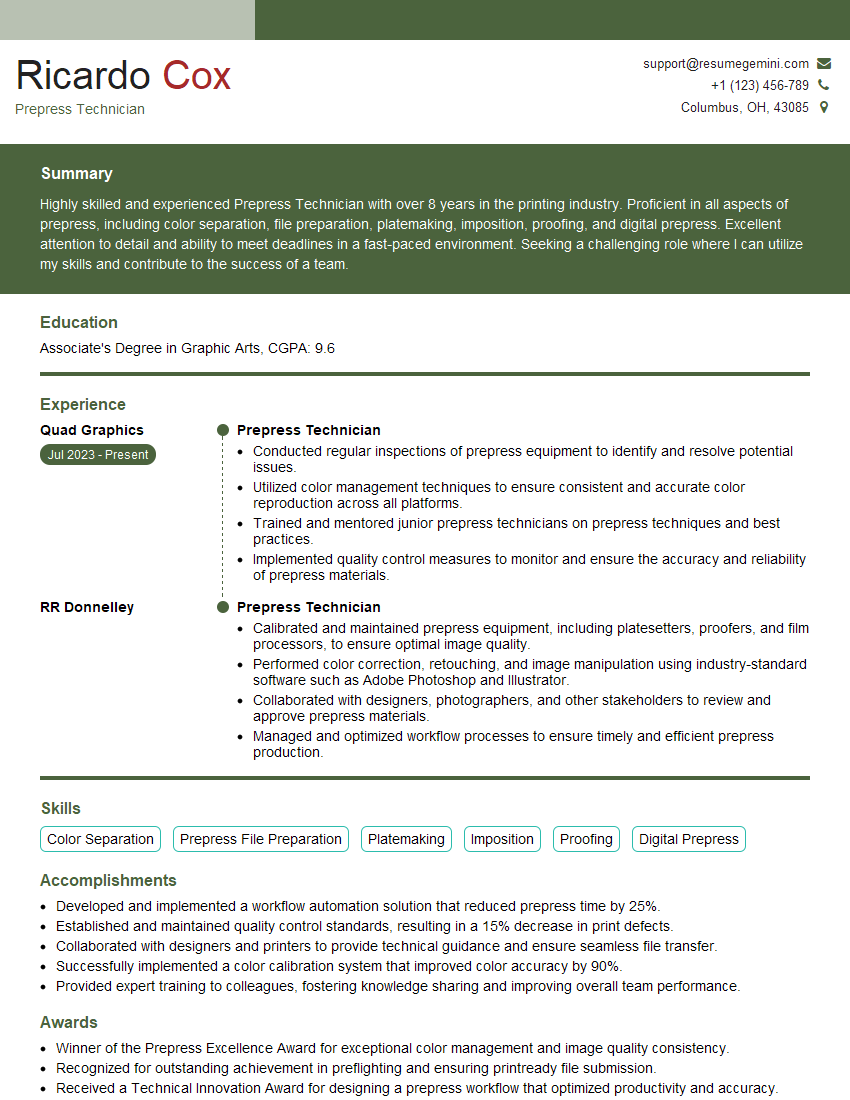
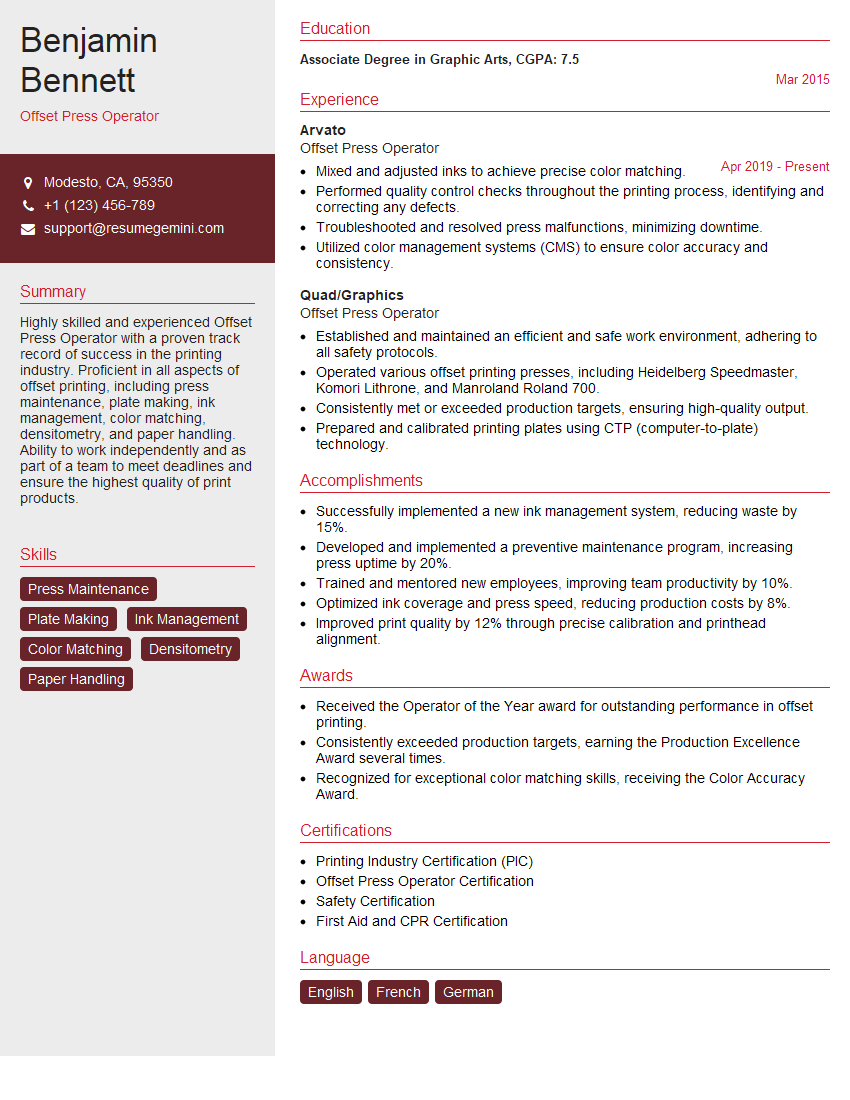
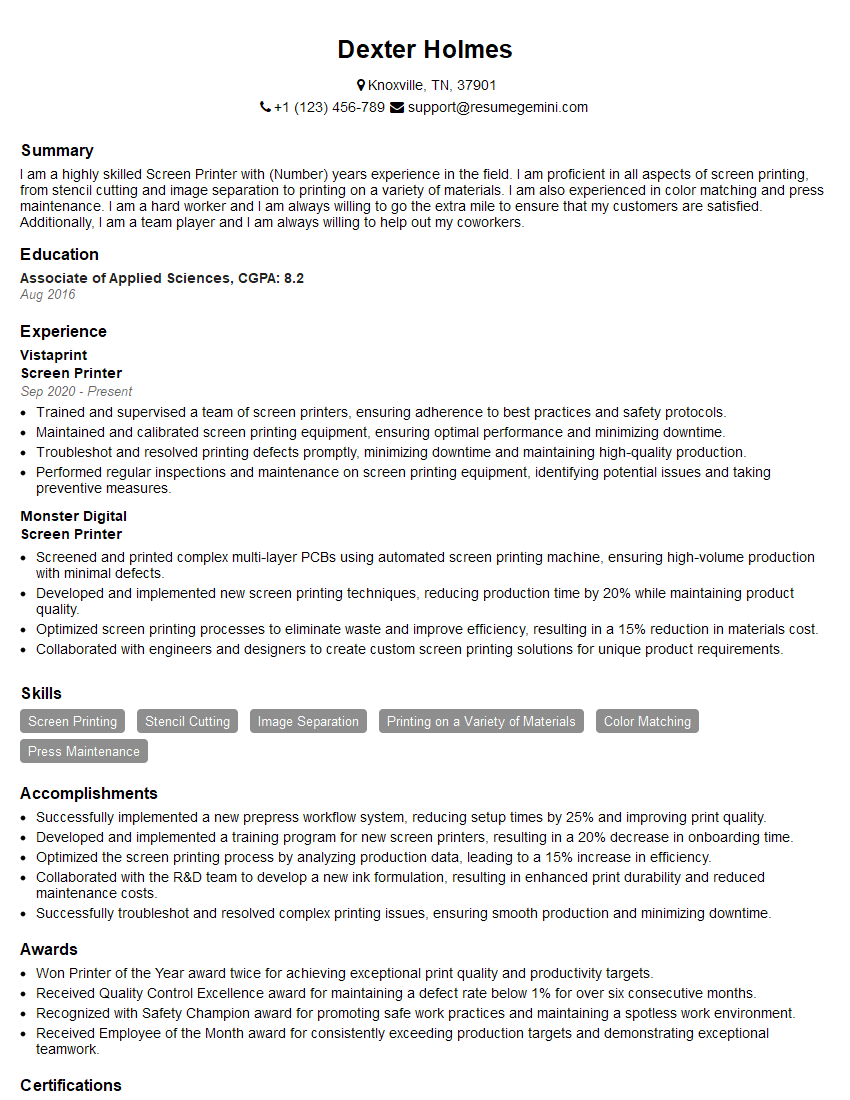
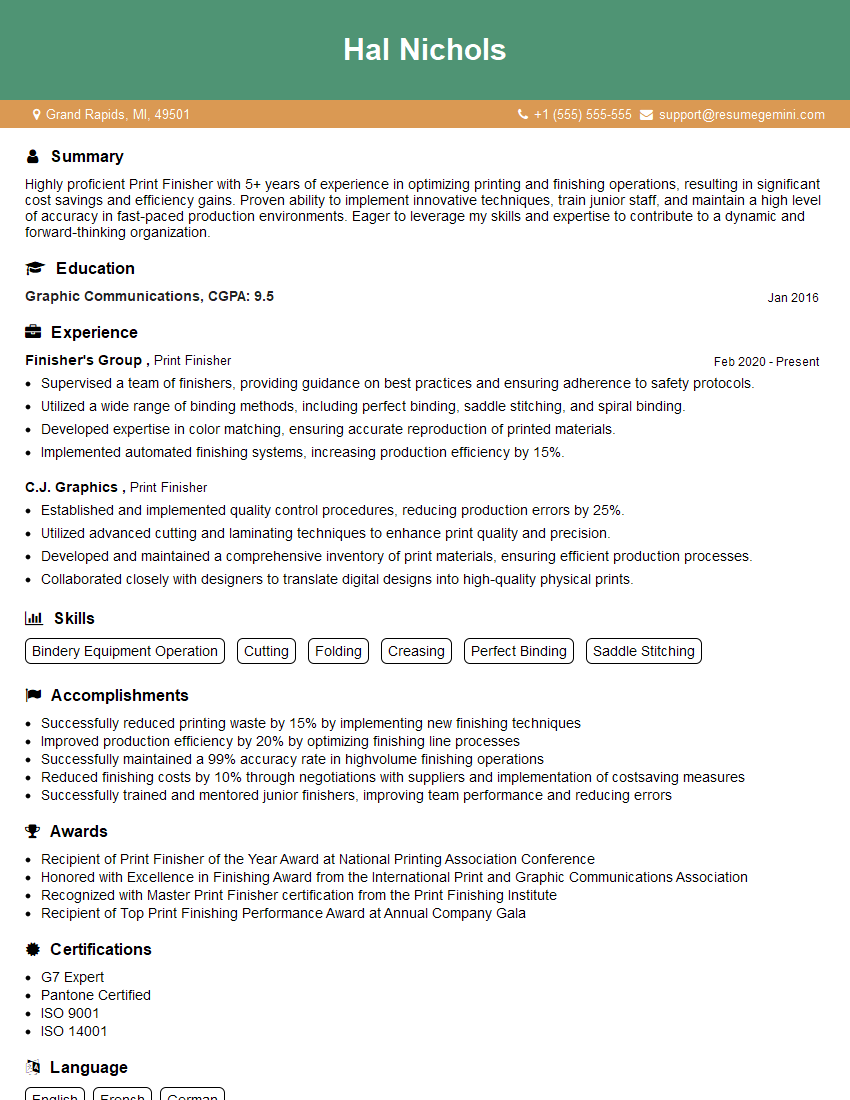
Mastering printing knowledge is crucial for career advancement in this dynamic industry. A strong understanding of these concepts will significantly improve your interview performance and open doors to exciting opportunities. To further enhance your job prospects, focus on creating an ATS-friendly resume that highlights your skills and experience effectively. We highly recommend using ResumeGemini, a trusted resource for building professional resumes. Examples of resumes tailored to Printing Knowledge are provided to guide you in crafting a compelling application that showcases your expertise.


Explore more articles
Users Rating of Our Blogs
Share Your Experience
We value your feedback! Please rate our content and share your thoughts (optional).
What Readers Say About Our Blog
Very informative content, great job.
good