The thought of an interview can be nerve-wracking, but the right preparation can make all the difference. Explore this comprehensive guide to Stunt Training interview questions and gain the confidence you need to showcase your abilities and secure the role.
Questions Asked in Stunt Training Interview
Q 1. Describe your experience in designing and implementing stunt training programs.
Designing and implementing stunt training programs requires a multifaceted approach, blending physical conditioning, technical skill development, and a strong emphasis on safety. I begin by assessing the trainee’s experience level and goals. For beginners, the program focuses on foundational fitness, including cardiovascular endurance, strength training, and flexibility. We then progress to basic stunt techniques like falls, rolls, and impact absorption. More advanced programs incorporate specialized training in areas like wire work, fight choreography, driving, and specialized stunts depending on the trainee’s aspirations. For example, an aspiring action hero might focus on a wider range of skills than a stunt double specializing in high falls. Each program is customized, with detailed progress tracking and regular assessments to ensure steady improvement and safety.
For instance, I recently developed a program for a group of aspiring stunt performers focusing on equestrian stunts. This involved initial riding assessments, progressive training in controlled falls from horseback, and finally, incorporating more complex maneuvers under safe, supervised conditions. The program’s success was measured by the trainees’ ability to execute stunts safely and effectively while demonstrating a comprehensive understanding of safety protocols.
Q 2. Explain your understanding of stunt safety protocols and regulations.
Stunt safety is paramount. My understanding encompasses a range of protocols and regulations, including those established by industry bodies like SAG-AFTRA and the relevant local and national regulations. These cover everything from risk assessments and pre-stunt safety meetings to the use of appropriate safety equipment, such as harnesses, pads, airbags, and specialized safety rigs. Regulations dictate specific safety measures for different types of stunts, including falls, fights, car stunts, and high-altitude work. Strict adherence to these protocols is crucial, and I always ensure a comprehensive safety briefing and rehearsal before any stunt is performed. For example, before a high fall, a detailed plan is meticulously crafted including spotters, safety mats, and a thorough check of all harnesses and rigging. This proactive approach minimizes risks and safeguards the well-being of everyone involved.
Q 3. How would you assess a trainee’s physical and mental fitness for stunt work?
Assessing a trainee’s suitability for stunt work is a crucial first step. It involves both physical and mental evaluations. The physical assessment looks at factors like flexibility, strength, cardiovascular fitness, and overall body coordination. This might include functional movement screens, strength testing (e.g., pull-ups, squats), and agility drills. Equally important is the mental assessment, which evaluates factors such as fear management, risk awareness, discipline, and the ability to follow instructions under pressure. A candidate’s psychological profile is vital, as stunt work demands composure in high-risk scenarios. We also assess their learning style and ability to quickly adapt to new techniques. I’ve found that a combination of physical and psychological tests, along with observations during training sessions, paints a comprehensive picture of a trainee’s suitability.
For example, I once had a trainee who possessed exceptional physical strength but struggled with managing fear of heights. We adapted the training program to address this specific weakness, using gradual exposure techniques and focusing on building confidence. While they might not be suitable for all stunts, careful training allowed them to develop skills in areas where their strength was an asset.
Q 4. What techniques do you employ to teach safe falling techniques?
Teaching safe falling techniques involves a progressive approach, starting with basic falling rolls and progressing to more complex falls. We begin with instruction on proper body posture and relaxation techniques to minimize impact forces. Trainees are taught to distribute the impact across their body, using protective gear like pads and mats. This includes practicing on various surfaces to simulate different scenarios. We emphasize the importance of controlled movement and proper landing techniques. It’s a process of repetition and refinement, constantly emphasizing the importance of controlled movements and proper body positioning. For instance, trainees learn to land on their side, utilizing a shoulder roll to dissipate impact, or to land on their back, protecting their head and neck.
Each fall is initially practiced with a spotter to ensure safety and provide guidance. As proficiency increases, the use of spotters is gradually reduced. Video analysis is often employed to identify and correct any inconsistencies in the falling technique. Safety remains the absolute priority throughout this process.
Q 5. Describe your experience in wire work and rigging safety.
My experience with wire work and rigging safety is extensive. It begins with a thorough understanding of rigging techniques, ensuring the use of appropriate materials, and always prioritizing redundancy and safety backups. We follow strict protocols for inspecting all equipment before each use, ensuring the strength and integrity of the rigging systems. Rigging safety requires meticulous planning and execution, involving precise calculations to ensure the support system can handle the expected forces. This includes understanding the weight of the performer, the dynamics of movement, and potential environmental factors. I am well-versed in a variety of rigging systems, ranging from basic systems for simpler stunts to more complex setups for advanced wire work. We never compromise on safety, always using multiple points of attachment and backup systems where feasible.
One example of a complex wire work setup involved a stunt requiring a performer to swing across a large chasm. The rigging process included meticulous calculations of the cable tension, the placement of anchors, and the implementation of multiple safety lines. A detailed risk assessment and a rehearsal were conducted prior to the actual stunt execution to ensure the complete safety of the performer.
Q 6. How do you handle unexpected situations or accidents during a stunt training session?
Handling unexpected situations or accidents during a stunt training session necessitates a quick and decisive response. Having a comprehensive emergency plan is essential, and this includes pre-designated emergency contacts, readily available first-aid equipment, and a clear communication protocol. I emphasize quick assessment of the situation, prioritizing the safety of the injured person. First aid is administered as needed until professional medical assistance arrives. Following an accident, we conduct a thorough investigation to determine the cause, looking for potential procedural failures or equipment malfunctions. This data helps in refining our safety protocols and preventing similar incidents in the future. Transparency is critical, and we maintain open communication with trainees and relevant stakeholders.
In a real-world scenario, a trainee might suffer a minor injury during a fall. Our immediate actions would be to assess the extent of the injury, administer first aid, contact emergency medical services if necessary, and thoroughly document the incident. Following a full recovery, we would resume training with increased emphasis on the specific aspect of the training that led to the incident. We might incorporate additional safety measures or refine our training methods to minimize future risk.
Q 7. Explain your experience in fight choreography and stunt combat training.
Fight choreography and stunt combat training are integral parts of my expertise. I approach fight choreography with a strong focus on safety and realism. This involves developing fight sequences that are both visually compelling and safe for the performers. This includes incorporating techniques that avoid dangerous impacts and minimize the risk of injury. The training program incorporates aspects like proper blocking, timing, and controlled impact techniques. I emphasize understanding the choreography and safe execution of every movement. Trainees are taught to recognize and respect their partners’ limits, communicating effectively to prevent accidents. We also incorporate the use of protective gear like padded suits and helmets, and a detailed rehearsal process prior to the filming of the scenes.
For example, in a recent project involving a sword fight, we carefully choreographed every move to avoid direct contact and minimize potential impact points. The trainees practiced until they could execute the sequence smoothly and safely, ensuring perfect timing and coordination. This combination of careful planning and thorough practice resulted in a dynamic and visually exciting fight scene without any incidents.
Q 8. Describe your knowledge of different types of stunt equipment and their safe usage.
Stunt equipment is crucial for safety and effective stunt performance. My knowledge encompasses a wide range, from basic safety gear to specialized apparatus. Safe usage is paramount and requires meticulous attention to detail and regular maintenance.
- Safety Gear: This includes harnesses, helmets (various types for different stunts), protective pads (knee, elbow, chest, etc.), and impact-resistant clothing. Proper fitting is vital; a harness that’s too loose can be as dangerous as one that’s too tight. Regular inspection for wear and tear is mandatory before each use.
- Specialized Equipment: This category includes airbags (for falls), crash mats (various thicknesses for different impact levels), wire work equipment (cables, pulleys, harnesses), and specialized vehicles (modified cars, motorcycles, etc.). Each piece requires specific training to operate safely and effectively. For example, understanding the load limits of cables during a wire-fu sequence is critical to preventing accidents.
- Pyrotechnics: This is a high-risk area, requiring specialized training and licensing. Safe handling involves understanding fuse lengths, ignition methods, and safety distances. Any pyrotechnics use necessitates a detailed risk assessment and adherence to strict safety protocols. Improper use can lead to severe burns or explosions.
- Vehicle Safety: Working with vehicles requires a thorough understanding of vehicle dynamics, roll cages, and safety modifications. Experienced stunt drivers are essential, and pre-staged crashes require careful planning and execution to minimize risk.
In all cases, proper training, regular inspection, and adherence to safety guidelines are non-negotiable aspects of safe stunt equipment usage. Neglecting these can lead to serious injury or death.
Q 9. How do you adapt your training methods for different skill levels and physical abilities?
Adapting training methods for diverse skill levels and physical abilities is fundamental to effective stunt training. It’s not a ‘one-size-fits-all’ approach.
- Beginner Level: Beginners require foundational training focusing on fundamental movement skills, body awareness, and basic safety procedures. We start with simple falls, rolls, and basic conditioning exercises to build strength, agility, and coordination. Emphasis is placed on correct technique to minimize injury risk. For instance, we begin with practicing falls onto crash mats of increasing heights before progressing to more complex maneuvers.
- Intermediate Level: Once a solid foundation is established, we introduce more complex techniques, like fight choreography, wire work basics, and more advanced falls from greater heights. We personalize training programs to address individual strengths and weaknesses. A trainee who excels in agility might be pushed more towards parkour-influenced stunts, while someone with greater strength might focus on heavier impact maneuvers.
- Advanced Level: Advanced trainees are typically experienced stunt performers who focus on refining their skills and pushing their boundaries. At this level, we work closely with the trainee to develop personalized stunt sequences, integrating their unique skills and preferences, while also maintaining a strong emphasis on safety. For example, we might collaborate on designing a specialized stunt sequence for a particular film project.
- Adapting for Physical Abilities: If a trainee has a physical limitation, we work closely with medical professionals and adapt the training to suit their specific needs. Modifications might include alternative exercises, specialized equipment, or a slower progression through the training program. For instance, a trainee with a knee injury might avoid high-impact exercises and focus on upper-body strength and agility until their knee recovers.
Ultimately, a successful training program is tailored to each individual’s needs and capabilities, promoting gradual skill development and ensuring a safe training environment.
Q 10. What is your experience with pre-visualization techniques for stunts?
Pre-visualization is integral to stunt planning; it’s the blueprint for safety and success. I utilize a multi-faceted approach, combining storyboards, 3D modeling, and practical rehearsals to thoroughly envision the stunt.
- Storyboarding: Visualizing the stunt shot by shot helps identify potential hazards and refine the sequence. It’s like a comic book for the stunt, laying out every move and angle.
- 3D Modeling: Advanced projects utilize 3D modeling to create a virtual representation of the environment and stunt, allowing for a detailed assessment of angles, distances, and potential hazards. This lets us tweak the stunt before we even set foot on the set.
- Practical Rehearsals: Even with the best pre-visualization, practical rehearsals are essential. We perform the stunt in a controlled environment, making adjustments based on the experience, refining the choreography, and identifying any unforeseen challenges.
For instance, in a car chase scene, pre-visualization would involve storyboarding each car’s movement, using 3D modeling to ensure the jump ramp’s angle is correct and safe, and finally, conducting rehearsals in a controlled area with similar terrain to perfect the driving technique and ensure the stunt drivers’ safety.
Q 11. How would you create a training plan for a specific stunt sequence?
Creating a training plan for a specific stunt sequence is a systematic process. It begins with a thorough understanding of the stunt and the trainee’s abilities. Here’s a step-by-step approach:
- Stunt Analysis: Break down the stunt into its component parts. Identify the risks involved, required skills, and equipment needed. This could include a car crash, a high-fall, or a fight sequence. Identify the specific maneuvers within each component.
- Trainee Assessment: Evaluate the trainee’s current skill level, physical condition, and experience. This informs the training plan’s intensity and progression.
- Skill Development Plan: Design a training program to develop the necessary skills. This could involve strength and conditioning, specialized techniques (e.g., falls, fighting, wire work), and equipment familiarization. The plan should be progressive, gradually increasing the difficulty and complexity of the exercises.
- Safety Protocols: Implement comprehensive safety measures, including risk assessments, emergency procedures, and the use of appropriate safety gear. This step is paramount and is reiterated throughout the training.
- Rehearsal and Refinement: Practice the stunt sequence repeatedly in a controlled environment. Make adjustments as needed to refine the technique and ensure safety. The rehearsal may involve smaller components of the stunt first.
- Performance Evaluation: Assess the trainee’s performance and make any final adjustments before the actual stunt performance.
For example, a plan for a high-fall stunt would involve strength and conditioning to prepare the body for impact, practicing falling techniques using progressively higher platforms and crash mats, and finally, executing the stunt on the actual set with safety professionals and appropriate equipment.
Q 12. Describe your experience in assessing risk and implementing mitigation strategies in stunt training.
Risk assessment and mitigation are fundamental to my approach. It’s not just about identifying risks; it’s about proactively eliminating or minimizing them.
- Hazard Identification: This involves a meticulous examination of the stunt sequence, identifying potential hazards like falls, impacts, fire, or equipment malfunction.
- Risk Evaluation: Assessing the likelihood and severity of each hazard is crucial. A scale or matrix can be used to prioritize risks.
- Mitigation Strategies: Developing strategies to eliminate or control the identified risks. This could involve using safety equipment (harnesses, airbags, crash mats), modifying the stunt, or implementing safety protocols.
- Contingency Planning: Having backup plans for unexpected events is vital. This includes emergency response procedures, backup equipment, and alternative stunt approaches.
- Communication: Open communication with the stunt team, director, and safety personnel is vital for effective risk management.
For instance, during a car-stunt sequence, a risk assessment would consider potential rollover, collision, and fire hazards. Mitigation strategies might involve using specially modified vehicles, having a safety crew present, deploying airbags, and selecting a location with clear escape routes.
Q 13. What is your approach to communicating safety procedures to trainees?
Clear and effective communication of safety procedures is non-negotiable. I use a multi-pronged approach:
- Pre-Training Briefing: A thorough briefing before any training commences, covering all relevant safety regulations, emergency procedures, and the use of safety equipment. Visual aids are often useful in clarifying expectations.
- Hands-on Demonstration: Demonstrating safety techniques and procedures is more effective than simply explaining them. Participants are encouraged to ask questions.
- Regular Reinforcement: Safety is emphasized consistently throughout the training program, not just at the beginning. This includes regular reminders and checks on equipment and procedures.
- Open Communication: Creating a culture of open communication where trainees feel comfortable expressing concerns or reporting hazards is vital. Any questions should be encouraged.
- Written Materials: Supplementing verbal communication with written instructions and checklists helps ensure everyone understands the safety protocols.
Using a combination of these methods ensures that everyone is on the same page regarding safety, minimizing misunderstandings and enhancing safety compliance.
Q 14. Explain how you ensure compliance with industry standards and best practices in stunt training.
Compliance with industry standards and best practices is fundamental. I ensure this through several key measures:
- Staying Updated: I continuously update my knowledge on the latest safety regulations, best practices, and technological advancements in stunt safety. This includes attending workshops, conferences, and reviewing relevant literature.
- Following Guidelines: All training programs adhere to relevant industry guidelines and regulations. This often involves collaboration with safety professionals and adherence to specific industry certifications.
- Risk Assessments: Thorough risk assessments are always conducted before any stunt training begins and are revisited as needed throughout. This process is integral and is not bypassed.
- Equipment Maintenance: All equipment is regularly inspected and maintained to ensure it’s in optimal condition and functions correctly. This is a proactive step to prevent equipment failure.
- Professional Development: Continuous professional development is vital for maintaining expertise and remaining abreast of the best practices in the field. This involves ongoing education and staying current with best practices.
By diligently following these steps, I maintain the highest standards of safety and compliance, ensuring the well-being of all trainees and crew members.
Q 15. How do you handle disciplinary issues among trainees?
Maintaining discipline in stunt training is crucial for safety and efficiency. My approach is multifaceted, prioritizing open communication and positive reinforcement. It starts with establishing clear expectations from day one, outlining rules regarding punctuality, preparedness, and respect for both fellow trainees and instructors.
For minor infractions like tardiness or minor equipment misuse, I typically address them privately, emphasizing the importance of adherence to safety protocols. For more serious issues such as reckless behavior or disregard for safety guidelines, a more formal process is followed. This might involve a verbal warning, followed by a written warning if the behavior continues. Ultimately, if safety is jeopardized repeatedly, dismissal may be necessary. I believe in fostering a culture of accountability and mutual respect where trainees feel comfortable addressing concerns while also understanding the high-stakes nature of our work. I’ve found that consistently applied fair and clear consequences, coupled with consistent positive feedback for safe and effective training, produces the best results.
Career Expert Tips:
- Ace those interviews! Prepare effectively by reviewing the Top 50 Most Common Interview Questions on ResumeGemini.
- Navigate your job search with confidence! Explore a wide range of Career Tips on ResumeGemini. Learn about common challenges and recommendations to overcome them.
- Craft the perfect resume! Master the Art of Resume Writing with ResumeGemini’s guide. Showcase your unique qualifications and achievements effectively.
- Don’t miss out on holiday savings! Build your dream resume with ResumeGemini’s ATS optimized templates.
Q 16. What’s your experience in creating stunt choreography for film or television?
I have over 15 years of experience in stunt choreography for film and television. My work ranges from smaller independent projects to large-scale productions. I’ve choreographed fight sequences, high-falls, wire work, and vehicle stunts. My process begins with a thorough understanding of the script and director’s vision. I collaborate closely with the director, stunt coordinator, and special effects team to develop a sequence that is both visually compelling and safe. This involves scouting locations, designing the stunts, creating storyboards, and rehearsing with the stunt performers extensively. Safety is paramount, so I meticulously plan every detail, considering potential hazards and implementing mitigation strategies. For example, in one project involving a car chase, I incorporated strategically placed crash barriers and used specialized vehicles equipped with safety features. The collaboration with the camera crew is key to ensure that the action is both safe and looks spectacular on screen.
Q 17. How do you incorporate first aid and emergency response into your stunt training?
First aid and emergency response are integral parts of my stunt training curriculum. Every trainee receives comprehensive first aid training, including CPR and AED usage. We conduct regular drills to practice various emergency scenarios, such as handling fractures, sprains, and head injuries. This ensures trainees are equipped to handle minor injuries on set and to react effectively in serious situations. We utilize specialized medical personnel, who are always on standby during high-risk stunts. For every project, I always have a qualified paramedic on set. We establish clear communication protocols, ensuring that any injury is promptly reported, and the appropriate medical personnel are immediately alerted. The emphasis is always on prevention, using proper techniques and protective equipment to minimize the risk of accidents.
Q 18. What specific skills are required for stunt performers in different action categories?
The skill set for a stunt performer varies significantly depending on the action category. For example:
- Fight Choreography: Requires extensive martial arts training, proficiency in various weapons, and the ability to perform convincingly choreographed fight sequences safely.
- High Falls: Demands exceptional physical fitness, precise landing techniques, and a deep understanding of body mechanics to minimize the risk of injury. Specific training in fall protection and airbag deployment is crucial.
- Driving Stunts: Requires advanced driving skills, including precision driving, controlled skids, and the ability to perform stunts like jumps and rollovers safely. A thorough knowledge of vehicle mechanics and safety systems is essential.
- Wire Work: Involves training in harness usage, aerial maneuvers, and understanding the physics of movement while suspended. It combines physical strength, flexibility, and balance.
- Horseback Riding: If the stunt involves horses, specialized riding skills, and a deep understanding of equine behavior are needed.
Many stunt performers develop expertise in multiple categories, showcasing versatility and enhancing their employability.
Q 19. What are the key differences between stunt training for film and stage performance?
Stunt training for film and stage performance differs significantly. Film stunts often involve higher risk and more elaborate safety measures because of the close-up nature of cameras. Repetition and multiple takes are common. Stage stunts, while potentially just as physically demanding, often rely on illusion and less need for high-impact actions. They may also involve more interaction with the audience and require a different type of choreography. For film, the focus is often on realism and creating the illusion of danger even if safety measures are meticulously planned. Stage stunts, on the other hand, might prioritize spectacle and visual impact, employing techniques like quick changes or illusions to create the sense of danger. Film often prioritizes smaller movements that can be made to appear more dangerous with camera techniques. In stage work, the emphasis is on making the large movements safe and exciting for the audience. Safety measures are crucial in both, but are approached from slightly different perspectives.
Q 20. Describe your knowledge of different types of protective equipment used in stunt work.
Protective equipment is paramount in stunt work. This includes:
- Helmets: Various types exist, depending on the stunt. Full-face helmets are common for high-impact activities, while open-face helmets might be suitable for specific scenarios.
- Body Pads: These range from lightweight pads for minor protection to full-body suits for extreme stunts. Different materials and designs offer various levels of protection.
- Airbags: Used for high falls and other potentially hazardous situations, airbags significantly reduce the impact force.
- Safety Harnesses: Essential for wire work and other aerial stunts, harnesses are designed to ensure secure suspension and minimize the risk of falls.
- Protective Clothing: Fire-retardant clothing, abrasion-resistant suits, and specialized footwear are used to protect the stunt performer from burns, scrapes, and other injuries.
The choice of equipment depends heavily on the specific stunt and the level of risk involved. I always ensure that the equipment is inspected carefully before each use and is appropriately fitted for the performer.
Q 21. How do you effectively communicate with stunt performers and the film crew?
Effective communication is the cornerstone of successful stunt work. With performers, I use a combination of clear instructions, visual aids (like storyboards and diagrams), and hands-on demonstrations. I always make sure that each performer understands their role, the risks involved, and the safety protocols. Open dialogue and the opportunity to ask questions are crucial. With the film crew, communication is equally vital. I regularly meet with the director, camera operators, and other crew members to coordinate the stunts, ensuring that their needs and my safety requirements are integrated seamlessly. Clear communication channels help resolve any issues promptly and ensure that the production runs efficiently and safely. Using walkie-talkies and clear hand signals are vital during the actual stunt performance. Precise instructions are essential and should be conveyed clearly and concisely to avoid any miscommunication.
Q 22. How do you ensure effective supervision and control of trainees during high-risk activities?
Effective supervision during high-risk stunt training hinges on a multi-layered approach. It’s not just about watching; it’s about proactive risk mitigation and constant communication.
- Pre-Activity Briefing: Before any activity, a detailed briefing covering the stunt, potential hazards, safety protocols (including emergency procedures), and the roles of each team member is crucial. This ensures everyone is on the same page.
- Spotters and Safety Personnel: We employ a sufficient number of trained spotters and safety personnel strategically positioned to observe the trainee and intervene immediately if needed. Their roles are clearly defined and practiced during rehearsals.
- Clear Communication: We use a system of hand signals and radio communication to maintain constant contact and react swiftly to any unforeseen circumstances. This eliminates reliance solely on verbal communication which can be compromised in noisy environments.
- Progressive Training: We never jump into complex stunts immediately. Training progresses gradually, building skills and confidence in a step-by-step manner. This starts with basic techniques and gradually increases in complexity as the trainee progresses.
- Emergency Protocols: We have established and regularly practiced emergency protocols for various scenarios, including medical emergencies and equipment malfunctions. This includes having readily available first-aid and emergency contact information.
For example, during a high-fall training, we would have multiple spotters positioned at various points, paramedics on standby, and a designated safety coordinator overseeing the entire operation. Each spotter’s role— catching, guiding, assisting with landing—is clearly defined.
Q 23. What is your experience in working with stunt doubles and other members of a stunt team?
My experience working with stunt doubles and teams spans over a decade. It’s a collaborative process demanding trust, clear communication, and mutual respect. I’ve worked on various projects, from large-scale film productions to smaller independent films, and my roles have varied from lead trainer to safety coordinator.
I’ve learned the importance of understanding each team member’s strengths and weaknesses. This allows me to tailor training programs and assign roles accordingly, maximizing efficiency and safety. For example, a stunt double specializing in driving might require different training than a specialist in wire work. Collaboration is key – we regularly hold team meetings to discuss upcoming stunts, potential risks, and develop contingency plans.
I’ve found that building strong relationships with stunt doubles and crew fosters a safer and more productive working environment. Trust is paramount – doubles need to trust my training methods and expertise, and I need to trust their skills and judgment. Open communication and respect for everyone’s role are foundational to our success.
Q 24. What methods do you use to ensure the well-being of your trainees both physically and mentally?
Ensuring trainee well-being is paramount. It’s a holistic approach encompassing physical and mental health.
- Physical Well-being: This starts with a thorough physical assessment before any training begins. We tailor training intensity to individual capabilities and gradually increase difficulty. Proper warm-up and cool-down routines are mandatory. We emphasize proper technique to minimize injury risk, using protective gear consistently.
- Mental Well-being: Stunt work can be mentally challenging. We create a supportive and encouraging environment to build confidence and reduce anxiety. We discuss potential risks openly, empowering trainees to voice their concerns without fear of judgment. We use positive reinforcement and celebrate successes. Access to counseling services is provided if needed.
- Injury Prevention and Management: We have protocols for immediate response to any injuries, from minor scrapes to more serious incidents. We employ certified medical professionals on set, and all trainees understand emergency procedures. Post-injury rehabilitation is carefully managed to ensure complete recovery.
For instance, if a trainee shows signs of burnout or anxiety, we might adjust their training schedule, provide additional support, or suggest consulting a counselor. We understand that physical fitness is crucial, but mental fortitude is equally important for success and safety in stunt work.
Q 25. Describe your experience in adapting stunt training to suit different environmental conditions.
Adapting stunt training to different environments requires careful planning and flexibility. It’s not simply about adjusting the location; it’s about adapting the techniques and safety protocols to the specific conditions.
- Environmental Risk Assessment: Before any training session, we conduct a comprehensive risk assessment of the environment. This includes weather conditions, terrain, potential hazards (e.g., wildlife, unstable ground), and the availability of emergency access.
- Equipment Adaptation: We may need to adapt equipment based on the environment. For example, special padding for icy surfaces or specialized harnesses for high-altitude work. We always prioritize gear that is suitable for the specific conditions and safeguards the trainee’s safety.
- Technique Modification: Stunt techniques might need to be modified. For example, a high-fall on sand requires a different approach than a high-fall onto a crash mat. We emphasize safe techniques that account for the changing environmental variables.
- Contingency Plans: We develop detailed contingency plans for various environmental scenarios, including sudden changes in weather or unexpected hazards. Flexibility is essential to ensure the safety of the trainees regardless of environmental fluctuations.
For example, if we’re training for a water stunt, we’ll ensure the water is tested for safety, lifeguards are on standby, and appropriate flotation devices are used. This illustrates how adaptability is crucial for safe and successful stunt training in diverse environments.
Q 26. How do you maintain current knowledge of industry best practices and emerging safety technologies?
Staying current in this field demands continuous learning. I achieve this through several methods.
- Industry Publications and Journals: I regularly read industry publications and journals focused on safety and new technologies in stunt performance. This keeps me updated on best practices and emerging trends.
- Professional Development Courses and Workshops: I actively participate in workshops and advanced training courses offered by reputable organizations specializing in stunt safety and performance. This provides opportunities for hands-on learning and networking.
- Networking with Peers: I maintain a strong network with other experienced stunt professionals, exchanging knowledge and sharing experiences. Discussions with peers often offer insights and solutions to challenges.
- Safety Technology Research: I research and stay abreast of the latest safety technologies, including protective gear, harness systems, and fall protection equipment. This helps me make informed decisions on the most effective safety measures for our training.
By combining these methods, I ensure that our training programs always reflect current best practices and incorporate the latest safety advancements. This proactive approach safeguards the well-being of our trainees and maintains a high standard of professional practice.
Q 27. How would you respond to a legal or insurance claim related to an incident during your training session?
Responding to a legal or insurance claim requires a calm and systematic approach. Thorough documentation and a clear understanding of the incident are essential.
- Incident Report: Immediately following any incident, a detailed incident report must be compiled. This document includes a clear description of the events, witness statements, medical reports (if any), and details of the safety procedures followed.
- Review of Training Records: We review training records to ascertain the trainee’s competency level, adherence to training protocols, and any previous incidents. This establishes the context of the event.
- Legal Counsel: We immediately engage legal counsel to advise on the legal implications of the claim and to guide our response. Legal representation ensures our actions are compliant with all relevant regulations and industry standards.
- Insurance Company Collaboration: We fully cooperate with the insurance company to provide all necessary documentation and information related to the claim. Open communication is key to efficient resolution.
- Internal Review: We conduct a comprehensive internal review of the training program and procedures to identify any areas for improvement and prevent similar incidents from occurring.
The goal is to be transparent, provide accurate information, and work cooperatively with all parties involved. Open communication and timely response are crucial for minimizing the negative impact of the claim.
Q 28. What are the key aspects of developing a comprehensive stunt training program for a large production?
Developing a comprehensive stunt training program for a large production requires meticulous planning and careful consideration of numerous factors.
- Needs Assessment: The program must be tailored to the specific needs of the production. This includes identifying the types of stunts required, the skill levels of the performers, and the available resources.
- Skill Development Progression: The program should follow a logical progression, building upon foundational skills and gradually increasing the complexity of the stunts. This ensures a safe and effective learning experience.
- Safety Protocols: Clearly defined safety protocols, including emergency procedures, risk assessment, and the use of protective gear, are essential. All participants must be thoroughly briefed on these protocols.
- Experienced Instructors: Experienced and certified instructors are necessary to provide adequate guidance and supervision. The instructor-to-trainee ratio should be appropriate for the complexity of the stunts.
- Resource Allocation: Adequate resources must be allocated for training facilities, equipment, and medical personnel. This ensures the safety and efficiency of the program.
- Legal and Insurance Compliance: The program must comply with all relevant legal and insurance requirements. Appropriate documentation and risk management strategies must be in place.
For a large-scale film production involving various stunt disciplines (e.g., fight choreography, wire work, driving), the program might be broken down into modules, each focusing on a specific skill set. Experienced instructors specialized in each discipline would lead these modules. Regular assessments and progress tracking throughout the program would monitor skill development and ensure safety compliance. Thorough documentation at each stage would ensure transparency and address any potential issues proactively.
Key Topics to Learn for Your Stunt Training Interview
- Safety Protocols and Procedures: Understanding and applying industry-standard safety regulations, risk assessment, and emergency response protocols. This includes practical application in various stunt scenarios.
- Stunt Fighting Techniques: Knowledge of various fighting styles (e.g., hand-to-hand combat, weapons training) and their safe application within a controlled environment. Consider exploring specific techniques and their limitations.
- High-Fall and Wire Work: Theoretical understanding of physics involved in falls and wire rigging, along with practical knowledge of safety harnesses and techniques. Focus on problem-solving scenarios involving equipment malfunctions.
- Driving and Vehicle Stunts: Familiarity with precision driving techniques, controlled crashes, and understanding the mechanics of vehicle modifications for stunts. Practice analyzing potential risks and mitigation strategies.
- Specialized Stunt Skills: Research and demonstrate understanding of specific areas you’re skilled in (e.g., equestrian stunts, pyrotechnics, water stunts). Highlight problem-solving approaches in unique situations.
- Physical Fitness and Conditioning: Demonstrate awareness of the demanding physical requirements of stunt work and how you maintain peak physical condition. Be prepared to discuss training regimens and injury prevention.
- Collaboration and Teamwork: Highlight your experience working effectively within a team, coordinating with other stunt professionals, and understanding the importance of communication in high-pressure situations.
Next Steps
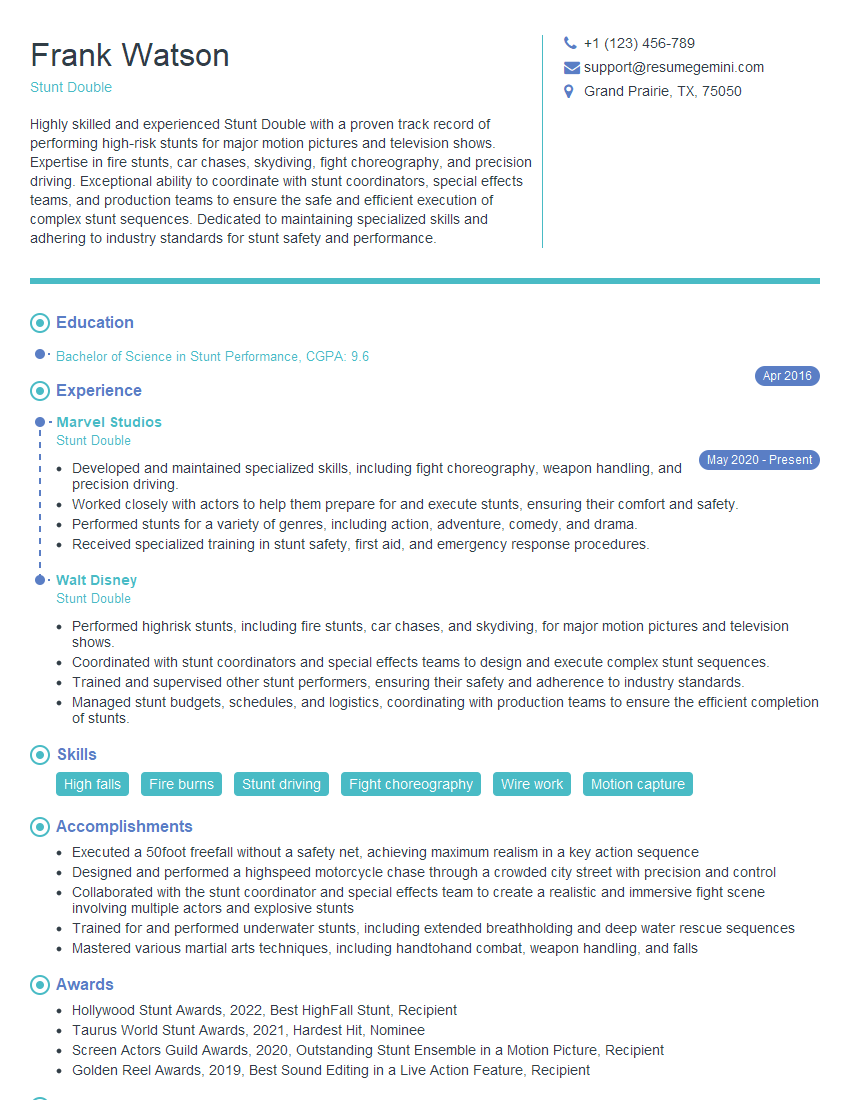
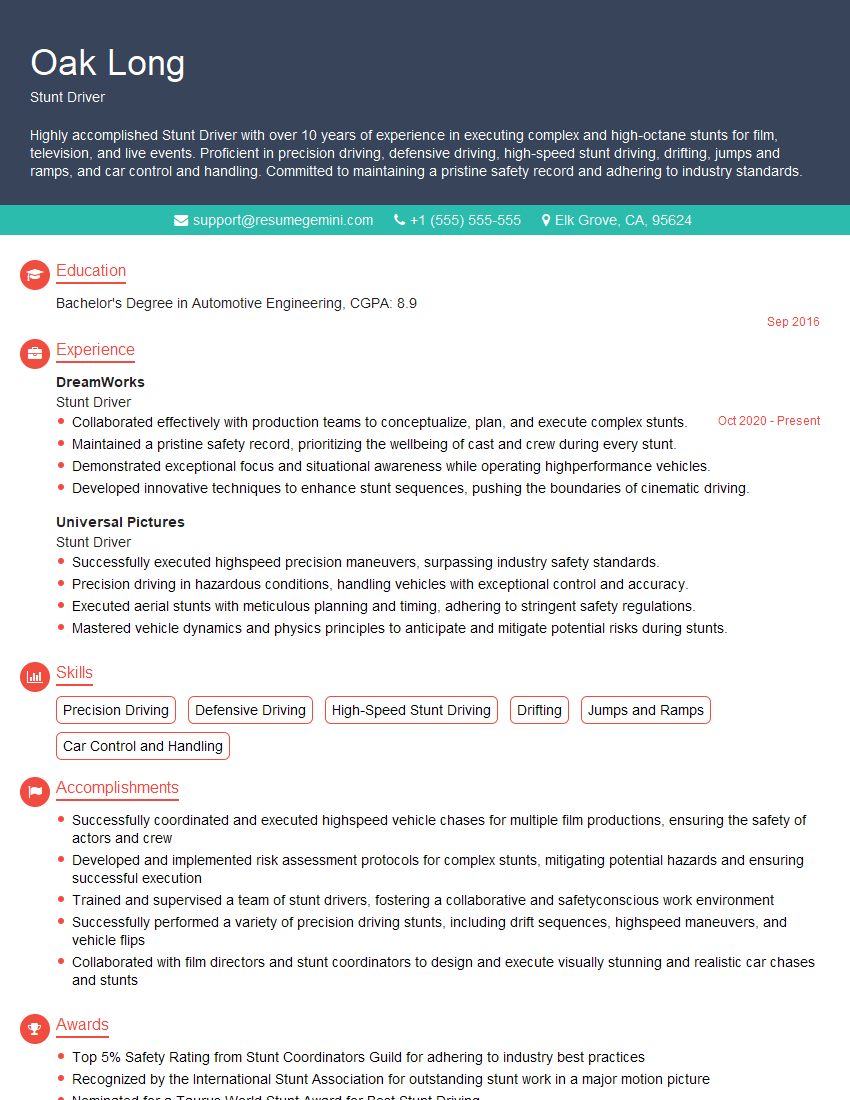
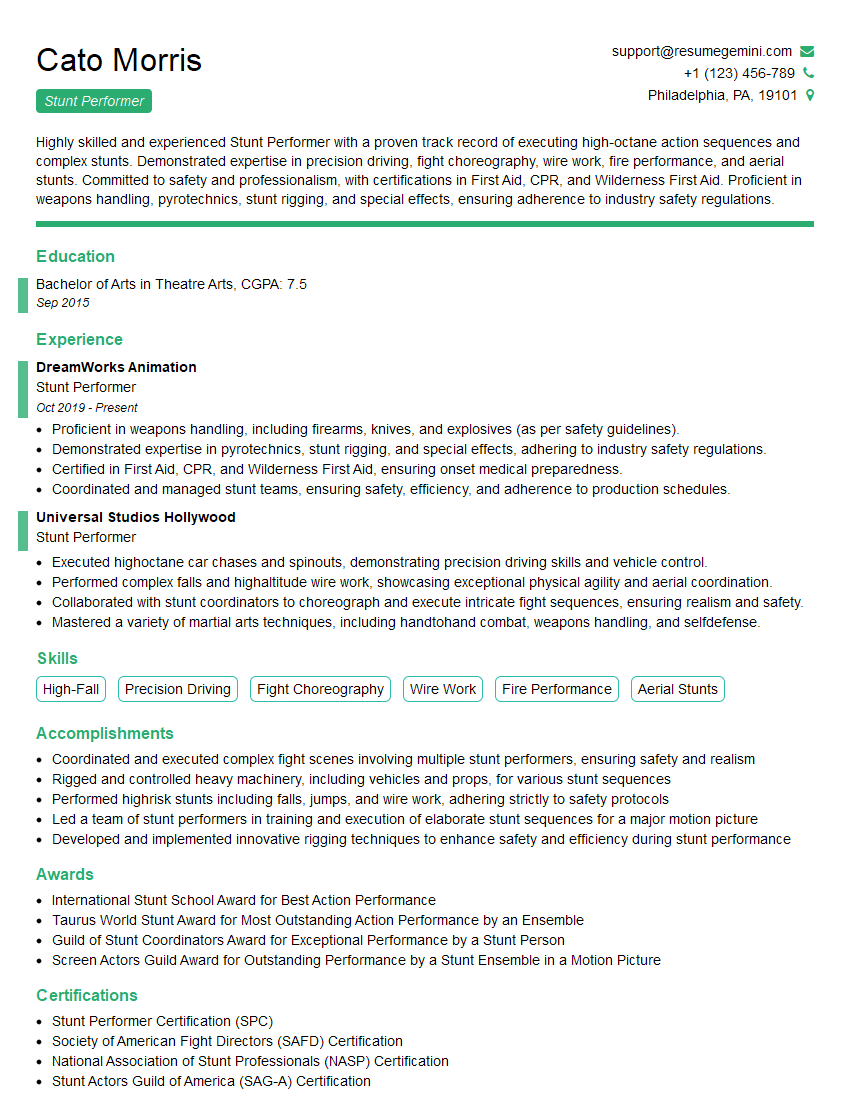
Mastering stunt training opens doors to an exciting and rewarding career filled with dynamic challenges and creative expression. To significantly increase your job prospects, creating a professional and ATS-friendly resume is crucial. ResumeGemini is a trusted resource that can help you build a compelling resume that highlights your skills and experience effectively. Examples of resumes tailored to the Stunt Training field are available to guide you. Invest time in crafting a strong resume—it’s your first impression on potential employers!
Explore more articles
Users Rating of Our Blogs
Share Your Experience
We value your feedback! Please rate our content and share your thoughts (optional).
What Readers Say About Our Blog
Attention music lovers!
Wow, All the best Sax Summer music !!!
Spotify: https://open.spotify.com/artist/6ShcdIT7rPVVaFEpgZQbUk
Apple Music: https://music.apple.com/fr/artist/jimmy-sax-black/1530501936
YouTube: https://music.youtube.com/browse/VLOLAK5uy_noClmC7abM6YpZsnySxRqt3LoalPf88No
Other Platforms and Free Downloads : https://fanlink.tv/jimmysaxblack
on google : https://www.google.com/search?q=22+AND+22+AND+22
on ChatGPT : https://chat.openai.com?q=who20jlJimmy20Black20Sax20Producer
Get back into the groove with Jimmy sax Black
Best regards,
Jimmy sax Black
www.jimmysaxblack.com
Hi I am a troller at The aquatic interview center and I suddenly went so fast in Roblox and it was gone when I reset.
Hi,
Business owners spend hours every week worrying about their website—or avoiding it because it feels overwhelming.
We’d like to take that off your plate:
$69/month. Everything handled.
Our team will:
Design a custom website—or completely overhaul your current one
Take care of hosting as an option
Handle edits and improvements—up to 60 minutes of work included every month
No setup fees, no annual commitments. Just a site that makes a strong first impression.
Find out if it’s right for you:
https://websolutionsgenius.com/awardwinningwebsites
Hello,
we currently offer a complimentary backlink and URL indexing test for search engine optimization professionals.
You can get complimentary indexing credits to test how link discovery works in practice.
No credit card is required and there is no recurring fee.
You can find details here:
https://wikipedia-backlinks.com/indexing/
Regards
NICE RESPONSE TO Q & A
hi
The aim of this message is regarding an unclaimed deposit of a deceased nationale that bears the same name as you. You are not relate to him as there are millions of people answering the names across around the world. But i will use my position to influence the release of the deposit to you for our mutual benefit.
Respond for full details and how to claim the deposit. This is 100% risk free. Send hello to my email id: lukachachibaialuka@gmail.com
Luka Chachibaialuka
Hey interviewgemini.com, just wanted to follow up on my last email.
We just launched Call the Monster, an parenting app that lets you summon friendly ‘monsters’ kids actually listen to.
We’re also running a giveaway for everyone who downloads the app. Since it’s brand new, there aren’t many users yet, which means you’ve got a much better chance of winning some great prizes.
You can check it out here: https://bit.ly/callamonsterapp
Or follow us on Instagram: https://www.instagram.com/callamonsterapp
Thanks,
Ryan
CEO – Call the Monster App
Hey interviewgemini.com, I saw your website and love your approach.
I just want this to look like spam email, but want to share something important to you. We just launched Call the Monster, a parenting app that lets you summon friendly ‘monsters’ kids actually listen to.
Parents are loving it for calming chaos before bedtime. Thought you might want to try it: https://bit.ly/callamonsterapp or just follow our fun monster lore on Instagram: https://www.instagram.com/callamonsterapp
Thanks,
Ryan
CEO – Call A Monster APP
To the interviewgemini.com Owner.
Dear interviewgemini.com Webmaster!
Hi interviewgemini.com Webmaster!
Dear interviewgemini.com Webmaster!
excellent
Hello,
We found issues with your domain’s email setup that may be sending your messages to spam or blocking them completely. InboxShield Mini shows you how to fix it in minutes — no tech skills required.
Scan your domain now for details: https://inboxshield-mini.com/
— Adam @ InboxShield Mini
support@inboxshield-mini.com
Reply STOP to unsubscribe
Hi, are you owner of interviewgemini.com? What if I told you I could help you find extra time in your schedule, reconnect with leads you didn’t even realize you missed, and bring in more “I want to work with you” conversations, without increasing your ad spend or hiring a full-time employee?
All with a flexible, budget-friendly service that could easily pay for itself. Sounds good?
Would it be nice to jump on a quick 10-minute call so I can show you exactly how we make this work?
Best,
Hapei
Marketing Director
Hey, I know you’re the owner of interviewgemini.com. I’ll be quick.
Fundraising for your business is tough and time-consuming. We make it easier by guaranteeing two private investor meetings each month, for six months. No demos, no pitch events – just direct introductions to active investors matched to your startup.
If youR17;re raising, this could help you build real momentum. Want me to send more info?
Hi, I represent an SEO company that specialises in getting you AI citations and higher rankings on Google. I’d like to offer you a 100% free SEO audit for your website. Would you be interested?
Hi, I represent an SEO company that specialises in getting you AI citations and higher rankings on Google. I’d like to offer you a 100% free SEO audit for your website. Would you be interested?