Cracking a skill-specific interview, like one for Secure Loading and Unloading, requires understanding the nuances of the role. In this blog, we present the questions you’re most likely to encounter, along with insights into how to answer them effectively. Let’s ensure you’re ready to make a strong impression.
Questions Asked in Secure Loading and Unloading Interview
Q 1. Explain the proper procedures for securing a load on a pallet.
Securing a load on a pallet is crucial for preventing damage and ensuring safe transport. Think of it like building a sturdy tower – each piece needs to be placed correctly and supported effectively. The process begins with selecting the right pallet for the load’s weight and dimensions. Then, we distribute the weight evenly across the pallet, avoiding any overhang. Heavier items should be placed lower to maintain stability. Next, we use appropriate load restraint methods, depending on the type of goods and the mode of transport. This might involve using stretch wrap, strapping, or dunnage. Finally, a visual inspection is performed to confirm that the load is secure and won’t shift during transit. For fragile items, additional protection, like corner boards or void fillers, is necessary to prevent damage. Imagine transporting glassware – you’d want to ensure it’s cushioned to prevent breakage during even the smallest bump.
- Even weight distribution: Avoid concentrating weight in one area.
- No overhang: Ensure all items are fully on the pallet.
- Appropriate restraint: Use stretch wrap, straps, or dunnage as needed.
- Visual inspection: Check for stability and potential shifting.
Q 2. Describe different types of load securing methods and when to use each.
Various load securing methods exist, each suited to specific cargo and transport conditions. Let’s explore a few:
- Stretch Wrapping: Ideal for securing relatively light and stable palletized loads. It’s cost-effective and readily available but offers limited strength against significant impacts or vibrations.
- Strapping: Uses steel or plastic straps to tightly secure the load. It provides significantly more strength than stretch wrap, making it suitable for heavier and less stable loads. Different strap types and tensions can be tailored to the specific load.
- Dunnage: Includes materials like wood blocks, airbags, or inflatable bags used to fill gaps and provide additional support to prevent shifting. Dunnage is crucial when dealing with irregularly shaped items or loads with voids.
- Edge Protection: Corner boards or edge protectors prevent damage to the load’s edges during handling. This is vital for fragile items or those prone to damage from impacts.
- Load Locking Devices: These mechanical devices, like bars or clamps, provide very strong load restraint and are frequently used for securing heavy or hazardous materials.
The choice depends on factors like load weight, fragility, shape, transportation distance, and environmental conditions. For example, fragile ceramics would require both dunnage and stretch wrap, while a pallet of heavy bricks would be better suited to steel strapping.
Q 3. What are the key safety regulations related to load securing?
Load securing is governed by strict safety regulations to ensure public safety and prevent accidents. These regulations often vary by country and jurisdiction, but common themes include:
- Compliance with relevant standards: Adherence to national or international standards for load securing, like those established by organizations such as the American Society of Mechanical Engineers (ASME).
- Proper documentation: Maintaining accurate records of securing methods used, including the type and quantity of materials used.
- Training and certification: Operators must be properly trained and certified in safe load securing practices.
- Regular inspections: Vehicles and loads must be regularly inspected for any signs of damage or potential shifting before transport and after any significant journey phases.
- Securement of hazardous materials: Hazardous materials necessitate stricter securing procedures and specialized handling methods due to the potential risks.
Non-compliance can result in heavy fines, legal action, and even criminal charges in severe cases.
Q 4. How do you identify potential hazards during loading and unloading?
Identifying potential hazards during loading and unloading requires a proactive and systematic approach. This involves a thorough pre-operation inspection that includes:
- Workplace inspection: Checking for any obstacles, uneven surfaces, or potential tripping hazards in the loading/unloading area.
- Equipment inspection: Ensuring all material handling equipment – forklifts, cranes, etc. – is in good working order and properly maintained.
- Load assessment: Evaluating the load’s weight, dimensions, and stability, paying close attention to any signs of damage or potential instability.
- Environmental conditions: Assessing weather conditions (rain, wind, ice), which can impact load stability and worker safety.
- Worker assessment: Ensuring workers have received appropriate training, understand the risks involved, and are using the right safety equipment (PPE).
By identifying these hazards beforehand, preventative measures can be put in place to mitigate risks, ensuring a safer loading and unloading process. For instance, an uneven surface might require the use of leveling platforms, while adverse weather might necessitate a delay in operations.
Q 5. What are your methods for preventing load shifting during transit?
Preventing load shifting during transit requires a multi-faceted approach focusing on proper load securing techniques and careful handling. The key steps include:
- Proper load distribution: Evenly distributing weight across the pallet and avoiding any overhang is vital in reducing shifting potential.
- Appropriate securing methods: Selecting the right securing materials and techniques based on the load’s characteristics and the mode of transport. Heavier and more prone-to-shifting loads necessitate stronger methods (strapping, load locks) than lighter, more stable ones (stretch wrap).
- Adequate bracing: Using dunnage or other bracing to prevent shifting and provide extra support to prevent items from collapsing within the load.
- Careful handling: Driving and maneuvering the vehicle carefully to prevent abrupt stops or turns that could cause the load to shift.
- Regular inspections: Inspecting the load during transit stops to ensure everything remains stable. This is particularly important for longer journeys.
Remember, an ounce of prevention is worth a pound of cure. Taking the time to secure the load properly at the outset significantly reduces the risk of shifting and potential damage or accidents during transit.
Q 6. Describe your experience using different types of material handling equipment.
Throughout my career, I’ve gained extensive experience operating a variety of material handling equipment, including:
- Forklifts: I’m proficient in operating various forklift types (sit-down, stand-up, reach trucks) and understand the importance of safe operating procedures, load capacity limits, and pre-operational checks.
- Pallet Jacks: I’m skilled in using pallet jacks to maneuver pallets efficiently and safely, understanding the limitations and proper handling techniques.
- Overhead Cranes: I have experience operating overhead cranes for lifting and moving heavier loads, always following safety protocols and load capacity limits.
- Straddle Carriers: I have experience using straddle carriers for container handling within ports and logistics centers. Safety and efficiency protocols are strictly adhered to.
My experience extends to the proper use of safety features on these machines and the importance of preventative maintenance to ensure operational safety. For instance, I always perform pre-operational checks on forklifts, verifying the functionality of brakes, lights, and load-carrying components before commencing any operation.
Q 7. How do you ensure the weight distribution of a load is balanced?
Balancing load weight distribution is critical for preventing instability and ensuring safe transport. It’s like building a balanced seesaw – you need equal weight on both sides. Here’s how I ensure balanced weight distribution:
- Visual assessment: A thorough visual check of the load helps identify any areas of potential imbalance.
- Weight calculation: When possible, I use scales to determine the weight of individual items and ensure even distribution across the pallet.
- Strategic placement: Heavier items are placed lower and closer to the center of the pallet to lower the center of gravity and increase stability. Lighter items can be placed on top, but their placement must be carefully considered to avoid potential shifting.
- Load shifting considerations: During transit, consider the movement of the vehicle and how this could affect weight distribution. Anticipating potential shifts and making adjustments before loading can prevent issues.
- Load charts and diagrams: When dealing with complex loads, I use load charts and diagrams to help plan and visualize the most balanced distribution.
By meticulously following these steps, I can ensure that loads are well-balanced, minimizing the risk of accidents or damage during handling and transport. An unbalanced load is a recipe for disaster, potentially leading to tipping and serious injury or property damage.
Q 8. What are the signs of a potentially unstable load?
Identifying a potentially unstable load is crucial for preventing accidents. Several visual and physical signs can indicate instability. Think of it like building a tower of blocks – if it’s wobbly, it’s going to fall.
- Improperly secured cargo: Loose straps, shifting cargo, or inadequate bracing are major red flags. Imagine a stack of boxes on a truck; if they’re not tightly bound, they’ll move during transit.
- Overloaded vehicles: Loads exceeding the vehicle’s weight capacity or exceeding the axle weight limits are inherently unstable. This is like trying to carry too many groceries – you’ll struggle to keep your balance.
- Improper weight distribution: Uneven weight distribution can cause the vehicle to tip or sway. Imagine placing all your weight on one leg of a chair – it’s going to topple.
- Damaged packaging: Broken or damaged packaging compromises the integrity of the load, making it more likely to shift or fall. This is similar to a damaged egg carton – the eggs inside are more likely to break.
- Visible damage to cargo: Cracked, broken, or otherwise damaged goods are less stable and more prone to shifting. Think of a broken piece of furniture – it’s far less structurally sound.
- High center of gravity: Tall, narrow loads have a higher center of gravity and are inherently less stable than low, wide loads. This is akin to balancing a pencil on its tip versus its base.
Q 9. How do you inspect equipment before operating it for loading/unloading?
Equipment inspection is non-negotiable. Before operating any equipment for loading or unloading, a thorough pre-operational inspection is paramount. This is like a pilot pre-flight check – essential for a safe flight.
- Visual Inspection: Check for any visible damage, leaks, or wear and tear on the forklift, crane, or other equipment. Look for things like cracks in the frame, worn tires, or hydraulic leaks.
- Functional Check: Test all controls, safety devices, and warning systems. This includes checking the brakes, steering, horns, and lights (for forklifts) or ensuring the crane’s hook, cables, and winch are functioning correctly.
- Fluid Levels: Verify that all fluid levels (hydraulic fluid, engine oil, etc.) are within acceptable ranges. Low fluid levels can lead to equipment malfunction.
- Safety Features: Confirm the functionality of all safety features, such as seatbelts (if applicable), emergency stops, and load indicators. These are your lifelines in case of emergency.
- Documentation: Record all inspection findings in a logbook or on a digital checklist. This provides a history of the equipment’s condition and helps to identify potential issues.
If any issues are found, they must be addressed before the equipment is operated. Never compromise safety for the sake of expediency.
Q 10. Explain the importance of load documentation and traceability.
Load documentation and traceability are the cornerstones of a secure and efficient supply chain. It provides accountability and enables quick problem-solving.
- Accurate Records: Detailed records of each load, including weight, dimensions, contents, and condition, are crucial for liability and insurance purposes. This helps to identify where things went wrong if a problem occurs.
- Tracking and Tracing: The ability to track the movement of goods from origin to destination is critical for managing inventory, preventing theft, and responding to inquiries about the location of shipments. Think of it as a detailed itinerary for your cargo.
- Compliance: Accurate documentation helps ensure compliance with relevant regulations and industry standards related to safety and transportation. This ensures you’re meeting legal requirements.
- Claims Management: In the event of loss, damage, or theft, detailed documentation expedites claims processing by providing all the necessary information to the insurance company. This saves time and reduces stress.
Imagine trying to find a lost package without a tracking number or description – it would be nearly impossible. Proper documentation is equally vital for cargo.
Q 11. What are your methods for dealing with damaged or compromised goods during loading/unloading?
Handling damaged or compromised goods requires careful planning and execution. Safety is the utmost priority.
- Assessment: Assess the extent of the damage. Is it minor or severe? Does it pose a safety risk? This initial evaluation helps determine the appropriate course of action.
- Isolation: Isolate the damaged goods to prevent further damage or contamination. This might involve moving them to a designated area or using protective measures.
- Documentation: Thoroughly document the damage, including photographs, descriptions, and the cause (if known). This is crucial for insurance claims and investigations.
- Safe Handling: Use appropriate handling techniques and equipment to prevent further damage or injury. This might involve using specialized equipment or protective gear.
- Disposal or Repair: Decide whether the goods can be repaired, salvaged, or need to be disposed of according to relevant regulations. This depends on the extent and type of damage.
For example, if a box of fragile items has been crushed, it needs to be carefully examined for broken contents. Any broken items need to be separated and documented before disposal, while the remainder should be assessed for further damage.
Q 12. Describe your experience with different types of cargo and their specific securing requirements.
Experience with diverse cargo types is essential for safe and efficient loading and unloading. Each cargo type has unique securing requirements.
- General Cargo: Items like boxes, crates, and pallets typically require secure stacking, proper bracing, and use of straps or other securing devices. The weight distribution and center of gravity are critical factors.
- Hazardous Materials: Hazardous materials require specialized handling, including proper labeling, packaging, and segregation to prevent leaks or spills and protect workers. The regulations surrounding their transport are stringent.
- Liquid Cargo: Liquids like oils, chemicals, and fuels require containment vessels in good condition, proper venting, and protection against spills or leaks. This minimizes the risk of environmental hazards.
- Oversized or Heavy Cargo: Oversized or heavy loads require specialized equipment and techniques, including careful planning of the route, load distribution, and use of appropriate securing devices. Special permits may be needed.
- Refrigerated Cargo: Refrigerated cargo requires maintaining the correct temperature throughout transit. This necessitates proper loading techniques and close monitoring of refrigeration systems.
My experience spans all these cargo types, enabling me to effectively apply the necessary safety procedures and regulations for each.
Q 13. How do you ensure the safety of personnel during loading and unloading operations?
Personnel safety is the top priority in any loading and unloading operation. It’s about creating a culture of safety.
- Training: All personnel involved must be properly trained on safe loading and unloading procedures, hazard identification, and emergency response. Regular refresher training keeps skills sharp.
- Personal Protective Equipment (PPE): The appropriate PPE, including hard hats, safety shoes, high-visibility clothing, and gloves, must be worn at all times. This minimizes the risk of injury.
- Traffic Management: Establish clear traffic routes and designated areas for pedestrians and vehicles to minimize the risk of collisions. Think of it like a well-organized construction site.
- Communication: Maintain clear and effective communication between all personnel involved in the operation. Hand signals, radios, or other methods can improve coordination and prevent mishaps.
- Emergency Procedures: Establish and regularly rehearse emergency procedures, including evacuation plans and first-aid response. Preparation is key to a swift and safe response.
A safe work environment is a productive work environment. By prioritizing safety, we minimize risks and ensure the well-being of everyone on the job site.
Q 14. What’s your process for reporting accidents or near misses during loading/unloading?
Reporting accidents or near misses is critical for identifying and mitigating future risks. This is like reporting a pothole in the road – it prevents others from falling victim to the same hazard.
- Immediate Reporting: Report any accidents or near misses immediately to the supervisor or designated safety officer. Timely reporting is crucial for effective response.
- Detailed Documentation: Document the incident thoroughly, including date, time, location, individuals involved, and a detailed description of what happened. Include photographs or videos if possible.
- Investigation: Conduct a thorough investigation to determine the root cause of the incident and identify corrective actions. This helps to prevent future occurrences.
- Corrective Actions: Implement corrective actions to address the identified root causes and prevent similar incidents from occurring in the future. These actions could include changes in procedures or equipment upgrades.
- Follow-up: Follow up on the implementation of corrective actions to ensure their effectiveness. This ensures that the lessons learned are truly integrated.
A proactive approach to safety reporting creates a safer work environment for everyone.
Q 15. How do you handle situations where deadlines conflict with safety procedures?
Safety always trumps deadlines. This isn’t just a policy; it’s a fundamental principle in secure loading and unloading. If a deadline forces unsafe practices, such as rushing through load securing or operating equipment beyond its capacity, I’d immediately escalate the issue to my supervisor. I’d explain the risks involved – potential for injury, damage to goods, or even legal repercussions – and collaboratively find a solution. This might involve adjusting the schedule, requesting additional resources, or reassessing priorities. For example, I once faced a tight delivery window for a shipment of fragile medical equipment. Instead of compromising safety, I clearly communicated the time constraints and potential challenges, leading to a revised plan with additional personnel to expedite the process safely. We successfully met the deadline without incident.
Career Expert Tips:
- Ace those interviews! Prepare effectively by reviewing the Top 50 Most Common Interview Questions on ResumeGemini.
- Navigate your job search with confidence! Explore a wide range of Career Tips on ResumeGemini. Learn about common challenges and recommendations to overcome them.
- Craft the perfect resume! Master the Art of Resume Writing with ResumeGemini’s guide. Showcase your unique qualifications and achievements effectively.
- Don’t miss out on holiday savings! Build your dream resume with ResumeGemini’s ATS optimized templates.
Q 16. What is your understanding of OSHA regulations regarding loading and unloading?
My understanding of OSHA regulations regarding loading and unloading is comprehensive. I’m familiar with standards such as 29 CFR 1910, which covers general industry safety, specifically focusing on sections addressing hazard communication, personal protective equipment (PPE), and fall protection. I know the regulations regarding forklift operation, including training requirements, safe operating procedures, and inspection protocols. I understand the importance of proper load securing techniques to prevent shifting or falling during transit, and the necessity of using appropriate equipment like straps, chains, and dunnage. Furthermore, I am aware of the record-keeping requirements for incidents and near-misses. Regular compliance training keeps my knowledge current and ensures I can identify and mitigate potential hazards. For instance, I’m always conscious of ensuring adequate lighting during night loading operations, and I never operate equipment that’s visibly damaged.
Q 17. How do you communicate effectively with other team members during loading and unloading?
Effective communication is paramount. I use a combination of clear verbal instructions, hand signals (especially in noisy environments), and pre-shift briefings to ensure everyone is on the same page. Clear, concise language is crucial, avoiding jargon. I encourage open communication, where team members feel comfortable raising concerns or pointing out potential hazards. For example, I use standardized terminology for load descriptions and handling procedures. I also use visual aids, like checklists and diagrams, to reinforce instructions and ensure everyone understands the plan. I believe in active listening and confirming understanding before proceeding with any task. Building trust among team members is essential. This allows for quick responses to unforeseen situations and problem-solving as a team.
Q 18. Explain your experience with load capacity calculations and weight limitations.
Load capacity calculations and weight limitations are critical to safe operations. I’m proficient in calculating weight distribution and ensuring it’s within the safe limits of the vehicle and equipment. This includes understanding the Gross Vehicle Weight Rating (GVWR) and payload capacity. I utilize weight scales and measuring tools for accurate assessments, and always double-check calculations to avoid errors. I’m familiar with different load-securing methods for various cargo types and utilize software or spreadsheets to manage load manifests and weight calculations. For example, when loading a truck, I carefully distribute heavier items towards the bottom and center, ensuring even weight distribution. I have experience dealing with situations where unforeseen weight exceeded estimates. In those instances, I communicate the problem, re-evaluate the plan, and obtain approvals for revised load plans before proceeding.
Q 19. How do you adapt to different work environments and loading conditions?
Adaptability is key. I’ve worked in various locations, from warehouse docks to construction sites, each with unique challenges. I adapt to different loading conditions, like uneven terrain or inclement weather, by adjusting my techniques and using appropriate equipment. For example, in a confined warehouse, I use specialized equipment and techniques to maneuver loads effectively. During inclement weather, I ensure proper visibility and take extra safety precautions. I’m skilled in using diverse handling equipment, from forklifts and cranes to hand trucks and pallet jacks. This versatility allows me to quickly assess the situation and choose the best method for efficient and safe loading and unloading, regardless of the environment. Flexibility and a willingness to learn new methods are essential to this aspect of the job.
Q 20. How do you prioritize tasks efficiently in a fast-paced loading/unloading environment?
Prioritization in a fast-paced environment requires a systematic approach. I use a combination of techniques, including planning, task delegation, and communication. I begin by assessing the urgency and importance of each task, prioritizing safety-critical steps first. I then delegate tasks effectively to team members based on their skills and experience. Utilizing checklists and visual aids helps ensure all steps are completed efficiently and safely. Continuous communication keeps everyone informed of changes and ensures everyone remains focused on the current priority. For instance, I prioritize the securing of hazardous materials first, followed by securing of the rest of the load, and ensure timely unloading of perishable items based on temperature requirements.
Q 21. Describe your experience with using specialized load securing equipment.
I have extensive experience with various load-securing equipment, including ratchet straps, chains, winches, and dunnage. I’m proficient in selecting and using the appropriate equipment for different cargo types and weights. I understand the proper techniques for securing loads to prevent shifting or damage during transit. I am trained in inspecting equipment regularly to ensure it is in safe working condition. I’m aware of load-securing regulations and best practices, and always prioritize safety when using this equipment. For example, I understand the different types of straps, the importance of proper tensioning, and how to secure loads effectively on different types of transport. My skills include understanding and complying with all relevant safety standards when operating winches and other heavy-duty equipment. Regular inspections and maintaining equipment logs is a key part of my routine, ensuring equipment is safe to use.
Q 22. How do you ensure compliance with company safety policies and procedures?
Compliance with company safety policies and procedures is paramount in secure loading and unloading. It’s not just about following rules; it’s about creating a culture of safety. I approach this proactively by first thoroughly reviewing and understanding all relevant policies, including those related to personal protective equipment (PPE), hazard communication, forklift operation, and load securing techniques. I then consistently apply these policies in my daily work.
For example, I always ensure I’m wearing the appropriate PPE, such as high-visibility vests, safety shoes, and gloves, before entering the loading dock area. Before operating any equipment, I conduct pre-operational checks and only use equipment I am certified to operate. I also actively participate in safety training and refresher courses, keeping my knowledge up-to-date on best practices. If I ever encounter a situation where I’m unsure about the safest course of action, I immediately consult my supervisor for guidance.
Think of it like this: Safety isn’t a checklist; it’s a mindset. By consistently adhering to policies and seeking clarification when needed, we build a safer work environment for everyone.
Q 23. How do you identify and report potential equipment malfunctions?
Identifying and reporting potential equipment malfunctions is crucial for preventing accidents. My approach is based on regular inspection and proactive reporting. I conduct daily visual inspections of all equipment, checking for things like worn parts, leaks, unusual noises, or any signs of damage. I’m particularly attentive to forklifts, loading docks, and any lifting devices. If I notice anything amiss, no matter how minor it might seem, I immediately report it to my supervisor using the company’s designated reporting system, which might involve a written log, an online form, or a direct verbal report depending on the urgency.
For instance, if I notice a forklift’s horn isn’t working, I immediately report it. A malfunctioning horn can compromise safety by reducing the operator’s ability to warn others. Similarly, if a loading dock’s ramp seems unstable or exhibits any signs of wear, that requires immediate attention. My reports always include a detailed description of the malfunction, its location, and the potential safety risks it poses.
Reporting isn’t just about fixing the problem; it’s about preventing accidents. A timely report can often prevent a small issue from escalating into a major incident.
Q 24. What steps do you take to maintain a clean and organized loading dock?
Maintaining a clean and organized loading dock is essential for safety and efficiency. It prevents accidents caused by clutter and improves workflow. My approach involves a combination of proactive measures and consistent effort. At the start of each shift, I perform a quick sweep of the area, removing any debris, pallets, or loose materials that could create a tripping hazard. I also ensure that all materials are properly stacked and stored, following designated storage zones and avoiding overcrowding.
Proper waste disposal is critical. I make sure all trash and recyclable materials are placed in the appropriate containers. I also regularly check for spills and promptly clean them up, using the right cleaning agents for different materials to prevent damage. I ensure that all equipment is parked neatly and out of the way, leaving clear pathways for movement. And finally, I regularly inspect the area for any damage or wear to the dock itself and report any issues.
Think of it like this: a clean and organized dock is a safe and efficient dock. It reduces the risk of accidents and improves productivity.
Q 25. How would you handle a situation where a load is improperly secured?
Handling an improperly secured load requires immediate action to prevent accidents. My first step would be to immediately halt any further loading or unloading operations involving that specific load. Then, I’d assess the situation to determine the extent of the problem and identify any immediate hazards. Is the load shifting? Are there any potential risks of it falling or causing damage? Depending on the severity, I may need to evacuate the area to ensure everyone’s safety.
Next, I’d carefully and methodically correct the situation. This might involve adding more securing straps, repositioning the load, or using additional blocking materials. If the load is too unstable or if I lack the skills or equipment to rectify the issue safely, I’d immediately contact my supervisor for assistance. Once the load is securely fastened, I’d document the incident, including photos or videos if possible, along with a detailed description of the problem, the corrective actions taken, and any potential contributing factors.
This type of incident highlights the crucial role of proper training and regular inspections. Preventing these issues is key, but addressing them effectively is equally critical.
Q 26. What are your strategies for preventing theft or damage to goods during loading/unloading?
Preventing theft or damage to goods requires a multi-layered approach. First, we employ physical security measures, such as secured loading docks with access control systems, potentially using cameras and alarm systems. These act as deterrents and provide a record of activity. We also ensure proper lighting at night, limiting blind spots. We use tamper-evident seals on packages and pallets as a visual check for unauthorized access.
Secondly, we implement operational procedures to minimize risk. This includes proper documentation of incoming and outgoing goods, regular inventory checks, and ensuring that only authorized personnel have access to the loading dock area. We might also utilize internal security personnel or work closely with local law enforcement to deter theft.
Finally, a strong emphasis on employee awareness and training is vital. Employees are educated on the importance of reporting suspicious activity and are provided with clear guidelines on security procedures. A vigilant workforce is a crucial element in preventing theft or damage.
It’s like protecting your home; multiple locks, alarms, and being aware of your surroundings greatly increases security.
Q 27. Describe your experience with inventory management and its relation to secure loading/unloading.
Inventory management is intrinsically linked to secure loading and unloading. Accurate inventory tracking ensures that the correct goods are loaded and unloaded, minimizing the risk of errors and losses. This starts with verifying the accuracy of incoming shipments against purchase orders and ensuring that all goods are accounted for during the unloading process. Then, during loading, careful cross-referencing with shipping manifests guarantees the correct items are loaded onto the correct vehicles.
I’ve utilized various inventory management systems in my experience, including both manual methods and automated systems with barcodes and RFID technology. The use of technology significantly streamlines the process and minimizes discrepancies. For example, I’ve utilized systems that track the location of items in real time, allowing for quick and accurate verification of inventory levels. This enhances efficiency by reducing the time spent on manual counting and searching. Further, using technology integrates directly with loading and unloading operations, reducing errors and improving accountability.
Effective inventory management is not just about numbers; it’s about ensuring the security and integrity of the goods throughout the entire supply chain. It provides visibility, facilitates better organization, and prevents losses or discrepancies.
Key Topics to Learn for Secure Loading and Unloading Interview
- Weight Distribution and Center of Gravity: Understanding how to properly distribute weight within a vehicle to maintain stability and prevent rollovers. Practical application includes calculating load weight and securing it to the center.
- Load Securement Techniques: Mastering various methods of securing cargo, including the use of straps, chains, nets, and other equipment, adhering to safety regulations and best practices. Consider different cargo types and their unique securing needs.
- Vehicle Inspection and Maintenance: Knowing how to inspect a vehicle for damage, ensuring brakes, tires, and load-bearing components are in optimal condition before loading and unloading. This includes pre-trip inspections and recognizing potential hazards.
- Hazard Identification and Risk Mitigation: Identifying potential hazards associated with loading and unloading, such as unstable ground, uneven surfaces, and blind spots. Developing strategies to mitigate these risks and prioritizing safety protocols.
- Regulations and Compliance: Familiarity with relevant regulations and industry standards related to secure loading and unloading, including weight limits, load securement guidelines, and documentation requirements. Understand the consequences of non-compliance.
- Communication and Teamwork: Effective communication with colleagues, supervisors, and clients to ensure a safe and efficient loading and unloading process. This includes clear instructions and coordination amongst team members.
- Emergency Procedures: Understanding procedures to follow in case of accidents or emergencies during loading and unloading operations, including reporting procedures and first aid knowledge.
Next Steps
Mastering secure loading and unloading practices is crucial for career advancement in logistics and transportation. It demonstrates your commitment to safety, efficiency, and regulatory compliance, making you a valuable asset to any company. To significantly boost your job prospects, it’s vital to create an ATS-friendly resume that highlights your skills and experience effectively. ResumeGemini is a trusted resource that can help you build a professional and impactful resume. Examples of resumes tailored to Secure Loading and Unloading are available within ResumeGemini, providing you with a template for success.

Operations Manager Resume Sample
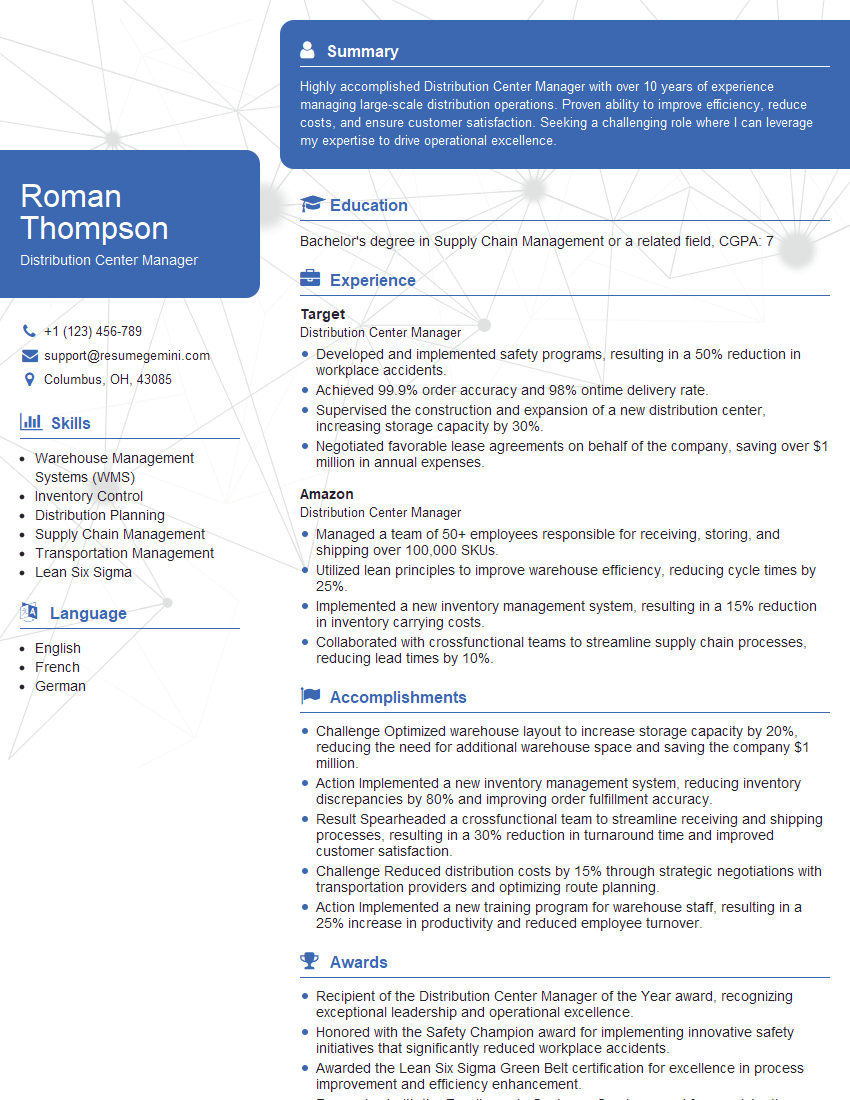
Distribution Center Manager Resume Sample
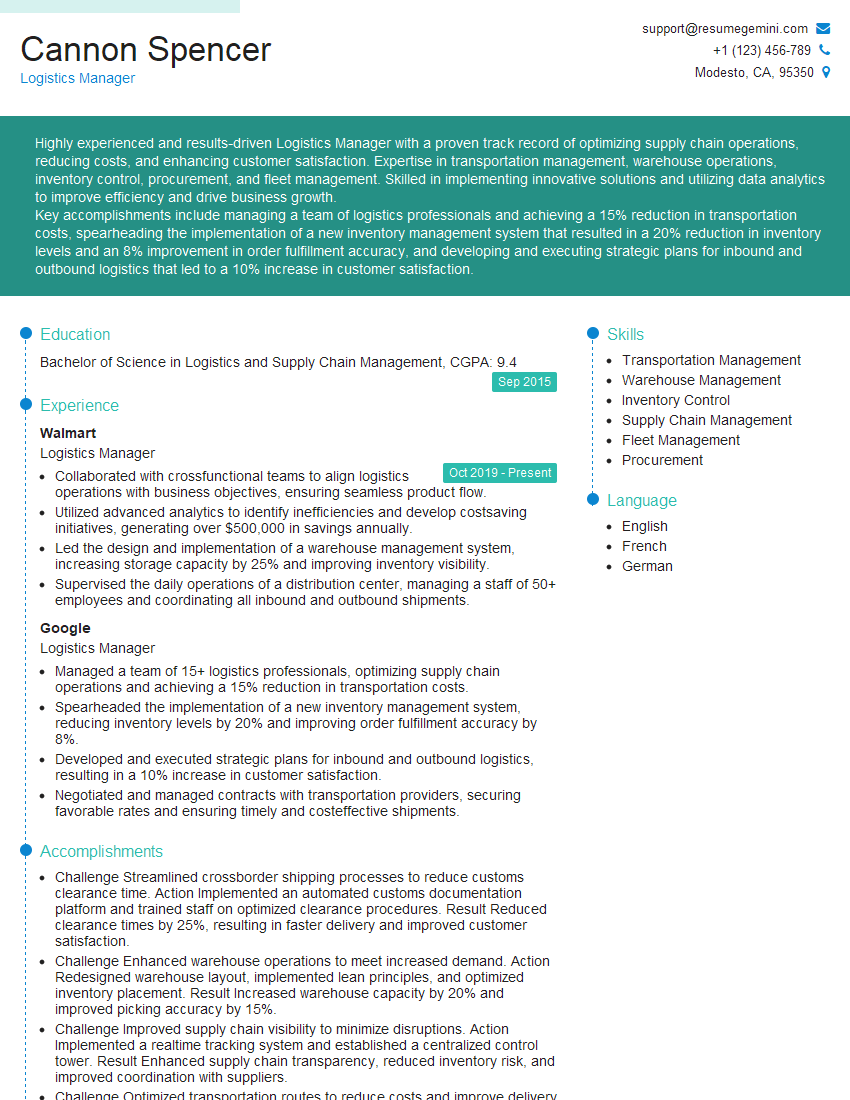
Logistics Manager Resume Sample
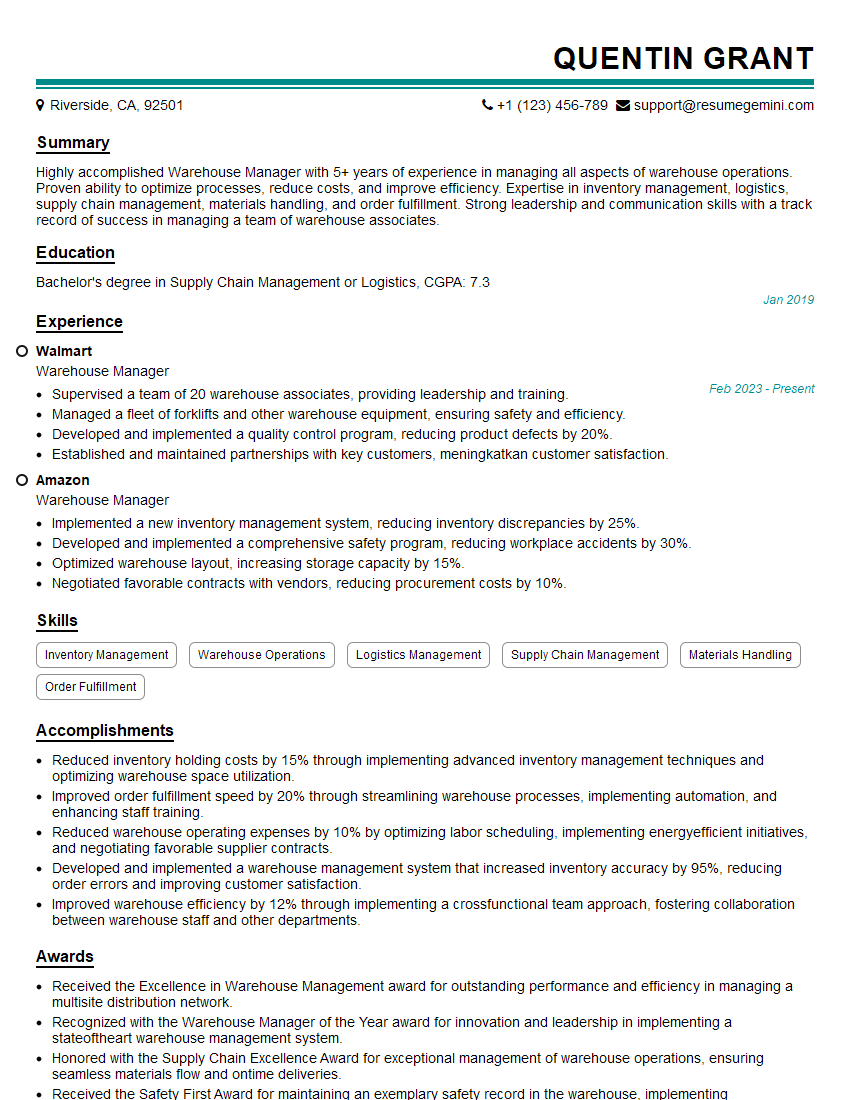
Warehouse Manager Resume Sample
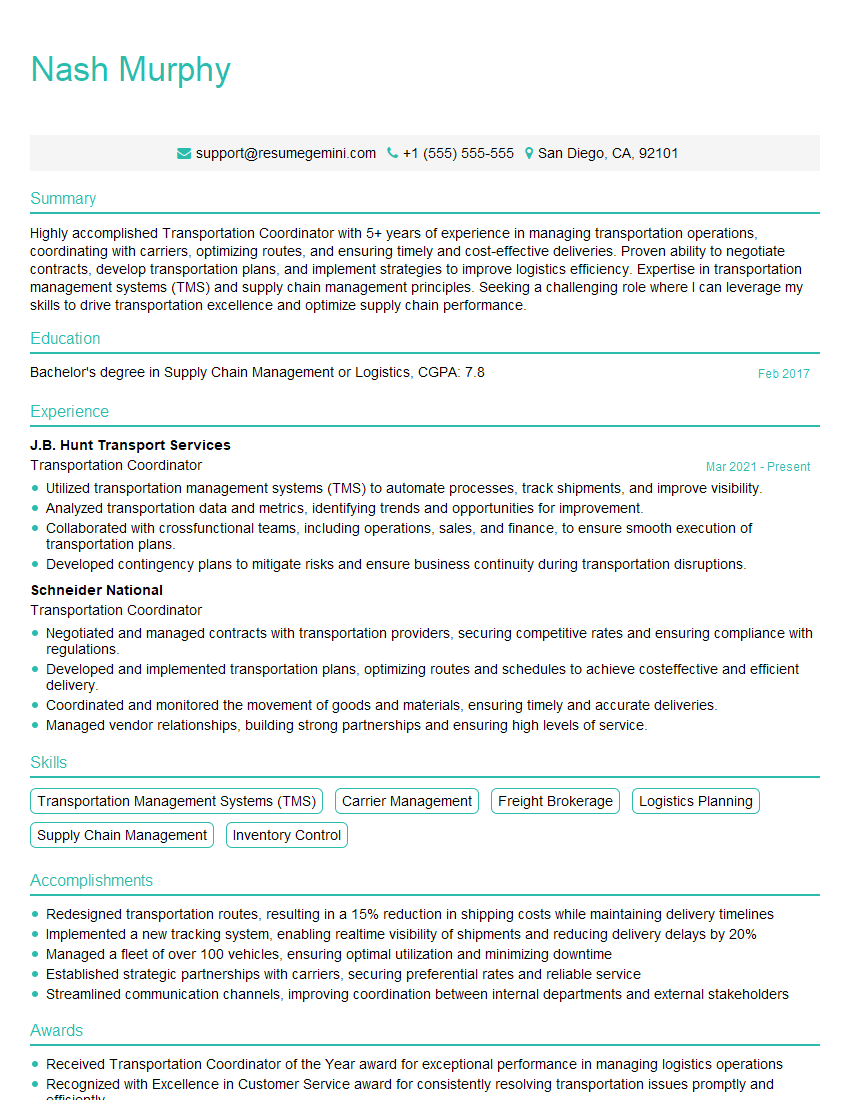
Transportation Coordinator Resume Sample
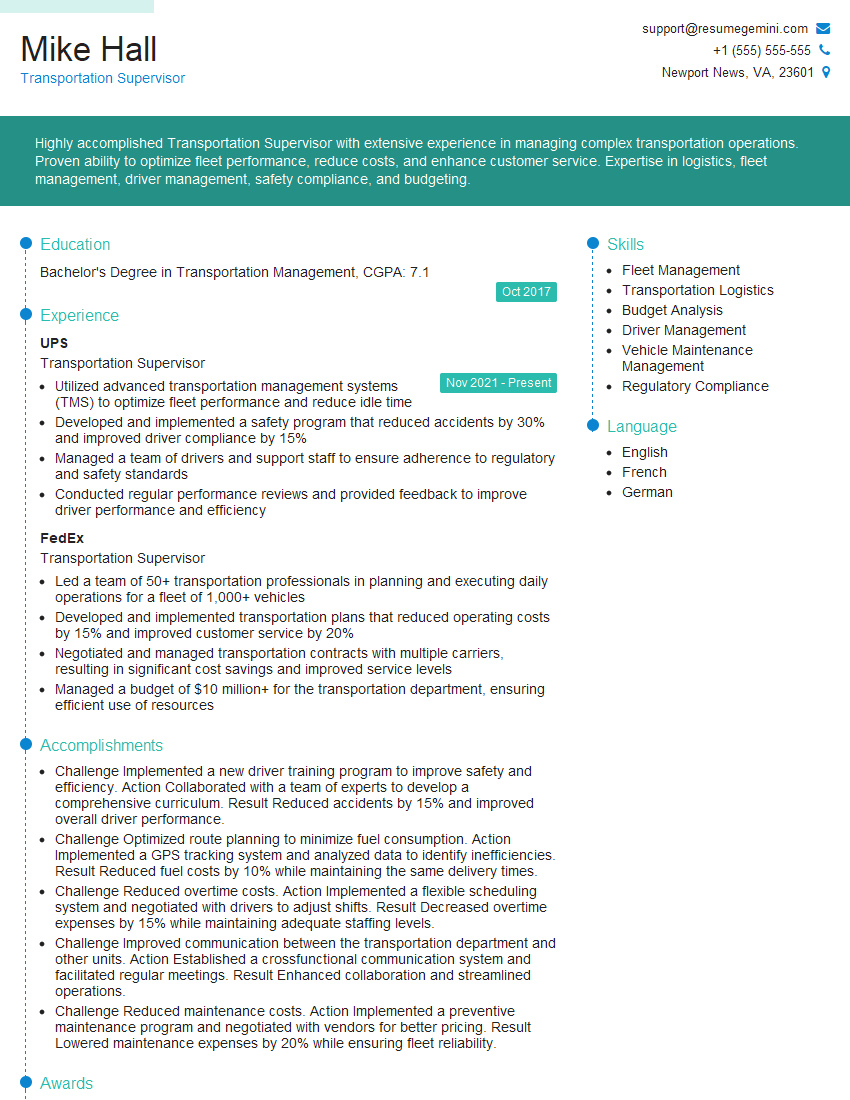
Transportation Supervisor Resume Sample
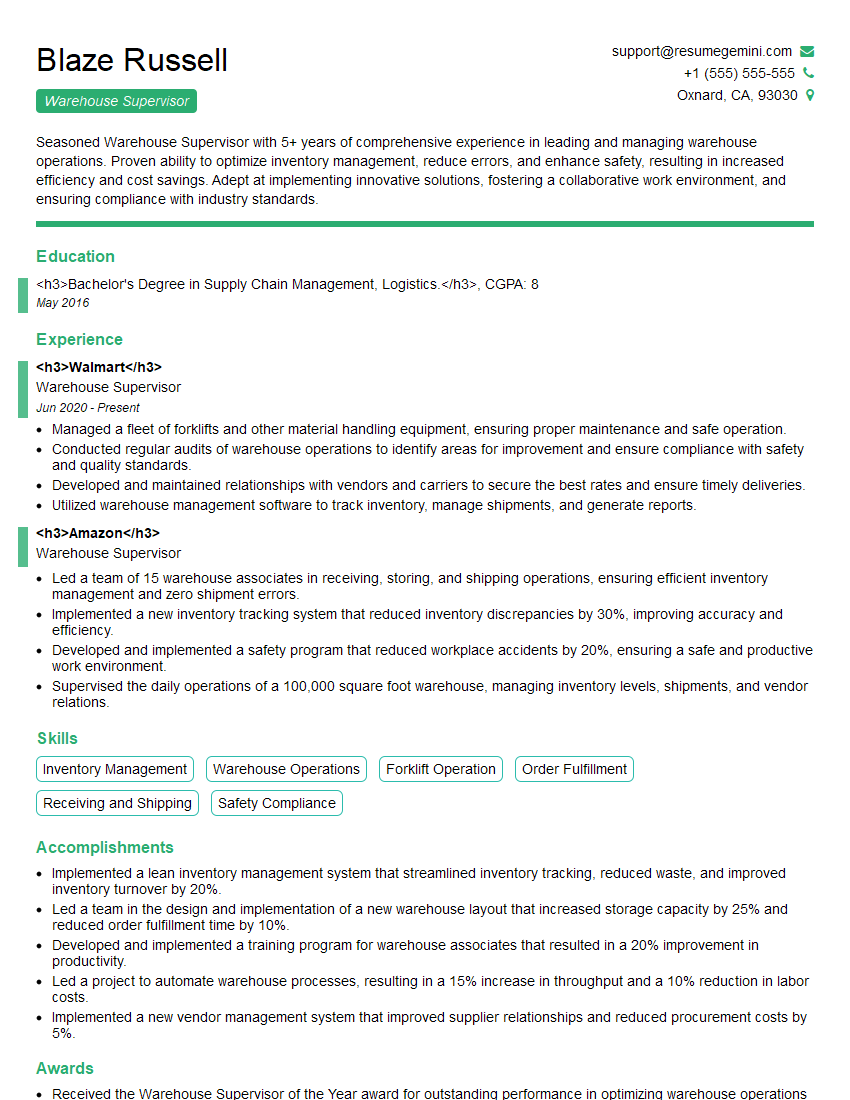
Warehouse Supervisor Resume Sample
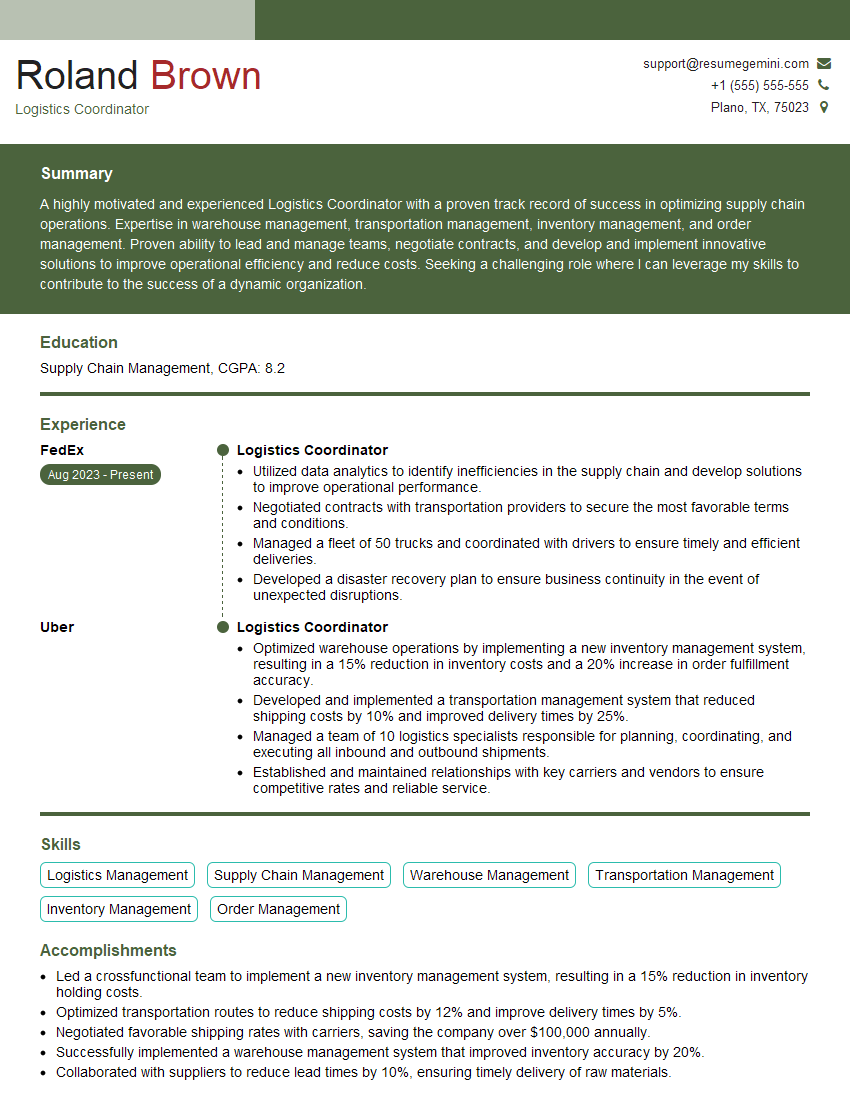
Logistics Coordinator Resume Sample
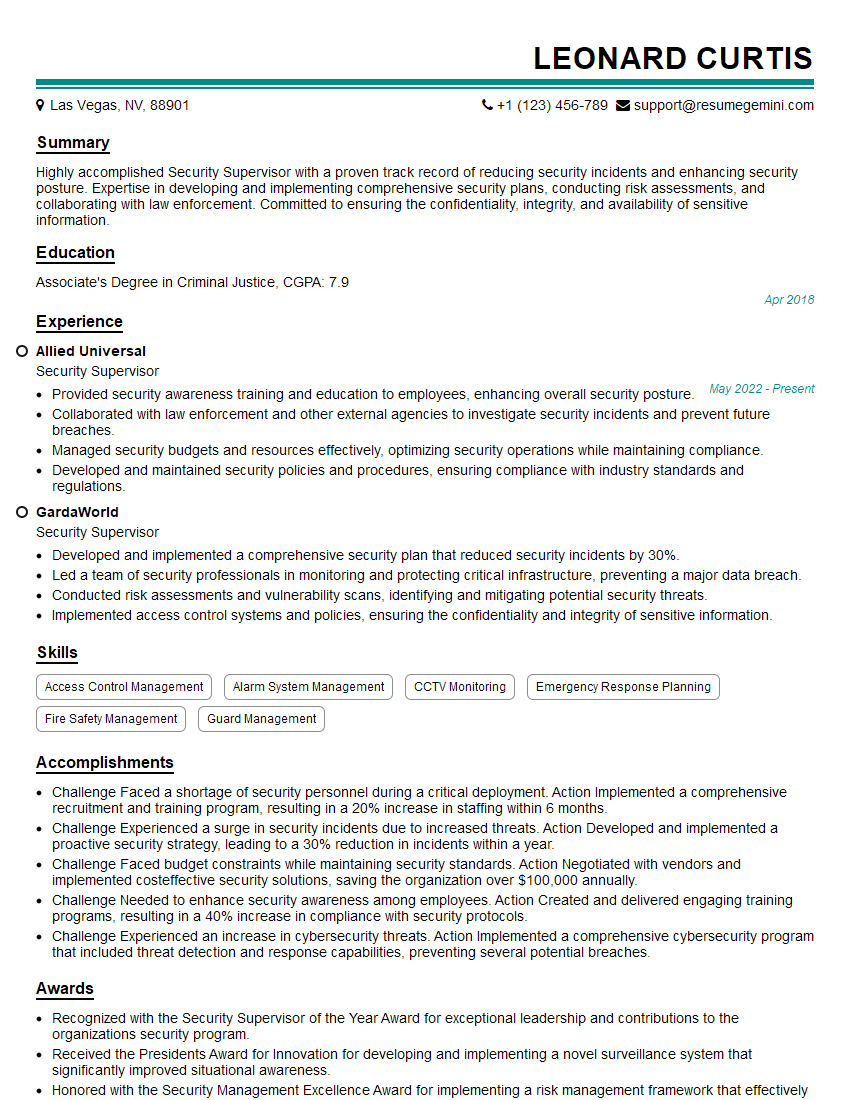
Security Supervisor Resume Sample
Logistics Specialist Resume Sample

Inventory Manager Resume Sample
Supply Chain Analyst Resume Sample
Safety Officer Resume Sample
Delivery Driver Resume Sample
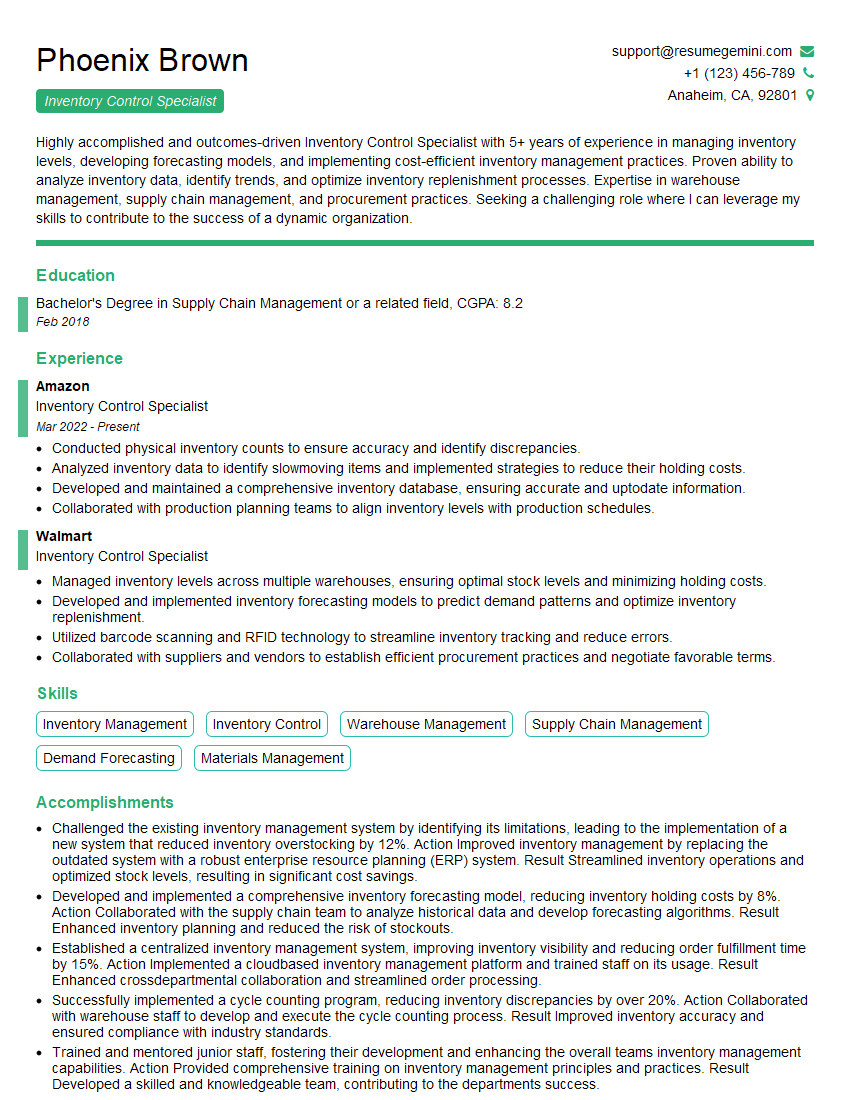
Inventory Control Specialist Resume Sample

Shipping and Receiving Clerk Resume Sample
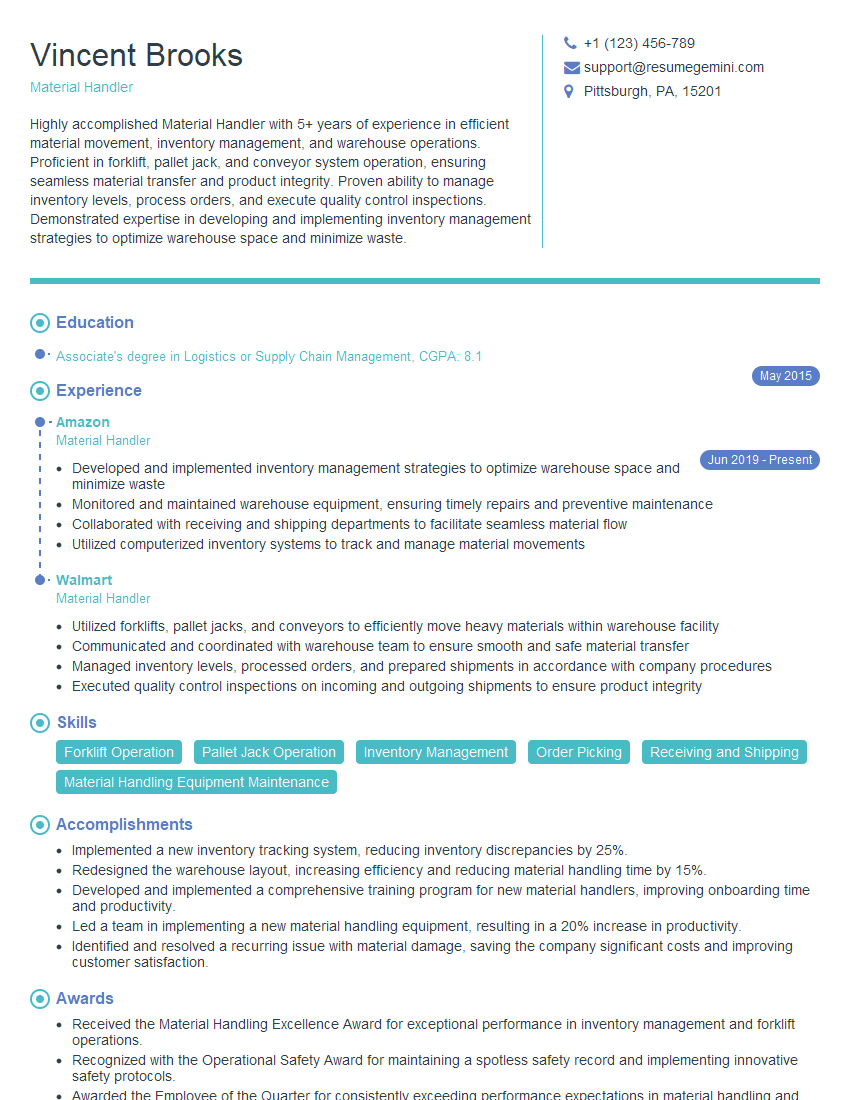
Material Handler Resume Sample
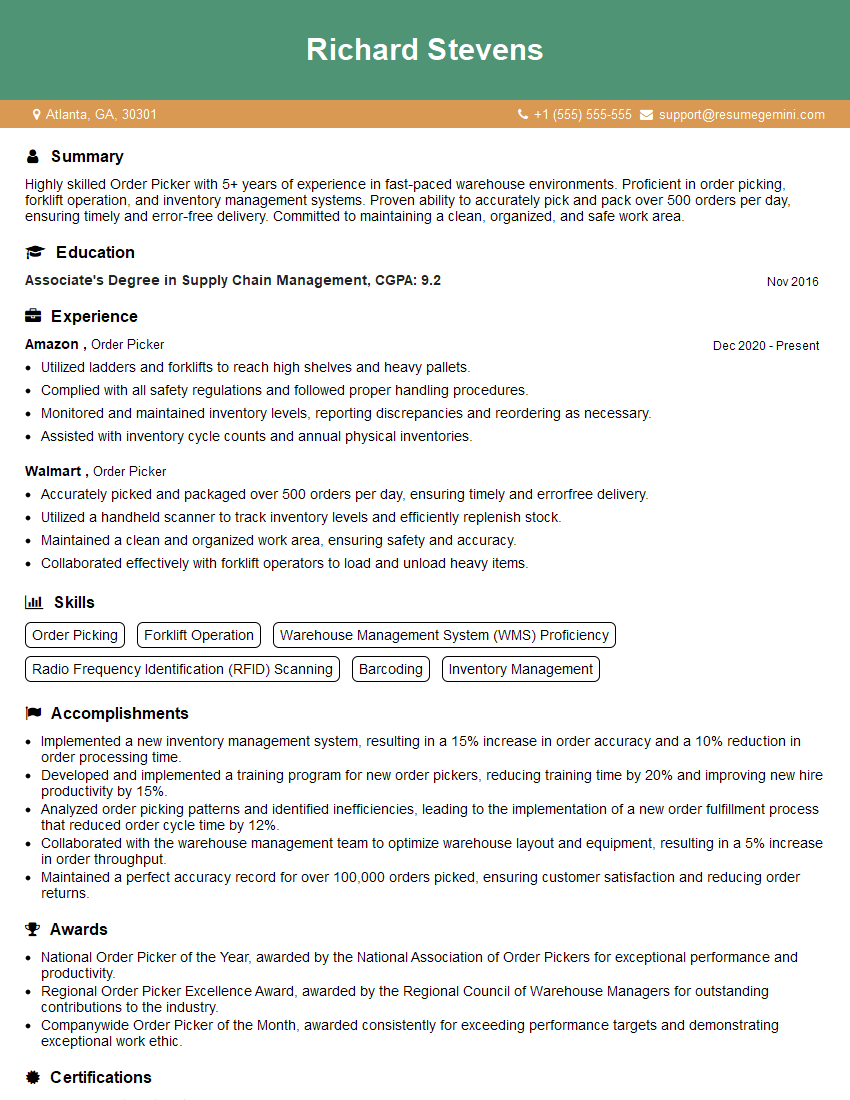
Order Picker Resume Sample
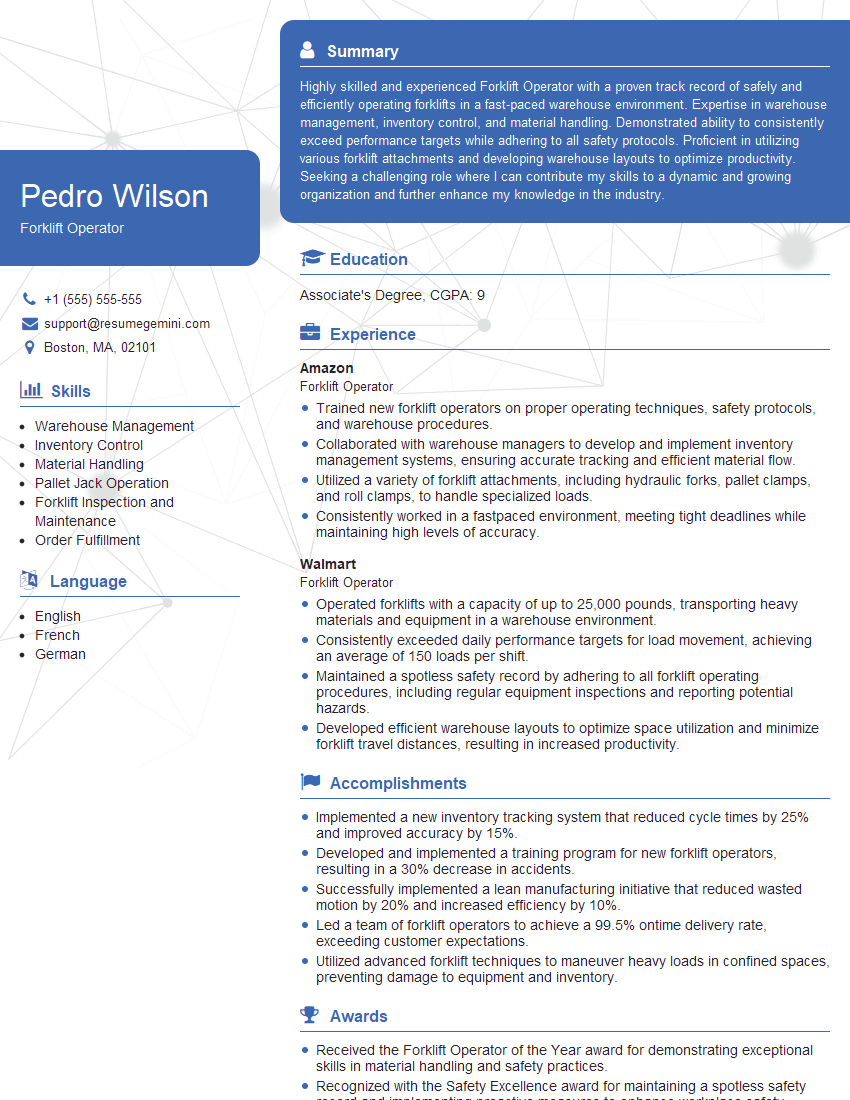
Forklift Operator Resume Sample
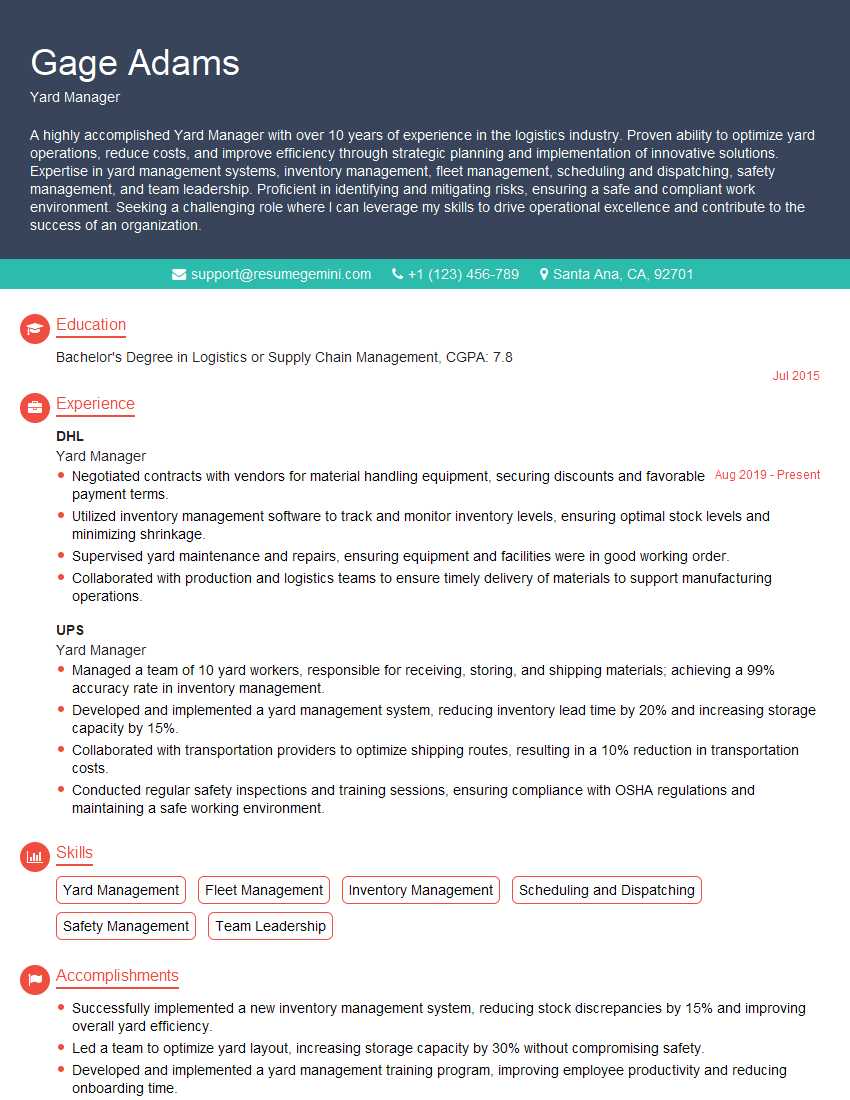
Yard Manager Resume Sample
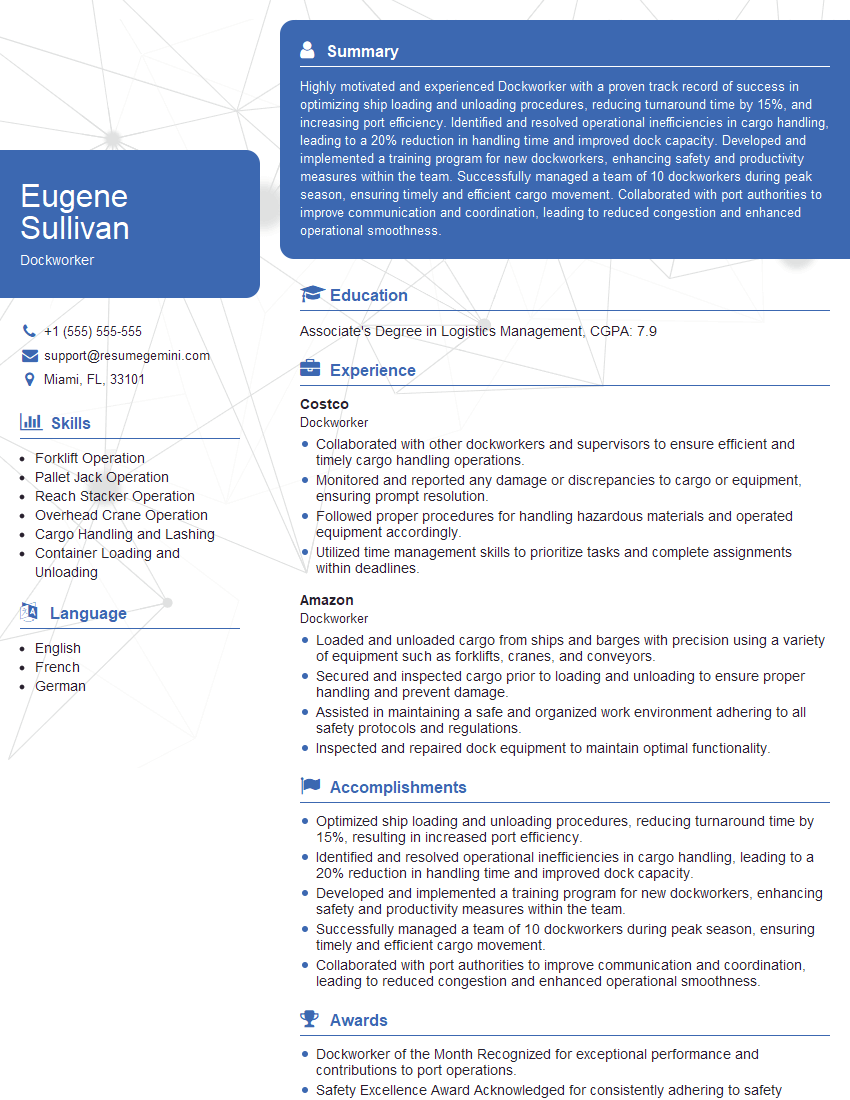
Dockworker Resume Sample
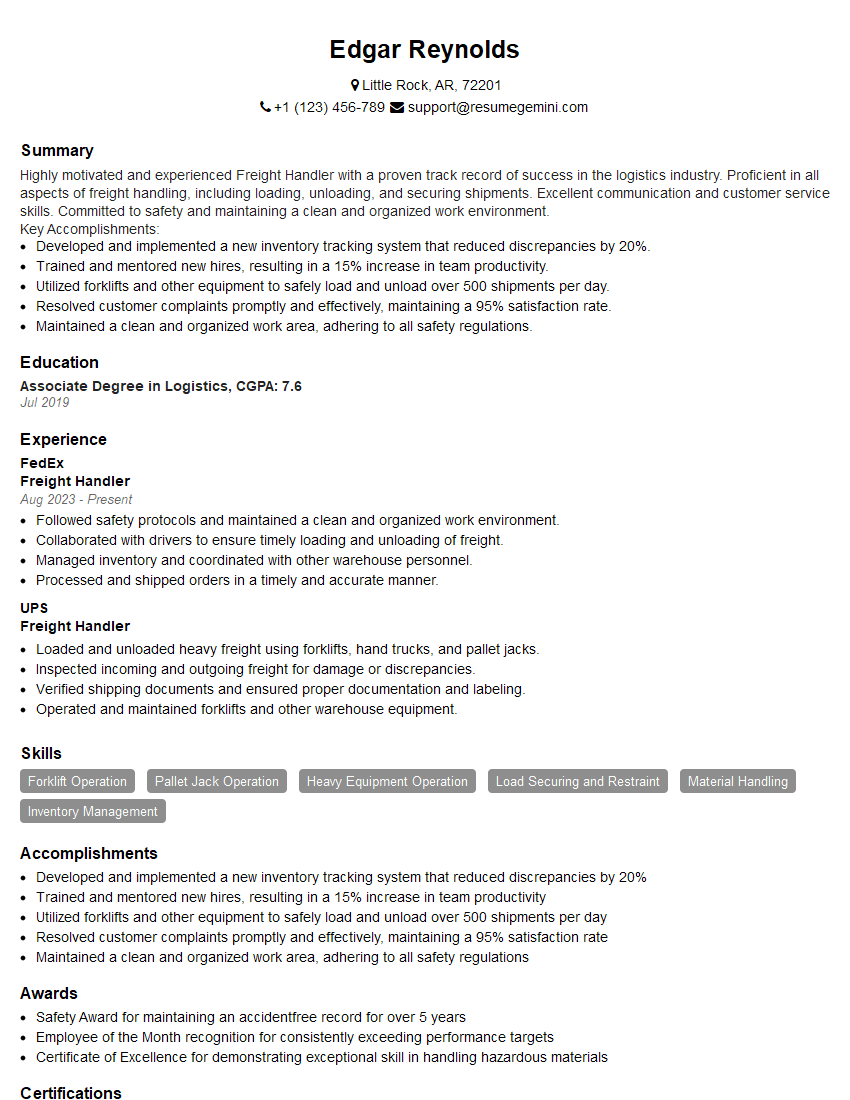
Freight Handler Resume Sample
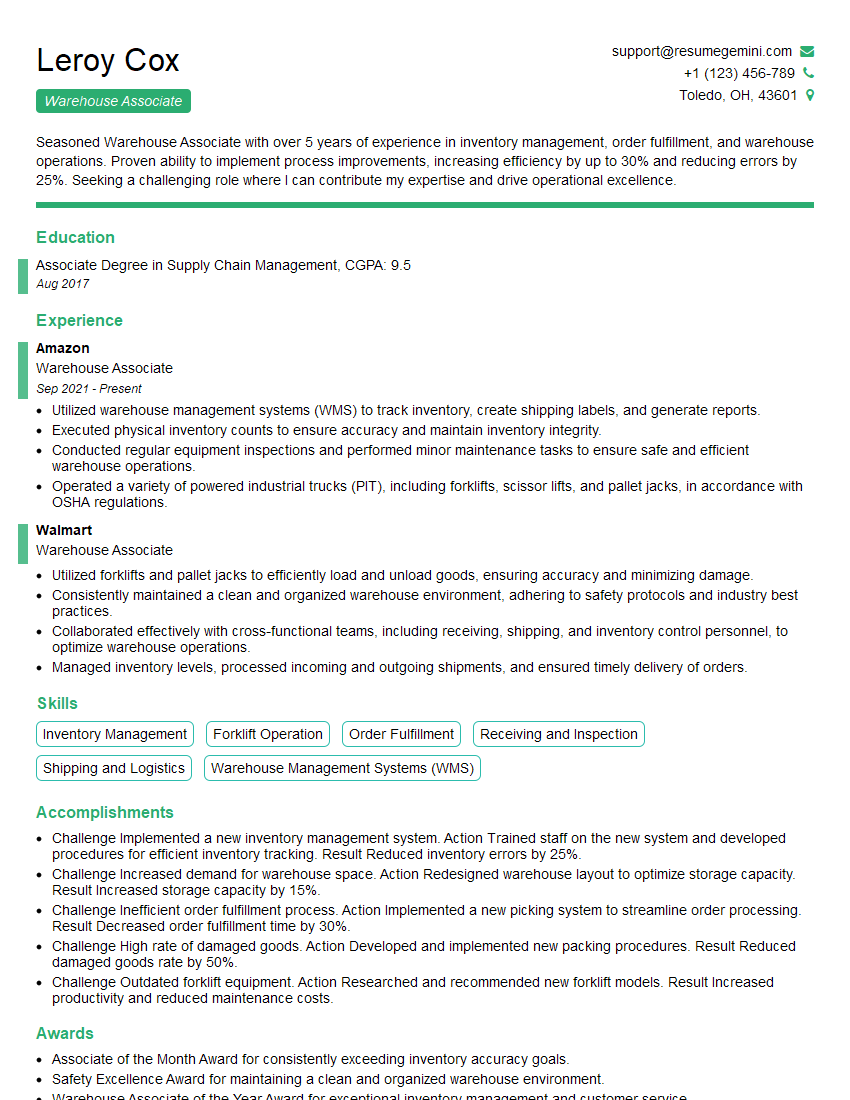
Warehouse Associate Resume Sample
- Operations Manager
- Distribution Center Manager
- Logistics Manager
- Warehouse Manager
- Transportation Coordinator
- Transportation Supervisor
- Warehouse Supervisor
- Logistics Coordinator
- Security Supervisor
- Logistics Specialist
- Inventory Manager
- Supply Chain Analyst
- Safety Officer
- Delivery Driver
- Inventory Control Specialist
- Shipping and Receiving Clerk
- Material Handler
- Order Picker
- Forklift Operator
- Yard Manager
- Dockworker
- Freight Handler
- Warehouse Associate
Explore more articles
Users Rating of Our Blogs
Share Your Experience
We value your feedback! Please rate our content and share your thoughts (optional).
What Readers Say About Our Blog
Hello,
we currently offer a complimentary backlink and URL indexing test for search engine optimization professionals.
You can get complimentary indexing credits to test how link discovery works in practice.
No credit card is required and there is no recurring fee.
You can find details here:
https://wikipedia-backlinks.com/indexing/
Regards
NICE RESPONSE TO Q & A
hi
The aim of this message is regarding an unclaimed deposit of a deceased nationale that bears the same name as you. You are not relate to him as there are millions of people answering the names across around the world. But i will use my position to influence the release of the deposit to you for our mutual benefit.
Respond for full details and how to claim the deposit. This is 100% risk free. Send hello to my email id: [email protected]
Luka Chachibaialuka
Hey interviewgemini.com, just wanted to follow up on my last email.
We just launched Call the Monster, an parenting app that lets you summon friendly ‘monsters’ kids actually listen to.
We’re also running a giveaway for everyone who downloads the app. Since it’s brand new, there aren’t many users yet, which means you’ve got a much better chance of winning some great prizes.
You can check it out here: https://bit.ly/callamonsterapp
Or follow us on Instagram: https://www.instagram.com/callamonsterapp
Thanks,
Ryan
CEO – Call the Monster App
Hey interviewgemini.com, I saw your website and love your approach.
I just want this to look like spam email, but want to share something important to you. We just launched Call the Monster, a parenting app that lets you summon friendly ‘monsters’ kids actually listen to.
Parents are loving it for calming chaos before bedtime. Thought you might want to try it: https://bit.ly/callamonsterapp or just follow our fun monster lore on Instagram: https://www.instagram.com/callamonsterapp
Thanks,
Ryan
CEO – Call A Monster APP
To the interviewgemini.com Owner.
Dear interviewgemini.com Webmaster!
Hi interviewgemini.com Webmaster!
Dear interviewgemini.com Webmaster!
excellent
Hello,
We found issues with your domain’s email setup that may be sending your messages to spam or blocking them completely. InboxShield Mini shows you how to fix it in minutes — no tech skills required.
Scan your domain now for details: https://inboxshield-mini.com/
— Adam @ InboxShield Mini
Reply STOP to unsubscribe
Hi, are you owner of interviewgemini.com? What if I told you I could help you find extra time in your schedule, reconnect with leads you didn’t even realize you missed, and bring in more “I want to work with you” conversations, without increasing your ad spend or hiring a full-time employee?
All with a flexible, budget-friendly service that could easily pay for itself. Sounds good?
Would it be nice to jump on a quick 10-minute call so I can show you exactly how we make this work?
Best,
Hapei
Marketing Director
Hey, I know you’re the owner of interviewgemini.com. I’ll be quick.
Fundraising for your business is tough and time-consuming. We make it easier by guaranteeing two private investor meetings each month, for six months. No demos, no pitch events – just direct introductions to active investors matched to your startup.
If youR17;re raising, this could help you build real momentum. Want me to send more info?
Hi, I represent an SEO company that specialises in getting you AI citations and higher rankings on Google. I’d like to offer you a 100% free SEO audit for your website. Would you be interested?
Hi, I represent an SEO company that specialises in getting you AI citations and higher rankings on Google. I’d like to offer you a 100% free SEO audit for your website. Would you be interested?
good