Cracking a skill-specific interview, like one for Corrosion Inhibitors, requires understanding the nuances of the role. In this blog, we present the questions you’re most likely to encounter, along with insights into how to answer them effectively. Let’s ensure you’re ready to make a strong impression.
Questions Asked in Corrosion Inhibitors Interview
Q 1. Explain the different types of corrosion and how inhibitors work against each.
Corrosion is the deterioration of a material, usually a metal, due to a chemical or electrochemical reaction with its environment. There are several types, each requiring a tailored approach to inhibition.
- Uniform Corrosion: This is the most common type, where the corrosion rate is relatively uniform across the metal surface. Think of a rusty nail – it’s evenly corroded. Inhibitors work here by forming a protective film on the surface, preventing contact with the corrosive environment.
- Pitting Corrosion: This is localized corrosion that results in small holes or pits on the metal surface. Imagine tiny craters forming on a metal plate. Inhibitors can be effective by passivating the metal surface or blocking the initiation sites of pits.
- Crevice Corrosion: This occurs in confined spaces, such as crevices or gaps, where oxygen concentration is low. Think of corrosion under a bolt head. Inhibitors need to penetrate these confined spaces to be effective, which can be challenging.
- Galvanic Corrosion: This happens when two dissimilar metals are in contact in an electrolyte. The more active metal corrodes preferentially. Like dissimilar metals in a seawater environment. Inhibitors can be applied to either of the metals or selectively to the more active metal to suppress corrosion.
- Stress Corrosion Cracking (SCC): This is a combination of corrosive environment and tensile stress leading to cracking. Inhibitors here help to mitigate the corrosive environment’s contribution to cracking.
Inhibitors work by interfering with the electrochemical reactions that cause corrosion. They can do this by reducing the rate of the anodic reaction (metal dissolution) or the cathodic reaction (reduction of oxygen or hydrogen ions), or both.
Q 2. What are the key mechanisms of corrosion inhibition?
Corrosion inhibition relies on several key mechanisms:
- Formation of a Protective Film: Many inhibitors adsorb onto the metal surface, forming a protective barrier that prevents corrosive agents from reaching the metal. This can be a passive layer, like an oxide film, or an adsorbed layer of inhibitor molecules.
- Modification of the Electrode Surface: Some inhibitors alter the surface properties of the metal, making it less reactive. This might involve changing the surface charge or reducing the number of active sites for corrosion.
- Scavenging of Corrosive Species: Certain inhibitors, like oxygen scavengers, remove corrosive species from the environment, reducing their ability to attack the metal. This might involve reacting with oxygen, thereby reducing its concentration.
- Precipitation of Insoluble Compounds: Some inhibitors react with corrosive ions in the environment to form insoluble compounds that precipitate out of the solution, preventing them from contacting the metal surface.
The specific mechanism employed depends on the type of inhibitor and the corrosion environment.
Q 3. Describe the different types of corrosion inhibitors (e.g., anodic, cathodic, mixed).
Corrosion inhibitors are broadly classified into:
- Anodic Inhibitors: These inhibitors slow down the anodic reaction, i.e., the oxidation of the metal. They often form a passive layer on the metal surface, making it less susceptible to corrosion. Chromates and molybdates are classic examples, though concerns about chromate toxicity have led to their decreased use.
- Cathodic Inhibitors: These reduce the rate of the cathodic reaction, which is the reduction of oxygen or hydrogen ions. They often work by reducing the availability of electrons, thus decreasing the driving force for metal dissolution. Examples include zinc salts and other metal ions.
- Mixed Inhibitors: These inhibitors affect both the anodic and cathodic reactions. They offer more comprehensive protection than anodic or cathodic inhibitors alone and often provide the best performance. Many organic inhibitors fall into this category.
The choice of inhibitor type depends on the specific corrosion mechanism and the desired level of protection.
Q 4. How do you select the appropriate corrosion inhibitor for a specific application?
Selecting the right corrosion inhibitor is crucial and involves a systematic approach:
- Identify the Corrosion Type and Environment: Characterize the metal, the corrosive environment (pH, temperature, presence of other ions), and the type of corrosion occurring. Is it uniform, pitting, crevice, or something else?
- Consider Material Compatibility: Ensure the inhibitor is compatible with the metal being protected. Some inhibitors may be aggressive towards certain metals.
- Evaluate Inhibitor Performance: Test the inhibitor’s effectiveness using standardized corrosion testing methods (e.g., weight loss measurements, electrochemical techniques). This is usually done in simulated environments.
- Toxicity and Environmental Impact: Assess the environmental and health risks associated with the inhibitor. Regulations and safety standards must be considered. Many modern formulations focus on environmentally benign solutions.
- Cost-Effectiveness: Balance the cost of the inhibitor with its effectiveness and long-term protection.
Often, laboratory testing and pilot-scale trials are conducted before implementing an inhibitor on a large scale.
Q 5. Discuss the factors influencing the effectiveness of corrosion inhibitors.
Several factors influence the effectiveness of corrosion inhibitors:
- Concentration of Inhibitor: Higher concentrations usually lead to better protection, up to a certain point, after which the effectiveness plateaus.
- Temperature: Temperature affects both the corrosion rate and the inhibitor’s adsorption and desorption processes. High temperatures can reduce inhibitor effectiveness.
- pH: The pH of the environment significantly impacts inhibitor performance. Some inhibitors are more effective at certain pH ranges.
- Presence of Other Ions: The presence of other ions in the solution can compete with the inhibitor for adsorption sites or react with the inhibitor, reducing its effectiveness.
- Inhibitor Type and Structure: The chemical structure of the inhibitor strongly determines its effectiveness. The presence of specific functional groups is key.
- Surface Condition of the Metal: A clean, smooth metal surface will generally exhibit better inhibitor adsorption than a rough or contaminated surface.
Optimizing these factors is crucial for maximizing the effectiveness of corrosion inhibitors.
Q 6. What are the limitations of using corrosion inhibitors?
Despite their benefits, corrosion inhibitors have limitations:
- Toxicity: Some inhibitors, especially older formulations, can be toxic to humans and the environment. Regulations regarding acceptable levels need to be carefully followed.
- Limited Applicability: Inhibitors may not be effective under all conditions. High temperatures, aggressive environments, or specific corrosion mechanisms can negate their efficacy.
- Inhibitor Breakdown: Inhibitors can degrade or decompose over time, requiring periodic replenishment or more frequent replacement. The degradation rate is highly dependent on the environment and inhibitor.
- Compatibility Issues: Some inhibitors may not be compatible with all materials. They could damage certain metals or polymeric coatings. This necessitates careful selection.
- Cost: Depending on the level of protection required and the complexity of the situation, inhibitors can add to the overall operational costs.
Careful consideration of these limitations is essential for successful inhibitor implementation.
Q 7. Explain the concept of inhibitor adsorption and its role in corrosion prevention.
Inhibitor adsorption is a crucial process in corrosion prevention. It’s the process by which inhibitor molecules bind to the metal surface.
Think of it like painting a wall. The paint (inhibitor) adheres to the surface (metal), creating a protective layer. This adsorbed layer acts as a barrier, preventing corrosive species from reaching the metal and initiating the corrosion process.
The strength of adsorption depends on several factors, including the chemical structure of the inhibitor, the surface properties of the metal, and the solution chemistry (pH, temperature, presence of other ions). Stronger adsorption typically leads to better corrosion protection.
Different types of adsorption can occur, including physisorption (weak van der Waals forces) and chemisorption (strong chemical bonds). Chemisorption usually provides stronger and more lasting protection. The type of adsorption dictates the inhibitor’s longevity and performance.
Q 8. How do you determine the optimal concentration of a corrosion inhibitor?
Determining the optimal concentration of a corrosion inhibitor is crucial for effective protection without unnecessary cost or potential negative impacts. It’s not a one-size-fits-all answer; it depends on several factors including the specific inhibitor, the corrosive environment (pH, temperature, the presence of other ions), and the material being protected. We typically employ a systematic approach:
- Laboratory Testing: We start with laboratory experiments using different concentrations of the inhibitor in solutions mimicking the real-world environment. Techniques like weight loss measurements, electrochemical impedance spectroscopy (EIS), and potentiodynamic polarization are used to assess corrosion rates at various inhibitor concentrations.
- Concentration-Corrosion Rate Curves: The data from these tests are plotted to generate a concentration-corrosion rate curve. This curve usually shows an initial steep decrease in corrosion rate as inhibitor concentration increases, followed by a plateau where further increases in concentration offer diminishing returns. The optimal concentration is typically found at or near this plateau, where the corrosion rate is significantly reduced, but adding more inhibitor provides minimal additional protection.
- Economic Considerations: While the lowest corrosion rate is ideal, the cost of the inhibitor must also be factored in. The optimal concentration balances maximum corrosion protection with cost-effectiveness. A slightly higher corrosion rate at a significantly lower inhibitor concentration might be more economical.
- Pilot Plant Testing: Before full-scale implementation, pilot plant studies in a real-world setting are often conducted to validate the optimal concentration determined in the lab. This stage accounts for potential unforeseen interactions and confirms the effectiveness under real operating conditions.
For example, if we’re protecting a steel pipeline, we might find that a concentration of 100 ppm of a specific inhibitor provides excellent protection with minimal cost compared to a concentration of 200 ppm, which provides only marginal improvement. This data-driven approach ensures optimal efficiency and cost-effectiveness.
Q 9. Describe various methods for evaluating the effectiveness of a corrosion inhibitor (e.g., weight loss, electrochemical techniques).
Evaluating corrosion inhibitor effectiveness requires a combination of methods, each offering unique insights. Here are some key techniques:
- Weight Loss Measurement: This is a simple, yet effective method. A pre-weighed metal specimen is immersed in the corrosive environment, with and without the inhibitor. After a specific time period, the specimen is cleaned, dried, and reweighed. The difference in weight represents the metal loss due to corrosion. The lower the weight loss with the inhibitor, the more effective it is. This technique is straightforward but lacks sensitivity to subtle changes in the corrosion process.
- Electrochemical Techniques: These are powerful tools providing more detailed insights into the corrosion mechanism.
- Potentiodynamic Polarization: This method involves measuring the current as a function of applied potential. The corrosion rate is determined from the Tafel slopes of the polarization curve. Inhibitors typically shift the corrosion potential to more positive values and reduce the corrosion current density.
- Electrochemical Impedance Spectroscopy (EIS): EIS probes the electrochemical system’s response to a small AC signal over a range of frequencies. It provides information about the various stages of the corrosion process and the inhibitor’s influence on these stages. EIS data provide a more complete picture of the inhibitor’s protective mechanism, identifying if it forms a protective film or alters the charge transfer processes.
- Other Methods: Visual inspection, surface analysis techniques (like scanning electron microscopy – SEM), and hydrogen permeation measurements also offer valuable information, though they are often less common in routine evaluation.
By combining multiple techniques, a comprehensive understanding of the inhibitor’s performance can be achieved, providing a clear picture of its effectiveness and mechanism of action. For example, EIS data can help understand whether an inhibitor acts by forming a protective layer or via adsorption, while weight loss measurements can provide an overall indication of the effectiveness of the protective layer.
Q 10. What are some common environmental factors affecting inhibitor performance?
Environmental factors significantly impact inhibitor performance. Understanding these factors is crucial for selecting the right inhibitor and predicting its long-term efficacy:
- Temperature: Higher temperatures usually accelerate corrosion reactions, potentially exceeding the inhibitor’s capacity. Inhibitors must be selected based on the expected temperature range. Some inhibitors might be effective at low temperatures but lose their efficiency as temperature rises.
- pH: The pH of the environment greatly influences corrosion and inhibitor performance. Many inhibitors are pH-dependent, with optimal performance within a specific range. Changes in pH can lead to inhibitor decomposition or reduced adsorption onto the metal surface.
- Oxygen Concentration: Oxygen often plays a crucial role in corrosion processes. Some inhibitors are designed to specifically scavenge oxygen, reducing its contribution to corrosion. Inhibitors need to be selected based on the expected oxygen levels in the system.
- Presence of Other Ions: The presence of other ions in the environment (e.g., chlorides, sulfates) can interfere with inhibitor action. Some ions might compete for adsorption sites on the metal surface, reducing the inhibitor’s effectiveness. Others could react with the inhibitor, reducing its concentration or changing its chemical properties.
- Flow Rate: High flow rates can wash away adsorbed inhibitors, leading to decreased protection, especially for film-forming inhibitors. In such cases, more robust, strongly adsorbing inhibitors are needed.
For example, an inhibitor effective in a low-temperature, low-oxygen environment might completely fail in a high-temperature, high-chloride environment. Thorough environmental characterization is essential for selecting and applying inhibitors effectively.
Q 11. How do you address compatibility issues between corrosion inhibitors and other materials?
Compatibility issues between corrosion inhibitors and other materials in the system are a critical concern. These issues can range from inhibitor degradation to material damage:
- Material Compatibility Testing: Before implementation, thorough compatibility tests must be conducted between the chosen inhibitor and all materials in contact with the system (piping, gaskets, coatings, etc.). This often involves immersion testing under simulated operating conditions, assessing any chemical changes, swelling, or degradation of materials.
- Inhibitor Selection: Selecting an inhibitor compatible with all system materials is paramount. Specific inhibitor types are designed for specific applications and materials. For instance, certain inhibitors are incompatible with certain polymers, potentially leading to material degradation.
- Mitigation Strategies: If incompatibility is detected, strategies to mitigate the issue might include using protective coatings on susceptible materials, selecting alternative inhibitors, or adjusting the inhibitor concentration to minimize adverse effects. In some cases, employing a compatible barrier layer between the inhibitor and the susceptible material might be a solution.
- Careful Monitoring: After deployment, ongoing monitoring of the system and its materials is crucial. Regular inspection and analysis can detect any early signs of incompatibility, allowing for timely interventions.
For example, using a specific organic inhibitor in a system with certain rubbers might cause the rubbers to swell and degrade. Thorough testing and careful selection are crucial to avoid costly repairs or system failures.
Q 12. What safety precautions should be considered when handling corrosion inhibitors?
Handling corrosion inhibitors requires stringent safety precautions due to their potential health and environmental hazards. Many inhibitors are toxic, corrosive, or flammable:
- Personal Protective Equipment (PPE): Appropriate PPE, including gloves, eye protection, respiratory protection, and protective clothing, is mandatory when handling inhibitors. The type of PPE depends on the specific inhibitor and its hazards.
- Ventilation: Adequate ventilation is necessary to prevent the inhalation of inhibitor vapors or fumes, especially in confined spaces. Local exhaust ventilation might be required for specific operations.
- Spill Response Plan: A comprehensive spill response plan should be in place, including procedures for containment, cleanup, and disposal of spilled inhibitors. Absorbent materials, specific neutralizing agents, and appropriate disposal methods must be readily available.
- Storage and Handling: Inhibitors should be stored in properly labeled containers in designated areas, away from incompatible materials or ignition sources. Appropriate material handling equipment should be used for transferring inhibitors.
- Training and Education: All personnel handling inhibitors should receive comprehensive training on the potential hazards, safe handling procedures, and emergency response measures.
- Waste Disposal: Proper disposal of spent inhibitors and contaminated materials is crucial to prevent environmental contamination. Compliance with all relevant environmental regulations is mandatory.
Ignoring these precautions can lead to serious health issues, environmental damage, and costly remediation efforts.
Q 13. Explain the concept of synergism in corrosion inhibition.
Synergism in corrosion inhibition refers to the phenomenon where a combination of two or more inhibitors provides significantly greater corrosion protection than the sum of their individual effects. It’s like the whole being greater than the sum of its parts. This enhanced protection often arises from complementary mechanisms of action:
- Combined Mechanisms: One inhibitor might form a protective film, while another might adsorb onto the metal surface, blocking aggressive species. Their combined effect leads to superior protection.
- Improved Adsorption: One inhibitor can improve the adsorption of another, increasing the coverage and effectiveness of the protective layer.
- Enhanced Film Formation: One inhibitor might help in creating a more protective film, while the other helps prevent film breakdown.
For example, a mixture of an anodic inhibitor (which slows down the oxidation reaction) and a cathodic inhibitor (which slows down the reduction reaction) can exhibit synergism, leading to drastically reduced corrosion compared to using either inhibitor alone. This synergistic effect allows for lower individual inhibitor concentrations, reducing costs and potential negative impacts. Investigating synergism can unlock new cost-effective and high-performing inhibitor formulations.
Q 14. Describe the role of inhibitors in different industries (e.g., oil & gas, water treatment).
Corrosion inhibitors play a vital role across diverse industries:
- Oil & Gas Industry: Inhibitors are essential in protecting pipelines, storage tanks, and drilling equipment from corrosion caused by highly corrosive fluids (e.g., acidic crude oil, produced water, brine solutions). The selection of inhibitors depends heavily on the specific composition of the fluids and the operating conditions.
- Water Treatment: Inhibitors are crucial in preventing corrosion in water distribution systems, industrial cooling towers, and boilers. They protect the metallic infrastructure from degradation due to dissolved oxygen, aggressive ions, and fluctuating pH levels. The choice of inhibitors depends on water quality, system design, and environmental regulations.
- Automotive Industry: Inhibitors are widely used in antifreeze formulations to prevent corrosion in engine cooling systems. These inhibitors protect the engine components from corrosion by inhibiting oxidation and preventing the formation of corrosive byproducts.
- Aerospace Industry: Inhibitors play a vital role in protecting aircraft components from corrosion caused by atmospheric exposure, particularly in harsh environments near the coast or in high humidity.
- Chemical Processing Industry: Inhibitors protect process equipment from corrosion by various chemicals used and produced within the plant.
The specific inhibitor used depends heavily on the environmental conditions, the material being protected, and potential interactions with other materials and chemicals in the system. The selection of the correct inhibitor can drastically reduce maintenance costs and ensure safety by preventing equipment failures.
Q 15. How do you monitor and control corrosion inhibitor performance in a real-world system?
Monitoring and controlling corrosion inhibitor performance requires a multi-pronged approach combining regular inspections, laboratory analysis, and data interpretation. Think of it like regularly checking your car’s oil – you need to know its level and quality to prevent engine damage.
Firstly, we use in-situ techniques such as corrosion coupons or electrochemical probes placed directly in the system. Corrosion coupons are metal samples of the same material as the equipment; their weight loss over time directly indicates the corrosion rate. Electrochemical probes measure parameters like potential and current, giving real-time corrosion data. These methods provide continuous monitoring.
Secondly, regular sampling and laboratory analysis are crucial. We take samples of the system’s fluid and analyze them for inhibitor concentration, pH, and the presence of corrosive species. This allows us to verify if the inhibitor is being effectively delivered and if its concentration is sufficient. Spectroscopic techniques like UV-Vis or FTIR are commonly used for inhibitor analysis.
Finally, data analysis and interpretation are key to adjusting the inhibitor program. Trends in corrosion rates, inhibitor concentration, and other parameters are tracked and used to optimize the treatment regime. This might involve adjusting the inhibitor concentration, changing the injection rate, or even selecting a different inhibitor altogether. Statistical Process Control (SPC) charts are frequently employed to monitor trends and identify anomalies.
Career Expert Tips:
- Ace those interviews! Prepare effectively by reviewing the Top 50 Most Common Interview Questions on ResumeGemini.
- Navigate your job search with confidence! Explore a wide range of Career Tips on ResumeGemini. Learn about common challenges and recommendations to overcome them.
- Craft the perfect resume! Master the Art of Resume Writing with ResumeGemini’s guide. Showcase your unique qualifications and achievements effectively.
- Don’t miss out on holiday savings! Build your dream resume with ResumeGemini’s ATS optimized templates.
Q 16. What are some common challenges encountered when implementing corrosion inhibitor programs?
Implementing corrosion inhibitor programs presents several challenges. One major issue is inhibitor compatibility. The inhibitor must be compatible with the system’s material of construction, other chemicals present, and the operating conditions (temperature, pressure, pH). An incompatible inhibitor can be ineffective or even exacerbate corrosion. Imagine trying to mix oil and water – they don’t blend well and might even cause problems.
Another challenge is uniform inhibitor distribution. Ensuring the inhibitor reaches all surfaces effectively is crucial, especially in complex systems with stagnant zones or high flow areas. Uneven distribution leads to localized corrosion. Think of watering a garden – if you only water one section, the rest will dry out.
Environmental conditions can also significantly impact inhibitor effectiveness. High temperatures or the presence of aggressive species can reduce inhibitor efficiency. Furthermore, monitoring and controlling inhibitor concentration over time can be difficult, particularly in large systems with complex flow patterns.
Finally, cost optimization is an ever-present challenge. Inhibitors can be expensive, and achieving effective corrosion protection while minimizing costs requires careful planning and analysis.
Q 17. Discuss the environmental impact of corrosion inhibitors.
The environmental impact of corrosion inhibitors is a growing concern. Some inhibitors contain heavy metals, such as chromates, which are highly toxic and persistent pollutants. Their release into the environment can have severe consequences for aquatic life and human health. This is why there’s a strong push towards greener, environmentally friendly alternatives.
Other inhibitors, while not containing heavy metals, can still have environmental consequences. For example, some organic inhibitors can be persistent organic pollutants, and their biodegradability needs careful consideration. Improper disposal of spent inhibitor solutions can also contribute to environmental contamination.
The industry is actively seeking environmentally benign inhibitors, focusing on biodegradability, low toxicity, and reduced environmental persistence. Life cycle assessments (LCAs) are being increasingly used to evaluate the overall environmental impact of corrosion inhibitors, from their production to their disposal.
Q 18. Explain the differences between organic and inorganic corrosion inhibitors.
Organic and inorganic corrosion inhibitors differ significantly in their chemical structure and mechanism of action. Inorganic inhibitors are typically salts of metals such as chromates, phosphates, or zinc. They work by forming a protective layer on the metal surface, often through precipitation or adsorption. Chromates, for example, form a passive oxide layer, preventing further corrosion. However, many inorganic inhibitors are toxic and environmentally unfriendly, leading to their decreasing use.
Organic inhibitors are typically organic molecules containing functional groups like amines, imidazolines, or carboxylic acids. These molecules adsorb onto the metal surface, forming a protective film and hindering corrosive reactions. They operate through different mechanisms such as adsorption, complexation, and film formation. They offer advantages in terms of lower toxicity and better performance in certain environments but might not be as effective in all situations.
In short: inorganic inhibitors often rely on forming protective layers through chemical reactions, while organic inhibitors often rely on adsorption and film formation.
Q 19. What are some emerging trends in corrosion inhibitor technology?
Several emerging trends are shaping corrosion inhibitor technology. One is the development of environmentally benign inhibitors, using bio-based materials or designing inhibitors with improved biodegradability and lower toxicity. This is driven by stricter environmental regulations and growing awareness of the environmental consequences of traditional inhibitors.
Another trend is the development of smart inhibitors. These inhibitors can adapt to changing environmental conditions, optimizing their performance based on real-time feedback from sensors. This allows for more efficient corrosion protection and reduced inhibitor consumption.
The use of nanotechnology is also gaining traction. Nanoparticles can enhance inhibitor adsorption and film formation, improving their effectiveness. Furthermore, researchers are exploring the use of hybrid inhibitors, combining organic and inorganic components to leverage the advantages of both types.
Finally, computational modeling and simulations are playing an increasingly important role in inhibitor design and development, accelerating the discovery of new and improved corrosion inhibitors.
Q 20. How do you troubleshoot corrosion problems in industrial equipment?
Troubleshooting corrosion problems in industrial equipment involves a systematic approach combining visual inspection, material analysis, and environmental monitoring. It’s similar to diagnosing a medical problem – you need to gather information to pinpoint the cause.
First, we conduct a thorough visual inspection of the equipment to identify the location and extent of the corrosion. We look for signs like pitting, crevice corrosion, uniform corrosion, or stress corrosion cracking. Photographs and detailed descriptions are crucial for documentation.
Next, we perform material analysis to determine the type of corrosion and the root cause. This might involve analyzing corroded samples using techniques like microscopy (optical, SEM), X-ray diffraction, or chemical analysis. We also need to analyze the system’s operating parameters, including temperature, pressure, pH, and the chemical composition of the fluids.
Once the type of corrosion and the underlying cause are identified, we can develop a solution, which might involve modifying the operating conditions, implementing corrosion inhibitors, replacing corroded components, or selecting more corrosion-resistant materials. The solution will depend on the nature and severity of the corrosion problem, as well as economic considerations.
Q 21. Describe the process of developing and testing a new corrosion inhibitor.
Developing and testing a new corrosion inhibitor is a multi-stage process that involves synthesis, screening, and comprehensive evaluation. Think of it like creating a new drug – it requires rigorous testing before it can be used.
First, we design and synthesize potential inhibitor molecules, potentially using computational tools to predict their efficacy. This stage often involves chemical synthesis and purification techniques.
Next, we conduct initial screening tests to evaluate the inhibitor’s performance. This usually involves electrochemical techniques (e.g., potentiodynamic polarization, electrochemical impedance spectroscopy) and weight loss measurements using corrosion coupons. These tests are typically conducted in controlled laboratory environments under simulated conditions relevant to the target application.
Then comes extensive testing under realistic conditions. This might involve testing in pilot plants or field trials to assess the inhibitor’s long-term performance, its compatibility with other system components, and its overall effectiveness in a real-world scenario.
Finally, the results are analyzed and the inhibitor is optimized further. This iterative process continues until the inhibitor meets the required performance specifications and regulatory requirements. The entire process often takes several years and requires expertise in chemistry, materials science, and engineering.
Q 22. What are some examples of specific corrosion inhibitors and their applications?
Corrosion inhibitors are chemical substances added to an environment to reduce the rate of corrosion on a metal surface. They work through various mechanisms, depending on their chemical nature. There are many different types, categorized by their chemical structure or how they function.
- Organic Inhibitors: These often contain nitrogen, sulfur, or oxygen atoms that adsorb onto the metal surface, forming a protective layer. Examples include:
- Benzotriazole (BTA): Highly effective for copper and copper alloys, commonly used in cooling systems and antifreeze.
- Imidazolines: Used in various applications, including oil and gas pipelines and industrial water systems, often offering good performance at high temperatures.
- Amines: Various types are employed, depending on the application, and frequently work synergistically with other inhibitors.
- Inorganic Inhibitors: These usually contain inorganic salts or ions that form a protective layer on the metal surface. Examples include:
- Chromates: Historically used extensively but are now largely phased out due to toxicity concerns. They provide excellent corrosion protection but have severe environmental drawbacks.
- Nitrites: Used in various applications, particularly in closed systems like cooling water towers, but also have environmental limitations.
- Phosphates: Commonly used in water treatment systems and other applications, forming protective films on the metal surface.
- Volatile Corrosion Inhibitors (VCIs): These are low-molecular-weight organic compounds that vaporize and condense on metal surfaces, forming a protective layer. They are frequently used in packaging and storage applications to prevent corrosion during transit or storage.
The selection of a corrosion inhibitor depends strongly on the specific metal, the corrosive environment (e.g., acidic, alkaline, saline), and the required level of protection.
Q 23. How do you interpret electrochemical data related to corrosion inhibition?
Electrochemical techniques are crucial for understanding corrosion inhibition mechanisms and evaluating inhibitor effectiveness. Data interpretation typically involves analyzing polarization curves (Tafel plots) and electrochemical impedance spectroscopy (EIS) data.
Polarization Curves: These show the relationship between electrode potential and current density. An effective inhibitor will shift the corrosion potential (Ecorr) to more positive values (for cathodic protection) and reduce the corrosion current density (icorr). A lower icorr directly indicates a decreased corrosion rate.
Electrochemical Impedance Spectroscopy (EIS): This technique provides information about the impedance of the metal/solution interface. A successful inhibitor will increase the impedance, indicating a more resistive layer at the metal surface that blocks the corrosion process. EIS data are typically presented as Nyquist plots (complex plane plots) and Bode plots (frequency response). Analyzing these plots reveals the characteristics of the protective layer, such as its thickness and resistance. The equivalent circuit models help to extract specific parameters such as charge transfer resistance (Rct) which directly reflects the resistance to corrosion.
In essence, both techniques help determine whether the inhibitor effectively slows down the electrochemical reactions responsible for corrosion, thereby enhancing the protective capabilities.
Q 24. Explain the role of surface chemistry in corrosion inhibition.
Surface chemistry plays a pivotal role in corrosion inhibition. The effectiveness of an inhibitor depends on its ability to adsorb onto the metal surface and form a protective film. This adsorption process is governed by various factors such as:
- The nature of the metal surface: The surface’s roughness, crystal structure, and presence of oxides or other surface films all impact adsorption.
- The chemical structure of the inhibitor: Functional groups within the inhibitor molecule influence its ability to bond with the metal surface. Groups with lone pairs of electrons (e.g., nitrogen, sulfur, oxygen) are frequently involved in adsorption.
- The solution chemistry: Factors like pH, temperature, and the presence of other ions in the solution can affect both the inhibitor’s adsorption and the corrosion process itself.
The adsorption process can be physical (weak van der Waals forces) or chemical (stronger chemical bonds). Chemical adsorption typically results in stronger, more protective films. The type and strength of the formed layer determine how effectively the inhibitor prevents corrosion. For instance, a tightly packed, hydrophobic film will effectively prevent corrosive species from reaching the metal surface.
Understanding surface chemistry is crucial for developing and optimizing new corrosion inhibitors. Techniques like surface analysis (e.g., XPS, Auger spectroscopy) can help characterize the inhibitor film and elucidate its protective mechanism.
Q 25. Discuss the importance of proper inhibitor application techniques.
Proper application techniques are crucial for achieving the desired level of corrosion protection. Incorrect application can lead to ineffective inhibition or even accelerated corrosion in some instances.
Factors to consider:
- Concentration: Using the correct inhibitor concentration is paramount. Too low a concentration may not provide adequate protection, while too high a concentration could be wasteful, environmentally problematic, or even detrimental.
- Method of application: The method of delivery (e.g., immersion, spraying, injection) should be chosen based on the application. Thorough coverage of the metal surface is critical.
- Surface preparation: Cleaning the metal surface to remove oxides, scale, or other contaminants is essential for optimal inhibitor performance. A clean surface ensures proper contact between the inhibitor and the metal.
- Environmental conditions: Factors like temperature and flow rate can influence inhibitor effectiveness and require careful consideration during application.
- Compatibility: Inhibitor compatibility with other materials in the system (e.g., coatings, seals, gaskets) should be verified to avoid undesirable interactions.
Poor application practices might include improper mixing, incomplete surface coverage, and using incompatible materials. These can result in localized corrosion or inhibitor failure, necessitating thorough planning and adherence to established procedures.
Q 26. How do you manage corrosion inhibitor inventory and disposal?
Managing corrosion inhibitor inventory and disposal involves a multifaceted approach emphasizing safety, efficiency, and environmental responsibility.
Inventory Management:
- Tracking: Implementing a robust inventory management system (often computerized) is crucial to track quantities, expiration dates, and usage patterns, preventing shortages or wastage.
- Storage: Inhibitors should be stored in appropriate containers in designated areas, following safety guidelines and regulations.
- Procurement: Strategic purchasing based on consumption rates and projected needs helps manage costs and minimize storage space.
Disposal:
- Regulations: Strict adherence to local and national regulations governing hazardous waste disposal is mandatory. This often involves classifying the inhibitor according to its hazard profile and employing approved disposal methods.
- Recycling/Reuse: Exploring opportunities for recycling or reusing spent inhibitors, where feasible and environmentally sound, can significantly reduce disposal costs and environmental impact.
- Waste Minimization: Implementing best practices to minimize waste during application and handling (e.g., precise dispensing, leak prevention) reduces the total volume needing disposal.
- Contractors: If necessary, engaging licensed hazardous waste contractors for proper disposal is crucial for compliance and safety.
Effective inventory and disposal management contribute to cost savings, environmental protection, and regulatory compliance.
Q 27. What are some common regulatory requirements concerning corrosion inhibitors?
Regulatory requirements for corrosion inhibitors vary depending on the jurisdiction and the specific inhibitor used, but some common aspects include:
- Environmental regulations: Many inhibitors contain substances that are considered hazardous to the environment. Regulations often restrict their use, require specific disposal methods, and limit the concentration allowed in wastewater discharges. Examples include the restriction or prohibition of hexavalent chromium-based inhibitors.
- Health and safety regulations: Regulations addressing worker safety and exposure limits for hazardous materials typically govern the handling, storage, and application of corrosion inhibitors. Safety data sheets (SDS) are critical for informing users about hazards and handling precautions.
- Transportation regulations: The transportation of corrosion inhibitors is subject to regulations concerning hazardous materials, requiring appropriate packaging, labeling, and documentation.
- Product registration: In certain regions, inhibitors may require registration before they can be legally sold or used, which involves providing detailed information about their composition, properties, and potential environmental impacts.
Staying informed about relevant regulations is essential for compliance and avoiding penalties. Consulting with regulatory agencies and seeking professional advice from environmental consultants are highly recommended.
Q 28. Describe a situation where you had to troubleshoot a corrosion problem. What was your approach and outcome?
During a project involving offshore oil and gas pipelines, we experienced unexpected corrosion despite the implementation of a standard inhibitor program. The corrosion rate exceeded acceptable limits, threatening operational integrity.
Troubleshooting Approach:
- Site investigation: We conducted a thorough on-site inspection, collecting samples of the pipeline metal and the surrounding water for analysis.
- Laboratory analysis: Samples were analyzed for chemical composition, pH, and the presence of other potentially corrosive species. Electrochemical tests were performed to evaluate inhibitor effectiveness and corrosion mechanisms.
- Data analysis: We analyzed the collected data and historical records to pinpoint the root cause. This involved reviewing inhibitor concentration levels, application procedures, and environmental factors.
- Hypothesis generation: Based on the analysis, we hypothesized that changes in the water chemistry (increased salinity due to a seasonal shift) had rendered the existing inhibitor less effective.
- Testing and validation: We tested alternative inhibitors in the laboratory, simulating the changed water conditions. A new inhibitor was selected based on its demonstrated performance under these conditions.
- Implementation and monitoring: The selected inhibitor was implemented, and the corrosion rate was closely monitored using electrochemical sensors and regular inspections.
Outcome: By identifying the changed environmental conditions and choosing a more suitable inhibitor, we successfully mitigated the corrosion problem, bringing the corrosion rate back to acceptable levels and preventing potentially catastrophic failures.
Key Topics to Learn for Corrosion Inhibitors Interview
- Types of Corrosion Inhibitors: Understand the different classifications (anodic, cathodic, mixed), their mechanisms of action, and respective advantages and limitations. Explore examples like organic and inorganic inhibitors.
- Mechanism of Inhibition: Delve into the theoretical principles behind how inhibitors prevent corrosion. This includes adsorption, film formation, and their impact on electrochemical reactions. Consider factors influencing inhibitor efficiency.
- Practical Applications: Discuss real-world applications across various industries, such as oil and gas, water treatment, and chemical processing. Analyze specific use cases and the selection criteria for appropriate inhibitors in different environments.
- Environmental Considerations: Explore the environmental impact of corrosion inhibitors and the importance of selecting environmentally friendly options. Discuss regulations and best practices for responsible use.
- Testing and Evaluation: Familiarize yourself with common methods used to evaluate the effectiveness of corrosion inhibitors, including electrochemical techniques (e.g., potentiodynamic polarization), weight loss measurements, and visual inspection. Understand how to interpret test results.
- Synergistic Effects and inhibitor combinations: Explore how combining different inhibitor types can enhance performance and address complex corrosion challenges. Understand the factors influencing synergistic effects.
- Challenges and Limitations: Be prepared to discuss potential limitations of corrosion inhibitors, such as inhibitor depletion, compatibility issues, and the influence of environmental factors (temperature, pH, etc.) on their performance.
- Emerging Technologies: Research new and innovative approaches in corrosion inhibition, including the use of nanoparticles, coatings, and smart inhibitors.
Next Steps
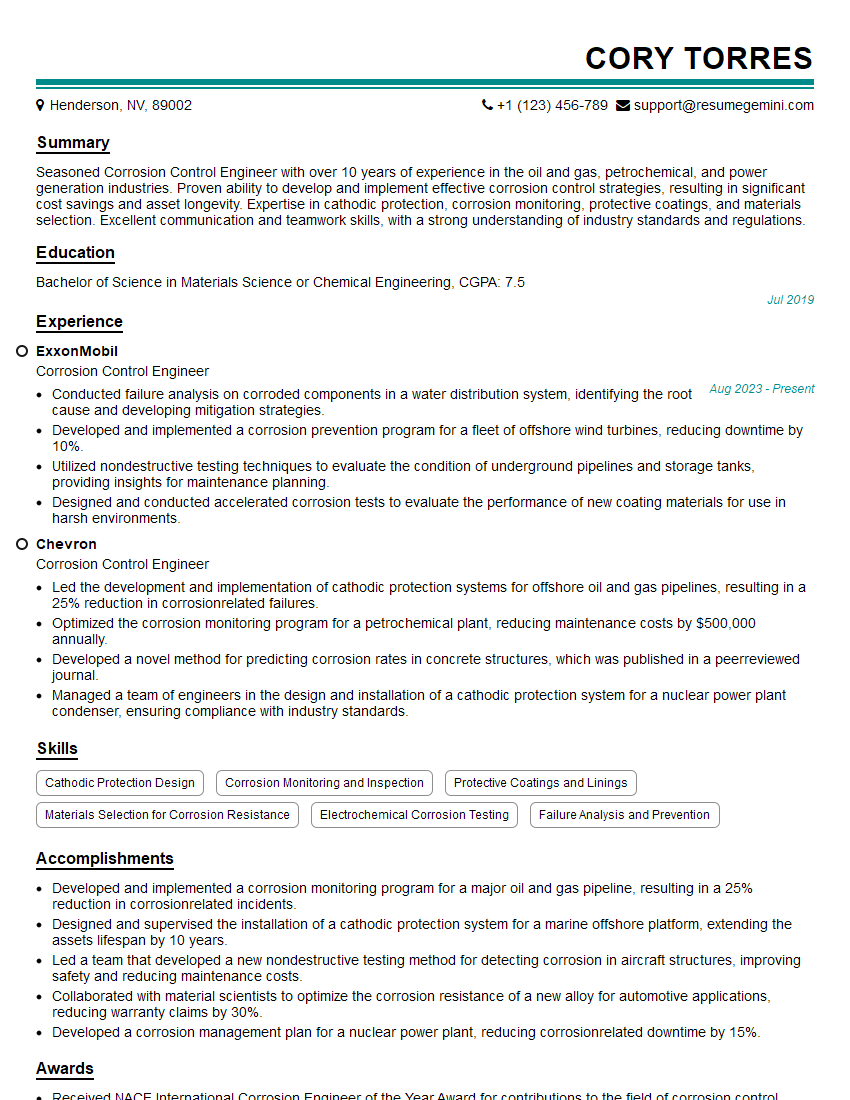
Mastering the principles and applications of corrosion inhibitors significantly enhances your career prospects in various engineering and scientific fields. A strong understanding of this crucial area opens doors to exciting opportunities and positions you as a valuable asset to any organization dealing with materials degradation. To maximize your chances, creating an ATS-friendly resume is paramount. This ensures your application gets noticed by recruiters. ResumeGemini is a trusted resource to help you build a professional and impactful resume that showcases your skills and experience effectively. Examples of resumes tailored specifically to the Corrosion Inhibitors field are available to help you craft a compelling application. Take the next step in advancing your career today!





Explore more articles
Users Rating of Our Blogs
Share Your Experience
We value your feedback! Please rate our content and share your thoughts (optional).
What Readers Say About Our Blog
Very informative content, great job.
good