Feeling uncertain about what to expect in your upcoming interview? We’ve got you covered! This blog highlights the most important HVAC Maintenance Planning interview questions and provides actionable advice to help you stand out as the ideal candidate. Let’s pave the way for your success.
Questions Asked in HVAC Maintenance Planning Interview
Q 1. Describe your experience in developing and implementing HVAC preventive maintenance schedules.
Developing and implementing effective HVAC preventive maintenance schedules is crucial for maximizing equipment lifespan, minimizing downtime, and reducing operational costs. My approach involves a thorough understanding of the specific HVAC systems in place – their make, model, operating conditions, and manufacturer recommendations.
I begin by creating a comprehensive database of all HVAC equipment, noting its age, operating hours, and any known issues. Then, I consult manufacturer’s guidelines and industry best practices to determine appropriate maintenance intervals for tasks such as filter changes, coil cleaning, belt inspections, and refrigerant checks. This information is then used to create a customized schedule, which typically involves a combination of daily, weekly, monthly, quarterly, semi-annual, and annual tasks. For example, a simple air filter change might be a weekly task, whereas a thorough inspection of a chiller could be a semi-annual event. The schedule is then broken down into specific work orders, assigning responsibility and ensuring all tasks are accounted for.
Finally, the implementation phase involves training maintenance personnel on proper procedures, providing them with the necessary tools and equipment, and establishing a system for tracking completed tasks and any identified problems. I regularly review and adjust the schedule based on actual performance data, equipment history, and any changes to the HVAC system or environmental conditions. This iterative process ensures the schedule remains effective and efficient over time.
Q 2. How do you prioritize maintenance tasks based on criticality and risk?
Prioritizing maintenance tasks is a critical aspect of effective HVAC management. I use a risk-based approach, combining criticality and likelihood of failure to determine the urgency of each task. Criticality refers to the impact of equipment failure on building operations or occupant comfort. For instance, a failure of the main chiller in a hospital would have far greater criticality than a malfunctioning air handler in a less critical area. Likelihood of failure is assessed based on factors like equipment age, operating hours, past maintenance history, and environmental conditions.
I often use a simple matrix to visualize this prioritization. Tasks are categorized based on high/medium/low criticality and high/medium/low likelihood of failure. High-criticality, high-likelihood tasks receive immediate attention. High-criticality, low-likelihood tasks are scheduled for regular preventive maintenance, whereas low-criticality tasks can be addressed more flexibly.
For example, a critical piece of equipment like a central air conditioning unit showing signs of wear (high likelihood of failure) in a hospital (high criticality) would be prioritized over a routine filter change in a less critical space.
Q 3. What software or tools do you use for HVAC maintenance planning and scheduling?
Effective HVAC maintenance planning relies heavily on appropriate software and tools. I have extensive experience using several CMMS (Computerized Maintenance Management Systems) such as Fiix, UpKeep, and Limble CMMS. These systems allow for centralized scheduling, work order management, parts inventory tracking, and reporting. They often include features such as automated notifications, mobile access for technicians, and integration with other building management systems (BMS).
In addition to CMMS, I utilize spreadsheet software like Microsoft Excel for data analysis and customized reporting. For example, I might use Excel to track key performance indicators (KPIs) such as mean time between failures (MTBF) or downtime, helping identify trends and areas for improvement. I also utilize specialized HVAC software for diagnostics and troubleshooting.
Q 4. Explain your process for tracking maintenance activities and generating reports.
Tracking maintenance activities and generating reports are essential for demonstrating compliance, identifying areas for improvement, and justifying maintenance budgets. My process begins with clear work orders generated within the CMMS or via spreadsheets. Each work order includes a detailed description of the task, assigned personnel, scheduled completion date, and required parts. Upon completion, technicians electronically update the work order, noting any findings or repairs performed. This information is automatically updated in the CMMS database.
Regular reports are then generated, providing a comprehensive overview of maintenance activities. These reports might include details such as completed work orders, outstanding tasks, parts usage, labor costs, and equipment downtime. Customized reports can be created to highlight specific KPIs or address particular concerns. For example, a report might focus on the performance of a specific equipment type, identifying areas needing extra attention. These reports are crucial for informed decision-making regarding future maintenance strategies and budget allocation.
Q 5. How do you identify potential equipment failures before they occur?
Predictive maintenance is crucial for preventing unexpected equipment failures. This involves utilizing various techniques to anticipate problems before they occur. This includes regular inspections, trend analysis of operating data, and the use of predictive maintenance technologies. Regular visual inspections can reveal signs of wear, leaks, or other abnormalities. I’ll often supplement this with data analysis, looking at trends in energy consumption, temperature readings, and vibration data.
For instance, a gradual increase in energy consumption by a cooling tower could indicate fouling or reduced efficiency, warranting a proactive cleaning or inspection. Similarly, an increase in vibration levels might indicate bearing wear in a compressor, allowing for timely replacement before catastrophic failure. More advanced techniques like infrared thermography can identify overheating components and prevent potential fires or equipment damage. These methods coupled with thorough record-keeping allows for a proactive and effective maintenance strategy.
Q 6. How do you manage spare parts inventory for HVAC systems?
Efficient spare parts inventory management is crucial for minimizing downtime and ensuring timely repairs. I use a combination of techniques to optimize our spare parts inventory. First, I conduct a thorough analysis of historical data to understand typical failure rates and lead times for parts. This helps determine appropriate safety stock levels for critical components. For example, a high-failure component might require a larger safety stock, whereas a rarely used part might only need a small inventory.
I also leverage the CMMS to track parts usage, automatically triggering re-ordering when stock levels fall below a predefined threshold. This minimizes the risk of running out of essential parts during repairs. Regular inventory audits help identify obsolete or excess parts, ensuring efficient allocation of resources. I utilize a ‘just-in-time’ approach where possible, avoiding excessive storage costs while maintaining adequate supply.
Q 7. Describe your experience with CMMS (Computerized Maintenance Management Systems).
My experience with CMMS (Computerized Maintenance Management Systems) is extensive. I’ve implemented and managed CMMS in several facilities, significantly improving maintenance efficiency and reducing operational costs. I understand the importance of selecting a CMMS that aligns with the specific needs of the facility and integrates with existing systems. This often involves careful consideration of factors such as user-friendliness, scalability, reporting capabilities, and integration with other systems like BMS (Building Management Systems).
I’m proficient in using CMMS to create and manage work orders, track maintenance activities, monitor equipment performance, and generate reports. Furthermore, I understand how to configure CMMS to support preventive maintenance schedules, optimize inventory management, and improve communication between maintenance personnel and management. For example, I’ve utilized CMMS to implement a preventative maintenance program that decreased equipment downtime by 20% and reduced overall maintenance costs by 15% in a previous role. This illustrates the significant impact of properly utilizing a CMMS.
Q 8. How do you ensure compliance with safety regulations during HVAC maintenance?
Ensuring safety during HVAC maintenance is paramount. My approach is multifaceted, beginning with rigorous adherence to OSHA (Occupational Safety and Health Administration) standards and any relevant local regulations. This involves comprehensive safety training for all technicians, covering topics like lockout/tagout procedures (preventing accidental energization of equipment), proper handling of refrigerants (avoiding leaks and exposure), and working at heights safety. We utilize personal protective equipment (PPE) such as safety glasses, gloves, and respirators, depending on the task.
Before any work commences, we conduct thorough site surveys to identify potential hazards, like asbestos or electrical hazards. We then develop a detailed safety plan, which includes risk assessments and mitigation strategies. This plan is communicated clearly to all team members before work begins. Regular safety audits and toolbox talks are conducted to reinforce safe practices and address any emerging concerns. Finally, we maintain meticulous records of all safety training, inspections, and incidents, ensuring complete traceability and accountability.
For example, when working with refrigerants, we strictly follow EPA guidelines for handling and disposal. We use refrigerant recovery equipment to capture and recycle refrigerants, minimizing environmental impact and preventing potential health risks. Every technician is trained to identify potential leaks using electronic leak detectors and properly address them.
Q 9. How do you handle unexpected equipment failures and emergency repairs?
Unexpected equipment failures require a swift and efficient response. Our strategy revolves around proactive measures, such as predictive maintenance using data analytics from building management systems (BMS) to anticipate potential issues. This allows us to schedule repairs during off-peak times, minimizing disruption.
However, emergencies happen. When an unexpected failure occurs, our first step is to assess the situation’s severity and immediate risks (e.g., safety hazards, potential for significant damage). We prioritize the safety of occupants and the protection of the equipment itself. Next, we follow a pre-defined emergency protocol. This involves contacting the appropriate personnel, isolating the affected area, and quickly deploying a qualified team to address the issue.
Our technicians are equipped with mobile devices that allow for real-time communication and access to troubleshooting guides and schematics. We also maintain a comprehensive inventory of essential spare parts to minimize downtime. For critical equipment, we may have service contracts with specialized vendors for rapid response. Post-repair, we conduct a thorough investigation to determine the root cause of the failure and implement corrective actions to prevent recurrence. We document the entire process and use this information to refine our preventive maintenance program.
Q 10. Explain your approach to managing contractors and subcontractors for HVAC maintenance.
Managing contractors and subcontractors effectively involves establishing clear communication channels and well-defined contracts. We select contractors based on their experience, qualifications, licensing, and insurance coverage. We prioritize those with a proven track record of safety and quality workmanship. Contracts are meticulously drafted, outlining scope of work, payment terms, timelines, safety requirements, and performance metrics.
Regular communication is essential. We utilize project management software to track progress, manage tasks, and facilitate seamless collaboration. We conduct regular site visits to monitor the contractor’s work, ensuring adherence to the contract and our quality standards. Performance is evaluated based on predetermined KPIs, such as adherence to timelines, adherence to safety regulations, quality of workmanship and budget adherence. Prompt feedback and transparent communication are key to maintaining strong working relationships and ensuring successful project outcomes.
For example, we might use a specialized chiller service contractor for a complex repair and a local electrician for smaller electrical works. Each has their clearly defined role and responsibilities documented, helping streamline the entire maintenance process.
Q 11. How do you calculate the ROI of preventive maintenance programs?
Calculating the ROI of preventive maintenance programs requires a comprehensive approach. We begin by identifying the costs associated with the program, including labor, parts, and materials. This is then compared against the costs of reactive maintenance (emergency repairs, etc.). We analyze historical data on equipment failures, repair costs, and downtime to estimate the potential savings from preventing these issues.
For instance, a pump failure might cost $5,000 in repairs and cause $10,000 in lost productivity. Preventive maintenance, including regular inspections and lubrication, might cost only $500 annually. In this scenario, the preventive maintenance program would quickly show a positive ROI by preventing costly failures.
Beyond direct cost savings, we also consider intangible benefits like improved equipment lifespan, enhanced occupant comfort, increased energy efficiency, and reduced risk of liability. These factors often require qualitative assessment, but they significantly contribute to the overall ROI. A well-structured cost-benefit analysis helps determine the financial viability and value proposition of a preventive maintenance program.
Q 12. What are the key performance indicators (KPIs) you use to measure the effectiveness of HVAC maintenance?
Key Performance Indicators (KPIs) are vital for measuring HVAC maintenance effectiveness. We track several metrics, including:
- Mean Time Between Failures (MTBF): This indicates the average time between equipment failures, reflecting the effectiveness of preventive maintenance in extending equipment lifespan. A higher MTBF is desirable.
- Mean Time To Repair (MTTR): This measures the average time taken to repair equipment after a failure. A lower MTTR indicates efficient repair processes.
- Equipment Uptime: The percentage of time equipment is operational. Higher uptime signifies reduced disruptions and improved efficiency.
- Preventive Maintenance Completion Rate: Tracks the percentage of scheduled preventive maintenance tasks completed on time. A high completion rate reflects good planning and execution.
- Energy Consumption: Monitoring energy consumption allows for the identification of inefficiencies, helping optimize energy usage and reduce operational costs.
- Customer Satisfaction: Regular surveys or feedback mechanisms gauge customer satisfaction levels concerning indoor climate comfort and service responsiveness.
By tracking these KPIs, we can identify areas for improvement, optimize maintenance strategies, and demonstrate the program’s value to stakeholders.
Q 13. How do you optimize HVAC energy efficiency through maintenance planning?
Optimizing HVAC energy efficiency through maintenance planning is crucial for cost savings and environmental sustainability. Our approach focuses on several key areas:
- Regular Cleaning and Inspection: Dirty coils, clogged filters, and leaky ductwork significantly reduce efficiency. Regular cleaning and inspection ensure optimal airflow and heat transfer, minimizing energy waste.
- Calibration and Adjustment: Improperly calibrated equipment can consume excessive energy. Regular calibration ensures optimal performance and efficient operation.
- Motor and Bearing Lubrication: Well-lubricated motors and bearings reduce friction and energy loss, improving efficiency and extending equipment lifespan.
- Refrigerant Leak Detection and Repair: Refrigerant leaks drastically reduce the cooling capacity of HVAC systems, forcing them to work harder and consume more energy. Regular leak detection and prompt repairs are vital.
- Control System Optimization: Modern HVAC systems often have sophisticated control systems. Regular checks and optimization of these systems can significantly improve energy efficiency. This can include adjusting setpoints based on occupancy schedules and using smart building technologies.
For example, a simple act like cleaning condenser coils can improve a chiller’s efficiency by 10-15%, leading to substantial energy savings over time. We use data analytics from building management systems to monitor energy performance and identify areas for optimization.
Q 14. How familiar are you with different HVAC system types (e.g., chillers, boilers, VRF)?
I possess extensive knowledge of various HVAC system types. My experience encompasses:
- Chillers: I’m familiar with various chiller types, including absorption chillers, centrifugal chillers, and screw chillers, understanding their operational principles, maintenance requirements, and common failure points. I’m proficient in troubleshooting chiller issues, managing refrigerant levels, and conducting performance testing.
- Boilers: My expertise extends to different boiler types, such as water tube boilers, fire tube boilers, and electric boilers. I can perform inspections, conduct water treatment, manage fuel systems, and identify issues like scaling, corrosion, or combustion inefficiencies.
- VRF (Variable Refrigerant Flow) Systems: I understand the intricacies of VRF systems, including their design, operation, and maintenance. This includes troubleshooting refrigerant flow issues, managing zoning control systems, and performing regular inspections of indoor and outdoor units.
- Air Handling Units (AHUs): I’m experienced in maintaining and servicing AHUs of various sizes and configurations. My knowledge covers filter replacement, fan motor inspections, coil cleaning, and balancing airflow.
- Packaged Units and Split Systems: I have extensive hands-on experience with various packaged units (rooftop units, split systems, etc.) including diagnosis and repair of common problems like compressor issues, refrigerant leaks, and control system malfunctions.
My knowledge extends to the integration of these systems within building management systems (BMS) and the use of data analytics to optimize performance and predict potential issues. I am comfortable working with both new and legacy systems.
Q 15. Describe your experience with developing and implementing a preventative maintenance program.
Developing and implementing a preventative maintenance (PM) program involves a systematic approach to keeping HVAC systems running efficiently and extending their lifespan. It begins with a thorough assessment of all equipment, noting its age, make, model, and operating hours. This data forms the basis for a customized PM schedule.
My approach typically follows these steps:
- Equipment Inventory and Assessment: Creating a detailed database of all HVAC equipment, including location, specifications, and operational history.
- Frequency Determination: Establishing a PM schedule based on manufacturer recommendations, equipment type, and usage patterns. For example, chillers might require monthly inspections, while air handlers might need quarterly checks.
- Task Definition: Specifying the precise tasks to be performed during each PM visit. This includes visual inspections, filter changes, lubrication, cleaning, and functional tests. A detailed checklist is crucial here.
- Resource Allocation: Determining the personnel, tools, and materials needed for each PM task. This involves scheduling technicians and ensuring adequate inventory of spare parts.
- Implementation and Tracking: Implementing the PM schedule using a computerized maintenance management system (CMMS). This allows for efficient scheduling, task assignment, and real-time tracking of progress and completion. The CMMS also facilitates reporting and analysis.
- Continuous Improvement: Regularly reviewing the PM program’s effectiveness, identifying areas for improvement, and adjusting the schedule as needed based on equipment performance and historical data. This is a vital iterative process.
For example, in a previous role, I implemented a PM program for a large office complex. By meticulously tracking maintenance activities and analyzing equipment performance data, we reduced equipment downtime by 25% and extended the lifespan of critical components.
Career Expert Tips:
- Ace those interviews! Prepare effectively by reviewing the Top 50 Most Common Interview Questions on ResumeGemini.
- Navigate your job search with confidence! Explore a wide range of Career Tips on ResumeGemini. Learn about common challenges and recommendations to overcome them.
- Craft the perfect resume! Master the Art of Resume Writing with ResumeGemini’s guide. Showcase your unique qualifications and achievements effectively.
- Don’t miss out on holiday savings! Build your dream resume with ResumeGemini’s ATS optimized templates.
Q 16. How do you handle discrepancies between planned and actual maintenance activities?
Discrepancies between planned and actual maintenance activities are inevitable, but they should be promptly addressed and documented. The first step is to identify the root cause of the discrepancy. Was there a technician shortage? Were there unforeseen repairs needed? Did the CMMS require an update? Was there an issue with parts availability?
Once the reason is identified, I address the situation as follows:
- Update the CMMS: Immediately update the CMMS to reflect the actual maintenance performed, including any deviations from the plan. This is vital for accurate record-keeping and future planning.
- Re-schedule: Reschedule any missed or delayed tasks, prioritizing critical maintenance items. This might involve adjusting the PM schedule or allocating additional resources.
- Root Cause Analysis: Conduct a thorough root cause analysis to prevent similar discrepancies from occurring in the future. This may involve reviewing scheduling processes, technician training, or parts procurement procedures.
- Communication: Communicate the discrepancy and its resolution to relevant stakeholders, providing updates on the revised schedule and any potential impacts.
For instance, if a scheduled filter change was missed due to a parts shortage, I would update the CMMS, order the replacement filters immediately, reschedule the task, and communicate this to building management.
Q 17. How do you communicate maintenance schedules and updates to stakeholders?
Effective communication of maintenance schedules and updates is crucial for successful HVAC maintenance. I use a multi-faceted approach that caters to different stakeholders:
- CMMS-generated reports: The CMMS provides automated reports on scheduled and completed maintenance tasks, which are shared regularly with building managers and other key personnel. This keeps everyone informed about the status of maintenance activities.
- Email updates: For significant updates or changes to the schedule (e.g., emergency repairs), I send targeted email notifications to relevant stakeholders.
- Visual dashboards: I often create visual dashboards summarizing key performance indicators (KPIs) such as equipment uptime, PM completion rates, and work order backlog. This provides a quick and clear overview of maintenance performance.
- Regular meetings: I hold regular meetings with building managers and maintenance teams to discuss maintenance schedules, address any concerns, and plan for future activities.
- Clearly labeled equipment: Each HVAC unit is clearly labeled with its unique identifier and scheduled maintenance dates, which makes scheduling easier for everyone involved.
Think of it as keeping everyone on the same page—preventing miscommunication and improving collaboration among all stakeholders.
Q 18. What is your approach to training technicians on proper maintenance procedures?
Technician training is paramount for ensuring the effectiveness and safety of HVAC maintenance procedures. My approach involves a blend of classroom instruction, hands-on training, and ongoing professional development.
- Classroom Training: I conduct thorough classroom sessions that cover theoretical concepts, safety regulations, and specific maintenance procedures for different HVAC equipment. This includes reviewing manufacturer’s manuals and safety data sheets.
- Hands-on Training: I provide extensive hands-on training in a controlled environment, allowing technicians to practice maintenance procedures under supervision. This is crucial for developing practical skills and building confidence.
- Mentorship and Shadowing: Experienced technicians mentor newer team members, providing on-the-job training and guidance. Shadowing experienced colleagues allows new technicians to learn best practices and troubleshoot real-world problems.
- Continuing Education: I encourage technicians to participate in continuing education programs and obtain industry certifications to stay updated on the latest technologies and best practices. I also offer access to online resources and training materials.
- Regular Performance Reviews: Regular performance reviews and feedback sessions help to identify training needs and track progress, ensuring technicians maintain a high level of competency.
Imagine it as a multi-layered approach—building a strong foundation of knowledge and skills, followed by ongoing refinement through practice and professional development.
Q 19. Describe a time you had to troubleshoot a complex HVAC system issue.
I once encountered a complex issue with a large-scale air conditioning system in a hospital. The system was experiencing significant temperature fluctuations, leading to inconsistent cooling in various parts of the building. Initial troubleshooting pointed to multiple potential causes, including refrigerant leaks, faulty sensors, and issues with the control system.
My approach involved a systematic diagnostic process:
- Data Analysis: I started by analyzing data from the building management system (BMS), reviewing historical temperature logs and identifying patterns in the fluctuations.
- Visual Inspection: A thorough visual inspection of the entire system, including all components, was carried out to identify any obvious problems, such as leaks or damaged components.
- Component Testing: I performed individual component testing, using specialized equipment to measure refrigerant pressure, airflow, and sensor readings.
- Control System Analysis: I reviewed the control system logic and programming to identify any potential errors or programming issues.
- Collaboration: I collaborated with other technicians and engineers, sharing data and insights to identify the most likely causes.
After meticulous investigation, we discovered a combination of issues: a minor refrigerant leak, a faulty sensor in the main chiller, and a programming error in the control system that was amplifying the effects of the sensor failure and refrigerant leak. Addressing these issues resolved the temperature fluctuations, restoring consistent cooling throughout the facility.
Q 20. What are some common causes of HVAC equipment failure and how can they be prevented?
HVAC equipment failures are often caused by a combination of factors, but many are preventable with proper maintenance and operational practices.
- Lack of Preventative Maintenance: Neglecting regular PM leads to accumulated dirt, wear, and tear on components, resulting in premature failure. This is the most common cause.
- Refrigerant Leaks: Leaks in the refrigerant lines reduce cooling capacity and can damage compressor components. Regular inspections and leak detection are crucial.
- Dirty Filters and Coils: Clogged filters restrict airflow, reducing efficiency and overloading components. Dirty evaporator and condenser coils reduce heat transfer efficiency.
- Improper Ventilation: Insufficient ventilation can lead to overheating and compressor failure. Properly sized ventilation systems are essential.
- Electrical Issues: Faulty wiring, overloaded circuits, and corroded connections can lead to component failures or even fires.
- Lack of Proper Lubrication: Insufficient lubrication of moving parts increases friction and wear, leading to premature failure of bearings, motors, and other components.
Prevention involves meticulous PM, including regular cleaning and inspection of components, prompt repair of leaks, and ensuring proper ventilation. Regular electrical system checks, proper lubrication, and adhering to manufacturer guidelines help avoid many common failures.
Q 21. How do you assess the condition of HVAC equipment?
Assessing the condition of HVAC equipment requires a multi-faceted approach, combining visual inspections, performance data analysis, and specialized testing.
- Visual Inspection: This involves a thorough examination of all components for signs of wear, corrosion, damage, or leaks. This also includes checking connections, belts, and other moving parts.
- Performance Data Analysis: Analyzing data from the BMS, including temperature readings, airflow rates, refrigerant pressures, and energy consumption, provides insights into equipment performance and identifies potential problems.
- Specialized Testing: Utilizing specialized equipment, such as infrared cameras for leak detection or electronic instruments for electrical component testing, allows for a more in-depth assessment of equipment condition.
- Operational History: Reviewing operational logs, service records, and previous maintenance reports helps to understand equipment history and identify patterns or trends that may indicate potential problems.
- Manufacturer Recommendations: Referring to the manufacturer’s recommendations for inspection and testing procedures provides a benchmark for evaluating equipment condition.
Think of it as a detective’s approach—gathering evidence from multiple sources to build a comprehensive picture of the equipment’s health.
Q 22. What are some key factors to consider when planning for the long-term maintenance of HVAC systems?
Long-term HVAC maintenance planning requires a holistic approach encompassing several key factors. Think of it like caring for a complex machine – regular checkups prevent major breakdowns.
- System Type and Age: Different HVAC systems (e.g., chillers, air handlers, boilers) have varying maintenance needs based on their complexity and age. Older systems generally require more frequent and extensive maintenance.
- Building Occupancy and Usage: A building used 24/7 will necessitate more frequent maintenance than one used only during business hours. High-traffic areas may experience faster component wear.
- Environmental Conditions: Extreme temperatures, high humidity, or exposure to corrosive elements can accelerate system degradation, demanding more proactive maintenance.
- Preventive Maintenance Schedule: A well-defined schedule outlining regular inspections, cleaning, and component replacements is crucial. This should be tailored to the specific system and its operating conditions.
- Spare Parts Inventory: Maintaining an adequate inventory of common replacement parts minimizes downtime during repairs. This is especially important for critical components.
- Staff Training and Expertise: Well-trained technicians are essential for efficient and effective maintenance. Regular training updates are needed to keep up with technological advancements.
- Budget Allocation: Adequate budgeting ensures that necessary maintenance tasks can be performed without compromising system reliability.
For example, a hospital with a critical air handling unit needs a much more stringent maintenance schedule and higher spare parts inventory than a small office building. Ignoring these factors can lead to costly repairs and even system failure.
Q 23. How do you manage the budget for HVAC maintenance?
Managing the HVAC maintenance budget requires a strategic approach combining forecasting, prioritization, and cost control.
- Develop a comprehensive budget: This includes anticipated costs for labor, parts, and contracts.
- Prioritize maintenance tasks: Focus on preventive maintenance to prevent costly breakdowns. Use a risk assessment to prioritize critical systems.
- Negotiate contracts: Secure favorable rates with vendors for parts and services.
- Track expenses: Regularly monitor actual spending against the budget to identify areas for improvement.
- Implement energy-efficient upgrades: These upgrades often pay for themselves over time through reduced energy consumption. This could even free up budget for other tasks.
- Utilize data analytics: Track system performance data to predict potential problems and optimize maintenance schedules.
Imagine a scenario where a small leak is neglected. This seemingly minor issue can escalate into a significant repair if not addressed promptly, potentially exceeding the budget allocated for preventive maintenance.
Q 24. What are your strategies for improving the efficiency of the maintenance process?
Improving the efficiency of the maintenance process involves streamlining workflows and leveraging technology.
- Implement a Computerized Maintenance Management System (CMMS): A CMMS helps schedule and track maintenance tasks, manage work orders, and generate reports. Think of it as a centralized hub for all maintenance activities.
- Optimize preventive maintenance schedules: Using data analytics to identify optimal intervals for various maintenance tasks reduces unnecessary work and maximizes system uptime.
- Improve communication: Clear communication between maintenance personnel, facility management, and building occupants ensures that issues are addressed promptly and efficiently.
- Invest in preventative maintenance training: This ensures early detection of problems, minimizing downtime and costs.
- Streamline procurement processes: A well-organized procurement system ensures that parts are available when needed, minimizing delays.
- Use remote monitoring technology: This allows for proactive identification of potential problems, even before they manifest as malfunctions. This system gives early warning signs before problems become major issues.
For example, a CMMS can automate reminders for scheduled maintenance, eliminating the possibility of overlooked tasks.
Q 25. Explain how you integrate HVAC maintenance planning with overall facility management.
Integrating HVAC maintenance planning with overall facility management is essential for holistic building operation. It’s like the engine of a car needing proper care within the whole vehicle’s operational context.
- Align maintenance schedules: Coordinate HVAC maintenance with other facility maintenance activities (e.g., electrical, plumbing) to minimize disruption and optimize resource allocation.
- Establish clear communication channels: Effective communication ensures that all relevant parties are aware of maintenance schedules and any potential disruptions.
- Utilize integrated facility management software: This type of software helps track all aspects of building maintenance, including HVAC, creating a single source of truth for building data.
- Joint risk assessments: Conduct regular joint risk assessments to identify potential issues that affect multiple building systems.
- Consider lifecycle costing: Understand the long-term costs associated with HVAC systems and factor these costs into the overall facility management budget.
For instance, scheduling HVAC maintenance during periods of low building occupancy minimizes disruption to occupants.
Q 26. How do you ensure compliance with environmental regulations related to HVAC maintenance?
Ensuring compliance with environmental regulations related to HVAC maintenance is crucial and involves several steps.
- Proper refrigerant handling: Adherence to EPA regulations on refrigerant handling, including proper disposal and recovery techniques, is paramount. This is especially important given the ozone-depleting potential of some refrigerants.
- Air quality management: Regular filter changes and system inspections help maintain indoor air quality, complying with standards regarding pollutants and microbial growth. This is vital for the health and well-being of building occupants.
- Energy efficiency compliance: Meeting energy efficiency standards involves regular system optimization and upgrades, which can reduce energy consumption and the building’s carbon footprint. This is increasingly important given growing climate change concerns.
- Record keeping: Maintain detailed records of all maintenance activities, refrigerant usage, and system performance to demonstrate compliance during audits. This ensures that the organization has verifiable proof of compliance.
- Staying informed: Regularly update knowledge on evolving environmental regulations and best practices.
Failure to comply with these regulations can result in significant fines and legal repercussions. Proactive compliance is therefore essential.
Q 27. Describe your experience using data analytics to optimize HVAC maintenance.
Data analytics plays a vital role in optimizing HVAC maintenance. Think of it as using data to predict and prevent problems rather than reacting to them.
- Predictive maintenance: By analyzing system performance data (e.g., temperature readings, pressure readings, energy consumption), potential problems can be predicted before they occur. This reduces the frequency of breakdowns.
- Optimized maintenance scheduling: Data analytics helps determine the optimal frequency for various maintenance tasks, maximizing system efficiency and minimizing downtime.
- Energy efficiency improvements: Identifying areas of energy waste allows for targeted interventions, resulting in cost savings and reduced environmental impact. It can highlight inefficiencies.
- Performance benchmarking: Comparing the performance of different HVAC systems or components can identify areas for improvement and best practices.
- Root cause analysis: Data analytics can be used to determine the underlying causes of equipment failures, enabling preventive measures to be put in place.
For example, an increase in energy consumption combined with a slight temperature drift can indicate a developing issue with a compressor before a complete failure occurs.
Q 28. What are your salary expectations for this role?
My salary expectations are commensurate with my experience and skills in HVAC maintenance planning and management. I am confident that my expertise will significantly benefit your organization. After reviewing the job description and considering the responsibilities, my target salary range is between [Insert Lower Bound] and [Insert Upper Bound] annually. I’m open to discussing this further based on the specifics of the role and benefits package.
Key Topics to Learn for Your HVAC Maintenance Planning Interview
- Preventive Maintenance Schedules: Developing and implementing effective preventative maintenance schedules for various HVAC systems (chillers, boilers, air handlers, etc.), considering factors like equipment age, usage patterns, and manufacturer recommendations. Practical application involves optimizing schedules to minimize downtime and maximize equipment lifespan.
- Predictive Maintenance Strategies: Understanding and applying predictive maintenance techniques using data analysis (e.g., vibration analysis, temperature monitoring) to anticipate potential equipment failures and schedule repairs proactively. This includes interpreting sensor data and identifying early warning signs.
- Parts Inventory Management: Strategies for efficiently managing inventory of common HVAC parts and components to ensure timely repairs and minimize downtime. This involves understanding inventory control methods, forecasting demand, and optimizing storage.
- Budgeting and Cost Analysis: Developing and managing budgets for HVAC maintenance activities, including cost estimations for repairs, parts, and labor. This also entails analyzing maintenance costs to identify areas for improvement and cost savings.
- Regulatory Compliance: Understanding and adhering to relevant safety regulations and industry best practices for HVAC maintenance, including proper documentation and record-keeping. This includes familiarity with local codes and environmental regulations.
- Energy Efficiency Optimization: Implementing maintenance strategies to optimize energy efficiency in HVAC systems, reducing energy consumption and operational costs. This involves understanding system performance metrics and applying best practices for energy conservation.
- Teamwork and Communication: Effective communication and collaboration with technicians, engineers, and building management to ensure smooth execution of maintenance plans and efficient problem-solving. This includes reporting, documentation, and clear communication of schedules and tasks.
Next Steps: Elevate Your Career with Strategic Planning
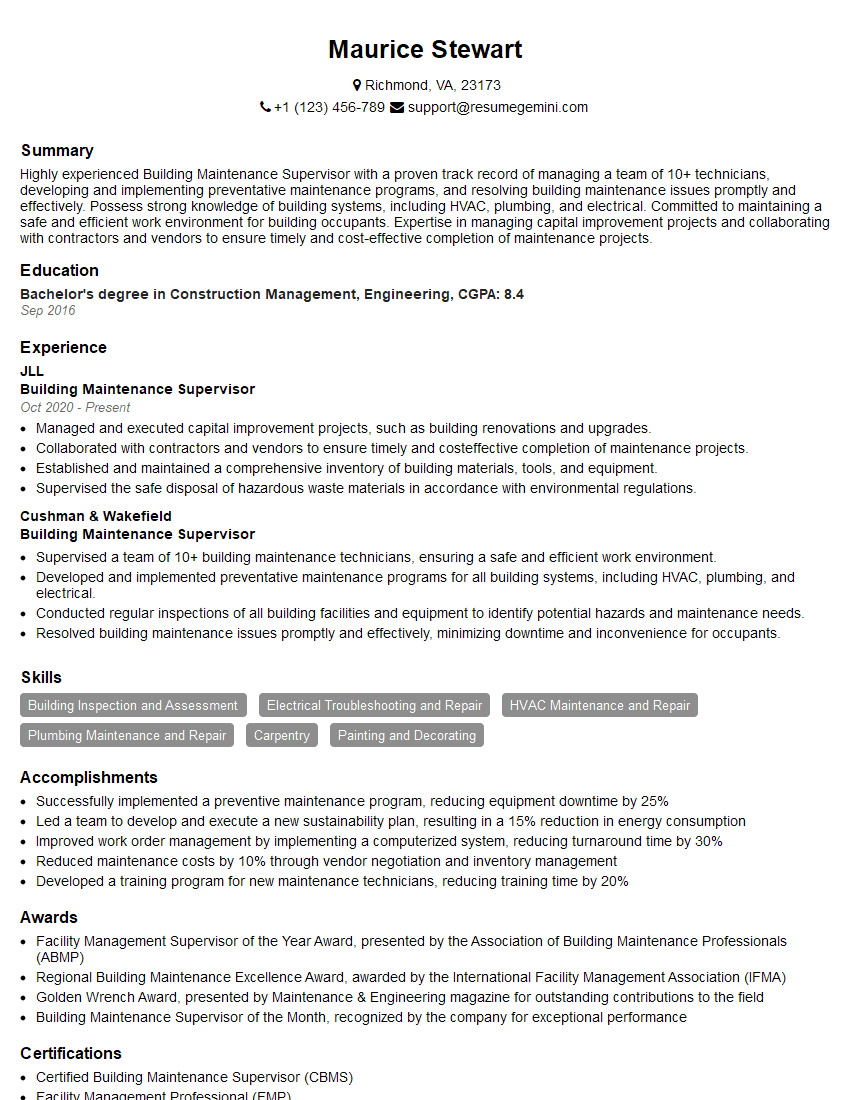
Mastering HVAC Maintenance Planning is crucial for career advancement. It demonstrates your ability to contribute significantly to operational efficiency, cost savings, and ensuring a safe and comfortable environment. To stand out, you need an ATS-friendly resume that highlights your skills and experience effectively. ResumeGemini can help you create a powerful resume tailored to the HVAC Maintenance Planning field. They provide examples of resumes optimized for Applicant Tracking Systems, ensuring your application gets noticed. Take advantage of their expertise and build a resume that truly reflects your capabilities.
Explore more articles
Users Rating of Our Blogs
Share Your Experience
We value your feedback! Please rate our content and share your thoughts (optional).
What Readers Say About Our Blog
Very informative content, great job.
good