Interviews are more than just a Q&A session—they’re a chance to prove your worth. This blog dives into essential Film and TV Production Knowledge interview questions and expert tips to help you align your answers with what hiring managers are looking for. Start preparing to shine!
Questions Asked in Film and TV Production Knowledge Interview
Q 1. Explain the difference between a line producer and an executive producer.
The line producer and executive producer, while both crucial to a film or TV production, have vastly different roles. Think of it like this: the executive producer is the architect of the project, focusing on the big picture, while the line producer is the construction foreman, ensuring the day-to-day building process runs smoothly and efficiently.
- Executive Producer: Primarily responsible for the overall creative vision and securing funding. They’re often involved in the initial development stages, pitching the project, securing financing, and overseeing the creative direction. They’re less involved in the day-to-day operations on set.
- Line Producer: The line producer is the on-set manager responsible for the day-to-day logistics of the production. This includes managing the budget, scheduling, hiring crew, and ensuring the project stays on track and within budget. They’re the hands-on manager, constantly problem-solving and making sure everything runs smoothly.
For example, the executive producer might secure a $10 million budget, while the line producer ensures that $10 million is spent effectively and efficiently across all departments, keeping the production on schedule.
Q 2. Describe your experience with budgeting and scheduling on a film or TV production.
Budgeting and scheduling are the lifeblood of any successful production. My experience involves meticulous pre-production planning, using software like Microsoft Excel and StudioBinder to create detailed budgets and schedules. This includes breaking down costs by department (camera, sound, lighting, etc.), factoring in contingency funds for unforeseen circumstances, and creating a daily shooting schedule that accounts for location changes, actor availability, and technical needs.
On a recent independent feature film, we used a ‘top-down’ budgeting approach, starting with the overall budget and then allocating funds to each department based on their estimated needs. We then used a detailed schedule created in ShotGrid, a production management software, outlining each scene, its location, and the required crew and equipment. Regular monitoring and adjustments were crucial; we used daily reports to track expenses against the budget and made necessary adjustments to the schedule as needed. This proactive approach ensured we stayed within budget and delivered the film on time.
Q 3. What is your experience with different shooting styles (e.g., documentary, narrative, reality)?
I’ve worked across various shooting styles, each demanding unique approaches.
- Narrative: This involves meticulously planning shots, adhering to storyboards, and maintaining continuity across scenes. It’s about crafting a cohesive visual narrative.
- Documentary: This often requires a more flexible approach, adapting to unexpected events and opportunities. It’s about capturing authentic moments and storytelling through real-life experiences. I’ve used a combination of planned interviews and observational filming techniques.
- Reality TV: This involves a blend of structure and improvisation. While there’s often a basic storyline or set of challenges, flexibility is key to capturing genuine reactions and spontaneous events. The focus is on capturing engaging personalities and dramatic moments.
The key is adaptability. While the pre-production planning is different for each, the core principles of effective communication, team management and efficient resource allocation remain constant regardless of style.
Q 4. How do you handle conflicts between different departments on set?
Conflict resolution is a critical skill in production. My approach is proactive and focuses on clear communication and collaborative problem-solving. When conflicts arise between departments (e.g., between the camera and lighting departments about scheduling), I facilitate a meeting involving all relevant parties.
I encourage each party to clearly explain their perspective and concerns. Then, I work collaboratively to find a solution that satisfies everyone’s needs, while prioritizing the overall goals of the production. Compromise is key, and I often use techniques like prioritizing tasks based on their impact on the overall schedule and budget.
Documentation of decisions made and agreements reached is crucial to avoid future misunderstandings. Sometimes, mediation is needed, and I’m adept at helping find common ground.
Q 5. Explain your understanding of call sheets and their importance.
A call sheet is a vital daily document that outlines the plan for each shooting day. It serves as a crucial communication tool for the entire crew, providing essential information to ensure a smooth and efficient production.
It typically includes:
- Date and location: Where and when the shoot takes place.
- Shooting schedule: A breakdown of scenes to be shot, with timings.
- Crew call times: When each crew member needs to be on set.
- Actor call times: When actors are needed on set.
- Contact information: Key personnel contact details.
- Scene information: Brief descriptions of the scenes to be shot.
Its importance lies in its ability to minimize confusion, ensure everyone is prepared and on time, and facilitates a well-organized and productive shoot. Without a well-prepared and distributed call sheet, chaos can easily ensue.
Q 6. What software are you proficient in for video editing (e.g., Avid, Premiere Pro, Final Cut Pro)?
I am proficient in several industry-standard video editing software packages. My expertise includes:
- Adobe Premiere Pro: I’m highly skilled in Premiere Pro, utilizing its advanced features for multi-camera editing, color correction, audio mixing, and effects creation.
- Avid Media Composer: I have experience with Avid, particularly in high-end post-production environments. I’m comfortable working with its collaborative tools and complex workflows.
- Final Cut Pro X: I’m familiar with Final Cut Pro X, appreciating its intuitive interface and efficient workflow, particularly for smaller projects.
My skills extend beyond just the technical aspects. I understand the importance of storytelling and visual language in the editing process. I’m comfortable working collaboratively with editors and directors to ensure the final cut aligns with the creative vision.
Q 7. Describe your experience with storyboarding and pre-visualization.
Storyboarding and pre-visualization are critical components of the pre-production process. Storyboarding is a visual representation of the film or TV show, essentially a comic-book version of the script, outlining shots and camera angles. Pre-visualization (previz) takes it further, often using 3D modeling and animation to create a more detailed representation of scenes, especially useful for complex action sequences or special effects.
My experience includes creating storyboards using both traditional hand-drawn methods and digital software like Storyboard Pro. For previz, I’ve collaborated with teams using software such as Maya and 3ds Max. These visual tools are extremely beneficial in communicating the director’s vision to the crew and securing funding by showing potential investors the finished product’s look and feel. They help to identify potential issues early in pre-production, saving time and resources during the actual shoot.
Q 8. How do you ensure continuity across multiple shooting days?
Maintaining continuity across multiple shooting days is paramount to a film or TV show’s believability. It involves meticulously tracking every detail that impacts the visual narrative—from character’s hair and makeup to set dressing and even the position of a coffee cup. We employ several key strategies:
- Detailed Shot Lists and Storyboards: These are our bible. Each shot is meticulously planned, specifying camera angles, character positions, and prop placements. This provides a visual roadmap for consistency.
- Continuity Reports: These detailed logs document everything from the previous day’s shoot – actor’s wardrobe, hair and makeup, set dressing, prop placement, and even lighting. The next day’s crew references this to ensure visual consistency.
- Dedicated Continuity Supervisor: This crucial role is responsible for observing every detail during filming, noting any discrepancies, and communicating with the relevant departments. They’re the guardian of consistency.
- Call Sheets & Daily Schedules: These outline the day’s shooting plan, ensuring everyone is informed about what’s being filmed and what needs to be prepared. This prevents unforeseen inconsistencies.
- Still Photography and Video Reference: We frequently use still photography and video from previous days to ensure consistency in things like lighting setups, character positions, and background details.
For example, on a recent period drama, our continuity supervisor caught a slight shift in a character’s necklace between two shots taken on different days. By referencing our continuity report, we were able to seamlessly rectify this issue during post-production.
Q 9. What is your experience working with actors and directors?
My experience working with actors and directors is extensive, involving collaborative efforts toward a shared artistic vision. It’s about building strong, trusting relationships based on mutual respect and clear communication.
- With Actors: I foster a comfortable and supportive environment where actors feel safe to explore their characters. This involves pre-production discussions to understand their interpretation of the role, and open communication on set to address any concerns or questions they may have. I always ensure their well-being is prioritized.
- With Directors: I understand that the director is the primary creative force. My role is to be supportive, proactive and anticipating their needs. This involves clear communication regarding logistics, scheduling, and creative constraints. I aim to ensure the vision is executed as smoothly and efficiently as possible.
In one project, a lead actor expressed discomfort with a particular scene. By working closely with the director and the actor, we collaboratively reworked the scene to suit the actor’s concerns while still serving the narrative. This resulted in a far more authentic and compelling performance.
Q 10. Describe your process for managing a film or TV production’s daily schedule.
Managing a film or TV production’s daily schedule is a complex but essential task requiring meticulous planning, effective communication, and adaptability. My approach is based on a proactive, data-driven strategy.
- Pre-Production Planning: This involves creating a comprehensive production schedule, broken down into detailed daily shooting plans. This schedule considers scene location, crew availability, actor schedules, equipment requirements, and potential logistical challenges.
- Daily Call Sheets: These inform all cast and crew about the day’s shooting schedule, including call times, locations, and specific scenes.
- On-Set Coordination: This involves coordinating the various departments, ensuring they are on schedule and have the resources they need. This includes managing the flow of actors, crew, and equipment.
- Contingency Planning: Unexpected delays are inevitable. Having a backup plan for unforeseen circumstances, like weather delays or equipment malfunctions, is critical to mitigating disruptions.
- Real-Time Monitoring and Adjustments: Throughout the day, I actively monitor progress and make necessary adjustments to the schedule based on the actual filming speed and any unforeseen challenges.
For instance, we used a production tracking software on a recent series that allowed for real-time monitoring of daily progress, alerting us to potential delays or scheduling conflicts early on. This enabled proactive problem-solving and kept the production on track.
Q 11. How do you ensure the safety of cast and crew on set?
Safety is the paramount concern on any film or TV set. A safe working environment is not just ethically right; it’s crucial for efficiency and productivity. My approach is multi-pronged.
- Risk Assessment and Mitigation: Before filming begins, we conduct thorough risk assessments, identifying potential hazards and developing strategies to mitigate them. This includes addressing potential risks from stunt work, pyrotechnics, or working with animals.
- Safety Officer and Training: A dedicated safety officer is responsible for enforcing safety regulations and providing safety training to all cast and crew. This training covers topics such as hazard identification, fire safety, and emergency procedures.
- Safe Working Practices: We enforce strict adherence to safe working practices, including the use of appropriate safety equipment, proper lifting techniques, and secure set design.
- Emergency Procedures: Clear and well-rehearsed emergency procedures are in place to address any unforeseen incidents, including medical emergencies or fires.
- Regular Safety Checks: Regular inspections of the set and equipment are undertaken to identify and address any potential hazards before they become problems.
For instance, during the filming of a night scene in a remote location, our safety officer ensured we had sufficient lighting, clear escape routes, and emergency medical personnel on standby. This prevented potential accidents in a potentially hazardous environment.
Q 12. What are your preferred methods for communication on a film set?
Effective communication is the backbone of a successful film set. My preferred methods combine various tools to cater to different needs and communication styles.
- Daily Production Meetings: These are crucial for disseminating information, addressing concerns, and coordinating efforts across departments. They keep everyone informed.
- Walkie-Talkies: These are essential for real-time communication on set, especially during filming. Clear, concise communication is key.
- Instant Messaging (Slack, WhatsApp): These platforms are used for quick updates, sharing documents, and coordinating schedules between departments even when people are off set.
- Email: This remains useful for formal communication, such as distributing call sheets or sharing production notes.
- Production Software and Apps: Using dedicated production software and mobile apps streamlines communication and information management, such as task management or daily reports.
On a recent project, we utilized a cloud-based system to share production schedules, shot lists, and other critical documents in real time, allowing for immediate access and reducing reliance on emails.
Q 13. How do you handle unexpected challenges or problems on set?
Unexpected challenges are inevitable in filmmaking. My approach to handling these is based on a calm, decisive, and proactive approach.
- Assessment and Analysis: The first step is to quickly assess the situation, understand the problem’s scope, and identify its potential impact.
- Communication and Collaboration: Immediately inform the relevant departments and key personnel, fostering open communication and collaboration to find solutions.
- Creative Problem-Solving: Often, challenges necessitate innovative solutions. This might involve adjusting the schedule, reworking scenes, or finding creative alternatives to overcome constraints.
- Contingency Plans: Leverage pre-planned contingency measures to minimize disruptions. This might involve having backup locations, equipment, or personnel.
- Documentation: Maintain detailed records of the issue, the solution implemented, and any lessons learned for future projects.
For example, during a shoot, a crucial piece of equipment malfunctioned. By communicating the problem, we quickly sourced a replacement from a nearby rental house, and our standby crew repaired the original, thus minimizing the disruption to filming. We documented the entire event, identifying preventative measures for the future.
Q 14. Explain your understanding of aspect ratios and their impact on storytelling.
Aspect ratios are the proportional relationship between the width and height of a screen image. They significantly impact storytelling by influencing the viewer’s perspective and emotional response.
- Common Aspect Ratios: Traditional cinema uses 2.39:1 (or 2.35:1), providing a widescreen cinematic experience. Television typically uses 16:9, a more square-like aspect ratio. Older films often used 1.33:1 (4:3), a squarer image.
- Impact on Storytelling: Widescreen ratios (like 2.39:1) create a more immersive and epic feel, perfect for expansive landscapes or establishing shots. They tend to create a sense of scope and grandeur. Squarer formats (like 16:9 or 1.33:1) tend to feel more intimate and claustrophobic; they can emphasize close-ups or create feelings of confinement.
- Composition and Framing: The chosen aspect ratio directly influences how scenes are framed. Widescreen might allow for dramatic foreground and background compositions, whereas a squarer format focuses more on what’s in the frame.
- Emotional Impact: Aspect ratios can even affect the emotional tone. A wider aspect ratio can be used to create a sense of isolation, while a narrower one could create feelings of claustrophobia or vulnerability.
Consider the difference between a wide shot of a vast desert landscape in a 2.39:1 aspect ratio versus a close-up of a character’s face in a 1.33:1 ratio – they evoke drastically different emotional responses and contribute very differently to the story’s overall mood and tone.
Q 15. Describe your experience with different camera systems and lenses.
My experience with camera systems spans a wide range, from classic film cameras like Arriflex 16SRs to modern digital cinema cameras such as the ARRI ALEXA Mini and RED Komodo. I’m proficient with various sensor sizes, understanding the trade-offs between image quality, dynamic range, and file size. This includes experience with different camera mounts, allowing for seamless lens changes and rigging setups.
Regarding lenses, I’ve worked extensively with prime and zoom lenses from manufacturers like Cooke, Zeiss, and Canon. Understanding the characteristics of each lens – focal length, aperture, and depth of field – is crucial for achieving the desired aesthetic. For instance, a wide-angle lens (e.g., 14mm) is ideal for establishing shots, while a telephoto lens (e.g., 100mm) is perfect for compressing perspective and isolating subjects. I also have experience with anamorphic lenses, appreciating their unique widescreen aspect ratio and characteristic oval bokeh.
This knowledge allows me to choose the right combination of camera and lens to effectively communicate a story’s visual language – whether it’s a gritty documentary, a sweeping epic, or an intimate character study.
Career Expert Tips:
- Ace those interviews! Prepare effectively by reviewing the Top 50 Most Common Interview Questions on ResumeGemini.
- Navigate your job search with confidence! Explore a wide range of Career Tips on ResumeGemini. Learn about common challenges and recommendations to overcome them.
- Craft the perfect resume! Master the Art of Resume Writing with ResumeGemini’s guide. Showcase your unique qualifications and achievements effectively.
- Don’t miss out on holiday savings! Build your dream resume with ResumeGemini’s ATS optimized templates.
Q 16. How do you manage and track film production expenses?
Managing film production expenses requires meticulous planning and tracking from pre-production through post-production. I utilize budgeting software like StudioBinder or Celtx to create detailed budgets, categorizing expenses into different line items (e.g., crew salaries, equipment rentals, location fees, post-production). During production, I maintain daily reports of actual spending, comparing it against the allocated budget to identify potential overruns and make timely adjustments.
Tracking is crucial; I use a combination of spreadsheets and dedicated production accounting software to ensure accuracy. This includes meticulously documenting all invoices and receipts. Regular budget reviews with the producer are essential to ensure we stay within budget and address any unexpected cost fluctuations. For example, if a location unexpectedly becomes unavailable, we need to quickly find alternatives that fit the budget.
Proactive cost management involves negotiating favorable rates with vendors, exploring cost-effective alternatives, and carefully scheduling shooting days to minimize expenses. A detailed wrap report summarizes all spending, reconciling against the initial budget and ensuring accurate financial reporting.
Q 17. Explain your familiarity with various post-production workflows.
My familiarity with post-production workflows encompasses all stages, from initial dailies to final deliverables. I’m proficient in various Non-Linear Editing (NLE) software packages such as Adobe Premiere Pro and Avid Media Composer. My experience extends to visual effects (VFX) integration, sound design, color correction, and mastering.
A typical workflow begins with logging and organizing the footage, followed by assembling a rough cut. Then comes the process of refining the edit, integrating sound effects and music, performing color correction and grading to achieve a consistent look and feel, and finally, adding VFX where needed. For example, a project might require removing unwanted elements using software like After Effects, or adding CGI elements using a dedicated VFX pipeline.
Collaboration is paramount in post-production. I’m adept at working with editors, sound designers, colorists, and VFX artists, ensuring seamless communication and effective feedback loops throughout the process. Understanding file formats, codecs, and resolution is essential for maintaining optimal quality during each stage of post-production.
Q 18. How do you ensure the quality of the final product?
Ensuring the quality of the final product is a continuous process, beginning even before production starts. This involves meticulous pre-production planning, including storyboarding, shot lists, and careful selection of locations, cast, and crew. During production, constant monitoring of image and sound quality is crucial. This includes daily reviews of the footage and audio recordings to identify and address any issues immediately.
In post-production, rigorous quality control measures are implemented. This includes multiple viewings and reviews of the edit, sound mix, and color grade, often with feedback from the director and other key stakeholders. Technical quality checks such as verifying frame rates, resolutions, and audio levels are performed to ensure compatibility with different platforms and distribution methods.
Ultimately, quality control is a collaborative effort, requiring effective communication and a commitment to excellence from the entire team. The goal is to deliver a product that meets the highest artistic and technical standards, satisfying both the creative vision and the audience’s expectations.
Q 19. Describe your experience with different types of microphones and audio recording techniques.
My experience with microphones and audio recording techniques is extensive. I’m familiar with various types of microphones, including boom microphones (e.g., Schoeps, Sennheiser), lavalier microphones (e.g., DPA, Countryman), and shotgun microphones (e.g., Rode NTG-3). Understanding the directionality and frequency response of each type is crucial for capturing clean and clear audio.
For instance, lavalier microphones are ideal for capturing dialogue from actors, while boom microphones are used for capturing dialogue from a distance, offering greater flexibility. Shotgun microphones are excellent for capturing directional audio, ideal for location sound recording. Proper microphone placement and techniques such as using windshields and blimps are essential to mitigate noise and achieve optimal sound quality.
I also have experience with audio recording equipment, including recorders (e.g., Sound Devices, Zoom), mixers, and headphones. My approach incorporates best practices for sound recording, including monitoring levels, managing noise, and employing techniques like ambient sound recording to create immersive soundscapes. Post-production audio sweetening, including noise reduction, dialogue editing, and sound design, is also a key part of my workflow.
Q 20. Explain your understanding of color correction and grading.
Color correction and grading are essential processes in post-production, significantly impacting the final look and feel of a film or television show. Color correction aims to correct inconsistencies and imperfections in the footage, ensuring accurate color representation and a balanced image. This involves adjusting parameters like white balance, exposure, and contrast.
Color grading, on the other hand, is a more creative process where the colorist manipulates the footage to achieve a specific artistic style or mood. This involves manipulating the color saturation, hue, and luminance, creating a cohesive and visually appealing aesthetic. For instance, a film might utilize a cool, desaturated color palette to convey a somber mood, while a vibrant, saturated palette might be used for a more upbeat feeling.
I’m proficient in color grading software such as DaVinci Resolve, and have a strong understanding of color theory and color science. This allows me to collaborate effectively with the director and cinematographer to translate their artistic vision into a visually stunning final product. The ability to match different shots and create a consistent look across the entire project is a crucial skill.
Q 21. What is your experience with visual effects (VFX) pipelines?
My experience with visual effects (VFX) pipelines involves understanding the entire process from initial planning and asset creation to compositing and final delivery. I’m familiar with various VFX software packages, including Autodesk Maya, Houdini, and Adobe After Effects. I understand the importance of asset management, version control, and collaboration within a VFX team.
A typical VFX pipeline begins with pre-visualization (previz), where initial concepts and shots are planned. Then comes the modeling, texturing, rigging, and animation stages. This is followed by compositing, where the VFX elements are integrated into the live-action footage. Finally, the project undergoes quality control checks before delivery to the client.
My experience encompasses working with both in-house and external VFX vendors. I understand the importance of clear communication, detailed briefs, and timely feedback throughout the process. Experience working with various shot types, including simple fixes to large scale CGI sequences, is crucial in managing the process effectively.
Q 22. How do you handle feedback from clients or stakeholders?
Handling feedback effectively is crucial for successful film and TV production. My approach involves active listening, seeking clarification, and collaboratively finding solutions. I view feedback not as criticism, but as an opportunity for improvement and better alignment with the client’s vision.
- Active Listening: I ensure I fully understand the feedback by asking clarifying questions and paraphrasing to confirm my understanding. This avoids misinterpretations.
- Constructive Dialogue: I initiate a discussion to explore the reasons behind the feedback. This helps me understand the context and identify the root cause of any concerns.
- Collaborative Problem-Solving: I work with the client to brainstorm solutions. This collaborative approach fosters a sense of ownership and ensures everyone feels heard and involved in the process. This might involve suggesting alternative approaches or adjusting the production plan as needed.
- Documentation: All feedback and agreed-upon changes are meticulously documented. This ensures everyone is on the same page and avoids future misunderstandings.
For example, if a client expresses concern about the pacing of a scene, instead of becoming defensive, I would ask specific questions: “Could you elaborate on what feels slow? Which specific moments are you referring to?” This allows for a targeted discussion and a more efficient solution.
Q 23. Describe your approach to risk management in film production.
Risk management in film production is paramount. My approach is proactive and multi-faceted, employing a combination of planning, mitigation strategies, and contingency planning.
- Pre-Production Risk Assessment: I conduct a thorough risk assessment during pre-production, identifying potential problems such as weather delays, equipment malfunctions, casting issues, and budget overruns.
- Mitigation Strategies: For each identified risk, I develop specific mitigation strategies. This might include securing backup equipment, having alternative locations ready, or building buffer time into the schedule.
- Contingency Planning: I develop detailed contingency plans to address potential scenarios. For instance, a backup plan for inclement weather might involve rescheduling outdoor scenes or utilizing indoor alternatives.
- Insurance: Ensuring adequate insurance coverage is critical to mitigate financial risks.
- Communication: Open communication with the entire team is essential to ensure everyone is aware of potential risks and their mitigation strategies.
For instance, during a shoot in a remote location, I would anticipate potential transportation issues. My mitigation strategy would involve securing multiple transportation options and scheduling extra travel time. The contingency plan would include alternative arrangements for cast and crew in case of unexpected delays.
Q 24. What is your experience with location scouting and permitting?
I have extensive experience in location scouting and permitting. This involves identifying suitable locations, securing necessary permits, and managing location logistics.
- Scouting: I utilize various resources, including online databases, local knowledge, and personal exploration, to find locations that meet the production’s needs, considering factors like accessibility, aesthetics, and legal considerations.
- Permitting: I am familiar with the permitting process, including obtaining filming permits from local authorities, managing any necessary insurance requirements, and ensuring compliance with all regulations.
- Negotiation: Effective negotiation with location owners is crucial to secure favorable terms. This includes discussing access, usage fees, and any restrictions.
- Logistics: I manage all logistical aspects, including access for cast and crew, parking arrangements, and the potential need for temporary structures or modifications to the location.
For example, during the scouting process for a period drama, I identified a historical building as an ideal location. I then worked with the property owner and local authorities to secure the necessary permits and arrange access for the crew and equipment, ensuring minimal disruption to the surrounding area.
Q 25. How do you collaborate effectively with a production team?
Effective collaboration is the cornerstone of successful film and TV production. My approach emphasizes clear communication, shared goals, and a supportive team environment.
- Clear Communication: I maintain open and consistent communication channels, utilizing regular production meetings, email updates, and daily reports to keep everyone informed.
- Defined Roles and Responsibilities: Clear delineation of roles and responsibilities ensures efficiency and prevents overlap.
- Shared Goals: Ensuring everyone is aligned towards the same objective is critical. This involves regular check-ins and open communication to address any concerns or misunderstandings.
- Conflict Resolution: I actively participate in conflict resolution, fostering a collaborative environment where disagreements are addressed constructively.
- Team Building: Creating a positive and supportive team environment enhances morale and collaboration.
For instance, when facing a scheduling conflict, I would facilitate a meeting with the relevant departments (e.g., camera, sound, actors) to collaboratively find a solution that minimizes disruption and maintains the overall production schedule.
Q 26. How familiar are you with different film distribution channels?
I am highly familiar with various film distribution channels, ranging from traditional theatrical releases to the ever-evolving digital landscape.
- Theatrical Distribution: I understand the process of securing theatrical releases, negotiating with distributors, and marketing the film to cinema audiences.
- Home Video: I am knowledgeable about the distribution of films and TV shows on DVD, Blu-ray, and other physical media formats.
- Streaming Platforms: I have experience navigating the complexities of distribution through various streaming services, such as Netflix, Amazon Prime, Hulu, and others, including understanding their unique requirements and agreements.
- Television Broadcasting: I am familiar with the process of licensing films and TV shows to television networks and broadcasters.
- Digital Download and VOD: I understand distribution through digital download platforms and video-on-demand (VOD) services.
Understanding the strengths and weaknesses of each channel is crucial for maximizing reach and audience engagement. For instance, a film suited for a niche audience might find greater success on a specialized streaming service than a wide theatrical release.
Q 27. What are your strengths and weaknesses as a film/TV production professional?
My strengths lie in my proactive approach to problem-solving, my ability to collaborate effectively with diverse teams, and my deep understanding of the entire film production pipeline. I am detail-oriented, organized, and capable of managing multiple tasks simultaneously under pressure.
One area for development is delegation. While I can handle many tasks effectively, learning to delegate more efficiently would improve team productivity and allow me to focus on higher-level strategic decisions. This is something I am actively working on through mentorship and seeking feedback on my management style.
Q 28. Describe a time you had to solve a complex problem under pressure on a film or TV set.
During the production of an independent film, we faced a significant challenge when our lead actor fell ill a day before a crucial scene. This scene was pivotal and rescheduling was not an option due to the actor’s limited availability.
Under immense pressure, I implemented the following steps:
- Immediate Assessment: I immediately assessed the situation, determining the severity of the actor’s illness and the impact on the schedule.
- Alternative Solutions: I brainstormed alternative solutions with the director, including using a body double for some shots, rearranging the scene to minimize the actor’s presence, and rewriting some dialogue to accommodate a substitute.
- Communication: I communicated the situation clearly and calmly to the entire crew, ensuring they understood the changes and were prepared for adjustments.
- Rapid Execution: We reorganized the shooting schedule, utilizing the body double, and adjusting the scene to minimize the lead actor’s involvement. We focused on capturing the essentials of the scene while preserving its integrity.
Despite the unexpected setback, we successfully completed the scene, showcasing the importance of swift action, creative problem-solving, and effective communication under pressure. The final product did not suffer from the unforeseen circumstances.
Key Topics to Learn for Film and TV Production Knowledge Interview
- Pre-Production: Understanding script breakdown, budgeting, scheduling, location scouting, and crew assembly. Practical application: Explain how you would approach budgeting a low-budget independent film.
- Production: Mastering shot composition, camera operation, lighting techniques, sound recording, and on-set problem-solving. Practical application: Describe your experience managing a challenging on-set situation and the solution you implemented.
- Post-Production: Familiarizing yourself with editing software (e.g., Avid, Premiere Pro, DaVinci Resolve), color correction, sound mixing, visual effects, and mastering. Practical application: Discuss your approach to assembling a compelling edit from raw footage.
- Production Management: Understanding production workflows, crew management, communication strategies, and adherence to deadlines. Practical application: Explain how you would handle a conflict between two crew members.
- Technical Knowledge: Developing a solid understanding of camera systems, lighting equipment, sound equipment, and various software applications used in film and TV production. Practical application: Detail your experience with specific equipment and software, highlighting your proficiency.
- Legal and Ethical Considerations: Understanding copyright laws, contracts, and ethical practices within the industry. Practical application: Discuss how you would ensure compliance with relevant regulations on a film set.
Next Steps
Mastering Film and TV Production knowledge is crucial for career advancement in this dynamic industry. A strong understanding of these areas will significantly improve your interview performance and open doors to exciting opportunities. To maximize your job prospects, invest time in creating an ATS-friendly resume that highlights your skills and experience effectively. ResumeGemini is a trusted resource that can help you build a professional and impactful resume, ensuring your qualifications stand out. Examples of resumes tailored to Film and TV Production knowledge are available to guide you through the process.
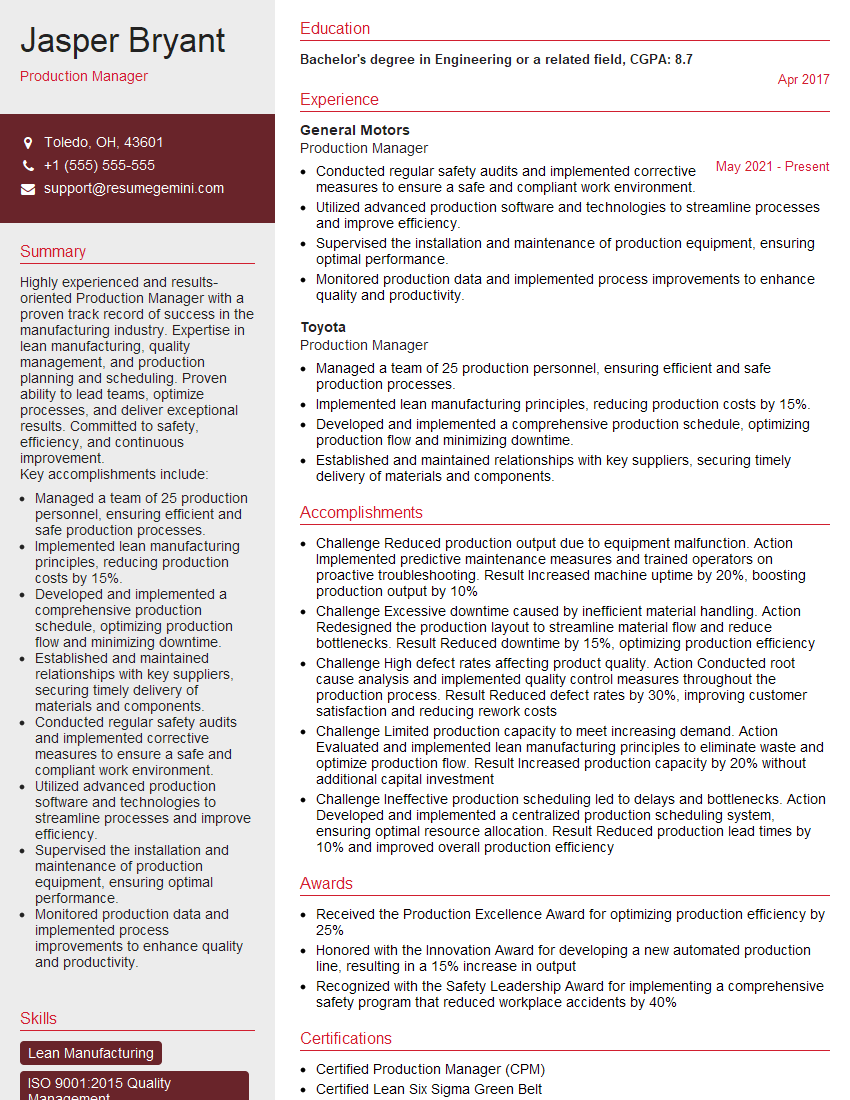
Production Manager Resume Sample
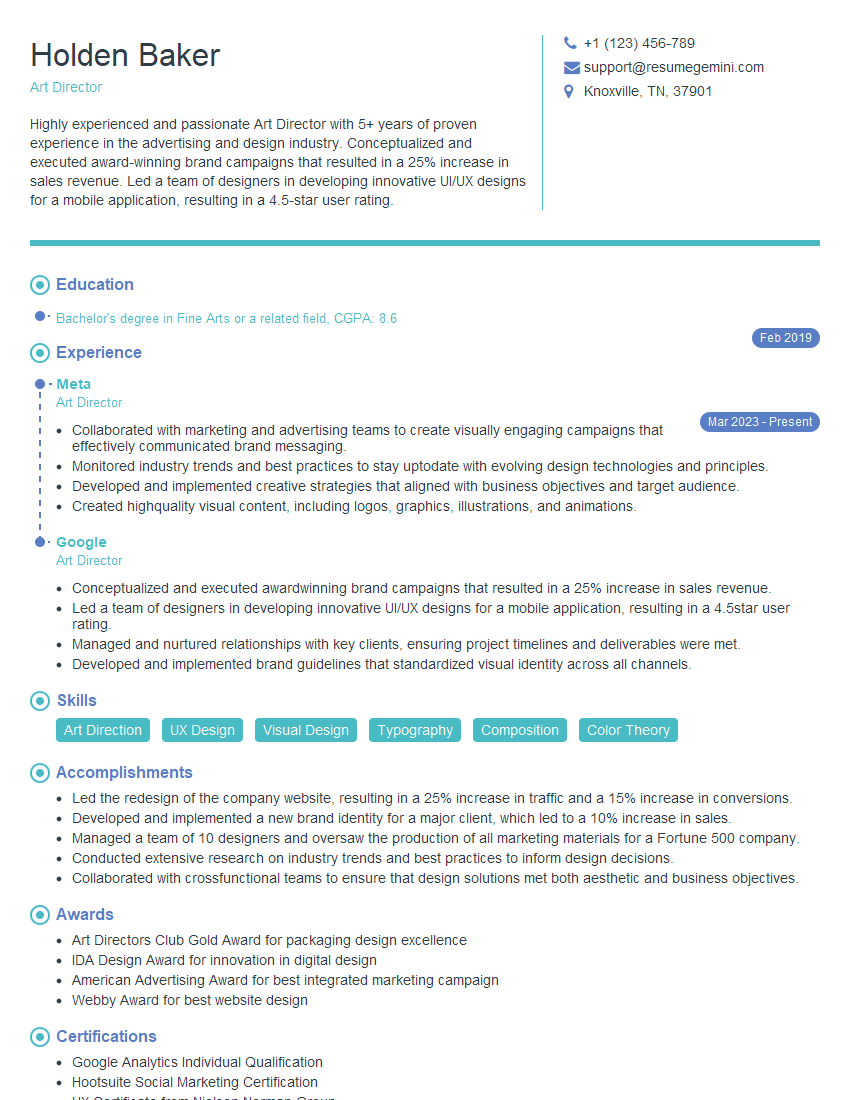
Art Director Resume Sample

Production Coordinator Resume Sample
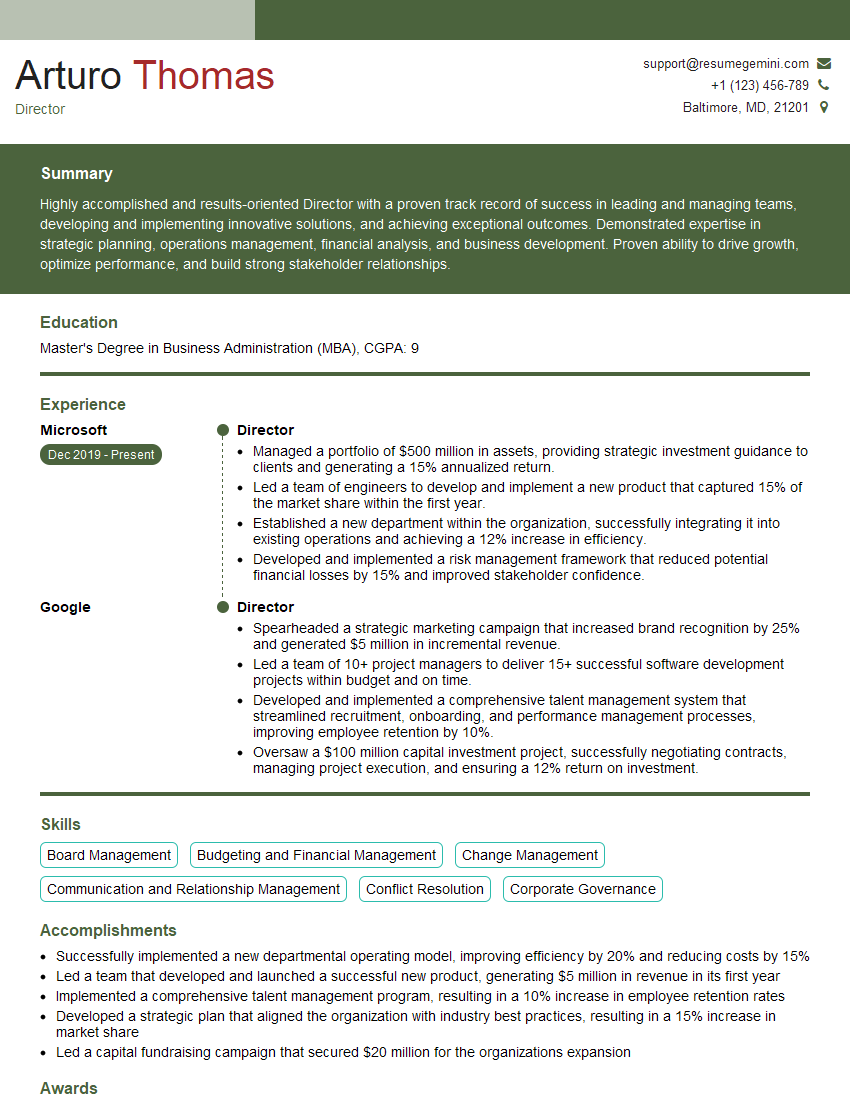
Director Resume Sample
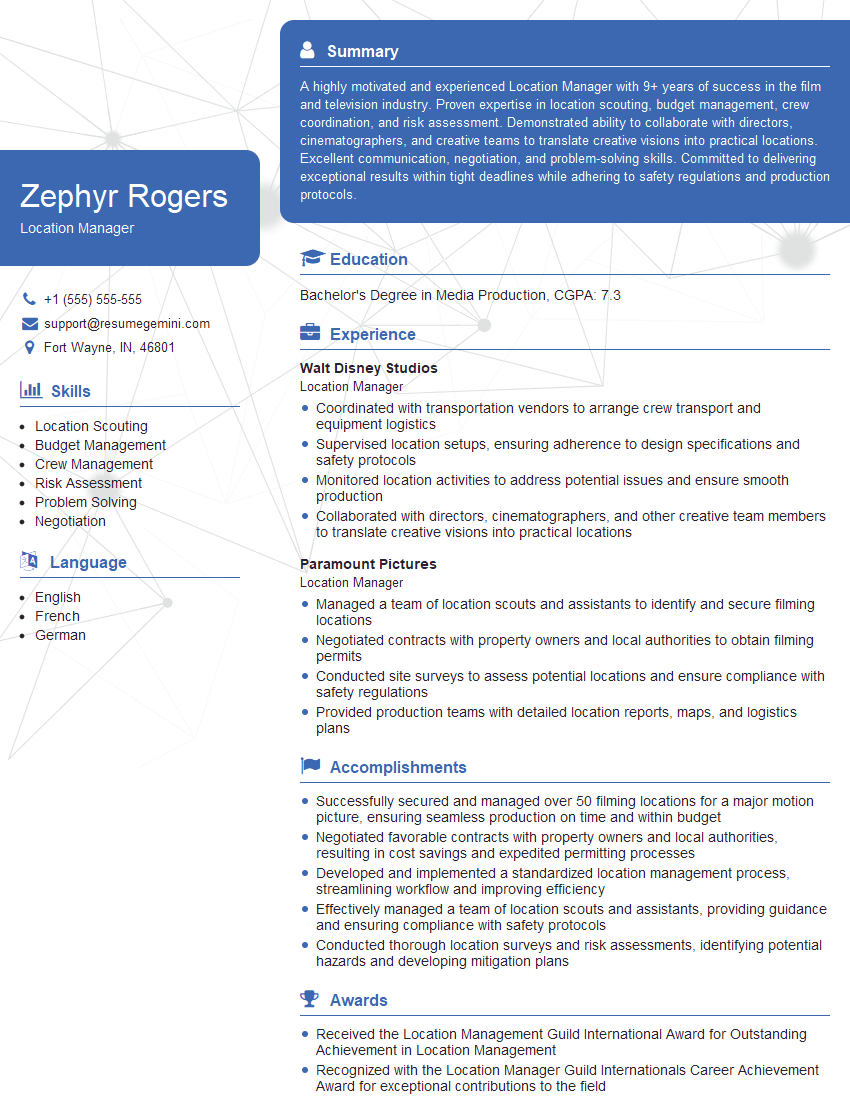
Location Manager Resume Sample
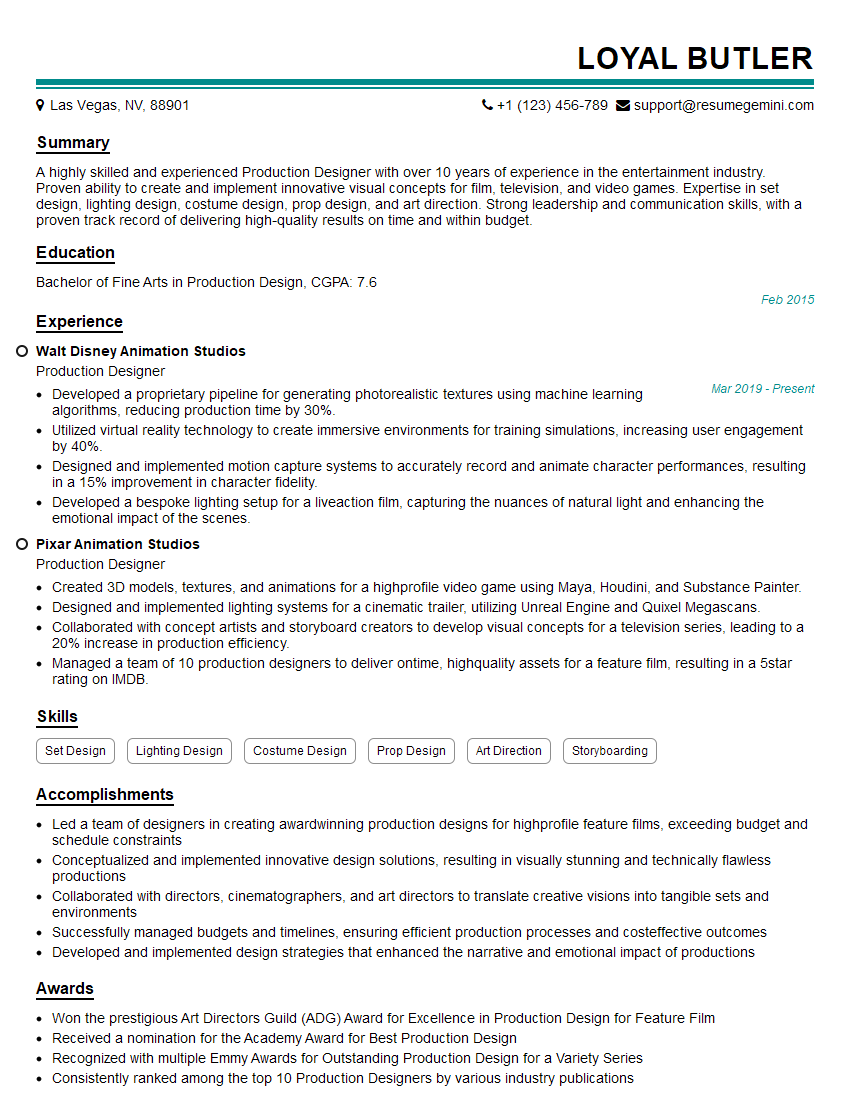
Production Designer Resume Sample
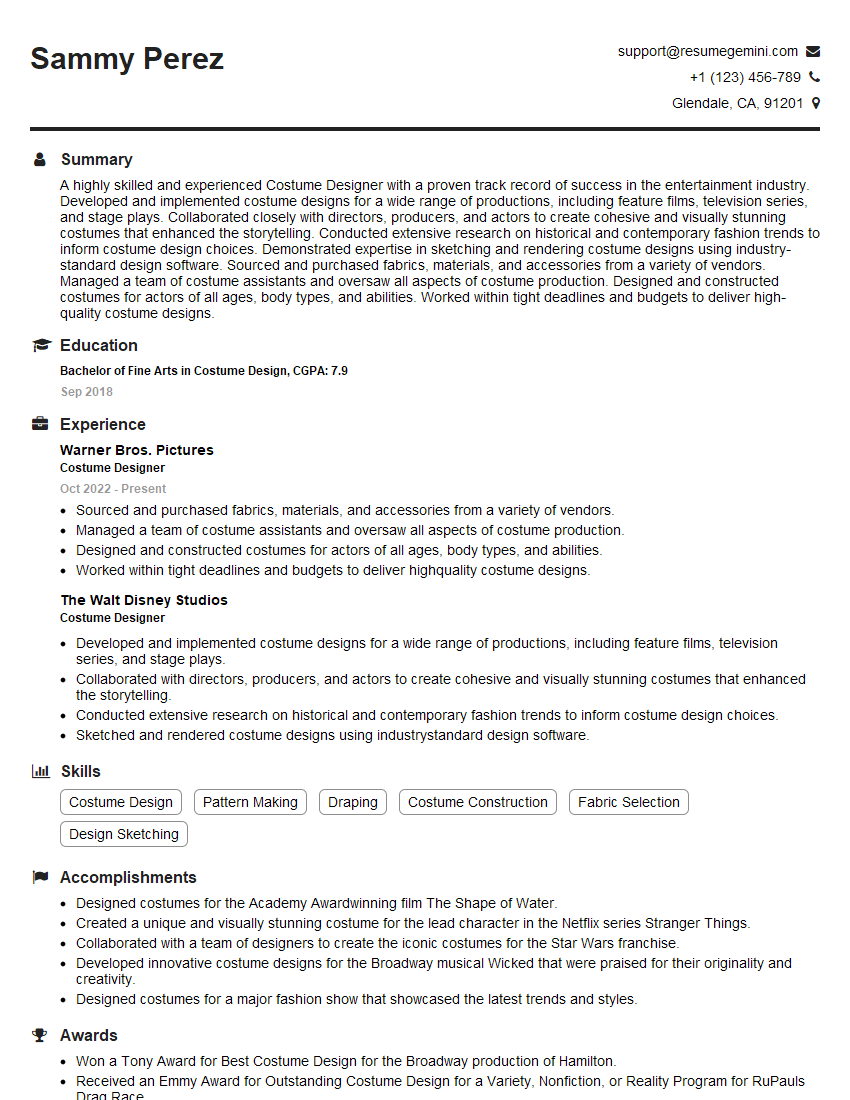
Costume Designer Resume Sample
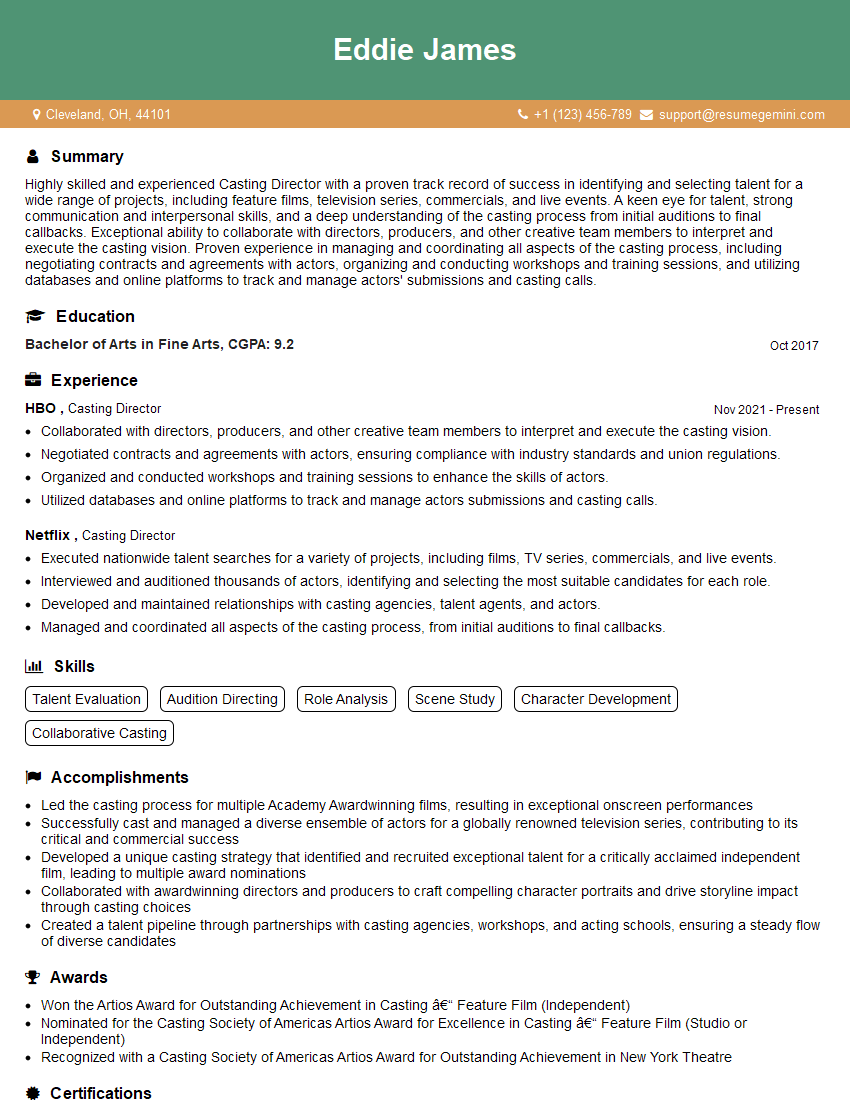
Casting Director Resume Sample
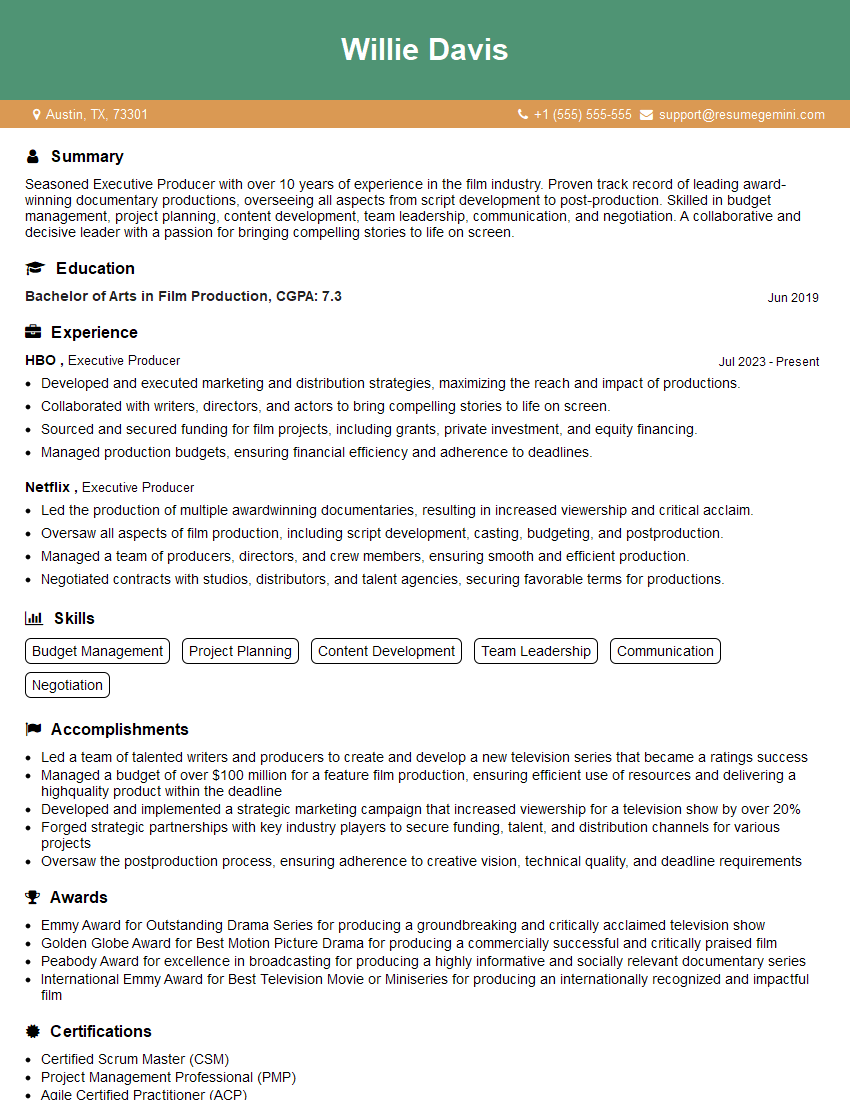
Executive Producer Resume Sample
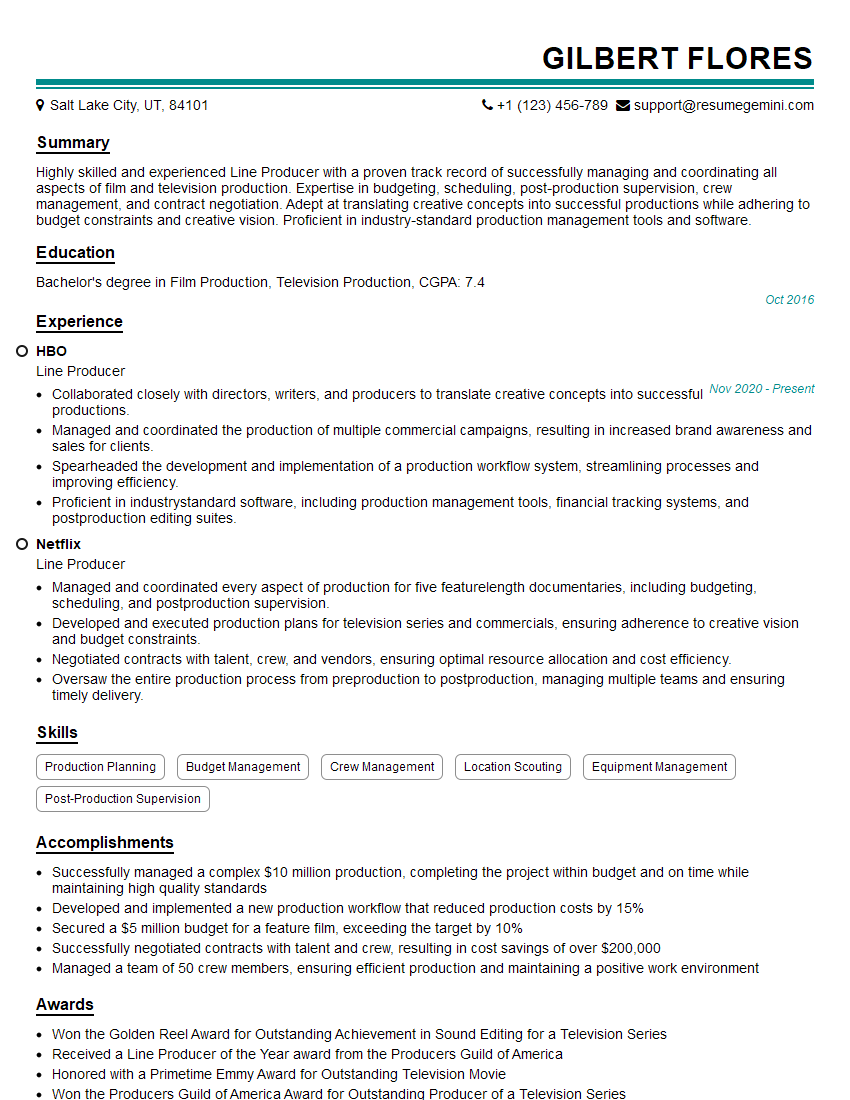
Line Producer Resume Sample
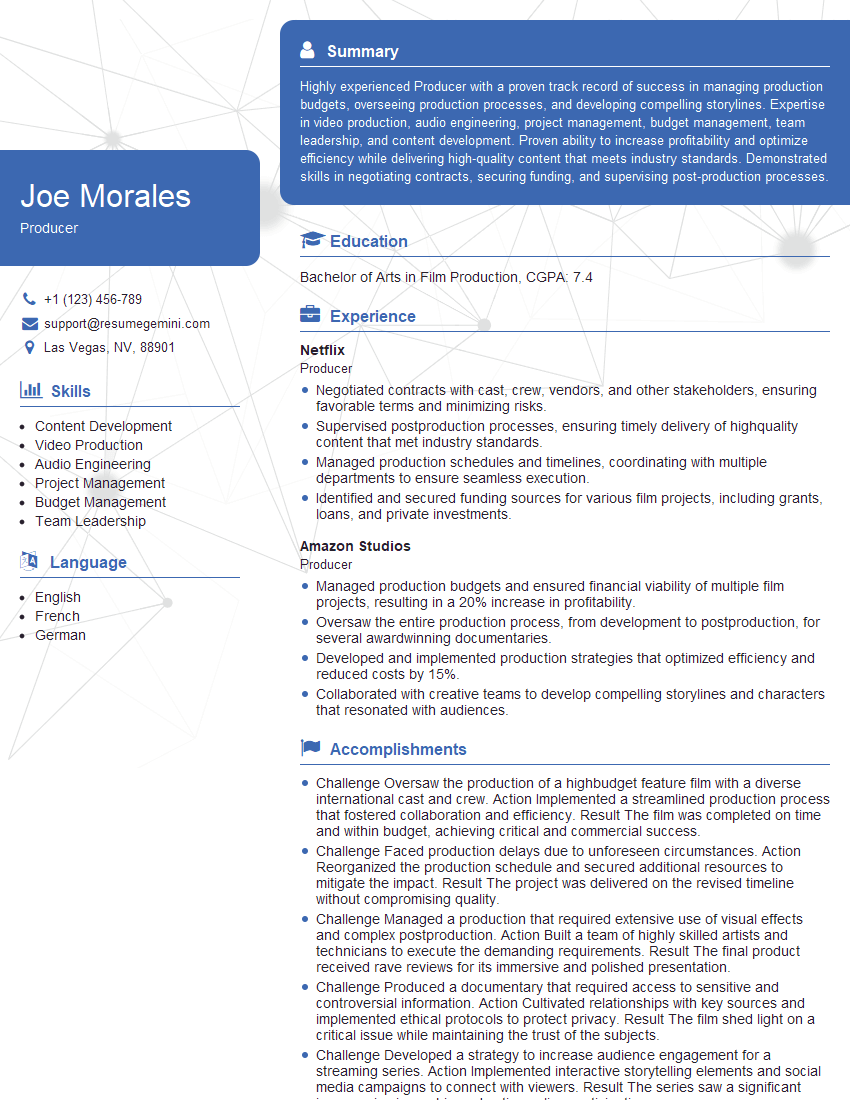
Producer Resume Sample
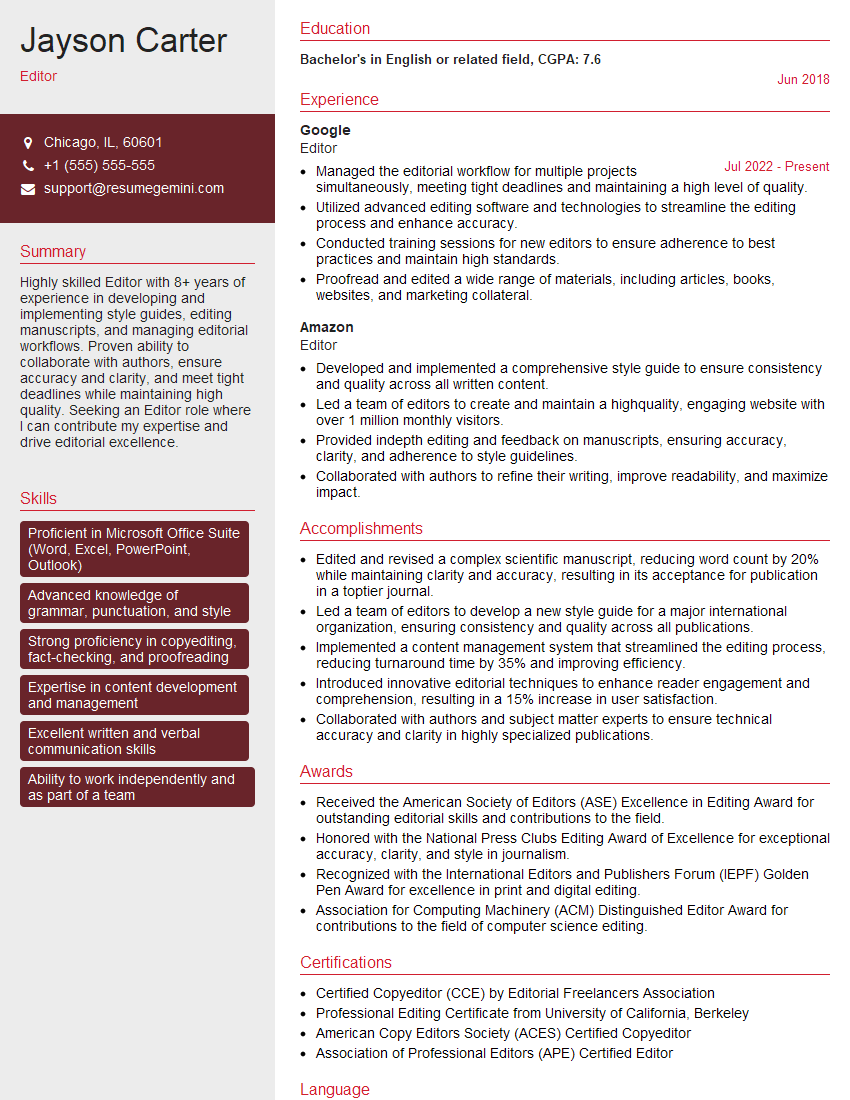
Editor Resume Sample
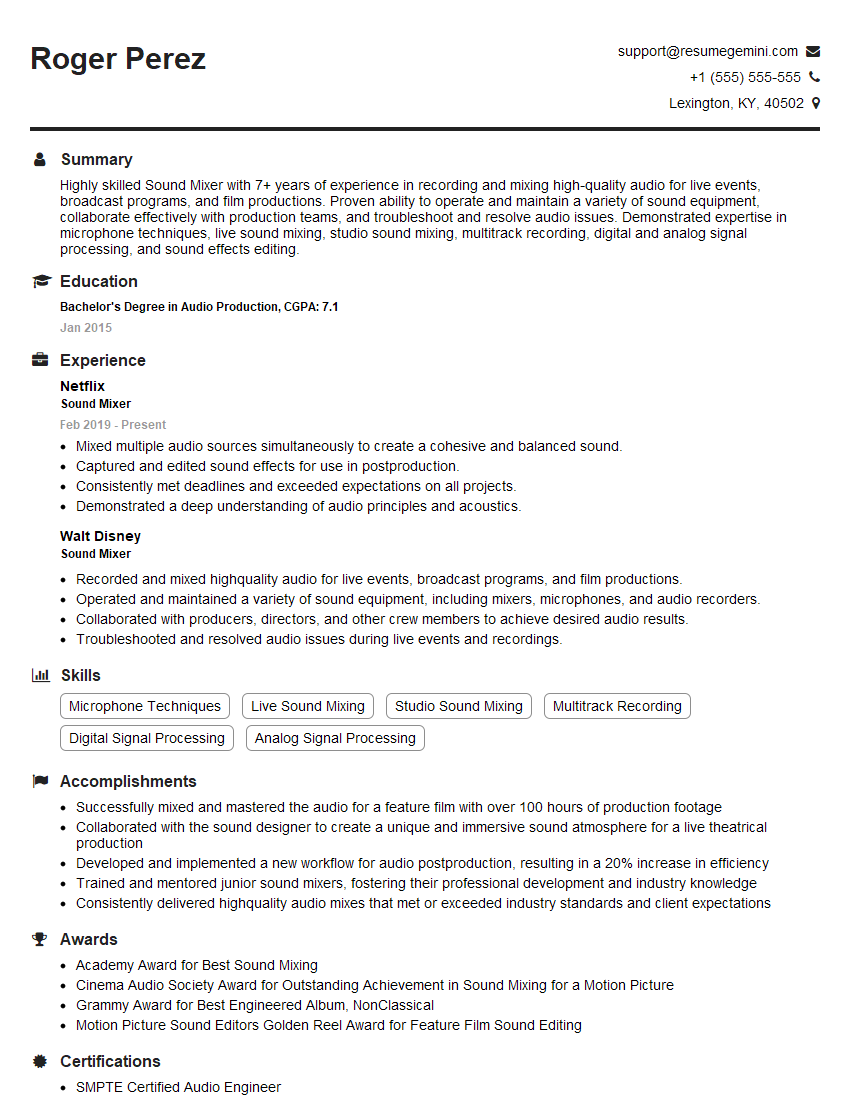
Sound Mixer Resume Sample
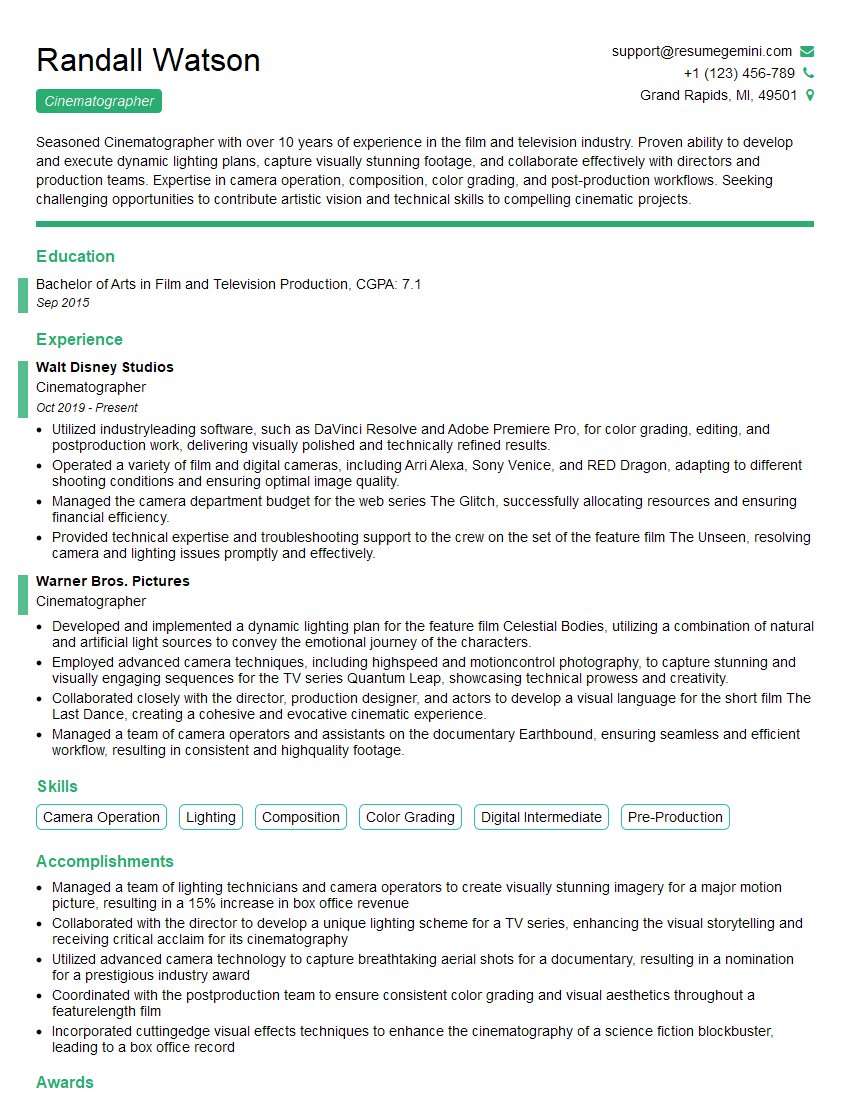
Cinematographer Resume Sample
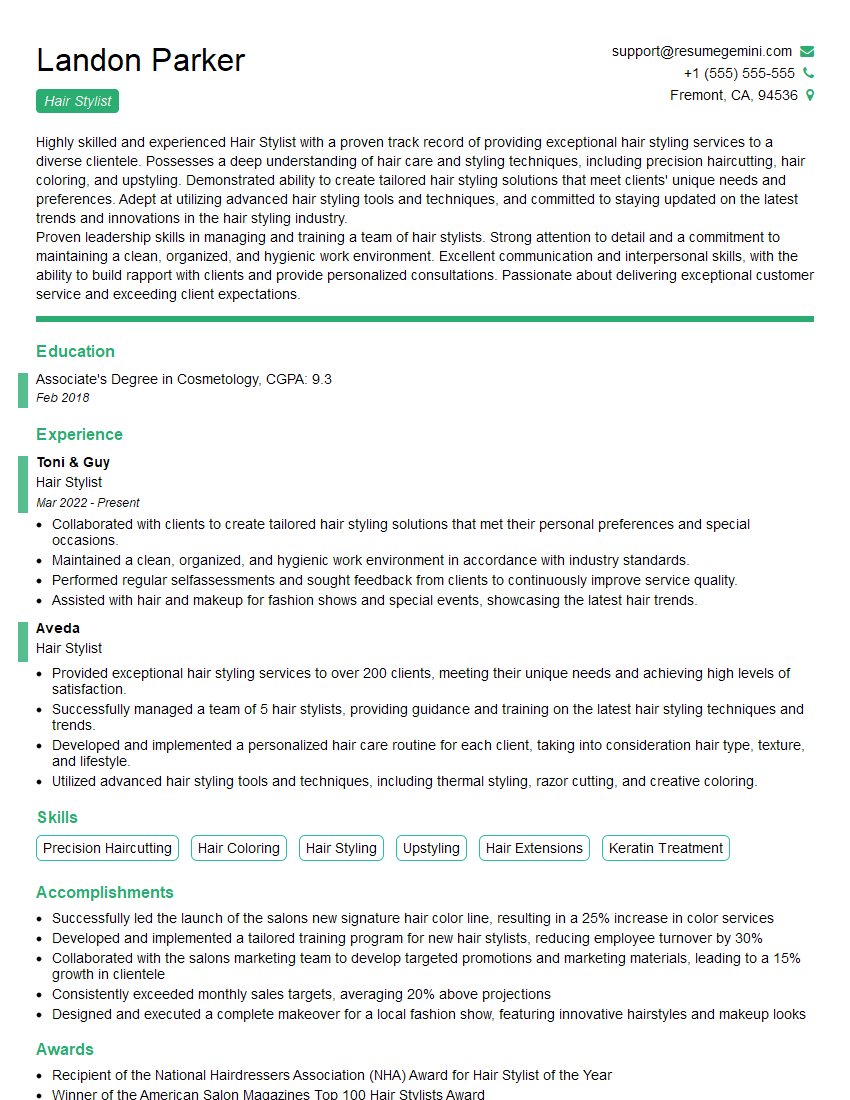
Hair Stylist Resume Sample
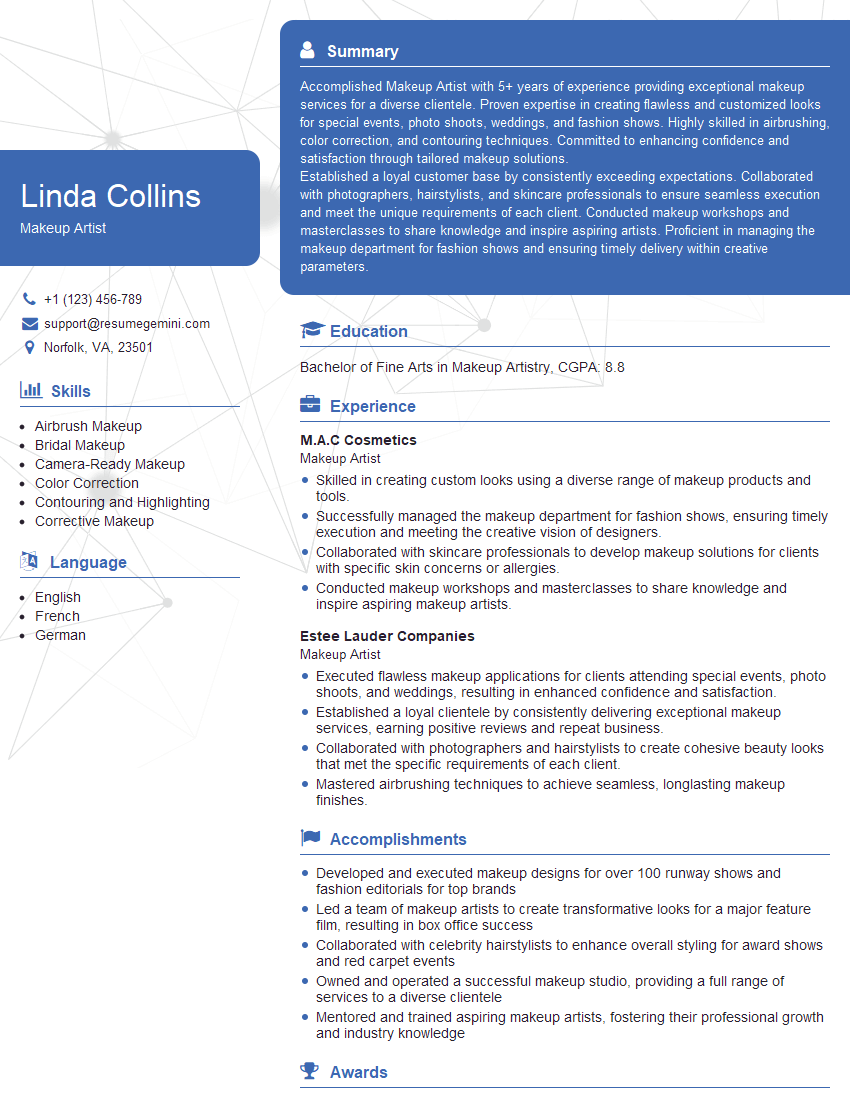
Makeup Artist Resume Sample
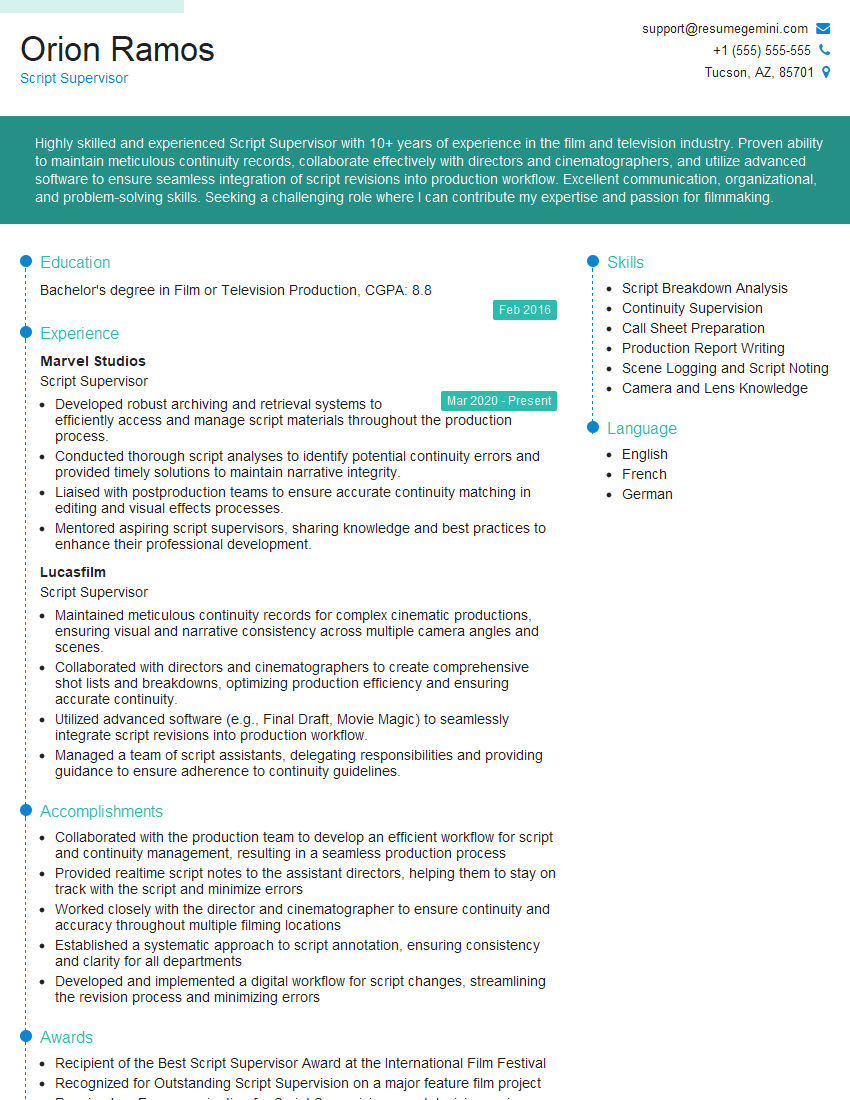
Script Supervisor Resume Sample
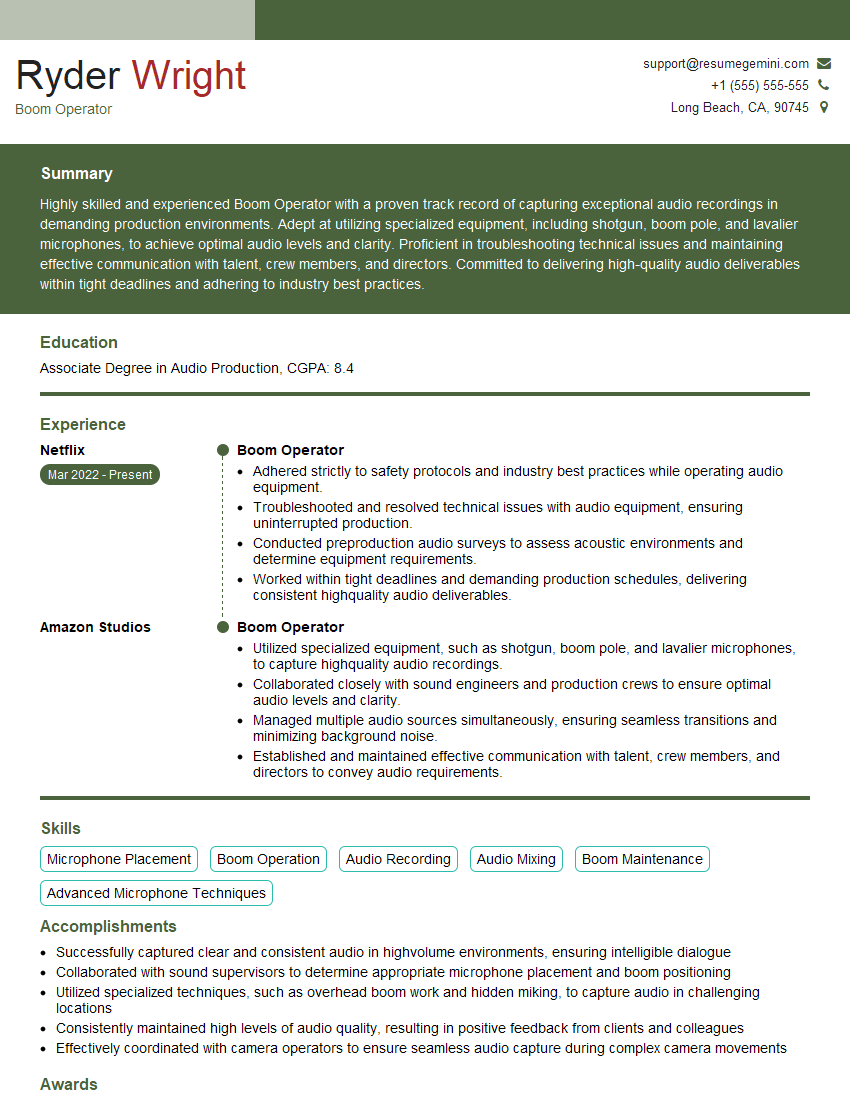
Boom Operator Resume Sample
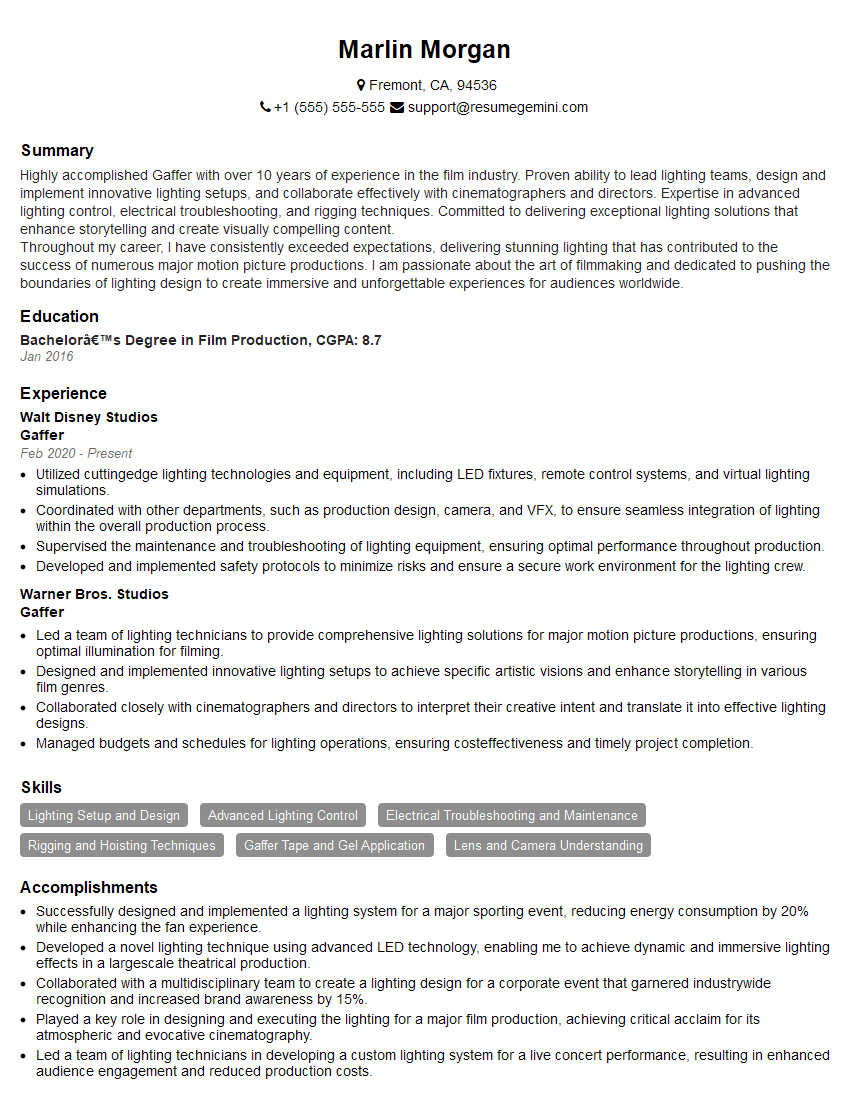
Gaffer Resume Sample
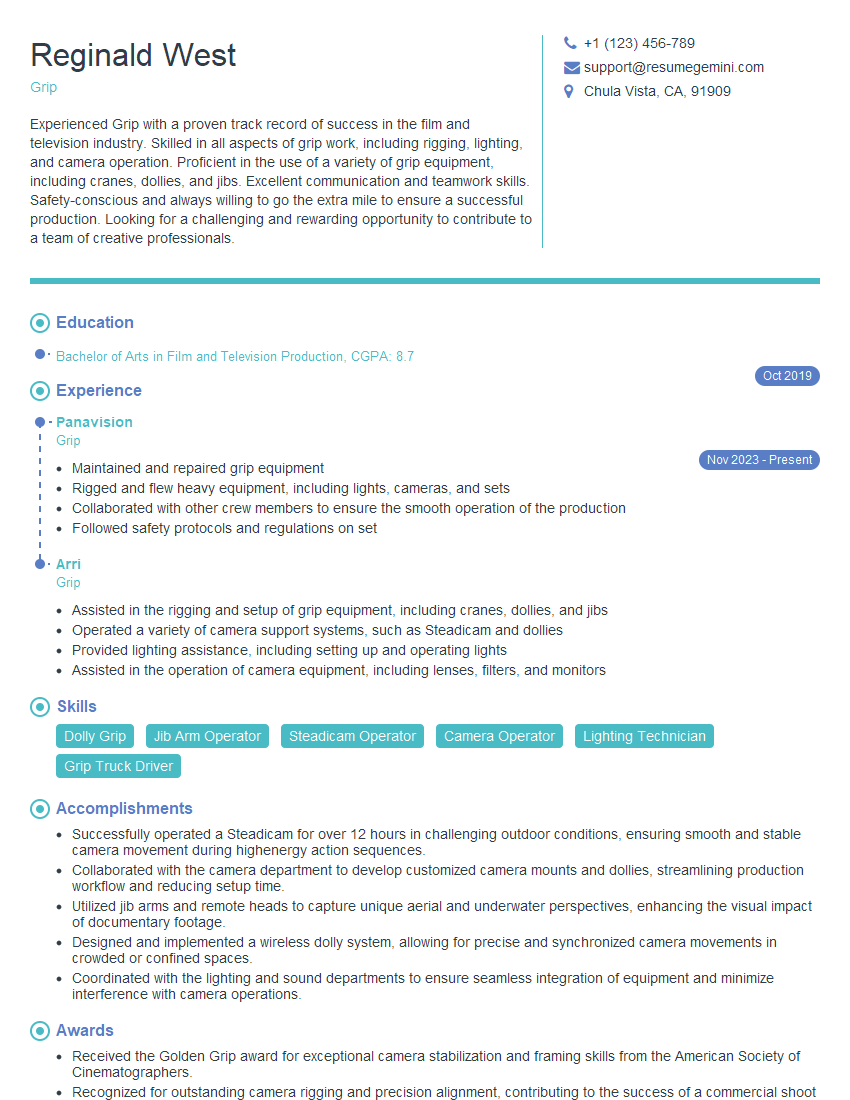
Grip Resume Sample
Explore more articles
Users Rating of Our Blogs
Share Your Experience
We value your feedback! Please rate our content and share your thoughts (optional).
What Readers Say About Our Blog
Very informative content, great job.
good