Feeling uncertain about what to expect in your upcoming interview? We’ve got you covered! This blog highlights the most important Adaptability and Innovation interview questions and provides actionable advice to help you stand out as the ideal candidate. Let’s pave the way for your success.
Questions Asked in Adaptability and Innovation Interview
Q 1. Describe a time you had to adapt to a significant change in project requirements. What was your approach?
Adapting to changing project requirements is crucial for project success. My approach involves a structured process focusing on understanding, collaboration, and proactive problem-solving.
For instance, in a recent project developing a mobile application, the client unexpectedly requested a significant feature addition halfway through the development cycle. Instead of resisting, I immediately scheduled a meeting with the team and the client. We analyzed the impact of this change on the project timeline, budget, and scope. We then collaboratively prioritized the existing features and meticulously planned the integration of the new functionality. This included breaking down the new feature into smaller, manageable tasks, reassessing the timeline using agile methodologies, and transparently communicating the revised project plan to the client. We successfully adapted, delivering the project on time, albeit with a slightly adjusted budget, and exceeding client expectations.
- Understanding the Change: Thoroughly analyzing the implications of the change on the project’s various aspects.
- Collaboration and Communication: Openly discussing the changes with stakeholders and the team to ensure everyone is informed and aligned.
- Proactive Problem-Solving: Brainstorming solutions, prioritizing tasks, and adapting the project plan accordingly.
- Transparency and Communication: Keeping stakeholders updated throughout the adaptation process.
Q 2. How do you identify and evaluate innovative solutions to complex problems?
Identifying and evaluating innovative solutions requires a systematic approach combining creativity, critical thinking, and a deep understanding of the problem. I use a multi-step process:
- Deep Problem Understanding: Before brainstorming, I thoroughly research and analyze the problem, identifying its root causes and potential consequences.
- Brainstorming and Idea Generation: I employ techniques like mind-mapping and lateral thinking to generate a diverse range of potential solutions, even seemingly unconventional ones.
- Feasibility Analysis: I assess the practicality of each solution, considering factors like technical feasibility, resource availability, and cost-effectiveness.
- Impact Assessment: I evaluate the potential impact of each solution on various stakeholders and the overall system, considering both short-term and long-term effects.
- Prototyping and Testing: To validate the feasibility and effectiveness of a solution, I often create a prototype and test it in a controlled environment before full-scale implementation.
For example, in addressing a persistent bottleneck in a manufacturing process, I used data analysis to identify the root cause – inefficient material handling. My team and I brainstormed several solutions, eventually opting for a robotic automation system after evaluating its cost-effectiveness, implementation feasibility, and projected impact on productivity.
Q 3. Explain your process for generating creative ideas and solutions.
My process for generating creative ideas and solutions is iterative and draws on various techniques.
- Mind Mapping: I start with the central problem and branch out, exploring related ideas and potential solutions.
- SCAMPER: This checklist prompts me to consider Substitute, Combine, Adapt, Modify, Put to other uses, Eliminate, and Reverse elements of the problem or existing solutions.
- Lateral Thinking: I challenge assumptions and look for unconventional approaches to problem-solving.
- Collaboration: I actively involve others in brainstorming sessions, leveraging diverse perspectives and expertise.
- Incubation: After initial brainstorming, I take time to reflect on the ideas generated, allowing for subconscious processing and refinement.
I often find that a combination of these techniques leads to the most innovative and effective solutions. For example, when tasked with improving customer engagement on a company website, I used SCAMPER to consider adapting elements from successful competitor sites, combining different engagement features, and ultimately eliminating confusing navigation elements. The result was a significant increase in customer engagement metrics.
Q 4. Share an example where you successfully implemented an innovative solution that improved efficiency or productivity.
In a previous role, our team faced significant delays in processing customer orders due to a cumbersome manual data entry system. I proposed and implemented an automated order processing system using a custom-built script integrating our existing CRM and inventory management systems.
The solution involved:
- Needs Assessment: Identifying the bottlenecks in the existing process through workflow analysis and data collection.
- Solution Design: Designing the automated system using appropriate technologies, considering scalability and maintainability.
- Development and Testing: Developing and rigorously testing the system to ensure accuracy and efficiency.
- Implementation and Training: Implementing the system and providing training to the team on its use.
This automation dramatically reduced processing times, minimized errors, and freed up team members to focus on other tasks. The improvement in efficiency was significant, resulting in a noticeable boost in productivity and overall customer satisfaction. The success of this project solidified the value of innovative solutions in enhancing operational efficiency.
Q 5. Describe a situation where you had to adapt your communication style to effectively reach a diverse audience.
Adapting communication style is crucial when working with diverse audiences. My approach involves understanding the audience’s needs and preferences before tailoring my message accordingly.
For example, while presenting a complex technical proposal to a group of engineers, I used technical jargon and detailed data visualizations. However, when communicating the same proposal to a group of non-technical executives, I focused on high-level summaries, using simple language and focusing on the business impact. I also adapted my presentation style; using interactive elements for the engineers and a concise and results-oriented approach for the executives. In both instances, I ensured clear and concise communication and actively sought feedback to ensure understanding. Effective communication involves understanding your audience and adjusting your approach to match their needs and level of understanding.
Q 6. How do you stay updated on industry trends and emerging technologies?
Staying updated on industry trends and emerging technologies is vital for maintaining a competitive edge. My approach is multi-faceted:
- Industry Publications and Journals: I regularly read industry-specific publications and journals to stay informed about the latest research and advancements.
- Conferences and Workshops: Attending conferences and workshops provides valuable insights from experts and allows for networking with peers.
- Online Courses and Webinars: I leverage online learning platforms to enhance my knowledge of specific technologies and trends.
- Professional Networks: Participating in online communities and professional networks enables interaction with experts and the sharing of knowledge.
- Newsletters and Blogs: Subscribing to relevant newsletters and following industry blogs helps me stay up-to-date with the latest news and developments.
This continuous learning helps me to identify emerging trends and incorporate innovative solutions in my projects.
Q 7. How do you handle setbacks and unexpected challenges in your work?
Handling setbacks and unexpected challenges requires a calm, analytical approach. My process is to:
- Analyze the Situation: Calmly assess the nature and extent of the setback, gathering as much information as possible.
- Identify Root Causes: Investigate the underlying causes of the setback to prevent recurrence.
- Develop Mitigation Strategies: Brainstorm and develop practical strategies to mitigate the impact of the setback.
- Communicate Effectively: Clearly and transparently communicate the situation and proposed solutions to stakeholders.
- Adapt and Learn: View the setback as a learning opportunity, analyzing what went wrong and implementing improvements to future processes.
For instance, facing an unexpected software bug during a critical project phase, I remained calm, quickly assembling a team to debug the issue. After identifying the root cause, we implemented a solution, communicated the delay to stakeholders, and implemented stricter testing procedures to prevent similar occurrences. Focusing on problem-solving and clear communication helps navigate setbacks effectively.
Q 8. Explain your approach to risk assessment and mitigation in an innovative project.
My approach to risk assessment in innovative projects is a structured, iterative process that begins even before the project formally launches. I utilize a combination of qualitative and quantitative methods. First, I conduct a brainstorming session with the team to identify potential risks, categorized by impact and likelihood. This might involve using a risk matrix, plotting each risk on a graph based on its severity and probability. For instance, a risk like ‘unexpected competitor action’ might be high impact but low likelihood initially, while ‘failure to secure key talent’ might be both high impact and high likelihood.
Next, I develop mitigation strategies for each significant risk, outlining contingency plans and assigning ownership. This might involve creating detailed risk response plans, with specific actions, responsibilities, and timelines. For example, for the ‘unexpected competitor action’ risk, the mitigation plan might be to actively monitor competitor activity and develop a flexible marketing strategy. For the ‘failure to secure key talent’ risk, the mitigation plan might include having a robust recruitment process and offering competitive compensation packages.
Throughout the project lifecycle, I continuously monitor and reassess these risks, adapting mitigation strategies as needed. Regular project reviews and post-mortems allow us to learn from successes and failures and refine our approach to risk management. This iterative process ensures that we remain agile and adaptable in the face of uncertainty.
Q 9. Describe a time you had to overcome resistance to change within a team or organization.
In a previous role, we were transitioning to a new CRM system. While the leadership team saw the long-term benefits of improved efficiency and data management, many team members resisted the change. They were comfortable with the old system, despite its limitations, and feared the learning curve and potential disruption.
To overcome this resistance, I employed a multi-pronged approach. First, I organized a series of training sessions tailored to different skill levels, addressing specific concerns and emphasizing the system’s user-friendliness. Second, I actively involved team members in the implementation process, allowing them to contribute ideas and feedback, and providing opportunities for early testing and problem-solving. This fostered a sense of ownership and reduced feelings of being imposed upon.
Third, and critically, I communicated transparently and frequently throughout the process, addressing concerns openly and honestly, and highlighting the benefits of the transition. Success stories and early wins were celebrated to build momentum. Finally, I provided dedicated support and readily accessible resources to address challenges promptly. This combination of training, engagement, communication, and support effectively mitigated resistance, enabling a smooth transition and maximizing the positive impact of the new CRM.
Q 10. How do you foster a culture of innovation within a team?
Fostering a culture of innovation requires a multifaceted approach focusing on empowerment, experimentation, and learning.
- Empowerment: I encourage risk-taking and autonomy, providing team members with the freedom to explore new ideas without fear of failure. This includes providing access to resources, providing time for brainstorming and innovation activities, and celebrating successes, big or small.
- Experimentation: I implement a culture that embraces experimentation – creating safe spaces for testing ideas, prototyping, and iterative development. A simple framework is a system of small experiments (A/B testing, for example) so that the cost of failure is minimal.
- Learning: I emphasize a growth mindset, promoting continuous learning and knowledge sharing. This includes providing opportunities for professional development, encouraging knowledge sharing within the team, and establishing a system for capturing and disseminating lessons learned from both successes and failures.
Furthermore, I encourage open communication and feedback, creating a collaborative environment where team members feel comfortable sharing ideas and challenging existing processes. This could include regular brainstorming sessions, hackathons, or idea-generation workshops. Ultimately, fostering innovation is about creating an environment where everyone feels valued, empowered, and supported in their efforts to contribute creative solutions.
Q 11. Explain your experience with Agile methodologies and their impact on adaptability.
My experience with Agile methodologies, particularly Scrum, has been instrumental in enhancing adaptability. Agile’s iterative approach, with its short sprints and frequent feedback loops, allows for continuous adaptation based on evolving needs and priorities.
In a project where I used Scrum, we faced a major shift in market demand mid-project. Traditional waterfall methods would have resulted in significant rework, and maybe even project failure. However, using Agile, we were able to quickly incorporate the changes into our backlog, adjusting priorities and re-planning our sprints accordingly. This flexibility ensured we remained aligned with market demands, delivering a product that met the current needs of our customers.
The daily stand-ups, sprint reviews, and retrospectives inherent to Agile provided continuous opportunities for communication, collaboration, and course correction. This facilitated a more responsive and adaptable development process, significantly reducing the risks associated with unpredictable changes. The ability to quickly pivot and adapt to changing circumstances is a significant advantage of Agile in dynamic environments.
Q 12. Describe your process for evaluating the effectiveness of an innovative solution.
Evaluating the effectiveness of an innovative solution requires a multi-faceted approach that combines quantitative and qualitative data.
Quantitative metrics might include sales figures, customer acquisition costs, user engagement metrics (website traffic, app downloads, time spent in the app), and efficiency improvements. Qualitative data is equally crucial. This may involve gathering feedback from users through surveys, interviews, and focus groups to understand their experiences and identify areas for improvement. Analyzing user feedback from various sources – social media, customer support tickets, etc. – reveals insights that may not be quantifiable, yet are valuable for understanding customer satisfaction and usability.
A balanced approach involves setting clear, measurable objectives before implementing the solution, and continuously tracking key performance indicators (KPIs) throughout its lifecycle. A robust post-implementation review, incorporating both quantitative and qualitative data, is essential to understanding the solution’s true impact and identifying areas for future improvement or refinement.
Q 13. How do you prioritize competing demands and effectively manage your time when facing multiple changes?
Prioritizing competing demands when facing multiple changes requires a structured approach. I typically employ a prioritization matrix, such as the Eisenhower Matrix (Urgent/Important), to categorize tasks based on their urgency and importance. This matrix helps to visually separate tasks that require immediate attention from those that can be scheduled or delegated.
I also use time management techniques like time blocking and the Pomodoro Technique to allocate specific time slots for different tasks. This helps to maintain focus and prevent task-switching, which can significantly reduce productivity. Effective delegation is also key. I identify tasks that can be effectively handled by others and delegate them accordingly.
Finally, regular review and adjustment are essential. I schedule regular review meetings to reassess priorities based on new information or evolving circumstances. This iterative process ensures that I’m constantly adapting to changing priorities and maximizing my effectiveness in managing multiple demands. This requires good communication to set expectations and to ensure alignment between individual priorities and team goals.
Q 14. How do you measure success when implementing innovative strategies?
Measuring success when implementing innovative strategies goes beyond simply achieving a target. It involves a holistic assessment encompassing various aspects of the project.
We need to establish specific, measurable, achievable, relevant, and time-bound (SMART) goals prior to implementation. Then, we monitor progress against these goals, using a combination of quantitative and qualitative metrics as discussed before. We assess not only the intended impact of the innovation but also its broader effects on efficiency, processes, and employee morale.
For example, if we implemented a new workflow, success wouldn’t only be defined by increased output but also by the team’s overall satisfaction with the new process, improved collaboration, and any reduction in errors. A successful implementation also considers sustainability – can the innovation continue to deliver value over time? Regular reviews and feedback loops are crucial to ensure the implemented strategy continues to align with evolving business needs and delivers sustainable, long-term value.
Q 15. How do you identify and leverage opportunities for improvement in existing processes?
Identifying and leveraging opportunities for improvement requires a systematic approach combining observation, analysis, and critical thinking. I begin by deeply understanding the existing process, often through direct observation, process mapping (e.g., flowcharting), and data analysis to pinpoint bottlenecks, inefficiencies, and areas with high error rates. This data-driven approach allows me to move beyond gut feelings and focus on areas with the greatest potential for impact.
For example, in a previous role, we analyzed the customer onboarding process. By mapping out each step and measuring the time taken for each, we identified a significant delay in the document verification stage. This led to improvements like automating parts of the process and implementing a new document management system, resulting in a 30% reduction in onboarding time and increased customer satisfaction.
- Process Mapping: Visually representing the process flow helps identify redundancies and areas for streamlining.
- Data Analysis: Quantifying key performance indicators (KPIs) helps pinpoint bottlenecks and measure the impact of improvements.
- Root Cause Analysis: Techniques like the ‘5 Whys’ help dig deeper to understand the underlying reasons for inefficiencies.
Career Expert Tips:
- Ace those interviews! Prepare effectively by reviewing the Top 50 Most Common Interview Questions on ResumeGemini.
- Navigate your job search with confidence! Explore a wide range of Career Tips on ResumeGemini. Learn about common challenges and recommendations to overcome them.
- Craft the perfect resume! Master the Art of Resume Writing with ResumeGemini’s guide. Showcase your unique qualifications and achievements effectively.
- Don’t miss out on holiday savings! Build your dream resume with ResumeGemini’s ATS optimized templates.
Q 16. Describe a time you had to learn a new skill quickly to meet project demands.
During a critical project launch, we needed to integrate a new CRM system with our existing marketing automation platform. While I had some experience with CRMs, I lacked expertise in the specific API integration required for this particular system. To meet the tight deadline, I immersed myself in the system’s API documentation, online tutorials, and even reached out to the vendor’s support team for clarification. I worked through numerous code examples, experimenting with different integration methods until I successfully connected the two systems. This quick learning curve allowed the project to stay on track and delivered a seamless user experience.
This experience underscored the importance of proactive learning, resourcefulness, and the willingness to step outside one’s comfort zone. I view challenges as opportunities for growth and continuous improvement.
Q 17. How do you collaborate with diverse teams to achieve innovative outcomes?
Collaborating with diverse teams requires strong communication, empathy, and a collaborative spirit. I believe in fostering an inclusive environment where everyone feels comfortable sharing their ideas, regardless of their background or expertise. Effective communication is key; I utilize various channels (e.g., project management tools, regular meetings, and informal check-ins) to keep the team informed and engaged. I actively listen to different perspectives, valuing diverse viewpoints to enrich the brainstorming process. Moreover, I focus on building consensus and ensuring everyone feels valued and heard throughout the innovation process.
For instance, in a previous project, our team included designers, engineers, marketers, and even representatives from the client’s side. To ensure smooth collaboration, I organized regular cross-functional meetings, facilitated brainstorming sessions using visual aids, and created shared documents for tracking progress and documenting decisions. This inclusive approach fostered a strong team dynamic and resulted in a truly innovative and well-received solution.
Q 18. How do you handle constructive criticism and feedback related to your innovative ideas?
Constructive criticism is invaluable for refining innovative ideas. I approach feedback as an opportunity to learn and improve. I actively listen to the feedback, ask clarifying questions to ensure I fully understand the concerns, and avoid becoming defensive. I then analyze the feedback objectively, separating valid concerns from subjective opinions. If the criticism is valid, I incorporate the feedback into the project and iterate on the solution.
For example, during a design review, a colleague pointed out a usability issue in my proposed interface design. Instead of dismissing it, I appreciated their insight and collaborated with them to redesign the interface, making it more intuitive and user-friendly. This collaborative approach to feedback ultimately led to a superior product.
Q 19. Describe a time you identified a problem and developed a creative solution that went beyond expectations.
In a previous role, we faced declining customer retention rates. After analyzing customer feedback and sales data, I identified that a lack of personalized support after the initial purchase was a major contributor. To address this, I proposed a proactive customer success program, including personalized onboarding, regular check-ins, and tailored content recommendations based on individual customer needs. This initiative went beyond simply addressing the immediate problem; it fostered long-term customer relationships and increased customer lifetime value. The results significantly exceeded expectations, leading to a 20% increase in customer retention within six months.
This success demonstrates the power of a problem-solving approach that combines data analysis with creative solutions and a customer-centric mindset.
Q 20. How do you balance innovation with the need for practicality and feasibility?
Balancing innovation with practicality and feasibility requires a pragmatic approach. While pursuing groundbreaking ideas is essential, it’s equally crucial to ensure those ideas are realistic, cost-effective, and aligned with the organization’s resources and strategic goals. I utilize a phased approach: initial brainstorming sessions encourage creative thinking without constraints; subsequent stages involve rigorous evaluation based on feasibility studies, cost-benefit analyses, and risk assessments. This process ensures that the most promising ideas are chosen and implemented in a sustainable manner.
For example, when developing a new product feature, we initially generated a wide range of innovative concepts. However, after conducting thorough feasibility assessments, we prioritized the ideas that could be implemented within our budget and timeline constraints, while still delivering significant value to our customers. This balanced approach allowed us to avoid costly failures and deliver impactful results.
Q 21. Explain your understanding of the design thinking process and how you apply it.
Design thinking is a human-centered problem-solving approach that emphasizes empathy, experimentation, and iteration. It’s a five-stage process: Empathize (understanding user needs), Define (clearly articulating the problem), Ideate (generating creative solutions), Prototype (building tangible representations), and Test (evaluating and iterating on the solutions).
I apply design thinking in various projects by following these stages: I begin by conducting user research (interviews, surveys, observations) to deeply understand user needs and pain points. Next, I define the problem statement precisely, focusing on the core challenge. Then, I facilitate brainstorming sessions to generate a variety of solutions, using techniques like mind mapping and sketching. I then create prototypes, which could be low-fidelity (paper prototypes, wireframes) or high-fidelity (functional prototypes), depending on the project’s complexity. Finally, I test the prototypes with users, gathering feedback to iterate and refine the solution.
This iterative approach allows for continuous improvement, ensuring the final solution effectively addresses user needs and is user-friendly. It’s not a linear process; often, I find myself revisiting earlier stages as I learn more throughout the process.
Q 22. How do you ensure that innovative solutions are sustainable and scalable?
Ensuring innovative solutions are both sustainable and scalable requires a multifaceted approach that considers factors beyond initial feasibility. It’s not enough for an idea to be groundbreaking; it needs to be practical, adaptable, and capable of growth.
- Financial Viability: A thorough cost-benefit analysis is crucial. We need to project long-term costs, revenue streams, and return on investment. This might involve developing detailed financial models and exploring various funding options.
- Scalability Planning: From the outset, we need to design solutions with scalability in mind. This means considering how the solution can be easily adapted to handle increased demand, whether through infrastructure improvements, process automation, or technology choices. For example, choosing cloud-based solutions over on-premise infrastructure allows for easier expansion.
- Resource Management: Sustainable solutions require careful resource management. This encompasses human resources (skilled personnel, training), material resources (raw materials, energy efficiency), and technological resources (reliable infrastructure, maintainable technology). It often involves exploring alternative, sustainable resources.
- Environmental and Social Impact: Increasingly, sustainability considers the environmental and social footprint of a solution. We must assess potential impacts and incorporate strategies for mitigation and positive impact wherever possible. Lifecycle assessments can help identify potential environmental concerns early on.
- Adaptive Design: Finally, anticipating future changes and designing solutions to be flexible and adaptable is critical. Incorporating feedback loops and iterative design processes allows for adjustments as the landscape shifts.
For instance, in a project developing a new mobile app, we wouldn’t just focus on a successful launch. We’d create a modular architecture to facilitate feature additions, design for diverse user interfaces, and plan for server scaling to handle increased user loads. We would also consider the app’s carbon footprint related to server usage and user device energy consumption.
Q 23. Describe a time you had to adapt your plans due to unexpected constraints or limitations.
During a product launch, we faced unexpected delays in obtaining regulatory approvals. Our initial plan relied on a specific launch date to capitalize on a marketing campaign. The delay threatened to significantly impact our projected sales and market penetration.
To adapt, we immediately convened a team to brainstorm alternative strategies. We explored options like pivoting our marketing campaign to emphasize different aspects of the product, and accelerating some internal processes to prepare for a later, revised launch date. This required re-allocating resources and adjusting internal communications. We also proactively engaged with our stakeholders to manage expectations and maintain transparency. Ultimately, the revised launch, though delayed, was successful, demonstrating the team’s ability to swiftly adapt to unforeseen hurdles.
Q 24. How do you utilize data and analytics to inform innovative decisions?
Data and analytics are indispensable for making informed, innovative decisions. They allow us to move beyond assumptions and make data-driven choices, enhancing the likelihood of success.
- Market Research: We use data to understand market trends, identify customer needs, and assess competitor strategies. This might involve analyzing sales data, customer surveys, and market research reports.
- A/B Testing: When developing new features or products, A/B testing helps us compare different versions to determine which performs best. This iterative approach allows us to refine our offerings based on actual user behavior.
- Predictive Analytics: Analyzing historical data can help us anticipate future trends and predict potential risks or opportunities. This allows for proactive planning and mitigation of potential issues.
- Performance Monitoring: After launching a new solution, we continuously monitor its performance using key performance indicators (KPIs). This data informs future improvements and ensures we’re meeting our objectives.
For example, we might use data on customer churn to identify pain points in our existing product, informing the design of new features. Or, we might use A/B testing to determine the most effective messaging for a new marketing campaign.
Q 25. How do you maintain a positive attitude and motivation when facing challenging change management situations?
Maintaining a positive attitude and motivation during challenging change management is crucial for success. It requires a proactive and strategic approach.
- Focus on the Positive: Highlighting the opportunities presented by change, rather than dwelling on the challenges, is vital. This includes emphasizing the benefits of the changes and celebrating small wins along the way.
- Open Communication: Transparent and consistent communication about the changes and their implications helps to build trust and address concerns. This keeps everyone informed and reduces uncertainty.
- Teamwork and Support: Fostering a supportive and collaborative team environment, where individuals feel valued and heard, is essential. This might involve team-building activities or providing access to resources such as mentoring or coaching.
- Personal Resilience: Developing personal resilience through self-care practices, stress management techniques, and seeking support when needed, helps maintain one’s own well-being and energy levels.
- Celebrate Successes: Acknowledging and celebrating achievements, both big and small, helps maintain momentum and motivation throughout the change process.
Imagine a team undergoing a significant organizational restructuring. By focusing on the opportunities for increased efficiency and collaboration, celebrating early successes, and maintaining open communication, we can shift the focus from the anxieties associated with change to the potential for positive outcomes.
Q 26. How do you build consensus and buy-in for innovative initiatives?
Building consensus and buy-in for innovative initiatives requires a collaborative and persuasive approach. It’s about getting stakeholders to not just understand, but genuinely support and champion the initiative.
- Early Engagement: Involving stakeholders early in the process, seeking their input and feedback, is essential. This fosters a sense of ownership and collaboration.
- Data-Driven Arguments: Presenting a clear and compelling case for the initiative, backed by data and evidence, is crucial. This demonstrates the potential benefits and addresses concerns based on facts.
- Address Concerns: Proactively addressing potential concerns and objections is essential. This might involve providing additional information, clarifying misunderstandings, or addressing any potential risks.
- Visual Communication: Utilizing visual aids such as presentations, mockups, or prototypes can help communicate complex ideas effectively and make the initiative more tangible.
- Pilot Programs: Implementing a pilot program or proof of concept can help demonstrate the feasibility and value of the initiative, thereby increasing buy-in.
For a new software implementation, we would present a clear business case, demonstrate the software’s capabilities through a demo, address concerns about training and integration, and offer a pilot program in a small department to showcase its success before a full-scale rollout.
Q 27. Describe a time you had to defend your innovative ideas to skeptical stakeholders.
I once proposed a radical new approach to our sales process, which involved leveraging AI-powered predictive analytics. Some stakeholders were skeptical, concerned about the cost, the complexity, and the potential for errors.
To defend my ideas, I prepared a comprehensive presentation that included: (1) a detailed cost-benefit analysis showing the potential ROI; (2) a demonstration of the AI’s predictive capabilities with real-world examples; (3) a mitigation plan outlining how we would address potential errors and challenges; and (4) a phased implementation plan to minimize disruption and risk. I also actively solicited feedback and addressed their concerns directly and transparently. By demonstrating the potential benefits and addressing their concerns with concrete evidence, I was able to gain their support. The subsequent implementation proved successful, exceeding initial projections.
Q 28. How do you deal with ambiguity and uncertainty in a dynamic environment?
Dealing with ambiguity and uncertainty in a dynamic environment requires a flexible and adaptable approach. It’s about embracing the unknown and creating a framework for navigating uncertainty.
- Scenario Planning: Developing multiple scenarios based on different potential outcomes helps anticipate future challenges and opportunities. This allows for proactive planning and adaptation.
- Agile Methodologies: Employing agile methodologies, such as Scrum or Kanban, allows for flexibility and iterative development. This allows us to adapt the plan based on new information and feedback.
- Experimentation: A culture of experimentation and learning from failures is essential. This encourages a willingness to take calculated risks and try new approaches.
- Continuous Monitoring: Continuously monitoring the environment and gathering feedback allows us to identify emerging trends and adapt our strategies accordingly.
- Decision-Making Frameworks: Utilizing decision-making frameworks, such as the decision matrix, helps to structure decisions and manage uncertainty by weighing options systematically.
In a rapidly evolving market, scenario planning might involve creating scenarios such as ‘high growth’, ‘slow growth’, or ‘market disruption’. Based on these scenarios, we can develop contingency plans to ensure we are prepared for a variety of outcomes. This proactive approach minimizes the impact of unforeseen events and allows us to take advantage of unexpected opportunities.
Key Topics to Learn for Adaptability and Innovation Interview
- Understanding Change: Explore different types of change (incremental, transformative), their impact on individuals and organizations, and proactive strategies for navigating them.
- Agile Methodologies: Learn about agile principles (e.g., iterative development, collaboration, flexibility) and how they apply to problem-solving in diverse contexts. Consider examples from personal projects or past roles.
- Creative Problem Solving: Practice brainstorming techniques, design thinking frameworks, and root cause analysis to demonstrate your ability to generate innovative solutions to complex challenges.
- Learning Agility: Showcase your capacity for continuous learning, knowledge acquisition, and the application of new skills to adapt to evolving situations. Reflect on instances where you learned something new and applied it successfully.
- Resilience and Stress Management: Discuss strategies for handling setbacks, maintaining composure under pressure, and bouncing back from challenges. Highlight your ability to adapt your approach when faced with unforeseen obstacles.
- Communication and Collaboration: Explain how you effectively communicate your ideas and collaborate with diverse teams to drive innovation and achieve shared goals, even amidst change.
- Strategic Thinking & Future-Orientation: Demonstrate your ability to anticipate future trends and adapt strategies proactively. Think about how you’ve used foresight to improve outcomes.
Next Steps
Mastering adaptability and innovation is crucial for career advancement in today’s dynamic landscape. Employers highly value individuals who can thrive in uncertain environments and contribute creative solutions. To significantly enhance your job prospects, crafting an ATS-friendly resume is essential. This ensures your application is effectively screened by Applicant Tracking Systems, maximizing your chances of landing an interview. We strongly encourage you to utilize ResumeGemini to build a compelling resume that showcases your adaptability and innovation skills. Examples of resumes tailored to highlight these key attributes are available below, providing you with valuable templates and inspiration for crafting your own exceptional resume.
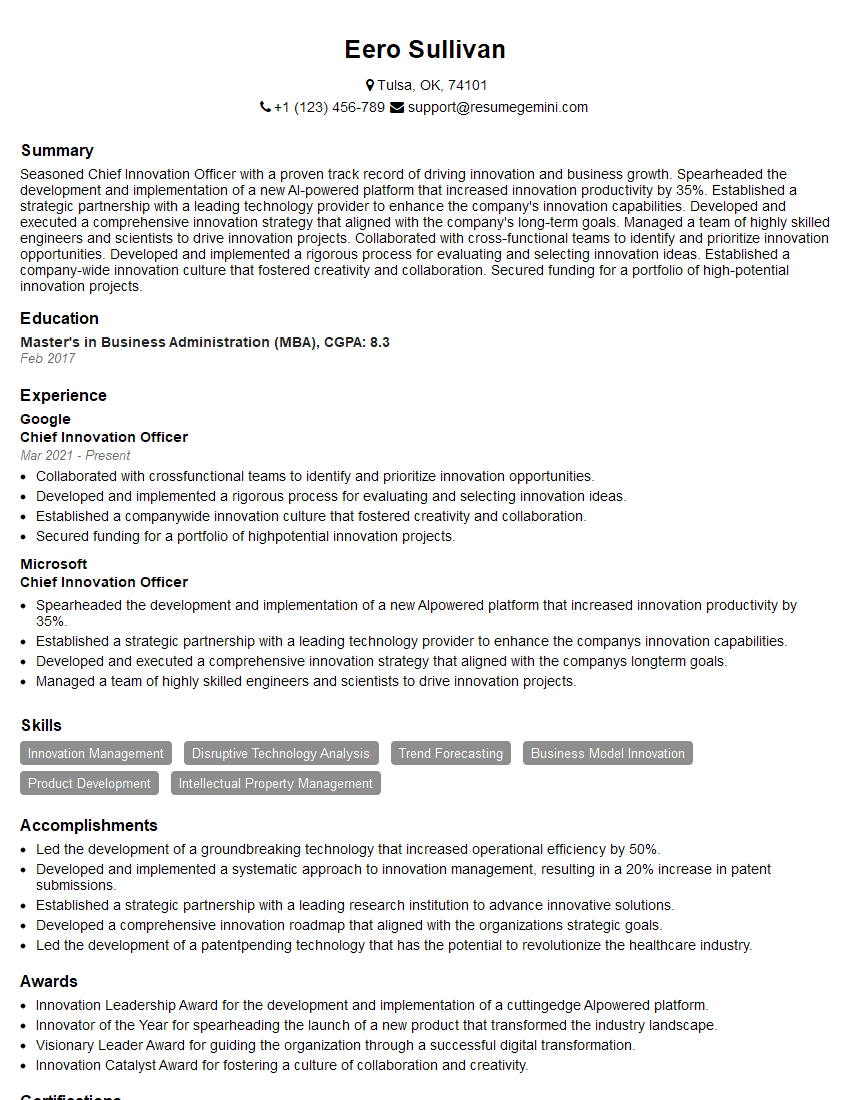
Chief Innovation Officer Resume Sample
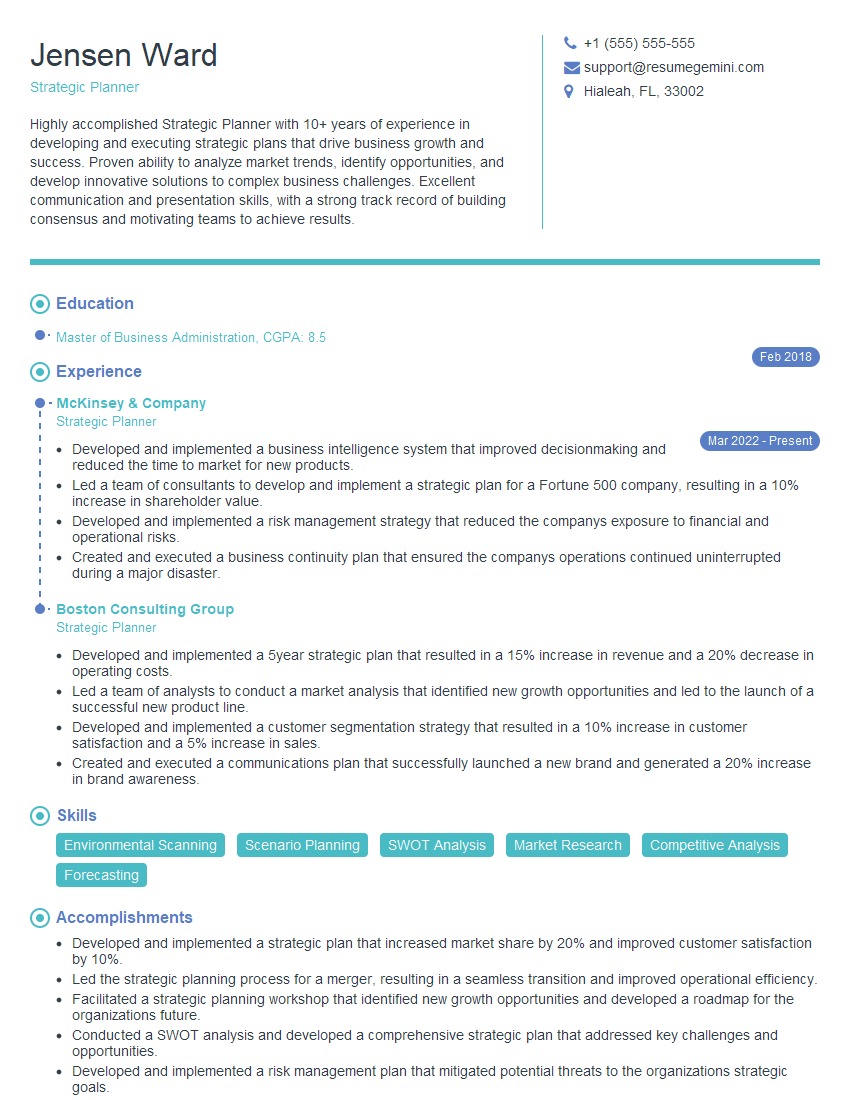
Strategic Planner Resume Sample

Creative Director Resume Sample
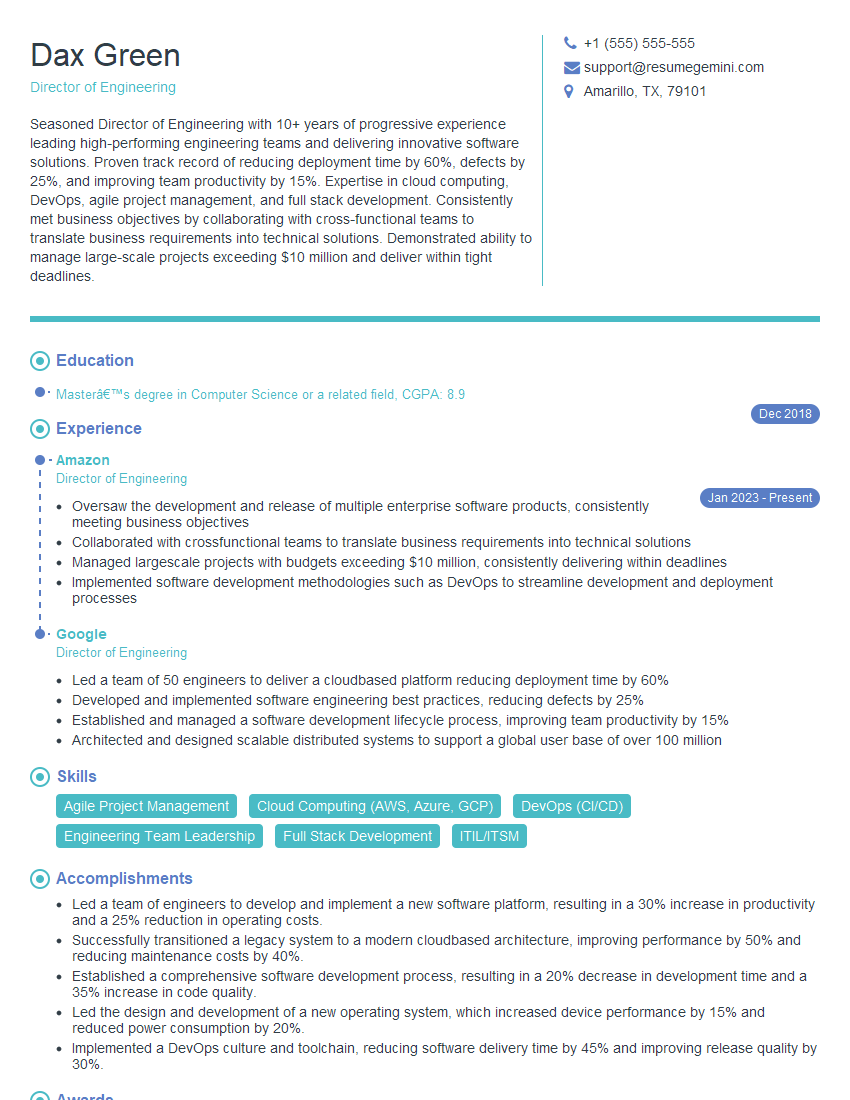
Director of Engineering Resume Sample
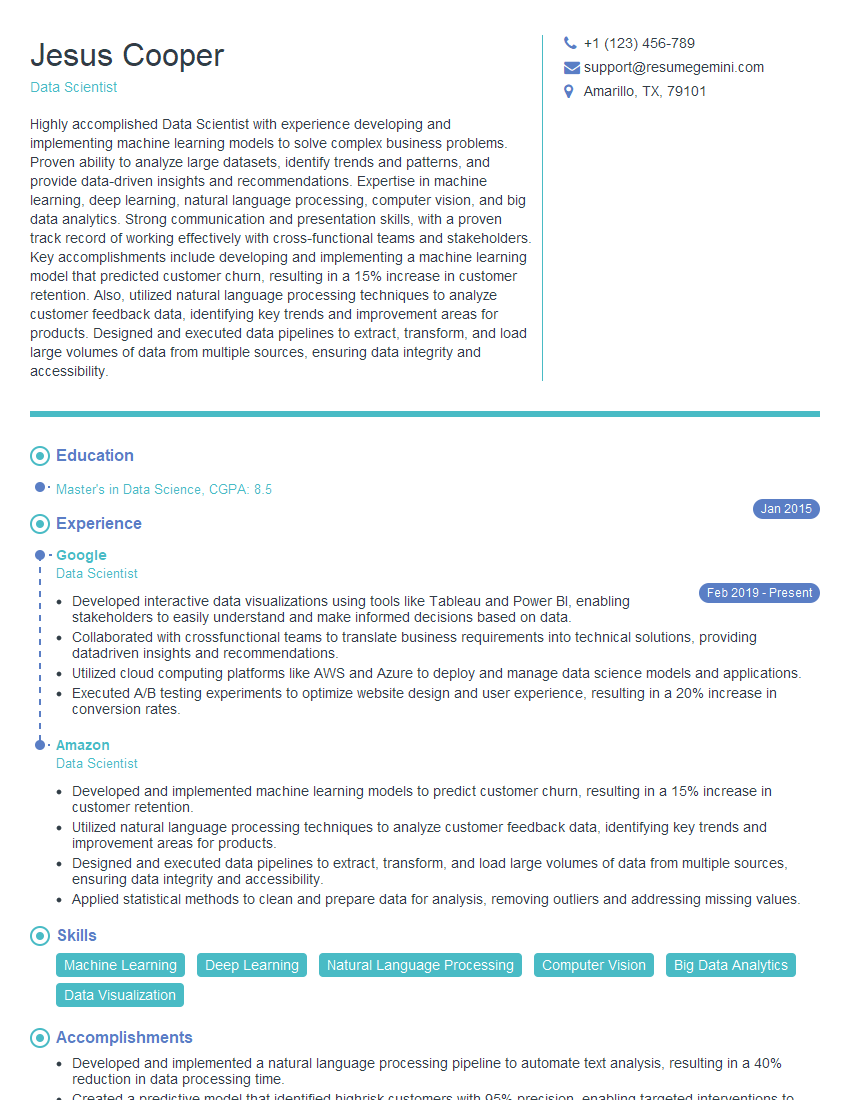
Data Scientist Resume Sample
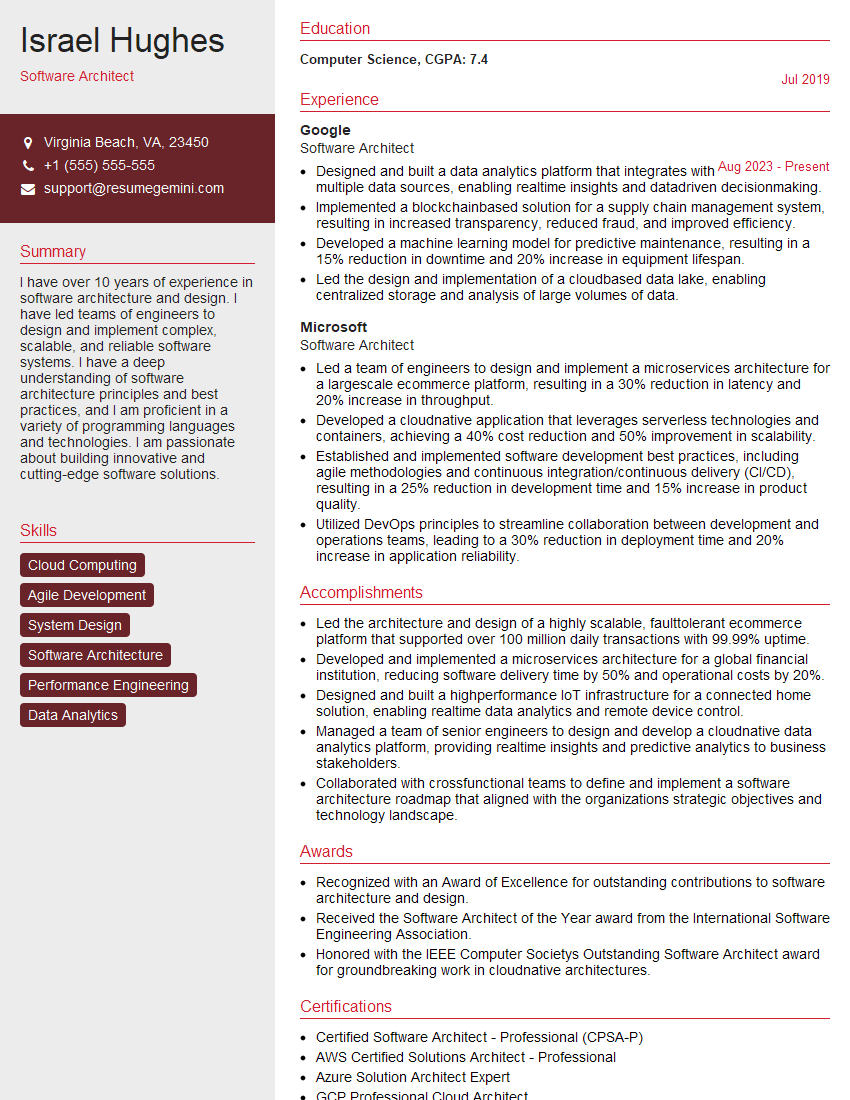
Software Architect Resume Sample
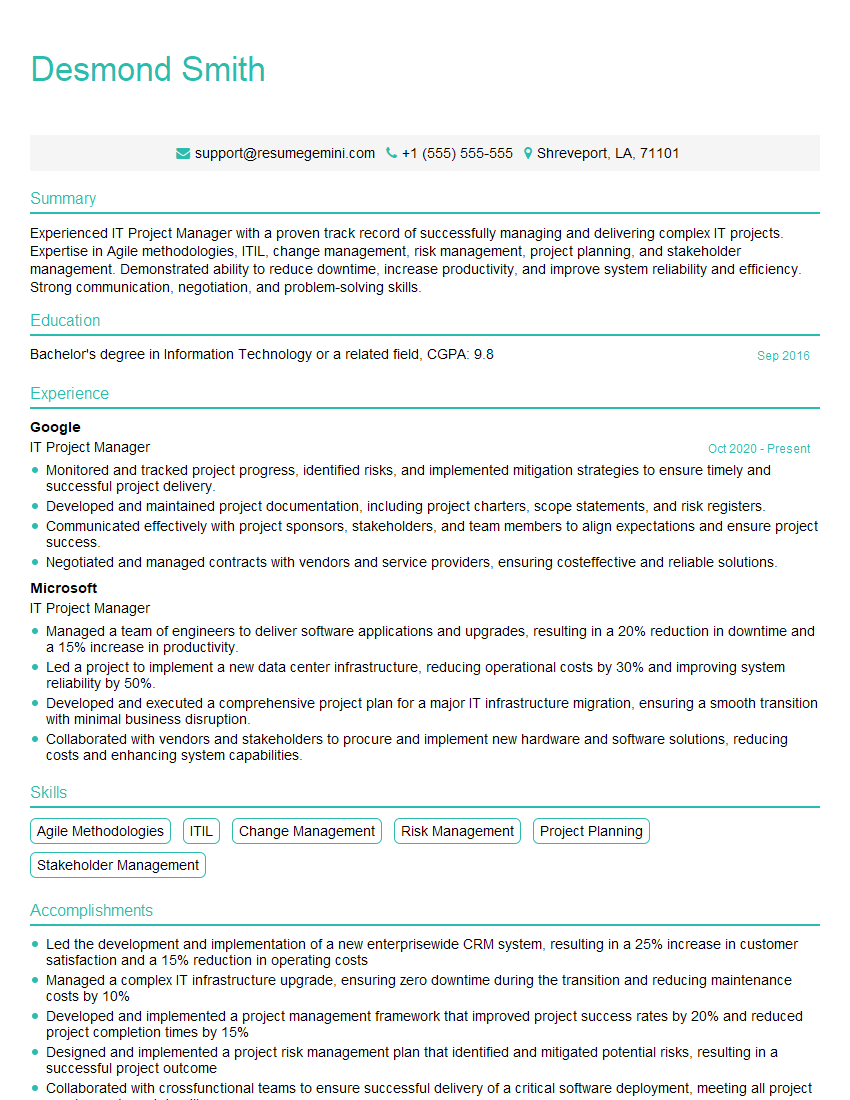
IT Project Manager Resume Sample
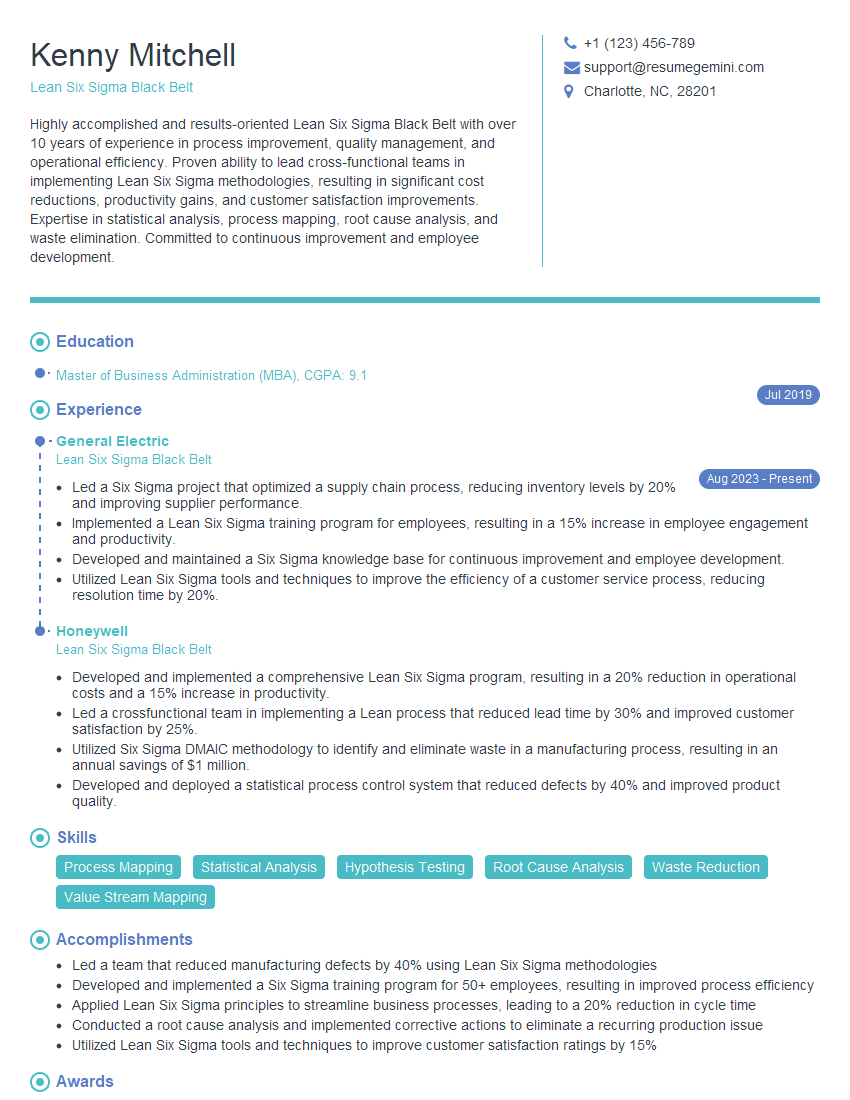
Lean Six Sigma Black Belt Resume Sample

Product Development Manager Resume Sample

Growth Hacker Resume Sample
Explore more articles
Users Rating of Our Blogs
Share Your Experience
We value your feedback! Please rate our content and share your thoughts (optional).
What Readers Say About Our Blog
Very informative content, great job.
good