The right preparation can turn an interview into an opportunity to showcase your expertise. This guide to Equipment Operation (Skid Steer, Forklift) interview questions is your ultimate resource, providing key insights and tips to help you ace your responses and stand out as a top candidate.
Questions Asked in Equipment Operation (Skid Steer, Forklift) Interview
Q 1. Describe your experience operating a skid steer loader.
My experience with skid steer loaders spans over eight years, encompassing various applications in construction, landscaping, and material handling. I’m proficient in operating different models, from compact machines ideal for tight spaces to larger units for heavier tasks. I’ve handled everything from grading and excavating to loading and transporting materials. For example, on a recent landscaping project, I used a Bobcat S70 skid steer to efficiently clear and level a sloped area, preparing it for foundation work. This involved precise maneuvering and skillful use of the machine’s controls to avoid damaging underground utilities. My experience also includes working with various attachments like buckets, pallet forks, and augers, demonstrating my adaptability and versatility in using the skid steer for a wide range of applications.
Q 2. What are the safety procedures you follow when operating a forklift?
Safety is paramount when operating a forklift. My routine begins with a pre-operational inspection, checking fluid levels, tire pressure, horn, lights, and the overall structural integrity of the machine. I always ensure the load is properly secured and within the forklift’s weight capacity. Before lifting, I carefully assess the area for obstacles and pedestrians, using audible warnings where necessary. Maintaining a safe speed, especially when cornering or navigating tight spaces, is crucial. I never exceed the rated load capacity, and I am always mindful of the forklift’s center of gravity to prevent tip-overs. Furthermore, I strictly adhere to company safety regulations and wear appropriate safety gear, including safety shoes and a high-visibility vest. I’ve seen firsthand the consequences of neglecting these procedures, hence, my commitment to rigorous safety protocols is unwavering.
Q 3. Explain the different types of forklift attachments and their uses.
Forklift attachments significantly expand their functionality beyond basic pallet handling. Common attachments include:
- Side Shifters: Allow lateral movement of the forks, simplifying precise placement of pallets in tight spaces. This is especially useful in warehousing or loading trucks.
- Clamp Attachments: Used for handling bulky or irregularly shaped materials like lumber, steel beams, or concrete blocks.
- Rotators: Rotate the forks 90 degrees, enabling easier access to pallets in confined areas or loading from different angles.
- Carriage Extensions: Extend the reach of the forks, suitable for longer items or pallets positioned further back.
- Paper Roll Clamps:Specifically designed for efficiently handling rolls of paper or similar materials.
The selection of the attachment depends entirely on the specific material being handled, and the operator must be thoroughly trained on the safe and efficient use of each attachment.
Q 4. How do you perform a pre-operational inspection of a skid steer?
A pre-operational inspection of a skid steer is a critical safety procedure. I always start by visually inspecting the machine for any damage or leaks. I check the fluid levels (hydraulic oil, engine oil, coolant), tire pressure, and the condition of the tires themselves. I then check the functionality of the controls (steering, lift arms, auxiliary hydraulics) and ensure the seatbelt is in good working order. Next, I engage the parking brake and thoroughly inspect all safety features, such as the lights, horn, and the condition of the safety guards. Finally, I perform a brief test run, ensuring all systems are working correctly before commencing operation. This rigorous process minimizes the risk of equipment malfunction and promotes a safe working environment. For instance, noticing a small hydraulic leak during the inspection could prevent a major failure later on, potentially avoiding an accident.
Q 5. What are the load capacity limits for the forklifts you’ve operated?
The load capacity limits for the forklifts I’ve operated have ranged from 3,000 lbs to 8,000 lbs. The specific capacity always depends on the model of the forklift and is clearly indicated on a sticker on the machine itself. I always ensure the weight of the load, including the pallet, is well within the stated capacity. Overloading a forklift is incredibly dangerous and can result in serious accidents. It’s crucial to remember that the capacity is a maximum and should account for any uneven weight distribution or challenging operating conditions. Even if the combined weight of load and pallet is below the stated limit, any uneven distribution can easily lead to a tipping hazard. Therefore, using load stabilizers and ensuring a balanced distribution across the forks is important.
Q 6. Describe your experience with different types of forklift masts.
My experience includes operating forklifts with various mast types. The most common are:
- Standard Duplex Mast: Offers good lift height and is suitable for most general applications.
- Triplex Mast: Provides higher lift height than a duplex mast, ideal for stacking materials in high-bay warehouses.
- Full-Free Lift Masts: Allow for lifting at full capacity throughout the entire lift height range, enhancing efficiency and precision.
Each mast type has its strengths and limitations. Choosing the correct mast is crucial to match the specific needs of the task at hand. For example, a triplex mast is a necessity when working in warehouses with high racking, while a standard duplex mast may suffice for loading and unloading trucks at a lower height.
Q 7. How do you handle uneven terrain while operating a skid steer?
Operating a skid steer on uneven terrain requires extra caution and skill. I adjust my speed to match the terrain conditions, always maintaining a slow and controlled pace. I avoid abrupt movements that could cause the machine to lose traction or tip over. I carefully monitor the machine’s balance, adjusting my weight distribution accordingly. For significant inclines or declines, I select a lower gear and approach the slope at a shallow angle. On particularly rough terrain, I might choose to use a wider bucket or a different attachment better suited to the uneven surface, such as a smaller bucket for greater maneuverability. Safe operation on uneven terrain is a matter of experience, constant awareness, and applying adaptive techniques based on the situation. Remember, safety is paramount, and it’s always better to err on the side of caution and go slow.
Q 8. What are the common causes of forklift accidents and how can they be prevented?
Forklift accidents are unfortunately common, stemming from a variety of factors. Many are caused by operator error, such as speeding, improper load handling, or failing to follow safety procedures. Other contributing factors include inadequate training, poor maintenance of the equipment, and hazardous workplace conditions.
- Speeding and reckless operation: Think of a forklift like a large, powerful toy; it’s easy to lose control if you’re not careful. Operating at unsafe speeds, especially around corners or on uneven surfaces, increases the risk of tipping or collisions.
- Improper load handling: Overloading a forklift or improperly securing loads can lead to instability and accidents. Imagine trying to carry a stack of heavy boxes that are poorly balanced – disaster waiting to happen!
- Lack of training: A well-trained operator understands the machine’s limitations and knows how to respond to unexpected situations. Proper training is vital.
- Poor maintenance: Malfunctioning brakes, faulty steering, or inadequate visibility can all contribute to accidents. Regular inspections and preventative maintenance are essential.
- Environmental hazards: Slippery floors, inadequate lighting, and cluttered walkways increase the risk of accidents. Maintaining a clean and organized work environment is crucial.
Prevention involves a multi-faceted approach. This includes comprehensive operator training, regular equipment inspections, strict adherence to safety regulations, a well-maintained work environment, and a robust safety culture where reporting near misses is encouraged.
Q 9. How do you ensure the stability of a load while using a forklift?
Ensuring load stability is paramount when operating a forklift. It’s all about balance and understanding the forklift’s weight capacity and the load’s center of gravity. Here’s how:
- Proper Load Centering: The load should be positioned as close to the mast as possible, keeping the weight centered. Imagine balancing a stack of books – you wouldn’t put the heaviest ones on top and far to the side.
- Assess Load Weight: Never exceed the forklift’s rated capacity. The weight capacity is clearly stated on the forklift’s data plate. Overloading is a major cause of tipping.
- Secure the Load: Use appropriate securing devices such as straps, chains, or nets, to prevent shifting during transport. Secure the load before starting the movement, even small shifts can be dangerous.
- Smooth Operation: Avoid sudden braking, acceleration, and sharp turns. These maneuvers can cause loads to shift or the forklift to tip.
- Assess the Terrain: Be aware of the surface conditions. Uneven or slippery surfaces can compromise stability.
Remember, a stable load is a safe load. Taking these precautions minimizes the risk of accidents and damages.
Q 10. Explain the process of attaching and detaching forklift attachments.
Attaching and detaching forklift attachments is a straightforward process, but safety is critical. The exact method varies depending on the type of attachment and the forklift model, but the general steps are similar:
- Engage Safety Mechanisms: Ensure the forklift is turned off, the parking brake is engaged, and the forks are lowered to the ground.
- Align the Attachment: Carefully position the attachment in line with the forklift’s mounting points.
- Use Correct Hardware: Use the proper pins, locks, and other hardware as per the manufacturer’s instructions. Never use makeshift solutions.
- Secure the Attachment: Insert pins and locks, ensuring they are firmly seated and secured. Double-check your work!
- Raise Attachment (if needed): Raise the attachment slightly to ensure it is securely attached before operating the forklift.
- Detaching: Reverse the above steps ensuring safe removal of the pins and attachment. Lower the attachment to the ground before completing disconnection.
Always consult the manufacturer’s instructions for the specific attachment and forklift model. If unsure about any step, seek assistance from a qualified technician. Improper attachment can lead to serious injury and equipment damage.
Q 11. How do you safely operate a skid steer in confined spaces?
Operating a skid steer in confined spaces requires extra caution and skill. Here’s how to do it safely:
- Assess the Space: Carefully examine the area before starting work, identifying potential obstacles and hazards. Plan your route and movements to avoid collisions.
- Slow and Steady: Use slow, controlled movements to maintain control. Avoid sudden jerky movements.
- Use Low Gear: Select a low gear to maintain better control and improve maneuverability.
- Maintain Visibility: Keep a constant watch on your surroundings and adjust your position as needed to maintain optimal visibility.
- Awareness of Blind Spots: Skid steers have large blind spots. Be especially cautious when operating near walls, corners, or other obstructions.
- Spotter: Use a spotter in tight quarters to help guide you and alert you to potential hazards.
- Backup Camera/Sensors: Utilize available backup cameras and sensors to assist with visibility.
Remember, patience and controlled operation are key when working in confined spaces. Rushing increases the risk of accidents and property damage.
Q 12. Describe your experience with different types of forklift tires and their applications.
Different forklift tires are designed for various applications and surface conditions. I’ve worked extensively with several types:
- Cushion Tires: These are solid rubber tires, providing excellent traction on smooth, hard surfaces, like warehouses. They’re quiet and offer a smooth ride, but can be prone to damage from sharp objects and are not ideal for rough terrain.
- Pneumatic Tires: These are air-filled tires, offering a smoother ride and better cushioning than cushion tires. They are suited for rougher surfaces and offer better shock absorption, but are susceptible to punctures and require regular pressure checks.
- Solid Pneumatic Tires: A hybrid of cushion and pneumatic tires, offering improved puncture resistance compared to standard pneumatic tires while maintaining some shock absorption.
- Special Purpose Tires: There are specialized tires designed for applications like outdoor use, cold storage, or even non-marking needs in sensitive environments.
My experience dictates the choice of tire depends on the work environment. A warehouse with smooth floors would ideally use cushion tires for their durability and quiet operation, whereas outdoor applications might necessitate pneumatic tires for better shock absorption and traction on uneven surfaces.
Q 13. What is your experience with preventative maintenance on skid steers and forklifts?
Preventative maintenance is crucial for the safe and efficient operation of skid steers and forklifts. I regularly perform the following:
- Daily Inspections: This includes checking fluid levels (hydraulic fluid, engine oil, coolant), tire pressure, lights, brakes, and steering. I look for any signs of leaks, damage, or unusual wear.
- Scheduled Maintenance: Following the manufacturer’s recommended maintenance schedule is essential. This includes things like oil changes, filter replacements, and component inspections.
- Component Checks: I routinely check the condition of the hydraulic system, transmission, engine, and other critical components.
- Safety Checks: Ensuring safety mechanisms such as seatbelts, horn, and emergency shut-off are in working order.
- Record Keeping: Maintaining detailed records of all maintenance performed helps track the equipment’s history and identify potential problems early.
Proactive maintenance not only prevents costly repairs but also significantly reduces the risk of accidents. A well-maintained machine is a safe machine.
Q 14. How do you handle spills or leaks while operating a forklift?
Handling spills or leaks while operating a forklift requires immediate action and adherence to safety protocols:
- Stop the Forklift: Immediately stop the forklift and turn off the engine.
- Assess the Spill: Determine the nature of the spill (oil, fuel, chemicals) and its extent.
- Warn Others: Alert others in the area about the spill to prevent accidents. If necessary, cordon off the area.
- Use Appropriate PPE: Wear appropriate personal protective equipment (PPE) such as gloves, eye protection, and respiratory protection, depending on the nature of the spill.
- Contain the Spill: Use absorbent materials like spill pads or kitty litter to contain the spill and prevent it from spreading.
- Clean Up: Properly clean up the spill according to the safety data sheet (SDS) for the spilled material.
- Report the Incident: Report the spill to your supervisor or designated personnel. Proper documentation is essential.
Ignoring spills can lead to dangerous situations and potential environmental hazards. Always prioritize safety and follow proper cleanup procedures.
Q 15. What is your experience using different types of forks on a forklift?
My experience with forklift forks spans various types, each suited for specific loads. I’ve extensively used standard pallet forks, crucial for moving palletized goods. These are the workhorses, ideal for their versatility. Beyond that, I’ve worked with:
- Side-Shifting Forks: These allow lateral movement of the load, crucial for precise placement in tight spaces. Imagine needing to perfectly align a pallet against a wall – side shifters are invaluable.
- Paper Roll Clamps: Specifically designed for handling rolls of paper or similar cylindrical objects. These clamps securely grip the load, preventing slippage and damage.
- Carriage Forks: These offer adjustable fork widths, making them adaptable to various pallet sizes and load configurations. This is a great time-saver, as you don’t need to switch forks for different pallet types.
- Rotating Forks: These forks allow you to rotate the load 90 degrees, which is incredibly beneficial for situations where you need to orientate the load differently.
Selecting the right fork is paramount for safe and efficient operation. Understanding the load’s characteristics – weight, dimensions, and fragility – is key to choosing the appropriate attachment.
Career Expert Tips:
- Ace those interviews! Prepare effectively by reviewing the Top 50 Most Common Interview Questions on ResumeGemini.
- Navigate your job search with confidence! Explore a wide range of Career Tips on ResumeGemini. Learn about common challenges and recommendations to overcome them.
- Craft the perfect resume! Master the Art of Resume Writing with ResumeGemini’s guide. Showcase your unique qualifications and achievements effectively.
- Don’t miss out on holiday savings! Build your dream resume with ResumeGemini’s ATS optimized templates.
Q 16. How do you react to mechanical malfunctions while operating equipment?
Mechanical malfunctions demand immediate, safe response. My first step is to immediately shut down the equipment and assess the situation. I’ll activate the parking brake on a forklift or engage the parking brake on a skid steer, ensuring it’s immobile.
Next, I thoroughly evaluate the problem: Is it a minor issue (e.g., a loose bolt), or something more serious (e.g., hydraulic leak)? I’ll then utilize my training and checklist to identify the cause. If it’s a simple fix within my skill set, I’ll attempt the repair after ensuring the area is safe. However, for more complex or potentially hazardous malfunctions, I immediately report the problem to my supervisor, document the issue, and secure the area to prevent accidents. Safety always comes first. Remember, a quick fix can sometimes lead to bigger problems down the line.
Q 17. How do you ensure the stability of a load on a skid steer while lifting or transporting?
Maintaining load stability on a skid steer is critical. I always prioritize distributing weight evenly, minimizing overhang, and ensuring the load is properly secured.
- Even Weight Distribution: I try to center the load as much as possible. An unevenly distributed load will destabilize the skid steer, making it difficult to control.
- Minimize Overhang: Extending loads beyond the machine’s dimensions dramatically impacts stability. Never overload a skid steer.
- Secure the Load: For loose materials, I might use netting, straps, or other securing devices to prevent shifting during transportation.
- Slow and Steady: Operating at a reduced speed is essential, especially when navigating uneven terrain or tight spaces. Sudden movements can quickly destabilize even a well-balanced load.
Imagine transporting a pile of bricks – if they aren’t evenly spread and secured, they could shift, causing the skid steer to tip. Careful planning and execution are essential for a safe operation.
Q 18. Describe your understanding of load centers and their impact on forklift operations.
The load center is the center of gravity of the load, a crucial concept in safe forklift operation. It’s the point where the weight of the load is equally distributed. Understanding the load center is vital because its position relative to the forklift’s mast and wheels significantly impacts stability.
A load center that’s too far forward or backward can cause the forklift to tip. For example, if a heavy load is positioned too far forward, the front wheels can lift off the ground, potentially resulting in a dangerous accident. Conversely, if the load is positioned too far back, the rear of the forklift can lift, causing a similar risk.
Knowing the load center helps in proper load placement and selecting the appropriate forklift for the task. Forklift capacity plates provide guidance on the maximum load and permissible load centers for safe operation. I always consult these plates before operating a forklift.
Q 19. Explain the different types of skid steer attachments and their uses.
Skid steers boast incredible versatility thanks to their interchangeable attachments. I have experience with a wide variety of them:
- Buckets: These are the most common, used for digging, scooping, and moving materials like dirt, gravel, or snow.
- Augers: Essential for digging holes, post holes, and planting.
- Pallet Forks: These allow the skid steer to handle pallets, enhancing material handling capabilities.
- Hydraulic Hammers: Used for breaking up concrete or rocks.
- Grapples: Excellent for handling logs, brush, or other bulky materials.
- Sweepers: Ideal for cleaning up debris, especially in construction or landscaping.
- Snow Blowers: Used for clearing snow.
The right attachment dramatically increases the machine’s utility. For instance, during a landscaping project, I might start by using a bucket to level the ground and then switch to a grapple to move large rocks. This flexibility is one of the key advantages of skid steers.
Q 20. How do you safely navigate a warehouse or construction site using a forklift?
Safe forklift navigation within a warehouse or construction site requires adherence to strict safety protocols and awareness.
- Pre-Operation Inspection: Before commencing operations, I always conduct a thorough pre-operation inspection, checking fluid levels, tire pressure, and overall mechanical condition.
- Clear Pathways: Ensuring clear, unobstructed pathways is essential. This involves removing any obstacles that might impede my movement or visibility.
- Slow Speed: I maintain a slow speed, especially around corners or in congested areas. Sudden stops or changes in direction are avoided.
- Horn Usage: The horn is frequently used to warn pedestrians and other equipment operators of my approach.
- Load Awareness: I am constantly aware of the load’s dimensions and weight, ensuring it doesn’t obstruct my view or create an imbalance.
- Pedestrian Safety: I prioritize pedestrian safety by maintaining safe distances and using caution when approaching pedestrian walkways or crosswalks.
Picture a busy warehouse – slow, controlled movements and constant awareness of your surroundings are critical to prevent collisions.
Q 21. What is your experience working with different types of fuel for skid steers and forklifts?
My experience encompasses both diesel and gasoline-powered skid steers and forklifts. Diesel is common in heavier-duty applications due to its higher power output and fuel efficiency, particularly over longer operating times. However, diesel engines typically require more maintenance. Gasoline-powered machines, on the other hand, are simpler to maintain and are often preferred for lighter-duty tasks or when operating in areas with stricter emission regulations.
Understanding the fuel type is important for maintenance as well. For instance, using the wrong fuel can severely damage the engine. I always double-check the fuel type before starting the equipment and follow proper refueling procedures to prevent spills and fire hazards.
Q 22. Describe your experience using a skid steer for grading or leveling.
Grading and leveling with a skid steer requires precision and a good understanding of the machine’s capabilities. It’s not just about moving dirt; it’s about achieving a consistent, smooth surface. I start by assessing the area, determining the desired grade, and planning my passes. This often involves using stakes or string lines to establish reference points. I then choose the appropriate bucket size and angle for the task. A smaller bucket allows for more precise work, while a larger one is better for moving larger volumes of material.
For example, on a recent project, I used a skid steer with a grading bucket to level a construction site. I started at one end, making overlapping passes to gradually remove or add material, consistently checking my progress against the established grade. I adjusted the bucket angle to control the amount of material moved with each pass, ensuring a consistent slope. Using a smooth, controlled motion, rather than jerky movements, was crucial for achieving a precise and even finish. I also regularly inspected the work to catch and correct any inconsistencies before they became major problems. The key is patience and methodical work; rushing can lead to uneven surfaces and wasted time.
Q 23. How do you safely transport loads over ramps or uneven surfaces using a forklift?
Safely transporting loads over ramps or uneven surfaces with a forklift necessitates extra caution and skill. The key is to maintain a slow, controlled speed, ensuring the load remains stable throughout the entire process. Before even starting, I thoroughly inspect the ramp or surface for any potential hazards like cracks, debris, or significant inclines. I make sure the load is properly secured and balanced to prevent shifting.
When approaching a ramp, I start at a very low speed, keeping the forks slightly angled downward. If it’s steep or uneven, I’ll inch my way forward, constantly watching the load’s behavior. On uneven surfaces, I avoid sudden movements or jarring turns that could cause the load to topple. Smooth, slow acceleration and braking are critical. It’s essential to maintain a clear line of sight and be aware of surroundings to avoid collisions with other objects or personnel. I’ll also adjust my travel speed to match the condition of the surface; slower speeds are always preferred over risky shortcuts on uneven terrain. If at any point I feel uneasy or unsafe, I will stop and reassess the situation before proceeding. This cautious approach minimizes risks and protects both the cargo and my safety.
Q 24. What is your experience with using a skid steer with various attachments (e.g., bucket, pallet forks)?
I’m proficient in operating a skid steer with various attachments, including buckets (both standard and grading), pallet forks, and augers. Each attachment requires a slightly different operating technique to maximize efficiency and safety. For instance, when using pallet forks, I ensure the forks are fully inserted and stable under the pallet before lifting, keeping the load centered and close to the machine for better stability.
Switching between attachments is a straightforward process; however, it’s crucial to follow manufacturer’s guidelines to ensure the correct attachment is properly secured before operation. For example, a careless attachment change could lead to damage to the equipment or injury to the operator. I always double-check the locking mechanisms before starting any work. With a grading bucket, I adjust the tilt and angle to achieve a level surface and make smoother passes. Each attachment demands its own understanding and skill set – and I’ve consistently proven my versatility in utilizing all the attachments I’ve worked with.
Q 25. How familiar are you with different forklift operating systems (e.g., electric, propane, diesel)?
I have experience with electric, propane, and diesel-powered forklifts. Each type has its own advantages and disadvantages. Electric forklifts are ideal for indoor applications due to their quiet operation and zero emissions, but they have limited runtimes and require regular charging. Propane forklifts offer a good balance of power and runtime, while being relatively clean-burning compared to diesel. Diesel forklifts boast the highest power output and longer runtimes, making them suitable for heavy-duty work outdoors, but they produce more emissions and require more maintenance.
My familiarity extends beyond just operation; I understand the specific safety protocols and maintenance requirements for each type. For instance, checking fluid levels (propane, diesel) and battery levels (electric) is crucial before starting work. Knowing these differences is essential for selecting the right forklift for the specific job site and conditions, and for ensuring that operations run smoothly and efficiently while adhering to all safety regulations.
Q 26. Describe a time you had to troubleshoot a mechanical issue on a skid steer or forklift.
During a landscaping project, the hydraulics on the skid steer suddenly failed, causing the bucket to become unresponsive. Instead of panicking, I followed a systematic troubleshooting approach. I first reviewed the operator’s manual to identify potential causes. I then checked the hydraulic fluid level; it was low. I carefully topped off the fluid, observing if there were any leaks. While there weren’t any visible leaks, the hydraulics still weren’t functioning correctly.
Next, I checked the hydraulic lines for any kinks or blockages. Finding none, I suspected a more serious issue and radioed for assistance from a mechanic. This incident taught me the value of regularly inspecting equipment and understanding the hydraulic system. It also reinforced the importance of having a plan for when unexpected mechanical problems arise, and seeking professional help when necessary. Preventing problems through regular maintenance and prompt action when issues occur is vital to avoid larger, more costly repairs down the line.
Q 27. How do you ensure compliance with workplace safety regulations when operating equipment?
Compliance with workplace safety regulations is paramount. I always begin by carefully reviewing the specific regulations applicable to the worksite and the equipment being used. This includes understanding and adhering to speed limits, load capacity limits, and safety procedures for pre-operational checks. I never operate equipment without the required safety training and certification, ensuring my license is current and valid. Before each use, I perform a thorough pre-operational inspection, checking fluid levels, tire pressure, and the overall condition of the equipment to ensure it’s functioning correctly.
I also maintain awareness of my surroundings, avoiding hazards and maintaining a safe distance from other workers or equipment. When operating equipment in areas with limited visibility, I utilize spotters or warning devices. I always wear the appropriate personal protective equipment (PPE), including safety glasses, hard hats, and hearing protection. Moreover, I am familiar with emergency procedures and understand how to respond to different types of equipment malfunctions. By diligently adhering to these guidelines and fostering a culture of safety, I consistently contribute to a safe and productive work environment.
Q 28. What are your strategies for improving efficiency and productivity when using skid steers and forklifts?
Improving efficiency and productivity when operating skid steers and forklifts relies on several key strategies. Planning is critical: I thoroughly assess the work area and develop an efficient work plan that minimizes unnecessary movements. I optimize my routes and strategically position materials to minimize travel time. Proper machine maintenance is essential; well-maintained equipment performs better and requires fewer breakdowns. This includes regular lubrication, fluid checks, and addressing minor issues promptly.
Skilled operation is crucial. Smooth, controlled movements minimize wear and tear on the equipment and result in higher accuracy, especially when performing tasks like grading or pallet stacking. I frequently look for opportunities for improvement, like adjusting my operating techniques to refine my skills. I’m always learning and seeking ways to perform tasks more efficiently and with fewer wasted movements. Continuous improvement, whether it be operational efficiency or problem-solving skills, is vital to maintaining productivity in the long run.
Key Topics to Learn for Equipment Operation (Skid Steer, Forklift) Interview
- Safe Operation Procedures: Understanding pre-operational checks, safe operating procedures, and emergency shutdown protocols for both skid steers and forklifts. This includes knowing relevant safety regulations and company-specific safety guidelines.
- Machine Functionality & Maintenance: Demonstrate knowledge of the mechanics of each machine, including their components, functions, and routine maintenance requirements. Be prepared to discuss preventative maintenance and troubleshooting basic issues.
- Load Handling & Stability: Explain how to safely handle various loads with both machines, considering weight distribution, center of gravity, and terrain conditions. This includes understanding load capacity limits and safe lifting techniques.
- Attachment Use & Proficiency: Discuss your experience with different attachments for both skid steers and forklifts (e.g., buckets, forks, pallet movers, etc.) and how to safely and effectively operate them for various tasks.
- Practical Application: Be ready to describe real-world scenarios where you’ve used these machines, highlighting your problem-solving skills and decision-making in challenging situations (e.g., navigating tight spaces, dealing with unexpected obstacles).
- Regulations & Compliance: Familiarity with relevant OSHA or other industry safety regulations pertaining to operating heavy equipment is crucial. Be prepared to discuss your understanding and adherence to these standards.
- Environmental Awareness: Discuss how you ensure environmentally responsible operation, minimizing fuel consumption and potential environmental impact.
Next Steps
Mastering Skid Steer and Forklift operation opens doors to rewarding careers in construction, logistics, and warehousing, offering opportunities for growth and specialization. To maximize your job prospects, a well-crafted, ATS-friendly resume is essential. ResumeGemini can help you build a professional and impactful resume that highlights your skills and experience effectively. ResumeGemini provides examples of resumes tailored specifically to Equipment Operation (Skid Steer, Forklift) roles, ensuring your qualifications shine through. Invest time in crafting a strong resume – it’s your first impression on potential employers.

Equipment Operator Resume Sample
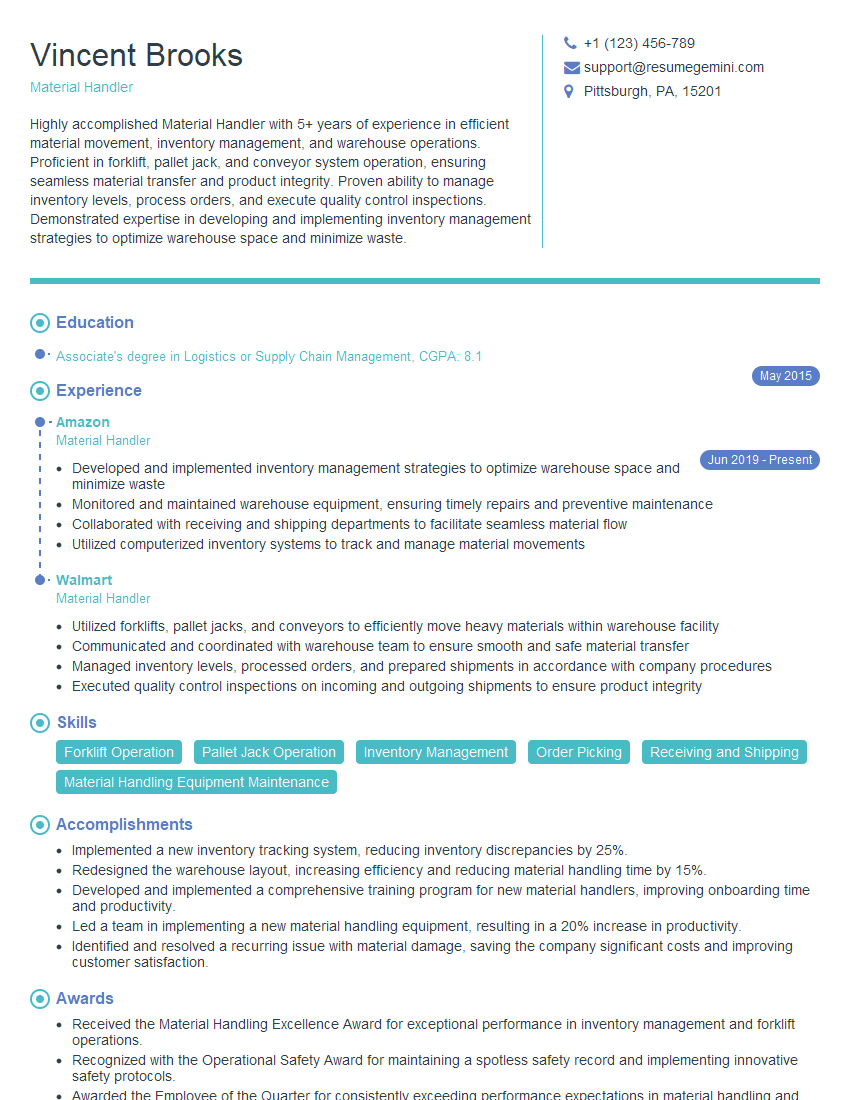
Material Handler Resume Sample
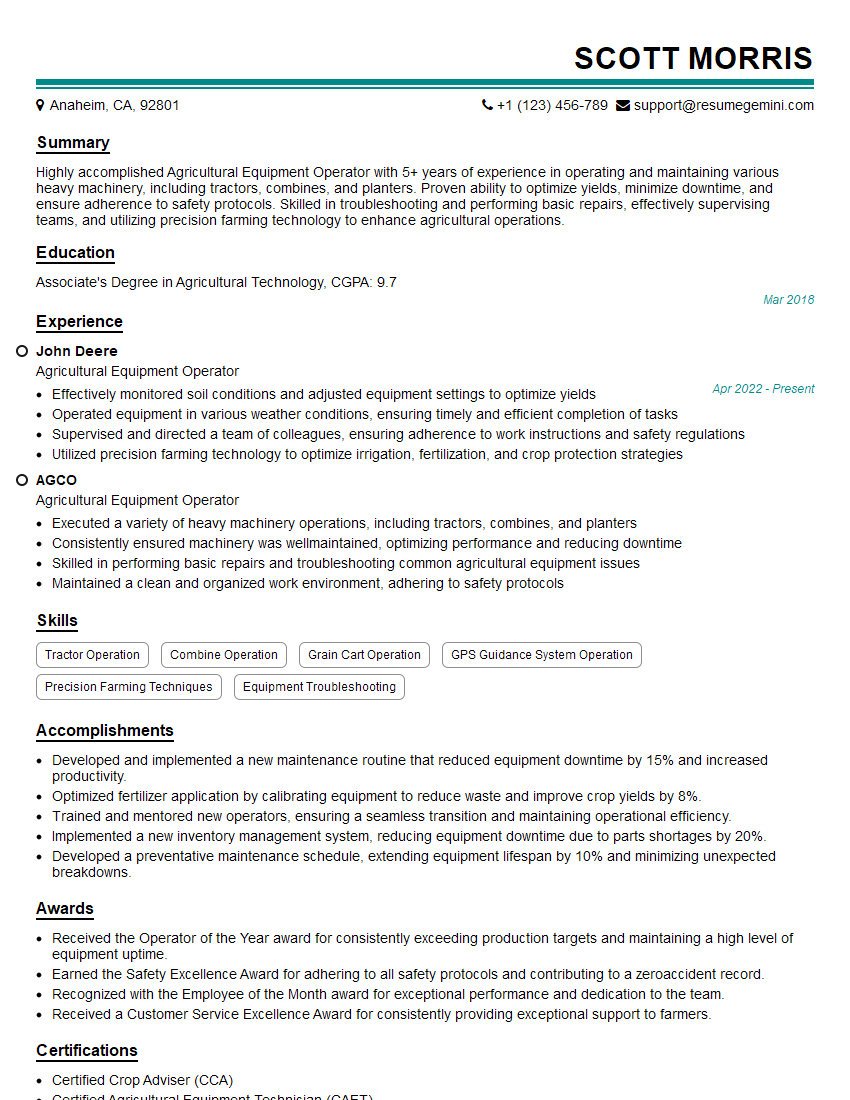
Agricultural Equipment Operator Resume Sample

Heavy Equipment Operator Resume Sample
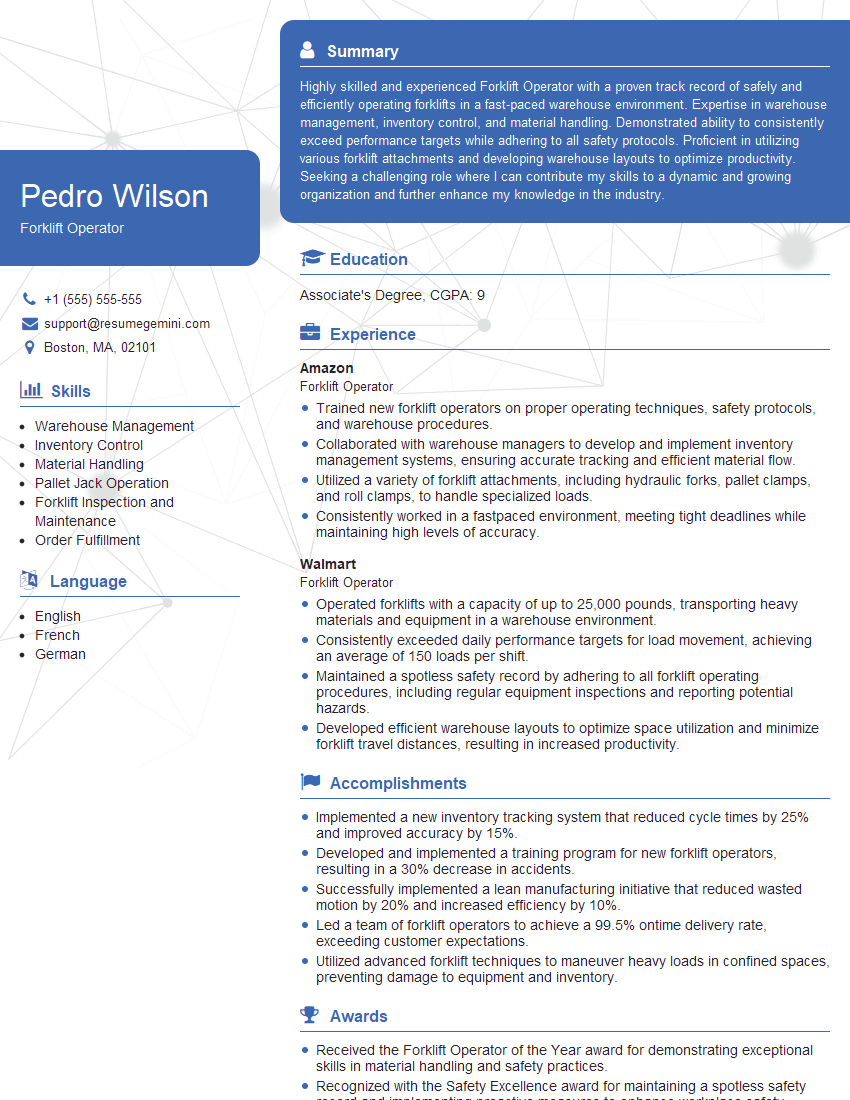
Forklift Operator Resume Sample
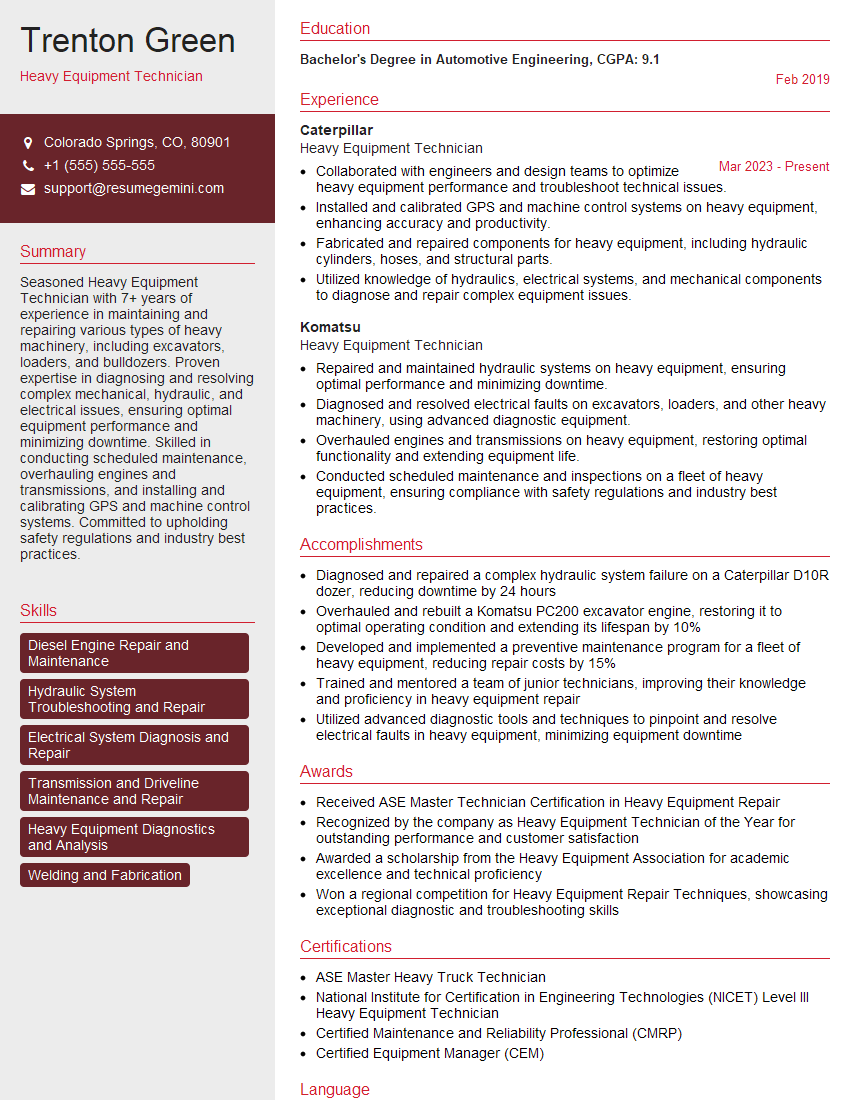
Heavy Equipment Technician Resume Sample

Forklift Mechanic Resume Sample
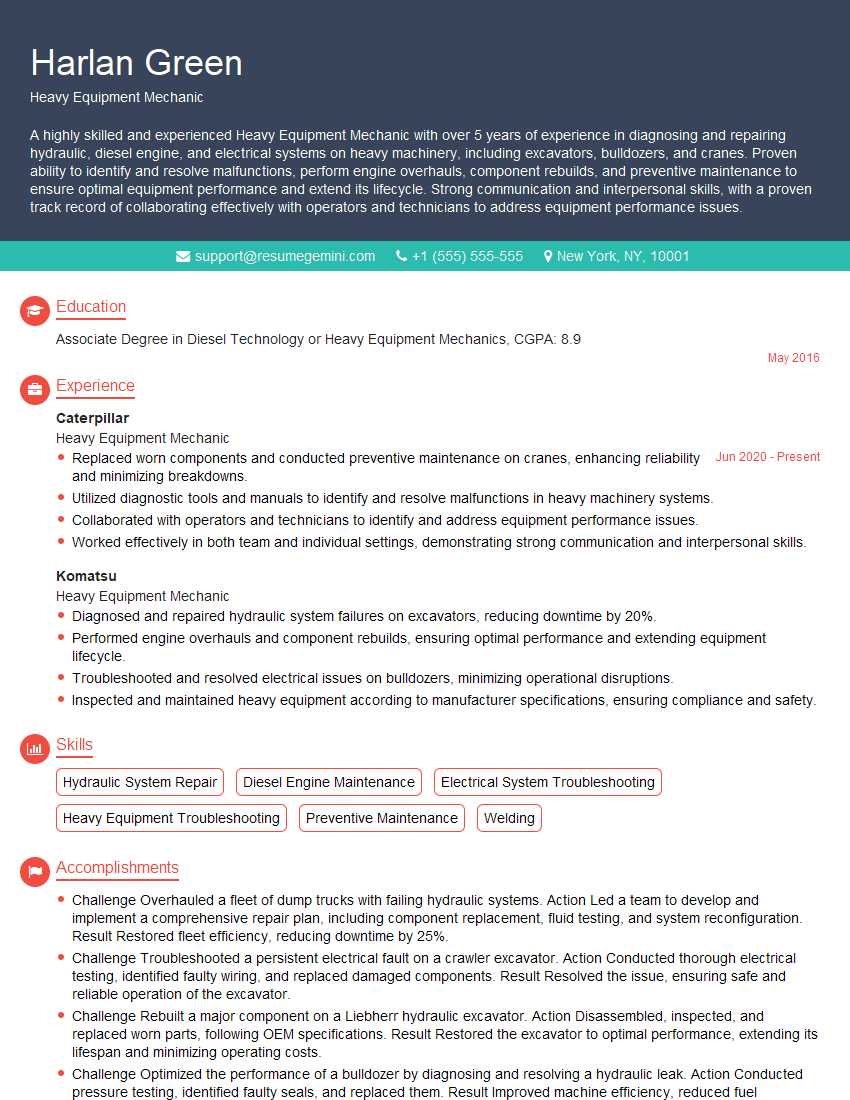
Heavy Equipment Mechanic Resume Sample
Explore more articles
Users Rating of Our Blogs
Share Your Experience
We value your feedback! Please rate our content and share your thoughts (optional).
What Readers Say About Our Blog
Very informative content, great job.
good