Preparation is the key to success in any interview. In this post, we’ll explore crucial Fire Safety Awareness interview questions and equip you with strategies to craft impactful answers. Whether you’re a beginner or a pro, these tips will elevate your preparation.
Questions Asked in Fire Safety Awareness Interview
Q 1. What are the main classes of fire and the appropriate extinguishing agents for each?
Fires are classified into different classes based on the type of fuel involved. Understanding these classes is crucial for selecting the appropriate extinguishing agent. Using the wrong extinguisher can be ineffective and even dangerous.
- Class A: These fires involve ordinary combustible materials like wood, paper, cloth, and plastics. Water is the most common and effective extinguishing agent for Class A fires because it cools the fuel below its ignition temperature. Foam and some dry chemical agents are also effective.
- Class B: Class B fires involve flammable liquids like gasoline, oil, grease, and solvents. Water is generally ineffective and can even spread the fire. Suitable extinguishers include carbon dioxide (CO2), dry chemical powder, and foam. CO2 is preferred for electrical equipment because it doesn’t conduct electricity. Dry chemical extinguishers are versatile but leave a residue.
- Class C: These fires involve energized electrical equipment. Never use water on a Class C fire; it conducts electricity and poses a significant shock hazard. CO2 and dry chemical extinguishers are appropriate choices as they are non-conductive.
- Class D: Class D fires involve combustible metals like magnesium, titanium, and sodium. These require specialized extinguishing agents, often dry powders specifically designed for metal fires, as water can react violently with them.
- Class K: Class K fires involve cooking oils and fats. They require specialized extinguishing agents designed to prevent reignition and to cool the fire. Wet chemical agents are most commonly used for class K fires.
Example: Imagine a grease fire in a kitchen (Class B or K). Using water would cause the burning grease to splatter and spread the fire. A CO2 or dry chemical extinguisher, or a wet chemical extinguisher for Class K, would be the safer and more effective choice.
Q 2. Explain the fire triangle and how it relates to fire prevention.
The fire triangle is a simple model illustrating the three elements necessary for fire to exist: heat, fuel, and oxygen. Removing any one of these elements breaks the chain reaction and extinguishes the fire. This principle is fundamental to fire prevention.
- Heat: The energy source that initiates and sustains combustion. This could be a spark, flame, or heat from friction.
- Fuel: The combustible material that burns. This can be solid (wood), liquid (gasoline), or gas (natural gas).
- Oxygen: The oxidizing agent that supports combustion. Air contains approximately 21% oxygen.
Fire Prevention and the Fire Triangle: Fire prevention strategies focus on eliminating or controlling one or more of these elements. For example:
- Controlling Heat: Properly storing flammable materials, using heat-resistant materials, and regular equipment maintenance can minimize heat sources.
- Controlling Fuel: Limiting the availability of combustible materials, using fire-resistant materials, and proper waste disposal reduces fuel.
- Controlling Oxygen: Using fire suppression systems, ensuring proper ventilation (to prevent buildup of flammable gases) and fire-resistant building materials, help reduce oxygen availability.
Think of it like a three-legged stool. Remove one leg (heat, fuel, or oxygen), and the stool (fire) collapses.
Q 3. Describe the PASS method for using a fire extinguisher.
PASS is a simple yet effective acronym for using a fire extinguisher: Pull, Aim, Squeeze, Sweep.
- Pull: Pull the pin on the fire extinguisher. This releases the locking mechanism.
- Aim: Aim the nozzle at the base of the fire, not the flames. This is crucial because targeting the base extinguishes the fuel source.
- Squeeze: Squeeze the lever slowly and steadily. This releases the extinguishing agent.
- Sweep: Sweep the nozzle from side to side, covering the base of the fire. Keep a safe distance from the flames.
Important Note: Only use a fire extinguisher if you’ve been trained, the fire is small and contained, and you have a clear escape route. If the fire is spreading rapidly, evacuate immediately and call emergency services.
Q 4. What are the key components of a fire safety plan?
A comprehensive fire safety plan is crucial for protecting people and property. Key components include:
- Fire Risk Assessment: An evaluation of the potential fire hazards within the building and the likelihood of a fire occurring.
- Emergency Evacuation Plan: A detailed plan outlining escape routes, assembly points, and procedures for evacuating the building in case of fire. This includes clearly marked exits and escape routes, designated assembly points, and roles and responsibilities of personnel.
- Fire Prevention Measures: Implementing measures to reduce the risk of fire, such as regular maintenance of fire detection and suppression systems and appropriate storage of flammable materials.
- Fire Detection and Alarm Systems: Installing and maintaining a functioning system of smoke detectors, heat detectors, and fire alarms to provide early warning.
- Fire Suppression Systems: Implementing fire suppression systems such as sprinklers or fire extinguishers, depending on the fire risk assessment.
- Training and Drills: Regularly conducting fire drills and providing training to all occupants on fire safety procedures, evacuation routes and use of fire extinguishers.
- Emergency Contacts: Maintaining a list of emergency contacts including local fire department, security personnel, and building management.
- Post-Incident Procedures: Procedures to follow after a fire, including reporting, investigation, and recovery actions.
Example: A comprehensive plan for an office building would include designated fire wardens responsible for guiding employees to safety, clearly marked emergency exits, and regular fire drills.
Q 5. How would you conduct a fire risk assessment for a building?
A fire risk assessment is a systematic process of identifying potential fire hazards and evaluating the risks associated with them. It’s a crucial step in developing a fire safety plan.
- Identify Hazards: Walk through the building and identify potential fire hazards. This includes flammable materials, electrical equipment, heating systems, cooking facilities and any other potential fire sources.
- Identify People at Risk: Consider who may be at risk in case of a fire. This includes the number of people in the building, any vulnerable groups (elderly, disabled) and their proximity to fire hazards.
- Evaluate Risks: Assess the likelihood of a fire occurring and the potential severity of the consequences (e.g., injuries, property damage). This requires considering the type of hazard, its proximity to people and escape routes, and the effectiveness of existing fire safety measures.
- Risk Reduction Measures: Develop strategies to reduce the identified risks. This may involve implementing engineering controls (sprinkler systems), administrative controls (fire safety training), or personal protective equipment (fire-resistant clothing).
- Document Findings: Document all findings of the assessment, including identified hazards, risk levels, and implemented control measures. This documentation serves as a basis for developing and updating the fire safety plan. Regular reviews are essential.
Example: In a warehouse, a fire risk assessment might identify stacked pallets of flammable materials as a high risk. Risk reduction measures could include installing sprinklers, using fire-resistant materials for the pallets, and implementing a clear fire prevention plan.
Q 6. What are the common causes of workplace fires?
Workplace fires can have devastating consequences. Common causes include:
- Electrical Faults: Overloaded circuits, faulty wiring, and damaged electrical equipment are frequent culprits. Regular electrical inspections and maintenance are essential.
- Smoking: Improperly discarded cigarettes or smoking in unauthorized areas are a leading cause of fires. Designated smoking areas and fire-resistant ashtrays are important.
- Heating Equipment: Faulty or improperly maintained heating equipment, such as furnaces, space heaters, and boilers, can ignite nearby combustible materials.
- Flammable Materials: Incorrect storage, handling, or use of flammable liquids, gases, or solids can easily lead to fires. Proper storage, training on safe handling and use are crucial.
- Hot Work: Activities such as welding, cutting, and soldering create sparks and intense heat that can ignite flammable materials. Hot work permits and safety precautions are mandatory.
- Arson: Deliberately set fires pose a significant threat and are often difficult to prevent. Strict security measures are needed.
- Cooking Equipment: Unattended cooking or malfunctioning cooking appliances are also common causes, particularly in restaurants and kitchens.
Example: A fire in a workshop could be caused by sparks from welding equipment igniting nearby flammable materials if proper safety measures like fire blankets and fire extinguishers are not in place, and safety protocols are not followed.
Q 7. Explain the importance of fire drills and evacuation procedures.
Fire drills and evacuation procedures are critical components of a comprehensive fire safety plan. They help ensure that occupants can safely evacuate the building in case of a fire.
- Fire Drills: Regular fire drills familiarize occupants with escape routes, assembly points, and emergency procedures. This prepares them to act quickly and calmly in a real emergency. Drills should be conducted frequently enough to maintain familiarity, but also at varied times to avoid predictability.
- Evacuation Procedures: Clear and concise evacuation procedures are essential. These should outline specific responsibilities for designated personnel, step-by-step instructions for occupants, and clear communication protocols during evacuation. Instructions should be posted in visible locations throughout the building, and include diagrams of escape routes.
Importance:
- Saves Lives: Properly executed evacuation procedures significantly increase the chances of survival in a fire. Knowing the escape routes and assembly points saves valuable time.
- Minimizes Panic: Regular drills reduce panic and confusion during a real emergency. Familiarizing oneself with the procedures allows for a calm and orderly evacuation.
- Identifies Weaknesses: Drills help identify weaknesses in the evacuation plan and allow for improvements to be made. This iterative approach continually enhances the effectiveness of the emergency response.
- Compliances: Regular fire drills and updated evacuation procedures demonstrate compliance with relevant safety regulations and standards. This can protect the organisation from legal and financial liabilities.
Example: A well-planned drill in a school would involve students and teachers calmly evacuating the building, proceeding to the designated assembly point, and accounting for all present. This helps identify potential bottlenecks in the evacuation process.
Q 8. Describe the different types of fire detection systems.
Fire detection systems are the first line of defense in a fire emergency, providing early warning and allowing for prompt evacuation and response. They can be categorized into several types, each employing different detection methods:
- Heat Detectors: These trigger an alarm when a certain temperature is reached. There are fixed temperature detectors (activating at a pre-set temperature) and rate-of-rise detectors (detecting a rapid temperature increase).
- Smoke Detectors: These are the most common type and are incredibly sensitive to the presence of smoke particles. They are further divided into ionization detectors (detecting small smoke particles) and photoelectric detectors (detecting larger smoke particles).
- Flame Detectors: These detect the infrared or ultraviolet radiation emitted by flames, offering very fast detection of open fires. They are often used in high-risk areas such as industrial settings.
- Combined Detectors: Many systems use a combination of detectors (e.g., smoke and heat) to provide more comprehensive coverage and minimize false alarms.
- Addressable Systems: These sophisticated systems identify the precise location of the alarm, allowing for faster and more targeted response from firefighters.
The choice of system depends heavily on the specific environment and the types of potential fire hazards present. For instance, a kitchen might benefit from a heat detector, while a server room would be better protected by a smoke detector due to the prevalence of electrical equipment.
Q 9. How do you ensure compliance with fire safety regulations?
Ensuring compliance with fire safety regulations is a multifaceted process requiring ongoing vigilance. It begins with a thorough risk assessment, identifying all potential fire hazards and vulnerabilities within the facility. This assessment informs the development of a comprehensive fire safety plan, which should detail procedures for evacuation, fire suppression, and emergency response.
Key aspects of compliance include:
- Regular Inspections: Fire safety equipment (detectors, extinguishers, sprinklers) must be inspected and maintained regularly according to manufacturer recommendations and local regulations. Documentation of these inspections is crucial.
- Staff Training: All staff members must be adequately trained on fire safety procedures, including evacuation routes, use of fire extinguishers, and their roles in an emergency. This training should be documented and refreshed periodically.
- Emergency Drills: Regular fire drills are essential to ensure everyone understands and can effectively execute the emergency procedures. These drills should be documented, and the results analyzed for areas of improvement.
- Compliance with Codes: Staying abreast of and strictly adhering to all relevant fire safety codes and regulations (both national and local) is non-negotiable. This may require consulting with fire safety experts.
- Record Keeping: Meticulous record-keeping of all inspections, training sessions, and drills is vital to demonstrate compliance in case of an audit or investigation.
Think of it like a layered security approach—multiple layers working together to minimize risk. Failing to maintain one aspect could compromise the whole system.
Q 10. What are your responsibilities as a fire warden?
As a fire warden, my responsibilities are crucial for the safety of occupants during a fire emergency. My role extends far beyond simply reacting to a fire alarm. It involves proactive preparation and decisive action during an emergency. My responsibilities include:
- Familiarization with the Building: Thoroughly understanding the building layout, including escape routes, assembly points, and the location of fire-fighting equipment.
- Staff Training and Drills: Assisting in the training of staff on evacuation procedures and the use of fire safety equipment.
- Regular Inspections: Conducting regular checks on fire safety equipment to ensure it’s in proper working order and reporting any deficiencies immediately.
- Evacuation Management: In the event of a fire, guiding and assisting occupants to safety, ensuring a swift and orderly evacuation, and accounting for everyone at the assembly point.
- Communication: Liaising with emergency services, providing accurate information about the situation, and coordinating with other wardens.
- Post-Incident Reporting: Assisting in post-incident investigations, providing information and feedback to improve future safety procedures.
Essentially, I’m the critical link between the building’s safety systems and the people within it, ensuring a coordinated response to a fire emergency.
Q 11. Explain the role of emergency lighting in fire safety.
Emergency lighting plays a vital role in fire safety by providing illumination during power outages, which are frequent during fires. Its purpose is to facilitate safe evacuation, guiding occupants to emergency exits and assembly points.
Effective emergency lighting needs to meet several requirements:
- Sufficient Illumination: Providing enough light to allow occupants to safely navigate escape routes.
- Guidance Systems: Clearly marked escape routes with directional signs or illuminated exit signs.
- Backup Power: Operating independently of the main power supply, typically via battery backup, ensuring continued functionality during a power outage.
- Testing and Maintenance: Regular testing and maintenance are critical to ensure the system’s reliability and functionality when needed.
Imagine trying to evacuate a smoke-filled building in complete darkness – emergency lighting is literally the difference between safe and chaotic evacuation.
Q 12. What are the hazards associated with specific fire suppression systems (e.g., sprinkler systems)?
While fire suppression systems like sprinkler systems are life-saving, they also pose certain hazards if not properly designed, installed, and maintained. Some potential hazards include:
- Water Damage: The most obvious hazard is water damage to property and equipment. Sprinkler systems release a significant volume of water, potentially causing extensive damage if not controlled effectively.
- Malfunction: Sprinkler systems can malfunction due to age, corrosion, or improper maintenance, potentially failing to activate when needed or activating unintentionally.
- Freezing: In colder climates, water in the pipes can freeze, causing them to burst and leading to water damage even without a fire.
- Scalding: The water discharged from sprinklers can be extremely hot, posing a risk of burns, particularly to those already affected by smoke or flames.
- Electrocution: Water is an excellent conductor of electricity. If a sprinkler system activates near electrical equipment, it could potentially cause electrocution.
To mitigate these hazards, regular inspections, maintenance, and appropriate design considerations (like strategically positioned sprinkler heads and proper water pressure) are crucial. The potential benefits far outweigh the risks, but proactive management is essential.
Q 13. Describe your experience with fire safety training and education.
My fire safety training and education has been extensive and spans many years. I hold a Level 3 Award in Fire Safety and Risk Management and have completed several advanced courses in fire investigation and suppression techniques. I’ve actively participated in numerous fire safety training programs, instructing personnel in areas like evacuation procedures, extinguisher usage, and fire prevention strategies.
I’ve also had practical experience conducting fire risk assessments for various types of buildings, including offices, industrial facilities, and residential complexes, tailoring my approach to the specific hazards of each environment. This hands-on experience has provided invaluable insights into real-world fire safety challenges and effective solutions.
Q 14. How do you stay updated on the latest fire safety codes and regulations?
Staying current with the latest fire safety codes and regulations is paramount in this field. I achieve this through several strategies:
- Professional Organizations: I am an active member of several fire safety professional organizations, which provide regular updates on code changes, best practices, and emerging technologies.
- Industry Publications: I regularly read industry publications, journals, and newsletters to remain informed on advancements and best practices.
- Online Resources: I leverage reputable online resources from government agencies and recognized safety organizations for updates and guidance.
- Training Courses: I participate in continuing education courses and workshops to refresh my knowledge and acquire skills in new areas.
- Networking: I maintain a professional network with other fire safety experts, exchanging information and learning from their experiences.
Fire safety is a constantly evolving field. Continuous learning is not just beneficial, it is absolutely crucial for maintaining competency and ensuring that the advice I give and the strategies I employ are up-to-date and effective.
Q 15. Describe a situation where you had to deal with a fire safety emergency. What was your role?
During my time as a Fire Safety Officer at a large manufacturing plant, a fire broke out in the packaging department due to a malfunctioning electrical panel. My role immediately shifted to emergency response.
First, I activated the building’s fire alarm system and ensured everyone evacuated safely according to our pre-determined plan. I coordinated with the on-site emergency response team and provided them with crucial information regarding the fire’s location and potential hazards. I then liaised with the fire department, providing them with access to the building and directing them to the fire’s origin. After the fire was extinguished, I assisted in assessing the damage and securing the area to prevent further incidents. My role extended to documenting the event, including creating a preliminary incident report, which is critical for the subsequent investigation.
Career Expert Tips:
- Ace those interviews! Prepare effectively by reviewing the Top 50 Most Common Interview Questions on ResumeGemini.
- Navigate your job search with confidence! Explore a wide range of Career Tips on ResumeGemini. Learn about common challenges and recommendations to overcome them.
- Craft the perfect resume! Master the Art of Resume Writing with ResumeGemini’s guide. Showcase your unique qualifications and achievements effectively.
- Don’t miss out on holiday savings! Build your dream resume with ResumeGemini’s ATS optimized templates.
Q 16. What are the key elements of a post-incident fire investigation?
A post-incident fire investigation is crucial for determining the cause, identifying contributing factors, and preventing future fires. The key elements are:
- Scene Preservation: Securing the site to prevent further damage or loss of evidence.
- Witness Interviews: Gathering statements from individuals who may have witnessed the incident.
- Evidence Collection: Gathering physical evidence such as debris, electrical components, and any potential ignition sources.
- Fire Pattern Analysis: Determining the fire’s origin and spread by studying the burn patterns on walls, floors, and objects.
- Cause Determination: Analyzing the collected data to determine the most probable cause of the fire – accidental, deliberate, or undetermined.
- Report Writing: Compiling a comprehensive report that details the investigation’s findings, conclusions, and recommendations for preventing future incidents.
For instance, if a fire starts near an electrical panel, investigators would examine wiring, circuit breakers, and the panel itself for defects. Analyzing burn patterns can help determine the fire’s spread and origin point.
Q 17. Explain the concept of compartmentalization in fire safety.
Compartmentalization in fire safety involves dividing a building into smaller, self-contained sections using fire-resistant barriers. Think of it like dividing a cake into slices with fire-resistant dividers. This strategy limits the fire’s spread by confining it to a specific area, giving occupants more time to evacuate and firefighters more time to extinguish the blaze.
These barriers include fire-rated walls, floors, doors, and ceilings, designed to withstand fire for a specified period, allowing for a controlled burn time. For example, a fire in one office of a multi-tenant building, properly compartmentalized, is far less likely to spread to other offices or floors. The design and construction of such barriers are crucial, adhering to strict building codes and fire safety regulations to effectively contain a fire.
Q 18. What is the importance of maintaining fire safety equipment?
Maintaining fire safety equipment is paramount for ensuring its effectiveness in case of an emergency. Neglecting maintenance can lead to equipment failure during a critical moment, resulting in serious consequences.
- Regular Inspections: Fire extinguishers, fire alarm systems, sprinkler systems, and emergency lighting should be inspected regularly – typically monthly – to check for any damage, malfunctions, or obstructions.
- Professional Servicing: Professional servicing should be performed annually, or according to manufacturer’s guidelines, for major systems like fire extinguishers and sprinkler systems to ensure proper functionality and compliance with regulations.
- Staff Training: Employees should receive regular training on the proper use and location of fire safety equipment.
- Record Keeping: Detailed records of all inspections and servicing should be maintained to demonstrate compliance and provide a history of the equipment’s performance.
Imagine a scenario where a fire extinguisher is faulty due to lack of maintenance, failing to extinguish a small fire, resulting in a larger, more destructive blaze. Proper maintenance prevents such catastrophic outcomes.
Q 19. How would you handle a situation where employees are not following fire safety procedures?
If employees are not following fire safety procedures, a multi-pronged approach is necessary:
- Identify the Root Cause: Determine why employees are not complying. Is the training inadequate? Are the procedures unclear or cumbersome? Are there incentives lacking?
- Reinforce Training: Provide refresher training, focusing on practical applications and potential consequences of non-compliance. Hands-on training is particularly effective.
- Improve Communication: Clearly communicate the importance of fire safety and the potential consequences of ignoring procedures. Use various communication channels such as posters, emails, meetings, and toolbox talks.
- Enforce Consequences: Establish clear and consistent consequences for non-compliance, ranging from verbal warnings to disciplinary action, depending on the severity of the infraction.
- Incentivize Compliance: Recognize and reward employees who consistently demonstrate adherence to fire safety protocols.
A combination of education, clear communication, and enforcement will create a culture of fire safety awareness and ensure compliance.
Q 20. What are the legal responsibilities of employers regarding fire safety?
Employers have significant legal responsibilities regarding fire safety, which are typically defined in legislation like the Occupational Safety and Health Act. These responsibilities include:
- Risk Assessment: Conducting regular risk assessments to identify and evaluate fire hazards within the workplace.
- Fire Prevention Measures: Implementing and maintaining effective fire prevention measures, including fire detection and suppression systems.
- Emergency Procedures: Developing and regularly practicing emergency evacuation plans and procedures.
- Employee Training: Providing adequate training to all employees on fire safety procedures, including the use of fire extinguishers and emergency exits.
- Equipment Maintenance: Ensuring that all fire safety equipment is properly maintained and regularly inspected.
- Compliance with Regulations: Adhering to all relevant fire safety regulations and legislation.
Failure to comply with these responsibilities can lead to significant fines, legal action, and, most importantly, potential injury or loss of life.
Q 21. Describe the different types of fire doors and their function.
Fire doors play a vital role in compartmentalization, preventing the spread of fire and smoke. Different types cater to specific needs:
- Standard Fire Doors: These doors are designed to resist fire for a specific period (e.g., 30 minutes, 60 minutes, 90 minutes), typically indicated by a rating label. They help contain the fire within a compartment.
- Smoke-Sealed Doors: These doors have improved seals around their edges and frames to prevent smoke passage. They’re crucial in slowing the spread of smoke, which is a significant life threat.
- Self-Closing Doors: These doors are equipped with a mechanism that automatically closes them after opening, helping to maintain the integrity of the fire compartment.
- Escape Doors: Designed for emergency exits, these doors must always be easily accessible and open outwards for efficient evacuation.
- Fire-Rated Sliding Doors: These doors slide horizontally and are designed with fire-resistant materials to create a fire barrier.
The specific type of fire door used depends on the building’s design, occupancy, and fire risk assessment. Each door type contributes to the overall fire safety strategy.
Q 22. What are the limitations of different fire suppression systems?
Different fire suppression systems, while effective, have inherent limitations. Understanding these is crucial for selecting the right system for a specific environment and risk profile.
Water-based systems: While effective on Class A fires (ordinary combustibles), they can cause water damage, are ineffective on Class B (flammable liquids) and Class C (energized electrical) fires unless properly de-energized, and can even spread fires involving flammable liquids if not carefully applied. They also pose risks in areas with sensitive electronic equipment.
Foam systems: Effective on Class A and B fires, foam systems can be less effective on deep-seated fires and require specialized training for proper application. They also can present environmental concerns due to their chemical composition.
Dry chemical systems: These are effective on Class B and C fires but leave behind a messy residue requiring extensive cleanup. They also have limited effectiveness on Class A fires and may temporarily impair visibility.
Carbon dioxide (CO2) systems: Suitable for Class B and C fires, CO2 systems displace oxygen, posing asphyxiation risks if not properly ventilated after use. They are also ineffective on Class A fires.
Clean agent systems: These systems use environmentally friendly chemicals and are effective on Class A, B, and C fires, but they are significantly more expensive than other systems and require careful consideration of the potential health effects of the specific agent used.
Choosing the right system involves a risk assessment considering the type of fire hazards present, the value of the property, and the potential for injury or environmental damage.
Q 23. Explain the significance of signage in fire safety.
Signage plays a vital role in fire safety by providing clear, concise, and readily visible instructions that guide occupants during emergencies. Well-designed signage ensures a quick and safe evacuation, minimizing confusion and panic.
Emergency Exits: Clearly marked exit signs with illuminated arrows guide occupants to the nearest safe exit routes.
Assembly Points: Signage indicating designated assembly points after evacuation allows for a headcount and facilitates the organization of emergency response.
Fire Extinguisher Locations: Signs identifying the location and type of fire extinguishers enable prompt and effective fire suppression attempts.
Fire Alarm Pull Stations: Clear signage indicating the location of alarm pull stations ensures that they are easily accessible in case of fire.
Fire Safety Procedures: Signage displaying concise fire safety procedures reinforces training and ensures that individuals know what to do in the event of a fire.
Signage must comply with relevant building codes and standards to ensure visibility, clarity, and accessibility for all individuals, including those with disabilities.
Q 24. How do you assess the effectiveness of fire safety training programs?
Assessing the effectiveness of fire safety training programs involves a multi-faceted approach that goes beyond simply confirming attendance. A comprehensive evaluation ensures that training has improved knowledge, skills, and overall preparedness.
Pre- and Post-Training Assessments: Comparing knowledge levels before and after training reveals the effectiveness of the program in imparting information.
Practical Demonstrations: Observing participants performing fire safety procedures, such as using a fire extinguisher or evacuating a building, provides a practical measure of skill acquisition.
Feedback Mechanisms: Collecting feedback through surveys, questionnaires, or focus groups provides valuable insights into the effectiveness of the training methods and content.
Incident Reports: Analyzing incident reports following fires can reveal whether training effectively prevented or mitigated incidents.
Regular Refresher Training: The need for regular refresher training indicates areas where knowledge or skills might be deteriorating over time.
A combination of these methods offers a well-rounded assessment of a fire safety training program’s effectiveness.
Q 25. What are some common misconceptions about fire safety?
Several common misconceptions about fire safety can hinder effective emergency response and increase risks.
‘It won’t happen to me’: This attitude undermines preparedness. Every building and workplace is susceptible to fire.
‘I’ll just call 911’: While calling emergency services is vital, early fire suppression and evacuation can significantly reduce damage and casualties.
‘Smoke detectors aren’t necessary in my home’: Smoke detectors provide early warning, allowing for timely evacuation and increasing survival chances.
‘Fire drills are a waste of time’: Drills build muscle memory, familiarize people with escape routes, and reinforce the importance of preparedness.
‘Fire extinguishers are easy to use’: Effective use requires proper training. Improper use can exacerbate the situation.
Addressing these misconceptions through effective education and training is critical for promoting a culture of fire safety.
Q 26. How do you ensure the accessibility of fire safety measures for people with disabilities?
Ensuring accessibility of fire safety measures for people with disabilities is paramount and mandates adhering to relevant accessibility standards and codes.
Accessible Evacuation Routes: Providing ramps, wide doorways, and elevators ensures safe evacuation for individuals with mobility impairments.
Visual and Auditory Alarms: Using both visual (strobe lights) and auditory alarms ensures that individuals with hearing or visual impairments are alerted to a fire.
Accessible Assembly Points: Selecting assembly points that are accessible to all ensures that everyone can gather safely after evacuation.
Tactile Signage: Using raised lettering and Braille on signage assists individuals with visual impairments.
Assistive Listening Devices: Providing assistive listening devices can help hearing-impaired individuals understand emergency instructions.
Regular inspections and training involving individuals with disabilities ensure that all measures are functional and understood.
Q 27. Describe your experience with various types of fire detection and alarm systems.
My experience encompasses a wide range of fire detection and alarm systems, including:
Ionization smoke detectors: These are sensitive to fast-flaming fires, producing small particles.
Photoelectric smoke detectors: These are more sensitive to slow-smoldering fires, producing larger particles.
Heat detectors: These detect increases in temperature, suitable for areas where smoke detectors might be prone to false alarms.
Flame detectors: These detect the infrared or ultraviolet radiation emitted by flames.
Addressable fire alarm systems: These systems identify the specific location of the alarm activation, aiding in faster response.
Conventional fire alarm systems: These systems provide a general alarm indication, less precise in pinpointing the fire’s location.
Understanding the strengths and limitations of each system is crucial for designing effective fire protection strategies for diverse environments.
Q 28. How would you communicate fire safety procedures to a diverse workforce?
Communicating fire safety procedures to a diverse workforce requires a multifaceted approach that considers language barriers, literacy levels, and cultural differences.
Multilingual Materials: Providing training materials, signage, and instructions in multiple languages ensures that all employees understand the procedures.
Visual Aids: Using diagrams, videos, and demonstrations helps to overcome language barriers and enhances comprehension for various learning styles.
Simplified Language: Using clear and concise language, avoiding technical jargon, makes the information accessible to everyone.
Interactive Training: Engaging training sessions with interactive elements, such as quizzes and role-playing, promote active learning and knowledge retention.
Cultural Sensitivity: Being mindful of cultural norms and communication styles ensures that the training resonates with all employees.
Regular follow-up and feedback mechanisms ensure that everyone understands and feels comfortable with the procedures, creating a safe and inclusive workplace.
Key Topics to Learn for Fire Safety Awareness Interview
- Fire Prevention Strategies: Understanding the key principles of preventing fires, including identifying and mitigating potential hazards in various environments (residential, commercial, industrial).
- Fire Detection and Alarm Systems: Knowledge of different types of fire detection systems (smoke detectors, heat detectors, sprinkler systems), their limitations, and how to respond to alarms effectively. Practical application: Describing the installation and maintenance procedures for a specific system.
- Fire Suppression Techniques: Familiarity with various fire suppression methods (water, foam, dry chemical, CO2), their appropriate applications, and the limitations of each. Practical application: Explaining the selection process for fire extinguishers based on different fire classes.
- Emergency Procedures and Evacuation Planning: Understanding the importance of developing and implementing comprehensive emergency evacuation plans, including roles and responsibilities, communication strategies, and post-incident procedures. Practical application: Designing an evacuation plan for a specific building type.
- Fire Safety Regulations and Codes: Knowledge of relevant fire safety regulations and building codes, and their practical application in ensuring compliance. Practical application: Explaining how to interpret and apply specific sections of a fire code.
- Risk Assessment and Management: Ability to conduct fire risk assessments, identify potential hazards, and implement control measures to mitigate risks. Practical application: Describing the process of conducting a fire risk assessment for a given scenario.
- Fire Investigation Basics: Understanding basic fire investigation principles, including identifying fire origins and causes. This is particularly important for more senior roles.
Next Steps
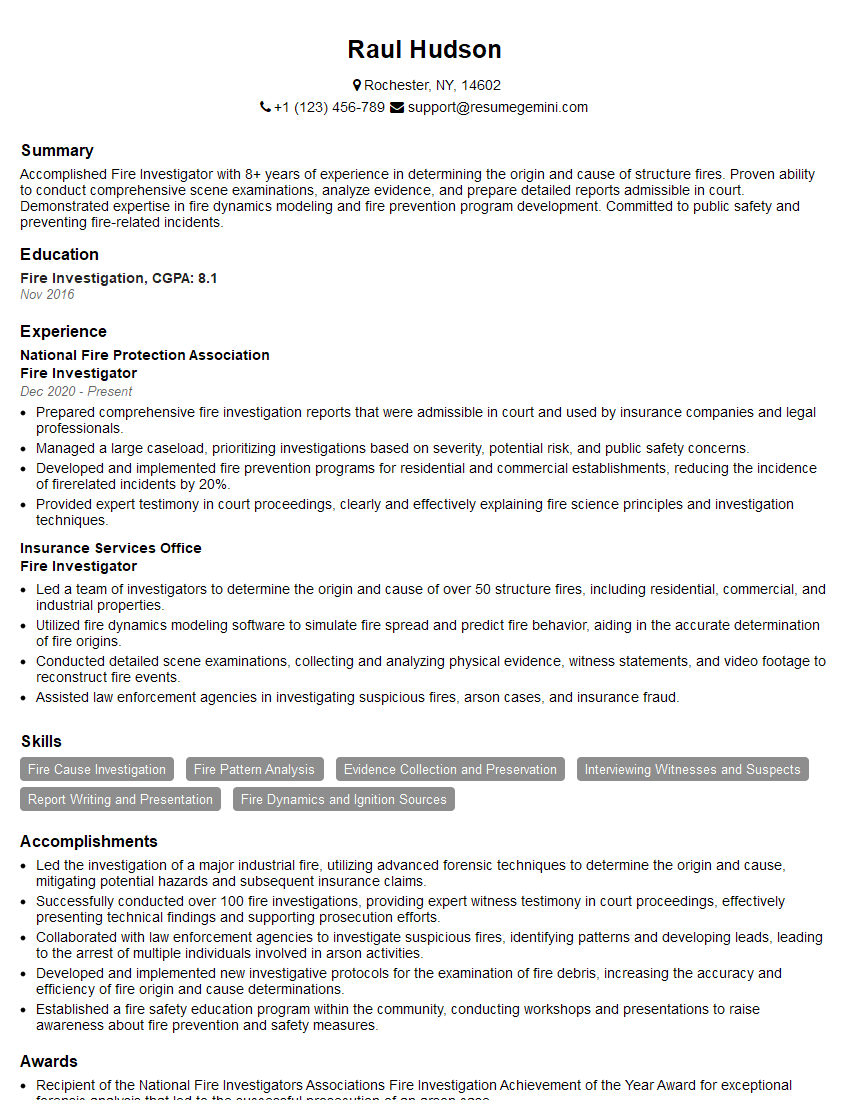
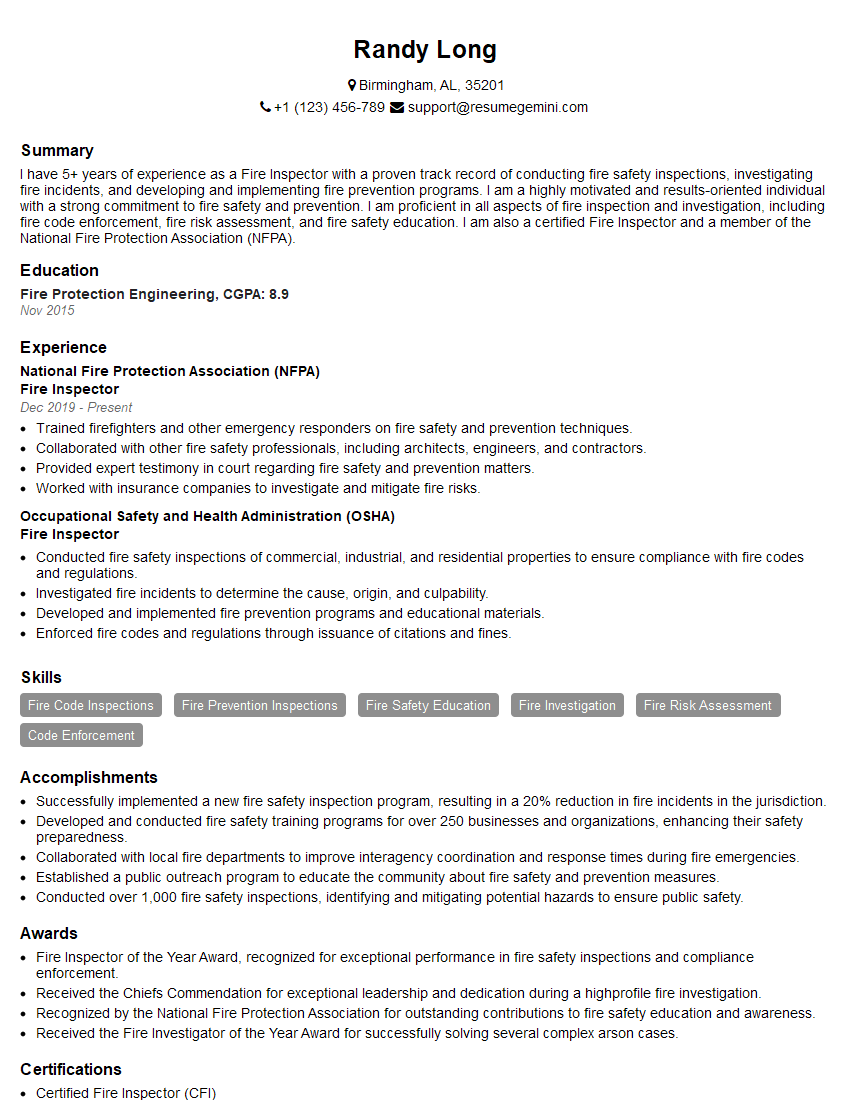
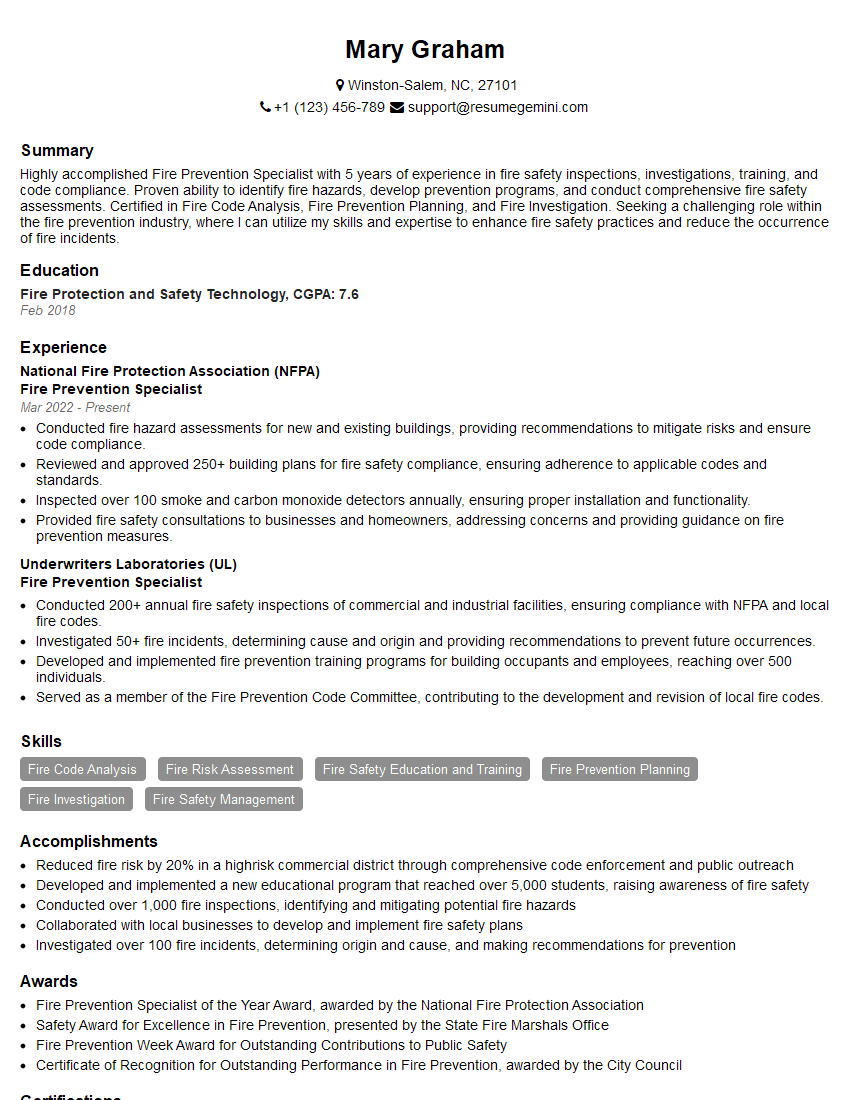
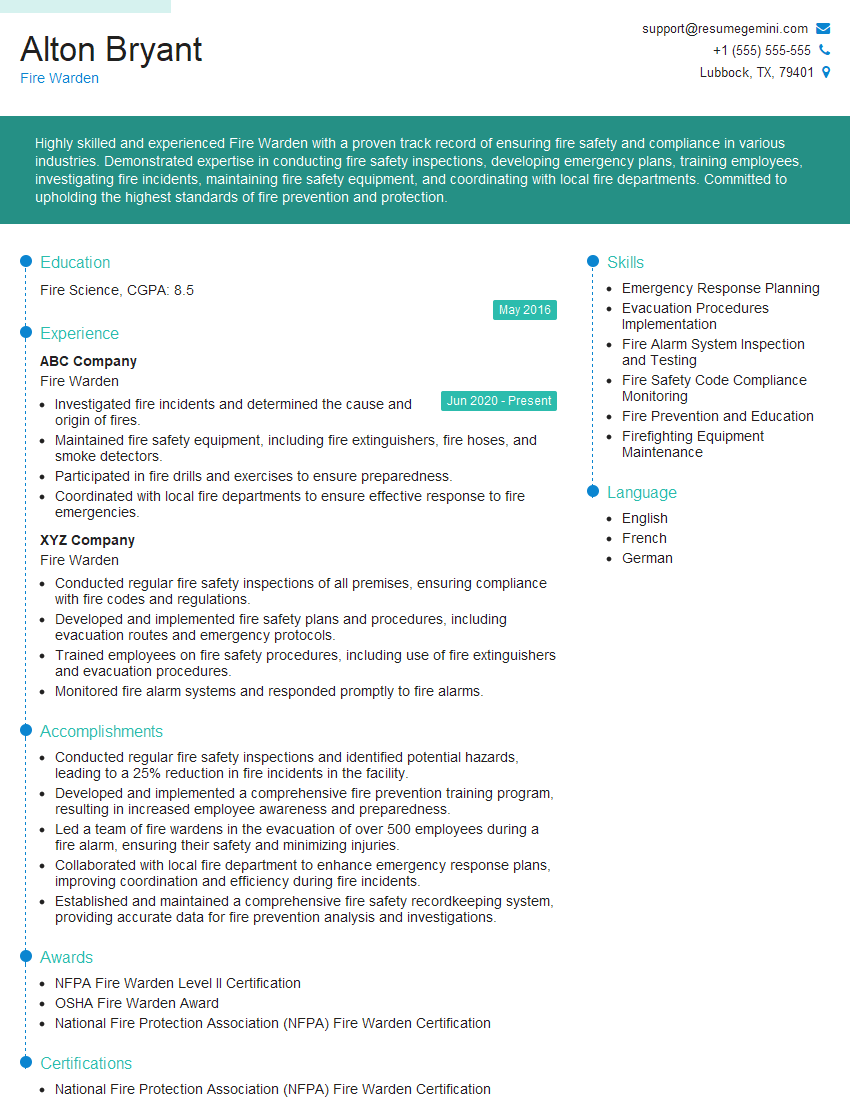
Mastering Fire Safety Awareness is crucial for career advancement in this vital field. A strong understanding of these concepts will significantly improve your interview performance and open doors to exciting opportunities. To maximize your job prospects, create an ATS-friendly resume that showcases your skills and experience effectively. ResumeGemini is a trusted resource to help you build a professional and impactful resume that gets noticed. We provide examples of resumes tailored specifically to Fire Safety Awareness roles to guide you through the process.
Explore more articles
Users Rating of Our Blogs
Share Your Experience
We value your feedback! Please rate our content and share your thoughts (optional).
What Readers Say About Our Blog
Very informative content, great job.
good