The thought of an interview can be nerve-wracking, but the right preparation can make all the difference. Explore this comprehensive guide to Resistance Training interview questions and gain the confidence you need to showcase your abilities and secure the role.
Questions Asked in Resistance Training Interview
Q 1. Explain the difference between concentric and eccentric muscle contractions.
Concentric and eccentric contractions are two phases of a single muscle action. Think of lifting a weight: the concentric phase is the shortening of the muscle as it works against resistance (e.g., lifting the weight), while the eccentric phase is the lengthening of the muscle under tension as it controls the resistance (e.g., lowering the weight slowly).
Imagine a bicep curl: The concentric phase is when you flex your elbow, bringing the weight up towards your shoulder. The eccentric phase is the controlled lowering of the weight back to the starting position. Understanding this distinction is crucial because both phases are essential for building strength and muscle mass. Eccentric contractions, in particular, are often associated with greater muscle damage and subsequent growth, but also higher risk of injury if not controlled properly.
Q 2. Describe the principles of progressive overload in resistance training.
Progressive overload is a fundamental principle of resistance training. It simply means that to continuously improve strength and muscle mass, you must gradually increase the demands placed on your muscles. This can be achieved by increasing any of the following:
- Weight: Lifting heavier weights.
- Repetitions: Performing more repetitions with the same weight.
- Sets: Increasing the number of sets performed.
- Exercise Variation: Progressing to more challenging exercises.
- Training Frequency: Increasing the number of training days per week.
For example, if you’re able to comfortably perform 10 repetitions of bicep curls with 10kg dumbbells for 3 sets, progressive overload would involve gradually increasing the weight, reps, or sets over time – perhaps to 12 reps, then 15 reps, then 12 reps with 12kg dumbbells and so on. Ignoring this principle leads to a plateau in strength gains. The key is to find a gradual increase that allows for progress without causing injury.
Q 3. What are the benefits of using variable resistance training equipment?
Variable resistance training equipment is designed to adjust the resistance throughout the range of motion (ROM) of an exercise. Unlike free weights, where resistance remains constant, variable resistance machines provide more resistance during the stronger parts of the movement and less during the weaker parts. This allows for more consistent muscle activation throughout the entire ROM, leading to several benefits:
- Enhanced Muscle Activation: Consistent muscle engagement throughout the exercise, leading to more effective training.
- Reduced Risk of Injury: Minimizes stress on joints at weaker points in the ROM.
- Improved Strength Gains: Promotes strength development across the entire range of motion rather than just at the strongest point.
- Increased Muscle Hypertrophy: More consistent muscle stimulation can contribute to better muscle growth.
For example, a variable resistance chest press machine will provide more resistance at the mid-point of the press (when the pectorals are strongest) and less resistance at the start and finish, preventing weaker points in the movement from limiting overall strength. It’s a more efficient way to target muscle groups.
Q 4. How do you assess a client’s current fitness level before designing a resistance training program?
Assessing a client’s fitness level before designing a resistance training program is crucial to ensure safety and effectiveness. This involves a multi-faceted approach:
- Health History Questionnaire: Understanding pre-existing conditions, injuries, or medications.
- Physical Assessment: Evaluating posture, range of motion, and any limitations.
- Fitness Testing: Using tests like:
- 1-RM (One-Rep Max): To determine maximum strength capacity for key exercises.
- Strength testing with submaximal weight: e.g., performing a set number of repetitions to assess strength in a given range.
- Body Composition Analysis: Measuring body fat percentage to understand overall health and training needs (using methods like skinfold calipers, bioelectrical impedance analysis, or DEXA scans).
- Cardiovascular Fitness Assessment: Assessing the client’s baseline cardiovascular health (e.g., using a graded exercise test, resting heart rate and blood pressure measurement).
The information gathered helps to design a safe and appropriate program targeting specific needs and goals. For example, a client with a history of back pain would require a program that prioritizes proper form, controlled movements, and possibly avoids certain exercises. A sedentary client may start with very light weights and focuses on building foundational strength and endurance.
Q 5. Explain the importance of proper warm-up and cool-down routines.
Proper warm-up and cool-down routines are crucial for injury prevention, performance enhancement, and overall training effectiveness. A good warm-up gradually increases heart rate and blood flow, preparing the body for exercise. A cool-down promotes recovery and reduces muscle soreness.
Warm-up should include:
- Light Cardio: 5-10 minutes of low-intensity exercise like walking, jogging, or cycling.
- Dynamic Stretching: Active movements like arm circles, leg swings, and torso twists, which improve range of motion.
- Specific Exercise Warm-up Sets: Performing the exercise with lighter weight and fewer repetitions.
Cool-down should include:
- Light Cardio: 5-10 minutes of low-intensity exercise.
- Static Stretching: Holding each stretch for 20-30 seconds, focusing on major muscle groups worked during the workout.
Think of it like this: a car needs to warm up before performing optimally, and needs to cool down to avoid overheating. Your body is similar, requiring a gradual increase and decrease in physical demands.
Q 6. What are some common resistance training exercises and their variations?
Many exercises form the basis of a good resistance training program. Here are a few examples with variations:
- Squats: Variations include goblet squats (holding a weight close to the chest), front squats (barbell across the upper chest), and back squats (barbell across the upper back).
- Bench Press: Variations include incline bench press (working upper chest), decline bench press (working lower chest), and dumbbell bench press (allowing for greater range of motion).
- Deadlifts: Variations include conventional deadlifts, sumo deadlifts (wider stance), and Romanian deadlifts (emphasizing hamstrings).
- Overhead Press: Variations include dumbbell overhead press, barbell overhead press, and Arnold press (rotating wrists during the movement).
- Rows: Variations include bent-over rows, seated cable rows, and dumbbell rows (allowing for unilateral training).
Choosing the right variations depends on the individual’s goals, experience, and any existing limitations. Proper form is crucial for all exercises to minimize risk of injury.
Q 7. How would you modify a resistance training program for a client with a previous injury?
Modifying a resistance training program for a client with a previous injury requires careful consideration to prevent re-injury and promote safe rehabilitation. The key is to:
- Identify the Injury: Understand the specific injury, its location, and its current limitations.
- Focus on Compensatory Exercises: If a particular joint or muscle group is injured, alternative exercises may target surrounding muscles without stressing the injured area.
- Avoid Painful Movements: Exercises that exacerbate the pain should be avoided or significantly modified.
- Start with Light Weights and Low Reps: Gradually increase weight and repetitions as strength and tolerance improve. Prioritize form over intensity.
- Proper Warm-up and Cool-down: Crucial to prevent re-injury and promote recovery.
- Consider Physical Therapy Consultation: A physical therapist can offer guidance on appropriate exercises and rehabilitation strategies.
- Listen to Your Body: Always stop if pain arises during the exercise.
For example, a client with a knee injury might avoid squats and deadlifts initially and focus on exercises such as leg presses (with reduced weight) and hamstring curls that don’t put undue stress on the knee joint. Close communication with the client is vital. Gradual progression is key to successful rehabilitation and continued training.
Q 8. Explain the concept of periodization in resistance training.
Periodization in resistance training is like planning a marathon, not just sprinting. Instead of constantly training at maximum intensity, it involves strategically varying the training volume (sets and reps), intensity (weight), and frequency over time to optimize strength and hypertrophy gains while minimizing injury risk and burnout. This is typically done in cycles, often referred to as macrocycles (the entire training year), mesocycles (several weeks focusing on a specific goal, e.g., strength), and microcycles (weekly training plans). A common periodization model is linear, where intensity gradually increases over time, while others use undulating periodization, which varies intensity within a week or even a single training session. For example, a linear periodization plan for strength might involve gradually increasing the weight used in squats over several weeks within a mesocycle, while undulating periodization might alternate between high-intensity, low-volume workouts and low-intensity, high-volume workouts within the same week.
Q 9. How do you choose the appropriate resistance and repetitions for different training goals?
Choosing the appropriate resistance and repetitions depends entirely on the training goal. Think of it like this: heavier weights with fewer reps build strength (low reps, high weight); lighter weights with more reps build muscle size (hypertrophy) (high reps, moderate weight); and moderate weights and reps improve muscular endurance (moderate reps, moderate weight).
- Strength: 1-5 repetitions, 80-100% of 1-rep max (1RM)
- Hypertrophy: 8-12 repetitions, 60-80% of 1RM
- Endurance: 15-20+ repetitions, <60% of 1RM
It’s crucial to progressively overload—gradually increasing the weight, reps, or sets over time as you get stronger. For instance, if you can easily perform 12 reps with a certain weight for hypertrophy, you should increase the weight next workout to maintain challenge and progress.
Q 10. What are the signs and symptoms of overtraining, and how would you address them?
Overtraining is like pushing your body too hard without giving it enough time to recover. Signs and symptoms can vary, but commonly include persistent fatigue, decreased performance, loss of motivation, increased resting heart rate, muscle soreness that doesn’t improve, sleep disturbances, and even mood changes (irritability, depression). Addressing overtraining requires a multi-pronged approach:
- Reduce training volume and intensity: This might involve decreasing the number of sets, reps, exercises, or training days.
- Prioritize sleep and recovery: Aim for 7-9 hours of quality sleep each night.
- Improve nutrition: Ensure you’re consuming enough calories and macronutrients (protein, carbohydrates, and fats) to support your training.
- Manage stress: Incorporate stress-reducing techniques such as meditation or yoga.
- Consider deloading: This involves a planned period of reduced training volume and intensity to allow the body to fully recover.
If symptoms persist, consulting a physician or qualified healthcare professional is crucial.
Q 11. Discuss different training methods, such as circuit training, supersets, and drop sets.
Different training methods offer unique benefits and can be used to enhance training variety and challenge different muscle groups.
- Circuit Training: Involves performing a series of exercises one after the other with minimal rest, enhancing cardiovascular fitness along with strength. Example: Squats, push-ups, rows, lunges, repeated for several rounds.
- Supersets: Performing two exercises back-to-back for opposing muscle groups (e.g., biceps and triceps) with minimal rest, maximizing time efficiency and promoting muscle growth. Example: Bicep curls immediately followed by triceps extensions.
- Drop Sets: Performing a set to failure, then immediately reducing the weight and continuing until failure again, maximizing muscle fiber recruitment. Example: Performing bench presses to failure, reducing weight by 10-20%, and repeating until failure again.
The choice of method depends on the individual’s goals, experience, and recovery capacity. For beginners, simpler methods like circuit training might be preferable, while advanced lifters can safely incorporate supersets and drop sets into their programs.
Q 12. How would you explain proper form and technique for a squat, bench press, and deadlift?
Proper form and technique are paramount to prevent injuries and maximize results. I can’t provide visual demonstrations here, but I’ll give you a detailed description. Always start with lighter weights to master the form before increasing the load.
- Squat: Feet shoulder-width apart, toes slightly outward. Lower your hips as if sitting in a chair, keeping your back straight, chest up, and weight in your heels. Maintain a controlled descent and ascent.
- Bench Press: Lie on your back, feet flat on the floor, and grip the bar slightly wider than shoulder-width. Lower the bar to your chest, touching it lightly, then push it back up with controlled movement. Keep your elbows slightly tucked.
- Deadlift: Stand with feet hip-width apart, the bar over your midfoot. Bend at your hips and knees, keeping your back straight. Grip the bar with an overhand or mixed grip. Lift the bar by extending your hips and knees simultaneously, maintaining a neutral spine. Lower the bar in a controlled manner, reversing the movement.
It is highly recommended to learn these lifts from a qualified professional to ensure proper form and avoid injury. Videos and visual guides can be helpful supplementary resources.
Q 13. What are the benefits of compound exercises compared to isolation exercises?
Compound exercises (movements that work multiple muscle groups simultaneously, such as squats, deadlifts, bench presses, and overhead presses) are superior to isolation exercises (movements that target a single muscle group, such as bicep curls or triceps extensions) for several reasons.
- Greater muscle activation: Compound exercises recruit more muscle fibers, leading to greater strength and hypertrophy gains.
- Improved functional strength: They translate more directly to real-world activities, enhancing daily functional movements.
- Increased calorie expenditure: Because they involve more muscle mass, they burn more calories during and after the workout.
- Improved bone density: The weight-bearing nature of compound exercises strengthens bones.
While isolation exercises have their place (e.g., targeting lagging muscle groups or addressing muscle imbalances), a well-rounded resistance training program should prioritize compound exercises to build a strong, functional physique.
Q 14. How do you ensure client safety during resistance training sessions?
Client safety is paramount. I employ several strategies to ensure a safe training environment:
- Thorough needs assessment and evaluation: I start by evaluating a client’s fitness level, medical history, and any limitations before designing a program.
- Proper warm-up and cool-down: Every session begins with a thorough warm-up to prepare the body for exercise and concludes with a cool-down to aid recovery.
- Careful instruction and supervision: I demonstrate each exercise correctly and actively supervise clients, providing immediate feedback and correcting any errors in form.
- Appropriate weight selection: I help clients choose weights that challenge them without compromising form or safety.
- Emergency preparedness: I’m trained in CPR and first aid and have a plan for handling any emergencies that may occur.
- Client communication: I encourage clients to communicate any pain or discomfort they experience during training.
By carefully considering these factors, I create a training environment where clients can achieve their fitness goals safely and effectively.
Q 15. What are the potential risks and contraindications associated with resistance training?
Resistance training, while incredibly beneficial, carries potential risks. These risks are largely minimized with proper planning, execution, and monitoring. The most common contraindications include pre-existing cardiovascular conditions (like uncontrolled hypertension), acute injuries, musculoskeletal issues (like osteoporosis or arthritis requiring modification), and pregnancy (requiring specific program adjustments).
- Musculoskeletal Injuries: Overtraining, improper form, and inadequate warm-up can lead to strains, sprains, tendonitis, and even fractures. For example, rushing into heavy weightlifting without proper conditioning can easily strain muscles unprepared for the load.
- Cardiovascular Issues: The intense physical exertion can strain the cardiovascular system. Individuals with hypertension or heart conditions should consult their physician before starting a resistance training program, which will necessitate a modified approach.
- Other Risks: Rhabdomyolysis (muscle breakdown), although rare, can be a serious complication if the training is overly intense and the individual is dehydrated. Proper hydration and listening to your body’s signals are crucial.
Before initiating any resistance training program, a thorough health screening is crucial. This helps to identify potential risks and allows for personalized program design to mitigate those risks.
Career Expert Tips:
- Ace those interviews! Prepare effectively by reviewing the Top 50 Most Common Interview Questions on ResumeGemini.
- Navigate your job search with confidence! Explore a wide range of Career Tips on ResumeGemini. Learn about common challenges and recommendations to overcome them.
- Craft the perfect resume! Master the Art of Resume Writing with ResumeGemini’s guide. Showcase your unique qualifications and achievements effectively.
- Don’t miss out on holiday savings! Build your dream resume with ResumeGemini’s ATS optimized templates.
Q 16. Explain your approach to monitoring client progress and making adjustments to training programs.
Monitoring client progress and adapting programs is central to effective resistance training. My approach is multifaceted and combines objective and subjective measures.
- Objective Measures: I track progress using quantitative data, including strength assessments (1RM tests), repetitions performed at a given weight, measurements of body composition (using calipers or DEXA scans), and improvements in functional fitness tests (like push-up or sit-up tests).
- Subjective Measures: I also incorporate subjective feedback from clients including their perceived exertion, overall feelings about their progress, and any pain or discomfort experienced. This is vital as it gives insights not captured in quantitative data.
Based on this data, I adjust the program regularly, typically every 4-6 weeks. Adjustments can include:
- Increasing weight/resistance: If the client is consistently exceeding their planned repetitions and sets, progressing to heavier weights appropriately challenges their muscles and stimulates further growth and strength.
- Increasing volume (sets and reps): For hypertrophy (muscle growth), increasing the volume is usually employed.
- Changing exercises: This keeps the workouts engaging, targets different muscle groups and prevents plateaus.
- Adjusting rest periods: This influences training intensity and the specific training goal (strength vs. hypertrophy).
Regular communication with the client is essential throughout this process, ensuring we are both on the same page and adaptations are made collaboratively.
Q 17. How would you handle a client who experiences muscle soreness or fatigue?
Muscle soreness (DOMS – delayed onset muscle soreness) and fatigue are common, especially when starting a new program or increasing intensity. My approach focuses on managing the discomfort, promoting recovery, and preventing further injury.
- Assessment: I’d first assess the severity of the soreness and fatigue. Mild soreness is normal; severe pain or extreme fatigue is not.
- Rest and Recovery: For mild soreness, I advise rest, light activity like walking, and stretching. For more severe soreness, I recommend complete rest for a day or two. Active recovery, such as light cardio, can sometimes be beneficial after a few days of rest.
- Nutrition: Adequate hydration and proper nutrition, particularly protein intake, is key to muscle repair and recovery. I would reinforce the importance of a balanced diet and proper hydration.
- Modification of the Program: If soreness is persistent or severe, I might adjust the training program by reducing intensity, volume, or frequency. A thorough review of form can also prevent recurrent issues.
- Pain Management: In instances of significant pain, referral to a physiotherapist or medical doctor may be necessary to rule out any serious injuries.
The key is to differentiate between normal soreness and pain indicating injury. Education is paramount; I’d explain to the client the difference, emphasizing the importance of listening to their body and not pushing through significant pain.
Q 18. What are the physiological adaptations that occur in response to resistance training?
Resistance training elicits a cascade of physiological adaptations. These adaptations are the basis of the improvements in strength, power, and muscle mass observed.
- Neuromuscular Adaptations: Initial strength gains are primarily due to improvements in neural efficiency—better coordination and recruitment of motor units. The nervous system becomes more efficient at activating muscle fibers.
- Muscular Hypertrophy: Continued training leads to increases in muscle fiber size (hypertrophy), both in type I (slow-twitch) and type II (fast-twitch) fibers, though the extent varies with training type.
- Increased Strength and Power: The combined effects of neural adaptations and hypertrophy result in significant increases in both maximal strength (1RM) and power output.
- Metabolic Adaptations: Resistance training improves metabolic function by increasing the body’s ability to utilize glucose and improve insulin sensitivity.
- Bone Density: Resistance training stimulates bone growth and remodeling, leading to increased bone density and strength, protecting against osteoporosis.
- Cardiovascular Adaptations: While primarily focused on musculoskeletal benefits, resistance training can improve cardiovascular health. This improvement is not as pronounced as cardio exercise but still offers benefits.
These adaptations are not independent but interconnected. Improvements in one area often positively influence others, resulting in holistic improvements in health and fitness.
Q 19. How would you design a resistance training program for a beginner, intermediate, and advanced client?
Designing programs for different fitness levels requires a tailored approach.
Beginner:
- Focus on proper form and technique over heavy weights.
- Full-body workouts 2-3 times per week.
- Use lighter weights (8-12 reps for 2-3 sets) with adequate rest periods.
- Include a variety of exercises targeting all major muscle groups (squats, lunges, push-ups, rows).
- Emphasize progressive overload – gradually increasing weight, reps, or sets over time.
Intermediate:
- Split routines (upper/lower body or push/pull/legs) are introduced.
- Higher training volume (sets and reps) and intensity (weight).
- More advanced exercises (e.g., Olympic lifts, plyometrics – depending on client skill and experience).
- Continue to prioritize progressive overload.
- Incorporate periodization – cyclical variation in training volume and intensity to optimize gains.
Advanced:
- Highly individualized programs focusing on specific goals (strength, power, hypertrophy).
- Advanced training techniques (e.g., drop sets, supersets, rest-pause).
- Higher training volumes and intensities.
- Incorporation of advanced periodization schemes.
- Regular testing to monitor progress and adjust accordingly.
Regardless of the fitness level, safety and proper form should always be paramount. Beginners must focus on foundational strength and good movement patterns, while intermediate and advanced clients can safely incorporate more advanced techniques to challenge themselves further.
Q 20. What are your preferred methods for assessing strength and power?
Assessing strength and power requires precise and reliable methods.
- Strength: The gold standard for assessing maximal strength is the 1-repetition maximum (1RM) test. This involves determining the heaviest weight a client can lift for one repetition with correct form. It’s vital to ensure proper warm-up and spotters are used for safety.
- Power: Power assessment often involves tests that measure both strength and speed. Common methods include vertical jump height (measuring the distance of a jump), medicine ball throws (measuring the distance or velocity), and power clean (measuring the weight lifted explosively).
In addition to these direct assessments, I use submaximal tests for clients unable to perform a 1RM safely. These include tests at a given percentage of their estimated 1RM and repetitions to failure to estimate maximum strength. Accurate measurements and adherence to standardized protocols are critical for comparing progress over time.
Q 21. Discuss the importance of nutrition in conjunction with resistance training.
Nutrition plays a crucial, often underestimated, role in successful resistance training. It’s not just about fueling workouts but about optimizing muscle growth, recovery, and overall health.
- Protein Intake: Protein is essential for muscle repair and growth. Sufficient protein intake (around 1.6-2.2 grams per kilogram of body weight per day for resistance training individuals) is vital to maximize muscle protein synthesis.
- Carbohydrate Intake: Carbohydrates provide energy for workouts and replenishing glycogen stores. Adequate carbohydrate intake supports intense training and prevents fatigue.
- Fat Intake: Healthy fats are essential for hormone production and overall health. They should be incorporated in moderation into the diet.
- Micronutrients: Vitamins and minerals support various metabolic processes and overall health. A balanced diet ensures adequate intake.
- Hydration: Adequate water intake is crucial for muscle function, nutrient transport, and temperature regulation.
I work closely with clients to understand their dietary habits and provide guidance for optimizing their nutritional intake. This collaborative approach helps ensure they have the necessary fuel for their training and recovery, leading to maximized results.
Q 22. How do you incorporate flexibility and mobility training into a resistance training program?
Flexibility and mobility are crucial components of a well-rounded resistance training program, preventing injuries and optimizing performance. We shouldn’t treat them as separate entities but rather integrate them seamlessly.
Integration Strategies:
- Warm-up: Begin each session with dynamic stretching (e.g., arm circles, leg swings) to increase blood flow and prepare muscles for work. This enhances flexibility and reduces injury risk.
- Cool-down: Incorporate static stretching (holding a stretch for 15-30 seconds) after resistance training to improve range of motion and reduce muscle soreness. Focus on the muscles worked during the session.
- Dedicated Mobility Work: Schedule specific sessions focusing on improving mobility in areas like hips, shoulders, and spine. This could involve exercises like foam rolling, yoga, or self-myofascial release techniques.
- Incorporating Mobility Drills Within the Workout: Include exercises that specifically target joint mobility, such as banded shoulder rotations or hip circles, between sets of resistance training.
- Prioritizing Proper Form: Emphasis on correct form during resistance training exercises naturally encourages better mobility and range of motion. Poor form can restrict movement and lead to injuries.
Example: A client training legs might include dynamic stretches like leg swings before squats, then perform squats with a focus on full range of motion. After the workout, they’d perform static stretches targeting hamstrings and quads.
Q 23. Explain the role of plyometrics in resistance training programs.
Plyometrics, or jump training, plays a vital role in resistance training programs by improving power, explosiveness, and overall athletic performance. It focuses on developing the body’s ability to generate maximal force in minimal time.
Role in Resistance Training:
- Enhanced Power Output: Plyometrics trains the stretch-shortening cycle (SSC), where muscles are stretched before contracting, leading to a more powerful contraction. This translates to greater power in resistance training exercises and athletic movements.
- Improved Muscle Activation: Plyometrics recruits a high number of muscle fibers, enhancing neuromuscular efficiency and overall muscle activation, which helps with overall strength gains.
- Increased Speed and Agility: The explosive nature of plyometrics directly enhances speed, agility, and quickness, making it valuable for athletes in various sports.
- Functional Strength: Plyometric exercises often mimic real-world movements, contributing to functional strength and improving daily activities.
Important Considerations: Plyometrics should only be incorporated once a solid foundation of strength and conditioning has been established. Incorrect form can lead to significant injuries. Proper progressions are vital, starting with simpler exercises and gradually increasing intensity and complexity.
Example: A program for a basketball player might include box jumps after completing their strength training for legs. We would progress them from low box heights to higher ones as their strength and skill improve.
Q 24. How would you address client motivation and adherence to a resistance training program?
Maintaining client motivation and adherence is paramount to the success of any resistance training program. A multi-faceted approach is most effective.
Strategies for Motivation and Adherence:
- Setting Realistic Goals: Collaboratively set attainable goals, focusing on process goals (e.g., attending workouts consistently) as well as outcome goals (e.g., increasing strength). This fosters a sense of accomplishment and maintains momentum.
- Personalized Programming: Tailor the program to the client’s individual needs, preferences, and goals. This increases engagement and makes the process more enjoyable.
- Regular Feedback and Progress Tracking: Monitor progress using objective measurements (e.g., strength tests) and provide regular feedback. Seeing tangible results reinforces motivation and keeps clients invested.
- Building Rapport and Support: Create a positive and supportive environment. This includes showing genuine interest in the client’s progress and celebrating achievements.
- Variety in Training: Avoid monotony by regularly changing exercises, workout routines, and training split. This prevents boredom and keeps the client engaged.
- Education and Empowerment: Educate clients on the ‘why’ behind the program. Understanding the benefits and the science behind the training enhances compliance and self-efficacy.
- Accountability and Check-ins: Schedule regular check-ins to discuss progress, address challenges, and provide support. This keeps the client connected and ensures timely adjustments to the program.
Example: For a client struggling with motivation, we might introduce a training partner, incorporate a new, fun exercise, or adjust the program’s intensity to align better with their current fitness level.
Q 25. What are the different types of resistance training equipment and their advantages/disadvantages?
Resistance training utilizes various equipment, each with its own advantages and disadvantages.
Types of Equipment:
- Free Weights (Dumbbells, Barbells):
- Advantages: Versatile, allow for a wide range of motion, develop functional strength, relatively inexpensive.
- Disadvantages: Require good technique to avoid injury, can be difficult to use for isolation exercises, may require a spotter for heavier weights.
- Weight Machines:
- Advantages: Easier to use, safer for beginners, often isolate specific muscles, guide movement.
- Disadvantages: Limited range of motion, may not translate to functional strength as effectively, can be expensive.
- Resistance Bands:
- Advantages: Portable, versatile, provide variable resistance, affordable.
- Disadvantages: Can be uncomfortable for some exercises, resistance is not consistent across the range of motion, not ideal for heavy lifting.
- Bodyweight Training:
- Advantages: No equipment needed, convenient, develops functional strength, improves body awareness.
- Disadvantages: Limited resistance options, can be challenging to progress, may not be suitable for all fitness levels.
- Cable Machines:
- Advantages: Constant tension throughout the movement, allows for a wide range of exercises, versatile.
- Disadvantages: Can be expensive, may not be suitable for beginners.
The best equipment choice depends on the client’s goals, experience, access to equipment, and preferences. A well-rounded program often incorporates a combination of these options.
Q 26. Describe your experience with designing and implementing resistance training programs for specific populations (e.g., elderly, athletes, individuals with chronic conditions).
My experience encompasses designing and implementing resistance training programs for diverse populations, always prioritizing safety and individual needs. Adaptability and a strong understanding of biomechanics are essential.
Specific Populations:
- Elderly: Programs focus on maintaining functional strength, balance, and bone density, emphasizing low-impact exercises and proper form. Progressive overload is gradual, and modifications are made as needed.
- Athletes: Programs are tailored to sport-specific needs, focusing on strength, power, speed, and agility development. Periodization (varying training intensity and volume over time) is a crucial element.
- Individuals with Chronic Conditions (e.g., arthritis, osteoporosis): Programs must account for limitations and potential pain. Exercises are modified to protect joints and bones, focusing on maintaining mobility and strength within safe parameters. Collaboration with medical professionals is key.
Example: For an elderly client with osteoporosis, I’d emphasize weight-bearing exercises like squats and lunges, but modify them to reduce stress on the spine and joints. I might use lighter weights and focus on controlled movements with proper form.
Q 27. How do you stay current with the latest research and best practices in resistance training?
Staying updated on the latest research and best practices is critical in the dynamic field of resistance training. I utilize several strategies:
- Peer-Reviewed Journals: I regularly read journals like the Journal of Strength and Conditioning Research and the Medicine & Science in Sports & Exercise to stay informed about new findings.
- Professional Organizations: I actively participate in professional organizations like the National Strength and Conditioning Association (NSCA) and attend conferences and workshops to learn from leading experts and network with colleagues.
- Continuing Education Courses: I continuously pursue continuing education courses and certifications to maintain my professional competence and acquire new skills.
- Online Resources and Databases: I regularly consult reputable online databases like PubMed and Google Scholar to access the latest research and evidence-based guidelines.
- Professional Networking: Networking with other professionals in the field through online communities and in-person events helps me stay abreast of current trends and best practices.
This combination ensures that my knowledge and approach to resistance training remain evidence-based and up-to-date.
Q 28. What are your professional goals and aspirations related to resistance training?
My professional aspirations center around contributing meaningfully to the field of resistance training and making a positive impact on people’s lives.
- Advanced Certifications: I plan to pursue advanced certifications in specialized areas of resistance training, such as strength and conditioning for specific populations or rehabilitation.
- Research and Publication: I aspire to conduct research in resistance training and publish my findings to contribute to the body of knowledge.
- Mentorship and Education: I aim to mentor aspiring professionals in the field and share my expertise through teaching and workshops.
- Community Outreach: I am committed to promoting the benefits of resistance training through community outreach programs and education initiatives.
Ultimately, I want to be recognized as a leader in the field, known for my expertise, commitment to evidence-based practice, and dedication to improving the health and well-being of others through resistance training.
Key Topics to Learn for Resistance Training Interview
- Program Design Principles: Understanding the principles of periodization, progressive overload, and variation in designing effective resistance training programs for diverse populations.
- Exercise Selection & Technique: Knowing how to select appropriate exercises based on client goals and limitations, and ensuring proper execution to minimize injury risk. This includes understanding biomechanics and muscle function.
- Training Adaptations: Explaining the physiological adaptations to resistance training, such as muscle hypertrophy, strength gains, and metabolic changes. Be prepared to discuss the mechanisms behind these adaptations.
- Individualization & Needs Assessment: Demonstrating the ability to assess individual client needs, goals, and limitations to create a customized training program. Consider factors like age, experience level, and potential health concerns.
- Safety & Injury Prevention: Highlighting safety procedures and spotting techniques to prevent injuries during resistance training. Understanding common injuries and their prevention is crucial.
- Nutritional Considerations: Discussing the role of nutrition in supporting muscle growth and recovery. This includes understanding macronutrient requirements and the importance of hydration.
- Testing & Measurement: Familiarity with various assessment methods to track progress, such as strength testing, body composition analysis, and functional movement assessments.
- Program Evaluation & Modification: Explaining the process of evaluating program effectiveness and making adjustments based on client progress and feedback.
- Communication & Client Interaction: Demonstrating effective communication skills to build rapport with clients, provide instruction, and address concerns.
- Ethical Considerations: Understanding professional ethics and legal responsibilities in the fitness industry, including informed consent and client confidentiality.
Next Steps
Mastering resistance training principles and practical application is key to unlocking exciting career opportunities in the fitness industry. To stand out, a strong, ATS-friendly resume is essential. ResumeGemini is a trusted resource to help you craft a compelling resume that showcases your skills and experience effectively. ResumeGemini provides examples of resumes tailored to the Resistance Training field, helping you present yourself in the best possible light to prospective employers. Invest the time to create a resume that reflects your expertise and opens doors to your dream career.

Fitness Manager Resume Sample

Fitness Director Resume Sample

Wellness Coach Resume Sample

Rehabilitation Specialist Resume Sample
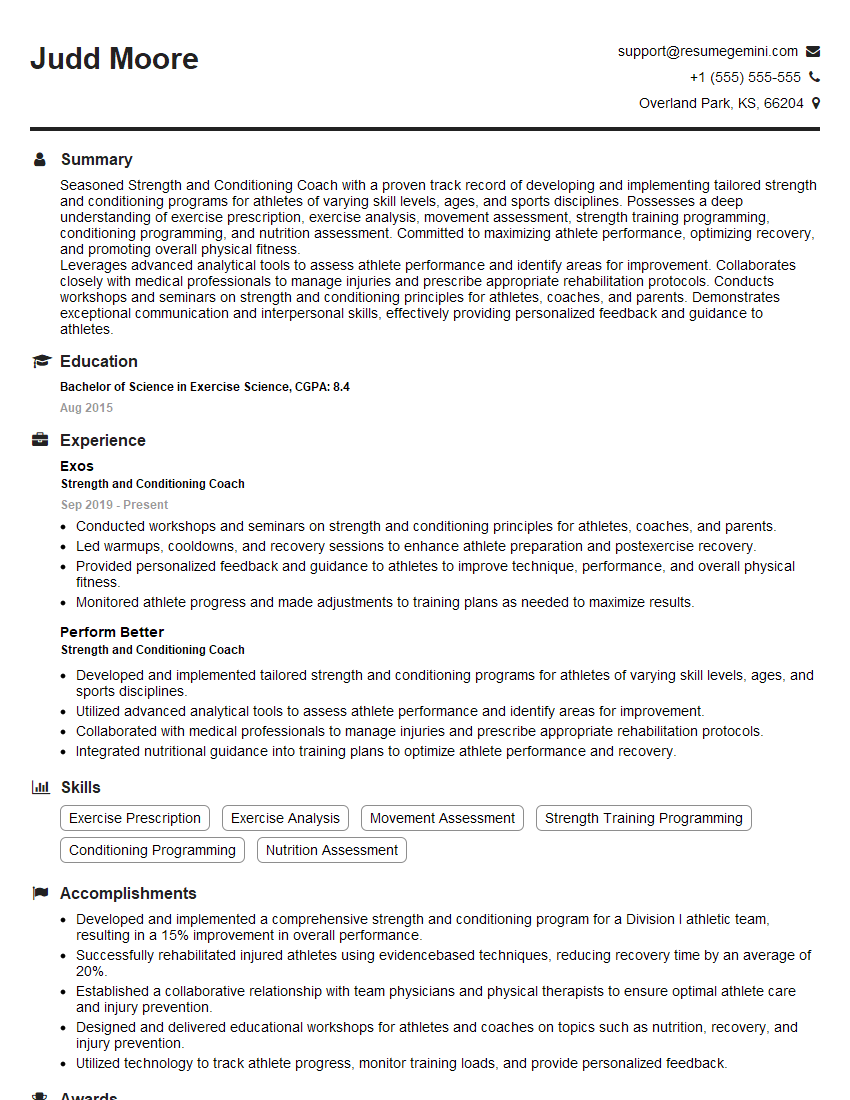
Strength and Conditioning Coach Resume Sample
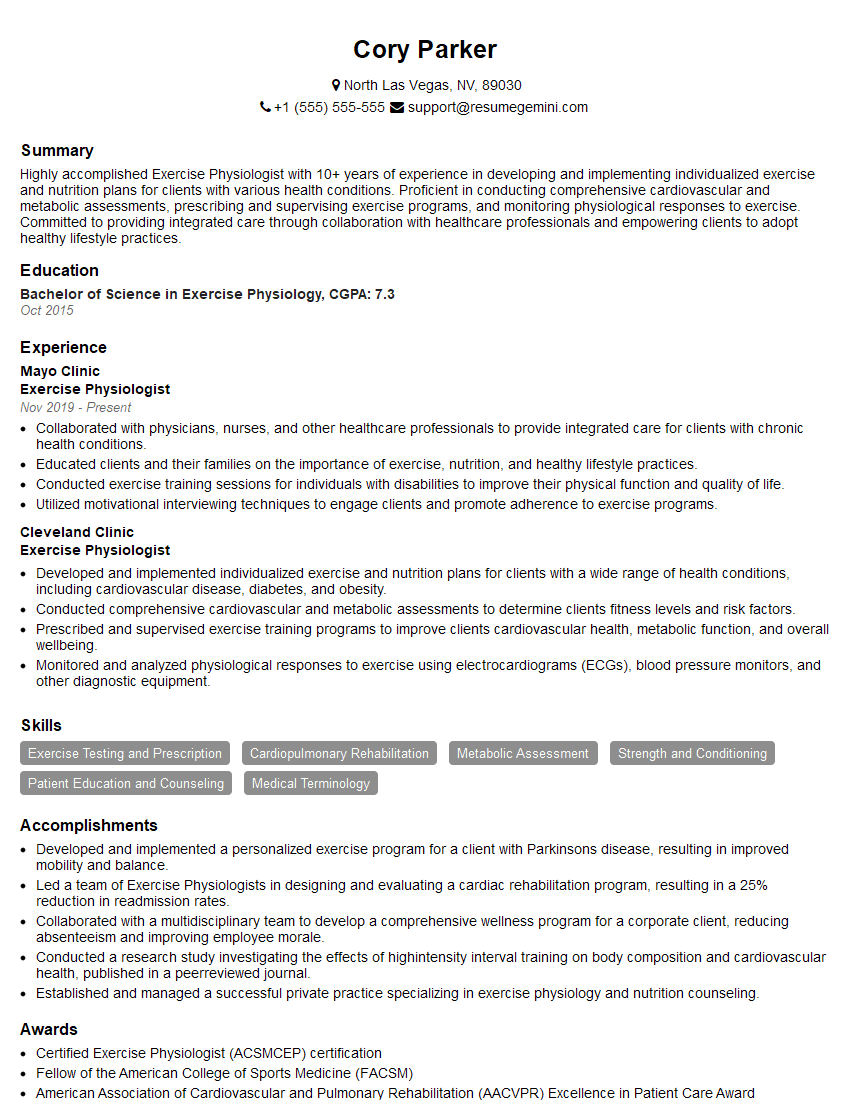
Exercise Physiologist Resume Sample

Kinesiologist Resume Sample
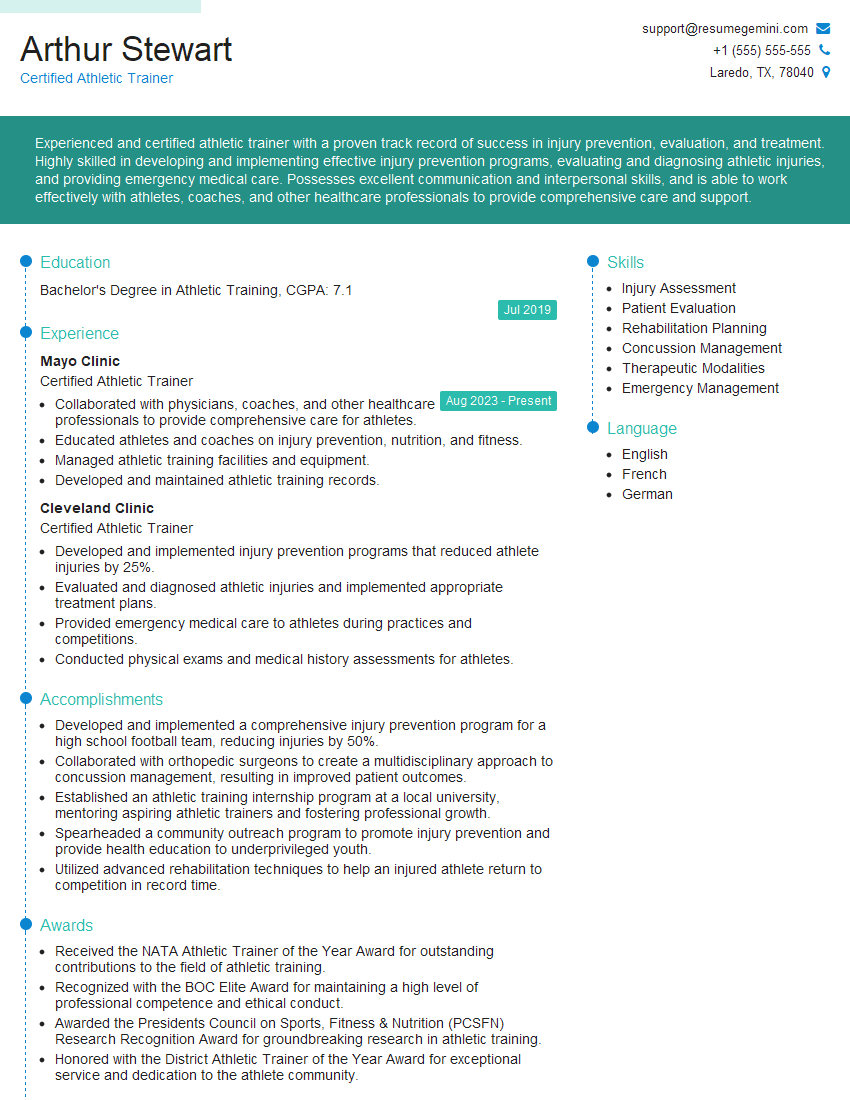
Certified Athletic Trainer Resume Sample

Occupational Therapist Resume Sample
Explore more articles
Users Rating of Our Blogs
Share Your Experience
We value your feedback! Please rate our content and share your thoughts (optional).
What Readers Say About Our Blog
Very informative content, great job.
good