Interviews are more than just a Q&A session—they’re a chance to prove your worth. This blog dives into essential Quality Control and Assurance Protocols interview questions and expert tips to help you align your answers with what hiring managers are looking for. Start preparing to shine!
Questions Asked in Quality Control and Assurance Protocols Interview
Q 1. Explain the difference between Quality Control and Quality Assurance.
Quality Control (QC) and Quality Assurance (QA) are often confused, but they represent distinct, yet complementary, approaches to ensuring product quality. Think of it like this: QA is about preventing defects, while QC is about detecting them.
Quality Assurance is a proactive process focused on establishing and maintaining a system to prevent defects from occurring in the first place. This involves defining processes, setting standards, training personnel, and continuously improving the system. It’s about building quality into the product from the beginning.
Quality Control, on the other hand, is a reactive process focused on identifying and correcting defects after they have been produced. This involves inspecting products, conducting tests, and taking corrective actions when necessary. It’s about ensuring the product meets predefined specifications.
Example: In a manufacturing plant producing widgets, QA would involve establishing procedures for material sourcing, machine maintenance, and operator training to minimize widget defects. QC would involve inspecting finished widgets to identify and reject any that don’t meet size, weight, or function requirements.
Q 2. Describe your experience with ISO 9001 standards.
I have extensive experience working within the framework of ISO 9001 standards, having been involved in the implementation and maintenance of QMS in multiple organizations. My experience spans various stages, from initial gap analysis and documentation to internal audits and management reviews. I’ve directly participated in developing and maintaining quality manuals, procedures, and work instructions, ensuring alignment with ISO 9001 requirements. This involved leading teams in implementing corrective and preventive actions to address nonconformities identified during internal and external audits. For instance, in my previous role at [Company Name], I led a project to improve our documentation control process, resulting in a 20% reduction in nonconformities related to outdated or missing documentation.
I understand the importance of continual improvement and have actively participated in management review meetings, contributing to the strategic direction of the QMS and driving improvements in key performance indicators (KPIs) related to customer satisfaction and product quality.
Q 3. What are the key components of a quality management system (QMS)?
A Quality Management System (QMS) is a collection of interconnected policies, processes, and procedures designed to ensure consistent product quality and customer satisfaction. Key components include:
- Leadership and Commitment: Top management must demonstrate a clear commitment to quality.
- Customer Focus: Understanding and meeting customer needs and expectations is paramount.
- Process Approach: Defining, managing, and improving processes is crucial for consistent outcomes.
- Resource Management: Providing necessary resources (personnel, equipment, materials) to support the QMS.
- Product Realization: Processes for design, development, production, and delivery of products or services.
- Measurement, Analysis, and Improvement: Continuously monitoring performance, analyzing data, and implementing improvements.
- Continuous Improvement: A commitment to ongoing improvement through the PDCA (Plan-Do-Check-Act) cycle.
These components work together to create a robust system that prevents defects, improves efficiency, and fosters customer satisfaction. Think of a well-oiled machine – each component plays a vital role in its smooth operation.
Q 4. How do you handle non-conforming materials or products?
Handling non-conforming materials or products requires a structured approach to prevent their use in final products and to identify the root cause of the nonconformity. My process typically involves these steps:
- Identification and Isolation: Immediately identify and isolate the non-conforming item to prevent its accidental use.
- Documentation: Thoroughly document the nonconformity, including details such as the item’s identification, the nature of the nonconformity, and the quantity affected.
- Investigation: Conduct a thorough investigation to determine the root cause of the nonconformity. This may involve using root cause analysis techniques (discussed further in a later question).
- Corrective Action: Implement appropriate corrective actions to address the root cause and prevent recurrence. This may involve reworking, repairing, or scrapping the non-conforming items.
- Disposition: Decide on the appropriate disposition of the non-conforming items – rework, repair, scrap, or quarantine.
- Verification: Verify that corrective actions have been effective and that the root cause has been eliminated.
Throughout this process, maintaining accurate records and traceability is essential for demonstrating compliance and supporting continuous improvement.
Q 5. Explain your experience with root cause analysis techniques.
I have extensive experience employing various root cause analysis techniques, including the 5 Whys, Fishbone diagrams (Ishikawa diagrams), and Fault Tree Analysis. The choice of technique depends on the complexity of the problem and the available data.
5 Whys: A simple, yet effective method, where you repeatedly ask “Why?” to progressively drill down to the root cause. For example, if a machine malfunctions, you might ask: Why did the machine stop? (Overheating). Why did it overheat? (Insufficient lubrication). Why was there insufficient lubrication? (The lubrication system malfunctioned). Why did the lubrication system malfunction? (A sensor failed). Why did the sensor fail? (It was past its operational life). The root cause is identified as the sensor’s end of life.
Fishbone diagrams: These visually organize potential causes of a problem, categorized by factors like people, materials, methods, and equipment. They encourage brainstorming and collaborative problem-solving.
Fault Tree Analysis: This method is more complex, suitable for complex systems where a failure can have multiple contributing factors. It uses a tree-like structure to identify all potential causes leading to a specific failure.
In my experience, combining multiple techniques often provides the most comprehensive understanding of the root cause and allows for more effective corrective action.
Q 6. Describe your experience with statistical process control (SPC).
Statistical Process Control (SPC) is a powerful tool for monitoring and controlling processes to minimize variability and maintain consistency. I have extensive experience applying SPC techniques, primarily using control charts (e.g., X-bar and R charts, p-charts, c-charts). These charts visually display process data over time, allowing for early detection of trends or shifts indicating potential problems.
For example, in a packaging process, I might use an X-bar and R chart to monitor the weight of packaged goods. By analyzing the data on the chart, I can detect if the average weight is drifting from the target or if the variability in weight is increasing. This allows for timely intervention, preventing the production of underweight or overweight packages.
My experience also extends to process capability analysis (Cpk), using control charts and statistical measures to determine the capability of a process to meet specified requirements. This helps in identifying areas where process improvements are needed to meet customer expectations.
Q 7. What are some common quality control tools and techniques you’ve used?
Throughout my career, I have utilized a wide array of quality control tools and techniques. Some of the most frequently used include:
- Control Charts (SPC): As mentioned above, crucial for monitoring process stability and variability.
- Check Sheets: Simple forms used to collect data on a particular process or characteristic, facilitating data analysis and identification of trends.
- Histograms: Visual representations of data distribution, showing the frequency of different values.
- Pareto Charts: Used to prioritize problems by identifying the vital few causes contributing to the majority of defects.
- Scatter Diagrams: Used to identify correlations between variables.
- Flowcharts: Used to visually represent the steps in a process, identifying potential bottlenecks or areas for improvement.
- Cause-and-Effect Diagrams (Fishbone Diagrams): As previously mentioned, these are excellent for brainstorming potential causes of problems.
The selection of appropriate tools depends heavily on the specific context and the nature of the quality issue being addressed.
Q 8. How do you develop and implement quality control plans?
Developing and implementing a quality control plan is a systematic process that ensures products or services meet predefined standards. It begins with a thorough understanding of the product/service and its potential failure points. We start by defining clear quality objectives, specifying measurable parameters, and establishing acceptance criteria.
- Define Scope: Identify the specific processes, products, or services the plan will cover.
- Identify Critical Quality Characteristics (CQCs): Determine the key attributes that directly impact customer satisfaction and product performance. For example, in manufacturing, CQCs could be dimensions, weight, or strength.
- Establish Measurement Methods: Define how CQCs will be measured. This could involve using various instruments, checklists, or visual inspections.
- Set Acceptance Criteria: Determine the acceptable range or limits for each CQC. This often involves setting tolerances or thresholds.
- Develop Control Charts: Implement statistical process control (SPC) tools, such as control charts, to monitor the process and identify deviations from the expected values.
- Establish Corrective Actions: Define procedures for addressing deviations from the acceptance criteria. This includes identifying root causes and implementing preventive measures.
- Document the Plan: Create a detailed document outlining all aspects of the plan for easy reference and training.
For example, in a pharmaceutical company, a QC plan for a new drug would involve precise measurements of active ingredient concentration, sterility testing, and stability studies, with stringent acceptance criteria based on regulatory guidelines. Any deviation would trigger immediate investigation and corrective actions.
Q 9. How do you ensure the accuracy and reliability of your quality data?
Ensuring accurate and reliable quality data is paramount. This involves a multi-pronged approach focused on meticulous data collection, validation, and analysis.
- Calibration and Validation: All measuring instruments must be regularly calibrated and validated to ensure accuracy. We use traceable standards and documented procedures. For instance, weighing scales are calibrated against certified weights.
- Standard Operating Procedures (SOPs): Clear, concise, and consistently followed SOPs for data collection and recording are essential to minimize human error. This ensures uniformity and consistency across all measurements.
- Data Integrity: Implementing robust systems for data management, including electronic data capture (EDC) systems, helps maintain the integrity and traceability of data. This often involves audit trails and access control.
- Statistical Analysis: Statistical methods are used to analyze the data and identify trends, outliers, and potential sources of error. Control charts, as mentioned earlier, play a vital role here.
- Data Verification and Validation: Data is routinely verified and validated by independent personnel to ensure accuracy and consistency. This might involve cross-checking measurements or comparing data from different sources.
Imagine a scenario where a manufacturing company is producing circuit boards. Inaccurate measurements of component placement could lead to faulty products. Through rigorous calibration, SOPs, and data validation, we prevent such errors, leading to improved product quality and customer satisfaction.
Q 10. How do you manage and resolve quality issues effectively?
Effective quality issue management follows a structured approach that prioritizes prompt identification, thorough investigation, and corrective action.
- Issue Identification: Issues are identified through various means, including process monitoring, customer feedback, internal audits, and non-conformance reports.
- Root Cause Analysis (RCA): Once an issue is identified, a thorough RCA is conducted using methods like the 5 Whys, fishbone diagrams, or fault tree analysis to determine the underlying cause. This is crucial for preventing recurrence.
- Corrective Actions: Based on the RCA, appropriate corrective actions are implemented to address the root cause and prevent future occurrences. These actions might involve process improvements, operator training, or equipment upgrades.
- Preventive Actions: Beyond corrective actions, preventive actions aim to prevent similar issues from arising in the future. This often involves system improvements and process enhancements.
- Documentation and Follow-up: All actions taken, including RCA findings and implemented solutions, are meticulously documented. Follow-up checks are performed to ensure the effectiveness of corrective and preventive actions.
For instance, if a high defect rate is found in a production line, the RCA might reveal a faulty machine component. The corrective action would be to replace the component, while the preventive action might include implementing a predictive maintenance program to prevent future failures.
Q 11. Describe your experience with quality audits and inspections.
My experience with quality audits and inspections spans various industries and methodologies. I’ve conducted both internal and external audits, using different standards and frameworks such as ISO 9001, GMP (Good Manufacturing Practices), and industry-specific regulations.
- Planning and Preparation: Before an audit, a detailed plan is developed, including the scope, objectives, and audit schedule. Relevant documentation is reviewed to identify potential areas of concern.
- Conducting the Audit: Audits involve reviewing documentation, interviewing personnel, observing processes, and examining physical facilities. Evidence is collected to assess compliance with standards and requirements.
- Reporting and Follow-up: After the audit, a comprehensive report is prepared outlining findings, including non-conformances and areas for improvement. Follow-up actions are tracked to ensure corrective measures are implemented effectively.
In a past role, I led an internal audit of a manufacturing facility that resulted in the identification of several non-conformances related to calibration procedures. The findings led to a comprehensive recalibration program and improved training for staff, ultimately enhancing product quality and compliance.
Q 12. Explain your approach to continuous improvement within a quality framework.
My approach to continuous improvement is grounded in the Plan-Do-Check-Act (PDCA) cycle and a data-driven mindset. It’s an iterative process focused on proactively seeking opportunities for enhancement.
- Plan: Identify areas for improvement based on data analysis, customer feedback, and audit findings. Establish specific, measurable, achievable, relevant, and time-bound (SMART) goals.
- Do: Implement changes or new processes to achieve the identified goals. This could involve pilot testing new methodologies or implementing technological upgrades.
- Check: Monitor the effectiveness of the implemented changes through data collection and analysis. Assess whether the goals were met and identify any unintended consequences.
- Act: Based on the check phase, either standardize the successful changes or modify the approach based on lessons learned. Continuously evaluate and adapt to achieve ongoing improvement.
For example, using lean principles to streamline a manufacturing process, reducing waste and improving efficiency, is a prime example of continuous improvement. Data analysis would track the effects of the changes, allowing for refinement and optimization.
Q 13. How do you communicate quality control findings to management and other stakeholders?
Communicating quality control findings effectively is crucial for driving action and fostering a culture of continuous improvement. My approach involves tailoring the communication to the audience and the context.
- Formal Reports: For management, formal reports are prepared summarizing key findings, including significant non-conformances, corrective actions, and recommendations. Data visualization (charts and graphs) is used to enhance understanding.
- Presentations: Presentations are often used to share findings with larger groups, such as teams or departments, focusing on key takeaways and potential impacts.
- Informal Communication: Open communication channels are maintained with team members, fostering collaborative problem-solving and facilitating timely issue resolution.
- Data Dashboards: Real-time data dashboards are used to provide ongoing visibility into key quality metrics, enabling proactive monitoring and rapid response to emerging issues.
When presenting findings to management, I focus on the business impact of quality issues and the cost savings associated with corrective actions. For team members, I prioritize collaborative problem-solving, ensuring everyone understands their role in maintaining quality standards.
Q 14. What is your experience with different types of sampling methods?
My experience encompasses various sampling methods, each with its own strengths and weaknesses depending on the context. The choice of method depends on factors such as population size, cost, time constraints, and required accuracy.
- Random Sampling: Each member of the population has an equal chance of being selected. This is ideal for large, homogenous populations.
- Stratified Sampling: The population is divided into subgroups (strata), and samples are randomly selected from each stratum. This is useful when there’s variability within the population.
- Systematic Sampling: Every nth member of the population is selected. This is efficient but can be problematic if there’s a pattern in the population.
- Cluster Sampling: The population is divided into clusters, and a random sample of clusters is selected. All members within the selected clusters are included in the sample. This is cost-effective for geographically dispersed populations.
- Acceptance Sampling: Used to determine whether a batch of products meets acceptance criteria based on a sample inspection. This is commonly used in manufacturing.
For example, in a large-scale survey, stratified sampling might be used to ensure representation from different demographic groups. In quality control for manufactured goods, acceptance sampling is often utilized to assess the quality of a production batch before shipment. The selection of the appropriate sampling method directly impacts the reliability and accuracy of the findings.
Q 15. How do you prioritize quality control activities when facing competing priorities?
Prioritizing quality control activities amidst competing priorities requires a structured approach. I utilize a risk-based prioritization method. This involves identifying all QC activities, assessing the potential risks associated with neglecting each activity (considering factors like impact on product safety, regulatory compliance, and customer satisfaction), and then ranking them based on the severity and likelihood of these risks. High-risk activities, those with the potential for significant negative consequences, are prioritized first, even if they demand more resources or time. This isn’t simply about urgency; it’s about strategically allocating resources to mitigate the most critical risks. For example, if we’re launching a new product, ensuring the critical components meet specifications would trump less critical routine checks, at least initially. I then use project management tools to track progress and ensure timely execution of all QC activities, even those of lower priority. A regular review of the prioritization is also crucial, as priorities can shift based on new information or changing circumstances.
Career Expert Tips:
- Ace those interviews! Prepare effectively by reviewing the Top 50 Most Common Interview Questions on ResumeGemini.
- Navigate your job search with confidence! Explore a wide range of Career Tips on ResumeGemini. Learn about common challenges and recommendations to overcome them.
- Craft the perfect resume! Master the Art of Resume Writing with ResumeGemini’s guide. Showcase your unique qualifications and achievements effectively.
- Don’t miss out on holiday savings! Build your dream resume with ResumeGemini’s ATS optimized templates.
Q 16. Explain your understanding of Six Sigma methodologies.
Six Sigma is a data-driven methodology focused on minimizing defects and variability in any process. Its core is reducing process variation to improve quality and efficiency. It uses a structured approach, often represented by DMAIC (Define, Measure, Analyze, Improve, Control):
Define: Clearly define the problem, goals, and scope of the project.
Measure: Collect data to understand the current process and identify key metrics (like defect rates or cycle times).
Analyze: Analyze the collected data to identify the root causes of defects or variability using tools like Pareto charts or fishbone diagrams.
Improve: Develop and implement solutions to address the root causes identified in the analysis phase. This might involve process redesign, employee training, or technological improvements.
Control: Monitor the improved process to ensure the gains are sustained and to prevent regression to the previous state. This often includes implementing control charts and regular process reviews.
I’ve used Six Sigma in several projects, including a time where we reduced the defect rate in our packaging process by 70% by identifying and addressing a bottleneck in the sealing mechanism. The methodology’s rigorous data analysis and focus on continuous improvement are invaluable for enhancing quality control.
Q 17. Describe your experience with calibration and validation procedures.
Calibration and validation are cornerstones of any reliable QC system. Calibration ensures that measuring equipment provides accurate and consistent results by comparing it against a traceable standard. For example, we regularly calibrate our scales and spectrophotometers to ensure their readings are accurate, tracing back to national standards. Validation, on the other hand, is the process of confirming that a process, method, or system consistently produces the expected results. This often involves testing and documenting the effectiveness of the process under various conditions. I’ve been extensively involved in both. In one project, I validated a new analytical method for testing the purity of our raw materials by comparing it to a gold standard method, ensuring accurate and reliable results before implementation. This process included documenting all parameters, standards, and results, creating a fully traceable validation record.
Q 18. How do you ensure traceability throughout the manufacturing process?
Traceability is crucial for identifying the origin and history of a product or material, enabling quick resolution of issues and preventing widespread problems. We achieve this through a robust tracking system, often utilizing barcodes or RFID tags to identify each unit throughout the entire manufacturing process. These identifiers are recorded at every stage—from raw materials receipt to finished goods. This data is stored in a centralized database, allowing us to trace the history of any product or batch in case of a quality issue or recall. For instance, if a defect is found in a particular batch, we can instantly trace back to the specific raw materials used, the equipment involved, and the operators who handled it. This facilitates prompt corrective actions and prevents similar problems in the future. Maintaining clear and accessible records is essential for a transparent and efficient traceability system.
Q 19. What are some common metrics used to measure quality control effectiveness?
Measuring quality control effectiveness requires a suite of metrics. Common ones include:
Defect Rate: The number of defects per unit or per thousand units. A lower defect rate indicates higher quality.
Yield Rate: The percentage of good units produced relative to the total number of units processed. A higher yield suggests better process efficiency and quality.
Customer Complaints: The number of customer complaints related to product quality. Fewer complaints show higher customer satisfaction.
Process Capability Indices (Cp, Cpk): These metrics evaluate the process’s ability to meet specified tolerances. Higher values suggest better process capability.
Mean Time Between Failures (MTBF): Used for equipment or systems, indicating the reliability of equipment.
The best metrics depend on the specific product and manufacturing process. We regularly monitor these key indicators to track our performance, identify areas for improvement, and demonstrate the effectiveness of our quality control program.
Q 20. How do you handle conflict resolution in a quality control setting?
Conflict resolution in a quality control setting demands objectivity, clear communication, and a collaborative approach. My strategy focuses on understanding the root cause of the conflict, not just the symptoms. I encourage open communication from all parties involved, ensuring everyone feels heard. I guide the discussion towards identifying a mutually agreeable solution that prioritizes product quality and regulatory compliance. This may involve mediation, compromise, or escalation to higher management if necessary. It’s important to maintain a respectful and professional environment, emphasizing the shared goal of producing high-quality products. For example, if there’s a disagreement between the production team and the QC team about a particular specification, I’d facilitate a meeting where both sides present their data and perspectives. We would then collaboratively analyze the information to reach a consensus based on facts and evidence.
Q 21. What are your experiences with documentation and record keeping in a quality controlled environment?
Documentation and record-keeping are paramount in a quality-controlled environment. It provides a comprehensive audit trail, ensuring compliance with regulations and enabling continuous improvement. My experience involves implementing and maintaining comprehensive documentation systems, including standard operating procedures (SOPs), test results, calibration records, and deviation reports. We utilize electronic systems for secure storage, easy retrieval, and version control. All records are meticulously maintained according to established procedures, ensuring their integrity and accuracy. This detailed record-keeping allows for thorough investigations of quality issues, provides evidence of compliance, and serves as a valuable resource for continuous improvement initiatives. For example, maintaining detailed records of equipment calibration helps us identify trends and prevent future issues with equipment malfunction.
Q 22. Describe a time you had to make a difficult decision regarding quality control.
One of the most challenging decisions I faced involved a significant deviation from our established quality control parameters during the production of a new medical device. Initial testing revealed a slightly higher-than-acceptable failure rate in a crucial component. The decision was whether to scrap the entire batch (resulting in significant financial losses and project delays) or to implement a rigorous secondary inspection process to identify and rectify the defective units.
After careful analysis of the root cause (a minor calibration issue with one of our machines), a risk assessment (considering the potential for harm to patients versus the financial cost), and consultation with the engineering and manufacturing teams, we decided to implement a detailed secondary inspection procedure. This involved a thorough visual inspection, followed by functional testing. This was a difficult decision because it meant investing extra resources and time, but the potential risk to patient safety outweighed the financial concerns. The secondary inspection proved successful. We identified and rectified the defective units, preventing potential harm and maintaining the integrity of our product and reputation.
Q 23. How do you stay current with industry best practices and regulatory changes in quality control?
Staying current in quality control is crucial. I use a multi-pronged approach. Firstly, I actively participate in professional organizations like the American Society for Quality (ASQ), attending conferences and webinars to stay updated on the latest methodologies and technologies.
Secondly, I regularly review industry publications, journals, and online resources such as FDA guidelines, ISO standards (ISO 9001, ISO 13485, etc.), and other relevant regulatory bodies’ publications. This provides insights into emerging trends and evolving best practices.
Finally, I maintain a strong professional network, actively engaging with colleagues and experts in the field through online forums, conferences, and professional development opportunities. This enables me to learn from others’ experiences and insights. Continuous learning is an integral part of my approach to quality control.
Q 24. What are some of the challenges you’ve faced in quality control and how did you overcome them?
One major challenge I’ve encountered is dealing with inconsistent data in quality control processes. This can stem from poorly defined procedures, inadequate training for personnel, or faulty equipment. To overcome this, I implemented a multi-step solution. First, we standardized our data collection procedures, creating clear, concise, and unambiguous instructions. Next, we provided comprehensive training to all personnel involved in data collection and analysis. Finally, we invested in better data management software that enabled automated data verification and error detection. This systematic approach significantly improved data quality and reliability.
Another recurring challenge is balancing the demands for high quality with time and budget constraints. We addressed this by employing lean manufacturing principles, streamlining processes, eliminating waste, and focusing on continuous improvement. Prioritization of critical control points and using data-driven decision making further aided in efficient resource allocation.
Q 25. Explain your experience working with cross-functional teams on quality initiatives.
I have extensive experience working with cross-functional teams. Effective collaboration is essential for successful quality initiatives. In a previous project involving the launch of a new product, I worked closely with engineering, manufacturing, marketing, and regulatory affairs teams. My role involved establishing clear communication channels, fostering a collaborative environment, and using shared data platforms and reporting systems to ensure everyone was informed and aligned on quality goals.
Effective teamwork relies on mutual respect, clear communication, and a shared understanding of goals. Using project management tools, such as Gantt charts and Kanban boards, helped streamline tasks and improved transparency. Regular meetings, with clear agendas and action items, ensured efficient problem solving and progress tracking.
Q 26. What is your experience with Lean Manufacturing principles and their application to quality control?
Lean Manufacturing principles are deeply ingrained in my quality control approach. I’ve successfully applied concepts like Value Stream Mapping to identify and eliminate waste in our production processes. This led to significant reductions in lead times, improved efficiency, and reduced costs. For instance, by mapping out the entire process for assembling a particular product, we identified several bottlenecks and redundant steps. These were streamlined or eliminated, leading to a 20% improvement in production throughput.
Furthermore, applying the principles of Kaizen (continuous improvement), we implemented regular process improvement workshops involving cross-functional teams. This fostered a culture of ongoing evaluation and improvement, leading to sustained enhancements in quality and efficiency. The principles of 5S (Sort, Set in Order, Shine, Standardize, Sustain) were also implemented to maintain a clean and organized workspace, preventing errors and improving efficiency.
Q 27. Describe your experience with implementing a new quality control system or process.
I led the implementation of a new quality management system (QMS) based on ISO 9001:2015 standards. The process involved several key steps. Initially, a gap analysis was conducted to assess the existing system and identify areas needing improvement. This involved reviewing current procedures, documenting processes, and analyzing existing data.
Next, we developed a detailed implementation plan, assigning roles and responsibilities, and setting timelines. This included training personnel on the new system’s requirements and procedures. We utilized a phased rollout approach, implementing the QMS in different departments incrementally to minimize disruption and ensure effective integration. Regular audits and reviews were conducted to monitor progress and make necessary adjustments, ensuring that the new QMS was effective and efficient.
The implementation resulted in improved process efficiency, better documentation, and enhanced traceability, ultimately leading to improved product quality and customer satisfaction. We saw a significant reduction in customer complaints and product defects.
Q 28. How do you ensure quality control measures are cost-effective and efficient?
Cost-effectiveness and efficiency are paramount in quality control. I strive to achieve this through a balanced approach. It’s not about minimizing costs at the expense of quality, but rather optimizing resources to maximize quality and minimize waste. I utilize data analysis to identify critical control points that require the most rigorous monitoring and testing. This helps to focus our resources on the areas that will yield the highest returns in terms of quality improvement.
Implementing automation wherever possible is crucial for improving efficiency and reducing costs. Automated testing equipment, statistical process control (SPC) software, and data management systems reduce the need for manual intervention and improve the speed and accuracy of quality checks. Regularly reviewing and refining our quality control procedures based on data analysis ensures that we are constantly improving cost-efficiency and effectiveness without compromising quality.
Key Topics to Learn for Quality Control and Assurance Protocols Interview
- Quality Management Systems (QMS): Understanding ISO 9001, GMP, or other relevant standards and their practical implementation within a company’s processes. This includes documentation review, audit preparation, and corrective/preventive action (CAPA) systems.
- Statistical Process Control (SPC): Applying statistical methods like control charts (e.g., Shewhart, CUSUM) to monitor and improve process performance. Be prepared to discuss real-world scenarios where SPC has been used to identify and resolve quality issues.
- Risk Assessment and Management: Familiarize yourself with methodologies for identifying, analyzing, and mitigating risks throughout the product lifecycle. This includes understanding Failure Mode and Effects Analysis (FMEA) and similar techniques.
- Validation and Verification: Understand the differences between validation and verification, and be able to explain how these processes ensure the quality and reliability of products, equipment, and processes. Consider examples from your experience.
- Auditing and Inspection Techniques: Prepare to discuss various audit types (internal, external, supplier) and the methodologies used to conduct effective inspections. Know how to document findings and create effective reports.
- Root Cause Analysis (RCA): Mastering techniques like the 5 Whys, fishbone diagrams, and fault tree analysis to identify the underlying causes of quality problems. Be ready to explain how you’ve applied RCA in previous roles.
- Continuous Improvement Methodologies: Demonstrate familiarity with Lean manufacturing principles, Six Sigma methodologies (DMAIC, DMADV), and other continuous improvement initiatives. Be ready to share examples of successful implementation.
- Documentation and Record Keeping: Understand the importance of maintaining accurate and complete records in accordance with regulatory requirements and company procedures. This includes understanding data integrity and traceability.
Next Steps
Mastering Quality Control and Assurance Protocols is crucial for career advancement in various industries. A strong understanding of these concepts demonstrates your commitment to quality and your ability to contribute significantly to a company’s success. To enhance your job prospects, create an ATS-friendly resume that highlights your relevant skills and experience effectively. ResumeGemini is a trusted resource that can help you build a professional resume that stands out. Examples of resumes tailored to Quality Control and Assurance Protocols are available to help guide you.
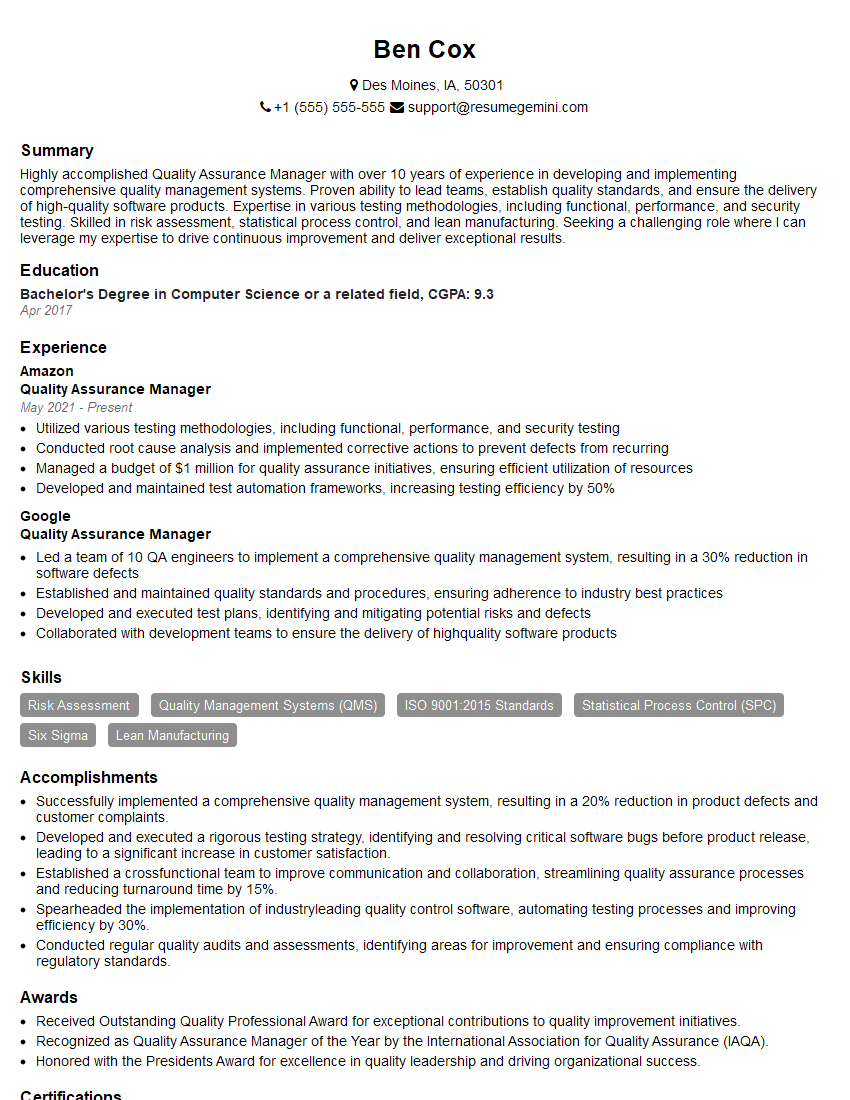
Quality Assurance Manager Resume Sample
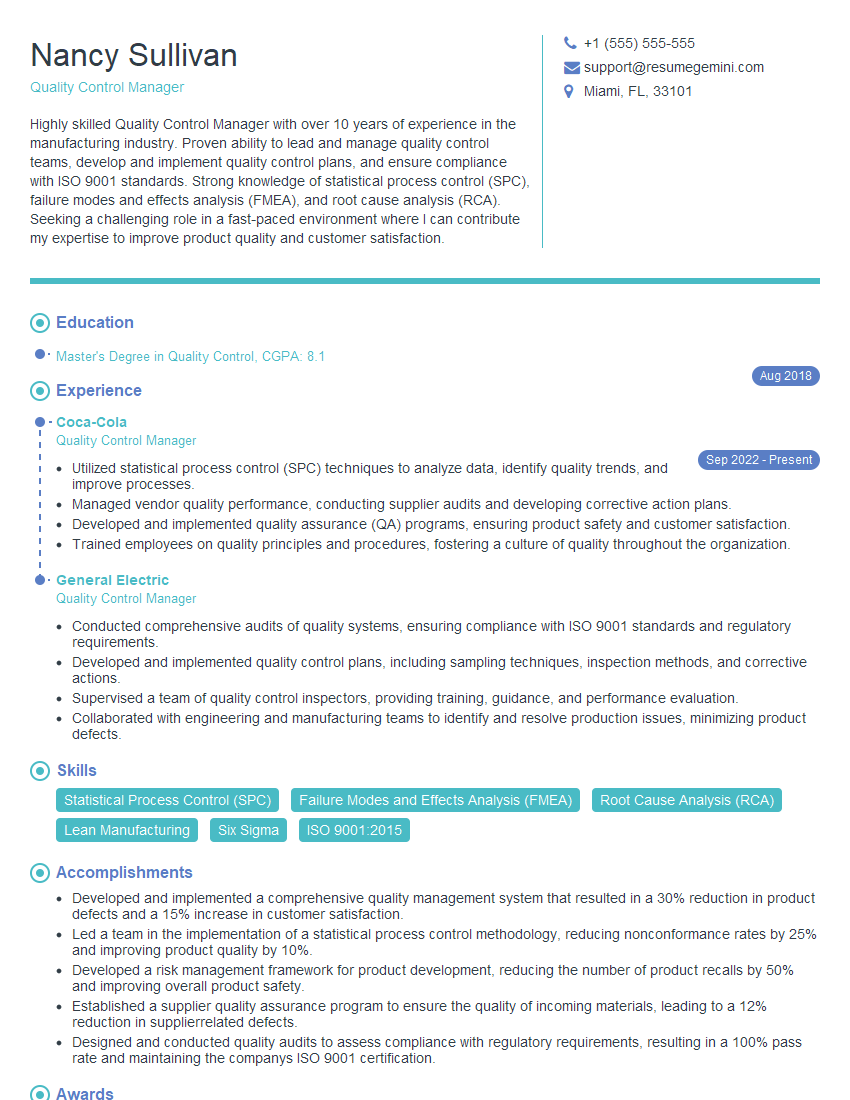
Quality Control Manager Resume Sample
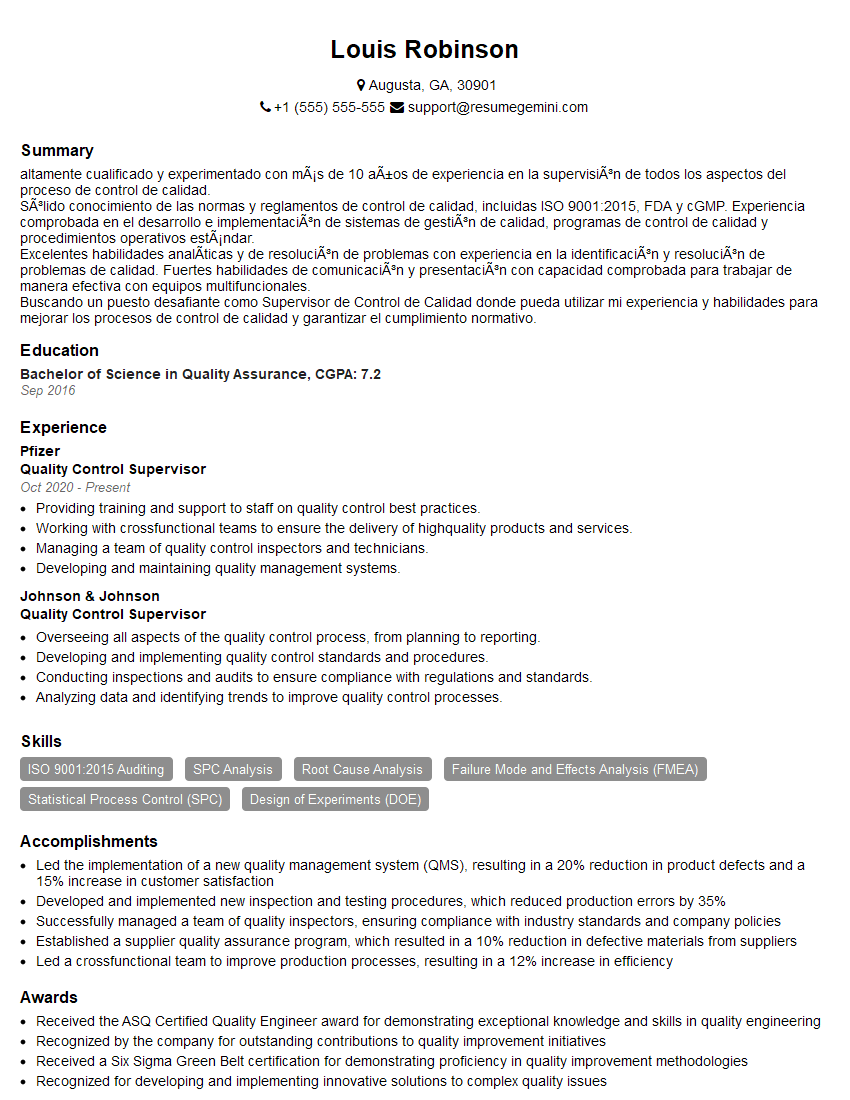
Quality Control Supervisor Resume Sample
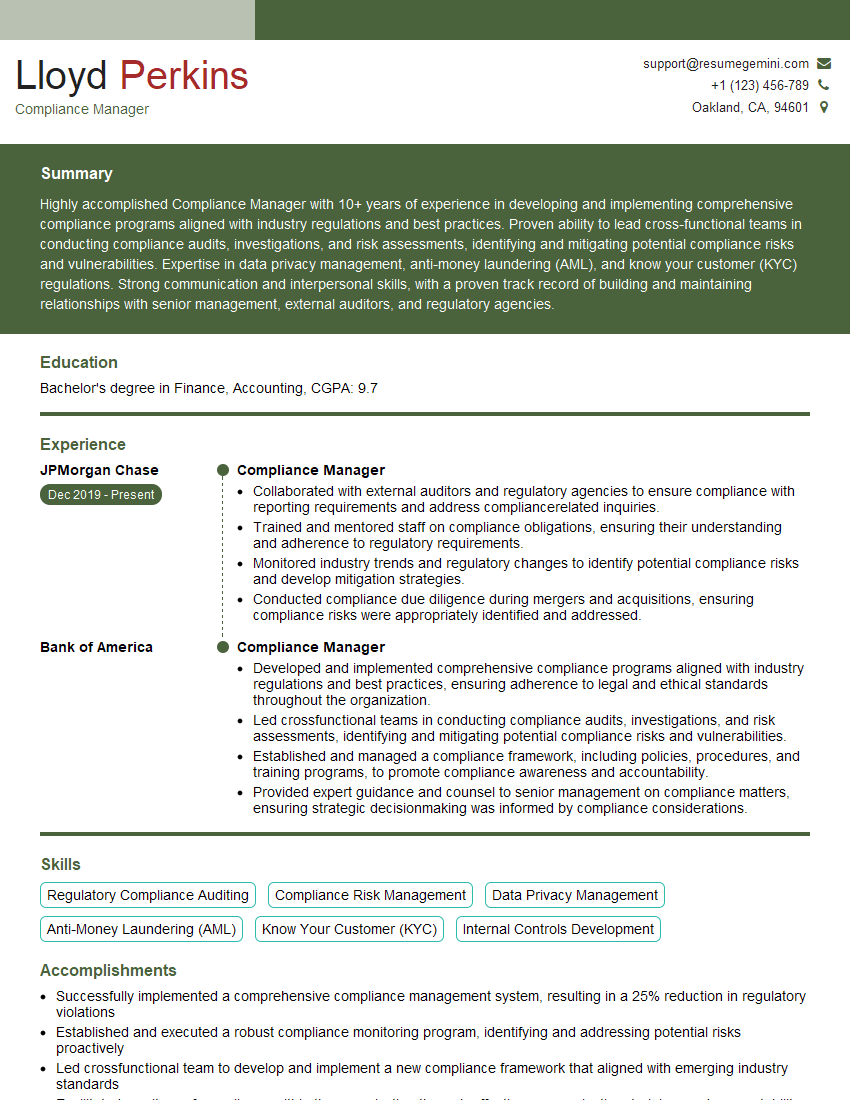
Compliance Manager Resume Sample
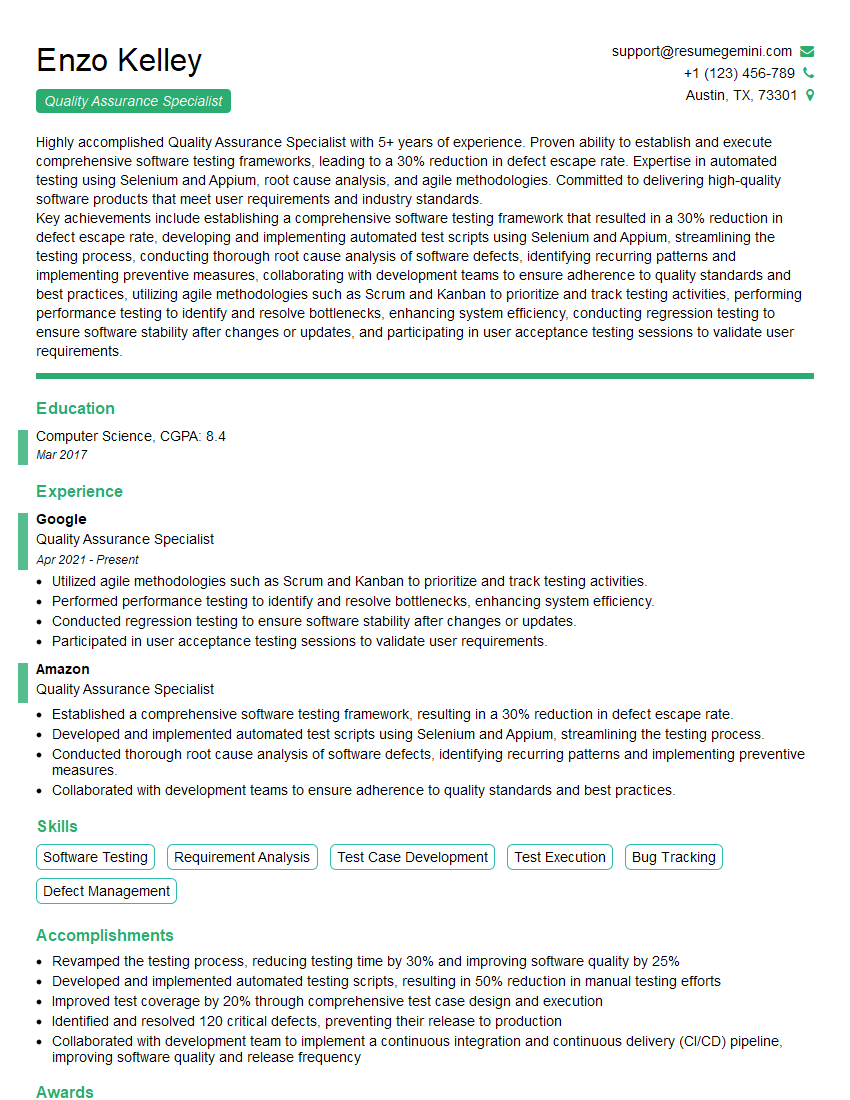
Quality Assurance Specialist Resume Sample
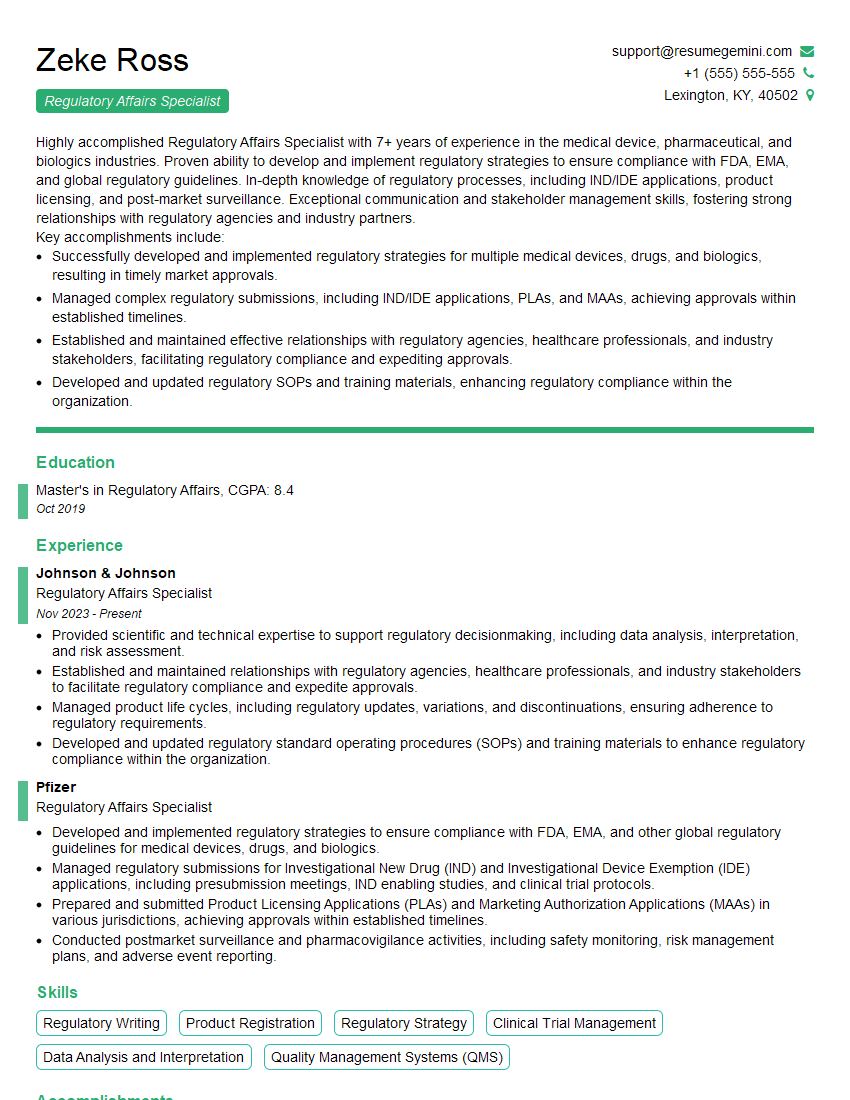
Regulatory Affairs Specialist Resume Sample
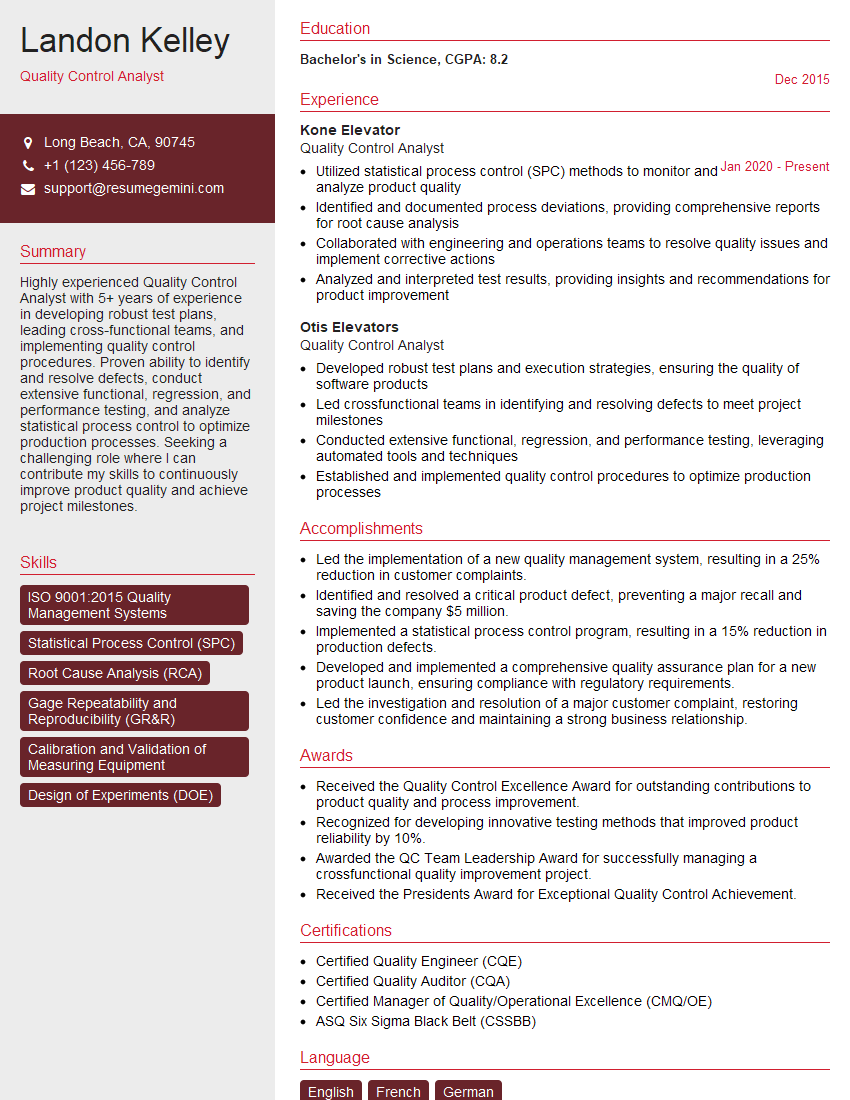
Quality Control Analyst Resume Sample
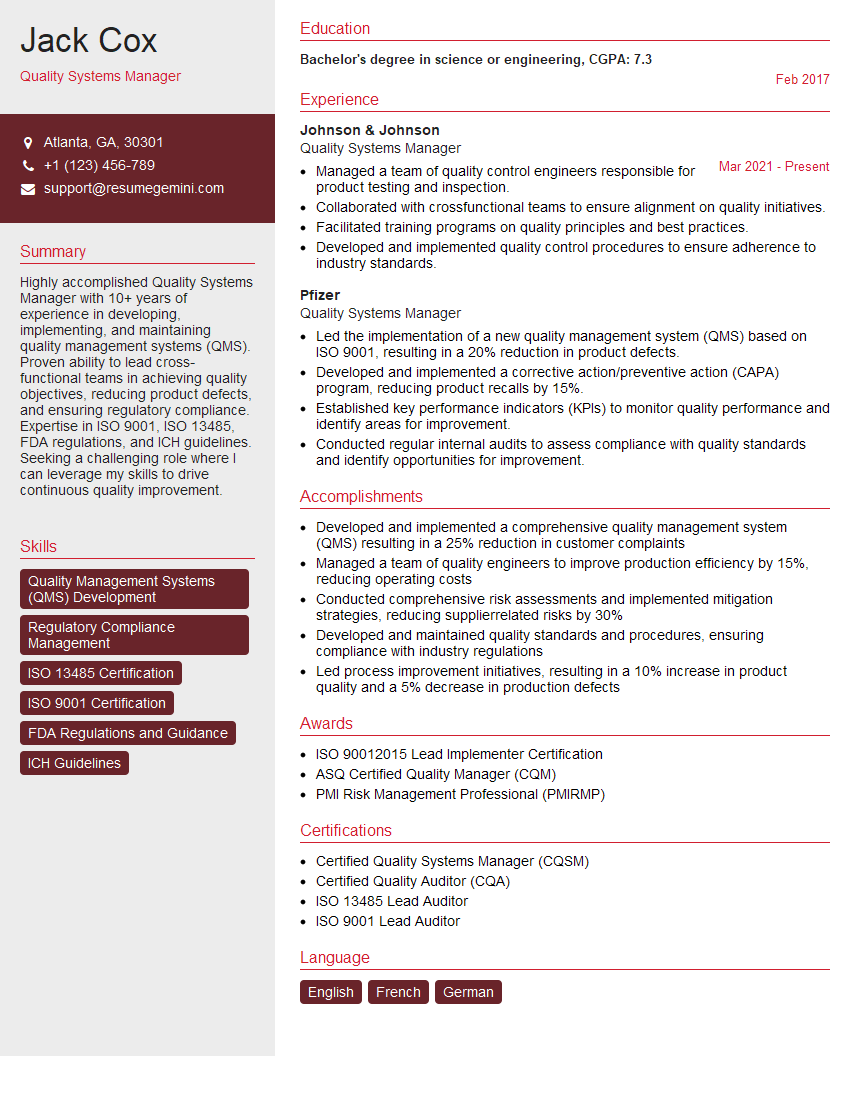
Quality Systems Manager Resume Sample
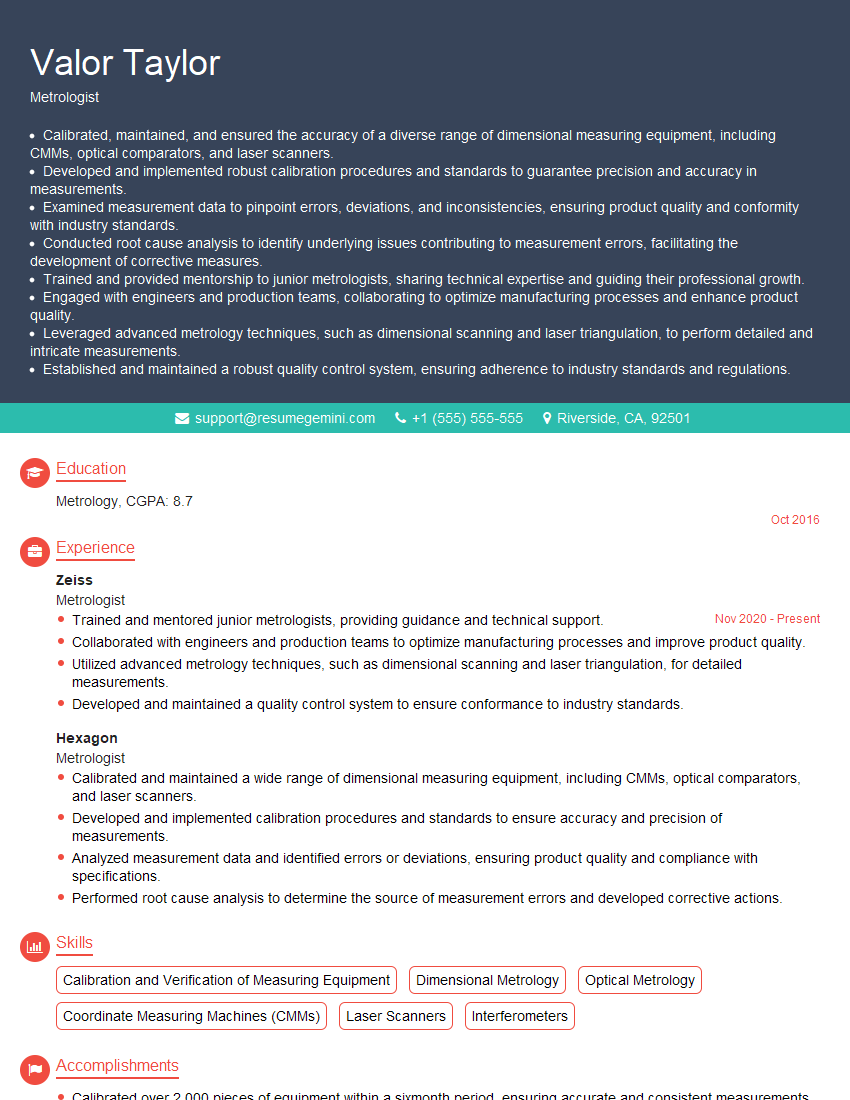
Metrologist Resume Sample

Quality Assurance Technician Resume Sample
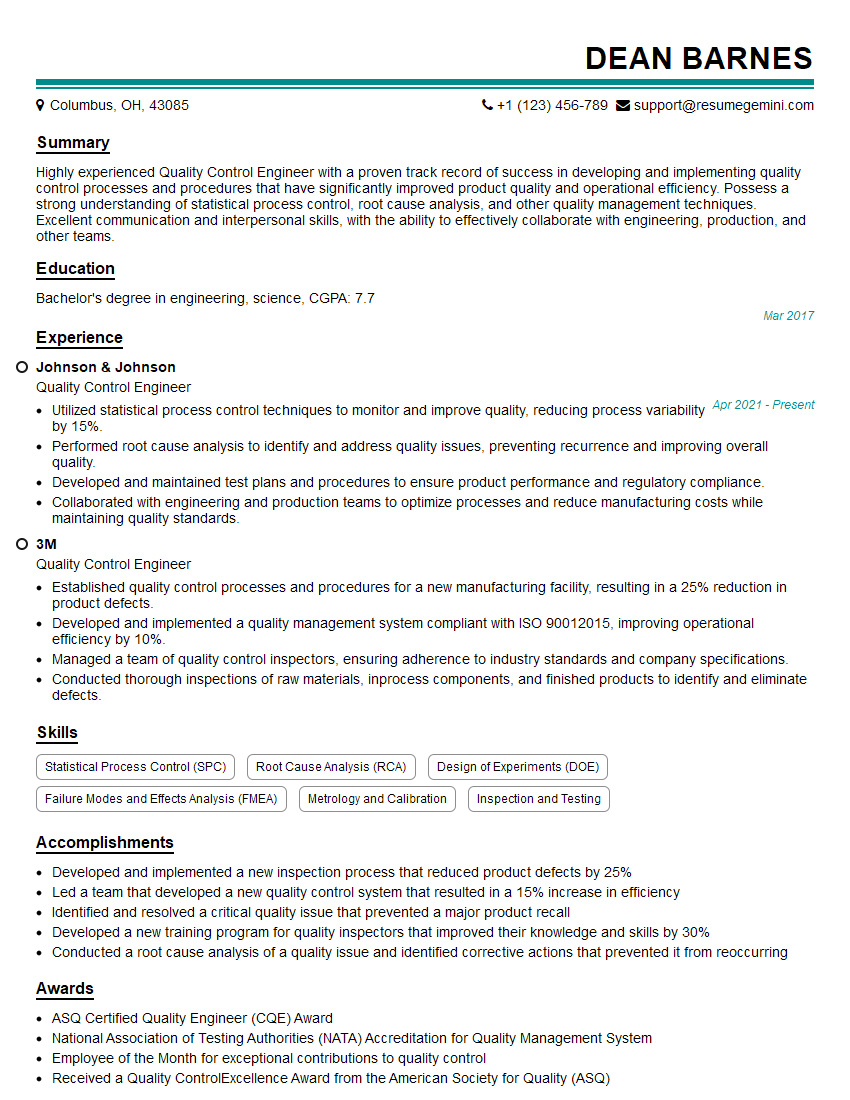
Quality Control Engineer Resume Sample
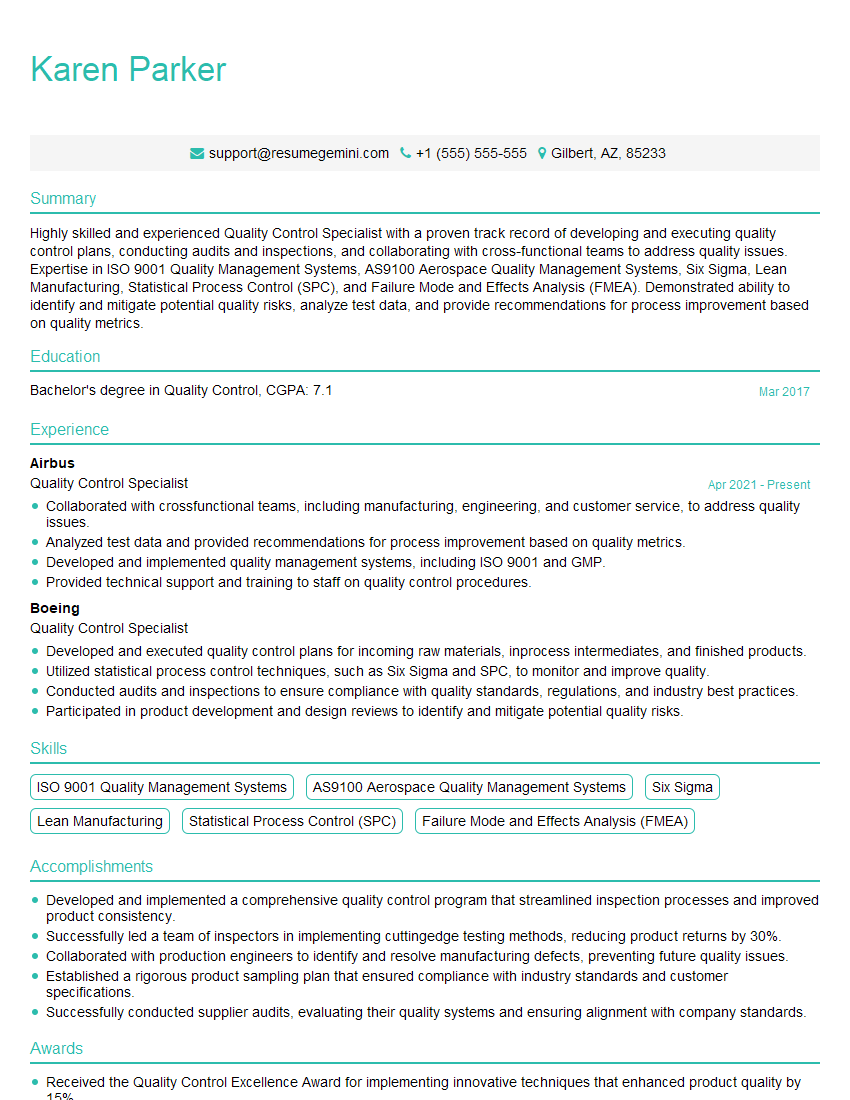
Quality Control Specialist Resume Sample
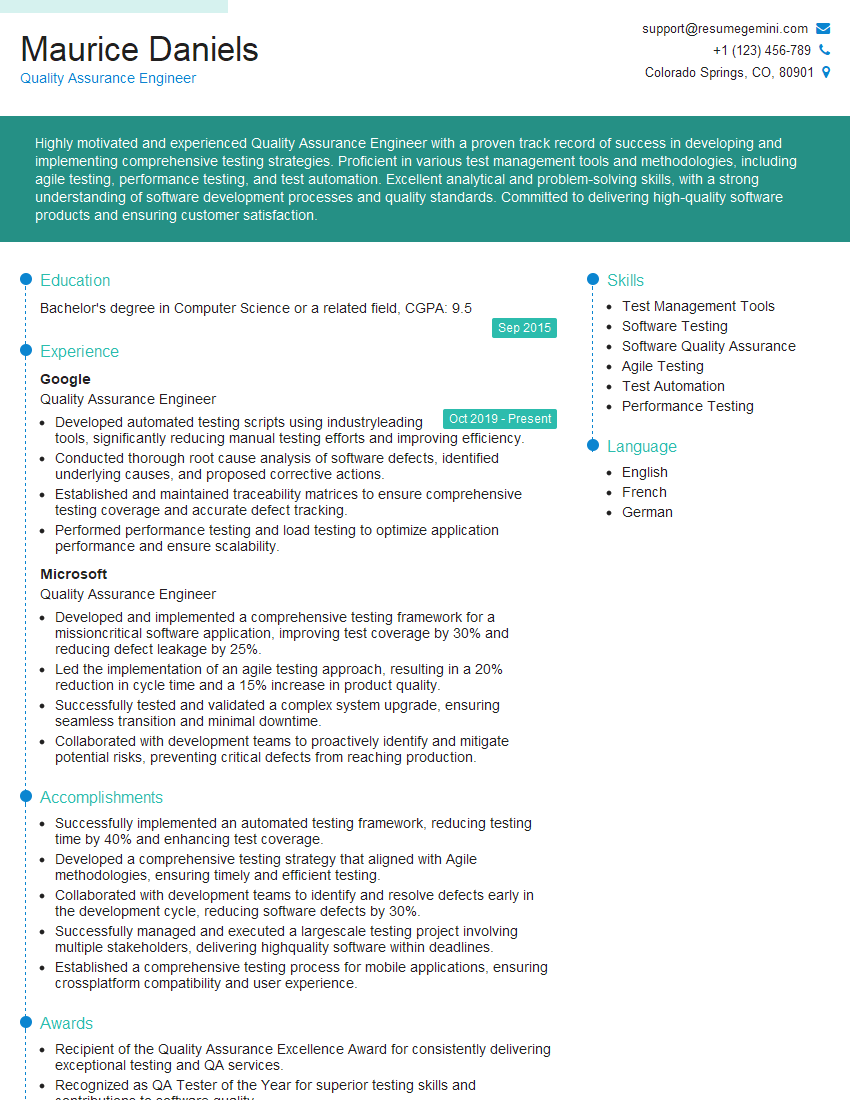
Quality Assurance Engineer Resume Sample
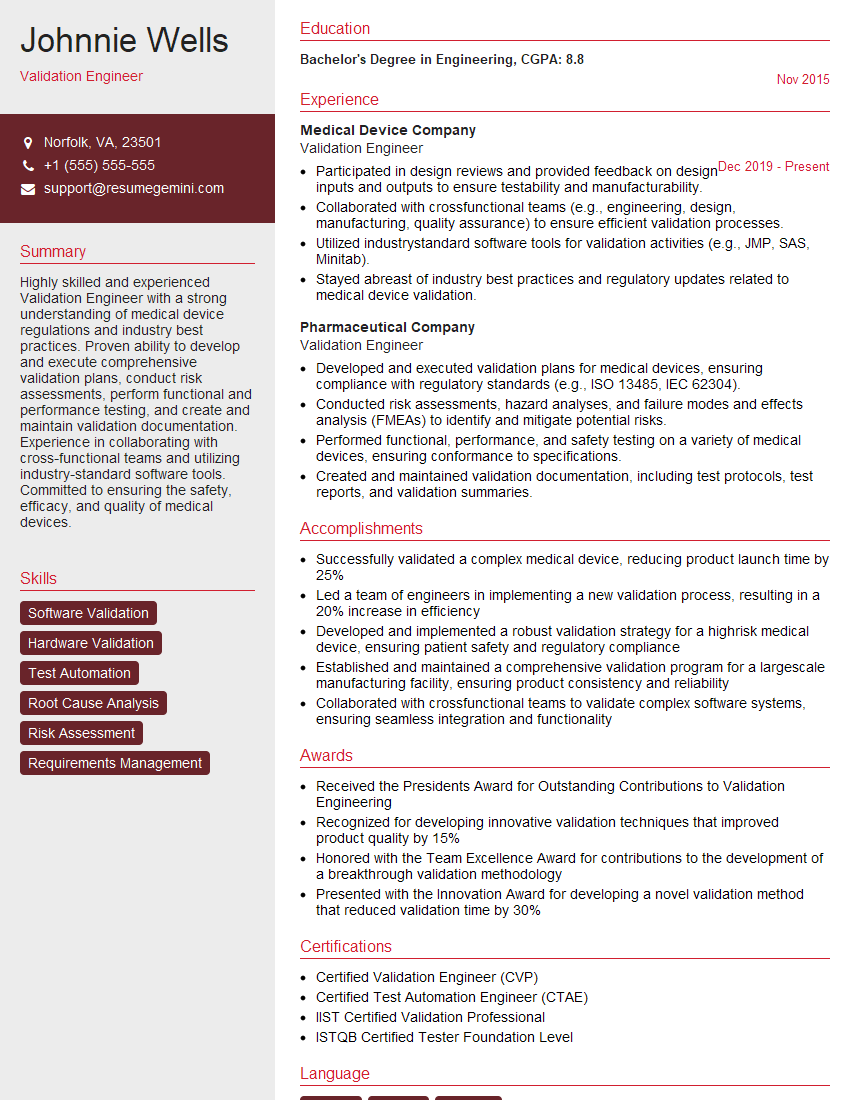
Validation Engineer Resume Sample
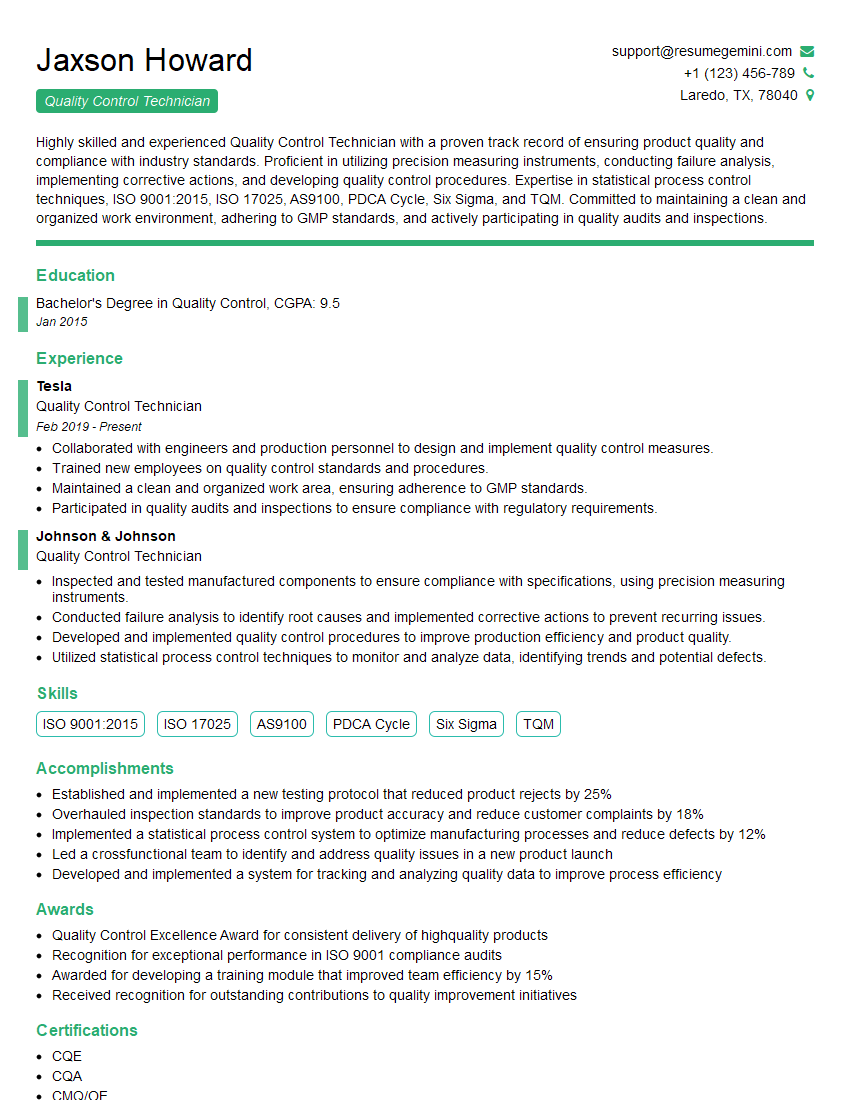
Quality Control Technician Resume Sample
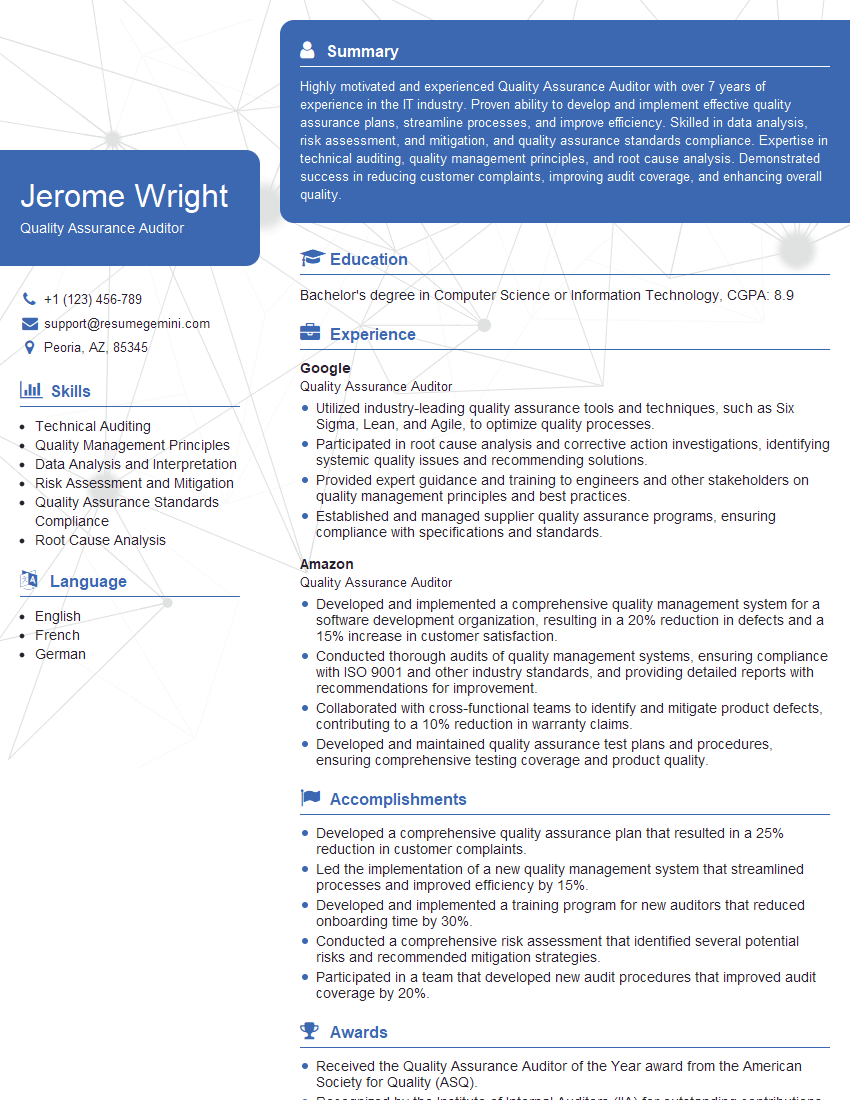
Quality Assurance Auditor Resume Sample
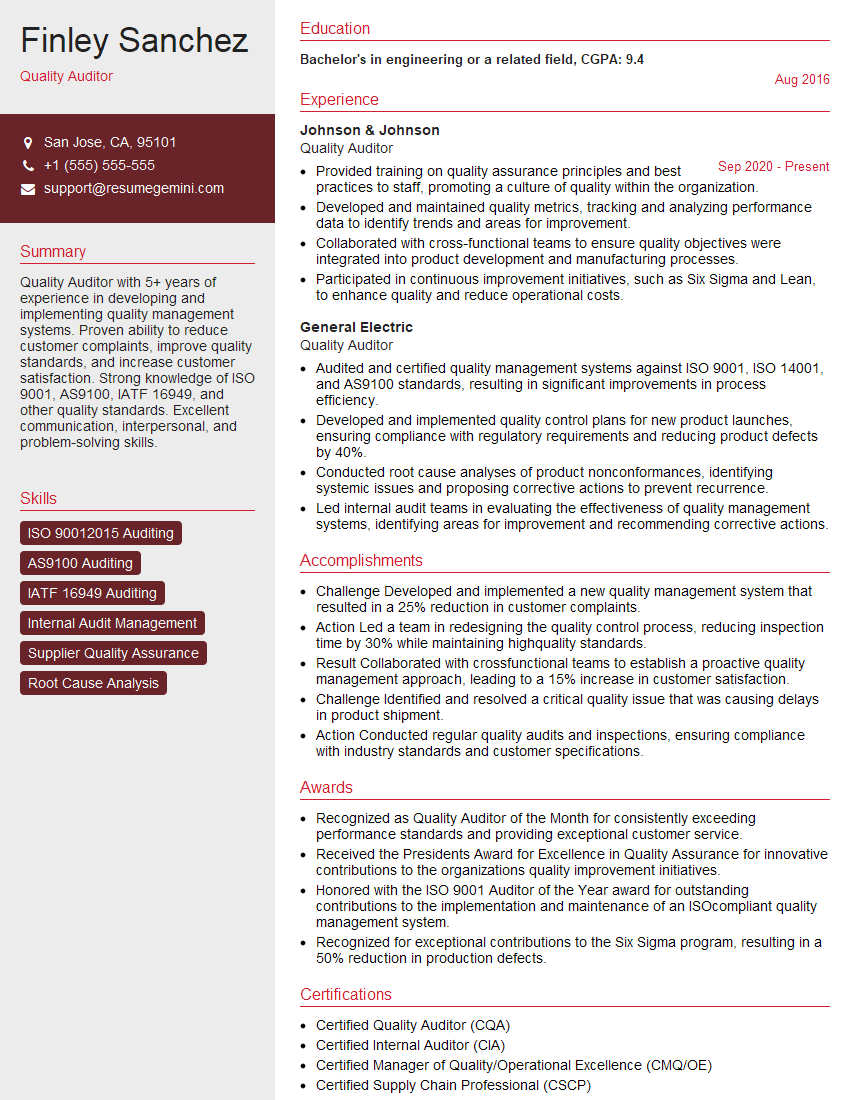
Quality Auditor Resume Sample
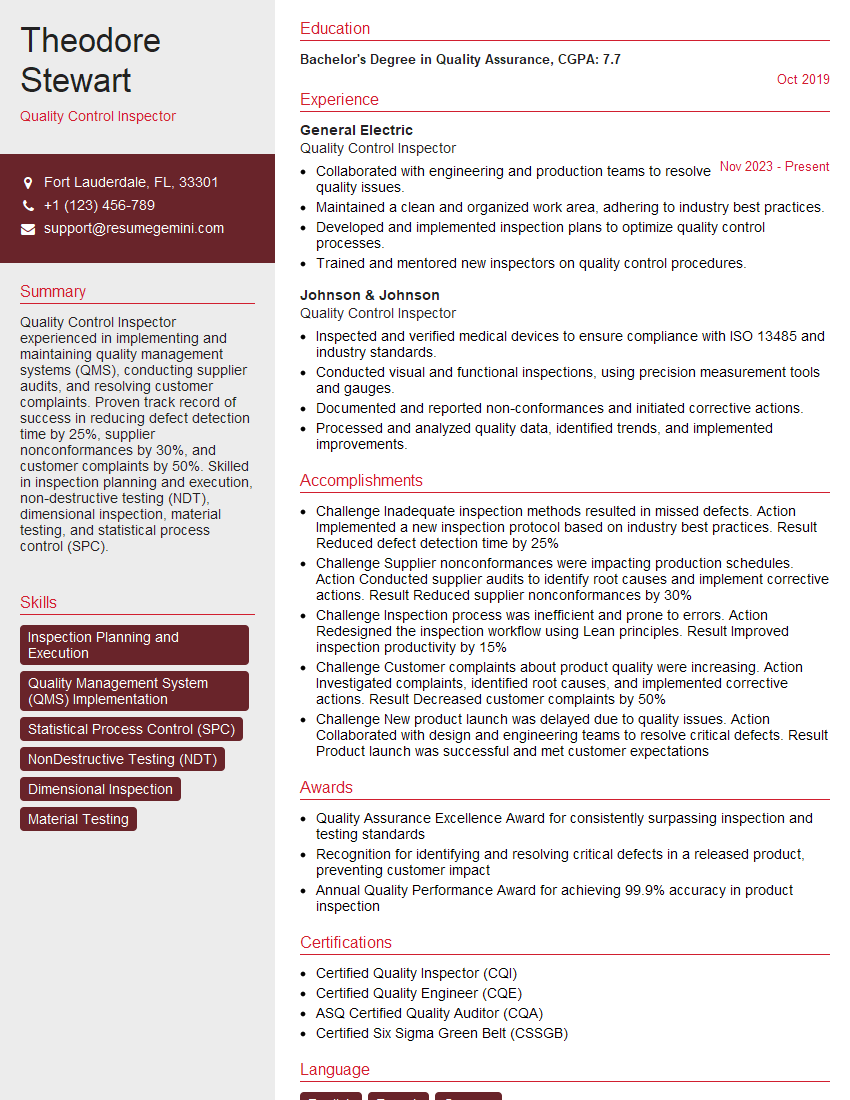
Quality Control Inspector Resume Sample
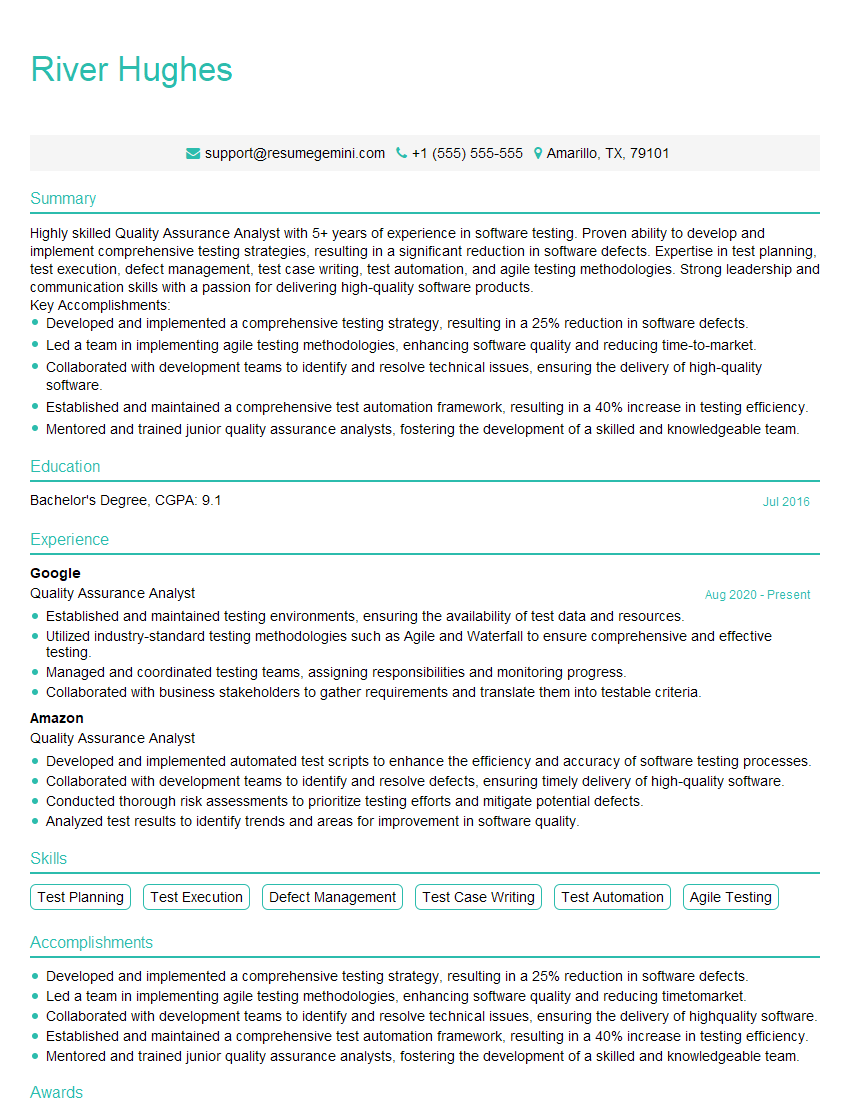
Quality Assurance Analyst Resume Sample
- Quality Assurance Manager
- Quality Control Manager
- Quality Control Supervisor
- Compliance Manager
- Quality Assurance Specialist
- Regulatory Affairs Specialist
- Quality Control Analyst
- Quality Systems Manager
- Metrologist
- Quality Assurance Technician
- Quality Control Engineer
- Quality Control Specialist
- Quality Assurance Engineer
- Validation Engineer
- Quality Control Technician
- Quality Assurance Auditor
- Quality Auditor
- Quality Control Inspector
- Quality Assurance Analyst
Explore more articles
Users Rating of Our Blogs
Share Your Experience
We value your feedback! Please rate our content and share your thoughts (optional).
What Readers Say About Our Blog
Very informative content, great job.
good