Interviews are more than just a Q&A session—they’re a chance to prove your worth. This blog dives into essential Flight Operations Support interview questions and expert tips to help you align your answers with what hiring managers are looking for. Start preparing to shine!
Questions Asked in Flight Operations Support Interview
Q 1. Explain the role of a flight dispatcher in ensuring flight safety.
A flight dispatcher plays a crucial role in ensuring flight safety by acting as a vital link between the flight crew and the airline’s operational control center. Their responsibilities encompass pre-flight planning, real-time monitoring of the flight, and providing critical information to the pilots to mitigate risks. Think of them as the unsung heroes who meticulously plan and monitor every flight, ensuring a safe journey from takeoff to landing.
- Pre-flight planning: They meticulously prepare flight plans, considering weather, airspace restrictions, and aircraft performance limitations. This minimizes the chances of encountering unforeseen circumstances in flight.
- Real-time monitoring: During the flight, dispatchers continuously monitor weather changes, air traffic control advisories, and the aircraft’s progress. They alert the flight crew to potential hazards and assist with problem-solving, such as rerouting due to weather.
- Communication: They serve as the primary point of contact between the flight crew and the airline’s operations center, ensuring seamless communication and efficient information flow.
- Emergency response: In case of unexpected situations like diversions or emergencies, dispatchers coordinate with relevant authorities and support the crew in making informed decisions to ensure passenger and crew safety.
Q 2. Describe the process of flight planning, including weather considerations.
Flight planning is a meticulous process that involves several key steps, with weather being a paramount consideration. It’s like meticulously charting a course for a sea voyage, anticipating potential storms and adjusting accordingly.
- Route selection: This involves choosing the most efficient and safest route, considering factors like distance, fuel consumption, air traffic density, and anticipated weather conditions.
- Performance calculations: This crucial step involves determining the aircraft’s weight and balance, fuel requirements, and performance characteristics at different altitudes and temperatures, ensuring the flight remains within safe operating parameters.
- Weather analysis: This is where the dispatcher uses various weather data sources like METARs (Aviation Routine Weather Reports) and TAFs (Terminal Aerodrome Forecasts) to understand current and predicted weather along the planned route and at destination airports. This includes assessing potential turbulence, icing conditions, thunderstorms, and visibility limitations.
- Navigation planning: This involves identifying and documenting the planned route using navigational aids like VORs (VHF Omnidirectional Range) and GPS. This ensures safe and efficient navigation throughout the flight.
- Contingency planning: This involves identifying alternate airports and routes in case of unexpected weather or other disruptions. Having a backup plan is critical for safety and efficiency.
For example, if severe thunderstorms are predicted along the planned route, the dispatcher may need to reroute the flight around the storm, potentially adding flight time and fuel consumption. This proactive approach ensures that the flight operates safely and efficiently.
Q 3. How do you handle unexpected delays or diversions?
Handling unexpected delays or diversions requires swift action, clear communication, and a calm, methodical approach. It’s like navigating an unexpected detour on a road trip – you need to find an alternative route quickly and safely.
- Assess the situation: The first step is to understand the reason for the delay or diversion—Is it weather-related? A mechanical issue? Air traffic congestion? This assessment guides subsequent actions.
- Communicate with the crew: The dispatcher immediately communicates with the flight crew, providing them with relevant information and options for addressing the situation. This collaboration is crucial for making informed decisions.
- Coordinate with air traffic control: If a diversion is necessary, the dispatcher coordinates with air traffic control to obtain clearance for the new route and airport. This ensures smooth integration into the existing air traffic flow.
- Inform passengers: Passengers need to be informed about the delay or diversion, its cause, and the expected impact on their travel plans. Clear communication minimizes confusion and anxiety.
- Replan the flight: The dispatcher needs to develop a new flight plan that accounts for the delay or diversion, ensuring that the aircraft’s fuel reserves are sufficient and that the new route is safe and legal.
- Post-flight analysis: Following the incident, a thorough review of the event is conducted to identify contributing factors and improve procedures to prevent similar incidents in the future. This is crucial for continuous improvement in safety and efficiency.
Q 4. What are the key performance indicators (KPIs) you monitor in flight operations?
Key Performance Indicators (KPIs) in flight operations are meticulously tracked to evaluate operational efficiency, safety, and compliance. They are like the vital signs of a patient, indicating the health of the flight operation system.
- On-time performance: The percentage of flights that depart and arrive on schedule is a critical indicator of operational efficiency.
- Flight delays and cancellations: Tracking the reasons behind delays and cancellations helps to identify areas for improvement and proactively prevent future disruptions.
- Fuel efficiency: Monitoring fuel consumption per flight and per passenger helps in optimizing fuel usage and reducing operational costs.
- Safety incidents: Tracking the number and severity of safety incidents helps to identify potential risks and implement preventative measures.
- Turnaround time: The time taken to prepare an aircraft for the next flight is crucial for maintaining operational efficiency.
- Crew utilization: Optimizing crew scheduling ensures cost-effectiveness and efficient use of personnel resources.
- Compliance with regulations: Regular audits and monitoring ensure adherence to all applicable regulations and safety standards.
Q 5. Explain your experience with flight tracking software and data analysis.
My experience with flight tracking software and data analysis involves extensive utilization of systems like FlightAware, Flightradar24, and internal airline systems. This data is critical for real-time monitoring, post-flight analysis, and operational optimization. It’s like having a real-time view of the entire fleet and using that information to make critical decisions.
I’m proficient in using this data to:
- Monitor flight progress: Track flights in real-time, identify potential delays, and proactively address issues.
- Analyze flight data: Identify trends and patterns in delays, fuel consumption, and other performance indicators to optimize operations.
- Generate reports: Create reports for management highlighting key performance metrics and areas for improvement.
- Identify potential safety hazards: Analyze data to identify potential risks and develop strategies for mitigating them.
For instance, analyzing historical data on weather-related delays allowed me to recommend changes to our contingency planning, significantly reducing the impact of severe weather events on our operations.
Q 6. How do you ensure compliance with FAA regulations?
Ensuring compliance with FAA regulations is paramount in flight operations. It’s the bedrock upon which safe and efficient air travel is built. It’s like following a strict recipe to ensure a successful outcome.
- Regular audits and inspections: Our operations are subject to regular internal and external audits to ensure compliance with all relevant regulations. This includes reviewing flight plans, maintenance records, crew training, and operational procedures.
- Maintenance of records: All flight operations records are meticulously maintained and readily available for review. This includes flight plans, weather reports, crew logs, and maintenance documentation.
- Crew training: Pilots and dispatchers undergo recurrent training to ensure they remain current on all regulations and safety procedures.
- Staying updated: We continuously monitor FAA notices and updates to ensure that our procedures and training programs reflect the latest regulations.
- Proactive approach: We take a proactive approach to compliance, identifying and addressing potential issues before they become violations. This involves regular review of procedures, risk assessments, and safety audits.
Q 7. Describe your experience with crew scheduling and resource allocation.
Crew scheduling and resource allocation are crucial functions within flight operations, requiring a balanced approach to optimize both cost and crew welfare. It’s like a complex chess game, ensuring the right pieces are in the right place at the right time.
- Crew pairing optimization: Using specialized software and algorithms, I optimize crew pairings to minimize flight time away from home, maximize rest periods, and ensure compliance with flight time limitations.
- Resource allocation: This involves assigning aircraft, crews, and other resources to flights in a way that optimizes efficiency and minimizes costs. It’s all about balancing needs with available resources.
- Bid-based systems: Experience with bid-based systems allows for improved crew morale as pilots have some input on their schedule. This reduces attrition and improves satisfaction.
- Contingency planning: Maintaining a reserve crew roster ensures coverage in case of unexpected absences or disruptions.
- Data analysis: Data analysis of crew scheduling trends helps identify potential issues and improve efficiency and equity in the system. For instance, analyzing data revealed an imbalance in distribution of long-haul flights among senior crews; adjustments to our scheduling software corrected the issue.
Q 8. How do you handle communication with pilots and other stakeholders during a flight operation?
Effective communication is the cornerstone of safe and efficient flight operations. I utilize a multi-faceted approach, tailoring communication to the specific audience and context. With pilots, I employ clear, concise language, prioritizing brevity and accuracy, especially during critical phases of flight. This includes pre-flight briefings covering weather, NOTAMs (Notices to Airmen), and any operational deviations. During flight, communication is primarily through established radio frequencies, following strict protocols to ensure message clarity and avoid misunderstandings. I use standardized phraseology to minimize ambiguity. With other stakeholders, such as maintenance personnel, air traffic control, and airport authorities, my communication is similarly professional and precise, but may involve more detailed explanations depending on their role and the information they require.
For example, if a maintenance issue arises, I’d liaise with the engineers using precise technical language to describe the problem, ensuring a complete understanding to facilitate prompt and effective resolution. My communication style always prioritizes safety and transparency.
Q 9. What is your understanding of NOTAMs and their importance in flight planning?
NOTAMs, or Notices to Airmen, are crucial safety advisories that provide real-time information about potential hazards affecting flight operations. They cover a broad range of issues, including runway closures, navigational aid outages, construction activities near airports, and even temporary changes in airspace restrictions. Understanding and incorporating NOTAMs into flight planning is absolutely essential to ensure flight safety and regulatory compliance.
In my work, we access NOTAMs through specialized databases or flight planning software. We meticulously review all relevant NOTAMs for the planned route and departure/arrival airports. Any significant impact on the flight plan—such as a runway closure necessitating an alternate—requires immediate adjustment and communication to the pilots. Ignoring NOTAMs can lead to serious consequences, ranging from flight delays to in-flight emergencies.
Q 10. How do you manage fuel calculations and weight and balance considerations?
Precise fuel calculations and weight and balance considerations are paramount for safe and efficient flight. Fuel calculations involve determining the required fuel for the planned flight, accounting for factors like distance, weather conditions, fuel consumption rates, and holding patterns. We use specialized software and established formulas to perform these calculations, ensuring sufficient fuel reserves to account for unforeseen circumstances. Weight and balance management involves distributing the aircraft’s weight and ensuring its center of gravity remains within safe operational limits. This takes into consideration passenger weight, baggage, cargo, and fuel.
For example, we might use a software program to input the flight plan, aircraft type, payload, and weather data to calculate the optimal fuel load. Any discrepancies from the planned weight and balance are meticulously checked and corrected before takeoff. Improper fuel calculation could result in fuel exhaustion mid-flight, while an incorrect weight and balance calculation could compromise aircraft stability and control, leading to potentially catastrophic events.
Q 11. Describe your experience with flight operational risk management.
Flight operational risk management (FOM) is an integral part of my daily work. It’s a systematic approach to identifying, assessing, and mitigating risks associated with flight operations. We use a hazard identification process, analyzing potential risks throughout the flight cycle, from pre-flight planning to post-flight analysis. We consider various factors such as weather, aircraft maintenance, pilot fatigue, and air traffic control procedures.
One example of our risk mitigation strategies is the implementation of comprehensive check lists for all pre-flight procedures. We also actively encourage a safety culture where pilots and support staff feel comfortable reporting potential hazards without fear of reprisal. We continually review incident reports and accident data to identify recurring risks and refine our safety procedures. The aim is to proactively reduce the likelihood and impact of potential accidents.
Q 12. What are your strategies for maintaining accurate and up-to-date flight information?
Maintaining accurate and up-to-date flight information is crucial for safe and efficient flight operations. We rely on a combination of technologies and procedures to ensure data integrity. This involves real-time data feeds from various sources, including meteorological services (for weather updates), air traffic control systems (for airspace information), and aircraft maintenance databases (for aircraft status). We utilize flight planning software that integrates and consolidates data from these sources, providing a central, updated source of truth.
We employ rigorous data verification procedures to cross-check information from multiple sources, minimizing the risk of errors. For example, we would verify weather forecasts from multiple providers and compare them against observed weather conditions at the airport. Any discrepancies are investigated and resolved before flight clearance.
Q 13. How familiar are you with various flight planning software applications?
I am proficient in several flight planning software applications, including FlightAware, Jeppesen, and similar industry-standard tools. These applications allow for efficient flight planning, including route optimization, fuel calculation, weather analysis, and NOTAM integration. My expertise extends to utilizing these tools for various tasks, including flight plan creation, pre-flight briefings, and post-flight reporting. I am also comfortable working with different data formats and integrating information from various sources.
For instance, I routinely use Jeppesen to generate flight plans, incorporating weather data and NOTAMs, and then export this data into the flight management system on board the aircraft. My familiarity with these tools allows me to work efficiently and accurately, contributing to optimized flight operations.
Q 14. Explain your experience with handling emergency situations during flight operations.
Handling emergency situations requires swift, decisive action based on thorough training and established protocols. My experience encompasses several scenarios, including responding to mechanical malfunctions, unexpected weather events, and medical emergencies in flight. Our emergency response plans are based on standardized procedures, but the application always requires adaptability to the unique circumstances of each event. The focus is always on the safety of passengers and crew.
For example, if we encounter a sudden and severe weather event during flight, I would coordinate with air traffic control to find a safe alternate route or landing site, communicating clearly and concisely with the pilots to execute the necessary maneuvers. Simultaneously, I would inform passengers and relevant authorities, adhering to established communication protocols. Throughout the process, I would rely on my knowledge of emergency procedures, maintaining composure and using sound judgment to ensure a safe outcome. Post-event, a thorough investigation and debriefing are always conducted to learn from the experience and improve our response protocols.
Q 15. How do you ensure the effective coordination between flight operations and ground handling?
Effective coordination between flight operations and ground handling is crucial for on-time departures and arrivals, passenger safety, and efficient resource utilization. It’s like a well-orchestrated ballet; each party needs to know their steps and execute them flawlessly.
We achieve this through robust communication channels, such as dedicated ground-to-air communication systems, digital flight plans shared across platforms, and pre-flight briefings. These ensure that ground crews are aware of the aircraft’s arrival and departure times, passenger numbers, baggage handling requirements, catering needs, and any special requests (e.g., wheelchair assistance).
- Real-time updates: Utilizing flight tracking systems and dedicated communication lines provides constant updates on potential delays or changes. This allows for quick adjustments on the ground, preventing cascading issues.
- Pre-determined procedures: Standardized operating procedures (SOPs) outline the steps for various scenarios, ensuring consistency and reducing ambiguity. For example, a clear SOP for baggage handling will streamline processes and minimize delays.
- Collaborative technology: We leverage digital platforms that allow for seamless data exchange. This includes flight information systems that integrate flight plans, crew details, and ground handling instructions in a single, easily accessible location.
For example, during a recent flight experiencing unexpected mechanical delays, real-time updates allowed ground crews to adjust the gate assignment, secure additional ground support equipment, and re-allocate personnel, minimizing passenger inconvenience.
Career Expert Tips:
- Ace those interviews! Prepare effectively by reviewing the Top 50 Most Common Interview Questions on ResumeGemini.
- Navigate your job search with confidence! Explore a wide range of Career Tips on ResumeGemini. Learn about common challenges and recommendations to overcome them.
- Craft the perfect resume! Master the Art of Resume Writing with ResumeGemini’s guide. Showcase your unique qualifications and achievements effectively.
- Don’t miss out on holiday savings! Build your dream resume with ResumeGemini’s ATS optimized templates.
Q 16. Describe your knowledge of different types of aircraft and their operational limitations.
Understanding aircraft operational limitations is paramount. This includes knowledge of various aircraft types, their performance characteristics (e.g., range, payload, speed), and their specific operational constraints (e.g., runway length requirements, temperature limitations).
My experience spans a wide range of aircraft, from narrow-body jets like the Airbus A320 family and Boeing 737 family, to wide-body aircraft such as the Boeing 777 and Airbus A350. I understand the differences in their fuel efficiency, passenger capacity, and operating costs. Each type requires specific handling considerations.
- Weight and balance: Correct weight and balance calculations are critical for safe flight operations. Exceeding limits can compromise safety and performance.
- Performance calculations: I understand how factors such as altitude, temperature, and wind affect takeoff and landing distances, requiring precise calculations for each flight.
- Regulatory compliance: I am well-versed in the regulatory requirements for different aircraft types, which are subject to ongoing changes and updates, ensuring compliance is always a priority.
For instance, I once assisted in resolving a situation where a heavier-than-expected cargo load required adjustments to the flight plan to meet the operational limits of the Boeing 777.
Q 17. How would you troubleshoot a technical issue impacting flight operations?
Troubleshooting technical issues requires a systematic approach. It’s like solving a puzzle; each piece of information contributes to the solution.
My process involves:
- Identify the problem: Gather information from pilots, mechanics, and other relevant sources to accurately define the nature and scope of the issue.
- Analyze the situation: Assess available data (e.g., flight data recorders, maintenance logs) and prioritize the issue based on its impact on safety and operations.
- Develop potential solutions: Explore various options and consult with experts as needed. This includes consulting maintenance manuals, contacting manufacturers’ support, and reviewing relevant regulations.
- Implement the solution: Coordinate with the relevant teams to implement the chosen solution. This may involve ground support, engineering teams, or regulatory bodies.
- Monitor and evaluate: Closely monitor the impact of the implemented solution and document the process for future reference. Post-incident analysis is key for improvement.
For example, I once assisted in resolving a hydraulic system issue on an Airbus A330. Using flight data and maintenance logs, we identified a faulty component, coordinated its replacement, and ensured the aircraft returned to service safely.
Q 18. What is your experience with international flight regulations and procedures?
International flight regulations and procedures are complex and vary depending on the countries involved. They’re like a global tapestry, with individual strands representing the aviation regulations of different nations.
My experience includes working with international aviation regulations such as:
- ICAO (International Civil Aviation Organization) Standards and Recommended Practices (SARPs): These provide a framework for global aviation safety and security.
- EASA (European Union Aviation Safety Agency) regulations: I understand the detailed regulations for flights within the European Union airspace.
- FAA (Federal Aviation Administration) regulations: I have working knowledge of US aviation regulations, essential for flights involving US airspace.
- Bilateral Agreements: I understand how bilateral agreements between countries facilitate air traffic rights and operational procedures.
Understanding these regulations is crucial for ensuring compliance, avoiding delays, and ensuring safe and efficient flight operations. For example, I’ve assisted in preparing flight documentation and obtaining necessary permits for international flights, navigating diverse regulatory requirements.
Q 19. How do you manage conflicts between different flight schedules or operational requirements?
Managing conflicts between flight schedules or operational requirements demands a structured and collaborative approach. It’s like a traffic controller managing multiple streams of air traffic.
My strategy involves:
- Prioritize critical flights: Consider factors like passenger count, cargo value, and flight importance to determine priorities.
- Negotiate and compromise: Work with stakeholders (e.g., airlines, ground handling agents, air traffic control) to find mutually acceptable solutions that minimize disruption.
- Utilize available resources: Optimize the use of available resources (e.g., gates, runways, aircraft) to accommodate conflicting schedules.
- Communicate effectively: Keep all relevant parties informed of any schedule changes or adjustments.
- Document all decisions: Keep meticulous records of decisions made and their rationale for transparency and accountability.
For example, I once managed a situation where severe weather caused delays, forcing me to re-allocate gates, adjust crew schedules, and coordinate with air traffic control, minimizing the impact on the overall operation.
Q 20. Explain your process for generating flight reports and analyzing flight data.
Generating flight reports and analyzing flight data is crucial for identifying trends, improving operational efficiency, and ensuring safety. It’s like a post-game analysis in sports – vital for identifying areas of strength and areas for improvement.
My process includes:
- Data collection: Gather data from various sources like flight data recorders (FDRs), quick access recorders (QARs), weather reports, and maintenance logs.
- Data processing: Clean and organize data for analysis, using specialized software and tools. This could include transforming raw data into usable formats.
- Data analysis: Identify trends, anomalies, and patterns using statistical methods and visualization techniques. This includes identifying recurring issues or exceptional events.
- Report generation: Create concise and informative reports highlighting key findings, including recommendations for improvements.
- Dissemination of information: Share findings with relevant stakeholders (e.g., pilots, maintenance, management) to inform decision-making.
For example, analyzing flight data revealed a recurring issue with a particular aircraft’s fuel consumption. This allowed us to address the issue through maintenance and improve fuel efficiency across our fleet.
Q 21. What is your understanding of air traffic management and its impact on flight operations?
Air traffic management (ATM) plays a critical role in flight operations. It’s the conductor of the aviation orchestra, ensuring the safe and efficient flow of air traffic.
My understanding encompasses:
- Air traffic control (ATC) procedures: I understand the communication protocols and procedures used by ATC to manage aircraft movements.
- Navigational aids: I am familiar with various navigation technologies (e.g., VOR, ILS, GPS) and their impact on flight planning and execution.
- ATM systems: I have knowledge of various ATM systems (e.g., radar, communication networks) and their role in facilitating air traffic flow.
- Weather impact: I understand how weather conditions affect ATM decisions and flight operations, including rerouting, delays, and cancellations.
Effective communication and collaboration with ATM is critical for ensuring safe and efficient flight operations. For example, during periods of high air traffic volume or adverse weather, close coordination with ATC ensures smooth and safe handling of the flight operations. Any change in flight plans or requirements are quickly communicated and integrated into the overall traffic management system.
Q 22. How would you utilize weather forecasts to optimize flight schedules and routes?
Optimizing flight schedules and routes using weather forecasts is crucial for safety and efficiency. We leverage several strategies. First, we meticulously analyze forecasts from various sources – including national meteorological services, specialized aviation weather providers, and even on-site weather stations – to identify potential disruptions like turbulence, icing, thunderstorms, or low visibility.
Secondly, we use this data to proactively adjust flight plans. For instance, if a severe thunderstorm is predicted along a planned route, we might reroute the flight to avoid the affected area, even if it means a slightly longer flight time. This prioritizes safety. We also consider wind forecasts to optimize fuel efficiency, choosing routes that leverage tailwinds and minimize headwinds. Think of it like sailing – you’d want to sail with the wind, not against it!
Finally, we use this information for preemptive scheduling adjustments. If we anticipate widespread delays due to poor weather across a network, we might proactively adjust departure times to minimize cascading delays. This predictive approach helps maintain on-time performance and reduces disruptions for passengers and operations.
Q 23. How do you manage the workload during peak operational periods?
Managing workload during peak operational periods requires a multi-faceted approach. Our strategies revolve around effective resource allocation, proactive planning, and robust communication. We utilize sophisticated scheduling software to optimize crew assignments, ensuring adequate staffing levels for all anticipated operations. We also implement shift rotations and overtime policies to distribute the workload fairly and effectively.
Furthermore, we actively prioritize tasks. Critical tasks, such as addressing safety-related issues or managing urgent flight disruptions, are always given precedence. Clear communication channels – including regular briefings, status updates, and collaborative tools – are essential for maintaining situational awareness and coordinating efforts across teams. Think of it like an orchestra – the conductor ensures each section knows their part and works together harmoniously to create a beautiful performance, only here the ‘performance’ is a smooth, efficient flight operation.
Finally, we regularly review peak period performance to identify potential bottlenecks and implement process improvements. This iterative approach helps us continuously refine our strategies and improve our capacity to handle future periods of high demand.
Q 24. Explain your experience with performance monitoring and improvement initiatives in flight operations.
Performance monitoring and improvement is an ongoing process in flight operations. We utilize a variety of key performance indicators (KPIs) to track our efficiency and effectiveness. These include on-time performance (OTP), aircraft turnaround time, fuel consumption per flight, and the number of operational irregularities. We regularly collect and analyze data from various sources, including flight data recorders (FDRs), flight operations databases, and operational reports.
Based on the data analysis, we identify areas for improvement. For example, if our OTP is consistently below target, we might investigate factors such as ground handling delays, air traffic control constraints, or maintenance issues. We then implement targeted improvement initiatives. This might involve process redesigns, new technologies, or retraining programs. For instance, optimizing ground handling procedures could significantly reduce turnaround time and increase OTP.
We also employ statistical process control (SPC) techniques to monitor performance trends and detect anomalies. This helps us to identify potential problems proactively and implement corrective actions before they escalate into major disruptions. The entire process is cyclical – monitor, analyze, improve, repeat – which ensures continuous improvement in operational efficiency and safety.
Q 25. How familiar are you with different types of aircraft performance data?
My familiarity with aircraft performance data is extensive. I’m proficient in interpreting various types of data, including:
- Flight Data Recorder (FDR) data: This includes parameters such as airspeed, altitude, engine performance, and flight control inputs. We use this data for safety investigations, performance analysis, and operational optimization.
- Quick Access Recorder (QAR) data: Provides a more detailed, real-time snapshot of aircraft performance, facilitating quicker identification of anomalies and potential issues.
- Aircraft Maintenance Logs: Crucial for understanding the mechanical condition of the aircraft and identifying potential performance impacts.
- Fuel Consumption Data: Used to monitor fuel efficiency, identify potential leaks or inefficiencies, and optimize fuel management strategies.
- Performance Monitoring Systems (PMS) data: Provides comprehensive real-time insights into various aspects of flight performance.
Understanding this data is crucial for making informed decisions regarding flight planning, resource allocation, and operational efficiency improvements. I can confidently analyze this data to identify trends, diagnose problems, and recommend solutions to enhance overall operational performance.
Q 26. Describe a time you had to make a critical decision under pressure in a flight operations setting.
During a severe snowstorm, several flights were significantly delayed, and the airport was facing potential closure. Many flights were already delayed, and the situation was rapidly deteriorating. A critical decision needed to be made regarding whether to continue accepting incoming flights or temporarily halt operations. This decision had massive implications: halting operations would impact hundreds of passengers, but continuing operations risked potential ground accidents.
After carefully reviewing the current weather conditions, predicted snowfall rates, runway conditions, and the availability of de-icing resources, I recommended a temporary suspension of incoming flights. This allowed us to prioritize de-icing existing aircraft and ensure the safety of passengers and ground personnel. The decision was made under immense pressure, and while it caused significant delays, it prevented potential accidents and minimized the overall negative impact of the severe weather event. The proactive, safety-first approach proved to be the right decision even though it was not an easy one to make.
Q 27. How do you stay up-to-date with changes in aviation regulations and technologies?
Staying abreast of changes in aviation regulations and technologies is a continuous process that requires a proactive approach. I regularly subscribe to industry publications, such as Aviation Week and FlightGlobal, which provide timely updates on regulatory changes and technological advancements.
I also actively participate in industry conferences, seminars, and workshops. These events allow me to network with colleagues, learn from leading experts, and stay informed about the latest developments. Furthermore, I leverage online resources, such as the websites of regulatory bodies like the FAA and EASA, and actively engage in online communities of aviation professionals to stay informed about best practices and emerging trends. Continuous learning is crucial in a dynamically evolving field like aviation.
Q 28. What are your strategies for continuous professional development in flight operations support?
My continuous professional development strategy is multi-pronged. Firstly, I actively seek opportunities for formal training and certification. This might include courses on advanced flight planning, aviation safety management systems (SMS), or new operational technologies. I believe in structured learning to keep my skills current and relevant.
Secondly, I actively seek mentorship from senior professionals in the field. Learning from their experience and insights is invaluable. I also actively mentor junior colleagues, which reinforces my own understanding and provides valuable leadership experience. Finally, I believe in practical application of knowledge through involvement in projects that require the application of new skills and concepts. This hands-on approach ensures that theoretical learning translates into tangible improvements in my work.
Key Topics to Learn for Flight Operations Support Interview
- Flight Scheduling and Dispatch: Understanding flight planning, crew scheduling, and dispatch procedures; practical application includes analyzing flight plans for efficiency and safety, and resolving potential conflicts.
- Aircraft Performance and Weight & Balance: Theoretical understanding of aircraft performance limitations and weight distribution; practical application involves calculating fuel requirements, load planning, and ensuring compliance with regulations.
- Flight Following and Communication: Proficiency in monitoring flights, communicating with pilots and air traffic control; practical application involves proactive problem-solving during flight disruptions and ensuring efficient communication flow.
- Regulatory Compliance and Safety Procedures: Knowledge of relevant aviation regulations (e.g., FAA, EASA); practical application includes ensuring adherence to safety protocols and maintaining accurate documentation.
- Data Analysis and Reporting: Utilizing flight data to identify trends, analyze performance, and create reports; practical application involves using data to improve operational efficiency and safety.
- Operational Control and Emergency Response: Understanding crisis management procedures and efficient responses to unforeseen circumstances; practical application includes developing and testing contingency plans and coordinating responses to emergencies.
- Crew Resource Management (CRM): Understanding teamwork, communication, and decision-making in a flight operations environment; practical application includes demonstrating effective collaboration and conflict resolution skills.
Next Steps
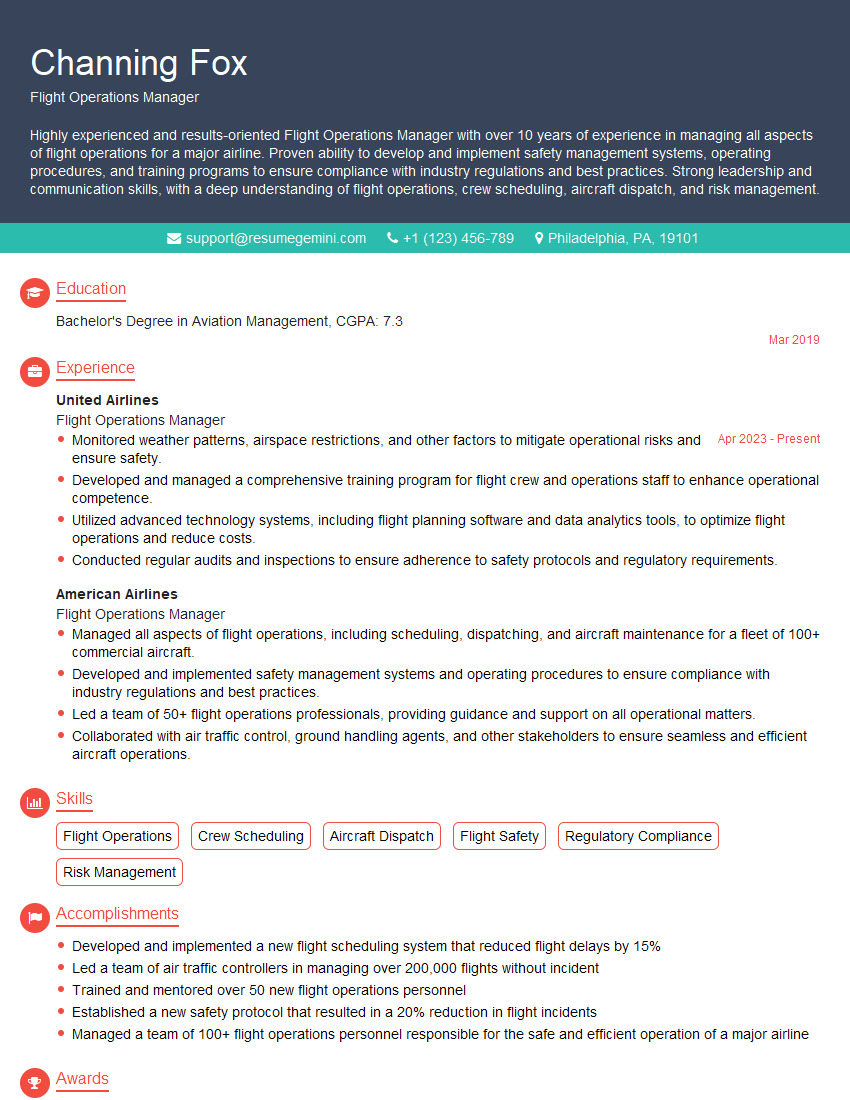
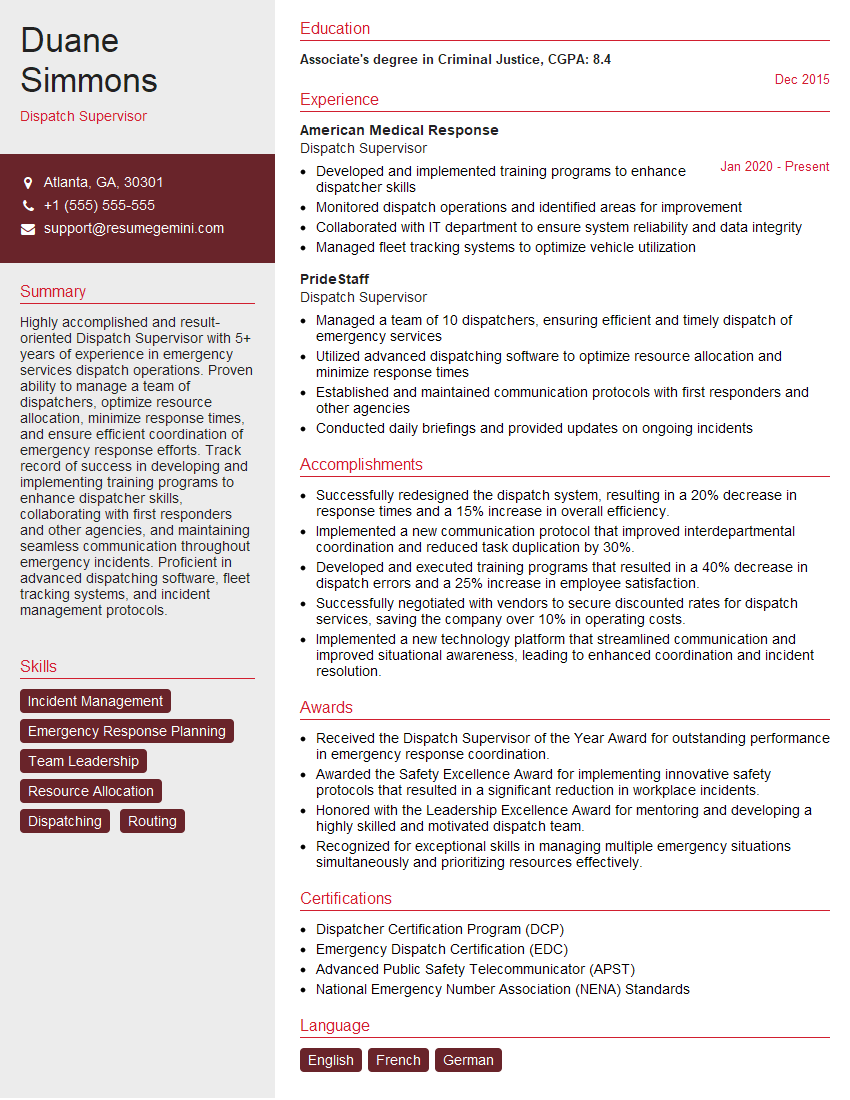
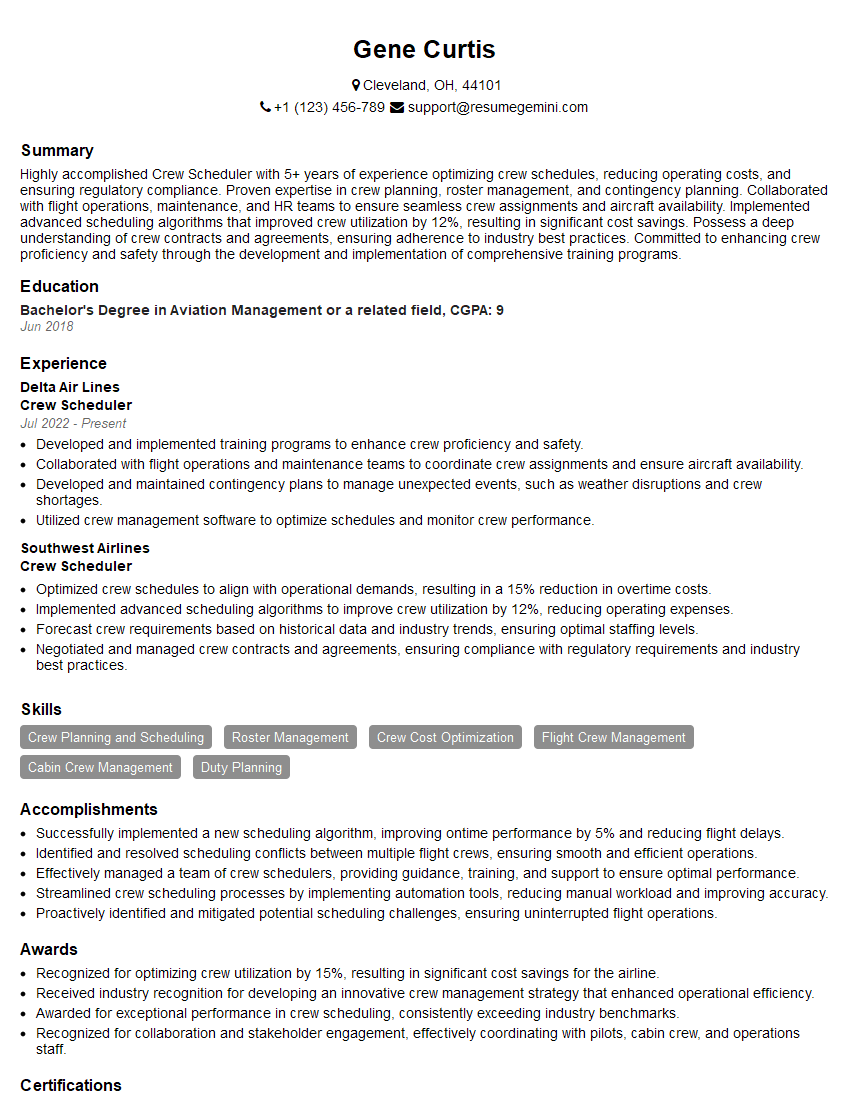
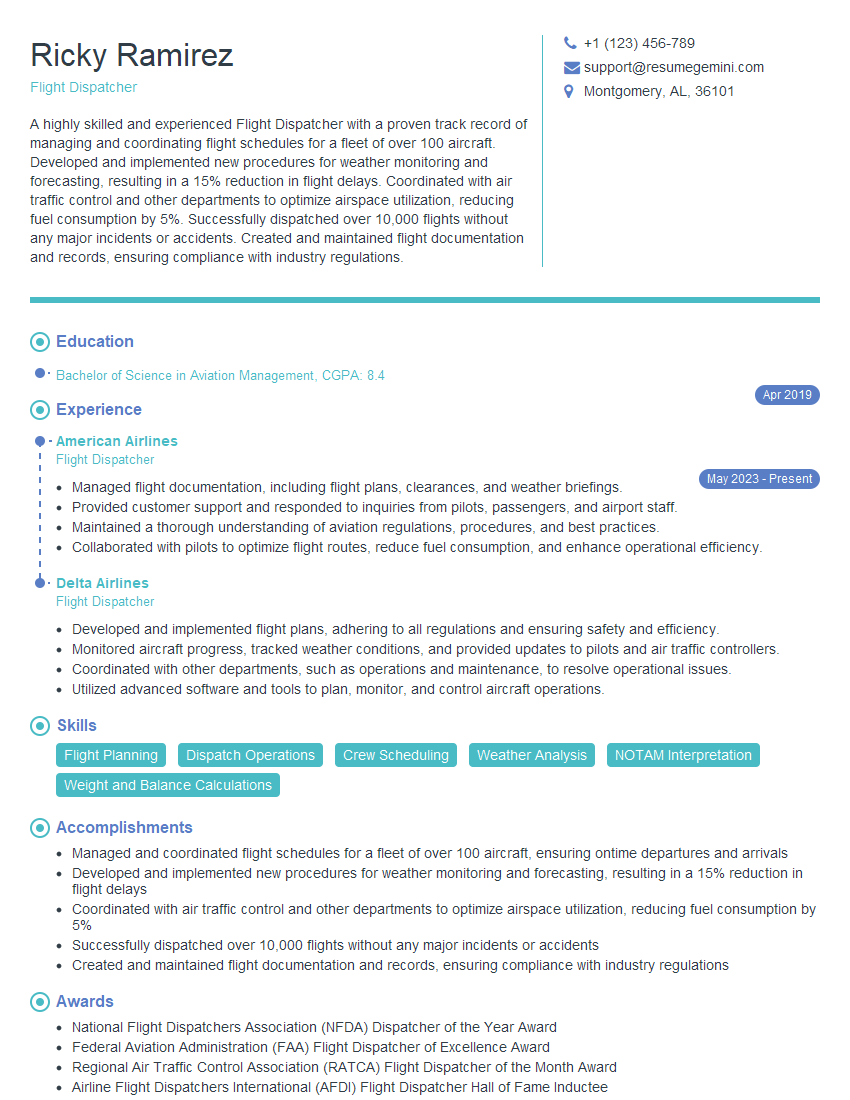
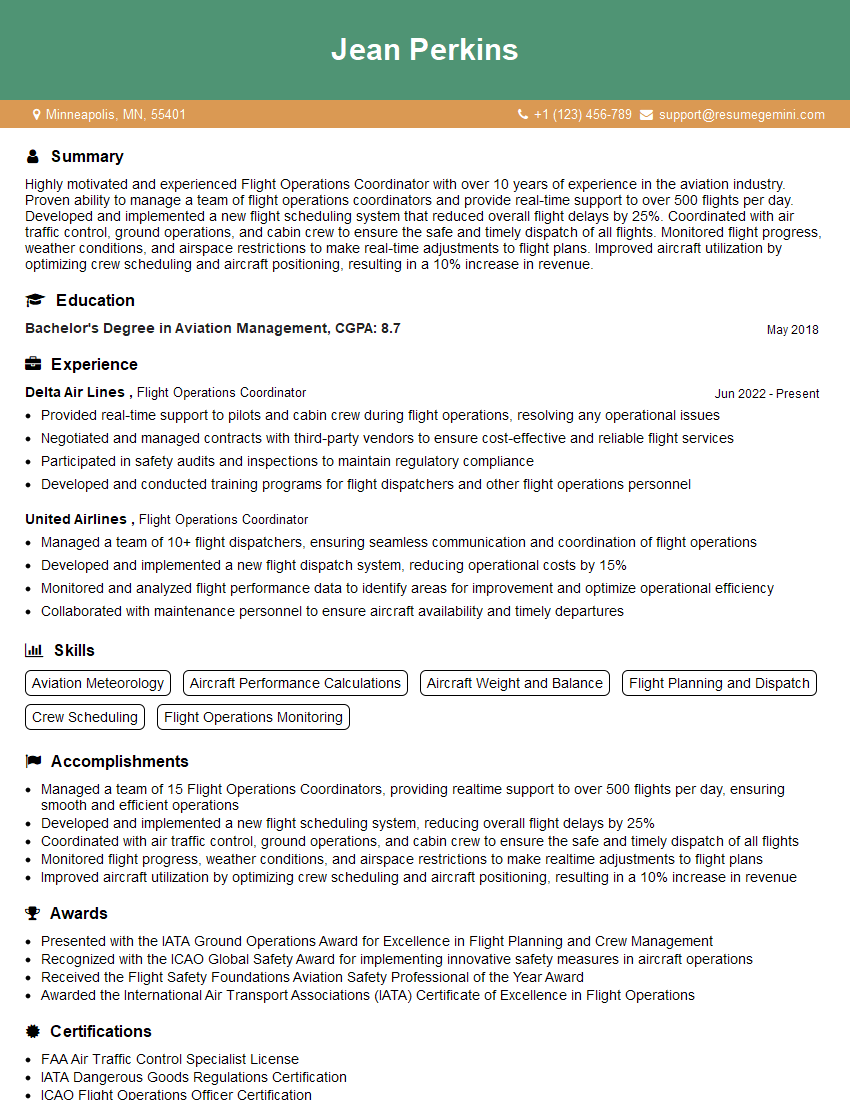
Mastering Flight Operations Support opens doors to a rewarding career with significant growth potential, offering opportunities for specialization and advancement within the aviation industry. To maximize your job prospects, focus on crafting an ATS-friendly resume that highlights your skills and experience effectively. ResumeGemini is a trusted resource that can help you build a professional and impactful resume tailored to the aviation industry. We provide examples of resumes specifically designed for Flight Operations Support roles to guide you in creating a compelling application.
Explore more articles
Users Rating of Our Blogs
Share Your Experience
We value your feedback! Please rate our content and share your thoughts (optional).
What Readers Say About Our Blog
Very informative content, great job.
good