Every successful interview starts with knowing what to expect. In this blog, we’ll take you through the top Cardio Training interview questions, breaking them down with expert tips to help you deliver impactful answers. Step into your next interview fully prepared and ready to succeed.
Questions Asked in Cardio Training Interview
Q 1. Explain the principles of cardiovascular training.
Cardiovascular training, or cardio, revolves around improving the efficiency of your heart and lungs. It operates on several key principles:
- Progressive Overload: Gradually increasing the intensity, duration, or frequency of your workouts over time. Think of it like slowly adding weight to a barbell – your body adapts and gets stronger. For example, if you start running 20 minutes, you might progress to 25 minutes, then 30, and so on, or increase the intensity by running at a faster pace.
- Specificity: Training for a specific goal. If you want to run a marathon, your training should focus on long-distance running. If your goal is improved cycling fitness, incorporate cycling-specific training.
- Reversibility: The principle that fitness gains are lost when training ceases. Consistency is key to maintaining cardiovascular fitness. Skipping workouts regularly will lead to a decrease in fitness level.
- Individuality: Everyone responds to training differently. What works for one person might not work for another. It’s crucial to tailor your program to your individual needs and capabilities.
- Overtraining: Doing too much too soon can lead to injury and burnout. It’s essential to balance training volume with adequate rest and recovery.
Q 2. Describe the different types of cardiovascular exercise.
Cardiovascular exercise encompasses a wide variety of activities that elevate your heart rate and breathing. They fall into several categories:
- Aerobic Activities: These are sustained activities that use large muscle groups. Examples include running, swimming, cycling, brisk walking, and dancing. These are generally best for improving endurance.
- Anaerobic Activities: High-intensity activities performed for short durations, like sprinting or weightlifting. While not strictly ‘cardio’, they contribute to overall cardiovascular health and build power and speed.
- Interval Training: Alternating between high-intensity bursts and periods of rest or lower-intensity activity. This is a highly effective method for improving both aerobic and anaerobic fitness, boosting calorie burn, and enhancing efficiency.
- Circuit Training: Performing a series of exercises with minimal rest in between. This combines cardio and strength training, offering a time-efficient and effective workout.
The best type of cardio depends on individual preferences, fitness levels, and goals. A well-rounded program often incorporates a variety of activities.
Q 3. What are the benefits of cardiovascular training for overall health?
The benefits of regular cardiovascular training extend far beyond weight management. It profoundly impacts overall health:
- Improved Cardiovascular Health: Strengthens the heart muscle, lowers blood pressure and resting heart rate, and improves blood flow.
- Weight Management: Burns calories, aiding in weight loss or maintenance. It also increases metabolism, aiding in weight control even at rest.
- Reduced Risk of Chronic Diseases: Lowers the risk of heart disease, stroke, type 2 diabetes, some types of cancer, and osteoporosis. Studies show a strong correlation between regular cardio and longevity.
- Improved Mental Health: Releases endorphins, reducing stress, anxiety, and symptoms of depression. It can also improve sleep quality and cognitive function.
- Increased Energy Levels: Improves overall stamina and reduces fatigue. Regular exercise naturally leads to more vitality.
- Improved Sleep: Physical activity can help regulate sleep patterns leading to better quality of sleep, provided it isn’t too close to bedtime.
Q 4. How do you assess a client’s cardiovascular fitness level?
Assessing a client’s cardiovascular fitness level involves a combination of methods:
- Resting Heart Rate: A lower resting heart rate indicates better cardiovascular fitness. This is easily measured with a simple pulse check.
- Submaximal Exercise Tests: These tests, often conducted using a treadmill or stationary bike, measure heart rate and perceived exertion at different exercise intensities. The results are used to estimate maximal oxygen uptake (VO2 max), a key indicator of fitness.
- Maximal Exercise Tests: These tests, usually done under medical supervision, involve exercising until exhaustion to determine the highest oxygen uptake possible. They are more comprehensive but pose a higher risk and are not suitable for everyone.
- Fitness Assessments: Tests like the 1.5-mile run, the 1-mile walk test, or step tests provide estimates of aerobic fitness based on time taken or distance covered.
- Health History and Lifestyle Assessment: Considering a client’s medical history, current activity levels, and lifestyle factors is crucial for accurate assessment and program design.
The choice of assessment method depends on the client’s age, health status, and fitness goals. For example, a submaximal test might be appropriate for a sedentary individual, while a more experienced athlete might benefit from a maximal test (under proper medical supervision).
Q 5. What are the key components of a safe and effective cardio training program?
A safe and effective cardio training program incorporates these key components:
- Warm-up: Preparing the body for exercise by gradually increasing heart rate and blood flow (e.g., light jogging, dynamic stretching).
- Cardiovascular Exercise: The main part of the workout, including activities like running, swimming, cycling, etc. This should be performed at an appropriate intensity and duration.
- Cool-down: Gradually decreasing heart rate and promoting recovery (e.g., slow walking, static stretching).
- Progression: Gradually increasing intensity, duration, or frequency of workouts to avoid plateaus and promote continuous improvement. This aligns with the principle of progressive overload.
- Rest and Recovery: Allowing the body time to recover and rebuild, preventing overtraining. Adequate sleep is crucial.
- Proper Nutrition and Hydration: Fueling the body appropriately and staying hydrated are essential for optimal performance and recovery.
- Individualization: Tailoring the program to meet individual needs, goals, and limitations.
- Monitoring Progress: Regularly tracking progress to assess effectiveness and make adjustments as needed.
For example, a beginner’s program might start with 20 minutes of walking three times a week, gradually increasing the duration and intensity over several weeks. This is then adjusted according to progress and individual responses.
Q 6. Explain the concept of target heart rate and how it’s determined.
Target heart rate (THR) is the ideal heart rate range during exercise to achieve cardiovascular benefits without overexertion. It’s usually expressed as a percentage of your maximum heart rate (MHR).
MHR is estimated using the formula: 220 - age (although this is a rough estimate, and more sophisticated formulas exist).
To determine your THR, you use this MHR and a percentage range. A common range is 60-80% of MHR for moderate-intensity exercise and 80-90% for vigorous-intensity exercise.
Example: For a 30-year-old, the estimated MHR is 220 - 30 = 190 bpm. Their THR range for moderate-intensity exercise would be 190 bpm * 0.60 = 114 bpm (lower limit) and 190 bpm * 0.80 = 152 bpm (upper limit), meaning a range of 114-152 bpm.
Monitoring your heart rate during exercise helps ensure you’re training within the optimal intensity range for your fitness goals and reduces injury risk. Note: These are general guidelines and individual responses may vary.
Q 7. Describe the physiological adaptations that occur with regular cardiovascular training.
Regular cardiovascular training induces several physiological adaptations:
- Increased Stroke Volume: The amount of blood pumped by the heart with each beat increases, improving efficiency.
- Lower Resting Heart Rate: The heart becomes more efficient, requiring fewer beats per minute at rest.
- Increased Cardiac Output: The total amount of blood pumped by the heart per minute increases.
- Improved Oxygen Uptake (VO2 max): The body becomes more efficient at extracting and utilizing oxygen, enhancing endurance.
- Increased Capillarization: The density of blood vessels in muscles increases, improving blood flow and oxygen delivery.
- Increased Mitochondria: The number of mitochondria (powerhouses of cells) in muscle cells increases, enhancing energy production.
- Reduced Blood Pressure: Regular cardiovascular exercise can lead to lower blood pressure, reducing the risk of cardiovascular diseases.
- Improved Blood Lipid Profile: It can reduce LDL (‘bad’) cholesterol and increase HDL (‘good’) cholesterol levels.
- Improved Body Composition: Leads to a reduction in body fat and an increase in lean muscle mass.
These adaptations work synergistically to improve cardiovascular health, endurance, and overall fitness. These changes are not immediate; they develop gradually over weeks and months of consistent training.
Q 8. How do you modify a cardio training program for clients with different fitness levels and health conditions?
Modifying a cardio program hinges on understanding a client’s fitness level and health conditions. We start with a thorough assessment, including a health history questionnaire and a fitness evaluation. This helps us determine their current fitness level (sedentary, beginner, intermediate, advanced) and identify any limitations or pre-existing conditions (e.g., heart disease, arthritis, asthma).
For beginners or those with health concerns, we begin with low-intensity activities like brisk walking or cycling for shorter durations. Gradually, we increase the intensity, duration, and frequency as their fitness improves. We might use the Rate of Perceived Exertion (RPE) scale to gauge their effort level, ensuring it remains manageable and enjoyable. For example, a beginner might start with 15 minutes of walking at an RPE of 3-4 (on a scale of 1-10, 1 being very light and 10 being maximal effort) and progress to 30 minutes at an RPE of 5-6 over several weeks.
Intermediate and advanced clients can handle higher intensity and volume. We might incorporate interval training, hill work, or higher-impact activities like running or HIIT. However, even with advanced clients, we always prioritize individual needs and listen to their feedback. A client with asthma might benefit from activities that don’t involve strenuous breathing, such as swimming or cycling, while someone with joint problems might find low-impact exercises like elliptical training more suitable. Regular monitoring and adjustments based on their progress are key to success and injury prevention.
Q 9. What are the common signs and symptoms of overtraining?
Overtraining is a serious issue that can significantly impede progress and even lead to injury. Common signs and symptoms include:
- Persistent fatigue and exhaustion, even after adequate rest.
- Decreased performance despite increased training.
- Increased resting heart rate.
- Muscle soreness that lingers for several days.
- Irritability, mood swings, and difficulty sleeping.
- Loss of appetite or weight loss.
- Frequent illness.
- Feeling constantly overwhelmed and stressed.
If you notice several of these symptoms, it’s crucial to reduce training volume and intensity, prioritize rest and recovery, and consult with a healthcare professional or certified fitness trainer. Think of it like a car engine – if you constantly push it beyond its limits without proper maintenance, it will eventually break down.
Q 10. How do you prevent injuries during cardiovascular training?
Injury prevention is paramount in cardio training. We emphasize a holistic approach:
- Proper warm-up: Preparing the body for exercise through dynamic stretching and light cardio gradually increases heart rate and blood flow to muscles.
- Appropriate progression: Gradually increasing the intensity and duration of workouts prevents sudden strain on the body. We avoid drastic increases in volume or intensity, instead opting for a gradual, progressive overload.
- Correct form: Proper technique is vital to minimize stress on joints and muscles. We teach clients proper running form, cycling posture, and other exercise techniques.
- Proper footwear and equipment: Supportive shoes are crucial, especially for high-impact activities. Using appropriate equipment for the chosen activity is important (e.g., properly adjusted bicycle seat).
- Adequate rest and recovery: Allowing sufficient time for the body to repair and rebuild after exercise is vital to prevent overuse injuries. This includes prioritizing sleep and incorporating rest days into the training schedule.
- Listening to your body: Pain is a warning sign. Clients should stop exercising if they experience any sharp or persistent pain.
For instance, a runner who suddenly increases their mileage by 50% is at a much higher risk of injury compared to someone who gradually increases it by 10% each week.
Q 11. Explain the importance of warm-up and cool-down in a cardio workout.
Warm-up and cool-down are crucial for maximizing the benefits and minimizing the risks of cardio workouts. Think of it as preparing your car engine before driving and allowing it to cool down afterward.
Warm-up (5-10 minutes) prepares your body for exercise by increasing blood flow, muscle temperature, and range of motion. This reduces the risk of injury and improves performance. It typically involves light cardio, such as brisk walking or jogging, followed by dynamic stretches like arm circles and leg swings.
Cool-down (5-10 minutes) gradually reduces your heart rate and body temperature, promoting recovery and reducing muscle soreness. It includes light cardio at a reduced intensity and static stretches, holding each stretch for 20-30 seconds. This helps remove metabolic waste products from the muscles and prevents stiffness.
Q 12. What are the different methods for monitoring intensity during cardiovascular exercise?
Monitoring intensity during cardiovascular exercise is vital for safety and effectiveness. Several methods exist:
- Rate of Perceived Exertion (RPE): A subjective scale (typically 1-10) where clients rate how hard they feel they are working. It’s a simple and effective method, especially for beginners.
- Heart Rate: Using a heart rate monitor, we can measure the intensity based on target heart rate zones, calculated using formulas considering age and maximum heart rate.
- Talk Test: The ability to hold a conversation during exercise indicates a moderate intensity. If you’re breathless and unable to speak, the intensity is likely too high.
- Metabolic Equivalents (METs): This quantifies the energy expenditure of an activity. It’s a more scientific approach, often used in research and clinical settings.
The best method often depends on the individual’s experience, access to equipment, and specific goals. We often use a combination of methods to ensure optimal intensity.
Q 13. How do you incorporate interval training into a cardio program?
Interval training involves alternating periods of high-intensity exercise with periods of lower-intensity recovery. It’s a highly effective way to improve cardiovascular fitness, burn calories, and boost metabolism.
Incorporating interval training into a cardio program involves designing work intervals and recovery intervals. For example, a beginner might start with a 2:1 work-to-rest ratio (e.g., 30 seconds of high-intensity running followed by 15 seconds of walking or jogging), progressing to a 1:1 ratio as fitness improves. Advanced athletes might incorporate longer work intervals and shorter rest periods. The specific intervals and activities depend on the client’s fitness level, goals, and preferences. We might use various activities such as running, cycling, swimming, or rowing to provide variety.
Example: 4 rounds of 4 minutes of cycling at 80% of maximum heart rate followed by 3 minutes of cycling at 50% of maximum heart rate
Q 14. What are the benefits of high-intensity interval training (HIIT)?
High-intensity interval training (HIIT) offers several significant benefits:
- Improved Cardiovascular Fitness: HIIT effectively improves cardiorespiratory fitness in a shorter amount of time compared to traditional steady-state cardio.
- Increased Fat Burning: The intense bursts of activity boost metabolism, leading to increased calorie burn during and after the workout (EPOC – Excess Post-exercise Oxygen Consumption).
- Enhanced Insulin Sensitivity: Studies show HIIT can improve insulin sensitivity, which is beneficial for managing blood sugar levels.
- Improved Muscle Strength and Power: While primarily a cardio workout, HIIT can also contribute to muscle strength and power gains.
- Time Efficiency: HIIT workouts are typically shorter than traditional cardio sessions, making them ideal for individuals with busy schedules.
However, HIIT is not suitable for everyone, especially those with pre-existing health conditions. It’s essential to start slowly and gradually increase intensity to avoid injury and overtraining. Proper warm-up and cool-down are especially important with HIIT.
Q 15. What are the risks associated with HIIT?
High-Intensity Interval Training (HIIT) is incredibly effective, but it does come with potential risks. The most significant risks are related to the intense nature of the workouts. These include:
- Overtraining: HIIT pushes your body hard, and if not properly managed with adequate rest and recovery, it can lead to overtraining syndrome, characterized by fatigue, decreased performance, and even injury.
- Muscle Strain or Tears: The explosive movements in HIIT increase the risk of muscle strains or tears, especially if proper form isn’t maintained.
- Joint Pain: High-impact HIIT exercises can exacerbate pre-existing joint conditions or lead to new injuries if form isn’t perfect.
- Rhabdomyolysis (rare but serious): In extreme cases of overexertion, particularly in those new to HIIT, muscle breakdown can release harmful substances into the bloodstream, leading to kidney damage. This is rare but highlights the importance of proper progression.
- Increased risk of cardiac events (in those with pre-existing conditions): Individuals with heart conditions should exercise extreme caution and consult a physician before engaging in HIIT.
To mitigate these risks, it’s crucial to:
- Proper warm-up: Prepare your body with dynamic stretches and light cardio.
- Correct form: Focus on technique to minimize injury risk. Consider working with a trainer initially.
- Gradual progression: Start slowly and increase intensity gradually over time. Listen to your body and don’t push yourself too hard, too soon.
- Adequate rest: Allow for sufficient recovery time between HIIT sessions.
- Hydration: Stay properly hydrated before, during, and after your workout.
Remember, HIIT is a powerful tool, but safety should always be the top priority.
Career Expert Tips:
- Ace those interviews! Prepare effectively by reviewing the Top 50 Most Common Interview Questions on ResumeGemini.
- Navigate your job search with confidence! Explore a wide range of Career Tips on ResumeGemini. Learn about common challenges and recommendations to overcome them.
- Craft the perfect resume! Master the Art of Resume Writing with ResumeGemini’s guide. Showcase your unique qualifications and achievements effectively.
- Don’t miss out on holiday savings! Build your dream resume with ResumeGemini’s ATS optimized templates.
Q 16. Describe the role of nutrition in supporting cardiovascular training.
Nutrition plays a vital role in supporting cardiovascular training. It fuels your workouts, aids recovery, and helps you achieve your fitness goals. Here’s a breakdown:
- Carbohydrates: These are your body’s primary energy source, especially during high-intensity exercise. Choose complex carbohydrates like whole grains, fruits, and vegetables for sustained energy release.
- Proteins: Essential for muscle repair and growth, crucial for recovery after intense cardio sessions. Good sources include lean meats, fish, beans, and lentils.
- Healthy Fats: Provide energy and support hormone production. Focus on unsaturated fats found in avocados, nuts, and olive oil.
- Hydration: Water is crucial for optimal performance and prevents dehydration, which can significantly impair exercise capacity. Electrolytes can be beneficial for longer sessions.
- Micronutrients: Vitamins and minerals support overall health and contribute to efficient energy metabolism. A balanced diet rich in fruits and vegetables is key.
Practical Example: A client preparing for a marathon might increase their carbohydrate intake in the days leading up to the race to maximize glycogen stores. After the race, a protein-rich meal would be important for muscle recovery. It’s also essential to note the timing of nutrition; consuming carbs before a workout and protein afterward is crucial for optimal results.
Q 17. How do you motivate clients to maintain a consistent cardio training program?
Maintaining consistency in any fitness program is challenging, but here’s a multi-pronged approach to motivate clients:
- Setting Realistic Goals: Start with achievable goals to build confidence and momentum. Instead of aiming for an hour of cardio daily, begin with 20-30 minutes, three times a week.
- Finding Enjoyable Activities: Encourage clients to explore different cardio activities until they find something they genuinely enjoy. This could be dancing, swimming, hiking, cycling, or anything that keeps them engaged.
- Progress Tracking: Help clients track their progress—distance covered, time spent, calories burned, or even improvements in mood and energy levels. This provides visual motivation.
- Accountability and Support: A workout buddy or a supportive community can significantly boost adherence. Consider group classes or even virtual fitness challenges.
- Reward System: Setting small, attainable milestones and rewarding them with non-food related rewards (new workout gear, a massage, etc.) can enhance motivation.
- Regular Check-ins: Schedule regular meetings to discuss progress, address challenges, and adjust the training program as needed. This shows that you’re invested in their success.
- Education: Educating clients about the benefits of cardiovascular exercise beyond weight loss (improved sleep, mood, reduced risk of chronic diseases) can provide intrinsic motivation.
Remember, motivation is a journey, not a destination. Flexibility and ongoing support are crucial for long-term success.
Q 18. What are the different types of cardiovascular equipment and how do they differ in their impact?
Numerous pieces of cardiovascular equipment offer diverse benefits. Here’s a comparison:
- Treadmills: A classic choice, offering a familiar and customizable workout. Impact can be adjusted (by incline) for various fitness levels.
- Elliptical Trainers: Low-impact, minimizing stress on joints. They provide a full-body workout, engaging both upper and lower body.
- Stationary Bikes: Excellent for building lower body strength and endurance. Different types (upright, recumbent) cater to individual preferences and fitness levels.
- Rowing Machines: A full-body workout, engaging multiple muscle groups. Excellent for improving cardiovascular fitness and overall strength.
- Stair Climbers: Highly effective for burning calories and improving lower body strength. Simulates climbing stairs, offering a significant cardiovascular challenge.
Impact Differences: Treadmills and stair climbers are high-impact, while ellipticals and stationary bikes are low-impact. Rowing machines fall somewhere in between, depending on the intensity.
Choosing the right equipment depends on individual preferences, fitness levels, and specific goals. For example, someone with joint pain might benefit more from an elliptical, while a runner might prefer a treadmill.
Q 19. How do you design a cardio program for weight loss?
Designing a cardio program for weight loss requires a multifaceted approach focusing on creating a calorie deficit. Here’s a framework:
- Moderate-Intensity Cardio: Aim for at least 150 minutes of moderate-intensity cardio per week (e.g., brisk walking, cycling). This establishes a consistent calorie burn.
- High-Intensity Interval Training (HIIT): Incorporate HIIT sessions 1-2 times per week to maximize calorie expenditure and boost metabolism. Ensure proper warm-up and cool-down.
- Varied Activities: Include a mix of activities to prevent boredom and maintain motivation. This could be a combination of running, swimming, cycling, or group fitness classes.
- Progressive Overload: Gradually increase the intensity, duration, or frequency of your workouts to challenge your body and continue pushing the calorie burn.
- Rest and Recovery: Adequate rest is crucial for muscle recovery and hormonal balance, preventing plateaus.
- Nutritional Considerations: Combine this cardio program with a healthy diet to create a sustained calorie deficit. This includes focusing on whole foods, portion control, and mindful eating habits.
Example Program: 30 minutes of brisk walking, 3 days a week, combined with two 20-minute HIIT sessions.
It’s essential to monitor progress and adjust the program as needed, considering individual needs and preferences. Tracking weight, body measurements, and fitness levels can help gauge effectiveness.
Q 20. How do you design a cardio program for improving endurance?
Building endurance through cardio requires a gradual increase in training volume and intensity over time. Here’s a structured approach:
- Base Building: Start with a consistent base of low-intensity cardio, building a foundation of aerobic fitness. This might involve long, slow runs, cycling, or swimming.
- Interval Training: Introduce intervals of high-intensity exercise interspersed with periods of rest or lower intensity. This improves both aerobic and anaerobic capacity.
- Tempo Runs (or equivalent): Incorporate sustained efforts at a comfortably hard pace. This improves lactate threshold, the point at which lactic acid builds up and causes fatigue.
- Long Slow Distance (LSD): Gradually increase the duration of your endurance workouts. This builds your body’s ability to utilize fat for fuel, crucial for extended efforts.
- Cross-Training: Incorporate other endurance-based activities like swimming or cycling to reduce injury risk and provide varied stimulation.
- Tapering: Before a major endurance event, reduce training volume to allow for sufficient recovery and peak performance.
- Proper Nutrition and Hydration: Fuel your body with adequate carbohydrates, proteins, and fluids to support endurance efforts.
Example Program: A runner might begin with three 30-minute runs at an easy pace, then gradually increase the duration and incorporate interval training and tempo runs once a week. Long slow distance runs would be included once a week as well.
The key is gradual progression, proper recovery, and listening to your body. Adjust the program based on individual progress and responses.
Q 21. Explain the concept of VO2 max and its significance in cardio training.
VO2 max, or maximal oxygen consumption, represents the maximum amount of oxygen your body can utilize during intense exercise. It’s a key indicator of cardiovascular fitness and endurance capacity. A higher VO2 max suggests a greater ability to perform sustained physical activity.
Significance in Cardio Training:
- Performance Indicator: VO2 max is a direct measure of your aerobic fitness. Improving your VO2 max indicates significant improvements in endurance.
- Training Goal: Many cardio training programs aim to increase VO2 max. This is achieved through structured training that progressively challenges your cardiovascular system.
- Health Marker: VO2 max is associated with overall health and longevity. A higher VO2 max is linked to a lower risk of cardiovascular disease and other chronic illnesses.
- Progress Tracking: Monitoring changes in VO2 max over time provides valuable insight into the effectiveness of your training program. Periodic VO2 max testing can help guide training adjustments.
Measuring VO2 max: Typically requires a graded exercise test in a laboratory setting using specialized equipment. While not easily accessible to everyone, the principle of gradually increasing exercise intensity to find your maximum oxygen uptake applies to training programs.
In summary, VO2 max is a crucial metric for understanding and improving cardiovascular fitness. While direct measurement requires specialized equipment, the concept guides effective training strategies that enhance endurance and overall health.
Q 22. How do you assess and address client progress in a cardio training program?
Assessing client progress in cardio training involves a multifaceted approach combining objective measurements and subjective feedback. We begin by establishing baseline fitness levels using tests like a resting heart rate, maximum oxygen uptake (VO2 max) estimations (e.g., using submaximal exercise tests), and assessing their current activity levels through questionnaires. Then, we track progress using several methods:
- Heart rate monitoring: Tracking heart rate during exercise helps monitor intensity and improvement in cardiovascular fitness. Lower resting heart rate and lower heart rate at a given workload signifies improvement.
- Exercise duration and intensity: We monitor increases in the duration and intensity of workouts over time. For example, a client might start with 20 minutes of jogging at a moderate pace and progress to 40 minutes at a faster pace.
- Performance-based metrics: Depending on the chosen activity (running, cycling, swimming), we track metrics like distance covered, speed, power output, or pace. Improvements in these areas reflect enhanced cardiovascular capacity.
- Subjective feedback: Regular check-ins with clients are crucial to understand their perceived exertion, any challenges faced, and their overall experience. We use rating of perceived exertion (RPE) scales to quantify their subjective effort.
By combining these objective and subjective measures, we gain a comprehensive understanding of client progress, allowing for timely adjustments to the training program to optimize results and prevent overtraining or plateaus. For example, if a client’s heart rate consistently remains high at a given intensity despite increased training duration, we might need to reduce the intensity or increase rest periods.
Q 23. Describe your experience with different cardio training modalities (e.g., running, swimming, cycling).
My experience encompasses a broad range of cardio training modalities. I’ve worked extensively with clients across running, swimming, and cycling, tailoring programs to individual needs and preferences.
- Running: I guide clients through various running techniques, focusing on proper form, pacing strategies, and injury prevention. I incorporate interval training, tempo runs, and easy runs to build endurance and speed.
- Swimming: My training in swimming incorporates drills for improving stroke technique, distance training for endurance, and interval sets to improve speed and power. We also focus on proper breathing techniques and body positioning in the water.
- Cycling: Cycling training programs I design emphasize proper bike fit, cadence control, power training using heart rate or power meters, and hill workouts to build strength and endurance. I also incorporate various terrain and intensity levels to create a well-rounded program.
Understanding the biomechanics and physiological demands of each modality allows me to create effective and safe training plans for diverse client populations. For example, a client with joint pain might benefit more from swimming than running, while a client aiming to improve speed might benefit from interval training in any of the modalities. My experience allows me to leverage the unique advantages of each modality to maximize results and minimize the risk of injury.
Q 24. How do you adjust a cardio training plan based on client feedback and progress?
Client feedback and progress are integral to adjusting a cardio training plan. Regular communication is key. We use a process of continuous monitoring and adaptation.
- Regular Check-ins: Scheduled check-ins (weekly or bi-weekly) allow clients to express concerns, report any physical limitations, and provide feedback on their progress and the overall program enjoyment. This open communication is essential.
- Data Analysis: Monitoring data collected (heart rate, distance, speed, etc.) helps identify trends and patterns indicative of progress or plateaus. A sudden drop in performance might suggest overtraining or illness.
- Program Adjustments: Based on client feedback and data analysis, we adjust the training plan by modifying the:
- Intensity: Increasing or decreasing the intensity (heart rate, perceived exertion) based on client progress and tolerance.
- Duration: Gradually increasing workout duration as fitness improves to avoid overtraining.
- Frequency: Adjusting the number of workouts per week based on individual recovery needs and progress.
- Type of Exercise: Introducing variety to prevent boredom and target different fitness aspects. For example, incorporating cross-training activities.
It’s crucial to remember that progress isn’t always linear. Setbacks are part of the process. We work with clients to understand these fluctuations, make necessary adjustments, and maintain motivation.
Q 25. What are some common misconceptions about cardiovascular training?
Several misconceptions surround cardiovascular training. Let’s address some common ones:
- “Cardio is only for weight loss.” While cardio is helpful for weight management, it’s also crucial for overall health, improving cardiovascular function, boosting mood, and reducing the risk of chronic diseases.
- “More is always better.” Overtraining can lead to injuries, burnout, and decreased performance. A balanced approach with adequate rest and recovery is crucial.
- “Cardio should always be high-intensity.” High-intensity interval training (HIIT) is beneficial, but incorporating low to moderate intensity exercise also enhances recovery, builds endurance, and prevents injury.
- “Cardio is boring.” There are countless ways to make cardio fun and engaging: join a group fitness class, explore new trails, try different activities, listen to music, etc. Variety is key to keeping it interesting and motivating.
Addressing these misconceptions is crucial for designing effective and sustainable training programs that prioritize client well-being and long-term success.
Q 26. How do you handle clients who experience unexpected health issues during a workout?
Unexpected health issues during a workout require immediate and appropriate action. My training includes emergency response protocols.
- Immediate Assessment: I swiftly assess the situation, determining the nature and severity of the issue. This might involve checking vital signs (heart rate, breathing) and asking questions about symptoms.
- Emergency Response: Depending on the severity, I will either provide first aid (if qualified) or contact emergency services (911). This could involve administering CPR or using an AED if necessary.
- Post-Incident Procedures: After the immediate emergency, I’ll ensure that appropriate medical attention is sought and follow up with the client to ensure proper recovery and rehabilitation. The incident would be documented for future reference and to inform future training plans.
- Prevention Strategies: Thorough health screenings prior to initiating any training program are crucial to mitigate the risk of unexpected issues. Understanding client medical history is essential, as is ongoing communication to identify potential problems early.
Safety is paramount. Having a clear emergency response plan and proper training significantly minimizes the risk of severe complications and optimizes client safety. I also ensure proper safety measures are in place during training, such as having a first-aid kit readily available.
Q 27. What are the latest trends in cardiovascular training?
Several exciting trends are shaping cardiovascular training:
- Wearable Technology Integration: Heart rate monitors, GPS trackers, and smartwatches provide valuable data to personalize training, track progress, and promote adherence. This data-driven approach significantly improves program effectiveness.
- Focus on Functional Fitness: Incorporating movements that mimic daily activities improves overall fitness, reduces injury risk, and enhances functional capacity. This is particularly important for older adults.
- Mindfulness and Mental Wellness: Integrating mindfulness practices (meditation, yoga) into cardio training programs has been shown to reduce stress, improve focus, and increase overall enjoyment of exercise.
- Outdoor and Nature-Based Exercise: An increasing focus on exercising outdoors is promoting both physical and mental well-being by connecting with nature. This also reduces the risk of boredom that often accompanies solely indoor training.
- Personalized Training Plans: With advancements in technology and fitness science, personalized training plans designed to meet an individual’s specific goals, needs, and preferences are becoming increasingly common. These plans can include customized exercise types, intensity levels, and frequency.
These trends demonstrate a shift towards a holistic approach to cardio training, encompassing not just physical fitness but also mental wellness and personalized experiences.
Q 28. Explain your experience with designing and implementing group fitness classes.
I have extensive experience designing and implementing group fitness classes, specializing in cardio-based formats. My approach centers on creating inclusive, motivating, and effective workouts for diverse participants.
- Class Structure: My classes follow a structured format, including a warm-up, a main workout section (incorporating a variety of cardio exercises), and a cool-down. The main workout section focuses on safe and effective cardio training techniques, making adjustments for different fitness levels.
- Exercise Variety: I incorporate diverse exercises to keep participants engaged, challenge different muscle groups, and cater to varied fitness levels. This might include HIIT, circuit training, Zumba, or other group-based cardio options.
- Motivation and Engagement: I use motivational techniques and music to enhance the class atmosphere and keep participants engaged. This also includes providing positive reinforcement and a sense of community.
- Modifications and Progression: I provide modifications for participants with different fitness levels and limitations, ensuring safety and inclusivity for all. Progressive overload is integrated, encouraging participants to gradually increase intensity and challenge themselves.
- Safety and Supervision: I ensure proper safety guidelines are followed, demonstrating exercises correctly and closely supervising participants to prevent injuries. I’m also aware of potential risk factors and contraindications for certain participants.
My experience extends to adapting classes to different settings, participant demographics, and equipment availability. Creating a positive and supportive environment is crucial for maximizing participant engagement and success.
Key Topics to Learn for Cardio Training Interview
- Cardiovascular Physiology: Understanding the physiological responses to different types of cardio training (e.g., aerobic, anaerobic), including heart rate, blood pressure, and oxygen consumption.
- Exercise Prescription: Designing safe and effective cardio training programs tailored to individual needs and goals, considering factors like age, fitness level, and health conditions. This includes understanding the FITT principle (Frequency, Intensity, Time, Type).
- Program Design and Implementation: Practical application of exercise prescription, including creating workout schedules, selecting appropriate exercises, and monitoring progress.
- Monitoring and Evaluation: Techniques for measuring and assessing the effectiveness of cardio training programs, such as heart rate monitoring, fitness testing, and progress tracking.
- Exercise Safety and Risk Management: Identifying and mitigating potential risks associated with cardio training, including proper warm-up and cool-down procedures, and recognizing signs of overtraining or injury.
- Motivation and Adherence: Strategies for promoting adherence to cardio training programs and maintaining client motivation over time. This includes understanding behavior change techniques.
- Specific Training Methods: In-depth knowledge of various cardio training methods like interval training, continuous training, circuit training, and their applications.
- Client Communication and Education: Effective communication skills to explain training plans, provide feedback, and answer client questions.
- Technology and Data Analysis: Understanding the use of technology in cardio training, such as heart rate monitors, fitness trackers, and data analysis software for program optimization.
Next Steps
Mastering cardio training principles is crucial for a successful and fulfilling career. A strong understanding of these concepts will significantly enhance your ability to design effective programs, motivate clients, and build a thriving practice. To maximize your job prospects, it’s vital to create a professional, ATS-friendly resume that showcases your skills and experience effectively. ResumeGemini is a trusted resource to help you build a compelling resume that highlights your qualifications in the best possible light. Examples of resumes tailored to Cardio Training are provided to guide your resume building process.
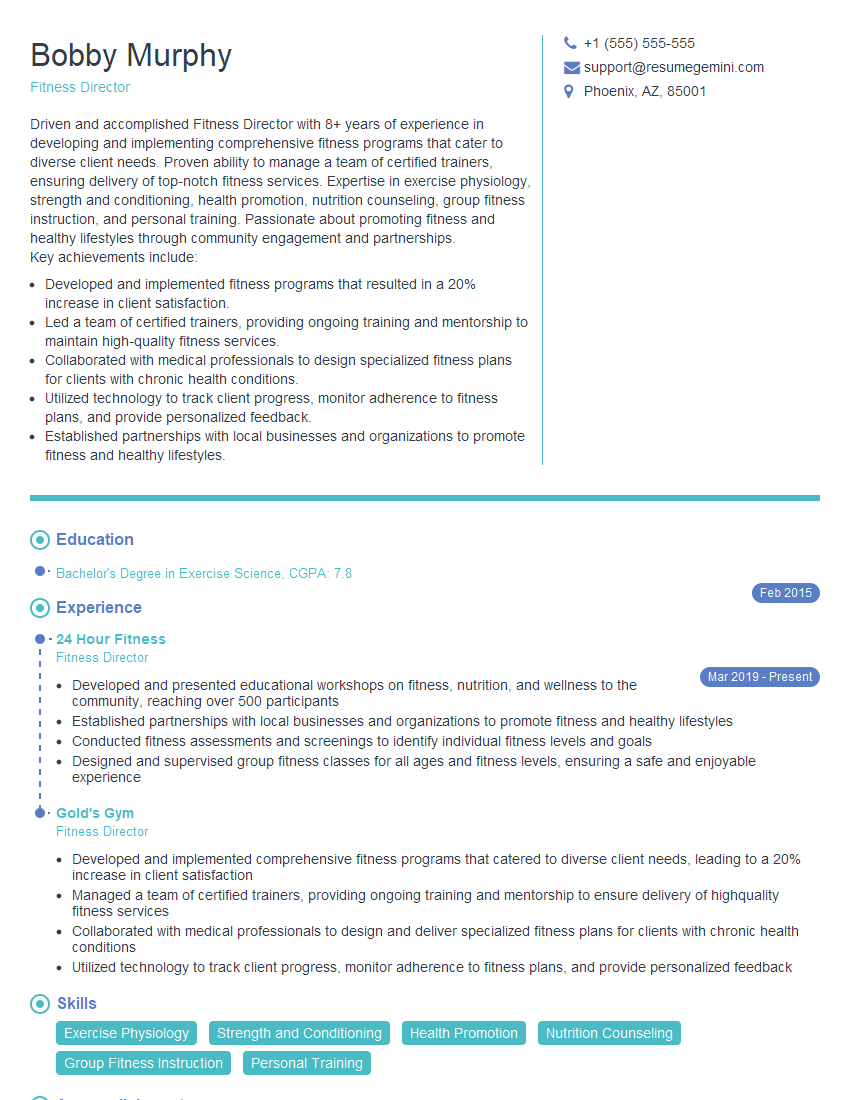
Fitness Director Resume Sample

Wellness Coach Resume Sample
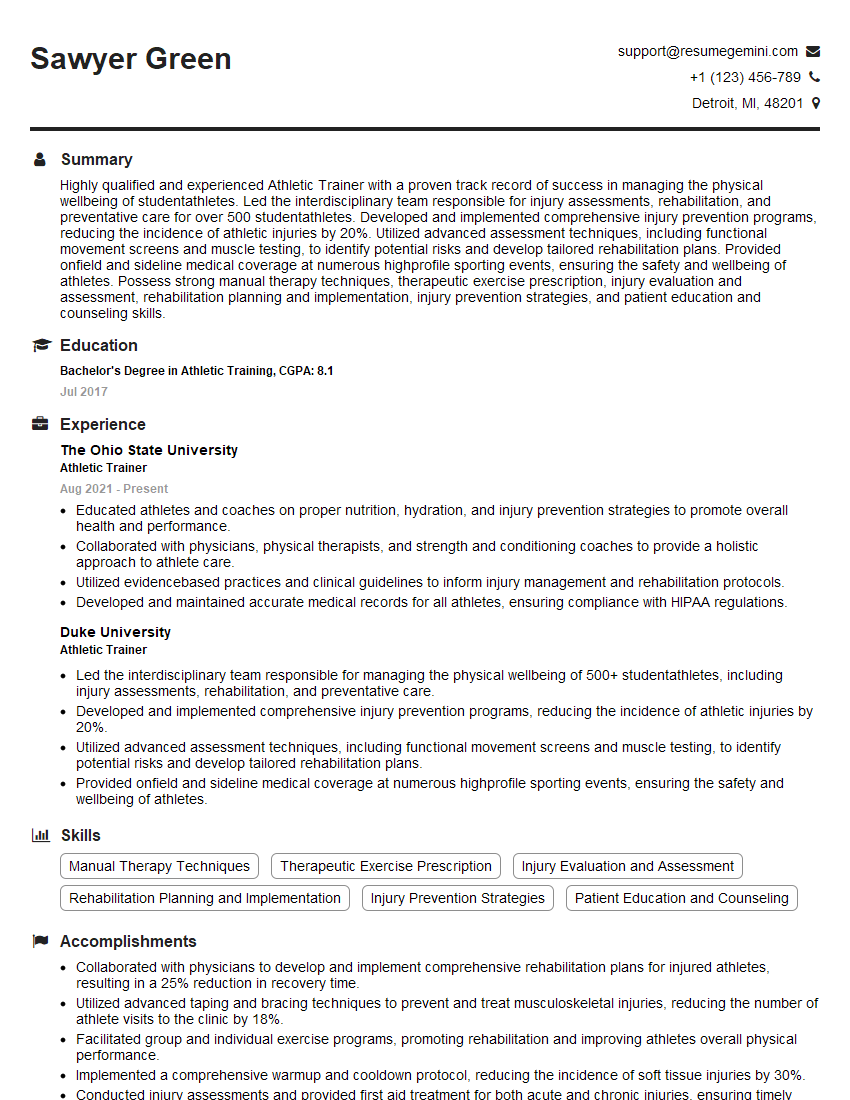
Athletic Trainer Resume Sample
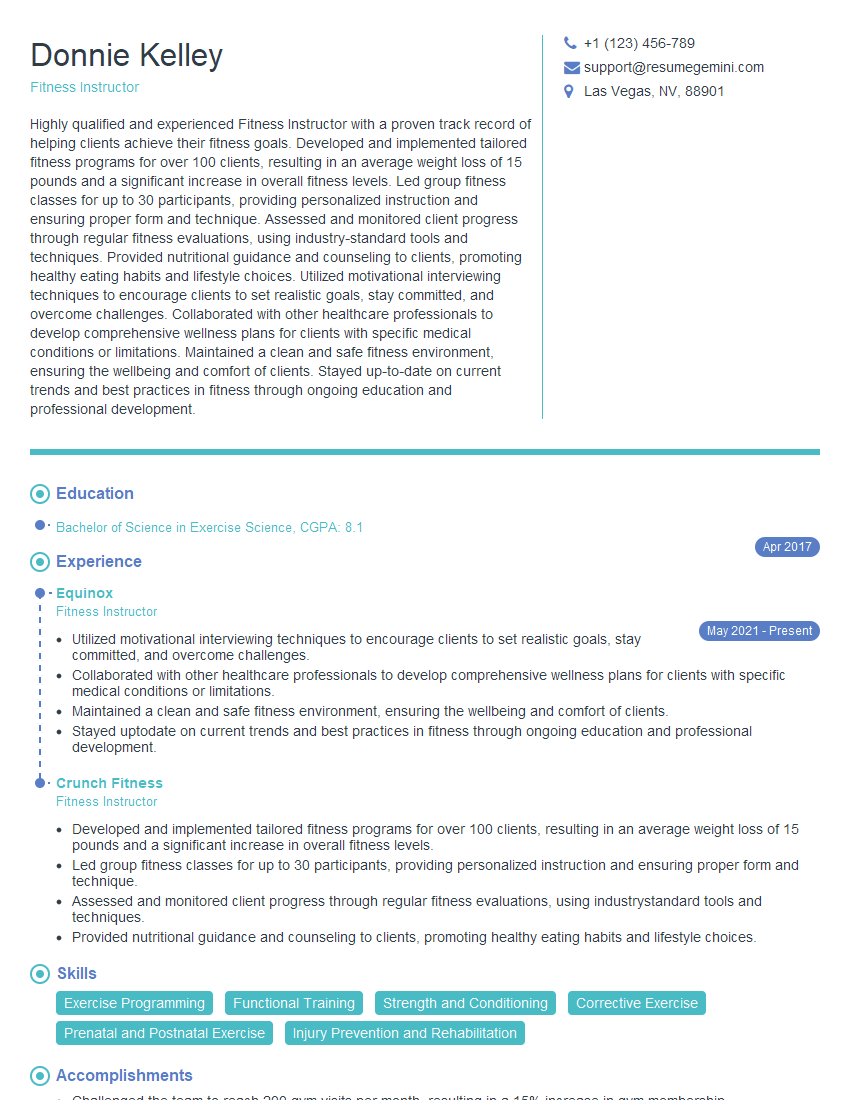
Fitness Instructor Resume Sample
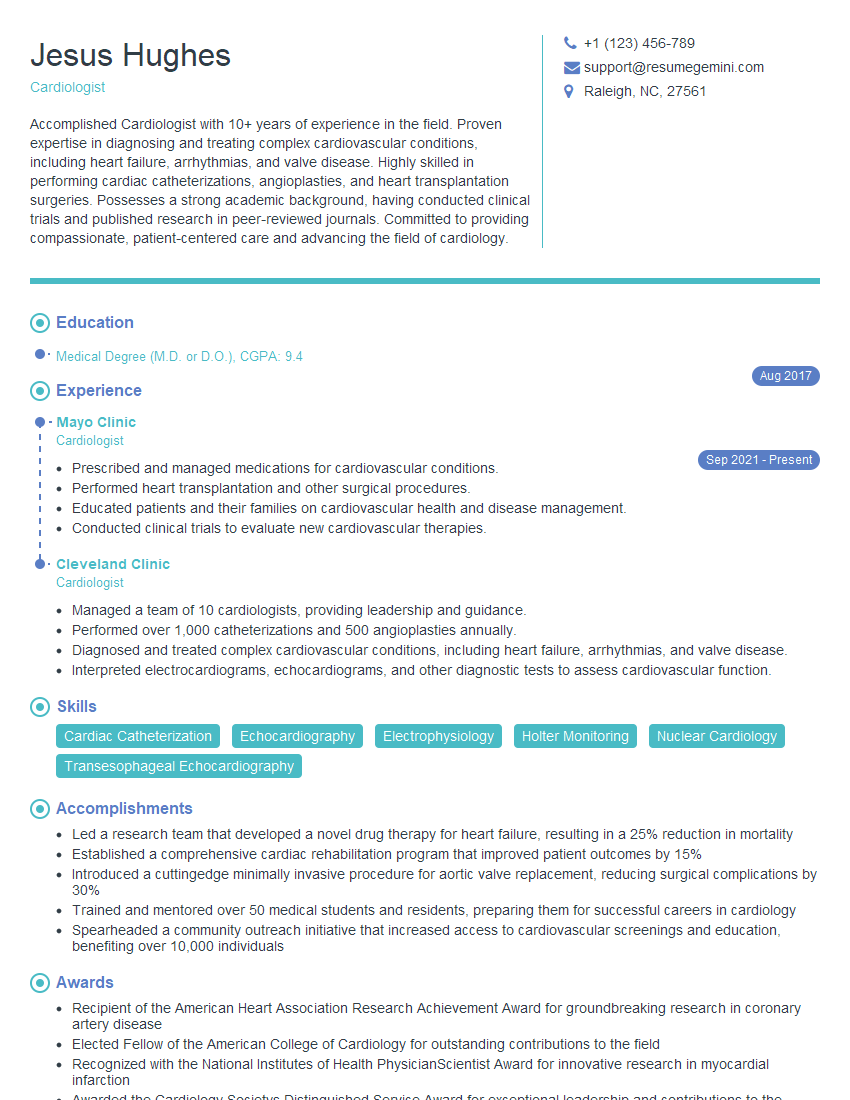
Cardiologist Resume Sample
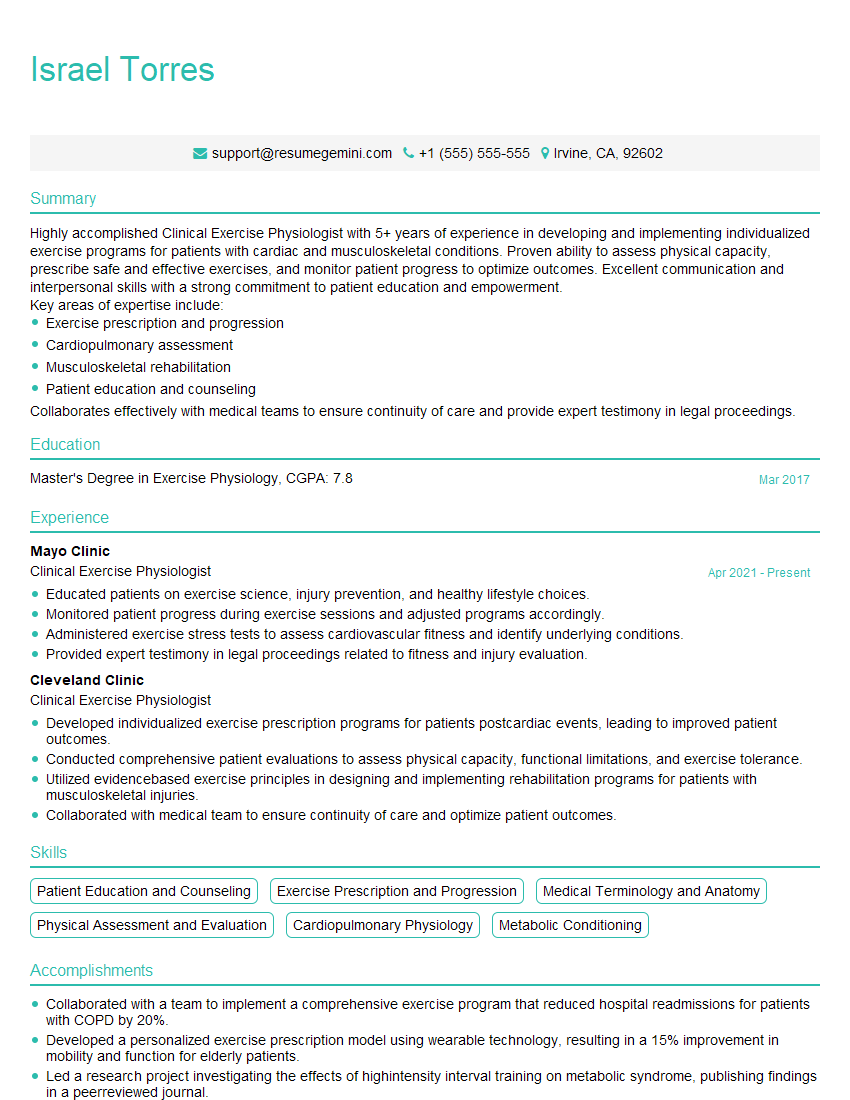
Clinical Exercise Physiologist Resume Sample
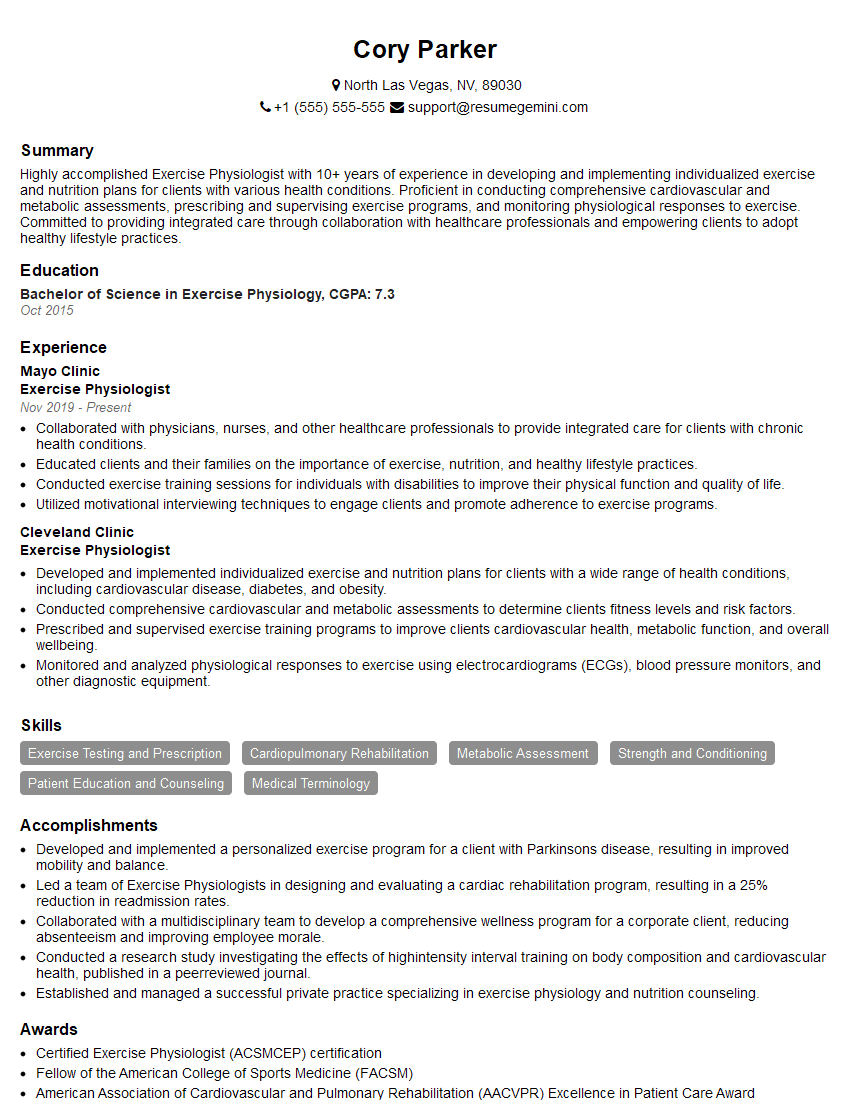
Exercise Physiologist Resume Sample
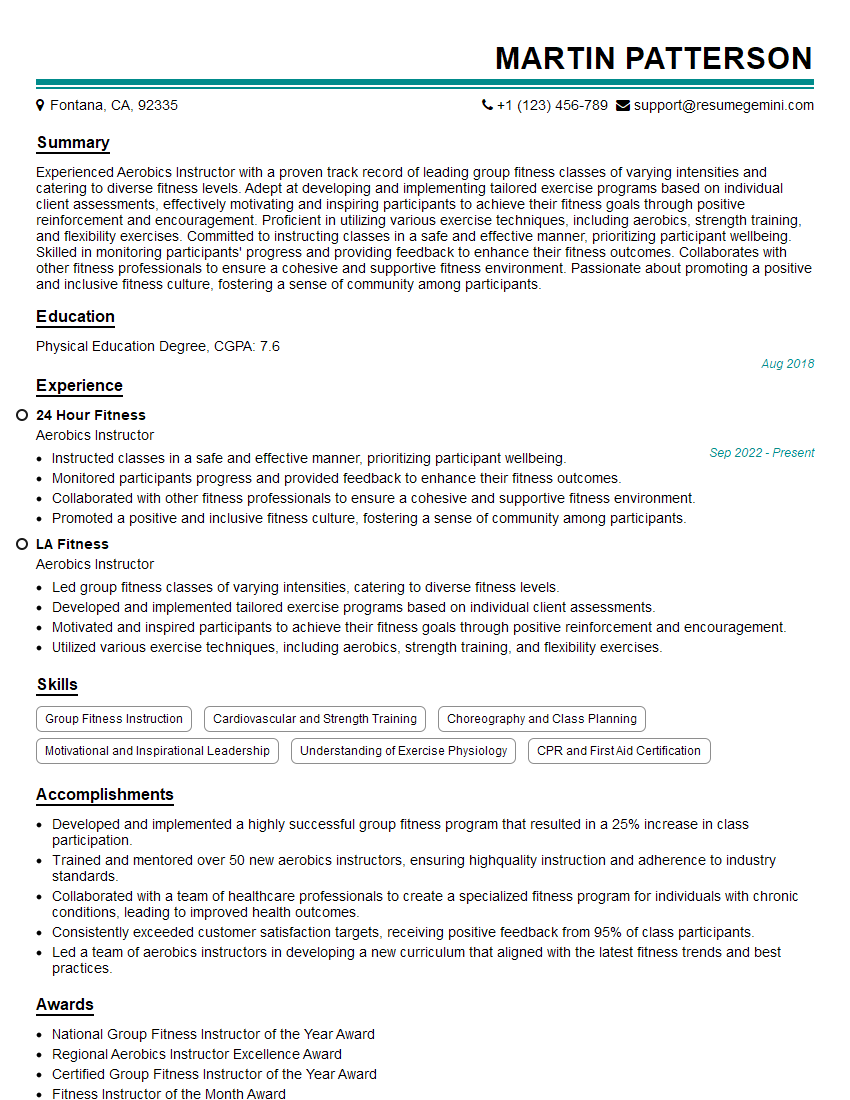
Aerobics Instructor Resume Sample
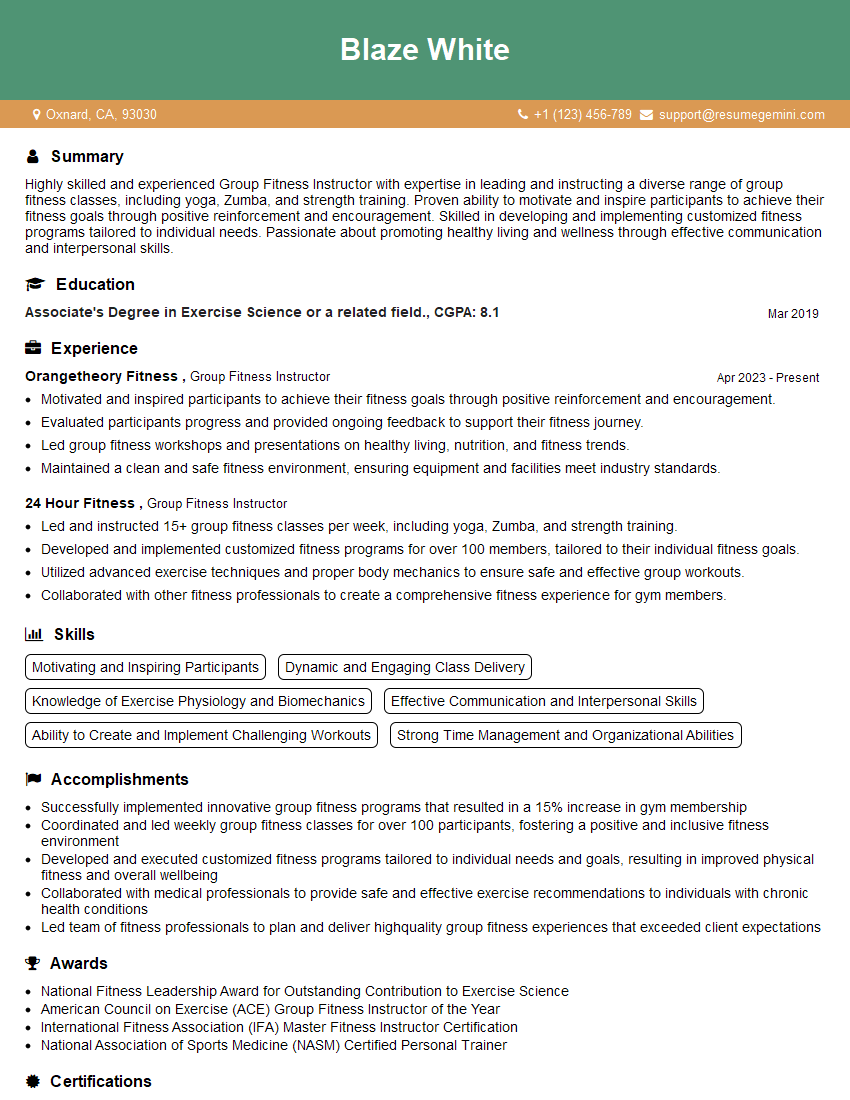
Group Fitness Instructor Resume Sample
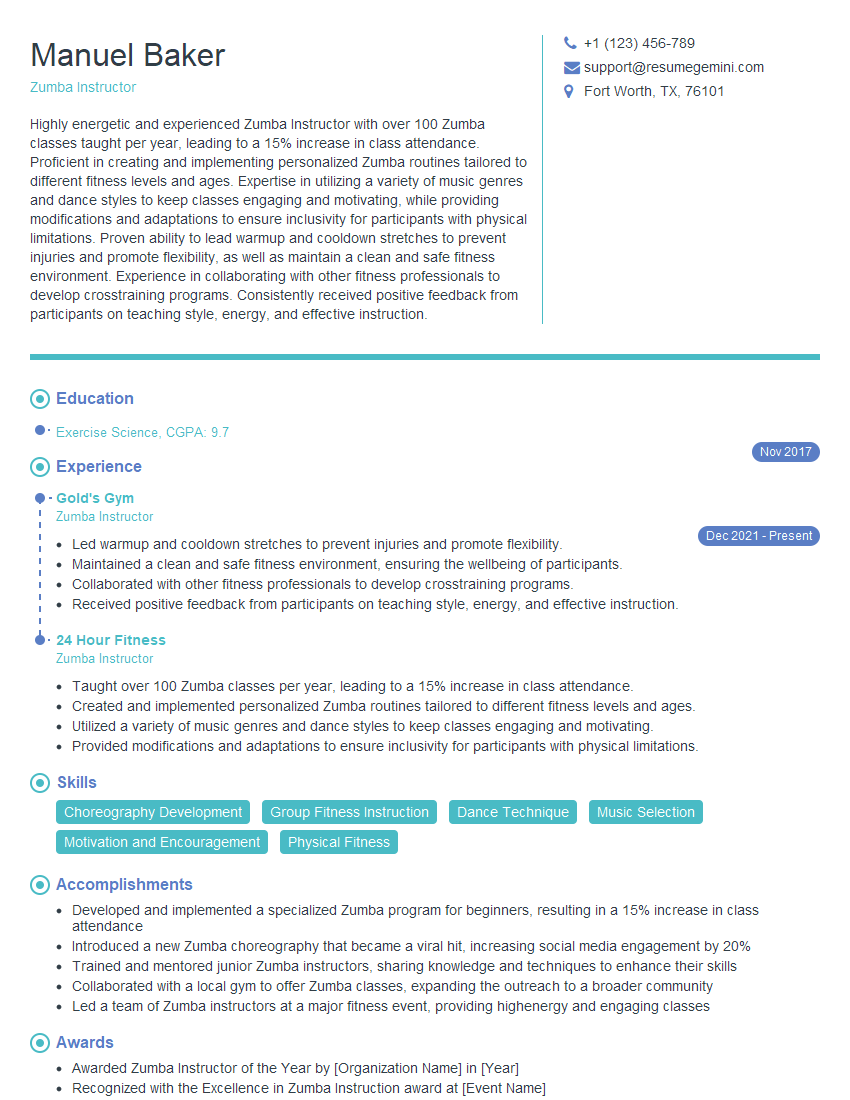
Zumba Instructor Resume Sample
Explore more articles
Users Rating of Our Blogs
Share Your Experience
We value your feedback! Please rate our content and share your thoughts (optional).
What Readers Say About Our Blog
Very informative content, great job.
good