Interviews are more than just a Q&A session—they’re a chance to prove your worth. This blog dives into essential Tactics interview questions and expert tips to help you align your answers with what hiring managers are looking for. Start preparing to shine!
Questions Asked in Tactics Interview
Q 1. Describe your experience developing and implementing tactical plans.
Developing and implementing tactical plans involves a structured approach encompassing several key stages. It starts with a clear understanding of the overarching strategic goals. From there, we break down these goals into smaller, achievable objectives. This often involves collaboration with various stakeholders to ensure alignment and buy-in. The next phase focuses on resource allocation – determining the personnel, budget, and technology required. The plan itself is then meticulously detailed, outlining specific actions, timelines, and responsibilities. Finally, implementation requires constant monitoring, adjustments based on feedback, and ultimately, evaluation against pre-defined success metrics.
For example, in a marketing campaign, the strategic goal might be to increase brand awareness. A tactical plan would then involve specific actions like social media campaigns, targeted advertising, and public relations initiatives, each with its own budget and timeline. Throughout the campaign, we’d continuously monitor its performance and adapt the plan as needed to maximize its effectiveness.
Q 2. Explain your process for identifying and prioritizing tactical objectives.
Identifying and prioritizing tactical objectives is crucial for success. My process begins with a thorough analysis of the strategic goals, considering factors like market trends, competitive landscape, and available resources. I then use a prioritization matrix, often employing methods like the MoSCoW method (Must have, Should have, Could have, Won’t have), to rank objectives based on their urgency, importance, and feasibility. This allows for a focused approach, ensuring that efforts are directed towards the most impactful objectives first. For instance, if a project requires multiple features to launch, we’d prioritize the “must-have” features to meet the core goals of the project while the “should have” and “could have” features can be implemented later if resources allow.
Q 3. How do you assess the feasibility of a tactical plan before implementation?
Assessing the feasibility of a tactical plan involves a comprehensive review of several critical factors. Firstly, we evaluate the availability of necessary resources, including personnel, budget, technology, and time. Secondly, we analyze potential risks and challenges, identifying potential roadblocks and developing mitigation strategies. Thirdly, we conduct a SWOT analysis (Strengths, Weaknesses, Opportunities, Threats) to identify internal and external factors that could influence the plan’s success or failure. Finally, we engage in simulations or pilot tests whenever possible to validate the plan’s effectiveness and identify any unforeseen issues before full-scale implementation. For instance, if the plan involves using new software, we’d conduct a pilot program with a small team before deploying it company-wide.
Q 4. Describe a time you had to adapt a tactical plan due to unforeseen circumstances.
During a product launch campaign, we encountered unforeseen negative reviews online regarding a minor software bug. Our initial tactical plan focused on a positive messaging campaign highlighting new features. However, the negative feedback threatened to derail the launch. We quickly adapted our plan, forming a dedicated crisis response team. We prioritized fixing the bug and issuing a transparent public apology acknowledging the issue and outlining the solution. The response demonstrated our commitment to customer satisfaction and, while initially disruptive, eventually mitigated the negative publicity.
Q 5. How do you measure the success of a tactical plan?
Measuring the success of a tactical plan involves a combination of quantitative and qualitative measures. Quantitative measures use numerical data to track progress, such as sales figures, website traffic, or customer acquisition costs. Qualitative measures assess subjective aspects, such as customer satisfaction surveys or feedback from stakeholders. Key Performance Indicators (KPIs) are crucial for monitoring progress and identifying areas needing improvement. It’s essential to define clear, measurable goals upfront to effectively track progress against the established benchmarks. For example, in a marketing campaign, we’d measure the success based on metrics such as conversion rates, click-through rates, and brand mentions.
Q 6. How do you manage competing priorities within a tactical framework?
Managing competing priorities within a tactical framework requires careful planning and prioritization. Utilizing a prioritization matrix, as mentioned earlier, helps to allocate resources effectively. Techniques like time management frameworks (e.g., Eisenhower Matrix – Urgent/Important) aid in distinguishing between immediate actions and long-term goals. Regular review meetings allow for adjustments based on the evolving situation and any new priorities that may arise. Open communication and collaboration among team members are essential for ensuring everyone is aware of the priorities and their roles in achieving them. A clear communication strategy helps avoid confusion and ensures that everyone is working toward the same objectives.
Q 7. Explain your understanding of risk assessment in tactical planning.
Risk assessment in tactical planning is paramount. It involves identifying potential threats, analyzing their likelihood and impact, and developing mitigation strategies. This often involves brainstorming sessions with the team, considering factors like technological failures, market fluctuations, and competitor actions. The process uses tools like risk registers to document potential risks, their probability of occurrence, and potential consequences. By proactively identifying and addressing these risks, we can minimize their potential impact on the overall success of the tactical plan. For example, a risk register might list the risk of a competitor launching a similar product and the mitigation strategy would be to accelerate our own product’s development or launch a pre-emptive marketing campaign.
Q 8. Describe your experience with contingency planning.
Contingency planning is the process of identifying potential risks and developing alternative courses of action to mitigate those risks. It’s about thinking ahead and preparing for what might go wrong, ensuring we can adapt and still achieve our objectives even when faced with unexpected challenges. I approach contingency planning systematically.
- Risk Identification: This involves brainstorming potential problems, using tools like SWOT analysis or risk registers. For example, in a military operation, this could include things like equipment failure, enemy ambushes, or unexpected weather conditions.
- Risk Assessment: Once identified, we evaluate the likelihood and impact of each risk. A high-likelihood, high-impact risk requires more detailed planning than a low-likelihood, low-impact one. This often involves assigning probabilities and potential consequences (e.g., mission delay, personnel casualties).
- Development of Contingencies: This is where we create alternative plans. For example, if equipment failure is a high-risk, we might plan for redundant equipment or have repair personnel on standby. If bad weather is anticipated, we develop alternative routes or timelines.
- Testing and Refinement: Contingency plans aren’t static. We regularly review and test them through simulations or tabletop exercises to identify weaknesses and make improvements.
In my previous role, we successfully mitigated a supply chain disruption using contingency plans that redirected resources and secured alternative suppliers. This prevented a significant project delay.
Q 9. How do you ensure effective communication and coordination within a tactical team?
Effective communication and coordination are the bedrock of any successful tactical team. I use a multi-pronged approach.
- Clear Communication Channels: Establishing clear, dedicated communication channels (e.g., radio frequencies, secure messaging apps) is crucial to avoid confusion. Everyone must know who to contact for what and how to reach them quickly.
- Standard Operating Procedures (SOPs): SOPs provide a framework for common tasks and emergencies. They ensure everyone understands their roles and responsibilities, even under pressure. For example, clear SOPs for emergency medical evacuation are paramount.
- Regular Briefings and Debriefs: Before, during, and after an operation, regular briefings and debriefs are essential. Briefings communicate the plan, assignments, and objectives. Debriefs allow for feedback, identifying what worked well and areas for improvement.
- Active Listening and Feedback: Encouraging two-way communication and actively listening to team members’ concerns and suggestions ensures everyone feels heard and valued. Constructive criticism and feedback are vital for ongoing improvements.
Think of it like a well-orchestrated symphony; each section plays its part, but the conductor ensures harmony and synchronization. I aim to be that conductor for my tactical team.
Q 10. How do you handle disagreements or conflicts within a tactical team?
Disagreements and conflicts are inevitable in any team, especially under pressure. My approach emphasizes respectful dialogue and collaborative problem-solving.
- Identify the Root Cause: The first step is to understand the source of the disagreement. Is it a misunderstanding, a difference in opinion, or a clash of personalities?
- Facilitate Open Discussion: Creating a safe space where team members can express their views openly and honestly is critical. This often involves active listening, asking clarifying questions, and paraphrasing to ensure understanding.
- Focus on Shared Goals: Remind everyone of the shared objective and how resolving the conflict contributes to the success of the mission. This helps refocus the discussion from personal differences to common goals.
- Mediation and Negotiation: If necessary, I mediate the discussion, helping the parties find common ground and negotiate a solution. This may involve compromise and finding mutually agreeable options.
- Documentation and Follow-up: Documenting the agreement and following up to ensure it’s implemented helps prevent future conflicts on the same issue.
For instance, in a past project, a disagreement arose over the best approach to a specific problem. By facilitating open discussion, we identified the root cause—different interpretations of available data. Collaboratively, we analyzed the data again, reached a consensus, and implemented a successful solution.
Q 11. Describe a time you had to make a difficult tactical decision under pressure.
During a search and rescue operation in a remote mountainous region, we faced a critical decision: whether to proceed with the planned route, which was becoming increasingly dangerous due to a sudden blizzard, or to seek shelter and delay the search. The victim’s survival chances were diminishing with each passing hour, but proceeding risked the safety of the rescue team.
Under immense pressure, I weighed the risks and benefits of each option. I consulted with my team, gathering input and assessing their expertise. We considered the victim’s condition, the severity of the weather, our available resources, and the potential consequences of both actions.
Ultimately, we decided to temporarily seek shelter, prioritizing team safety while developing a revised plan for the continuation of the search once the blizzard subsided. While the delay was difficult, it ensured the safety of the team, allowing us to resume the search with a higher likelihood of success and without compromising our capabilities.
This decision reinforced the importance of risk assessment and team collaboration, particularly in high-stakes situations. It highlighted that sometimes the bravest decision is not the most aggressive, but the most strategically sound.
Q 12. How do you stay informed about relevant tactical developments and best practices?
Staying informed about tactical developments and best practices is an ongoing process. I utilize several methods:
- Professional Development: I regularly attend conferences, workshops, and training sessions focused on tactical advancements, and operational techniques.
- Peer Networking: I actively engage with other professionals in my field, sharing knowledge and learning from their experiences. This involves attending professional gatherings, participating in online forums, and maintaining professional relationships.
- Publication Monitoring: I read professional journals, industry publications, and online resources to stay updated on the latest research and innovations in tactical methodologies and technology.
- Case Studies and After-Action Reviews: Studying case studies of past operations, including both successes and failures, provides invaluable insights. After-action reviews offer critical learning opportunities for continuous improvement.
For example, I recently attended a conference focused on advancements in drone technology and their application in search and rescue operations, gaining practical knowledge I’ve since integrated into our operational procedures.
Q 13. Explain your understanding of the relationship between tactics and strategy.
Tactics and strategy are intricately linked; strategy defines the ‘what’ and ‘why,’ while tactics define the ‘how.’
Strategy is the overall plan or approach to achieve a long-term goal. It’s the big picture—defining objectives, identifying resources, and considering the broader context of the situation. For example, a strategic goal might be to secure a particular geographical area.
Tactics are the specific actions and techniques used to implement the strategy. They’re the detailed steps and maneuvers taken to achieve the strategic objectives. In our example, tactics could include flanking maneuvers, coordinated attacks, or the use of specific weaponry to secure that geographical area.
Think of it like building a house: the strategy is the overall plan for the house—its size, layout, materials. The tactics are the specific actions involved in building it—laying the foundation, framing the walls, installing the plumbing. The strategy sets the direction, but the tactics are how you get there. Effective tactics are essential for the successful execution of any strategy.
Q 14. How do you leverage technology to enhance tactical effectiveness?
Technology plays a crucial role in enhancing tactical effectiveness. I leverage technology in several ways:
- Situational Awareness: Real-time data feeds, GIS mapping, and drone surveillance provide enhanced situational awareness. This allows for better decision-making, improved resource allocation, and reduced risks.
- Communication and Coordination: Secure communication systems, like encrypted messaging apps and satellite phones, ensure clear and timely communication across the team, even in remote or hostile environments.
- Data Analysis and Predictive Modeling: Data analytics tools can identify patterns and trends, leading to better predictions and more effective preemptive strategies. Predictive modeling can help anticipate potential threats and optimize resource allocation.
- Automation and Robotics: Automated systems can handle routine tasks, freeing up personnel to focus on higher-level decision-making. Robotics can be used in dangerous or hazardous environments, reducing risk to human personnel.
For example, in a recent operation, we used drone footage to accurately assess the terrain before deploying personnel. This allowed us to choose the most efficient route and minimize exposure to hazards. The use of real-time data significantly increased the speed and efficiency of the mission.
Q 15. Describe your experience with data analysis in the context of tactical decision-making.
Data analysis is crucial for effective tactical decision-making. It allows us to move beyond gut feelings and rely on evidence-based insights. My experience involves leveraging various analytical techniques to understand the battlefield (or the market, depending on the context) and inform our actions. This includes:
- Descriptive analytics: Summarizing past performance and identifying trends. For example, analyzing sales data to pinpoint which products are performing best and which are lagging.
- Diagnostic analytics: Uncovering the reasons behind observed trends. If sales are down, diagnostic analysis helps us understand *why*, perhaps by examining competitor actions, marketing campaign effectiveness, or changes in consumer behavior.
- Predictive analytics: Forecasting future outcomes based on past data and trends. This might involve projecting future sales based on seasonality or predicting customer churn based on engagement patterns.
- Prescriptive analytics: Recommending actions to optimize future outcomes. For example, based on predictive analysis, we might suggest adjusting pricing, shifting marketing focus, or reallocating resources to maximize profitability.
In a recent project, we used regression analysis to predict customer lifetime value, allowing us to prioritize high-value customers and tailor our marketing efforts accordingly. This led to a 15% increase in customer retention within six months.
Career Expert Tips:
- Ace those interviews! Prepare effectively by reviewing the Top 50 Most Common Interview Questions on ResumeGemini.
- Navigate your job search with confidence! Explore a wide range of Career Tips on ResumeGemini. Learn about common challenges and recommendations to overcome them.
- Craft the perfect resume! Master the Art of Resume Writing with ResumeGemini’s guide. Showcase your unique qualifications and achievements effectively.
- Don’t miss out on holiday savings! Build your dream resume with ResumeGemini’s ATS optimized templates.
Q 16. How do you use metrics to track progress and make adjustments to a tactical plan?
Metrics are the lifeblood of tactical planning. They provide objective measurements to track progress, identify deviations from the plan, and inform necessary adjustments. Think of them as the dashboard of your tactical vehicle, showing your speed, fuel level, and location. I typically use a combination of leading and lagging indicators:
- Leading indicators: These predict future performance. Examples include marketing campaign engagement rates, website traffic, or the completion rate of key tasks within a project. If these indicators show a decline, it signals potential problems *before* they impact lagging indicators.
- Lagging indicators: These reflect past performance. They are essential for evaluating overall success but are less useful for real-time adjustments. Examples include sales figures, customer satisfaction scores, or project completion dates.
Using a control chart or a dashboard to visualize these metrics allows for quick identification of trends and outliers. If a leading indicator starts dropping, we can proactively adjust our tactics, perhaps by reallocating resources or modifying our approach. For example, if website traffic from a social media campaign is low, we might adjust our targeting parameters or the content of the campaign.
Q 17. Explain your approach to resource allocation in tactical planning.
Resource allocation is the art of strategically distributing available assets (people, money, time, equipment, etc.) to achieve tactical objectives. My approach is data-driven and prioritizes efficiency and effectiveness. I typically use a combination of methods:
- Prioritization matrix: This helps rank tasks or projects based on urgency and importance. The Eisenhower Matrix (urgent/important) is a useful tool here.
- Cost-benefit analysis: Evaluating the potential return on investment (ROI) for each resource allocation decision. This ensures that resources are directed towards the most impactful activities.
- Scenario planning: Considering different potential outcomes and allocating resources accordingly. This builds resilience into the tactical plan.
For instance, in a marketing campaign, we might prioritize allocating the majority of our budget to the channels with the highest conversion rates, based on past performance data. We might also reserve a smaller portion for testing new channels, acknowledging the inherent risk but recognizing the potential for significant returns.
Q 18. Describe your experience working with cross-functional teams on tactical projects.
Successful tactical execution often requires collaboration across multiple functional areas. My experience involves fostering strong cross-functional relationships and building consensus around shared goals. I employ several strategies:
- Clear communication: Ensuring everyone understands the tactical plan, their roles, and responsibilities. Regular updates and open channels of communication are vital.
- Collaborative tools: Utilizing project management software (e.g., Asana, Trello) to track progress, share information, and foster teamwork.
- Conflict resolution: Addressing disagreements constructively and finding solutions that benefit the overall tactical objective. This might involve compromise or seeking mediation if necessary.
- Team building: Creating a positive and collaborative team environment. This fosters trust, improves morale, and increases productivity.
In a previous project involving the launch of a new product, I worked closely with marketing, sales, and product development teams to ensure a coordinated and successful launch. Open communication and regular meetings helped us overcome challenges and stay aligned throughout the entire process.
Q 19. How do you ensure that a tactical plan aligns with overall strategic goals?
Tactical plans must always support broader strategic goals. They are the actionable steps that bring the strategy to life. To ensure alignment, I follow these steps:
- Understanding the strategic goals: Clearly defining the organization’s overarching objectives and ensuring everyone on the team understands them.
- Establishing Key Performance Indicators (KPIs): Defining specific, measurable, achievable, relevant, and time-bound (SMART) KPIs that directly contribute to the strategic goals.
- Developing a cascading plan: Breaking down the strategic goals into smaller, more manageable tactical objectives. This ensures that every tactical action contributes to the bigger picture.
- Regular monitoring and review: Periodically assessing the progress of the tactical plan and making adjustments as needed to maintain alignment with the strategic goals.
For example, if the strategic goal is to increase market share by 10%, a tactical plan might involve launching a new marketing campaign, expanding into a new market segment, or improving customer service.
Q 20. How do you identify and mitigate potential risks associated with a tactical plan?
Risk management is an integral part of tactical planning. Identifying and mitigating potential risks helps to ensure the success of the plan. My approach involves a systematic process:
- Risk identification: Brainstorming potential obstacles and challenges that could hinder the plan’s success. This can involve using techniques like SWOT analysis or a risk register.
- Risk assessment: Evaluating the likelihood and impact of each identified risk. This involves assigning probabilities and severity levels to each risk.
- Risk mitigation: Developing strategies to reduce the likelihood or impact of the identified risks. This might involve developing contingency plans, allocating additional resources, or implementing risk control measures.
- Risk monitoring: Regularly tracking the identified risks and assessing their status. This allows for proactive adjustments to the plan as needed.
For example, if a key supplier might experience delays, we might develop a contingency plan by identifying alternative suppliers or building up a safety stock of materials. This proactive approach helps to prevent potential disruptions.
Q 21. Describe your understanding of different tactical approaches (e.g., offensive, defensive).
Tactical approaches can be broadly categorized as offensive or defensive, although many situations require a blend of both.
- Offensive tactics: These aim to seize the initiative and gain an advantage. They are proactive and aggressive, seeking to disrupt the opponent (or competitor) and achieve a decisive victory. Examples include a surprise marketing campaign launch, a rapid expansion into a new market, or a preemptive strike in a competitive environment. This approach requires resources and a degree of risk-taking.
- Defensive tactics: These aim to protect existing positions and assets. They are more reactive, focusing on maintaining the status quo and preventing losses. Examples include strengthening customer relationships, focusing on cost reduction, or improving operational efficiency. This approach often emphasizes stability and risk mitigation.
The choice of tactical approach depends heavily on the specific situation, the resources available, and the overall strategic goals. Often, a combination of offensive and defensive tactics is employed. For example, a company might launch a new product (offensive) while simultaneously strengthening its customer service to retain existing customers (defensive).
Q 22. How do you adapt your tactics depending on the specific context and environment?
Adapting tactics to context and environment is paramount. It’s not about having a rigid plan, but a flexible framework. Think of it like a chef adapting a recipe to the ingredients available – the core concept remains, but the execution changes.
- Environmental Factors: Terrain, weather, and visibility significantly impact tactics. A plan for a night operation in dense jungle will differ vastly from a daytime operation in an open desert.
- Opponent Capabilities: The enemy’s strength, weaponry, and tactics dictate our response. Facing a heavily armed, well-trained force requires different tactics than facing a lightly armed militia. We’d prioritize stealth and precision in the former, and overwhelming force in the latter.
- Available Resources: Personnel, equipment, and time constraints all influence tactical decisions. A small, under-equipped team will utilize ambush and hit-and-run tactics, whereas a larger, well-equipped force might employ a more direct approach.
- Political and Legal Considerations: Rules of engagement and collateral damage concerns shape our tactical choices. Civilian presence heavily influences the types of weapons and tactics employed.
For example, in a hostage situation, a rapid assault might be the initial plan. However, if intelligence suggests the hostages are in immediate danger, the plan might shift to a less risky negotiation or a more carefully coordinated extraction.
Q 23. Describe your process for evaluating the effectiveness of different tactical options.
Evaluating tactical options involves a multi-faceted process that relies on both quantitative and qualitative data.
- Pre-Mission Assessment: We start with a thorough analysis of the mission objectives, the environment, and the enemy’s capabilities. This helps to develop a range of potential tactical options.
- Modeling and Simulation: Where possible, we use simulations or war games to test different scenarios and evaluate the potential success or failure of each tactical option. This allows us to identify potential weaknesses and adjust the plans before implementation.
- Key Performance Indicators (KPIs): We establish specific KPIs to measure the effectiveness of the chosen tactics. These could include mission success rate, casualties, time taken, and resources consumed.
- Post-Mission Analysis: After the mission, we conduct a thorough review of what worked and what didn’t, comparing actual results against predicted outcomes. This helps to refine our understanding of the effectiveness of different approaches.
For example, if we’re evaluating different approaches to a building clearance, KPIs might include time to clear each floor, number of casualties among the team, and the number of enemy casualties. Post-mission analysis would include debriefs and reviews of video and other data collected during the operation.
Q 24. Explain your experience in developing and using tactical checklists or templates.
Tactical checklists and templates are essential tools for maintaining consistency and minimizing errors in execution. They act as a framework ensuring critical steps aren’t overlooked under pressure.
- Checklist Development: We create checklists based on best practices, lessons learned from previous operations, and specific mission requirements. They cover everything from pre-mission preparations (equipment checks, communication setup) to in-mission procedures (movement techniques, emergency protocols) and post-mission actions (reporting, debriefing).
- Template Customization: Templates are crucial for adaptable checklists. A basic template can be adjusted for various scenarios, adding or removing items as needed. For example, a building-clearing template can be customized for a specific building layout.
- Training and Implementation: Effective use of checklists relies heavily on thorough team training. We conduct regular drills and simulations to ensure everyone is familiar with the checklists and their importance.
For instance, a bomb disposal team would use a highly detailed checklist, covering safety protocols, equipment checks, and precise procedures for neutralizing the explosive device. Any deviation from this checklist could have deadly consequences.
Q 25. How do you handle unexpected challenges or obstacles during the implementation of a tactical plan?
Handling unexpected challenges requires adaptability, quick thinking, and decisive action. We prepare for contingencies, but reality often throws curveballs.
- Contingency Planning: We develop multiple contingency plans to address foreseeable challenges. These plans address various potential problems, such as equipment failure, unexpected enemy resistance, or changes in the environment.
- Risk Assessment: A continuous risk assessment allows us to identify emerging threats and adjust tactics accordingly. This is an ongoing process throughout the operation.
- Communication and Coordination: Clear communication within the team is critical for effective problem-solving. We maintain open lines of communication and quickly disseminate information about changes in the situation.
- Decision-Making Under Pressure: Team leaders need to make quick, informed decisions under stress, often with incomplete information. Training and experience are vital for this.
Imagine an ambush: The initial plan goes out the window. The team must immediately adapt – seeking cover, returning fire, and potentially calling for reinforcements or medical evacuation.
Q 26. How do you ensure that all members of a team understand and buy into a tactical plan?
Ensuring team buy-in is crucial for effective tactical execution. A plan isn’t just a document; it’s a shared understanding and commitment.
- Clear Communication: We explain the rationale behind the plan, emphasizing the objectives and the importance of each individual’s role. This builds understanding and creates a sense of purpose.
- Collaboration and Participation: We involve team members in the planning process whenever possible, soliciting their input and addressing their concerns. This fosters ownership and commitment.
- Training and Rehearsal: Thorough training and rehearsals build confidence and familiarity with the plan. This allows the team to practice their roles and address any uncertainties.
- Leadership and Motivation: Strong leadership is essential for building trust and motivating the team to execute the plan effectively. Leading by example fosters confidence and trust.
For instance, before a complex raid, a detailed briefing session that allows for Q&A, showcasing the ‘why’ behind every move, is essential for team buy-in.
Q 27. Describe your experience with post-action reviews and lessons learned in the context of tactical operations.
Post-action reviews (PARs) are critical for continuous improvement. They are not about assigning blame, but about identifying areas for improvement.
- Data Collection: We gather data from various sources: after-action reports, debriefings, video recordings, and intelligence reports.
- Structured Analysis: We use a structured approach to analyze the data, focusing on specific aspects of the operation, such as planning, execution, communication, and support.
- Lessons Learned: We identify key lessons learned and document them for future reference. These lessons can range from minor improvements to fundamental changes in tactics or procedures.
- Implementation of Improvements: We incorporate the lessons learned into future training, planning, and operations to enhance effectiveness.
For example, a PAR following a failed operation might reveal communication breakdowns. This could lead to improvements in communication systems or training in crisis communication protocols.
Q 28. How do you incorporate feedback to improve future tactical planning and execution?
Feedback is the lifeblood of improvement. We actively seek and incorporate feedback from various sources to refine our tactics.
- Feedback Channels: We establish multiple feedback channels, including formal after-action reviews, informal debriefings, and anonymous feedback mechanisms.
- Data Analysis: We analyze feedback data to identify trends and patterns. This helps to pinpoint areas needing improvement.
- Iterative Process: We treat tactical planning as an iterative process, continually refining our approaches based on feedback and experience.
- Documentation and Sharing: Lessons learned and improvements are documented and shared throughout the organization to improve collective understanding and capability.
For instance, if we receive feedback that a particular tactic is too risky, we can modify it, perhaps incorporating alternative approaches, enhancing safety protocols, or selecting more appropriate equipment.
Key Topics to Learn for Tactics Interview
- Strategic Planning & Execution: Understanding the process of developing and implementing tactical plans, including goal setting, resource allocation, and risk mitigation.
- Competitive Analysis: Analyzing competitor strategies, identifying strengths and weaknesses, and leveraging this information to inform your own tactical decisions. Practical application: Developing a competitive response plan to a market shift.
- Market Research & Analysis: Interpreting market data to identify opportunities and threats, and using this information to refine tactical approaches. Consider different market research methodologies and their applications.
- Problem-Solving & Decision-Making under Pressure: Demonstrating the ability to analyze complex situations, identify solutions, and make informed decisions in a timely manner. Practice case studies and simulations.
- Communication & Collaboration: Effectively communicating tactical plans to stakeholders and collaborating with cross-functional teams to ensure successful implementation. Consider examples of collaborative problem-solving.
- Adaptability & Innovation: Demonstrating flexibility and creativity in adapting tactical plans to changing circumstances and developing innovative solutions. Explore examples of adapting to unexpected challenges.
- Metrics & Measurement: Defining key performance indicators (KPIs) to track the success of tactical initiatives and using data to inform future planning. Consider various metrics used to measure the success of different tactical strategies.
Next Steps
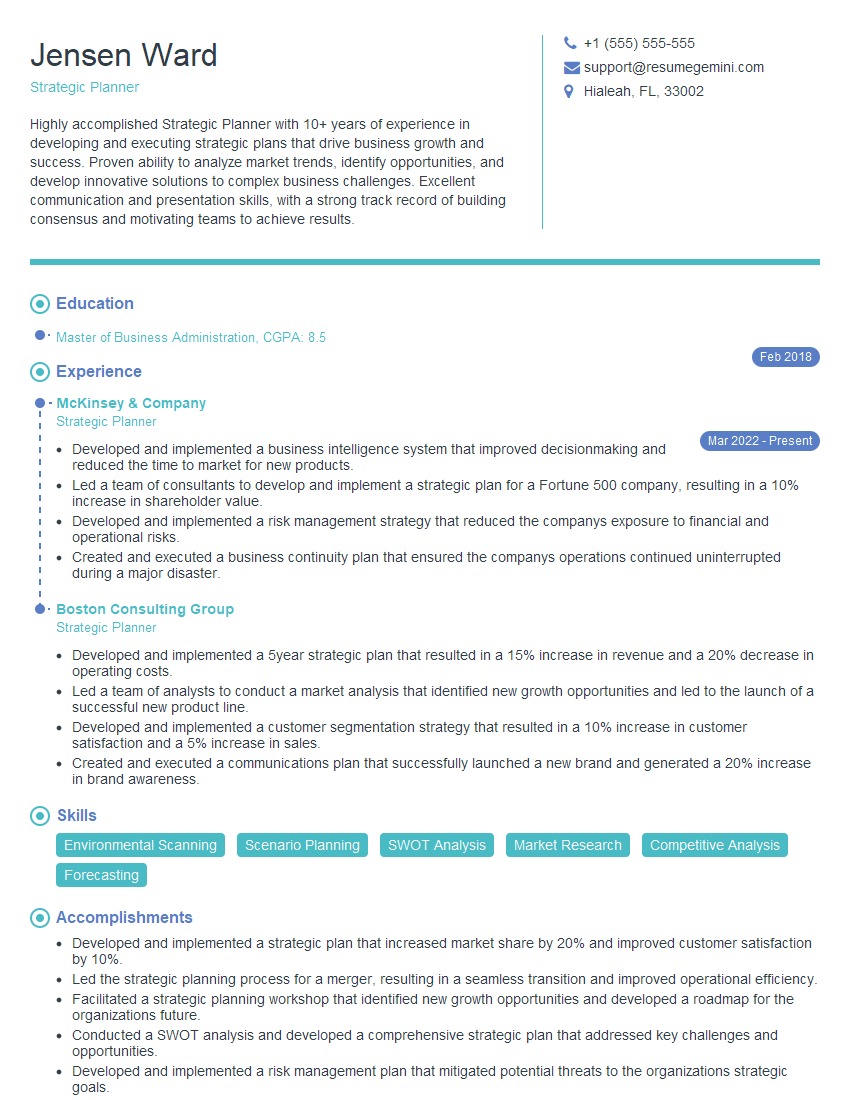
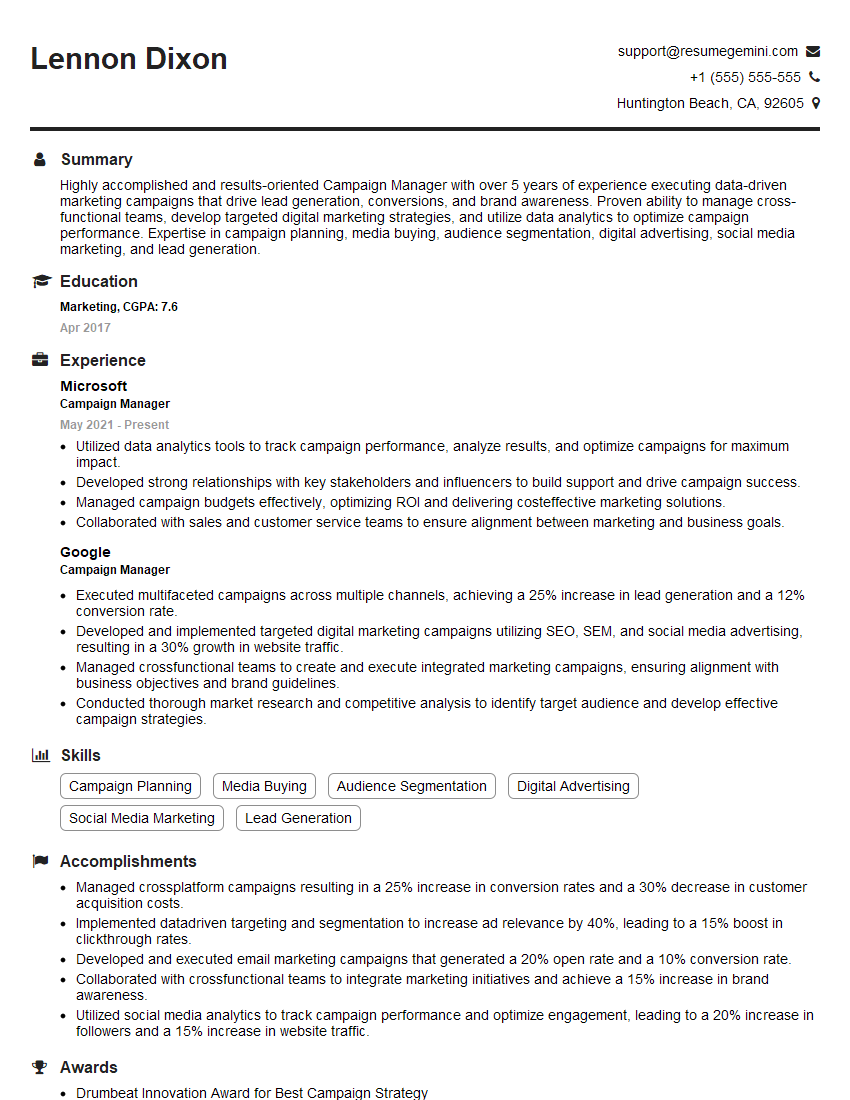
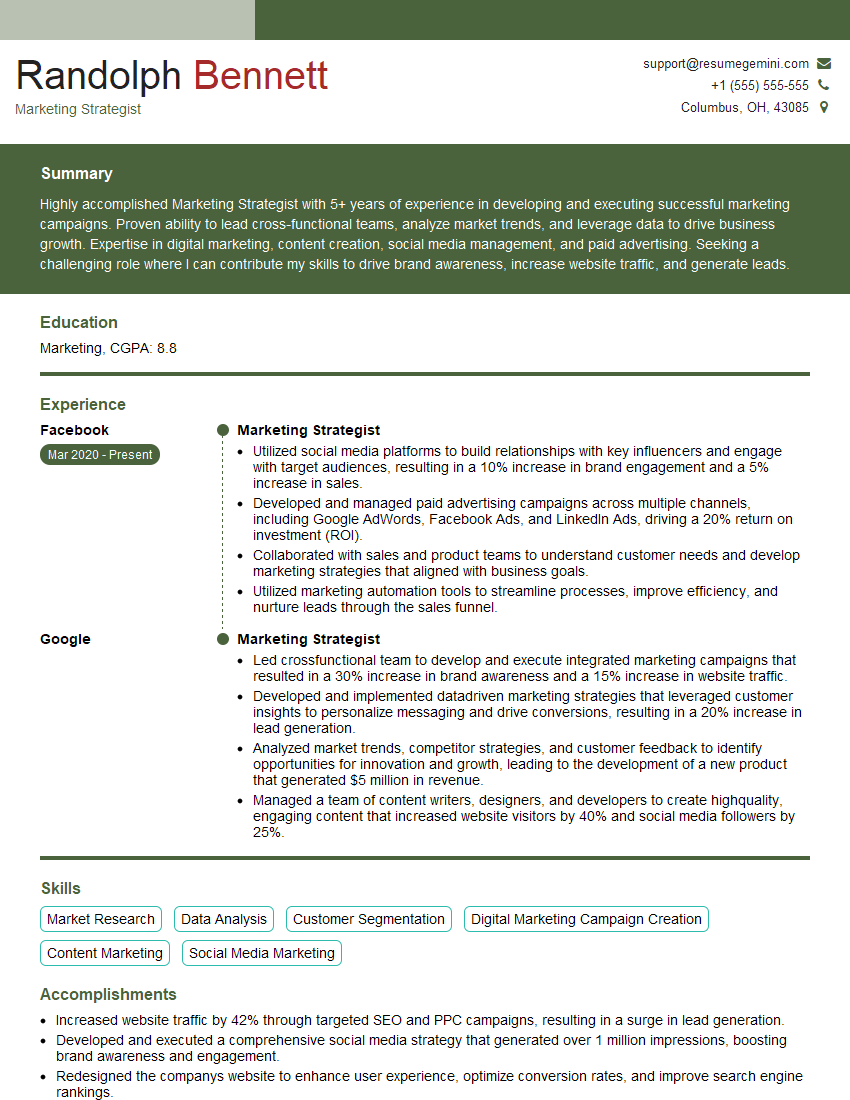
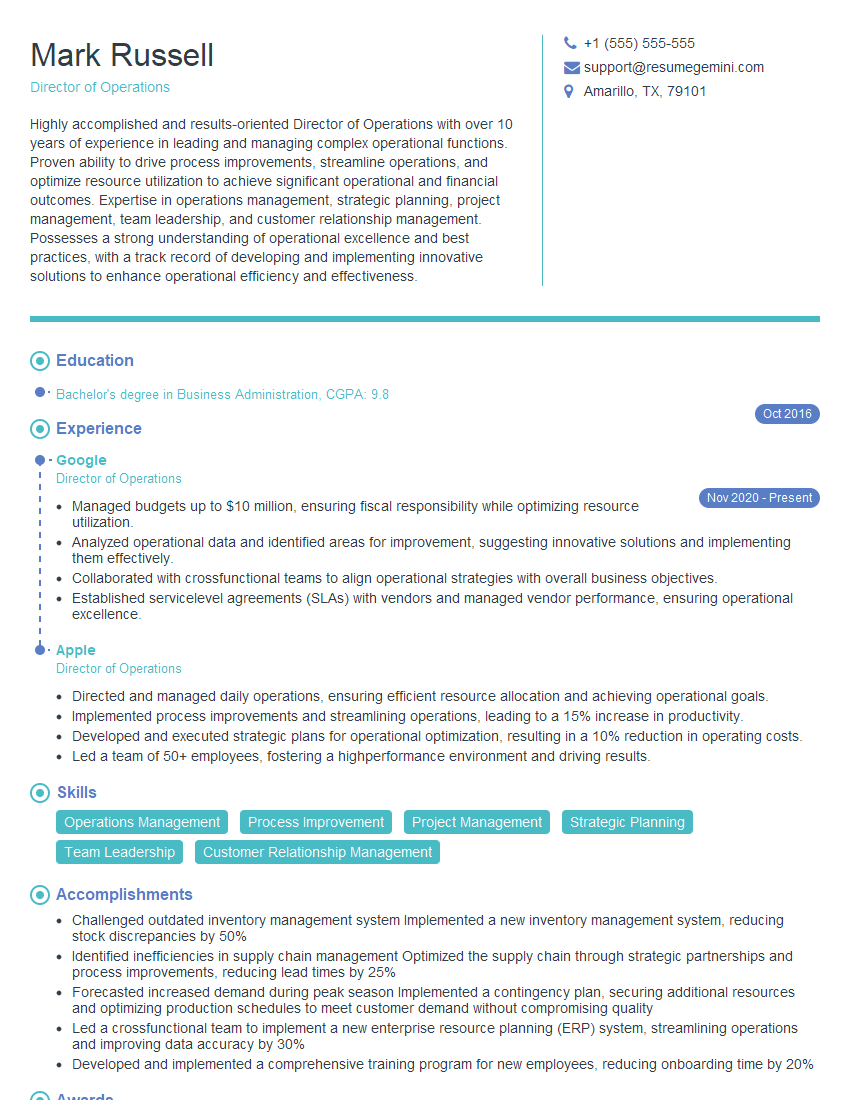
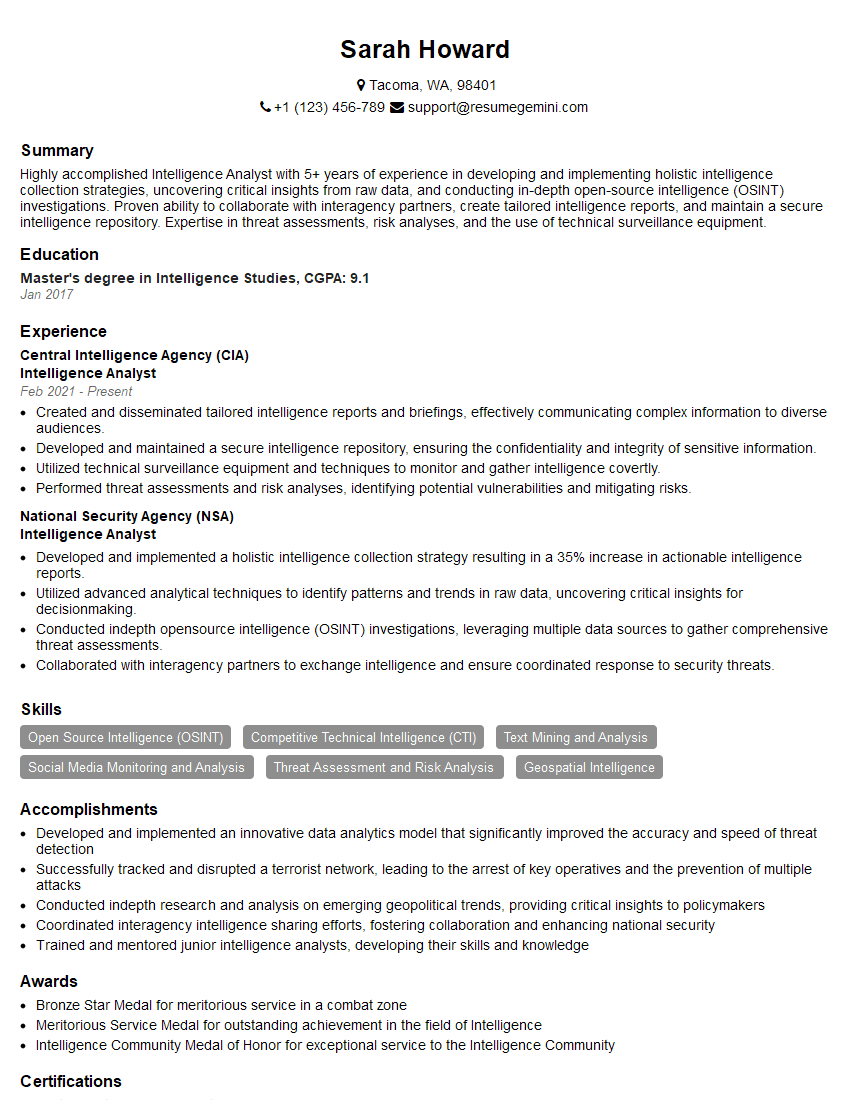
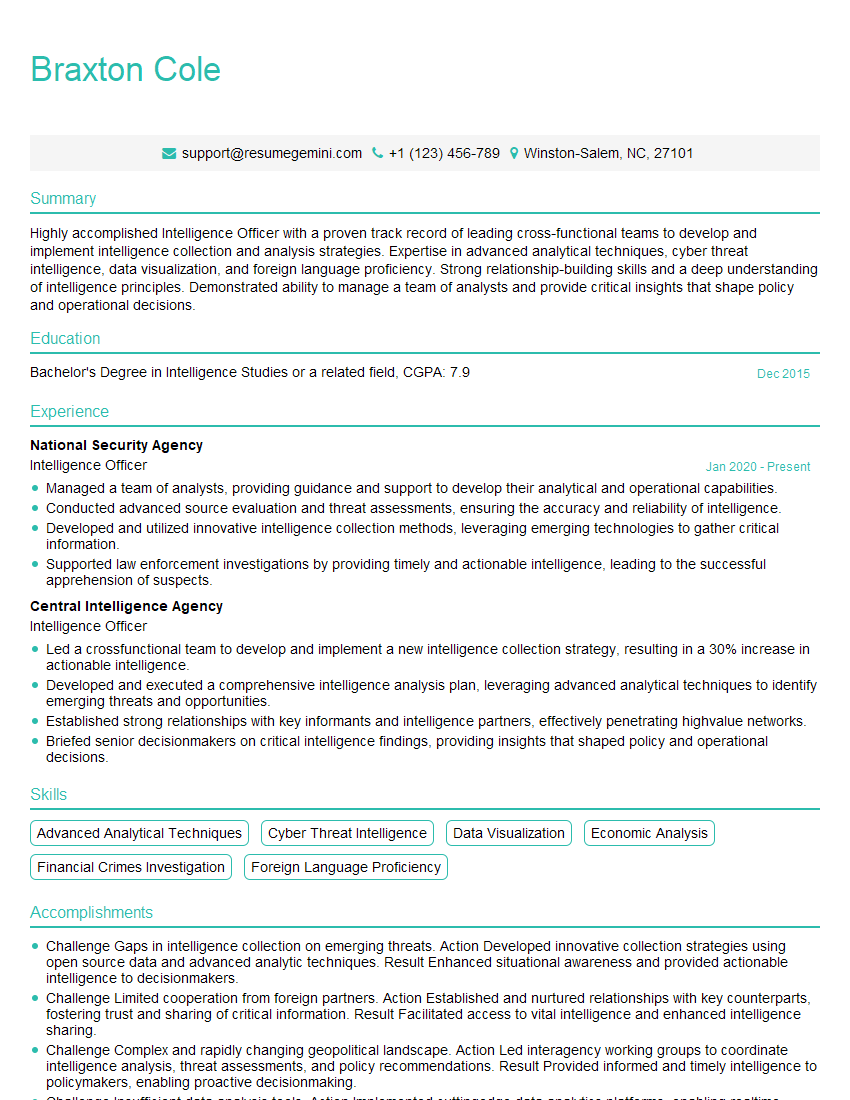
Mastering Tactics is crucial for career advancement, opening doors to leadership roles and higher earning potential. A strong understanding of these concepts will significantly improve your interview performance and overall job prospects. To maximize your chances, focus on creating an ATS-friendly resume that highlights your relevant skills and experience. ResumeGemini is a trusted resource that can help you build a professional and impactful resume. We provide examples of resumes tailored to Tactics roles to help you get started.


Explore more articles
Users Rating of Our Blogs
Share Your Experience
We value your feedback! Please rate our content and share your thoughts (optional).
What Readers Say About Our Blog
Very informative content, great job.
good