The right preparation can turn an interview into an opportunity to showcase your expertise. This guide to Avionics Maintenance interview questions is your ultimate resource, providing key insights and tips to help you ace your responses and stand out as a top candidate.
Questions Asked in Avionics Maintenance Interview
Q 1. Explain the principles of troubleshooting avionics systems.
Troubleshooting avionics systems is a systematic process that involves identifying, isolating, and correcting malfunctions. It’s like being a detective, following clues to find the culprit causing the aircraft’s systems to misbehave. We use a combination of logical deduction, technical knowledge, and specialized test equipment. The process typically follows these steps:
- Symptom Identification: Precisely define the problem. Is it a complete system failure, intermittent fault, or performance degradation?
- Data Collection: Gather information from various sources – pilot reports, maintenance logs, system displays, and built-in test equipment (BITE) messages.
- Hypothesis Generation: Develop potential causes based on the collected data and knowledge of the system’s operation. This might involve considering power supply issues, faulty components, wiring problems, or software glitches.
- Verification/Falsification: Test each hypothesis systematically using appropriate test equipment and procedures. Rule out possibilities until the root cause is identified.
- Correction: Once the problem is identified, the faulty component is repaired or replaced. If it’s a software issue, appropriate updates or reprogramming are carried out.
- Verification: After repair, the system is thoroughly tested to confirm that the issue is resolved and that no new problems have been introduced.
- Documentation: All findings, troubleshooting steps, and corrective actions are meticulously documented in the aircraft’s maintenance log.
For example, if a transponder malfunctions, I might first check the power supply, then the antenna, and then internal components, using a multimeter and specialized test equipment to verify functionality at each stage.
Q 2. Describe your experience with different avionics test equipment.
My experience encompasses a wide range of avionics test equipment, from basic multimeters and oscilloscopes to sophisticated specialized testers. I’m proficient in using:
- Multimeters: For checking voltage, current, and resistance in various circuits.
- Oscilloscopes: To analyze waveforms and identify signal anomalies.
- Signal Generators: For injecting signals into systems to test their response.
- Aircraft Specific Test Sets: These are purpose-built units for testing specific avionics components like transponders, radios, and navigation systems. For example, I’ve extensively used the [Manufacturer Name] [Test Set Model Number] for testing [Specific Avionics System] on [Aircraft Type] aircraft.
- Integrated Modular Avionics (IMA) Test Equipment: I have experience with sophisticated equipment designed for modern, integrated avionics systems. These systems require more advanced diagnostic tools and procedures.
My proficiency extends to understanding the limitations of each piece of equipment and applying them effectively in different troubleshooting scenarios. I always ensure the equipment is calibrated and functioning correctly before using it to avoid introducing errors into the diagnostic process.
Q 3. How familiar are you with FAA regulations regarding avionics maintenance?
I have a thorough understanding of FAA regulations related to avionics maintenance, particularly Part 43, which outlines the rules for maintenance, preventive maintenance, and alterations. I’m familiar with the requirements for maintaining records, certifications, and the appropriate use of approved data and procedures. This includes:
- Part 43 Appendix A: This outlines the requirements for maintenance, preventive maintenance, and alterations.
- Airworthiness Directives (ADs): I understand the process of complying with ADs and how they impact avionics maintenance.
- Maintenance Records: I’m highly proficient in accurately and completely documenting all maintenance actions performed, ensuring compliance with traceability and record-keeping requirements.
- FAA Form 337: I’m familiar with the correct completion and submission of this form for major repairs or alterations.
My knowledge ensures all maintenance actions are performed in compliance with FAA regulations, ensuring the safety and airworthiness of the aircraft.
Q 4. What are the common causes of avionics system failures?
Common causes of avionics system failures are diverse but can often be categorized into these key areas:
- Component Failure: This is perhaps the most prevalent cause, ranging from simple things like a loose connection or a failed capacitor to more complex issues like a malfunctioning integrated circuit.
- Environmental Factors: Extreme temperatures, humidity, vibration, and shock can all affect the reliability of avionics components, leading to failures or intermittent malfunctions. This is particularly relevant in the demanding conditions of flight.
- Power Supply Problems: Interruptions, surges, or voltage fluctuations in the aircraft’s electrical system can damage sensitive avionics components.
- Wiring Issues: Damaged, corroded, or improperly connected wiring can cause intermittent or complete system failures. This is a significant concern, requiring careful inspection and repair.
- Software Glitches: In modern aircraft with highly sophisticated avionics, software errors can lead to unpredictable system behavior.
- Electromagnetic Interference (EMI): External sources of electromagnetic radiation can interfere with the proper functioning of avionics systems.
Understanding these common causes allows for a more targeted and efficient troubleshooting approach.
Q 5. Explain your experience with aircraft wiring diagrams and schematics.
I possess extensive experience interpreting and utilizing aircraft wiring diagrams and schematics. These documents are essential for understanding the complex electrical systems within an aircraft. I use them to:
- Trace Circuits: Identify the path of a signal or power through the system.
- Locate Components: Pinpoint the location of specific components within the aircraft.
- Identify Connectors and Wiring Harnesses: Determine the correct connections between different components.
- Troubleshoot Faults: Use the diagrams to isolate faults based on measured signals or power levels.
I’m proficient in reading both simplified and highly detailed schematics, including those for various aircraft types and avionics systems. For example, recently, I used the wiring diagram of a [Aircraft Type] to identify the location of a faulty wire causing intermittent communication problems in the aircraft’s communication system. Understanding these diagrams is crucial for effective and safe avionics maintenance.
Q 6. Describe your experience with troubleshooting GPS navigation systems.
My experience in troubleshooting GPS navigation systems involves a systematic approach, similar to the general troubleshooting principles. The troubleshooting process often includes:
- Checking GPS Signal Acquisition: Ensuring the system is receiving a sufficient number of satellites and the signal quality is adequate.
- Antenna Integrity: Examining the GPS antenna for physical damage, correct installation, and clear line-of-sight to the sky.
- Power Supply Check: Verifying proper power supply voltage and current to the GPS receiver.
- Internal Component Checks: Using specialized test equipment to check the functionality of internal components within the GPS receiver, if necessary.
- Software/Firmware Verification: Checking for software or firmware updates and ensuring the GPS system is running the latest version.
- Data Link Check: Checking for proper communication between the GPS receiver and other aircraft systems that rely on its data, if applicable.
I’ve successfully resolved numerous issues in GPS systems, ranging from simple antenna problems to more complex receiver failures. A recent example involved a GPS system showing an inaccurate position. After carefully investigating, I discovered a loose connection in the antenna cable.
Q 7. How do you ensure compliance with maintenance logs and documentation?
Ensuring compliance with maintenance logs and documentation is paramount in avionics maintenance. It’s not just about following regulations; it’s about maintaining a clear, accurate, and auditable record of all work performed. This involves:
- Accurate Record Keeping: Meticulously documenting every step of the maintenance process, including date, time, work performed, parts used (with part numbers and serial numbers), and the results of all tests.
- Use of Approved Forms: Using the appropriate forms and software for logging maintenance activities, following company and regulatory requirements.
- Clear and Concise Language: Using clear, concise language that avoids ambiguity and ensures that others can easily understand the entries.
- Digital Record Management: Many modern systems utilize digital maintenance tracking systems which provide enhanced traceability and searchability.
- Regular Audits: Participating in regular audits to ensure the accuracy and completeness of maintenance records and to identify any potential areas for improvement.
Maintaining accurate logs is crucial for aircraft safety, regulatory compliance, and efficient maintenance management. It’s essential for anyone involved in aircraft operation or maintenance to have access to accurate, up-to-date information about the aircraft’s history.
Q 8. Explain your experience with various types of avionics components.
My experience encompasses a wide range of avionics components, from basic instruments like altimeters and airspeed indicators to sophisticated systems such as integrated flight management systems (FMS), communication and navigation radios (VOR/ILS/GPS), and weather radar. I’ve worked extensively with various manufacturers’ equipment, including Honeywell, Collins Aerospace, and Rockwell Collins, gaining familiarity with their unique functionalities and troubleshooting procedures. For instance, I’ve handled the maintenance and repair of Air Data Computers (ADCs), which are crucial for accurate flight data, requiring meticulous calibration and testing. Similarly, I’ve worked with inertial navigation systems (INS) where precise alignment and error correction are paramount to safe flight.
- ADCs: I’ve diagnosed and repaired issues relating to faulty sensors, inaccurate data outputs, and communication failures within the ADC system. This involved thorough testing using specialized equipment and replacing faulty components as needed.
- GPS Receivers: My experience includes diagnosing and resolving issues like antenna problems, weak satellite signals, and software glitches, often requiring firmware updates and careful system configuration.
- Autopilots: I’m proficient in maintaining and troubleshooting autopilots, involving careful inspection of servos, actuators, and control algorithms. This often includes simulator testing to ensure proper functionality.
Q 9. How do you diagnose and resolve communication system issues?
Diagnosing communication system issues starts with understanding the symptoms. Is the problem intermittent or constant? Does it affect specific frequencies or all communication channels? A systematic approach is crucial. I typically begin by reviewing the aircraft’s maintenance log for any prior incidents or work performed on the communication system. This helps identify potential recurring issues. Next, I’ll use specialized test equipment, such as a communication signal analyzer, to pinpoint the location of the fault. This may involve checking antennas for damage, testing the integrity of cables and connectors, and verifying the proper operation of the radio transceivers themselves. For example, if an aircraft experiences intermittent VHF communication failures, I would systematically check the antenna connections, coax cables, and radio itself for damage or loose connections. If the issue persists, I may need to employ advanced diagnostic software to test internal components within the radio.
Resolving the issue could involve anything from replacing a faulty connector to performing a software update, or even replacing a faulty transceiver. After repairs, I conduct rigorous testing to ensure full functionality and compliance with airworthiness directives.
Q 10. Describe your experience with flight control system maintenance.
My experience with flight control system maintenance is extensive and requires a high level of precision and attention to detail. It involves a thorough understanding of hydraulics, pneumatics, and electronic control systems. I’ve worked with both mechanical and fly-by-wire systems, performing tasks such as inspecting actuators, servos, and control surfaces for wear, damage, or misalignment. I’m familiar with the importance of maintaining tolerances and clearances to ensure precise control responsiveness.
A memorable experience involved troubleshooting a subtle issue with an aircraft’s yaw damper system. After meticulously checking physical components, we discovered a software glitch in the control computer’s algorithms causing slight oscillations during flight. Updating the software resolved the issue completely, highlighting the critical interplay between hardware and software in modern flight control systems. We always follow strict procedures and safety checks – including performing rigorous functional tests before releasing the aircraft back to service. The safety of the flight is paramount and the procedures are strictly followed for each repair and maintenance.
Q 11. How familiar are you with different types of aircraft communication systems?
My familiarity with aircraft communication systems is broad, covering various technologies and frequencies. I’m experienced with VHF (Very High Frequency) communications for air-to-ground contact, HF (High Frequency) for long-range communication, and SATCOM (Satellite Communication) for worldwide connectivity. I understand the differences in their operational principles, capabilities, and limitations. For example, VHF communication is line-of-sight, limiting its range, while HF communication uses ionospheric reflection to extend its reach, but is susceptible to atmospheric conditions and noise. SATCOM provides reliable global communication, but requires a satellite uplink and typically involves more complex equipment. Understanding these nuances is essential for effective troubleshooting and maintenance.
I’m also familiar with the data communication protocols used in modern avionics, like ARINC standards, which are critical for managing data transfer between different systems within an aircraft.
Q 12. Explain your experience with the repair and replacement of avionics components.
Repair and replacement of avionics components are governed by strict procedures to ensure airworthiness. I’m proficient in following manufacturers’ maintenance manuals and relevant regulatory guidelines (like FAA regulations). This includes careful removal of the faulty component, ensuring proper grounding to prevent electrostatic discharge damage, and meticulous installation of the replacement part. I meticulously document all work performed, including part numbers, serial numbers, and any anomalies encountered. After installation, I conduct rigorous testing, often using specialized test equipment, to verify proper functionality and compliance with regulatory standards. For instance, replacing a transponder requires careful alignment and testing to ensure accurate signal transmission and reception. All replaced components are tracked through the maintenance log to help track historical issues and improve future preventive maintenance.
Q 13. How do you handle discrepancies found during maintenance inspections?
Discrepancies found during maintenance inspections are documented thoroughly and addressed systematically. I follow a structured process to investigate the root cause of the discrepancy. This might involve detailed visual inspections, functional tests, and consulting technical documentation. Depending on the severity of the discrepancy, I may take immediate corrective action, such as replacing a faulty component, or if the cause is undetermined, initiate further investigation. All discrepancies, regardless of their severity, are recorded in the aircraft maintenance log with a detailed description, corrective actions taken, and the outcome of the repairs.
For instance, if a discrepancy involves a slight misalignment in a control surface, I would conduct a thorough inspection to determine the cause (worn bushing, bent linkage etc), then perform the necessary repairs and carefully re-check alignment. If a discrepancy suggests a larger or more complex issue, I’d consult with senior engineers to determine the best approach to resolving the problem.
Q 14. Describe your experience with avionics software updates and installations.
Avionics software updates and installations are crucial for maintaining optimal performance, addressing security vulnerabilities, and incorporating new functionalities. I have experience with downloading, verifying, and installing software updates using specialized ground support equipment following the manufacturer’s instructions meticulously. This includes verifying the software version, conducting pre-installation checks, and executing the update process following established procedures. Post-installation, I perform rigorous tests to confirm functionality and check for any unexpected behavior or errors. I always ensure the software version aligns with the aircraft’s hardware and that all regulatory compliance requirements are met. Failing to properly update avionics software could result in malfunctions and safety hazards – therefore, careful planning and execution are critical. I also ensure that all necessary backups are created before initiating updates.
Q 15. Explain your understanding of avionics safety procedures.
Avionics safety procedures are paramount in aviation maintenance. They’re a structured set of rules, regulations, and best practices designed to prevent accidents and ensure the safe operation of aircraft. These procedures cover every aspect of maintenance, from initial inspection to final flight clearance. Think of them as a layered defense system against errors.
- Lockout/Tagout Procedures: Before working on any system, we must follow strict lockout/tagout procedures to prevent accidental energization. This involves physically disconnecting power sources and applying tags to clearly indicate that the system is being worked on.
- Grounding and Bonding: To prevent static electricity discharge that could damage sensitive electronics, grounding and bonding procedures are strictly adhered to. This ensures that the aircraft is at the same electrical potential as the ground.
- Tool Control: All tools used must be properly inspected and accounted for before, during, and after maintenance. Leaving a tool inside an aircraft can lead to catastrophic failure.
- Documentation: Meticulous record-keeping is essential. Every task, inspection, and repair must be meticulously documented, adhering to the aircraft’s maintenance manual and regulatory requirements. This ensures traceability and accountability.
- Human Factors Awareness: Fatigue, stress, and lack of proper training are significant factors in maintenance errors. Safety procedures emphasize the importance of rest, proper training, and a safety-conscious environment.
For example, during a transponder repair, I always start by grounding myself and the aircraft before disconnecting any wiring harnesses. This minimizes the risk of static discharge damaging the delicate circuitry.
Career Expert Tips:
- Ace those interviews! Prepare effectively by reviewing the Top 50 Most Common Interview Questions on ResumeGemini.
- Navigate your job search with confidence! Explore a wide range of Career Tips on ResumeGemini. Learn about common challenges and recommendations to overcome them.
- Craft the perfect resume! Master the Art of Resume Writing with ResumeGemini’s guide. Showcase your unique qualifications and achievements effectively.
- Don’t miss out on holiday savings! Build your dream resume with ResumeGemini’s ATS optimized templates.
Q 16. How do you prioritize maintenance tasks to ensure aircraft safety and operational readiness?
Prioritizing maintenance tasks is crucial for keeping an aircraft safe and operational. I use a combination of factors to establish priorities, aiming for a balance between immediate safety concerns and overall airworthiness.
- Airworthiness Directives (ADs): These mandatory actions from regulatory bodies take precedence. They address known safety issues and must be completed by specified deadlines.
- Maintenance Schedule (e.g., calendar-based or flight-hour based): This outlines scheduled inspections and replacements, ensuring timely upkeep of components. For instance, a scheduled engine oil change is prioritized over less urgent tasks.
- Operational Readiness: Tasks impacting immediate flight operations, such as repairing a failed navigation system, are top priority.
- Deferred Maintenance Items: These are problems that are identified but do not immediately impact safety or operation. They’re typically ranked based on the potential risk and scheduled for completion during a suitable maintenance window.
- Component Condition Monitoring: Data from onboard systems (such as vibration monitoring or engine parameter logging) can indicate potential issues, helping prioritize tasks proactively.
Imagine a scenario where a critical navigation system malfunctions. This would immediately become the top priority, overriding other scheduled maintenance items. The safety of the flight crew and passengers is always the paramount concern.
Q 17. What are your experiences with using diagnostic software for avionics systems?
My experience with diagnostic software is extensive. I’ve used various systems, ranging from built-in test equipment (BITE) on older aircraft to sophisticated, integrated diagnostics suites on modern airliners. These tools significantly reduce troubleshooting time and improve accuracy.
For instance, I regularly use systems like the built-in maintenance systems of Airbus or Boeing aircraft. These systems can pinpoint faulty components, providing detailed error codes and data logs. This eliminates the need for extensive manual testing, speeding up the process and reducing the chance of human error. I’m also proficient in using standalone diagnostic tools specific to certain avionics components. These tools provide detailed information on the health of sensors, communication systems, and other vital elements.
Using diagnostic software is like having a highly skilled assistant during troubleshooting. It provides real-time data that guides the maintenance process, leading to faster and more effective repairs.
Q 18. Describe your experience with working on different aircraft types.
Throughout my career, I’ve worked on a variety of aircraft types, encompassing both commercial and general aviation. This includes experience with Boeing 737, Airbus A320 family, Cessna Citation jets, and various smaller aircraft. Each aircraft has its unique avionics systems, making for a broad and deep understanding of the field.
Working on different aircraft types has broadened my skills significantly. It’s not only about understanding the specifics of each system but also about adapting to different maintenance philosophies and documentation standards. This exposure to different aircraft and their associated systems ensures versatility and adaptability in problem-solving, a crucial skill in avionics maintenance.
Q 19. How do you ensure accurate calibration of avionics instruments?
Accurate calibration of avionics instruments is essential for safe and efficient aircraft operation. It involves using specialized equipment to adjust the instrument readings to match known standards. Calibration procedures are rigorous and must be performed by certified technicians.
- Test Equipment: Precise test equipment, often traceable to national or international standards, is used. This ensures accurate readings and reduces uncertainties.
- Calibration Standards: Calibration is performed according to established standards, often outlined in the aircraft’s maintenance manual and relevant regulatory documents.
- Documentation: All calibration procedures, results, and any adjustments made are carefully documented. This ensures traceability and verifies compliance with regulations.
- Traceability: The calibration process should be traceable to national or international standards to guarantee the reliability of the test equipment.
For example, calibrating an altimeter requires using a highly precise barometric pressure reference and adjusting the instrument’s internal mechanisms until its readings match the reference. Failure to perform this calibration accurately could lead to significant altitude errors with potentially dangerous consequences.
Q 20. How familiar are you with different types of avionics sensors?
My familiarity with avionics sensors is comprehensive. I understand their functions, limitations, and troubleshooting methods. These sensors are crucial for providing essential flight data to the aircraft’s systems.
- Air Data Sensors (Pitot-Static System): These measure airspeed, altitude, and air temperature. Understanding their operation and potential sources of error (like ice blockage) is crucial.
- Inertial Reference Systems (IRS): These provide attitude, heading, and navigation data, independent of external references. Their calibration and alignment procedures are critical.
- Global Positioning System (GPS) Receivers: These provide accurate positional information using signals from orbiting satellites. Understanding signal integrity and potential sources of interference is crucial.
- Magnetic Compass: While less commonly relied upon in modern aircraft, understanding its limitations (deviation, variation) remains important.
- Various Other Sensors: This includes sensors for engine parameters, fuel levels, hydraulic pressure, and many other critical systems.
For instance, a faulty airspeed sensor can lead to inaccurate airspeed readings, potentially jeopardizing flight safety. Therefore, understanding the operation, diagnostics, and maintenance of all these sensors is crucial.
Q 21. Explain your experience with troubleshooting transponders and radar systems.
Troubleshooting transponders and radar systems requires a systematic approach combining theoretical understanding and practical experience. These are critical for air traffic control communication and collision avoidance.
Transponder Troubleshooting: This often involves checking antenna connections, power supplies, and internal circuitry. Using built-in test equipment (BITE) and specialized test sets allows for isolating faults, identifying faulty components, and ultimately performing the necessary repairs. Common issues can include faulty coding, antenna problems, or power supply failures.
Radar System Troubleshooting: This is generally more complex, involving understanding the radar’s operating principles (transmission, reception, signal processing). Troubleshooting might involve checking the antenna’s rotation, examining the receiver and transmitter circuits, and analyzing the displayed information for anomalies. Faulty components could include magnetrons, waveguides, or signal processing units. Specialized test equipment is crucial for diagnosing complex issues.
In both cases, a thorough understanding of the system’s schematics and operational principles is essential. A systematic approach, starting with the most likely causes of failure and working through a logical sequence, is vital for efficient and accurate troubleshooting.
Q 22. Describe your experience with the maintenance of integrated avionics systems.
My experience with integrated avionics systems maintenance spans over ten years, encompassing various aircraft types and system architectures. This includes troubleshooting, repairing, and performing preventative maintenance on a wide range of integrated systems, from flight management systems (FMS) and communication systems to navigation and weather radar. I’m proficient in using sophisticated diagnostic tools and interpreting complex system data to identify and rectify malfunctions. For example, I recently resolved an issue on a Boeing 737 where an intermittent GPS signal failure was causing navigation inaccuracies. Through a systematic process of isolating potential sources – faulty GPS antenna, wiring harness damage, or software glitches – I eventually identified a loose connection in the antenna’s grounding wire, a seemingly trivial issue that proved pivotal to resolving a potentially serious safety hazard.
My expertise extends to understanding the intricate interplay between different avionics components. A faulty transponder, for instance, might seem isolated, but could indirectly impact the aircraft’s communication or even flight management systems. Therefore, my approach is always holistic, ensuring the system operates seamlessly and meets stringent safety regulations. I’m also experienced with working on aircraft using ARINC 429 and AFDX data buses, understanding their protocols and the implications of data corruption within these networks.
Q 23. How do you stay current with the latest advancements in avionics technology?
Staying current in the rapidly evolving field of avionics requires a multifaceted approach. I actively participate in industry conferences and workshops, such as those offered by organizations like SAE International and the Aircraft Electronics Association (AEA). This allows me to network with other professionals and learn about the latest technologies and best practices. I also subscribe to relevant trade publications and online resources, ensuring I’m up-to-date on new regulations, maintenance procedures, and technological advancements. Furthermore, I regularly participate in manufacturer-sponsored training courses to maintain my certifications on specific avionics systems. This ensures my knowledge is not only current but also aligned with the manufacturers’ recommendations for optimal maintenance and repair.
Crucially, continuous learning is not just about attending events or reading manuals. It’s about actively seeking challenges and applying new knowledge practically in my daily work. When confronted with an unfamiliar system or component, I delve deep into its documentation and seek expert advice if needed. This practical approach has helped me stay ahead of the curve and adapt to the ever-changing landscape of avionics technology.
Q 24. Explain your experience with working under pressure and meeting deadlines.
The avionics maintenance environment often demands working under significant pressure, especially during AOG (Aircraft On Ground) situations. I’ve managed numerous instances where quick, accurate diagnostics and repairs were crucial to getting an aircraft back in the air on time and within budget. For instance, during a recent unscheduled maintenance event, a critical flight control system experienced an unexpected failure. Under considerable time pressure, I systematically isolated the fault, ordered replacement parts, and successfully completed the repair within the tight turnaround time required to minimize disruption to the airline’s schedule.
My approach to working under pressure involves prioritizing tasks effectively, maintaining clear communication with all stakeholders (pilots, mechanics, ground crew, etc.), and maintaining a calm and focused demeanor. I find that a methodical and disciplined approach, coupled with strong teamwork, is key to successfully navigating high-pressure situations and meeting stringent deadlines.
Q 25. How do you handle conflicting priorities in a busy maintenance environment?
Conflicting priorities are commonplace in a busy maintenance environment. I address this by using a prioritization framework that considers several factors: safety, regulatory compliance, operational urgency, and cost-effectiveness. I use a combination of tools, including a task management system and regular meetings with my team, to ensure we’re all aligned on the most pressing issues.
For instance, if an aircraft requires an immediate repair affecting flight safety and another aircraft has a less critical issue, the safety-critical repair takes precedence. But, even with prioritization, I constantly assess workload and communicate any potential delays proactively. Transparency and effective communication are vital for managing expectations and ensuring collaboration remains smooth, even under pressure.
Q 26. Describe your experience with team collaboration and communication.
Teamwork and communication are foundational to success in avionics maintenance. I believe in fostering a collaborative environment where knowledge sharing and open communication are valued. I actively participate in team discussions, contributing my expertise and seeking input from colleagues. I believe in empowering team members, providing constructive feedback, and recognizing their contributions.
In a recent project involving a complex systems upgrade, I spearheaded the team’s efforts by clearly defining roles and responsibilities, providing regular updates, and ensuring everyone felt supported. This resulted in a successful project completion, ahead of schedule, demonstrating the positive impact of a strong team dynamic and effective communication.
Q 27. How do you ensure quality control throughout the avionics maintenance process?
Quality control is paramount in avionics maintenance, as even minor errors can have significant safety implications. I follow a rigorous process that involves multiple checkpoints throughout the maintenance cycle. This begins with a thorough pre-maintenance inspection, followed by meticulous documentation of each step and all parts used. After repairs, a comprehensive testing phase verifies the system’s functionality and adherence to specifications. This may involve running built-in test equipment (BITE) diagnostics, conducting functional tests, and comparing the system’s performance against established benchmarks.
Furthermore, I strictly adhere to all relevant maintenance manuals and regulatory guidelines. Regular audits and internal reviews ensure we maintain consistency and identify any potential areas for improvement. Documentation is meticulously maintained, serving as an audit trail and providing valuable data for future maintenance procedures.
Q 28. Describe a challenging avionics maintenance issue you resolved and how you approached it.
One particularly challenging issue involved a seemingly erratic failure in a flight data recorder (FDR). Initial diagnostics yielded inconclusive results, with intermittent errors that didn’t provide a clear indication of the root cause. The FDR is crucial for post-flight analysis and safety investigations, so the downtime was a significant concern. My approach involved a systematic process:
- Thorough Inspection: I meticulously inspected the FDR’s internal components, looking for any signs of physical damage or loose connections.
- Data Analysis: I reviewed the error logs and flight data to identify any patterns or correlations that might shed light on the issue.
- Environmental Factors: I considered environmental factors such as temperature fluctuations and vibrations that might have contributed to the problem.
- Consultation: I consulted with the manufacturer’s technical support team, leveraging their expertise and resources.
- Component Replacement: After isolating the faulty memory module as the primary cause, I replaced it with a certified spare part.
- Testing and Verification: I rigorously tested the system to ensure the repair was successful and the FDR was operating flawlessly before returning the aircraft to service.
This experience highlighted the importance of methodical troubleshooting, collaboration, and access to specialized support in resolving complex avionics issues.
Key Topics to Learn for Your Avionics Maintenance Interview
- Aircraft Systems Understanding: Develop a strong grasp of how various aircraft systems interact, including flight controls, navigation, communication, and instrumentation. Consider the interplay between these systems and their impact on overall aircraft functionality.
- Troubleshooting and Diagnostics: Practice applying systematic troubleshooting methodologies to diagnose and resolve avionics malfunctions. Familiarize yourself with common fault isolation techniques and the use of specialized diagnostic equipment.
- Maintenance Procedures and Regulations: Understand and be prepared to discuss relevant FAA regulations (or equivalent international regulations) and maintenance procedures, emphasizing safety and compliance. Review common maintenance manuals and documentation formats.
- Avionics Components and Functionality: Gain a working knowledge of various avionics components, including their operation, principles, and maintenance requirements. This includes understanding both analog and digital systems.
- Electrical Systems and Wiring: Become proficient in understanding aircraft electrical systems, including power distribution, wiring diagrams, and safety precautions related to high-voltage components.
- Safety and Compliance: Demonstrate a deep understanding of safety protocols and regulatory compliance within the avionics maintenance field. This includes adherence to safety procedures and documentation.
- Practical Problem-Solving: Prepare to discuss real-world scenarios requiring problem-solving skills. Be ready to describe your approach to identifying issues, developing solutions, and documenting the process.
Next Steps
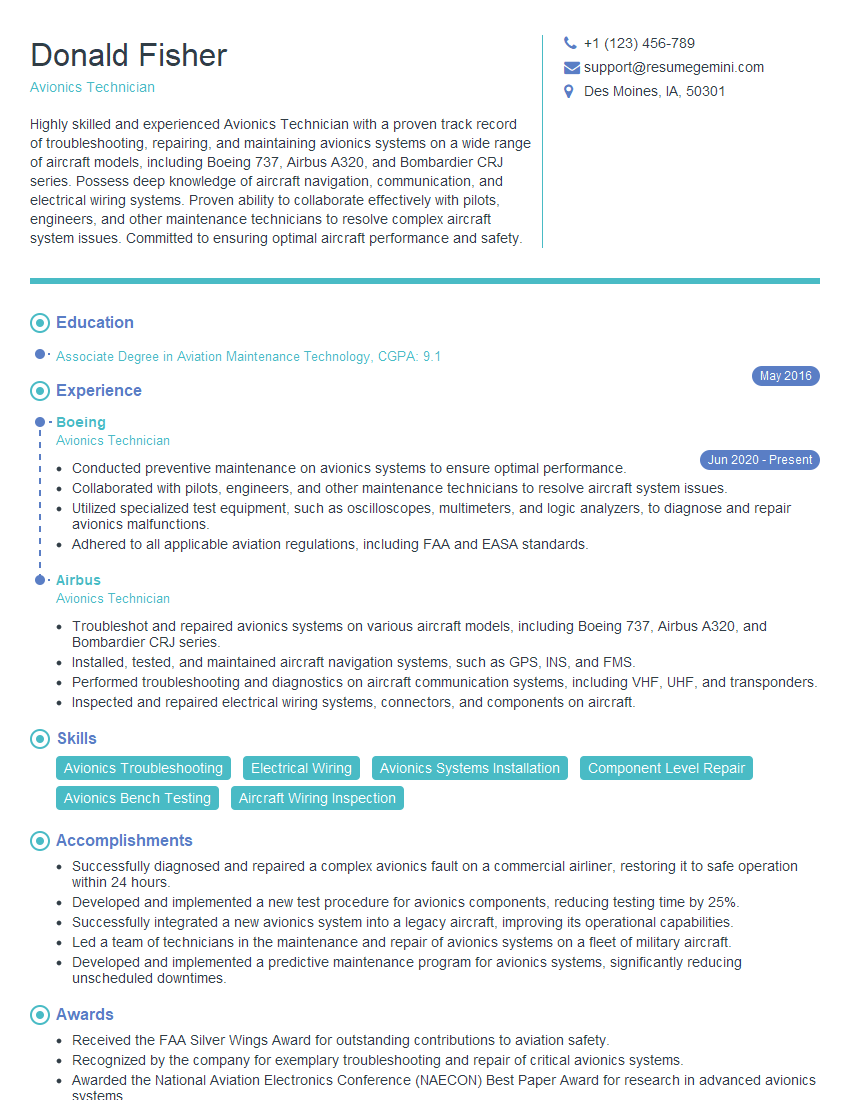
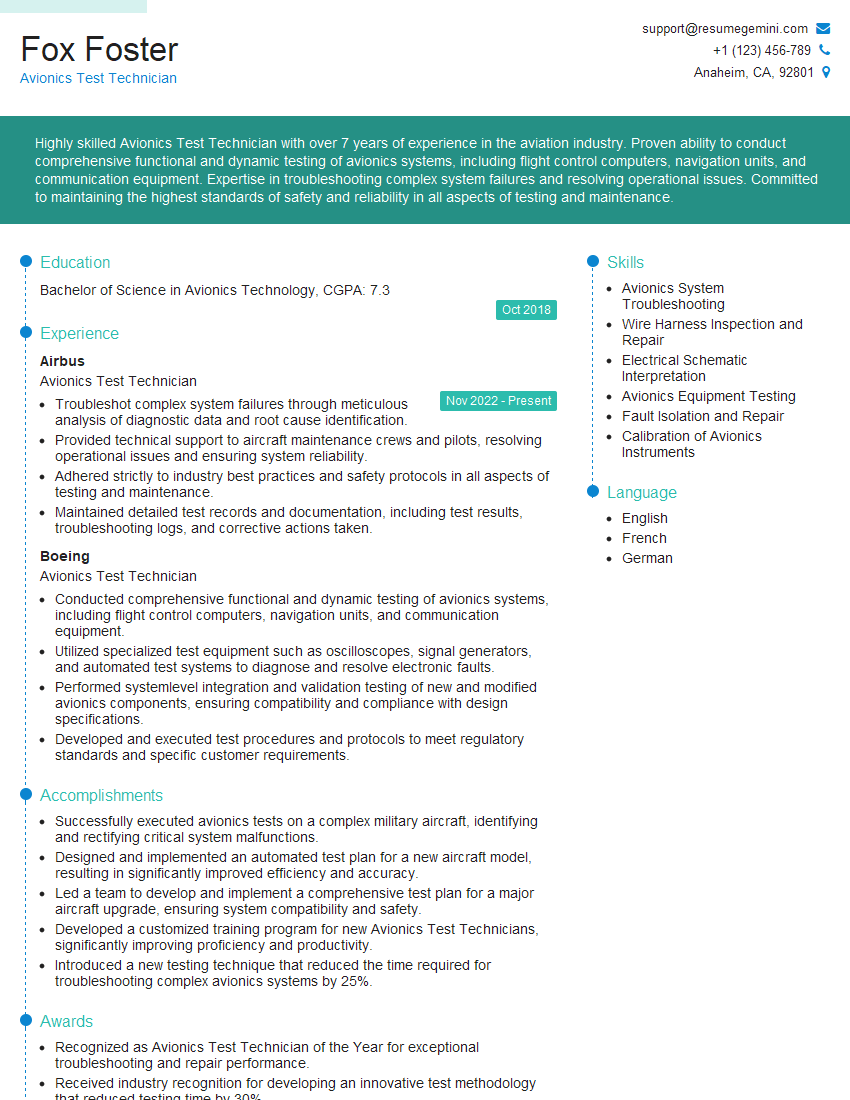
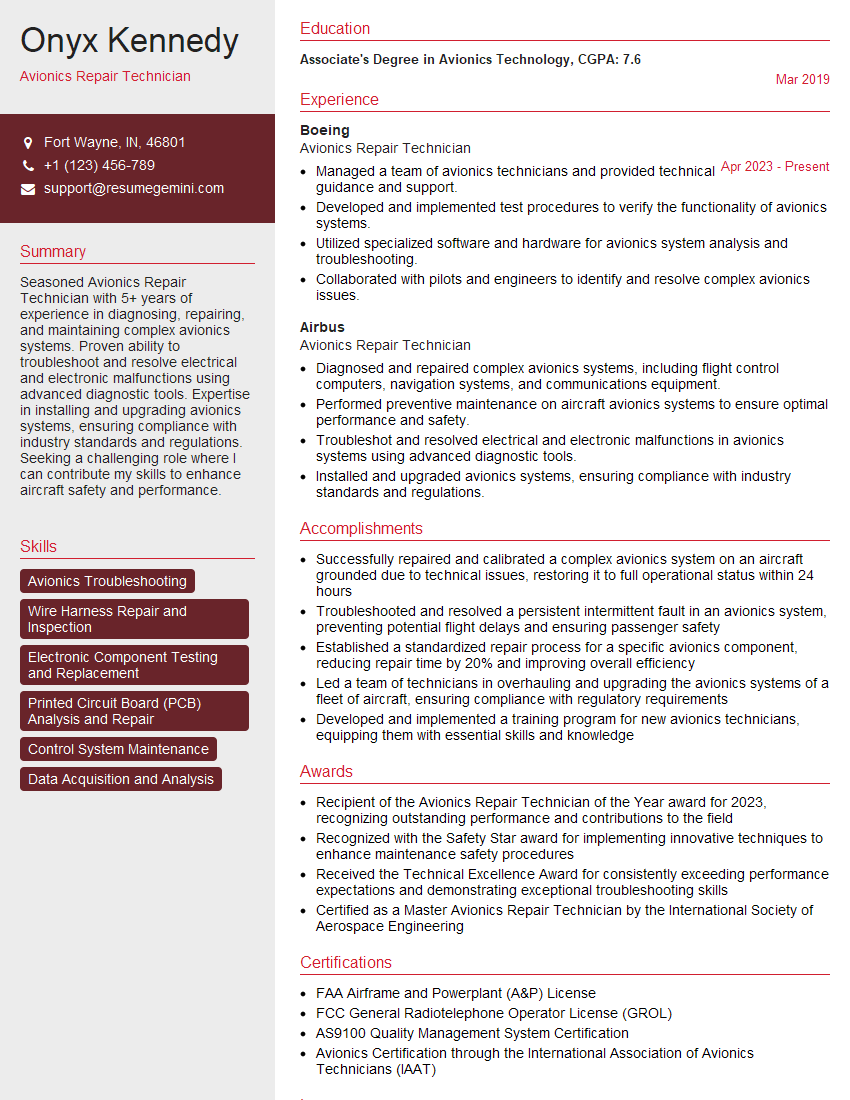
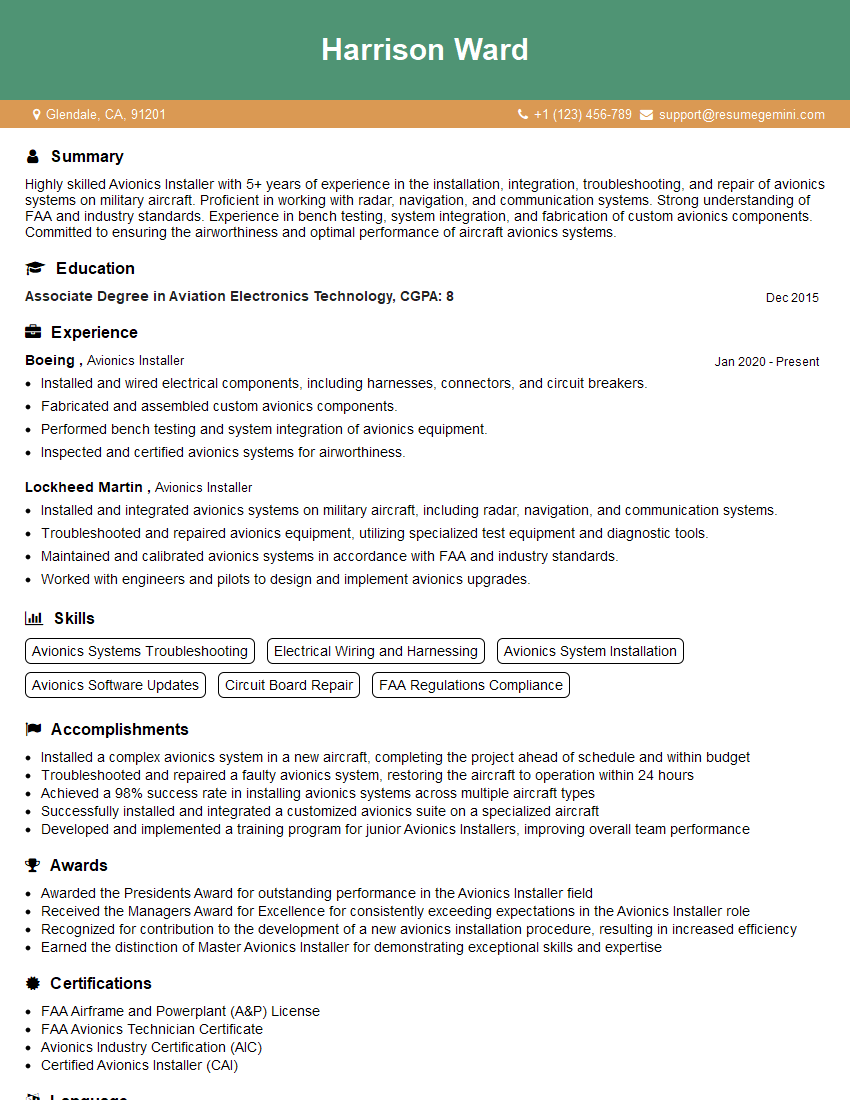
Mastering Avionics Maintenance opens doors to a rewarding and highly skilled career, offering excellent growth potential and the chance to contribute significantly to aviation safety. To maximize your job prospects, it’s crucial to present your qualifications effectively. Building an ATS-friendly resume is key to getting your application noticed by recruiters and hiring managers. We highly recommend using ResumeGemini to create a professional and impactful resume tailored to the Avionics Maintenance industry. ResumeGemini provides examples of resumes specifically designed for this field, helping you showcase your skills and experience in the best possible light. Take the next step towards your dream career – craft a compelling resume with ResumeGemini.
Explore more articles
Users Rating of Our Blogs
Share Your Experience
We value your feedback! Please rate our content and share your thoughts (optional).
What Readers Say About Our Blog
Very informative content, great job.
good