The right preparation can turn an interview into an opportunity to showcase your expertise. This guide to Horseback Riding Instructions interview questions is your ultimate resource, providing key insights and tips to help you ace your responses and stand out as a top candidate.
Questions Asked in Horseback Riding Instructions Interview
Q 1. Describe your experience teaching different riding disciplines (e.g., dressage, jumping, western).
My experience encompasses a broad range of equestrian disciplines. I’ve instructed in dressage, focusing on refining the horse’s gaits and the rider’s position for elegance and precision. This involves teaching everything from basic walk-trot transitions to advanced movements like piaffe and passage. In jumping, my instruction covers safety, proper approach, takeoff, and landing techniques, progressing from small crossrails to more challenging courses. My western riding instruction includes the basics of seat and rein control, and the various maneuvers associated with Western pleasure, trail riding, and reining.
For example, I recently helped a dressage student improve their half-halt, a crucial technique for controlling the horse’s impulsion and balance, by focusing on subtle shifts in their weight and rein contact. In jumping, I’ve worked with riders struggling with their approach, helping them to find the correct rhythm and distance using exercises focused on improving their eye and timing. In Western, I’ve coached riders to improve their effective use of neck reining to guide the horse while maintaining a balanced and relaxed posture.
Q 2. What teaching methods do you employ to cater to various skill levels and learning styles?
I believe in a multi-faceted teaching approach that adapts to individual learning styles and skill levels. I use a combination of visual demonstrations, hands-on instruction, and clear verbal explanations. For visual learners, I demonstrate techniques myself or use video examples. For kinesthetic learners, I focus on physical exercises and riding activities. For auditory learners, detailed explanations and verbal cues are paramount. I also incorporate positive reinforcement and constructive criticism to build confidence and improve technique.
For example, a beginner might start with basic posture and balance exercises before mounting, while an advanced rider might be challenged with more complex maneuvers and refined techniques. I also tailor lesson plans to individual goals – whether that’s preparing for a competition, improving overall riding skills, or simply enjoying a relaxing ride. I regularly assess their progress and adjust the lessons accordingly.
Q 3. How do you assess a rider’s skill level and tailor your instruction accordingly?
Assessing a rider’s skill level involves a combination of observation and interaction. I start by observing their posture, balance, and how they communicate with the horse. I’ll then ask them to perform basic exercises, such as mounting and dismounting, walking, trotting, and halting. The control they exhibit, their seat, their ability to maintain balance, and their communication with the horse all provide valuable insights into their abilities. This allows me to identify their strengths and areas that need improvement. I also consider the rider’s experience and goals to tailor the instruction accordingly.
For instance, a rider who struggles with balance might benefit from groundwork exercises focusing on core strength and stability before even mounting. Another who demonstrates strong balance but lacks confidence in a certain maneuver will receive targeted coaching in that area. This assessment process is ongoing and helps me to constantly adapt my teaching to the rider’s evolving capabilities.
Q 4. Explain your approach to horse safety and risk management during lessons.
Horse safety and risk management are paramount in my teaching. Every lesson begins with a thorough safety briefing covering stable etiquette, mounting and dismounting procedures, and basic emergency protocols. Riders are instructed on the importance of maintaining a secure seat and proper communication with the horse. I ensure all equipment is checked for safety before each ride. Lessons are tailored to the rider’s skill level and the horse’s temperament, starting with simpler exercises and progressively increasing difficulty. Furthermore, I emphasize the importance of wearing appropriate safety equipment such as helmets and boots.
For example, I teach riders how to properly hold the reins, how to use their legs effectively, and how to anticipate and respond to the horse’s movements. I always supervise riders closely, especially beginners, intervening immediately if any unsafe practices are observed. We regularly review emergency procedures, including what to do if a horse becomes frightened or the rider falls.
Q 5. Detail your experience with different horse breeds and temperaments.
My experience includes working with a variety of horse breeds, each with its unique temperament and characteristics. I’ve worked with Quarter Horses known for their calm disposition and responsiveness, Thoroughbreds known for their athleticism and sensitivity, and Arabians prized for their endurance and agility. Understanding these breed-specific traits is crucial for tailoring my instruction to effectively match the horse’s nature with the rider’s skill and experience. A calm, steady horse is often ideal for a beginner, while a more experienced rider might handle a more spirited mount.
For instance, I might adjust my teaching style when working with a sensitive Thoroughbred compared to a calm Quarter Horse. With the former, I emphasize quiet, precise cues and maintain a calm demeanor, while with the latter, I might use more assertive cues to enhance responsiveness. The key is to create a harmonious partnership between horse and rider.
Q 6. How do you handle challenging or difficult students?
Handling challenging or difficult students requires patience, understanding, and a tailored approach. I start by identifying the root cause of the difficulty. This might involve fear, lack of confidence, poor communication skills, or a physical limitation. Once identified, I adapt my teaching strategies to address the underlying issue. This often involves breaking down complex tasks into smaller, manageable steps, providing consistent positive reinforcement, and fostering open communication.
For example, a rider struggling with fear might benefit from groundwork exercises to build trust with the horse. If a student is having difficulty understanding a particular concept, I’ll use different teaching methods, employing visual aids or analogies to explain it in a way that they can grasp. I always make sure to emphasize the importance of safe and respectful interactions with the horse.
Q 7. Describe your method for providing constructive feedback to riders.
Providing constructive feedback is essential for rider improvement. I focus on specific areas for improvement rather than general criticism. My feedback is always delivered in a positive and encouraging manner, focusing on what the rider is doing well and suggesting small adjustments to improve. I use clear and concise language, avoiding jargon, and I always relate my feedback back to the rider’s goals. I encourage questions and foster a dialogue where the rider feels comfortable expressing their concerns and asking for clarification.
For example, instead of saying ‘Your posture is bad,’ I might say, ‘I noticed your shoulders are a little tense; try relaxing them and letting your arms hang naturally, and you’ll notice a significant improvement in your balance.’ I’ll often demonstrate corrections myself or use video recordings to help the rider visualize the adjustments they need to make. The feedback is always tailored to the individual rider and their specific challenges.
Q 8. What are some common riding mistakes you frequently encounter and how do you correct them?
One of the most common mistakes I see is riders gripping with their legs and hands, creating tension that inhibits the horse’s movement and can even lead to pain for the animal. This often stems from fear or insecurity. Another frequent issue is incorrect posture; riders hunching over or leaning too far forward or back disrupt their balance and the horse’s balance.
- Correcting Leg and Hand Tension: I teach riders to use their legs for communication, not gripping. We practice subtle cues, like a light squeeze, to guide the horse. I also guide them in relaxation exercises, focusing on deep breathing and releasing tension in their shoulders and hands. We’ll work on exercises promoting a soft, but connected, rein contact.
- Correcting Posture: Proper posture involves a straight back, relaxed shoulders, and a centered seat. I use mirrors to help riders visualize their posture and provide physical adjustments, such as guiding them to sit deeper in the saddle. We might incorporate specific exercises off the horse to improve core strength, which is crucial for balance.
- Example: I once worked with a rider who gripped the reins so tightly her knuckles were white. Through relaxation exercises and focusing on light, consistent rein contact we improved her connection with the horse and reduced tension. The horse responded more willingly, and the rider gained confidence and control.
Q 9. How do you maintain a safe and positive learning environment?
Maintaining a safe and positive learning environment is paramount. This involves a multi-faceted approach combining clear communication, positive reinforcement, and risk mitigation.
- Clear Communication: I ensure instructions are clear, concise, and tailored to the rider’s skill level. I use simple, easily understood language, avoiding jargon. Open communication encourages riders to ask questions and express concerns.
- Positive Reinforcement: I emphasize positive feedback, focusing on what the rider is doing well rather than solely on their mistakes. Praise builds confidence and encourages improvement. Small successes are celebrated.
- Risk Mitigation: Safety is non-negotiable. Riders are equipped with appropriate safety gear (helmets are mandatory). I carefully assess each rider’s skill level before assigning a horse, ensuring a proper match. We start with basic exercises and gradually progress to more challenging ones. The arena is kept clean and free from obstacles.
- Building Rapport: I build trust with the riders by fostering a friendly, encouraging atmosphere. I aim to understand their individual strengths and weaknesses to personalize the lessons.
Q 10. How do you adapt your instruction for riders with disabilities or special needs?
Adapting instruction for riders with disabilities or special needs requires careful planning and flexibility. It’s crucial to understand the individual’s specific needs and limitations.
- Assessment: I begin with a thorough assessment to understand the rider’s physical capabilities, cognitive abilities, and any sensory sensitivities. I work closely with therapists or other professionals, when needed.
- Adaptive Equipment: I might use adaptive equipment such as specialized saddles, reins, or stirrups to provide better support and comfort. For example, certain saddles provide more back support, and specialized reins can be easier to grip for those with limited hand function.
- Modified Techniques: Instruction is adapted to the rider’s individual needs. Exercises might be simplified or modified to be more manageable. The pace is adjusted accordingly, focusing on building confidence and skill gradually.
- Communication: Clear and patient communication is key. I use visual aids, verbal cues, and physical support as needed.
- Example: I’ve worked with a rider with cerebral palsy. We started with simple exercises, focusing on maintaining balance and developing a connection with the horse. We used a specialized saddle and adapted the reins to provide better support and control. Through patience and personalized instruction, this rider achieved significant progress.
Q 11. What is your experience with tack maintenance and care?
Tack maintenance and care are essential for both rider safety and the horse’s well-being. I’m proficient in cleaning, inspecting, and repairing various types of tack, including saddles, bridles, and reins.
- Cleaning: Tack is cleaned regularly after each use, using appropriate cleaning agents and brushes. Leather is conditioned to maintain its flexibility and prevent cracking. Metal parts are checked for rust and polished.
- Inspection: I meticulously inspect tack for wear and tear, ensuring that all buckles, straps, and stitching are secure. Any damaged equipment is immediately repaired or replaced.
- Storage: Tack is properly stored in a clean, dry environment to prevent mold and mildew. It’s hung up or placed on racks, avoiding excessive compression.
- Repair: I can perform minor repairs like replacing buckles or stitching leather. For major repairs, I seek the expertise of a qualified saddler. This prevents accidents caused by faulty equipment.
Q 12. How do you ensure the well-being of the horses under your care?
The well-being of the horses under my care is my top priority. This involves understanding their individual needs and providing appropriate care, ensuring both physical and mental well-being.
- Daily Care: This includes grooming, feeding, watering, and checking for any injuries or health issues. I monitor their behavior for any signs of illness or distress.
- Exercise and Turnout: Horses receive regular exercise appropriate to their age, breed, and fitness level. They are given adequate time in pastures or paddocks for social interaction and natural grazing behaviors.
- Veterinary Care: Horses receive regular veterinary check-ups, vaccinations, and dental care. I monitor their weight and condition, and seek immediate veterinary attention if needed.
- Farrier Care: Regular farrier care is crucial. Hooves are trimmed and shod appropriately to prevent lameness.
- Responsible Handling: I emphasize kind and respectful handling. Horses are approached calmly and given adequate space. I avoid any rough or aggressive behavior.
Q 13. Describe your experience with lesson planning and curriculum development.
Lesson planning and curriculum development are crucial for structured learning. My approach is to create a progressive curriculum that builds upon previously acquired skills.
- Needs Assessment: I begin by assessing the rider’s skill level and goals. This might involve a short introductory lesson to observe their riding style and identify areas for improvement.
- Skill Progression: Lessons are planned in a progressive manner, starting with basic riding skills and gradually introducing more complex techniques. This might follow a structured format, like introducing walk, then trot, followed by canter, but it also adapts to the individual’s speed and progress.
- Lesson Structure: Each lesson has a clear structure with specific objectives and activities. This might involve warm-up exercises, skill-focused drills, and cool-down activities.
- Curriculum Development: I have developed several lesson plans targeting different skill levels, from beginner to advanced riders. These incorporate various riding disciplines and address diverse learning styles.
- Assessment and Feedback: Regular assessments are conducted to track the rider’s progress and provide constructive feedback. This involves observing their riding technique, evaluating their understanding of concepts, and offering personalized recommendations.
Q 14. How do you manage emergencies or accidents in the riding arena?
Emergency preparedness is essential in a riding environment. I have established protocols and procedures to manage emergencies and accidents.
- First Aid: I’m certified in equine and human first aid and CPR. I maintain a well-stocked first-aid kit accessible in the riding area.
- Emergency Contact List: I have a readily available list of emergency contacts, including veterinarians, ambulances, and relevant personnel.
- Safety Protocols: Clear safety protocols are in place for all activities. Riders are informed about safety procedures and are expected to adhere to them.
- Accident Procedures: In case of an accident, immediate action is taken. First aid is administered, emergency services are contacted if needed, and the incident is documented.
- Post-Incident Review: After any incident, a thorough review is conducted to identify contributing factors and implement preventative measures to minimize the risk of future occurrences.
Q 15. What is your knowledge of equine first aid and injury prevention?
Equine first aid and injury prevention are paramount in ensuring the safety and well-being of horses. My knowledge encompasses a wide range of topics, from recognizing and treating minor wounds like cuts and abrasions to managing more serious injuries such as colic, lameness, and respiratory distress. I’m proficient in techniques like wound cleaning, bandaging, and administering basic medications under veterinary guidance. Injury prevention is equally crucial and involves understanding factors that contribute to horse injuries, such as improper riding techniques, unsafe stabling practices, and inadequate hoof care. For example, I routinely check horses for signs of lameness before each ride and ensure that tack is correctly fitted to prevent sores. I regularly update my knowledge through continuing education courses and workshops focused on equine veterinary care.
A practical example: If a horse sustains a superficial cut, I’d first clean the wound gently with a mild antiseptic solution, apply a sterile bandage to control bleeding and prevent infection, and then monitor it closely for signs of inflammation or infection. For more severe injuries, contacting a veterinarian immediately is crucial. My knowledge extends to understanding common horse illnesses and ensuring appropriate preventative care through vaccination and parasite control.
Career Expert Tips:
- Ace those interviews! Prepare effectively by reviewing the Top 50 Most Common Interview Questions on ResumeGemini.
- Navigate your job search with confidence! Explore a wide range of Career Tips on ResumeGemini. Learn about common challenges and recommendations to overcome them.
- Craft the perfect resume! Master the Art of Resume Writing with ResumeGemini’s guide. Showcase your unique qualifications and achievements effectively.
- Don’t miss out on holiday savings! Build your dream resume with ResumeGemini’s ATS optimized templates.
Q 16. Explain your understanding of horse behavior and body language.
Understanding horse behavior and body language is fundamental to safe and effective horsemanship. Horses communicate through a subtle yet complex system of visual, auditory, and olfactory cues. For instance, pinned ears often indicate aggression or fear, while relaxed ears and a soft eye suggest contentment. A swishing tail might signify annoyance, while a clamped tail can be a sign of pain or discomfort. I’m adept at interpreting these subtle signals to anticipate a horse’s reactions and adjust my approach accordingly. This understanding extends to recognizing signs of stress, such as rapid breathing, excessive sweating, or pawing the ground. I use this knowledge to create a calm and reassuring environment for both horse and rider, preventing potential conflicts.
A real-world example: If a horse exhibits signs of anxiety, such as a tense body and pinned ears while approaching a jump, I wouldn’t force it. Instead, I’d take the time to reassure the horse, using gentle voice commands and positive reinforcement to build its confidence and reduce its fear. I emphasize building trust and understanding through consistent, calm interactions.
Q 17. Describe your experience with horse handling and stable management.
My experience in horse handling and stable management is extensive. I’m proficient in all aspects of horse care, including grooming, tacking up, and riding. I understand the importance of maintaining a clean and organized stable environment to prevent the spread of disease and promote the horses’ well-being. This involves tasks such as mucking stalls, feeding horses appropriately, and ensuring adequate ventilation and lighting. My experience also extends to handling horses of varying temperaments and training levels, using safe and effective techniques to manage them, regardless of their behavior. I also regularly participate in farrier and veterinary visits to aid in optimal horse health and well-being.
For example, I know the correct procedures for catching, leading, and haltering a horse, ensuring its safety and mine. I’m familiar with various stable management practices, such as creating appropriate routines for feeding, watering, and mucking stalls. I apply this knowledge to maintain a secure, healthy environment for the horses under my care.
Q 18. How do you ensure effective communication with students and their parents/guardians?
Effective communication is essential for building trust and fostering a positive learning environment. With students, I employ clear, concise instructions tailored to their skill level. I use positive reinforcement to encourage learning and build confidence. With parents/guardians, I maintain open lines of communication, providing regular updates on the student’s progress and addressing any concerns promptly. I encourage feedback from both students and parents to ensure the lessons are meeting their needs and expectations. I believe in creating a partnership between myself, the student, and the parents. This approach is key to a supportive and successful learning environment.
For instance, I regularly schedule parent-teacher conferences to discuss the student’s achievements and areas for improvement. I use a variety of communication methods, such as email, phone calls, and progress reports, to keep everyone informed. I aim to create an open dialogue where everyone feels comfortable sharing ideas and concerns.
Q 19. What is your experience with marketing and promoting riding lessons?
My marketing and promotional experience includes developing and implementing strategies to attract new students. This has involved creating eye-catching flyers and brochures, utilizing social media platforms, such as Facebook and Instagram, to showcase my services and student achievements, and partnering with local businesses and community organizations to promote my riding school. I also leverage online platforms to showcase available lessons and packages, as well as client testimonials to build trust and reputation. I believe in emphasizing the benefits of horseback riding—the physical fitness, the emotional connection with animals, and the development of valuable life skills—to appeal to potential clients. I continuously evaluate and refine my marketing strategies to maximize their effectiveness.
For example, I have successfully utilized social media to highlight student successes, showcasing their progress and the positive impact riding has had on their lives. This approach has greatly increased my visibility and attracted new students.
Q 20. How do you handle difficult horse behaviors during lessons?
Handling difficult horse behaviors during lessons requires patience, understanding, and a proactive approach. My strategy involves first identifying the root cause of the behavior. Is the horse in pain? Is it stressed or anxious? Is the rider inadvertently causing the behavior? I use positive reinforcement techniques to redirect unwanted behaviors and reward calm responses. If the behavior persists or indicates a potential safety hazard, I will temporarily remove the student from the situation and address the problem with the horse first. If necessary, I consult with an equine behaviorist for expert guidance. Safety is my top priority.
For instance, if a horse is exhibiting resistance during mounting, I will not force the horse or student, but will instead assess if the horse is uncomfortable or if the mounting technique needs adjustment. I might then employ desensitization techniques to help the horse become more comfortable with mounting.
Q 21. What are your qualifications and certifications in horseback riding instruction?
My qualifications include a comprehensive range of certifications and extensive experience. I hold a [Insert your specific certification e.g., Certified Instructor from the American Riding Instructors Association (ARIA)]. I have [Number] years of experience teaching riders of all ages and skill levels, from beginners to advanced competitors. My experience covers various riding disciplines, including [List disciplines e.g., English, Western, Dressage]. I continuously participate in professional development programs to stay updated on the latest safety protocols, teaching methods, and equine welfare standards.
Furthermore, I also hold current certifications in [Mention any additional certifications e.g., First Aid and CPR]. This ensures I am well-equipped to handle any emergencies that may arise during lessons.
Q 22. What are your salary expectations for this position?
My salary expectations are commensurate with my experience and qualifications, and align with the industry standard for experienced riding instructors with my level of certification and years of teaching. I am open to discussing a specific salary range after reviewing the full job description and understanding the complete compensation package, including benefits.
Q 23. What is your availability to work evenings and weekends?
I am highly flexible and understand the demands of a riding school, requiring availability for evenings and weekends. My primary goal is to provide optimal instruction and support to students, regardless of scheduling needs. I’m happy to discuss a schedule that best suits both the needs of the facility and my own availability to ensure a balance.
Q 24. Describe your experience working in a team environment.
Throughout my career, I’ve thrived in team environments. For example, at my previous riding school, I collaborated closely with other instructors, stable hands, and the facility manager to ensure the smooth running of lessons, horse care, and overall facility maintenance. We regularly shared best practices, helped each other with challenging students, and jointly planned events such as horse shows or themed riding camps. This collaborative approach not only enhances efficiency but also fosters a supportive and positive atmosphere where everyone feels valued and contributes to a common goal.
Q 25. How do you address rider anxiety or fear in a supportive manner?
Addressing rider anxiety is paramount. I begin by creating a safe and reassuring environment. I listen actively to the rider’s concerns and validate their feelings. For example, if a rider is afraid of falling, I might start with groundwork exercises to build trust and confidence with the horse before mounting. I then progress gradually, focusing on building foundational skills like balance and posture at a comfortable pace. Positive reinforcement, celebrating small victories, and clear, concise communication are essential. I also encourage riders to set achievable goals and celebrate each step of their progress.
Q 26. What strategies do you use to motivate riders and build their confidence?
Motivation and confidence building are intertwined. I use a multi-pronged approach. Firstly, I set realistic, achievable goals with each rider, tailored to their skill level and aspirations. Secondly, I provide positive feedback, focusing on improvement rather than solely on mistakes. For instance, instead of saying ‘you did that wrong,’ I’d say ‘that was a good attempt; let’s focus on improving your posture next time.’ Thirdly, I incorporate fun and engaging elements into lessons, such as games or trail rides, to boost motivation. Lastly, I celebrate achievements, no matter how small, to foster a sense of accomplishment and build lasting confidence.
Q 27. Describe your approach to teaching riding theory and principles.
My approach to teaching riding theory and principles is highly practical and engaging. I start with the fundamentals, such as correct posture, seat, and leg position, using clear demonstrations and hands-on practice. I explain the biomechanics of riding and how these positions impact the horse’s movement. I use visual aids like diagrams and videos, and I encourage questions and discussions to ensure understanding. I then progressively introduce more complex concepts, such as transitions, turns, and more advanced maneuvers, always ensuring a strong foundation is in place before moving to more challenging skills. Real-world application is key; I relate theoretical concepts directly to practical riding exercises.
Q 28. What are your long-term career goals within the equestrian industry?
My long-term career goals include continued professional development within the equestrian industry. I envision myself becoming a highly respected and sought-after riding instructor, possibly specializing in a particular discipline such as dressage or jumping. I’m also interested in exploring opportunities in coaching and mentoring aspiring riding instructors, contributing to the growth and advancement of the equestrian community. Ultimately, I aim to continue sharing my passion for horses and riding, while fostering a love of the sport in others.
Key Topics to Learn for Horseback Riding Instructions Interview
- Horse Safety and Management: Understanding stable management, basic equine first aid, and safe handling procedures. Practical application: Demonstrating knowledge of recognizing signs of distress in a horse and appropriate responses.
- Riding Techniques and Instruction Methodology: Mastering various riding disciplines (e.g., English, Western) and adapting teaching methods to different skill levels and learning styles. Practical application: Explaining how to effectively teach a beginner the proper posture and reins control.
- Lesson Planning and Curriculum Development: Designing structured lesson plans, incorporating progressive skill development, and adapting to individual student needs. Practical application: Outlining a sample lesson plan for teaching a specific riding skill.
- Student Assessment and Feedback: Evaluating rider performance, providing constructive criticism, and adapting instruction based on observations. Practical application: Describing effective methods for providing positive and negative feedback to students.
- Risk Management and Emergency Procedures: Identifying and mitigating potential hazards in riding instruction, implementing safety protocols, and handling emergency situations. Practical application: Explaining the procedures to follow in case of a fall or other riding accident.
- Communication and Interpersonal Skills: Effectively communicating instructions, building rapport with students, and managing group dynamics. Practical application: Describing strategies for motivating students of varying skill levels and temperaments.
- Legal and Ethical Considerations: Understanding liability issues, insurance requirements, and professional conduct standards. Practical application: Discussing the importance of obtaining proper waivers and following established safety guidelines.
Next Steps
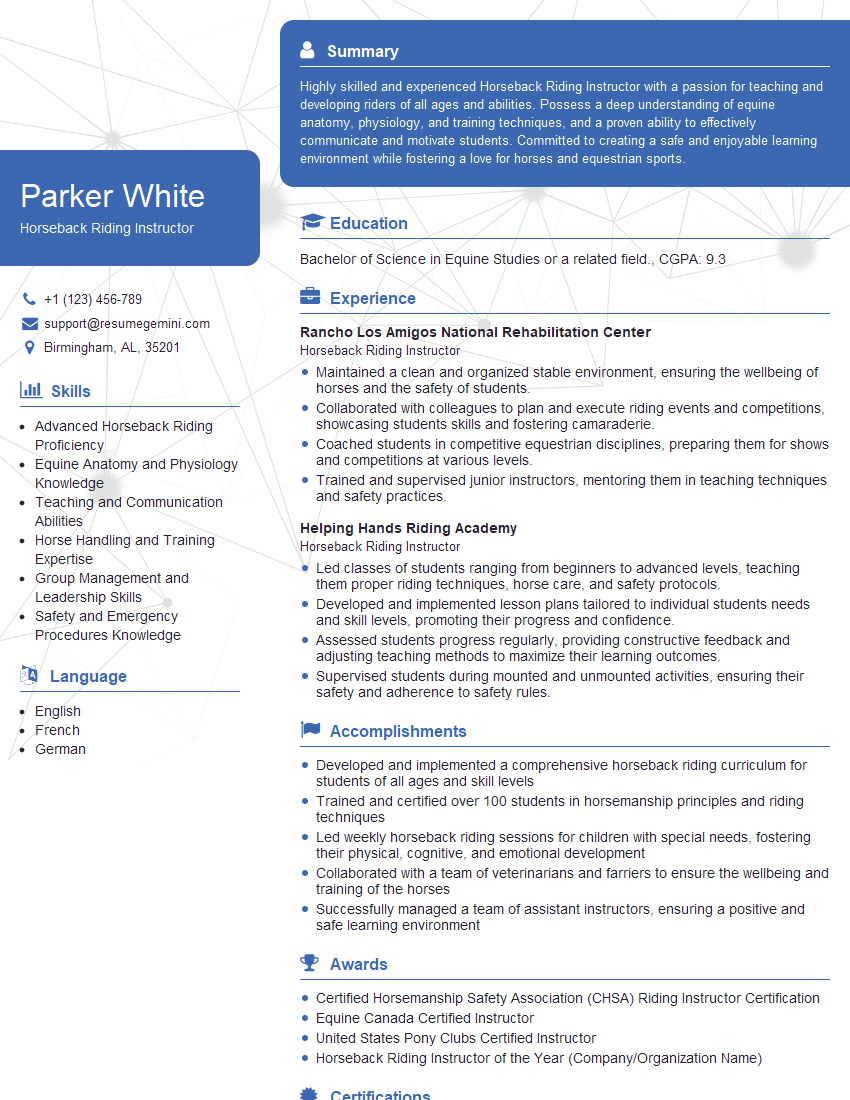
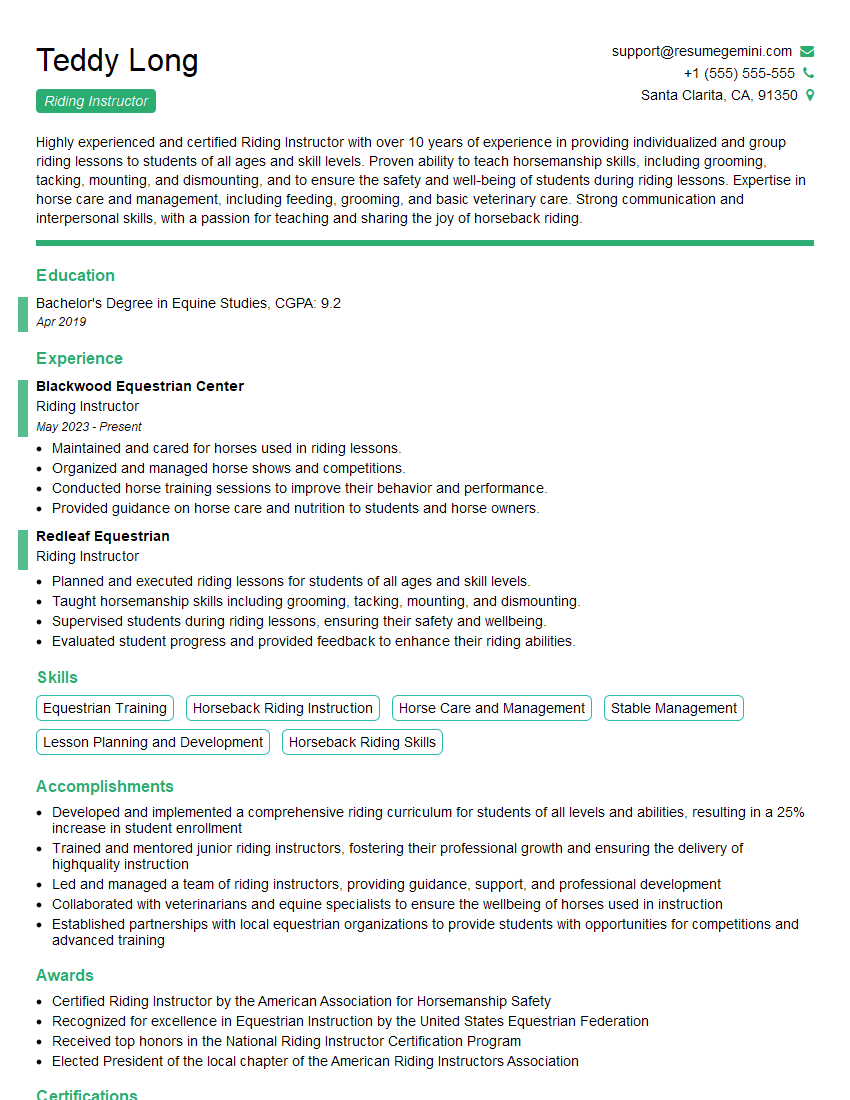
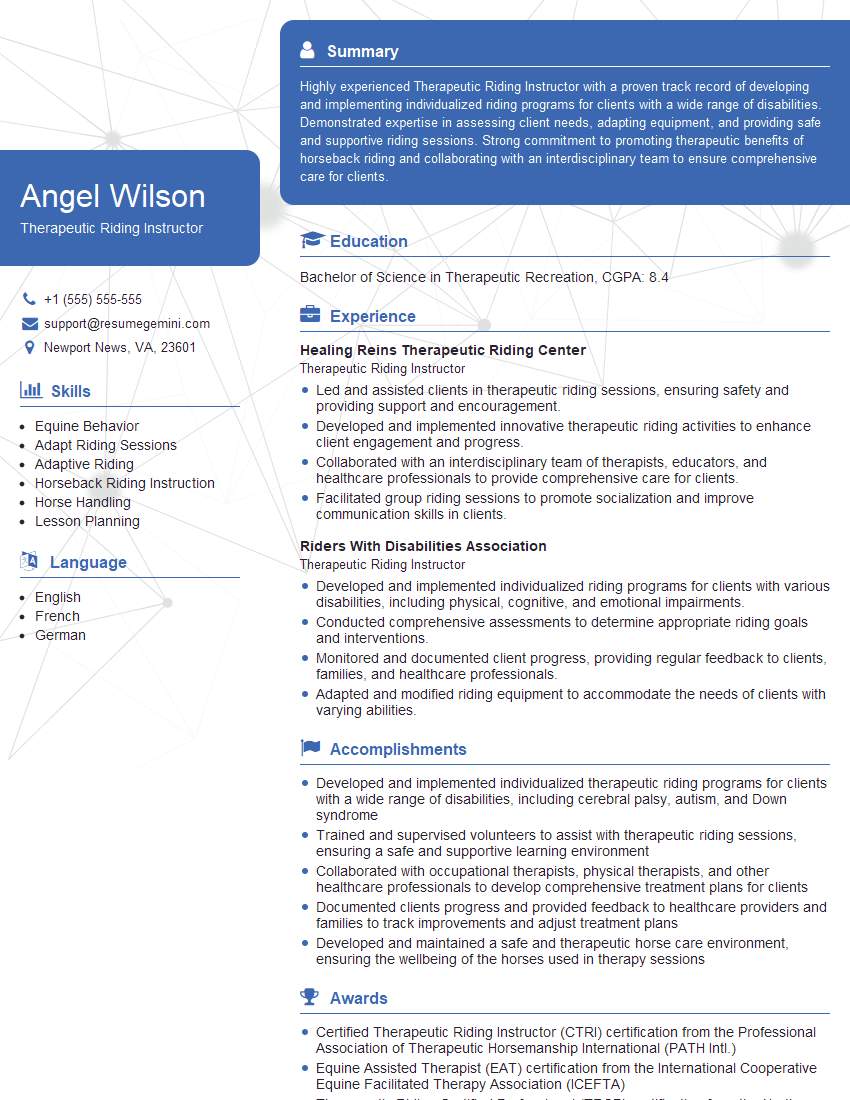
Mastering Horseback Riding Instruction is crucial for a rewarding and successful career. It allows you to share your passion for horses while empowering others to enjoy this amazing activity. To significantly boost your job prospects, create an ATS-friendly resume that highlights your skills and experience effectively. ResumeGemini is a trusted resource to help you build a professional and impactful resume. They provide examples of resumes tailored to the Horseback Riding Instruction field, ensuring your application stands out from the competition. Take the next step towards your dream career today!
Explore more articles
Users Rating of Our Blogs
Share Your Experience
We value your feedback! Please rate our content and share your thoughts (optional).
What Readers Say About Our Blog
Very informative content, great job.
good