Are you ready to stand out in your next interview? Understanding and preparing for Hand Bindery Machinery Operation interview questions is a game-changer. In this blog, we’ve compiled key questions and expert advice to help you showcase your skills with confidence and precision. Let’s get started on your journey to acing the interview.
Questions Asked in Hand Bindery Machinery Operation Interview
Q 1. Describe your experience operating perfect binding machines.
Perfect binding is a popular method for creating books and magazines with a square spine. My experience encompasses operating various perfect binding machines, from small-scale models to high-speed production lines. This includes setting up the machine for different paper sizes and thicknesses, adjusting the glue application for optimal adhesion, and ensuring consistent trim and cover application. I’m proficient in identifying and resolving common issues such as glue malfunctions, incorrect spine milling, and cover misalignment. For example, on a recent project involving a large-volume print run of a technical manual, I meticulously calibrated the glue system to accommodate variations in paper stock, preventing any significant downtime or costly errors. I also regularly perform preventative maintenance to maximize machine uptime and efficiency.
This involves tasks such as cleaning the glue system, inspecting the cutting blades, and lubricating moving parts. My experience allows me to quickly diagnose and resolve problems to maintain a high level of production. I am familiar with different models from manufacturers like Muller Martini and Horizon, and I am adaptable to new machine types.
Q 2. Explain the process of saddle stitching.
Saddle stitching is a simple yet efficient binding method ideal for smaller publications like brochures or booklets. The process involves folding the sheets of paper in half or multiple folds, then using wire staples to secure the folded pages along the spine. Think of it like stapling multiple sheets together in the middle. The key steps are:
- Folding: The sheets are folded using a folding machine, ensuring accurate alignment and consistent folds.
- Gathering: The folded sheets are gathered and collated in the correct order.
- Stapling: A saddle stitcher uses a mechanism to pierce the spine and apply wire staples, securely fastening the pages.
- Trimming: In some cases, the stitched booklet may undergo trimming to create neat, even edges.
For example, I’ve used this method extensively for producing marketing materials, ensuring the finished product is visually appealing and robust. Proper setup and maintenance of the saddle stitcher, especially keeping the stapling mechanism clean and adjusted, is crucial for preventing jams and ensuring a consistent finish.
Q 3. What are the common issues encountered with case binding machines?
Case binding, which involves creating a hard cover for a book, presents unique challenges. Common issues include:
- Cover alignment: Inaccurate alignment of the cover to the text block can result in a poor-quality finish.
- Adhesive issues: Incorrect adhesive application can lead to covers coming loose or pages becoming stuck together. This could be due to the wrong type of adhesive, incorrect temperature, or clogged application mechanisms.
- Spine cracking: Poorly prepared text blocks or excessive pressure can result in cracked spines.
- Mechanical malfunctions: Case binding machines are complex, and malfunctions can occur in various components such as the gluing system, the nipping mechanism, or the cover feeding system.
- Paper jams: Misaligned paper or incorrect feeding can lead to frequent jams.
Regular maintenance, proper setup for different book sizes, and careful monitoring of the machine’s operation are critical in preventing these issues. A thorough understanding of the machine’s mechanics and troubleshooting techniques is essential for efficient production.
Q 4. How do you troubleshoot malfunctions in a wire-o binding machine?
Wire-O binding, using double-loop wire, is another binding method I’m experienced with. Troubleshooting malfunctions involves a systematic approach:
- Identify the symptom: Determine the exact nature of the problem—is it a paper jam, a misalignment, or a mechanical issue?
- Check for obvious causes: Look for obvious issues like paper jams, misaligned guides, or loose components.
- Inspect the wire feed: Ensure the wire is properly fed into the machine and that there are no kinks or obstructions. Low wire can cause the machine to jam.
- Examine the punching mechanism: Check for worn-out punches or misalignment, which can lead to poorly punched holes.
- Check the clamping mechanism: Make sure the documents are securely clamped during the punching and wiring process. This is vital to avoid misalignments.
- Consult the machine’s manual: The manual provides detailed information on troubleshooting specific problems.
For example, if the machine is producing unevenly punched holes, the punches may need adjustment or replacement. If a jam occurs, carefully clear the obstruction, ensuring you don’t damage the machine’s delicate parts. A preventative maintenance schedule is vital for minimizing malfunctions, including regular cleaning and lubrication of the moving parts.
Q 5. What safety precautions do you follow when operating bindery machinery?
Safety is paramount when operating bindery machinery. My safety protocols include:
- Personal Protective Equipment (PPE): Always wearing appropriate PPE, including safety glasses and cut-resistant gloves, is non-negotiable.
- Machine guards: Ensuring all machine guards are in place before starting the machine prevents accidental injury.
- Proper training: I only operate machines I’ve been properly trained on and I am fully aware of the risks.
- Lockout/Tagout procedures: Following lockout/tagout procedures for maintenance and repairs is crucial to prevent accidental startup.
- Emergency stops: I’m familiar with the location and operation of emergency stop buttons and how to respond to any machine malfunction.
- Awareness of moving parts: Maintaining a safe distance from moving parts and never reaching into the machine while it’s running is imperative.
- Regular inspections: Regularly inspecting the machine for any signs of damage or wear and tear is important for overall safety.
Prioritizing safety prevents accidents and ensures a safe working environment for myself and others.
Q 6. Explain the difference between perfect binding and saddle stitching.
Perfect binding and saddle stitching are both common bookbinding techniques but serve different purposes. Perfect binding creates a more professional, lay-flat appearance, ideal for books, magazines and journals with a substantial page count. It involves applying adhesive to the spine of the gathered pages and then attaching a cover. In contrast, saddle stitching is faster and cheaper for shorter documents; it involves stapling folded sheets along the spine. Saddle stitching can result in pages that don’t lay perfectly flat but it’s a great option for brochures and booklets where flatness isn’t paramount.
Think of it like this: Perfect binding is like making a professionally bound hardback book, while saddle stitching is like stapling a few pages together for a simpler booklet.
Q 7. Describe your experience with different types of folding machines.
My experience with folding machines includes various types, from simple single-fold machines to complex multi-fold machines capable of intricate folding patterns. I’m proficient in operating both sheet-fed and web-fed folding machines. This includes understanding different folding mechanisms, such as parallel, perpendicular, and zig-zag folding, and being able to adjust the machines to achieve accurate and consistent folds. I’m familiar with troubleshooting common issues like paper jams, misaligned folds, and inconsistent folding patterns. This knowledge allows me to adapt to different types of paper, weights and sizes to achieve the best results.
For example, I’ve used high-speed web-fed folders for large-scale printing jobs requiring high production speeds and complex folds, and smaller sheet-fed models for short-run projects with simpler requirements. My knowledge encompasses machines from manufacturers like Bobst and Heidelberg, and I’m able to quickly learn new models and configurations.
Q 8. How do you ensure accurate gathering of sheets before binding?
Accurate gathering is paramount in bookbinding; it ensures the correct sequence of pages. Think of it like building a house – you wouldn’t want to put the roof on before the walls! We achieve this accuracy through several methods. Firstly, we use sophisticated gathering machines that employ sophisticated sensors and controls to verify the order of sheets. These often involve feeding mechanisms with suction cups or rollers that pick up and accurately place each sheet. Secondly, we rely on the quality of the feeder and its ability to precisely align the sheets. Problems in feeding, like misaligned paper stacks, can lead to inaccurate gathering. Finally, continuous monitoring by experienced operators is vital. They visually check for errors and correct any misfeeds immediately. Imagine it like a quality control check – we’re constantly scanning for potential mistakes before they escalate.
For instance, in a recent project involving a high-volume magazine, we used a fully automated gathering machine with a high-speed camera system to identify and reject incorrectly gathered signatures. This prevented major waste and ensured flawless final products.
Q 9. What is your experience with die-cutting machines?
My experience with die-cutting machines spans various models and applications, from simple rule dies for straightforward shapes to intricate designs requiring multiple cutting and creasing operations. I’m proficient in setting up the machine, adjusting the pressure and depth of cut for different materials, and troubleshooting common issues like jamming and misalignment. Understanding the material properties – thickness, weight, and texture – is crucial for optimal die-cutting. For example, a thicker cardstock will necessitate a higher pressure setting than thinner paper to achieve a clean, sharp cut. I’m also experienced with maintaining and cleaning the die-cutting machine, ensuring optimal longevity and performance, and aware of safety procedures to minimize the risk of injury when working with sharp blades and high-pressure machinery.
In one particular project, we used a precision die-cutting machine to create custom shapes for invitations, requiring intricate cuts and fine details. Precise calibration and careful material handling were essential to deliver a high-quality, consistent result.
Q 10. How do you maintain the quality of the finished product?
Maintaining the quality of the finished product is a holistic process, starting from the selection of raw materials to the final inspection. It involves paying meticulous attention to detail at each stage. This includes ensuring that paper is appropriately sized and consistent in quality, adhesive application is even and accurate, and all binding elements are correctly positioned. We frequently check the alignment of text and images, the quality of binding, and the overall appearance of the finished product. We have strict quality control procedures at each stage of production, including regular checks for defects and deviations from specifications. Any issues are immediately addressed to prevent further problems. Think of it like baking a cake – you need the right ingredients, the right method, and then a thorough taste test to ensure quality!
For example, we developed a comprehensive checklist to ensure consistent cover alignment and spine width on all our perfect bound books. This dramatically reduced our defect rate.
Q 11. Describe your experience with trimming and cutting machines.
My expertise extends to various trimming and cutting machines, including guillotine trimmers, three-knife trimmers, and automated cutting systems. I’m proficient in setting up these machines, adjusting blade settings for precise cuts, and maintaining accurate alignment to avoid waste. I understand the importance of proper blade maintenance – sharpening, cleaning and replacing when necessary – to ensure clean and consistent cuts. The safety procedures related to these powerful machines are paramount to my work ethic; ensuring all guards are in place and safe operating practices are followed. A poorly maintained blade can result in uneven cuts, leading to spoiled materials and an unacceptable final product. We also have procedures in place to regularly measure and calibrate our machines to guarantee accuracy.
In a recent large-format print job, the accurate trimming of the oversized sheets was crucial. I used a three-knife trimmer and programmed its settings with millimeter precision to deliver perfectly sized prints.
Q 12. Explain the importance of regular maintenance on bindery equipment.
Regular maintenance is critical for the efficiency, safety, and longevity of bindery equipment. Neglecting maintenance can lead to breakdowns, reduced production rates, and compromised product quality. Imagine a car – if you don’t change the oil and regularly service it, it will eventually break down! Our maintenance program includes regular lubrication, cleaning, and inspection of all moving parts, checking for wear and tear, and promptly replacing any faulty components. This proactive approach reduces downtime and keeps the machines running smoothly. We have a comprehensive schedule that details specific maintenance tasks for each machine based on usage and manufacturer recommendations. Furthermore, appropriate training for our personnel is a non-negotiable part of maintaining safety and consistent output.
For instance, our regular lubrication schedule significantly reduced the frequency of mechanical jams in our folding machines, improving overall productivity by 15%.
Q 13. How do you handle jams or malfunctions in high-speed machinery?
Handling jams and malfunctions in high-speed machinery demands a calm and methodical approach. Panic will only make things worse! First, I immediately turn off the machine to ensure safety. Then, I carefully assess the situation to identify the cause of the jam or malfunction. This may involve inspecting the feed mechanism, checking for obstructions, or examining the control panel for error messages. The next step depends on the specific problem – sometimes a simple clearing of an obstruction is sufficient, other times it might require more in-depth troubleshooting or a call for professional maintenance. Our team undergoes rigorous training on diagnosing and rectifying common issues. We also maintain a detailed log of all malfunctions to identify recurring problems and implement preventative measures.
Once, a significant paper jam occurred in our high-speed stitching machine during peak production. By systematically following our troubleshooting steps, we isolated the cause – a damaged feeder roller – and replaced it quickly, minimizing downtime.
Q 14. What is your experience with different types of adhesives used in binding?
My experience encompasses a range of adhesives used in binding, including hot melt adhesives, PUR (Polyurethane Reactive) adhesives, and various types of PVA (Polyvinyl Acetate) glues. Each adhesive has its unique properties and is suited for different applications. For instance, hot melt adhesives are ideal for quick-drying applications, while PUR adhesives offer exceptional strength and durability, especially important for books intended for high use. PVA adhesives are often a good all-around choice, providing flexibility with several bonding solutions. Selecting the right adhesive is critical; the wrong choice can result in poor adhesion, weak bindings, and ultimately, a substandard product. We consider factors such as the type of paper, binding method, and the intended lifespan of the bound product when selecting an adhesive.
In a recent project binding a high-quality art book, we opted for PUR adhesive because of its exceptional durability and ability to bond various materials effectively. The result was a strong, long-lasting binding perfect for the project.
Q 15. How do you ensure the accuracy of collating and gathering?
Ensuring accurate collating and gathering is paramount in hand bindery. It’s like baking a cake – if you get the ingredients wrong, the final product suffers. We achieve accuracy through a combination of methods. Firstly, we use collation systems, which can be manual or automated. Manual systems often involve using a jig or template to guide the stacking of pages in the correct sequence. Automated systems utilize sophisticated feeders and sensors to verify the order. Secondly, verification processes are crucial. This might include visually checking the sequence of pages, particularly during small-run jobs. For larger projects, we frequently employ a ‘signature’ system, where a batch of pages is checked for accuracy before proceeding. Finally, quality control checks at various stages, including after gathering, ensure that any errors are caught early on, preventing the need for costly rework.
For example, in a recent project involving a 100-page booklet, we used a combination of a manual jig and spot-checking at intervals of 25 pages. This prevented us from wasting time and materials later on. The key is to implement a system that balances the need for speed with the importance of flawless collation.
Career Expert Tips:
- Ace those interviews! Prepare effectively by reviewing the Top 50 Most Common Interview Questions on ResumeGemini.
- Navigate your job search with confidence! Explore a wide range of Career Tips on ResumeGemini. Learn about common challenges and recommendations to overcome them.
- Craft the perfect resume! Master the Art of Resume Writing with ResumeGemini’s guide. Showcase your unique qualifications and achievements effectively.
- Don’t miss out on holiday savings! Build your dream resume with ResumeGemini’s ATS optimized templates.
Q 16. Describe your experience with spiral and coil binding machines.
My experience with spiral and coil binding machines is extensive. I’m proficient in operating various models, from small desktop units to larger, more industrial machines. I understand the nuances of different coil sizes and pitches and their suitability for various document thicknesses. With spiral binding, I’m adept at setting the correct pitch and ensuring even spacing of the coils. This prevents the pages from being too tightly or loosely bound, affecting the final aesthetic and durability. With coil binding, my expertise lies in selecting the appropriate coil diameter and ensuring accurate punching to ensure a secure and professional finish. I’m also well-versed in troubleshooting common issues, such as jams, misaligned punches, and coil breakage. Regular maintenance is key to extending the lifespan and maintaining optimal performance of these machines.
For instance, I recently resolved a recurring coil breakage issue on a high-volume spiral binder by identifying a subtle misalignment in the coil feeding mechanism. A minor adjustment significantly improved performance and reduced downtime.
Q 17. Explain your understanding of different paper types and their suitability for various binding methods.
Understanding paper types is critical for successful binding. Different papers have varying thicknesses, weights, and textures, each impacting the choice of binding method. For instance, lightweight papers, such as 20lb bond, are well-suited to saddle stitching or perfect binding, but may not hold up well with heavier bindings like case binding. Heavier papers, such as 80lb cover stock, are ideal for case binding or wire-o binding as their strength ensures a durable final product. Textured papers may require adjustments in punching and binding to prevent damage. The paper’s finish (matte, gloss, etc.) also affects adhesion during the binding process. Perfect binding, for instance, requires a smooth, consistent surface for optimal glue application.
Choosing the wrong paper for the binding method can lead to problems such as pages tearing, covers separating, or an overall unprofessional appearance. For a project recently involving a high-quality photo book, we carefully selected a heavy-weight, slightly textured paper, along with case binding for a sturdy and elegant outcome. This ensured the final product matched the high-quality images and printing. This decision was crucial to the project’s success.
Q 18. How do you manage production schedules and meet deadlines?
Managing production schedules and meeting deadlines requires meticulous planning and organization. I begin by thoroughly reviewing project specifications, including quantity, binding type, and deadlines. Then, I create a detailed production schedule, breaking down the process into manageable tasks, each with allocated timeframes. This includes considering machine setup, material handling, and quality control checks. I also prioritize tasks based on deadlines and urgency. Regular progress monitoring is crucial; I use a combination of visual management tools and software to track progress against the schedule, allowing for proactive adjustments if delays are anticipated. Communication with clients is vital to keeping them informed of progress and any potential issues.
For example, in a recent rush job requiring a quick turnaround, I proactively identified potential bottlenecks by analyzing the workflow and adjusting the task assignments to ensure optimal efficiency. This allowed us to deliver the project on time and to the client’s satisfaction. Transparency and effective communication are essential in these situations.
Q 19. How do you identify and address quality defects in bound products?
Identifying and addressing quality defects requires a keen eye and a systematic approach. I begin by visually inspecting the bound products, checking for misaligned pages, crooked spines, glue smudges, and any inconsistencies in the binding. I use specific quality control checklists tailored to the binding method used. For example, in perfect binding, we carefully check for cover-to-text block adhesion. If a defect is detected, I determine its root cause – whether it stems from an issue with the collating, punching, or binding machine – and implement corrective actions to prevent recurrence. Documentation is crucial; I meticulously record all defects and corrective actions taken to continuously improve our processes.
In one instance, a consistent misalignment in spiral-bound documents was traced back to a worn guide on the punching machine. Replacing the guide immediately resolved the issue. This emphasizes the importance of regular machine maintenance and proactive quality checks.
Q 20. Describe your proficiency with different types of punching machines.
My proficiency with different types of punching machines encompasses various models and configurations, from manual to fully automated systems. I am skilled in operating different punch styles, such as three-hole, two-hole, and specialized punches for different binding methods (e.g., wire-o binding). I understand the importance of selecting the appropriate punch die for the binding method and paper thickness to prevent damage. I also understand the importance of accurate punch registration for consistent results. Regular maintenance and safety procedures are strictly adhered to. This includes ensuring the proper lubrication and cleaning of the machines, which helps in avoiding malfunctions and maintaining precision.
For example, I’ve successfully set up and operated a high-speed, automated punching machine for a large-volume project, significantly increasing productivity while maintaining high accuracy.
Q 21. What is your experience with automated vs. manual bindery processes?
My experience encompasses both automated and manual bindery processes. Automated systems offer high-speed production and improved consistency, especially in high-volume projects. However, they often require significant upfront investment and can be less adaptable to small-run jobs or complex binding requirements. Manual processes, while slower, offer greater flexibility and are more suitable for customized work. I understand the strengths and limitations of each approach and select the appropriate method based on the project’s requirements and the available resources. I’m proficient in adapting my techniques and knowledge across both methods, leveraging the advantages of each where appropriate.
A recent project required a blend of both. We utilized an automated stitching machine for the bulk of the work, followed by manual finishing and quality checks for personalized elements.
Q 22. How do you maintain a clean and organized workspace?
Maintaining a clean and organized workspace in a bindery is paramount for safety, efficiency, and quality. Think of it like a well-oiled machine – if things are cluttered, the machine jams. My approach is threefold: proactive cleaning, designated storage, and regular tidying.
- Proactive Cleaning: I clean up spills and debris immediately. This prevents them from accumulating and causing hazards or machine malfunctions. For example, if glue spills, I clean it up right away before it hardens and gets onto other materials or equipment.
- Designated Storage: Every tool, material, and finished product has a designated place. This is crucial in a bindery with numerous materials like paper, thread, and adhesives. This prevents confusion and ensures everything is readily accessible when needed.
- Regular Tidying: At the end of each shift, I perform a thorough cleanup. This includes sweeping the floor, wiping down machines, and organizing all materials. Think of it as resetting the workspace for the next day’s work. This proactive approach also helps identify potential maintenance issues early on.
Q 23. How do you prioritize tasks in a fast-paced bindery environment?
Prioritizing tasks in a fast-paced bindery demands a structured approach. I use a combination of urgency, job size, and due dates. Imagine it as a conductor leading an orchestra – each instrument (task) needs to play its part at the right time for a harmonious outcome.
- Urgency: Jobs with tight deadlines always take precedence. For example, a rush order for a client presentation would be tackled first.
- Job Size: Larger jobs are broken down into smaller, manageable tasks. This allows for better tracking of progress and prevents feeling overwhelmed.
- Due Dates: I utilize a job scheduling system (or whiteboard in smaller binderies) to visualize deadlines and plan the workflow accordingly. This provides a clear roadmap to manage multiple projects simultaneously.
Flexibility is also key. Unexpected urgent requests might need to shift the priority list, but careful planning minimizes these disruptions.
Q 24. What are your skills in troubleshooting electrical and mechanical issues in bindery machinery?
Troubleshooting electrical and mechanical issues is a core skill for bindery operators. I’m proficient in identifying and resolving common problems, drawing on both practical experience and a basic understanding of electrical and mechanical principles. For instance, I’m familiar with diagnosing issues related to motor problems, faulty sensors, and electrical wiring.
- Electrical Troubleshooting: I can use multimeters to check voltage, amperage, and continuity in circuits, identifying faulty components and wires. I’m also experienced in replacing fuses and relays. For example, if a machine stops working and the problem is related to a power supply, I know how to safely isolate the power source and check for power supply problems.
- Mechanical Troubleshooting: I can identify and resolve mechanical issues such as worn belts, misaligned rollers, and jammed paper paths. This often involves lubrication, minor adjustments, or part replacement based on the machine’s service manual.
- Preventive Maintenance: Regular lubrication, cleaning, and inspections help prevent many issues before they become major problems. It’s similar to regularly servicing your car to prevent larger, more costly repairs.
When problems are beyond my expertise, I know when to call in a qualified technician.
Q 25. Describe your experience with different types of finishing operations.
My experience encompasses a wide range of finishing operations, including:
- Folding: I’m skilled in operating various folding machines, from simple single-fold machines to complex multi-fold machines capable of handling different paper sizes and weights. I understand how to adjust the settings for different fold patterns and paper types to achieve precise results.
- Stitching: I can operate saddle stitchers, perfect binders, and other stitching machines. I’m familiar with different stitch types and their applications. For instance, I know that saddle stitching is suitable for magazines while perfect binding is ideal for books.
- Trimming & Cutting: I’m proficient with guillotine cutters, three-knife trimmers, and other cutting equipment, ensuring accurate and safe operation.
- Covering and Binding: I have experience in case binding, hard cover binding, and other types of bookbinding, ensuring the cover is precisely aligned and securely attached.
- Other Finishing Techniques: This includes die-cutting, embossing, scoring, and perforation.
My experience allows me to tailor the finishing process to the specific requirements of each project.
Q 26. How do you ensure the safety and efficiency of your work practices?
Safety and efficiency go hand-in-hand in a bindery. Safety is not just a priority; it’s fundamental. A safe work environment is also a productive one.
- Personal Protective Equipment (PPE): I consistently use appropriate PPE, such as safety glasses, gloves, and hearing protection, depending on the task. This protects me from potential hazards like sharp objects or noise.
- Machine Safety Procedures: I always follow the manufacturer’s safety guidelines for each machine. This includes proper lockout/tagout procedures during maintenance and repair work, as well as ensuring guards and safety mechanisms are in place and functioning correctly.
- Ergonomics: I maintain proper posture and body mechanics to minimize strain and risk of injury. For example, I use lifting aids for heavy materials and ensure my workstation is ergonomically set up.
- Cleanliness: A clean workspace minimizes trip hazards and reduces the risk of accidents. Cleanliness is essential to safety.
By prioritizing safety, I create an environment where I can focus on efficiency without compromising safety.
Q 27. What are your experience with quality control checks throughout the bindery process?
Quality control is integrated throughout my bindery workflow. It’s not just a final step but a continuous process.
- Incoming Material Inspection: I check paper stock for defects like creases, tears, or inconsistencies in size or weight before starting a job. This prevents errors from propagating through the entire process.
- Process Monitoring: I regularly monitor machines for proper operation and make adjustments as needed. This includes checking fold accuracy, stitch quality, and cut precision. For instance, if the stitching starts to loosen, I would intervene immediately.
- Random Sampling and Inspection: Throughout the process, I perform random checks on finished products to verify quality. This can include checking for misaligned pages, incorrect folds, or other imperfections.
- Final Inspection: A thorough final inspection is performed before releasing a job to the client. This ensures the highest quality standards are met.
My attention to detail throughout the process significantly reduces the risk of errors and ensures client satisfaction.
Q 28. Describe your experience with using different types of software or systems commonly used in print finishing.
While bindery work is largely hands-on, software plays an increasingly important role in efficiency and communication. My experience includes:
- Job Management Software: I’m familiar with using software to track jobs, manage deadlines, and assign tasks. This helps keep track of multiple projects concurrently and aids in proper scheduling.
- Prepress Software: Understanding prepress software allows me to review files and identify potential issues before they reach the bindery, saving time and resources. This might involve checking for proper bleed and trim marks.
- Estimating Software: Familiarity with estimating software enables me to accurately assess material costs and labor requirements for different projects, providing more accurate quotes.
In addition, I am comfortable learning and adapting to new software as the bindery industry continues to evolve.
Key Topics to Learn for Hand Bindery Machinery Operation Interview
- Machine Operation & Maintenance: Understanding the functionality of various hand bindery machines (e.g., folding machines, stitching machines, gluing machines), performing routine maintenance checks, and troubleshooting minor malfunctions.
- Material Handling & Preparation: Proper handling of different paper stocks and binding materials, ensuring accurate measurements and preparation for efficient machine operation.
- Quality Control & Inspection: Identifying and correcting defects in the binding process, ensuring adherence to quality standards, and understanding the importance of precision in the finished product.
- Safety Procedures & Regulations: Understanding and adhering to all relevant safety protocols associated with machinery operation, including the proper use of personal protective equipment (PPE).
- Production Processes & Efficiency: Optimizing workflow, understanding production targets, and identifying ways to improve efficiency and reduce waste in the binding process.
- Understanding Binding Techniques: A strong grasp of different binding methods (e.g., saddle stitch, perfect binding, case binding) and their applications.
- Problem-Solving & Troubleshooting: Developing the ability to identify and resolve common issues arising during the operation of hand bindery machines. This includes understanding potential causes of machine errors and finding effective solutions.
Next Steps
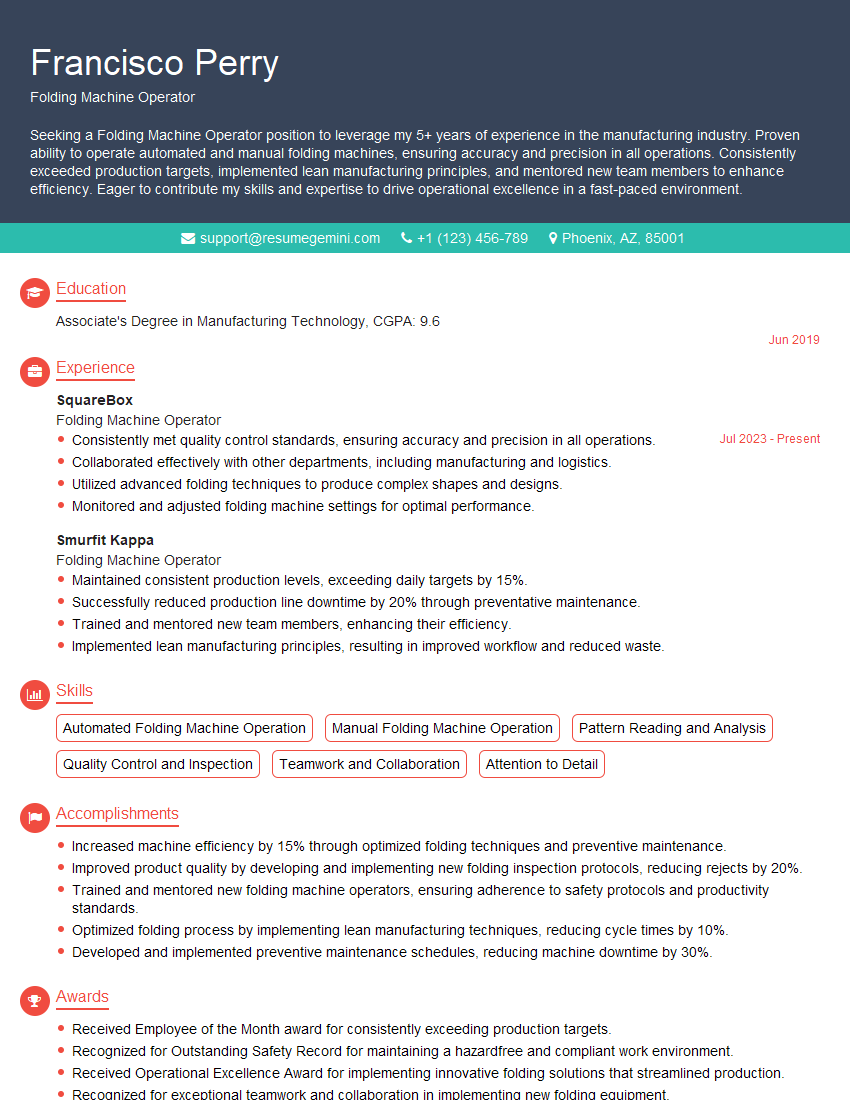
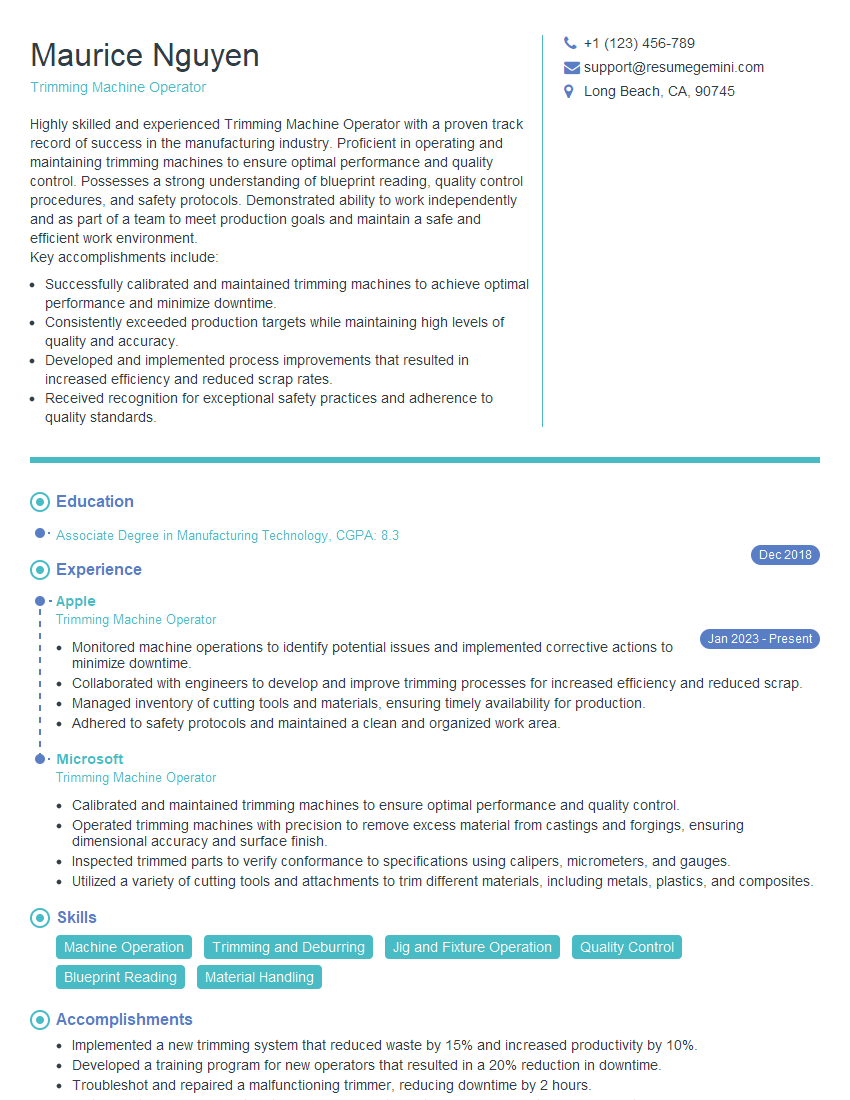
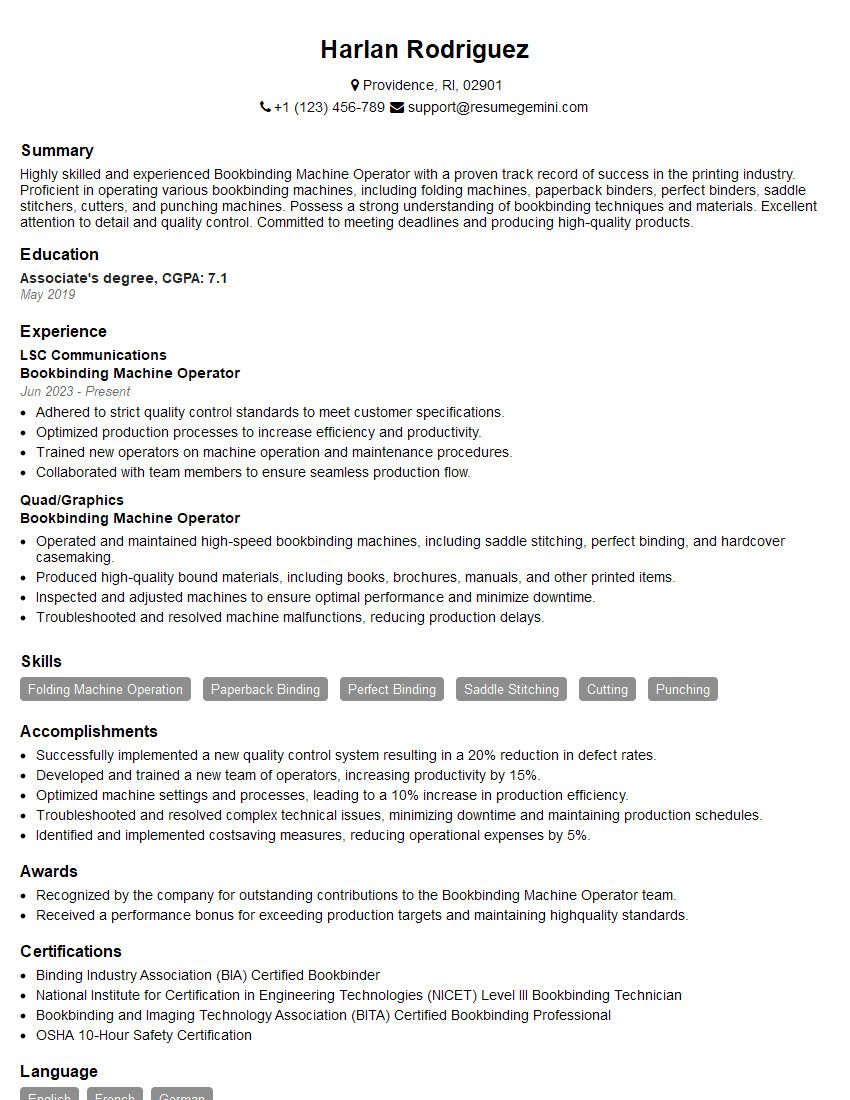
Mastering Hand Bindery Machinery Operation opens doors to a rewarding career in the printing and publishing industry, offering opportunities for advancement and specialization. A well-crafted resume is crucial for showcasing your skills and experience to potential employers. To maximize your job prospects, build an ATS-friendly resume that highlights your relevant abilities and achievements. ResumeGemini is a trusted resource that can help you create a professional and impactful resume. We provide examples of resumes tailored to Hand Bindery Machinery Operation to guide you in crafting the perfect application.
Explore more articles
Users Rating of Our Blogs
Share Your Experience
We value your feedback! Please rate our content and share your thoughts (optional).
What Readers Say About Our Blog
Very informative content, great job.
good