Every successful interview starts with knowing what to expect. In this blog, we’ll take you through the top Requirements Management (DOORS, Jira) interview questions, breaking them down with expert tips to help you deliver impactful answers. Step into your next interview fully prepared and ready to succeed.
Questions Asked in Requirements Management (DOORS, Jira) Interview
Q 1. Explain the difference between functional and non-functional requirements.
Functional requirements define what a system should do, describing its specific functionalities and features. Think of them as the system’s capabilities from a user’s perspective. Non-functional requirements, on the other hand, define how the system should perform, focusing on qualities like performance, security, and usability. They dictate the system’s constraints and quality attributes.
- Example (Functional): The system shall allow users to search for products by keyword.
- Example (Non-Functional): The system shall respond to search queries within one second. The system shall be secure against unauthorized access.
Imagine building a car. Functional requirements would be things like ‘the car should have four wheels’ and ‘the car should have a steering wheel.’ Non-functional requirements would encompass things like ‘the car should achieve 0-60mph in under 8 seconds’ (performance) and ‘the car should meet all safety standards’ (safety).
Q 2. Describe your experience using DOORS for requirements management.
I’ve extensively used DOORS for over five years across multiple projects, managing requirements from initial elicitation through to verification and validation. My experience encompasses creating and managing requirement modules, establishing baselines, and leveraging DOORS’ powerful traceability features. I’m proficient in using DOORS’ attributes, linking requirements to test cases and design documents, and generating reports to track progress and identify gaps. For example, on a recent project developing embedded software for a medical device, I used DOORS to manage over 1000 requirements, ensuring complete traceability between requirements, design specifications, test plans, and test results. This enabled efficient impact analysis during change requests, and ultimately, successful regulatory compliance.
I’m also familiar with using DOORS’ advanced features such as change management, version control, and the integration with other tools like DXL scripting for automation.
Q 3. How do you handle conflicting requirements?
Conflicting requirements are a common challenge in software development. My approach involves a structured process to resolve them effectively. First, I document the conflicting requirements clearly, identifying the stakeholders involved and the potential impact of each requirement. Then, I facilitate a collaborative discussion with stakeholders (developers, testers, product owners, etc.) to understand the root cause of the conflict. This often involves prioritization based on business value, risk mitigation, and technical feasibility.
Techniques I use include:
- Prioritization matrix: Using a matrix to weigh requirements based on various criteria (e.g., business value, technical feasibility, risk).
- Negotiation and compromise: Finding mutually agreeable solutions by adjusting or re-scoping requirements.
- Requirements decomposition: Breaking down complex requirements into smaller, less conflicting sub-requirements.
- Arbitration: If consensus cannot be reached, a designated authority makes the final decision.
The key is to document the resolution clearly, update the requirements document, and ensure all stakeholders are informed and agree on the outcome. Transparency and clear communication are crucial throughout the process.
Q 4. What techniques do you use for requirements elicitation?
Effective requirements elicitation is crucial for project success. I employ a combination of techniques tailored to the specific project context and stakeholder needs. These include:
- Interviews: Conducting structured and unstructured interviews with stakeholders to gather information about their needs and expectations.
- Workshops: Facilitating collaborative workshops to brainstorm and refine requirements with a diverse group of stakeholders.
- Surveys and questionnaires: Using surveys and questionnaires to gather feedback from a large number of stakeholders efficiently.
- Prototyping: Developing prototypes to visually demonstrate concepts and gather user feedback.
- Document analysis: Reviewing existing documentation such as business plans, user manuals, and technical specifications to identify relevant information.
- Observation: Observing users interacting with existing systems or processes to understand their workflows and identify pain points.
I believe in actively listening to stakeholders, asking clarifying questions, and challenging assumptions to ensure a thorough understanding of the requirements. This iterative process ensures that the final requirements accurately reflect the needs and expectations of all involved parties.
Q 5. How do you prioritize requirements?
Prioritizing requirements is essential for managing scope and delivering value. I use a combination of techniques based on the project’s context and stakeholder preferences. These include:
- MoSCoW method: Categorizing requirements as Must have, Should have, Could have, and Won’t have.
- Prioritization matrix: Assigning weights to different criteria (e.g., business value, risk, cost, effort) and calculating a weighted score for each requirement.
- Value vs. Effort matrix: Plotting requirements on a graph based on their value and effort to implement, prioritizing those with high value and low effort.
- Stakeholder collaboration: Engaging stakeholders in a collaborative prioritization exercise, ensuring everyone agrees on the order of importance.
Regardless of the specific method, I ensure that the prioritization is transparent, documented, and communicated clearly to all stakeholders. Regular review and adjustment of priorities is also crucial to accommodate changes and new information.
Q 6. Explain your experience using Jira for requirements management.
While DOORS is my primary tool for formal requirements management, I’ve also utilized Jira extensively for managing requirements in agile projects. Jira’s flexibility and integration with development workflows make it a valuable asset for managing user stories, epics, and tasks. I’ve used Jira to:
- Create and manage user stories: Defining user stories with acceptance criteria and linking them to development tasks.
- Track progress: Monitoring the status of requirements throughout the development lifecycle.
- Manage sprint backlogs: Prioritizing and planning user stories for each sprint.
- Facilitate communication: Utilizing Jira’s features for collaboration and communication among team members.
In agile environments, Jira excels at facilitating iterative development and quick feedback loops. I often use Jira alongside a dedicated requirements management tool like DOORS for more formal, regulated projects, where a higher level of traceability and auditability is necessary.
Q 7. How do you ensure requirements traceability?
Requirements traceability is critical for ensuring that all requirements are addressed throughout the development lifecycle and that changes are managed effectively. My approach involves establishing a clear and consistent traceability matrix that links requirements to design specifications, test cases, and other relevant artifacts.
In DOORS, I leverage its built-in traceability features to create links between requirements and other documents. In Jira, I use issue linking to connect user stories to tasks and test cases. I also employ techniques such as:
- Unique identifiers: Assigning unique identifiers to each requirement to facilitate tracking and reporting.
- Version control: Using version control systems to manage changes to requirements and track their impact.
- Regular reviews: Conducting regular reviews of the traceability matrix to identify any gaps or inconsistencies.
- Automated reporting: Generating reports to visualize traceability and highlight any missing links.
A well-defined traceability system is crucial for managing changes, addressing risks, and ensuring that the final product meets all requirements. It’s also vital for auditing and compliance in regulated industries.
Q 8. How do you manage changes to requirements?
Managing changes to requirements is crucial for successful project delivery. It involves a structured process to ensure that all stakeholders are informed, impacts are assessed, and the changes are properly documented and integrated. Think of it like building a house – if you change the blueprint mid-construction, you need to carefully manage the implications for the foundation, walls, and everything else.
- Change Request System: We typically use a formal change request system, either within DOORS (using its change management features) or Jira (leveraging its issue tracking and workflow capabilities). This ensures that all changes are tracked, reviewed, and approved before implementation.
- Impact Analysis: When a change request is submitted, we perform a thorough impact analysis to understand how the change will affect other requirements, design documents, and the overall project schedule and budget. This might involve tracing the requirement through the system using DOORS’s powerful linking capabilities.
- Version Control: Maintaining version control is vital. Both DOORS and Jira provide excellent versioning features, allowing us to track the evolution of requirements and revert to previous versions if necessary. This ensures transparency and accountability.
- Communication: Keeping stakeholders informed is paramount. We use regular updates, meetings, and email notifications to communicate changes and their potential impacts. This proactive approach minimizes misunderstandings and delays.
For example, in a recent project using DOORS, a change request to modify the user interface necessitated a review of related use cases, test cases, and design specifications. By meticulously tracking the change and its impact using DOORS’s linking and change management features, we avoided significant rework and delays.
Q 9. Describe your experience with requirements baselining.
Baselining requirements is like taking a snapshot of your project’s requirements at a specific point in time. It provides a stable reference point for future comparisons and helps manage scope creep. I’ve extensively used this process in both DOORS and Jira. In DOORS, we typically create a baseline by formally approving and locking a specific version of the requirements document. In Jira, we might use a specific sprint or release version as a baseline.
- DOORS Baselining: DOORS allows you to create baselines that lock the requirements, preventing accidental changes. This is extremely valuable during the later stages of a project. You can then compare changes against the baseline to track deviations.
- Jira Baselining (through Releases/Sprints): While Jira doesn’t have a dedicated baseline feature like DOORS, we effectively baseline using releases or sprints. Each release marks a significant milestone with a set of approved requirements. Comparing subsequent sprints against this release baseline allows us to identify scope creep or changes.
- Change Control: Regardless of the tool used, baselining is tightly coupled with change control. Any change after baselining requires a formal change request process.
In one project, baselining in DOORS allowed us to easily compare the requirements before and after a major design review, highlighting changes made and ensuring consistency with the original objectives.
Q 10. What is the importance of requirements verification and validation?
Requirements verification and validation are essential for ensuring that the developed system meets stakeholder needs and expectations. Think of verification as checking if you’re building the product *right*, and validation as checking if you’re building the *right* product.
- Verification: This focuses on whether the system meets its specified requirements. We use various techniques like reviews, inspections, and static analysis to check for consistency, completeness, and correctness of the requirements themselves and the subsequent artifacts (designs, code, etc.).
- Validation: This focuses on whether the system meets the actual needs and expectations of the stakeholders. This involves activities like user acceptance testing, demonstrations, and usability studies to ensure the product meets its intended purpose.
Without proper verification and validation, you risk developing a system that is technically sound but fails to address the actual user needs, leading to project failure. In a recent project, rigorous user acceptance testing (a validation technique) revealed a critical usability issue that would have gone unnoticed without this crucial validation step.
Q 11. How do you handle ambiguous requirements?
Ambiguous requirements are a common challenge. The key is to proactively identify and clarify them early in the lifecycle to avoid costly rework later. Think of it like a poorly written recipe – you wouldn’t be able to make a cake successfully if the instructions were vague.
- Stakeholder Collaboration: We actively engage stakeholders to clarify ambiguous points. This might involve workshops, meetings, or one-on-one discussions to gain a deeper understanding of their expectations.
- Requirements Decomposition: Breaking down complex requirements into smaller, more manageable units can often help reveal ambiguities.
- Use Cases & Examples: Illustrating requirements with use cases or concrete examples significantly reduces ambiguity. A picture is worth a thousand words!
- Prototyping: Creating a prototype can be invaluable in clarifying ambiguous requirements, particularly those related to user interface or functionality.
In one project, an ambiguous requirement regarding ‘user-friendly navigation’ was clarified through user interviews and prototyping, resulting in a much more intuitive and user-friendly system.
Q 12. Describe your experience with requirements decomposition.
Requirements decomposition is the process of breaking down high-level requirements into smaller, more manageable units. Think of it like dividing a large task into smaller, more achievable subtasks. It is essential for effective planning, tracking, and development.
- Hierarchical Decomposition: We use a hierarchical approach, starting with top-level requirements and progressively breaking them down into lower-level requirements, sub-requirements, and finally, specific tasks.
- Work Breakdown Structure (WBS): The WBS is a valuable tool for visually representing the hierarchical breakdown of requirements, often used in conjunction with DOORS or Jira.
- Traceability Matrix: Maintaining a traceability matrix ensures that all lower-level requirements can be traced back to their parent requirements, allowing for easy impact analysis and management of changes.
For example, a high-level requirement like ‘Develop a secure login system’ could be decomposed into sub-requirements such as ‘Implement two-factor authentication’, ‘Encrypt user passwords’, and ‘Integrate with an identity provider’. This decomposition makes the development process more manageable and efficient.
Q 13. Explain your process for creating a requirements specification document.
Creating a comprehensive requirements specification document is a critical step in any project. The process typically involves several iterative steps.
- Requirements Elicitation: Gathering requirements from various stakeholders through interviews, surveys, workshops, and document analysis. This is crucial to understand the project’s goals and objectives.
- Requirements Analysis: Analyzing the elicited requirements to identify inconsistencies, ambiguities, and conflicts. This step often involves creating use cases, user stories, and process flow diagrams.
- Requirements Prioritization: Prioritizing requirements based on factors like risk, cost, and business value. This ensures that the most critical requirements are addressed first.
- Requirements Specification Writing: Writing a clear, concise, and unambiguous requirements specification document. This document should include detailed descriptions of the system’s functionalities, performance requirements, and constraints.
- Review and Approval: The document undergoes rigorous review and approval by all relevant stakeholders to ensure that it accurately reflects their needs and expectations.
The resulting document serves as a blueprint for the development team, providing a shared understanding of what needs to be built. We typically use DOORS to manage this document, leveraging its features for version control, change management, and impact analysis.
Q 14. How do you ensure requirements are understandable to stakeholders?
Ensuring that requirements are understandable by all stakeholders is crucial for project success. Poorly written requirements can lead to misunderstandings, rework, and delays. Think of it like writing a clear instruction manual – if it’s confusing, the user won’t be able to use the product effectively.
- Plain Language: Avoid technical jargon and use plain language that is easily understood by everyone, regardless of their technical background.
- Consistent Terminology: Maintain consistency in terminology throughout the document to avoid confusion.
- Visual Aids: Use diagrams, flowcharts, and mockups to illustrate complex requirements and make them more accessible.
- User Stories and Use Cases: Employ user stories (e.g., ‘As a user, I want to be able to log in securely so that I can access my account’) and use cases to present requirements from a user’s perspective.
- Reviews and Feedback: Conduct regular reviews and solicit feedback from stakeholders to ensure that the requirements are clear and understandable to everyone involved.
In one project, we used user stories and visual mockups to effectively communicate complex user interface requirements to both the technical team and the business stakeholders, ensuring everyone was on the same page.
Q 15. How do you use DOORS for requirements tracing?
Requirements tracing in DOORS involves establishing links between different levels of requirements, ensuring that each requirement is traced from its origin (e.g., a high-level business need) through its implementation (e.g., design specifications, test cases). This ensures that all requirements are addressed and any changes ripple through the entire system.
For instance, you might link a high-level requirement like “The system shall be user-friendly” to several lower-level requirements, such as “The login process shall take no more than 5 seconds” and “The system shall provide clear error messages”. In DOORS, this is typically done using the linking features, creating traceability matrices to visualize these relationships. These links are crucial for impact analysis, ensuring that changes to one requirement are properly evaluated for their effects on other linked items. You can also trace requirements to test cases, ensuring that all requirements are tested, and to design documents, ensuring that the design meets the requirements.
Imagine building a house. The high-level requirement is “build a comfortable house.” This links to lower-level requirements like “build a strong foundation,” “install efficient heating,” and “use high-quality windows.” Tracing ensures that if the heating requirement changes, the impact on the overall comfort is easily assessed and adjusted.
Career Expert Tips:
- Ace those interviews! Prepare effectively by reviewing the Top 50 Most Common Interview Questions on ResumeGemini.
- Navigate your job search with confidence! Explore a wide range of Career Tips on ResumeGemini. Learn about common challenges and recommendations to overcome them.
- Craft the perfect resume! Master the Art of Resume Writing with ResumeGemini’s guide. Showcase your unique qualifications and achievements effectively.
- Don’t miss out on holiday savings! Build your dream resume with ResumeGemini’s ATS optimized templates.
Q 16. How do you use Jira for requirements tracking?
Jira, while not primarily a requirements management tool like DOORS, can effectively track requirements, particularly within an agile context. We typically use Jira’s issue tracking capabilities to manage requirements as user stories or epics. Each user story represents a specific requirement, broken down into smaller, manageable tasks. Custom fields can be added to track attributes like priority, status, and dependencies, mirroring functionalities found in more specialized RM tools like DOORS.
For example, a user story might be: “As a user, I want to be able to log in securely so that I can access my account.” This story might have sub-tasks for database interaction, UI design, and security testing. Linking these tasks within Jira’s workflow helps track progress and identify bottlenecks. The use of Jira’s reporting features provides visibility into the status of all requirements. While it lacks DOORS’ sophisticated linking and analysis capabilities, it excels in managing the iterative development cycle and real-time collaboration.
Think of Jira as a dynamic construction site whiteboard; you add stories (requirements), assign them to workers (developers), and track their progress in real-time. While less structured than DOORS’ architectural plans, it allows for agile adjustments.
Q 17. What are the benefits of using DOORS and Jira together?
Combining DOORS and Jira leverages the strengths of both tools. DOORS provides a robust environment for managing and tracing complex requirements, especially in regulated industries, creating a centralized repository for all requirements documentation. Jira’s agile workflow and issue tracking capabilities enable efficient collaboration and real-time progress monitoring. Integrating them allows for bidirectional traceability, linking high-level requirements in DOORS to their implementation details tracked as tasks/stories in Jira.
A typical workflow might involve defining and managing requirements in DOORS, then breaking down those requirements into user stories in Jira. As developers work on those stories, updates in Jira are reflected in DOORS, maintaining traceability. This integration offers a comprehensive view of requirements throughout their entire lifecycle, improving communication and reducing the risk of misalignment between requirements and implementation.
Imagine DOORS as the detailed blueprint of a building, and Jira as the construction management system. Using both ensures both thorough planning and efficient execution. By connecting both systems, changes to the blueprint immediately inform the on-site team and vice versa.
Q 18. How do you handle stakeholder conflicts regarding requirements?
Stakeholder conflicts are inevitable in requirements management. I address these by facilitating open communication and collaboration. I start by actively listening to each stakeholder’s perspective, understanding their concerns, and documenting their needs objectively. This often involves creating a neutral platform for discussion, such as a facilitated workshop or series of meetings.
Next, I utilize techniques like prioritisation matrices (e.g., MoSCoW method: Must have, Should have, Could have, Won’t have) to help stakeholders evaluate and rank requirements based on their importance and feasibility. This helps visualize trade-offs and reach consensus. Compromise and negotiation are key. Sometimes, requirements are modified, combined, or even removed to reach an agreeable solution. Documentation of decisions and trade-offs is crucial for transparency and future reference.
Conflict resolution isn’t about winning or losing; it’s about finding a solution that satisfies the project’s objectives while respecting stakeholder interests. Think of it like mediating a family dispute – you focus on finding a common ground that respects everyone’s needs.
Q 19. Describe your experience with requirements modelling.
My experience with requirements modelling encompasses various techniques, including use case modelling, data flow diagrams, and state diagrams. I utilize these to visually represent system behaviour and data flow, ensuring clear communication and understanding among stakeholders. For example, use case modelling helps to define how a user interacts with the system, while data flow diagrams illustrate how data is processed. State diagrams show the different states a system can be in and how it transitions between them.
I adapt my modelling approach based on the project’s complexity and the stakeholders’ technical proficiency. For less technical stakeholders, simpler diagrams and narratives are used. For more technical audiences, detailed models with precise notations are employed. The goal is to create models that are both accurate and easily understandable by all stakeholders, facilitating a shared understanding of the system requirements.
Imagine designing a vending machine. A use case model would describe the user interaction (insert money, select item, receive item), a data flow diagram would show how money and product information flow through the system, and a state diagram would detail the different states the machine could be in (idle, accepting money, dispensing item, out of stock).
Q 20. What are some common challenges in requirements management, and how have you overcome them?
Common challenges in requirements management include vague requirements, conflicting stakeholder needs, changing priorities, and inadequate communication. I’ve overcome these by employing several strategies.
- Vague requirements: I proactively engage stakeholders through elicitation techniques like interviews and workshops to clarify ambiguities and ensure clear, concise statements. I also use techniques such as prototyping to visually represent requirements and confirm understanding.
- Conflicting needs: Prioritization and negotiation techniques (as mentioned earlier), along with trade-off analysis, help resolve conflicts and find mutually acceptable solutions.
- Changing priorities: Implementing a robust change management process, with clearly defined procedures for evaluating and incorporating changes, helps manage evolving requirements. Regular communication and transparency are vital.
- Inadequate communication: Using a combination of visual modeling techniques (diagrams, prototypes) and clear, concise documentation ensure everyone is on the same page. Regular communication and feedback loops are vital to ensure everyone stays informed.
In one project, we faced rapidly changing business priorities. By implementing an agile approach with frequent reviews and close collaboration with stakeholders, we successfully adapted to these changes without compromising the project’s overall goals. This required frequent communication and flexibility on everyone’s part, but the result was a product that met the evolving needs of the business.
Q 21. How familiar are you with different requirements elicitation techniques (e.g., interviews, workshops, surveys)?
I’m highly familiar with various requirements elicitation techniques, tailoring my approach to the specific context. Interviews are excellent for gathering detailed information from individuals, while workshops facilitate brainstorming and collaborative sessions. Surveys are useful for gathering broader input from a larger group of stakeholders. Each has its strengths and weaknesses.
- Interviews: Effective for gaining deep insights from individuals but can be time-consuming and potentially biased.
- Workshops: Facilitate collaboration and idea generation, but require careful planning and facilitation to ensure productive sessions.
- Surveys: Enable gathering data from many stakeholders quickly but can lack detail and may suffer from low response rates.
- Prototyping: Allows for early feedback and validation of requirements through hands-on interaction. It’s crucial to test assumptions early and often.
- Document analysis: Reviewing existing documents helps provide context and understanding of past projects and existing systems.
For example, in one project, we started with surveys to understand general user needs, followed by interviews with key stakeholders to delve into specific details. We then conducted workshops to refine the requirements collaboratively and developed prototypes to test usability and confirm understanding with end-users. A multi-faceted approach provides comprehensive requirements.
Q 22. Explain your understanding of requirements prioritization techniques (e.g., MoSCoW method).
Requirements prioritization is crucial for managing projects effectively. It involves ranking requirements based on their importance and urgency, allowing teams to focus on the most valuable features first. The MoSCoW method is a popular technique that categorizes requirements into four levels: Must have (essential for project success), Should have (important but not critical), Could have (desirable but not essential), and Won’t have (postponed or eliminated).
For example, imagine developing a new e-commerce website. ‘Must have’ requirements would include secure payment processing and a functional shopping cart. ‘Should have’ features might be customer reviews and a wish list. ‘Could have’ features could be social media integration, and ‘Won’t have’ features might include advanced analytics in the initial release. This prioritization helps manage scope and ensure that the core functionality is delivered first. Other techniques include value vs. effort analysis, where features are ranked based on the business value they deliver relative to the effort required to implement them, and Kano model, that identifies requirements based on customer satisfaction.
Q 23. How do you ensure the completeness and consistency of requirements?
Ensuring complete and consistent requirements is paramount. Completeness means every aspect of the system’s functionality and behavior is clearly defined. Consistency means there are no conflicting or contradictory requirements. I achieve this through several methods. Firstly, I rigorously review each requirement, using checklists and templates to ensure all necessary information (e.g., description, priority, acceptance criteria) is captured. Secondly, I employ traceability matrices in DOORS or Jira to track relationships between requirements, specifications, design documents, test cases, and other artifacts. This helps identify inconsistencies and gaps.
Thirdly, I facilitate requirements reviews and workshops, involving stakeholders from different teams (business, development, testing). This collaborative approach helps identify ambiguities and conflicting requirements early on. Regular updates and version control within the requirements management tools prevent conflicts arising from simultaneous edits. Formal reviews and sign-offs ensure that all stakeholders agree on the final requirements set before development begins. Finally, using tools like DOORS with its powerful linking and baselining capabilities ensures better management and reduces chances of inconsistencies. Think of it like building a house: a solid foundation (complete requirements) is vital, and each part needs to fit perfectly (consistent requirements).
Q 24. Describe your experience with requirements management tools other than DOORS and Jira.
Beyond DOORS and Jira, I’ve worked with several other requirements management tools, including Polarion ALM and Jama Software. Polarion, like DOORS, is a robust, enterprise-level solution best suited for large, complex projects. It excels at managing complex relationships between requirements and other artifacts. Jama Software is a more agile and user-friendly tool, well-suited for projects that require quick iteration and collaboration. My experience across these tools has given me a broad understanding of their strengths and weaknesses, allowing me to choose the most appropriate tool for each project based on its specific needs and team preferences. For instance, for a smaller, agile project, Jama’s intuitive interface and streamlined workflow might be preferable to DOORS’ more extensive features, which may be overkill.
Q 25. How do you contribute to the creation of a requirements management plan?
Contributing to a requirements management plan involves defining a comprehensive strategy for managing requirements throughout the project lifecycle. This includes identifying stakeholders, defining roles and responsibilities, establishing processes for requirements elicitation, analysis, specification, validation, and verification, and selecting and configuring appropriate tools like DOORS or Jira. I focus on creating a plan that is tailored to the project’s size, complexity, and methodology. For example, a large, waterfall project will require a more formal and structured plan than a smaller, agile project. The plan must also address how requirements changes will be managed, how progress will be tracked, and how quality will be ensured.
A key aspect of the plan is determining the requirements traceability process. This clarifies how requirements will be linked to design documents, test cases, and other artifacts. Furthermore, the plan must include a communication strategy to ensure that all stakeholders are informed of changes and updates. A well-defined requirements management plan is like a roadmap for the project, guiding the team and ensuring that requirements are handled efficiently and effectively. It provides a framework to manage the often-chaotic nature of requirements during the project life cycle.
Q 26. Explain your understanding of the software development lifecycle (SDLC) and how requirements fit into it.
The Software Development Lifecycle (SDLC) is a structured process for developing software. Requirements management is an integral part of every phase of the SDLC. In the initial phases (requirements elicitation, analysis), requirements are gathered and analyzed from stakeholders. They are then documented and refined during the design phase and used to create specifications. During the implementation and testing phases, the requirements serve as the basis for verifying that the software functions as intended. Finally, in the deployment and maintenance phases, requirements are reviewed and updated based on user feedback.
Different SDLC models, such as Waterfall, Agile, and Spiral, handle requirements differently. Waterfall typically involves a linear approach, with requirements defined upfront and minimally changed throughout. Agile methodologies encourage iterative development, with requirements evolving throughout the project. Regardless of the chosen SDLC, effective requirements management is essential for creating a successful software product that meets stakeholder needs and expectations. Think of requirements as the blueprint of the building; they guide every stage of the construction process, from initial design to final inspection.
Q 27. How do you handle requirements that are constantly changing?
Handling constantly changing requirements is a common challenge in software development. My approach involves establishing a formal change management process. This process typically includes a change request form, a review process to assess the impact of the change, and an approval process. Using a version control system within the requirements management tool allows us to track changes effectively. Each change is logged, and the rationale is documented. Regular communication with stakeholders is crucial to manage expectations and keep everyone informed of updates. It’s important to use the prioritization techniques discussed earlier to understand the impact of the change and allocate resources efficiently.
However, it’s also crucial to balance flexibility with stability. Excessive changes can disrupt the project, so it’s important to establish a threshold for evaluating change requests. Prioritization and impact assessment are crucial in deciding whether to incorporate a change immediately, defer it to a later release, or reject it altogether. The key is to create a controlled process that allows for necessary adjustments without causing chaos. Think of it as navigating a ship in a storm – you need to adjust the course according to the changing winds, but not so drastically that the ship capsizes.
Q 28. Describe a time you had to resolve a conflict between technical and business requirements.
In a previous project, we faced a conflict between a business requirement for a feature delivering real-time analytics and the technical constraint of achieving that level of performance within the project timeline and budget. The business team wanted instant analytics to aid in decision-making; however, the technical team argued that implementing it would require significant additional development effort and potentially compromise the stability of the core system.
To resolve this, I facilitated a collaborative workshop between the business and technical teams. We explored alternative solutions, such as providing near real-time analytics instead of instant data, prioritizing the data most critical to business decisions and potentially delaying less critical components. This involved presenting various trade-off scenarios, outlining the implications of each decision on both time and functionality. Through open communication and data-driven analysis, we reached a compromise that satisfied both the business needs and the technical constraints. This involved a phased implementation: delivering a basic version of the analytics in the initial release and upgrading the analytics capabilities in subsequent releases. The success of this resolution lay in clear communication, mutual understanding, and the ability to find a middle ground that served the overall project goals.
Key Topics to Learn for Requirements Management (DOORS, Jira) Interview
- Requirements Elicitation Techniques: Understanding various methods for gathering requirements from stakeholders (interviews, workshops, document analysis) and their practical application in real-world projects.
- Requirements Analysis and Specification: Developing clear, concise, and unambiguous requirements using appropriate techniques like use cases, user stories, and functional specifications. Practice translating complex needs into actionable items.
- DOORS Fundamentals: Mastering DOORS navigation, creating and managing modules, linking requirements, tracing requirements throughout the lifecycle, and utilizing DOORS’ reporting capabilities.
- Jira for Requirements Management: Using Jira effectively to manage requirements, track progress, and collaborate with the development team. Understanding the integration of Jira with other project management tools.
- Requirements Prioritization and Management: Applying techniques like MoSCoW analysis and value-based prioritization to manage competing requirements and optimize development efforts. This includes understanding the impact of prioritization on project timelines and budgets.
- Requirements Verification and Validation: Understanding the difference between verification and validation, and applying appropriate techniques to ensure requirements are met. This includes test case development and review processes.
- Change Management in Requirements: Handling changes effectively throughout the project lifecycle. Understanding the impact of changes on the project and implementing appropriate change control procedures.
- Collaboration and Communication: Effectively communicating requirements to stakeholders, managing expectations, and resolving conflicts. Understanding the importance of clear and concise communication in a team environment.
- Requirements Traceability: Understanding the importance of traceability and how to implement it effectively using DOORS and Jira. This includes linking requirements to test cases, design documents, and other artifacts.
- Problem-Solving and Critical Thinking: Applying problem-solving skills to identify and resolve requirement-related issues. Demonstrating critical thinking to anticipate potential problems and mitigate risks.
Next Steps
Mastering Requirements Management with DOORS and Jira is crucial for career advancement in software development and related fields. It demonstrates valuable organizational, communication, and technical skills highly sought after by employers. To significantly boost your job prospects, focus on creating an ATS-friendly resume that highlights your skills and experience effectively. ResumeGemini is a trusted resource that can help you build a professional and impactful resume. Examples of resumes tailored specifically to Requirements Management roles using DOORS and Jira are available to help guide you.
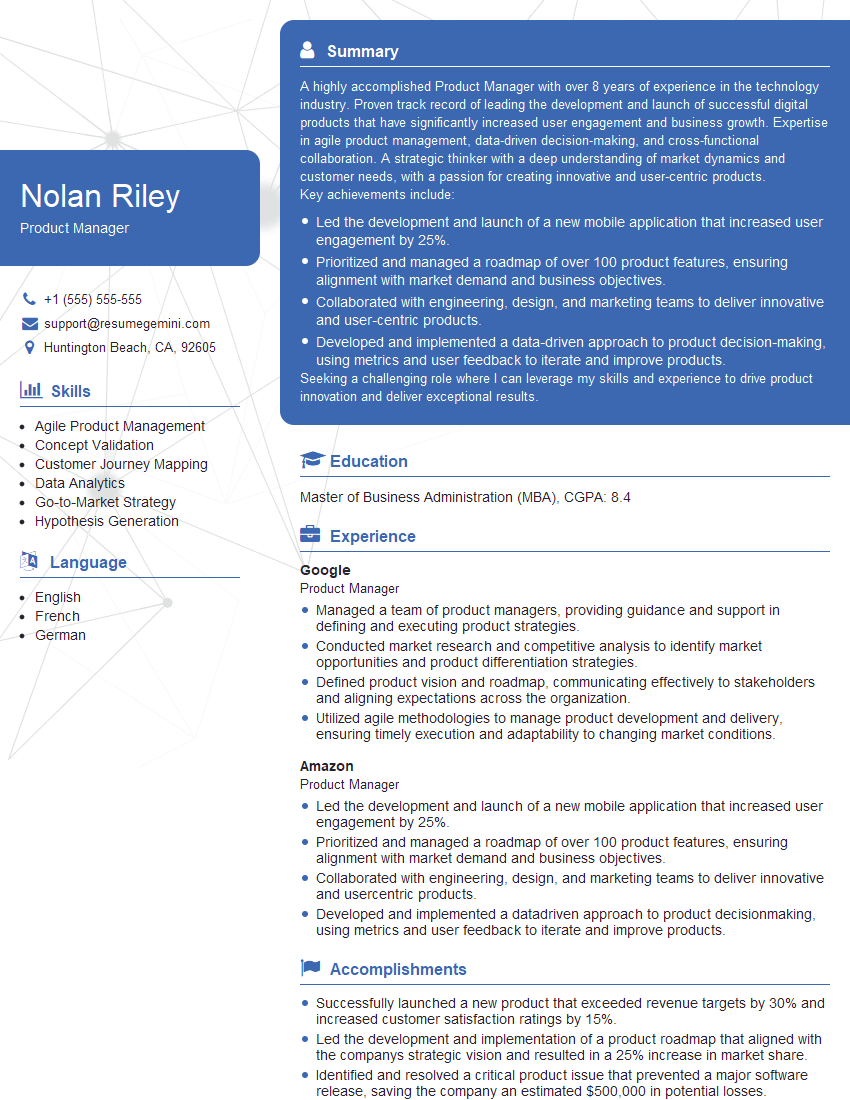
Product Manager Resume Sample
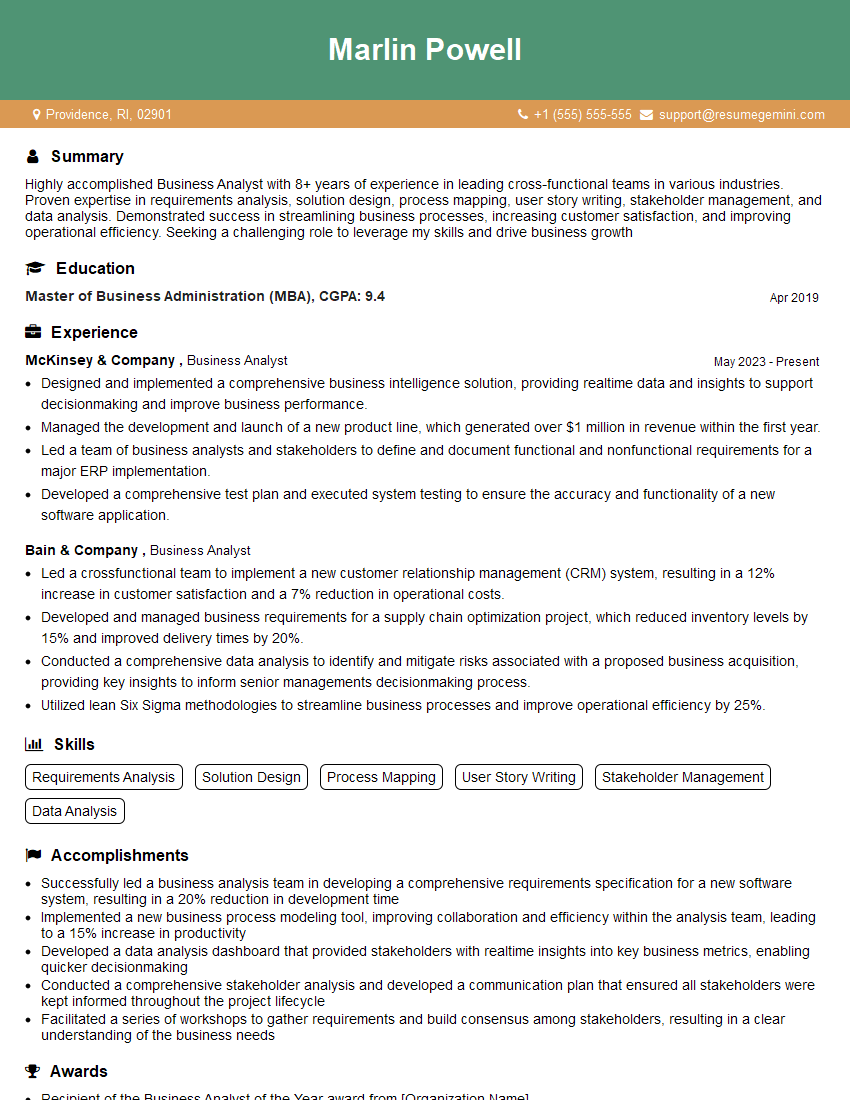
Business Analyst Resume Sample
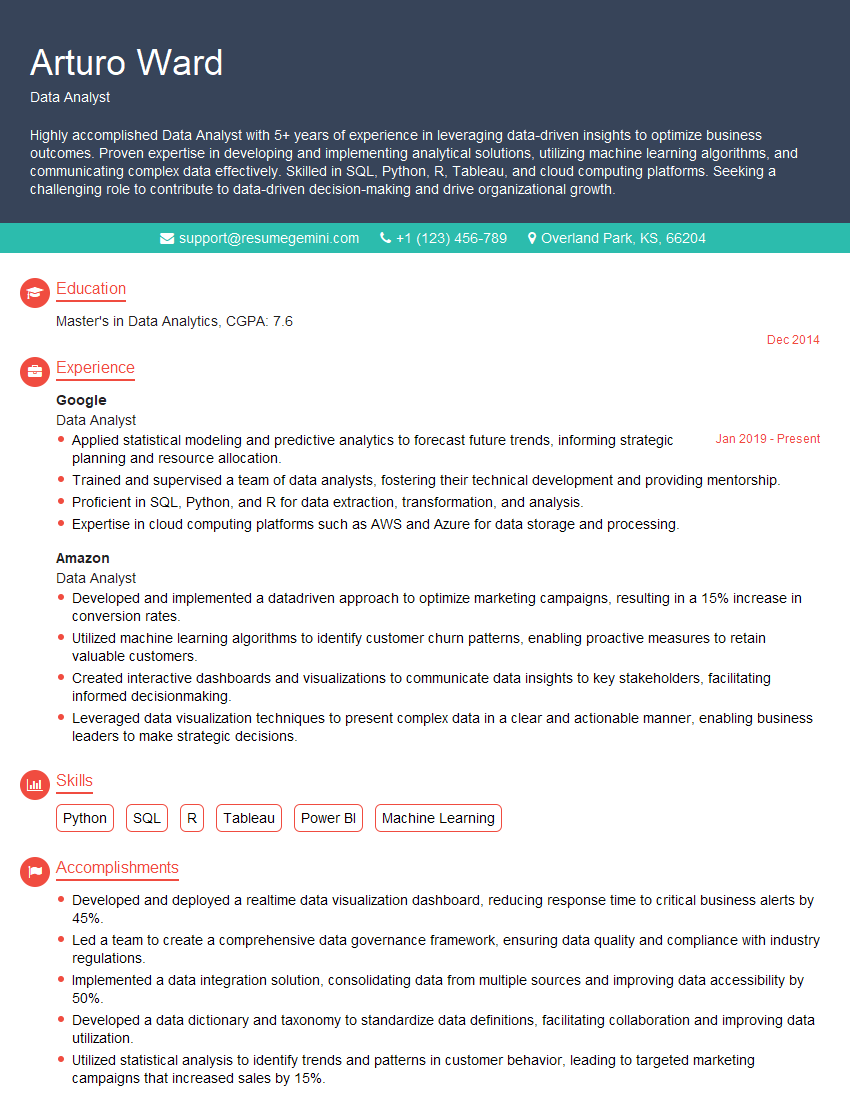
Data Analyst Resume Sample
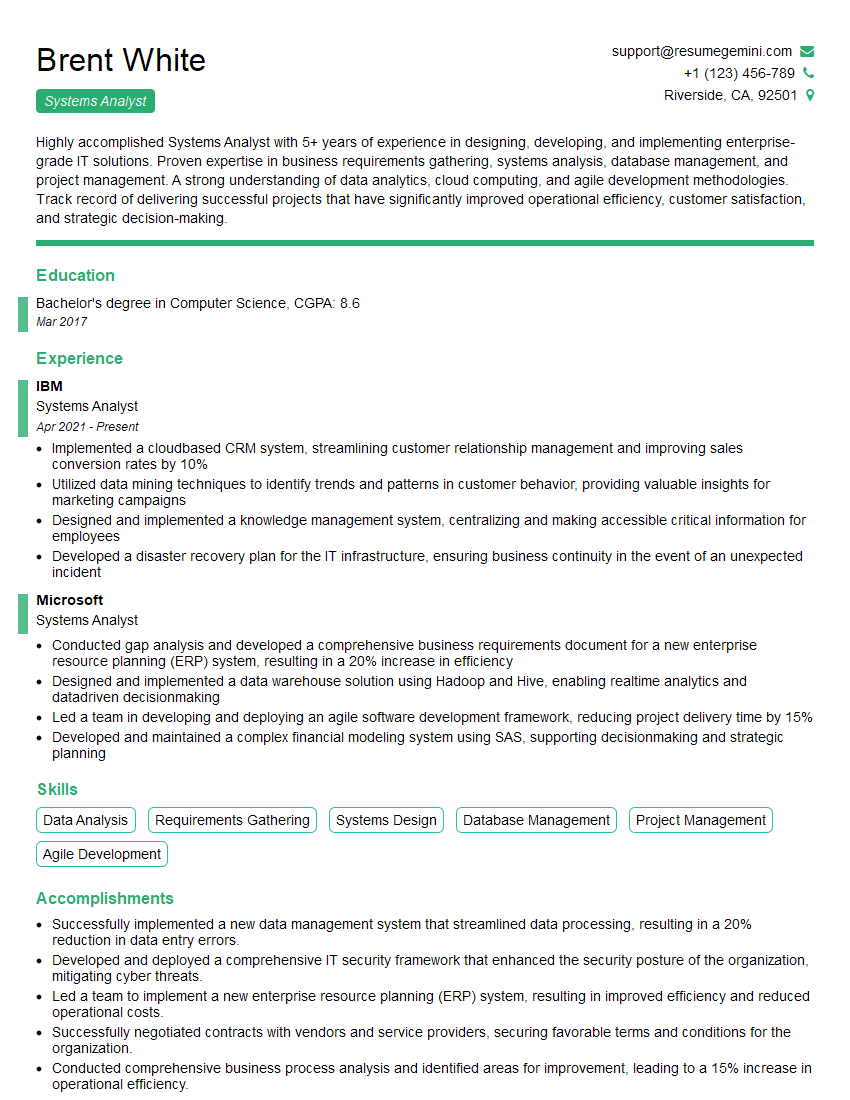
Systems Analyst Resume Sample

Software Requirements Engineer Resume Sample
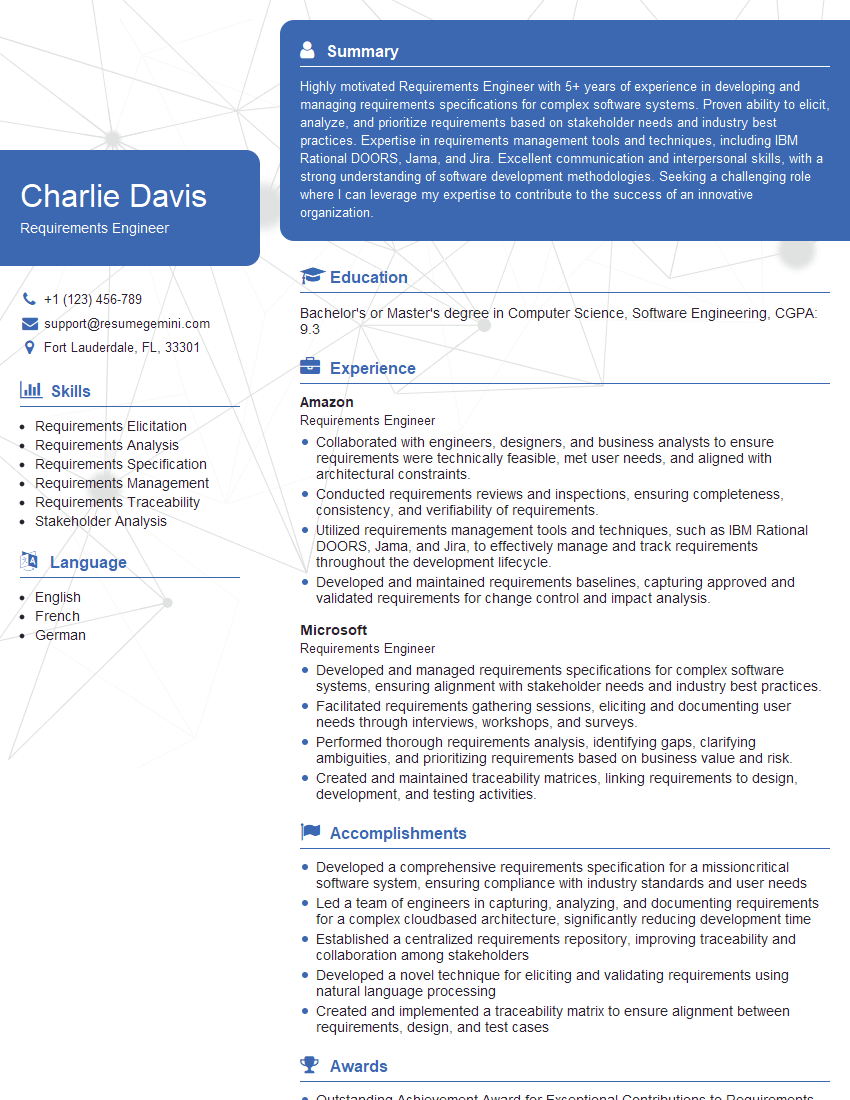
Requirements Engineer Resume Sample
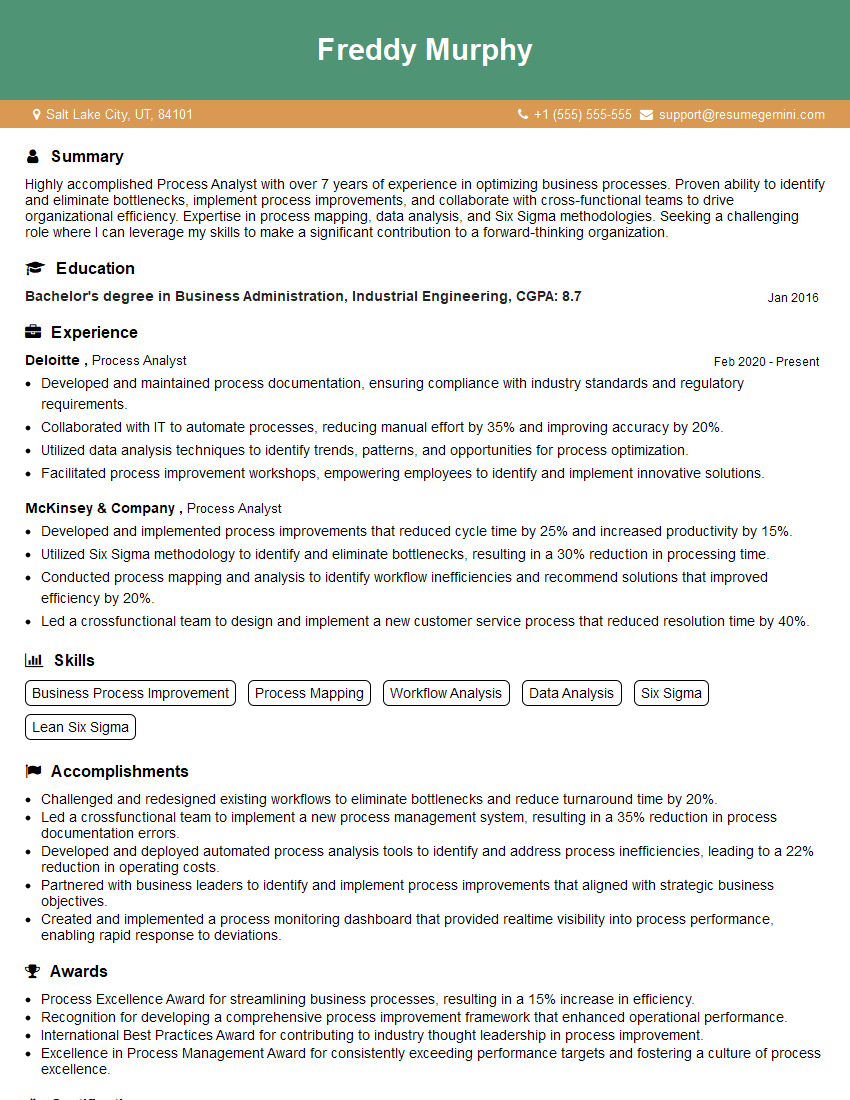
Process Analyst Resume Sample
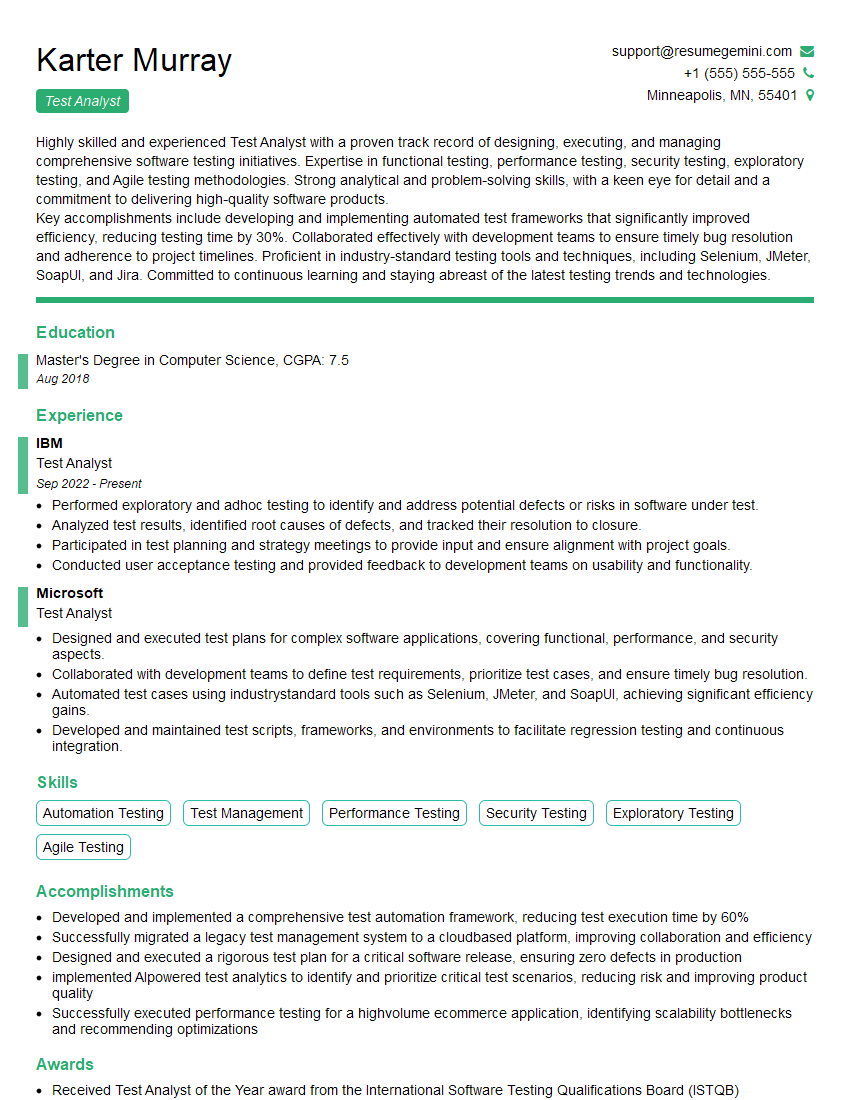
Test Analyst Resume Sample
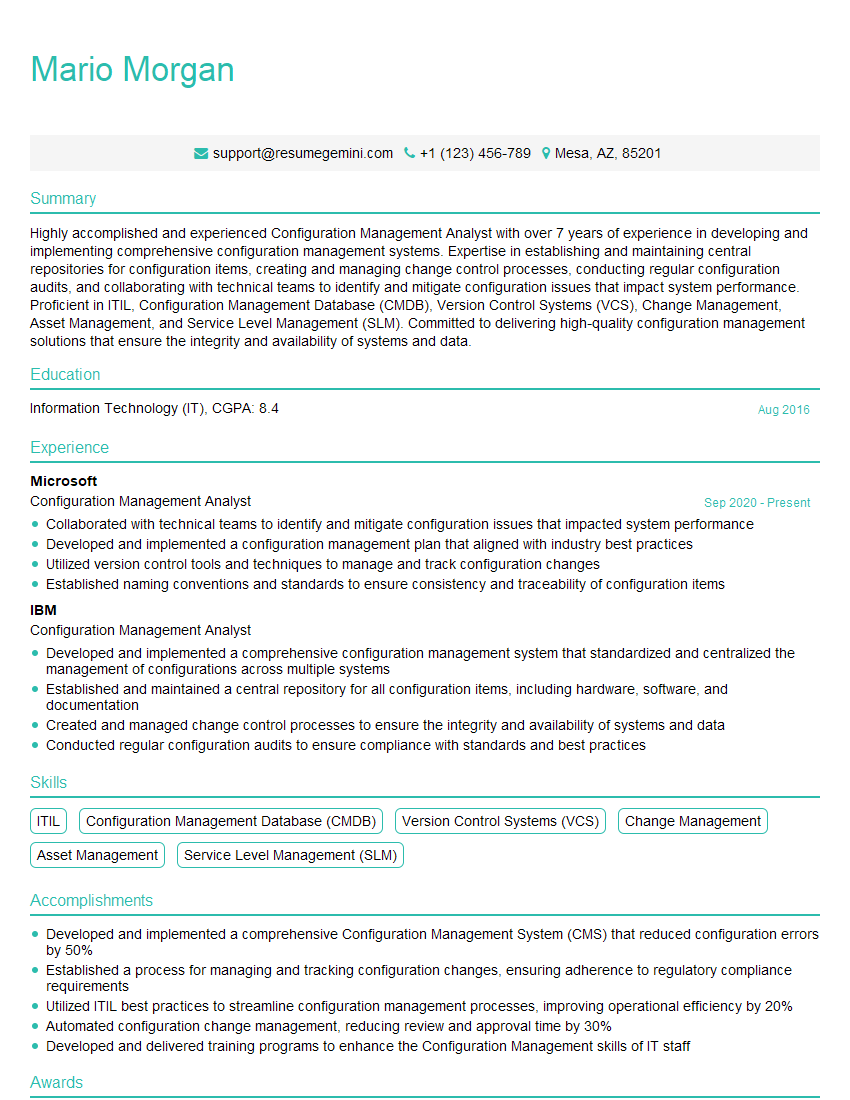
Configuration Management Analyst Resume Sample
Quality Assurance Engineer Resume Sample

Technical Writer Resume Sample
IT Business Analyst Resume Sample
Explore more articles
Users Rating of Our Blogs
Share Your Experience
We value your feedback! Please rate our content and share your thoughts (optional).
What Readers Say About Our Blog
Attention music lovers!
Wow, All the best Sax Summer music !!!
Spotify: https://open.spotify.com/artist/6ShcdIT7rPVVaFEpgZQbUk
Apple Music: https://music.apple.com/fr/artist/jimmy-sax-black/1530501936
YouTube: https://music.youtube.com/browse/VLOLAK5uy_noClmC7abM6YpZsnySxRqt3LoalPf88No
Other Platforms and Free Downloads : https://fanlink.tv/jimmysaxblack
on google : https://www.google.com/search?q=22+AND+22+AND+22
on ChatGPT : https://chat.openai.com?q=who20jlJimmy20Black20Sax20Producer
Get back into the groove with Jimmy sax Black
Best regards,
Jimmy sax Black
www.jimmysaxblack.com
Hi I am a troller at The aquatic interview center and I suddenly went so fast in Roblox and it was gone when I reset.
Hi,
Business owners spend hours every week worrying about their website—or avoiding it because it feels overwhelming.
We’d like to take that off your plate:
$69/month. Everything handled.
Our team will:
Design a custom website—or completely overhaul your current one
Take care of hosting as an option
Handle edits and improvements—up to 60 minutes of work included every month
No setup fees, no annual commitments. Just a site that makes a strong first impression.
Find out if it’s right for you:
https://websolutionsgenius.com/awardwinningwebsites
Hello,
we currently offer a complimentary backlink and URL indexing test for search engine optimization professionals.
You can get complimentary indexing credits to test how link discovery works in practice.
No credit card is required and there is no recurring fee.
You can find details here:
https://wikipedia-backlinks.com/indexing/
Regards
NICE RESPONSE TO Q & A
hi
The aim of this message is regarding an unclaimed deposit of a deceased nationale that bears the same name as you. You are not relate to him as there are millions of people answering the names across around the world. But i will use my position to influence the release of the deposit to you for our mutual benefit.
Respond for full details and how to claim the deposit. This is 100% risk free. Send hello to my email id: lukachachibaialuka@gmail.com
Luka Chachibaialuka
Hey interviewgemini.com, just wanted to follow up on my last email.
We just launched Call the Monster, an parenting app that lets you summon friendly ‘monsters’ kids actually listen to.
We’re also running a giveaway for everyone who downloads the app. Since it’s brand new, there aren’t many users yet, which means you’ve got a much better chance of winning some great prizes.
You can check it out here: https://bit.ly/callamonsterapp
Or follow us on Instagram: https://www.instagram.com/callamonsterapp
Thanks,
Ryan
CEO – Call the Monster App
Hey interviewgemini.com, I saw your website and love your approach.
I just want this to look like spam email, but want to share something important to you. We just launched Call the Monster, a parenting app that lets you summon friendly ‘monsters’ kids actually listen to.
Parents are loving it for calming chaos before bedtime. Thought you might want to try it: https://bit.ly/callamonsterapp or just follow our fun monster lore on Instagram: https://www.instagram.com/callamonsterapp
Thanks,
Ryan
CEO – Call A Monster APP
To the interviewgemini.com Owner.
Dear interviewgemini.com Webmaster!
Hi interviewgemini.com Webmaster!
Dear interviewgemini.com Webmaster!
excellent
Hello,
We found issues with your domain’s email setup that may be sending your messages to spam or blocking them completely. InboxShield Mini shows you how to fix it in minutes — no tech skills required.
Scan your domain now for details: https://inboxshield-mini.com/
— Adam @ InboxShield Mini
support@inboxshield-mini.com
Reply STOP to unsubscribe
Hi, are you owner of interviewgemini.com? What if I told you I could help you find extra time in your schedule, reconnect with leads you didn’t even realize you missed, and bring in more “I want to work with you” conversations, without increasing your ad spend or hiring a full-time employee?
All with a flexible, budget-friendly service that could easily pay for itself. Sounds good?
Would it be nice to jump on a quick 10-minute call so I can show you exactly how we make this work?
Best,
Hapei
Marketing Director
Hey, I know you’re the owner of interviewgemini.com. I’ll be quick.
Fundraising for your business is tough and time-consuming. We make it easier by guaranteeing two private investor meetings each month, for six months. No demos, no pitch events – just direct introductions to active investors matched to your startup.
If youR17;re raising, this could help you build real momentum. Want me to send more info?
Hi, I represent an SEO company that specialises in getting you AI citations and higher rankings on Google. I’d like to offer you a 100% free SEO audit for your website. Would you be interested?
Hi, I represent an SEO company that specialises in getting you AI citations and higher rankings on Google. I’d like to offer you a 100% free SEO audit for your website. Would you be interested?