The right preparation can turn an interview into an opportunity to showcase your expertise. This guide to Data Analysis and Performance Optimization interview questions is your ultimate resource, providing key insights and tips to help you ace your responses and stand out as a top candidate.
Questions Asked in Data Analysis and Performance Optimization Interview
Q 1. Explain the difference between OLTP and OLAP databases.
OLTP (Online Transaction Processing) and OLAP (Online Analytical Processing) databases serve fundamentally different purposes. Think of OLTP as your daily banking app – it’s designed for rapid, short transactions. OLAP, on the other hand, is like a financial analyst’s dashboard, built for complex queries across large datasets to gain insights.
- OLTP: Optimized for frequent, short transactions. Data is highly structured and normalized to ensure data integrity. Queries are typically simple, focused on individual records (e.g., updating a bank balance). Examples include systems for e-commerce transactions, airline reservations, or point-of-sale systems.
- OLAP: Designed for complex analytical queries across massive datasets. Data is often denormalized for faster query processing. Queries are typically multi-dimensional, involving aggregations and summarizations (e.g., calculating total sales by region and product). Examples include business intelligence dashboards, data warehousing systems, and financial reporting systems.
In short: OLTP is about doing things quickly and efficiently; OLAP is about analyzing things comprehensively.
Q 2. Describe your experience with SQL. What are your favorite queries?
I have extensive experience with SQL, having used it for over 8 years across various projects. My proficiency encompasses everything from basic queries to complex stored procedures and window functions. I’m comfortable working with different database systems, including MySQL, PostgreSQL, and SQL Server.
Some of my favorite queries involve efficient data manipulation using window functions. For example, I often utilize RANK() and PARTITION BY clauses for ranking and grouping data effectively. This is particularly useful when analyzing sales performance, identifying top-performing products, or determining customer segments.
Another query I frequently use is a common table expression (CTE) for simplifying complex queries. CTEs are incredibly helpful when you need to perform multiple operations on the same subset of data, enhancing readability and maintainability of complex SQL statements. A simple example could be:
WITH TopCustomers AS ( SELECT customerID, SUM(purchaseAmount) AS totalSpent FROM Orders GROUP BY customerID ORDER BY totalSpent DESC LIMIT 10 ) SELECT * FROM TopCustomers;This query efficiently identifies the top 10 customers with the highest total spending.
Q 3. How would you approach identifying performance bottlenecks in a database?
Identifying performance bottlenecks in a database is a systematic process. I usually follow these steps:
- Monitor performance metrics: Start by gathering data using tools like database monitoring systems (e.g., pgAdmin for PostgreSQL, SQL Server Management Studio). Key metrics to look at include query execution times, CPU usage, I/O wait times, and memory consumption.
- Analyze slow queries: Identify queries taking unusually long to execute. Database systems typically provide query execution plans, allowing you to pinpoint slow parts. Tools such as query analyzers can help visualize the execution plan and identify potential inefficiencies.
- Check indexes: Inadequate or missing indexes are a common cause of slow queries. Analyze query plans to determine if indexes are missing or could be improved.
- Examine table design: Poorly normalized tables or large tables without partitioning can severely impact performance. Evaluate the database schema and look for opportunities for optimization.
- Assess hardware resources: Insufficient RAM, slow storage, or insufficient CPU power can also lead to bottlenecks. Monitor system resource usage to rule this out.
- Profile the application: Sometimes, inefficient application code (e.g., inefficient data fetching) can contribute to database performance issues. Profiling the application can help pinpoint areas for improvement.
It’s often an iterative process; addressing one bottleneck may reveal others. A good understanding of database internals and query optimization techniques is crucial.
Q 4. Explain different indexing techniques and their trade-offs.
Indexing is crucial for speeding up database queries. Different indexing techniques offer various trade-offs:
- B-tree index: The most common index type, ideal for range queries (e.g., finding all customers with age between 25 and 35). Efficient for equality searches as well. Trade-off: Requires additional storage space and impacts write operations (inserts, updates, deletes) due to index maintenance.
- Hash index: Faster for equality searches than B-tree indexes. However, it doesn’t support range queries. Trade-off: Excellent for equality lookups but not suitable for range or wildcard searches.
- Full-text index: Specialized for searching text data. Allows for efficient search of words or phrases within text fields. Trade-off: Requires specific database features, usually for text-heavy fields.
- Spatial index: Optimized for querying spatial data (e.g., geographic locations). Efficient for finding points within a certain radius or overlapping areas. Trade-off: Specific to spatial data types and requires specific database features.
Choosing the right index depends on the types of queries most frequently executed and the data distribution. Over-indexing can hurt performance, too, as it increases write times. Careful analysis of query patterns is key.
Q 5. What are common performance issues with large datasets?
Large datasets present unique performance challenges:
- Slow query execution: Queries take longer to process due to the sheer volume of data. Efficient indexing, query optimization, and database design are critical.
- Increased storage costs: Storing and managing massive datasets requires significant storage capacity.
- I/O bottlenecks: Retrieving data from disk becomes a major bottleneck. Strategies like data partitioning, caching, and using solid-state drives (SSDs) can mitigate this.
- Memory limitations: Processing large datasets in memory can exceed available RAM, leading to swapping and slowdowns. Techniques such as data sampling, parallel processing, and out-of-core algorithms are useful.
- Data redundancy: Large datasets are prone to redundancy, especially in poorly designed databases. Data normalization helps reduce this issue.
Addressing these issues requires a combination of database design best practices, efficient query optimization, and potentially employing distributed database systems or cloud-based solutions.
Q 6. How do you handle missing data in a dataset?
Handling missing data depends on the nature of the data and the analysis goals. Here are some common strategies:
- Deletion: Remove rows or columns with missing values. Suitable if the amount of missing data is small and randomly distributed. Trade-off: Potential information loss.
- Imputation: Replace missing values with estimated ones. Methods include mean/median imputation, regression imputation, k-nearest neighbors, or more sophisticated machine learning techniques. Trade-off: Introduces bias; the choice of method significantly impacts results.
- Indicator variable: Create a new variable indicating whether a value is missing or not. Useful for preserving information about missingness and analyzing its potential effect.
- Model-based imputation: Use statistical models, like multiple imputation, to generate multiple plausible imputed datasets. Reduces bias and incorporates uncertainty about the imputed values.
The best approach depends on the context. For example, in a large-scale analysis where many observations have missing values, model-based imputation or indicator variables might be more suitable than simple deletion. It is crucial to document the chosen strategy and assess its potential impact on the results.
Q 7. Describe your experience with data visualization tools (e.g., Tableau, Power BI).
I have extensive experience with both Tableau and Power BI, using them to create interactive dashboards and visualizations for various stakeholders. In a recent project, I used Tableau to build a dashboard displaying key performance indicators (KPIs) for an e-commerce website. This involved connecting to a database, cleaning and transforming the data, creating interactive charts (e.g., sales trends, customer demographics), and publishing the dashboard for online access.
Power BI’s strong integration with Microsoft’s ecosystem made it the preferred choice for another project where we needed to integrate data from different Microsoft applications. I built an interactive report that showed the effectiveness of a marketing campaign, by tracking various metrics like website traffic, leads generated, and conversion rates.
My experience includes data blending, custom calculations, creating interactive maps, and designing user-friendly interfaces. I am proficient in using both tools to effectively communicate data insights to both technical and non-technical audiences.
Q 8. How do you ensure data quality and accuracy?
Data quality is paramount. Ensuring accuracy involves a multi-step process starting right at the source. First, I’d define clear data quality rules and metrics based on the specific project needs. For example, a missing value might be acceptable in one context but critical in another. This involves understanding the business problem and how the data will be used.
Next, I implement robust data validation checks at each stage of the pipeline. This could include checks for data type consistency, range constraints, and identifying outliers using techniques like box plots or Z-scores. I might use tools like data profiling reports to automatically detect anomalies and inconsistencies.
Furthermore, I’d leverage data cleansing techniques like imputation (filling missing values with calculated or predicted values) and outlier handling (capping, removal, or transformation). The choice of method depends heavily on the data and the potential impact of each technique. For instance, simple imputation like mean/median replacement is quick but might mask important trends, whereas more sophisticated methods like K-Nearest Neighbors (KNN) imputation can be more accurate.
Finally, rigorous testing and monitoring are key. Regular audits and comparisons with trusted sources help ensure data integrity over time. Automated alerts can highlight unexpected changes or anomalies, allowing for prompt investigation and correction.
Q 9. Explain different data normalization techniques.
Data normalization aims to reduce redundancy and improve data integrity. Several techniques exist, each serving a specific purpose.
- 1NF (First Normal Form): Eliminates repeating groups of data within a table. Each column should contain atomic values, meaning a single, indivisible piece of data. For example, instead of storing multiple phone numbers in a single column, each phone number would have its own row.
- 2NF (Second Normal Form): Builds on 1NF by removing redundant data that depends on only part of the primary key (in tables with composite keys). If a non-key attribute depends on only part of the primary key, it should be moved to a separate table.
- 3NF (Third Normal Form): Addresses transitive dependencies. A transitive dependency occurs when a non-key attribute depends on another non-key attribute. This redundancy is resolved by separating the dependent attributes into new tables.
- BCNF (Boyce-Codd Normal Form): A stricter version of 3NF, it resolves certain anomalies not addressed by 3NF. It ensures that every determinant is a candidate key. This is more complex and not always necessary.
Choosing the right normalization level depends on the trade-off between data redundancy and query complexity. Over-normalization can lead to more complex queries, while under-normalization can lead to data inconsistencies and update anomalies.
Q 10. How would you optimize a slow-running SQL query?
Optimizing a slow SQL query requires a systematic approach. First, I’d start by analyzing the query execution plan using tools like EXPLAIN PLAN (in Oracle) or similar tools provided by your database system. This provides insight into how the database is processing the query, identifying bottlenecks like full table scans, missing indexes, or inefficient joins.
Based on the execution plan, I might take several actions:
- Adding Indexes: Indexes significantly speed up lookups. I’d identify columns frequently used in
WHEREclauses and add appropriate indexes (B-tree, hash, etc.). - Optimizing Joins: Inefficient joins are a major performance drain. I might explore different join types (inner, left, right, full outer), using appropriate techniques like hash joins or merge joins depending on data characteristics.
- Filtering Data Early: Moving filtering conditions (
WHEREclauses) closer to the beginning of the query minimizes the amount of data processed. - Using Subqueries Efficiently: Avoid unnecessary subqueries, often replaceable by joins. When needed, optimize subquery performance.
- Rewriting Queries: Sometimes, rewriting the query using different SQL functions or techniques can lead to significant performance improvements.
- Caching: Using appropriate caching strategies, such as query caching or data caching, to avoid redundant computations.
Furthermore, I would consider database-level optimizations like increasing RAM, improving hardware or adjusting database parameters.
Q 11. What are your preferred methods for data cleaning and preprocessing?
Data cleaning and preprocessing are essential steps. My preferred methods often involve a combination of automated and manual techniques.
- Handling Missing Values: I use imputation techniques like mean/median/mode imputation for numerical data and mode imputation or creating a new category for categorical data. More advanced methods include KNN imputation or multiple imputation.
- Outlier Detection and Treatment: I use box plots, Z-scores, or Interquartile Range (IQR) to identify outliers. The treatment strategy depends on the context – removal, capping, or transformation (e.g., log transformation).
- Data Transformation: I use techniques like standardization (z-score normalization), min-max scaling, or log transformation to improve model performance and handle skewed data.
- Data Reduction: I use dimensionality reduction techniques like Principal Component Analysis (PCA) to reduce the number of variables while retaining important information.
- Data Consistency Checks: I use automated scripts to check data type consistency, format inconsistencies, and value ranges.
- Deduplication: I use techniques to identify and remove duplicate records, ensuring data uniqueness.
Often, I use tools like Python with libraries like Pandas and scikit-learn to automate many of these tasks. Manual inspection and validation steps are always necessary, particularly when dealing with sensitive or complex data.
Q 12. Describe your experience with A/B testing and statistical significance.
A/B testing is a powerful method for comparing two versions (A and B) of a product or feature. It involves randomly assigning users to either version and measuring key metrics to determine which performs better. Statistical significance plays a crucial role in ensuring that observed differences are not due to random chance.
My experience involves designing A/B tests, analyzing results, and interpreting statistical significance. I use statistical tests like t-tests or chi-squared tests to determine whether differences in metrics (e.g., conversion rate, click-through rate) are statistically significant. I always consider factors like sample size, power analysis, and the chosen significance level (alpha) – typically 0.05.
For example, in an e-commerce setting, we might A/B test two different button designs to see which increases the conversion rate. If the results show a statistically significant difference, we can confidently conclude that one button design is superior.
Beyond simple A/B tests, I have experience with multivariate testing, which allows for testing multiple variations of multiple elements simultaneously.
Q 13. How would you approach a problem where data is inconsistent across multiple sources?
Inconsistent data across multiple sources is a common challenge. My approach is to systematically address the inconsistencies through data integration and reconciliation.
First, I’d identify the sources of inconsistency. This might involve profiling each data source to understand its structure, data types, and potential errors. I’d document the discrepancies and assess their impact on downstream analyses.
Next, I’d develop a data integration strategy. This might involve data merging (combining data from multiple sources), data transformation (converting data into a consistent format), or data standardization (applying consistent rules and definitions). I might use techniques like fuzzy matching to link records with similar but not identical information (e.g., names with slight variations). Data quality rules would be crucial at this stage.
Finally, I’d perform data validation and reconciliation. This involves verifying the accuracy and consistency of the integrated data and resolving any remaining discrepancies. This step often requires manual review and potentially data reconciliation meetings with subject matter experts.
A crucial aspect is choosing the right integration technique (ETL – Extract, Transform, Load processes) that aligns with the scale and complexity of the data and also considering data governance and access control.
Q 14. Explain your understanding of different data structures and algorithms.
My understanding of data structures and algorithms is fundamental to my work. I’m proficient in various data structures, including arrays, linked lists, trees (binary search trees, AVL trees, B-trees), graphs, and hash tables.
The choice of data structure depends on the specific application. For instance, arrays offer efficient random access, while linked lists excel at insertions and deletions. Trees are ideal for hierarchical data, and graphs are useful for representing relationships between data points. Hash tables provide fast lookups.
In terms of algorithms, I have experience with sorting algorithms (merge sort, quicksort, heapsort), searching algorithms (binary search, depth-first search, breadth-first search), graph algorithms (Dijkstra’s algorithm, minimum spanning tree algorithms), and dynamic programming algorithms.
I use these structures and algorithms to optimize the performance of data processing tasks, implement efficient data retrieval methods, and design scalable solutions. For example, when dealing with large datasets, I’d leverage efficient sorting and searching algorithms to speed up analyses. When designing recommendation systems, I might apply graph algorithms to find connections between users and items.
Q 15. What are common performance metrics you use to evaluate a system?
Evaluating system performance relies on a suite of metrics, chosen based on the system’s goals and type. Common metrics fall into categories like:
- Latency: The time it takes for a system to respond to a request. For example, the time it takes for a web server to return a webpage. Low latency is crucial for user experience.
- Throughput: The number of requests a system can process within a given timeframe. This could be transactions per second for a database or requests per minute for a web application. High throughput indicates efficient resource utilization.
- Resource Utilization: How effectively the system uses resources like CPU, memory, and disk I/O. High CPU utilization might point to a bottleneck, while low memory utilization suggests under-provisioning. Tools like
top(Linux) or Task Manager (Windows) help monitor this. - Error Rate: The frequency of errors or failures within the system. Tracking error rates helps identify unstable components or areas needing improvement. Logging and monitoring systems are vital for this.
- Scalability: How well the system handles increased load. Can it gracefully handle more users, data, or requests without significant performance degradation? Load testing is essential for evaluating scalability.
The selection of metrics depends on the context. For instance, a real-time trading system prioritizes low latency, while a batch processing system might focus on throughput and resource utilization. Comprehensive monitoring and analysis of these metrics are crucial for ensuring optimal performance.
Career Expert Tips:
- Ace those interviews! Prepare effectively by reviewing the Top 50 Most Common Interview Questions on ResumeGemini.
- Navigate your job search with confidence! Explore a wide range of Career Tips on ResumeGemini. Learn about common challenges and recommendations to overcome them.
- Craft the perfect resume! Master the Art of Resume Writing with ResumeGemini’s guide. Showcase your unique qualifications and achievements effectively.
- Don’t miss out on holiday savings! Build your dream resume with ResumeGemini’s ATS optimized templates.
Q 16. How do you identify and interpret outliers in a dataset?
Identifying outliers, or data points significantly deviating from the rest, is crucial for data quality and analysis accuracy. Several methods help:
- Visual inspection: Box plots and scatter plots quickly reveal unusual data points. This is a great starting point for exploratory data analysis.
- Statistical methods: Z-score and IQR (Interquartile Range) methods quantify how far a data point deviates from the mean or median, respectively. A data point with a Z-score exceeding a threshold (e.g., 3) or falling outside the IQR range (1.5 times IQR above Q3 or below Q1) is often considered an outlier.
- Clustering algorithms: Algorithms like DBSCAN can identify clusters of data points. Points far from any cluster might be outliers.
Interpreting outliers requires careful consideration. They might represent errors in data collection, true anomalies (e.g., fraudulent transactions), or simply naturally occurring extreme values. Investigating the context is vital. For example, an unusually high sales figure might indicate a successful marketing campaign or an error in the sales data. Robust statistical methods (less sensitive to outliers) are sometimes preferred to avoid disproportionate influence by outliers during analysis.
Q 17. Explain your experience with different performance profiling tools.
My experience spans several performance profiling tools, each suited for different tasks:
- Profilers for code execution:
gprof(Linux), and similar tools analyze CPU usage at the function level, helping pinpoint performance bottlenecks in code. This is incredibly useful for optimizing algorithms and identifying computationally expensive parts of the code. - Memory Profilers: Tools like Valgrind (Linux) help detect memory leaks and inefficient memory usage. This is crucial for preventing crashes and improving memory efficiency in large applications.
- Database Profilers: Database systems often include built-in profilers (e.g., MySQL’s slow query log) that analyze query performance, identifying slow queries and indexing problems. This is essential for database optimization.
- System-level Monitoring Tools: Tools like
top(Linux),htop(Linux), and Windows Task Manager provide insights into CPU, memory, and disk I/O usage at the system level, allowing me to identify overall system bottlenecks. - Application Performance Monitoring (APM) tools: Commercial solutions like New Relic and Datadog offer comprehensive monitoring and profiling across an entire application, providing insights into application-level performance and helping to isolate problems quickly.
Choosing the right tool depends on the specific performance issue and the system being profiled. A systematic approach, starting with system-level monitoring and then drilling down to code-level profiling, is often most effective.
Q 18. Describe your experience with different database systems (e.g., MySQL, PostgreSQL, Oracle).
I have extensive experience with various database systems, each with strengths and weaknesses:
- MySQL: A popular open-source relational database system known for its ease of use and scalability. I’ve used it extensively in web applications, particularly those requiring high throughput and relatively simple data models.
- PostgreSQL: Another powerful open-source relational database, known for its advanced features like support for JSON and PostGIS (geospatial data). I’ve used it in projects requiring more complex data modeling and robust transaction management.
- Oracle: A commercial relational database system known for its scalability and enterprise-grade features. I’ve worked with Oracle in large-scale enterprise applications demanding high availability and data integrity.
My experience includes database design, query optimization, performance tuning, and schema migration. The choice of database system depends heavily on the project requirements, including the scale of the data, the complexity of the data model, and the budget.
Q 19. How do you handle large-scale data processing?
Handling large-scale data processing requires employing strategies that optimize for both efficiency and scalability:
- Distributed Computing Frameworks: Frameworks like Apache Spark and Hadoop provide distributed processing capabilities, enabling parallel processing of large datasets across a cluster of machines. Spark, in particular, offers in-memory processing, significantly accelerating computation for many tasks.
- Data Warehousing and Data Lakes: Storing large datasets in optimized data warehouses (e.g., Snowflake, BigQuery) or data lakes (e.g., using AWS S3) facilitates efficient querying and analysis. These systems are designed to handle massive datasets.
- Data Partitioning and Sharding: Distributing data across multiple physical locations or databases improves query performance and prevents bottlenecks. This is a fundamental technique for scalability.
- Columnar Storage: Columnar databases (e.g., ClickHouse) store data by column rather than row, enabling efficient querying of specific columns, crucial for analytical workloads.
- Data Sampling: When processing the entire dataset is impractical, techniques like stratified sampling can generate a representative subset for analysis, reducing processing time significantly.
The optimal approach depends on the specific task and dataset characteristics. For instance, real-time analytics might favor Spark Streaming, while batch processing might use Hadoop or cloud-based data warehousing solutions.
Q 20. Explain different methods for data aggregation and summarization.
Data aggregation and summarization condense large datasets into meaningful summaries. Common methods include:
- SUM: Calculates the total value of a numeric column (e.g., total sales).
- AVERAGE (MEAN): Computes the average value of a numeric column (e.g., average order value).
- MEDIAN: Finds the middle value of a sorted numeric column (less sensitive to outliers than the mean).
- MODE: Identifies the most frequent value in a column (e.g., most popular product).
- COUNT: Determines the number of rows or values matching specific criteria (e.g., number of customers from a specific region).
- MIN/MAX: Finds the minimum or maximum value in a column (e.g., lowest and highest price).
- Grouping and Aggregation: Combining aggregation functions with the
GROUP BYclause (in SQL or similar languages) allows for summarizing data across different categories (e.g., total sales per product category).
Example using SQL: SELECT product_category, SUM(sales) AS total_sales FROM sales_data GROUP BY product_category; This query aggregates sales data by product category.
Q 21. How do you measure the success of a data analysis project?
Measuring the success of a data analysis project goes beyond simply producing reports. Key indicators include:
- Achieving project objectives: Did the analysis answer the original questions or solve the identified problem? This often involves clear and measurable objectives defined at the start of the project.
- Actionable insights: Did the analysis lead to informed decisions and actions? The insights should be clear, concise, and relevant to business needs.
- Impact on business outcomes: Did the analysis improve efficiency, increase revenue, reduce costs, or enhance customer satisfaction? Measuring the quantifiable impact is crucial for demonstrating value.
- Quality of insights: Were the insights accurate, reliable, and well-supported by the data? Rigorous data validation and quality checks are essential.
- Timeliness and efficiency: Was the analysis completed on time and within budget? Efficient use of resources is also important.
- Communication and presentation: Were the results clearly communicated to stakeholders in an accessible and understandable way? Effective communication is vital for ensuring the findings are used effectively.
For example, a successful customer churn prediction project would demonstrably reduce churn rate, while a successful marketing campaign analysis would show a significant increase in conversion rates.
Q 22. What are your experiences with big data technologies (e.g., Hadoop, Spark)?
My experience with big data technologies like Hadoop and Spark is extensive. I’ve worked on projects involving petabytes of data, leveraging these platforms for distributed processing and analysis. Hadoop, with its HDFS (Hadoop Distributed File System) for storage and MapReduce for processing, is invaluable for handling massive datasets that exceed the capacity of a single machine. I’ve used it for tasks such as large-scale data ingestion, transformation, and initial analysis. Spark, on the other hand, offers significantly faster processing speeds due to its in-memory computation capabilities. I’ve utilized Spark’s SQL, MLlib (machine learning library), and GraphX (graph processing library) for advanced analytics, including real-time data streaming and machine learning model training. For example, in a project involving customer transaction data, we used Hadoop to initially store and process the raw data, then leveraged Spark for building predictive models to forecast future sales trends. This combination provided the scalability of Hadoop and the speed of Spark for optimal performance.
Q 23. Describe a time you had to debug a performance issue. What was your approach?
During a project analyzing website user behavior, we encountered a significant performance bottleneck in our data pipeline. The process of aggregating user session data was taking excessively long, impacting real-time reporting. My approach involved a systematic debugging process. First, I profiled the code using tools like cProfile (Python) to identify performance hotspots. This revealed that a nested loop within the aggregation function was the primary culprit. Next, I analyzed the database queries to ensure optimal indexing and query optimization. I found that certain joins were inefficient. By rewriting the aggregation function using more efficient algorithms (replacing the nested loop with a more optimized approach like using dictionaries or sets to aggregate data more efficiently) and optimizing the database queries, we reduced the processing time by over 80%. This involved carefully choosing appropriate indexes for the database and restructuring the queries to minimize unnecessary operations. The solution involved not just code optimization but also a thorough examination of the database schema and query execution plans.
Q 24. How would you explain complex data analysis findings to a non-technical audience?
Explaining complex data analysis findings to a non-technical audience requires clear and concise communication. I avoid technical jargon and use analogies and visualizations to convey the core message. For example, instead of saying “The coefficient of determination (R-squared) indicates a strong positive correlation between X and Y,” I’d say, “Our analysis shows a strong relationship between X and Y; as X increases, Y tends to increase as well.” I use visual aids like charts and graphs, keeping them simple and easy to understand. Storytelling is also crucial; I frame the findings within a narrative that resonates with the audience. For instance, instead of presenting a series of numbers, I’d explain the implications of the findings in terms of their impact on the business, such as “This analysis shows that focusing on marketing campaign A will yield a 20% increase in sales, which is significantly more effective than campaign B.” This ensures the audience understands the importance and relevance of the findings.
Q 25. What is your experience with data mining techniques?
I have extensive experience with various data mining techniques. These include association rule mining (e.g., Apriori algorithm to identify frequently purchased items together), classification (e.g., using decision trees, support vector machines, or logistic regression to predict categorical outcomes), clustering (e.g., K-means or hierarchical clustering to group similar data points), and regression (e.g., linear or polynomial regression to model relationships between variables). I’ve applied these techniques to diverse datasets, including customer segmentation, fraud detection, and market basket analysis. For example, in a fraud detection project, I used classification algorithms to build a model that accurately identified fraudulent transactions based on features like transaction amount, location, and time. The model’s performance was evaluated using metrics such as precision, recall, and F1-score.
Q 26. How do you determine the appropriate statistical methods for your analysis?
Choosing the right statistical method depends on several factors, primarily the type of data (categorical, numerical, continuous), the research question, and the assumptions underlying each method. I begin by carefully defining the research question and the type of data I’m working with. For example, if I’m comparing means between two groups, a t-test might be appropriate. If I have more than two groups, ANOVA would be considered. If I’m investigating relationships between variables, correlation analysis or regression analysis might be suitable. I always check the assumptions of the chosen method, such as normality of data distribution or independence of observations. If the assumptions are violated, I may consider non-parametric alternatives or transformations of the data. The process involves a thorough understanding of statistical principles and careful consideration of the data characteristics.
Q 27. Describe your familiarity with different machine learning algorithms and their applications.
My familiarity with machine learning algorithms encompasses a wide range, including supervised learning algorithms (like linear regression, logistic regression, support vector machines, decision trees, random forests, and neural networks), unsupervised learning algorithms (like k-means clustering, hierarchical clustering, and principal component analysis), and reinforcement learning algorithms. I’ve applied these algorithms to various tasks, including classification, regression, clustering, dimensionality reduction, and anomaly detection. For instance, I used neural networks for image recognition, random forests for customer churn prediction, and k-means clustering for customer segmentation. The choice of algorithm depends heavily on the specific problem and the nature of the data. I consider factors such as data size, dimensionality, and the desired level of accuracy when selecting an appropriate algorithm.
Q 28. How do you stay updated with the latest trends in data analysis and performance optimization?
Staying updated in this rapidly evolving field is crucial. I actively follow leading research publications, attend conferences and workshops (both online and in-person), and participate in online communities and forums dedicated to data science and machine learning. I regularly read influential blogs, articles, and technical papers published by experts in the field. Following key researchers and organizations on social media also helps me keep abreast of the latest advancements. Furthermore, I actively participate in open-source projects and contribute to code repositories, which provide valuable hands-on experience with new technologies and methodologies. This continuous learning approach ensures my skillset remains relevant and cutting-edge.
Key Topics to Learn for Data Analysis and Performance Optimization Interview
- Descriptive Statistics & Data Visualization: Understanding measures of central tendency, dispersion, and creating effective visualizations (histograms, box plots, scatter plots) to communicate insights from data.
- Inferential Statistics & Hypothesis Testing: Applying statistical tests (t-tests, ANOVA, chi-squared) to draw conclusions about populations based on sample data and interpreting p-values.
- Regression Analysis: Building and interpreting linear and multiple regression models to understand relationships between variables and make predictions. Practical application: Forecasting sales based on marketing spend.
- Data Mining & Machine Learning Techniques (Introductory): Familiarity with basic concepts like classification, regression, and clustering algorithms. Understanding their applications in data analysis.
- Database Management Systems (SQL): Writing efficient SQL queries for data extraction, manipulation, and analysis. Practical application: Optimizing database queries for faster performance.
- Data Cleaning and Preprocessing: Handling missing values, outliers, and inconsistent data to ensure data quality and accuracy. This is crucial for reliable analysis.
- Performance Optimization Techniques: Understanding query optimization, indexing strategies, caching mechanisms, and profiling techniques to improve application speed and efficiency.
- Algorithm Analysis and Big O Notation: Understanding the efficiency of algorithms and how to analyze their time and space complexity. This is vital for choosing the right algorithm for large datasets.
- A/B Testing and Experiment Design: Designing and analyzing A/B tests to compare different versions of a product or feature and measure their impact. Understanding statistical significance.
- Communication of Findings: Clearly and concisely presenting data analysis results and performance optimization strategies to both technical and non-technical audiences. This is a critical skill.
Next Steps
Mastering Data Analysis and Performance Optimization is crucial for career advancement in today’s data-driven world. These skills are highly sought after, opening doors to exciting roles and increased earning potential. To maximize your job prospects, focus on creating a compelling and ATS-friendly resume that highlights your achievements and skills effectively. ResumeGemini is a trusted resource to help you build a professional and impactful resume. We provide examples of resumes tailored to Data Analysis and Performance Optimization to guide you. Let ResumeGemini help you present your qualifications in the best possible light.
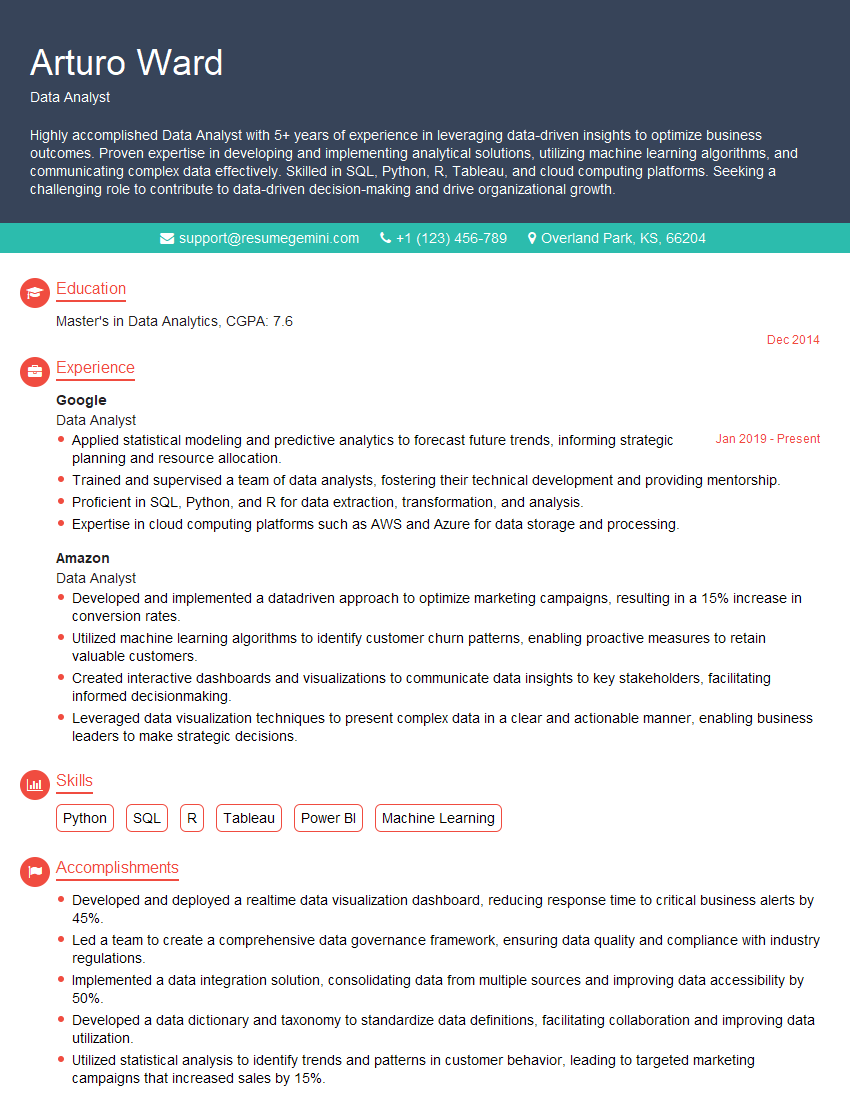
Data Analyst Resume Sample
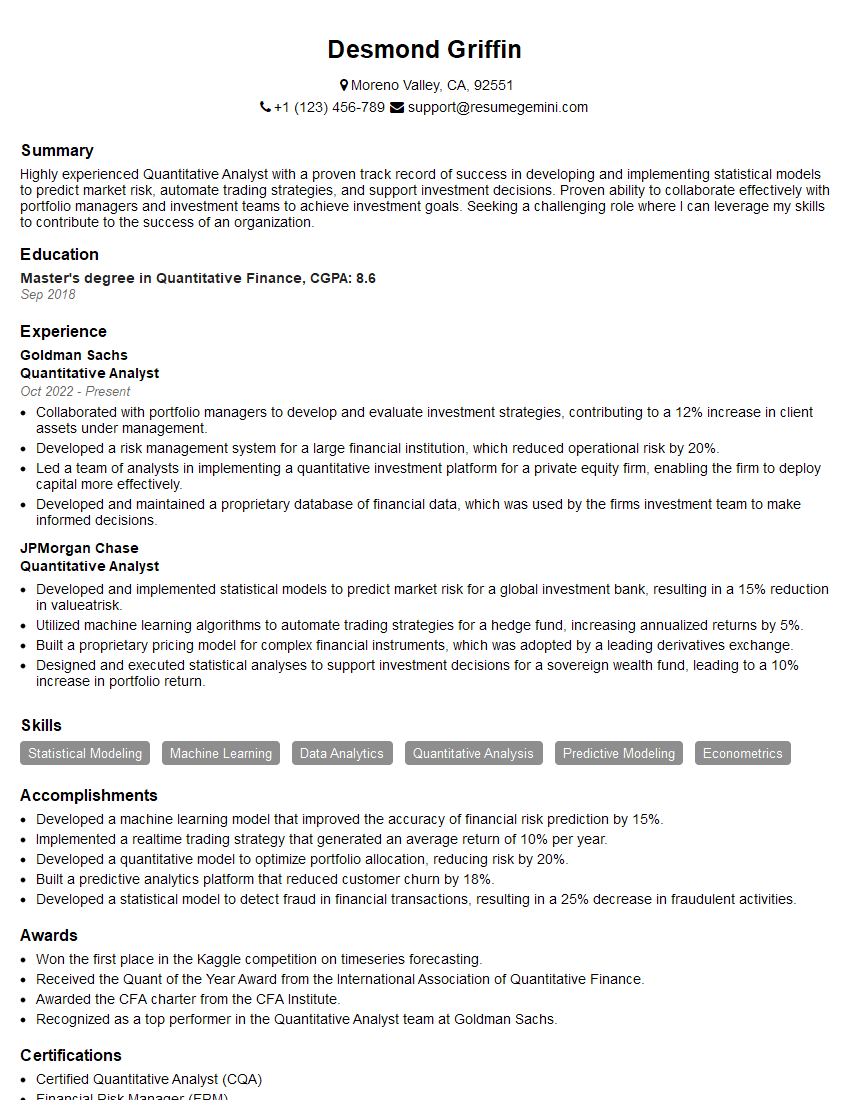
Quantitative Analyst Resume Sample
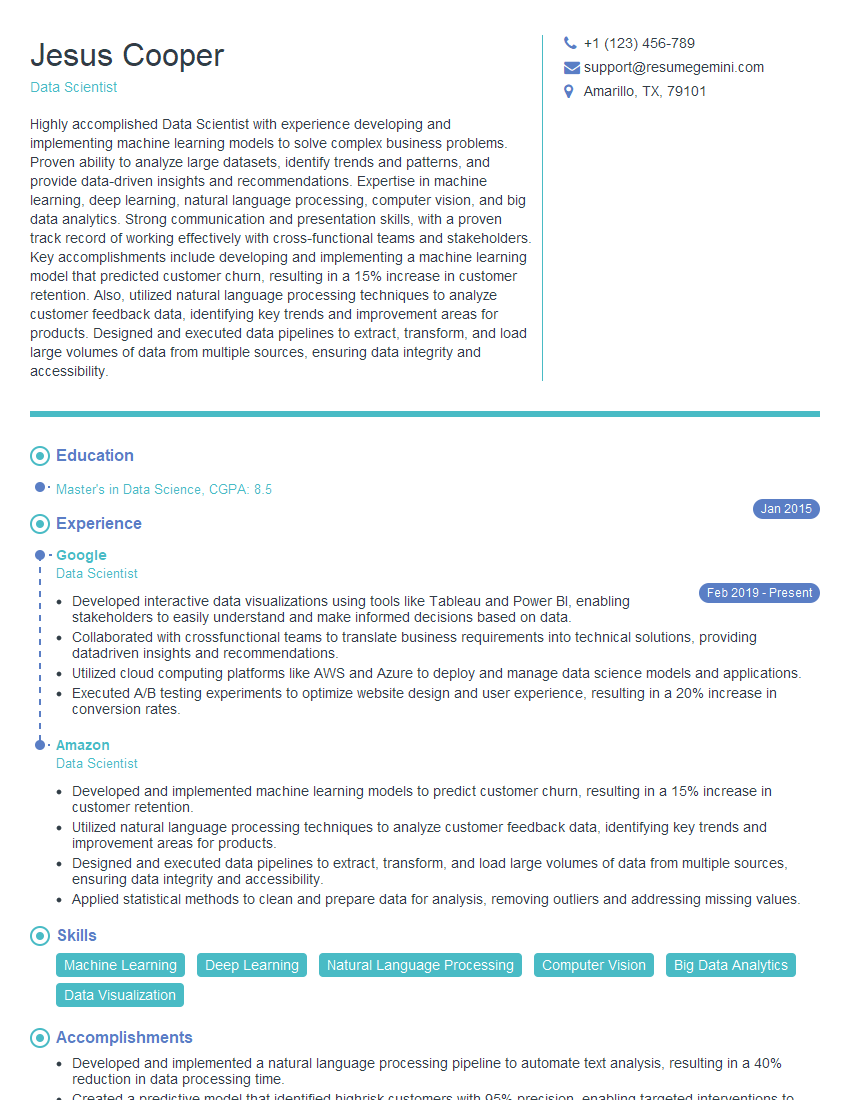
Data Scientist Resume Sample
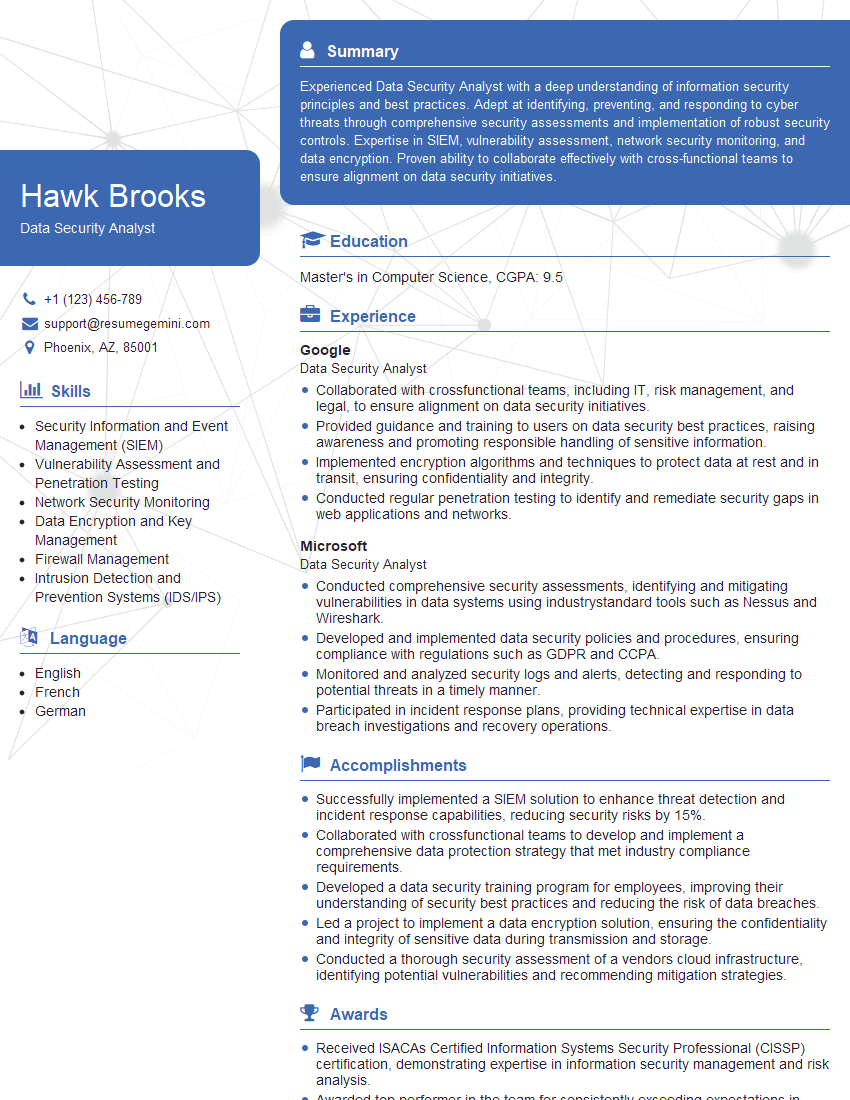
Data Security Analyst Resume Sample
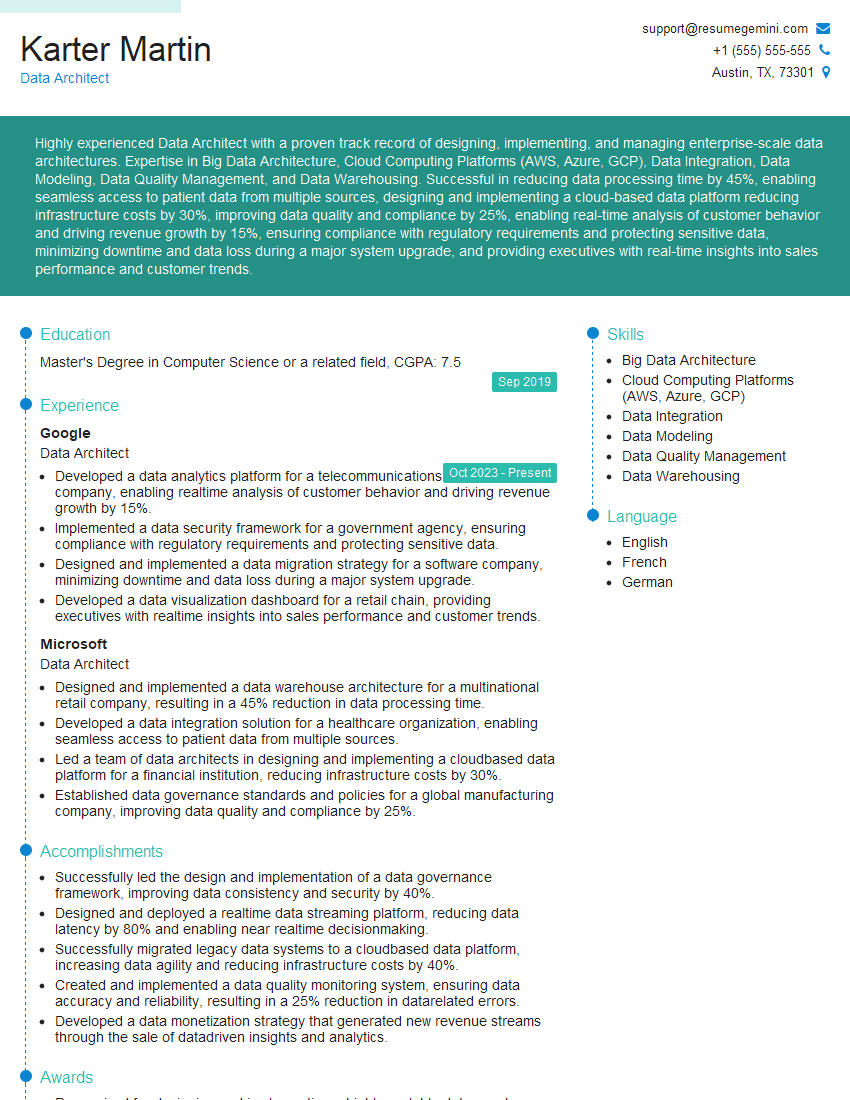
Data Architect Resume Sample
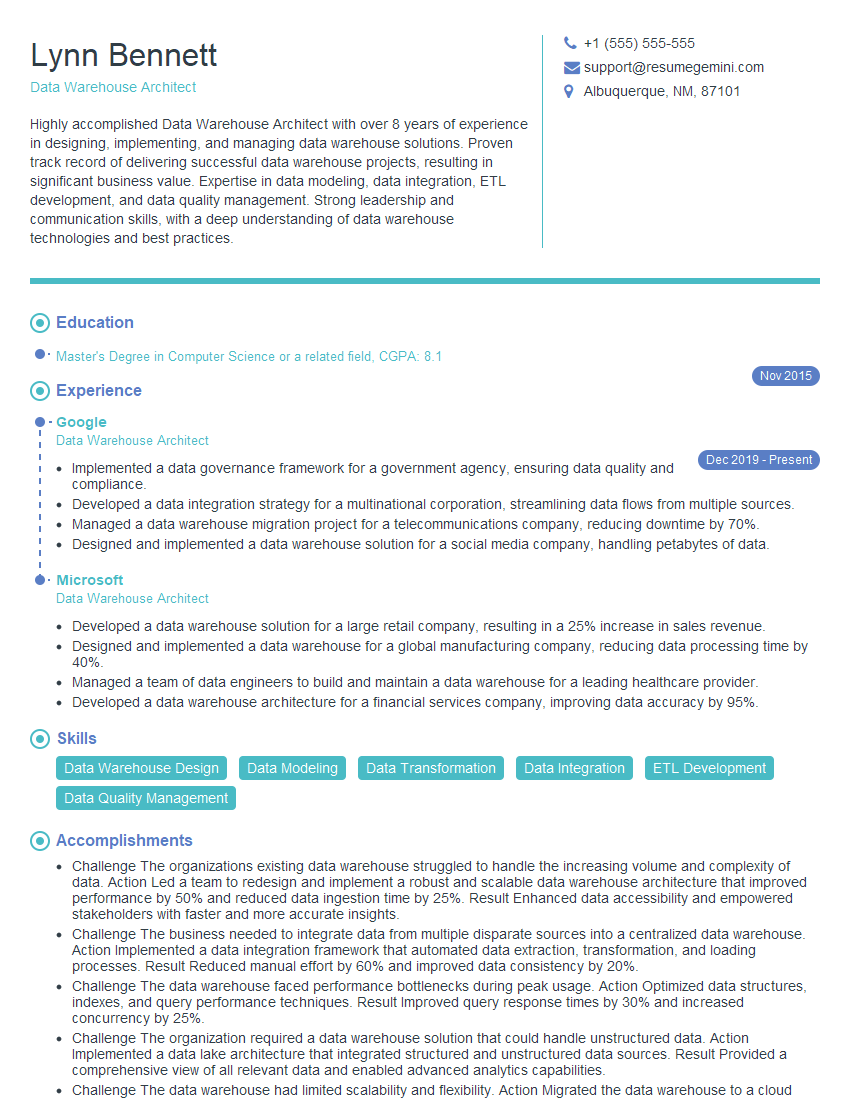
Data Warehouse Architect Resume Sample
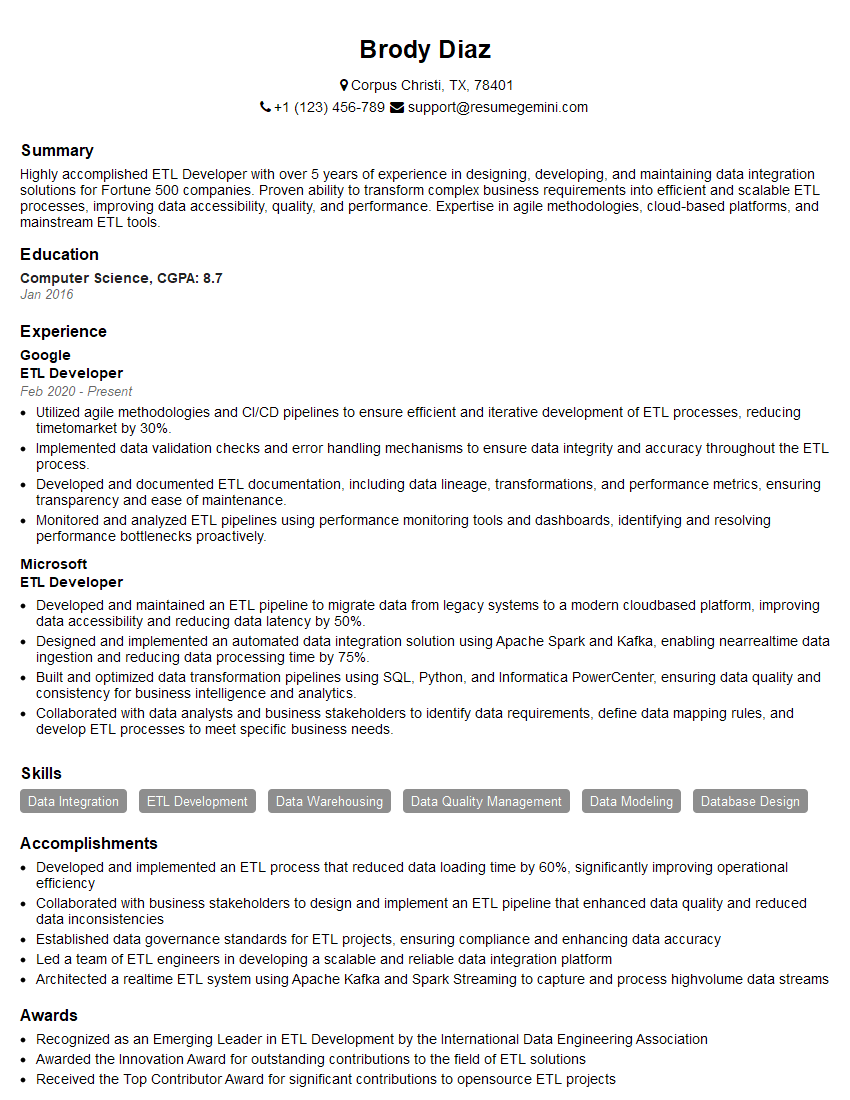
ETL Developer Resume Sample
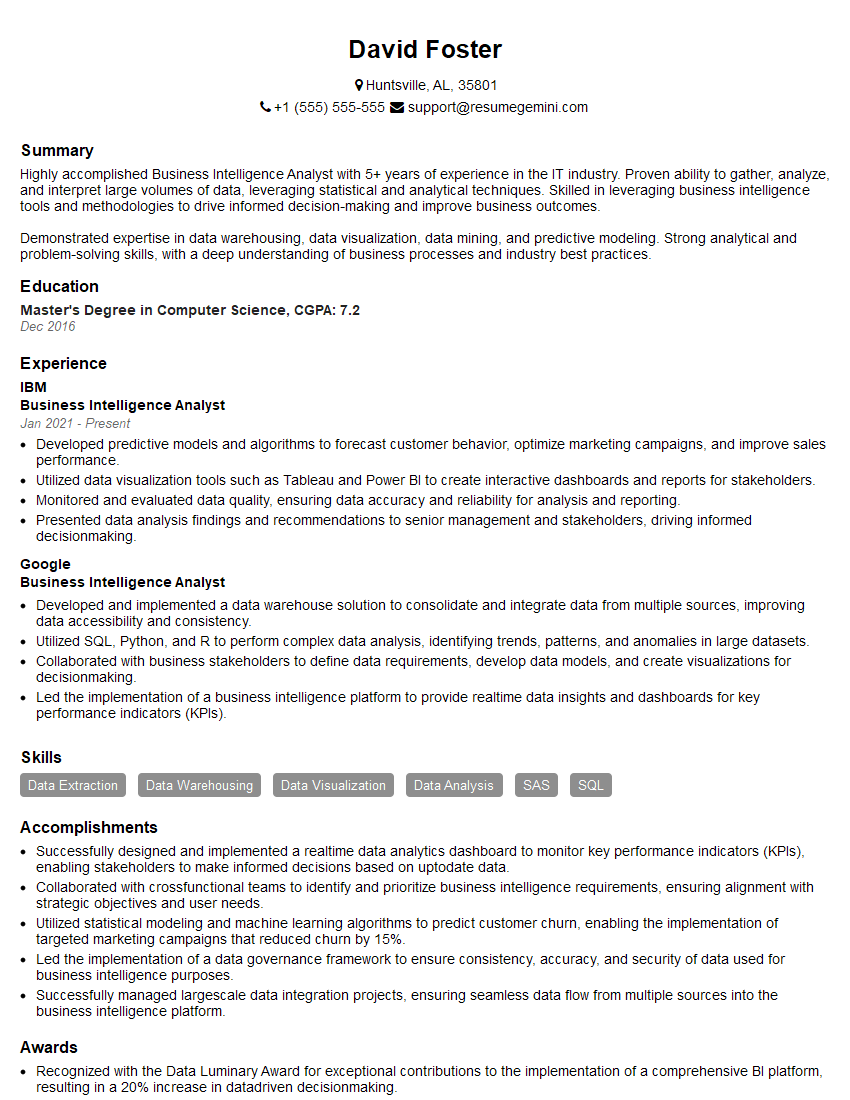
Business Intelligence Analyst Resume Sample
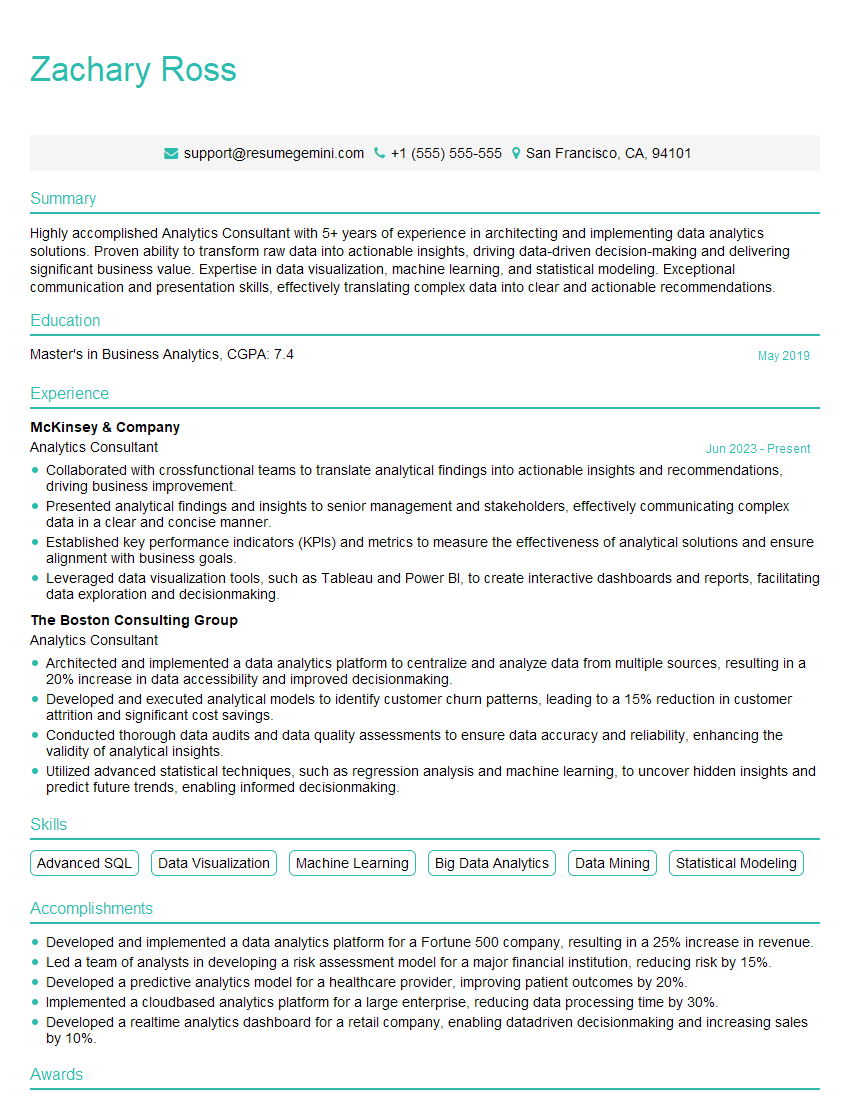
Analytics Consultant Resume Sample

Operations Research Analyst Resume Sample

Statistical Analyst Resume Sample
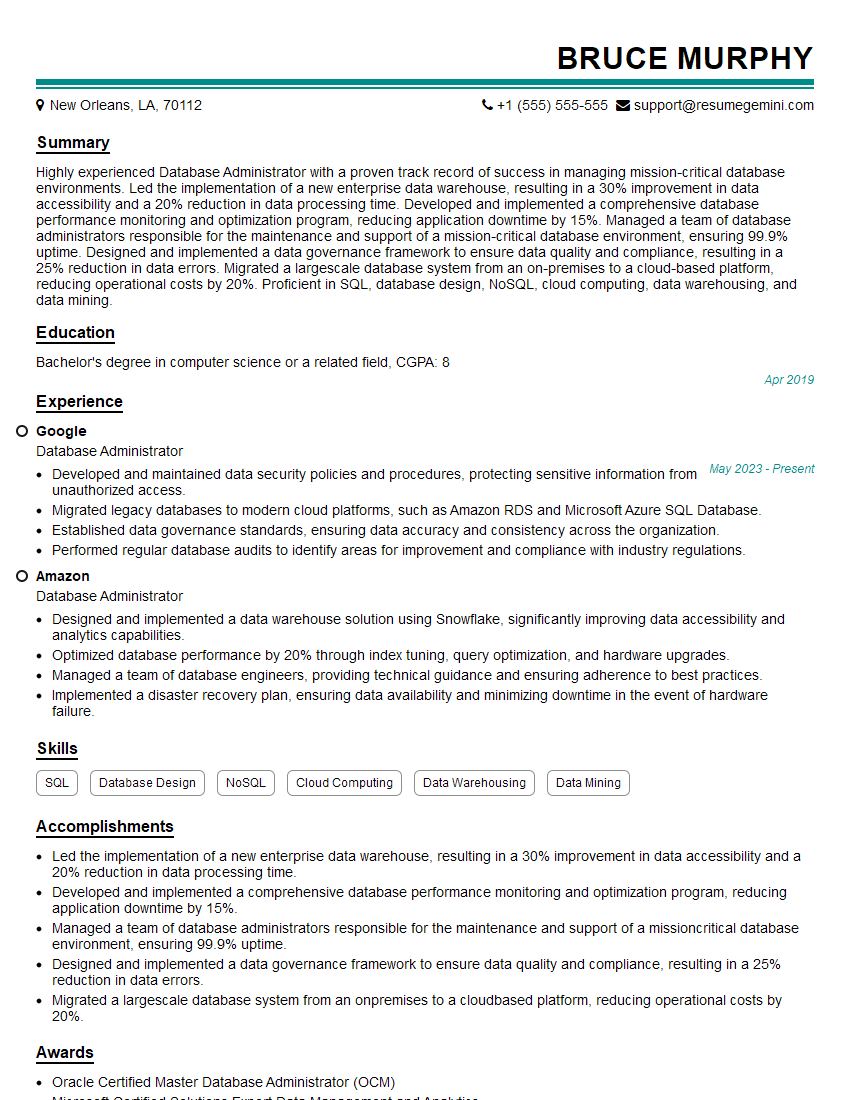
Database Administrator Resume Sample
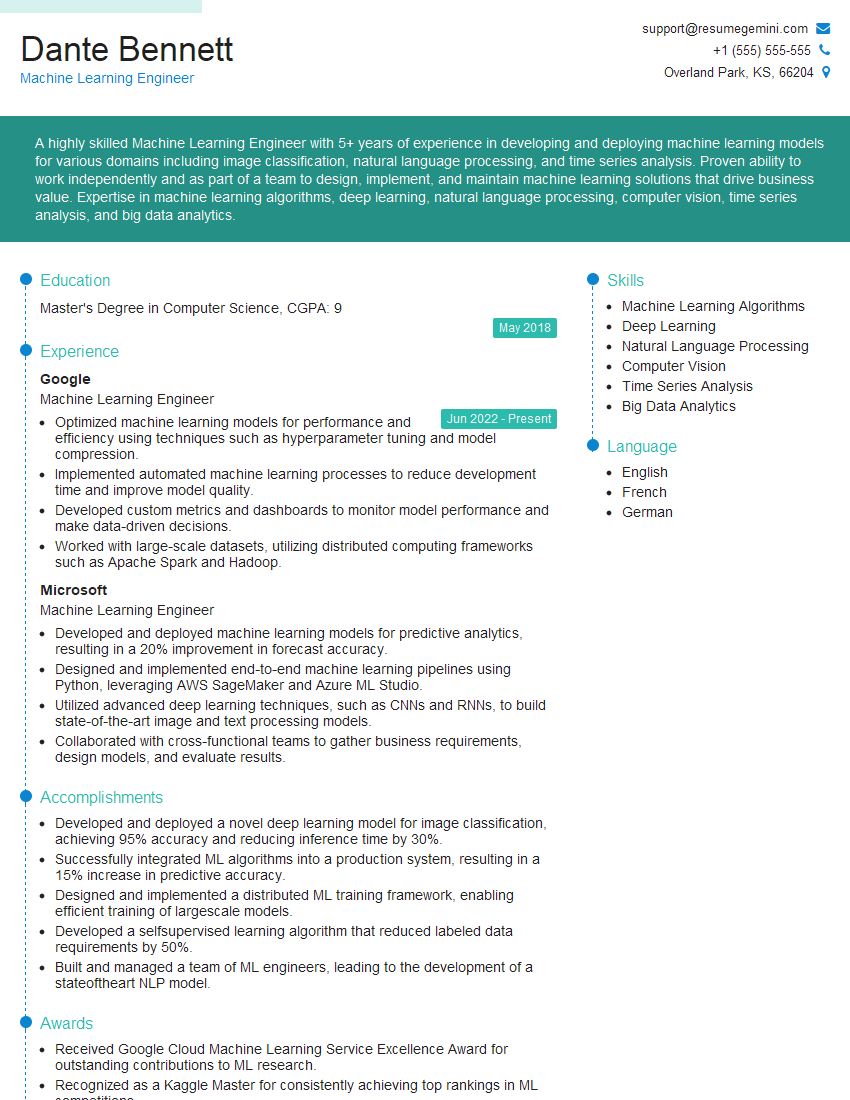
Machine Learning Engineer Resume Sample
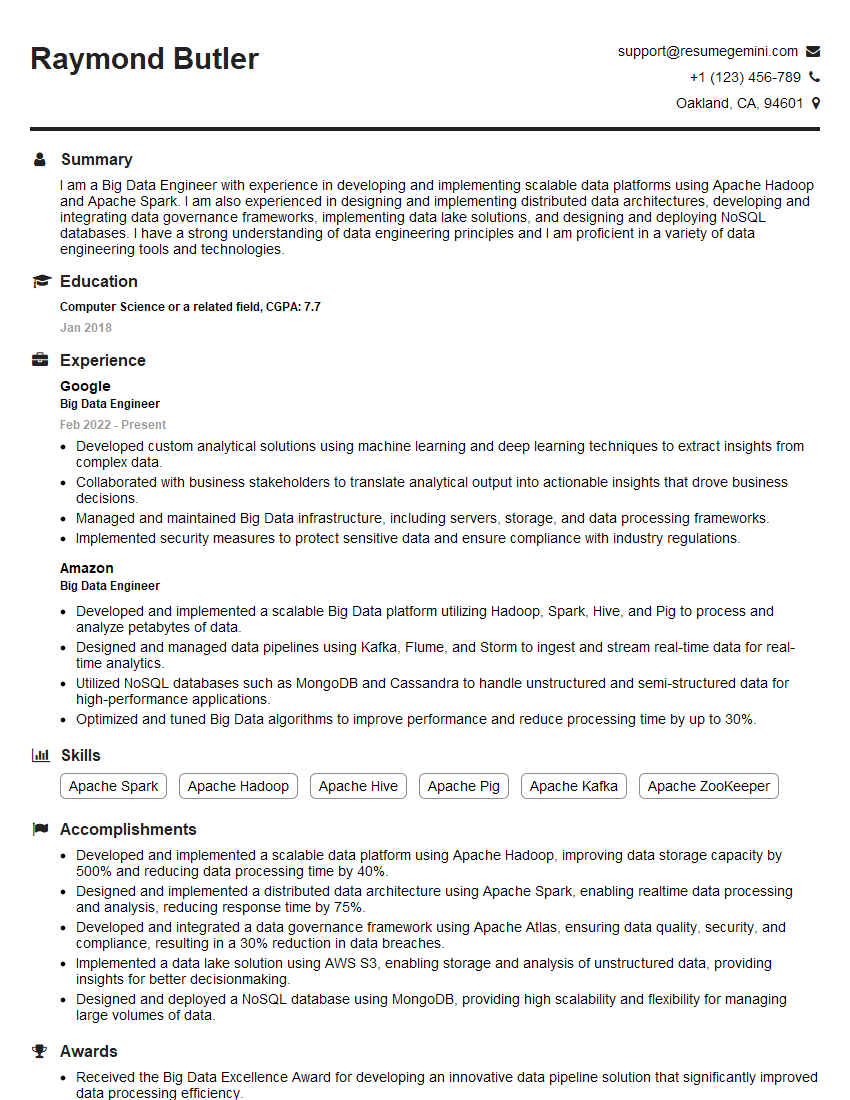
Big Data Engineer Resume Sample
Explore more articles
Users Rating of Our Blogs
Share Your Experience
We value your feedback! Please rate our content and share your thoughts (optional).
What Readers Say About Our Blog
Hello,
we currently offer a complimentary backlink and URL indexing test for search engine optimization professionals.
You can get complimentary indexing credits to test how link discovery works in practice.
No credit card is required and there is no recurring fee.
You can find details here:
https://wikipedia-backlinks.com/indexing/
Regards
NICE RESPONSE TO Q & A
hi
The aim of this message is regarding an unclaimed deposit of a deceased nationale that bears the same name as you. You are not relate to him as there are millions of people answering the names across around the world. But i will use my position to influence the release of the deposit to you for our mutual benefit.
Respond for full details and how to claim the deposit. This is 100% risk free. Send hello to my email id: [email protected]
Luka Chachibaialuka
Hey interviewgemini.com, just wanted to follow up on my last email.
We just launched Call the Monster, an parenting app that lets you summon friendly ‘monsters’ kids actually listen to.
We’re also running a giveaway for everyone who downloads the app. Since it’s brand new, there aren’t many users yet, which means you’ve got a much better chance of winning some great prizes.
You can check it out here: https://bit.ly/callamonsterapp
Or follow us on Instagram: https://www.instagram.com/callamonsterapp
Thanks,
Ryan
CEO – Call the Monster App
Hey interviewgemini.com, I saw your website and love your approach.
I just want this to look like spam email, but want to share something important to you. We just launched Call the Monster, a parenting app that lets you summon friendly ‘monsters’ kids actually listen to.
Parents are loving it for calming chaos before bedtime. Thought you might want to try it: https://bit.ly/callamonsterapp or just follow our fun monster lore on Instagram: https://www.instagram.com/callamonsterapp
Thanks,
Ryan
CEO – Call A Monster APP
To the interviewgemini.com Owner.
Dear interviewgemini.com Webmaster!
Hi interviewgemini.com Webmaster!
Dear interviewgemini.com Webmaster!
excellent
Hello,
We found issues with your domain’s email setup that may be sending your messages to spam or blocking them completely. InboxShield Mini shows you how to fix it in minutes — no tech skills required.
Scan your domain now for details: https://inboxshield-mini.com/
— Adam @ InboxShield Mini
Reply STOP to unsubscribe
Hi, are you owner of interviewgemini.com? What if I told you I could help you find extra time in your schedule, reconnect with leads you didn’t even realize you missed, and bring in more “I want to work with you” conversations, without increasing your ad spend or hiring a full-time employee?
All with a flexible, budget-friendly service that could easily pay for itself. Sounds good?
Would it be nice to jump on a quick 10-minute call so I can show you exactly how we make this work?
Best,
Hapei
Marketing Director
Hey, I know you’re the owner of interviewgemini.com. I’ll be quick.
Fundraising for your business is tough and time-consuming. We make it easier by guaranteeing two private investor meetings each month, for six months. No demos, no pitch events – just direct introductions to active investors matched to your startup.
If youR17;re raising, this could help you build real momentum. Want me to send more info?
Hi, I represent an SEO company that specialises in getting you AI citations and higher rankings on Google. I’d like to offer you a 100% free SEO audit for your website. Would you be interested?
Hi, I represent an SEO company that specialises in getting you AI citations and higher rankings on Google. I’d like to offer you a 100% free SEO audit for your website. Would you be interested?
good