Every successful interview starts with knowing what to expect. In this blog, we’ll take you through the top Crisis Action Planning interview questions, breaking them down with expert tips to help you deliver impactful answers. Step into your next interview fully prepared and ready to succeed.
Questions Asked in Crisis Action Planning Interview
Q 1. Describe your experience developing a crisis action plan.
Developing a crisis action plan is a multifaceted process requiring meticulous planning and consideration of various potential scenarios. My approach begins with a thorough risk assessment, identifying potential crises specific to the organization or community I’m working with. This might involve reviewing past incidents, analyzing vulnerabilities, and considering external factors like natural disasters or economic downturns. Then, I collaborate with stakeholders across different departments to define roles and responsibilities during a crisis. This ensures everyone understands their tasks and reporting lines. Next, I develop detailed procedures for each identified crisis type, focusing on steps to mitigate the impact, communicate effectively, and facilitate recovery. For instance, in developing a plan for a data breach, the steps would include immediate containment, notification protocols, and recovery strategies. Finally, the plan is regularly tested and updated through simulations and real-world feedback to ensure its ongoing effectiveness and relevance.
For example, in my previous role at a major hospital, we developed a comprehensive crisis action plan covering scenarios ranging from natural disasters (like earthquakes) to internal incidents (like a patient abduction). This involved detailed protocols for staff evacuation, patient relocation, and communication with external stakeholders like emergency services and the media.
Q 2. Explain the key elements of a comprehensive crisis communication strategy.
A robust crisis communication strategy is the backbone of effective crisis management. Its key elements include:
- Pre-crisis planning: Defining key messages, identifying spokespeople, and establishing communication channels.
- Rapid response: Quickly disseminating accurate information to stakeholders through pre-determined channels, such as email alerts, social media, press releases, and website updates.
- Transparency and honesty: Providing timely and accurate updates, even if the full picture isn’t immediately clear. Acknowledging uncertainty and expressing empathy are crucial.
- Consistent messaging: Ensuring that all communications align, regardless of the channel or spokesperson.
- Monitoring and evaluation: Tracking media coverage, social media sentiment, and feedback from stakeholders to adapt the communication approach as needed.
Think of it like this: during a crisis, your communication is the bridge between your organization and the public. A well-constructed bridge ensures that information flows smoothly and prevents misinformation from spreading.
Q 3. How would you prioritize competing demands during a crisis?
Prioritizing competing demands during a crisis requires a structured approach. I utilize a prioritization matrix that considers urgency and impact. This involves assessing each demand based on its potential to cause harm and the time sensitivity of addressing it. High-impact, high-urgency demands—like preventing immediate injury or further damage—take precedence. For lower-impact demands, we can often defer action until the more urgent issues are resolved. This matrix is constantly reviewed and updated as the situation evolves.
For example, during a product recall, prioritizing the immediate safety of consumers (high impact, high urgency) outweighs addressing long-term financial ramifications (lower urgency).
Q 4. What metrics do you use to measure the effectiveness of a crisis action plan?
Measuring the effectiveness of a crisis action plan involves both quantitative and qualitative assessments. Quantitative metrics could include:
- Time to recovery: How long it took to restore normal operations.
- Financial losses: Assessing the monetary impact of the crisis.
- Number of injuries or fatalities: If applicable.
- Customer churn: Measuring the loss of customers or clients.
Qualitative metrics include:
- Stakeholder satisfaction: Assessing feedback from employees, customers, and other stakeholders.
- Effectiveness of communication: Evaluating how effectively information was disseminated and received.
- Lessons learned: Identifying areas for improvement in the plan and processes.
A comprehensive evaluation combines both types of data to provide a holistic view of the plan’s performance.
Q 5. Describe your experience with crisis simulation exercises.
Crisis simulation exercises are invaluable for testing the effectiveness of a crisis action plan and training personnel. I have extensive experience designing and facilitating these exercises, often using a combination of tabletop exercises and more immersive simulations. Tabletop exercises involve a group discussion walking through a hypothetical crisis scenario, while more immersive simulations might involve role-playing or virtual environments. These exercises help identify gaps in the plan, refine communication protocols, and enhance team coordination under pressure. Post-exercise debriefs are crucial for identifying areas for improvement and reinforcing lessons learned.
For instance, I recently led a simulation exercise for a financial institution that focused on a cyberattack scenario. The exercise highlighted the importance of clear communication channels between IT staff, legal counsel, and public relations in managing the response and minimizing reputational damage.
Q 6. How do you identify and assess potential crises?
Identifying and assessing potential crises requires a proactive and systematic approach. This involves several steps:
- Brainstorming: Gathering input from stakeholders across the organization to identify potential risks and vulnerabilities.
- Risk assessment: Evaluating the likelihood and potential impact of each identified crisis using methods like SWOT analysis or probability/impact matrices.
- External monitoring: Staying informed about relevant news, trends, and emerging risks through media monitoring, industry reports, and competitor analysis.
- Vulnerability analysis: Identifying weaknesses in the organization’s systems, processes, and infrastructure that could be exploited during a crisis.
By combining these methods, you gain a comprehensive understanding of potential threats and develop a prioritized list of crises that warrant inclusion in your action plan.
Q 7. How do you ensure effective collaboration and communication among stakeholders during a crisis?
Effective collaboration and communication during a crisis rely on pre-established structures and protocols. This includes:
- Designated roles and responsibilities: Clearly defined roles for each stakeholder, including communication leads, incident commanders, and support staff.
- Centralized communication channels: Using a single platform for all crisis-related communications, such as a dedicated communication center or software platform.
- Regular briefings and updates: Providing regular updates to stakeholders on the situation, actions being taken, and any changes in plans.
- Open and transparent communication: Sharing information freely and honestly, addressing concerns and questions promptly.
- Post-crisis debriefing: Conducting a thorough review of the response effort to identify what worked well, what didn’t, and how future responses can be improved.
A successful crisis response requires teamwork. By establishing clear lines of communication and roles beforehand, you create a unified and effective response team.
Q 8. Explain your approach to resource allocation during a crisis.
Resource allocation during a crisis is a critical function demanding a systematic approach. My methodology prioritizes a tiered system based on urgency and impact. First, we identify immediate life-saving needs – this could be medical supplies after an earthquake or cybersecurity resources during a ransomware attack. These are allocated immediately, regardless of cost. Next, we consider resources required to stabilize the situation – securing a disaster area or containing a data breach. Finally, we address longer-term recovery needs, focusing on rebuilding infrastructure or restoring data and operations. This process involves constant monitoring and readjustment based on evolving circumstances and the availability of resources. For example, during a hurricane, initial allocation might focus on emergency shelters, food, and water, while later efforts shift to repairing damaged infrastructure and providing long-term housing support. This prioritization ensures efficient use of limited resources and optimizes impact.
Q 9. How do you manage conflicting information during a crisis?
Conflicting information is inevitable during a crisis. My approach emphasizes a multi-faceted strategy that focuses on source validation, data triangulation, and transparent communication. We establish a clear chain of command for information dissemination, ensuring only verified information is shared. We use multiple sources, comparing information across different channels to identify patterns and inconsistencies. Disagreements are addressed openly, acknowledging uncertainties, and decisions are based on the best available evidence at the time. For instance, during a public health emergency, we might cross-reference reports from various health agencies, hospitals, and social media while being aware that social media information may be unreliable. This rigorous approach helps mitigate misinformation and makes for informed decision-making.
Q 10. How do you maintain situational awareness during a crisis?
Maintaining situational awareness is paramount. My strategy relies on a combination of real-time data feeds, human intelligence, and predictive modelling. We utilize a range of technologies, from satellite imagery and social media monitoring to dedicated communication systems and advanced analytics to gather data. This data is then synthesized into actionable insights through regular briefings and dashboards, providing a comprehensive picture of the situation. We also conduct proactive intelligence gathering, anticipating potential developments and vulnerabilities. For example, during a wildfire, real-time data on wind speed and direction, combined with ground reports from firefighters, helps us anticipate the fire’s spread and adjust our response accordingly. This proactive approach allows for preemptive measures, preventing the situation from escalating.
Q 11. Describe your experience with post-crisis review and improvement.
Post-crisis review is critical for continuous improvement. My approach is structured, involving detailed data analysis, interviews with stakeholders, and a thorough examination of the crisis response. We meticulously document decisions made, actions taken, and their outcomes. This data informs a detailed evaluation of what worked well and what could be improved. The findings are then translated into actionable recommendations for updating our crisis action plans and training protocols. For example, after a large-scale cyberattack, we would analyze the attack’s methodology, our response effectiveness, and identify gaps in our security measures. This analysis then informs the development of updated cybersecurity protocols and staff training programs. This iterative approach to learning and refinement is crucial for building resilience.
Q 12. What is your experience with crisis decision-making frameworks?
I have extensive experience with several crisis decision-making frameworks, including the OODA loop (Observe, Orient, Decide, Act), the DECIDE model (Detect, Estimate, Choose, Identify, Do, Evaluate), and the situational assessment model. Each framework provides a structured approach for analyzing a crisis situation, developing and executing a response plan, and evaluating the outcome. The choice of framework often depends on the specific crisis and organizational context. For example, the OODA loop is particularly useful in fast-moving situations that demand rapid adaptation, while the DECIDE model provides a comprehensive framework for a more methodical approach. I adapt and integrate elements from different models to develop a tailored strategy for each unique scenario, ensuring a comprehensive and effective response.
Q 13. How do you ensure the plan is adaptable to unexpected events?
Adaptability is crucial. Our plans are designed with flexibility in mind, incorporating scalable resources and adaptable procedures. We incorporate a robust scenario planning process, considering a wide range of potential events, including those with low probability but high impact. We regularly review and update our plans, incorporating lessons learned from past crises and considering potential future threats. For example, our plans might include multiple contingency plans, allowing for shifts in strategy based on new information or evolving circumstances. Regular tabletop exercises and simulations also help test our plans and identify areas for improvement, ensuring our crisis response capabilities remain agile and effective.
Q 14. What is your experience with different types of crisis (natural disaster, cyberattack, etc.)?
My experience encompasses a wide range of crises, including natural disasters (earthquakes, hurricanes, floods), technological failures (power outages, IT system failures), cyberattacks (ransomware, data breaches), and public health emergencies (epidemics, pandemics). Each type of crisis presents unique challenges, requiring a tailored approach. For example, responding to a hurricane requires coordinating evacuation efforts, providing emergency shelter, and managing the aftermath; a cyberattack requires a rapid response to contain the breach, protect critical data, and restore systems. This diverse experience has broadened my understanding of crisis management principles and enables me to adapt quickly to different situations, effectively leveraging lessons learned across various contexts. This holistic perspective ensures a robust and comprehensive approach to any crisis faced.
Q 15. How do you identify and mitigate potential legal and reputational risks during a crisis?
Identifying and mitigating legal and reputational risks during a crisis is paramount. It requires a proactive approach, starting long before a crisis hits. We need to anticipate potential vulnerabilities and develop strategies to address them.
Legal Risks: This involves understanding relevant laws and regulations, ensuring compliance, and having a clear chain of command for decision-making during a crisis. For example, in a data breach, we must immediately notify affected individuals and regulatory bodies as per GDPR or CCPA guidelines. Failure to do so can lead to hefty fines and legal battles. We also need to ensure all internal communication and actions align with legal advice.
Reputational Risks: These are often harder to quantify but equally damaging. A crisis can severely impact public perception, leading to loss of customer trust, decreased sales, and damaged brand value. Mitigation strategies include: (1) Transparency: Communicating honestly and openly with stakeholders, even if it involves admitting mistakes; (2) Empathy: Showing concern and understanding for those affected; (3) Proactive Communication: Establishing clear communication channels and regularly updating stakeholders on the situation and efforts to resolve it; (4) Swift Action: Demonstrating a rapid and effective response; and (5) Third-Party Review: If appropriate, engaging an independent investigator to conduct a thorough review and issue a public report. For instance, a company facing a product recall should immediately inform customers, offer a replacement or refund, and conduct a thorough investigation to identify the root cause.
Career Expert Tips:
- Ace those interviews! Prepare effectively by reviewing the Top 50 Most Common Interview Questions on ResumeGemini.
- Navigate your job search with confidence! Explore a wide range of Career Tips on ResumeGemini. Learn about common challenges and recommendations to overcome them.
- Craft the perfect resume! Master the Art of Resume Writing with ResumeGemini’s guide. Showcase your unique qualifications and achievements effectively.
- Don’t miss out on holiday savings! Build your dream resume with ResumeGemini’s ATS optimized templates.
Q 16. What is your experience with crisis training and education programs?
My experience with crisis training and education programs spans over 15 years. I’ve designed and delivered numerous programs for various organizations, ranging from small businesses to multinational corporations. These programs incorporate several key elements:
- Scenario-Based Training: Participants engage in realistic simulations to practice their response skills in a safe environment. We use case studies of past crises, both successful and unsuccessful responses, to highlight best practices and potential pitfalls.
- Communication Training: This is crucial. We focus on crafting clear, concise, and empathetic messages for internal and external stakeholders. Media training is a significant component, helping individuals deliver calm and confident messages under pressure.
- Legal and Ethical Considerations: We cover legal liabilities and ethical responsibilities during a crisis. This ensures participants understand the importance of compliance and responsible decision-making.
- Team Building Exercises: Effective crisis management requires a cohesive team. We use exercises to strengthen teamwork, communication, and leadership skills.
I’ve also developed customized training programs tailored to the specific needs and risks of different organizations. For example, a hospital’s training will differ significantly from that of a technology company.
Q 17. Describe your experience working with external agencies (law enforcement, media, etc.) during a crisis.
I’ve worked extensively with external agencies, including law enforcement, media, and government officials, during numerous crises. Effective collaboration is vital for a successful outcome.
Law Enforcement: Cooperation with law enforcement is crucial, particularly in situations involving criminal activity or safety concerns. This involves providing timely and accurate information, adhering to their protocols, and ensuring a coordinated response. In one instance, we worked closely with local police during a security breach at our facility, ensuring the safety of our employees and cooperating fully with their investigation.
Media: Managing media relations during a crisis is critical for shaping public perception. This includes designating a spokesperson, establishing clear communication protocols, and proactively providing accurate information. A well-managed media strategy can help mitigate reputational damage. In another situation, we proactively engaged with the press during a product recall, providing regular updates and demonstrating transparency to maintain customer trust.
Government Agencies: Depending on the nature of the crisis, we may need to work with various government agencies. This requires navigating regulatory requirements, providing requested information, and ensuring compliance. We must understand and navigate the complexities of interacting with governmental bodies to assure a timely and effective response.
Q 18. How do you develop key performance indicators (KPIs) for crisis response?
Developing KPIs for crisis response requires a clear understanding of the organization’s goals and objectives. These KPIs should be measurable, achievable, relevant, and time-bound (SMART).
Examples of KPIs:
- Time to initial response: How quickly the organization initiated its response plan.
- Number of affected individuals: The scope of the crisis’s impact.
- Customer satisfaction scores: Measuring customer perception of the organization’s response.
- Social media sentiment: Tracking public opinion regarding the crisis.
- Financial losses: The monetary impact of the crisis.
- Recovery time: How long it took to return to normal operations.
These KPIs provide a quantitative measure of the effectiveness of the crisis response and help identify areas for improvement in future planning. They must also be regularly monitored and reviewed to ensure alignment with evolving circumstances. For instance, if a company’s social media sentiment is predominantly negative, this suggests areas needing immediate attention and remedial action. KPI tracking should thus be continuous during the crisis and extended to the recovery phase.
Q 19. Explain the difference between crisis prevention and crisis response.
Crisis prevention and crisis response are distinct but interconnected phases of managing risk.
Crisis Prevention: This involves proactive measures to reduce the likelihood of a crisis occurring. It’s about identifying potential vulnerabilities, assessing risks, and implementing strategies to mitigate them. Think of it as building a strong immune system—the stronger your preventative measures, the less likely you are to fall ill. Examples include robust risk assessments, thorough security protocols, employee training, and strong supplier relationships.
Crisis Response: This refers to the organization’s actions during and after a crisis has occurred. It focuses on containing the damage, protecting stakeholders, and restoring operations. It’s like treating an illness—you need a plan to manage symptoms and facilitate recovery. This involves pre-developed communication strategies, established communication channels, and a clear chain of command for decision-making during the crisis.
Both are crucial. A strong prevention strategy can reduce the frequency and severity of crises, but a robust response plan is still necessary to effectively manage any eventuality. Imagine a wildfire – effective forest management (prevention) helps to reduce the risk, but a well-coordinated firefighting team (response) is still essential when a fire starts.
Q 20. What is your experience with developing contingency plans?
I have extensive experience developing contingency plans for a wide range of crises, including natural disasters, cyberattacks, product recalls, and reputational damage incidents. The process typically involves:
- Risk Assessment: Identifying potential crises and assessing their likelihood and potential impact.
- Scenario Planning: Developing detailed scenarios for each identified crisis.
- Resource Allocation: Determining the resources required to respond to each scenario (personnel, financial, technological).
- Communication Strategy: Defining communication protocols for internal and external stakeholders.
- Recovery Plan: Outlining steps for restoring operations after the crisis.
- Testing and Review: Regularly testing and updating the plan to ensure its effectiveness.
My plans are not static documents; they are living documents that are regularly reviewed and updated based on lessons learned and changes in the organization’s context. For example, following a major cyberattack, I would update the plan to incorporate new security measures and refine communication protocols to avoid similar incidents. Regular table-top exercises allow the team to test and refine the plan.
Q 21. How do you handle media relations during a crisis?
Handling media relations during a crisis requires a proactive and strategic approach. The key is to control the narrative by providing accurate and timely information, building trust with the media, and managing expectations.
Key Strategies:
- Designated Spokesperson: Having one designated spokesperson ensures consistent messaging.
- Media Monitoring: Tracking media coverage to understand public perception and identify emerging issues.
- Proactive Communication: Issuing press releases, providing updates, and holding press conferences as needed.
- Media Training: Ensuring the spokesperson is well-prepared for media interviews.
- Relationship Building: Cultivating relationships with key journalists to facilitate open communication.
- Crisis Communication Plan: Having a detailed plan that outlines roles, responsibilities, and communication protocols.
In my experience, being transparent, empathetic, and showing a commitment to resolving the issue are crucial in building trust with the media. Avoid speculation and stick to the facts. A well-managed media response can significantly mitigate reputational damage.
Q 22. What is your familiarity with relevant legal and regulatory frameworks concerning crisis management?
My familiarity with legal and regulatory frameworks concerning crisis management is extensive. I’m well-versed in laws related to data privacy (like GDPR and CCPA), emergency response protocols (varying by jurisdiction), and industry-specific regulations. For instance, in the financial sector, I’m knowledgeable about regulations surrounding reporting breaches and maintaining business continuity. Understanding these frameworks is crucial for ensuring compliance, mitigating legal risks, and building trust with stakeholders. A failure to comply can lead to significant fines, reputational damage, and even criminal charges. My experience includes advising organizations on compliance with these regulations during the development and implementation of their crisis action plans. I ensure these plans are legally sound, protecting the organization from potential liabilities.
Q 23. Describe your experience with technology used in crisis management.
My experience with crisis management technology spans a wide range of tools. I’ve worked extensively with collaborative platforms like Slack and Microsoft Teams for real-time communication and coordination during crises. These platforms allow for rapid information dissemination and facilitate decision-making across geographical boundaries. I’m also experienced in using specialized crisis communication software that allows for targeted messaging to diverse stakeholder groups. For example, I’ve utilized software capable of sending SMS alerts, emails, and social media posts simultaneously. Furthermore, I have experience using Geographic Information Systems (GIS) for visualizing incidents and deploying resources effectively. Finally, I’m adept at utilizing data analytics tools to monitor social media sentiment and public perception during a crisis, allowing for proactive and data-driven communications.
Q 24. How do you ensure the crisis action plan is regularly reviewed and updated?
Regular review and update of a crisis action plan is paramount. We utilize a structured process involving quarterly reviews and a full-scale revision annually. These reviews involve a multidisciplinary team comprising representatives from various departments. The process begins with a thorough assessment of the plan’s effectiveness based on lessons learned from past incidents (or near misses), changes in the regulatory landscape, and technological advancements. We utilize tabletop exercises and simulations to test the plan’s practicality and identify areas for improvement. Documentation of all changes, including rationale and approvals, is meticulously maintained. This ensures that the crisis action plan remains relevant, adaptable, and effective in mitigating future crises. For example, following a significant weather event, we might revise our communication protocols to better address power outages or adjust resource allocation plans based on infrastructure damage.
Q 25. How do you ensure business continuity during a major crisis?
Ensuring business continuity during a major crisis requires a proactive and multi-faceted approach. This begins with a comprehensive business impact analysis (BIA) that identifies critical business functions and their dependencies. From there, we develop robust recovery strategies for each function, including backup systems, data redundancy, and alternate work locations. We prioritize essential services to maintain minimal operations, and then progressively restore non-essential functions as the situation stabilizes. For instance, a company facing a cyberattack might prioritize data recovery and customer communication while temporarily suspending non-essential operations. Regular testing and training of these plans are crucial for success; we conduct drills and simulations to ensure employees are prepared and familiar with procedures. Finally, strong communication and collaboration across departments are vital to ensure coordinated efforts throughout the crisis.
Q 26. Describe your experience in leading a team during a crisis.
Leading a team during a crisis necessitates calm, decisive leadership, and effective communication. In one instance, our company faced a significant product recall. I led the crisis management team, coordinating efforts across multiple departments—product development, legal, public relations, and customer service. My focus was on ensuring clear, consistent communication both internally and externally, maintaining transparency with stakeholders, and fostering a sense of collaborative teamwork despite the high-pressure environment. A clear chain of command and delegation of tasks were vital. Regular updates and debriefing sessions helped maintain morale and ensure everyone felt informed and supported. The success of our response was a direct result of clear communication, decisive action, and a team that remained composed and effective under considerable pressure.
Q 27. How do you delegate effectively during high-pressure situations?
Effective delegation during high-pressure situations requires trust, clear communication, and a defined framework. I ensure each team member has a clear understanding of their role, responsibilities, and authority. I delegate tasks based on individual skills and expertise, ensuring that the right person is handling the right task. Clear communication channels are essential for timely feedback and updates. I avoid micromanaging, trusting the team to execute their assigned tasks. However, regular check-ins and debriefs are crucial to keep abreast of progress, address any challenges, and offer support when needed. This approach ensures efficient task completion while fostering empowerment and minimizing bottlenecks during critical moments.
Q 28. What is your experience with risk assessment methodologies?
My experience with risk assessment methodologies is extensive. I’m proficient in utilizing qualitative and quantitative methods to identify, analyze, and evaluate potential risks. I use frameworks like Failure Mode and Effects Analysis (FMEA) to systematically examine potential failures within processes and identify their impact. For quantitative analysis, I employ methods like Monte Carlo simulation to model uncertainty and estimate the likelihood and potential impact of various risks. These assessments are used to inform the development of risk mitigation strategies incorporated directly into our crisis action plan. The goal is not to eliminate risk entirely (which is impossible), but to understand, prioritize, and manage it effectively, making informed decisions on resource allocation and proactive measures.
Key Topics to Learn for Crisis Action Planning Interview
- Crisis Communication Strategies: Understanding how to effectively communicate during a crisis, including message crafting, media relations, and internal communication protocols. Practical application: Developing a communication plan for a simulated data breach scenario.
- Risk Assessment & Mitigation: Identifying potential crises, analyzing their likelihood and impact, and developing proactive strategies to minimize risks. Practical application: Conducting a risk assessment for a large-scale public event and proposing mitigation measures.
- Incident Command Systems (ICS): Understanding the structure and principles of ICS for effective crisis management. Practical application: Describing your experience (or hypothetical experience) working within an ICS framework during a simulated emergency.
- Business Continuity Planning (BCP): Developing and implementing plans to ensure business operations continue during and after a crisis. Practical application: Designing a BCP for a specific organization considering various potential disruptions.
- Crisis Response & Recovery: Developing and implementing plans for immediate response to a crisis and strategies for long-term recovery. Practical application: Developing a post-incident analysis report and outlining lessons learned.
- Legal & Ethical Considerations: Understanding the legal and ethical implications of crisis management decisions. Practical application: Analyzing a case study involving a crisis and identifying potential legal and ethical challenges.
- Technological Tools & Resources: Familiarity with software and tools used in crisis management, such as communication platforms and collaboration tools. Practical application: Describing your experience using specific crisis management software or tools (or explaining how you would learn to use them).
Next Steps
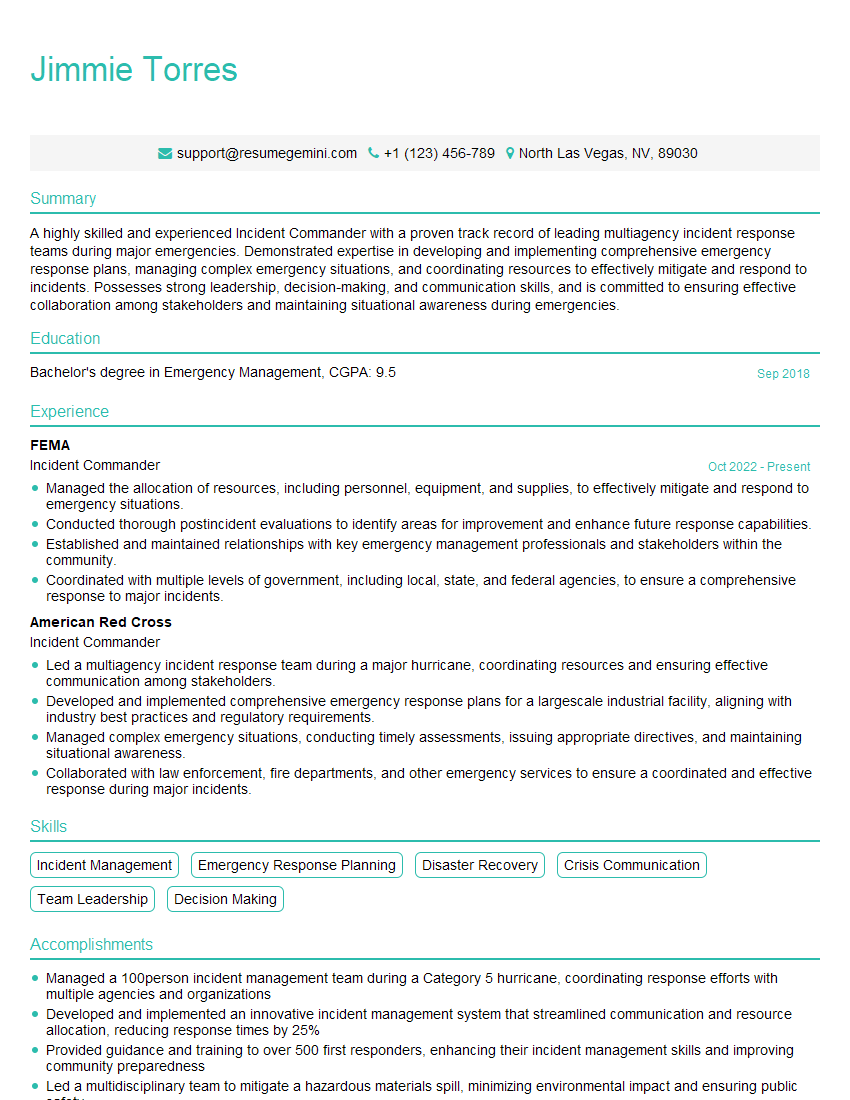
Mastering Crisis Action Planning is crucial for career advancement in numerous high-stakes fields. A strong understanding of these principles demonstrates your ability to handle pressure, make sound judgments, and protect organizational interests during challenging times. To increase your chances of landing your dream role, creating an ATS-friendly resume is essential. ResumeGemini is a trusted resource to help you build a professional and impactful resume that showcases your skills effectively. Examples of resumes tailored to Crisis Action Planning are available to help you get started.

Explore more articles
Users Rating of Our Blogs
Share Your Experience
We value your feedback! Please rate our content and share your thoughts (optional).
What Readers Say About Our Blog
Attention music lovers!
Wow, All the best Sax Summer music !!!
Spotify: https://open.spotify.com/artist/6ShcdIT7rPVVaFEpgZQbUk
Apple Music: https://music.apple.com/fr/artist/jimmy-sax-black/1530501936
YouTube: https://music.youtube.com/browse/VLOLAK5uy_noClmC7abM6YpZsnySxRqt3LoalPf88No
Other Platforms and Free Downloads : https://fanlink.tv/jimmysaxblack
on google : https://www.google.com/search?q=22+AND+22+AND+22
on ChatGPT : https://chat.openai.com?q=who20jlJimmy20Black20Sax20Producer
Get back into the groove with Jimmy sax Black
Best regards,
Jimmy sax Black
www.jimmysaxblack.com
Hi I am a troller at The aquatic interview center and I suddenly went so fast in Roblox and it was gone when I reset.
Hi,
Business owners spend hours every week worrying about their website—or avoiding it because it feels overwhelming.
We’d like to take that off your plate:
$69/month. Everything handled.
Our team will:
Design a custom website—or completely overhaul your current one
Take care of hosting as an option
Handle edits and improvements—up to 60 minutes of work included every month
No setup fees, no annual commitments. Just a site that makes a strong first impression.
Find out if it’s right for you:
https://websolutionsgenius.com/awardwinningwebsites
Hello,
we currently offer a complimentary backlink and URL indexing test for search engine optimization professionals.
You can get complimentary indexing credits to test how link discovery works in practice.
No credit card is required and there is no recurring fee.
You can find details here:
https://wikipedia-backlinks.com/indexing/
Regards
NICE RESPONSE TO Q & A
hi
The aim of this message is regarding an unclaimed deposit of a deceased nationale that bears the same name as you. You are not relate to him as there are millions of people answering the names across around the world. But i will use my position to influence the release of the deposit to you for our mutual benefit.
Respond for full details and how to claim the deposit. This is 100% risk free. Send hello to my email id: lukachachibaialuka@gmail.com
Luka Chachibaialuka
Hey interviewgemini.com, just wanted to follow up on my last email.
We just launched Call the Monster, an parenting app that lets you summon friendly ‘monsters’ kids actually listen to.
We’re also running a giveaway for everyone who downloads the app. Since it’s brand new, there aren’t many users yet, which means you’ve got a much better chance of winning some great prizes.
You can check it out here: https://bit.ly/callamonsterapp
Or follow us on Instagram: https://www.instagram.com/callamonsterapp
Thanks,
Ryan
CEO – Call the Monster App
Hey interviewgemini.com, I saw your website and love your approach.
I just want this to look like spam email, but want to share something important to you. We just launched Call the Monster, a parenting app that lets you summon friendly ‘monsters’ kids actually listen to.
Parents are loving it for calming chaos before bedtime. Thought you might want to try it: https://bit.ly/callamonsterapp or just follow our fun monster lore on Instagram: https://www.instagram.com/callamonsterapp
Thanks,
Ryan
CEO – Call A Monster APP
To the interviewgemini.com Owner.
Dear interviewgemini.com Webmaster!
Hi interviewgemini.com Webmaster!
Dear interviewgemini.com Webmaster!
excellent
Hello,
We found issues with your domain’s email setup that may be sending your messages to spam or blocking them completely. InboxShield Mini shows you how to fix it in minutes — no tech skills required.
Scan your domain now for details: https://inboxshield-mini.com/
— Adam @ InboxShield Mini
support@inboxshield-mini.com
Reply STOP to unsubscribe
Hi, are you owner of interviewgemini.com? What if I told you I could help you find extra time in your schedule, reconnect with leads you didn’t even realize you missed, and bring in more “I want to work with you” conversations, without increasing your ad spend or hiring a full-time employee?
All with a flexible, budget-friendly service that could easily pay for itself. Sounds good?
Would it be nice to jump on a quick 10-minute call so I can show you exactly how we make this work?
Best,
Hapei
Marketing Director
Hey, I know you’re the owner of interviewgemini.com. I’ll be quick.
Fundraising for your business is tough and time-consuming. We make it easier by guaranteeing two private investor meetings each month, for six months. No demos, no pitch events – just direct introductions to active investors matched to your startup.
If youR17;re raising, this could help you build real momentum. Want me to send more info?
Hi, I represent an SEO company that specialises in getting you AI citations and higher rankings on Google. I’d like to offer you a 100% free SEO audit for your website. Would you be interested?
Hi, I represent an SEO company that specialises in getting you AI citations and higher rankings on Google. I’d like to offer you a 100% free SEO audit for your website. Would you be interested?