The thought of an interview can be nerve-wracking, but the right preparation can make all the difference. Explore this comprehensive guide to Experience in a Commercial Laundry Setting interview questions and gain the confidence you need to showcase your abilities and secure the role.
Questions Asked in Experience in a Commercial Laundry Setting Interview
Q 1. Describe your experience with various types of commercial washing machines.
My experience encompasses a wide range of commercial washing machines, from smaller, front-loading units ideal for delicate items and smaller loads to large capacity, top-loading machines perfect for high-volume operations like hotels or hospitals. I’m also familiar with tunnel washers, which are highly efficient for continuous processing of large quantities of linens. I understand the nuances of each type, including their capacities, water consumption, energy efficiency, and the specific types of laundry they’re best suited for. For example, I’ve worked extensively with UniMac washers known for their durability and reliability in heavy-duty settings, and also with Speed Queen machines appreciated for their gentler cycles suited to more delicate fabrics. The key to success lies in selecting the right machine for the job, based on the type and volume of laundry, the desired level of cleaning, and budgetary considerations.
Q 2. What are the different types of laundry detergents you’re familiar with and when would you use each?
I’m proficient in using various laundry detergents, each tailored to specific needs. Powder detergents are cost-effective for general cleaning and are suitable for heavily soiled items. Liquid detergents, often gentler, are better for delicate fabrics and are easier to dissolve. High-efficiency (HE) detergents are specifically formulated for modern, high-efficiency washing machines, preventing excessive sudsing. Then there are specialized detergents for stain removal, bleach alternatives, and those designed for specific fabric types like wool or silk. My selection is always driven by the fabric type, soil level, and the washing machine’s capabilities. For instance, I’d use a powder detergent for heavily soiled work uniforms, an HE liquid detergent for hotel linens in a high-efficiency washer, and a delicate detergent for silk blouses. Proper detergent selection is crucial for optimal cleaning and fabric preservation.
Q 3. How do you ensure the proper water temperature and wash cycle for different fabrics?
Ensuring the correct water temperature and wash cycle is critical for both effective cleaning and fabric protection. Different fabrics have different tolerances for heat. Cotton and linen can generally withstand higher temperatures, while delicates like silk and wool require cold or lukewarm water. I always consult care labels for specific instructions. For example, a heavy-duty cycle with hot water is appropriate for removing stains from cotton towels, whereas a delicate cycle with cold water is essential for a cashmere sweater. Modern washing machines often have pre-programmed cycles for different fabric types, simplifying the process, however, I always make a visual check of the load before selecting any cycle to avoid potential mishaps. Using the wrong water temperature or cycle can lead to shrinkage, fading, or damage to the fabric.
Q 4. Explain your experience with industrial dryers and their maintenance.
My experience with industrial dryers includes both gas and electric models, ranging from stackable units to large-capacity tumbler dryers. Regular maintenance is vital to their longevity and efficiency. This involves daily checks of lint traps (crucial for fire safety!), weekly cleaning of the dryer exterior and vents to improve airflow, and monthly inspection of the heating elements and belts for wear and tear. I am trained in identifying potential issues early on, including checking for unusual noises (which can indicate bearing problems), and addressing any temperature inconsistencies. Preventive maintenance, such as lubricating moving parts as per manufacturer recommendations, significantly extends the lifespan of the dryers and minimizes downtime. Regular maintenance prevents costly repairs and ensures optimal drying performance. For example, I once detected a problem with the thermostat in a dryer, preventing it from reaching the correct temperature. Early detection prevented more serious damage and costly repairs.
Q 5. What are the common causes of laundry equipment malfunctions and how do you troubleshoot them?
Common laundry equipment malfunctions range from simple issues like clogged drain lines or faulty lint traps to more complex problems like motor failures or control board issues. Troubleshooting begins with visual inspection, identifying any obvious issues. If a machine fails to drain, I’d first check for clogs in the drain line. If a machine won’t spin, I’d check the belt and motor. I understand basic electrical diagnostics to check power supply and connections. For more complex problems, I rely on service manuals and diagnostic codes provided by the machine. I also document all maintenance and repairs meticulously, keeping records of part replacements and troubleshooting steps. This aids in preventing future problems and helps identify trends or patterns in equipment failures. Knowing when to call in a qualified technician is also crucial for complex or potentially dangerous issues.
Q 6. How do you maintain quality control throughout the laundry process?
Maintaining quality control is a continuous process, starting with receiving the laundry and inspecting it for stains and damage. Throughout the washing, drying, and finishing stages, I ensure proper use of detergents, correct temperatures, and appropriate cycle selections. Regular checks are made for cleanliness and overall quality. After the drying process, the laundry is inspected again for any remaining stains, tears, or other issues. The final step is folding and sorting according to the client’s instructions, which often includes labeling to ensure each item is identified correctly. By meticulously documenting any issues and implementing corrective actions, we ensure that the client receives laundry that meets high standards, leading to customer satisfaction and fostering trust. We aim for zero defects, but where mistakes do occur, a robust system for handling customer complaints and providing appropriate remedies is essential.
Q 7. Describe your experience with different types of fabric finishes.
My experience includes various fabric finishes, ranging from simple pressing and folding to more specialized techniques. I’m familiar with starching, which adds stiffness and crispness to garments, primarily used for shirts and blouses. I’m skilled in pressing various fabrics using both steam and dry irons, adjusting the heat and pressure as needed to avoid damage. I also have experience with specialized finishes for items such as delicate lace or leather garments, understanding the delicate nature and care needed for each. For example, we might use a specialized steam treatment to refresh a silk scarf without using heat that could potentially damage it. Knowing the proper techniques for each finish ensures the items look their best, maintaining their intended quality and texture.
Q 8. How do you manage inventory control of laundry supplies (detergents, softeners, etc.)?
Effective inventory control in a commercial laundry is crucial for profitability and smooth operations. It involves a multi-pronged approach combining meticulous tracking, strategic ordering, and regular stock audits.
Par Stock System: We utilize a par stock system, determining the optimal quantity of each supply (detergent, softener, bleach, etc.) needed to meet demand between deliveries. This prevents stockouts while minimizing excess inventory.
Regular Stock Audits: Weekly physical inventory checks are conducted, comparing actual stock levels against the par stock levels. Discrepancies highlight potential issues like theft, spoilage, or inaccurate ordering.
Automated Ordering Systems: Ideally, we use software that integrates inventory data with purchasing. When stock reaches a predetermined reorder point, the system automatically generates purchase orders. This streamlines the process and avoids manual errors.
FIFO (First-In, First-Out) Method: This ensures that older supplies are used before newer ones, minimizing waste due to expiration dates, especially for chemicals with a shelf life.
Detailed Records: Maintaining accurate records of purchases, consumption rates, and stock levels allows for precise forecasting and cost analysis. We use spreadsheets or specialized inventory management software.
For example, if we determine that we use 5 gallons of detergent per week, we might set a par stock of 10 gallons to provide a buffer. The system would then automatically place an order when the stock falls below 5 gallons.
Q 9. What safety procedures are crucial in a commercial laundry setting?
Safety is paramount in a commercial laundry setting. We implement a comprehensive safety program encompassing employee training, equipment maintenance, and a clean, organized work environment.
Personal Protective Equipment (PPE): All employees are provided and required to use appropriate PPE, including gloves, eye protection, and hearing protection depending on the task. This protects them from chemical exposure, machinery hazards, and loud noises.
Lockout/Tagout Procedures: Strict lockout/tagout procedures are followed when performing maintenance or repairs on equipment. This ensures that machinery is de-energized and safe to work on, preventing accidental starts and injuries.
Proper Handling of Chemicals: Employees receive thorough training on the safe handling, storage, and disposal of all chemicals used. SDS sheets are readily accessible, and proper ventilation is maintained in chemical storage areas.
Ergonomic Practices: We promote ergonomic practices to reduce the risk of musculoskeletal injuries. This includes using proper lifting techniques, adjusting workstation heights, and providing ergonomic tools like lifting aids.
Regular Inspections: Regular inspections are conducted of equipment and the facility to identify and address any potential hazards promptly. This prevents accidents from occurring.
Emergency Procedures: Clear emergency procedures, including evacuation plans and first-aid protocols, are established and regularly practiced. We have clearly marked emergency exits and a well-stocked first-aid station.
Imagine a scenario where an employee is operating a high-speed industrial washing machine. Proper training in lockout/tagout procedures is vital to prevent accidental injury during maintenance.
Q 10. How familiar are you with OSHA regulations for industrial laundries?
I’m very familiar with OSHA (Occupational Safety and Health Administration) regulations for industrial laundries. My experience includes ensuring compliance with regulations concerning:
Hazard Communication: Proper labeling, storage, and handling of chemicals, ensuring readily available Safety Data Sheets (SDS).
Personal Protective Equipment (PPE): Providing and enforcing the use of appropriate PPE, including gloves, eye protection, and hearing protection.
Machine Guarding: Maintaining and regularly inspecting machinery guards to prevent injuries from moving parts.
Emergency Action Plan: Developing and practicing a comprehensive emergency action plan including evacuation routes and procedures.
Lockout/Tagout: Implementing and enforcing lockout/tagout procedures to prevent accidental machinery starts during maintenance or repairs.
Ergonomics: Implementing practices to reduce risk of musculoskeletal injuries from repetitive movements or heavy lifting.
Recordkeeping: Maintaining accurate records of safety training, inspections, and incidents.
Understanding OSHA regulations is not just about compliance; it’s about creating a safe and productive work environment that protects employees and fosters a positive company culture.
Q 11. Explain your experience with different types of stain removal techniques.
My stain removal experience encompasses a wide range of techniques tailored to different fabric types and stain compositions. I approach each stain individually, considering the type of stain, the fabric’s sensitivity, and the age of the stain.
Pre-Treatment: This is crucial. I use various pre-treatment solutions depending on the stain. For example, enzyme-based products are effective for biological stains (blood, grass), while oxygen bleach is excellent for many other types of stains.
Stain Classification: Accurately identifying the stain (oil-based, protein-based, etc.) helps select the most effective treatment. For example, oil-based stains require different treatment than water-based stains.
Fabric Considerations: Different fabrics require different treatment approaches. Delicate fabrics may require gentler methods to prevent damage. For example, delicate silk or wool may require hand-washing and specialized stain removal solutions.
Washing Techniques: I adjust the water temperature, wash cycle, and detergents based on the stain and fabric type. Using very hot water might set some stains, while cold water may not be effective on others.
Specialized Solutions: For stubborn stains, I may use specialized stain removal products such as solvents, specialized bleaches, or even professional stain removal techniques.
For example, a red wine stain on a white cotton shirt would necessitate immediate action: blotting (not rubbing), pre-treating with an enzyme-based stain remover, and then washing in hot water. A grease stain on a wool sweater, however, requires a gentler approach involving a solvent-based stain remover and a hand-wash cycle.
Q 12. How do you handle customer complaints about damaged or lost items?
Handling customer complaints about damaged or lost items requires a calm, empathetic, and professional approach. Our aim is to resolve the issue fairly and efficiently, preserving customer satisfaction.
Listen Empathetically: First, I carefully listen to the customer’s complaint, allowing them to fully express their concerns without interruption. Empathy is key in building rapport.
Gather Information: I gather as much information as possible to understand the situation: the item’s description, when it was submitted, any identifying marks, and the nature of the damage or loss.
Investigate the Issue: I conduct a thorough investigation, checking laundry processing records and potentially examining the item if it’s available. This helps determine the cause of the damage or loss.
Offer a Resolution: Based on the investigation, I offer a fair resolution. This might include replacing the item, repairing it, or providing a partial or full refund. The resolution depends on the circumstances and our company policy.
Follow Up: I follow up with the customer to ensure they are satisfied with the resolution. Good communication and follow-up build customer trust and loyalty.
A real-world example could be a customer reporting a torn shirt. After investigation, if we determine it was damaged due to a malfunctioning machine, we’d offer a replacement or a full refund. If it appears to have been damaged before it reached us, we would calmly explain our findings and attempt to come to a mutually agreeable resolution.
Q 13. Describe your experience with scheduling and routing laundry deliveries.
Efficient scheduling and routing of laundry deliveries are essential for optimizing operations and customer satisfaction. My experience involves utilizing various tools and strategies for this purpose:
Route Optimization Software: I am proficient in using route optimization software to plan efficient delivery routes, minimizing travel time and fuel consumption. This software considers factors like traffic patterns and delivery windows.
Delivery Scheduling: We use a scheduling system to assign delivery routes and times to drivers, considering customer preferences and delivery deadlines. This prevents conflicts and ensures timely deliveries.
Communication with Customers: Clear communication with customers regarding delivery schedules is crucial. We confirm delivery times and provide updates if any delays are anticipated.
Delivery Tracking: We utilize a system for tracking deliveries in real-time. This enables us to monitor the progress of deliveries, address any issues promptly, and improve future route planning.
Driver Management: Efficient management of our drivers is also vital, which includes ensuring that drivers are adequately trained, have the necessary equipment, and adhere to safety regulations.
For instance, if we have multiple deliveries in a specific geographical area, the route optimization software would create the most efficient route to minimize travel time and fuel costs. Real-time tracking allows us to alert a customer if an unexpected delay occurs.
Q 14. How do you prioritize tasks in a busy commercial laundry environment?
Prioritizing tasks in a busy commercial laundry environment requires a systematic approach that balances urgency, importance, and resource availability. I utilize several methods:
Urgency/Importance Matrix: I categorize tasks based on their urgency and importance. Urgent and important tasks get immediate attention (e.g., a rush order). Important but non-urgent tasks are scheduled (e.g., preventative equipment maintenance).
Workflow Optimization: We optimize the workflow to ensure a smooth flow of laundry items through the process. This minimizes bottlenecks and delays.
Teamwork and Communication: Effective teamwork and communication are crucial. We assign tasks based on individual skills and workloads, ensuring everyone understands priorities.
Time Management Techniques: Using time management techniques like time blocking helps allocate specific time slots for different tasks. This ensures efficient use of time and prevents multitasking overload.
Flexibility and Adaptability: The commercial laundry environment is dynamic. We must be flexible and adapt to unexpected events like machine breakdowns or urgent customer requests. Reprioritizing tasks based on changing circumstances is often necessary.
For example, if a high-priority order comes in, we may temporarily pause less urgent tasks to meet the customer’s deadline. This requires effective communication within the team to ensure a smooth transition.
Q 15. What is your experience with different types of laundry equipment brands?
Throughout my career, I’ve worked extensively with a variety of commercial laundry equipment brands, including Speed Queen, UniMac, IPSO, and Huebsch. My experience spans from basic washer-extractors and dryers to more sophisticated systems incorporating advanced features like moisture sensors and automated dispensing. For example, I was instrumental in the successful implementation of a new UniMac tunnel washer system in a previous role, significantly increasing our processing capacity and reducing water consumption. I’m familiar with the strengths and weaknesses of each brand, understanding factors such as maintenance requirements, operational costs, and overall reliability. This includes understanding the different control systems, troubleshooting common issues, and performing routine maintenance procedures. I’ve also had hands-on experience with various types of finishing equipment, such as industrial ironers, folders, and dryers.
Career Expert Tips:
- Ace those interviews! Prepare effectively by reviewing the Top 50 Most Common Interview Questions on ResumeGemini.
- Navigate your job search with confidence! Explore a wide range of Career Tips on ResumeGemini. Learn about common challenges and recommendations to overcome them.
- Craft the perfect resume! Master the Art of Resume Writing with ResumeGemini’s guide. Showcase your unique qualifications and achievements effectively.
- Don’t miss out on holiday savings! Build your dream resume with ResumeGemini’s ATS optimized templates.
Q 16. How familiar are you with energy-efficient laundry practices?
Energy efficiency is a paramount concern in commercial laundry operations, directly impacting the bottom line. My approach focuses on several key areas. First, we implement regular preventative maintenance schedules to ensure equipment operates at peak efficiency – minor issues addressed promptly prevent major energy losses down the line. Think of it like maintaining your car regularly – small fixes prevent costly repairs later. Second, I optimize wash cycles by utilizing appropriate water temperatures and fill levels based on the type of laundry and soil load. Third, I monitor and adjust water and gas consumption through the use of building management systems and energy monitoring tools, analyzing data to identify potential areas for improvement. For instance, by switching to low-flow spray heads in one facility, we achieved a 15% reduction in water usage. Finally, I educate my staff on energy-saving practices, like ensuring machines are properly loaded and promptly unloading finished laundry to avoid unnecessary heat usage.
Q 17. Describe your experience using laundry management software.
My experience with laundry management software includes extensive use of systems like WashCycle, Laundry Management Software (LMS), and others. These systems are vital for efficient operation. I’m proficient in using these programs to track inventory, manage linen orders, schedule maintenance, monitor equipment performance, and generate reports on key metrics like water and energy consumption. For example, using WashCycle, I successfully implemented a system for real-time tracking of linen movements throughout the entire process, from collection to sorting, washing, drying, folding and delivery, significantly improving our turnaround time and reducing losses. I’m comfortable training staff on these software platforms and troubleshooting any issues that might arise.
Q 18. How do you train and supervise laundry workers?
Training and supervision are crucial for a smoothly-run commercial laundry. I start with thorough onboarding, covering all aspects of safety procedures (proper use of machinery, chemical handling), quality control standards (stain removal techniques, proper folding procedures), and efficient workflow processes. On-the-job training combined with observation allows me to identify areas needing improvement. We conduct regular training sessions on new technologies or updated processes, and I also use a system of checklists and feedback sessions to track progress and performance. Regular team meetings are held to discuss issues and ideas, creating a collaborative environment. For instance, I developed a comprehensive training program that cut down on employee errors by 20% in just three months.
Q 19. How do you maintain a clean and organized workspace in a laundry facility?
Maintaining a clean and organized workspace is essential for both efficiency and safety. We implement a strict cleaning schedule, including daily cleaning of equipment and work areas, and more thorough weekly cleaning including deep cleaning of machinery. All chemical storage areas are clearly labeled and organized. Proper disposal methods for hazardous chemicals are strictly followed. We use designated areas for different tasks (soiled linen, clean linen, equipment maintenance), implementing a 5S methodology (sort, set in order, shine, standardize, sustain) to maximize efficiency and minimize waste. A visual management system, like color-coded bins for different laundry types, further enhances organization. Regular inspections ensure compliance with hygiene standards and safety regulations.
Q 20. What are the common challenges in managing a commercial laundry operation?
Managing a commercial laundry presents unique challenges. These include maintaining consistent quality despite fluctuating workloads; managing labor costs efficiently while ensuring adequate staffing; dealing with equipment breakdowns and ensuring timely repairs; managing the supply of chemicals and linens; adhering to strict hygiene and safety regulations; and consistently meeting customer demands and deadlines. Effective planning, preventative maintenance, clear communication and a well-trained staff are crucial in mitigating these challenges. For example, we once experienced a major equipment breakdown during peak season. Our rapid response protocol, established preventative maintenance, and backup plans ensured we minimized disruptions and met our delivery commitments.
Q 21. How do you calculate laundry costs and pricing?
Calculating laundry costs and pricing requires a detailed understanding of several factors. The key components are: direct costs (water, electricity, gas, detergents, labor), indirect costs (rent, maintenance, insurance), and desired profit margin. I use a cost accounting system to track each component meticulously. For example, I calculate the cost per pound of laundry processed by dividing the total cost (direct + indirect) by the total pounds of laundry processed. Pricing is then set by adding the desired profit margin to the cost per pound, while considering market competition and customer expectations. Regular review and adjustments to this system are important to maintain profitability and competitiveness. For example, changes in energy prices are immediately factored into our calculations.
Q 22. Describe your experience working with different types of textile materials.
My experience encompasses handling a wide variety of textile materials, from delicate silks and linens to durable cotton blends and heavy-duty workwear. Understanding the unique properties of each fabric is crucial for effective processing. For instance, delicate fabrics require gentler washing cycles with lower spin speeds to prevent damage. Conversely, heavier materials like denim or canvas can withstand more aggressive washing and higher spin speeds to achieve optimal cleaning and dryness. I’m also familiar with different fiber compositions, such as blends incorporating polyester or nylon, which necessitate adjusted washing temperatures and detergents to prevent shrinkage or discoloration. In my previous role, I successfully processed everything from fine hotel linens to heavily soiled restaurant aprons, all while maintaining high standards of quality and minimizing fabric wear.
- Delicate fabrics (silk, lace): Require cold water washes, gentle detergents, and low spin cycles.
- Heavy-duty fabrics (denim, canvas): Can tolerate hotter washes, stronger detergents, and higher spin speeds.
- Synthetic blends (polyester/cotton): Need careful temperature control to avoid shrinkage or damage to the fibers.
Q 23. How do you handle situations where laundry equipment breaks down during peak hours?
Equipment breakdowns during peak hours are a serious challenge, demanding quick thinking and efficient problem-solving. My approach involves a multi-step strategy. First, assess the severity of the breakdown and the immediate impact on the workflow. If it’s a minor issue I can troubleshoot myself (like a clogged filter), I’ll tackle it immediately. For more complex problems, I immediately contact our maintenance team and clearly communicate the problem’s nature, its impact on the operation, and any potential safety concerns. Meanwhile, I prioritize the remaining workload, rerouting items to functioning machines where possible. We also have a system of contingency plans that allow us to use backup equipment or temporarily outsource some of the workload. This proactive approach, combined with effective communication, minimizes operational disruption and maintains customer satisfaction.
For example, during a busy week, our main washer broke down. I immediately contacted maintenance while simultaneously shifting the urgent orders to our backup washers. This involved prioritizing orders based on delivery deadlines and customer needs. The maintenance team was quick to repair the machine, but the proactive strategy prevented significant delays or impact on customer satisfaction.
Q 24. What is your understanding of different laundry finishing techniques (e.g., pressing, folding)?
Laundry finishing is as critical as the washing process itself. It significantly impacts the final presentation and longevity of the garments. My expertise encompasses a range of techniques including:
- Pressing: Using industrial presses for crisp, wrinkle-free finishes. Different presses are used depending on the fabric type and desired finish (e.g., steam presses for delicate items, flatwork ironers for large items like sheets).
- Folding: Efficient and consistent folding techniques are essential for neat presentation and storage. We use standardized folding methods tailored to different item types (e.g., specific methods for towels, shirts, and pants).
- Finishing touches: This includes tasks like starching, spot cleaning, and garment repairs (if minor).
Understanding the appropriate techniques for different materials is key. For instance, a steam press is ideal for delicate materials while a high-heat press is better suited for heavier fabrics. Incorrect techniques can damage garments, leading to customer complaints and operational losses.
Q 25. How do you ensure the efficient use of water, electricity and other resources in your laundry operations?
Resource efficiency is paramount in a commercial laundry. We employ several strategies to minimize our environmental impact and reduce operating costs:
- Water conservation: We utilize high-efficiency washing machines with optimized water usage cycles, and regularly check for leaks. We also implement water recycling systems where feasible.
- Energy efficiency: We use energy-star rated equipment, optimize machine loading to maximize capacity, and maintain equipment regularly to ensure optimal performance. We also implement timers and sensors to limit energy use during off-peak hours.
- Detergent and chemical usage: We utilize precise dosing systems to avoid over-usage of detergents and other chemicals, reducing costs and environmental impact.
- Waste management: We sort and recycle waste materials, minimizing landfill contributions. We also actively explore eco-friendly cleaning solutions.
Regular monitoring of resource consumption provides crucial data to identify areas for improvement and track our progress toward sustainability goals. For example, monitoring water consumption allowed us to identify a leak in one of our washing machines, saving significant amounts of water and reducing our water bills.
Q 26. How do you manage the flow of linen within a commercial laundry?
Managing linen flow involves a well-organized system to ensure smooth operations from intake to delivery. This includes a clearly defined workflow, incorporating:
- Receiving: Items are received, counted, and inspected for damage or stains.
- Sorting: Items are categorized by fabric type, color, and level of soiling.
- Washing: Items are processed through the appropriate washing cycle based on sorting.
- Drying: Efficient drying techniques are utilized to minimize energy consumption and prevent damage.
- Finishing: Pressing, folding, and other finishing processes are completed.
- Storage: Clean linens are stored appropriately to prevent contamination or damage.
- Delivery: Clean items are delivered to their designated locations on time and in perfect condition.
Using a well-defined system (often aided by a laundry management software) minimizes bottlenecks, ensures timely delivery, and prevents cross-contamination. We also employ tracking systems to monitor linen movement, aiding in inventory management and identifying potential issues.
Q 27. Describe your experience with different types of laundry sorting techniques.
Effective laundry sorting is the foundation of a successful commercial laundry operation. We use various methods to optimize sorting efficiency:
- Color sorting: Separating whites, lights, and darks to prevent color bleeding.
- Fabric type sorting: Grouping items by fabric type (delicates, heavy-duty, etc.) to prevent damage during washing.
- Soil level sorting: Separating heavily soiled items from lightly soiled items to ensure optimal cleaning and prevent cross-contamination.
- Item type sorting: Categorizing items based on their type (towels, sheets, uniforms, etc.) for efficient processing and finishing.
Implementing clear sorting guidelines and providing adequate training to our staff is essential. In the past, we’ve implemented color-coded bins and visual aids to make the sorting process more intuitive and error-free. A well-trained team and clear sorting procedures significantly reduce the risk of damage or processing errors.
Q 28. How do you maintain records and track performance in a commercial laundry setting?
Maintaining accurate records and tracking performance is crucial for efficient operation and continuous improvement. We utilize a combination of manual and digital methods:
- Inventory tracking: We maintain detailed records of linen inventory, including quantity, type, and location.
- Production tracking: We monitor the volume of laundry processed, machine usage, and resource consumption (water, electricity, detergent).
- Quality control: We meticulously track customer feedback and identify potential quality issues.
- Maintenance logs: Detailed logs are maintained for all equipment, including maintenance schedules, repairs, and service history.
- Software: We utilize laundry management software that automates many of these processes, generating reports on key performance indicators (KPIs).
Regularly analyzing this data allows us to identify bottlenecks, track operational efficiency, and measure progress towards our goals. For example, tracking our production numbers helps identify peak periods and inform staffing decisions, while tracking equipment maintenance helps predict and prevent costly breakdowns. This data-driven approach ensures continuous improvement in our operations.
Key Topics to Learn for Experience in a Commercial Laundry Setting Interview
- Laundry Equipment Operation & Maintenance: Understanding the functionality of industrial washers, dryers, and finishing equipment; troubleshooting common malfunctions; performing preventative maintenance.
- Chemical Handling & Safety: Safe handling and storage of detergents, bleaches, and other chemicals; knowledge of relevant safety regulations and procedures; understanding the impact of different chemicals on various fabrics.
- Production & Workflow Optimization: Managing laundry production flow to meet deadlines; optimizing processes for efficiency and cost-effectiveness; implementing strategies for waste reduction.
- Quality Control & Assurance: Inspecting finished laundry for quality; identifying and addressing quality issues; implementing quality control measures throughout the production process.
- Inventory Management: Tracking inventory levels of linen, chemicals, and supplies; ordering supplies efficiently; minimizing waste and optimizing storage space.
- Health & Safety Regulations: Adherence to OSHA and other relevant safety regulations; maintaining a clean and safe work environment; implementing safety protocols to prevent accidents.
- Teamwork & Communication: Working effectively within a team; communicating clearly with supervisors and colleagues; resolving conflicts constructively.
- Customer Service (if applicable): Interacting professionally with clients; addressing client concerns; providing excellent customer service.
Next Steps
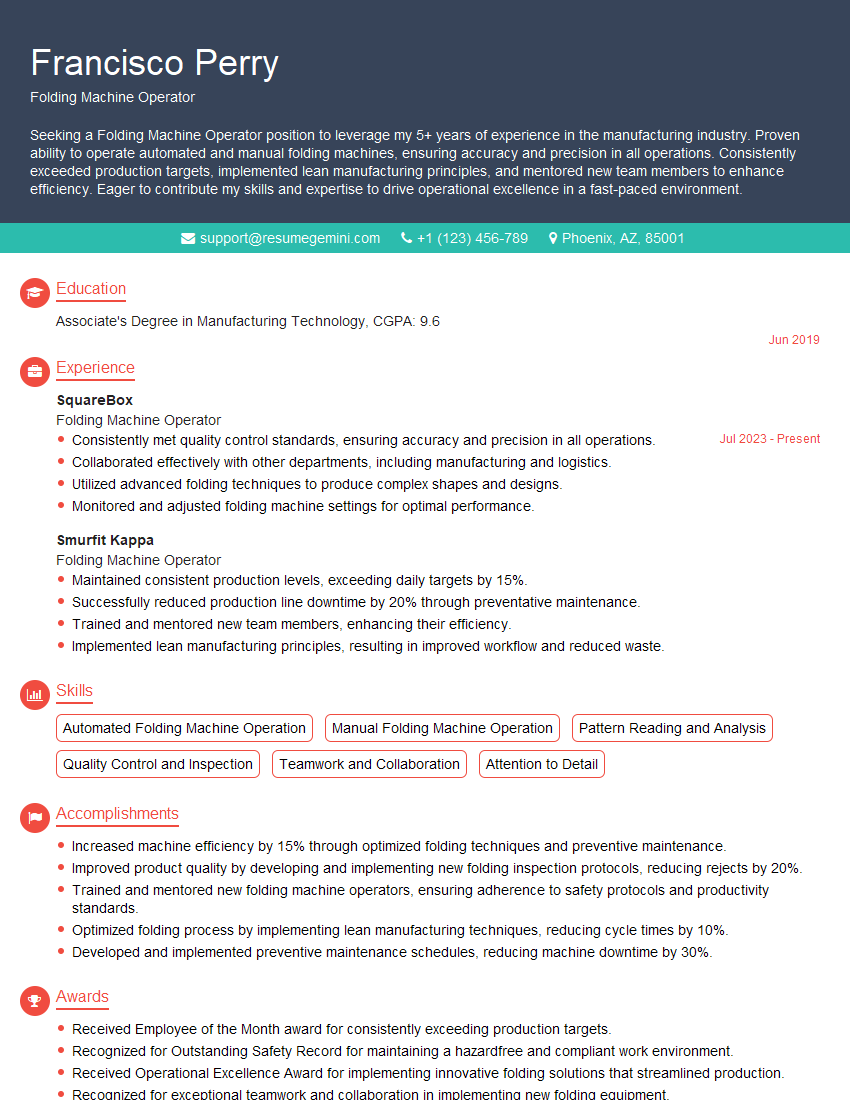
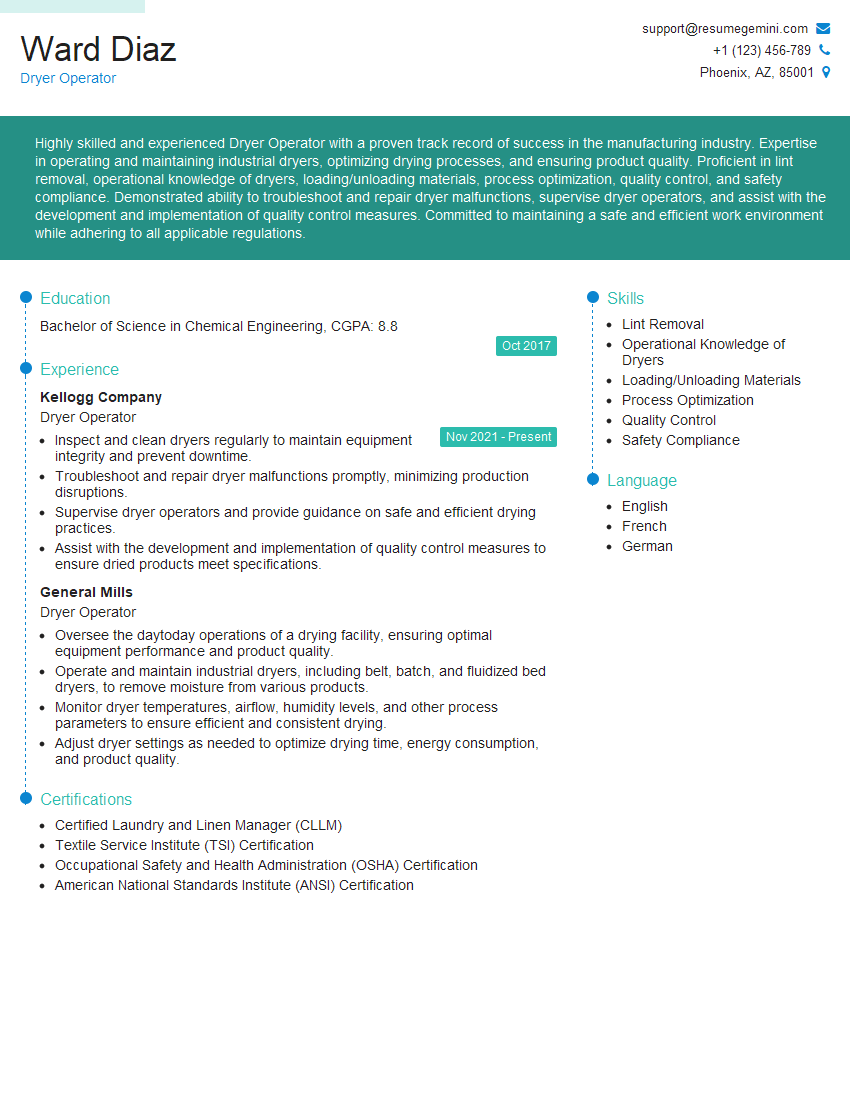
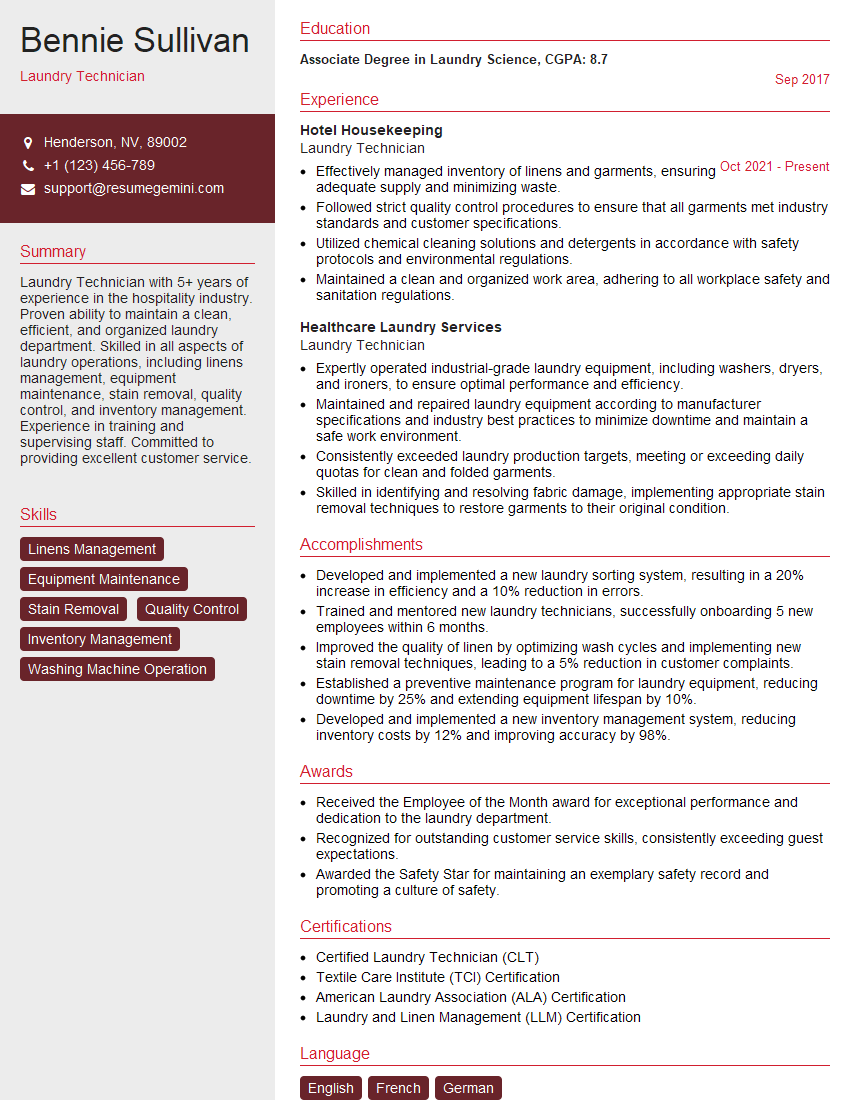
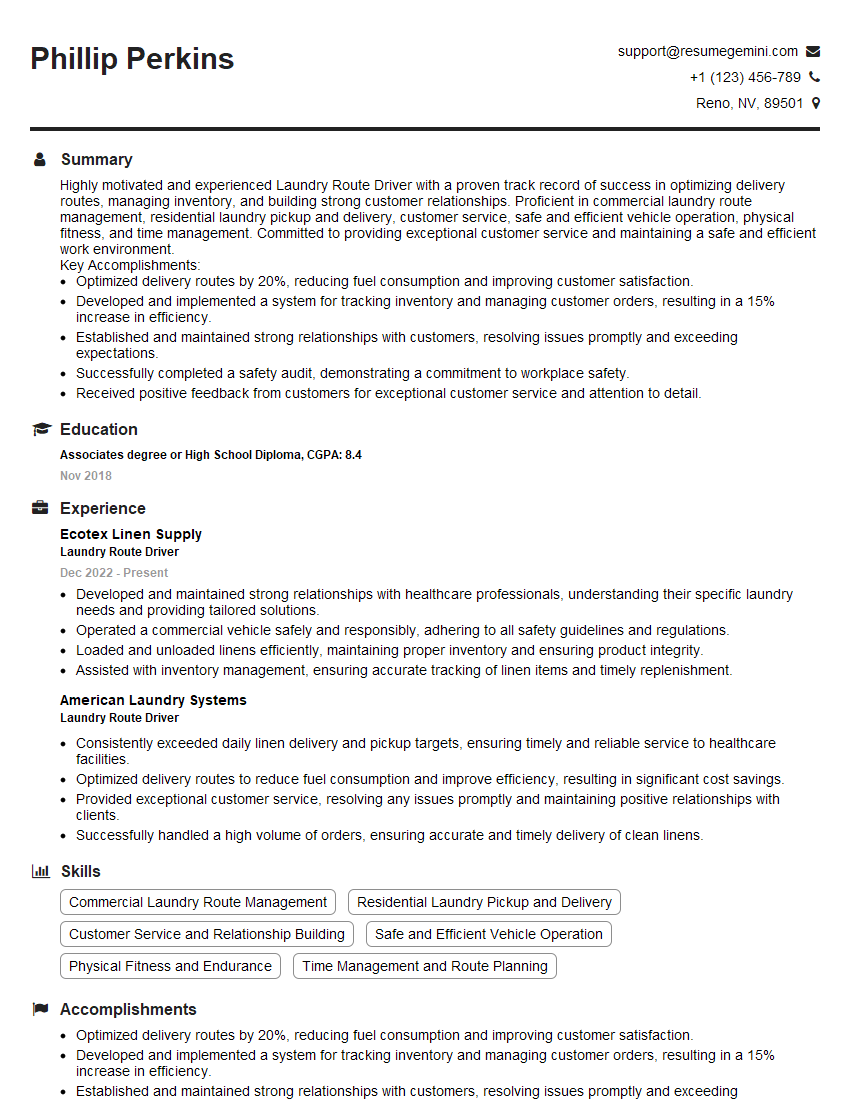
Mastering the intricacies of a commercial laundry setting is crucial for career advancement in this dynamic industry. Strong practical skills, coupled with a deep understanding of safety and efficiency, are highly sought after. To significantly improve your job prospects, create a resume that’s optimized for Applicant Tracking Systems (ATS). This ensures your application gets noticed by recruiters. ResumeGemini is a trusted resource for building professional, ATS-friendly resumes. We offer examples of resumes tailored to highlight Experience in a Commercial Laundry Setting, helping you present your skills and experience in the best possible light. Use our resources to craft a compelling resume that showcases your capabilities and lands you your dream job.

Explore more articles
Users Rating of Our Blogs
Share Your Experience
We value your feedback! Please rate our content and share your thoughts (optional).
What Readers Say About Our Blog
Attention music lovers!
Wow, All the best Sax Summer music !!!
Spotify: https://open.spotify.com/artist/6ShcdIT7rPVVaFEpgZQbUk
Apple Music: https://music.apple.com/fr/artist/jimmy-sax-black/1530501936
YouTube: https://music.youtube.com/browse/VLOLAK5uy_noClmC7abM6YpZsnySxRqt3LoalPf88No
Other Platforms and Free Downloads : https://fanlink.tv/jimmysaxblack
on google : https://www.google.com/search?q=22+AND+22+AND+22
on ChatGPT : https://chat.openai.com?q=who20jlJimmy20Black20Sax20Producer
Get back into the groove with Jimmy sax Black
Best regards,
Jimmy sax Black
www.jimmysaxblack.com
Hi I am a troller at The aquatic interview center and I suddenly went so fast in Roblox and it was gone when I reset.
Hi,
Business owners spend hours every week worrying about their website—or avoiding it because it feels overwhelming.
We’d like to take that off your plate:
$69/month. Everything handled.
Our team will:
Design a custom website—or completely overhaul your current one
Take care of hosting as an option
Handle edits and improvements—up to 60 minutes of work included every month
No setup fees, no annual commitments. Just a site that makes a strong first impression.
Find out if it’s right for you:
https://websolutionsgenius.com/awardwinningwebsites
Hello,
we currently offer a complimentary backlink and URL indexing test for search engine optimization professionals.
You can get complimentary indexing credits to test how link discovery works in practice.
No credit card is required and there is no recurring fee.
You can find details here:
https://wikipedia-backlinks.com/indexing/
Regards
NICE RESPONSE TO Q & A
hi
The aim of this message is regarding an unclaimed deposit of a deceased nationale that bears the same name as you. You are not relate to him as there are millions of people answering the names across around the world. But i will use my position to influence the release of the deposit to you for our mutual benefit.
Respond for full details and how to claim the deposit. This is 100% risk free. Send hello to my email id: lukachachibaialuka@gmail.com
Luka Chachibaialuka
Hey interviewgemini.com, just wanted to follow up on my last email.
We just launched Call the Monster, an parenting app that lets you summon friendly ‘monsters’ kids actually listen to.
We’re also running a giveaway for everyone who downloads the app. Since it’s brand new, there aren’t many users yet, which means you’ve got a much better chance of winning some great prizes.
You can check it out here: https://bit.ly/callamonsterapp
Or follow us on Instagram: https://www.instagram.com/callamonsterapp
Thanks,
Ryan
CEO – Call the Monster App
Hey interviewgemini.com, I saw your website and love your approach.
I just want this to look like spam email, but want to share something important to you. We just launched Call the Monster, a parenting app that lets you summon friendly ‘monsters’ kids actually listen to.
Parents are loving it for calming chaos before bedtime. Thought you might want to try it: https://bit.ly/callamonsterapp or just follow our fun monster lore on Instagram: https://www.instagram.com/callamonsterapp
Thanks,
Ryan
CEO – Call A Monster APP
To the interviewgemini.com Owner.
Dear interviewgemini.com Webmaster!
Hi interviewgemini.com Webmaster!
Dear interviewgemini.com Webmaster!
excellent
Hello,
We found issues with your domain’s email setup that may be sending your messages to spam or blocking them completely. InboxShield Mini shows you how to fix it in minutes — no tech skills required.
Scan your domain now for details: https://inboxshield-mini.com/
— Adam @ InboxShield Mini
support@inboxshield-mini.com
Reply STOP to unsubscribe
Hi, are you owner of interviewgemini.com? What if I told you I could help you find extra time in your schedule, reconnect with leads you didn’t even realize you missed, and bring in more “I want to work with you” conversations, without increasing your ad spend or hiring a full-time employee?
All with a flexible, budget-friendly service that could easily pay for itself. Sounds good?
Would it be nice to jump on a quick 10-minute call so I can show you exactly how we make this work?
Best,
Hapei
Marketing Director
Hey, I know you’re the owner of interviewgemini.com. I’ll be quick.
Fundraising for your business is tough and time-consuming. We make it easier by guaranteeing two private investor meetings each month, for six months. No demos, no pitch events – just direct introductions to active investors matched to your startup.
If youR17;re raising, this could help you build real momentum. Want me to send more info?
Hi, I represent an SEO company that specialises in getting you AI citations and higher rankings on Google. I’d like to offer you a 100% free SEO audit for your website. Would you be interested?
Hi, I represent an SEO company that specialises in getting you AI citations and higher rankings on Google. I’d like to offer you a 100% free SEO audit for your website. Would you be interested?