The thought of an interview can be nerve-wracking, but the right preparation can make all the difference. Explore this comprehensive guide to GPS and Chartplotter Navigation interview questions and gain the confidence you need to showcase your abilities and secure the role.
Questions Asked in GPS and Chartplotter Navigation Interview
Q 1. Explain the difference between GPS and GLONASS.
Both GPS (Global Positioning System) and GLONASS (GLObal NAvigation Satellite System) are satellite-based navigation systems providing positioning, navigation, and timing (PNT) services globally. However, they differ significantly in their operational details. GPS is a U.S. system, while GLONASS is a Russian system. This difference translates to independent satellite constellations, different frequencies used, and varying levels of accuracy and coverage in different regions. Think of them as two independent networks providing the same basic service—location data—but with slight variations in how they achieve it.
Here’s a comparison:
- Satellites: GPS uses 24 operational satellites, while GLONASS typically operates with 24 as well. The actual number may fluctuate due to maintenance and satellite life cycles.
- Frequencies: Both systems operate on multiple frequencies. GPS primarily uses L1 and L2, while GLONASS uses different frequencies. These frequency differences are important for signal accuracy and error correction techniques.
- Accuracy: While both aim for high precision, the actual accuracy can vary depending on factors like atmospheric conditions, satellite geometry, and signal blockage. Often, combined GPS/GLONASS receivers benefit from the increased number of visible satellites, offering better positional accuracy than relying solely on one system.
- Coverage: Both offer global coverage, though the distribution of satellites may affect the quality of the signal in specific regions. GLONASS might have better coverage over certain areas of the northern hemisphere, while GPS offers widespread coverage worldwide.
In marine navigation, using a receiver capable of receiving signals from both systems is highly advantageous, especially in areas where signal reception from one system might be weak.
Q 2. Describe the various types of chart projections used in marine navigation.
Chart projections are mathematical representations of the Earth’s curved surface onto a flat chart. Accuracy is crucial in marine navigation, as an inaccurate projection can lead to significant errors in determining position and distances. Several types are used in marine navigation:
- Mercator Projection: This is the most common projection used for nautical charts. It preserves rhumb lines (lines of constant bearing) as straight lines, making navigation by compass very straightforward. However, it significantly distorts areas at higher latitudes, with increasing scale distortion farther from the equator. Imagine stretching a peel of an orange to flatten it; the area of the peel increases as you move away from the equator.
- Lambert Conformal Conic Projection: This projection minimizes distortion along two standard parallels of latitude. It’s often used for charts covering areas that span large east-west distances at mid-latitudes. This projection is better suited for regions further from the equator than Mercator.
- Gnomonic Projection: This projection shows great circles (shortest distances between two points on a sphere) as straight lines. It’s useful for long-distance navigation planning, though it has significant distortion near the edges of the chart. It’s like looking at a globe from its center – distant locations become highly distorted.
- Transverse Mercator Projection: This is a modification of the Mercator projection, where the cylinder is rotated so that it touches the Earth along a chosen meridian. It’s useful for charts of areas that extend in a North-South direction.
Each projection has its strengths and weaknesses. The choice of projection depends on the geographical area covered and the specific navigational needs. ECDIS systems often handle the complexities of these projections automatically, ensuring accurate position and distance calculations.
Q 3. What are the limitations of GPS in marine navigation?
While GPS offers remarkably accurate positioning, it’s essential to understand its limitations in marine navigation. These limitations can impact safety and efficient navigation:
- Signal Blockage: Tall structures, dense foliage, or even atmospheric conditions like heavy rain can obstruct GPS signals, leading to inaccurate or lost signals. This is especially problematic in narrow channels or enclosed bays.
- Multipath Errors: GPS signals can bounce off surfaces like water or buildings before reaching the receiver, causing delays and resulting in inaccurate position readings. This is more pronounced near coastal areas or in cluttered environments.
- Atmospheric Effects: The ionosphere and troposphere can affect the speed of GPS signals, introducing errors. These errors, though often small, can accumulate over time and distance.
- Satellite Geometry (GDOP): The geometric arrangement of visible satellites influences the accuracy of the position fix. Poor satellite geometry (high GDOP) can lead to larger error margins.
- Receiver Limitations: The quality and sensitivity of the GPS receiver itself can influence the accuracy and reliability of the signals received.
Understanding these limitations is crucial. Mariners should always employ redundant systems and navigation techniques, such as visual navigation and using other electronic aids, to mitigate the risks associated with GPS limitations.
Q 4. How does Differential GPS (DGPS) improve accuracy?
Differential GPS (DGPS) enhances GPS accuracy significantly by correcting for systematic errors. A DGPS system uses a reference station with a known, highly precise position. This station continuously monitors GPS signals, comparing them to its known location and identifying any errors (like atmospheric delays). It then transmits these corrections to users via radio signals. DGPS receivers use these corrections to refine their position calculations, effectively reducing errors.
Imagine a group of people trying to estimate the distance to a landmark. One person (reference station) has the exact distance. They can tell the others (DGPS receivers) how far off their estimations are, allowing them to correct their measurements, leading to a much more accurate final determination.
DGPS improves accuracy to within a few meters, a significant improvement over the typical 10-meter accuracy of standard GPS. This increased precision is crucial for activities like harbor approach, docking, and precise positioning during hydrographic surveys.
Q 5. Explain the concept of Selective Availability (SA) and its impact on GPS accuracy.
Selective Availability (SA) was a U.S. Department of Defense policy that intentionally degraded the accuracy of GPS signals for civilian users. It was implemented to limit the potential for adversaries to utilize the system’s precision. SA introduced small, deliberate errors into the signals, reducing the accuracy to around 100 meters for standard GPS.
SA was deactivated in 2000, marking a significant improvement in GPS accuracy for civilian applications. The deactivation of SA was critical for many civilian applications, including marine navigation, as it allowed for more precise positioning and increased the safety and efficiency of navigational systems.
Today, the full precision of GPS is readily available to civilian users, leading to more precise navigation and location-based services.
Q 6. What are the key features of an Electronic Chart Display and Information System (ECDIS)?
An Electronic Chart Display and Information System (ECDIS) is a crucial navigational tool that integrates electronic charts with other navigational data sources. It’s far more than just a digital chartplotter. It’s a sophisticated system offering enhanced safety and efficiency.
Key features of an ECDIS include:
- Electronic Charts (ENCs): ECDIS uses official, vector-based electronic charts, providing superior accuracy and detail compared to traditional paper charts.
- Integration of Data: ECDIS integrates data from various sources, including GPS, gyrocompass, AIS (Automatic Identification System), depth sounder, and radar. It provides a comprehensive situational awareness picture.
- Route Planning: ECDIS enables advanced route planning capabilities, allowing mariners to plan voyages considering water depth, navigational hazards, and other relevant factors.
- Alarm and Warning Systems: ECDIS can trigger alarms based on user-defined criteria, alerting mariners to potential dangers, such as shallow water, restricted areas, or approaching vessels.
- Safety Features: ECDIS incorporates built-in safety features that ensure the system’s integrity and reliability. For instance, it has back-up systems and features to prevent accidental chart alterations.
- Data Management: ECDIS efficiently manages chart updates and ensures the system always uses the latest navigational information.
ECDIS is a powerful tool that enhances safety and improves decision-making in marine navigation. Its use is increasingly mandated for certain vessel types and voyages.
Q 7. How do you interpret chart symbols and notations?
Interpreting chart symbols and notations is a fundamental skill for any mariner. Charts use a standardized system of symbols and abbreviations to represent various navigational features and hazards. Understanding these symbols is crucial for safe navigation.
For example:
- Depths: Depths are typically shown in meters or fathoms, often with a specific datum reference. Understanding the datum is crucial as it dictates the reference point for depth measurements.
- Lighthouses and Buoys: These are represented by specific symbols showing their characteristics (light color, shape, etc.). This information is vital for identification and position fixing at night.
- Navigation Hazards: Rocks, wrecks, shoals, and other hazards are clearly marked with corresponding symbols, indicating their location and potential dangers.
- Topography: Land features such as hills, mountains, and coastline are displayed, allowing mariners to understand the surrounding landmasses.
- Channels and Fairways: Navigational channels are clearly marked, guiding safe passage through restricted waterways.
- Abbreviations and Notations: Charts use abbreviations and notations to provide additional information, such as compass roses, magnetic variation, and tidal information. Knowing these abbreviations is essential for accurate interpretation.
Chart interpretation requires thorough understanding of chart symbols and a detailed understanding of navigational principles. Training and practice are paramount in effectively interpreting chart information.
Navigational charts are complex documents that require dedicated and careful study; familiarity with symbols and notations is a crucial aspect of ensuring safe and efficient navigation.
Q 8. Describe the process of planning a voyage using a chartplotter.
Planning a voyage on a chartplotter is like meticulously designing a road trip. It begins with defining your destination and then strategically planning the route, considering potential challenges and safe havens along the way.
- Waypoints: First, you’ll input your departure and arrival points as waypoints on the chartplotter. Think of these as crucial milestones on your journey. You can also add intermediate waypoints for navigational reference or to account for navigational changes or fuel stops.
- Route Planning: The chartplotter allows you to plot a route between these waypoints. It considers factors such as water depth, known obstructions (charted rocks, reefs, etc.), and even tidal currents to suggest the most efficient and safest path. This is often done using an automatic route-planning feature, but manual adjustments are often necessary for optimization and safety.
- Checking Charts and Tides: You must carefully review the electronic charts for any hazards or restrictions along the route. You’ll need to consider the predicted tides and currents, particularly in shallow or constricted waters, and adjust your route or timing accordingly. For instance, a shallow channel might only be navigable at high tide.
- Safety Contours: Incorporate safety contours (explained further in the next answer) to add a margin of error and ensure you stay clear of potential dangers.
- Estimated Time of Arrival (ETA): The chartplotter calculates the ETA based on the planned route and the vessel’s speed. This is essential for planning fuel stops, tides, or meeting other vessels.
For example, planning a coastal cruise, I’d input my departure marina, my destination harbor, and several intermediate waypoints along the coast, avoiding known hazards indicated on the chart and ensuring sufficient clearance from the shore. I’d also factor in the estimated time to ensure arrival is within safe daylight hours and favorable tidal conditions.
Q 9. Explain the concept of a safety contour and its importance in navigation.
A safety contour is a virtual buffer zone you create around your planned route on the chartplotter. It’s like adding extra lane-width to a road to ensure you have enough space to maneuver safely, especially in challenging conditions. It helps avoid hazards and provides a margin for error.
The importance of safety contours cannot be overstated. They offer crucial protection against unexpected events such as:
- Navigation Errors: Human error is unavoidable. A safety contour allows for minor deviations in course or position without immediately encountering danger.
- Equipment Malfunction: If your GPS malfunctions temporarily, the contour provides a wider area to continue navigating safely until it is resolved.
- Unexpected Currents or Winds: Strong currents or winds can shift a vessel slightly off course. A larger safety contour increases the vessel’s ability to react safely.
- Poor Visibility: In fog or low visibility, the safety contour ensures a buffer from shallows or obstructions.
For instance, while navigating a narrow channel, I’d create a safety contour wide enough to accommodate for the potential effects of tidal currents or a small steering error. The width of the contour depends on the complexity of the waterway and environmental conditions.
Q 10. How do you handle GPS signal loss or interference?
GPS signal loss or interference is a serious concern and requires immediate attention. Think of it as losing your sat-nav on a remote highway; you need a backup plan.
My procedure involves:
- Immediate Action: First, I carefully check the GPS antenna and cables for any visible damage. Interference can also be caused by other electronic devices. A quick scan of surrounding equipment is essential.
- Backup Navigation Systems: Always have backup systems. A standby GPS receiver is essential. Using other navigational aids, like paper charts, a compass, and depth sounder, is crucial to ensure safe navigation.
- Position Fixing: If the signal is temporarily lost, I’d immediately take a fix using any available navigational aids. This includes using visual bearings on landmarks, depth soundings, and checking the last known GPS position.
- Piloting Techniques: Skilled piloting techniques, like range-finding and visual fixes, help in maintaining course and avoiding hazards until GPS is restored.
- Troubleshooting: If GPS remains problematic, there might be an internal fault. If possible, isolate or repair the issue, or consult a qualified technician.
During a recent trip, I experienced temporary GPS signal loss in a heavily wooded area. Immediately, I switched to my backup GPS, took visual bearings on prominent landmarks, and confirmed my position on paper charts. This allowed safe continuation until the GPS signal was regained.
Q 11. What are the different types of navigational warnings and how are they disseminated?
Navigational warnings communicate hazards to shipping. These can range from temporary obstructions to permanent dangers. They are crucial for safety.
- Navigation Warnings (NAVWARNINGS): These relate to temporary hazards like floating debris, temporary shipping restrictions, or unplanned dredging works. They’re usually short-term, geographically specific, and require prompt action.
- Notices to Mariners (NOTAMs): These warnings are often longer-term and announce changes to charts, such as new obstructions, changes to channel depths, or the establishment of new navigational aids.
- Urgent Marine Information Broadcasts (UMIBs): For critical events like severe weather warnings, or large-scale incidents, UMIBs provide immediate, life-saving information.
These warnings are disseminated through various channels:
- Electronic Chart Display and Information Systems (ECDIS): Modern chartplotters automatically receive updates from connected systems.
- Radio broadcasts: Marine radio stations regularly transmit navigational warnings and alerts.
- Notice to Mariners publications: Official publications list permanent and long-term changes to charts and waterways.
- Apps and online services: Several services provide real-time navigational warnings and alerts via mobile apps or websites.
Regularly checking all these sources before and during a voyage is essential to stay informed about potential hazards. It is crucial to understand the nature of each warning to respond appropriately. For instance, a NAVWARNING about a temporary floating obstruction would require immediate course alteration, unlike a NOTAM about a long-term buoy relocation.
Q 12. Describe the procedures for updating charts and navigational data on a chartplotter.
Updating charts and navigational data is crucial for safe navigation. Outdated data can lead to serious accidents. Think of it as keeping your car’s maps updated – it’s essential for a smooth journey.
The procedure typically involves:
- Connecting to a Data Source: Chartplotters often connect to a computer or a dedicated update service via a cable or wireless network.
- Downloading Updates: The chartplotter software will identify available updates for charts and data. These are often categorized by geographical areas, making it efficient to only download what is needed.
- Installation: Once downloaded, updates are automatically installed. The system often requires a reboot after the installation process. It’s essential to ensure the process is completed successfully before proceeding with any voyage.
- Verification: After installation, it’s vital to verify the chart versions. Check for the correct date and edition numbers to ensure that you have the latest and correct information.
- Regular Updates: Chart data needs regular updates. Many services offer subscription models for automatic updates. Regular updates ensure that you have the most current and accurate navigational information.
Before every long voyage, I ensure my charts are completely up-to-date. I subscribe to an automatic update service and double-check that all updates are installed correctly. This preventative measure helps avoid any incidents due to outdated or incorrect chart data.
Q 13. Explain the concept of position fixing using GPS and other navigational aids.
Position fixing is the process of accurately determining a vessel’s location. It’s fundamental to safe navigation; knowing where you are is the first step in knowing where to go. Think of it as checking your position on a map during a road trip.
GPS is the primary method, providing latitude and longitude coordinates. However, relying solely on GPS isn’t always wise. Other aids enhance accuracy and provide redundancy:
- GPS: Provides accurate position data based on signals from satellites. A minimum of three satellites is needed for a 2D position and four for a 3D fix, including altitude.
- Visual Bearings: Taking bearings (angles) to identifiable landmarks on land using a compass provides a line of position (LOP). Two or more bearings intersect to pinpoint location.
- Depth Soundings: Comparing depths obtained by the echo sounder to those on the chart provides another LOP. This is especially useful in shallow waters.
- Celestial Navigation: While less common today, this method uses the positions of celestial bodies to calculate a position. It’s a valuable backup method, particularly in the event of electronic system failures.
- Radar: Used to locate other vessels and land features, radar can provide bearing and range information for position fixing, especially in low visibility conditions.
Ideally, you use a combination of methods. For example, I might confirm a GPS position with a visual bearing to a prominent landmark. This cross-referencing ensures greater certainty of position and a safer navigation experience.
Q 14. How do you calculate a course to steer using a chartplotter?
Calculating a course to steer is straightforward on a chartplotter. It involves using the chartplotter’s built-in functions to determine the heading required to reach your destination from your current position. Think of it as using a map’s directions to guide your car.
The process usually involves:
- Selecting Waypoints: Identify your current position and the desired destination waypoint on the chart.
- Route Calculation: The chartplotter automatically calculates the shortest or most suitable route, considering any constraints like water depth and potential obstructions.
- Course Display: The chartplotter displays the calculated course in degrees (magnetic or true). The magnetic course takes magnetic variation and deviation into account. True course is based on the geographic north.
- Course Adjustments: You may need to manually adjust the course, particularly to account for currents, tides, or other variables such as vessel draft in shallow areas.
Example: Let’s say my current position is indicated by a GPS fix and my destination is a waypoint that has been previously entered. The chartplotter might calculate a course to steer of 270° Magnetic. I then account for any magnetic deviation and variation to obtain my final heading to maintain this course to reach my destination, confirming my heading using a magnetic compass.
Q 15. Describe the different types of tides and their impact on navigation.
Tides are the rise and fall of sea levels caused by the gravitational forces of the moon and sun. Understanding tides is crucial for safe navigation, as they significantly affect water depth and currents. There are several types:
- Spring Tides: Occur during new and full moons when the sun, moon, and Earth align, resulting in higher high tides and lower low tides. Think of it like this: the sun and moon’s gravity are working together, amplifying the tidal effect.
- Neap Tides: Occur during the first and third quarter moons when the sun and moon are at right angles to each other, resulting in smaller tidal ranges (the difference between high and low tide). Imagine the sun’s gravity partially counteracting the moon’s, leading to less dramatic tidal changes.
- Diurnal Tides: One high tide and one low tide per day. These are less common.
- Semi-diurnal Tides: Two high tides and two low tides per day, with approximately equal heights. This is the most common type.
- Mixed Tides: Two high tides and two low tides per day, but with unequal heights. This is a common pattern found in many coastal areas.
Impact on Navigation: Navigating shallow waters requires careful consideration of tidal heights. Incorrectly estimating the depth due to tide can ground a vessel. Strong tidal currents can also significantly impact a vessel’s speed and heading, necessitating adjustments to course and speed to reach the desired destination safely and efficiently. Charts usually include tide tables and predictions, crucial for safe navigation.
Career Expert Tips:
- Ace those interviews! Prepare effectively by reviewing the Top 50 Most Common Interview Questions on ResumeGemini.
- Navigate your job search with confidence! Explore a wide range of Career Tips on ResumeGemini. Learn about common challenges and recommendations to overcome them.
- Craft the perfect resume! Master the Art of Resume Writing with ResumeGemini’s guide. Showcase your unique qualifications and achievements effectively.
- Don’t miss out on holiday savings! Build your dream resume with ResumeGemini’s ATS optimized templates.
Q 16. Explain the concept of compass deviation and how it’s corrected.
Compass deviation is the error in a magnetic compass reading caused by the magnetic fields generated by the vessel’s own metallic structures. Think of it like this: your boat’s metal parts are acting like tiny magnets, influencing the compass needle.
Correction involves compensating for these magnetic fields. This is typically done by adjusting small magnets or soft iron spheres within the compass itself, a process called compass adjustment or compensation. A deviation card or table is then created, documenting the deviation at various compass headings. During navigation, the navigator uses this card to correct the observed compass heading to obtain the true magnetic heading.
For example, if the deviation at a compass heading of 090° is +3°, and the compass reads 090°, the corrected magnetic heading is 087° (090° – 3°). This ensures accurate navigation by correcting for the vessel’s specific magnetic interference.
Q 17. How do you use a chartplotter to determine your estimated time of arrival (ETA)?
Modern chartplotters simplify ETA calculation significantly. After plotting a route, the chartplotter considers factors such as:
- Distance to Destination: Calculated from the vessel’s current position along the plotted route.
- Vessel Speed: Either manually entered or automatically derived from GPS data.
- Course and Speed Variations: The chartplotter considers planned course changes, anticipated current effects, and potential speed adjustments due to weather or other factors (if manually inputted).
The chartplotter continuously updates the ETA as the vessel progresses along its route, accounting for deviations from the planned course or speed. Most chartplotters allow the user to input additional information such as anticipated stops or changes in speed which will then be incorporated into the ETA calculation.
Imagine you’re driving a car using a GPS; the ETA continuously adjusts based on your speed and route changes. A chartplotter functions similarly for marine navigation.
Q 18. What are the different types of navigational errors and how can they be minimized?
Navigational errors are unavoidable but can be minimized. Common errors include:
- Instrumental Errors: Inaccuracies in GPS, compass, or other equipment, often due to malfunction or poor calibration. Regular maintenance and calibration are key to mitigating these.
- Personal Errors: Mistakes made by the navigator, like incorrect reading of instruments, faulty calculations, or poor chart interpretation. Diligence, careful observation, and cross-checking of data can prevent these.
- Environmental Errors: Influences from the environment, such as magnetic variations, currents, winds, and refraction of light. Understanding the environment and using appropriate correction methods is vital. Using multiple positioning systems can reduce errors by cross referencing.
- Chart Errors: Outdated or inaccurate charts lead to incorrect position estimations. Using the latest charts and verifying information from multiple sources are crucial steps.
Minimizing these errors requires a combination of equipment maintenance, skilled observation, proper chart work, cross-checking of data, and understanding the impact of the environment on navigation.
Q 19. Explain the concept of dead reckoning and its limitations.
Dead reckoning (DR) is a method of estimating a vessel’s position by using its last known position, course, speed, and the estimated effects of wind and current. Think of it like trying to guess your final destination using the direction you’re going and how fast you’re moving.
Limitations: DR is prone to accumulating errors over time because it relies on estimations. Small inaccuracies in course, speed, or the effects of wind and current, accumulate over time, leading to significant deviations from the actual position. It should not be used as the primary means of determining a position, especially during longer voyages. DR is best used in conjunction with other positioning methods, such as GPS, visual bearings, or celestial navigation to correct for accumulated errors.
Q 20. How do you determine your vessel’s position using visual bearings?
Determining a vessel’s position using visual bearings involves taking bearings (angles) to at least two identifiable landmarks (or ranges). Using a compass and pelorus the navigator obtains the bearing to each landmark. These bearings are then plotted on the chart. The intersection of the plotted bearings gives the vessel’s position.
Procedure:
- Identify at least two distinct landmarks visible from the vessel.
- Use a compass or pelorus to take the bearing to each landmark. Note this down carefully.
- Locate the landmarks on the chart.
- On the chart, draw lines from each landmark at the angle corresponding to the taken bearing.
- The intersection of these lines is the vessel’s position. If there are more than two bearings, a small circle should be made. The smallest circle encompassing all the points will give the most probable position.
This method is very useful in coastal navigation and areas where GPS might be unreliable.
Q 21. Describe the procedures for conducting a pre-departure check of navigational equipment.
A pre-departure navigational equipment check is crucial for safe navigation. The checklist should include:
- GPS: Verify the GPS receiver is functioning correctly, receiving adequate satellite signals, and displaying the vessel’s position accurately. Check the GPS antenna for damage or proper installation.
- Chartplotter: Confirm that the chartplotter is displaying the correct charts, the route is properly planned, and the autopilot (if used) is functioning as expected. Check the chartplotter for any software updates.
- Radar (if equipped): Ensure the radar is operating correctly, and the screen is clear and showing the surrounding environment. Perform a range test.
- Autopilot (if equipped): Test the autopilot’s functionality by engaging it for a short period and verifying it maintains the correct course.
- Compass: Verify the magnetic compass and its deviation card are accurate. Ensure it’s properly mounted and functioning correctly.
- Depth Sounder: Confirm the depth sounder’s readings match the charted depths.
- VHF Radio: Ensure the VHF radio is functioning correctly and is properly tuned to the appropriate channels.
- Emergency Position Indicating Radio Beacon (EPIRB): Check that the EPIRB is functioning correctly and its details are up-to-date.
This thorough check will help ensure all navigational systems are functioning correctly before departure, minimizing risks during the voyage.
Q 22. How do you handle an emergency situation involving navigational equipment failure?
Navigational equipment failure is a serious event, demanding a calm and methodical response. My immediate priority is ensuring the safety of the vessel and all personnel. This involves a layered approach. First, I would immediately switch to backup systems. This might involve reverting to paper charts, a hand-held GPS, or even traditional celestial navigation techniques if necessary. Simultaneously, I’d assess the nature of the failure – is it a complete GPS outage, a chartplotter malfunction, or something else? This helps determine the best fallback strategy.
Next, I’d initiate a distress call if the situation warrants it. This could be a Mayday call via VHF radio, depending on the severity and the potential for immediate danger. I would then carefully analyze my current position using all available means – visual bearings on landmarks, estimated speed and time since last known good position, and any other navigational clues. Maintaining situational awareness is paramount.
Finally, I’d implement damage control measures to prevent further problems. This might include troubleshooting the failed equipment or securing it to prevent further damage. Throughout the process, careful note-taking is crucial for later analysis and reporting.
For example, during a recent voyage, our primary GPS receiver malfunctioned. Fortunately, we had a backup GPS and detailed paper charts. We successfully navigated to the nearest port by using the backup GPS in conjunction with visual navigation and dead reckoning (calculating position based on speed and time). This incident highlighted the importance of redundancy and robust backup plans.
Q 23. Explain the importance of maintaining accurate logbooks and navigation records.
Maintaining accurate logbooks and navigation records is not merely a regulatory requirement; it’s a cornerstone of safe and efficient navigation. These records serve as a detailed history of the voyage, providing vital information for several purposes.
- Safety: In case of an incident, investigation, or insurance claim, meticulous records can be invaluable. They provide a chronological account of events, speeds, positions, and any significant occurrences. This documentation can often be the difference between a successful claim and a denied one.
- Legal Compliance: Many maritime regulations mandate the maintenance of detailed navigation logs. Failure to do so can result in significant penalties.
- Performance Analysis: Reviewing logbooks can reveal patterns, pinpoint areas for improvement in navigational techniques, and help optimize routes for efficiency.
- Troubleshooting: If a navigational error occurs, the logbook can assist in identifying the root cause and prevent similar errors in the future.
An accurate logbook should include entries for time, position, speed, course, weather conditions, significant events, equipment status, and any navigational decisions made. Electronic logbooks offer additional advantages through automated data capture and integration with other navigational systems.
Q 24. Describe the different types of electronic charts (ENCs) available.
Electronic Navigational Charts (ENCs) are digital representations of nautical charts, offering numerous advantages over paper charts. Different types of ENCs exist, largely differentiated by their level of detail and intended use.
- Standard ENCs: These are the most common type, offering comprehensive coverage of a geographical area with various navigational features. They include data on depths, hazards, aids to navigation, and other essential information.
- Vector ENCs: These are composed of vector data, which is easily scalable and more compact than raster data. They are ideal for chartplotters and digital navigation systems.
- Raster ENCs: These are essentially scanned images of paper charts, offering a high level of detail. However, they are less scalable and may not be as readily integrated with other systems.
- ENCs with Different Scales: ENCs are available at various scales, depending on the area of coverage and the level of detail required. For instance, a large-scale ENC might provide detailed information for coastal navigation, whereas a small-scale ENC might be suitable for oceanic voyages.
It’s crucial to use ENCs that are up-to-date and that are appropriate for your intended voyage. Obsolete charts can lead to incorrect navigation decisions and potentially hazardous situations.
Q 25. What are the safety regulations and guidelines associated with using GPS and chartplotters?
Safety regulations and guidelines for using GPS and chartplotters are crucial for ensuring safe navigation. These regulations vary by region and are often outlined by governmental agencies and international maritime organizations.
- Regular Maintenance and Calibration: GPS and chartplotter systems should be regularly checked for proper functioning and calibration. Failure to do so can lead to inaccuracies in position information and other navigational errors.
- Backup Systems: The use of backup systems is strongly recommended. This might include a hand-held GPS, paper charts, or alternative navigation methods.
- Proper Chart Updating: Always use the most current version of the charts to account for changes in water depths, hazards, and other navigational features.
- Understanding Limitations: It’s essential to understand the limitations of GPS and chartplotter technology. GPS signals can be affected by atmospheric conditions, while chartplotters might have inherent limitations. Always supplement electronic navigation with other methods like visual bearings and traditional celestial navigation.
- Training and Certification: Adequate training is essential to operate GPS and chartplotter systems effectively and safely.
Ignoring these guidelines can result in accidents, collisions, and grounding. Adherence to these regulations is vital for safe navigation and compliance with maritime laws.
Q 26. Explain the role of Automatic Identification System (AIS) in collision avoidance.
The Automatic Identification System (AIS) is a crucial tool for collision avoidance. It’s a shipborne electronic system that transmits and receives data about a vessel’s identity, position, course, and speed. This information is then displayed on other vessels’ chartplotters and other AIS receivers.
AIS greatly enhances situational awareness by providing real-time information on nearby vessels. This allows mariners to anticipate potential conflicts and take timely evasive action. It’s particularly beneficial in areas with high vessel traffic or limited visibility. By viewing the position, course, and speed of other vessels, mariners can assess the risk of collision and decide on appropriate actions, such as altering course or speed.
For example, if an AIS receiver shows a vessel on a collision course, the mariner can use this information to initiate a course alteration or contact the other vessel to coordinate actions to avoid a collision. It significantly improves safety by reducing the likelihood of collisions, especially in crowded waterways.
Q 27. Describe the procedures for identifying and reporting navigational hazards.
Identifying and reporting navigational hazards is a critical responsibility of all mariners. This involves a combination of observation, reporting, and awareness.
Identification: Hazards can range from submerged rocks and wrecks to floating debris and poorly charted areas. Identifying a hazard involves careful observation while underway – looking out for unusual water discoloration, floating objects, or changes in depth readings. A keen eye and familiarity with local conditions are essential. Any suspicious feature should be investigated further.
Reporting: Once a hazard is identified, it should be reported to the appropriate authorities. This often involves contacting the Coast Guard or other relevant maritime agencies through VHF radio or other communication channels. The report should include the location (latitude and longitude), nature of the hazard, any potential danger it poses, and any other relevant information.
Recording: Maintaining a comprehensive log of navigational hazards encountered is crucial. This detailed record will document all incidents, creating a history that can aid in future navigation and hazard awareness. Reporting also helps update charts and navigational information, enhancing safety for all mariners.
Q 28. How do you interpret and utilize tidal information from a chartplotter?
Chartplotters often incorporate tidal information, providing crucial data for safe and efficient navigation, particularly in shallow waters or areas with significant tidal ranges. Understanding and utilizing this information is essential for safe navigation.
Chartplotters typically display tidal information in a few ways:
- Tidal Charts: Many chartplotters integrate tidal charts that depict the predicted water level at specific locations and times.
- Tidal Curves: These graphs show the variation in water level over time, allowing mariners to predict the water depth at a particular location and time.
- Tidal Predictions: Some chartplotters provide numerical predictions of high and low tide times and heights for specific locations.
To effectively use tidal information, mariners should carefully review the tidal data for their planned route and adjust their navigation plans accordingly. This ensures that they have sufficient water depth beneath their vessel throughout the voyage. For instance, if a vessel requires 10 meters of water depth for safe passage, and the tidal chart shows 8 meters at a specific time and location, the mariner should adjust the transit plan to account for the reduced depth. This could involve delaying the transit or choosing an alternative route with sufficient depth.
Key Topics to Learn for GPS and Chartplotter Navigation Interview
- GPS Fundamentals: Understanding GPS signal acquisition, satellite geometry, and error sources (e.g., multipath, atmospheric effects). Practical application: Explaining how these errors impact position accuracy and the methods used to mitigate them.
- Chartplotter Operation: Proficiency in using various chartplotter functions, including waypoints, routes, tracks, and bearing calculations. Practical application: Describing how to plan a safe and efficient route, considering factors like tides, currents, and weather.
- Electronic Chart Display and Information Systems (ECDIS): Understanding the functionalities and limitations of ECDIS, including chart updating procedures and safety features. Practical application: Explaining the importance of regular chart updates and the role of ECDIS in collision avoidance.
- Navigation Techniques: Mastering piloting techniques using GPS and chartplotter data, including dead reckoning, electronic position fixing, and course correction. Practical application: Solving a scenario involving position uncertainty and applying appropriate navigation strategies.
- Integration with other systems: Understanding how GPS and chartplotters integrate with other navigational systems like radar, AIS, and autopilot. Practical application: Describing the benefits and limitations of integrated systems.
- Troubleshooting and Maintenance: Identifying and resolving common GPS and chartplotter malfunctions, including system errors and data inconsistencies. Practical application: Explaining troubleshooting steps for a specific scenario involving a malfunctioning GPS receiver or chartplotter display.
Next Steps
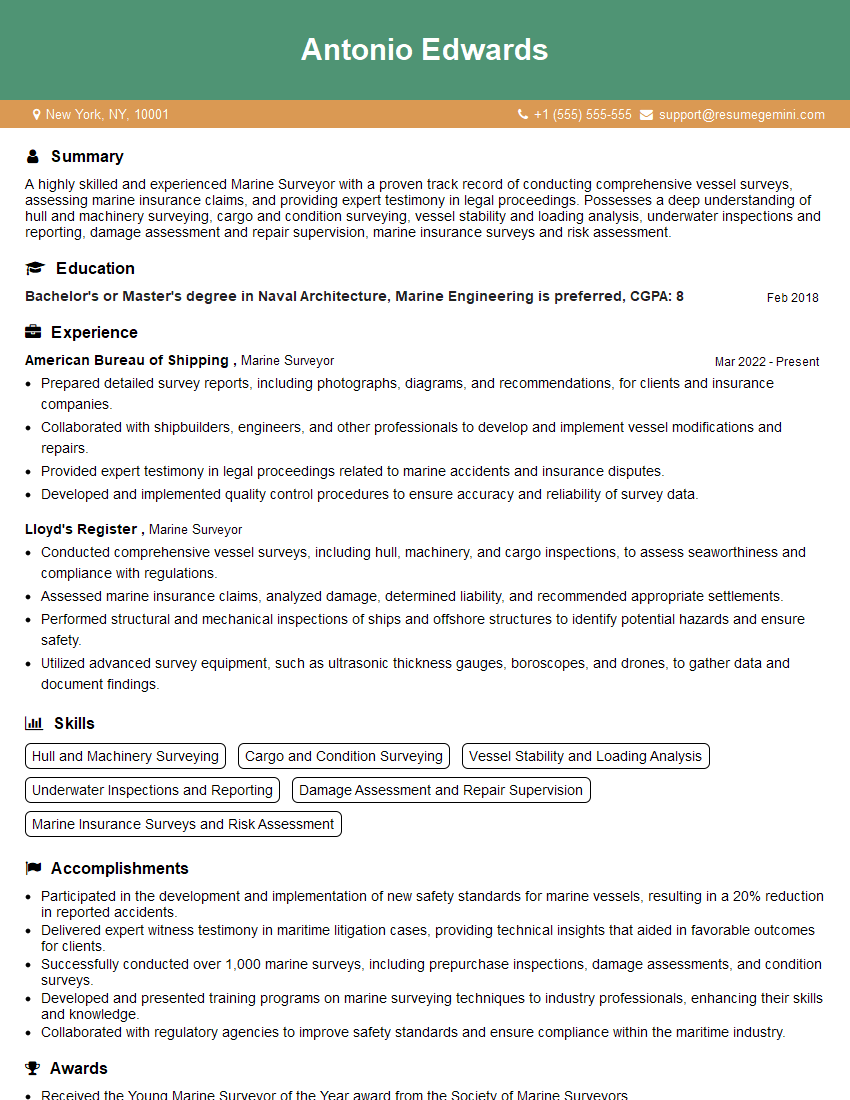
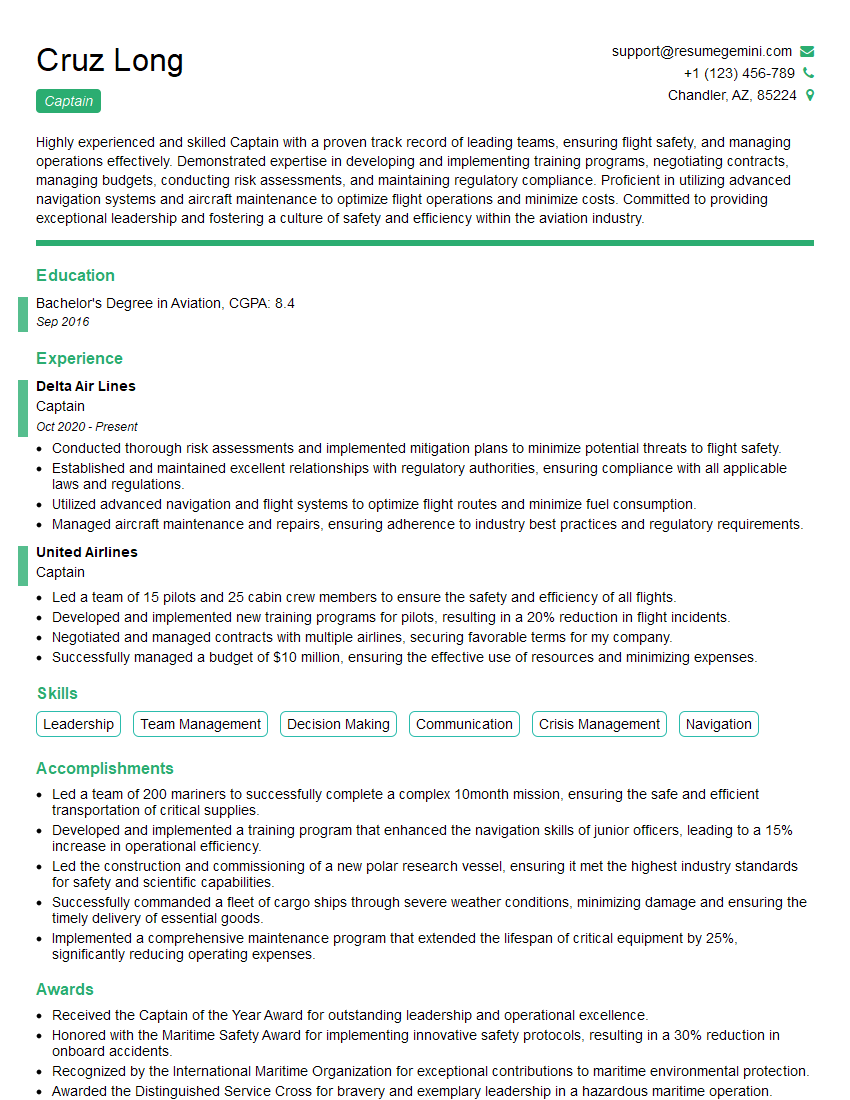
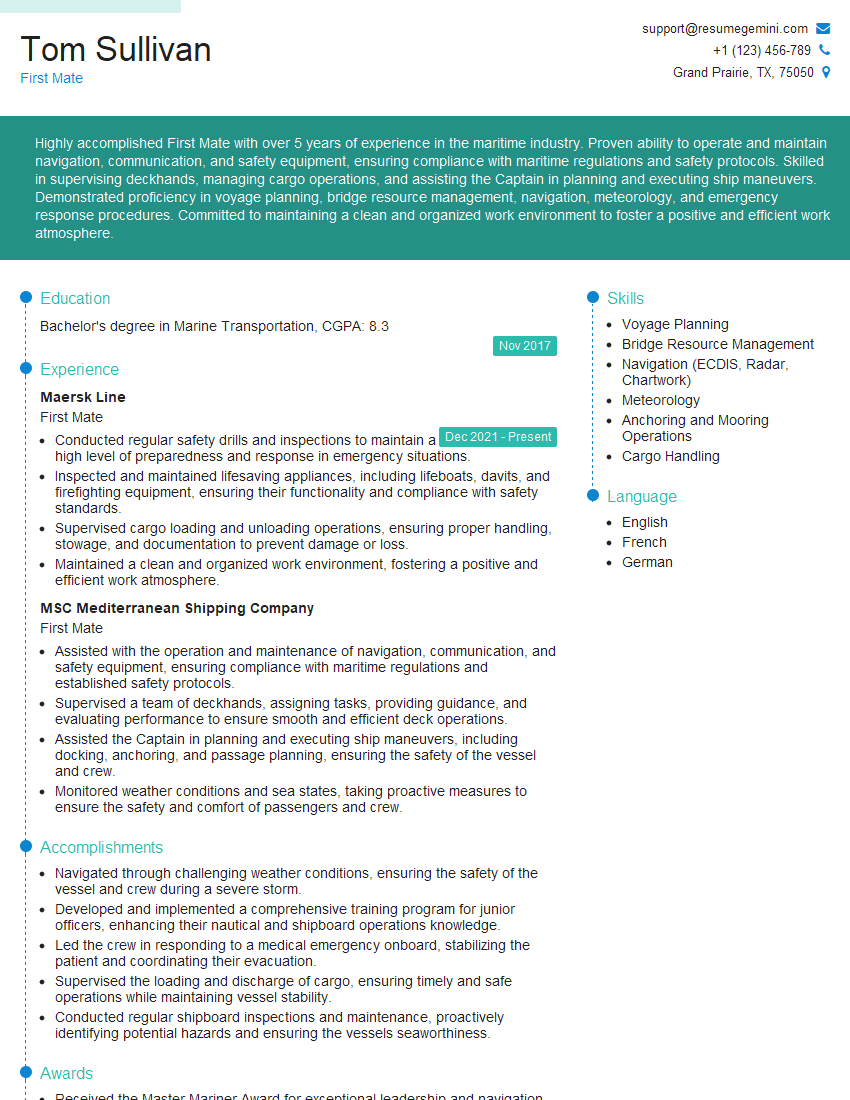
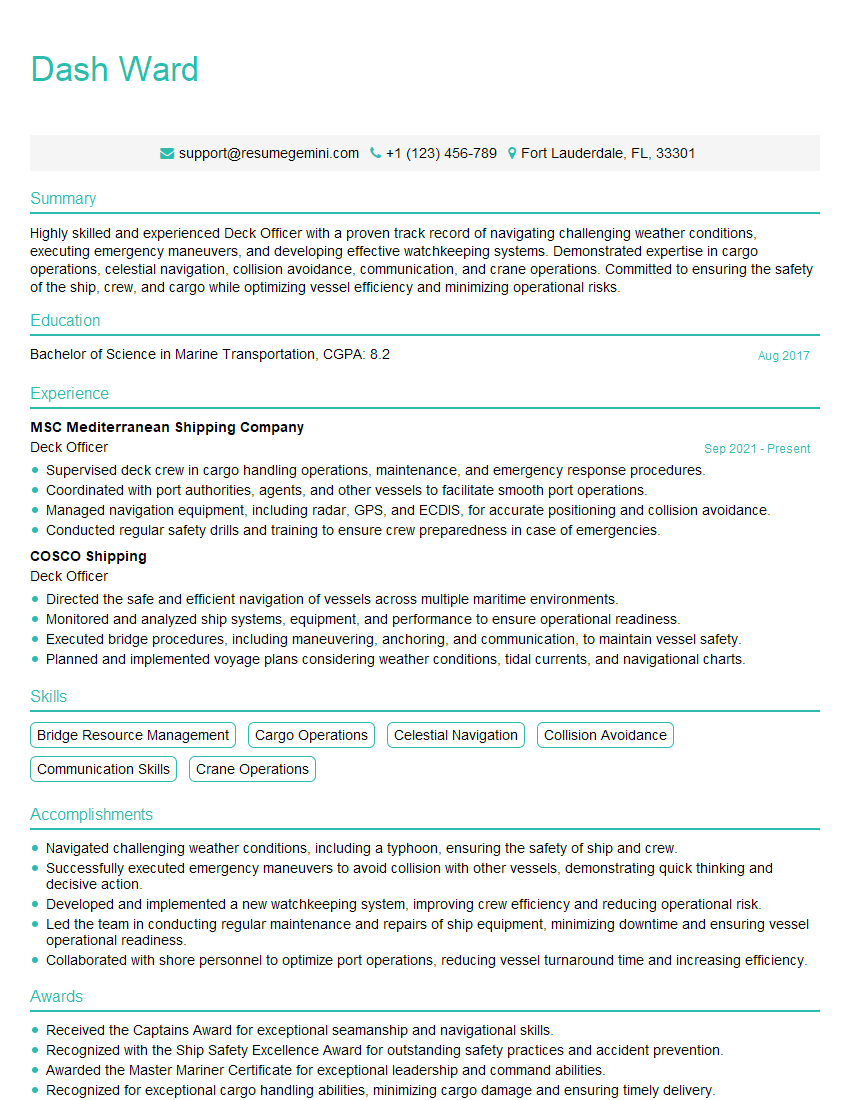
Mastering GPS and Chartplotter Navigation is crucial for career advancement in maritime, aviation, and other related fields. A strong understanding of these technologies demonstrates valuable skills and expertise highly sought after by employers. To maximize your job prospects, create an ATS-friendly resume that effectively highlights your skills and experience. ResumeGemini is a trusted resource to help you build a professional and impactful resume. Leverage ResumeGemini’s tools and resources to craft a compelling resume showcasing your navigation expertise. Examples of resumes tailored to GPS and Chartplotter Navigation are available to guide you.
Explore more articles
Users Rating of Our Blogs
Share Your Experience
We value your feedback! Please rate our content and share your thoughts (optional).
What Readers Say About Our Blog
Attention music lovers!
Wow, All the best Sax Summer music !!!
Spotify: https://open.spotify.com/artist/6ShcdIT7rPVVaFEpgZQbUk
Apple Music: https://music.apple.com/fr/artist/jimmy-sax-black/1530501936
YouTube: https://music.youtube.com/browse/VLOLAK5uy_noClmC7abM6YpZsnySxRqt3LoalPf88No
Other Platforms and Free Downloads : https://fanlink.tv/jimmysaxblack
on google : https://www.google.com/search?q=22+AND+22+AND+22
on ChatGPT : https://chat.openai.com?q=who20jlJimmy20Black20Sax20Producer
Get back into the groove with Jimmy sax Black
Best regards,
Jimmy sax Black
www.jimmysaxblack.com
Hi I am a troller at The aquatic interview center and I suddenly went so fast in Roblox and it was gone when I reset.
Hi,
Business owners spend hours every week worrying about their website—or avoiding it because it feels overwhelming.
We’d like to take that off your plate:
$69/month. Everything handled.
Our team will:
Design a custom website—or completely overhaul your current one
Take care of hosting as an option
Handle edits and improvements—up to 60 minutes of work included every month
No setup fees, no annual commitments. Just a site that makes a strong first impression.
Find out if it’s right for you:
https://websolutionsgenius.com/awardwinningwebsites
Hello,
we currently offer a complimentary backlink and URL indexing test for search engine optimization professionals.
You can get complimentary indexing credits to test how link discovery works in practice.
No credit card is required and there is no recurring fee.
You can find details here:
https://wikipedia-backlinks.com/indexing/
Regards
NICE RESPONSE TO Q & A
hi
The aim of this message is regarding an unclaimed deposit of a deceased nationale that bears the same name as you. You are not relate to him as there are millions of people answering the names across around the world. But i will use my position to influence the release of the deposit to you for our mutual benefit.
Respond for full details and how to claim the deposit. This is 100% risk free. Send hello to my email id: lukachachibaialuka@gmail.com
Luka Chachibaialuka
Hey interviewgemini.com, just wanted to follow up on my last email.
We just launched Call the Monster, an parenting app that lets you summon friendly ‘monsters’ kids actually listen to.
We’re also running a giveaway for everyone who downloads the app. Since it’s brand new, there aren’t many users yet, which means you’ve got a much better chance of winning some great prizes.
You can check it out here: https://bit.ly/callamonsterapp
Or follow us on Instagram: https://www.instagram.com/callamonsterapp
Thanks,
Ryan
CEO – Call the Monster App
Hey interviewgemini.com, I saw your website and love your approach.
I just want this to look like spam email, but want to share something important to you. We just launched Call the Monster, a parenting app that lets you summon friendly ‘monsters’ kids actually listen to.
Parents are loving it for calming chaos before bedtime. Thought you might want to try it: https://bit.ly/callamonsterapp or just follow our fun monster lore on Instagram: https://www.instagram.com/callamonsterapp
Thanks,
Ryan
CEO – Call A Monster APP
To the interviewgemini.com Owner.
Dear interviewgemini.com Webmaster!
Hi interviewgemini.com Webmaster!
Dear interviewgemini.com Webmaster!
excellent
Hello,
We found issues with your domain’s email setup that may be sending your messages to spam or blocking them completely. InboxShield Mini shows you how to fix it in minutes — no tech skills required.
Scan your domain now for details: https://inboxshield-mini.com/
— Adam @ InboxShield Mini
support@inboxshield-mini.com
Reply STOP to unsubscribe
Hi, are you owner of interviewgemini.com? What if I told you I could help you find extra time in your schedule, reconnect with leads you didn’t even realize you missed, and bring in more “I want to work with you” conversations, without increasing your ad spend or hiring a full-time employee?
All with a flexible, budget-friendly service that could easily pay for itself. Sounds good?
Would it be nice to jump on a quick 10-minute call so I can show you exactly how we make this work?
Best,
Hapei
Marketing Director
Hey, I know you’re the owner of interviewgemini.com. I’ll be quick.
Fundraising for your business is tough and time-consuming. We make it easier by guaranteeing two private investor meetings each month, for six months. No demos, no pitch events – just direct introductions to active investors matched to your startup.
If youR17;re raising, this could help you build real momentum. Want me to send more info?
Hi, I represent an SEO company that specialises in getting you AI citations and higher rankings on Google. I’d like to offer you a 100% free SEO audit for your website. Would you be interested?
Hi, I represent an SEO company that specialises in getting you AI citations and higher rankings on Google. I’d like to offer you a 100% free SEO audit for your website. Would you be interested?