The right preparation can turn an interview into an opportunity to showcase your expertise. This guide to Materials Selection for Corrosion Resistance interview questions is your ultimate resource, providing key insights and tips to help you ace your responses and stand out as a top candidate.
Questions Asked in Materials Selection for Corrosion Resistance Interview
Q 1. Explain the electrochemical series and its relevance to corrosion.
The electrochemical series is a list of metals and other materials arranged in order of their standard electrode potentials. This essentially ranks how readily they lose electrons (oxidize) in an aqueous solution. Materials higher on the series are more anodic (easily oxidized), meaning they tend to corrode more readily when in contact with a less active material. The further apart two materials are on the series, the greater the potential for corrosion if they are in electrical contact in the presence of an electrolyte (like seawater or soil).
Relevance to Corrosion: Imagine a scenario with iron (relatively high on the series) and copper (lower). If they are in contact and exposed to moisture, the iron will act as the anode (sacrificial metal), losing electrons to the copper (cathode). This electron flow constitutes the corrosion current, leading to the oxidation of iron (rust). The electrochemical series provides a predictive tool to assess the likelihood of corrosion between different materials.
For example, zinc is often used as a sacrificial anode to protect steel structures. Because zinc is higher on the electrochemical series, it corrodes preferentially, protecting the steel.
Q 2. Describe different types of corrosion (e.g., uniform, pitting, crevice).
Corrosion isn’t a single process; it manifests in various forms depending on the environment and material properties. Here are a few key types:
- Uniform Corrosion: This is the most common type, where corrosion occurs relatively evenly across the entire surface of the material. Think of a rusty nail – the rust spreads somewhat uniformly. It’s relatively predictable and easier to manage.
- Pitting Corrosion: This involves localized attack, resulting in the formation of small pits or holes on the surface. This is often aggressive and difficult to detect early, as the majority of the surface may appear unaffected. Stainless steels, despite their excellent corrosion resistance, are susceptible to pitting in certain chloride-containing environments.
- Crevice Corrosion: This occurs in narrow gaps or crevices where stagnant solutions accumulate. The oxygen depletion within the crevice creates a difference in potential, leading to localized corrosion. Examples include areas under gaskets, washers, or where two metal parts overlap.
- Galvanic Corrosion: This arises when two dissimilar metals are in electrical contact in the presence of an electrolyte. The more active metal (higher on the electrochemical series) corrodes preferentially. This is the same principle as using a sacrificial anode.
- Stress Corrosion Cracking (SCC): This is a particularly insidious form where a combination of tensile stress and corrosive environment leads to cracking and failure, even in materials that are generally corrosion-resistant. It’s a significant concern in many industries, particularly involving high-strength alloys.
Q 3. What are the common methods used to prevent corrosion?
Preventing corrosion involves a multi-pronged approach. Common methods include:
- Material Selection: Choosing materials inherently resistant to the specific corrosive environment is crucial. This often involves considering the electrochemical series and material properties.
- Protective Coatings: Applying coatings like paints, polymers, or metallic coatings (e.g., galvanizing) creates a barrier between the material and the environment. Zinc coatings are commonly used on steel.
- Corrosion Inhibitors: These are chemical substances that, when added to the environment, slow down or prevent corrosion. They can act by forming a protective film on the metal surface or by altering the electrochemical reactions.
- Cathodic Protection: This involves using a sacrificial anode (like zinc) or applying an external current to protect the structure. The sacrificial anode corrodes preferentially, protecting the main structure. This is commonly used for pipelines and underground tanks.
- Design Modifications: Careful design can minimize crevices, stagnant areas, and the chances of galvanic corrosion. Proper drainage and avoidance of dissimilar metal contacts are important.
Q 4. How do you select materials for a specific corrosive environment?
Selecting materials for a corrosive environment requires a systematic approach:
- Identify the Corrosive Environment: This includes determining the specific chemicals involved, their concentrations, temperature, pH, and other relevant factors.
- Consult Corrosion Data: Use resources like corrosion handbooks, databases, and industry standards to find materials with known resistance to the identified environment. This often includes data on corrosion rates in various solutions.
- Consider Cost and Availability: While the most corrosion-resistant material might be ideal, practical limitations like cost and availability need to be considered.
- Evaluate Performance: If possible, conduct tests (like accelerated corrosion testing) to verify the chosen material’s performance in the specific environment. This step can be critical for high-consequence applications.
- Factor in Other Properties: Strength, ductility, weldability, and other mechanical properties are vital alongside corrosion resistance. The material should perform its intended function while resisting corrosion.
For example, if you’re designing a seawater piping system, you might consider using materials like 316 stainless steel or duplex stainless steels known for their chloride-ion resistance. In a highly acidic environment, you might opt for materials like titanium or special alloys.
Q 5. Explain the concept of polarization and its effect on corrosion rate.
Polarization refers to the shift in the electrode potential of a material from its equilibrium value due to the passage of current. In corrosion, this happens when anodic and cathodic reactions occur simultaneously. The anodic reaction involves metal oxidation (loss of electrons), while the cathodic reaction involves reduction (gain of electrons). Polarization reduces the rate at which these reactions proceed.
Effect on Corrosion Rate: Different forms of polarization influence corrosion rates. Activation polarization is caused by the rate limitations of the electrochemical reactions themselves; concentration polarization is due to depletion of reactants (like oxygen) near the electrode surface. These polarization phenomena reduce the overall corrosion current and thus the rate of corrosion. The extent of polarization depends on several factors including material properties, the nature of the environment, and the presence of inhibitors.
Consider a scenario where a metal’s surface is covered by a thin layer of its own corrosion product. This acts as a barrier, decreasing the available surface area for the anodic reaction and thus reducing the corrosion rate. This is a form of concentration polarization.
Q 6. Discuss the role of passivation in corrosion resistance.
Passivation is the formation of a thin, stable, and protective oxide film on the surface of a metal that significantly reduces its corrosion rate. This film acts as a barrier, preventing further reaction between the metal and its environment. The passive film is typically a few nanometers thick and self-healing; if damaged, it tends to reform quickly.
Role in Corrosion Resistance: Stainless steels are a prime example. Their chromium content (typically 10.5% or more) allows for the spontaneous formation of a passive chromium oxide layer, providing excellent corrosion resistance in many environments. This passivation is why stainless steels are widely used in numerous applications, from kitchenware to chemical processing equipment. However, it’s important to note that the passive film can be compromised under certain conditions (e.g., high chloride concentrations), leading to corrosion.
Q 7. What are the advantages and disadvantages of using coatings for corrosion protection?
Coatings play a crucial role in corrosion protection, offering several advantages:
- Increased Corrosion Resistance: Coatings create a barrier separating the substrate from the corrosive environment, significantly reducing or eliminating corrosion.
- Enhanced Durability: Certain coatings enhance the substrate’s mechanical properties, increasing its wear and tear resistance.
- Improved Aesthetics: Coatings can improve the visual appeal of the substrate, offering various colors and finishes.
However, coatings also have limitations:
- Cost: Applying coatings can add to the overall cost of the structure or component.
- Durability Limitations: Coatings can be damaged or degraded over time due to abrasion, chemical attack, or environmental factors, requiring periodic maintenance or replacement.
- Application Challenges: Applying coatings uniformly and effectively can be challenging, especially on complex geometries.
- Potential for Coating Failure: If the coating fails, corrosion can actually be accelerated due to the presence of crevices or the galvanic effect between the coating and substrate.
The choice of coating depends heavily on the specific application, environment, and the balance between cost, performance, and longevity.
Q 8. How do you determine the appropriate coating thickness for a given application?
Determining the appropriate coating thickness is crucial for effective corrosion protection. It’s not a one-size-fits-all answer; it depends on several factors including the aggressiveness of the environment, the base material’s susceptibility to corrosion, the coating’s properties (e.g., its barrier capability and permeability), and the desired lifespan of the protected structure. Think of it like painting a house – a thin coat won’t last long in a harsh climate, while a thicker coat offers better protection but might be unnecessarily expensive.
We typically use industry standards and guidelines, often expressed in mils (thousandths of an inch) or micrometers (µm). These standards are based on extensive testing and experience in specific environments. For instance, a pipeline buried in highly corrosive soil will need a far thicker coating than a similar pipe in a dry, desert environment.
The process often involves a risk assessment, considering factors such as:
- Corrosion rate: Determined through experiments or by using corrosion rate prediction models based on environmental factors.
- Coating permeability: How easily corrosive agents can penetrate the coating.
- Coating failure mechanisms: Understanding how the coating might degrade (e.g., cracking, blistering, delamination) over time.
Sophisticated modeling techniques and software are also used to predict coating performance and optimize thickness for a given lifespan, minimizing material and application costs while maximizing protection.
Q 9. Explain the principles of cathodic protection.
Cathodic protection is a technique used to prevent corrosion of a metal surface by making it the cathode of an electrochemical cell. Imagine a metal structure submerged in a corrosive electrolyte (like seawater). Corrosion occurs because the metal acts as an anode, losing electrons and dissolving. Cathodic protection reverses this process.
By applying a negative potential to the metal structure, we force it to become the cathode, preventing it from oxidizing. This is achieved either by connecting the structure to a more active metal (sacrificial anode) or by applying an external direct current (impressed current) using an anode and a power source. In essence, we are making the metal less likely to give up electrons, thereby stopping corrosion.
Q 10. What are the different types of cathodic protection systems?
There are two main types of cathodic protection systems:
- Sacrificial Anode Cathodic Protection (SACP): This method uses a more anodic metal (like zinc, magnesium, or aluminum) as a sacrificial anode. The sacrificial anode corrodes preferentially, protecting the structure. Think of it as a ‘corrosion sponge’ – it absorbs the corrosion instead of the structure you want to protect. It’s commonly used for pipelines, storage tanks, and marine structures.
- Impressed Current Cathodic Protection (ICCP): This method uses an external power source (rectifier) to supply a direct current to the structure, making it cathodic. An inert anode (like graphite or high-silicon cast iron) is used to complete the circuit. This system offers more control over the protection potential, making it suitable for large structures or highly corrosive environments. Examples include offshore platforms and large buried pipelines.
The choice between SACP and ICCP depends on various factors, including the size and location of the structure, the aggressiveness of the environment, and cost considerations. In some cases, a hybrid system might be employed.
Q 11. Describe the factors influencing the selection of a sacrificial anode material.
Selecting the right sacrificial anode material is crucial for effective cathodic protection. The choice depends on several factors:
- Electrode Potential: The anode material must have a more negative electrode potential than the structure to be protected, ensuring that it corrodes preferentially.
- Corrosion Rate: The anode should have a sufficient corrosion rate to provide adequate protection over the desired lifespan without requiring frequent replacements.
- Environmental Compatibility: The anode material should be compatible with the environment, exhibiting good resistance to other forms of degradation beyond corrosion.
- Cost: The cost of the anode material, including installation and maintenance, needs to be considered.
- Anode Efficiency: A higher efficiency means less anode material is consumed for the same level of protection.
For example, zinc anodes are frequently used in less aggressive environments due to their relatively low cost, while magnesium anodes are preferred for higher protection potential in more severe environments despite their faster corrosion rates. Aluminum anodes offer a balance between these two.
Q 12. How do you assess the effectiveness of corrosion control measures?
Assessing the effectiveness of corrosion control measures is crucial to ensure that the implemented strategies are successful in protecting assets. We employ several techniques for this assessment:
- Regular Inspections: Visual inspections, often supplemented with photography or videography, to check for signs of corrosion, coating damage, or anode depletion.
- Potential Measurements: Measuring the potential difference between the protected structure and a reference electrode to ensure it is sufficiently cathodic.
- Current Measurements: Monitoring the current output of an ICCP system to ensure it is providing adequate protection.
- Weight Loss Measurements: Periodically removing test coupons or specimens from the environment and measuring their weight loss to quantify the corrosion rate.
- Non-destructive Testing (NDT): Using methods like ultrasonic testing or electromagnetic testing to detect hidden corrosion.
By combining these methods, we can obtain a comprehensive understanding of the effectiveness of the corrosion control strategies and make adjustments as needed to optimize performance and longevity.
Q 13. What are the common non-destructive testing (NDT) methods used for corrosion detection?
Non-destructive testing (NDT) methods are invaluable for detecting corrosion without damaging the structure. Common methods include:
- Ultrasonic Testing (UT): Uses high-frequency sound waves to detect internal flaws, including corrosion-induced pitting and wall thinning.
- Radiographic Testing (RT): Employs X-rays or gamma rays to create images of the internal structure, revealing corrosion-related defects.
- Electromagnetic Testing (ET): Utilizes electromagnetic fields to detect changes in material properties associated with corrosion, like conductivity changes.
- Eddy Current Testing (ECT): A type of ET particularly sensitive to surface and near-surface corrosion.
- Visual Inspection with Boroscopy: Using a small camera to inspect hard-to-reach areas.
The choice of NDT method depends on the type of structure, the expected corrosion type, and accessibility. Often, multiple methods are used to provide a comprehensive assessment.
Q 14. Explain the concept of stress corrosion cracking.
Stress corrosion cracking (SCC) is a particularly insidious form of corrosion that occurs when a material is subjected to a tensile stress in a corrosive environment. It’s not simply a combination of stress and corrosion; it’s a synergistic effect where the combined action causes cracking that would not occur from either stress or corrosion alone. Think of it as a double whammy for the material.
The process typically involves the formation and propagation of cracks along specific crystallographic planes in the material. This is often initiated at sites of stress concentration, such as surface scratches or weldments. The corrosive environment accelerates the crack growth, leading to premature failure. It is often difficult to detect and can result in catastrophic failures, making it a significant concern in many industries.
Factors influencing SCC include:
- Material Properties: Susceptibility to SCC varies greatly between materials and even within the same material depending on its microstructure and processing history.
- Stress Level: Both applied and residual stresses can contribute to SCC.
- Environment: The specific chemical composition of the environment plays a crucial role; certain ions or substances can significantly accelerate the cracking process.
- Temperature: Temperature can influence the kinetics of the process and the susceptibility of the material.
Understanding these factors is key to preventing SCC, which often involves careful material selection, stress management techniques, and environmental control.
Q 15. How does temperature affect the corrosion rate?
Temperature significantly influences corrosion rates. Generally, an increase in temperature accelerates the rate of most corrosion reactions. This is because higher temperatures increase the kinetic energy of the reacting species (metal atoms and corrosive agents), leading to more frequent and energetic collisions, thus boosting the reaction rate. Think of it like cooking – the faster you heat something, the quicker the chemical changes occur.
However, there are exceptions. Some specific corrosion mechanisms might exhibit a more complex relationship with temperature, potentially showing a peak corrosion rate at a specific temperature before decreasing at higher temperatures. This is often due to changes in the nature of the corrosion products or the formation of protective layers.
Example: The corrosion of iron in acidic solutions increases exponentially with temperature. Conversely, some high-temperature oxidation processes might slow down at extremely high temperatures due to the formation of protective oxide scales.
Career Expert Tips:
- Ace those interviews! Prepare effectively by reviewing the Top 50 Most Common Interview Questions on ResumeGemini.
- Navigate your job search with confidence! Explore a wide range of Career Tips on ResumeGemini. Learn about common challenges and recommendations to overcome them.
- Craft the perfect resume! Master the Art of Resume Writing with ResumeGemini’s guide. Showcase your unique qualifications and achievements effectively.
- Don’t miss out on holiday savings! Build your dream resume with ResumeGemini’s ATS optimized templates.
Q 16. What is the role of pH in corrosion processes?
pH, or the measure of acidity or alkalinity of a solution, plays a crucial role in corrosion. The electrochemical reactions that drive corrosion are highly sensitive to the concentration of hydrogen ions (H+) and hydroxide ions (OH–).
In acidic environments (low pH), the corrosion rate of many metals is usually high. The excess of H+ ions readily participate in cathodic reactions, accelerating the overall corrosion process.
Conversely, in alkaline environments (high pH), the corrosion rate may be lower for many metals, but not always. The presence of OH– ions can lead to the formation of passive films or precipitates that act as protective barriers on the metal surface, inhibiting corrosion.
Example: Aluminum corrodes readily in acidic solutions, but forms a protective oxide layer in alkaline solutions, thus exhibiting high corrosion resistance.
Q 17. Discuss the effect of oxygen on corrosion.
Oxygen’s role in corrosion is multifaceted and often critical. It acts as a powerful oxidizing agent, driving the cathodic reaction in many corrosion processes. This reaction consumes electrons released during the anodic reaction (metal dissolution), completing the corrosion circuit.
In the presence of oxygen and moisture (electrolyte), the cathodic reaction usually involves the reduction of oxygen to hydroxide ions (OH–): O2 + 2H2O + 4e– → 4OH–. This reaction is essential for the continuation of corrosion in many systems.
The type of corrosion products formed also depends heavily on the presence of oxygen. For example, the rusting of iron (formation of iron oxides) requires oxygen. Without it, corrosion might proceed through other mechanisms, leading to different products.
Example: Stainless steels rely on a passive oxide layer formed with oxygen to protect themselves from corrosion. If oxygen is depleted, this layer can be compromised leading to pitting or crevice corrosion.
Q 18. How do you interpret a Pourbaix diagram?
A Pourbaix diagram (also known as a potential-pH diagram) is a graphical representation of the thermodynamic stability of different phases (metal, oxides, hydroxides, ions) of a metal in aqueous solution as a function of potential (voltage) and pH.
Interpreting it involves identifying the regions of thermodynamic stability for each phase. Regions where the metal is stable indicate areas where corrosion is unlikely (assuming equilibrium conditions are met). Regions where oxides or hydroxides are stable represent passivation or formation of corrosion products. The boundaries between these regions define the conditions under which transitions occur (e.g., passivation, corrosion initiation).
How to interpret: Look for the area where the metal is indicated as stable. The area outside of this stable region shows the potential for different corrosion types to occur. Lines on the diagram represent equilibrium reactions between different phases.
Example: A Pourbaix diagram for iron shows distinct regions where iron is stable, where iron oxides (rust) are stable, and where iron can undergo various forms of corrosion. Examining the diagram helps determine the pH and potential range where corrosion is most likely or least likely to occur.
Q 19. What are the common corrosion-resistant alloys and their applications?
Many alloys offer excellent corrosion resistance, each suitable for specific applications:
- Stainless Steels (e.g., 304, 316): Contain chromium (minimum 10.5%) which forms a passive chromium oxide layer, providing excellent corrosion resistance in many environments. Applications include food processing equipment, chemical plants, and architectural elements. The 316 grade has added molybdenum for enhanced resistance to chloride-containing environments.
- Nickel-based Alloys (e.g., Inconel, Monel): Offer superior resistance to high temperatures, oxidizing agents, and reducing agents. Used in aerospace, power generation, and chemical processing. Inconel alloys are particularly resistant to high-temperature corrosion.
- Titanium and its alloys: Extremely resistant to corrosion in various media, including seawater and oxidizing acids. Used in aerospace, biomedical implants, and chemical processing equipment, where high strength-to-weight ratio is desired.
- Aluminum and its alloys: Naturally forms a protective oxide layer, providing good corrosion resistance in atmospheric conditions. Widely used in construction, transportation, and packaging.
- Copper and its alloys (brass, bronze): Exhibit good corrosion resistance, especially in seawater and many reducing environments. Used in marine applications, plumbing, and electrical components.
Q 20. Compare and contrast stainless steels and other corrosion-resistant materials.
Stainless steels and other corrosion-resistant materials share the goal of preventing or minimizing corrosion, but they achieve this through different mechanisms and possess distinct properties:
- Stainless Steels: Rely on the formation of a passive chromium oxide layer for protection. This layer is self-healing and provides good resistance in many oxidizing environments. However, they can be susceptible to pitting or crevice corrosion in chloride-rich environments or under certain conditions of low oxygen availability.
- Nickel-based Alloys: Offer superior high-temperature corrosion resistance and often better resistance to reducing environments than stainless steels. They are typically more expensive.
- Titanium Alloys: Excel in resisting a wide range of corrosive media, including seawater. They are very strong and lightweight but are also expensive and can be difficult to fabricate.
- Aluminum Alloys: Offer good atmospheric corrosion resistance due to their natural oxide layer, but this layer might be compromised under acidic conditions.
The choice of material depends on the specific application, considering factors such as corrosion resistance requirements, temperature, cost, and mechanical properties.
Q 21. Explain the importance of material compatibility in preventing corrosion.
Material compatibility is paramount in preventing corrosion. It refers to the selection of materials that are chemically and electrochemically compatible with each other and the surrounding environment. Incompatible materials in contact can create galvanic couples, where one material acts as an anode (corroding) and the other as a cathode (protected).
Galvanic corrosion occurs when two dissimilar metals are in electrical contact in the presence of an electrolyte. The more active metal (anode) corrodes preferentially, while the less active metal (cathode) is protected. The greater the difference in electrochemical potential between the two metals, the more severe the galvanic corrosion.
Example: Placing a zinc anode in contact with a steel pipe to protect it from corrosion in a soil environment. The zinc corrodes preferentially instead of the steel.
Avoiding dissimilar metals in contact, using insulating materials between them, or applying protective coatings are common strategies to prevent galvanic corrosion.
Material compatibility considerations extend beyond galvanic corrosion. Certain materials might react chemically with each other, causing degradation or weakening, even without an electrical connection.
Q 22. How do you design a corrosion-resistant system for a specific application?
Designing a corrosion-resistant system starts with a thorough understanding of the application’s environment and the material’s intended purpose. It’s a multi-step process that considers material selection, design considerations, and protective measures.
Environmental Assessment: We must identify all potential corrosive agents – this includes the temperature, humidity, presence of chemicals (acids, bases, salts), soil composition (for buried structures), and the presence of microorganisms. For example, a system exposed to seawater will require a very different material selection than one operating in a dry, controlled environment.
Material Selection: This is the core of the design. The choice depends heavily on the identified corrosive agents. We use material selection charts and databases (like those from ASM International) to find materials with high corrosion resistance in the specific environment. For instance, stainless steels are excellent choices for many applications, with different grades offering varying resistance to specific types of corrosion. For extremely corrosive environments, materials like titanium or high-performance polymers might be necessary.
Design Considerations: Good design minimizes corrosion. This includes factors like avoiding crevices (where stagnant solutions can accumulate), ensuring proper drainage to prevent water accumulation, and selecting appropriate joining methods (welding can be superior to riveting in some cases, but requires careful consideration of the welding process to prevent localized corrosion).
Protective Measures: Coatings, linings, and inhibitors are crucial. Coatings (e.g., paints, polymer coatings) act as a barrier, while linings (e.g., epoxy linings for pipes) provide an internal protective layer. Inhibitors are chemicals added to the environment to slow down corrosion reactions. The selection of these methods again depends heavily on the specific application and the corrosive environment.
Monitoring and Maintenance: Regular inspections and maintenance are vital. This includes visual inspections for signs of corrosion, as well as potential non-destructive testing methods (NDT) like ultrasonic testing to detect internal corrosion before catastrophic failure.
For instance, in designing a system for offshore oil and gas extraction, we’d need to account for saltwater exposure, high pressure, and potentially corrosive gases. This might lead us to select duplex stainless steel or even high-strength alloys with specialized coatings.
Q 23. What are the environmental factors that influence corrosion?
Environmental factors are the primary drivers of corrosion. They dictate the rate and type of corrosion that occurs. Think of it like this: corrosion is the material’s response to its surroundings.
Temperature: Higher temperatures generally accelerate corrosion reactions, increasing the rate at which the material deteriorates.
Humidity: Moisture is essential for most corrosion processes. High humidity speeds up corrosion, especially in the presence of atmospheric pollutants.
pH: The acidity or alkalinity of the environment significantly influences corrosion rates. Highly acidic or alkaline environments are generally more corrosive than neutral environments. For example, a steel pipe exposed to acidic soil will corrode much faster than one in neutral soil.
Presence of Dissolved Oxygen and other Gases: Oxygen is a major player in many corrosion reactions (particularly oxidative corrosion). Other gases, like sulfur dioxide, can contribute to acidic environments, increasing corrosion.
Presence of Dissolved Ions: Salts and other dissolved ions in water (e.g., chlorides in seawater) are extremely corrosive. These ions increase the electrical conductivity of the solution, facilitating electrochemical reactions and accelerating corrosion.
Microorganisms: Certain microorganisms, like sulfate-reducing bacteria (SRB), can significantly influence corrosion rates, particularly in anaerobic (oxygen-free) environments. They produce corrosive byproducts.
Q 24. Describe your experience with failure analysis related to corrosion.
I’ve been involved in several failure analyses related to corrosion, each offering valuable lessons. One case involved a cracked heat exchanger in a chemical plant. The initial assessment pointed to fatigue, but a closer metallurgical examination revealed significant pitting corrosion beneath the surface, initiating cracks. This highlighted the need to look beyond superficial observations and employ advanced analysis methods like scanning electron microscopy (SEM) to reveal the root cause. Another incident involved a pipeline failure due to soil corrosion, where we determined the soil’s high acidity and the presence of stray currents contributed to significantly accelerated corrosion. These experiences taught me the importance of methodical investigation, utilizing various analytical techniques, and considering all environmental factors.
Q 25. What are some common standards and codes related to corrosion prevention?
Many standards and codes guide corrosion prevention. They provide guidelines for material selection, design, and inspection to minimize corrosion risks. Some key examples include:
ASTM International Standards: ASTM provides numerous standards related to corrosion testing, material properties, and coatings. Examples include ASTM G1 (standard practice for preparing, cleaning, and evaluating corrosion test specimens) and ASTM B117 (salt spray testing).
ISO Standards (International Organization for Standardization): Similar to ASTM, ISO offers international standards on various aspects of corrosion management. These ensure consistency in corrosion practices globally.
ASME (American Society of Mechanical Engineers) Boiler and Pressure Vessel Code: This code covers corrosion considerations for pressure vessels and related equipment, particularly important in industries like power generation and petrochemicals.
NACE International (formerly National Association of Corrosion Engineers): NACE offers a wealth of standards, recommended practices, and training related to corrosion control. They address specific aspects like corrosion inhibitors and cathodic protection.
These standards are not just guidelines; they often have legal implications, especially in cases of liability or compliance.
Q 26. How do you stay updated with the latest advancements in corrosion science and technology?
Staying updated in this rapidly evolving field is crucial. I utilize a multi-pronged approach:
Professional Societies: Active membership in societies like NACE International and ASM International provides access to journals, conferences, and training programs.
Peer-Reviewed Journals: I regularly read journals like Corrosion Science and Corrosion Engineering, Science and Technology to stay abreast of the latest research.
Conferences and Workshops: Attending conferences allows direct interaction with experts and access to cutting-edge research.
Online Resources: I utilize online databases like Web of Science and Scopus to search for specific topics or emerging trends.
Industry Publications and Newsletters: Trade publications often cover practical applications and advancements in corrosion control technologies relevant to various industries.
Q 27. Describe your experience with corrosion testing and analysis.
My experience encompasses a wide range of corrosion testing and analysis techniques, chosen based on the specific application and the nature of the suspected corrosion. This includes:
Electrochemical Techniques: These include potentiodynamic polarization, electrochemical impedance spectroscopy (EIS), and linear polarization resistance (LPR) to measure corrosion rates and investigate corrosion mechanisms.
Weight Loss Measurements: A simple yet effective method for determining overall corrosion rates.
Visual Inspection and Microscopic Analysis: This involves using optical and scanning electron microscopes (SEM) to examine the corroded surfaces and identify the types of corrosion (e.g., pitting, crevice corrosion, stress corrosion cracking).
Chemical Analysis: Techniques like X-ray diffraction (XRD) and energy-dispersive X-ray spectroscopy (EDS) can analyze the corrosion products and determine their composition.
Mechanical Testing: For situations involving stress corrosion cracking, tensile testing and hardness testing can be used to evaluate material properties and identify the extent of degradation.
The selection of the right testing method is crucial for accurate and effective analysis.
Q 28. Explain how you would troubleshoot a corrosion problem in a particular system.
Troubleshooting a corrosion problem requires a systematic approach.
Problem Definition: Begin by clearly defining the corrosion problem. This includes identifying the location, the affected component, the extent of damage, and any operational changes that might have preceded the problem.
Data Collection: Gather all relevant data, including operational history, environmental conditions (temperature, humidity, chemical exposure), material specifications, and any previous maintenance records.
Visual Inspection: A thorough visual inspection of the affected area is essential to identify the type of corrosion (pitting, crevice corrosion, uniform corrosion, etc.). Take photographs and detailed notes.
Sampling and Analysis: Collect samples for laboratory analysis, which might include electrochemical testing, chemical analysis, or microscopic examination, depending on the nature of the suspected corrosion.
Root Cause Analysis: Based on the collected data and analysis results, determine the root cause of the corrosion. This might involve investigating the material selection, design flaws, environmental factors, or operational issues.
Corrective Actions: Develop and implement corrective actions to address the root cause. This might involve replacing corroded components, modifying the design to minimize crevice formation, introducing corrosion inhibitors, applying protective coatings, or implementing cathodic protection.
Monitoring and Preventative Maintenance: Establish a monitoring and preventative maintenance program to prevent future corrosion problems. Regular inspections and NDT should be performed to detect any early signs of corrosion.
For example, if a pipeline experiences external corrosion, investigation might reveal poor soil conditions, leading to the implementation of cathodic protection to mitigate the problem.
Key Topics to Learn for Materials Selection for Corrosion Resistance Interview
- Fundamentals of Corrosion: Understanding different types of corrosion (e.g., uniform, pitting, galvanic, crevice) and their mechanisms. This forms the bedrock of effective material selection.
- Electrochemical Principles: Grasping the concepts of electrochemical series, polarization curves, and Pourbaix diagrams to predict material behavior in specific environments. This is crucial for theoretical understanding.
- Material Properties and Corrosion Resistance: Exploring the relationship between material properties (e.g., microstructure, alloying elements) and their susceptibility to corrosion. This links theory to practical application.
- Corrosion Testing and Evaluation: Familiarity with various corrosion testing methods (e.g., potentiodynamic polarization, electrochemical impedance spectroscopy) and interpreting their results. This demonstrates practical problem-solving skills.
- Materials Selection Charts and Databases: Knowing how to utilize available resources to identify suitable materials based on specific corrosive environments and performance requirements. This showcases resourcefulness and efficiency.
- Protective Coatings and Surface Treatments: Understanding different coating technologies (e.g., painting, plating, anodizing) and their effectiveness in enhancing corrosion resistance. This highlights knowledge of practical solutions.
- Case Studies and Real-World Applications: Analyzing case studies of material failures due to corrosion and the successful application of corrosion mitigation strategies. This demonstrates practical application of learned knowledge.
- Cost-Benefit Analysis in Materials Selection: Balancing the cost of materials with their corrosion resistance performance. This showcases a holistic and practical approach.
Next Steps
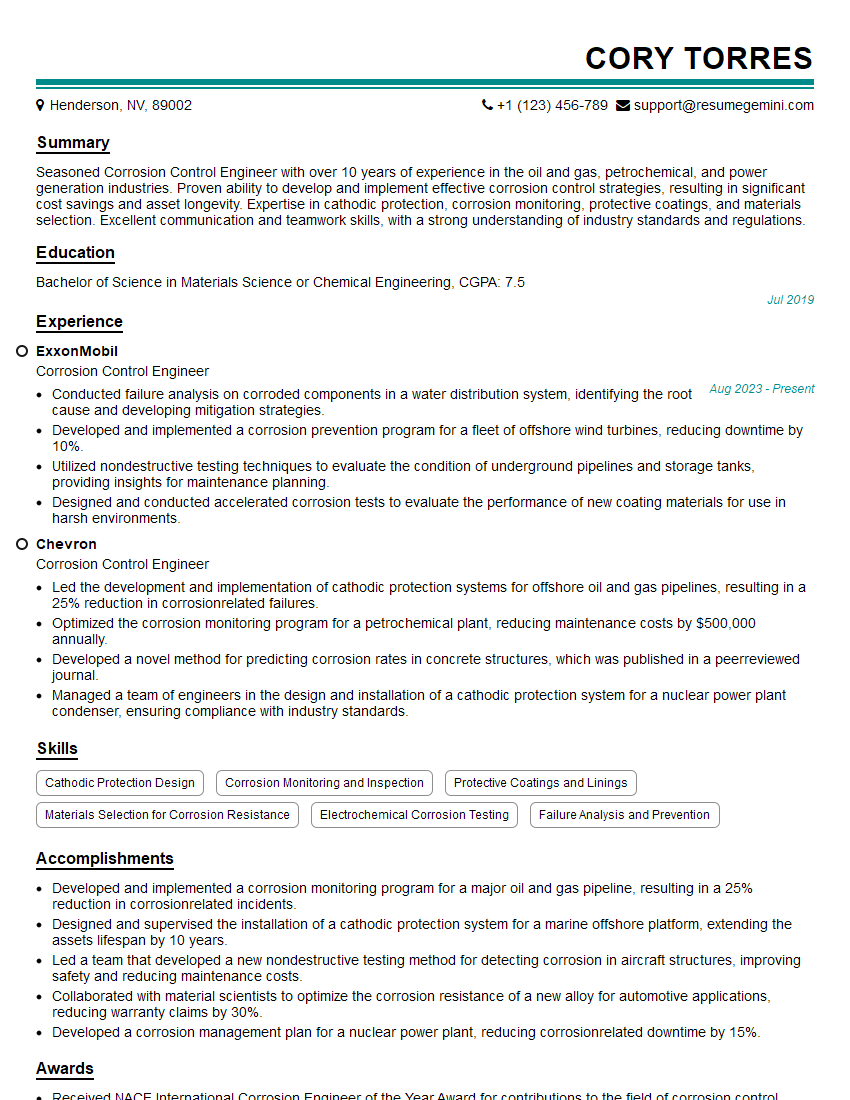
Mastering Materials Selection for Corrosion Resistance significantly enhances your career prospects in various engineering disciplines. A strong understanding of these principles demonstrates valuable problem-solving skills and opens doors to specialized roles and advanced projects. To maximize your chances of landing your dream job, focus on crafting an ATS-friendly resume that effectively highlights your skills and experience. ResumeGemini is a trusted resource that can help you build a professional and impactful resume. We provide examples of resumes tailored to Materials Selection for Corrosion Resistance to guide you in showcasing your qualifications effectively.






Explore more articles
Users Rating of Our Blogs
Share Your Experience
We value your feedback! Please rate our content and share your thoughts (optional).
What Readers Say About Our Blog
Very informative content, great job.
good