Interviews are more than just a Q&A session—they’re a chance to prove your worth. This blog dives into essential Athlete Performance Monitoring interview questions and expert tips to help you align your answers with what hiring managers are looking for. Start preparing to shine!
Questions Asked in Athlete Performance Monitoring Interview
Q 1. Explain the different types of data used in athlete performance monitoring.
Athlete performance monitoring utilizes a diverse range of data, broadly categorized into physiological, performance, and behavioral metrics. Let’s break it down:
- Physiological Data: This encompasses data related to the athlete’s physical condition. Examples include heart rate (HR), heart rate variability (HRV), lactate threshold, VO2 max (maximal oxygen consumption), body composition (e.g., fat percentage, lean mass), sleep patterns, and even hormonal levels. This data provides insights into an athlete’s training load, recovery status, and overall health.
- Performance Data: This focuses on quantifiable aspects of an athlete’s performance in training and competition. It includes metrics like speed, distance, power output (e.g., watts in cycling), jump height, sprint times, and technical proficiency (e.g., number of successful passes in soccer, accuracy in shooting). This helps to objectively assess progress and identify areas for improvement.
- Behavioral Data: This category includes subjective data that can significantly impact performance, such as mood, stress levels, perceived exertion, and adherence to training plans. This data often comes from self-reporting through surveys or apps, providing valuable context to the physiological and performance data.
Combining these different data types provides a holistic understanding of an athlete’s performance, allowing for a more nuanced and effective approach to training and recovery.
Q 2. Describe your experience with wearable technology for athlete monitoring.
My experience with wearable technology in athlete monitoring is extensive. I’ve worked with a variety of devices, from simple heart rate monitors to advanced GPS trackers and smartwatches that measure multiple physiological parameters simultaneously. For example, I’ve used GPS watches to track the distance, speed, and elevation changes during running sessions, providing valuable insights into training intensity and pacing strategies. Similarly, I’ve utilized heart rate monitors integrated with wearable technology to monitor training load and recovery.
The key advantage of these technologies lies in their ability to collect real-time data during training and competition, providing continuous feedback and reducing reliance on subjective assessments. However, it’s crucial to carefully select appropriate devices based on the sport and specific performance goals. For instance, a device suitable for a marathon runner may not be adequate for a weightlifter.
Data integration is another critical aspect. I have experience working with systems that seamlessly integrate data from various wearables into a centralized platform for analysis. This eliminates the need for manual data entry and improves efficiency. Data quality and accuracy also need constant monitoring, which includes calibration of devices and understanding individual variability and potential device limitations.
Q 3. How do you identify key performance indicators (KPIs) for an athlete?
Identifying key performance indicators (KPIs) is crucial for effective athlete monitoring. It requires a deep understanding of the sport, the athlete’s individual strengths and weaknesses, and their specific goals. The process generally involves:
- Defining Goals: What are the athlete’s short-term and long-term performance goals? (e.g., improve 10k time, increase maximum bench press)
- Identifying Relevant Metrics: Which metrics directly contribute to achieving those goals? For example, to improve a 10k time, KPIs could include average speed, pace consistency, and lactate threshold.
- Data Collection: Determine which data sources will capture the relevant metrics, using both wearable technology and other performance tests (e.g., lactate threshold testing).
- Establishing Benchmarks: Baseline measurements are crucial for tracking progress. This could involve initial performance tests and the continuous tracking of data using the chosen KPIs.
- Regular Review and Adjustment: KPIs shouldn’t be static. Regularly review the chosen KPIs based on progress and adjust as needed. A key aspect of this is iterative improvement and adaptation.
For example, if working with a basketball player, KPIs might include shooting percentage, assists per game, and defensive rebounds. Each KPI should be relevant to the player’s specific role and their overall goal.
Q 4. What methods do you use to analyze athlete performance data?
Analyzing athlete performance data involves various methods, ranging from simple descriptive statistics to sophisticated machine learning algorithms. The choice of method depends on the type of data, the research question, and the available resources.
- Descriptive Statistics: Calculating means, standard deviations, and percentiles provides basic insights into an athlete’s performance over time. This helps to track trends and identify patterns.
- Correlation Analysis: This method examines the relationship between different variables. For example, we can see if there is a correlation between training volume and performance outcomes.
- Regression Analysis: This technique allows us to model the relationship between multiple variables and predict future performance based on past data. This can be useful in optimizing training plans.
- Time Series Analysis: Analyzing data collected over time, this method helps identify trends, seasonality, and other patterns in performance.
- Machine Learning: More advanced techniques can identify complex relationships and predict performance with higher accuracy. This could involve clustering algorithms to identify subgroups of athletes based on performance characteristics.
Often, I combine these methods to obtain a comprehensive understanding of the data. For example, I might use descriptive statistics to get an initial overview, then use correlation analysis to identify potential relationships between variables, and finally employ regression analysis or machine learning to build predictive models.
Q 5. How do you interpret and present performance data to coaches and athletes?
Interpreting and presenting performance data effectively is critical for driving positive change. I always strive for clarity and avoid technical jargon when communicating with coaches and athletes. My approach typically includes:
- Visualizations: Graphs, charts, and dashboards are essential for communicating complex data in an easily digestible format. I use clear and concise labels, avoiding clutter.
- Summarized Reports: Key findings are presented in concise reports, highlighting important trends and patterns. I focus on the ‘so what’ – the implications for training and competition.
- Interactive Sessions: I facilitate sessions to discuss the data with athletes and coaches, encouraging questions and collaborative interpretation.
- Personalized Feedback: I tailor feedback to the individual athlete’s needs and goals, focusing on specific areas for improvement and potential strategies.
- Actionable Insights: The presentation isn’t just about presenting the numbers. I focus on actionable insights, outlining specific recommendations for training adjustments or recovery strategies.
For instance, instead of simply showing a graph of heart rate data, I’d explain how variations in heart rate variability relate to training load and recovery, and how the athlete could manage their training intensity based on this data.
Q 6. Explain your experience with different performance analysis software.
My experience encompasses several performance analysis software packages. I’m proficient with platforms like TrainingPeaks (for endurance sports), Firstbeat (for physiological data analysis), and specialized software for specific sports like video analysis tools for basketball or baseball.
Each platform offers unique strengths. For example, TrainingPeaks excels in managing training plans and visualizing performance data over time, while Firstbeat provides detailed physiological insights from heart rate data. The choice of software depends on the specific needs of the athlete and the available resources.
Beyond specific software, I’m adept at using data visualization tools like Tableau and Python libraries such as matplotlib and seaborn to create customized reports and dashboards. This allows me to create dynamic and interactive presentations tailored to specific performance needs.
Q 7. Describe a time you identified a performance issue using data analysis.
During my work with a collegiate track team, we noticed inconsistent performance in a sprinter’s 100m races. Initial analysis using descriptive statistics showed variability in her split times but didn’t pinpoint the cause. However, upon using time-series analysis, combined with video analysis of her races, we discovered a subtle issue in her start technique.
The video analysis revealed a slight delay in her drive phase off the starting blocks, particularly in the races where her overall time was slower. While seemingly minor, this delay significantly impacted her initial acceleration, ultimately affecting her overall performance. By focusing on correcting this technical flaw during training, utilizing video feedback and drills, we saw a marked improvement in her consistency and overall race times.
Q 8. How do you integrate performance data from multiple sources?
Integrating data from various sources is crucial for a holistic view of athlete performance. We use a centralized data management system, often a dedicated software platform, that acts as a hub. This platform can receive data from various sources like GPS tracking devices (for speed, distance, acceleration), wearable sensors (for heart rate variability, sleep, and activity levels), strength and conditioning software (for weightlifting data), and even manual data entry from coaches and medical staff regarding subjective assessments (e.g., perceived exertion, muscle soreness).
The integration process involves standardized data formats (like CSV or XML) and APIs (Application Programming Interfaces) that allow different systems to communicate effectively. Data cleaning and validation are critical steps to ensure accuracy and consistency before analysis. For example, we might identify and correct outliers or implausible values in GPS data or handle missing heart rate data using imputation techniques.
Consider a scenario where we’re monitoring a marathon runner. We integrate data from a GPS watch (pace, distance), a heart rate monitor (training intensity), a sleep tracker (recovery), and a daily training log (perceived exertion). This combined dataset gives a far richer picture than any single source alone, allowing for more insightful performance analysis and personalized training adjustments.
Q 9. How do you handle missing or incomplete data in your analysis?
Missing or incomplete data is a common challenge in athlete monitoring. We employ various strategies to handle it, prioritizing methods that preserve data integrity. The first step involves understanding *why* data is missing – is it due to equipment malfunction, athlete non-compliance, or data entry errors? This informs our choice of imputation technique.
For simple missing data points, we often use mean/median imputation, replacing the missing value with the average or median of the available data. More sophisticated methods, like k-nearest neighbors or multiple imputation, are used for more complex situations. Multiple imputation creates several plausible datasets to account for the uncertainty inherent in the missing data. These datasets are analyzed separately, and the results are combined to give a more robust overall conclusion.
We also avoid methods that might bias our analysis, like simply discarding data points with missing values. It’s always better to use appropriate imputation, but we clearly acknowledge and document any use of these techniques in our reports to maintain transparency.
Q 10. What statistical methods are you proficient in using for performance analysis?
My statistical expertise spans several areas critical to performance analysis. I’m proficient in descriptive statistics (calculating means, standard deviations, percentiles), inferential statistics (t-tests, ANOVA, regression analysis), and time series analysis to identify trends and patterns in longitudinal performance data.
For example, we use linear regression to model the relationship between training load and performance outcomes. We utilize ANOVA to compare the performance of different training groups. Time series analysis allows us to track changes in key performance indicators over time and predict potential issues like overtraining or injury risk. Furthermore, I use statistical process control charts to monitor variables for sudden changes that might indicate the need for interventions.
Beyond these core methods, I have experience with more advanced techniques, such as clustering algorithms to identify athlete subgroups based on performance profiles, and machine learning approaches for predictive modeling of future performance or injury risk. The specific methods used depend on the research question and the nature of the available data.
Q 11. Explain the difference between internal and external load in athlete monitoring.
Internal and external load are both crucial measures in athlete monitoring, representing different aspects of training stress. External load quantifies the physical demands imposed on an athlete during training, objectively measured through factors like distance covered, speed, power output, or number of repetitions. Think of it as the ‘dose’ of training.
Internal load, on the other hand, reflects the athlete’s physiological response to that external load. It’s a measure of the athlete’s internal stress and is typically assessed through heart rate, heart rate variability, blood lactate levels, or even through subjective measures like the session rating of perceived exertion (RPE). It shows the athlete’s ‘reaction’ to the dose.
The difference is vital because two athletes might undergo the same external training load (e.g., same running distance and pace), but their internal loads could differ significantly depending on individual factors like fitness level, fatigue, or hydration. Monitoring both provides a more complete picture, allowing us to adjust training to optimize performance and minimize injury risk. For example, high external load coupled with a low internal load might indicate the athlete is adapting well. However, high external load paired with high internal load may signal an overload, increasing the risk of injury or burnout.
Q 12. How do you monitor athlete fatigue and recovery?
Monitoring fatigue and recovery is critical to prevent overtraining and optimize performance. We use a combination of objective and subjective measures. Objective measures might include sleep duration and quality (from wearable devices), heart rate variability (HRV) – a key indicator of autonomic nervous system activity – and changes in performance metrics across different sessions.
Subjective measures involve questionnaires or daily logs where athletes rate their perceived exertion, fatigue, sleep quality, and muscle soreness. We also consider athlete’s training history to help understand how they’re reacting to this training. Analyzing trends in these data helps us detect early signs of fatigue or inadequate recovery.
For instance, a decrease in HRV combined with an increase in perceived exertion and a decline in performance could indicate impending fatigue. This would prompt adjustments to training volume or intensity, incorporating additional rest days or active recovery strategies. We also regularly use questionnaires on sleep and mood. These help us gain a holistic understanding of recovery.
Q 13. How do you use performance data to inform training program design?
Performance data is the cornerstone of effective training program design. We use data to individualize training plans, making them adaptive and responsive to each athlete’s unique needs and progress. We analyze historical performance data to establish baseline levels and identify strengths and weaknesses.
For instance, if an athlete consistently shows a drop in performance after a specific type of training, we might adjust the volume or intensity of that training component. We also use data to set realistic goals and track progress towards them. A key aspect is using the data to inform real-time adjustments to training plans. If an athlete displays increased fatigue indicators, for example, we might reduce the training load or incorporate extra rest days. Data-driven adjustments enhance the efficiency and effectiveness of training, minimizing the risk of overtraining.
We also use data to identify patterns of peak performance—when they performed best and what those performance patterns were like— allowing us to replicate successful approaches in future training cycles. This continuous feedback loop allows for dynamic adjustments, making training plans responsive and ultimately more successful.
Q 14. Describe your experience with talent identification and development.
My experience in talent identification and development involves using performance data to identify athletes with high potential and developing tailored training programs to maximize their capabilities. It begins with establishing a comprehensive battery of tests and assessments, including physiological, biomechanical, and psychological measures, depending on the sport. This initial assessment helps identify key traits related to future success.
Longitudinal data is critical here, tracking athletes’ progress over time. We monitor not only performance outputs but also training response and adaptation. This allows us to identify athletes who demonstrate exceptional trainability or who show rapid improvements, indicative of high potential. We use statistical modeling and machine learning techniques to predict future performance and identify athletes most likely to achieve elite levels.
Furthermore, we leverage this data to design individualized training pathways. For example, we might prioritize strength development for athletes who show a strength deficit, or focus on technical skill refinement for athletes exhibiting technical limitations. This data-driven approach ensures that training interventions are targeted, effective, and optimized for each athlete’s specific needs and potential.
Q 15. How do you ensure data privacy and security in athlete performance monitoring?
Data privacy and security are paramount in athlete performance monitoring. We employ a multi-layered approach, beginning with strict adherence to regulations like GDPR and HIPAA. This includes obtaining informed consent from each athlete, clearly outlining how their data will be used and stored, and providing transparent access to their own data.
Technically, we utilize robust security measures such as encryption both in transit and at rest. Data is stored on secure servers with access restricted to authorized personnel only, using role-based access control. Regular security audits and penetration testing are conducted to identify and address vulnerabilities proactively. We also implement data anonymization techniques where appropriate, removing personally identifiable information whenever possible without compromising the integrity of the analysis.
For example, instead of storing a runner’s name directly linked to their speed data, we might use a unique identifier, allowing for analysis without revealing sensitive information. This ensures that the athlete’s privacy is maintained while valuable performance insights can still be extracted.
Career Expert Tips:
- Ace those interviews! Prepare effectively by reviewing the Top 50 Most Common Interview Questions on ResumeGemini.
- Navigate your job search with confidence! Explore a wide range of Career Tips on ResumeGemini. Learn about common challenges and recommendations to overcome them.
- Craft the perfect resume! Master the Art of Resume Writing with ResumeGemini’s guide. Showcase your unique qualifications and achievements effectively.
- Don’t miss out on holiday savings! Build your dream resume with ResumeGemini’s ATS optimized templates.
Q 16. Explain the importance of athlete feedback in performance monitoring.
Athlete feedback is crucial for effective performance monitoring. It’s not just about collecting numbers; it’s about understanding the athlete’s subjective experience. Their perception of fatigue, pain, or motivation can significantly impact the interpretation of objective data. Without this feedback, we risk drawing inaccurate conclusions.
We integrate feedback through regular check-ins, surveys, and open communication channels. This could be as simple as a post-training questionnaire or a more structured interview. For instance, a swimmer’s improved lap times might be coupled with reports of increased muscle soreness, informing adjustments to training plans to avoid potential injury.
Furthermore, athlete feedback helps build trust and rapport, fostering a collaborative environment where athletes feel comfortable sharing their honest experiences, leading to more effective and personalized training strategies.
Q 17. How do you adapt your performance monitoring approach for different sports?
Performance monitoring adapts significantly across different sports. The key metrics and data collection methods vary greatly depending on the sport’s specific demands and characteristics. For endurance sports like marathon running, we might focus on heart rate variability, VO2 max, and training load. In a sport like gymnastics, we might prioritize detailed motion capture analysis, assessing joint angles and power output.
For example, with a basketball player, we might track their shooting accuracy, sprint speed, and jump height using wearable sensors and video analysis. Meanwhile, a golfer’s performance might be measured through swing mechanics, club head speed, and ball trajectory. This tailored approach ensures that we focus on the most relevant performance indicators for each sport, maximizing the effectiveness of our monitoring program.
This necessitates a flexible approach, utilizing a combination of wearable sensors, video analysis, and traditional performance assessments adapted to the specific demands of each sport. The interpretation of data requires specialized knowledge within each sporting discipline.
Q 18. Describe your experience with using technology to improve athlete communication.
Technology plays a vital role in enhancing athlete communication. We leverage various platforms to facilitate seamless information exchange. Dedicated apps allow athletes to log their training data, receive personalized feedback, and communicate directly with coaches and support staff.
For example, we’ve used platforms that allow for secure messaging, data sharing, and even video conferencing for remote coaching. This is particularly useful for athletes who train independently or are geographically dispersed. Real-time data visualization tools within these platforms can also empower athletes to actively track their progress and identify areas for improvement. It’s a powerful way to foster engagement and collaboration.
By centralizing communication through a single platform, we minimize confusion and ensure everyone remains on the same page. This efficient flow of information is essential for optimal athlete performance and well-being.
Q 19. How do you identify and address bias in your performance data analysis?
Identifying and addressing bias in performance data analysis is crucial. Bias can creep in at various stages, from data collection to interpretation. We actively mitigate this through careful study design, rigorous data validation, and diverse analytical teams.
For instance, we need to be aware of potential confirmation bias, where we might unconsciously favor data points that support pre-existing assumptions. To counter this, we employ standardized data collection protocols, use multiple data sources, and conduct blind analysis whenever feasible, where analysts are unaware of the athlete’s identity or background.
We also strive for a diverse team of analysts with varied backgrounds and perspectives to ensure a more comprehensive and less biased interpretation of data. Regularly reviewing our methodologies and processes ensures we are constantly working towards a more equitable and accurate approach to performance monitoring.
Q 20. Explain your understanding of the ethical considerations in athlete performance monitoring.
Ethical considerations are central to athlete performance monitoring. Respect for autonomy, beneficence, non-maleficence, and justice guide our practices. Autonomy means respecting the athlete’s right to make informed decisions about their participation and data usage.
Beneficence implies working to maximize the benefits and minimize the risks of performance monitoring. Non-maleficence requires avoiding harm, including physical or psychological. Justice demands fair and equitable access to the benefits of performance monitoring. For instance, we need to ensure that monitoring techniques aren’t overly intrusive or create unnecessary pressure on athletes.
We establish clear ethical guidelines, obtain informed consent, and ensure data confidentiality and security. We also prioritize the well-being of athletes, offering support and addressing any concerns they may have about the monitoring process. Open and honest communication is paramount in maintaining ethical standards.
Q 21. What is your experience with longitudinal performance monitoring?
Longitudinal performance monitoring is essential for understanding long-term trends and patterns in athlete performance. By tracking data over extended periods, we can identify subtle changes that might indicate early signs of overtraining, injury risk, or the effectiveness of training interventions. This approach provides a rich dataset for personalized training plans.
For example, tracking a runner’s weekly mileage, pace, and recovery metrics over several years allows us to identify periods of high performance, periods of stagnation, and potential injury patterns. This data informs the coach’s decision-making process, allowing them to make timely interventions and optimize training to avoid injuries and promote long-term success.
This type of monitoring requires robust data management systems, capable of storing and analyzing large datasets over time. Statistical analysis becomes crucial to identify trends and patterns that might not be apparent in shorter-term assessments. The insights derived from longitudinal data are instrumental in building robust, long-term performance strategies.
Q 22. How do you use predictive analytics in athlete performance monitoring?
Predictive analytics in athlete performance monitoring uses historical data and statistical modeling to forecast future performance. Imagine it like a weather forecast, but for an athlete’s success. We gather data points – training load, sleep patterns, nutrition, even mood – and use algorithms to identify trends and predict potential injuries, optimal training regimes, and even performance outcomes in future competitions.
For example, we might analyze past training data to predict the likelihood of an overuse injury in a runner based on their weekly mileage and intensity. A sharp increase in weekly mileage combined with insufficient rest days might trigger a predictive model to flag a high risk of injury, allowing for proactive intervention and injury prevention.
The models can become quite sophisticated, incorporating physiological markers like heart rate variability, blood lactate levels, and even sleep quality metrics for a more holistic prediction. The goal isn’t to replace human judgment but to empower coaches and athletes with data-driven insights for strategic decision-making.
Q 23. How familiar are you with different types of training loads (e.g., volume, intensity)?
Training load encompasses both the volume and intensity of an athlete’s training. Volume refers to the total amount of training completed, often measured in hours, distance covered, or repetitions. Intensity represents the exertion level during training, which can be measured using metrics like heart rate, power output, speed, or perceived exertion (RPE).
- Volume Examples: Total kilometers run in a week, number of weightlifting sets and reps, or hours spent swimming.
- Intensity Examples: Average heart rate during a workout, power output during cycling, speed during a sprint interval, or a subjective rating on a scale of 1-10 (RPE).
Understanding the interplay between volume and intensity is crucial. Excessive volume without adequate recovery can lead to overtraining and injury. Similarly, very high-intensity training without sufficient volume might limit overall fitness gains. We utilize various methods to quantify and monitor these factors, ensuring a balanced training program that maximizes performance while minimizing risk.
Q 24. Describe your experience with creating performance reports and presentations.
Creating impactful performance reports and presentations is a vital part of my role. I use data visualization tools to transform complex data sets into clear, concise summaries. These reports often include charts and graphs showcasing key performance indicators (KPIs) like training load, recovery metrics, and performance trends.
For example, a report might visually compare an athlete’s training load over time, highlighting periods of high volume and intensity, and correlating these patterns with performance peaks and dips. Another report might illustrate improvements in speed, strength, or endurance through time-series analysis.
My presentations often combine these data visualizations with narrative explanations that are easily understood by both technical and non-technical audiences. I focus on communicating key insights and actionable recommendations, not just presenting raw data.
Q 25. How do you measure and track athlete progress over time?
We measure and track athlete progress using a combination of objective and subjective data. Objective data comes from quantifiable metrics like GPS data (distance, speed, acceleration), heart rate monitors, power meters, and laboratory tests (blood lactate, VO2 max). Subjective data includes self-reported measures such as perceived exertion (RPE), sleep quality, and overall mood, which can be collected through questionnaires or apps.
By combining these data types, we develop a comprehensive picture of athlete performance over time. We frequently use time-series analysis to visualize trends and identify areas of improvement or concern. For example, we might track a sprinter’s 100-meter times over several months to see if training interventions are producing the desired improvements.
Regularly reviewing this data allows for adjustments to the training program to optimize performance and prevent overtraining or injury. It is crucial to set realistic goals and track progress against these benchmarks, regularly providing feedback to the athlete.
Q 26. Describe your understanding of the role of technology in enhancing athlete performance monitoring.
Technology has revolutionized athlete performance monitoring. Wearable sensors, GPS trackers, and sophisticated analytics software provide unprecedented levels of data granularity and insight. This enables more personalized training programs and proactive injury prevention strategies. Think of it as having a constant, objective observer that provides detailed feedback on every training session.
- Wearable Sensors: Smartwatches and other wearables provide continuous monitoring of heart rate, sleep patterns, activity levels, and other physiological parameters.
- GPS Trackers: Used to monitor distance, speed, acceleration, and other movement parameters in various sports, providing insightful data about training intensity and recovery.
- Analytics Software: Allows for efficient data collection, analysis, and visualization, generating reports and insights that inform coaching decisions.
This technological advancement allows for a more scientific and evidence-based approach to athletic training, leading to more efficient and effective results. However, it’s important to use the data wisely and avoid over-reliance on technology, maintaining a balance with traditional coaching methods and human intuition.
Q 27. How do you utilize machine learning or AI in athlete performance monitoring?
Machine learning (ML) and Artificial Intelligence (AI) are increasingly important tools in athlete performance monitoring. ML algorithms can identify patterns and relationships in large datasets that might be missed by the human eye. This enables more accurate prediction of performance, injury risk, and the effectiveness of various training interventions.
For example, an ML model could analyze an athlete’s training data, physiological markers, and historical injury patterns to predict the optimal training volume and intensity for maximizing performance while minimizing injury risk. AI can also be used to personalize training plans by dynamically adjusting the program based on real-time feedback from wearable sensors.
AI-powered systems can automate data analysis and reporting, freeing up coaches to focus on other aspects of athlete development. However, ethical considerations, data privacy, and the potential for bias in algorithms must be carefully considered.
Q 28. How would you explain complex performance data to a non-technical audience?
Explaining complex performance data to a non-technical audience requires clear, concise communication and effective visualization. I avoid technical jargon and use analogies to illustrate complex concepts. Instead of discussing ‘heart rate variability,’ I might explain it as ‘fluctuations in your heart rate that reflect how well your body is recovering.’
Charts and graphs are essential for communicating trends and patterns visually. A simple line graph showing improvements in an athlete’s performance over time is more effective than a table of raw data. I focus on telling a story with the data, highlighting key achievements, challenges, and insights in a way that resonates with the audience.
For example, instead of saying ‘The athlete’s VO2 max increased by 5%,’ I might say ‘Through consistent training, the athlete significantly improved their ability to use oxygen during exercise, which means they can sustain greater intensity for longer periods.’ The goal is to translate data-driven insights into understandable and actionable information for everyone involved.
Key Topics to Learn for Athlete Performance Monitoring Interview
- Physiological Monitoring: Understanding and interpreting data from various physiological sensors (e.g., heart rate monitors, GPS trackers, accelerometers) to assess training load, recovery, and performance.
- Performance Analysis: Utilizing data to identify strengths, weaknesses, and areas for improvement in an athlete’s performance. Practical application includes creating data visualizations and reports to communicate findings effectively.
- Data Collection & Management: Understanding best practices for collecting, cleaning, and storing athlete performance data. This includes familiarity with relevant software and databases.
- Biomechanics & Movement Analysis: Applying principles of biomechanics to analyze movement patterns and identify potential injury risks or inefficiencies in technique. This may involve using video analysis software.
- Training Load Management: Developing and implementing training programs that optimize performance while minimizing the risk of overtraining and injury. This includes understanding concepts like periodization and individualization.
- Technology & Software Proficiency: Demonstrating familiarity with relevant software and platforms used for athlete monitoring (e.g., specific analytics platforms, data visualization tools).
- Statistical Analysis & Interpretation: Understanding basic statistical concepts and their application in analyzing athlete performance data. This includes interpreting trends and drawing meaningful conclusions from data.
- Communication & Collaboration: Highlighting skills in effectively communicating complex data to coaches, athletes, and other stakeholders. This includes presenting findings clearly and concisely.
- Ethical Considerations: Understanding and adhering to ethical guidelines related to data privacy, athlete confidentiality, and responsible use of technology in sport science.
Next Steps
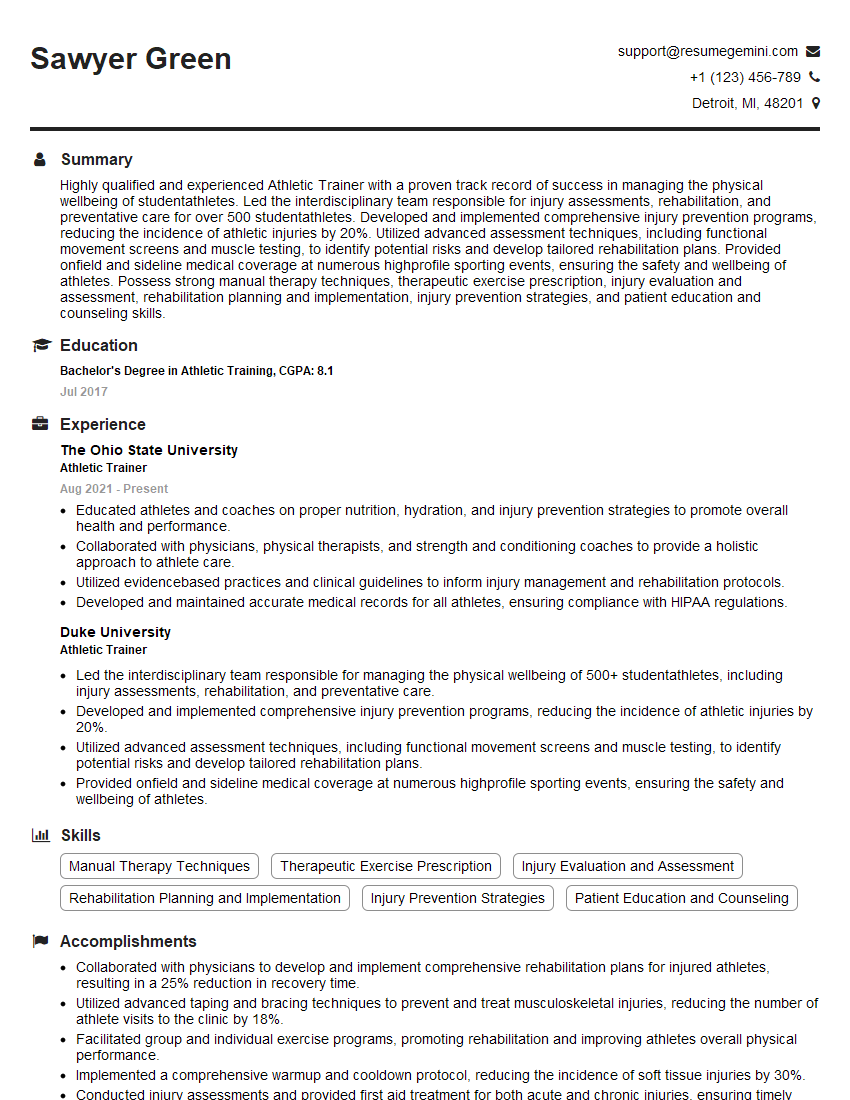
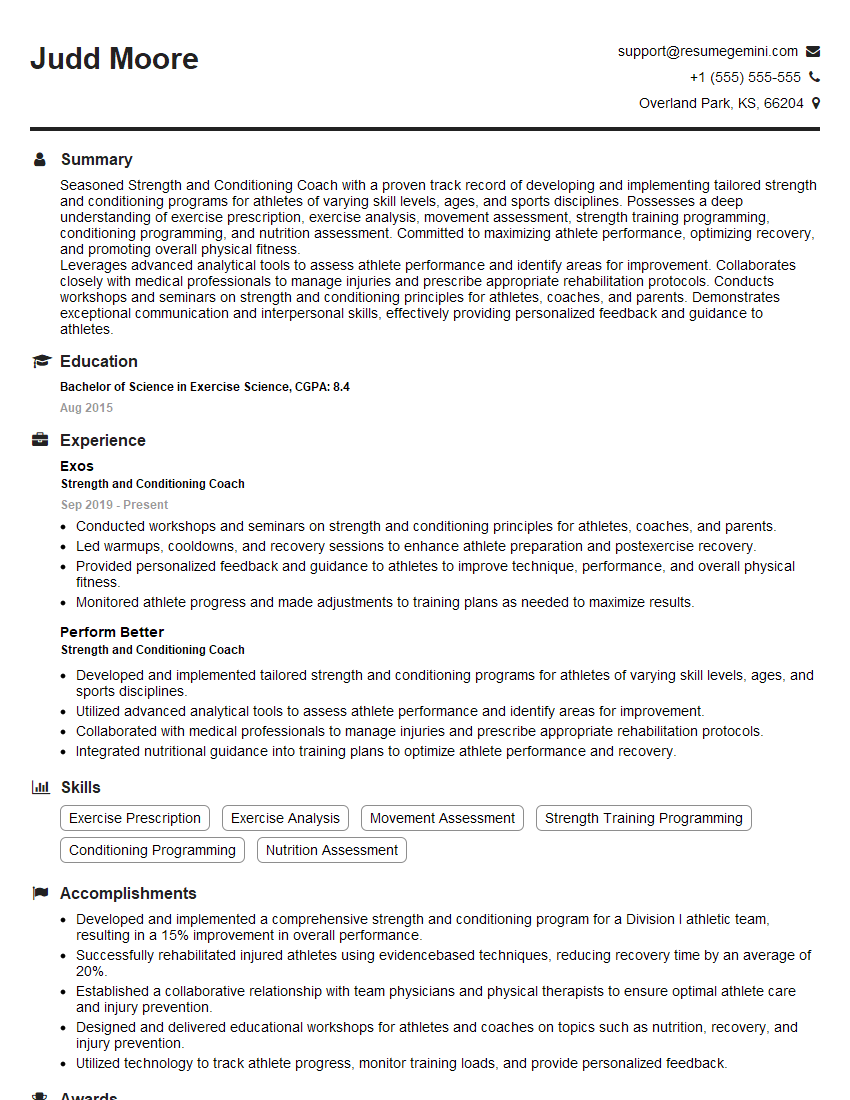
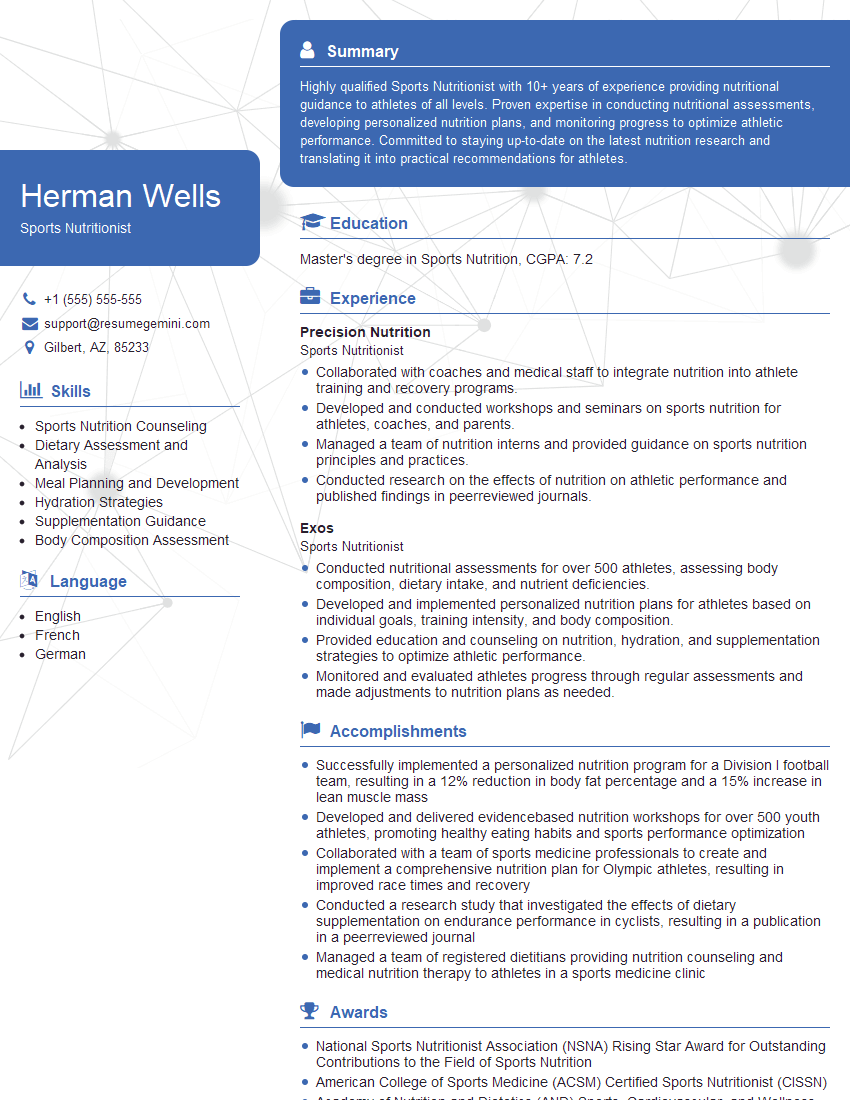
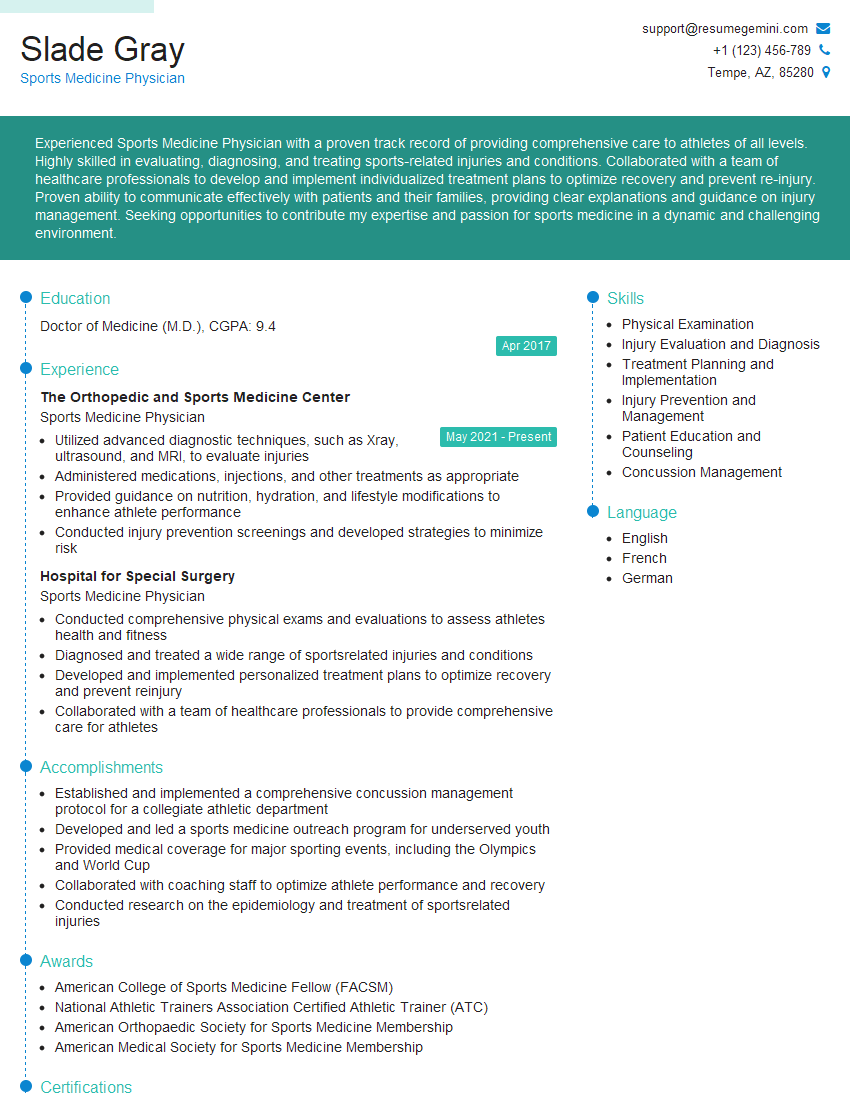
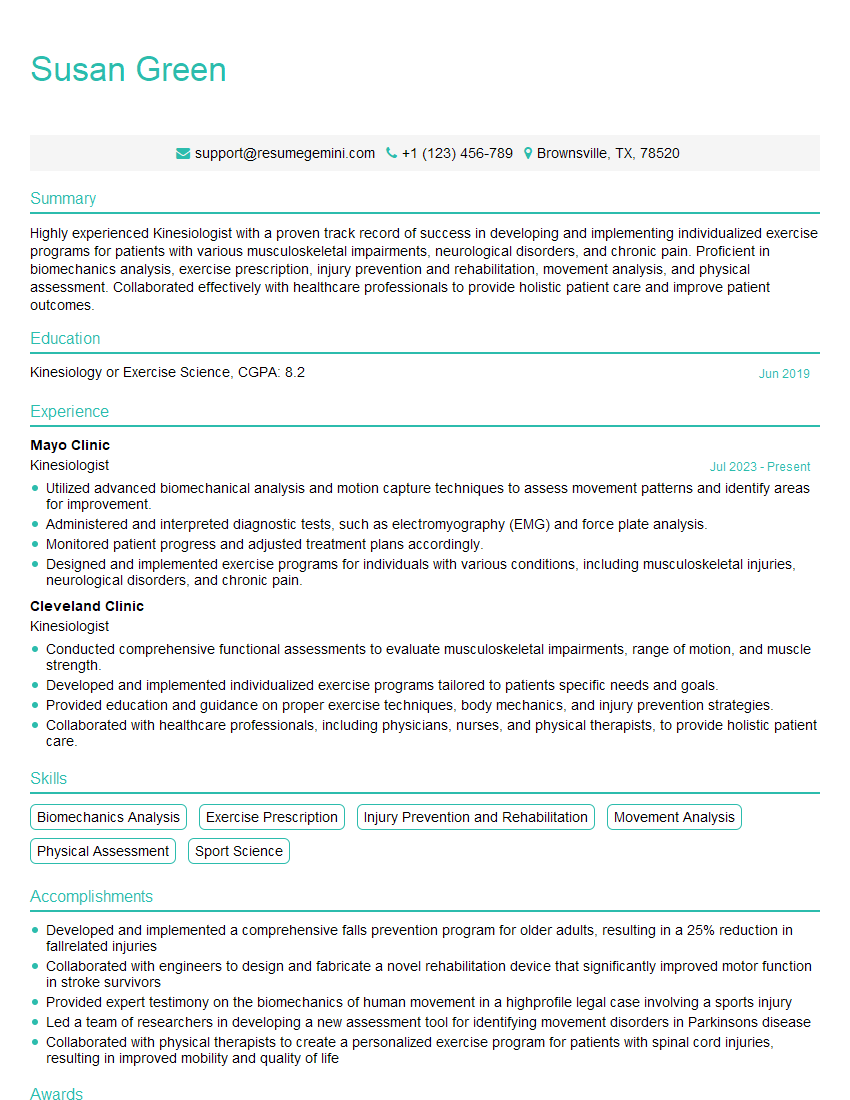
Mastering Athlete Performance Monitoring opens doors to exciting career opportunities in sports science, coaching, and athletic performance enhancement. To maximize your job prospects, invest time in crafting a strong, ATS-friendly resume that showcases your skills and experience. ResumeGemini is a trusted resource to help you build a professional and impactful resume. Examples of resumes tailored specifically to Athlete Performance Monitoring are available to help guide you. Take this opportunity to refine your application materials and present yourself as the ideal candidate.


Explore more articles
Users Rating of Our Blogs
Share Your Experience
We value your feedback! Please rate our content and share your thoughts (optional).
What Readers Say About Our Blog
Very informative content, great job.
good