Are you ready to stand out in your next interview? Understanding and preparing for Cap Trimming interview questions is a game-changer. In this blog, we’ve compiled key questions and expert advice to help you showcase your skills with confidence and precision. Let’s get started on your journey to acing the interview.
Questions Asked in Cap Trimming Interview
Q 1. Describe the different types of cap trimming techniques you are familiar with.
Cap trimming techniques vary depending on the material and desired finish. The most common methods include:
- Rotary Trimming: This uses a rotating blade to cut the cap liner, offering speed and efficiency for high-volume production. Think of it like a super-precise pizza cutter for your bottle caps.
- Punch Trimming: A punch press applies pressure to cut the liner, ideal for thicker materials or when precise, clean cuts are crucial. It’s like using a cookie cutter, but way more accurate.
- Laser Trimming: Utilizing a laser beam, this technique provides extreme precision and is often used for intricate designs or delicate materials. Imagine a finely controlled heat-based cutting tool, creating almost perfectly smooth edges.
- Ultrasonic Trimming: High-frequency vibrations are employed to cut the material, resulting in clean cuts with minimal material waste and heat generation. This method is particularly suitable for sensitive materials that might be damaged by other techniques.
The choice of technique depends heavily on factors like production volume, material type, desired precision, and budget. For instance, a small artisan cap maker might opt for punch trimming for its accuracy, while a large beverage company would likely use rotary trimming for speed and cost-effectiveness.
Q 2. What are the common materials used in cap trimming?
The materials used in cap trimming are as diverse as the caps themselves. Common materials for the caps themselves include:
- Plastic (Polyethylene, Polypropylene): These are very common and inexpensive, perfect for mass production. Think of soda bottle caps.
- Metal (Aluminum, Tinplate): Used for more durable applications or to offer a premium feel. Imagine beer bottle caps.
- Paperboard/Cardboard: Used in certain food or beverage applications, often coated for durability and waterproofing.
The liner materials, the part actually trimmed, are equally varied, with common choices being:
- Foil (Aluminum, Tin): Provides a barrier for product freshness or tampering evidence.
- Paperboard/Cardboard: Often used as a cost-effective alternative to foil.
- Plastics (PE, PVC): Can be chosen for their sealing properties or other specific requirements.
- Wads (Foam, Cork, etc.): Used as sealing material and often require specific trimming considerations.
The selection process depends entirely on the cap’s purpose and the desired quality of the seal.
Q 3. Explain the importance of precision in cap trimming.
Precision in cap trimming is paramount for several reasons:
- Product Quality: Inconsistent trimming can lead to leaks, poor seals, and product spoilage, directly impacting customer satisfaction and brand reputation. A poorly trimmed cap on a bottle of juice can easily lead to a mess.
- Machine Efficiency: Precise trimming reduces waste, optimizing material usage and lowering production costs. Poorly trimmed caps often lead to jams and downtime in the production line.
- Aesthetics: A clean, even trim contributes significantly to the overall appearance and perceived quality of the finished product. Imagine a premium coffee cap with a ragged edge – it immediately detracts from the overall experience.
- Regulatory Compliance: In many industries, precise trimming is critical to meet regulatory standards regarding product safety and tamper-evidence.
Think of it like surgery – a small deviation from precision can have significant consequences.
Q 4. How do you ensure the quality of your cap trimming work?
Quality control in cap trimming is a multi-step process:
- Regular Inspections: Visual inspection of trimmed caps at intervals throughout the production process. This often includes checking for burrs, inconsistencies, or damaged caps.
- Dimensional Measurement: Using calibrated tools (e.g., calipers, micrometers) to ensure the dimensions of the trimmed liner meet specifications. This ensures that the caps seal properly.
- Leak Testing: Subjected to pressure tests to verify the integrity of the seal. This is particularly important for food and beverage containers.
- Statistical Process Control (SPC): Implementing data-driven monitoring and analysis to track performance trends and identify potential issues early on. This ensures consistency across production runs.
By combining these methods, we can minimize defects and guarantee a high-quality final product.
Q 5. What are some common challenges encountered in cap trimming, and how do you address them?
Common challenges in cap trimming include:
- Material Variations: Inconsistencies in material thickness or composition can affect the trimming process, leading to uneven cuts or damage. We address this with careful material selection and machine adjustments.
- Blade Wear: Over time, trimming blades wear down, leading to less precise cuts. Regular blade replacement or sharpening is essential for maintaining quality.
- Machine Malfunctions: Mechanical or electrical issues can disrupt the trimming process. Preventive maintenance and prompt troubleshooting are critical here.
- Operator Error: Improper machine setup or operation can lead to defective trims. Comprehensive training and strict adherence to procedures are vital.
Addressing these challenges requires a proactive approach involving thorough preventative maintenance, operator training, and robust quality control systems. For example, we’ve developed a quick visual guide to help operators identify signs of blade wear.
Q 6. Describe your experience with different types of trimming machines.
My experience encompasses a wide range of cap trimming machines, including:
- High-speed rotary trimmers: These are ideal for high-volume applications and are usually computer-controlled for precise adjustments. I’ve worked extensively with models from various manufacturers, learning their strengths and limitations.
- Pneumatic punch presses: Offering superior precision for intricate designs or thicker materials, though they generally handle lower volumes than rotary trimmers. I’ve operated and maintained several models, gaining expertise in die setup and adjustment.
- Laser trimming systems: These offer excellent precision and flexibility but are more expensive and require specialized training. I’ve been involved in projects utilizing laser trimming for specialty caps.
Each machine type demands a specific skill set, and my experience spans from basic operation and maintenance to advanced programming and troubleshooting.
Q 7. How do you maintain and troubleshoot cap trimming equipment?
Maintaining and troubleshooting cap trimming equipment is crucial for efficiency and quality. My approach involves:
- Regular Cleaning: Removing debris from the machine to prevent jams and ensure smooth operation. This includes cleaning blades, rollers, and other components.
- Blade Inspection and Replacement: Regularly inspecting blades for wear and tear and replacing them as needed. Dull or damaged blades compromise precision.
- Lubrication: Applying lubrication to moving parts as per the manufacturer’s recommendations. This prevents friction and wear.
- Electrical Checks: Regular inspection of electrical components, wiring, and connections to prevent malfunctions. This is particularly important in automated systems.
- Troubleshooting: Identifying and addressing machine issues promptly. This often involves systematic checks, consultations of manuals, and occasionally contacting technical support.
Through preventative maintenance and a proactive approach to troubleshooting, I can minimize downtime and ensure the long-term performance of the cap trimming equipment.
Q 8. What safety precautions do you follow while performing cap trimming?
Safety is paramount in cap trimming. Before I even begin, I ensure my workspace is clean and well-lit, minimizing tripping hazards. Sharp tools are a given, so I always use appropriate safety shears or rotary cutters with sharp blades, regularly maintaining them to prevent slippage and accidental cuts. I wear cut-resistant gloves to protect my hands, and safety glasses to shield my eyes from flying fabric fragments. For bulkier trimming tasks involving machinery, I always follow the manufacturer’s safety instructions and use any provided safety guards. Think of it like this: treating every tool and every step with respect is not just a procedure; it’s my personal commitment to injury prevention.
- Regular blade sharpening and maintenance
- Use of cut-resistant gloves
- Wearing safety glasses
- Maintaining a clean and organized workspace
- Adherence to machinery safety guidelines
Q 9. How do you handle variations in fabric types and textures during cap trimming?
Fabric variation is the spice of life – and the challenge – in cap trimming! Different fabrics require different approaches. Delicate silks, for example, need gentler handling and potentially sharper, smaller shears to avoid fraying. Thick, heavy denim may need a rotary cutter or even a power trimmer for efficiency. I adjust my blade pressure and cutting technique based on the fabric. For instance, a tightly woven fabric needs less pressure than a loosely woven one. I’ve learned through experience to test a small, inconspicuous area first to determine the best cutting method for each material.
Think of it like cooking; a delicate fish needs a gentle touch, while a tougher cut of meat can handle more robust treatment. The same principle applies to cap trimming.
Q 10. Explain your experience with different trimming tools and their applications.
My experience spans a variety of trimming tools, each suited to a specific task. I’m proficient with hand shears – both straight and curved – for intricate detail work and smaller caps. Rotary cutters are my go-to for straight lines and quick, efficient cutting on larger quantities or when working with heavier fabrics. For extremely precise trimming or mass production, I utilize automated trimming machines that can manage more complex patterns at a high speed. I’ve even used specialized tools like pinking shears for creating a decorative edge or preventing fraying on certain fabrics. The selection depends entirely on the cap’s design, the fabric, and the production scale.
- Hand shears (straight and curved)
- Rotary cutters
- Automated trimming machines
- Pinking shears
Q 11. How do you determine the appropriate trimming allowance for a given cap design?
Determining the correct trimming allowance is crucial for a perfectly fitting cap. This isn’t a fixed number; it depends on several factors. The cap’s design itself is key – a structured cap might require a smaller allowance than a looser, more relaxed design. The fabric’s stretch or shrinkage potential also plays a role; stretchy materials might need more allowance to prevent the cap from being too tight. Finally, the seam allowance needs to be considered – the trimming allowance needs to leave enough fabric for the seams to be properly stitched.
I usually start by referring to the pattern’s specifications and then making small adjustments based on my experience and the fabric characteristics. It’s a blend of following instructions and using informed judgement.
Q 12. Describe your experience with quality control procedures in cap trimming.
Quality control is integral to my process. After each trimming step, I visually inspect the caps for accurate cutting, even seams, and consistent shape. I use templates and measuring tools to ensure all caps meet the specifications. I also check for any fabric defects or damage that might have occurred during the trimming process. If any imperfections are found, I document them and implement corrective actions to prevent future issues. This thorough inspection guarantees all caps meet the required standards before moving to the next stage of production.
This process is akin to a chef carefully checking the seasoning and texture of a dish before serving – attention to detail guarantees a quality end product.
Q 13. How do you ensure consistent trimming quality across multiple caps?
Maintaining consistent trimming quality across multiple caps requires a systematic approach. I ensure my tools are sharp and well-maintained. I also use templates and guides to ensure consistent cutting lines. For large-scale production, setting up and monitoring automated trimming machines is vital to ensure uniformity. Regular calibration of tools and machines is crucial, along with periodic checks during production to catch any deviations early on. Think of it as baking multiple batches of cookies – consistent temperature, baking time, and ingredients are essential to get the same results each time.
Q 14. What is your experience with different trimming patterns and how do you interpret them?
I’m experienced in interpreting various trimming patterns, from simple straight-line cuts to complex, curved designs. Understanding the pattern markings – seam allowances, notches, and grainlines – is crucial. A poorly interpreted pattern can lead to an improperly fitting or misshapen cap. I often start by studying the pattern carefully, identifying key points, and creating a cutting plan before I begin. More intricate patterns might necessitate pre-cutting sections for easier assembly and trimming.
For example, a pattern with multiple curved sections might require a strategic approach using a combination of shears and rotary cutters to ensure smooth curves. Understanding the pattern is like reading a map – it guides my steps to the desired outcome.
Q 15. Describe your experience with working with deadlines in a fast-paced production environment.
Meeting deadlines in a fast-paced production environment like cap trimming requires a proactive approach. I thrive under pressure and have consistently delivered high-quality work within tight timeframes. My experience includes working on projects with daily deadlines where efficient task management is crucial. For instance, during a rush order for 5,000 baseball caps with a 2-day turnaround, I prioritized the most time-sensitive tasks first, delegating where possible, and working extra hours to meet the deadline without compromising quality. This involved closely coordinating with the cutting and sewing teams to ensure a smooth workflow. I also utilize time-management techniques like creating detailed schedules and regularly monitoring progress to stay on track. Consistent communication with my team and supervisors is vital for addressing any potential delays promptly.
Career Expert Tips:
- Ace those interviews! Prepare effectively by reviewing the Top 50 Most Common Interview Questions on ResumeGemini.
- Navigate your job search with confidence! Explore a wide range of Career Tips on ResumeGemini. Learn about common challenges and recommendations to overcome them.
- Craft the perfect resume! Master the Art of Resume Writing with ResumeGemini’s guide. Showcase your unique qualifications and achievements effectively.
- Don’t miss out on holiday savings! Build your dream resume with ResumeGemini’s ATS optimized templates.
Q 16. How do you prioritize tasks in a high-volume cap trimming setting?
Prioritizing tasks in a high-volume cap trimming setting requires a structured approach. I typically prioritize tasks based on several factors: Urgency (deadlines, imminent needs), Importance (impact on overall production, client requirements), and Complexity (tasks requiring specialized skills or longer processing time). Think of it like a hospital triage system – attending to the most critical cases first. I use a combination of Kanban boards and prioritized task lists to visually manage my workflow. For example, if we have an urgent order for a specific cap style and color, that takes precedence over standard orders. Using a Kanban board allows me to move tasks through stages (trimming, inspection, packaging) efficiently, and I can easily see which tasks are lagging and need attention.
Q 17. How do you handle unexpected production delays or equipment malfunctions?
Unexpected delays and equipment malfunctions are inevitable in any production environment. My approach focuses on quick problem-solving and proactive mitigation. When a delay occurs, my first step is to identify the root cause. Is it a machine malfunction? A material shortage? A process bottleneck? Once identified, I immediately communicate the issue to the supervisor and relevant team members. For example, if a trimming machine malfunctions, I’ll first attempt basic troubleshooting. If that fails, I’ll notify maintenance and explore alternative solutions, such as using a backup machine or re-allocating tasks to other team members. I’ve learned from experience that documenting these incidents helps prevent future issues and aids in continuous improvement. Regular equipment maintenance also plays a key role in preventing major breakdowns.
Q 18. How do you maintain a clean and organized workspace during cap trimming?
Maintaining a clean and organized workspace is critical for efficiency and safety in cap trimming. A cluttered workspace increases the risk of accidents and slows down production. My approach involves several strategies:
- Regular Cleaning: I clean my immediate workspace at the end of each task and perform more thorough cleaning at the end of the day.
- Organized Tool Storage: I keep all tools neatly arranged and readily accessible to minimize wasted time searching for them.
- Waste Management: I dispose of scraps and waste materials regularly and appropriately to maintain a safe and hygienic work area.
- 5S Methodology: I apply the principles of 5S (Sort, Set in Order, Shine, Standardize, Sustain) to organize my work area, ensuring everything has its designated place.
Q 19. What are your strengths and weaknesses concerning cap trimming skills?
My strengths in cap trimming include speed, accuracy, and attention to detail. I am highly proficient in operating various trimming machines and consistently meet or exceed production targets. I also have excellent problem-solving skills, allowing me to handle unexpected challenges effectively. One area for improvement is my experience with the latest automated trimming systems, though I am eager to learn and adapt to new technologies. I actively seek opportunities to expand my skills and enhance my efficiency through ongoing training and professional development.
Q 20. Describe your experience using computer-aided design (CAD) or similar software in cap trimming.
While my experience primarily involves hands-on cap trimming, I have some familiarity with CAD software in a related context – specifically, in reviewing and understanding cap designs before the trimming process. This allows me to anticipate potential challenges and optimize my approach. Although I don’t directly create designs, I’m comfortable interpreting technical drawings and specifications to ensure the trimming process aligns with the desired final product. In the future, I’d like to enhance my CAD skills to potentially contribute to the design and optimization of the trimming process itself.
Q 21. Explain how you use measuring tools accurately and efficiently during trimming.
Accurate and efficient measuring is paramount in cap trimming. I use a variety of tools, including rulers, calipers, and measuring tapes, depending on the specific task. For instance, when trimming the brim of a cap, I use calipers to ensure precise measurements and consistency across multiple caps. I regularly calibrate my measuring tools to ensure accuracy. I also employ techniques such as double-checking measurements and visually inspecting the trimmed cap to ensure it meets the required specifications. This methodical approach minimizes errors and contributes to high-quality output. I always prioritize safety, ensuring that I correctly use each measuring tool according to its instructions.
Q 22. Describe your understanding of different seam types and their implications on trimming.
Understanding seam types is crucial in cap trimming because the seam’s construction directly impacts the trimming process and the final product’s quality. Different seams present unique challenges and require different trimming techniques.
- Overlock Seam: This common seam type, created by interlocking loops of thread, is generally easy to trim. The trimming process often involves simply cutting off the excess fabric close to the seam line. The even, consistent nature of the seam makes it relatively straightforward to automate with trimming machinery.
- Flatlock Seam: This seam, formed by two layers of fabric stitched together edge-to-edge, requires more precision during trimming to avoid cutting into the stitched area. The trim needs to be very close to the seam, but it’s essential not to damage the stitching which could compromise the cap’s strength and durability.
- French Seam: A more intricate seam, enclosed within the fabric layers. Trimming a French seam is typically less critical as the seam is already concealed. However, any excess fabric beyond the folded seams might need to be trimmed for a clean, professional finish.
- Topstitched Seam: This seam features visible topstitching. Trimming near a topstitched seam needs extra care to avoid damaging the stitching which is part of the cap’s aesthetic design. It often necessitates using a specialized trimming technique or tool.
For example, when trimming caps with an overlock seam, a high-speed automated trimmer can be effectively used. But, a flatlock seam might require a more precise, manual trimming approach, often with specialized scissors or a smaller, more controlled trimming machine.
Q 23. How do you contribute to a positive and efficient team environment in cap trimming operations?
In cap trimming, a positive and efficient team environment is key to productivity and quality. I actively contribute by:
- Open Communication: I ensure clear communication with team members about tasks, challenges, and potential solutions. I actively listen to others’ ideas and concerns.
- Collaboration: I work collaboratively with others, sharing my expertise and offering support where needed. I’m comfortable sharing tasks and helping my team members if they are struggling.
- Problem Solving: When issues arise, I actively participate in brainstorming solutions. My methodical approach to problem-solving and my experience allows me to pinpoint problems and offer practical and innovative solutions.
- Positive Attitude: I maintain a positive and supportive attitude, encouraging teamwork and celebrating successes. A positive attitude goes a long way in fostering a collaborative environment.
- Continuous Improvement: I am always looking for ways to improve our processes and efficiency. By suggesting improvements in procedures or training, the team is able to continuously increase our efficiency and quality.
For instance, during a period of high order volume, I proactively identified a bottleneck in our assembly line. By proposing a slight change in the workflow, and by training another team member on a particular skill, we significantly improved our throughput without sacrificing quality.
Q 24. How do you stay updated on the latest trends and technologies in cap trimming?
Staying updated in the dynamic field of cap trimming is crucial. I utilize several methods to remain current:
- Industry Publications and Trade Shows: I regularly read industry magazines and journals focused on apparel manufacturing and trimming technology. Attending trade shows allows me to see new equipment and network with other professionals in the field.
- Online Resources: I actively follow relevant online forums, blogs, and websites dedicated to advancements in trimming technology and manufacturing techniques.
- Networking: I actively engage in networking events with other professionals in the cap manufacturing industry. This allows me to learn from their experiences and insights.
- Continuing Education: I participate in workshops and seminars to further my knowledge in cap trimming techniques and emerging technologies. I actively seek out training on new machinery and software.
For example, recently I learned about a new ultrasonic trimming system that greatly reduces waste and improves the precision of the trim, which I immediately suggested to my supervisor.
Q 25. Describe a time you had to solve a challenging problem related to cap trimming. What was the solution and the outcome?
We faced a significant challenge when a new type of fabric was introduced, which caused our existing trimming machines to consistently jam. The fabric’s unique texture caused it to become entangled in the blades.
Solution: After analyzing the fabric’s properties, I experimented with different blade configurations and speeds on the trimming machine. We also considered using a different type of lubricant to reduce friction. I collaborated with the maintenance team to explore adjusting the tension settings on the machines. Ultimately, we found that a combination of slightly duller blades (to reduce aggressive cutting) and a modified feed mechanism solved the problem. We also implemented a new training session for operators on how to handle this specific fabric.
Outcome: This systematic approach allowed us to successfully overcome the issue, avoiding significant production delays. The improved workflow resulted in a significantly reduced number of jams and improved the efficiency of the cap trimming process. Implementing the new training on how to handle this specific fabric helped to prevent future issues.
Q 26. What is your experience with different types of adhesives used in cap trimming?
My experience encompasses several types of adhesives commonly used in cap trimming. The choice of adhesive depends heavily on the specific application and materials involved. Different adhesives possess unique strengths and weaknesses in terms of bonding strength, flexibility, water resistance, and ease of application.
- Hot Melt Adhesives: These are commonly used for quickly and efficiently bonding components such as sweatbands or lining materials. They are fast-setting and relatively inexpensive.
- Water-Based Adhesives: Often preferred for their low odor and minimal environmental impact, they are suitable for many applications. However, they may require longer drying times.
- Solvent-Based Adhesives: These offer strong bonding but often require careful handling due to potential volatile organic compound (VOC) emissions and flammability. Their strong bonding is very suitable for applications that require a long lasting, high strength bond.
- Reactive Adhesives: These are high-performance adhesives, often used for specific applications such as bonding specialized fabrics or materials where strong and durable bonds are needed. They are more expensive.
For example, when attaching a cotton sweatband to a wool cap, a water-based adhesive is often a suitable choice due to its environmentally friendly nature and good bonding properties with these specific materials. However, for a high-performance cap requiring exceptionally durable bonding, a reactive adhesive might be considered.
Q 27. How do you minimize waste during the cap trimming process?
Minimizing waste in cap trimming is essential for both environmental and economic reasons. My strategies include:
- Precise Cutting Techniques: Employing precise cutting techniques using sharp blades and well-maintained equipment is paramount. This ensures accurate cuts, reducing fabric scraps and optimizing material use.
- Optimized Layout Patterns: Careful planning of the fabric layout patterns minimizes waste by arranging the pieces to maximize the use of fabric, thus reducing the material used per cap.
- Regular Equipment Maintenance: Regular maintenance of trimming machines ensures optimal performance, leading to cleaner cuts and less wasted material. Dull blades lead to more waste.
- Waste Recycling and Repurposing: Implementing a waste management system to segregate and recycle reusable materials, and repurposing scraps into smaller components where possible, reduces the overall waste output.
- Process Improvement: I consistently evaluate our processes to identify potential areas for optimization and improvement. I focus on techniques and technologies which will reduce waste.
For example, we implemented a system to collect fabric scraps and recycle them into cleaning rags. This initiative reduced our landfill waste and created an additional revenue stream.
Q 28. What are your salary expectations for a cap trimming position?
My salary expectations for a cap trimming position are in line with the industry standard for someone with my experience and expertise. Considering my skills, accomplishments, and the demands of the role, I would be seeking a competitive salary package in the range of [Insert Salary Range Here]. This is a negotiable figure, and I’m open to discussing it further based on the specifics of the position and the overall compensation package.
Key Topics to Learn for Cap Trimming Interview
- Understanding Cap Trimming Techniques: Explore various methods for cap trimming, including manual and automated techniques. Consider the advantages and disadvantages of each.
- Material Selection and Properties: Understand the different materials used in cap trimming and their impact on the final product. Analyze factors like durability, cost, and aesthetic appeal.
- Precision and Accuracy: Discuss the importance of precision in cap trimming and the techniques used to ensure accuracy. Consider quality control measures and error mitigation strategies.
- Equipment and Tooling: Familiarize yourself with the various types of equipment and tools used in cap trimming. Understand their functionality and maintenance requirements.
- Safety Procedures and Regulations: Review safety protocols and industry regulations related to cap trimming. This includes personal protective equipment (PPE) and hazard identification.
- Production Processes and Efficiency: Understand the overall production process and how cap trimming fits within it. Explore techniques for optimizing efficiency and minimizing waste.
- Troubleshooting and Problem Solving: Develop your ability to identify and solve common problems encountered during cap trimming. Practice analyzing scenarios and proposing solutions.
- Quality Control and Inspection: Learn about quality control measures and inspection techniques used to ensure the final product meets the required standards.
Next Steps
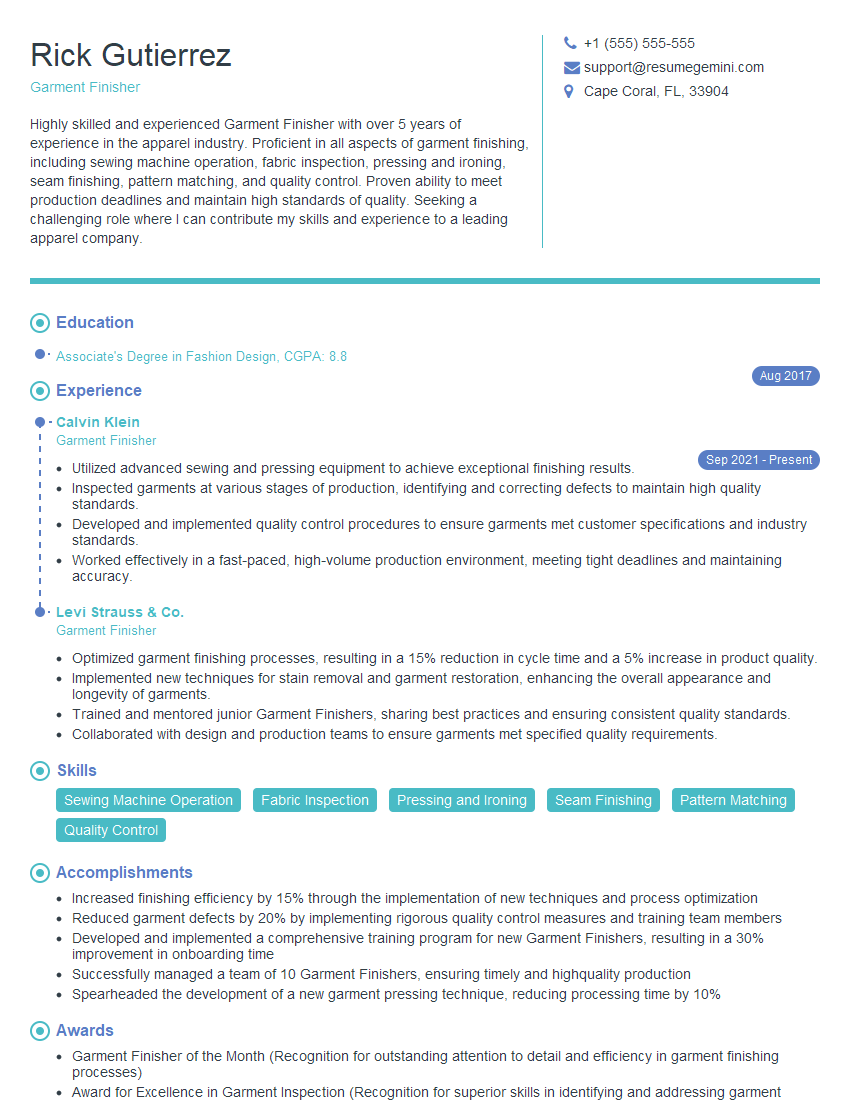
Mastering cap trimming opens doors to rewarding opportunities in manufacturing and related fields, offering excellent career growth potential. A strong resume is your key to unlocking these opportunities. Creating an ATS-friendly resume is crucial for getting your application noticed. We highly recommend using ResumeGemini to build a professional and impactful resume that highlights your skills and experience in cap trimming. Examples of resumes tailored to Cap Trimming are available to help guide you.



Explore more articles
Users Rating of Our Blogs
Share Your Experience
We value your feedback! Please rate our content and share your thoughts (optional).
What Readers Say About Our Blog
Very informative content, great job.
good