The right preparation can turn an interview into an opportunity to showcase your expertise. This guide to Vessel Modifications and Upgrades interview questions is your ultimate resource, providing key insights and tips to help you ace your responses and stand out as a top candidate.
Questions Asked in Vessel Modifications and Upgrades Interview
Q 1. Describe your experience with different types of vessel modifications.
My experience encompasses a wide range of vessel modifications, from minor repairs and upgrades to extensive structural alterations and system overhauls. I’ve worked on various vessel types, including tankers, bulk carriers, container ships, and specialized vessels like offshore support vessels. Specific modifications I’ve been involved in include:
- Hull modifications: This includes repairs to damaged sections, installing additional ballast tanks for stability improvements, and fitting specialized coatings for corrosion protection. For example, I oversaw the installation of a new double-bottom section on a tanker following a grounding incident.
- Engine room upgrades: I’ve managed projects upgrading propulsion systems, implementing emission reduction technologies (like scrubbers), and installing new auxiliary equipment. One notable project involved replacing a vessel’s outdated diesel generators with more efficient and environmentally friendly alternatives.
- Cargo handling system improvements: This includes the installation of new cranes, conveyors, or specialized cargo handling equipment tailored to the vessel’s specific purpose. I recently completed a project involving the upgrade of a bulk carrier’s unloading system to improve efficiency and reduce downtime.
- Navigational and communication upgrades: I’ve worked on modernizing navigational systems, integrating new radar and GPS technologies, and installing advanced communication systems, including satellite communication for enhanced safety and efficiency. One project involved fitting a fleet of fishing vessels with improved AIS (Automatic Identification System) for improved tracking and collision avoidance.
- Accommodation modifications: I’ve overseen projects to improve crew comfort and working conditions, including refurbishing cabins, improving ventilation systems, and adding recreational facilities. For instance, I helped design and implement an improved ventilation system on a passenger vessel to improve air quality in the crew quarters.
Each project required a unique approach, demanding a deep understanding of naval architecture, marine engineering, and regulatory compliance.
Q 2. Explain the process of obtaining regulatory approvals for vessel modifications.
Obtaining regulatory approvals for vessel modifications is a critical and complex process. It involves close collaboration with various stakeholders, including classification societies (like ABS, DNV, or Lloyd’s Register), flag state administrations, and potentially port state control authorities. The process typically involves the following steps:
- Preparation of Modification Plan: This detailed plan outlines the proposed modifications, including engineering drawings, calculations demonstrating structural integrity and compliance, risk assessments, and the proposed methodology.
- Submission to Classification Society: The plan is submitted to the relevant classification society for approval. This usually involves a thorough review of the documentation to ensure compliance with relevant rules and regulations.
- Plan Approval and Surveys: Once the plan is approved, the classification society will typically conduct surveys during the modification process to verify that the work is being executed according to the approved plan.
- Flag State Approval: In some cases, approval may also be required from the vessel’s flag state administration, particularly for significant modifications affecting the vessel’s safety or operational capabilities. This often includes a formal application process.
- Post-Modification Survey: After the modifications are complete, a final survey is usually conducted by the classification society to verify that the work meets the approved plan and all requirements are met. This results in a certificate of compliance.
Non-compliance at any stage can lead to delays, increased costs, and potential legal issues. Therefore, meticulous planning and thorough documentation are crucial.
Q 3. How do you ensure compliance with relevant class society rules and regulations during vessel upgrades?
Ensuring compliance with class society rules and regulations is paramount. We maintain compliance throughout the entire upgrade process through a multi-layered approach:
- Reference to Class Rules: All design and construction practices strictly adhere to the relevant class society rules and regulations. We utilize the latest versions and ensure all modifications are compliant with the specific class notation of the vessel.
- Detailed Documentation: Meticulous documentation is maintained throughout the project, including engineering drawings, calculations, material certificates, welding procedures, and inspection reports. This allows for easy traceability and verification of compliance.
- Qualified Personnel: All personnel involved in the modifications, from engineers and welders to inspectors, possess the necessary qualifications and certifications. We maintain a rigorous system of training and competency assessments.
- Regular Surveys and Inspections: Regular surveys and inspections are scheduled and executed by both internal teams and external surveyors from the classification society. These inspections verify progress, compliance, and quality control at each step.
- Non-Conformance Reporting and Resolution: A robust system is in place for reporting and addressing any non-conformances detected during the project. Corrective actions are promptly implemented, documented, and verified by the classification society.
This comprehensive system ensures adherence to all regulations and helps maintain the vessel’s class certification.
Q 4. What are the key considerations for structural modifications to a vessel?
Structural modifications are particularly critical as they directly impact the vessel’s integrity and seaworthiness. Key considerations include:
- Structural Analysis: Thorough structural analysis, using finite element analysis (FEA) software is crucial to assess the impact of the modifications on the vessel’s strength and stiffness. This ensures that the modifications do not compromise the vessel’s ability to withstand the stresses of operation.
- Material Selection: Materials used for modifications must meet the required strength, durability, and corrosion resistance standards. This usually involves using certified materials with appropriate traceability documentation.
- Welding Procedures: Welding procedures must adhere to strict standards to ensure high-quality welds with adequate strength and integrity. This includes using qualified welders and employing non-destructive testing (NDT) techniques to verify weld quality.
- Fatigue Assessment: For modifications that introduce changes in stress concentrations or loading patterns, fatigue assessments are necessary to predict the lifespan of the modified structure. This often involves detailed calculations and simulations.
- Class Society Approval: All structural modifications require thorough review and approval by the relevant classification society. This involves submitting detailed engineering calculations, drawings, and proposed welding procedures for their scrutiny.
Ignoring these considerations can lead to significant safety risks and potentially catastrophic failures at sea.
Q 5. Explain your experience with managing budgets and timelines for vessel modification projects.
Managing budgets and timelines for vessel modification projects requires meticulous planning and execution. My experience involves:
- Detailed Cost Estimation: Accurate cost estimation is crucial. We develop comprehensive cost breakdowns, considering material costs, labor, equipment rental, permits, and potential contingencies.
- Project Scheduling: We utilize project management software to create realistic schedules, identifying critical paths and potential bottlenecks. This allows for proactive management of resources and identification of potential delays.
- Resource Allocation: Effective allocation of resources, including personnel, equipment, and materials, is essential for timely project completion and cost optimization. We employ skilled personnel and secure necessary resources in advance.
- Progress Monitoring: Regular progress monitoring, using key performance indicators (KPIs) and regular progress meetings, allows for early identification of any issues and enables corrective actions. This ensures the project stays on track.
- Change Management: A formal change management process is critical for handling any unforeseen changes or deviations from the original plan. All changes are documented, assessed for their impact on budget and schedule, and approved by the relevant stakeholders.
By employing these strategies, I have consistently delivered projects within budget and on schedule, fostering strong relationships with clients and stakeholders.
Q 6. How do you handle unexpected issues or delays during a vessel upgrade?
Handling unexpected issues or delays is an inevitable part of any large-scale project. My approach involves:
- Proactive Risk Assessment: Identifying potential risks early in the planning phase allows us to develop contingency plans to mitigate the impact of unexpected events. This reduces the potential for significant delays and cost overruns.
- Problem Solving and Decision-Making: When unexpected issues arise, we implement a structured problem-solving process, involving all relevant stakeholders. We quickly assess the situation, identify potential solutions, and make informed decisions based on data and analysis.
- Communication and Collaboration: Maintaining open communication with all stakeholders, including the client, classification societies, and contractors, is essential. Transparency ensures everyone is informed about progress, challenges, and planned solutions.
- Contingency Planning: Having contingency plans in place allows for swift responses to unforeseen circumstances, minimizing disruptions and reducing delays. This might involve having backup suppliers, alternative construction methods, or extra resources on standby.
- Documentation and Reporting: All unforeseen issues, corrective actions, and their impact on the project are meticulously documented and reported. This ensures transparency and accountability, supporting future project improvements.
A calm, methodical approach, combined with strong communication and teamwork, allows us to navigate unexpected challenges effectively, minimizing disruptions and maintaining project success.
Q 7. Describe your experience with various welding techniques used in marine environments.
My experience encompasses a variety of welding techniques crucial in the marine environment, where strength, durability, and corrosion resistance are paramount. These include:
- Shielded Metal Arc Welding (SMAW): Commonly used for both ferrous and non-ferrous metals, SMAW offers good penetration and is suitable for various thicknesses, though it can be sensitive to atmospheric conditions. It’s frequently employed for repairs and general fabrication.
- Gas Metal Arc Welding (GMAW): Also known as MIG welding, GMAW is a highly productive process for joining thinner materials and is often used for continuous welds. It offers good quality and is less susceptible to atmospheric conditions than SMAW.
- Gas Tungsten Arc Welding (GTAW): Known as TIG welding, GTAW produces high-quality welds with excellent precision and is ideal for critical applications and thinner materials. It is commonly used for stainless steel and aluminum welds, essential in marine environments.
- Submerged Arc Welding (SAW): SAW is a highly productive process used for thicker sections, producing high-quality welds with deep penetration. It is particularly suited for large-scale fabrication in controlled environments.
The choice of welding technique depends on several factors, including the material being welded, the thickness of the material, the required weld quality, and the environmental conditions. We always ensure welders are qualified according to relevant codes and standards (like AWS D1.1 for structural welding) and that all welds undergo thorough non-destructive testing to verify their integrity.
Q 8. What are the common challenges associated with integrating new systems into existing vessels?
Integrating new systems into existing vessels presents several unique challenges. The primary hurdle is often retrofitting – adapting new technology to spaces and infrastructure not originally designed for it. This might involve limited space, incompatible power systems, or differing communication protocols. For example, installing a modern dynamic positioning (DP) system on an older vessel requires careful consideration of the existing power generation capacity, the structural integrity of the deck to support the new equipment, and the integration with the vessel’s existing navigation systems. Further challenges include:
- Weight and balance considerations: Adding new systems alters the vessel’s weight distribution, potentially affecting stability. Careful calculations and possibly structural reinforcement are needed.
- Compatibility issues: New systems must seamlessly integrate with existing equipment and software. This often requires custom interfaces and software modifications.
- Certification and regulatory compliance: Modifications must meet all relevant safety and environmental regulations, necessitating thorough documentation and approvals.
- Cost overruns: Unexpected complications during integration can lead to significant cost increases and project delays.
Successfully navigating these challenges requires meticulous planning, a thorough understanding of both the existing vessel and the new system, and a collaborative approach involving engineers, technicians, and regulatory bodies.
Q 9. How do you ensure the safety of personnel during vessel modification work?
Ensuring personnel safety during vessel modifications is paramount. We adhere to a rigorous safety management system (SMS) that incorporates several key elements:
- Risk assessments: A detailed risk assessment identifies all potential hazards associated with the project, from working at heights to exposure to hazardous materials. Specific control measures are then implemented to mitigate these risks.
- Permit-to-work system: A formal permit-to-work system ensures that only authorized personnel can perform specific tasks, and that all necessary safety precautions are in place before work commences.
- Personal Protective Equipment (PPE): Appropriate PPE, such as hard hats, safety glasses, and respirators, is provided and mandatory for all personnel involved.
- Regular safety briefings: Before work begins and at regular intervals throughout the project, safety briefings are conducted to highlight potential hazards and reinforce safe work practices.
- Emergency response plan: A comprehensive emergency response plan is developed and regularly practiced to ensure a swift and effective response in case of an accident or emergency.
- Competent personnel: Only properly trained and qualified personnel are allowed to undertake modification work. Regular training and competency assessments ensure their skills and knowledge are up to date.
For example, during a ballast tank cleaning operation, we would ensure proper ventilation, respiratory protection, and confined space entry procedures are strictly followed. This proactive approach significantly reduces the likelihood of accidents and ensures a safe working environment for everyone involved.
Q 10. What are your preferred methods for quality control during vessel modifications?
Our quality control methods are comprehensive and multi-layered. We employ a combination of:
- Regular inspections: Regular inspections are carried out at each stage of the modification process, from initial design review to final commissioning. This ensures that work is carried out to the specified standards and drawings.
- Non-destructive testing (NDT): NDT methods like ultrasonic testing and radiography are used to detect any hidden flaws or defects in materials and welds.
- Material traceability: We maintain meticulous records of all materials used, ensuring they meet the required specifications and are sourced from reputable suppliers.
- Documentation control: All modifications are meticulously documented, including design changes, inspection reports, and test results. This provides a complete audit trail of the work undertaken.
- Third-party verification: In some cases, we utilize independent third-party verification to ensure objectivity and compliance with regulatory requirements. This adds an extra layer of assurance and credibility to our work.
For instance, after welding new pipework, we would conduct a visual inspection followed by a non-destructive test to confirm the integrity of the welds before the system is pressurized. This meticulous approach helps avoid costly rework and guarantees the quality and reliability of the modifications.
Q 11. Describe your experience with CAD software used in marine design.
I have extensive experience utilizing CAD software in marine design, primarily AutoCAD and 3D modeling software such as ShipConstructor and AVEVA Marine. My proficiency extends beyond basic drafting to encompass complex 3D modeling, clash detection, and detailed design development. I am skilled in creating accurate and detailed drawings, including general arrangement plans, piping and instrumentation diagrams (P&IDs), and structural details.
In a recent project involving the installation of a new scrubber system, I used ShipConstructor to create a 3D model of the existing engine room and the proposed scrubber installation. This allowed us to identify potential clashes between the new system and existing equipment before fabrication commenced, saving both time and money. The software’s clash detection capabilities are invaluable in ensuring a smooth integration process.
Furthermore, I am proficient in utilizing CAD software for generating detailed fabrication drawings, ensuring precision and accuracy in the construction phase. The use of digital models facilitates better communication and collaboration among various stakeholders during the design and construction process.
Q 12. Explain your understanding of different materials used in vessel construction and their suitability for modifications.
Understanding material properties is crucial for successful vessel modifications. The selection of materials depends on several factors, including the specific application, environmental conditions, and regulatory requirements. Common materials used in vessel construction and modifications include:
- Steel: The most common material, offering a good balance of strength, durability, and weldability. Different grades of steel are used depending on the application, with high-strength steel used in areas requiring greater strength.
- Aluminum: Lighter than steel, often used in superstructure and deckhouse construction where weight reduction is important. However, it has lower strength and requires careful consideration of corrosion protection.
- Stainless steel: Resistant to corrosion, making it ideal for applications exposed to seawater or other corrosive environments. It’s often used in piping systems and areas requiring high hygiene standards.
- Composite materials: Increasingly used in specific applications, offering high strength-to-weight ratios and corrosion resistance. However, their use requires specialized expertise and fabrication techniques.
For example, when replacing a corroded section of a seawater piping system, we would choose a grade of stainless steel appropriate for the pressure and corrosive environment. If a new section of the deck requires reinforcement, we would likely use high-strength steel to ensure adequate structural integrity. Careful material selection is critical to ensuring the long-term durability and reliability of the modifications.
Q 13. How do you manage communication and coordination among different teams involved in vessel upgrades?
Effective communication and coordination are crucial for the success of any vessel upgrade project. We use a multi-pronged approach:
- Regular project meetings: Regular meetings involving all key stakeholders, including designers, engineers, contractors, and client representatives, are held to discuss progress, address challenges, and ensure alignment on project goals.
- Project management software: We use collaborative project management software to track progress, share documents, and facilitate communication between teams. This ensures that everyone has access to the latest information and can track their tasks.
- Clear communication channels: Clear communication channels are established to ensure efficient information flow. This includes regular email updates, formal reports, and face-to-face communication when necessary.
- Dedicated project manager: A dedicated project manager oversees all aspects of the project, ensuring that tasks are completed on time and within budget. They act as the central point of contact for all stakeholders.
For instance, during a recent engine upgrade project, we used project management software to track the delivery of components, schedule the work, and share technical drawings among the engineering team, the shipyard, and the client. This streamlined communication and helped maintain the project’s momentum.
Q 14. What are the key aspects of risk assessment and mitigation in vessel modification projects?
Risk assessment and mitigation are fundamental to our approach. We use a systematic process that involves:
- Hazard identification: We identify all potential hazards associated with the modifications, considering factors such as working at heights, confined space entry, hazardous materials, and electrical hazards.
- Risk analysis: We analyze the likelihood and severity of each hazard, determining the overall level of risk.
- Risk mitigation: We develop and implement control measures to reduce the risk to an acceptable level. These measures can include engineering controls (e.g., improved ventilation), administrative controls (e.g., safety procedures), and personal protective equipment (PPE).
- Regular review: The risk assessment is regularly reviewed and updated throughout the project to account for changes in the work or any unforeseen circumstances.
For example, in a project involving the modification of a cargo hold, we would identify the risk of falling objects, assess the likelihood and severity of injury, and implement control measures such as the use of safety nets, hard hats, and strict procedures for handling cargo. This proactive approach significantly reduces the likelihood of accidents and protects personnel and the environment.
Q 15. Describe your experience with different types of marine propulsion systems and their modification.
My experience encompasses a wide range of marine propulsion systems, from traditional diesel-mechanical drives to advanced hybrid-electric and azipod systems. Modifications can range from simple component replacements (like upgrading propeller shafts or replacing worn bearings) to complete system overhauls. For example, I’ve worked on projects involving the retrofitting of a fishing trawler with a more fuel-efficient diesel engine, complete with a new exhaust system and propeller design to optimize performance. Another significant project involved integrating a hybrid-electric system into a passenger ferry, requiring extensive electrical system upgrades, battery integration, and sophisticated control system programming. Understanding the specific nuances of each system – their strengths, weaknesses, and potential failure points – is crucial for effective modification. This includes a deep understanding of factors like power transmission, fuel efficiency, and environmental impact. I have hands-on experience with various manufacturers’ systems and am adept at troubleshooting and optimizing performance across the board.
- Diesel-Mechanical: These systems are relatively straightforward to modify, often involving engine replacements, gearbox overhauls, or propeller adjustments.
- Waterjets: Modifications can involve pump upgrades, nozzle adjustments, or the addition of control systems for improved maneuverability.
- Azipods: These complex systems require specialized knowledge for modifications, often involving advanced control system programming and integration with other vessel systems.
- Hybrid-Electric: Modifications here are often extensive, requiring integration of battery systems, electric motors, and sophisticated power management systems.
Career Expert Tips:
- Ace those interviews! Prepare effectively by reviewing the Top 50 Most Common Interview Questions on ResumeGemini.
- Navigate your job search with confidence! Explore a wide range of Career Tips on ResumeGemini. Learn about common challenges and recommendations to overcome them.
- Craft the perfect resume! Master the Art of Resume Writing with ResumeGemini’s guide. Showcase your unique qualifications and achievements effectively.
- Don’t miss out on holiday savings! Build your dream resume with ResumeGemini’s ATS optimized templates.
Q 16. How do you ensure the longevity and maintainability of modifications made to a vessel?
Ensuring longevity and maintainability requires a multifaceted approach. Firstly, we use high-quality, marine-grade materials certified for the intended application. Secondly, meticulous workmanship during installation is paramount. We adhere strictly to the manufacturer’s guidelines and best practices for each component. Finally, we incorporate features that simplify future maintenance. This includes easy access to components for inspection and replacement, clear and well-documented wiring diagrams, and the use of standardized components where possible. For instance, on a recent project involving engine room upgrades, we designed the new system with easily accessible panels, allowing for routine checks and maintenance without needing major disassembly. We also implemented a centralized monitoring system that alerts the crew to any potential issues proactively, reducing downtime and increasing longevity.
Regular inspections and preventative maintenance schedules are also crucial, outlined in a detailed post-modification maintenance manual provided to the vessel operator. This proactive approach significantly reduces the risk of unexpected failures and ensures that the modifications remain functional and efficient for years to come.
Q 17. What are the environmental considerations for vessel modifications?
Environmental considerations are a major factor in vessel modifications. We must comply with all relevant international and national regulations regarding emissions, waste disposal, and ballast water management. For example, modifications involving engine replacements must adhere to stringent emission standards (like IMO Tier III or equivalent), often necessitating the use of exhaust gas cleaning systems (scrubbers). When dealing with ballast water, modifications to ensure effective treatment before discharge are crucial, preventing the spread of invasive species. The selection of paints and coatings also plays a role, with environmentally friendly, low-VOC options being preferred. Even seemingly small modifications, such as changing lighting to LED, can make a considerable difference in reducing energy consumption and carbon footprint. Every project undergoes a thorough environmental impact assessment to identify and mitigate potential negative effects. We always strive for environmentally responsible solutions that minimize any environmental damage.
Q 18. How do you select appropriate contractors or subcontractors for vessel modification work?
Contractor selection is a critical step. We evaluate potential contractors based on their experience, certifications, safety record, and financial stability. We look for evidence of successful completion of similar projects and a strong track record of meeting deadlines. We also scrutinize their insurance coverage and adherence to relevant safety regulations. References are checked meticulously. The contract itself includes detailed specifications, performance guarantees, and clear payment terms. In some instances, we might use multiple subcontractors, each specialized in a specific aspect of the modification (e.g., electrical work, welding, painting). In such cases, we establish clear lines of communication and responsibility to ensure seamless project execution. A thorough vetting process prevents potential problems down the line and ensures the highest quality of workmanship.
Q 19. Explain your experience with documentation control and record-keeping during modifications.
Documentation control is paramount. We utilize a comprehensive document management system that tracks all aspects of the modification, from initial design drawings and material specifications to inspection reports and final acceptance certificates. Every change order, modification request, or deviation from the original plan is meticulously documented. This ensures a clear audit trail and facilitates accurate record-keeping. Digitalization is key, helping us to store and access documents easily, improving collaboration and transparency. For instance, we use cloud-based platforms to share design files and progress updates with the client and other stakeholders, maintaining version control and simplifying document sharing. This rigorous system ensures traceability and avoids disputes, helping us to build trust and deliver on time and within budget.
Q 20. What are your methods for monitoring the progress of a vessel modification project?
Project monitoring involves regular inspections, progress meetings, and the use of project management software. We establish clear milestones and deadlines at the outset. Regular site visits by myself and the project management team are integral to assess the progress against the planned schedule. We utilize Gantt charts and other project management tools to track tasks, identify potential bottlenecks, and manage resource allocation. Key performance indicators (KPIs) are defined to measure progress and quality. Regular communication with the client keeps them informed about the project status, and any issues are promptly addressed through collaborative problem-solving. This constant monitoring ensures that the project stays on track and that any deviations are identified and corrected early in the process.
Q 21. How do you handle conflicts or disagreements among team members during a project?
Conflicts are inevitable in complex projects. My approach emphasizes proactive communication and collaboration. I encourage open dialogue among team members to identify and address disagreements early on. I facilitate meetings where everyone can voice their concerns, and we work together to find mutually acceptable solutions. If necessary, I mediate between conflicting parties, ensuring that the discussions remain professional and respectful. In some cases, it may be necessary to refer the dispute to a higher authority, such as the client, or to seek external arbitration to reach a resolution. However, my primary focus is always on preventing conflicts from escalating and maintaining a positive working environment that fosters productivity and creativity. A clear project structure and well-defined roles and responsibilities at the beginning minimizes such conflicts.
Q 22. Describe your experience with troubleshooting and problem-solving related to vessel systems.
Troubleshooting vessel systems requires a systematic approach. I begin by thoroughly understanding the reported problem, gathering data from various sources – logs, crew reports, sensor readings – to identify potential root causes. For example, if a propulsion system is malfunctioning, I might examine fuel delivery, engine parameters, and lubricating oil systems. My process involves:
- Data Analysis: Analyzing system data to pinpoint anomalies or trends.
- Visual Inspection: Conducting thorough visual inspections of affected components.
- Component Testing: Using diagnostic tools to test individual components.
- Hypothesis Formation & Testing: Developing potential explanations and systematically testing them.
- Corrective Action: Implementing repairs or adjustments based on findings and documenting everything meticulously.
In one instance, a cargo vessel experienced erratic steering. Through systematic analysis, we discovered a faulty sensor within the autopilot system, which was causing incorrect rudder commands. Replacing the faulty sensor immediately resolved the issue.
Q 23. How do you ensure that modifications meet the owner’s operational requirements?
Meeting the owner’s operational requirements is paramount. This begins with a detailed discussion to fully understand their needs, including operational profiles, cargo types, and future plans. We then translate these requirements into detailed specifications for the modification project. This often involves:
- Requirement Gathering: Thorough interviews and documentation of all operational requirements.
- Design Review: Ensuring the design aligns perfectly with the operational profile.
- Simulation & Modeling: Using software to simulate the modified vessel’s performance under various conditions.
- Testing & Validation: Rigorous testing, including sea trials, to validate that the modifications meet all requirements.
- Documentation & Handover: Providing comprehensive documentation and training to the crew on the new system’s operation and maintenance.
For example, a fishing vessel owner needed to increase their catch capacity. We collaborated to design a larger hold, ensuring the structural integrity of the vessel wasn’t compromised while optimizing for weight distribution and stability.
Q 24. What are the key factors to consider when estimating the cost of a vessel modification project?
Accurate cost estimation is crucial. It involves a detailed breakdown of all aspects of the project. Key factors include:
- Material Costs: Cost of all materials, including steel, components, and coatings.
- Labor Costs: Wages for all personnel, including welders, electricians, and engineers.
- Engineering & Design Costs: Fees for engineers, designers, and surveyors.
- Permitting & Regulatory Costs: Expenses related to obtaining necessary permits and approvals.
- Testing & Inspection Costs: Costs for quality control inspections, sea trials, and other tests.
- Contingency Costs: A buffer for unforeseen expenses or delays.
We utilize specialized software and historical data to create detailed cost estimates, providing a clear and transparent breakdown for the client. This helps to manage expectations and avoid cost overruns.
Q 25. Explain your understanding of the principles of hydrostatics and their impact on vessel modifications.
Hydrostatics is fundamental to vessel design and modification. It governs the vessel’s buoyancy, stability, and trim. Understanding principles of hydrostatic pressure, center of buoyancy, and metacentric height is vital. Modifications impacting weight distribution, volume, or shape significantly influence these parameters. For instance, adding a heavy piece of equipment to the deck alters the center of gravity, affecting stability. Similarly, modifying the hull form can impact buoyancy and trim.
We use hydrostatic calculations and software simulations to predict the impact of modifications on the vessel’s stability characteristics and ensure compliance with relevant regulations. Ignoring these principles can lead to dangerous situations, such as capsizing or instability.
Q 26. How do you ensure the structural integrity of a vessel after modifications are completed?
Ensuring structural integrity after modifications requires a multi-faceted approach:
- Finite Element Analysis (FEA): Utilizing FEA software to simulate the stress distribution under various load conditions to identify potential weak points.
- Non-Destructive Testing (NDT): Employing NDT methods such as ultrasonic testing or radiography to detect internal defects or flaws in welds and materials.
- Structural Calculations: Performing detailed structural calculations to ensure the vessel can withstand the anticipated loads and stresses.
- Class Society Approval: Obtaining approval from a recognized classification society, ensuring that the modifications comply with all relevant standards and regulations.
- Post-Modification Surveys: Conducting thorough surveys after modifications are completed to verify the structural integrity and adherence to specifications.
We always prioritize safety and compliance. Failure to do so could have catastrophic consequences.
Q 27. Describe your experience with different types of marine coatings and their application.
I have extensive experience with various marine coatings, including:
- Anti-fouling paints: Prevent marine growth, reducing drag and improving fuel efficiency. Selection depends on the vessel’s operating environment and regulatory requirements.
- Epoxy coatings: Provide excellent corrosion protection and are commonly used on underwater surfaces and ballast tanks. Proper surface preparation is critical for adhesion.
- Zinc-rich primers: Offer sacrificial cathodic protection, preventing corrosion of the underlying steel.
- Topside paints: Provide UV protection, aesthetic appeal, and resistance to weathering. Different types are available depending on the required gloss and durability.
Application involves careful surface preparation, ensuring proper mixing ratios, and adherence to the manufacturer’s instructions. Inaccurate application can lead to premature coating failure.
Q 28. What are your strategies for optimizing the efficiency of vessel modification projects?
Optimizing vessel modification projects requires careful planning and execution:
- Detailed Scheduling: Creating a precise schedule that accounts for all tasks and potential delays.
- Efficient Resource Allocation: Optimizing the use of personnel, equipment, and materials.
- Lean Principles: Implementing lean manufacturing techniques to eliminate waste and improve efficiency.
- Regular Progress Monitoring: Tracking progress against the schedule and addressing any issues promptly.
- Communication & Collaboration: Maintaining clear and consistent communication with all stakeholders.
By employing these strategies, we ensure projects are completed on time, within budget, and to the highest standards of quality.
Key Topics to Learn for Vessel Modifications and Upgrades Interview
- Regulatory Compliance: Understanding and applying relevant international maritime regulations (e.g., SOLAS, MARPOL) concerning modifications and upgrades. Practical application involves assessing the impact of proposed changes on compliance.
- Structural Integrity: Analyzing the structural implications of modifications, including stress analysis, fatigue life assessment, and material selection. Practical application involves using engineering software to model and simulate potential effects.
- Systems Integration: Understanding the complex interplay of various vessel systems (e.g., propulsion, electrical, HVAC) and how modifications impact their operation. Practical application involves troubleshooting integration issues and ensuring seamless functionality.
- Project Management: Planning, scheduling, and budgeting for vessel modification projects, including risk assessment and mitigation strategies. Practical application involves using project management methodologies and tools.
- Cost Estimation and Control: Developing accurate cost estimates for modifications and upgrades, and effectively managing project budgets. Practical application involves using cost estimation techniques and monitoring expenditures.
- Safety Management: Implementing safety protocols and procedures during all phases of modification and upgrade projects. Practical application involves conducting risk assessments and implementing appropriate safety measures.
- Documentation and Reporting: Maintaining accurate records and generating comprehensive reports on all aspects of the modification process. Practical application involves utilizing relevant software and maintaining meticulous documentation.
- Troubleshooting and Problem Solving: Identifying and resolving technical challenges during the modification process. This requires a strong understanding of the vessel’s systems and the ability to apply problem-solving techniques.
Next Steps
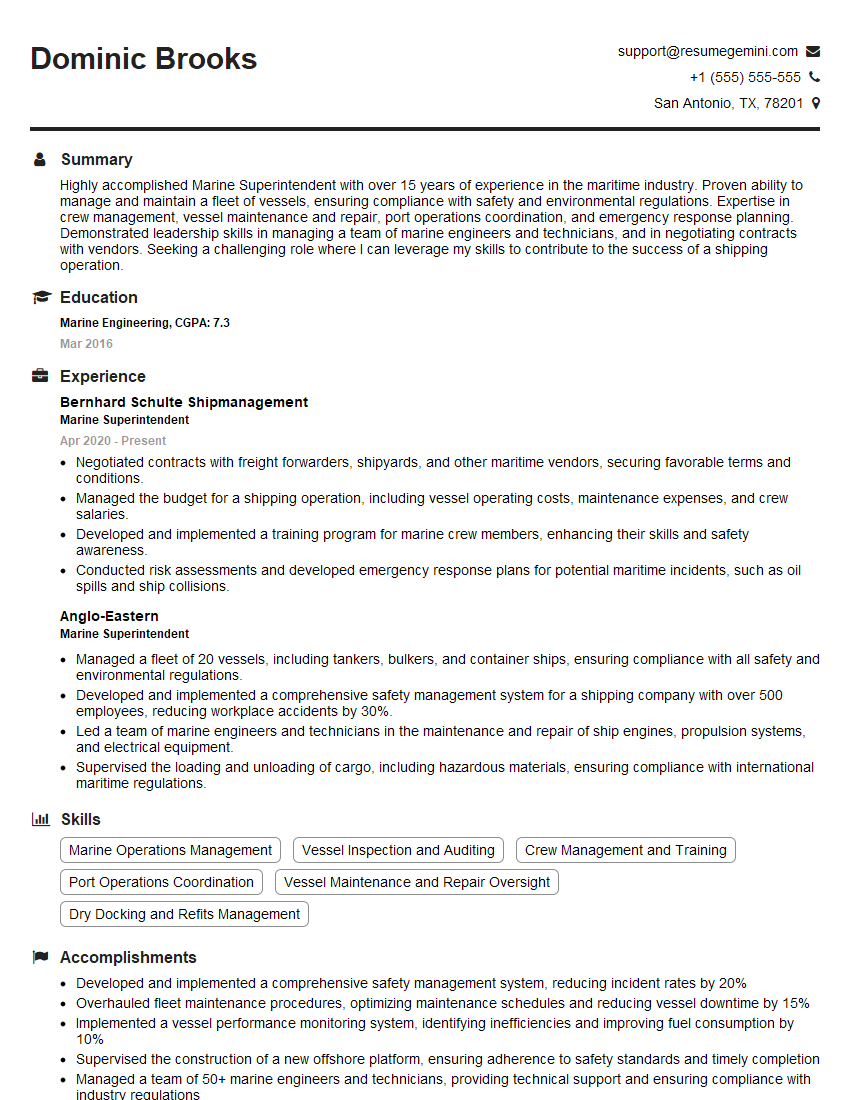
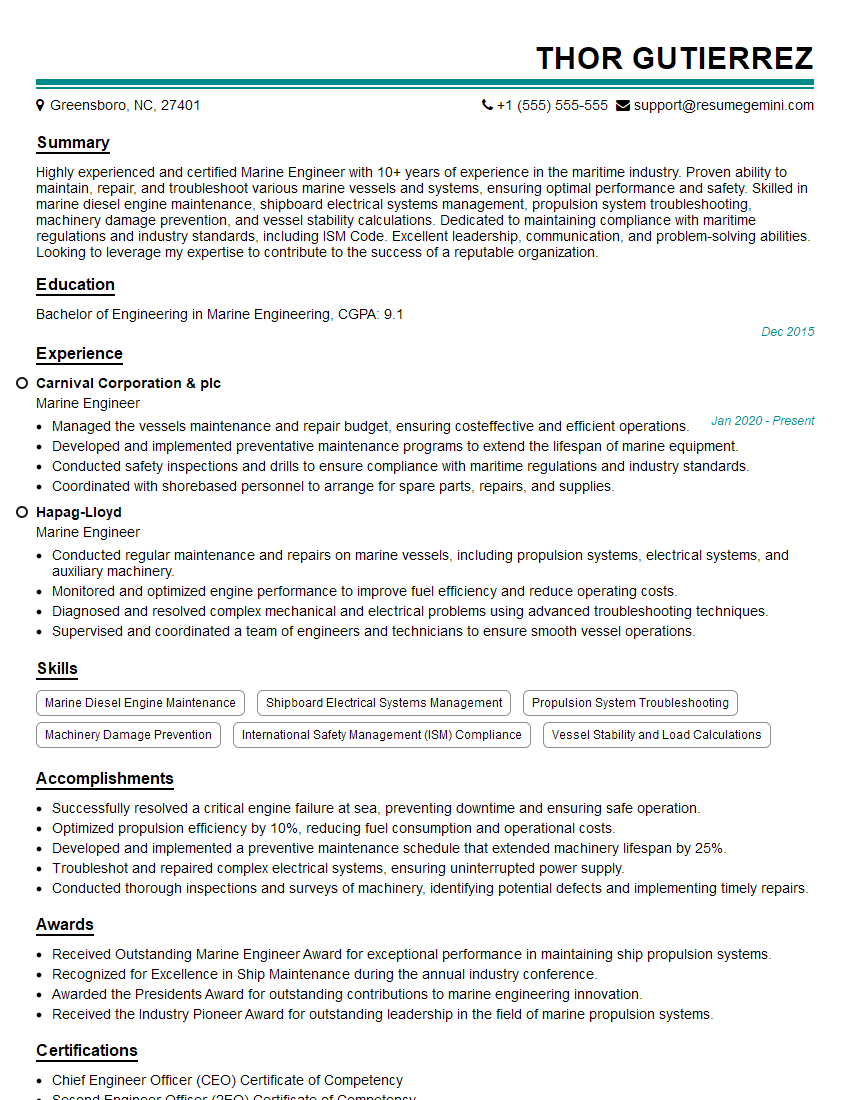
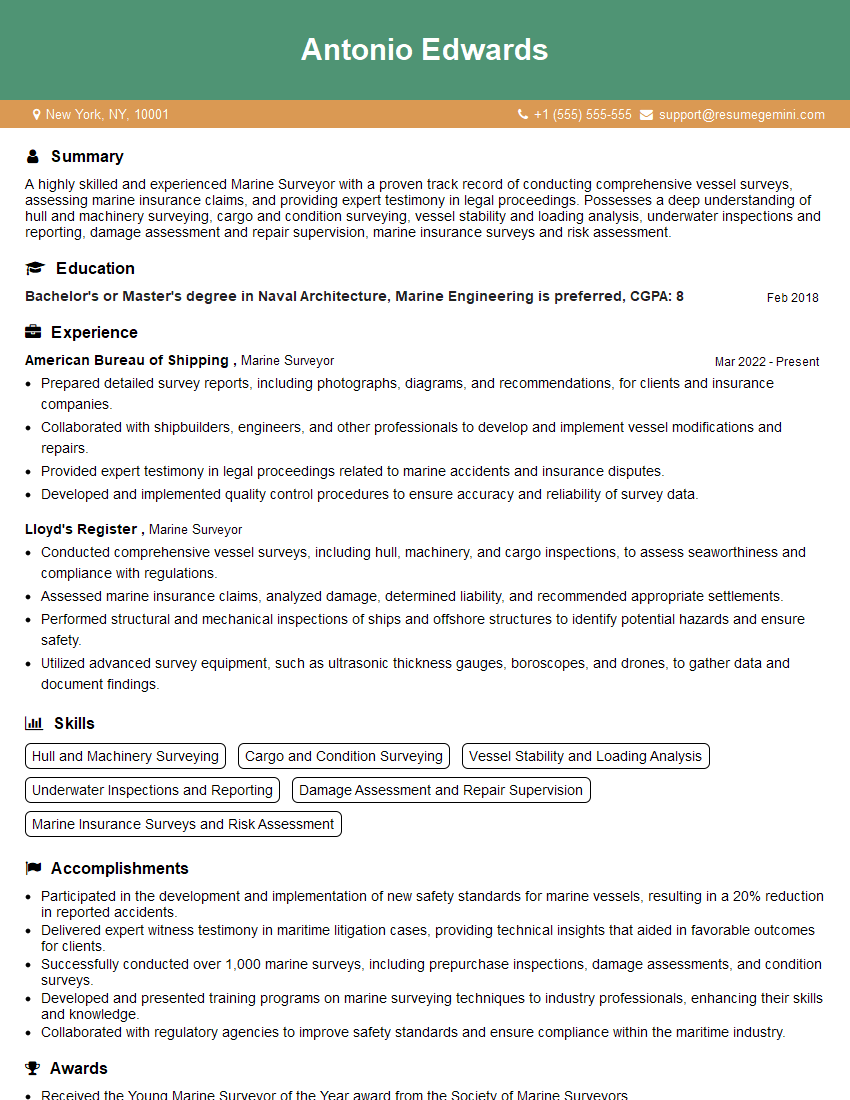
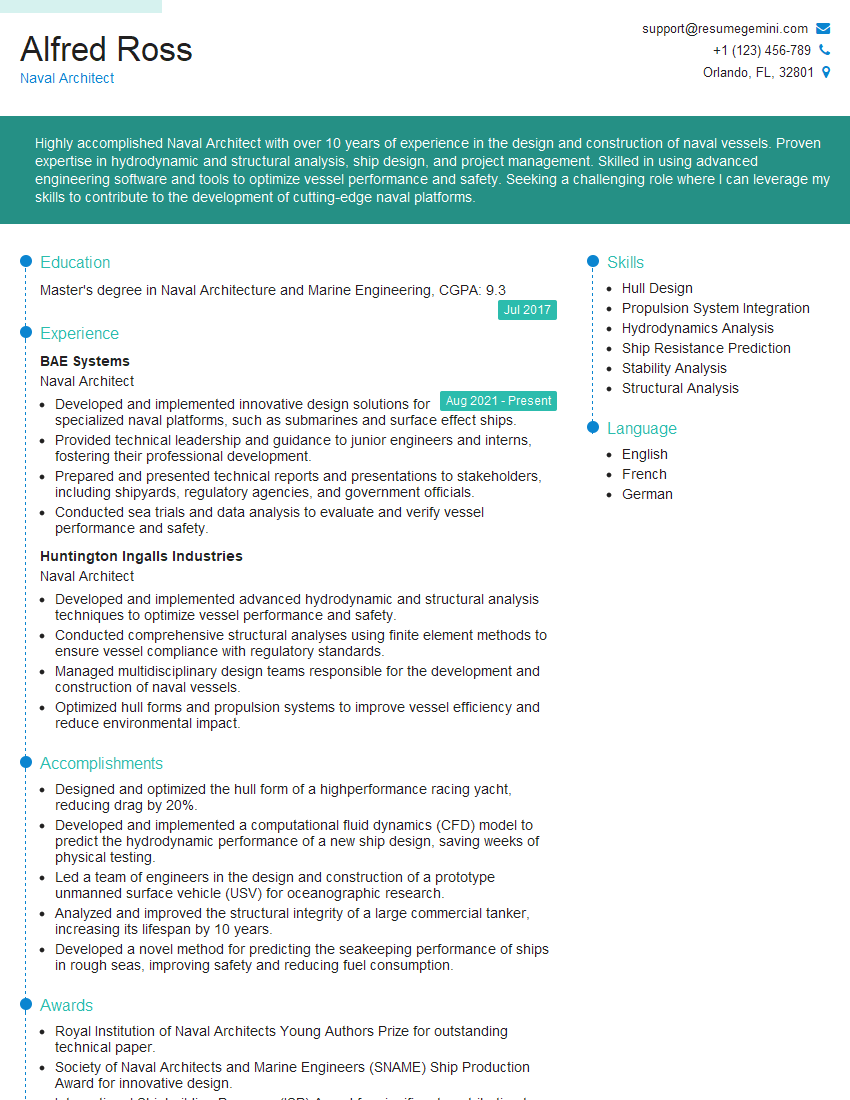
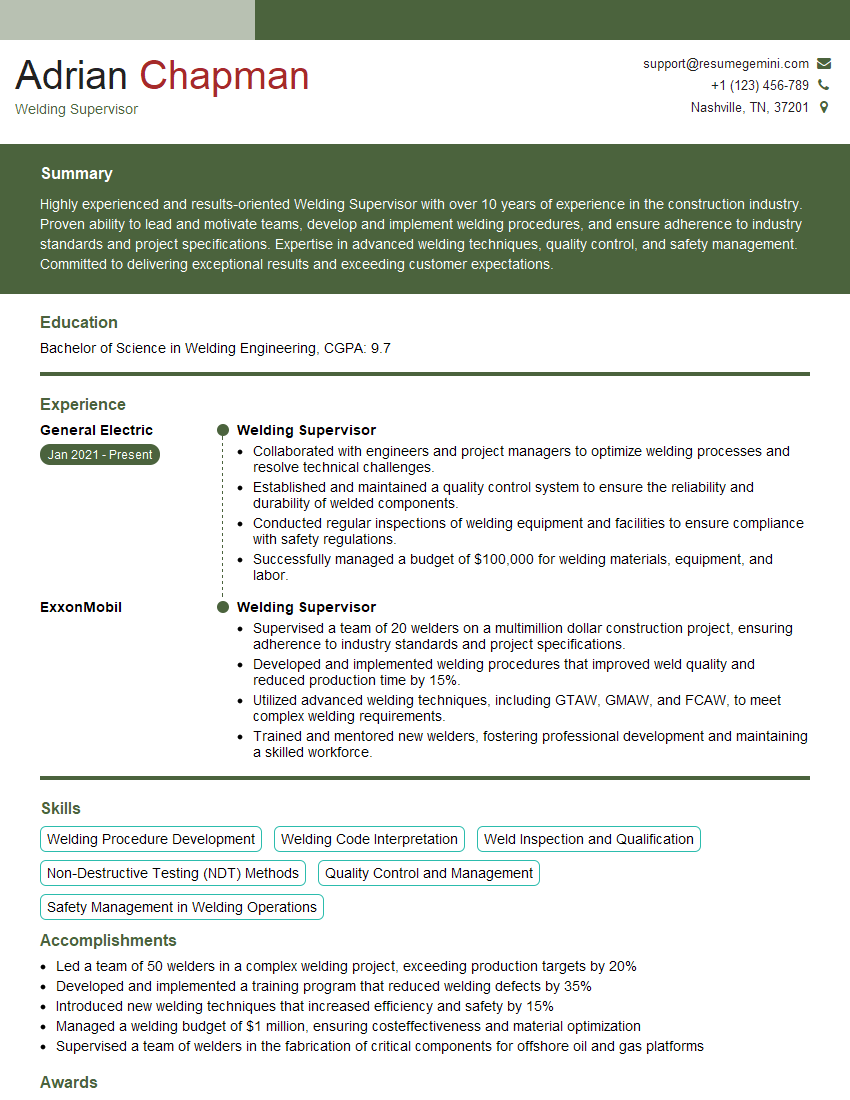
Mastering Vessel Modifications and Upgrades opens doors to exciting career advancements, offering opportunities for specialization and increased responsibility within the maritime industry. A strong resume is crucial for showcasing your expertise and securing your ideal role. Creating an ATS-friendly resume is paramount to ensuring your application is effectively screened by hiring managers. We highly recommend leveraging ResumeGemini to build a professional and impactful resume tailored to the specific demands of the Vessel Modifications and Upgrades field. ResumeGemini offers valuable tools and resources, including examples of resumes specifically designed for this sector, to help you present your qualifications in the best possible light.
Explore more articles
Users Rating of Our Blogs
Share Your Experience
We value your feedback! Please rate our content and share your thoughts (optional).
What Readers Say About Our Blog
Very informative content, great job.
good