Interviews are opportunities to demonstrate your expertise, and this guide is here to help you shine. Explore the essential Soccer Knowledge interview questions that employers frequently ask, paired with strategies for crafting responses that set you apart from the competition.
Questions Asked in Soccer Knowledge Interview
Q 1. Explain the offside rule in soccer.
The offside rule in soccer aims to prevent attackers from gaining an unfair advantage by being too close to the opponent’s goal before the ball is played to them. Essentially, a player is in an offside position if they are in the opponent’s half of the field and closer to the opponent’s goal line than both the ball and the second-to-last defender (excluding the goalkeeper).
Key elements:
- Being in the opponent’s half: A player must be past the halfway line and in the opponent’s half.
- Closer to the goal line than the ball and second-to-last defender: This is crucial. Imagine a line drawn parallel to the goal line through the second-to-last defender. If an attacking player is closer to the goal line than this imaginary line, they are in an offside position.
- Involvement in play: Just being in an offside position isn’t enough to be called offside. The player must also be actively involved in the play at the moment the ball is played to them. This includes interfering with play, playing the ball, or gaining an advantage by being in that position (e.g., interfering with an opponent’s attempt to play the ball).
Example: If a striker is standing just beyond the last defender when a teammate passes the ball, and the striker receives it, the referee would likely not call offside. However, if the striker runs into the space between the last defender and the goalkeeper before the ball is passed and influences play, they’re probably offside. The referee has the discretion to judge whether a player was actively involved in the play and gained an advantage from being offside.
Q 2. Describe the different formations used in soccer and their strengths/weaknesses.
Soccer formations describe the positioning of players on the field. The most common formations are variations of 4-4-2, 4-3-3, and 3-5-2, but many others exist. Each has strengths and weaknesses:
- 4-4-2 (Four defenders, four midfielders, two forwards): This is a balanced formation, offering solid defense and attack. Strengths include numerical superiority in midfield and attack, good defensive cover, and flexibility. Weakness is it can lack width.
- 4-3-3 (Four defenders, three midfielders, three forwards): This formation emphasizes attacking width. Strengths include strong attacking potential with three forwards, creative midfielders, and good crossing opportunities. Weaknesses are the potential vulnerability to counter-attacks and requires high levels of fitness and stamina.
- 3-5-2 (Three defenders, five midfielders, two forwards): This formation is designed for teams that prioritize midfield control and possession. Strengths include a strong midfield presence and defensive stability, good ball retention. Weaknesses include vulnerability to pace and width.
Many variations exist (e.g., 4-2-3-1, 4-5-1), each tailored to a team’s strengths and the opposition’s weaknesses. The best formation is always context-dependent, influenced by player skills, opponent tactics, and game situation.
Q 3. What are the key tactical considerations for defending set pieces?
Defending set pieces (free kicks, corners, throw-ins) requires meticulous planning and execution. The key is minimizing space and preventing dangerous shots or headers.
- Marking: Assign specific players to mark opponents tightly, paying attention to their strengths (heading, jumping reach, etc.). Avoid leaving players unmarked. Zone marking is often used around the penalty area, complementing man-to-man for key opponents.
- Wall positioning: For free kicks, the wall must be organized to effectively block the shot while maintaining distance for proper positioning.
- Defensive shape: Maintain a compact defensive unit, preventing any gaps for the attacking team to exploit. The shape should cover areas where the ball might be directed.
- Communication: Clear and concise communication is essential to ensure that players are on the same page, know their responsibilities, and react appropriately to the situation.
- Preventing crosses: For corners and crosses, focus on winning aerial duels to prevent dangerous balls getting into the box. This includes zonal marking as well as player to player marking.
Teams often practice set-piece defending extensively, with drills focused on marking, zonal organization, and reacting to various situations.
Q 4. How would you analyze a team’s performance using advanced statistics?
Analyzing team performance using advanced statistics goes beyond simple win/loss records. We can use metrics like:
- Expected Goals (xG): Measures the quality of chances created and conceded, providing a more accurate reflection of a team’s attacking and defensive effectiveness than simple goals scored or conceded.
- Passing accuracy and completion rates: Provides an insight into possession, build-up play, and tactical choices.
- Key passes and assists: Identifies creative players and their contribution to goal-scoring opportunities.
- Tackles, interceptions, and clearances: Indicate defensive effectiveness.
- Shot accuracy and location: Indicates effectiveness of shot taking.
- Possession percentage: Reflects ball control and game dominance.
By combining these statistics, we can get a holistic view of team performance, identifying areas of strength and weakness. For example, a team might have a high possession percentage but a low xG, suggesting they might be dominating the ball but not creating high-quality chances. These insights help in coaching and developing strategies.
Q 5. Discuss the importance of player fitness and conditioning in soccer.
Player fitness and conditioning are paramount in soccer. The game demands high levels of endurance, speed, agility, and strength. Poor fitness can lead to injuries, reduced performance, and susceptibility to fatigue.
Benefits of optimal fitness:
- Injury prevention: Strong muscles and proper conditioning reduce injury risks.
- Enhanced performance: Fitter players can maintain high intensity levels for longer periods, perform better in crucial moments, and have improved recovery rates.
- Improved stamina: Essential for playing 90 minutes at high intensity.
- Tactical flexibility: Fitter players can better execute tactical instructions and adapt to changing game situations.
A well-structured fitness program includes aerobic training (to improve endurance), strength training (to increase power and prevent injuries), and agility drills (to enhance speed and change of direction). Regular monitoring of players’ fitness levels through performance testing and regular physical assessments is essential.
Q 6. Explain different training methods for improving player speed and agility.
Improving player speed and agility requires a combination of training methods:
- Sprint training: Involves short bursts of high-intensity running followed by rest periods. This enhances speed and power. Variations include hill sprints and plyometrics.
- Agility drills: Use cones or markers to create courses that require quick changes of direction. This improves coordination, balance, and quickness.
- Plyometrics: Explosively jumping exercises that improve power and agility. Examples include box jumps and depth jumps.
- Resistance training: Strength training that targets the leg muscles to improve speed and power output. This can include exercises such as squats, lunges, and deadlifts.
- Flexibility and mobility exercises: Improve range of motion and reduce injury risk, contributing to better agility.
Combining these methods with regular practice in game-specific situations (e.g., running with the ball, changing direction while dribbling) helps develop speed and agility in a soccer context.
Q 7. How do you identify and develop young talent in soccer?
Identifying and developing young talent involves a multi-faceted approach:
- Scouting and identification: This involves watching young players in matches and training sessions, assessing their technical skills, tactical awareness, physical attributes, and mental toughness. Regular monitoring is key.
- Technical development: Providing quality coaching that focuses on the fundamental skills (dribbling, passing, shooting). This should be age-appropriate and progressive, building on existing skills.
- Tactical understanding: Teaching young players the tactical aspects of the game (positional play, team shape, pressing, counter-attacking). This often improves with age and experience.
- Physical development: Designing training programs that address physical conditioning, strength, speed, and agility. Age-appropriate strength and conditioning are vital.
- Mental development: Focus on aspects such as concentration, decision-making under pressure, resilience, and coping mechanisms. This is often overlooked but very important.
- Creating a positive environment: Developing a supportive and encouraging environment where players feel comfortable, challenged, and motivated to improve.
Regular monitoring of players’ progress is essential, adapting training plans as they develop. The focus should be on holistic development, not just technical skills. Regular feedback and communication with players and parents are also important.
Q 8. What are the common injuries in soccer and their prevention strategies?
Soccer, being a physically demanding sport, leads to a range of injuries. Common ones include:
- Muscle strains and tears: Hamstring, quadriceps, and calf muscles are frequently affected, often due to sprinting, kicking, and sudden changes in direction. Prevention involves proper warm-up and cool-down routines, strength training focusing on these muscle groups, and gradual increases in training intensity.
- Ankle sprains: These are very common, often occurring from awkward landings or tackles. Prevention includes strengthening ankle muscles, wearing supportive footwear, and improving balance and agility.
- Knee injuries: Meniscus tears and anterior cruciate ligament (ACL) injuries are serious concerns, often resulting from twisting motions or direct contact. Prevention involves strengthening leg muscles, improving proprioception (body awareness), and employing proper tackling techniques.
- Head injuries: Concussions are a significant risk, particularly from heading the ball or collisions with other players. Prevention strategies include proper heading technique training, enforcing rules against dangerous tackles, and having readily available medical professionals.
- Groin injuries: These can range from muscle strains to more severe tears. Prevention involves regular stretching, strengthening core muscles, and avoiding overtraining.
In all cases, proper hydration, nutrition, and adequate rest are crucial for injury prevention. Regular physical assessments by medical professionals can identify potential weaknesses and address them proactively.
Q 9. Describe your approach to motivating a soccer team.
My approach to motivating a soccer team is multifaceted and focuses on building a strong team culture based on trust, respect, and shared goals. I believe in:
- Individualized attention: Understanding each player’s strengths, weaknesses, and aspirations is crucial. Motivation strategies should be tailored to individual needs.
- Positive reinforcement: Focusing on achievements and progress, rather than solely on mistakes, fosters a positive environment. Celebrating small wins boosts morale and confidence.
- Setting clear expectations and goals: Players need to understand their roles and the team’s objectives. Setting achievable, incremental goals helps maintain focus and motivation.
- Building team cohesion: Team-building activities, both on and off the field, strengthen bonds and foster a sense of camaraderie. This creates a supportive environment where players encourage each other.
- Empowering players: Involving players in decision-making processes and providing opportunities for leadership development increases their commitment and engagement.
- Providing constructive feedback: Criticism should be delivered in a supportive and constructive manner, focusing on improvement rather than blame. Regular feedback sessions ensure players understand their progress and areas needing attention.
For example, I once worked with a team lacking confidence. By focusing on individual strengths and implementing small, achievable goals, we gradually built their self-belief. We celebrated every improvement, big or small, creating a positive feedback loop that fueled further success.
Q 10. How do you handle conflict within a soccer team?
Conflict is inevitable in any team, but it’s crucial to address it constructively. My approach involves:
- Early intervention: Addressing conflicts as soon as they arise prevents them from escalating. Open communication is key.
- Creating a safe space for dialogue: Players need to feel comfortable expressing their concerns without fear of judgment or retribution. Facilitating a neutral environment where everyone can be heard is essential.
- Active listening: Understanding each person’s perspective is crucial. This involves actively listening and seeking clarification rather than interrupting or making assumptions.
- Mediation, not judgment: My role is to facilitate a resolution, not to take sides. I help players find common ground and develop solutions together.
- Focusing on solutions, not blame: The goal is to resolve the conflict and move forward. Dwelling on blame only exacerbates the issue.
- Reinforcing team values: Reminding players of shared team values and goals helps refocus the discussion and find a resolution that aligns with these values.
For instance, if two players have a disagreement over playing style, I would facilitate a conversation where they can explain their perspectives. We would then work together to find a compromise that benefits the team as a whole, emphasizing that both players are valued and their contributions are important.
Q 11. What are the key elements of effective communication in soccer coaching?
Effective communication in soccer coaching involves clarity, consistency, and empathy. Key elements include:
- Clear and concise instructions: Giving instructions that are easily understood and actionable is essential. Avoid jargon and use simple language.
- Visual aids and demonstrations: Showing players what you mean, rather than just telling them, improves comprehension. Demonstrations and visual aids are extremely helpful.
- Active listening: Paying attention to player feedback, both verbal and non-verbal, helps assess understanding and address any concerns.
- Positive and constructive feedback: Providing feedback that is encouraging and focuses on improvement fosters player confidence and motivation.
- Open communication channels: Creating opportunities for players to share their thoughts and feelings helps build trust and rapport.
- Tailored communication styles: Recognizing that players have different learning styles and communication preferences helps ensure that messages are effectively received.
For example, when explaining a tactical change, I wouldn’t just tell the team what to do. I’d use diagrams, demonstrate the movements on the field, and then check for understanding by asking questions and engaging in a discussion.
Q 12. Explain the role of scouting in identifying potential players.
Scouting plays a critical role in identifying potential players. It involves a systematic process of identifying, evaluating, and recruiting talented players. Effective scouting involves:
- Identifying potential players: This might involve attending youth games, analyzing statistical data, watching videos of players, or receiving recommendations from coaches and scouts.
- Evaluating player attributes: This assessment focuses on technical skills, tactical awareness, physical attributes, mental strength, and character. Detailed reports are compiled.
- Using scouting networks: Collaborating with other scouts and coaches builds a wider network for identifying promising players. Information sharing is key.
- Live observation: Watching players perform in live games is essential for assessing their abilities in a real-game situation. This provides crucial context.
- Trial periods: Giving players a chance to train and play with the team allows for a closer evaluation of their fit within the team.
- Background checks: Understanding a player’s personality, character, and commitment is crucial to their success.
A successful scout needs a keen eye for talent, a deep understanding of the game, and strong communication skills to relay their observations accurately. They must also be able to predict a player’s future potential based on current performance.
Q 13. Discuss the different types of soccer passes and their tactical applications.
Soccer passes are fundamental to the game’s flow and tactics. Different types cater to different situations:
- Short passes: Used for maintaining possession, building attacks, and creating passing triangles. Accuracy and quick release are vital.
- Long passes: Used for switching play, launching counter-attacks, or playing through the defense. Power and accuracy are crucial.
- Through balls: Played through the defensive line to a teammate making a run behind the defense. Timing and precision are critical.
- Driven passes: Hard, low passes with pace and power, often used to beat opponents or play through the middle of the pitch.
- Lobbed passes: High, arcing passes often used to bypass opponents or play around the defensive line. Height and trajectory are important.
- Back passes: Passes made back to a teammate, often the goalkeeper, to relieve pressure or control possession. Accuracy is critical.
Tactical applications vary. Short passes often feature in possession-based systems, while long passes are more prevalent in counter-attacking systems. Through balls are often used to exploit gaps in the defense, while driven passes are effective at breaking down a tightly packed defense.
Q 14. How would you assess a goalkeeper’s performance?
Assessing a goalkeeper’s performance requires a holistic approach considering multiple factors:
- Shot-stopping: This includes the ability to save shots from various angles and distances, reflexes, diving techniques, and overall shot-stopping efficiency. Save percentage and clean sheet rates are key metrics.
- Command of the penalty area: This assesses their ability to organize the defense, claim crosses, and come out to gather loose balls. Their positioning and decision-making are vital.
- Distribution: This looks at their ability to accurately distribute the ball effectively to their teammates via throws, kicks, or passes.
- Communication: A goalkeeper’s ability to communicate effectively with the defense is crucial for organizing the backline and coordinating defensive actions.
- Decision-making: Quick, decisive decision-making is essential for goalkeepers. They often face split-second choices in high-pressure situations.
- Mental strength: Goalkeepers must have resilience and concentration. The ability to bounce back from conceding a goal is crucial.
Beyond statistics, I also consider the quality of their saves—were they routine saves, or difficult saves showcasing exceptional reflexes or positioning? Their overall game management and influence on team morale are also factors I consider. A visual review of match footage is also extremely valuable in providing detailed feedback.
Q 15. Describe your experience with tactical analysis software.
My experience with tactical analysis software is extensive. I’ve used various platforms, including Hudl, Wyscout, and InStat, to meticulously analyze matches at both the professional and youth levels. This involves more than just watching highlights; it’s about quantifying performance. For example, I utilize these tools to track passing accuracy, heat maps to visualize player movement, and advanced metrics like expected goals (xG) and pass completion percentage under pressure. This data-driven approach allows for a much more objective and nuanced understanding of team and individual performance, identifying strengths and weaknesses that might be missed through visual observation alone.
Beyond simply watching footage, I use the software’s drawing tools to annotate specific tactical patterns, player positioning, and moments of both success and failure. This allows me to create detailed reports, identify recurring tactical issues, and ultimately craft tailored training plans to address these concerns. For instance, I might use the software to show a team how often they lose possession in a particular zone of the pitch, highlighting the need for improved defensive structure in that area.
Career Expert Tips:
- Ace those interviews! Prepare effectively by reviewing the Top 50 Most Common Interview Questions on ResumeGemini.
- Navigate your job search with confidence! Explore a wide range of Career Tips on ResumeGemini. Learn about common challenges and recommendations to overcome them.
- Craft the perfect resume! Master the Art of Resume Writing with ResumeGemini’s guide. Showcase your unique qualifications and achievements effectively.
- Don’t miss out on holiday savings! Build your dream resume with ResumeGemini’s ATS optimized templates.
Q 16. Explain the importance of nutrition in soccer performance.
Nutrition plays a pivotal role in soccer performance. Think of a car; it needs the right fuel to run optimally. Similarly, soccer players require a balanced diet to maximize their energy levels, muscle recovery, and overall physical capacity. A well-designed nutritional plan should encompass three key phases: pre-match, during-match (for longer games), and post-match.
- Pre-match: The focus is on carbohydrate loading to fuel glycogen stores in muscles, ensuring sufficient energy for the game. This involves consuming complex carbohydrates like brown rice or pasta in the days leading up to the match.
- During-match (if applicable): For longer matches, players often need readily available energy sources. This could involve sports drinks or gels to maintain blood sugar levels and prevent fatigue.
- Post-match: This is critical for muscle recovery and replenishing glycogen stores. Consuming a mix of carbohydrates and protein within the crucial post-game window promotes muscle repair and reduces inflammation. This could be a protein shake or a meal containing lean protein and complex carbohydrates.
Beyond these general guidelines, personalized nutrition plans should account for individual player needs, dietary restrictions, and training volume. A registered dietician or sports nutritionist can play a vital role in crafting effective and safe nutritional strategies for athletes.
Q 17. How would you create a training plan for a specific game scenario?
Creating a training plan for a specific game scenario requires a thorough understanding of both your team and the opponent. I would begin by analyzing the opponent’s strengths, weaknesses, and typical tactical approach. This might involve watching recent matches, studying their formations, and identifying key players. Then I’d assess my team’s strengths and weaknesses in relation to the identified opponent profile.
Next, I would devise specific training drills focused on addressing any weaknesses exposed by the analysis. For example, if the opponent utilizes quick counter-attacks, the training plan would include sessions focused on high-intensity pressing and transitions. If the opposition excels in set pieces, training would concentrate on defending them effectively and even practicing specific attacking strategies from them.
The plan needs to be tailored to the time available. This might involve a three-day program or a more concentrated one-day strategy. I would structure the sessions around a progressive overload principle; starting with lower-intensity work to warm up and gradually increase intensity to simulate game-like conditions. Regular review and adjustment of the training plan would be crucial, based on feedback from the players and evaluation of their progress. A crucial aspect will be including specific scenarios mimicking the expected opponent tactics to train the team’s response.
Q 18. What are the key attributes of a successful soccer leader?
A successful soccer leader embodies a blend of technical skills, tactical awareness, and strong leadership qualities. They are not necessarily the most talented players, but rather individuals who can effectively motivate and guide their teammates. Key attributes include:
- Communication: Effective leaders communicate clearly and concisely, providing constructive feedback and ensuring everyone understands their roles and responsibilities.
- Tactical Understanding: They possess a deep understanding of the game, enabling them to make informed decisions on the field and provide tactical guidance to their teammates.
- Decision-making: Leaders are decisive and make timely decisions under pressure, both on and off the field.
- Responsibility: They take ownership of their actions and the team’s performance, fostering a sense of collective responsibility.
- Empathy and emotional intelligence: They understand and respond to the emotions of their teammates, offering support and motivation during challenging times.
- Respect: They earn respect through their actions, both on and off the field, inspiring their teammates to perform at their best.
A good example of such a leader is a player that consistently exhibits positive body language and motivates others with their work rate. A leader isn’t just about barking orders – it’s about fostering a positive and supportive team environment.
Q 19. Describe your understanding of sports psychology in soccer.
Sports psychology plays a crucial role in soccer, focusing on the mental aspects that influence performance. It’s about understanding how factors like stress, anxiety, confidence, and motivation impact a player’s on-field actions and decision making. This includes understanding how to deal with both individual player challenges (like overcoming setbacks or boosting confidence) and team dynamics (managing group pressure and enhancing team cohesion).
Techniques employed in sports psychology for soccer include:
- Goal Setting: Establishing clear and achievable goals, both short-term and long-term, can enhance motivation and focus.
- Imagery: Mental rehearsal techniques, such as visualizing successful plays, can improve performance and reduce anxiety.
- Relaxation Techniques: Strategies like mindfulness or deep breathing exercises can help manage stress and anxiety.
- Cognitive Restructuring: Helping players reframe negative thoughts into more positive and constructive ones.
In practice, I would work with a sports psychologist to ensure my team develops the necessary mental resilience and strategic thinking to cope with pressure.
Q 20. How do you manage player expectations and disappointments?
Managing player expectations and disappointments is crucial for maintaining a positive and productive team environment. Open and honest communication is key. I would start by establishing clear expectations from the outset, outlining individual roles, responsibilities, and performance goals. This must be done in a collaborative way so the player feels ownership of those goals, not just that they were assigned to them.
When disappointments arise (e.g., a loss, an injury, or a failure to meet expectations), I would approach the situation with empathy and understanding. It’s important to actively listen to the player’s concerns, acknowledging their feelings and validating their experience before offering constructive feedback. This might involve providing specific examples of what could be improved and outlining a plan to help them overcome the disappointment. Focusing on effort and process rather than purely results helps manage expectations and maintain morale, even in defeat.
Finally, celebrating successes, both big and small, is just as important as addressing disappointments. This reinforces positive behaviours and boosts team morale.
Q 21. What is your approach to player development in different age groups?
My approach to player development varies across different age groups, recognizing that the focus and priorities shift with maturity and experience.
- Youth (Under 12): At this stage, the emphasis is on fundamental skills development – ball control, passing, shooting, and dribbling. The focus is more on enjoyment and participation than highly structured tactics. Activities are fun and game-based to encourage engagement and foster a love for the game.
- Teenage Years (12-18): The focus shifts towards tactical understanding and physical conditioning. Players begin to specialize in positions and learn more complex tactical formations. Physical conditioning becomes progressively important to handle increasing demands on the body and enhance performance.
- Senior (18+): At this level, the focus is on refining technical skills and tactical awareness. Players at this level focus more on the finer details of the game. This might include individual position-specific training in tactical understanding, video analysis and personalized coaching in areas identified for improvement. Strength and conditioning programs become even more tailored to prevent injury and maximize performance in the high-intensity environment of senior soccer.
Throughout all age groups, I emphasize individual player assessment, personalized training programs, consistent feedback and opportunities for regular competitive games to assess progress and build match experience.
Q 22. How do you evaluate the effectiveness of different coaching strategies?
Evaluating coaching strategies requires a multifaceted approach, going beyond simply wins and losses. We need to consider various factors to truly assess effectiveness.
- Performance Metrics: Analyzing key performance indicators (KPIs) like goals scored, assists, possession percentage, pass completion rate, tackles won, and shots on target provides quantifiable data. For example, a significant improvement in pass completion from 70% to 85% suggests a successful implementation of a positional play strategy.
- Player Development: Coaching effectiveness is also measured by individual player growth. Are players improving technically, tactically, physically, and psychologically? Tracking individual player stats and comparing them to previous seasons allows us to see the impact of training. A striker’s increase in goals and a defender’s improvement in tackles both indicate positive coaching.
- Team Dynamics and Cohesion: A successful coach fosters a positive team environment. Observation of team morale, communication, and overall player behavior, both on and off the field, are crucial. A coach might utilize questionnaires or interviews to gauge team sentiment.
- Tactical Flexibility: A good coach adapts their strategy based on opponent analysis and in-game situations. Analyzing how well the team adapts to different game scenarios is key. For instance, did the team successfully switch to a defensive approach when trailing in the late stages of a game?
- Long-Term Vision: Effective coaching is not just about short-term results. Consider the coach’s long-term plan for player development and team progress. A consistent upward trend in performance over multiple seasons is a strong indicator of a successful strategy.
By using a combination of these metrics, I can create a holistic picture of a coaching strategy’s effectiveness.
Q 23. Explain the impact of technology on soccer coaching and analysis.
Technology has revolutionized soccer coaching and analysis. It provides tools for deeper insights into player and team performance, leading to more effective training and strategic decision-making.
- Video Analysis Software: Tools like Hudl and Wyscout allow coaches to meticulously review games, identifying strengths and weaknesses in individual players and team tactics. We can easily analyze formations, passing patterns, and defensive positioning, highlighting areas for improvement.
- GPS Tracking Systems: Worn by players during training and matches, these systems provide data on speed, distance covered, sprint frequency, and heart rate. This helps monitor player fitness and exertion levels, preventing injuries and optimizing training intensity. We can ensure players aren’t overworking themselves.
- Performance Analysis Platforms: Platforms like Opta Sports provide detailed statistical analysis, going beyond basic metrics. This allows for deeper tactical analysis and player comparisons.
- Virtual Reality (VR) and Augmented Reality (AR): VR and AR offer immersive training experiences, allowing players to practice different scenarios and improve decision-making in a safe and controlled environment. Players can rehearse set-pieces and even practice match simulations.
These technologies, when used effectively, allow for data-driven coaching decisions, resulting in more efficient and targeted training sessions and improved player performance.
Q 24. How do you build a positive and productive team environment?
Building a positive and productive team environment is essential for success. It involves fostering a culture of mutual respect, trust, and shared goals.
- Clear Communication: Open and honest communication is paramount. Regular team meetings, individual player feedback sessions, and clear expectations for behavior and performance are crucial.
- Shared Goals and Values: Establishing a collective vision and values unites the team, fostering a sense of belonging and purpose. We need to focus on team objectives and what they need to achieve to support them.
- Team Building Activities: Organizing team-building activities, both on and off the field, fosters camaraderie and strengthens relationships between players. This can include social events, community service projects, or even simple activities during training sessions.
- Positive Reinforcement: Focusing on players’ strengths and providing positive feedback encourages improvement. Addressing weaknesses constructively avoids demotivation. Positive feedback, even on small successes, is vital.
- Fairness and Inclusivity: Ensuring fair treatment of all players, regardless of position, experience, or background, promotes a sense of equality and belonging. We must create a culture where everyone feels valued and respected.
By implementing these strategies, we can create a cohesive, supportive, and high-performing team that is capable of achieving its goals.
Q 25. Discuss the ethical considerations in soccer coaching and recruitment.
Ethical considerations in soccer coaching and recruitment are crucial to maintaining the integrity of the sport. These include issues like:
- Fair Play and Sportsmanship: Coaches must uphold the principles of fair play and sportsmanship, ensuring that players conduct themselves ethically on and off the field. This includes avoiding any behaviour that undermines the integrity of the game, such as match-fixing or gamesmanship.
- Player Welfare: The well-being of players must always be a top priority. This involves protecting players from physical and psychological harm, including avoiding overtraining, promoting recovery and focusing on mental health. Coaches have a responsibility to ensure players receive appropriate medical care and support when needed.
- Transparency in Recruitment: Recruitment processes should be transparent and fair, avoiding favoritism or discrimination based on factors such as gender, race, or religion. Clear criteria for selection and a transparent process prevents bias or unfair practices.
- Conflict of Interest: Coaches and recruiters must avoid any situations that create a conflict of interest. This requires careful management of relationships and full transparency.
- Respect for Opponents: Showing respect for opponents, referees, and other teams is an essential ethical principle. Respectful conduct builds positive relationships within the soccer community.
Upholding these ethical standards ensures a fair and positive environment for all involved in the sport.
Q 26. How do you adapt your coaching style to different players’ personalities?
Adapting my coaching style to different players’ personalities is crucial for maximizing individual and team performance. Understanding player psychology is as important as tactical understanding.
- Individualized Approach: I avoid a ‘one-size-fits-all’ approach. I tailor my communication and training methods to suit each player’s learning style, personality, and preferred motivational techniques. Some players respond better to positive reinforcement, while others need constructive criticism.
- Understanding Motivational Factors: Different players have different drivers. Some are highly competitive and driven by winning, while others are motivated by personal growth and improvement. Understanding these factors enables me to tailor my approach to achieve maximum impact.
- Communication Styles: I adapt my communication to suit individual players. Some players respond well to direct, clear instructions, while others need more encouragement and support. Effective communication is key to building rapport and trust.
- Building Rapport: Building strong relationships with players is vital. It helps gain their trust and allows me to better understand their needs and challenges. This is achieved through personal interaction and attention to individual player concerns.
- Flexibility and Patience: Coaching involves flexibility and patience. Not all players progress at the same rate, and not all methods work for every player. A good coach is prepared to adapt their style and remain patient throughout the process.
By understanding and adapting to individual player personalities, I can create a more effective and enjoyable training environment, leading to improved performance and player satisfaction.
Q 27. Explain the importance of game strategy and its impact on team success.
Game strategy is crucial for team success. A well-defined strategy provides a framework for players to operate within, maximizing their potential and increasing the chances of winning.
- Pre-Game Analysis: Thorough analysis of the opponent’s strengths, weaknesses, and typical playing style is essential. Understanding their formations, tactics, and key players helps me to devise a counter-strategy.
- Formation and Positioning: Choosing the right formation and player positioning is crucial. The formation must match the team’s strengths and counter the opponent’s weaknesses.
- Set-Piece Strategies: Well-rehearsed and creative set-piece routines (corners, free kicks) can provide crucial goalscoring opportunities. These need to be tailored to the players’ strengths and the opponent’s weaknesses.
- In-Game Adjustments: Adapting the strategy based on the flow of the game and opponent reactions is essential. Sometimes the initial plan might not work, and the coach must make adjustments based on what is happening on the field.
- Counter-Attacking Strategies: Effective counter-attacking strategies are vital, particularly against teams that dominate possession. These strategies must be well-rehearsed and involve efficient transitions from defense to attack.
A well-crafted and effectively executed game strategy significantly increases the likelihood of a positive result. It provides a clear roadmap for the team to follow, reducing uncertainty and maximizing player performance.
Q 28. Describe your experience with recruiting and managing soccer players.
My experience in recruiting and managing soccer players involves a comprehensive approach that emphasizes both talent identification and player development.
- Talent Scouting: I utilize a network of scouts and utilize video analysis to identify players with the potential to contribute to the team. This includes assessing technical skills, tactical awareness, physical attributes, and mental fortitude. I also consider players’ character and adaptability.
- Player Assessments: I conduct thorough assessments of potential recruits, including trials and observation in game situations. This helps evaluate their capabilities and compatibility with the team’s playing style.
- Contract Negotiations: Negotiating contracts involves a fair and transparent approach, ensuring both the club and the player benefit from the agreement. This is crucial for building positive and productive relationships.
- Player Management: Managing players goes beyond just on-field performance. I focus on building rapport with players, addressing their individual needs and concerns, and providing clear expectations and feedback. I encourage open and honest communication throughout.
- Career Development: I aim to support the overall career development of the players, providing guidance and support to help them reach their full potential. This can involve mentorship and guidance on aspects outside the playing field, promoting a holistic approach to their development.
My approach focuses on building a strong, cohesive team through a combination of talent identification, player development, and effective management strategies.
Key Topics to Learn for Soccer Knowledge Interview
- Tactical Analysis: Understanding formations, strategies, and in-game adjustments. Consider analyzing successful and unsuccessful tactical approaches from recent matches.
- Player Scouting & Assessment: Evaluating player strengths and weaknesses, identifying potential, and predicting player performance based on metrics and observation.
- Coaching Methodologies: Familiarity with different training philosophies, player development pathways, and motivational techniques.
- Rules & Regulations: Deep understanding of the Laws of the Game, including interpretations and recent rule changes. Consider how these impact gameplay and officiating decisions.
- Data Analysis & Statistics: Interpreting performance metrics (e.g., passing accuracy, shots on target), using data to inform decisions, and identifying trends.
- Fitness & Conditioning: Knowledge of training programs, injury prevention, and recovery methods tailored to the demands of professional soccer.
- Team Management & Leadership: Understanding the dynamics of team building, conflict resolution, and motivating players to achieve collective goals.
- Specific Leagues & Teams: Demonstrate knowledge of prominent leagues (e.g., Premier League, La Liga, etc.) and top teams, their playing styles, and key players.
- Transfer Market & Finances: Basic understanding of player valuations, contract negotiations, and the financial aspects of the sport.
- Problem-Solving & Decision-Making: Prepare examples showcasing your ability to analyze situations, assess risks, and make informed decisions under pressure. Think about scenarios within a match or in a coaching/management role.
Next Steps
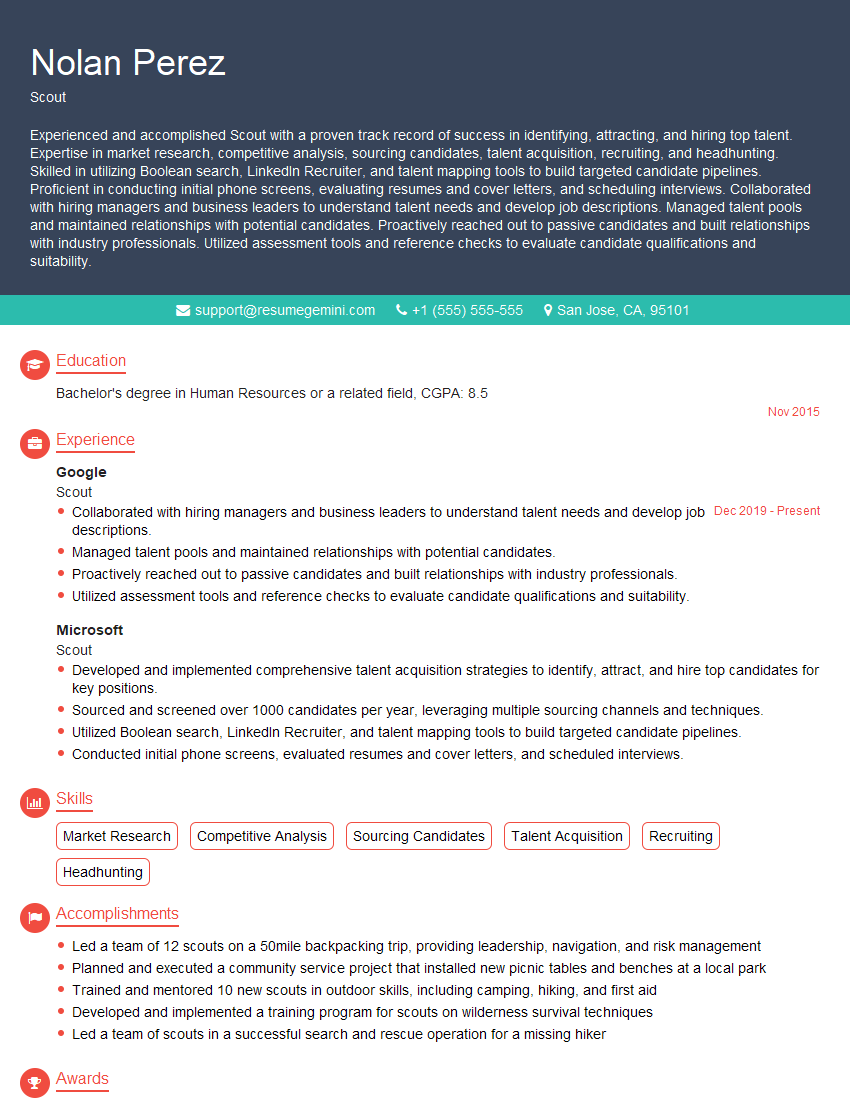
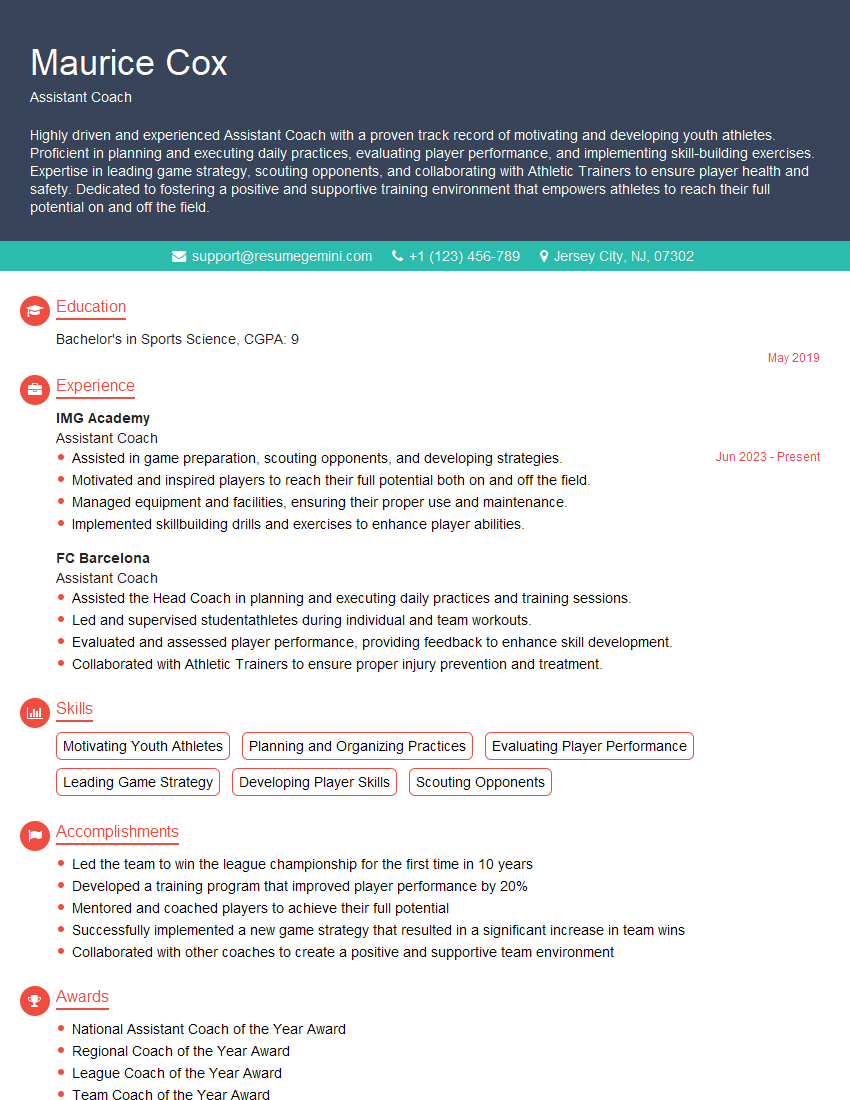
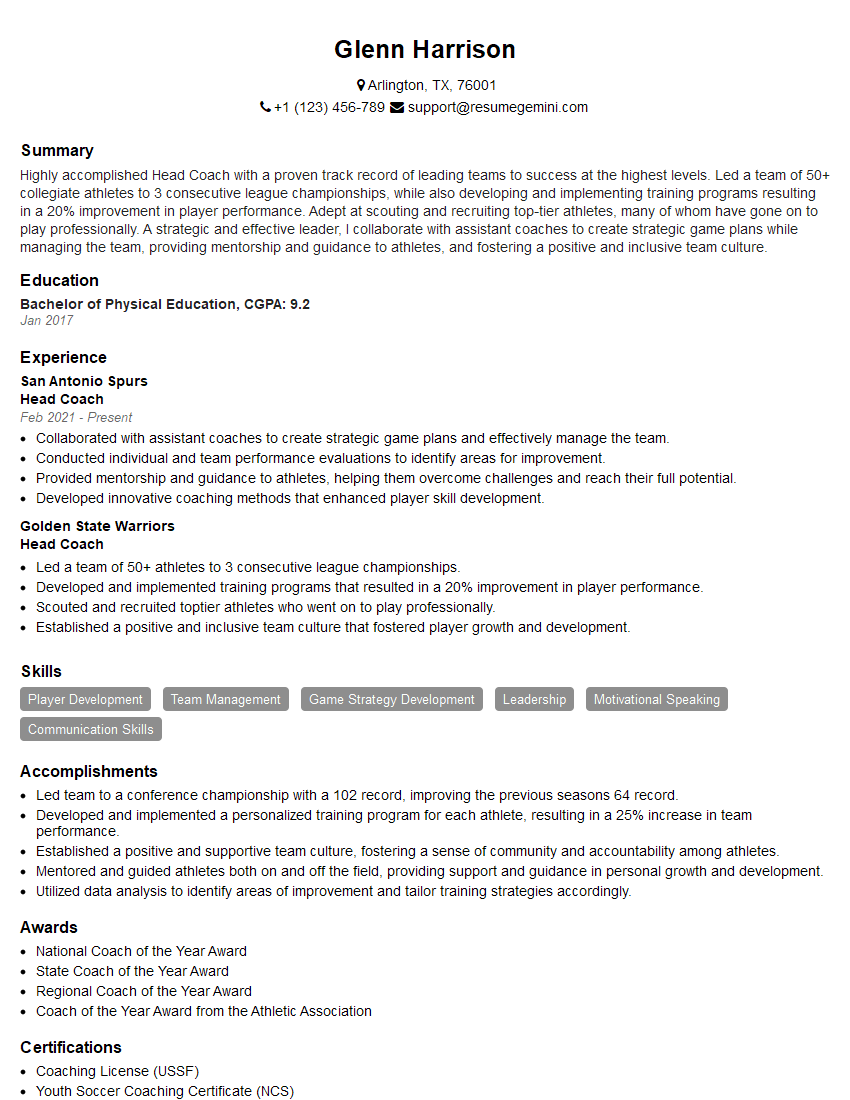
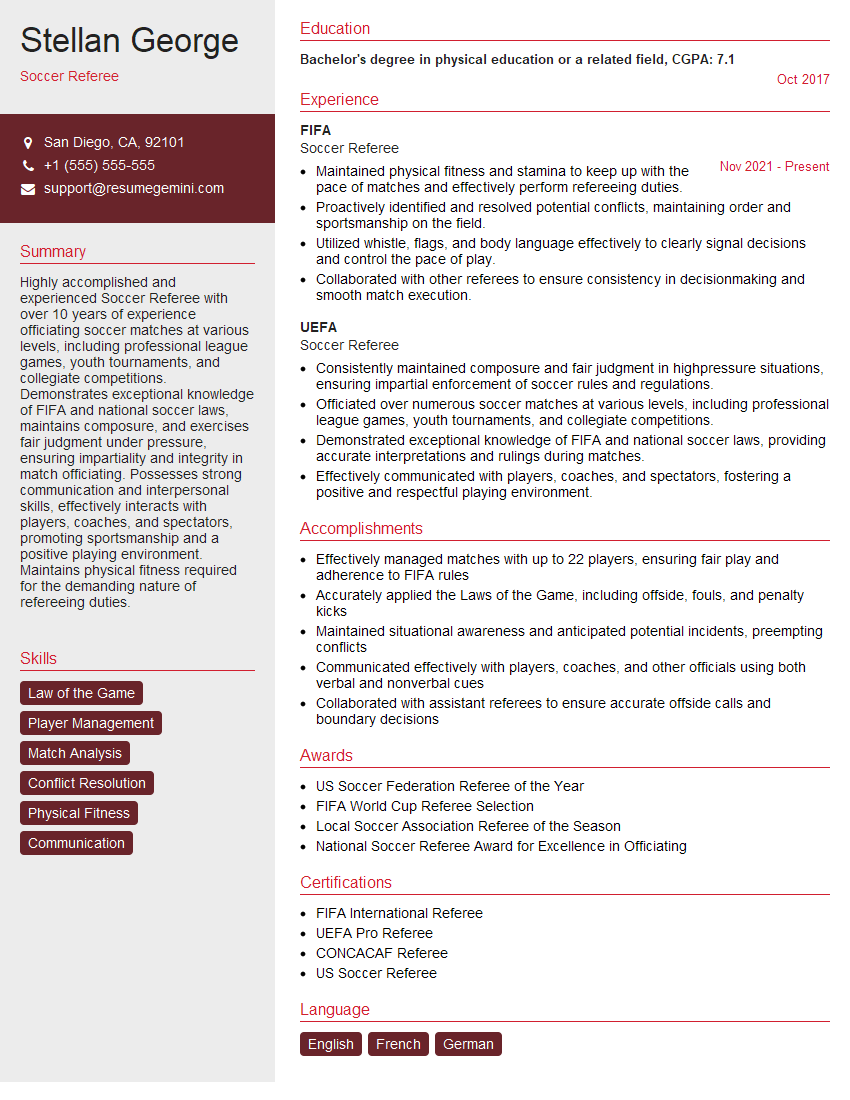
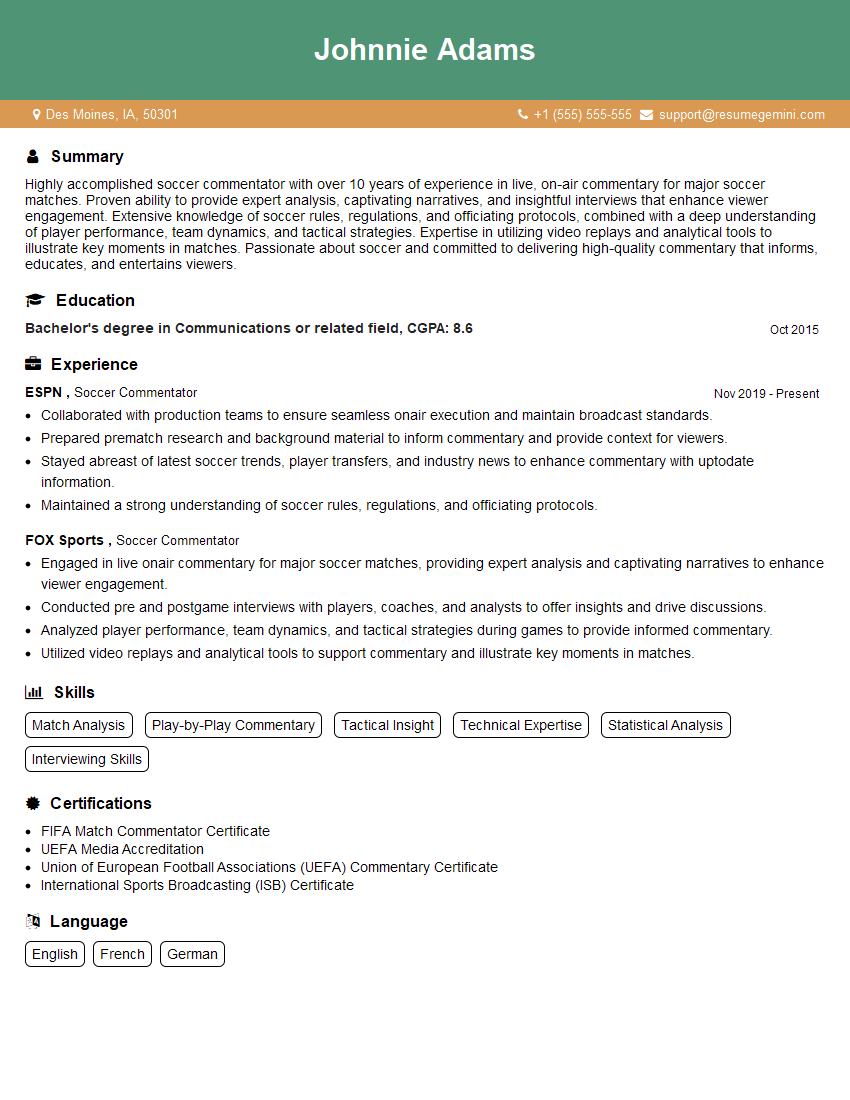
Mastering soccer knowledge is crucial for career advancement in this dynamic industry. A strong understanding of these topics will significantly improve your interview performance and help you stand out from the competition. To maximize your job prospects, create an ATS-friendly resume that highlights your skills and experience effectively. ResumeGemini is a trusted resource that can help you build a professional and impactful resume tailored to the soccer industry. Examples of resumes tailored to Soccer Knowledge are available to guide you through this process.
Explore more articles
Users Rating of Our Blogs
Share Your Experience
We value your feedback! Please rate our content and share your thoughts (optional).
What Readers Say About Our Blog
Attention music lovers!
Wow, All the best Sax Summer music !!!
Spotify: https://open.spotify.com/artist/6ShcdIT7rPVVaFEpgZQbUk
Apple Music: https://music.apple.com/fr/artist/jimmy-sax-black/1530501936
YouTube: https://music.youtube.com/browse/VLOLAK5uy_noClmC7abM6YpZsnySxRqt3LoalPf88No
Other Platforms and Free Downloads : https://fanlink.tv/jimmysaxblack
on google : https://www.google.com/search?q=22+AND+22+AND+22
on ChatGPT : https://chat.openai.com?q=who20jlJimmy20Black20Sax20Producer
Get back into the groove with Jimmy sax Black
Best regards,
Jimmy sax Black
www.jimmysaxblack.com
Hi I am a troller at The aquatic interview center and I suddenly went so fast in Roblox and it was gone when I reset.
Hi,
Business owners spend hours every week worrying about their website—or avoiding it because it feels overwhelming.
We’d like to take that off your plate:
$69/month. Everything handled.
Our team will:
Design a custom website—or completely overhaul your current one
Take care of hosting as an option
Handle edits and improvements—up to 60 minutes of work included every month
No setup fees, no annual commitments. Just a site that makes a strong first impression.
Find out if it’s right for you:
https://websolutionsgenius.com/awardwinningwebsites
Hello,
we currently offer a complimentary backlink and URL indexing test for search engine optimization professionals.
You can get complimentary indexing credits to test how link discovery works in practice.
No credit card is required and there is no recurring fee.
You can find details here:
https://wikipedia-backlinks.com/indexing/
Regards
NICE RESPONSE TO Q & A
hi
The aim of this message is regarding an unclaimed deposit of a deceased nationale that bears the same name as you. You are not relate to him as there are millions of people answering the names across around the world. But i will use my position to influence the release of the deposit to you for our mutual benefit.
Respond for full details and how to claim the deposit. This is 100% risk free. Send hello to my email id: lukachachibaialuka@gmail.com
Luka Chachibaialuka
Hey interviewgemini.com, just wanted to follow up on my last email.
We just launched Call the Monster, an parenting app that lets you summon friendly ‘monsters’ kids actually listen to.
We’re also running a giveaway for everyone who downloads the app. Since it’s brand new, there aren’t many users yet, which means you’ve got a much better chance of winning some great prizes.
You can check it out here: https://bit.ly/callamonsterapp
Or follow us on Instagram: https://www.instagram.com/callamonsterapp
Thanks,
Ryan
CEO – Call the Monster App
Hey interviewgemini.com, I saw your website and love your approach.
I just want this to look like spam email, but want to share something important to you. We just launched Call the Monster, a parenting app that lets you summon friendly ‘monsters’ kids actually listen to.
Parents are loving it for calming chaos before bedtime. Thought you might want to try it: https://bit.ly/callamonsterapp or just follow our fun monster lore on Instagram: https://www.instagram.com/callamonsterapp
Thanks,
Ryan
CEO – Call A Monster APP
To the interviewgemini.com Owner.
Dear interviewgemini.com Webmaster!
Hi interviewgemini.com Webmaster!
Dear interviewgemini.com Webmaster!
excellent
Hello,
We found issues with your domain’s email setup that may be sending your messages to spam or blocking them completely. InboxShield Mini shows you how to fix it in minutes — no tech skills required.
Scan your domain now for details: https://inboxshield-mini.com/
— Adam @ InboxShield Mini
support@inboxshield-mini.com
Reply STOP to unsubscribe
Hi, are you owner of interviewgemini.com? What if I told you I could help you find extra time in your schedule, reconnect with leads you didn’t even realize you missed, and bring in more “I want to work with you” conversations, without increasing your ad spend or hiring a full-time employee?
All with a flexible, budget-friendly service that could easily pay for itself. Sounds good?
Would it be nice to jump on a quick 10-minute call so I can show you exactly how we make this work?
Best,
Hapei
Marketing Director
Hey, I know you’re the owner of interviewgemini.com. I’ll be quick.
Fundraising for your business is tough and time-consuming. We make it easier by guaranteeing two private investor meetings each month, for six months. No demos, no pitch events – just direct introductions to active investors matched to your startup.
If youR17;re raising, this could help you build real momentum. Want me to send more info?
Hi, I represent an SEO company that specialises in getting you AI citations and higher rankings on Google. I’d like to offer you a 100% free SEO audit for your website. Would you be interested?
Hi, I represent an SEO company that specialises in getting you AI citations and higher rankings on Google. I’d like to offer you a 100% free SEO audit for your website. Would you be interested?